← Iran: The Latest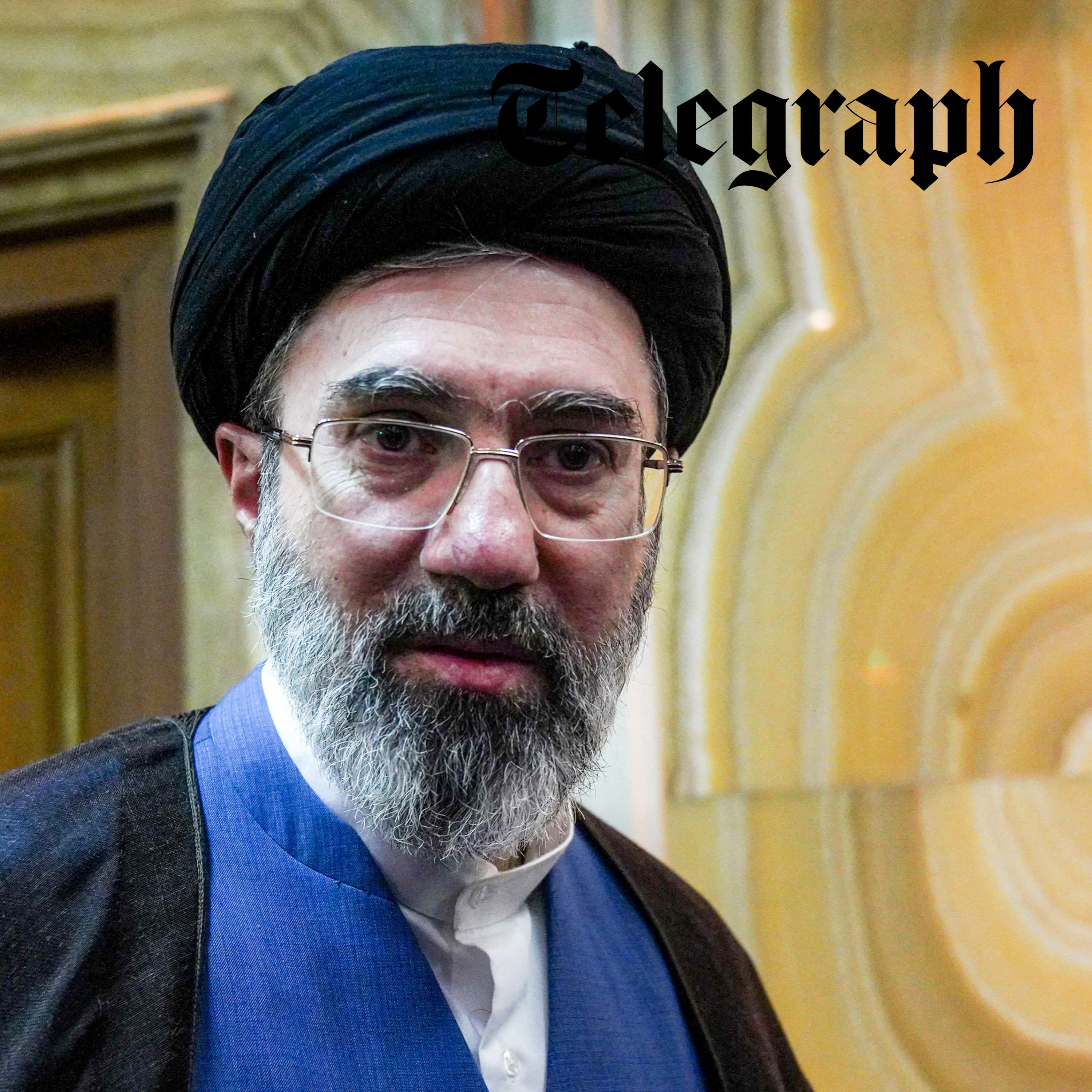
Iran: The Latest
Exclusive: Why Iran's new leader survived & how to reopen the Strait of Hormuz
00:37:38
Loading summary
Transcript82 lines
- [00:04]
A
The telegraph. This is a Monday.com ad.
- [00:11]
B
The same Monday.com helping people worldwide getting work done faster and better. The samemonday.com designed for every team and every industry. The same Monday.com with built in AI scaling your work from day one. The same Monday.com that your team will actually love using the samemonday.com with an easy and intuitive setup. Go to Monday.com and try it for free. Yes the same Monday.com youm know what's wild? Most people are still overpaying for car insurance just because it's a pain to switch. That's why there's Jerry. Jerry's the only app that compares rates from over 50 insurance in minutes and helps you switch fast with no spam calls or hidden fees. Drivers who save with Jerry could save over $1,300. A before you renew your car insurance policy, do yourself a favor, download the Jerry app or head to Jerry AI Acast
- [01:09]
C
There is a military component to the solution which is to reduce the threat, definitely in terms of countering mines. But fundamentally there has to be a political angle as well.
- [01:20]
A
A short time ago, the United States
- [01:22]
C
military began major combat operations in Iran.
- [01:28]
A
If you kill Americans, if you threaten
- [01:31]
C
Americans anywhere on earth, we will hunt you down without apology and without hesitation
- [01:37]
A
and we will kill you.
- [01:39]
C
We were not involved in the initial strikes on Iran and we will not join offensive action now.
- [01:46]
B
Today President Trump says Iran's supreme leader, Ayatollah Ali Khamenei was killed in the attacks.
- [01:51]
C
Ayatollah say Yiddish.
- [01:57]
A
I'm Venetia Rainey.
- [01:58]
D
And I'm Roland Oliphant.
- [01:59]
A
And this is Iran. The Latest. It's Monday, March 16, 2026. Well, it's the 17th day of the war and today we're going to be discussing how the US has ordered 2,500 Marines to be redeployed from Japan to the Middle East. It signals the possibility of American boots on the ground, but could also have knock on effects in the Indo Pacific. We're also going to be looking at how Donald Trump has warned NATO allies that they have to help him unblock the Strait of Hormuz. Can it be done? How should the UK Help? We've got Jack Watling from the Royal United Services Institute in the studio to discuss all of that with us.
- [02:32]
D
But first, Iran's new supreme leader, Mojtaba Khamenei survived the American and Israeli strikes that killed his father because he stepped outside minutes before his compound was struck. At least that is the account given in an exclusive Bit of leaked audio that the Telegraph has obtained which features one of Khamenei's senior officials explaining how Mojtaba came to power to senior Revolutionary Guard and clerics. Just last week, Akhtar McCoy, our Telegraph Foreign correspondent obtained this audio and he joins us in the studio now.
- [03:09]
A
Akhtar, welcome back onto Iran. The latest you have got a fantastic exclusive scoop up on our website now about how Iran's new supreme leader survived American and Israeli attacks on his father's compound because he stepped outside just for a, a few minutes before it was struck. You got this based on some audio from someone inside Iran. Just tell us what you've got.
- [03:30]
E
Yes, we got this three and a half minute voice recording from Mazer Hosseini who was head of protocols at Ali Khamenei's office. And then he speaks to a group of mid ranking IRGC commanders and clerics in Bolhaq, northeast Tehran. So in this recording, Mr. Hosseini says that the actual target on Khamenei's campaigns were three places, three locations. First, where Khamenei, Ali Khamenei himself was living. Second was where Mujtaba was living. And the third, mosaic hits where Muhammad Shirazi was living. Mohammad Shirazi for ages, since 1980s is running Khamenei offices, security details. And in this recording, Mazahir Rosseini says one of the ideas to kill Muhammad Shirazu was because the American Israelis thought if they kill him there won't be any replacement for top commanders of the IRGC army, any military forces, because this man was in charge of doing that for Khamenei.
- [04:31]
D
Okay, so they thought you kill him and then they can't even replace the other top commanders that we've killed and it will cause chaos.
- [04:39]
E
Yeah. And the recording goes on. So he says one of the locations within the office complex was Mujtaba's personal house. And then he uses a Persian expression, says if God fails, even an enemy can bring about good. Later on he said, I'm quoting God's will was that Mujtaba had to go out to the yard to do something and then return. He was outside and was headed riding upstairs when. When they strike the building with a missile. And towards the end of the clip, Mr. Husseini tells the audience that Mr. Mushtaba was outside and sustained only a minor injury to his leg.
- [05:47]
A
What does that tell us then? There's been so many rumors about Mojtaba, how badly injured he is, we haven't seen him. Of course since this war erupted. What does this add to that knowledge? Do we think he is alive and able to, you know, be putting out his own statements? Because we only had a written statement last week, as you pointed out.
- [06:06]
E
Honestly, it adds nothing to the situation because we haven't seen Mushtaba. We haven't heard his voice. And even his own commanders, his own officials, his own war commanders are not receiving any orders from him. And the regime is just going. The Islamic Republic is just going. As Ali Khamenei organized as like created without the supreme leader. It can function anyway. But there would be some complications, some problems within the different parts of the country, different parts of the armed forces. But this audio just tells us how Mujtaba Al Khamenei survived and how Ali Khamenei and the rest of the family were killed. And it might be also like this guy is talking to a group of IRGC commanders and clerics. He may know something that we may not know. It might be just a proof of life of Mujtaba to those who are listening to him. This recording was not intended for public. It was just for those group of commanders. And this manual may be just like trying to reassure those commanders that Mujtaba is alive. But factually speaking, we don't know that.
- [07:12]
D
Just tell us again. So this is Hamani's chief of staff talking?
- [07:15]
E
Not chief of staff, it's his chief of protocols in his office. He was there for ages, for decades.
- [07:21]
D
Okay, the chief of protocol. And who's he speaking to?
- [07:24]
E
We don't have any name, but we know it is the audience are mid ranking IRGC commanders because the top ranking IRC commanders, we don't know where they are, we don't know how they are commanding the war. And some clerics who might have had some concerns about selection of Khamenei, Mushtaba Khamenei as the supreme leader.
- [07:42]
D
Okay, so the context is that he's having a meeting with some clerics and some IRGC commanders to explain the situation or to reassure them in a way.
- [07:53]
E
Yeah, to reassure that there is a commander in chief.
- [07:56]
D
And how old is the recording? Do we have any idea when it was made?
- [07:59]
E
It was made on March 12.
- [08:01]
A
At the end of your story, Akhtar, there's a bit where you speak to an Iranian official and he talks about Mujtaba was selected, but against the will of the Supreme Leader and maybe against his own will too. We still have not heard anything from him. What do you make of that? The significance of that I mean, it
- [08:16]
E
is general knowledge that Ali Khamenei, the father, was against choosing anyone from his family as supremely the same as Ruhollah Khamenei, the former Supreme Leader, the founder of the Islamic Republic was. And here the problem is, like, we spoke with some officials, some analysts over the past couple of weeks, and the idea is that the war itself gave the opportunity to Mujtaba. So the war brought Mujtaba to power as the supreme leader. If he's alive without war, if there was peace time, and if Ali Khamenei died, he would have way less chances than at the moment.
- [08:53]
A
This idea that he was installed against even his own will maybe suggests like an IRGC coup.
- [08:58]
E
Right?
- [08:58]
A
Which is something we've been speaking about on the podcast.
- [09:00]
E
I mean, Mujtaba himself, in that text, which was attributed to him, he said, like, he heard the news of his selection on television. So we don't really know, like, there are more things about Mujtama that we don't know than things we know about him. So if he's not happy about being selected as Supreme Leader, there might be some speculation that the IRGC might have installed him. And if he's not happy if he was selected as Supreme Leader against his will, it might be just saying, okay, because my dad didn't want me to be the Supreme Leader. Just because he wants, like, apparently being respectful towards their dad.
- [09:37]
A
It's such a black box. And I think that's why the audio ads add so much. It's so important and so interesting.
- [09:42]
D
Telegraph correspondent Akhtar McCoy there talking about Ali Hammeneh's fate on that Saturday morning two weeks ago. We're going to take a short break now. Coming up, Venezuela, Cuba, Iran. Why all of Trump's adventures overseas may be about preempting China's attack on Taiwan.
- [10:07]
B
Tired of your car insurance rate going up? Even with a clean driving record, you're not alone. That's why there's Jerry, your proactive insurance assistant. Jerry compares rates side by side from over 50 top insurers and helps you switch with ease. Jerry even tracks market rates and alerts you when it's best to shop. No spam calls, no hidden fees. Drivers who save with Jerry could save over $1,300 a year. Switch with confidence. Download the Jerry app or visit Jerry AI Acast.
- [10:35]
C
Today, Acast powers the world's best podcasts.
- [10:42]
D
Here's a show that we recommend.
- [10:47]
A
What if you laughed all through your commute? Or if you heard the funniest story while at the gym or well, now you can. I'm Jameela Jamil and guests on my new podcast Wrong Turns share their most mortifying and hilarious disaster stories. I'm talking people like Mae Martin, Bob the Drag Queen, Katherine Ryan, Jake Johnson, Margaret Cho, Simon Pegg, Penn Badgley, and so many more. So listen wherever you get your podcast Wrong Turns where dignity goes to die.
- [11:17]
D
ACAST helps creators launch, grow and monetize their podcasts everywhere.
- [11:23]
C
Acast do.
- [11:35]
A
Welcome back. You're listening to Iran. The latest Yesterday, Donald Trump had a stark warning to his NATO allies. Help me or I'll stop helping you. Here's what he said on Air Force One on Sunday.
- [11:46]
C
We're always there for NATO. We're helping them with Ukraine as many it's got a notion in between us,
- [11:54]
A
doesn't affect us, but we've helped them.
- [11:57]
C
And be interesting to see what country wouldn't help us with a very small endeavor which is just keeping the strait open.
- [12:05]
A
It's unclear exactly what the uk, France, China could do to reopen the Strait of Hormuz. This is a huge conundrum. It's one that Jack Watling, a senior research fellow for land warfare at the Royal United Services Institute, has spent a lot of time looking at that and many other things in his new book, the New Rules of Power in a Divided World, which is out this week and published by Macmillan. We're thrilled to have Jack in the studio with us now to discuss Trump, China, Iran and everything in between. Jack, welcome to Iran. The latest let's just start with the big question that's in the news today. How do you reopen the Strait of Hormuz?
- [12:41]
C
Well, it's good to be with you, although unfortunate about what's happening while I'm here. The US Will be going through a number of stages as it tries to reopen the straits. The first is to degrade Iran's ability to launch anti ship cruise missiles and other capabilities like small boats into the strait by essentially using intelligence to identify where they are based and then striking them on the Iranian coast. Normally you would also be trying to degrade the sensors that would be used to essentially track ships. But because this is a very enclosed waterway that really can't be done. There's just a lot of people that can directly overlook the strait. And so the second element will need to be the escorting or convoy of ships through the strait at some point and therefore naval vessels providing direct protection to shipping as it tries to get
- [13:36]
A
through, which is what Trump has asked for, some kind of assistance in that respect, precisely.
- [13:41]
C
The problem that the US is going to have is that Iran has developed a number of capabilities that can firstly operate a long way beyond the Strait, right out into the Gulf of Oman. So uncrewed explosive laden boats and it can also launch drones which it can use first person view functionality to guide onto moving targets from a very, very large area across Iran and then get to the straits. And so while the US will be able to reduce the threat in terms of reducing the volume of strikes that the Iranians can conduct, there will be a persistent threat that will remain. And even with convoying and you know, air caps, going over combat air patrols to try and shoot things down as they come in, that is a really, really resource intensive effort. And so while the US engages in the activity, you may see the number of ships that are attacked go down significantly. Quite a lot could get through. But then as soon as that military capacity starts to lift, then the Iranians can start striking again. And I think that the fundamental point I'm trying to get at here is there is a military component to the solution which is to reduce the threat, definitely in terms of countering minds, but fundamentally there has to be a political angle as well. So anyone who talks about a pure military solution to this is missing critical angles.
- [15:15]
D
I've just been reading your book where you do talk about the Strait of Hormuz a lot, but in, in the past few years and you compare it to the war between Russia and Ukraine in the Black Sea and you point out that Russia and Ukraine were in a position to, well, to attack each other at sea or to attack each other's shipping and largely left it alone. I'm not talking about the military stuff, but the commercial shipping because the costs were so high. And you talk about how actually for years in the Straits of Hormuz there had been deterrents working on both sides because the Iranians could see the benefit of applying pressure there, but knew if they went too far they would draw a massive response. And their opponents, the west, felt vulnerable, but also didn't really want to bear the costs of confronting them or letting things spiral into a conflict. Tell me if I've summarized that properly, but I'm also wondering what that kind of analysis tells you now. Or is that, are you just talking about there such a, such a different situation because the restraint has just been blown up, that you have to rethink what to do here completely?
- [16:17]
C
Well, I think the logic still applies, right in that sense that the Iranians want to re establish deterrence and Deterrence can be, or compellence can be, a very, very effective means of raising the cost on the other side so that they start to conform in their behavior to what you would like. We've seen this with the Houthis last year, where the United States was becoming increasingly frustrated at the Houthis interdicting shipping in the Red Sea, and the US Tried to stop them being able to do it by striking launches and so on. The UK Participated in some of those strikes, and it didn't work because we were not able to strike all of the potential launch sites. There were just too many. And so the US Switched tactics and started to kill pretty senior Houthis. And in that context, the Houthis were largely engaging in a strategic communications campaign in the Red Sea. And so they did a couple of final strikes to show that they were still able to, but they, broadly speaking, desisted on the basis that the pain they were incurring was too great. Now, you can see a similar logic potentially arising here where the US Essentially says, well, we're not able to completely eliminate the threat in the Strait of Hormuz, even if we can bring it down to a lower level, but we're now going to impose costs elsewhere on Iran such that the Iranians feel that this situation shouldn't continue, and both sides now want a resolution. And then you can have conditions whereby both sides essentially have an orchestrated withdrawal. But the problem there is that the US And Israel have messaged clearly to the Iranian regime that this is existential. And under those conditions, it's very, very different, difficult to compel someone to de escalate. And then we have the issue of spoilers, the fact that Israeli interests are not the same as US interests and their objectives are different. The IRGC has disaggregated command and control, and a lot of its personnel are going to want to kill Americans for purposes of revenge, let alone political calculations. And so how you make that diplomatic effort actually align is very delicate. And it requires channels, it requires the ability to talk to each other while you're fighting. The two things go in parallel. Of course, the challenge there is that the Israelis have said they will kill anyone who replaces Khamenei and therefore and strike other leaderships, people in leadership positions. And so you end up with the question of how do you maintain negotiations while a party in the conflict is also trying to eliminate potential negotiators?
- [18:59]
A
There's a big debate in the UK at the moment about what, if anything, we should be contributing to this. We've had Trump over the weekend calling on Britain, France, China, Japan, South Korea to join a sort of coalition that will help reopen the Strait of Hormuz. We had Starmer this morning, Keir Starmer, the British Prime Minister, talking about the fact that the UK has some minesweeping capabilities in the region, which it's contributing. We know they were sent out from Portsmouth to Bahrain last month, a few days before the Iran war erupted. And now I assume they're being reassigned, or maybe they were sent there with the knowledge that all of this was going to happen. We don't know. What do you think the UK and other countries could be doing? Let's start with the uk, because I know that's your focus. What could the UK be doing to help here? Do we have the capabilities here? At the Telegraph, we've published a lot of articles saying that we have such a degraded armed forces that there's not really much that we can do to help. And a lot was made of the fact that we couldn't even dispatch a war warship before the French were sending something to the Mediterranean. What's your read on the UK's role in all of this?
- [19:59]
C
I think the most important thing before you commit military forces is you need a plan. And the plan then determines what military requirements there are, and then you can have a conversation about who provides them. So I'll give you an example. The Gulf states have been wanting air defenses, and they've been wanting air defenses that are optimized for intercepting Shahed 136 drones. Everyone's been very focused on drone interceptors coming out of Ukraine. The UK has probably the closest relationship with the Ukrainians of most of all of Ukraine's international partners and can broker the provision of that support. But what that misses is that in Ukraine you have a massive surveillance and reconnaissance structure which feeds those mobile teams. You also have a lot of strategic depth so they can intercept drones over a long distance. In the Gulf, you often have infrastructure that's directly on the coast, and so you need to be operating over a maritime environment. It's a different context. And if the Gulf is actually going to have good air defences against this kind of threat, it requires the redesign or the improvement of their air defense capabilities so that sensors are connected to track these targets and then there are appropriate things to defeat them. That might mean putting out buoys, for example, with acoustic sensors, so that you actually have detection stood off from your coast when they come in low. And I think what the UK can most, you know, be most valuable in Providing there is assistance in designing that structure and then there's all sorts of systems that need to be put in place. But providing one Type 45 destroyer, for example, which, okay, has the capability to shoot down aerial threats, but it has. It's optimized for protecting against aircraft and cruise missiles. And that isn't the threat that we're primarily talking about. So what really would be the value of that? It wouldn't address the need. Right. I think we have to be very careful in the UK, noting what you've just said about the UK's limited military capacity at the moment because of systemic and chronic underinvestment. We have to be very clear not to commit resources for optics. Rather, it has to be about a plan. Everyone got very upset that the UK withdrew its minesweeper from. We had one minesweeper left in the Gulf.
- [22:27]
A
When did we withdraw them?
- [22:28]
C
Just before the crisis, essentially, which everyone's been kind of very, very critical of. But if you really think that one very, very lightly protected minesweeper is sufficient to cruise around the Straits of Hormuz taking out mines, then I would say that would be a very optimistic planning assumption.
- [22:45]
E
Right.
- [22:46]
C
That is a recipe for getting UK service personnel put into a really, really dangerous situation where they're not adequately protected. What the UK has been investing in over the last few years is how to use uncrewed underwater systems to approach, well, identify approach and disarm minds. And that is what's been moved into. Into Bahrain. And so can the UK contribute with its pretty reasonable expertise in this area? Yes. Do we have the depth of capability we would like? Absolutely not. And that's something that should be a concern for us. What problems can we actually deal with? But ultimately we need to have a detailed conversation with the Americans about what's the plan, Otherwise there's no way of rationalising what you kind of push into the theatre and what you don't.
- [23:35]
D
So I've spoken to Israeli sources who insist that Britain was showing a plan, a plan for what was going to happen. The public kind of discussion coming out of America makes me think, well, my response then was, which plan did you share with them? Because in public, I'm not quite sure what you're trying to achieve here. And there's all kinds of contradictory aims and so on. I mean, is Britain really party to this? Have the Americans and the Israelis really kind of gone through this with their allies, as far as you know?
- [24:03]
C
I think it would be a mischaracterization to suggest that the US administration and the Israelis went to all of their allies and sort of laid out a very detailed campaign plan with the option of signing up or not. I don't think that happened. But in terms of our ability to monitor what the US was putting into the region, what capabilities the US was putting in place, and our understanding, because the UK has a lot of liaison relationships with the us, of what US thinking was in terms of how it would approach these problem sets, I think all of that will have existed whether we knew exactly which day it was going to start. I think we knew it was going to start. It's just a question of the precise timings and so on. We didn't want to be part of the operation, so we probably weren't in that circle, but we knew what was coming with. With reasonable warning. One of the big problems that I think we face, and this is. This is something I detail in the book quite extensively, is that over the course of the war on terror, we have largely dealt with small, acute problems. This attack is going to happen here, you know, that kind of thing. And so our government decision making has become very, very orientated around crisis management, which is something where, because it's small scale, you can react quickly, you can make decisions quickly and then act quickly. But when we start to talk about nation states going to war, the lead time on decision making is much longer. And so that forces you to start taking decisions much earlier. And to be honest, I don't think the machinery of government is working in a way that sort of forces those decisions onto politicians very well. At this point, we just. We tend to come to the question too late.
- [26:00]
A
We've heard that America is redeploying more than 2,000 Marines from the Sea of Japan, the Amphibious Response Group, towards this conflict. I'm wondering if you think they might be used to seize Kharg Island. This is something that's been discussed a lot, but seems to be gaining credence in some circles. I just want to read a tweet. An X, rather an X post by Lindsey Graham, the US Senator and Iran war cheerleader in chief. Increasingly, he said, President Trump's decision to take the water Kharg island, the crown jewel of Iran's oil and gas economy, was necessary, bold, and, in my view, highly effective. This will help shorten the war. Seldom in warfare does an enemy provide you a single target like Hag island, that could dramatically alter the outcome of the conflict. If Iran loses control or the ability to operate its oil infrastructure from Carg island, its economy is annihilated. He who controls Carg island controls the destiny of this war. And he signs it off Semper Fee, which is obviously the motto of the U.S. marines. We know that Trump has been hitting the military infrastructure on this island. He says it's decimated, but has stayed away from the oil infrastructure. What do you think's going on here?
- [27:03]
C
Well, if we come back to what we were discussing before, in terms of the desire to show the Iranians that you can impose costs on them while they impose costs on you, such that both sides need to come to a negotiated outcome, then at the moment, there is a certain amount of traffic transiting the Straits of Hormuz that is taking Iranian oil.
- [27:29]
A
Yeah. They've managed to get something like 10 tankers out. Is that right?
- [27:31]
C
Yep. And that's largely going to China. The prospect of threatening, let alone carrying out, but threatening to seize critical economic infrastructure is potentially a component of building that leverage in a negotiation. And I think this plays very favorably in Donald Trump's mind with how he sees the world in terms of, I'm going to take something that's a business asset, and then we're going to have a very nuts and bolts negotiation. And because the US Technically controls it, at that point, it can start laying down terms around how much value the US Extracts from this process and so on. Now, as we've seen with Venezuela, Trump's theories about how this stuff work are often not carried through into the detail because you have a very, very uncooperative partner and somebody who fundamentally doesn't trust you. And unlike in a business context, there isn't a legal system that underpins any of the transactions. And it's a theory. It doesn't necessarily translate into practice. But I think what you're seeing here is that the US has acted, needs to work out an extraction plan and is therefore looking for places where it can exert leverage without putting large numbers of troops directly into the Iranian mainland, where the Iranians could actually muster very, very large forces to counter it, and you end up getting into spiral of expanding ground operations. That's something that many people in the Pentagon have a certain amount of trauma over from the past, including Pete Hegseth, and they don't want to go there. So this is essentially about generating options that align with President Trump's view of how the world works. Personally, I am skeptical that operation would bring Iran decisively to the negotiating table, but we'll have to see how it plays out.
- [29:38]
D
These Marines are coming from the Sea of Japan, I think, and we've also seen reports that The Americans have withdrawn Thaad air defense systems from South Korea. And there's an aircraft carrier which I think is normally further east involved in all this. I was wondering if you could lend us your thoughts on what this might mean for security elsewhere in the world. And such a vast, vast amount of American firepower is now concentrated in the Middle east and away from what we were told again and again and again, is the pacing threat, which is China. What do you make of that?
- [30:13]
C
So I think, firstly, the US has not even really attempted to offer a casus belli, right, an explanation of why they've conducted this attack. And so we are looking at a situation in which we have two now permanent members of the Security Council who are engaging in wars of aggression essentially without feeling the need to have a legal basis in which they're doing that. At that point, we can say that the international system is pretty fundamentally challenged. And so the barriers, in terms of normative barriers for states using armed force to solve their or impose their problems is coming down. That's one thing I think we just have to acknowledge up front. Then we get to the operational question, which is, as you say, the kind of balance of power in different theaters. And the US Is deeply concerned about the prospects of China realizing what has been the direction to the People's Liberation army from the Chinese leadership, that they have to be prepared to forcibly reincorporate Taiwan into Chinese control by 2027. That doesn't mean that they are expected to decide to do it in 2027. It means that they are ordered to be ready to do it. And we're seeing them take steps that suggest they are implementing those instructions, getting ready. Now, if we work on that timeline, what the US really fears, putting aside the direct balance of power between the US And China, is global, simultaneous, protracted conflict where the US Is not only having to deal with China, but also having to deal with Russia, Venezuela, Iran, Cuba, etc. And so in that context, I think there is a logic that we're observing in US Behavior whereby they are trying to write down those threats to desynchronize them essentially from that Chinese timeline, eliminating Iranian striking power, removing hostile leadership in Venezuela, and developing this kind of coercive relationship, we will see what happens with Cuba. Trump has said that he wants to see changes there as well. And of course, in Russia. The US because of Russia's nuclear deterrent, can't impose a comparable approach. And so the US Are trying to build every single opportunity for the Russians to sit out some kind of future US Chinese confrontation essentially sit on the sidelines and sell to both sides. Which is why it's partly why the US is so cautious about pushing back on Russia in any way at the moment. Now, that might be a kind of overall logic, but then we have the question of what does this look like to the US's adversaries or competitors? Russia conducted some assessments shortly after their full scale invasion of Ukraine, in which they determined that it would be extremely helpful if several eventualities happened in the course of the war. One of them was a outbreak between Israel and Palestine, one of them was the closure of the Straits of Hormuz, and a third was a Taiwan crisis. There were others as well. But that's not to say that the Russians caused this or were behind it in any way. But they, they absolutely want to see this protract, and they do see this as very much in their favor. It's regenerating their cash reserves through oil sales, it's seeing sanctions lifted, and it's distracting a lot of political capacity that could otherwise be focused on supporting Ukraine. And how China looks at it is not yet clear. But it's worth noting that China was already building up massive stockpiles of oil and other resources. And so I suspect this will confirm China in its view that it does have a vulnerability in the number of choke points, not just the Straits of Hormuz that it relies on to get oil. And it will therefore start to double down on its counteractions to make sure that it is not vulnerable to that kind of disruption.
- [34:25]
A
There was a report towards the end of last week from AFP where they'd been tracking via satellite photos the very bizarre movements of Chinese fishing boats. Between 1,000 and 2,000 fishing boats have been holding position as close as 500 meters to each other for about 30 hours in near gale force winds and then suddenly scattering, forming these sort of very straight lines that you just wouldn't normally get. They did this once in December, they did it again in January, and then to a smaller extent in March. What do you make of that? You know, when you go on social media, everyone's like they're preparing to invade Taiwan. It's clearly not that. But what do you make of it?
- [35:00]
C
Under Chinese law, if you are a Chinese company or ent, you are obligated to make yourself useful to the state. And many of these vessels have radio links, the specifications of which are determined by the Chinese military so that they can be turned into sensor networks essentially. And we are seeing the increasing sort of experimentation and practical refinement of drills for incorporating civil structures into military campaigning by the pla. So this is in cooperation with the Chinese People's Liberation Coast Guard and with also the maritime militia who use old coast guard vessels, but they're still an armed component of the force. And essentially this is the state making sure that if it ends up in a conflict, it has all of the levers in place and people understand what their functions and responsibilities are relative to a campaign plan, which is concerning because this is kind of what I was saying that, that the Chinese are genuinely implementing the guidance they've been given by Xi Jinping to be ready. What we have to hope is that China can be deterred from stepping over into implementation.
- [36:22]
D
Your book Statecraft is it's about how to respond to all this and how one responds to all these omni crises that we're living now. But your general thesis is look, or the problem you seek to address is why is it that the west has known and recognized for years the challenges it's facing in a resurgent Russia, in a resurgent China, and all of this, and said it's going to do things about it, and yet again and again and again fails to do so or struggles to do so. How have we got into this situation and how do we get out of it?
- [36:53]
C
So I think, firstly, it's about recognizing that we're not in a world where there is a stable state of continuity and then intermittent crises emerge that we have to respond to. You know, there are floods, there is a civil war that breaks out here, there's a humanitarian crisis there. Instead, we are dealing with adversaries who are powerful state actors that can intervene in ways that fundamentally realign the international system. And actually, when it comes to the U.S. we have allies who are doing the same thing in their own interests. And so the question then is, how do you pursue a consistent understanding of your own interests in a very dynamic environment? And I think that requires a much more opportunistic policy. It requires much more discipline in identifying what our core interests actually are. And as I said before, it requires making decisions early. But there is an element to that which is difficult within our political system because let's say we were to completely rejig the deployment route of the British military in order to move it somewhere to deter something. Well, if we succeeded in deterring it, nothing would happen, right? Because the other side would decide not to act. And at the point where the other side is thinking about doing it or not making that judgment and therefore is susceptible to messaging and deterrence you're probably acting not when there is a really obvious imminent invasion, but quite a bit beforehand. And so the risk there is that you have to spend a lot of resources and the public is asking, well, what is that? Just waste. And so I think we have another problem that we need to get over in the UK specifically, which is much more proactive and honest discussion with our public. I think there is a fundamental incoherence in the coverage that emanates from a lot of our media because on the one hand we say we have to increase defense spending, but at the same time we can't borrow more. And then if we were to touch pensions, for example, and the triple lock, which is going to swamp the UK budget, if it continues on its current trajectory, then lots of the same people will get very upset and you're like, well, okay, so where does the money come from? That's the conversation we have to have.
- [39:19]
D
Jack Watling of the Royal United Services Institute there.
- [39:23]
A
That's all for today's episode of Iran the Latest. We'll be back again tomorrow. Until then, goodbye.
- [39:28]
E
Goodbye,
- [39:31]
A
Iran. The Latest is an original podcast from the Telegraph, created by David Knowles and hosted by me, Veneeshireni and Roland Olyphant. If you appreciated this podcast, please consider following around the latest on your preferred podcast app. And if you have a moment, leave us a review as it helps others find the show. To stay on top of all of our news, subscribe to the Telegraph, sign up to our Dispatchers newsletter or listen to our sister podcast Ukraine the Latest. We're still on the same email address battlelinestelegraph.co.uk or you can contact us on X. You can find our handles in the show. Notes the producer is Peter Shevlin. The executive producer is Louisa Wells.
- [40:12]
C
This episode sponsored by Maximus Tribe. You train, you track, you eat right. But if you're over 40, you've felt it. The results don't match the effort anymore. That's not willpower, it's biology. Hormones drop, metabolism slows, your body stops responding the way it used to. Maximus is the online clinic that reverses your decline with prescription performance medicines, GLP1s, testosterone and peptides that reduce belly fat, restore energy and boost recovery. Over 50,000 high performers have already broken through their plateaus. If you're ready to turn your hard work into measurable Results, go to maximustribe.com that's maximustribe.com it's tax season, and at Lifelock. We know you're tired of numbers, but here's a big one.
- [40:59]
D
You need to. Billions.
- [41:01]
C
That's the amount of money in refunds the IRS has flagged for possible identity fraud.
- [41:07]
D
Now, here's another big number.
- [41:08]
C
100 million. That's how many data points LifeLock monitors every single second.
- [41:13]
D
If your identity is stolen, we'll fix it.
- [41:15]
C
Guaranteed. One last big number. Save up to 40% your first year. Visit lifelock.com specialoffer for the threats you can't control. Terms apply.