Loading summary
Transcript44 lines
- [00:00]
Roland Oliphant
Foreign.
- [00:10]
Commercial Voice
Dotcom AI agents took over my work and I absolutely love it. Chasing deadlines, writing status reports, updating stakeholders. Agents handle the daily grind. Now I stay in the loop only when it matters. Create your own AI agent in minutes on Monday dot com.
- [00:24]
Instacart Advertiser
Let's talk groceries. Specifically your groceries. With Instacart, you want your groceries just the way you like them, right? Well, the Instacart app lets you do just that. They have a new preference picker that lets you pick how ripe or unripe you want your bananas. Shoppers can see your preferences up front, helping guide their choices. Instacart get groceries just how you like.
- [00:53]
Carlos Sola
Donald Trump has looked at the map again and said, why do we have all these little fires within my region and why don't we put them up before a bigger fire starts elsewhere?
- [01:04]
Roland Oliphant
A short time ago, the United States military began major combat operations in Iran.
- [01:12]
Carlos Sola
Today, President Trump says Iran's supreme leader, Ayatollah Ali Khamenei, was killed in the attacks.
- [01:23]
Roland Oliphant
Iran is weighing a takeover of that island as a way to force the reopening of the Strait of Hormuz.
- [01:30]
Commercial Voice
Iran begged for this ceasefire and we all know it.
- [01:34]
Carlos Sola
Does anyone really think that someone can tell President Trump what to do? Come on.
- [01:41]
Roland Oliphant
I'm Roland Oliphant and this is Iran. The latest. It's Friday 22nd May, 84 days since the war began and 44 days since since the ceasefire was declared. The war in Iran is still not over. But on today's show, we're going to be stepping away from the Middle east and focusing on the Caribbean because it looks like Donald Trump may be readying to launch a new war, this time against Cuba. But first, some updates. There's not much to say about the progress of peace talks, although Iran and Pakistan have once more held ministerial discussions in the latest attempt to to break the deadlock. Iranian media reporting that Abbas Arakchee, the foreign minister, has met with Pakistan's Interior Minister, Syed Mohsin, Naqvi, who has been shuttling back and forth between the two countries. Field Marshal Munir, the head of the Pakistani army and the most influential shuttle diplomat in this attempt to find peace. We expected him in Tehran yesterday. It turns out he is traveling today. It's not clear what caused the delay, but he seems to be expected there this afternoon. In the meantime, it emerges that Iran has been speaking to Oman on the other side of the Strait of Hormuz, on its plan to charge fees from ships that traverse the Strait of Hormuz. This is a Scoop from the New York Times. Two people familiar with the talks are cited in the newspaper stressing that the discussions are about fees which are charged for services rendered to transiting vessels, rather than tolls which are charged for the transit itself and are illegal under international law. Now this comes in the context, as we reported yesterday, of Iran unveiling a plan for taking total control of the strait with a network of island checkpoints to enforce and levy a toll of $150,000 per vessel passing through. Oman initially dismissed the idea of partnering with Iran, but according to the nyt, has more recently realized the scheme could benefit it and has expressed a willingness to push the plan with Gulf neighbors and the Americans. That's according to two Iranian officials apparently. Well, Marco Rubio, the US Secretary of State has had something to say about this. Speaking ahead of a NATO meeting in Sweden this morning, he said Iran is trying to create a tolling system. They're trying to convince Oman, by the way, to join them in a tolling system in an international water way. There is not a country in the world that should accept that if Iran got the chance to charge tolls in the strait it will happen in five other places around the world. That's just not acceptable. For more discussion on the precedent and how that could affect other waterways, do listen back to yesterday's episode where Hans van Leeuwen, our international economics editor, was talking on that very question. Other news the United States has reportedly depleted half of its state stock of anti ballistic missiles defending Israel from Iranian attacks during the war. This is from the Washington Post citing assessments by the US Department of Defense. And it says that in its defense of Israel the US launched roughly half its total inventory of the anti ballistic missiles known as the Terminal High Altitude Area Defense. That's the fad T H A D. It's sourced to multiple anonymous usage officials. That's about 200 thaads that it's meant to have fired. It also apparently fired more than 100 standard missile 3 and standard missile 6 interceptors. And the point is being made in the post that that compares to only about 100 Arrow Interceptors and about 90 David Sling Interceptors fired by Israel. In other words, that America fired more missile defense weapons in defense of Israel than Israel itself did. In total the US shot around 120 more interceptors and engaged twice as many Iranian missiles, a US Official said. Now there's been a lot of talk about the depletion of US defence stocks as a result of the war, especially how that relates to a potential contingency in the Pacific. That's the euphemism for war with China over Taiwan. So it's not, perhaps not unrelated that Hong Kong the acting secretary of the Navy in the United States told a Senate hearing Yesterday that the US is pausing a $14 billion arms sale to Taiwan to ensure that it has enough weapons for the Iran war. I'll just read out a quotation from Kao. Right now we're doing a pause in order to make sure we have the munitions we need for Epic Fury, which we have plenty, he said. Epic Fury is the code name for the American operation against Iran. We're just making sure we have everything. But then the foreign military sales will continue when the administration deems necessary. When asked what he had heard from a Taiwanese about the pause, Kao said he had not spoken to the Taiwanese and the spokesman of Taiwan's presidential office told reporters on Friday or basically confirmed that, saying they hadn't received any information from the US about adjustments to the arms sale. A reminder this comes just days after Donald Trump's summit with Xi Jinping in Beijing, where Xi piled pressure on Mr. Trump about selling weapons to Taiwan. So presumably this is welcome news in China. Not clear whether this pause was ordered to placate Mr. Xi, but nonetheless, those are the facts. The particular package we're talking about has been discussed for some time. It's a $14 billion package. It's been waiting for Trump's approval for months. It includes air defense missiles, including Lockheed Martin's PAC 3 and Surface to Air missile systems. Donald Trump himself has yet to confirm whether he'll give or when he will give final approval to the package. He told Fox News last week that it was a very good negotiating chip with China. Those are the news updates for the war in Iran, which, as I noted at the top, is not yet over, despite there being a ceasefire in place. Nonetheless, America seems to be readying, or may be readying for yet another military adventure. Yesterday, Marco Rubio declared Cuba a threat to US national security. That came shortly after the Justice Department issued an indictment against former President Raul Castro over the shoot down of two aircraft in the 1990s, and a week after someone in Washington leaked documents to Axios purporting to show that Cuba was acquiring hundreds of drones to threaten the US base at Guantanamo Bay. The pattern is impossible to miss, especially if you followed American ultimatums to Venezuela before the kidnapping of Nicolas Maduro in January or the run up to the February attack on Tehran. So is the United States creating a pretext for an attack on Cuba. If so, why? What might such an operation look like? Is there any truth to the claims that the island represents a threat to the United States? And how, if at all, is this sudden escalation of threats in the Caribbean connected to the war in Iran? Earlier, I spoke to Carlos Sola, senior research Fellow in the International Security Studies team at the Royal United Services Institute, who is an expert on Latin American security. Here is our conversation.
- [08:48]
Carlos Sola
Marco Rubio has been very explicit, both in English and in Spanish, about the new emphasis that this administration has on Cuba. I think the Cuban issue, it's a big one for the domestic audience of the United States. Venezuela was known to the Americans, but Cuba has been on the radar for decades. So what I think is happening now is that if you compare to what happened in January, that the Americans went straight for Nicolas Maduro, the father figure of the regime, what they're doing now with Raul Castro is quite similar. All right, so they're attempting to erase this Fadi figure that the regime had. Raul Castro is over 90 years old. He's out of the picture. He's not running the country anymore. But he still represents what for the Americans has always been the issue about this family running the island. So if we look at the broader picture, it makes a lot of sense for the Americans to start a new era in Cuba without this power figure, without this surname that still looms in the island, the Castro surname. So in terms of your questions about a potential attack, I don't see it. Attacks are way more announced in a way like Venezuela or Iran was, where you move a large contingent of troops, you start showing and publicizing intelligence moves over your potential adversaries and places that you might target and so on. And we saw this in the Americas in the late 2025 and very early in 2026, you might remember a full US Southern Command on the verge of attacking, invading and other theories that we had on what will happen next in Venezuela. So we're not seeing that in Cuba. It doesn't mean that the Americans don't have good information on what's happening on the ground in Cuba, mostly because they've been doing this for many decades. So this is not just a national security push by Donald Trump. It has been on the national security agenda on previous governments, although not at the same priority as now. Marco Rubio has emphasized during this last week.
- [11:34]
Roland Oliphant
So the target seems to be Raul Castro. They have issued an indictment against him for, I believe it's murder for the shoot down, was it in 1996 of two aircraft the previous Trump administration didn't do that, and previous US Presidents haven't done that. So I suppose the question still remains about why. Now, what is it that. Is it just Marco Rubio's kind of personal connection as a Cuban American to this, or is there another explanation for why this administration is is deciding now to confront the regime in Havana?
- [12:21]
Carlos Sola
We need to think about the balance between Donald Trump and Marco Rubio. I think Donald Trump first administration had a few adversaries in the Americas. Okay, Cuba, Nicaragua, Venezuela. Fast forward to Donald Trump number two. Now, he counts with Marco Rubio quite an insightful character on the politics of Latin America. And as you well mentioned, he knows Cuba very well. He knows the Cuban lobby very well from his time as a senator in Florida. And the Cuban lobby is quite strong in Washington D.C. as well. He's not the only American politician born to Cuban parents. So he's not alone in this endeavor against the Castro regime. So I think that now Donald Trump has actually a figure within the administration. Remember that Marco Rubio sits in the National Security Council and as the Secretary of the State. So he's a very, very strong figure in terms of what public policy comes from Washington into the Americas. Now, this is not a surprise. If you look at Latin America closely, the first few hours of the Donald Trump administration were directed into the Americas. He started by mentioning that the drug cartels were now foreign terrorist organizations. He mentioned the renaming of the Gulf of the Americas. He spotted the choke points of Panama Canal and the Magellan Strait between Chile, Argentina and Antarctica. So the region is basically a new hotspot for the geopolitics of what the Americans want to have under this new administration. So I think that they started with Venezuela, their attention shifted elsewhere with a pause, and moving into the Middle East. And now that the war, as you well mentioned, has taken a different stage, let's say all eyes are back into the Caribbean island. This is not just Marco Rubio pushing. We have the visit of CIA Director Ratcliffe in Havana, which was a first in many years. I'm sure that they discussed how to push further Cuba into American interests. And this piece that came out in a news media outlet from the US that the Cubans were buying drones. I'm quite sure that was a leak from the US Government in terms of them being asked, what did the CIA discussion with the government of Miguel Diaz Canel in La Havana. So Cuba is not a military threat at any means to the United States.
- [15:34]
Roland Oliphant
Yeah. So let's just talk about this. So what you're Talking about is a story that appeared in Axios on 17 May. They said exclusive. Cuba has acquired more than 300 military drones and recently began discussing plans to use them to attack the US Base at Guantanamo Bay, US Military vessels, and possibly Key West, Florida, according to classified intelligence shared with Axios. And they cite a US Official telling them this is a growing threat. There's a range of bad actors, from terror groups to drug cartels to Iranians to Russians. It's concerning, and so on. So that looks very much, I mean, to my cynical eye as creating a casus belli for military action. You're saying that there isn't actually a military threat from Cuba?
- [16:28]
Carlos Sola
Well, if we think that a few hundred drones will cause any impact on a potential U.S. large command trying to take over the island, it will cause some damage, but very, very little. All right? And this kind of technology, you know, unmanned technologies, they only work in surprise. All right, now that the Americans probably know that Cuba could get a hold of any of these drones, there's no surprise anymore. So believe me, all the jamming technology is already placed in the. All the counter drone technologies might be placed both in South Florida and in Guantanamo. But let's be honest with this. Cuba has very little acquisition power. So, all right, they might have bought some hundreds of drones from Iran. Okay, so when did they buy them? Before the war or after the war? There is no public acknowledgment or Kuans buying anything from Iran before the war. And after the war, Iran is quite isolated from the Americas. The way that Iran usually goes to the Western Hemisphere is by going out of the Strait of Hormuz, circumnavigating Southern Africa, crossing the South Atlantic and then landing in Brazil, taking port in Cuba, in Venezuela, in Nicaragua. So they're not doing that anymore. They haven't done it in the last six to eight months. So basically, there's no public knowledge of these drones. I think, again, I go back to John Radcliffe being in Levana and potentially saying to the Kuwan something like, we don't like your relationship with Iran. We don't like that you have plans on acquiring any type of technology from Iran. Okay? And this is a lot of strategic rhetoric. I mean, even Diaz Canel said that they don't have any war plans, that they don't have any of these kind of technologies either. So the Americans have been using their intelligence technologies to know everything and everyone on how they move in Havana as they did with Venezuela. So a large technology like unmanned systems that you don't just need a drone technology that flies, but you also need, you know, satellite telecommunications, you need receiving posts, you need infantry to actually fly your planes and so on. So we don't have any sights on that. And other governments, for instance, Bolivia, they did approach in 2023, the Iranians with an intent to buy drones. That didn't happen. And now the government in Bolivia changed to a very different color and they don't want to know anything about the Iranians. So Venezuela did buy some drone technology. I'll be more concerned about the human capabilities that Iran has in the region. Okay. It's much easier for any type of military disguised as civilians to travel the world and land in Levana. From Iran to Levana. Okay. And those human, that human capital, military or civilian, translate into.
- [20:05]
Roland Oliphant
Okay, so there may be Iranians present in Havana.
- [20:08]
Carlos Sola
Yeah, there might be, as they were in Venezuela and they might be in other countries such as Nicaragua. It's much easier for them to plant spice or to take any type of military professional into CUA in order to teach them any sort of military techniques. But large technology, it wouldn't go, you know, with the Americans unaware of this cargo shipment crossing the Indian Ocean, crossing the Atlantic Ocean and arriving in Lavana.
- [20:39]
Roland Oliphant
Sure. So it seems far fetched. I was wondering if you could tell us something about the, the domestic landscape in Cuba and I suppose starting, starting with the political landscape. I mean, as you said, Raul Castro is now a very, very old man. He's not running the country anymore. The president is actually, I wrote his name down. Miguel Diaz Canel. I was wondering if you could tell us about, well, who's actually in charge? Is it a personalized dictatorship like, like Venezuela was? Is it more institutionalized? Where does real power lie? Does the Castro family still control things? I suppose the ultimate question, if the Americans are talking about or planning to do a repetition of their operation in Venezuela, I suppose the question is if they were to get their hands on, remove, arrest, kidnap Raul Castro, would that change things in the country?
- [21:43]
Carlos Sola
Not necessarily, not at all. It will just put more pressure on President Miguel Diaz Canel that the Americans are able to go in your country, conduct a military operation and go out untouched, which was the major signal that they sent not just to the Americas, but to the world in January 2026 when they did it in Caracas. All right, now will they do that for a senior leader who's out of the picture and is about to turn 97 years old? Well, I have my serious doubts that the Americans will expose themselves to any military operation to extract Raul Castro. I think this is just another of many cards on the table that the US administration has in order to push Cuba into a new era, pretty much like they do it in Venezuela, where you still have a regime that is in essence an adversary to the United States, but that is cooperating in many, many ways. So will the Cubans actually cede and be more flexible with the US that's about to see. I think the next month will be about. That will be about more pressure from the United States into la Havana. And on the domestic side, the Castro family still has a few remaining pieces, right? Younger generations of the Castros within the military establishment and within government. But this is a very, very different Cuba to when Fidel Castro was president and Raul Castro was the Minister of Defence. It's a very different world as well. It's the, not the Cold War type of world that we saw in the 90s and the early 2000s before the paradigm shift. So what's interesting to see are still the connections between Cuba and Russia and China, which were quite vocal in defending Cuba. In the last week. Out of the meeting between President Putin and Xi Jinping, there was a strong consensus that Cuba is still an ally, that Cuba still represents what these two countries want to challenge on the current geopolitics.
- [24:16]
Roland Oliphant
We're going to take a short break now. When we come back, what, if any, is the grand strategy connecting Venezuela, the war in Iran and the potential attack on Cuba? And does it have anything to do with Havana Syndrome?
- [24:37]
Aramco Advertiser
Seeking, pushing, optimizing, creating, learning, discovering. At Aramco, we believe in harnessing the power of data to push the limits of what's possible. That's how we deliver reliable energy to millions across the world. Aramco, an integrated energy and chemicals company. Learn more about us@aramco.com.
- [25:11]
Roland Oliphant
Welcome back. You're listening to Iran, the latest. With me, Roland Oliphant. I'm speaking to Carlos Solar of the Royal United Services Institute. What could you tell us about President Miguel Diaz Carnell? Where does he come from? What's his background? And is he a figure who might be open to more cooperation with the United States or is he a die hard casterist revolutionary?
- [25:38]
Carlos Sola
There is very little of revolution anymore in Cuba. It's a regime that has very little resources. It has a rhetoric based on revolution. But the country is being run by, you know, a very small and nucleus of people very loyal to what Castroismo represents.
- [26:02]
Commercial Voice
All right?
- [26:04]
Carlos Sola
Remember that there is very little opposition to Castro even within the regime. There's no Opposition as we will know it in any other democratic country. So there is very little accountability of what the government does. Of course there is a Congress, there are elected authorities, but this is pretty much a Caribbean North Korea. Okay, so there's one family running the country which basically inherited the power when Raul Castro was too old to be the president. Into the figure of someone who was brought and nurtured by the Castro family in the figure of Miguel Diaz Canel. Miguel diazcanel is well known to the Americans because he's been in power for almost a decade now.
- [26:51]
Roland Oliphant
So he's not a Castro himself, but he is very close to the family and he's seen as part of the wider family.
- [27:01]
Carlos Sola
Absolutely, because he inherited power from Raul Castro himself. Right. So he was chosen because of his characteristics to keep the project alive. But Cuba is against the corner on this. The help that they had from Russia, Iran and China. These are three countries that are very busy on their own domestic stuff. Russia, since launching the war in Ukraine in 2022, has a bare minimum presence in the Americas. Iran is quite busy at the moment. And that leaves only China, which China is also trying to negotiate with the United States in terms of how much they want to go into domestic issues for US Politics. And the more that Cuba is a domestic issue in the politics of Washington, the less space that the Chinese will have because China in the Americas is a well known partner in terms of economic, commercial and investment opportunities. But always with the idea of we don't care about Western hemisphere politics. We are an apolitical, we don't put any pressure on Argentina, on Brazil, on Mexico, on Cuba. So there's very little that the Cubans are winning for how geopolitics has been run over the last five years. They do have an oxygen line with Moscow in terms of rhetoric. They do have an oxygen, oxygen line back to Beijing, but it's not much more than they can do.
- [28:39]
Roland Oliphant
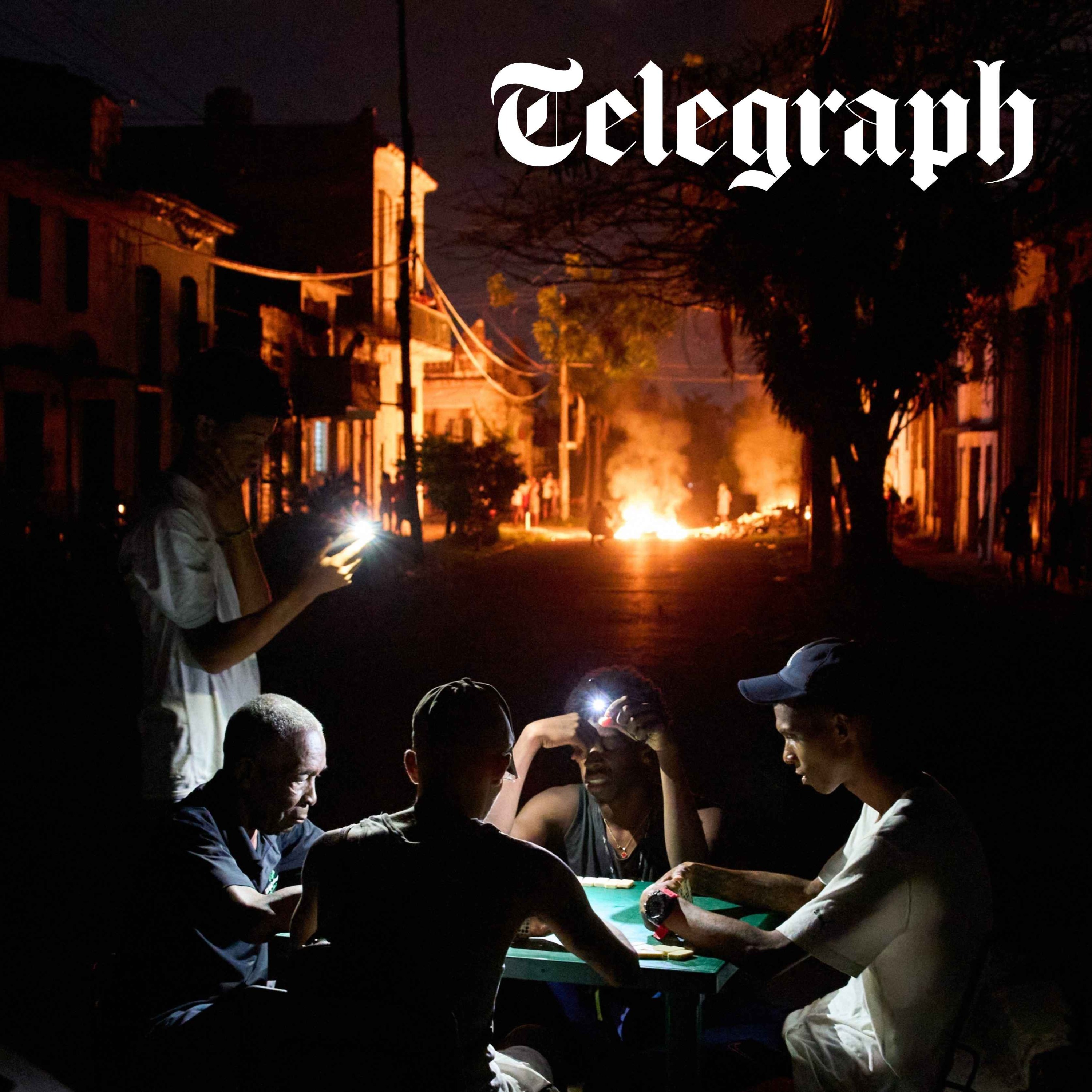
I was wondering what you could tell us about the. Or what is known about conditions in the country. On 29 January, Donald Trump signed an executive order ordering additional tariffs on oil being moved into Cuba, effectively a fuel blockade. And I've seen reports that that's really had a, a pretty big effect on the country. And how vulnerable do you think the country is at the moment? And what can you tell us about what conditions are like for ordinary Cubans at the moment?
- [29:18]
Carlos Sola
Very dire conditions, I'm afraid to say. It's been a mix of badly run country for six decades, plus the external conditions, plus their relationship with the United States. And being an island is not easy. You need connections to other economies. An island cannot process all the food that they need, all the energy that they need. So Cuba was running quite well when Venezuela was supplying oil, there was an exchange of products. Venezuelan doctors and professors in education, teachers are very good, and they've always been an exchange coin that Lavana has used. So when Venezuela was quite rich because oil prices were up and they were able to do business in the rest of the northern tip of South America and Central America and the Caribbean, Cuba was doing quite well when that went away. And when President Nicolas Maduro was extracted, that line of oxygen, straight line with Caracas was also cut off. So there's very little energy in the region, in the island, meaning there's very, very few hours of electricity. Imagine that electricity runs everything in our normal life, from how we run power at night to. To refrigerators, to any chance of having a computer. Think about how hospitals can be run. So the conditions are not good. It's an economy that it's basically, it was running on tourism. Westerners are not going to the island anymore. They were hoping that tourism will pick up with the Chinese and the Russians, and they are not going anymore. So you find many, many hotels and resorts in beautiful beaches in the island, which are now empty. So people are barely living with a few dollars. They don't have a proper diet. It's very difficult for the younger generations to attend school. And the Americans know this. And there's been a conversation about what the international community can do and how flexible the Americans could be in improving the conditions in the island. So this takes me to that speech that Marco Rubio gave in Spanish aimed at the Cuban population, in which he uses his very good Spanish. I have to say, to say that the conditions that you guys are living at the moment in the island have been caused by these years of bad government and by these years of figures such as Raul Castro. But that's difficult because it works when you have an empowered citizenship, probably an organized opposition that can rise. But there's very little energy in Cuba to have a popular arising, let's say, against the government, as we saw in Venezuela, very little energy. The security, intelligence, policing agencies are very tough in Cuba. So if you're planning anything, they are going to find you and your life will be miserable. So people are not thinking about throwing off the regime. They're not thinking about a coup. It's a model that has been for so long, and the conditions for any sort of idea to break the model will be Quickly cut off. So it's a very direct scenario.
- [33:12]
Roland Oliphant
Okay. Do you think that pressure though, that economic. It sounds like the blockade is having an effect. I'm wondering how you think this play out. This will play out. Is it. Do you think that the Cubans are going to have to make concessions to the Americans? And if so, I mean, what exactly do you think the Americans are looking for? They're not just looking for Raul Castro to be handed over in chains. Presumably they want something else. What do you think is the change that really the Americans have on their shopping list that they're trying to extract?
- [33:45]
Carlos Sola
Well, this is the critique to the American government. Right. They've been very transparent in terms of geostrategy and probably some military outcomes that they want to get out of Cuba and Venezuela and so on. Iran for example. But they've been quite silent in terms of where they want to go. We don't know where they want to go in Venezuela as well. We just know that they're buying time, that they're negotiating with Caracas and we might expect something quite similar in Havana. A slow transition where the end goal will be to reconnect the Cuban economy with the rest of the countries north, south of the island. But obviously with many concessions by Diaz Canel, he will have to prepare a transition, you know, get rid of all these intelligence and policing agencies that are suffocating any sort of democratic idea of sharing of power of new political parties and so on. We are seeing that in Venezuela.
- [34:59]
Roland Oliphant
Right.
- [35:00]
Carlos Sola
So they're quite keen on reopening the oil business. We now see that there are US diplomats in Caracas, for instance. So that recipe, you know, that shopping list might be replicated in Cuba. But first I think they will push more because we are not going to have that Nicolas Maduro being extracted type of moment that really cuts a before and after to the relationship between Washington and Caracas.
- [35:30]
Roland Oliphant
You don't believe that? I mean, I'm just seeing the Miami Herald reporting that the USS Nimitz and its and its strike group, that's the aircraft carrier, has been deployed to the Caribbean.
- [35:41]
Carlos Sola
That's the pressure that we're discussing. So that's the pressure that we're waiting. So if they rebuild this military massive amount of steel just at the coast of Lavana, this before and after moment will come. This critical juncture will come. Alright? So we might be seeing an early December of 2025 compared to what happened in Caracas in January 2026. All right, so it might be a month that they're gonna take, But it won't be easy because they did run a move that show their cards not just to their immediate adversaries, the coupons, the Venezuelans, but to the world. And the US Is exposing a lot of their military might to other adversaries. So I'm again, you know, taking one step back and thinking how much the US Is losing by going after the little guys when then they want to go after the big guys such as Iran and what might happen in the Indo Pacific if that region becomes hot at any moment.
- [36:56]
Roland Oliphant
I'd like to bring you up on that because thinking about the strategic picture, a few months ago, we had your RUSI colleague Jack Watling on the podcast talking about the state of the world and I think his latest book, actually. But we were talking about all this stuff about Venezuela and Iran and Cuba and what on earth might be animating, you know, all this expeditionary and these adventures that Donald Trump is embarking on. He said something very interesting. He said there's a thought in Washington that the idea is to remove potential allies of America's big adversaries before an actual confrontation with those adversaries comes down the line. And that in that sense, that may be what is. That may be the philosophy or the strategy that is connecting all this, you know, this sudden aggression towards countries like Venezuela, like Cuba, like Iran, trying to kind of, you know, remove, remove potential allies of China and Russia ahead of time if they think there is going to be a bigger confrontation in the Pacific. Do you think that is the strategy here? Do you think there is a strategy that unites all of these American military adventures?
- [38:25]
Carlos Sola
Absolutely. I think I agree with Jack. I think the Western Hemisphere represented many obstacles for Donald Trump to say, okay, now I can rest assured that at least my region is a pro Western, pro US Region with the up and downs. You know, you cannot push Brazil to become pro Trump from one day to the next. They will run their own foreign policy. That's how Brazil has worked over the last 20 years. But you clearly had connections with adversaries that were quite, quite visible. All right? You had the Chinese and their space projects. You had the Chinese embarking in many ports. So maritime projects from Argentina to Peru to Ecuador to Mexico, you have these choke points which are very critical for the west and the eastern side of the Americas, right? So two massive oceans that connect the region with the rest of the world, the Atlantic Ocean with Europe and the Pacific Ocean with Asia. So the Western Hemisphere has been overlooked in terms of geopolitics. And I think that Donald Trump has looked at the Map again and said, why do we have all these little fires within my region and why don't we put them up before a bigger fire starts elsewhere? All right, if you think these are smaller countries, Venezuela, Nicaragua, Cuba, but they do have certain regional proximity to the US So it's very easy to run a telecom operation, to run an intelligence operation, to put spies on their way up north to the, to the U.S. all right, so it does make sense for Donald Trump to do this. It doesn't make any sense for international law, for instance. All right, so all of this is very unilateral from the United States States. It does have the cooperation from certain governments in Latin America, in the Western hemisphere. But there's a whole discussion about international law here. But it's about the bigger picture, Roland. I think it's about this larger picture of regions being connected and how you push one of your adversaries out of one region and disconnect them from some critical lines of commerce, of minerals, of logistic lines of production. For instance, you have little countries in Latin America, smaller economies, let's call them, which are quite important for China. So a bunch of copper that China uses for its many, many, many technological, logistical chains comes from smaller economies like Chile or like Peru. All right, so if you start, you know, adding these little economies, you will hurt China, alright? You will hurt them because their economy will slow down. And I think Donald Trump is also being advised about. This is not just about military power, but it's a combination of geopolitics or a larger geostrategical view on politics, the economy, a societal factor. You need to be liked, you need to have, you need to have allies in order to run a larger geopolitical kind of a strategy.
- [42:00]
Roland Oliphant
It's interesting because I think often we're so blindsided by Donald Trump's behavior, it's difficult to believe that there is a strategic thought behind it. But it sounds like there is, there is a philosophy perhaps guiding all this. Carlos, thank you so much. We should probably end it there, but I just realized there's one question I haven't asked you about, and that is Havana Syndrome. This mysterious affliction that suffered by first appeared amongst US diplomats and spies at the embassy in Havana, but then appeared all around the world. We think it was a Russian sonic weapon. I'm wondering, I don't know, I mean, presumably the Cubans would have had to authorize the Russians to carry out the operation or not. I mean, if this isn't something you know anything about and can talk about, please say so. But it seems interesting to me that that apparent attack on American intelligence operatives and diplomats, the fact that it began in Cuba, tells us something about those ties with U.S. adversaries that you were talking about.
- [43:15]
Carlos Sola
Well, still, in the intel spying world of we don't certainly know, something similar was used by the Americans when they went and captured Nicolas Mauro. Some sort of very powerful technology that numbed down the guard in the Caracas palace.
- [43:37]
Roland Oliphant
Yeah, some kind of sonic weapon, wasn't it?
- [43:39]
Carlos Sola
Yeah, exactly. But I mean, if we were to say, okay, it's quite probable, where would you do this if not in a country where you have allies that will allow you to do it and won't punish you? So if the Russians were doing it, they won't do it in Mexico, they won't do it in Brazil, they won't do it in Buenos Aires, Argentina. They will do it in Havana. All right, they can reach Havana, disguise. They can take any sort of weapon, you know, in the chipping commerce that they used to have between, you know, Russia and kua, and they will do it. They will. No one will certainly raise any questioning and they will basically leave the country back into Moscow. So, you know, the history does make a lot of sense to actually do it there in Havana. Still out of this world, it's hard to believe that mankind has breached a weapon of this level of unprecedented skills. But yet again, we are being driven by AI and very powerful process processes of technologies that we've never imagined.
- [45:00]
Roland Oliphant
That was Carlos Sola, senior Research Fellow at the International Security Studies team of the Royal United Services Institute. That's all for today. It is a bank holiday weekend in Britain, so we will be back on Tuesday rather than Monday. But over the break, do tune in for a special bank holiday edition looking at the history and future of armoured warfare carrying the tank survive in the century of the drone. Until then, that was Iran. The latest Goodbye. Iran. The Latest is an original podcast from the Telegraph created by David Knowles and hosted by me, Roland Oliphant and Venetia Rainey. If you appreciated this podcast, please consider following around the latest in your preferred podcast app. And if you if you have a moment, leave a review as it helps others find the show. For more from our foreign correspondents on the ground, sign up to our new daily newsletter cables via our website or listen to our sister podcast Ukraine. The latest. We are still on the same email address battlelinestelegraph.co.uk or you can contact us on X. You can find our handles in the show notes the producer is Max Bauer, the executive producers of Anisha Rainey and Louisa Gross.
- [46:31]
Aramco Advertiser
Seeking, pushing, optimizing, creating, Learning, Discovering. At Aramco, we believe in harnessing the power of data to push the limits of what's possible. That's how we deliver reliable energy to millions across the world. Aramco, an integrated energy and chemicals company. Learn more about us@aramco.com.
- [47:01]
Commercial Voice
Okay, caller one wins courtside seats to tonight's game. What? I won floor seats. You did? I've been calling for 13. Wait. Chris. Yes. I finally did it. What are you gonna wear? Men's Wearhouse. They've got today's looks for any occasion, and I need to look like a celebrity. Don't want to stick out. Exactly. They've got Chill Flex by Kenneth Cole, Joseph Abboud, and a tailor at every store for the perfect fit. Congrats. You can stop calling now. Not a chance. Hit any look for every occasion at Men's Wearhouse. Love the way you look.