Loading summary
Transcript79 lines
- [00:04]
Sophia Yan
The telegraph.
- [00:10]
Monday.com Advertiser
Close your eyes. Focus. Listen to work getting done with Monday.com relax as AI does the manual work While your teams are aligned on a single source of truth, Feel the sensation of an AI work platform. So flexible and intuitive it feels like it was built just for you. Notice you're limitless. Limitless. Now open your eyes. Go to Monday.comstart for free and finally breathe.
- [00:42]
Ahmed Abadour
Acast powers the world's best podcasts. Here's a show that we recommend.
- [00:51]
Xin Yi Pai
Hi, I'm Xin Yi Pai. Five years ago, I sat down in front of a microphone with a simple goal to share stories from the eighties Asian American experience and to do that by talking about everyday objects. Now 10,000 Things is headed into its fifth and final season and we've got a new set of stories about coming fully into oneself, weird and wild and inspired. Tune in to the final season of 10,000 things from Acast Creative Studios, a podcast about modern day artifacts of Asian American life and the stories they reveal. Listen on Apple Podcasts, Spotify, Amazon Music or wherever you get your podcasts.
- [01:40]
Ahmed Abadour
Acast helps creators launch, grow and monetize their podcasts everywhere. Acast.com. Well, that's the one million dollar question at the moment. But it seems to me that there is a consistent census rising, including in the United States, that the winner is China.
- [02:02]
News Reporter
A short time ago, the United States military began major combat operations in Iran.
- [02:10]
Sophia Yan
Today, President Trump says Iran's supreme leader, Ayatollah Ali Khamenei, was killed in the attacks.
- [02:21]
Roland Oliphant
The Pentagon is weighing a takeover of that island as a way to force
- [02:25]
News Reporter
the reopening of the Strait of Hormuz.
- [02:28]
Ahmed Abadour
Iran begged for this ceasefire and we all know it.
- [02:32]
Roland Oliphant
Does anyone really think that someone can
- [02:34]
Ahmed Abadour
tell President Trump what to do?
- [02:36]
News Reporter
Come on.
- [02:39]
Sophia Yan
I'm Sophia Yan.
- [02:40]
Roland Oliphant
And I'm Roland Oliphant.
- [02:41]
Sophia Yan
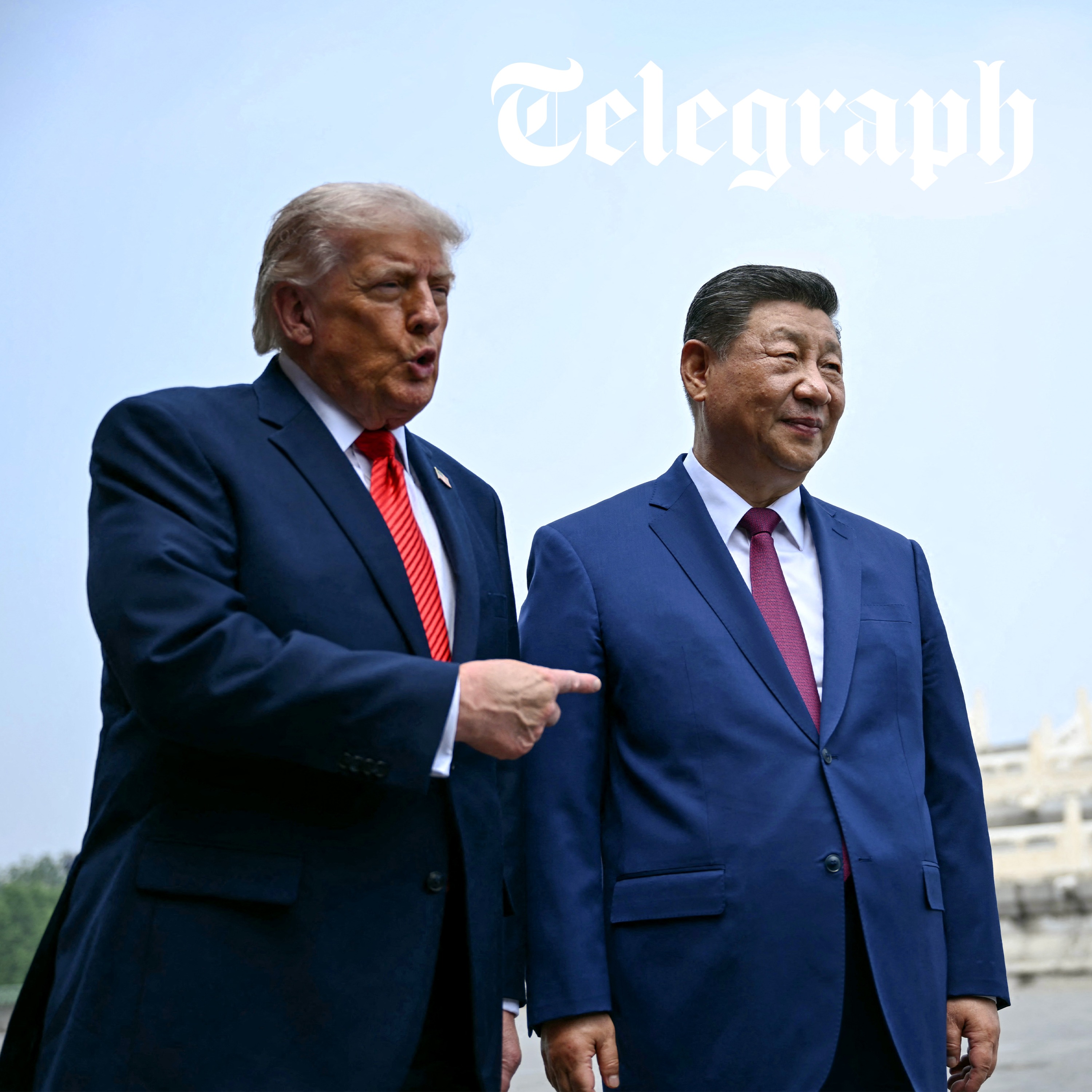
And this is Iran. The Latest. It's Thursday, 14 May, 76 days since the war began, 36 since the ceasefire came into force. The big news today is that US President Donald Trump has met with his Chinese counterpart Xi Jinping in Beijing over two hours. The pair of leaders spoke about a range of world issues, from Iran to trade and technology and Taiwan. Not as much out of those talks as you might have expected for a summit of this scale. More on that later in the episode.
- [03:13]
Roland Oliphant
But first, some news to the Strait of Hormuz. First of all, India says one of its ships came under attack off the coast of Oman. It's not given any immediate further details, but it has said all the crew were Safe. Separately, the British Maritime Security Agency the UK MTO reported on Thursday that unauthorized personnel had boarded a ship anchored off the coast of the United Arab Emirates ports of Fujairah and were steering it towards Iran. The security of Fujairah is particularly sensitive because that port is the UAE's sole port on the outside of the strait, the Indian Ocean side of the strait which is allowing some exports to reach markets without passing through the strait. Iran of course included it in an expanded map at release last week's of waters it claimed were under its control. So when it drew its its line defining its block the strait, it made sure that Fujairah was inside that line.
- [04:08]
Sophia Yan
This comes as multiple ships linked to China were able to transit Hormuz, one of which we mentioned yesterday, the supertanker carrying 2 million barrels of Iraqi crude oil. But all these ships were going through just as Donald Trump was in the air on his way over to Beijing for his meeting with Xi Jinping.
- [04:25]
Roland Oliphant
Iran's semi official Fars news agency has today said a little bit more about letting Chinese ships through. It is citing an informed source presumably in the Iranian government that says Iran has begun allowing some Chinese vessels to transit following what they're calling an understanding over Iranian management protocols of the waterway. The source told Fars that the move followed requests by China's Foreign Minister and Ambassador Tehran and that Iran had agreed to facilitate the passage of a number of Chinese ships in line with the two countries strategic partnership. It's not immediately clear how far that move has altered the situation on the ground. However, just a little comment from Iran. Iran's judiciary spokesperson Asghar Jahangir speaking today about other tanks. He says the seizure of US tankers violating Iranian regulations is being carried out under domestic and international law. And I presume he's referring to those two ships that we mentioned came under attack in the Gulf of Oman today.
- [05:26]
Sophia Yan
A two day meeting of BRICS nations has begun in India. Iran's Foreign Minister Abbas Arakchi attended and he called on all nations in attendance to condemn the violations of international law by the US and Israel. This is how Iran sees everything right now, including quote, their illegal aggression against Iran. He also said that the war was quote, illegal expansionism and warmongering and mentioned that Iran remained open to diplomacy, to more talks, but was reserving the right to defend itself with quote, all available means. And so Iran is calling on this bloc now for support to join hands and condemning what they see as inappropriate actions by the Americans and the Israelis. And this is interesting that Iran is going further and further afield out of the Middle east to find that kind of diplomatic support.
- [06:18]
Roland Oliphant
And to Lebanon, where fighting is ongoing between Hezbollah and Israeli forces. Despite the ceasefire brokered by Donald Trump last month, there will be a third face to face meeting in Washington between Israeli and Lebanese envoys today. That's Thursday. Lebanese officials telling the Newswise that they intend to demand that Israel CE fire a reminder that that latest conflict between Hezbollah and Israel erupted on March 2nd. It's run pretty much in parallel with the war in Iran. A ceasefire was declared at roughly the same time on April 16 as a ceasefire was agreed between Israel, the United States and Iran, but it expires on Sunday. The ceasefire in Lebanon, that is not the ceasefire with Iran. And a reminder that Iran suddenly sees these conflicts as fundamentally linked. And one of their demands, they say it's is that a ceasefire and a settlement in Lebanon is included in any deal to formally end the war between Iran, the United States and Israel. So high stakes meeting in Washington today.
- [07:24]
Sophia Yan
It's worth noting that despite the ceasefire that's meant to be in place in the region, there are still hostilities in Iraq. Iran has continued attacks against Iranian opposition groups in the diaspora based out of Iraq. And then over in Lebanon, there is still some fighting between Hezbollah and ISRA Israel, Hezbollah based in Lebanon. For these talks that are meant to take place in Washington later today, the aim is to disarm Hezbollah and to reach some sort of peace agreement. This is something that the Israelis have made clear, but worth noting also here that this is something that was already agreed to. Tensions flared up between Hezbollah and Lebanon and Israel back in 2024 on the back of the Gaza war. A truce was agreed at the time and all these things should have happened, but they have not been implemented in practice. And so in some ways we are back at the drawing table with the same set of issues at a time of even greater conflict and even higher
- [08:25]
Roland Oliphant
stakes and a sense of the violence there. Lebanon's health ministry reported 22 people killed in Israeli strikes on Wednesday, including eight children. The Israeli military said an explosive drone launched by Hezbollah fell within Israeli territory near the border and it injured several Israeli civilians as well.
- [08:43]
Sophia Yan
For the people in Lebanon that I speak to regularly, this is a war that has not ended. It's very clear.
- [08:48]
Roland Oliphant
That wraps up our roundup of the regional news. And now to the big news of the day. Donald Trump's trip to China, which had got well underway by the time we sat down in the studio this afternoon. By the time you hear this podcast it's quite possible that people will be asleep in Beijing. Sofia, what do we know about what has been said so far?
- [09:18]
Sophia Yan
Trump was welcomed with the usual pomp and circumstance. It was, by comparison, a little bit more reserved than his last visit about a decade ago to China. But still, there was a sense of spectacle from the military. There was a show of children showing excitement for Trump's arrival. But the context of this is that in China, everything is often staged. People in attendance and shown publicly like that on state media and for public consumption around the world will all have been vetted in advance and told exactly what to do. All tightly choreographed. A set piece event for Xi Jinping to show off his relationship with Donald Trump, something that plays well with the domestic audience. There was some cultural programming. Trump was given a visit to the Temple of Heaven and they sat through a state banquet. Tofu pork meatballs, a deep fried fish. Fish, lots of Chinese specialties on the menu. There was a bit of a joke within the Chinese Internet. On social media, Trump is known for loving KFC and McDonald's. And so a lot of onlookers were saying, well, he was going to be in time for Crazy Thursday in China, which is a discount once a week offered by kfc. So there was a joke that he might actually prefer that over the state banquet that had been prepared for his arrival. The readouts have come out from both the White House and also from Chinese Foreign Ministry about what happened in the meeting between Trump and Chinese leader Xi Jinping. The US Side is much shorter in terms of summarizing what occurred, whereas the Chinese side took a very lengthy approach in describing what happened.
- [11:05]
Roland Oliphant
Sophia, there's one other thing I want to ask you about, since you are our resident Mandarin speaker, is something about now Marco Rubio's name. Just explain this to us. It seems that the Chinese have had to fiddle around with Marco Rubio's name in order to be allowed to let him into the country. Just spell this out for us, please.
- [11:22]
Sophia Yan
Well, Marco Rubio, along with a spate of Western politicians and officials some years back, was sanctioned by China for being very vocal on human rights abuses against the Uyghurs. And so Rubio, technically is still under sanction, technically cannot go to China. Beijing has, since the start of Trump 2.0, had a little play with words, which is what has enabled him to touch down in China along with Trump. And this is a change in how his name is written in Chinese and so in Chinese, in Mandarin. Often with Western names, they do a transliteration, a way to make the name sound like it should in English or French or whatever language, but written in Chinese. And so they used to call him, get ready for this. It may not sound so different to foreigners. Lu Biao. Now they call him Lu Biao. So it's just a different way of writing, using a slightly different Chinese character to refer to Marco Rubio. And thus, on paper, it's not the same Marco Rubio who was sanctioned and thus not allowed into China, but a different one, but looks the same.
- [12:25]
Roland Oliphant
Donald Trump did speak publicly briefly in Beijing.
- [12:28]
Ahmed Abadour
Here's a.
- [12:28]
Roland Oliphant
Here's a little taster of what he had to say.
- [12:31]
News Reporter
You and I have known each other now for a long time. In fact, the longest relationship of our two countries that any president and president has had. And that's, to me, an honor. We've had a fantastic relationship. We've gotten along. When there were difficulties, we worked it out. I would call you and you would call me. And whenever we had a problem, people don't know. Whenever we had a problem, we worked it out very quickly, and we're going to have a fantastic future together. Such respect for China, the job you've done. You're a great leader. I say it to everybody. You're a great leader. There are those who say this is maybe the biggest summit ever. They can never remember anything like it. It's. I can say in the United States, it's, people aren't talking about anything else, but it's an honor to be with you. It's an honor to be your friend. And the relationship between China and, and the USA is going to be better than ever before.
- [13:32]
Roland Oliphant
Zafia, I think, because we're about to talk in depth about what all this means. Give us a sense of what the important things that have come out of these, these two readouts we've had from the initial meeting this morning between President Xi and President Trump. As you said, the, the White House readout is much, much shorter than the one we got from the Chinese mfa. What, what are the White House saying? What are the headlines here?
- [13:55]
Sophia Yan
The US has put out a statement just a few sentences long saying that it was a, quote, good meeting between Trump and Xi and that the two sides discussed ways to build on economic cooperation. This is something that's, of course, very important. The two world's largest economies finding a way forward on trade, for instance. This is very key. It's worth highlighting that in the U.S. statement, they talk about the issue of the Iran war. I'm just going to read this out now from the White House it says, quote, the two sides agreed that the Strait of Hormuz must remain open to support the free flow of energy. President Xi also made clear China's opposition to the militarization of the strait and any effort to charge a toll for its use. And he expressed interest in purchasing more American oil to reduce China's dependence on the strait in the future. Both countries agree that Iran can never have a nuclear weapon. This is very interesting to note that there is some area of agreement between the two countries. But again, there, as we'll hear later on in this podcast episode, there are serious personal interests for both the US And China to see eye to eye on this particular part of the Iran war.
- [15:03]
Roland Oliphant
Right? And that's full stop, end of statement. And that takes up about a third of the American statement. All that, you know, two or three sentences they spend there. And then if we turn to the China, the statement put out by the Chinese Ministry of Foreign affairs, we get a very long kind of introduction about President Xi talking about how the United States and China can they overcome the Thucydides trap. The famous reference to Thucydides suggestion that a rising power will always clash with a declining power, Athens and Sparta. In that case, aside from the padding here of which there is a fair amount, what would you pick out, Sofia?
- [15:39]
Sophia Yan
Well, I think first, like you say, there is quite a bit of padding. It's very much China's approach to be stately, to cast itself yet again as the stable world superpower at a time when the US has been so destabilizing internationally. It's really an opportunity for Xi. Some of this is not exactly a news flash in that Beijing often takes this approach. I'll read out from the statement here, quote, President Xi stressed that China is committed to a steady, sound and sustainable development of China US Relations. I have agreed President Trump on a new vision of building a constructive China US Relationship with strategic stability. This is something that China says all the time. The most important part of this, when you move beyond the discussion of economic and trade ties being, quote, mutually beneficial and win, win in nature, again, language that Beijing uses repeatedly, is that President Xi posed to Trump what sounds like a threat.
- [16:34]
Roland Oliphant
Can you just read this out verbatim because I think this is important for, for our listeners to hear this paragraph of the of the MFA statement.
- [16:43]
Sophia Yan
In the official English translation from the Chinese Foreign Ministry in the readout for the meeting, it says, quote, president Xi stressed that the Taiwan question is the most important issue in China US Relations if it is handled properly. The bilateral relationship will enjoy overall stability. Otherwise the two countries will have clashes and even conflicts, putting the entire relationship in great jeopardy. Quote Taiwan independence, end quote. Cross strait peace are as irreconcilable as fire and water. Safeguarding peace and stability across the Taiwan Strait is the biggest common denominator between China and the U.S. the U.S. side must exercise extra caution in handling the Taiwan question. A lot of concern over what this really means. China essentially sounds like it's issuing a threat to the US saying that this is their absolute red line. They've made it crystal clear. This is something they've said before, but this is perhaps the strongest way by which they put this forward to the
- [17:41]
Roland Oliphant
US There was a very explicit here, aren't they? Taiwan question is the most important issue. I mean, it's quite blunt. This is what we want to talk about. This is the thing we care about. Well, you might have come here, wanted to talk about Iran, but that's what we want to talk about.
- [17:54]
Sophia Yan
Exactly. From the U.S. perspective, there's interest in getting China onside to help handle the conflict in Iran to bring things to a close in the Middle east because China and Iran do have a strong relationship. There's also a concern from the US to build on trade ties. Again, as I said, the two largest economies in the world trying to find a way to work together is very important. There are other concerns for the U.S. for instance, shoring up the rare earth supply chain, critical minerals of which China dominates. But from the Chinese perspective, they are in a stronger position by comparison to the us and for them, the Taiwan issue is an existential question. This is something that they see as striking at the heart of their sovereignty. They don't think that the Taiwan question is something that should be up for debate because they see Taiwan as its own territory. Thus it's something that is a domestic concern and not one for international debate or controversy. Of course, if you ask the Taiwanese, they, they see this very differently. Taiwan is governed independently. It's got a democratically elected leader. They've got their own currency, their own military, their own foreign policy. And they do have ties with the US on defense cooperation.
- [19:04]
Roland Oliphant
And by comparison, the Chinese readout on the Middle east, there is one sentence, the sentence reads, the two presidents exchanged views on major international and regional issues such as the Middle east situation, the Ukraine crisis and the Korean peninsula. So very much bundling up. The Americans may have really, you know, talked about Hormuz and Iran quite a lot. The Chinese very much saying, like, yes, there is all this stuff, but Taiwan that's our, that's our thing. Sophia, very quickly, before we could turn to our, our guest, have Taiwan themselves had anything to say about this? It's a bit annoying when other people are talking about you behind your back. Have they said something?
- [19:42]
Sophia Yan
Taiwan has already responded to what she had to say to Trump. To the government in Taiwan, it is not a question, as China says. The Taiwanese government, their foreign ministry has put out a statement saying that, quote, the sole factor contributing to instability in the Taiwan Strait is China's authoritarian expansionist behavior. It said that Taipei was, quote, committed to maintaining the status quo and ensuring the Taiwan Strait, quote, remains free from threats and disruption. Accusing China that it was, quote, continuing to engage in threatening and aggressive provocations. Taiwan again, making clear that they're not the instigator and that they're not the troublemaker. And in fact, Beijing is the one that's causing the trouble and the tensions in the region. Trump is in China for one more day. The outcome of the meeting so far seems like things are on track. This particular summit was expected to be one of a series to be kicked off so that both the US And China could, somewhere along the line, agree to guardrails for strategic competition for how the two powers might engage with each other. Essentially rules of the game. And so now Trump appears to have invited Xi to the White House for September.
- [21:01]
Roland Oliphant
Fascinating stuff. We are going to take a short break now. When we come back, we'll be talking to Ahmed Abadour of Chatham House about the relationship between China and the Middle east, what all of this means for America, for China, for Iran, the other Gulf states, and for you, me, and everybody else on the planet who is at the mercy of these two incredibly powerful countries. Stay tuned.
- [21:30]
Acast Advertiser
Quick question. When was the last time a display ad changed your mind? Now, think about the last time a friend told you about something they loved. Different feeling, right? That's how podcast advertising works. A host who's built real trust with their audience talks about your brand in their own words, in their own voice. It doesn't interrupt the experience. It's part of it. With a cat Acast, you can access the world's largest podcast marketplace. Choose the right shows, the right audiences, the right format, then watch the data tell you it worked. You're not buying impressions, you're buying influence. Learn more by visiting acast.com advertise.
- [22:13]
Sophia Yan
Welcome back. You're listening to Iran the latest with me, Sophia Yan and Roland Oliphant. Earlier today, we're, we spoke with Ahmed Abadua, a Senior Fellow at Chatham House. He focuses on China's rising influence in the Middle east and North Africa. And he had a lot to say about the Xi Trump meeting and what that means for the world going forward. Here's our conversation. Ahmed, thanks so much for joining us. Trump and Xi have just concluded their two hour bilateral meeting meeting and I think they're heading right now into the state banquet. So some headlines already out. Just wondering what you make of what has happened between the two leaders and what they've talked about.
- [22:55]
Ahmed Abadour
It seems to me from the two statements that have been released so far that the two priorities are different completely. I think the Chinese wanted to focus on Taiwan, predictably as the most important issue in the bilateral relationship. As President Xi said, he even threatened the United States conflict. And he, in my view, wanted to sit the reddest of the red lines in the relationship, as the Chinese call it. But on the other hand, the Trump administration wanted to focus on trade investments. It seems to me also that Trump wanted to get out of this meeting quite early with the political win by emphasizing that he convinced President Xi to buy more energy from the United States, to diversify away from the Hormuz Strait and to give the impression that there is great progress on trade talks as well. So, conflicting priorities. But I wouldn't say this is a surprise because also we saw in the United States statement emphasis on Iran, but very few to no mention at all in the Chinese statement. And this also tells me a lot about what each president want from this meeting and what the priorities are on
- [24:10]
Sophia Yan
the issue of Iran. What do you think it is that China wants most and what do you think think the US Wants most from China on the issue?
- [24:16]
Ahmed Abadour
I think let's start with the United States because they are the ones who mentioned it first. I think the emphasis in the statement shows me the level of desperation that President Trump is in right now when it comes to Iran. He desperately wants an off ramp from the conflict and he understands that the only country that can exercise meaningful pressure on Iran to give any concessions in the negotiations is China.
- [24:41]
News Reporter
China.
- [24:42]
Ahmed Abadour
He downplayed China's influence before he landed in Beijing, but we all knew that he expects China to discuss this and to be more involved through all the requests that the Trump administration's senior figures have been making to China to play a greater role in the in the negotiations. It also is connected to the domestic politics in the United States. Opinion polls indicate that the Republican Party might lose the midterm elections because of the rising inflation and especially the prices of oil. And gas. And this is all connected to the crisis in this rate of Hormuz. On the other hand, China is hurt when it comes to its energy supplies, but not to this to the same level as many countries, including here in Europe and in Asia. I think this also is reflected in how high Iran scores in the list of priorities in China. I don't see the Chinese considering Iran as important as trade talks or Taiwan or tech competition. In fact, I would even go as far as suggesting that the Chinese see Iran as an unnecessary distraction from the important issues they want to focus on. That said, I think in the closed doors, I cannot rule out that there was an important discussion between the two leaders. And we have seen behavior from the Chinese towards accepting the invitation from the United States to play a greater role. There were rumors that Chinese diplomats were present in Islamabad during the negotiations between the US And Iran. And we have seen the Iranian Foreign Minister visiting Beijing and hearing quite clear positions from the Chinese. I would say even the clearest in a long time, that China is not in favor of Iran on having a nuclear weapon and that the Strait of Hormones should be open to safe, a normal passage again, because China, and this is very telling as well, speaking on behalf of the international community, said that this community wants this trade of Hormuz to be open again. And also advocating for a comprehensive deal between Iran and the United States, which tells me that actually the United States and China are aligned in their priorities when it comes to Iran.
- [27:08]
News Reporter
Iran.
- [27:09]
Roland Oliphant
Any idea what that actually might mean? Because I suppose one of the questions is, you know, how much leverage does China really have over Iran and how willing are they to use it and in what way? Because it's one thing to be aligned and kind of broadly agree that we don't want Iran to have a nuclear weapon. Fairly unsurprising. We would like the Strait of Hormuz to be open and free for traffic. I suppose the question is, what do you think China might be prepared to do to reach those goals?
- [27:38]
Ahmed Abadour
To understand the answer to this question, I think we have to start with what the United States want China to do. And in my view, they want three things. The first is Chinese refineries to stop buying discounted Iranian oil. China stop its exports of dual use material and technology that is used to enhance and rehabilitate the defense manufacturing base in Iran and also to play a broader diplomatic role in trying to bail out the United States from this war. So can China do anything about that? I think it can do some effort, especially in the diplomatic sphere of things But I do not see China using its economic leverage on the Iranian regime to get it to do anything meaningful in favor of the United States. In fact, Chinese say all the time that this is not our war and whoever tied the bell in the tiger's neck has to, has to remove it. In addition, pressure in the sense that we understand it here in the west doesn't exist in the Chinese strategic culture. They don't come around and tell their partners what to do. All they do is to tell them what their red lines are and what they expect for the good of the whole, whole international community to be. But they will never say, if you don't do that, we are ready to do this to you. In other words, if Trump expects Xi Jinping to hurt Iran in any way, to compel it to give concessions in the negotiations, I think he's liable to be disappointed. We also saw that in China forcibly using its countermeasures when the United States sanctioned Chinese refineries this month and Chinese companies giving access to satellite imagery to Iranian entities, they told these refineries and these companies to not comply with the United States sanctions. I think the Chinese are ready to go a long way in defying what the United States wants. And I don't think they come to this summit with aligned understandings from the US Point of view. They, I think, understand that they might use Iran as leverage or they can exchange it or using as a bargaining chip in return for other favors for China. I don't think the Chinese see it the same way and I do not think subsequently that they are ready to help the Americans and everything they demand regarding Iran.
- [30:25]
Roland Oliphant
Noticeably, it's already been picked up by commentators and the kind of the live blogs following this. But in this first US readout of discussions, there is no mention of Taiwan that that may suggest a kind of quid pro quo. I will keep quiet on Taiwan if you scratch my back on Iran. Do you think that's what's going on there?
- [30:47]
Ahmed Abadour
I. We don't see that happening because as the Chinese statement explained quite clearly and all the Chinese policies before the summit, that Taiwan is not a bargaining chip and Taiwan will not be dealt with accordingly. And it was very clear the Chinese saying it should be handled very carefully and that the United States should change its position on Taiwan. This is an existential issue for the Chinese and where the whole bilateral relation with the United States is depending on it, as the statement said. So I don't see the Chinese are putting Taiwan and Iran as equal issues in the list of priorities and Even if the United States guest wanted this to happen, I don't see the Chinese responding positively to his wishes.
- [31:47]
Sophia Yan
I mean, it strikes me it's interesting that both the US And China, as you said before, are pushing on an opening of the Strait of Hormuz and also for some sort of conclusion, for a trade truce of sorts and a truce with the war and also for the nuclear issue to be resolved, for Iran not to move forward on nukes. Where do you think Beijing stands? I mean, China's got its own fairly impressive nuclear weapons program. Where do they stand on trying to say that Iran shouldn't continue on?
- [32:15]
Ahmed Abadour
I think, as you said, the. The Chinese themselves have a large nuclear program, and that's why they see the right of Iran having a nuclear program as a sovereign right. That shouldn't be included in the discussions. But this nuclear program should remain peaceful and should be used only for civilian purposes. They are absolutely against Iran having a nuclear bomb. And this is for a very clear reason. The Chinese are very worried that if the Chinese achieve this goal, they will trigger a nuclear race in the Middle east and North Africa which will destabilize the region in the long term. In addition, they see that if Iran has a nuclear bomb, they might establish a level of deterrence vis a vis the United States and Israel that makes these countries think twice in the future before attacking Iran. This will be an established norm in the international politics that can encourage China's rivals in the Indo Pacific, and I'm here specifically referring to Japan, Australia and South Korea to pursue the same target as Iran to establish deterrence vis a vis China. So the Chinese think that it is in their utmost interest to see Iran refraining from this goal of having a nuclear bomb. That's why they are pushing the Iranians actually to abandon this military nuclear program.
- [33:53]
Sophia Yan
Who do you think is the winner out of this, China or the U.S.
- [33:57]
Ahmed Abadour
well, that's the $1 million question at the moment. But it seems to me that there is a consensus rising, including in the United States, that the winner is Trump China in the long term because of many factors. The first is that the Chinese are trying to present the United States as a hegemonic power that is not interested in stability and peace and security and that it doesn't have any regard for international law. One example is the blockade of Iranian ports in the Strait of Hormuz. It is a direct violation of the UN clause and against the principle of freedom of navigation and safety of navigation in the law. In addition, this actually gives the Chinese credence to do the same in the Strait of Taiwan if they decided to make a move on Taiwan because they will say or argue then that the United States did it in the Strait of Hormuz and that we don't expect the same level of condemnation because we are just, just following what the hegemonic power in the international system did. Given that we consider as Chinese, Taiwan is part of China anyway and the Strait of Hormuz is not as international water. The second part is that the Asian countries now are very worried about the priorities in the United States based on the volatility in the United States foreign policy from an administration to another. Under the Biden administration, the network of alliances in the Indo Pacific was an utmost priority. Now it doesn't seem to be a priority for this administration. In fact, even they moved military assets from Asia to the Middle east and the Gulf to help with the Iran war, exposing these countries security to Chinese assertiveness in the South China Sea and around the Taiwan Strait. So this is a big debate now in Asia and a huge concern.
- [36:08]
Roland Oliphant
There was a report, we picked it up actually in the New York Times yesterday saying China is secretly planning to ship arms to Iran via third countries to disguise their origins. US Intelligence reports. The New York Times was citing officials said they did not believe the Chinese government had formally approved weapons sales to Tehran, but that those shipments were unlikely to have taken place without the knowledge of senior figures. Which sounds like a bit of a fudge. What are we to make of that? Because if it's true, of course it does kind of belie the idea that the Chinese are purely the responsible power here and not getting involved in the conflict in any way.
- [36:46]
Ahmed Abadour
This is an irony to me because these reports serve the objectives of both Iran and the United States. The United States wants to show that the Chinese are involved in directly militarily supporting Iran, Iran against the US forces in the Gulf. And the Iranians want to show that they have the support of a great power and they are not isolated. And in fact they can continue in this fight based on the support. So they align on this strangely. But I take all these reports with huge bunch of salt because I do not believe that the Chinese want to violate the UN embargo on exporting arms to Iran that has been reinstated lately in the Security Council. They also don't want to alienate the Gulf states by providing sophisticated weapons to Iran that can tip the balance of power in the Gulf. And they don't want first and foremost to jeopardize their bilateral relationship with The United States, which is way more important in terms of investments, trade, security coordination than their comprehensive strategic partnership agreement with Iran. What I think is happening is China is still supporting Iran but only in the realm of dual use technology that is the engines for drones, the solid fuel for missiles, navigation systems, access to the Baidu navigation system system and so on and so forth. And I think this is not little help. In fact it is very strategic help because without these components and technologies Iran won't be able to rehabilitate what has been damaged in its defense industrial base after the war. And I think the Iranians see it as a very important help for them. The other factor here is that that the Chinese are bankrolling the Iranians indirectly by buying their cheap oil which represents 45% of the total Iran's budget. And this is very, very important. And I don't think the Iranians would want this to go away. So I think there is an interdependence here between Iran and China but it is very important from an Iranian's perspective more than from a Chinese perspective.
- [39:16]
Roland Oliphant
I was wondering if we could flip it around and look at this relationship from. From the Middle East I suppose from Tehran, but also from the other countries on the Persian Gulf, the Saudi and UAE and so on. What's their view of the relationship with China? I suppose we ought to start with Tehran since they're the most relevant one. Do they see China as indispensable as an ally or as a partner? That's not particularly to be trusted.
- [39:42]
Ahmed Abadour
The Iranians are divided over this. The more conservative camp and the IRGC see China and Russia the only alternatives they have at the moment and that all the west, including European powers cannot be trusted. The more reformer camp don't trust really the Chinese and always complain about the discrepancy in the amount of investments and trade the Chinese are doing with the other side of the Gulf, that is the Gulf states and accusing them of not doing enough to support the Iranian economy. So there is this debate and this was very loud before the war but as I wrote before for Chatham House that every round of war and bombing Iran by the United States and Israel will increase in the long term Iran's reliance on China because they will not find any other alternative and they will have one option but that is deeper partnership with China when it comes to the Gulf states. I think it is very interesting also before the war they enjoyed this deeper partnership with China. And there is one important component in the Gulf States strategies towards the Chinese Iranian relationship is that making sure always that this relationship does not not overtake their partnership with China. They will do everything in them, in their power to stay atop of Iran when it comes to the partnership with China. In addition, they have, as we know, defense and security partnership with the United States. So hedging there is very obvious economy and oil trade with China, advanced technology, security and defense with the United States. And they didn't have a problem with that whatsoever. And they knew that the Iranian Chinese partnership is very transactional and doesn't involve any Chinese behavior that can be seen as risk, direct risk to the security. However, after the war, I think this might change slightly because the security posture of the Gulf states will change. The United States will remain the paramount and main security principle and guarantor of the security architecture in the Gulf. However, I think they will try to diversify their defense partnerships to include other powers, including the United Kingdom, including France, Ukraine and South Korea, Japan and other powers in this regard, because the air defense technologies that they used against the barrage of attack attacks from Iran proved very effective in shielding their civilian infrastructure and citizens from greater damage. So they will try to obtain more of this technology from the United States and other powers as well. And they will also try to coexist with Iran. Eventually, inevitably, they will sit down at the table, or some of them at least, especially Saudi Arabia, with Iran again at the table, and try to sketch out a new framework that allows both sides to live together without being perceived by each other as a threat. The only power in the world that can facilitate this is China, as we saw it did already in 2023, by helping both Saudi Arabia and Iran to sign a rapprochement deal between them. And surprisingly, this deal is still holding, holding despite the reports that Saudi Arabia actually retaliated by conducting strikes inside Iran. But even during doing that, while they were doing that, the communication channels remained open and coordination and exchanging of views on security remained on the table. So I think China will play a greater role in the longer term in putting together this, what the Chinese call a new Gulf security architecture that will be promoted and defended during the upcoming second China Arab Cooperation Summit in June that will happen in Beijing.
- [44:17]
Roland Oliphant
About that Saudi Iran deal that you talked about, I was wondering how important the Chinese really were there. I mean, was that something the Saudis and Iranians could have come to themselves because they wanted to, or were the Chinese kind of opportunistic in attaching themselves to it?
- [44:32]
Ahmed Abadour
When it comes to the mechanics of mediation, the Chinese did little. The Saudis, the Iraqis, and the omanis did since 202021 until 2023. However, both Saudi Arabia and Iran wanted a great power stamp on the deal. So obviously the United States cannot do this because of the hostile relationship it has with Iran. So they went to China. But I absolutely agree with your point on the consensus between them. And this is exactly what I wanted to clarify in my previous answer. This consensus will happen eventually because this is unsustainable or what is happen between Iran and the Gulf states. And they will both realize at some point that this has to stop. And how this will be stopped by sitting down at the table and try to figure out how the new security architecture should be. And when this consensus happen and the priorities across the Gulf change, they will seek also another blessing from a great power. And the United States again will not be in a position to allow it to support and give the umbrella for such a deal. So they will have to go back to China because both powers cannot see any other alternative. There is another point I wanted to make here, if you allow me, on who has the upper hand in the trade talks. And I think it's very obvious now that both leaders walk into the room with China being the adult in the room, because Trump, when he came to power in January 2025, he prioritized tariffs and sanctions as the main tool of conducting foreign policy. But then the Supreme Court take talk this away from him by ruling that this is unconstitutional. So the Chinese understand this and they know that Trump's hands are tied now. But on the other side, as you know, Xi Jinping has a broad mandate to do anything, really whatever he wants, especially when it comes to the export controls on critical minerals. So the balance of power here or the balance of influence inside this summit is tilting towards Beijing. And the same could be said about Iran. The United States is bogged down in the Gulf and it seems to me that they cannot find a way out. While China, yes, is hurt because of the Hormuz crisis, but it is one of the most insulated major economies in the world because the reliance on the shape owners, if we take the whole consumption of energy inside China, not only the imports, is not more than 20%.
- [47:21]
Roland Oliphant
A lot has been made of this kind of rift between Saudi and the Emirates over the response to the war. And the suggestion being that the Emirates have lent in much closer to the kind of Israeli American alliance and that that kind of feeds into a rift between Riyadh and Abu Dhabi. Anyway, I was wondering if you know anything about that or you can explain if there really is a rift there or if there is a difference in approach or attitude to the Iran problem between KSA and uae, I think it
- [47:48]
Ahmed Abadour
ties into the rift that has been happening before the war and this is stemming from different visions for the regional order, border and subsequently different policies and initiatives. The United Arab Emirates seems to be interested in supporting militias and non state actors all over the region and to acquire strategic infrastructure that is mainly ports and airports all over the region. While Saudi Arabia is very skeptical about dealing with non state actors and supports traditional regimes and governance. In addition to when it comes to the perception of Iran, the United Arab Emirates came out to be the most forthcoming in the Gulf. When it comes to seeing Iran as a long term threat, that has to be dealt with. While Saudi Arabia sees Iran as a reality that will not go anywhere anytime soon and that inevitably we will have to coexist with it. So this will deepen the differences in views and opinions. But also there is an element of Competition. Competition. The MBS now under Vision 2030, they want to replicate the Dubai model by opening up the economy and inviting multinational companies to have headquarters in Riyadh and elsewhere inside Saudi Arabia and even threatening them if they do not move their headquarters from Dubai to Saudi Arabia. They will not do business in Saudi Arabia while the UAE sees that as a hostile policy that wants to put restrictions on their potential growth in the future and jealousy quite frankly. So this will stay with us. But when it comes to Iran, this is telling and ties exactly to what I was explaining previously, that the war will make the United Arab Emirates and Saudi Arabia chart different trajectories when it comes to their bilateral relations with Iran. The United Arab Emirates, as senior officials said, will try to double down on their partnership with the United States and Israel to balance the Iranian influence and threat in the future. While Saudi Arabia actually sees Israel as the main threat, especially its expansive foreign policy and assertiveness all over the Middle east since October 7th and sees Iran as a bulwark that the new quad that is rising now in the Middle east that consists of Saudi Arabia, Egypt, Turkey and Pakistan might need Iran in the future under certain conditions. One of them is stop threatening Gulf neighbors to balance the Israeli ambitions to establish hegemony all over the Middle east. And even senior royal family members wrote about that recently. And I think the four powers I mentioned share this view towards Israel, which divide the Middle east into two camps. One that has this quad with these views and might in the future include some cooperation relationship with Iran and the other is the United Arab Emirates, Israel and some African countries and non state actors that see Iran as the main threat. So I think this rift will ripple across the Middle east for years to come until we settle down on a consensual view of the regional order between these two countries pose.
- [51:24]
Roland Oliphant
That was Ahmed Abadour of Chatham House speaking to Sophia Yan and I about the Trump She Summit today.
- [51:32]
Sophia Yan
That's all for today's episode. We'll be back with you tomorrow.
- [51:35]
Roland Oliphant
Until then, that was Iran the Latest Goodbye Goodbye. Iran the Latest is an original podcast from the Telegraph, created by David Knowles and hosted by me, Roland Olyphant and Venetia Rainey. If you appreciated this podcast, please consider following Iran the Latest in your preferred podcast app. And if you have a moment, leave a review as it helps others find the show. For more from our foreign correspondents on the ground, sign up to our new daily newsletter Cables via our website or listen to our sister podcast Ukraine the Latest. We are still on the same email address battlelinestelegraph.co.uk or you can contact us on x. You can find our handles in the Show Notes the producer is Peter Shevlin. The executive producers are Venetia Rainey and Louisa Wells.
- [52:32]
Ahmed Abadour
ACAST powers the World's Best Podcasts Here's a show that that we recommend.
- [52:39]
Taryn and Cami
Do you want to know the best part about being married to a woman? That there's no man involved. I mean, true, but I was going to say that it's a sleepover every single night with your best friend.
- [52:48]
Sophia Yan
Oh yeah, that part's cute too.
- [52:49]
Taryn and Cami
I'm Taryn, she's Cami. We're married and staying up is our weekly pillow talk out loud with you.
- [52:54]
Sophia Yan
We're giggling, we're gossiping, we're arguing.
- [52:57]
Taryn and Cami
Classic marriage stuff. Just having fun being wives while we navigate growing up and building a family together.
- [53:02]
Sophia Yan
Then our sleepover Gross. Our listeners call the Pee Pee Hotline with their own gossip, burning questions, late night spirals, all the stuff they'd only tell their best friends.
- [53:10]
Taryn and Cami
So it's a private sleepover, but you are invited Staying up with Taryn and Cami. New episodes weekly follow wherever you listen.
- [53:19]
Ahmed Abadour
ACAST helps creators launch, grow and monetize their podcasts everywhere. Acast.com.