Loading summary
Transcript105 lines
- [00:04]
Tom Sharp
The telegraph. This is a Monday.com ad. The same Monday.com designed for every team. The same Monday.com with built in AI scaling your work from day one. The same Monday.comwith an easy and intuitive setup. Go to Monday.com and try it for free. Your new home is now ready. Dr. Horton, America's builder has new homes
- [00:29]
Roland Oliphant
that are ready today with new construction
- [00:31]
Tom Sharp
communities and Ellensburg and throughout the Greater Seattle area.
- [00:34]
Roland Oliphant
Dr. Horton has the right home for you.
- [00:37]
Tom Sharp
At Dr. Horton we're still building with flexible living spaces, smart home technology and two and three car garages.
- [00:44]
Roland Oliphant
More communities and more homes available every day.
- [00:47]
Tom Sharp
Find your new home in Ellensburg now ready@drhorton.com Dr. Horton, America's builder and equal housing opportunity builder.
- [01:00]
Roland Oliphant
So what we're seeing unfolding now is part of something that has been planned and thought about and game plan for years.
- [01:05]
Tom Sharp
For years. It's a very high.
- [01:07]
Roland Oliphant
You're seeing stuff happening now that you were part of. You would have been part of if you were still in. You recognize this plan 100%.
- [01:15]
Nicholas Hopton
A short time ago, the United States
- [01:18]
Tom Sharp
military began major combat operations in Iran. If you kill Americans, if you threaten Americans anywhere on earth, we will hunt you down without apology and without hesitation and we will kill you.
- [01:35]
Roland Oliphant
We were not involved in the initial strikes on Iran and we will not join offensive action now.
- [01:42]
Tom Sharp
Today, President Trump says Iran's supreme leader, Ayatollah Ali Khamenei, was killed in the attacks.
- [01:49]
Roland Oliphant
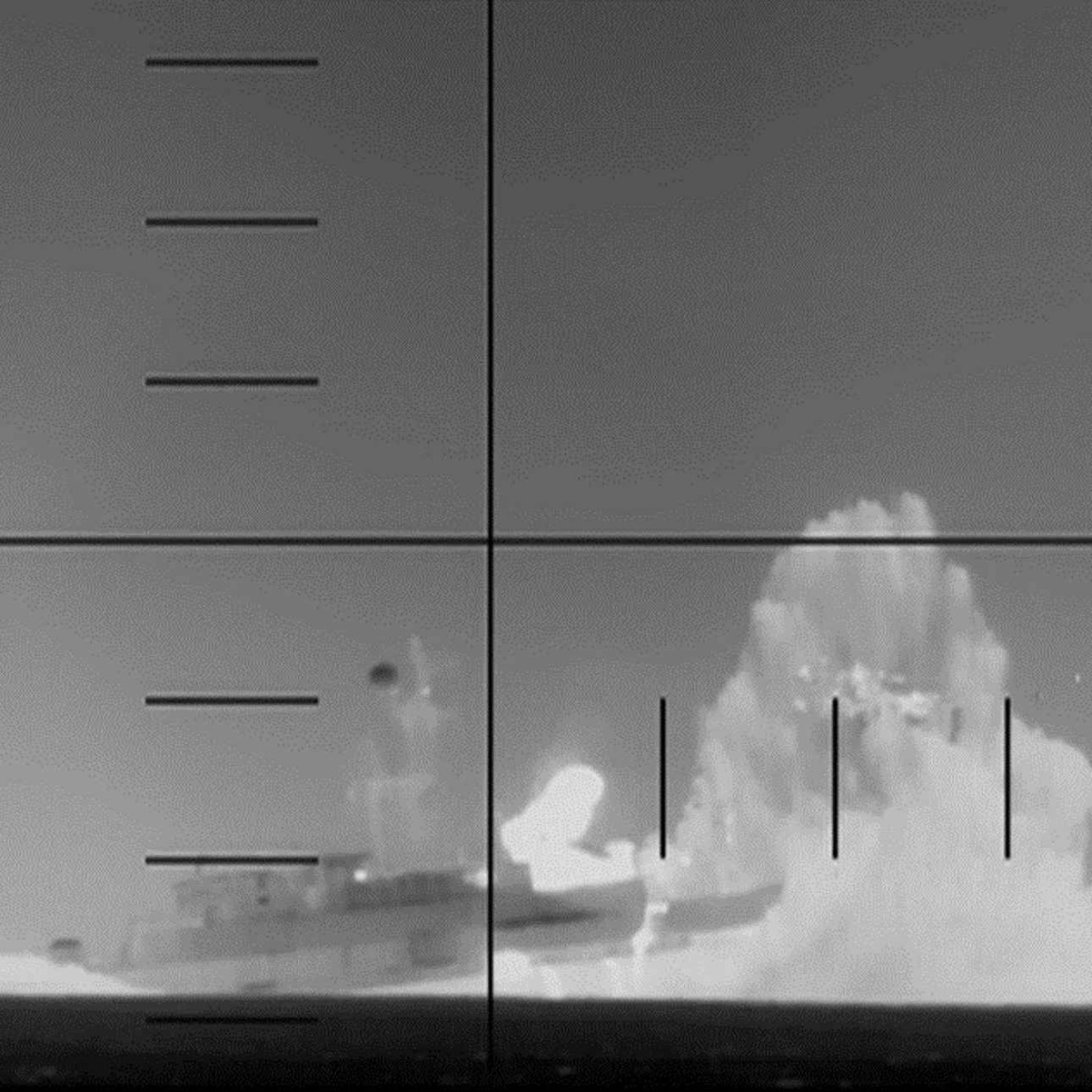
I'm Roland Oliphant and this is Iran, the latest formerly Battle Lines and Telegraph's Foreign Policy and Defense podcast. It is Thursday 5th March, 2026 and day six of Israel and America's war on Iran. Events continue to move quickly in Washington. A bipartisan resolution aimed at limiting President Donald Trump's ability to wage the war on Iran has failed, leaving him a constitutionally free hand to pursue the conflict. Meanwhile, the scope of the conflict on the ground continues to expand. An Iranian ship was sunk by a US Submarine off the coast of Sri Lanka. There are once again today reports of very heavy bombing in Tehran and other cities and perhaps most significantly, confused reports. I must say that they are confused about the imminent entry of separatist Kurdish militias into the war backed by the CIA. Before we go any further, I'd like to make a more explicit point about that. The reports of Kurdish incursions into Iran are as yet unconfirmed. Some of them have been denied by the time you hear this recording. That may have changed, but nonetheless, it is worth pointing out that this is a warning shrouded in misinformation. I spoke to a US source who told me that the reports of imminent Kurdish involvement were probably a strategic release of information. Make of that what you will. It's our job here at the Telegraph to reach through that fog of war, to try to establish the facts and to sweep aside, as best we can, attempts by all sides in the conflict to spin, manipulate and make mislead. We will do our best to do that throughout the conflict. With that in mind, let's turn to our first guest, Tom Sharp, the former Royal Navy commander who himself spent many years preparing for war in the Gulf. I want to dive straight in because one of the reasons we want to speak to you, apart from the fact that you bring in fantastic viewing figures for us, is that when the. Going back a few years, when the Ukrainians raided Sevastopol with surface drones, I remember speaking to you and you saying, we were training for this for years, but we are expecting it to happen in the Persian Gulf and we expected it to be the Iranians doing that. Now, I thought of that in the past few days, because what we've seen when we talk about the maritime domain of this war, is the Americans making a big. A big point and putting great publicity into sinking. They call it sinking. The Iranian navy, they've taken out. I've lost count of the number of ships that they've sunk now, but I think it's getting towards 20 officially. But I remember you telling me that the real issue was their fast boat. So could you just give me your thoughts on that and what's going on?
- [04:40]
Tom Sharp
Yeah. The Iranian navy, Erin, is a hangover from when they had a regular navy. They got absolutely beaten down in Operation Ernest Will back in the late 80s and praying mantis. So these are American operations, American operations against the Iranian navy and air force. When they had conventional forces, they had a conventional navy and a conventional air force.
- [05:00]
Roland Oliphant
It was during the Iran Iraq War,
- [05:03]
Tom Sharp
the back end, 1988. So the back end of that, they got absolutely malleted in Praying Mantis, and they sort of swore from that day on that they would reconfigure their entire way of warfare to stop that happening again. Now, they've kept some legacy ships, they've built some more, they've bought some more, they've got that sort of converted drone carrier. So they still had. Irin, was still a regular navy, but it was never the strategic concern. And we now know why. I mean, they were always going to be extremely vulnerable to any kind of Sustained attack. The actual strategic maritime threat is the IRGC Navy, the irgcn. And these are the fast attack craft of which they have. Well, I don't know the exact numbers, but over 2,000. Now to your point about Sevastopol and the drones, when we drilled against the fast attack craft and fast inshore attack craft, the distinction being the latter, slightly smaller, quite often jet skis packed with explosives. A crude weapon system, so crude as in C R U D E. But they were also crude with a person. But of course, if that person doesn't mind if they live or die, then really the difference between them and an autonomous vessel is moot. In other words, this is why the drone threat in Sevastopol was of no real shock to Western navies, because we'd been thinking about it and practicing against the Iranian, the IRGCN fast attack craft threat for decades. And they were very proficient. Every time you went through Hormuz, you'd be rushed by 10 of these things, right?
- [06:35]
Roland Oliphant
And you commanded a ship out of Bahrain in that area in the 2010s, I believe. So you've seen this quite a lot, all the time.
- [06:42]
Tom Sharp
Every time you went through Hormuz, whether that was to go to an operating station in the Gulf itself or go and join the American carriers in the Gulf of Oman, you'd have to transit Hormuz. You'd do so at a high state of alertness because you could never be sure that the ones coming for you this time were the ones that were coming to get you. You have to rely on the intelligence. And we had a kind of very backward leaning set of rules of engagement. So you had to really be very patient. And these things would get very close, uncomfortably close, and then turn away. And they would do it just to test your resolve. And you would be doing 30 knots, you would be issuing warnings, you'd be maneuvering aggressively, all these sorts of things. So this is a very known, a very real threat. And what surprises me so far in the current campaign is that we haven't seen too much of it. We've seen their ballistic missiles, obviously, they're ubiquitous. And we've seen a few in the Strait, I think five or six different strikes now, but that's nothing. We haven't seen anything of their mini subs, the gadier mini subs.
- [07:45]
Roland Oliphant
What other mini subs?
- [07:48]
Tom Sharp
Horrible piece of kit that take about six people. They can stay at sea for, you know, perhaps a handful of days. They sit in the straight, hovering into tide with a little impeller keeping them in place. They've got two heavyweight torpedoes and their job is to wait for the big ship to come past and then sink it. So we haven't seen anything of them. Of course, by definition, with mini subs, you won't until it. Until it's happened or we haven't seen anything of the mine threat now.
- [08:16]
Roland Oliphant
So this is interesting because they're talking about, they've said we're closing the Straits. The IRGC have said anyone goes through there is going to get hit. So what's your take on that? Are they able to implement that threat or not?
- [08:27]
Tom Sharp
Well, this is the exam question, and it's the same as their drone and missile threat versus the Defenders, the Patriots and the Thads. What is the actual answer to that metric? Have Iran not dialed up the maritime threat in the Straits of Hormuz yet because they're choosing to hold it back? Or have they not done it because they can't, because they've been destroyed to the point of fracture, where their command and control is shot? We know that they practice routinely without having command and control to the Supreme Leader. How often did they practice it where the entire cabal was gone? I don't know. I don't know the answer to that. So I think the Straits of Hormuz, as you say, traders basically stopped without Iran firing a shot. Well, they have, but they're at volume one, and from my read of their Orbat, their order of battle, they've got another nine clicks left on the volume dial. So back to the exam question. Are they not using that because they're choosing not to or because they can't?
- [09:33]
Roland Oliphant
Right. I'm not going to try and answer that because I think that speaks actually to just how much fog of war there is here. And one of the things I'm actually going to try and talk to with, maybe with you as well, but just generally, I think on this podcast in the coming weeks is the amount of, I think, deliberate misinformation that were coming up that's being leaked. This has been true in all wars, obviously, but I'm certainly feeling it as a journalist at the moment. So that I think. Let's bookmark that exam question for listeners. That is the thing to bear in mind very quickly. The Straits of Hormuz, what does it look like? How wide is it? Is it like the Straits of Dover? Can you see both sides?
- [10:09]
Tom Sharp
Exactly 21 nautical miles. I mean, exactly the same, although it's much more of a hook shape, which is important from a threat perspective, because unlike the Bab El Mendeb, when you're going through there, that's only eight miles wide, but at least, at least you've got a. You've got a very focused Babel.
- [10:24]
Roland Oliphant
Mendeb is that, sorry, southern Red Sea. That's the opening of the Red Sea.
- [10:27]
Tom Sharp
Yeah. The one that the Houthis have challenged for years and to an extent still have. Of course, the key difference with the Bab el Mendeb is there's an alternative route. With Hormuz there isn't, but when you're going through it, the threat direction is all round pretty much because. Because of the shape of it. So it's a hot, it's harder. Radar conditions there are very poor. The sea surface temperature is incredibly warm, so ships don't work particularly well. It's not a nice place. And it's their backyard. They have home advantage. I mean, significant home advantage.
- [10:57]
Roland Oliphant
How deep is it?
- [10:59]
Tom Sharp
It's a good question. It's deep enough to get an SSN through. You know, we've done that in the past, for sure.
- [11:04]
Roland Oliphant
An SSN is an attack, sorry, a
- [11:06]
Tom Sharp
nuclear attack powered submarine, so. And actually parts of the gulf itself are quite deep. The Strait itself I'd have to look up, but I would say definitely over 60 or 70 meters deep in places. Of course, it shallows very quickly either side, but yeah, it's deep enough to get submarines through their dived.
- [11:23]
Roland Oliphant
Tom, there's been one specifically dramatic maritime incident in this war, and that was the sinking of the Iris Deira, the Iranian, I believe it was a frigate, something along those lines, by an American submarine. Now, there's some debate about whether this is the first sinking of a ship by a submarine since the Belgrano during the Falklands War. I think somebody said that the North Koreans have done things with mini submarines as well. I must say that bothered me slightly. It seemed to be a long way from the field of operations. It probably killed, I don't know, several dozen, up to a hundred young men that didn't seem to be an immediate threat and they weren't picked up. I know. War is war. What's your feeling about that?
- [12:10]
Tom Sharp
Yeah, I mean, you've almost described the conundrum, which is where are we on law of armed conflict, safety of life at sea, rules of engagement versus war is war. Where are we on that continuum? Well, it's very clear where the US leadership now is based on that incident. This is an enemy combatant coming towards you. I mean, let's come back to what it was doing there and why it was heading towards Them, because that's extraordinary. But it's an enemy combatant with weapon systems that can harm you. Now as the captain of a warship, you've got one job and it's to make sure that if something like that happens, it's to them, not to you. Utterly focused. And whilst nobody gets any joy in the video of that torpedo strike, you know, at least it's not you. That's the point of being a warfare commander. So I've wrestled with this. It was the distance, that was the shock. Then of course you realize that was the point. They could have waited for that ship to get much closer. It didn't have any weapons that could have harmed the Lincoln strike group even close. They could have waited. They specifically did it. They put the, I'm assuming a Virginia class submarine at the furthest range where it could still be in the teelam fight the other way. So it could still fire tomahawks, but they put it as far away as possible to catch the IRIN ship off guard. And I mean that worked. This thing was doing 12 knots. It wasn't manoeuvring, it was going in a straight line. It clearly was not prepared for a submarine threat. That it then received the first indication they would have known of the submarine threat would have been the back of the ship breaking. So very shocking. But that was the point. And I think, and I've wrestled with this a bit, I've spoken to other contemporaries of mine, submariners and surface navy guys about it and we've all come to the same conclusion, which is it was a good shot. It's the utility of a well run ssn. You know, they'll get you where they want to at a time of their choosing and there's very little you can do about it, particularly in open water. It was, I think it was probably a fair shot. I think we all agree we would have taken that shot mainly because you're at war and it's better than you. But we would all now in the uk, we would all now be looking over our shoulders for lawyers for probably the rest of our lives to come. For us in legal terms that is an unfortunate reality of the legal pursuit of ex service people in this country. I mean, you know, the Americans aren't going to have that, that problem for now that could change. Of course we know that a very senior foresight admiral resigned at the start of the narco boat campaign of Venezuela. He determined that those strikes were not legal and resigned as a result was sort of shown the door. So the law of armed conflict is nuanced. And you need these guardrails in place. The guardrails were put in place to prevent the barbarism and free for all that that led to them being required. So on the one hand I'm saying you need these guardrails in place and the good guys are the ones who should uphold them. I firmly believe that. On the other hand, I'm saying. But as a warfare officer, hit them before they, before they can hit you. And that's the friction. And I think that friction is a good thing to have. I think it's probably better than just what appears to be happening now, which is where you just disregard all of the rules and go yeehaw. And then video it for social media.
- [15:39]
Roland Oliphant
You'd have taken a shot. You think it was legit, legitimate shots?
- [15:41]
Tom Sharp
I think so.
- [15:42]
Roland Oliphant
They didn't pick up the survivors.
- [15:45]
Tom Sharp
Yeah.
- [15:46]
Roland Oliphant
Where are we on that? Because I don't think, I don't think the Conqueror picked up the size of the Belgrano either. So we're told that, you know, not leaving people in the, in the water is an absolute, absolute unbreakable rule of, of seamanship. Yet submarines sinking ships, it's war. How do you square that? What is the rule here?
- [16:09]
Tom Sharp
Yeah, so it is. The SOLAS is applicable across maritime operations, safety of life at sea. But if back to self defense, if you think there's a threat. So the Belgrano incidents, there was absolutely no way that Conqueror was going to go anywhere near that ship as it sunk because there was a credible anti submarine threat to her and actually they needed to get out of the area and then that's just a part of being at war. Plus in a nuclear submarine, really, what are you going to do about people in the water? There's not a lot you could do. And that's the case here. Are we expecting the Virginia class submarine to surface and take the. I mean it's unrealistic at that point. You have to assume that the Coast Guard agencies of the country that you're near and they were, I think not so far from Sri Lanka, maybe 40 miles, something like that. Within their range, Their Coast Guard range. Then. Sorry, over to you.
- [17:02]
Roland Oliphant
They were picked up by the. It was a shrinking Coast Guard who
- [17:04]
Tom Sharp
picked people up and I think that would be a reasonable assumption in this case. So you're not leaving them to perish. You know that you've done it close enough to an island with a Coast Guard that they'll come and get them.
- [17:16]
Roland Oliphant
My colleague Francis Dernley was speaking To a. Well, what he tells me was a well placed American source last night. And I think this might speak to what you were saying about. That was the point. It was out of area. This source has said that, look, a lot of this is about sending a message to China and testing American capabilities against similar kit, especially in the naval theater. Is that something you think is going on here? And I partly mention that because as you've said, the conventional Iranian navy wasn't really considered much of a threat. This ship over in Sri Lanka wasn't really that much of a threat. It didn't have to be sunk there, but they decided to do it. Do you think that's part of what's going on here?
- [17:57]
Tom Sharp
Yeah, I mean, there is no substitute for testing weapons than actually testing them for real. You know, until that point, you never fully know how this thing's going to function. So there's an awful lot to be learned there. And if you want to fire one of these torpedoes at a, you know, heaven forbid a Chinese warship in the future, you want to be sure that it's going to work. And here we are. I mean, the Mark 48 is a very, very good torpedo. It's been proven in exercises time and time again. I think there's very little likelihood that it wouldn't work. But they've proven that when it comes to operating areas, the Belgrano situation was very much confus by the exclusion zone conundrum. She was outside of the exclusion zone and heading away. It's extraordinary that we still haven't really legally ratified. Whether that was right or wrong. I think everybody in the service goes, yeah, it was fair. It was a battleship, yeah, it was a cruiser, okay. But it was a genuine threat to the task group. I mean, no question it needed to be neutralized and it needed to be done. And the exclusion zone became this huge distraction. In this case there isn't. I mean, they haven't even declared a state of war and there are no exclusion zones. There's no bubble saying stay out of. So that simplifies things to an extent. The alternative would have been to have got hold of Iranian high command and said, that ship that's heading this way, you might want to tell them to go back to the run ashore in India. Which by the way, what were they doing in India on a sort of international forum alongside when the rest of their navy is getting absolutely thwacked? That to me is there's so much missing information about that that they sailed four, three days after the rest of the half the Navy had been sunk and they're now meandering into the theater with everything switched off. I mean, it's a level of stupidity that makes you wonder what. There must have been something else going on.
- [19:54]
Roland Oliphant
Yet another essay question to put down and to make a note against. I want to finish speaking about Britain's role in all of this. We're finally meant to be sending HMS Dragon, I believe, which is a type 5 destroyer, to conduct, I think air defence exercises, but it might take a while to go. I believe our newspaper has published something saying we should also send one of our aircraft carriers. Any views on this?
- [20:17]
Tom Sharp
Yes, this is all about options. The Navy is all about providing political options. Now the good news to an extent is that the Navy has already done this. It's provided these military options, response options, defensive options, strike options to the ministerial decision making process. That's the good news. And it did it weeks ago when this became obvious. The bad news is that that system is almost sort of willful in its lack of understanding about what that means and what the timelines are and really the set of priorities. And so you get to, you get to. We've got a convergence here. We got a convergence of the 30 years of military decline that we know about that's left us wafer thin across every single force element we have that's known. But it's converging with this political indecision and almost fear of making choices. Partly because everything's so taut, everything's so fragile.
- [21:10]
Roland Oliphant
That's partly what's occurred to me the other day, that look, we've got, we're at a point now with all of our armed forces ministers have to make very, very difficult choices about deployments and priorities.
- [21:20]
Tom Sharp
Right? So even Dragon finally being sent will bend her program out of shape for the next nine months, which would have been beautifully crafted. Same with the aircraft carrier. She's going up to the high north. This is really important stuff. The high north is very important to us. But the discussion about whether or not she should go to the Eastern Mediterranean now and plug in to the ford group, the USS Ford group there is really important. But the F35s flying out of Cyprus, really, really good work by the way. And they were sent there nice and early. They were sent there in good time. The Wildcat helicopters that could defend against drones were not. I think it's just this decision making malaise. Protection of assets, don't take any risk. And we have to remember over the top of this was political ambiguity of the highest order with both the Prime Minister and the Secretary of State for quite a few days, unable to really answer the question as to whether we were in this or not. Then it became this sort of. I can neither confirm nor deny even the use of our bases, which was just so damaging. And then it became, we can use them for defensive only, as if that nuance is going to make the slightest bit of difference to Iran. But this is much more about the domestic audience. Audience.
- [22:30]
Roland Oliphant
Right.
- [22:31]
Tom Sharp
But in that environment where the people at the top of the shop can't really articulate or what we used to call lead, then you can see why the. The blob in the middle, you've got the navy going. This, these are our options, decision makers not deciding. The group in the middle going, well, you know, so stuff, stuff gets missed. And in this case, really, really obvious stuff.
- [22:52]
Roland Oliphant
I mean, I spoke to an Israeli source last night. He said two interesting things to me. This is an Israeli official source. And he got in contact after yesterday's podcast where I said, you know, if you haven't been briefed into the plan, why would you want to rush into it? He claimed that we were briefed into the plan, that Britain knew well in advance what the Americans and the Israelis were planning. I don't have a second source on that, but I'll just put that out there. And the second thing he said that was interesting, he said within his system, within the Israeli system, he's heard no complaints operationally about the Brits. He said as far as he's concerned, as far as what he's hearing, the Brits are there, they're taking down drones over Jordan or whatever. And that seems fine. There is a, as you would imagine from the Israelis, they very much feel like they are fighting against. If you're not with us, you're against us, and all of this, and what's with the pussy footing? But he said operationally, there's no real allegations against the Brits.
- [23:46]
Tom Sharp
I mean, at the pointy end, we deliver every time. We always do. We always have it, dare I say it. It's part of the problem.
- [23:52]
Roland Oliphant
Problem.
- [23:53]
Tom Sharp
It's part of the reason why this issue isn't given the attention it deserves. We're so good, our service people are so good at delivering at the point of delivery. The Typhoons out of Qatar, the F35s out of Cyprus will just be. And that is a complex air integration effort with hundreds of Israeli jets. And you look at what happened in Kuwait with the blue on blue, and that may actually have been F18s shooting down American F15s. That's not confirmed. It's complex. And yet we're. We plug in. We've done the. We do know that. We do know the plan. I mean, I was part of that plan 15 years ago. Unless we know their plan.
- [24:32]
Roland Oliphant
But hold on, let me stop you there. So what we're seeing unfolding now is part of something that has been planned and thought about and game planned for years.
- [24:39]
Tom Sharp
For years. It's a very high.
- [24:41]
Roland Oliphant
You're seeing stuff happening now that you were part of. You would have been part of if you were still in. You recognize this plan?
- [24:48]
Tom Sharp
100% now. Bits of it have changed beyond recognition. The number of drones, for example, the ease with which Israel suppressed Iranian air defenses last June. I mean, that wasn't in the plan. That was supposed to take quite a long time and a lot of effort, and they just went straight in and did it.
- [25:03]
Roland Oliphant
This is important. You're saying that the plan for the big showdown, the big war with Iran has been. That has been planned for a long time.
- [25:10]
Tom Sharp
Correct. The plan for the day of delivery was absolutely not well known. I mean, even American sailors in 5th Fleet in Bahrain were caught out by that one. You could see them sort of flowing out of the door. And same with our staff who were there. A maritime component commander team are there, and they were 100 yards from that. From that strike. So there's two parts. The macro plan. Yeah, we've known that.
- [25:33]
Roland Oliphant
So tell me what the macro plan then, in that case, because I know you're a warfare officer, you're not a politician, but one of the big questions here is what is the Israeli and American objective? And the Americans in particular keep on changing their tune. So what would be your understanding of that?
- [25:48]
Tom Sharp
Yeah, it's a very good question, and one that I don't know the answer to. I mean, look, it's oil, right? All roads lead to US Control of oil resources, same as Venezuela, same as what Cuba is about to become. That was not drugs or terrorism. It's the US the petrodollar and control of that trade. And that is the unwritten end state. But because it's unwritten or unsaid, I think that's partly what causes some confusion to my mind from a military perspective. The regime change is fundamental here. They've killed the regime. They haven't changed it.
- [26:27]
Roland Oliphant
No, it's still there. The Islamic Republic still exists.
- [26:30]
Tom Sharp
And I fear we may be walking towards a half solution here, where we get shipping going again in a few weeks time and trade's going and the US has increased its level of control over Iranian oil. But the regime, the barbaric regime that is at the source of all of this hasn't really changed. And we've missed a once in a generation opportunity to, to, to really change it. I hope I'm wrong in this. And the sort of noise about land invasions overnight are, are interesting in that regard. And I know Israel are not going to let this opportunity pass by quietly.
- [27:00]
Roland Oliphant
Now the message from the Israelis is very much like, yeah, they say, they keep saying when I speak to Israel, we're going all the way. I do find it difficult to pin them down on what that actually means at the end state. But the, the message coming out of Jerusalem and Tel Aviv is they feel, it's my understanding, if you are the chief of the IDF general staff and I've got it wrong, let me know. But my sense is that they feel that this is it, they are changing the face of the Middle east and that this is as big as the 1979 revolution and the entire Middle east is going to be unrecognizable after this. That seems to be the message from them. That's what they believe they're doing.
- [27:40]
Tom Sharp
Yeah. And the question as we led up to this was, can you do that from the air? The answer to that, that always felt like no, but then who is doing it? Was never properly answered. And I mean, I speak to sort of people who have been running Iranian resistance for decades. They couldn't answer it. There are groups, there are very well organized groups of people who can sort of foment that kind of change. But how organized are they and who's organizing them, particularly given China's role in Tehran organizing the other way. So this has got a long way to go. And if we lose the military appetite to do so too soon, then I can see ourselves doing a half solution and leaving without having defined a proper end state. And we know how that ends. It doesn't end well. So I think this has got from a sort of inland, from a regime perspective, this has got a way to go. I think the battle for the Strait of Hormuz has got a way to go. And I think Iran has many levers at its disposal that it hasn't used yet. And it'd be interesting to see why not.
- [28:45]
Roland Oliphant
Former Royal Navy Commander Tom Sharp there. Coming up after the break, I'll be speaking to Nicholas Hopton, a former British ambassador to Tehran, about what he makes of the current war.
- [29:08]
Nicholas Hopton
Hello, listeners.
- [29:08]
Roland Oliphant
Meet Lisa. Hey there. Lisa runs an online boutique specializing in sustainable fashion. With Acast, she found a whole new way to reach eco conscious shoppers. Yep, I recorded a quick ad targeted listeners interested in fashion and sustainability using Acast's audience attributes targeting feature and set my budget. Before I knew it, people all over were hearing about my shop. Now that's a smart way to grow your business. Hey, Lisa, Lisa, what's trending right now? Shopping sustainably and my sales, of course. Start reaching your ideal audience through podcast ads with Acast. Visit go.acast.com advertise to get started. Welcome back. You're listening to Iran, the latest formerly Battle Lines, the Telegraph's foreign policy and defense. In the first half of this podcast, we spoke to Tom Sharp about the military side of the conflict. But what about the diplomatic and political dimension? Well, I'm pleased to say we're now joined by Nicholas Hopton. He's a former UK Ambassador to Iran, a distinguished fellow at the Royal United Services Institute, and Director General of the Middle east association, which means he keeps in close contact with diplomats from other Middle Eastern countries. Nicholas, welcome to Battle Lines. I was wondering if you could just begin by explaining what it was like to serve in Iran.
- [30:34]
Nicholas Hopton
It was a very different atmosphere 10 years ago from today. Clearly. I went at the point when the British and Iranians reopened their embassies and that followed the nuclear deal, the JCPOA Joint Comprehensive Plan of Action, in the summer of 2015. So the focus was very much in building up the embassy again, which had been closed for four years since it was overrun by a mob, and then also trying to build some trust with the Iranian regime, which was at that point the government was going through a fairly moderate, relatively moderate phase under President Rouhani and with Javad Sarif as the foreign minister. And so it was, that was the focus. And then obviously trying to make the deal work, which involved the UK and our partners looking to not only raise sanctions, but then try and do some trade with Iran and try and reintegrate Iran more into the international community. There was some progress made. It was a time when there was more positive atmosphere and there were things possible then that certainly hadn't been possible for a few years. I and my staff, which was a very small staff initially, and we tried to build it up over time, but we did manage to travel around the country, gradually pushing the boundaries to get out there to show the UK was present, to engage in the widest possible way with the Iranian authorities, but also the people and to get to know the country. So that was my experience. It all changed very Much once President Trump was elected and, and not only had an election campaign promise of stopping the nuclear deal with Iran, but he then did it as well, which was not clear initially whether he would through a policy of maximum pressure. And ultimately that obviously provoked the Iranians to stop respecting the deal. They moved to a much more hardline position. And I think the last few years have been the result of that leading up to where we find ourselves today. But my own experience of Iran is, was quite positive in some ways. At the same time, it was incredibly difficult to operate there. I can't overstate that. The constraints put on us by the Iranians were very real and the interference in our affairs, one didn't feel threatened in terms of personal security because at that point the regime, the last thing they wanted was something that happened to the British Embassy or the British ambassador having just re established diplomatic engagement in that way. So we were watched all the time. The security was intense around us. But clearly it was Moscow rules, as people would have called it from the Cold War.
- [33:26]
Roland Oliphant
I wanted to ask about your knowledge of Iran on the ground and the culture and the society, because you've been there and you lived there and I appreciate as a British ambassador your, your freedom of movement and your ability to kind of meld with Iranian society was probably somewhat limited given the constraints you've described. But one of the reasons I'm asking about that is because of recent developments, this question about where this war will go for Iran and what happens on the inside. And can I. I was wondering if I could draw your attention in particular to the speculation around the backing of Kurdish separatist militias in the west of the country. As we record, there has been a lot of confusion about this. So when I went to bed last night, and by the time listeners hear this, it may have changed again. It was being reported, citing U.S. officials, that Kurdish groups had crossed the border from Iraq into Iran and launched an invasion. Subsequent reporting by journalists speaking to I know BBC Persian have done this to multiple Kurdish groups. Troops in Iraq and in Iran said that's just not true. So at this point, we don't know if that's happening or it's going to happen. There's certainly some talk about it happening. I'm wondering what you would make of that. Is that a recipe for civil war? Is that a recipe for the breakup of the country? Or, I don't know, could it lead to a general armed uprising against the regime? What is your take on that news?
- [34:57]
Nicholas Hopton
So the reports that we're hearing about Kurdish separatists in the northwest of the country looking to launch an uprising and perhaps involving Kurdish militants from outside of Iran in Iraq, who have been based there for many decades and have committed terrorist atrocities in the past and also oppressed their own people. It seems those reports at this point, as you say, are unsubstantiated. They would amount to the launch of an uprising of sorts from one ethnic group. And Iran, of course, is made up of many different ethnic groups and religious groups as well. It's not just uniform Shia Parsi, Iranians who do make up the majority, but there are many other groups around the edges of the geographical space and in society in Iran. And such an uprising would almost certainly lead to resistance from the center. And the region of Kurdistan has been very unstable for many years. When I was there, it was also unstable. It was out of bounds. It was in a red zone, as were other areas such as Balochistan in the south and the areas up towards the Afghan border on the other side. So it could trigger strong resistance, even though the Iranian security authorities of the regime have been bombed very heavily and attacked, probably with an intention of weakening them so that a popular arising could uptake.
- [36:38]
Roland Oliphant
On that note, I did speak to an American source close to the US intelligence community last night who said to me his belief was that those reports about potential Kurdish involvement didn't appear by mistake. He believed that was a. I think I'm paraphrasing his phrase, a strategic release of information. I think his view was that that was to kind of prepare the public opinion ground for it actually happening. I think his. His view is that meant it would happen rather than that it was just kind of, I don't know, a distraction.
- [37:12]
Nicholas Hopton
I think, Roland, if it were to happen, it's worth saying that it would be unlikely to succeed unless it had clear, strong backing and resources from the US and Israel. Presumably. There have been, as I say, Kurdish unrest inside Iran for a long time, and it's always been suppressed. That region is one of the most oppressed in the whole country. And you'll remember that Mahsa Amini, the young girl who was killed for not wearing her hijab head dress properly back in 2022, and that provoked huge protests across the country. She was a Kurdish, a Kurdish, ethnic Iranian. So the relationship between that part of Iran and the center has always been very problematic. But it would be unlikely, I think, to succeed in turning into a national movement. One, because it is specific to that ethnicity to a large extent. But also it wouldn't necessarily be resourced and capable of taking on the center unless it had backing from the US and Israel. It would also almost certainly provoke similar unrest and uprising in other regional parts of Iran with a history of ferment and resistance to the center.
- [38:29]
Roland Oliphant
So this would be Baluchistan on the Pakistani border, the Azeri areas and Arab areas in the southwest.
- [38:37]
Nicholas Hopton
So you could very easily see a descent into chaos and confusion while the regime stayed nominally in place, at least controlling large parts of the central part of the country.
- [38:48]
Roland Oliphant
You are a former British diplomat, a career person from inside the British deep state. So I was wondering if you'd be able to speak to the debate about the British response to this. Keir Starmer certainly come under metaphorical fire from Donald Trump, but also from political opponents in this country for failing to take a clear stance on this while the region has been plunged into chaos. My focus is providing cars level headed leadership in the national interest. That means deploying our military and diplomatic strength to protect our people. And it means having the strength to
- [39:34]
Nicholas Hopton
stand firm by our values and our
- [39:36]
Roland Oliphant
principles, no matter the pressure to do otherwise. The long standing British position is that the best way forward for the regime and the world is a negotiated settlement with Iran where they give up their nuclear ambitions. Now, that's why I took the decision that the UK would not join the initial strikes on Iran by the US and Israel. Now, that decision was deliberate. It was in the national interest and I stand by it.
- [40:17]
Tom Sharp
But when Iran started attacking countries around
- [40:20]
Roland Oliphant
the Gulf and the wider region, the situation changed. Iran has now fired drones and missiles at 10 countries that did not attack them. These are allies of the UK where we have hundreds of thousands of British people as well as British military personnel.
- [40:43]
Nicholas Hopton
Our number one priority is protecting our people.
- [40:49]
Roland Oliphant
I've spoken to Israeli sources who've said they don't really have any kind of complaints about British involvement. Operationally, they wouldn't expect us to take part in offensive operations. They said that actually Britain's helping out quite a bit and kind of shooting down drones over the Gulf allies and things. They were a little bit annoyed about the kind of mixed messages coming from Britain, which are distinct, to be fair, from the positions taken by allies such as, such as Germany, such as Canada's Mark Carney, allies that were meant to be in lockstep with. What do you make of that? I suppose I should add that our front page today is about how there was a split within the British Cabinet and Keir Starmer faced considerable opposition from members of his cabinet when he wanted to give British permission for the Americans to use British bases.
- [41:40]
Nicholas Hopton
I think it's been evident that the British government, but also other allies of the United States were caught on the hop and not prepared properly when the US and Israel launched their attacks on Iran at the weekend. The responsibility for that I think should lie mostly with the US government for not keeping an ally informed, particularly their closest security ally, which has traditionally been the United Kingdom, although at the moment clearly the closest security partner they've got seems to be Israel. I think that said, the communication coming out of the British government over the weekend was a bit rabid in headlights and confused and not particularly well calibrated. But that may be understandable in the circumstances, especially as the UK and most other European and other countries had been supporting the US's conduct of negotiations just a day or two before that. So that's the context. But I think we have to look where we are now and be guided by a clear sighted understanding of our national interests and absent international legal basis for the action that US and Israel took at the weekend, which I think is generally taken as the situation, unfortunately. But given that, what is the UK's national interest now? First of all, clearly it is to defend our allies and interests in the region, and we're doing that. And credit to Keir Starmer and his government for having rapidly recovered by the end of the weekend and deployed British aircraft, the bases in Cyprus, sovereign bases, and also now naval assets in order to defend UK interests and our allies, particularly those in the Gulf, where we are important security partners to all of those who are coming under heavy Iranian attack since this conflict started.
- [43:42]
Roland Oliphant
We just had Tom Sharp, the former Royal Navy commander on and he said, look, you know, he was involved when he was in the Navy in planning and exercising for the big war with Iran. That was considered a possibility. And he said he's seeing things unfold now which were part of the plans that have existed for a long time. I mean, this has always been a risk, right? And that Britain would, that there would be eventually a huge west stroke, Iran blow up and that Britain would be on the side of the West. Is that something you recognize from your, from your time in the system?
- [44:22]
Nicholas Hopton
I think Britain is on the side of the west very clearly at the moment. And yes, I recognize those, that scenario planning, and I've been involved in some of it myself over the years in different ways. It's long been a security question how to deal with an Islamic regime which poses a direct threat to its neighbors and to global security and the global economy. But Britain has always been very involved with thinking about the necessary response to that. And until this particular conflict, I would argue that Britain actually has played a full role in trying to address and mitigate the risks coming from Iran.
- [45:04]
Roland Oliphant
What can you tell us about that scenario planning, Nick, and whether this, what we're seeing now, kind of fits with the scenarios that you are familiar with or has gone completely off piste?
- [45:15]
Nicholas Hopton
Well, without going into detail, I think both in the public and private domain, there have been many attempts at scenario planning. And one area that I think is resonating at the moment with those who might have seen been involved in such things in the past is that at this point, the regime feels existentially threatened. And in those circumstances, it seeks to inflict the maximum damage and pain, not only on the United States and its military assets, but on the allies and the regional allies of the United States. Now we're seeing that play out, and this has surprised some people, but it shouldn't, because this is a card the Iranians have been very well prepared to play. And the Iranians are under military and political leadership, has also no doubt done a lot of scenario planning. And in fact, they've had 47 years of isolation. They've been through some big wars in that time. You remember the Iraq Iran war of the 1980s. They're battle hardened, they're very resilient, and they probably have come to the conclusion now that their best bet for regime survival, which is their ultimate objective, they're very clear about their objective. In contrast to perhaps the United States, their clear objective is simply that the regime survives. And their best bet is actually to prolong this conflict, probably at this stage in a way that makes the allies of the United States bring pressure on Washington to bring the conflict to an end, which would be inconclusive and would allow the regime to survive. Huge damage sustained, of course, already sustained by Iranian infrastructure, people, the regime. They've lost their leader and many others. But they can absorb this in a way that there is no appetite, certainly in the United States or Europe for that kind of punishment these days. And the Gulf allies are suffering badly and no doubt making their views very clear in Washington that they want this war to end soon, not least because it's very expensive and it's questionable how long they can sustain their defenses at the present level.
- [47:26]
Roland Oliphant
I suppose what I'm hearing from you is a quite large dose of skepticism about this campaign and a degree of a deep degree of caution that what could come out of this will be worse than what we had going into it, I suppose that said, look, Britain has not had a good relationship with the Islamic Republic of Iran ever. I think it's fair to kind of describe it as more or less a hostile state at times. You know, how you were treated when you were an ambassador there. It's always been a rocky place. And we also know that a huge number of Iranians are utterly sick of this regime and that this regime has committed terrible atrocities and that they'd be very pleased to see the back of it. I'm wondering if you can imagine a place where, you know, in a few weeks you go, okay, you know what? Maybe there was method in the American and Israeli madness. And despite all of that, we have an outcome that is better for the Middle east, better for the Iranian people, and better for Britain, and it was worth the cost.
- [48:41]
Nicholas Hopton
I think you're correct to say that my view at the moment is skeptical about the wisdom of launching the military campaign at this particular time in this particular way. Yes. On your scenario for a few weeks hence, I mean, we can all hope, we can all enjoy a fairy tale. I don't think as things stand at the moment, that is likely to be where we are in three weeks time. I think there is a choice for the U. S. President, and it ultimately does come down to what Donald Trump decides. Whether he takes advantage of a rapidly closing window of opportunity to declare victory and in somehow get back to a negotiation where he can dictate the terms of a deal that will give the United States and its allies, including the UK and the Gulf countries, the reassurance that Iran will never have a nuclear weapon and could possibly be a deal that includes much more than that, given what's happened since the last round of negotiations. That window is almost closed. He could declare victory. He could say, I've changed the regime. He has theoretically, literally changed the personalities at the top of the regime regime. But the regime remains in place, and that would be the price to pay for that. That in the short term at least, the regime would remain in place, but the conflict would come to an end. The alternative to that choice is to double down and to press ahead with the objective presumably of changing the regime route and branch. Now, the three things that would make that possible, either one or all of them would be putting boots on the ground. And we've talked about suggestions that may be in the thinking, starting from Kurdistan, which seems like the next level of gamble up from the gamble already taken. Secondly, to see a popular uprising of the Iranian people across the country to take over the country and fill a vacuum if the security structures are so reduced that they they don't risk all being massacred, which is the situation at the moment. That's why they're all staying home, I imagine, as well as the fact that there are many Iranians who are ambiguous about the regime. They don't like it, but they don't want another revolution. They will remember very well the bloodshed and what followed the 1979 revolution. They want evolution rather than revolution. That majority may be shifting towards wanting a more rapid change, but I don't see signs yet of any response to Donald Trump's call for the Iranians to rise up and take control of their country. And the third element, which would be a game changer and it may happen, but again, there's not signs of this yet are that within the regime there is effectively a coup or a rising up to remove the leadership and to change the nature of the regime fundamentally. Unfortunately, the most likely scenario there would be that in this process of choosing a supreme leader, a new supreme leader, such a coup might happen led by certain military elements that would lead to a more hardline military junta rather than the more benign Iranian regime. But at the moment, those three things are not in place. And so how one gets in a few weeks, as you describe, to a a place where it's looking back, one justifies the actions, the means, because they achieve the ends. At this point, it's very hard to see how that happens. And it's much easier, I'm afraid, to see a descent into gradual chaos within the country, more bloodshed and more regional destabilization, not to mention the stabilization of the global economy because the Iranians have effectively closed the passage of hydrocarbons through the straits of Hormuz. 20% plus of global energy supplies go through that route. It will take time, but that will be felt. And countries like China, which are heavily reliant on Iran for their oil supplies, will be also watching and taking an interest. And that may become more evident the longer this conflict goes on.
- [53:05]
Roland Oliphant
That was Nicholas Hopton, a former British ambassador to Iran. That's all for this edition of Iran the Latest. We'll be back tomorrow with our next daily update on this war. Until then, that was Iran. The Latest. Goodbye Foreign.
- [53:29]
Tom Sharp
The Latest is an original podcast from the Telegraph, created by David Knowles and hosted by me, Vinny Shiraney and Roland Oliphant. If you appreciated this podcast, please consider following around the latest on your preferred podcast app. And if you have a moment, leave us a review as it helps others find the show to stay on top of all of our news, subscribe to the Telegraph, sign up to our Dispatchers newsletter, or listen to our sister podcast, Ukraine. The Latest. We're still on the same email address, battle lines telegraph.co.uk or you can contact us on X. You can find our handles in the show. Notes the producer is Peter Shevlin. The executive producer is Louisa Wells.
- [54:08]
Roland Oliphant
Finding great candidates to hire can be like, well, trying to find a needle in a haystack. Sure, you can post your job to some job board, but then all you can do is hope the right person comes along. Which is why you should try ZipRecruiter for free at ZipRecruiter.com Zip ZipRecruiter doesn't depend on candidates finding you. It finds them for you. Its powerful technology identifies people with the right experience and actively invites them to apply to your job. You get qualified candidates fast. So while other companies might deliver a lot of hay, ZipRecruiter finds you what you're looking for. The needle in the Haystack.
- [54:46]
Nicholas Hopton
See why 4 out of 5 employers who post a job on ZipRecruiter get
- [54:50]
Roland Oliphant
a quality candidate within the first day.
- [54:52]
Nicholas Hopton
ZipRecruiter the smartest way to hire and right now, you can try ZipRecruiter for free. That's right, free at ZipRecruiter.com Zip that
- [55:02]
Roland Oliphant
ZipRecruiter.com Zip ZipRecruiter.com Zip AC powers the world's best podcasts. Here's a show that that we recommend.
- [55:17]
Tom Sharp
You're listening to Mom Archie. I'm Sarah. And I'm Tanya. And this is a podcast where two millennial moms get real about raising kids
- [55:25]
Roland Oliphant
and making sense of the world. We're calling out the bs, breaking down
- [55:28]
Nicholas Hopton
the headlines, and laughing through the mess.
- [55:30]
Roland Oliphant
Because honestly, what else can we do?
- [55:32]
Tom Sharp
So whether you're here to learn, fence,
- [55:34]
Roland Oliphant
or just feel a little less alone, we're so glad you're here. Hit subscribe and let's navigate the chaos. Cast together, we are about to take the drama out of politics and the shame out of motherhood. Because this is monarchy.
- [55:50]
Nicholas Hopton
ACAST helps creators launch, grow and monetize their podcasts everywhere.
- [55:55]
Tom Sharp
Acast. Com.