← Iran: The Latest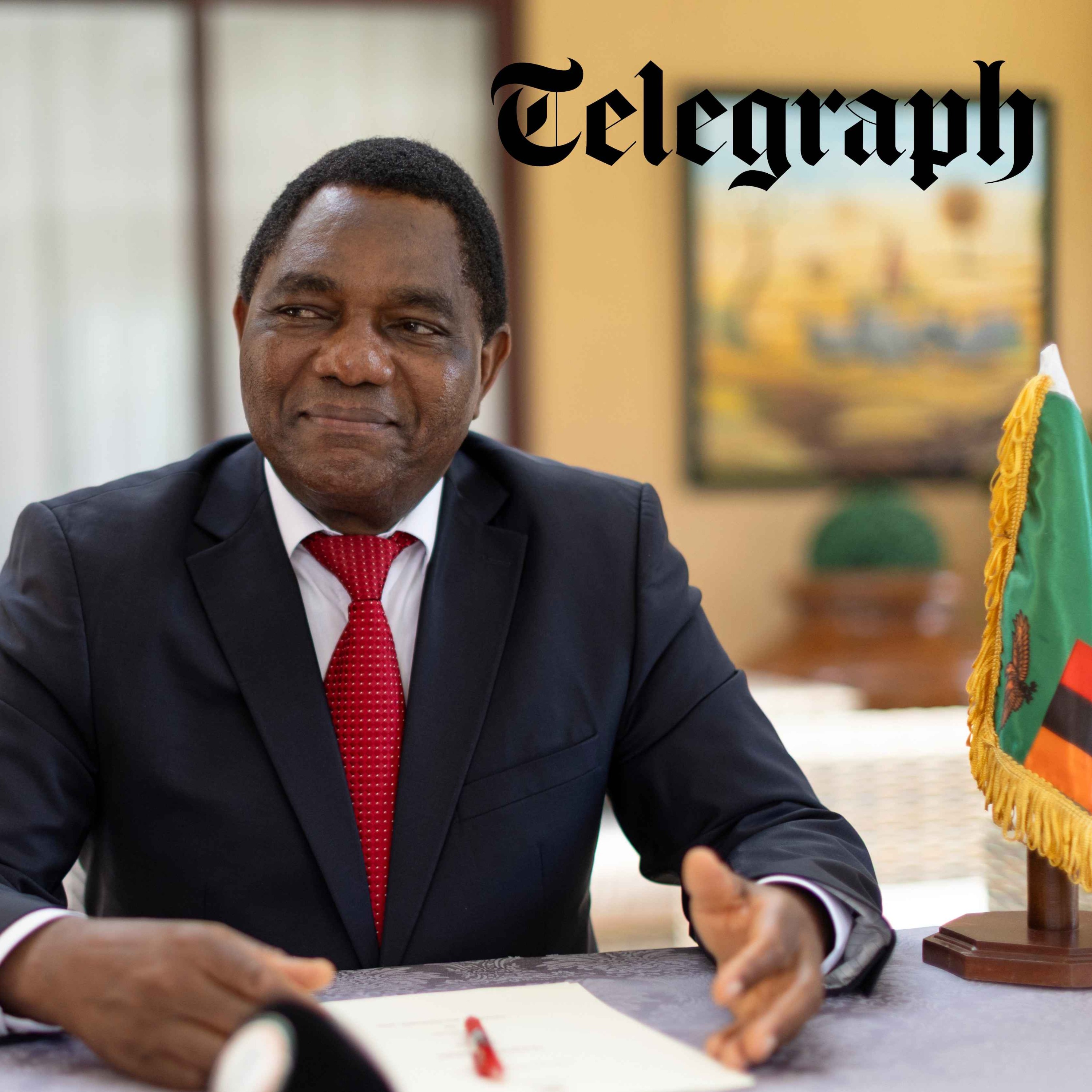
Iran: The Latest
How to deal with Trump, China and debt: the African country getting it right
00:25:47
Loading summary
Transcript73 lines
- [00:04]
Miracle Made Sheets Advertiser
The telegraph. We spend a third of our lives in bed, so why settle for ordinary sheets? Miracle made sheets use NASA inspired silver infused fabric to keep you cool, clean and comfortable all night long. The silver naturally fights bacteria so your sheets stay fresher up to three times longer. That means fewer washes, clearer skin and better sleep. They're soft, breathable and built to last. An affordable luxury that actually delivers. It's not magic, it's science inspired by innovation, designed for everyday life. Because sometimes the simplest upgrades make the best biggest difference. This Christmas, upgrade your sleep or give the gift of better rest. Go to trymiracle.com clean to try miracle made sheets today you'll save over 40%. And when you use promo code clean, you'll get an extra 20% off plus a free three piece towel set.
- [01:16]
Narrator/Host
Amazon One Medical presents Painful Thoughts.
- [01:21]
Venetia Rainey
I've been on hold to make a doctor's appointment for 23 minutes now.
- [01:25]
Jerry Insurance Advertiser
The automated voice has told me 47 times that my call is very important to them. Hmm, I'm starting to think that they don't think my call is important at all.
- [01:36]
Narrator/Host
With Amazon One Medical 24. 7 Virtual Care, you'll get help fast without having to remain on the line to make an appointment. Amazon One Medical Healthcare just got less painful.
- [01:49]
Ben Farmer
Zambia was in terrible trouble. If he wanted to spend money on hospitals, if he wanted to spend money on education, his first priority is he has to spend money on these huge debt repayments.
- [02:00]
Narrator/Host
These cuts will make the world less healthy, less safe and less prosperous.
- [02:05]
Venetia Rainey
Countries are continuing extremely risky research into bioweapons. It is a famine.
- [02:10]
Narrator/Host
The Gaza famine.
- [02:12]
Venetia Rainey
I'm Venetia Rainey.
- [02:13]
Arthur Scott Geddes
And I'm Arthur Scott Geddes and this.
- [02:14]
Venetia Rainey
Is Battleline's Global Health Security. It's Wednesday, 7th of January, 2026.
- [02:20]
Arthur Scott Geddes
This week we're taking a look at the African leader who seems to be doing everything right.
- [02:24]
Venetia Rainey
Africa has had a tricky year. Last year faced with tariffs and massive aid cuts. But one country has found a way through Zambia.
- [02:33]
Arthur Scott Geddes
Ben Farmer, the Telegraph's Africa correspondent, travelled to the country last year to interview its president, Hakainda Hichelema.
- [02:39]
Venetia Rainey
We gave Hichilema number five on the Telegraph's World Leaders Competition recently. Here's our interview with Ben to find out why. Ben, welcome to Bathlands Global Health Security. You interviewed Hakayinde Hichilema recently in Zambia. Just give us a bit of background. Who is this guy? And tell us a bit about Zambia.
- [02:56]
Ben Farmer
Yeah, so Zambia is a landlocked country in Southern Africa. It's got about 22 million people and it's about twice the size of Germany. President Hiculaima was elected four years ago. I went to interview him at his house outside the capital as part of the Telegraph World Leaders series.
- [03:15]
Venetia Rainey
And why was he shortlisted? What were the sort of criteria, what were the factors that went into that?
- [03:19]
Ben Farmer
He had attracted the attention of the Telegraph judges because of his performance really on the economy and what he's done in Zambia. Restructuring the debt and reforming the economy, cracking down on corruption and the huge, hopefully huge, knock on effect that will have on the people and their life in the country.
- [03:41]
Venetia Rainey
Let's hear a clip from your interview.
- [03:42]
Narrator/Host
We were elected on a ticket of reforms, headlined by the economic reforms to address the decline in the economy that we're experiencing in the previous government's 10 year end. One of the things that was standing in our way, all our economic reforms, was the death mountain. As you know, we decoded 2020 and we then inherited a government, a country which was basically a basket case, failed to meet its obligations. I don't have to explain it. So in our drive to bottom up the economy which was then running at minus 2.8% GDP growth, we had to tackle debt. And in our manifesto to the waters we highlighted debt restructure is one of our key objectives. To create space, to create the hedgehog for the growth agenda that we set ourselves. We call it actually a mission impossible. We define it as a python wrapped around our necks. We breathe properly around our chest ribs and the legs. So that is why we set out to do what we did.
- [05:05]
Arthur Scott Geddes
So Hijalama renegotiated what he describes as a debt mountain in Zambia, perhaps looking to some of the country's neighbors. Why was this such an important move?
- [05:14]
Ben Farmer
Yeah, so when he came to power, Zambia was in terrible trouble. He himself describes it as a basket case. And it was the first country in Africa to default on its debts during the COVID pandemic. It couldn't pay its debts basically. Now what is so important in Africa at the moment is there are other countries who are also in a great, great difficulty. The continent is to some extent facing a debt crisis. The Vatican conducted a study last year. They hired a Nobel winning economist and he said that Africa is in its worst dead squeeze in decades. So what Hiculaima has done could be an example for other African countries.
- [05:55]
Arthur Scott Geddes
So how does that debt squeeze, trickle down and affect African health?
- [05:59]
Ben Farmer
Well, as he described it, it affects everything that he was trying to do. Whenever he was trying to do developments or, or spend more on health or more on Education. The obstacle he was coming up against was he had these huge interest repayments and that was the top of his agenda. And that just really diverted money from other priorities. So if he wanted to spend money on hospitals, if he wanted to spend money on education, his problem was that his first priority is he has to spend money on these huge debt repayments. And sort of revamping that and cutting those debt repayments has given him a lot of headroom, a lot of breathing space for other priorities.
- [06:45]
Venetia Rainey
And could you see that on the ground when you were there in Zambia, what kind of things were people telling you about how their life has changed over the past few years?
- [06:52]
Ben Farmer
It's important to say that it's not plain sailing yet. So he is making the right moves and he is going in the right direction, but there is still a big cost of living crisis and the jury is still out about how popular he is after this. But having said that, he has managed to hire tens of thousands of teachers. He's reduced or got rid of fees on primary and secondary education, which could potentially have a huge effect on development in Zambia because the debtors starting to be more manageable. He's attracting a lot of investment into the mining sector. That means mining production is increasing, there are more mining jobs, and this could have a huge effect on the economy. So while, you know, like I say, it's not out of the woods, things are starting to look better.
- [07:45]
Arthur Scott Geddes
Another kind of good quality, I guess, of HLM or another success story is the way he's managed to kind of walk a tightrope between us and Chinese and to a lesser extent, European influences. Why has he been able to do this perhaps more successfully than some of his neighbors?
- [08:00]
Ben Farmer
It's one of his big headaches, if you like. He has this huge amount of minerals, largely copper. And with the way the global economy is changing, there's more electrification, there's a huge demand for copper, so much demand that probably the world won't be able to meet it in the coming years. Copper's wanted by China, copper is wanted by the west, copper's wanted by Europe. So he has this tightrope, as you put it, and he calls it that as well. But these are two powerful people or two powerful blocks. And he says he's a small African country, can't really alienate them, so he must plot this course. He must be friends with both sides without alienating them. And that's what he's trying to do at the moment, and he seems to be doing it quite well. He hasn't alienated either side yet, but we don't know how far that will go in the future. And he's very much aware that is something he has to deal with.
- [08:56]
Venetia Rainey
And it's tricky, isn't it? Particularly Donald Trump's second term. He's imposed tariffs that have been very difficult for countries to negotiate. Let's hear a clip of you talking to Hichelema about exactly that.
- [09:07]
Narrator/Host
When Africa rise, Zambia Africa rises, it will ameliorate a lot of problems for Europe, for example, illegal migration. So it's in the interest of Europe to support the growth of Zambia and other African countries not in an exploitative way, but in a mutual beneficial. If Africa grows, when Africa grows, won't it be a good market for certain European products, including technological products it will be able to pay for those services.
- [09:36]
Ben Farmer
But does that seem like an argument that's being heard in Washington when you hear what Mr. Trump is saying, he seems to be very dismissive of African countries. He seems to be very hostile.
- [09:46]
Narrator/Host
Yeah, but Mr. Trump is the leader of the free world. So if dismissible those you lead and you work with them. Tariq, for example, we made our case good. First we respect what Mr. Trump is doing. He says America first, isn't it? Who should blame him for that? But America engages with the rest of us and that's where the convergence comes in. That's why we're saying while America comes first. We believe that because of America's position they have to dimit the rest of the world in peace, agreed, stability, but also in the trade. And therefore I give you an example. We have a joint venture, an American investors in a mine called Mingomba. $2 billion plus is going on in that mine and we as Zambia I joined venture partners. We have the resource endowment, they have the capital and the technology AI for example. That's how through the exploration using AI they discovered huge deposits which we didn't know because we're using old method of refloration. Now we produce that copper in whatever form it is processed, semi processed and is to go to America Then you have a 20% tariff. What does that mean? It means the very product of JV with America is expensive because of the tariff we post. So shouldn't we be considering those issues while America comes first? Shouldn't we be considering the transaction, the relationship issues like what have the spread is we make our product which we have invested together with American investors and make it expensive in America it reduces our growth, negatively affects our growth agenda and why do we produce it? We must have A market for it in its value added form as much as possible. But we will understand our limits. It's a gradual process. So if we can't sell it because it is too expensive for the demand for the users in America, it's sitting on our road trajectory of progress. So I think that's where we must sit down and talk. I think trade must be more fairer, must be more open. And we believe that the Americans will start relaxing and they tariff swing was as necessary.
- [12:26]
Arthur Scott Geddes
So Zambia's mining sector is booming, but this is not without its own risks. I wonder if you could tell us a little bit about the reporting you did in Zambia on a recent disaster there.
- [12:34]
Ben Farmer
Yeah, that's right. I think there are two risks now. Firstly, the risk is that you put all your eggs in one basket and the country becomes wholly reliant on copper. And those prices go up and down quite a lot, like a roller coaster. Those prices are sky high at the moment. If they go down, that is bad news for Zambia. The other problem is when these countries, these mining companies come in, are they going to take care of your country and are they going to take care of your mineral resources? And we went a couple of months ago to look at one of the instances where this has come under scrutiny. There was a mining disaster in February in Zambia where a big dam which was holding back highly acidic mining waste at a Chinese mine burst. It sort of released this sort of almost tsunami of highly toxic waste which cascaded across farmland into Zambia's rivers. Incredibly acidic, incredibly bad. This is that tightrope again. Zambia behind closed doors was furious. But in public, it's really tried not to criticize China too much, but certainly behind closed doors, officials were furious that this had happened.
- [13:48]
Venetia Rainey
What was the cleanup operation like? Did they get Chinese help?
- [13:50]
Ben Farmer
China is paying money for the cleanup now. Are they paying enough is something that is being debated. And farmers are taking the Chinese mine to court. This is a story that I think will run for years and years because this cleanup is not a quick procedure. It's going to take years.
- [14:11]
Venetia Rainey
Coming up after the break, how has Zambia been dealing with Trump's eight cups?
- [14:22]
Miracle Made Sheets Advertiser
We spend a third of our lives in bed, so why settle for ordinary sheets? Miracle made sheets use NASA inspired silver infused fabric to keep you cool, clean and comfortable all night long. The silver naturally fights bacteria, so your sheets stay fresher up to three times longer. That means fewer washes, clearer skin and better sleep. They're soft, breathable and built to last. An affordable luxury that actually delivers. It's not magic. It's science inspired by innovation, designed for everyday life. Because sometimes the simplest upgrades make the biggest difference. This Christmas, upgrade your sleep or give the gift of better rest. Go to trymiracle.com clean to try miracle made sheets. Today you'll save over 40%. And when you use promo code clean, you'll get an extra 20% off, plus a free three piece towel set.
- [15:30]
Jerry Insurance Advertiser
Most drivers overpay for car insurance, not because they're careless, but because the system is needlessly complicated. Jerry fixes that. Traditional comparison sites give you quotes once, then disappear. But Jiri can handle all the insurance shopping legwork and never stops working. Compare 50 plus insurers side by side and purchase directly in the app. No spam calls, no hidden fees. They'll even monitor price trends and can alert you to better rates. Drivers who save with Jerry could save over $1,300 a year. Download the Jerry app or visit Jerry Aiacast today, flowers die in three days. Matching underwear from Meundies. That's a gift that lasts. Meundies creates matching prints for couples and friends. Same adorable designs in different cuts for each of you. All made from their signature ultramodal fabric that feels impossibly soft. With 30 million pairs sold and 90,000 five star reviews, MeUndies matching prints are the perfect gift. Valentine's Day is February 14th, so don't wait. Get exclusive deals up to 50% off at Meundies.com acast code acast that's Meundies.com acast Code acast.
- [16:48]
Venetia Rainey
Welcome back. You're listening to Battle Lines Global Health Security. A quick favor to ask. We'd love you to leave us a review wherever you're listening to this podcast. If you're on Spotify or YouTube, you can leave a comment underneath this episode. Or if you're listening on Apple, then you can go to the podcast's main feed, scroll down and leave your comment there. It really helps us understand what you like and what you don't like. And of course you can email us@battlelinestelegraph.co.uk. now back to the conversation with Ben Farmer. There's another aspect of dealing with Trump that's been really tricky, and that's the the aid cuts, the absolute abolition of US Aid. How has that impacted Zambia and how has Ciculema been dealing with that?
- [17:23]
Ben Farmer
Absolutely. Now this has affected not just Zambia, but dozens of countries across Africa. And Zambia was receiving a lot of money, particularly for HIV and tuberculosis and to sort of kind of get its health system up and running. 80% of his HIV effort was paid for by US aid. The new reality is that that is reduced a lot. Ije Lamer is refusing to blame Trump is refusing, if you like, to alienate his generous patron or former patron and business partner. What he's done, he's increased the health budget and he's been able to do that because of the improvements in the economy. So he's increased health spending to try and fill that gap. He hasn't done it yet, but he has tried to fill that gap.
- [18:10]
Venetia Rainey
Let's hear a clip of Hitcheleyma talking about that.
- [18:13]
Narrator/Host
We regret the American decision, but that's their decision. He does their tax money pen. They have a right to make decision would have bled a transitory time that allows us to adjust. It wasn't a D. We regret that because it will affect negatively the welfare of our patients. We regret that. However we flip the coin, we will not seek money. We have already started taking measures increasing the health budget allocation. Allocation to health. We have increased immediately in the 2026 budget, which we are now concluding in terms of debate. We put more money in the health sector to work towards closing this gap. We may not close in one shot, but over a period of time we will go. And that's the point of celebration. Because while it appears harsh and negative what American government has done, it is basically a wake up call to us. We in Zambia, we on this continent that we have been sleeping on duty because it's our duty, I'm sure you heard it, it's our duty to assure health service delivery to our population. So we're elected in office. We assume that somebody will be kind enough, philanthropic enough to us. It was okay, but I think it's a good wake up call.
- [19:51]
Arthur Scott Geddes
So several African countries are kind of signing up to a new model for the way that Trump and the US Wants to do aid, which is much more transactional. They're doing deals with America that give America something in return for restoring some of that support. Am I right in thinking that Zambia has one of these deals in the pipeline as well?
- [20:08]
Ben Farmer
Yeah, absolutely. Zambia is very much one of the places that Trump is looking to do one of these deals. Now, it looked like it was going to be signed before Christmas. It's not quite got over the line. And it looks like the hurdles are exactly what you're alluding to. It looks like there is still some debate about how much access America will get to the mining economy and what the terms of that will be. So they're not quite over the line. But that is in the pipeline and it looks like it could be about 1.4 billion if it is signed. So while there was a lot of dismay about the aid being turned off, there is going to be money there, but it's going to be on different terms.
- [20:51]
Arthur Scott Geddes
So you've reported a lot on the way that aid, particularly US Aid, is changing in Africa. But one of the interesting things that I think you found is that actually a lot of African leaders are perhaps more optimistic about this transformation or this change than you might think. As a, you know, as an observer from the outside, I wonder if you could just talk people through that.
- [21:11]
Ben Farmer
They don't deny that it's caused them some headaches, but also they're being very pragmatic about it. And Hitcheleyma is an example here. He says that African countries became complacent. They had come to accept that America and others, Britain, another one, was going to give them this money. And maybe they weren't doing enough for this money as they should have. He's described it as a wake up call. And they've decided that what they need to do is they need to get their house in order. And they admit that America first is what Trump has to do to satisfy his voters. And they're understanding that that is the reality of the situation and they're going to have to pull their socks up. I think what they've all said is what they would like to have seen is rather than an immediate cutoff, they'd like to have seen maybe a five year transition that would have made their situation easier. But if that is what Trump is going to do, they're going to deal with it.
- [22:12]
Venetia Rainey
And that's the rhetoric from the leaders. I'm wondering, do you find that echoed by people on the ground? You know, the staff working in the local health clinic have had the rug pulled out from under their feet, feel pragmatic or do they feel betrayed or do they think, okay, it's time for us to take ownership of the situation ourselves.
- [22:29]
Ben Farmer
It's very much a bit mixed bag. So as well as becoming more transactional, the new approach is government to government and cutting out the middlemen and particularly international health agencies. So people who have worked for international health agencies, they really have had the rug pulled out from under them and they really feel this more than others. But governments, they feel that they can do this deal. They're a little bit apprehensive, but they feel that they have to deal with this. This is a new reality. No one thinks that this is going to go back. No one thinks that the old USAID model is going to come back, so they all know they're going to have to deal with us.
- [23:11]
Venetia Rainey
I wonder if we can zero in a bit on hiv, because Zambia has relatively high rates of hiv. What specifically has been the impact of the withdrawal of pepfar and how is Zambia trying to fill that gap?
- [23:23]
Ben Farmer
HIV is one of Zambia's big problems. There's been a lot of modelling by some of the big agencies like unaids, that because of the reduction in pepfar, there will be a lot of extra deaths, a lot of extra infections. We're not seeing that yet, partly because a lot of the surveillance was conducted by these big agencies. So a lot of the measurement is. There's been a bit of a hiatus. We're not seeing it yet. Also because of the nature of the disease, if people do go off medication, it can take a long time for their symptoms to start to show again. Also because Zambia, as we've said earlier, is trying to fill the gap and, you know, increase the drugs using its own money. So those deaths have not yet come through yet. The fear is, though, in the next year or two they will, if this new funding under the new model doesn't fill the gap.
- [24:20]
Arthur Scott Geddes
Looking ahead, perhaps to the rest of this year, as we move into 2026, what do you see as Hichelema's top priorities? And do you think he'll be able to continue enjoying the sort of success that got him onto our list in the first place?
- [24:32]
Ben Farmer
Yeah. So his big priority is to make sure that these macroeconomic wins are felt by voters, because I went around the markets and they feel a lot of what is being said is academic. So they feel that they. They hear what is being said about, you know, inflation going down, the debt being reconfigured, but in their wallet, they're not feeling it. And that is the priority because he's got elections next year and if they don't vote for him, if he can't persuade them that they are going to be better as a result of this debt reconfiguration, then he's out on his ear and that's the end of that. So that's his big priority.
- [25:15]
Venetia Rainey
I wonder if we could end on a big picture note, because it's a pleasure to have you on this podcast and you've got a wealth of reporting experience and we don't talk about Africa that much on this podcast. As much as we should do. What sort of trends or stories will you be watching across southern Africa this year in Terms of global health security, security.
- [25:32]
Ben Farmer
I will be looking again at how, how these deals, how this model starts to pan out. It will be one of the big stories of the year, I think how Trump's new focus on aid and it's a new, different focus, it's not just cutting it, it is doing it in his own terms. How that starts to pan out, that's going to be a big focus. And that competition between China and America, how that pans out as well, that's going to be big. So I'm hoping to visit other countries in the area. I haven't got my visas yet.
- [26:07]
Venetia Rainey
Which countries are you looking at?
- [26:09]
Ben Farmer
I'm hoping to go to Namibia, I'm hoping to go to Mozambique, places like that.
- [26:15]
Venetia Rainey
And why are those countries of interest to you to follow these huge themes that are rocking the continent.
- [26:20]
Ben Farmer
They've been reliant a lot on China and America and I think it'd be fascinating to see how they negotiate that.
- [26:29]
Arthur Scott Geddes
Do you think we are kind of seeing a new kind of great power struggle over influence in Africa? Is that a fair way of characterizing what's going on here?
- [26:36]
Ben Farmer
Yeah, I think we are. Because I think although America has been interested in the continent, the way that the Trump administration is addressing it and you hear different words, I mean, is it transactional, is it brazen or is it just more pragmatic? But there is a different way of addressing it. And I think that desire for minerals, that desire for influence, it's much more open now. It's couched in much less diplomatic language. And I think it's going to be fascinating.
- [27:14]
Arthur Scott Geddes
I suppose the obvious follow on question to that then would be who do you think is winning this battle for influence?
- [27:19]
Ben Farmer
At the moment, America is playing catch up, but I think it could catch up.
- [27:23]
Venetia Rainey
Great. Well, a story will continue to follow and I hope you get your visas to Namibia and Mozambique. If anyone from the visa offices are listening, Ben Farmer, our global health correspondent in South Africa, thanks very much for joining us on Battleland's Global health Security.
- [27:35]
Ben Farmer
Thank you.
- [27:36]
Venetia Rainey
I really like that. That was a positive story from Africa. This is a leader who's finding a way to deal with the crises that he's facing. And there are loads and he's finding a way through it. I think that's a great, positive story for us to be reporting on.
- [27:47]
Arthur Scott Geddes
Definitely. It's very uplifting. One of the things I fascinating about the story is actually the sense of optimism or pragmatism that you do get from speaking to these African leaders. You know, they do recognize that the way the system was working before wasn't really working for Africa in some ways. And I think that, you know, I'm interested to see how that develops.
- [28:05]
Venetia Rainey
Absolutely. When we think about aid cuts, you know, here in the uk, the conversation has become about, oh, how wasteful we were funding all these projects that were meaningless. But I think when you speak to people in Africa, and I'm aware it's a massive continent and so we're generalizing a little bit here probably, but they also talk about it being wasteful, them not being allowed to set the agenda of. Of where the money goes, them having to fulfil sort of meaningless donor requirements to get to a certain budget or recruit certain people. This allows, if you can see it as an opportunity, which Hiculema clearly does in some respects, it allows them to take control of how their health systems, for example, are being funded and operating.
- [28:40]
Arthur Scott Geddes
A part of that, I guess the broader context is also interesting to me, which is this great power rivalry that seems to be shaping out. And I think it's quite stark. And certainly from my own experience of traveling in Africa, it is obvious that China has stolen a march here over not just the U.S. but, you know, Europe and Britain. I'm not even in the picture anymore, I would say.
- [29:00]
Venetia Rainey
Yeah, absolutely. And that's something that I think we should keep covering for the rest of this year. A fascinating chat and, well, let's hope Ben gets those visas and we can chat to him more about his reporting from those countries in Namibia and Mozambique. That's all for today's episode of Global Health Security. We'll be back again next week. Until then, goodbye.
- [29:14]
Arthur Scott Geddes
Goodbye. Battle Lines is an original podcast from the Telegraph, created by David Knowles and hosted by me, Arthur Scott Geddes and Venetia Rainey. If you appreciated this podcast, please consider following Battle Lines on your preferred podcast app. And if you have a moment, leave a review as it helps others find the show. To stay on top of all our news, subscribe to the Telegraph, sign up to our Global Health newsletter or listen to our sister podcast, Ukraine the latest. You can also get in touch directly by emailing battle lineselegraph.co.uk or contact us on X. You can find our handles in the show Notes. The producer is Sophie o'. Sullivan. The executive producer is Louisa Wells. The Telegraph's Global Health Security team is supported by the Bill and Melinda Gates Foundation.
- [30:07]
Jerry Insurance Advertiser
If you're an H Vac technician and a call comes in, Grainger knows that you need a partner that helps you find the right product fast and hassle free. And you know that when the first problem of the day is a clanking blower motor, there's no need to break a sweat. With Grainger's easy to use website and product details, you're confident you'll soon have everything humming right along. Call 1-800-GRAINGER click granger.com or just stop by Granger. For the ones who get it done, Flowers die in three days. Matching underwear from Meundies. That's a gift that lasts. Meundies creates matching prints for couples and friends. Same adorable designs in different cuts for each of you. All made from their signature ultra modal fabric that feels impossibly soft. With 30 million pairs sold and 90,000 five star reviews, MeUndies matching prints are the perfect gift. Valentine's Day is February 14th, so don't wait. Get exclusive deals up to 50% off at Meundies.com sponsorship acast code acast that's Meundies. Com acast code acast.