Loading summary
Transcript62 lines
- [00:04]
Commercial Narrator
The telegraph.
- [00:56]
Roland Oliphant
Inflammatory intestinal isierto syndrome es hereditarius o un historial Persona familiar de cancer de colon en Espanol. Visit cologuardpun.com/diagonal if you work in university maintenance, Grainger considers you an MVP because your playbook ensures your arena is always ready for tip off. And Grainger is your trusted partner, offering the products you need all in one place, from H Vac and plumbing supplies to lighting and more. And all delivered with plenty of time left on the clock. So your team always gets the win. Call 1-800-granger. Visit grainger.com or just stop by Granger for the ones who get it done.
- [01:48]
Sir Richard Dalton
Well, it was a lie. They know that the fissile material was put beyond use by the June 2025 war. A short time ago, the United States military began major combat operations in Iran.
- [02:07]
Venetia Rainey
If you kill Americans, if you threaten
- [02:09]
Sir Richard Dalton
Americans anywhere on earth, we will hunt you down without apology and without hesitation, and we will kill you.
- [02:17]
Roland Oliphant
We were not involved in the initial strikes on Iran, and we will not join offensive action now.
- [02:25]
Commercial Narrator
Today, President Trump says Iran's Supreme Leader, Ayatollah Ali Khamenei, was killed in the attacks.
- [02:35]
Venetia Rainey
I'm Venetia Rainey.
- [02:37]
Roland Oliphant
And I'm Roland Oliphant.
- [02:38]
Venetia Rainey
And this is Iran. The Latest. It's Thursday, March 26, 2026. It's the 27th day of the war. And on today's episode, we'll be speaking to former UK Ambassador to Iran, Sir Richard Dalton, about the peace talks, Iran's nuclear program, and why he thinks this whole war is based on lies. But first, let's start with some updates. Roland, where do you want to kick us off?
- [02:59]
Roland Oliphant
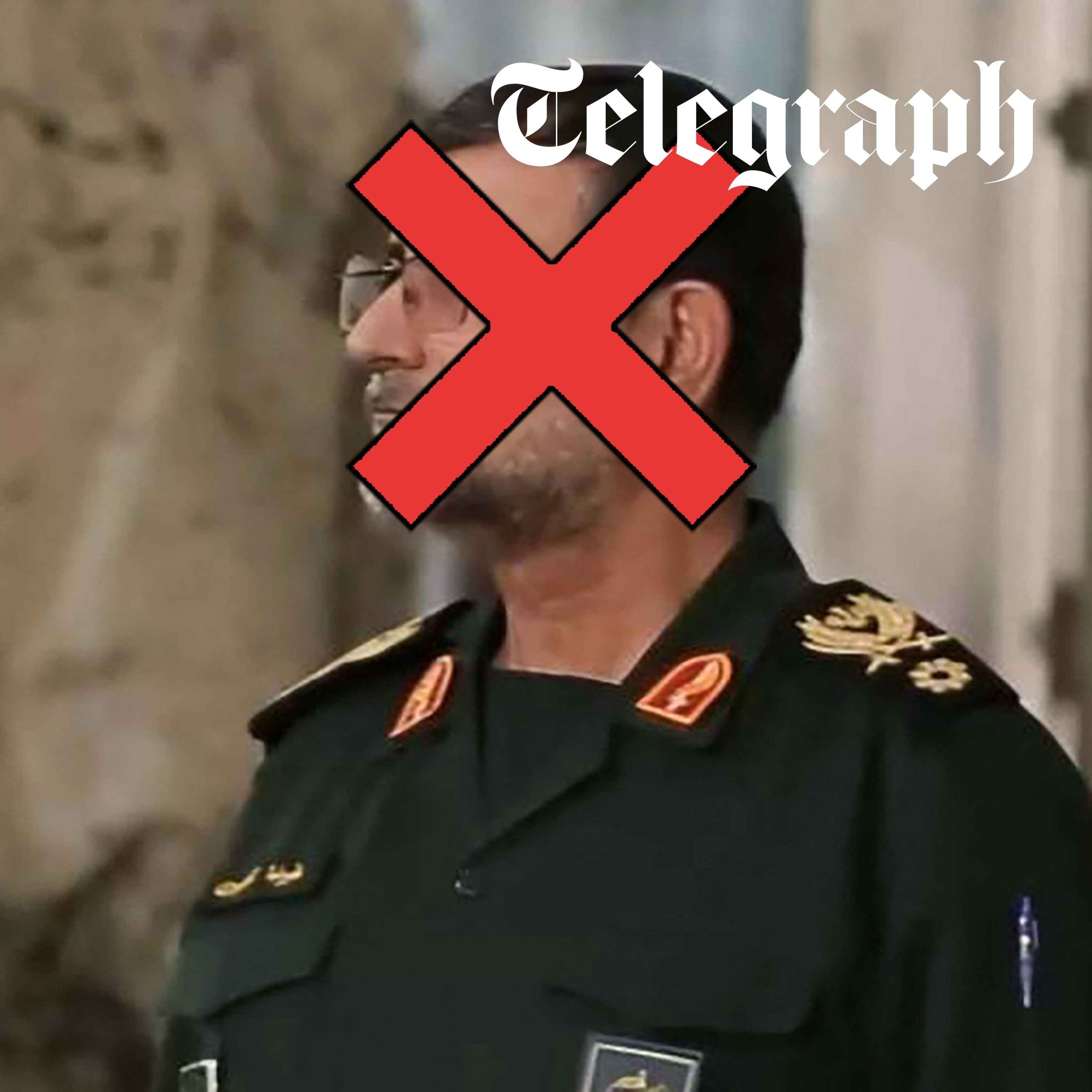
I think the most significant development on the ground today is the death of Alireza Tang Siri. He was the commander of the Islamic Revolutionary Guards Corps Navy. He's said to be directly responsible for the blockade of the Strait of Hormuz. Iran has yet to comment on the assassination. That's the Americans and Israelis putting that out there. They've generally been a bit slower, confirming the death of people after it's been announced by the other side. At the moment, we've no reason to disbelieve it. This, of course, comes in the context of amassing of American amphibious forces in the region for what could may well be a military operation to unblock the Strait. Akhtar McCoy, our foreign correspondent, has been looking at this. His verdict is that this is a big blow for the Iranians. His death creates immediate challenges for managing the complex operations required to blockade the strait and for coordinating the IRGC naval force, all those fast boats and anti ship missiles and so on with the IRGC air force assets, which you need to do to keep the waterway closed. That said, subordinate commanders understand the mission is to prevent ships from transiting. And we've spoken before on the podcast about the Mosaic doctrine which is delegated authority far down the chain of command to enable Iranian units to keep on operating. Bottom line, it's not going to change Iran's basic naval tactics in the strait which is small boat swarms, mine threats, anti ship missile, which are all something that require simple execution by local tactical level commanders rather than a strategic genius sitting at the top.
- [04:39]
Venetia Rainey
I think also worth mentioning on the Strait of Hormuz, Iran has said that it's allowed vessels owned by five friendly nations to pass through China, Russia, India, Iraq and Pakistan. We're also seeing from Iranian outlets that the parliament is trying to approve a law to levy tolls for passage through the Strait of Hormuz. That's something that they've mentioned in negotiations or rather the talks about peace talks that we've been discussing this week. So that'll be interesting to and I also saw a report in CNN that they are boosting defenses on Kharg Island. Now this is one of the islands that we've spoken about repeatedly that maybe these marines or the paratroopers on the way to the Middle east might try and seize. It's responsible for 90% of Iran's oil exports. Apparently Iranians have moved additional shoulder fired surface to air guided missiles known as manpads there in recent weeks. They've also been laying traps such as anti personnel and anti armor mines around the island, including on the shoreline where US Troops could possibly stage an amphibious landing. That's according to cnn. So we'll be keeping a close eye in the coming days.
- [05:35]
Roland Oliphant
One other thing on the islands in the straits is about half a dozen, maybe more than that islands which might be targets we've written about. If you check telegraph.co.uk. tomorrow I think you'll see my write up on this. We've talked about them before. Abu Mansur and the Lesser and Greater Tombs, those three islands that sorry, those three islands that are claimed by the UAE but occupied by Iran. We talked about the possibility of those being seized for diplomatic and political leverage. Mohammed Calabaf, speaker of Parliament, has said that Iran has intelligence or suspects that the country's enemies, in coordination with an unnamed regional country, are planning to seize some of its islands which has brought attention back to them that the thought is maybe that unnamed regional country is the UAE and those are the islands in question. No confirmation of that. That's the speculation that's building as well. The other island I think to keep an eye on at the moment is Larrack. There's a tiny little rock just off Kesh. It's at the narrowest part of the strait. In reference to those, those tankers that you said have just gone through Venetia, Larrack is where they're being routed past. Just looking at Lloyd's List this morning, they're not using the usual routine shipping lane. The Iranians have kind of routed them looping around Larrack and apparently they're using Larrack as the point where their Coast Guard or IITC men are visually checking that's the ship that we've stamped in our book and can go through. So that's another island that's of critical importance in whatever may happen. Over the next few days there, we've
- [07:11]
Venetia Rainey
had lots more statements from Donald Trump. He's told his advisors that he wants a swift end to the war. That's according to the Wall Street Journal. Apparently he wants to finish the fighting before May 14th. Now this is when he's due to meet Xi Jinping in Beijing. Those talks were postponed. He was supposed to be going to China in April, but he's had to push that back for a month because of the conflict. So he's now apparently wants to conclude the war by May 14th. So put that in your diaries if you want. Meanwhile, on social media, Trump has been branding Iran's negotiators very different and strange. He says they're bas begging the US For a deal. Their military has been obliterated and there's zero chance of a comeback.
- [07:46]
Roland Oliphant
He's also very critical of them, claiming in public that they're only looking at a proposal, yet they publicly state they're only looking at our proposal. Wrong. He writes on Truth Social, they better get serious soon before it's too late. Because once that happens, there is no turning back and it won't be pretty. And I think he's referencing here these blanket denials from Iran that any kind of talks are taking place. And yet we kind of know from the Pakistanis that some kind of contact
- [08:12]
Venetia Rainey
is happening of paper are being passed back and forth as such adults talks about later.
- [08:16]
Roland Oliphant
Yeah, or just oral conversations, maybe in the same room, maybe not. But something's going on. Akhtar had a very good piece discussing this when it first came up. A Couple of days ago, he made the point that it's quite possible that the Iranians, for their own internal reasons, simply cannot be seen to negotiate. So in public, they're denying it because that would be seen amongst the hardcore as compromising or capitulation. Even though they probably are quite desperate, they've been battered, they're quite desperate to end this war. So quite possibly, if Actar's right, Donald Trump is not wrong here, there really are talks going on and those guys are playing it down. Just from my own very brief experiences inside Iran, I won't go into details, but there's often more than one team in Iran doing things right. And I think anyone who's dealt with the Iranian system knows that you can find yourself speaking to one part of the system and another part might have completely different ideas about what's going on.
- [09:10]
Venetia Rainey
And that's a particularly salient point at the moment. Given so many top Iranian officials have been assassinated, we can only assume that there are probably some different control centres going on within the regime.
- [09:21]
Roland Oliphant
Is it the irgc? If it is the irgc, which generals? Is it Mujtaba? Is it Gallobaaf? Are they all talking to each other? If they are talking to each other, how are they coordinating all this? Because they can't all get together in one room and they can't, you know, they can't get on the phone in case the Israelis intercept it and find out where they are and send a missile down, you know, down the line of the signal. I wonder whether everybody in the Iranian regime actually knows what the people negotiating are actually negotiating about.
- [09:47]
Venetia Rainey
Anyway, moving on, one more thing to flag from Trump. He's been criticizing NATO again in a fully capitalized post on Truth Social, he said NATO nations have done absolutely nothing to help with the lunatic nation now militarily decimated of Iran. The USA needs nothing from NATO, but, and this is in quotations, never forget this very important point in time, I think. Interesting that we've also had the head of NATO, Mark Rutter, coming out this morning and saying he. He applauds the US intervention in the Middle East. He said that for Iran to possess a nuclear or missile capability, it poses a threat not only to the region, an existential threat, by the way, to potentially Israel, but also a threat to Europe. And Iran is an export of chaos to the region and to the world. There's an EU summit of foreign ministers going on today and tomorrow, and we know there are a lot of divisions in Europe about how to deal with this, how involved to get Germany's Defence Minister, Boris Pistorius has claimed that Donald Trump has no exit strategy for the war in Iran. Canada's foreign minister has urged the G7 foreign minister to back a de escalation of the war. And Marco Rubio is going to be flying in not today, but tomorrow. And this will be his first trip abroad since the war began. So it'll be interesting to see what comes out of all of that.
- [10:53]
Roland Oliphant
One more US story we have to flag. This is from the Washington Post. The Pentagon is apparently considering whether to divert weapons intended for Ukraine to the Middle east as the war in Iran depletes some of the US military's most critical munitions. That is sourced to three people familiar with the matter. Whoever they are. The weapons that could be diverted away from Ukraine include air defence interceptor missiles ordered through a NATO programme launched last year. That's the one in which partner countries shorter NATO. Basically European members buy US arms for Kyiv and hand them on.
- [11:27]
Venetia Rainey
How significant would that be for Ukraine? Roland?
- [11:29]
Roland Oliphant
Ukraine has a critical shortage of air defense and it has throughout the war. You will not see President Zelenskyy mincing his words on this point. It's been really galling for people, for Ukrainians and those who follow the Ukraine war to see the United States and its allies firing off far more Patriot interceptor missiles in the course of the past three weeks than were ever supplied to Ukraine throughout four years of war. The Russians launched their large ever drone attack on Ukraine just last night or the night before. I think they keep setting that record higher. So air defence remains really, really critical for Ukraine and there's not many countries that churn them out. As we talked about it in the past with Ed Stringer, when this podcast was Battle Lines, we've discussed this. That has been a really critical worry ever since this war began. America doesn't provide weapons directly to Kyiv at the moment. It's paid for, it's bought by intermediaries, as we say, but if they're not there, then they can't be bought.
- [12:28]
Venetia Rainey
And our senior foreign correspondent Adrian Blomfield has a really interesting piece up on the website at the moment about the links between this conflict in Iran and the conflict in Ukraine. We've spoken a bit about Russia there, but we've also spoken about how the oil prices have been boosting Russia's war coffers, how they're supplying drones to Iran. So worth checking that out. He writes about how every move in the Iran war carries economic, diplomatic and geopolitical consequences that reverberate from Ukraine to Taiwan.
- [12:52]
Roland Oliphant
The FT also is reporting today, citing US Intelligence sources of some kind, that Russia is believed to have started supplying drones and other logistical support to the Iranians following the war. So another sign of these two fronts melding into one.
- [13:09]
Venetia Rainey
Do listen to Ukraine, the latest, our sister podcast, if you don't already, because they'll have lots more details on that.
- [13:13]
Roland Oliphant
Elsewhere in the region, the Israeli military has announced the death of the third soldier during combat operations in southern Lebanon, killed fighting Hezbollah along Israel's northern border. As we reported yesterday, Israel is fighting, seeking to occupy, we understand, Lebanese territory up to the Litany river on the Lebanese side. The state run national news agency reported late on Wednesday that two people had been killed and eight others injured by Israeli airstrikes. And in Abu Dhabi, at least two people have been killed by debris from an intercepted missile thought to be from Iran. We believe they are Pakistani and Indian nationals.
- [13:48]
Venetia Rainey
We'll of course be keeping an eye on the movement of American troops to the region over the course of the coming days. And for more information on the 82nd Airborne Division, I do recommend checking out Tom Cotterell's piece. He gives a potted history of one of America's most storied military units. He sent us a voice note about what exactly they might get up to in the Middle East. Here it is.
- [14:07]
Tom Cotterell
The 82nd Airborne Division is one of the US military's most renowned divisions. It's got a long and storied history dating all the way back from the Second World War. And it's been involved in pretty much every conflict since then, most recently in Iraq and Afghanistan. Now these guys are the tip of the spear of any kind of invasion force. Predominantly their main role is to dive into hostile areas and secure things like airfields, military bases or vital infrastructure. Now what we've heard is that there are about 2000 or so from the 82nd being deployed towards the Middle East. It's from a force of around about 18,000 which is based out of Fort Bragg. So it's quite a significant fighting force that's going to be going out there. Now the question is what exactly are they going to be doing there? There are a few options that are available to President Trump. For example, the force could be used potentially to try and assist in securing the Strait of Hormuz. What they could potentially do is be involved in an invasion force to seize Kashim Island. Now that's one of the largest Iranian islands on the kind of narrow bend of the Straight or Hormuz. Now why that area is important is because it's believed that underneath it there is a huge missile complex deep underground. Some say it's somewhere in the region of, you know, 1,000 foot deep where they've got a kind of hidden missile city containing a cache of kind of ballistic weapons as well as anti ship weapons. The island is also, so we suspect key in delivering kind of drones to harass and attack ships through the lane. So these guys could be be key in trying to kind of cut that off as well. But also there's another area they could potentially look at as well, which is Carg Island. Now that's about 300 miles north of Kashim, right the way up into the northern Persian Gulf and only a few miles off the coast of Iran. So how could that work? What would that look like for the guys of the 82nd? Well, there's a large airfield on the northwest point of Carg island. So potentially a mission they might do is parachuting in before dawn overnight, securing this airfield, giving that kind of foothold for the US Military to then bring additional forces there. President Trump has sent through two amphibious fighting units, kind of Marine expeditionary units made up of around about 5,000 Marines. And these guys could also join the 82nd in any kind of assault or operation on Carg Island. There is another option potentially available and that's to try and launch a limited ground assault into Iran itself. President Trump is keen to ensure that Iran doesn't have any enriched uranium. So what the 82nd could do is if they know where this is, they could launch a rapid assault to try and seize this. However, it's very unlikely, you know, this is, is an assault force that we have to travel hundreds of miles inland through Iran itself. It doesn't really seem probable, but, you know, potentially seizing Kharg island or potentially going and attacking Kashmir island, well, those are certainly up there.
- [17:24]
Venetia Rainey
I'll just add as well. He also talks about the various potential missions they could be assigned once they arrive. So do check that out. We'll put a link to that in the show Notes.
- [17:32]
Roland Oliphant
We're going to take a short break now. When we come back, we'll be speaking to Sir Richard Dalton, a former former British ambassador to Tehran.
- [17:45]
Commercial Narrator
Tired of your car insurance rate going up? Even with a clean driving record, you're not alone. That's why there's Jerry, your proactive insurance assistant. Jerry compares rates side by side from over 50 top insurers and helps you switch with ease. Jerry even tracks market rates and alerts you when it's best to shop. No spam calls no hidden fees. Drivers who save with Jerry could save over $1,300 a year. Switch with confidence. Download the Jerry app or visit Jerry AI acastoday.
- [18:54]
Roland Oliphant
La preva de Cologuard nor REM Plaza La colonoscopia empacientes de alto riezgo nous escologard si astenido adenomas citienesierto syndrome es hereditarius o un historial Persona familiar de cancer de colon cologuarda tu medico paramas informacion en Espanol. Visit cologuard pun.com/preva
- [19:16]
Commercial Narrator
when you manage procurement for multiple facilities, every order matters. But when it's for a hospital system, they matter even more. Grainger gets it and knows there's no time for managing multiple suppliers and no room for shipping delays. That's why Grainger offers millions of products in fast, dependable delivery, so you can keep your facility stocked, safe and running smoothly. Call 1-800-GRAINGER Click grainger.com or just stop by Grainger for the ones who get it done.
- [19:51]
Venetia Rainey
Welcome back. You're listening to Iran, the latest A short request before we continue with this episode. If you're enjoying this podcast, please leave us a review. You can leave it underneath this episode on Spotify or YouTube, or go to the podcast's main feed on Apple Podcasts. Now, to discuss peace talks, Iran's nuclear program and the wisdom of the war, We've got the UK's former ambassador to Iran, Sir Richard Dalton. Sir Richard was a career diplomat for many years, working as Consul General in Jerusalem in the 90s, re establishing UK diplomatic relations with Libya in 1992, and eventually serving as our ambassador in Tehran from 2003 to 2006. He's since worked for the Royal Institute for International Affairs, Chatham House, and served as the President of the British Iranian Chamber of Commerce. Here's our conversation.
- [20:33]
Roland Oliphant
We've been hearing this talk this week that peace may be about to break out, but we've got these contradictory sounds from the Americans who say we are talking to people and the Iranians who say we're not. What do you make of all that?
- [20:44]
Sir Richard Dalton
Proposals have been exchanged. There's no doubt about that. That but the American proposals are extreme and the Iranian proposals are extreme. So neither side is really listening to the other, let alone preparing to sit down with a joint piece of paper and negotiate on it. It's possible that talks like that might develop over the next few days, but there's very little sign of it.
- [21:13]
Venetia Rainey
Who do you think? The Americans, if they are indeed having these talks or the back channel talks? We should probably. Who are they negotiating with on the Iranian side? Who do you think is pulling the strings at the moment? We haven't seen Mojtaba in weeks. We don't know what physical state he's in. Who's really running the country.
- [21:30]
Sir Richard Dalton
A consortium of leaders, military and civil, who have not yet been assassinated. Although they are probably on a target list, they will have great difficulty in communicating with each other without giving away their positions. On the military side, Iran has had years to perfect a many layered command system, including delegation to regional commanders and sectoral commanders, for example, of the missile force, to get on as best they can with the retaliations which seem to those commanders to be right in accordance with central policies. So who is talking to the Pakistanis, for example, on this series of vague talks about talks? They're not negotiations. These talks about talks on the Iranian side are probably being referred to The Foreign Minister, Mr. Aragche, who is still operating, to the speaker of the Iranian parliament, Mr. Talibaf, who also is able to make public statements to the head of the judiciary, to the commanders of the military forces, particularly the commanders of the Islamic Revolutionary Guard Corps. They will be coordinating through probably messengers, sending pieces of paper. It takes time, but there is still a coherent government response to American approaches.
- [23:13]
Roland Oliphant
So Richard, you've been, you spent a career in diplomacy. You've been in these kind of involved in all kinds of discussions in private, in public over the years. Could you just take us kind of inside the room? I mean, what actually happens when there are closed door or back channel communications between parties at war? How do you imagine these conversations are taking place?
- [23:40]
Sir Richard Dalton
Well, the Pakistanis and maybe others, maybe the Turks and the Egyptians have been passing pieces of paper to and fro and they will have had oral messages alongside them to convey the positions of one side to the other. When it comes down to an intergovernmental negotiation, it is just as what you would expect from, from observing what happens in number 10 dining street. You get one team on one side of the table and the party you're negotiating with on the other side of the table. And you try and narrow the gaps by considering the clauses of a piece of paper which you have in front of you, which is a jointly drafted text which will have agreed language in it, and it will have language that is not agreed, that's usually placed in square brackets indicating that debate still has to take place between the contending parties on the formulae contained within those square brackets. And this process is repeated until either a final breakdown or a final agreement. The point is, it takes days. And these ridiculous deadlines that President Trump keeps placing and then withdrawing from indicate that he has no idea how tough the Iranians are to negotiate with or how serious they are once it comes to exchanging views on that joint piece of paper. If they have decided that it's worth trying to reach an agreement. But they are not in a state now where they have decided that it's right for them to reach an agreement, because they are being required to make concessions which would amount to capitulation. And just as President Trump, although he has the option of walking away from the war, regards that as capitulation, the Iranians, too, are not prepared at the moment to fall their own people and the world to see them as having surrendered.
- [25:57]
Venetia Rainey
One of the concessions that Trump wants the Iranians to make is around their nuclear program. Six of the 15 points that were reported centered on that discussion. And, of course, that was the stated reasoning for America and Israel to start this war, that they felt that Iran's nuclear program, which they've always maintained was a civilian one, was going to pose an imminent threat to the west, that they were on the cusp of being able to develop a nuclear weapons program program. Did you agree with that?
- [26:21]
Sir Richard Dalton
Well, it was a lie. They know that the fissile material was put beyond use by the June 2025 war. It's clear from American intelligence, stated most recently by Tulsi Gabbard, the Director of National Intelligence, in her hearings on Capitol Hill, that the Iranians had made no attempt to reconstitute the enrichment program after the June attacks. So it's propaganda put out by both Israel and America without any substantive detail. And the world is supposed to accept it, but the world has seen through it. We know from the statements by, for example, Mr. Kent, who resigned from his position as counterterrorism czar in the United States. We know from the statements of the German president, Mr. Steinmeier, that the excuses for going to war do not stand up to scrutiny.
- [27:31]
Roland Oliphant
Can we just clear up something about the Iranian nuclear program, which is that they always denied that they were going for a bomb. They would say. They would turn around and say, oh, we have a fatwa against nuclear weapons, so of course we're not going for a bomb. And yet they did enrich to 60%. And yet they did have all these secret programs which were then, you know, exposed time after time after time. When I put that question to British diplomats, when this was on a diplomatic agenda, and the kind of answer I got back was that we think they haven't made a decision to build a bomb or not. What's your take on that? Do you believe that there was an Iranian goal to eventually acquire a bomb and isn't there a danger now that they may, they may dash for a bomb if the guns fall silent and they feel like they need to get a deterrent?
- [28:19]
Sir Richard Dalton
Yes. To answer this question, you have to go back to 2003 when I was British Ambassador in Tehran. Before that time, we knew that the Iranians had done some research and development relevant to the production of nuclear weapons. But there was no firm leadership decision to develop nuclear weapons. In 2003, under the guidance of the then Secretary of the Supreme National Security Council, Mr. Rouhani, the Supreme Leader, the late Ayatollah Khamenei, got a grip of the the elements in the military hierarchy of Iran that were interested in exploring potential for nuclear weapons and said no. And those programs were brought to an end. And that was attested in repeated United States national intelligence assessments NIEs 2007 onward and right up to 2026. We know from the International Atomic Energy Agency that Iran had not reconstituted a nuclear weapons development program, the Joint Cooperative Program of Action put into Force in 2016, under which Iran nuclear program was subject to the highest level of monitoring, limitation and scrutiny of any nuclear program anywhere in the world. That provided the assurance that nuclear materials would not be diverted to military purposes. That agreement was sabotaged at Israeli requests by President Trump in 2000 2018. That was the utmost folly and it is one of the main reasons why we are where we are today. With the Strait of Hormuz closed and this fearfully destructive illegal aggression still to work itself out. The period after the abrogation by the United States of the that international agreement endorsed by the UN Security Council saw a long period of abortive negotiations. Eventually, because of the weight of sanctions brought against them, Iran took a decision unwise in my point of view, to up the ante to raise the risk levels of its civil nuclear program by enriching to 60% as a negotiating tactic. That tactic backfired and is another major contributory reason as to why we are where we are now. But what was being negotiated in June 2025 and again in February was resumption of those rigorous limits and monitoring which had served the world well until destroyed by the United States and Israel. Israel in 2018 with extra bells and whistles, which would have made it an even better agreement. Notably in February this year Iran's first ever agreement not to stockpile any enriched uranium. And yes, you are right, there is now a strong incentive, not just for Iran, but for a great many other nuclear threshold world countries to go the whole hog, get nuclear weapons as the one way of ensuring that whoever is the enemy du jour is not going to attack them. Now, Iran knows that it is penetrated by foreign intelligence services. So it is highly unlikely to take a decision to go for nuclear weapons now because it would be detected. But the fact is that risk is now greater than it was before the war.
- [32:52]
Venetia Rainey
I know you're very familiar with Iran's nuclear program. The enriched uranium that we're all discussing, 400kg or thereabouts of it. What could actually be done with it? We've heard talks about, you know, US Troops going in and trying to rescue it in a daring raid. What form does enriched uranium actually take?
- [33:08]
Sir Richard Dalton
It's in highly strong sealed containers in the form of a gas. It is a material which is currently beyond use and beyond recovery, buried after the bombing undertaken in June 2025.
- [33:26]
Venetia Rainey
Do we know that for sure? Because I know there were a lot of talks that Iran had taken some out in advance or that they've found a way to remove some of it. You sound sure. Can you just explain why?
- [33:34]
Sir Richard Dalton
Because if they had moved it, I believe it would have been detected. The degree of intelligence cover in Iran is so significant, and there is still some monitoring by the International Atomic Agency, that I'm prepared to believe that it is still where the Iranians and the Americans say that it is.
- [33:55]
Roland Oliphant
In other words, that it's buried. And so if you were to retrieve it, assuming those heavy canisters are still intact, you would have somehow to. To dig deeply into the rubble. You don't know how big these canisters are or how much they weigh.
- [34:09]
Sir Richard Dalton
It's 400 kg. I always assume that if anybody was ever to be foolish enough to try and mount a raid into the interior of Iran, that it would require a major force and motorized transport to deal with it.
- [34:26]
Roland Oliphant
Where do you see this war ending now? I mean, it seems now that there's an additional objective that has arisen that really must be met before, certainly before Donald Trump could say he's won and that is reopening the Strait of Hormuz. Do you think that can be done diplomatically, or is your anticipation that there is going to have to be a fight to reopen that strait with military force?
- [34:48]
Sir Richard Dalton
It's inconceivable that it can be done by military force with the forces either in the region or heading that way. A few thousand of the airborne forces and a few thousand marines are nothing like enough, particularly when Iran's drones can attack ships or other targets from a standoff distance of 1000 km. As the Pakistani foreign minister put it yesterday, it seems the objective of the war has shifted to the opening of the Strait of Hormuz, a strait, of course, which was open before the war. So I do not know how this war is going to end, because the United States and Israel have got themselves in a position where they appear unable to compel the kind of political settlement which they want. So the possibility exists that Trump can walk away from the war, obviously, because he can declare that on the three objectives, no nukes, no proxies and no missiles, he has achieved sufficient to be able to declare to his people that the vast cost and the suffering and the disruption to the world economy was worth it. I mean, the rest of the world might not see it quite that way, but if he wants out, and he damn well should, good, he can simply call a halt. And that would be the right way to get the Straits of Hormuz working again. Now, that would leave a serious problem of the legal regime currently being in the hands of the Iranians, not in the hands of international conventions and the law of the sea as it was before the war. So there would have to be a negotiation.
- [36:45]
Venetia Rainey
I want to ask about the UK's role in this, and I know you've been very clear in previous interviews that you don't think the UK should get dragged into this war. Do you think we should be prescribing the irgc? In January, the European Union added the group to its terrorist list. And the Lib Dems have been pushing for us to do something that was actually advised by Jonathan hall in his review of terrorism and state threat legislation back in May 2025. The Lib Dems think we should prescribe it. What do you think? Think?
- [37:10]
Sir Richard Dalton
I'm not privy to these debates. I believe that much of the argumentation takes place on secret matters which none of us are aware of. And so I don't know why the government is resistant to recognizing the ARGC as a terrorist organization. I can say this because it is part of public debate, which is that the IRGC is part of the regular armed forces of a member state of the United nations. And prescribing the regular forces of a member state of the United nations as terrorists has consequences for the treatment by that state of the armed forces of the state. That does the prescribing in the event of a conflict between them. So do we want our forces engaged in the region to be treated as terrorists by Iran? I suspect not, and I know that has been a factor in the debate. And there's also the question of whether it would achieve anything. It's important symbolically to name names, but we do that. We're constantly telling our own people about the threat from Iran. The British government is, and that's quite right, because there is a threat from Iranian terrorist activity within our borders. But whether proscribing the IRGC would do anything useful, I have my doubts.
- [38:47]
Venetia Rainey
There's been a lot of comparisons with the war in Iraq, but I wonder if you think a more apt comparison might be the war in Libya, where Western forces went in and toppled the regime through an air campaign.
- [38:58]
Sir Richard Dalton
The Libyan government was toppled by indigenous forces assisted by an air campaign. I'm not aware, unless you are of any toppling of a government, let alone as one entrenched as Iran's, is solely by an air campaign. We have to bear in mind the comparison with Iraq, with Afghanistan, with Somalia, with other efforts by the United States to reshape the world using military force. I mean, I've dealt throughout my career and subsequent to my leaving the diplomatic service in 2006 as a commentator with the consequences of bad American decisions on its conduct, particularly its military conduct in the Middle East. Now, these are simply bad decisions for British interests, bad decisions for the stability of the region, opening up instabilities for Iran to exploit in pursuit of its objectives, opening up areas for interference across borders by Saudi Arabia, by Turkey, by Israel. It's not just Iran who's playing the game of seeking to influence what happens in the region by illegitimate interference across its borders. The whole region needs a rethink, and it needs a rethink based on peaceful settlement of disputes, not by resort to war in order to gratify the sense of grandeur of particular leading politicians.
- [40:42]
Venetia Rainey
That was Sir Richard Dalton, former British Ambassador to Iran.
- [40:45]
Roland Oliphant
That's all for today's episode. Tomorrow I'll be in the studio with Ambrose Evans Pritchard, the Telegraph's international business editor, to talk about the economic impact around the world of this war. And Holly Dagres, the Iranian American author of the Iranist newsletter, will be joining me to discuss what's happening in the country. Until then, that was around the latest
- [41:05]
Sir Richard Dalton
Goodbye Goodbye
- [41:10]
Roland Oliphant
Foreign the latest is an original podcast from the Telegraph, created by David Knowles and hosted by me, Roland Oliphant and Venetia Rainey if you appreciated this podcast, please consider following Iran the latest formerly battle lines on your preferred podcast app. And if you have a moment, please leave a review as this helps others find the show. To stay on top of all our news, subscribe to the Telegraph, sign up for our Dispatches newsletter or listen to our sister podcast Ukraine for latest we're still on the same email address battlelinestelegraph.co.uk or contact us on X. You can find our handles in the show. Notes the producer is Peter Shevlin. The executive producer is Louisa Wells. Familiar de cancer de colon en espanol.
- [43:00]
Commercial Narrator
When you manage procurement for multiple facilities, every order matters. But when it's for a hospital system, they matter even more. Grainger gets it and knows there's no time for managing multiple suppliers and no room for shipping delays. That's why Grainger offers millions of products in fast, dependable delivery so you can keep your facility stocked, safe and running smoothly. Call 1-800-granger. Click granger.com or just stop by Granger for the ones who get it done.