Loading summary
Transcript71 lines
- [00:04]
Yegan Torbati
The telegraph. Shell V Power Nitro plus fuels every drive with a fuel like no other. It removes up to 100% of performance,
- [00:17]
Venetia Rainey
robbing deposits to rejuvenate your engine's performance.
- [00:20]
Yegan Torbati
That means more power when you need it and more performance with every drive. Shell VPower Nitro Plus Premium Gasoline More power, more performance Formulation unique to Shell in gasoline direct injection engine fuel injectors with continuous use of Shelby Power Nitro Plus Premium Gasoline compared to lower octane fuels.
- [00:38]
Venetia Rainey
Actual effects and benefits may vary.
- [00:39]
Roland Olyphant
DISH has been connecting communities like yours for the last 45 years, providing the TV you love at a price you can trust. Watch live sports news and the latest movies, plus your favorite streaming apps all in one place. Switch to DISH today and lock in the lowest price in satellite TV starting at $89.99, a two year price guarantee. Call 888 at dish or visit dish.com today.
- [01:14]
Yegan Torbati
Returning to war is probably not a good choice for either side, but it's hard to kind of see a long term decisive deal that ends this.
- [01:25]
Bojog Mehr Sharafdin
A short time ago, the United States
- [01:27]
Roland Olyphant
military began major combat operations in Iran today.
- [01:33]
Yegan Torbati
President Trump says Iran's Supreme Leader, Ayatollah Ali Khamenei was killed in the attacks.
- [01:43]
Roland Olyphant
The Pentagon is weighing a takeover of that island as a way to force the reopening of the Strait of Hormuz.
- [01:50]
Bojog Mehr Sharafdin
Iran begged for this ceasefire and we all know it.
- [01:54]
Roland Olyphant
Does anyone really think that someone can tell President Trump what to do? Come on. I'm Raela Doliphant.
- [02:02]
Venetia Rainey
And I'm Venetia Rainey.
- [02:03]
Roland Olyphant
And this is Iran. The Latest. It's Monday 1st June, 2026, the 94th day of the war and the 54th day of the ceasefire.
- [02:12]
Venetia Rainey
Later on in this episode, we'll be speaking to two prominent Iranian journalists who've written a book about how the country became a mafia Islamic state. But first, we've got some big news. Roland, kick us off.
- [02:23]
Roland Olyphant
Well, we were going to start off saying that not much had happened in the diplomatic front. However, in the past few minutes since we began recording this, Iran seems to have announced that it is suspending the indirect negotiations with the United States. This is from Tasnim, the semi official Iranian news agency affiliated with the IRGC and therefore thought to more or less speak on behalf of the regime. On their breaking newsfeed, they put out this. This is my ropey translation from Persian. But according to Tasnim News Agency, in light of the ongoing crimes of the Zionist regime in Lebanon, and given that Lebanon was part of the ceasefire preconditions. And now the ceasefire has been violated on all fronts, including Lebanon. This is the bit I've put in bold. The Iranian negotiating team suspending discussions and exchanges of texts through intermediaries. And they've put that discussions and exchanges of text through intermediaries and quotation marks. So that's their source, but they're not citing who their source. Anyway, they say that this is directly connected with Israeli operations in Lebanon. A reminder that the Iranians have been insisting as a precondition for an extended ceasefire and a deal with the Americans that Israeli operations in Lebanon cease significantly. There's one other thing I want to pick out here in the Tasnim update. I'll just read out what they say. Again, they're not citing a specific source, but they say additionally the resistance front and Iran, the resistance front being Iran's network of proxies, have resolved to pursue the complete closure of the Strait of Hormuz and the activation of other fronts, including the Bab El Mandab Strait, as part of the agenda to punish the Zionists and their supporters. So a clear threat there emanating from Tehran, put out via this semi official news agency affiliated to the IRGC to completely close a Strait of Hormuz. And the implication here is to activate the Houthis in Yemen to attack the Bab El Mandeb. That's the strait that connects the Red Sea with the Indian Ocean and therefore is key to the Suez Canal.
- [04:33]
Venetia Rainey
Yeah, I think that's a really key point, isn't it? Because, you know, obviously these talks have been going back and forth and the Strait of Hormuz has been opened. Is it closed? And 15 ships, it's quite a lot, I suppose, within the context of the last few weeks, the last few months, but it's still not much, frankly. But if they're activating their proxies, as you say, the Houthis in Yemen to include the Bab El Mandeb Strait, that is a significant escalation. We've been talking about this sort of apocalyptic vision for shipping around the world. We're still waiting to see a significant amount of shipping come out of the Strait of Hormuz. But if that Red Sea narrow choke point also closes, things are gonna just get even worse. And the pressure on, I suppose the Americans on the west to try and find some kind of way out of this crisis just grows bigger and bigger.
- [05:17]
Roland Olyphant
I'd note that this is at this point rhetoric and as we've learned the hard way throughout this conflict, people say things and it's not necessarily what they do. So we'll be watching this over the next few days to see if this is followed through by action. But there were some other statements trailing this earlier today. Earlier this morning, Mohammad Bakr Gallaba, the speaker of the Iranian Parliament and one of their chief negotiators, put out a tweet that seemed to, seemed to kind of foreshadow this. He said the naval blockade and the escalation of war crimes in Lebanon by the genocidal Zionist regime, the standard boilerplate for Israel, are clear evidence of US non compliance with the ceasefire. Every choice as a price. The bill becomes due at law, fall into place. And then Abbas Aradchi, the foreign minister, wrote just a couple of hours ago for immediate attention. He put this out in English and Persian. The ceasefire between Iran and the US is unequivocally a ceasefire on all front fronts, including Lebanon. Its violation on one front is a violation of the ceasefire on all fronts. The US and Israel are responsible for the consequences of any violations. So the signaling is consistent. Whether or not this actually results in action is another question. But the Iranians clearly signaling that due to the ongoing Israeli operation in Lebanon, they are walking back from this memorandum of understanding that we were told thay and the Americans were slowly drafting to get shipping moving through Hormuz.
- [06:51]
Venetia Rainey
And we should say that the Israeli military operation in Lebanon has really ramped up in the last few days. So this morning, specifically, Netanyahu has ordered attacks on Beirut Dahya, the southern suburb where Hezbollah have a lot of supporters, commonly referred to as a Hezbollah stronghold, although I don't like that term, and this will be, I think the third time since the ceasefire was first brokered in mid April. They haven't attacked Beirut much. I think just twice, they've just stuck to southern Lebanon. That's where their military campaign has been ongoing. So if they start to bomb Beirut, it hasn't happened yet, as I say, but they put out a very forceful statement this morning saying the Dahiyya in Beirut. So again, that's that southern suburb, the Dahiyya in Beirut is no different from the communities in northern Israel. If there's no calm in the north, there'll be no calm in Beirut. So that is a significant escalation. I know we'll get to later on what's been happening over the weekend, but Israel has tried to act like the. The theater in Lebanon is separate from the wider Iran war. But we've seen Iran repeatedly link the wider ceasefire to that Theatre. So again, sort of competing agendas going
- [07:52]
Roland Olyphant
on there to add a little bit of context about how far this sets things back. So we ended last week with Donald Trump saying that he was lifting the blockade on Iran and essentially saying that the Iranians had agreed to open the Strait of Hormuz. That followed an American official, an American official told the Telegraph, but American officials were telling newspapers and news agencies all over the world the same thing. It was pretty consistent message from Washington. And the message was there is a drafted memorandum of understanding. It still has to be approved by Donald Trump and that might take a few more days, but basically we've got a deal together that's going to extend the ceasefire by 60 days and is going to set the stage for further negotiations, essentially a step towards peace or prolonging the ceasefire at least. So that's blown out of the water. It also follows a bit of action in the Persian Gulf as well, which seems slightly more significant. In this slide. Over the past week, Iran, the United States have exchanged fire several times and the most recent one was on Sunday, this yesterday when Iran, the United States both said they'd carried out strikes on military targets. So US Central Command said it carried out strikes on Iran on Saturday and Sunday around the city of Garrock and on Kesham Island. They called them measured and deliberate strikes in response to aggressive Iranian actions that including the shoot down of a US MQ1 drone that was operating over international waters. They said US fighter aircraft swiftly responded by eliminating Iranian air defense as a ground control station and and two one way attack drones that posed clear threats to ships transiting regional waters. So Iran's IRGC said in response on Monday that it had targeted an American air base. It didn't identify the base, but Kuwait said it was under attack and they'd activated air defenses. The US Forces later confirmed that it was the US base in Kuwait that had come under attack. They said they intercepted two Iranian ballistic missiles targeting American forces there. It said no American personnel were harmed. That seemed in the context of the past week or so, part of an almost routine exchange of fire as the two sides kind of maneuver in these drawn out negotiations. But the Iranians now seem to say, like, well, forget about the negotiations while Lebanon remains unresolved. I think at this point, Venetia, it might be worth us just distributing exactly what is going on in Lebanon, what has been happening there over the weekend.
- [10:30]
Venetia Rainey
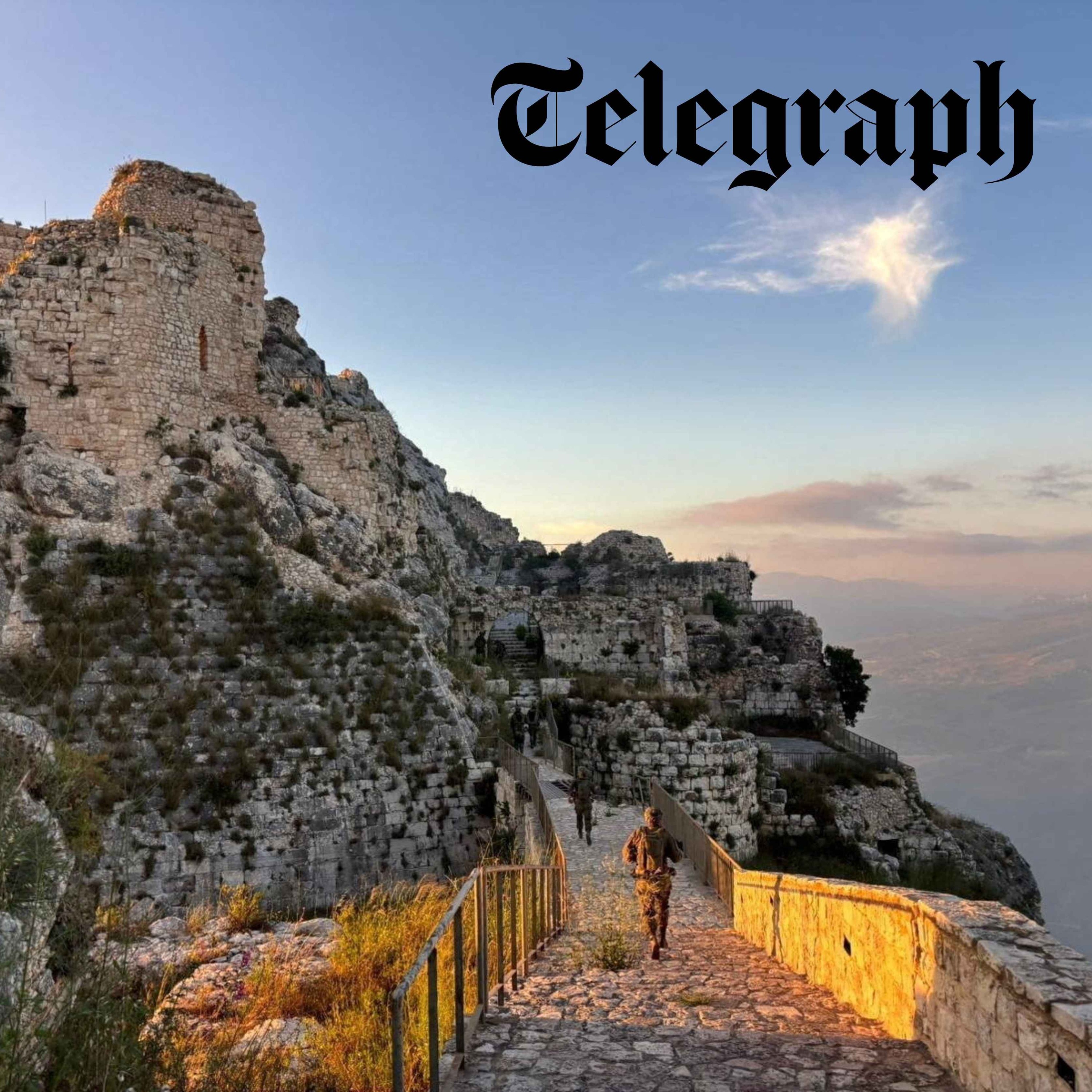
So last week we were reporting about how there was bombing near this 900-year-old medieval castle called Beaufort Castle. If you've Ever been to Lebanon? And you've been to the south of Lebanon, you can go and visit it. It's, it's very beautiful. It's got these huge, dramatic sweeping views. It's, it's quite crumbling, but you can go into sort of some of the lower down cellars and look out over various parapets. Well, on Sunday, Israel's Golani Brigade confirmed that it had seized the castle and has raised the Israeli flag from one of its towers. This follows days of heavy fighting in nearby villages. The Israelis have making their way towards this castle. Israel's Defense Minister Israel Katz pledged that the Israeli troops would stay there as part of the security zone in Lebanon. So as a reminder, this is the self declared buffer zone that the Israelis are establishing inside southern Lebanon. This all comes on the back of Netanyahu asking troops to expand their offensive in Lebanon as part of the battle against the Iranian backed Hezbollah terror group. In a video statement released after the military took Beaufort Castle, Netanyahu released a video. He said, we've returned united, determined, stronger than ever. Now my directive is to deepen and expand our hold in places that were under Hezbollah's control. The capture of Beaufort is a dramatic stage and a dramatic shift in the policy we are leading.
- [11:42]
Roland Olyphant
Is it dramatic though? Venetia, this is, as you said, a 900-year-old Crusader Castle. Why is it so symbolic?
- [11:50]
Venetia Rainey
I mean, it's both symbolic and strategic and there's loads of history to this place. It's called Ala Shakif in Arabic. I should just give that. Beaufort Castle is obviously the French. It means beautiful fort. It was built by crusaders in the 12th century and it' 700 meters above sea level. And it's got this fantastic view that on one side overlooks sort of the entire south of the country and on the other side you can also see parts of northern Israel. So it's always been a really important defensive stronghold. You can see the Litany river from it. The Litany river is sort of just beneath it. It's kind of perched high up above the Litany river just as the Litany river sort of snakes north or south if you will, just beneath it. So we've heard a lot about the Litany river and that was the kind of line that the Israelis said they were going to go up. But actually they're starting to expand their offensive to go up to a more northerly river, the Zahrani River. Beaufort Castle, I just want to say. So that's the strategic element. You can see huge swathes of land, but it's also very symbolic. When the Israelis went in the 1980s and occupied southern Lebanon until the year 2000, they turned Beaufort Castle into a military base. It was the scene of a really fierce battle in 1982. Quite a few Israeli soldiers died, quite a few Palestinian militants died, and eventually it was captured, turned into a big military base, and they withdrew, weirdly, May 23, 2000. So sort of near anniversary. And on Sunday, I believe the Israelis were marking a memorial for some of the people who were killed during that offensive. So it's got huge symbolic and strategic significance. And it's just near the town of Nabatee. And this is a really key southern Lebanese city which is seen as a sort of center of Lebanese resistance against the Israeli occupation from before. And there are some reports that the Israelis are now preparing to encircle Nabatea and that they might be preparing to take it. That would be really. It's not just symbolic, but it's also an economic center for southern Lebanon, a bit of a cultural heartland. And it's often been caught in the crossfires of Israeli military campaigns against Hezbollah.
- [13:49]
Roland Olyphant
So where does that leave the attempt to stop the war in Lebanon? There's meant to be a ceasefire in place, but it sounds like it's not.
- [13:59]
Venetia Rainey
Yeah, we're supposed to have had this ceasefire since 17th of April. Listeners will know it's been extended once. We think it's going to be extended again this week. There are peace talks happening tomorrow and Wednesday in Washington between the two sides. These are still, you know, important peace talks. The Israelis and the Lebanese don't talk often, so it's still a good thing. But whether we can expect anything to properly come out of it, I think, is. I'm very sceptical. We've seen lots of active fighting, as you mentioned. It's really been a ceasefire in all but name. And that's particularly true at the moment, you know. On Saturday, Israel reported one of the largest recent barrages of Hezbollah rocket fire against towns near its northern border. We also saw an Hezbollah explosive drone kill an Israeli soldier on Saturday. So that brings the total of Israeli soldiers in Southern Lebanon to 25. In response on Sunday, the Israelis struck a town, Deir Zahrani, in the Nabatiya district. And according to Lebanon's Health Ministry, that attack resulted in eight deaths, including three women and also wounded 19 others, among them five children and six women. The health Ministry is describing it as a massacre. Also seeing more evacuation orders. And as I mentioned, these are areas both south of the Zahrani river, north of the Latani. So this is again going beyond that Latani river line that we've been speaking about and pushing further up into central Lebanon. We were reporting last week on loads of strikes on the southern city of Tyre, known as Sore in Lebanon. An Israeli strike near that hospital wounded 13 healthcare workers. And there are apparently just a few thousand people now left in Thayer and they're all sort of camping out in the old city, which is the only part of the city where there haven't been evacuation orders placed for Lebanon's prime minister has accused Israel of pursuing a scorched earth policy and collective punishment in the south. And the UN Security Council is set to hold an emergency meeting today and that was requested by the French, who have a historic interest in Lebanon. It's a former colony of theirs and they often sort of serve as its Western protectors and call for people to intervene when things get particularly bad. Again, whether anything will come out of that Security Council meeting, I'm a bit sceptical.
- [16:02]
Roland Olyphant
One last thing, Venetia, this may be pure speculation on my part. Is there any way we can draw a link between the Israeli decision to escalate operations in side Lebanon and the pressure from the Iranians on the Americans to make Israel stop fighting in Lebanon?
- [16:20]
Venetia Rainey
Yes, I think we can definitely draw a link. We know the Israelis don't want a deal at the moment between the Americans and the Iranians. We know that they think it's going to be a bad deal and that they don't feel like they've achieved everything that they want to achieve in Iran. So pursuing the other things they want to achieve in Lebanon serves a dual purpose. They can keep going at it with Hezbollah, who continue to attack them, we should say. And they can also potentially put a spanner in the works of the American Iranian peace talk.
- [16:44]
Roland Olyphant
Venetia, thank you for that. We're going to take a short break now. When we come back, we're going to be speaking to two of the most prominent Iranian journalists working in the Western press who have written a new book about the country. And we're going to see what they have to say both about the nature of Iran today and the prospects for peace.
- [17:09]
Venetia Rainey
Foreign. Welcome back. You're listening to Iran the latest with me, Veneesha Rainey and Roland Olyphant. Now we're happy to welcome onto the podcast to Iranian journalists. Yegan Torbati is an award winning reporter currently working at the New York Times. She was previously part of a Reuters team that uncovered the financial empire controlled by Iran's former supreme leader, Ali Khamenei. She was born in the US To Iranian parents. And Bojog Mehr Sharafdin, also an award winning reporter currently working for Iran International based in the US he began his journalism career in his native Iran. He left in 2008 and has since worked for the BBC and Reuters. They have clubbed together to write a fantastic book, Stolen Revolution. It's out this week, published by Penguin, and it tells the story of six Iranians through from the promise of the 1979 revolution to its betrayal by what they describe as a corrupt Islamic mafia state. Here's our conversation. Bazog Meir Yeganeh, welcome to Iran. The latest we're going to get onto your fantastic book a bit later, but I wonder, you're both journalists, you're both covering the endless cycle of news on the Iran war. So I wonder if we could just start with some news. Given we've had the third round of tit for tat clashes and the Strait of Hormuz in about a week. What do you think this means for the ceasefire? Do you think we're on the cusp of the war restarting Yegane? Do you want to kick us off?
- [18:31]
Yegan Torbati
I think, yeah. I mean, tensions are pretty high and they sort of ebb and flow. And I feel like we've sort of been in this Groundhog Day kind of situation where there's a proposal that's, that's given and then, you know, some elements of it is unacceptable to President Trump usually. And it kind of goes back and forth. I think it's, it's, it's hard right now. I mean, not impossible, anything can happen. But it's hard right now to see a deal that both sides would be satisfied with. I think given the immense cost of this war kind of on both sides, I think both Iran and the US Will want more out of this deal than we saw in 2015, for instance. And I think for Iran, that means maybe sanctions relief money. And for President Trump, that's a pretty big political liability. I think we saw when there were rumors of that happening that he got, there was a ton of criticism from his right flank, from the Republicans. And so in lieu of that, I mean, we either have this sort of like ongoing stalemates or some sort of return to conflict, especially if Iran were to be seen as trying to kind of rebuild some of its nuclear facilities. So I think right now is a really kind of sensitive moment. I think, you know, returning to war is probably not a good choice for either side. But it's hard to kind of see a long term, kind of decisive deal that ends this. Bulzark, do you have any thoughts?
- [20:01]
Bojog Mehr Sharafdin
I agree. I also find it quite unlikely that both sides reach a long lasting deal, especially seeing that the negotiations are more difficult than before. Before that, the negotiations were over the nuclear program of the Islamic Republic. But now we have new complex issues like the control over the Strait of hormones, the blockade and compensation for war. So that makes it much, much more complicated. But the recent tensions that we see, I think they are quite normal in any setup of negotiations. Each side is trying to show that they have the upper hand to gain more on the negotiations table, and they want to show defiance and that send a signal that we don't need a deal. So I think we should consider them as kind of a part of the negotiations.
- [21:01]
Roland Olyphant
I was wondering, I think it's been about a week now that the Internet blockade began to rise. And I've been speaking to people who said they've started seeing a lot more footage, a lot more stuff that they hadn't seen before. I was wondering if either you could tell us what, what have you noticed that's emerged over the past week? Are you getting a better sense of what happened there? During the active phase of the war,
- [21:28]
Bojog Mehr Sharafdin
we see many Iranians have been connected to Internet. We hear a lot from them after almost three months of Internet shutdown. But the connection is not stable and it's not for everyone. There are still many people behind this iron curtain, but the reactions I've seen is like, again, complex because many people, interestingly, are sharing their emotions about, for example, the killing of Khomeini. So they didn't have a chance to come and voice their feelings, sentiments and opinions. So you see a lot of posts on social media that usually is a mix of happiness and confusion. Generally, I think the biggest sentiment is disappointment about the negotiations. It's quite understandable for the US Government and for the Iranian government to seek a deal because it was clear that the war could not result in a clear victory for either side. But for many Iranian people, that's quite disappointing. For them, the start of the war was not February 28. For them, the start of the war was January 8 and 9 when they came to the streets and President Trump said that stay on the streets, the helper is on its way. So for them, that was the beginning of the war and they were hopeful that the US Help will lead, lead to the collapse of the Islamic Republic. So for them to see, like two months later, the US Administration and the new Iranian leadership are negotiating is a bit disappointing.
- [23:18]
Yegan Torbati
I think that captures definitely the sentiment of some Iranians and maybe a large portion of Iranians in general. They seem fairly disappointed in what this war has resulted in. You know, destruction of infrastructure, obviously the killing of people. And then what appears to them at least at this moment that the regime has been strengthened through its control over the Strait of Hormuz and simply through having survived this war against the US And Israel to kind of major military powers.
- [23:49]
Venetia Rainey
When you say the regime has been strengthened, who do you think is really pulling the levers of power in the Iranian regime at the moment? It's felt like a bit of a black box since Khamenei was killed. You know, we hear a lot about Mohammed Baga Gallibaf. He's made a lot of in media because he's very prominent in the negotiations. But we also hear about Ahmad Vahidi. And there was a piece in the Telegraph today by two analysts from the United Against Nuclear Iran group that suggests that Mohammed Ali Jafari, they suggest that he's the second most powerful man in Iran right now. What's your assessment, your guys assessment on who's really pulling the strings?
- [24:27]
Yegan Torbati
I think those names are all, you know, definitely key people. I think one thing about the Iranian system is that that to me, it's not necessarily the individual people that are that important. It's more about kind of the institutions and the system. And in this case, the institution that's the most powerful right now is the Revolutionary Guards. I think it's really hard to make any other case. The people that you mentioned are, you know, Revolutionary Guard generals or veterans. And, you know, that that is the institute, like even the ascension of Mujtab Al Khamenei. I mean, as we kind of talk about in the book, he and the Guards kind of move to put their support behind ahmadinejad back in 2005. And so he has a kind of close link to them. It was rumored that, you know, he was kind of the one picking generals for promotion when his dad was in power. And so just his ascension by itself is an indication that the Guards are kind of calling the shots. I think we've seen with the way that the US And Israel conducted the war, you know, they. They killed major people, including the top person in the country's government and the system maintained. And I think that's a sign that it's not really Vahidi or Jafari and kind of their. Whatever their internal dynamics might be, it's more about kind of this organization that they're all a part of.
- [25:49]
Bojog Mehr Sharafdin
If I may add something, I think the Islamic Republic has been definitely weakened militarily and economically, but politically, I think there's some doubts about that. Of course, in Washington, the government is talking about the regime change in Iran, that the regime has changed, but we don't see any sign of that. And if there has been any regime change, it has changed for the worse, because now we see the irgc, the Revolutionary Guard, having an upper hand, and we have a new supreme leader whose father, wife and sister have been killed. So it's natural that he would start this from a more hardline stance than before. Also, when it comes to negotiations, the Islamic Republic has masterfully portrayed that the system is divided. President Trump has said repeatedly that we don't know who is in charge. Communications with the leadership is difficult. Hexad said that they need to send letters by pigeons to communicate with each other. Trump. Trump has said that they live in caves. So that's why it takes a long time to communicate with them. This is the image that the Islamic Republic is portraying, which is not the reality when it comes to the military side, you see that how the system is united and is decided very fast. But politically, it has created this confusion, which I think is, again, is another negotiations tactic to buy time.
- [27:30]
Roland Olyphant
Jurgen, you mentioned MahmoudAkmadinejad in 2005, and his name has popped up again, as I'm sure you saw in recent weeks, with this extraordinary claim. The New York Times ran it, which is obviously where you work, but there was earlier an Atlantic, I think, piece about this. This idea that the reported bombing on his compound early in the war was in fact a jailbreak attempt to bust him out of jail and perhaps use him as a. As an improbable, I suppose, proxy for the Americans and the Israelis, as a kind of a pragmatic Delsey Rodriguez figure, which left me scratching my head. Is there anything else you can tell us about that? It sounds completely bizarre. Would you be able to expand on that idea? And do we have any idea where he is at the moment?
- [28:22]
Yegan Torbati
I don't believe we do. And my colleagues did that story, and it was a very, very interesting and kind of crazy piece, I think. You know, it's very strange for those of us who remember Ahmadinejad's presidency and kind of his rhetoric during that time. You know, he was very Holocaust denying, kind of calling for, like, really rhetoric against Israel that kind of, even for the Islamic Republic, was. Was very harsh and sort of controversial in, you know, towards the End of his presidency, though, he did in a strange way, kind of challenge clerical leadership and this sort of idea of clerical rule. And one of the appeals of Ahmadinejad when he was voted into office, especially in 2005, was he was both a populist who kind of harkened back to kind of the old days of the revolution in terms of kind of humility and presentation. And he was sort of very kind of anti corruption when it came to, like a certain class of his rivals. The actual.
- [29:23]
Venetia Rainey
He.
- [29:23]
Yegan Torbati
He then kind of engaged in some of his own corruption as well. But. But at the same time, even though he kind of held fast to the revolutionary ideals, he also sort of was seen as kind of an anti clerical person. He was the first non cleric elected president in over two decades. And so I think kind of some Iranians who were sick of clerical rule sort of fastened onto Ahmadinejad as kind of an alternative that was acceptable at that time. Now, he kind of clashed with Khamenei in the end and was ultimately sort of cast out of the system. And in recent years, he would sort of pop up on Twitter and say things. And I think Wuzur can maybe talk to like a little bit more of sort of his recent activities. But he had kind of come to occupy this very strange space in Iranian politics.
- [30:11]
Bojog Mehr Sharafdin
Yeah, he started tweeting Tupac lyrics and sending messages to Christians and Jews around the world, congratulating them for different occasions. So he tried to transform himself in a way, I should say that he is a popular figure in Iran. Not among many people, but he's one of the popular figures. And why is that? Look, in Iran, there are two era that have become quite sentimental. One is the pre revolutionary era, and one is Ahmadinejad's era among the poor. And that's because under Ahmadinejad, we had unprecedented amount of oil money. The oil reached $150 per barrel, and the government had a lot of money. And Ahmadinejad started this policy of. Of cash handouts. He was going to villages, collecting letters from people. People would say, oh, my son needs a bicycle. He would give them a bicycle. And person would say, I need a car to become a taxi driver. He would give them a. Give them a car. He built millions of houses for people to shelter. And so he had done many projects in that era that has made him quite popular among a part of the nation.
- [31:42]
Venetia Rainey
Well, you mentioned oil and giving people bicycles and cars. And I think that does bring us on quite nicely to your book, Stolen Revolution, published by Penguin and out this week. You follow six different people who sort of go over the arc of modern Iranian history, from the promise of the 1979 revolution to its betrayal by what you describe as a corrupt Islamic mafia state, led first by Khomeini and then Khamenei, and you end with the ongoing revolution, repeated rounds of protests in recent years. I just want to start with this idea of the Islamic mafia state. Can you explain how it works?
- [32:17]
Yegan Torbati
Yeah, it's a very complicated system. But I think what we found through our reporting and what we really wanted to focus on is not just the ideology of the Islamic Republic, which has been focused on a lot, but also sort of almost its political economy and kind of its thirst for resources and its, its sort of unwillingness to allow independent actors to arise. Now, whether that's in the civil society space, but also in the economy. And we really try to trace this from, you know, when the earliest days of the state, when it was really forming. And look at the institutions that kind of took shape, often with very good intentions and often by people who, you know, were not corrupt and did not want to kind of of steal resources from innocent people, but because they kind of bypassed the rule of law, because they enshrined all these exemptions for these institutions, like these foundations that took property from people who were accused of being connected to the, the former regime. Because they took that path, the kind of the foundation was set for then those same institutions to really oppress people and to kind of become these enormous state connected private companies that could compete and were unaccountable to anyone. You know, no transparency into how they're run, into how their decisions are being made. And then added to that the fact that the Revolutionary Guards, a military force, was kind of invited into the private sector in the 1990s. And of course they have guns, they have intelligence officers, and they have a whole wing of the Evin prison to themselves. And so it kind of almost is inevitable that at that point if they see a rival, a business rival who can challenge them, that is some that, you know, they have, they have a business advantage, which is that they can threaten, plausibly threaten and imprison and exile all, you know, these, these kinds of, these rivals, these like legitimate private sector actors. And so what we found over the course of our reporting is that it's almost really become systematic over and over. What we heard from private business people is that if you hit a certain like revenue stream or revenue size in Iran, you can expect to get a knock at the door asking for a cut. And if you resist. You know, your whole business is at stake and potentially your freedom.
- [34:46]
Venetia Rainey
There's one person you follow in particular that speaks to all of that. Syed Rahmani. Do you want to tell us a bit about his story?
- [34:52]
Yegan Torbati
So Saeed Rahmani is someone, like many Iranian expatriates, who really has kind of a love for his homeland and wants to contribute quite a lot to it. And we see this energy, you know, we're both people who live outside the country, we see that energy all the time among the Iranian diaspora. And so he returns to the country kind of in 2011, and he decides he wants to build a venture capital fund that will invest in Iranian businesses. And, you know, he struggles to find the money, but he, he does it. He invests in kind of what becomes the Amazon of Iran. He, his company really helps build it into that. And then the nuclear deal happens, and then he's able to bring in hundreds of millions of dollars in foreign investments, which, you know, Iran really needed. And very quickly, you know, they, this, this sector, not just him and his company, but this entire sector, startup sector, starts to be harassed. And as kind of this is happening, there's sort of this like, class of middlemen with one foot in the private sector, one foot in the security state. And they also kind of go to these companies and they say, you see all this pressure that you're getting, I can help you. If you give me some shares of your company, I can help you avoid that pressure. And some of these companies decide to make that compromise and others don't. And we see kind of what happens to Saeed when he in some ways resists that pressure and kind of how his company is targeted by the state.
- [36:23]
Venetia Rainey
There are five other characters that you follow and they really range. I think one of the wonderful things about the book, and I would say it's very readable, I haven't finished it yet, but it's a real page turner. It tells Iranian history through the eyes of these six different people. And they range from a cleric who was a supporter of Khomeini and helped him, sort of quite a radical cleric in the 60s and 70s, or helped him rise to power, to a sort of young, more left wing activist. And I think it really helps us get past this shorthand that we use in news, you know, the Iranians to describe 90 million plus people. But Jorbe, can you tell us a bit about the other five people that you spotlight in the book?
- [36:55]
Bojog Mehr Sharafdin
Yes, for us, it was very important to tell the history of the Islamic Republic through the eyes of these people, which we have, we've chosen somehow carefully to represent spectrum of the Iranian society. Men, women, politicians, businessmen, people from different factions. So the goal was to show the transformation of the Islamic Republic. How the Islamic Republic, a revolution that came to power with the promise of forming an egalitarian society, turned into a mafia state. So there has been a transformation in the Islamic Republic. And interestingly, most of our characters also go through a transformation. First they are a believer in the system, they even help to build part of the system. But then they go through a disillusionment phase and they somehow even fight against the system. One of the characters we have and we start the book with is Mehdi Karubi, one of the students of Ayatollah Khomeini, the founder of the revolution. He. He became one of the trusted people at the early years of the revolution. He established a foundation to help the poor. And through this we see the transformation. There have been many books written about Iran and have described the exclusionary nature of that. But for us, what was important, we tried to show how it turned into a mafia state. Like if. If like as Truman Capote, I think, masterfully showed in his nonfiction novel, detective novel In Cold Blood, it's not important to show who is the killer, it's important to show how he turned into a killer. So that is the purpose of the book, how the Islamic Republic turned into this mafia state. In the case of Karl Lobby, for example, if I may just give a short example, he tried to import some wheelchairs for the veterans of the war, but the Minister of Industry blocked it and said, no, this is against helping domestic production. We don't allow German made wheelchairs to be important to the country.
- [39:17]
Venetia Rainey
The veterans of the Iran Iraq war, we should say.
- [39:20]
Bojog Mehr Sharafdin
Correct, Exactly. And then Karubi bypassed the ministry and the government, went through the parliament when he was an MP and tried to pass a bill so a foundation that he was running can import anything they want without paying tariffs. Well, 20 years later, when he's a reformist and the speaker of the Parliament, he realizes there are tens of ports run by the Revolutionary Guards, that they're not paying tariffs, they're not customs, they're not supervised by anyone. So that simple action that he did decades earlier with a good intention was one of the factors that helped the Islamic Republic to transform to what it is now.
- [40:07]
Roland Olyphant
It's really interesting to hear you say that because as you say, we talk a lot about ideology and politics and militaries and nuclear programs and how many missiles has the IRGC got. But political economy is really important. What does that tell you then about the sustainability of the regime or I suppose, the future of Iran from here? Because I suppose one of the issues with these kinds of systems is that they're incredibly difficult to uproot. And I suppose my guess would be that even if you saw a removal of the regime, the kind of organized crime, ish kind of protection racket, ish set up there is hardly going to vanish overnight.
- [40:53]
Bojog Mehr Sharafdin
Definitely in the cases of Cuba, Iraq, North Korea, we've seen that economic hardship and sanctions would not necessarily lead to the collapse of the government. I'm not against sanctions. Sanctions, I think, is the only peaceful way to put pressure on government to correct their behavior. But, but to hope that these systems will collapse under economic hardship. We should be realistic about that. Usually, let's say 10 and 5% of the society who is connected to the system will benefit from the wealth of the nation and the rest of the nation would suffer from economic hardship. That is at the moment the Achilles heel of the Islamic Republic, the economic aspect. But I would be careful to say that that would easily lead into the collapse of the system.
- [41:54]
Venetia Rainey
We speak a lot about how the war has led to a more hardline political regime entrenched in Iran. What impact do you think the war will have on this mafia political economic system that you guys have described so carefully in the book? Is it going to strengthen it? Is more power sort of vested economically in these groups, or will it weaken it?
- [42:13]
Yegan Torbati
Ultimately, I think if you look at the history of Iran, the way that the sanctions have been sort of processed and digested in the country is to. Is to take a huge amount of the economy and thrust it kind of into the shadows. And I don't see how the war would have any other impact. Like it's a. It's a justification for doing transactions in secret, for putting more power in the hands of the Revolutionary Guard. You know, the Guards are already kind of almost like a major oil trader. They, they are given a huge chunk of the oil resources and told like, you sell this and use it to fund yourselves. You know that I think that trend would only accelerate.
- [42:54]
Bojog Mehr Sharafdin
Totally agree. I think we can imagine two scenarios as we go, as we move forward. One is us and the Islamic Republic reach a deal and the Islamic Republic normalizes ties with the US and take a softer approach in international affairs. And the second one is that they reach a deal, the sanctions are lifted, but the Islamic Republic will maintain its hardcore policies. I think the second scenario is more likely.
- [43:25]
Roland Olyphant
Can I Ask one more question. We kind of thought of this question, Yagana, because of kind of what's happened to you over the past kind of part of this year. You were obviously at the Washington Post and then you fell in the night of the long knives of foreign correspondence. I was wondering if you have any thoughts about the way this war has been covered in the Western press or the quality of the coverage, particularly given, I suppose, in that particular case, a massive culling of, of foreign reporting. And I'd be really interested in Bodwemay, in your view of this as well. What's gone right and what's gone wrong, do you think, in Western coverage of this war?
- [44:13]
Yegan Torbati
Yeah. So thanks for mentioning that. Yeah, it's been a sort of tumultuous few months. I feel very lucky to have ended up at the New York Times. I think it's a difficult moment for foreign correspondence in general, at least in the Western press. I think the limitation that we really face with Iran is the inability to report from there safely long term. And that is not, I think, a failing of the Western press. I think that is the reality of, you know, the pressures that reporters, independent reporters face if they are based inside the country. You know, I haven't been inside Iran since 2010. I have to find very creative ways to try to cover the country from outside. And it makes my job, you know, much harder. And I would like to be able to go there safely and interview people and kind of get a sense of what's happening. You know, we get, we get criticism sometimes for why are you only covering kind of the US Perspective or the Israeli perspective or why aren't you doing more to cover kind of civilian deaths in Iran? You know, during the 12 day war, I did a story about an Iranian civilian who was killed. Those stories are much easier to do when you can be there full time for a long time and kind of have greater connections to society. Now I got kind of lucky. Through a source, I found this person who was willing to talk about their friend who was killed. And then through that person found, you know, other friends and was able to kind of just do a very simple, like not even that long of a story, but it's just a simple story that humanized, you know, one, one person in her family who died. That's it. That took an immense amount of effort. And that's just not the case when you, when you see, you know, my colleagues amazing reporting all over the world where they're able to be based in, in these countries during conflicts and during So I think we, we do face an issue in sort of humanizing Iranians and providing really a rich amount of detail on what's going on in the country, but that's kind of due to the increasing difficulty of operating safely there.
- [46:16]
Bojog Mehr Sharafdin
Yeah, I, I thanks for asking that question. I think it's a very, very important issue because, because again, if the US has won the war militarily, I think when it comes to the war of narratives, the Islamic Republic has definitely an upper hand, especially in international arena. They've been really good to construct the reality and promote it in media. What I think we are missing in international coverage, in the media coverage of Iran is the silent majority, which is the Iranians. And the Internet shutdown by the Islamic Republic was specifically because of that. You silence the majority of the nation, make it very difficult for people to communicate with them. I think Yagana is very unique in that sense. Despite the shutdown, she managed to talk to many Iranians, but it wasn't easy and many foreign correspondents don't do that. That and I think international media can do more to find that alternative narrative that belongs to the silence majority.
- [47:31]
Venetia Rainey
That was Bojog Meharafeddin and Yeganetobati.
- [47:34]
Roland Olyphant
That's all for today's edition. We'll be back tomorrow. Until then, that was Iran the Latest Goodbye Goodbye. Iran the Latest is an original podcast from the Telegraph, created by David Knowles and hosted by me, Roland Olyphant and Venetia Rainey. If you appreciated this podcast, please consider following Iran the Latest in your preferred podcast app. And if you have a moment, leave a review as it helps others find the show. For more from our foreign correspondence on the ground, sign up to our new daily newsletter, Cables via our website or listen to our sister podcast Ukraine the latest. We are still on the same email address battlelinestelegraph.co.uk or you can contact us on X. You can find our handles in the show Notes. The producer is Max Bauer. The executive producers are Venetia Rainey and Louisa Wells. Acast Powers the World's Best podcasts. Here's a show that we recommend.
- [48:52]
Bojog Mehr Sharafdin
I'm Lara Marie Shainhals. And I'm Carrie o'. Donnell.
- [48:55]
Venetia Rainey
And together we are the hosts of Sexy Unique Podcast, a podcast for geniuses about reality tv, pop culture and every once in a while, a tangent about 9 11.
- [49:07]
Bojog Mehr Sharafdin
I mean, it really affected all of us.
- [49:09]
Roland Olyphant
On Sexy Unique Podcast, we insist on discussing the creme de la creme of
- [49:14]
Yegan Torbati
reality television from the current season of
- [49:16]
Bojog Mehr Sharafdin
Vanderpump rules to tried and true classics like early seasons of Real Housewives of New Jersey to underrated gems like VH1's Rock of Love and even Gallery Girls. We're talking about all of it.
- [49:28]
Venetia Rainey
So what are you waiting for?
- [49:30]
Bojog Mehr Sharafdin
Listen to sexy, unique podcasts now on
- [49:33]
Yegan Torbati
itunes, Spotify, and wherever podcasts matter.
- [49:38]
Roland Olyphant
Acast helps creators launch, grow and monetize their podcasts everywhere.
- [49:44]
Bojog Mehr Sharafdin
Acast. Com.