← Iran: The Latest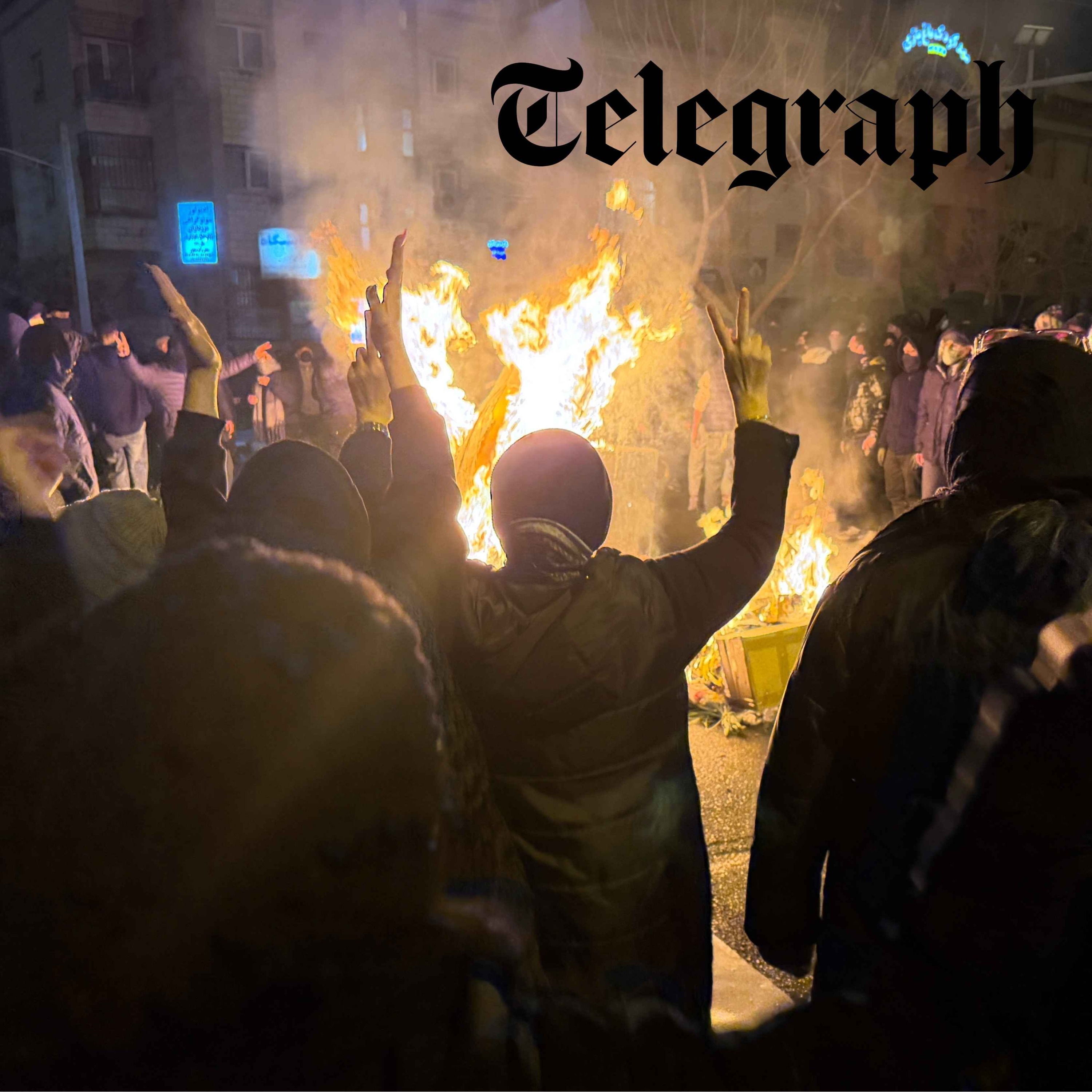
Loading summary
Transcript91 lines
- [00:04]
Dr. Kaivan Mirhardi
The telegraph.
- [00:09]
Amazon Pharmacy Announcer
Amazon Pharmacy presents painful thoughts. 20 more minutes to kill in the pharmacy before my prescription is ready. Maybe I'll grab some deeply discounted out of season Halloween candy. I never had a chocolate pumpkin with raisins before. Those were raisins, right? Next time use Amazon Pharmacy. We deliver. And no, those were not raisins. Amazon Pharmacy Healthcare just got less painful.
- [00:40]
Mint Mobile Announcer
Well, the holidays have come and gone once again. But if you've forgotten to get that special someone in your life a gift. Well, Mint Mobile is extending their holiday offer of half off unlimited wireless. So here's the idea. You get it now, you call it an early present for next year.
- [00:54]
Dr. Kaivan Mirhardi
What do you have to lose?
- [00:56]
Mint Mobile Announcer
Give it a try@mintmobile.com Switch limited time.
- [01:00]
Jerry Insurance Announcer
50% off regular price for new customers. Upfront payment required $45 for 3 months, $90 for 6 month or $180 for 12 month plan taxes and fees. Extra speeds may slow after 50 gigabytes per month when network is busy, see terms.
- [01:15]
Dr. Kaivan Mirhardi
Just shooting to kill people. It's not even to disperse crowds or discourage them from coming out.
- [01:21]
Amazon Pharmacy Announcer
These cuts will make the world less.
- [01:24]
Dr. Kaivan Mirhardi
Healthy, less safe and and less prosperous.
- [01:26]
Dr. Sanam Vakil
Countries are continuing extremely risky research into bioweapons.
- [01:30]
Venetia Rainey
It is a famine.
- [01:32]
Arthur Scott Geddes
The Gaza famine.
- [01:33]
Venetia Rainey
I'm Venetia Rainey.
- [01:35]
Arthur Scott Geddes
And I'm Arthur.
- [01:35]
Venetia Rainey
Scott Geddes and this is Battle Lines Global health security. It's Wednesday, 14th of January 2026.
- [01:41]
Arthur Scott Geddes
Iran is in crisis. The price of bread has more than doubled. The currency has plummeted to record lows and protesters are out in the streets across the country.
- [01:50]
Venetia Rainey
Doctors are being told not to treat people who have been shot by security forces in the streets. And there's an 86 year old Ayatollah says the regime will not back down.
- [01:59]
Arthur Scott Geddes
Today we're taking you inside Iran's overwhelmed hospitals and we'll be looking at the underlying issues that finally push the country over the edge.
- [02:07]
Venetia Rainey
So, Arthur, we're talking about Iran again today. We did cover Iran on battle lines on Monday. I was there with Akhtar McCoy, our foreign correspondent who's brilliant on Iran, Roland Oliphant and David Blair. And we were talking about Trump's possible military intervention and also some of the victims inside Iran. And Akhtar has been doing some brilliant work on that. So do go back and listen to that if you want to hear sort of broader background. But today we really wanted to get inside the hospitals.
- [02:29]
Arthur Scott Geddes
That's right, yeah. So obviously there's been a crackdown and very troubling images and Videos have been emerging of lots and lots of injured people. And it's a pattern we've seen with previous rounds of protests in Iran that seems to be continuing. Lots of different types of injuries. Just to note, we are recording this on Tuesday. It's obviously a very live, fast moving situation.
- [02:46]
Venetia Rainey
Yeah. So there's always the potential that some of this will be out of date slightly by the time you hear it if Trump does decide to strike Iran. But let's start with our interview with a doctor we spoke to earlier this week, Dr. Kaivan Mirhardi. He's chief of internal medicine at the Clifton Springs Hospital in New York. An Iranian American doctor, and he's been collecting testimony from colleagues across Iran. Kevan, welcome to Battle Lines. Maybe you could just start by telling us a bit about your connection to Iran and how you are in touch with doctors there.
- [03:12]
Dr. Kaivan Mirhardi
I opened an Instagram page to give medical advice to Iranian speaking individuals around the world, but it took off during COVID Right now this page is named, it's called Dr. K and he has over a million followers, 90% live inside the country. And I've been just giving medical information about healthcare, but very active during the pandemic, during the Mahsa Mini movement and over the last week or so with the large protests that are going on in the country.
- [03:39]
Arthur Scott Geddes
So you've been in touch with doctors in Iranian hospitals across the country who are treating protesters who have been injured. What have they been telling you about what's been going on?
- [03:47]
Dr. Kaivan Mirhardi
Essentially they've been saying Thursday, starting Thursday, this became, I mean, it started with protests in the rural cities, around outside the capital. And Thursdays, when everything took a turn, it turned into a massacre where I believe the government was given the green light to the Revolutionary Guard to use military equipment to kill people. One individual from the city, Masha, told me that he works in the emergency room, that he saw 20 headshots coming at the same time of, you know, young individuals. The demographic was also different. Starting Thursday, prior to that, it was kind of all age group. The things that they were sending me personally, like images were blunt force trauma, pellet shots, things that happen with tear gas and taser guns. But, but Thursday it was gunshot wounds with exit, with exit wounds. You know, you couldn't even see the bullet, bullets with rifling. That's what they were essentially using. And the presence of heavy presence of the guards inside the hospital getting access to the medical records. They essentially uploaded the records of every patient that was arriving into their own database to follow up and arrest Them, even post discharge.
- [05:01]
Venetia Rainey
You mentioned sort of pellet shots. What sort of weapons are they using? Is it live ammunition? Is it designed to kill, or is it designed to maim so they know who these protesters are potentially and can find them later.
- [05:11]
Dr. Kaivan Mirhardi
Prior to Thursday, very few stories about live ammunition. But starting Thursday, the doctors were saying because of the large exit wounds that they were seeing in people's body, that these were bullets with rifling. So pistols, AK47, any. Any type of, like, military equipment, you know, guns that you can imagine they were using. Many of the people in the country also said, you know, they were given the green light to just shoot, not even wait for some sort of a riot or commotion to start. As soon as you were outside, they were just shooting at anybody who was in the street.
- [05:43]
Arthur Scott Geddes
And what are the conditions like inside these hospitals? What are people telling you about that.
- [05:47]
Dr. Kaivan Mirhardi
Because of the lack of communication, like, there's no Internet, and also a lot of the phones are not working. The doctors not even able to communicate with each other. For example, as an internist, I would need surgeons to help me out. If somebody comes in with a gunshot wounds, it would be hard for me to reach out to a vascular surgeon, an orthopedic, to bring them in and start the or. So it's very hard for them to communicate in that sense. They're being told not to open operating room to do procedures on these individuals by the Revolutionary Guard who are in the hospital. Several of the doctors have formed little groups, rogue hospital systems that they've created inside somebody's living room or in some sort of a cottage. These are personal stories that I'm hearing from some of the physicians, and they're discreetly taking these individuals out of the hospitals and treating them there, where there's no Revolutionary Guard. And some doctors in the hospital settings are registering these individuals without their names or national security number. But these individuals cannot use their insurance to pay for, let's say, orthopedic surgery. So they have to pay cash, although these doctors are trying their best not to charge them. But again, with this economic time, you would have to pay cash for somebody shooting at you in your leg.
- [06:57]
Venetia Rainey
So it's a form of quiet resistance from a lot of these doctors that you've been speaking to anyway. Are doctors being arrested or intimidated into not doing their jobs from what you've heard?
- [07:07]
Dr. Kaivan Mirhardi
Yeah. One doctor, again from Ashad, he told me that he wanted to do surgery on a young girl because she had two pellets in the back of her eye near the retina. And he was told that if you do surgery, you're going to go to jail. You just have to. You cannot even do any type of surgery on these individuals. And it's a huge risk for you to open a rogue medical center. You know, they're putting their lives on the line. It's not just about ethical part of trying to save lives and helping people. It's about your own life and you all have families, but they have to.
- [07:36]
Arthur Scott Geddes
Do this, you know, so those types of eye injuries were a hallmark of the 2022 protests over the death of Mahsa Amini. Are your doctors seeing a lot of that now?
- [07:47]
Dr. Kaivan Mirhardi
Yeah, up to Thursday, I was getting reports that again, they're aiming at the eye, but this time was whole. It was so different, you know, this. This time around, after the Thursday protest, it was almost like massacre. You know, they were saying that just shooting to kill people. It's not even to disperse crowds or discourage them from coming out shooting to kill people and following up and making sure, you know, the bodies are in the morgue. They're saying there's no more place to put these bodies. Families coming to pick them up. They're asking them for money to get the body of your loved one that they killed. It's just a lot of chaos. And still up to this stage, when I talked to another doctor, he said that we're still not caught up. Like, there's people rolling in from gunshots they had a few days ago, and now they're septic and they need blood transfusions. There's no blood. There's no specialists around to help these individuals either. And, you know, doctors are amazing. They're doing their best, but there's still doctors that are with the government. So you never know which doctor is going to report you.
- [08:49]
Arthur Scott Geddes
So in November last year, the prices of a lot of medicine surged by about 70% after the government withdrew a subsidy. What effect is this having on doctors ability to treat their patients?
- [09:00]
Dr. Kaivan Mirhardi
I think that's just another problem they're dealing with. You know, the most significant thing I heard is that during the last protest, individuals could go to a pharmacy and get medication. So I help these individuals by also sometimes telling them which antibiotic to get or which wound care, which gauze, which cream to get. And now they're saying they've told the pharmacist not to give anything and anybody. Let's say you go to a pharmacist and you want a gauze to wrap your wound, you have to give your national identification number to them. Because the Revolutionary Guard will try to this extent. They're going after people that just to find one individual that was in a crowd that got a pellet gunshot and is looking for gauze to just wrap it. They have to register their name. And the doctors in the hospital, you can imagine, you know, with how much shortage of medication there is. You know, they have to find creative ways to treat these individuals.
- [09:50]
Arthur Scott Geddes
What do you advise people to do if they're in a situation where, for example, they've, you know, maybe been hit by some pellets or have suffered a gunshot wound, but they can't get access to everything that you would need? Are there any kind of creative solutions that you're trying to kind of teach people that they can help themselves with?
- [10:05]
Dr. Kaivan Mirhardi
Yeah, I mean, depending on the injury or what they've suffered. I've used several creative ways. For example, there's a shortage of normal saline where you would need to wash the wound with. I teach them how to boil some water, add some salt, let it cool down and use that as an effective method to rinse the wound. Different creams that, you know, I, I know are available in Iran for wound healing, tear gas injuries, taser, gun injuries, you know, what are the things? Home remedies. I learned a lot of that during COVID too, the shutdown. Not so much with, you know, trauma from aggression, but things you could do at home without having to leave your house. So that helps, but sometimes it doesn't. I mean, I got a picture of somebody with a broken skull and there's nothing I can do. You need IV antibiotics and ICU care and neurosurgeon. And I said, listen, regardless of what you think they will do to you, you will die at home and you need to go to the hospital. And I haven't heard from them again, so it's tough.
- [11:06]
Arthur Scott Geddes
Another aspect of, I guess the longer running crisis in Iran's health sector is the fact that doctors are overworked massively. You know, already having to deal with very, very long shifts, very, very demanding conditions. There was a story not long ago about two doctors who, two nurses, sorry, who died in a hospital in Iran. And it's not clear what happened, but the implication is that they had been basically overworked. Now doctors are having to deal with an influx of all sorts of injuries and all sorts of patients. How are they managing to deal with this?
- [11:37]
Dr. Kaivan Mirhardi
I'll tell you one thing, I made a lot of friends through this Instagram since 2019. These are dedicated doctors working in Iran. Many of them are not in the country anymore. They're trying to run away because it's just not sustainable. Their income is very low for what they do. Here. I can see maybe 10 to 12 patients, and I say, I had a hard day. They're seeing 200, 300 patients a day just to get through the day. And right now, with the pressure that the government's putting on them, they're just trying to stay alive and help their fellow human beings. They're very brave people. They're very great doctors. But there's huge shortage of doctors too, because many of them have left with this crisis that's going on. And the problem is, you know, the government creates other ways to become a doctor, easier ways if you're with them, if you're part of their group. And these are not the doctors you really want to get treated because they're not getting the proper education. So you have to be careful with that, too. When you go see a doctor in Iran.
- [12:38]
Venetia Rainey
Yeah, I read somewhere that 30% of newly graduated doctors and nurses never work in Iran at all and just emigrate. That's an extraordinary statistic. What is that doing to Iran's health sector?
- [12:50]
Dr. Kaivan Mirhardi
Yeah. And then the thing you said is the depression in doctors is significant, like major depressive episodes that I talked to some of these individuals and many of them kill themselves. You know, I think the nurses you were talking about, and there's residents that I know, they just commit suicide because there's so much pressure on them, and they go to this field to help people like I did. But for me, working in New York is everything is there. You know, what do you need? You need someone to. Another nurse to help you. Do you need this equipment for them is everything's taken away. And then they have to commit to their ethical duties that they soar by. And it's impossible. It's really impossible.
- [13:26]
Venetia Rainey
Can you just tell us a bit more about this Instagram page? How easy is it for you to communicate with doctors at the moment, given the level of surveillance of people who are involved in any way in the protests, Are you finding people are more nervous to post or message you?
- [13:39]
Dr. Kaivan Mirhardi
I feel like the trust that I built on the page with these individuals, and I've known some of them for many years, and the page has some lifestyle aspect to it that they see me as a dad of two children, a husband. So I've committed to the page and created that trust. So they do give me that information. You know, they send me the voice audios, they send me the pictures, which again, I. I can provide for the media, but to some degree, because many of them don't want specific names of the hospital or names of where they live because that they can easily be tracked, they have been forthcoming with a lot of information. It's limited, though, because the connections are very poor. Before Thursday, I could just call one of my doctor friends in Tehran and ask them for information. Now I just left voicemails and messages, and they're not getting back to me. Only a few select are able to connect.
- [14:27]
Arthur Scott Geddes
There's been a lot of reporting and a lot of discussion about the role that technologies like Starlink are playing in helping people get around the blackout. Is that something you've seen evidence of?
- [14:35]
Dr. Kaivan Mirhardi
The messages that are coming through are usually through some sort of a VPN that they're using that's functioning, and they have to keep overriding it. The Starlink. A few individuals have connected and told me that they're on the Starlink. There are a few that are constantly connected. There's one doctor in Mashed that, you know, I've been talking to, and he's giving me a lot of information, but it's not what it used to be. It's not the same level of access to information that I used to have before Thursday. So it's still very limited.
- [15:02]
Arthur Scott Geddes
So you've got a million followers, most of them in Iran. Iran's obviously a country of 90 million people, an enormous place. What's your sense of how widespread this anger is at the government and how widespread the kind of anger at these underlying issues is?
- [15:17]
Dr. Kaivan Mirhardi
I mean, this page is not very political, so I get a good mix of individuals that have variety of thoughts about the politics of the region, about US Intervention, Israel intervention. So I trust the information that I get to this page because I never identified myself that, you know, I support a certain person or certain group. So in general, you know, the last protest, the Mass in 2022, there was a variety of messages coming in like, why are these people, you know, arguing about covering their hair? This is just Islamic country. This is how it should be.
- [15:53]
Mint Mobile Announcer
Now.
- [15:53]
Dr. Kaivan Mirhardi
There's no. No one against this. This movement. There's. I haven't received a single message that says, why are people on the street? Everybody's like, we're gonna win this. We're out there. And these are individuals that are just. Many of them are religious. Many of them are very conservative, traditional, from small towns, you know, outside of. Because I don't just get the popular Tehran and Mashed. I get small towns I've never heard of. And they say, oh, we're out there. We're going to make it happen. We want change. This place is not sustainable for us. So I think majority, almost all the people want this to happen, want this regime to leave and change.
- [16:34]
Venetia Rainey
That's fascinating. And what do they say to you about the prospect of Trump intervening, as you mentioned, or the prospect of the Crown Prince Reza Pahlavi trying to come back?
- [16:43]
Dr. Kaivan Mirhardi
Many of them are just waiting. Many of them are sending me videos. They're like, hey, Dr. K, I'm in the street. We did what we were supposed to do. You know, what is next they really need. And they don't feel like this is, this would be an invasion or foreign intervention or anything. They just need the help. They said, we're here unarmed, getting shot at. All of them right now are telling me they know somebody that has died. Many of them gone silent. I don't know what happened to them. They're constantly saying, can you please get the word out? Can you tell the media, can you talk to somebody about us and let them know what is happening? And they're just waiting.
- [17:20]
Arthur Scott Geddes
Thank you very much for speaking to us. After the break, we'll discuss what effect Trump's interventions could have on the protests.
- [17:34]
Jerry Insurance Announcer
Most drivers overpay for car insurance, not because they're careless, but because the system is needlessly complicated. Jerry fixes that. Traditional comparison sites give you quotes once, then disappear. But Jerry can handle all the insurance shopping legwork and never stops working. Compare 50 plus insurers side by side and purchase directly in the app. No spam calls, no hidden fees. They'll even monitor price trends and can alert you to better rates. Drivers who save with Jerry could save over $1,300 a year. Download the Jerry app or visit Jerry AI Acast today.
- [18:08]
Darina, Co-founder of Quo
Hi, I'm Darina, co founder of Quo. You might know us as OpenPhone. My dad is a business owner and growing up, he always kept his ringtone super loud so he'd never miss a customer call. That stuck with me. When we started Quo, our mission was to help businesses not just stay in touch, but make every customer feel valued. No matter when they might call. Quo gives your team business phone numbers to call and text on your phone or computer. Your calls, messages and contacts live in one workspace so your team can stay fully aligned and reply faster. And with our AI agent answering 24. Seven, you'll really never miss a customer. Over 90,000 businesses use quo. Get 20% off@quo.com business. That's quo.com business. And we can port your existing numbers over for free. Quo no missed calls, no missed customers.
- [19:03]
Amazon Pharmacy Announcer
Amazon One Medical presents painful thoughts.
- [19:07]
Jerry Insurance Announcer
I've been on hold to make a doctor's appointment for 23 minutes now. The automated voice has told me 47 times that my call is very important to them.
- [19:17]
Dr. Kaivan Mirhardi
Hmm.
- [19:18]
Jerry Insurance Announcer
I'm starting to think that they don't think my call is important at all.
- [19:23]
Amazon Pharmacy Announcer
With Amazon One Medical 24. 7 Virtual Care, you'll get help fast without having to remain on the line to make an appointment. Amazon won. Medical healthcare just got less painful.
- [19:39]
Arthur Scott Geddes
Welcome back. You're listening to Battle Lines Global Health Security. So it's clear, I think, that Iran has had a long running crisis in its healthcare system. But that's just one of many kind of crises that's been bubbling away in the country for a long time.
- [19:52]
Venetia Rainey
So because this is a global health security podcast, we really wanted to get into the water crisis, women and girls. So let's speak to someone who can talk very broadly about all of those issues. We're joined now by Dr. Sanam Vakil, Director of the Middle east and North Africa Programme at Chatham House.
- [20:07]
Arthur Scott Geddes
Sanaam, thank you for joining us. Iran has seen huge economic instability with the rial plummeting to record lows and the price of bread more than doubling. How has all this financial instability and particularly food insecurity driven this wave of protests that we're seeing?
- [20:22]
Dr. Sanam Vakil
Well, I think these economic issues have been a catalyst for these new rounds of protests that broke out in late December when shopkeepers decided to strike to protest these dire economic conditions. Those protests quickly translated into broader based political protests that were seen not just in urban centers, but also in small towns across all of Iran's provinces. Protests have now been ongoing for over two weeks now, and they've become much more serious. They've gained in momentum and the government is certainly taking the protests very seriously because they've effectively halted all communication, Internet access, phone contact with the country for over 100 hours now.
- [21:11]
Arthur Scott Geddes
We've seen in particular the price of bread has increased. Could you just explain to listeners why that is so challenging or why that has provoked anger?
- [21:21]
Dr. Sanam Vakil
Well, obviously price increases of basic goods, be it bread, rice, you know, sort of what goes into your daily basket can make life increasingly challenging for ordinary people. And with the currency also collapsing in tandem with this rise of prices, that has been really quite extreme. People are just struggling to get by. And that frustration isn't. You can't just internalize it. You know, families and societies can make changes and choices to their daily Shop. But this is, you know, much beyond a cost of living crisis. This is something that is broken in the system, and it has been translated to the political establishment that has not been able to address these economic concerns. It's a result of profound mismanagement. It's corruption is widespread in the economy. Iran is under the most significant sanctions regime that we've seen for a while. And ultimately Iran is in a longstanding political standoff with the United States of America. And so the cascade of these pressures impact people, obviously in their pocketbooks and in their food choices. But ultimately it's tied to, you know, larger issues.
- [22:38]
Venetia Rainey
You mentioned that the protests have been going on for two weeks. Can we say for sure, and we're recording this on Tuesday morning. Can we say for sure that they're definitely still ongoing at the moment? Fars, the public news agency that's linked to the irgc, put out a statement saying last night was very calm, there was no unrest. It mentioned a massive pro government rally that attracted hundreds of thousands. Obviously, that's the Iranian government line. We have to take that with a gigantic pinch of salt. But how much can we be certain about what's still going on given the Internet blackout that's been rolling for more than 100 hours now?
- [23:07]
Dr. Sanam Vakil
Well, given the Internet blackout, of course, we don't have tangible, verifiable evidence of regular, let's say, statistics and number counts of what we're seeing inside the country. But reports are emerging, reports that are verified. Videos do trickle out when people are able to connect to starlink. And there were protests indeed last night. Actually, I was surprised by the size of some of the protest videos I saw and quite impressed by people's resilience and bravery because these protests have been met with a serious government crackdown. We see human rights organizations estimating conservatively that the death toll is over 500. But others are reporting that the death toll is in the thousands. And this might disturb your listeners, but there are also videos circulating of people going to identify dead bodies. And so this is a real violent and tragic situation in the country. But, you know, as day turns to dusk, that's when the counter protests take place. And that's when Iranians who are coming out on all of these issues, but primarily the political ones, are still braving the gunfire and the ammunition and the street fights and coming out. I don't know how long they'll be able to persist. Of course, that's very much in their hands. This is a repressive and authoritarian government. But the fact that they are continuing speaks to the gravity of this moment.
- [24:34]
Venetia Rainey
Okay, so not fizzling out just yet. We've spoken about some of the financial insecurity, the food insecurity. And to what extent is this also being driven by concerns over women's rights? The last round of protests in Iran, the Women Life freedom movement in 2022, was really driven by the death of Mahsa Amini in custody after she refused to wear a hijab. And then successive rounds of protests by mainly young women and girls coming out from universities and schools even. To what extent is that playing a factor in this round of protests?
- [25:02]
Dr. Sanam Vakil
Again, hard to say for certain, but I think it's the collective demands of all different Iranians that are about women's rights, dignity, and equality. That coming up, there are serious, profound economic grievances by people towards the government. There is a sort of broken social contract, and that's seen across society over the past number of months. We have seen an electricity crisis in Iran. We've seen a water crisis in the country where the country, because of mismanagement by the government, was, you know, purportedly almost at day zero. And that is, of course, shocking and reflective of the gravity of government mismanagement. Beyond that, of course, you know, thinking about civil rights, human rights, women's rights, it all comes together. This is a society that has been protesting for many years now, going back to 1999. There were student protests. 2009, there were political protests. 2017 and 2019, there were economic protests. And 2022, as you rightly just brought up, brought together all of these grievances in what was very much motivated by Masa Jina Amini's death, but really reflected the merger of all of these grievances. What we know is that Iranian protests have become quickly politicized because economic reforms on their own aren't going to answer the needs and the grievances of Iranian people. What we also know is that this is an Iranian regime that remains stubborn and resistant to reform. They refuse to really make meaningful concessions. After the 2022 protests, actually, there was much more leniency towards women's clothing and the hijab. There was less policing on the streets, and there was. There has been evidence of increased social liberalization as well. But that wasn't anything formalized. It was just an acknowledgement, obviously, of the pressure and tensions that the government is facing. And it's worthwhile also reminding your listeners that just last summer, Iran faced off against Israel in what was a sort of devastating war that attacked not just Iran's leadership, its security forces really showed how penetrated the Islamic Republic is, but also saw the United States come in to bomb Iran's nuclear facilities. So this is a country in retreat. This is a country and a political system that is really on the back foot.
- [27:33]
Arthur Scott Geddes
One of the things that fascinates me about this round of protests is that many of the factors leading into it seem to be longer term. So we've reported at the Telegraph quite extensively on water shortages, for example, and the water crisis in Iran. The government has had to talk quite seriously about relocating the capital to Iran because they're going to run out of water. So what I'm trying to separate out is the kind of like the violence of the immediate reaction. I was trying to reconcile the long running factors with the, with the kind of immediacy. What is it that's kind of pushed everyone over the edge this time? And to what extent are these longer factors to blame?
- [28:08]
Dr. Sanam Vakil
Sure. I mean, I know you want to pinpoint one thing and it could be for individuals the rising prices or the water crisis. But you know, this is a collection of systematic failures on behalf of the political establishment. When you cannot protect your citizens and provide basic goods, basic services, you have a serious crisis that's not just economic, it's certainly much more political. So I think it's the convergence of all of these issues that have been building and mounting and wearing people down in a way that is hard to imagine living day to day. You know, maybe uncertain if you're going to be surveilled or if you're going to have enough water, can really wear you out individually. And you know, since you want to talk about the health issues, you must imagine that there is certainly a mental health crisis in Iran. Suicide rates are high in towns and villages. You see a lot of young Gen Z or even older men in particular protesting. There is an unemployment crisis. And so when you have really nothing to live for, that does also propel you out in the streets to take chances and risks that, you know, perhaps ordinary people wouldn't do if they had jobs, a sustainable system to rely on and all of that.
- [29:32]
Venetia Rainey
Let's move on to the wider geopolitical picture. Over 80% of Starlink activity is now being disrupted in Iran as they try to continue to keep the Internet blackout going. Now reportedly that's being done by military grade equipment that's been supplied by Russia or China. I don't know if you've heard these reports. There's some suggestion it might not be true. But I'm curious as to what role you think Russia and China, Iran's key allies, are playing to help support the regime to crush these protests?
- [29:54]
Dr. Sanam Vakil
I can't speak for certain if there is tangible support taking place during these specific protests, but certainly we know that China and Russia have provided support to Iran, be it military, security and economic. And this support, of course, has helped Iran increase its surveillance of Iranian society, as well as survive sanctions, as well as build up its military capabilities. So the relationship is deeper and really designed to help the Islamic Republic sustain itself amid internal dissent, but also external pressure, particularly coming from the US The Trump factor.
- [30:35]
Arthur Scott Geddes
He's apparently been briefed on a range of options to take with regard to Iran from airstrikes and long range missile strikes, but also cyber attacks and psychological operations targeting regime officials. What do you see as the U.S. s next moves?
- [30:48]
Dr. Sanam Vakil
Well, I think today in particular, President Trump is meant to be assessing the options that are on the table. Last night he announced a 25% tariff on all countries that trade with Iran. The aim is to pressure those countries to reduce whatever trade they are engaging in and through those tariffs, of course. And those choices further strangle the Iranian economy and its access to liquidity, etc. So that pressure will then, of course, translate internally and perhaps support the protesters, I imagine. And I'm pretty confident he's also looking at broader military response. He himself has of course, made that clear, as I understand that the US doesn't have a deployed carrier in the region right now, so we can't expect something imminent. Of course, it does have assets. It could strike at some IRGC facilities or some of the law enforcement inside the country. And this would be designed to give a boost to the protesters. And it would be, of course, designed to simultaneously limit the coercive and repressive responses of the government. That response, if it does come, is certainly very risky for the United States. Donald Trump is looking to distinguish himself from his predecessors, all Democrat, that by all accounts, or by his account, didn't do enough to help Iranian protesters in past protests. But if he does come in and intervene militarily, this is unprecedented. And the Iranian government has said they too will counter respond either to the US Or Israel. And it could just unleash a broader conflict that will have spillover in the region and very dangerous. It won't necessarily lead to the immediate downfall or collapse of the Islamic Republic as well. And you know, even if we consider those scenarios, those scenarios will take time. And it's not necessarily clear if a democratic transition can be guaranteed. You could see a military outcome, military coup emerge. You know, there are many scenarios currently on the table. And so the choice that he makes and the risks he takes will be carefully calibrated.
- [32:59]
Venetia Rainey
I wonder if you think that part of this, a very public discussion of military options, including hard military strikes, is also potentially a negotiation tactic to try and pressure Iran back into nuclear talks. We've heard Iranian Foreign Minister Abbas Aragchi, I mean, he said he's ready to take on the US if they come for them again, but he's also said that he's ready to engage in nuclear talks, provided it's without threats or dictates. Do you think that could ultimately be the best sort of realistic outcome of this in terms of, for the West?
- [33:27]
Dr. Sanam Vakil
I mean, on this list of considerations for Trump is, of course, this option of renewing negotiations. We have heard over the past few days, as you've mentioned, that the Iranians are dangling the prospect of renewed negotiations with the Trump administration. And they have been discussing coming back to the negotiating table, I think, in the fall of last year as well, after the Iran, Israel war. I think it would be very hard for President Trump to quickly return to a negotiating table. He would have to require not a negotiation, but an immediate Iranian concession to his demands, which are not really focused on the nuclear program anymore. That program has basically been buried in the ground as we know it. And Iranian officials effectively admit that Trump is looking for constraints also on ballistic missiles and, of course, commitments that Iran will halt its proxy support across the region. And for the Islamic Republic and its very stubborn leadership, those concessions are sort of tantamount to surrender. So I think a quick return to the negotiating table will be hard to sell and hard to deliver. And let me just say one more point. If they do, let's say, sign a quick deal with the United States as well, that's not necessarily something that the Iranian people are going to welcome. It's a little bit late. They had many opportunities over the past few years to negotiate. And the Iranians are, if you will, perpetual negotiators. And while, of course, it's been unfortunate that Donald Trump withdrew from the Iran nuclear agreement in 2018, since then they haven't made a deal with the United States or the international community. And so they're also here because they've played for time, drawn out negotiations. And maybe they're not such great negotiators after all, or they never intended to actually sign a deal along the way. And for Iranian, for the Iranian people now, I don't think they want to see these leaders Buy themselves more time. What they're looking for is a transformative system of governance that doesn't include Ali Khamenei or any of the political elite. So, you know, that is another issue to consider on the table. And of course, President Trump might try that Venezuela sort of bait and switch, remove Maduro and try to find sort of a new, a more moderate figure to come up and placate and answer people's demands. That's, that's another one of the scenarios on the table. But again, it's hard to see Iranians immediately accepting or warming to that option after what they've seen over the past two weeks.
- [36:00]
Arthur Scott Geddes
So Friedrich Merz, the German Chancellor, has said he believes we're seeing the last days and weeks of the Iranian government.
- [36:06]
Dr. Sanam Vakil
What do you think about Friedrich Merz or about the Iranian government?
- [36:10]
Venetia Rainey
We'll start with the Iranian government.
- [36:13]
Dr. Sanam Vakil
Well, I think that the Islamic Republic is certainly in a period of profound transformational change. Whether it is the end of the Islamic Republic in a revolutionary moment. You know, people like me are notoriously bad at making these calls, and that's not my job. But I do think that what emerges from this period, whether the regime survives or whether it transforms, we're going to see something profoundly different. If it does survive, the Islamic Republic will become much more insular, in my mind, could evolve into a regime similar to Saddam Hussein's Iraq after the 1990, 1991 first Gulf War. That regime relied on fear, repression and surveillance, not legitimacy, in order to stay in power. And it will be a constrained, inward looking Iran. And so, you know, that would be profoundly different if the regime transforms in all of the scenarios that we sort of dabbled around, that also will bring something new. It could produce and recycle leadership from within. Or of course, there could be other such transitions. But I think this phase of the Islamic Republic is on its, you know, last breath.
- [37:27]
Venetia Rainey
Well, we'll watch and see. Dr. Sanam Vakil, Director of the Middle east and North Africa Programme at Chatham House, thank you very much for joining us on Battlelands. So that was a really interesting chat and she seemed fairly, I don't know if optimistic is the right word to use, but she seems to think that this is a big moment, that something will shift in terms of the Iranian regime in the coming weeks. I don't know how to feel about that. And I think particularly with the Internet blackout, it's so hard to know. I just, I have this sort of sneaking suspicion that maybe the protests are starting to fizzle out already. We Just. We just don't know. More, hopefully will emerge once the Internet comes back on, whenever that is. What did you make of it?
- [38:00]
Arthur Scott Geddes
Well, I think that point she made about whatever happens now, it will be a kind of transitional moment, I think. I think it's very difficult to imagine the regime kind of slotting back into the kind of pattern that it was in.
- [38:12]
Venetia Rainey
We've just been here so many times before, and there's always so much optimism, I guess, that this will be the end of the Iranian regime, and it's a tough regime. And I personally feel like we're going to have to wait for the Ayatollah to die, Khomeini to die, and there won't be any real change until then. That's my personal hunch, but I hope I'm proved wrong. The Iranian people deserve better.
- [38:33]
Arthur Scott Geddes
My version of that would be that I can't see anything happening unless there's some kind of quite major foreign intervention, basically. It just seems to me that the protests, although they're very widespread and they do seem to be continuing, that I just don't know whether on their own there'll be enough to kind of overturn, you know, the security apparatus, really, that's set against them.
- [38:52]
Venetia Rainey
Do you think Trump will intervene this week? I mean, that's the sort of big. That's the big caveat that we have to put on this podcast. We are recording this on Tuesday. We said that at the top. I'm just going to say it again now. Trump is having a meeting with his security advisers, we think later today to discuss all these military options. We just don't know what's going to happen, given he's got the wind in his sails from toppling Maduro in Venezuela.
- [39:09]
Arthur Scott Geddes
Exactly. So it's just always so difficult to predict what he's going to do. He seems to base his decisions and actions on a totally different set of principles and evidence to other world leaders. So it'll be fascinating to see what happens.
- [39:22]
Venetia Rainey
Well, yeah, we'll just, as you say, have to just wait and see. That's all for today's episode of Battlelands. We'll be back again on Friday. Until then, goodbye.
- [39:30]
Arthur Scott Geddes
Goodbye.
- [39:31]
Venetia Rainey
Battle Lines is an original podcast from the Telegraph, created by David Knowles and hosted by me, Venetia Rainey and Arthur Scott Geddes. If you appreciated this podcast, please consider following Battle Lines on your preferred podcast app. And if you have a moment, leave a review as it helps others find the show. To stay on top of all of our news, subscribe to the Telegraph sign up to our Global Health newsletter or listen to our sister podcast Ukraine the latest. You can also get in touch directly by emailing battle lineselegraph.co.uk or contact us on X. You can find our handles in the show. Notes the producer is Sophie o'. Sullivan. The Executive Producer is Louisa Wells. Telegraph's Global Health Security team is supported by the Bill and Melinda Gates Foundation.
- [40:15]
Tommy John Announcer
Guys, it's no use putting it off. The best time for an underwear refresh is now Tommy John underwear is designed for a perfect fit that stays put all day. There's zero chafe, thanks to four times more stretch than competing brands and their innovative horizontal quickdraw Fly is a game changer. With over 30 million pairs sold, there are thousands of men out there more comfortable than you. Don't settle for less. Go to tommyjohn.com today for 25% off your first order with code comfort. That's tommyjohn.comfort Tommy John comfort Perfected.
- [40:47]
Dr. Horton Announcer
Your new home is now ready. Dr. Horton, America's Builder has new homes that are ready today with new construct communities in Ellensburg and throughout the Greater Seattle area. Dr. Horton has the right home for you at Dr. Horton we're still building with flexible living spaces, smart home technology and two and three car garages. More communities and more homes available every day. Find your new home in Ellensburg now ready@doctor Horton.com Dr. Horton, America's builder and equal Housing Opportunity Builder.