Loading summary
Transcript89 lines
- [00:04]
Ali Ansari
The telegraph. Lifelock. How can I help?
- [00:11]
Caller/Listener
The IRS said I filed my return, but I haven't.
- [00:14]
LifeLock Advertiser
One in four tax paying Americans has paid the price of identity fraud.
- [00:18]
Venetia Rainey
What do I do?
- [00:18]
Ali Ansari
My refund though.
- [00:19]
Caller/Listener
I'm freaking out.
- [00:20]
Ali Ansari
Don't worry, I can fix this.
- [00:22]
LifeLock Advertiser
LifeLock fixes identity theft, guaranteed and gets your money back with up to $3 million in coverage.
- [00:27]
Venetia Rainey
I'm so relieved.
- [00:28]
LifeLock Advertiser
No problem.
- [00:29]
Ali Ansari
I'll be with you every step of the way.
- [00:31]
LifeLock Advertiser
One in four was a fraud paying American. Not anymore. Save up to 40% your first year. Visit lifelock.com Specialoffer terms apply. It's tax season and at LifeLock we know you're tired of numbers, but here's a big one you need to billions. That's the amount of money and refunds the IRS has flagged for possible identity fraud. Now here's another big number. 100 million. That's how many data points LifeLock monitors every second. If your identity is stolen, we'll fix it. Guaranteed. One last big number. Save up to 40% your first year. Visit lifelock.com specialoffer for the threats you can't control. Terms apply.
- [01:13]
Ali Ansari
There's also this very, very strong element in Iran that we're really a great power and we deserve to be a great power. And we have this great civilization in history. And why the hell doesn't anyone accept that we're a great power? Basically. A short time ago, the United States military began major comb operations in Iran. Today, President Trump says Iran's supreme leader,
- [01:37]
Caller/Listener
Ayatollah Ali Khamenei was killed in the attacks.
- [01:45]
Roland Oliphant
The Pentagon is weighing a takeover of
- [01:48]
Ali Ansari
that island as a way to force
- [01:50]
Roland Oliphant
the reopening of the Strait of Hormuz. Does anyone really think that someone can tell President Trump what to do? Come on. I'm Roland Oliphand and on this special Easter weekend edition of Iran, the latest. I'm taking the opportunity to lift our eyes from the immediate horizon of current events and take a bit of a long view. What is Iran? Where did it come from? How old is this very ancient civilization? And what does all of that tell us about the country that is at war today with Israel and the United States? Well, to answer all these questions, I turn to Ali Ansari. He is the professor of Iranian history at St. Andrews University. A warning before we get into this. This covers an awful lot of ground. We agreed towards the end that we're going to have to come back to do another episode about more modern 20th century history. But without further ado, for all the questions you didn't know you wanted answered about Iranian history, the myth and civilization. Here is our conversation. Ali, welcome to Iran. The latest. Ali, could you just tell us a bit about your background because your name is obviously quite Iranian. Your accent is very South London.
- [03:07]
Ali Ansari
Yeah, it is a bit, yeah. And actually that's well spotted because I actually went to school in South London, so I, my parents are both Iranian. I was actually born in Italy because my father was an ambassador under the Shah. Spent a very short time actually in Iran in the 1970s after he retired. But I am an alumni of the British School in Tehran, so I was at a preparatory school in the, the British School in Tehran. And then in 1978, with alarmingly good timing, I have to say, they had, in June 78, they had dispatched me off to go to boarding school in Croydon, as it happens, at a splendid school called Royal Russell. And I spent the next eight years, from basically 1978-86, living my life in the proximity of Addington, quote, Croydon. So that's where the, I think the accent basically comes from. I mean, I've been speaking English for a very, very long time. That's all I can say.
- [04:01]
Roland Oliphant
All right, so you're, you're, you're, you're an Anglicized Iranian.
- [04:04]
Ali Ansari
Yes, I've spent most of my life here. I mean, let's be blunt about it. I self identify as British Iranian. So I'm very much, since the age of 10, I've been in the United Kingdom.
- [04:15]
Roland Oliphant
All right, so that, that tells us who you are. And you're also a professor of Iranian history at Saint Andrews University, which is really why I wanted you. We've been talking a lot about Iran, obviously on Iran, the latest, but there's just so much context about this country and the civilization and where it comes from. And I just thought this Easter weekend we could take the opportunity to cast our gaze much, much further back to give our listeners an idea of what this country is we're talking about. And I suppose the first question I wanted to ask you is when does Iran begin? Because there are all kinds of numbers thrown around. I saw an Atlantic article saying that, you know, the fate of a two and a half year old civilization is now in the hands of Donald Trump. Other people saying, oh, it's a 5,000 year old civilization, or, you know, Iran has been around for 4,000 years, so how many thousand years? Where does Iran begin?
- [05:07]
Ali Ansari
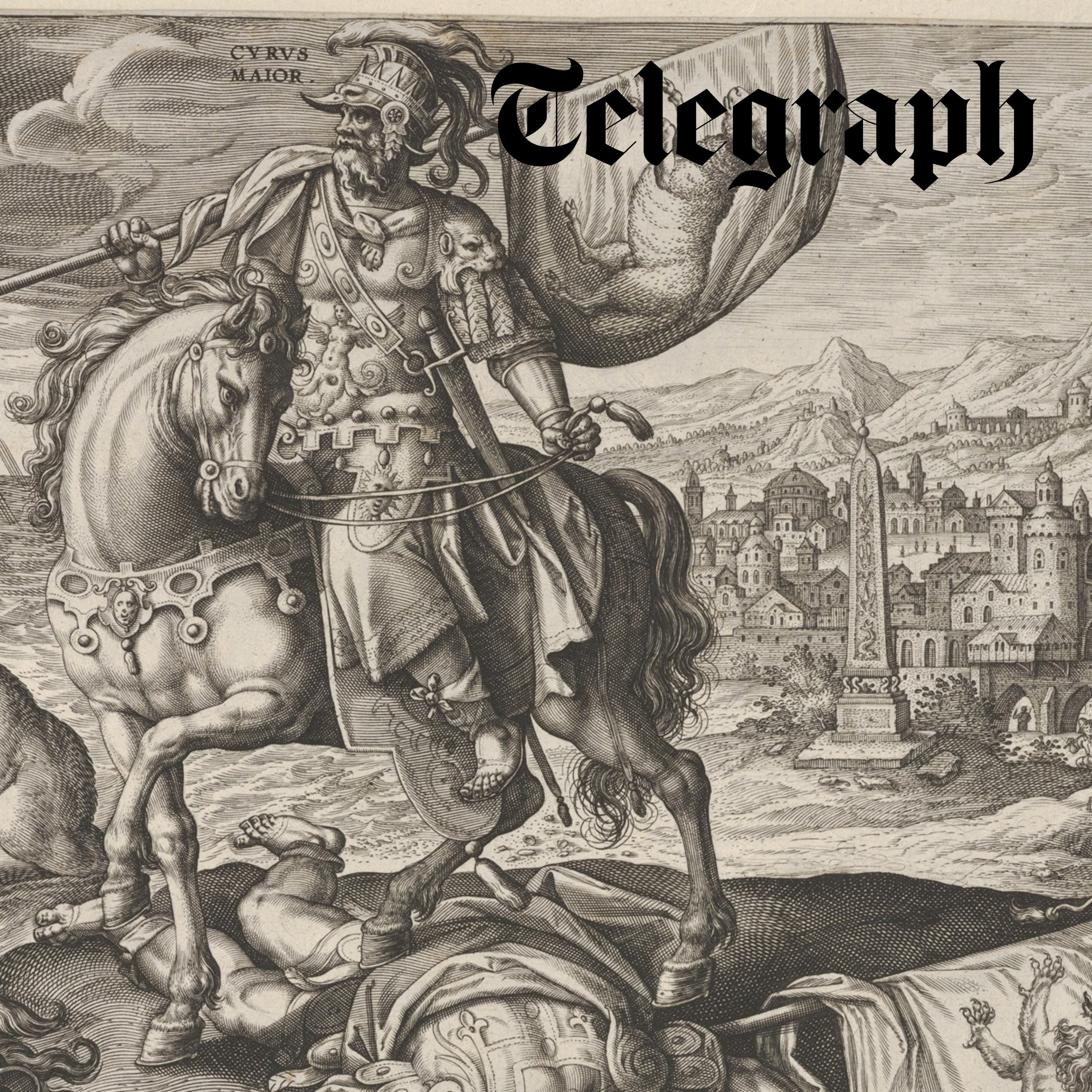
This is one of the more entertaining aspects of Iranian nationalism, which is it tends to extend the longevity of Iranianness or the Iranian state or whatever by several thousand years. I think you can make a fair case for saying that, you know, that the idea of Iran and Iranians probably begins with the Archaeanid, the ancient Persian empire of Cyrus the Great. And you get the first sort of indications there that they identified themselves as Iranian in one form or another. Obviously what it means to be Iranian in two and a half thousand years ago and what it means to be Iranian today are obviously quite different. So I, I think some of the people who sort of project back two and a half thousand years this sort of continuous identity, I think that that's pushing it a little bit. But certainly from 2,000 years ago, let's say from the late antiquity, the Sasanian empire, from around 242 to say 637 A.D. there, you know, most scholars, the consensus is that Iran as a, the name of the state, the polity, the empire, whatever you want to call it, Iran then becomes basically the established name. And then you have this idea of Iran that lasts really as a cultural and a political cultural phenomenon really from that time. Obviously as a state, it doesn't really exist following the Arab Islamic conquest in the 7th century, but it sort of re emerges from the 13th, 14th centuries onwards and then takes the shape that we, we now see it really in, you know, much more firmly from the 16th and 17th century onwards. So it's one of the longer political states, I should say, that have existed, or perhaps even more accurately, political societies and cultures. You know, one of the things I always like to say to people is that I think we obsess too much on the political system that happens to be in charge. What's actually matter, I think, is the culture and the civilization and the people. You know, that there is a distinctive culture there that does have degrees of continuity, which are quite striking. And while it's not as smooth and while the thread is not as thick, shall we say, as some nationalists would like you to think, it's certainly there. And it compares very well with other countries and civilizations, to be honest. I mean, it has a certain continuity which others would envy, I suspect. But I think, I think the view is to look at it is to look at the society rather than the political system.
- [07:19]
Roland Oliphant
That's interesting. And the. I was thinking about things like language, for example. If you go back to, if we take that Cyrus the Great, was he speaking something that would be recognized by Iranians today or not?
- [07:32]
Ali Ansari
Not, not today, no, no. But what's interesting is there are particular words that you would recognize. So there is A continuity there. So Ancient Persian and Middle Persian, I mean, Middle Persian is certainly not, you know, if you tried to speak it, you could find quite important recognizable terms in there. So there is definitely a genealogy there that you can follow. And there are words clearly from the ancient Persian, you know, insofar as they've been deciphered and we know about it, which we would find familiar today. But if someone was to speak to you either in ancient or Middle Persian, which is something that goes on until the late antiquity, it would be very difficult for a modern Iranian to understand. On the other hand, when new Persian comes into existence, really from the 9th and 10th century onwards, it is fairly understandable. In actual fact, New Persian in its earlier form is probably more understandable to modern Persian speakers than say, some of the later 16th and 17th century Safavid Persian, which is imbued with a lot of religious and Arabic language in a sense that some people who are not that familiar with Arabic wouldn't be as familiar with it. But certainly in terms of continuity, there is a very clear continuity from the 9th and 10th century onwards. And then you can see the pedigree going back.
- [08:43]
Roland Oliphant
So I just, I just want to set the scene a bit before we move through the centuries. Let's, for the sake of argument, we're going to say two, two and a half thousand years old, back to Cyrus the Great. That will be our, our benchmark. I've got a map on my wall of Iran right now, and it's a relief map and it shows just the incredible elevation of what, what's generally called the Iranian Plateau. It's obviously really high, really mountainous, really arid. This civilization we're talking about, it's always been in that place, right? What we call Iran, this two and a half thousand years old nation, how is that shaped by the geography? And is there anything that you can take from the geography that tells us about how this culture evolves? And the thing that we call the nation, we call Iran comes to be what it is.
- [09:28]
Ali Ansari
The first thing I'd be slightly wary of is to call it a nation, by the way. I mean, I think in terms of a nation, it becomes a bit complicated if you start mixing it with the modern, modern ideas of nationality, because obviously to be Iranian and two and a half thousand years ago would have meant something quite different. You know, I mean, I think we have to accept that in the sense that these diverse, almost like diverse people speaking a sort of a common language and the time of the period and believing themselves to be identified with a larger sort of group. So in that sense. But whether. I think we need to be careful sometimes about describing it too much as a nation for the simple reason that people will draw some of the wrong comparisons for it. But when you look at the sort of migration of what is termed the Aryan tribes, you know, from Central Asia, they sort of tend to feel they come from somewhere in Central Asia that's around the first millennium B.C. and again, they occupy the plateau. And the plateau, of course, you're right, it's very mountainous and it's very arid in places, but it's also very, very fertile in other places, certainly up in the Caspian. And many of the sort of mountain areas provide obviously a sufficient water. And one of the identifying, one of the sort of defining aspects of Iranian civilization is really the management of water and the management of water resources that allow several developments in. In agriculture to take place on the plateau. So you get, you know, a mixture of nomadic as well as sedentary agriculture taking place. But then also the mountains provide the IR peoples, be they the Medes at the north or the Persians in the south, that access to the sort of wider hinterland, in particular to Mesopotamia, which is the area which they sort of take control over, they oversee and they take control over, but also further afield into Central Asia and into the east up to the Indus. So it provides a sort of a natural barrier in some ways, a natural, identifiable area of operation, if you will. And I think it's probably wrong to say that it's too defensive in the sense that obviously once you get on the plateau, it's actually reasonably, you know, straightforward. A number of invaders have managed to get on and basically control the plateau when they get in, so to speak. But it certainly defined the mentality. And I mean, I think, you know, there's a famous phrase, whether it's true or not, that Herodotus uses for Cyrus the Great, where he sort of says to them that, you know, the reason you are such hardy warriors is because you grew up in these sort of very hardy territory of the mountains or whatever. And God forbid that we should ever move down into Mesopotamia and become lavish and decadent and sort of soft, because once that happens, we're going to lose it. And Herodotus uses that almost as a sort of a metaphor for saying that's exactly what did happen with the Persians, of course. But there is this sort of element that there's a sort of a harshness of the environment that creates a certain warrior ethos as well, that helps them to become essentially an imperial power for much of the ancient period. When people talk about the later Iranian Muslim Iran after the Islamic conquest, people forget that for a thousand years there were three basically imperial systems that governed much of that area and obviously left a very heavy imprint, a very, very heavy sort of mark on the whole area.
- [12:16]
Roland Oliphant
Three imperial systems which are.
- [12:18]
Ali Ansari
So you've got the ancient Persians that we're all familiar with from Xerxes and Darius and all this sort of stuff, and Cyrus. And then you've got a brief interlude when Alexander gets in the way and wrecks the system, we like to say. And then you have this sort of cellucid, you know, the Macedonians. But the Macedonians last there for maybe 100 years or so. And you get. Then the Parthians. The Parthians come in from the East. The Parthian dynasty actually are largely nomadic in its origins, but become, you know, one of the great rivals to Rome, to the Roman Republic. And they last for about 500 years. I mean, they're extremely important for the identity of Iran, actually. I mean, they're probably the most important dynasty for defining the whole mythology of Iran that develops in that period.
- [12:56]
Roland Oliphant
I was going to just say these are the chapter of the famous heavily armored horses.
- [13:00]
Ali Ansari
Yes, they're the ones who. Yeah, they developed the cataphract, they developed the horse archer and the cataphract. I mean, there's a lot of debate, by the way, among military historians whether the Iranians ever developed the stirrup. I'm sort of inclined to think that at some stage they must have done, because I think these heavy cataphracts sitting around with great armour would have been quite difficult for them to maneuver without any form of stirrup. But I happily defer to my Roman military history colleagues, but certainly they develop that and they. They inflict some pretty serious defeats on the Romans, actually. But by the end of their existence as a dynasty, they also suffer some fairly heavy defeats by the Romans. And then they're replaced in the third century AD by the Sasanians, which are a sort of a Persian dynasty proper, because they come from southern Iran, from the old heartlands of the Archae, and they. The Sasanians then also develop a much more, you know, rigorous military structure than the. The Parthians. I mean, for them, it. There's almost like a standing army is developed and they garrison parts of the frontiers of the empire and. And in some cases actually later on, interestingly with the Sasanians, because they garrison parts of the eastern frontier towards the Huns in Central Asia, they actually charged The Romans for attacks, for helping the defense of civilization, so to speak, you know, against these barbarians north of the wall. So they have a very interesting relationship with the Romans and then the Byzantines. But obviously the collapse of the Sasanians comes in the seventh century after a very prolonged conflict with the Romans in which they're ultimately defeated and they're left very weak. And as a result of that weakness, the Arab Muslim armies come in the seventh century and that's the end of that ancient period of Iranian dominance, if you will, of Iran as a great power and a very, a superpower actually, because both the Parthians and particularly the Sasanians were especially dangerous as opponents of the Roman Empire. And the Romans understood this by the way. I mean, they recognize them as worthy foes in that sense.
- [14:46]
Roland Oliphant
And I've noticed there, there is some kind of propaganda, I think, coming out of current Iran comparing a war with the west as a war with Rome and so on.
- [14:55]
Ali Ansari
Oh yeah, yeah. No, they make a big deal out of it. Yeah. So there's a wonderful freeze. If you get. I don't know if you've been. There's a wonderful freeze. Rock carving near Persepolis of Sharp or the first, the second Sasanian monarch who defeated the Romans in a battle at Odessa in around 260 AD and took a couple of Roman emperors prisoner. And obviously he was rather pleased with himself with his triumph, as you might be, and he provided this great freeze which must have been very impressive at its, in its day and, but also minted coins to let people know his great triumph over the Romans. And of course the Islamic Republic has, in a bid to rally the populace around their latest conflict of the west, have decided that this freeze is something that they need to recreate for public consumption. It's very popular obviously among Iranians. I mean it's a wonderful looking frieze and a reminder of just what a great power they once were.
- [15:44]
Roland Oliphant
We're going to take a short break now. When we come back, how did the Arab conquest and the arrival of Islam affect Iranian culture? And how did Iran emerge as a Shia rather than Sunni country?
- [16:03]
LifeLock Advertiser
It's tax season. And at Lifelock, we know you're tired of numbers, but here's a big one you need to hear. Billions. That's the amount of money and refunds the IRS has flagged for possible identity fraud. Now here's another big number. 100 million. That's how many data points LifeLock monitors every second. If your identity is stolen, we'll fix it, guaranteed. One last big number. Save up to 40% your first year. Visit lifelock.com specialoffer for the threats you can't control. Terms apply.
- [16:33]
Podcast Marketer
Hey, marketers, here's something to note. 75% of listeners don't consider podcasters to be influencers, yet 84% say a podcaster has changed their mind about something they once believed. That's the paradox of podcast influence. It's built on credibility, not clout. Trust, not trends. Acast's podcast Pulse 2025 report reveals how podcast creators are redefining influence through resonance, multi platform fandoms and their ability to shape culture. Get the full report free at podcastpulse2025.com.
- [17:13]
Roland Oliphant
Welcome back. You're listening to a special Easter weekend edition of Iran, the latest with me, Roland Oliphant. I'm speaking to Al Ansari, professor of Iranian history at St. Andrews University, about Iranian history. I think one of the key moments we especially given, you know, it's a war with the Islamic Republic that's on at the moment, we're going to have to talk about the Arab conquests. But before we get there, is there a way of talking about what Iranian culture was before the conquest? Because I suppose one of the debates that I see amongst Iranians at the moment is what part of modern culture is truly Iranian and goes back to ancient Persia and what part of it is a, is an Arabic Muslim imports. One of the things that leaps out at me. I'm currently reading the Shahnama by Fedosi in English translation. One of the things that leaps out from me is that there's an awful lot of alcohol in it.
- [18:06]
Ali Ansari
Yes.
- [18:07]
Roland Oliphant
Every, every time they, every time they feel like something's going well, they stop and have a three day feast with musicians and wine. It's always musicians and wine. They drink an awful lot. That presumably goes out of the window. And I think, actually, I think I read in Herodotus and the histories, at some point he says, oh, the way the Persians make decisions is first they get blind drunk.
- [18:28]
Ali Ansari
That's right. Is when they get drunk.
- [18:30]
Roland Oliphant
Yeah. And then, and then they see if they agree with the decision they made and they're drunk when they're sober. And if it looks like a good idea when you're drunk and you're sober, then it's probably a good idea. And that's how they make decisions. I don't know if there's any truth in that.
- [18:44]
Ali Ansari
I know it's a very famous, I mean, what's interesting about it, and you're quite right, obviously Islam brings in restrictions to drink, although I'd have to say that's the official. Obviously drinking continues very heavily and you know, even in the, under the Safavids, you know, who are a Shia, a Shia empire in the 16th, 17th centuries. If you go to Isfahan, you'll see these freezes of the kings drinking rather heavily. I mean, I remember going there visiting and the officials at the Islamic Republic would always tell me it was grape juice. And I said, are you sure it's grape juice? It looks like wine to me. And they would say no, no, it's definitely grape juice. I mean clearly, you know, drinking was prevalent. And of course they, they quoted this Herodotus thing, even accounts in the 17th century said, you know, as, as Herodotus says, the Persians only agree in the decision if they first make it while they're drunk and then if they're sober. And clearly this was an indication that they must be still drinking. And of course there was a lot of drinking going on. And certainly in the pre Islamic tradition the idea of wine being introduced into culture was by one of the great mythical kings, Jamshid, who discovered the bounties of wine and basically introduced the whole festival. I think the most important signifier of that sort of pre Islamic continuity is the new year, the Persian new year, which falls in the spring equinox. And this is a traditional Zoroastrian festival. And you see, you see many aspects of the Zoroastrian ethos and culture continue within the Islamic world.
- [19:57]
Roland Oliphant
Can you tell us about Zoroastrianism then actually? What, what is it?
- [20:00]
Ali Ansari
So Zoroastrianism was the faith of, of the three great pre Islamic empires and particularly the faith of the Sasanian empire, which basically codified it in a way that it hadn't been up until that time. And it's, it's founded on the principal writings and thoughts and ideas of the figure known as Zoraster. I mean some people dispute whether Zoraster ever existed, but there's a feeling that clearly he did when he did. They think probably around the first millenn, but it's, you know, he's a vague figure, but one actually very popular among even Western philosophy. I mean if you think of Nietzsche, so he's seen as, as one of the great progenitors of what people consider to be monotheism really in, in world culture. Although strictly speaking Zoroastrianism is a dualistic religion and believes in two creative forces, both the good creative force and the evil creative force. And many Western philosophers in the 17th and 18th century actually saw Zoroastrianism as a much better explanation for it, the existence of evil in the world because of these dual sort of creative forces. Although as Zoroastrians will never tire in telling you, and I think this is true, ultimately Zoroaster, you know, posits a position where good will always triumph over evil, ultimately will triumph over evil. Now, one of the most important contributions that Zoroastrianism as a faith makes to world culture, I would say, and obviously in Iran in particular, is it's one of the earliest religions to actually argue that mankind was part of the good creation of the wise lord Ahura Mazda. And as part of the good creation was a free agent in the pursuit of good. Therefore, mankind was part of the struggle. Mankind was not simply a plaything of the gods as you might find in the Greek world, that mankind was there as an agent of the good creation in order to pursue good things. And you get these ideas of good words, good thoughts, good deeds and all this sort of thing. And it's a highly moralistic religion in that sense. Sense. And it, it forms the basis of the empires that, that come after the Archimenids and the Parthians and the Sasanians all follow a fairly strong ethos that you can see. You know, as I said, it's more codified, perhaps codified out of existence as to be said by the Sasanians. But it's enormously, enormously influential. And of course it has, it has strong influences in all the Abrahamic religions. It's very influential in Judaism partly because of the Jewish captivity in Babylon and obviously the freeing of the, the liberation of the Jews by Cyrus and sending them back to Jerusalem. But many, many Jews remained in, in Babylon and then subsequently in Ctesiphon, the, the Parthian Sassanian capital. And there's a huge amount of interchange and then obviously through Judaism into Christianity. I mean, one of the arguments about Christianity that has been made by a number of authors is that the whole notion of a spiritual messiah, a spiritual redeemer, is a Zoroastrian one. And the, the, the birth of Christianity owes as much in a sense to the sort of gnostic Jewish traditions marrying in with Zoroastrian ideas of this sort of spiritual redeemer. So the Zoroastrians have this notion of a spiritual redeemer called the sociant. And the societ comes at the end of each age. Now, how long an age is, you know, is a matter of debate. Some people say 3,000 years, some people say 12,000 years, whatever, let's take it 3,000 years. This is sort of idea that the Sochiant is a spiritual redeemer that comes and resets, sets effectively the, the timetable, if you will, but purifies the world and helps with that good struggle. Again, these are very, very interesting ideas, which I don't want to say is necessarily all one way, by the way, but you know, ideas about angels, heaven and hell, holy spirits, this sort of
- [23:22]
Roland Oliphant
thing are all that's in there, isn't there?
- [23:24]
Ali Ansari
There's all insorastrianism. Yeah, yeah, yeah. There's, there's a lot of, there's a lot of overlap.
- [23:29]
Roland Oliphant
It's a fire religion. I'm just wondering about the rituals and how manifested in culture. I mean, you mentioned Norus Persian year, that, that comes from Zoroastrianism, doesn't it?
- [23:38]
Ali Ansari
Yeah, yeah. It's basically the start of spring and the renewal. And of course when we talk about fire, I mean fire is there seen as a symbol of purity. I mean, that's what it is. It's not that people are necessarily, you know, I've heard people say fire worshipers, they're not worshiping fire, they're using fire as a symbol of purity. And it's that again, I think you can see the sort of rather ancient roots of it. I mean, you can see it in terms of the fact of how fire is treated of course, as something sort of quite special. Light, heat, this sort of thing. And, and it suggests the very ancient roots of the, of the faith. The spring equinox as a new year festival may probably have also come from the Babylonians originally, but it clearly was like a lot of these religious festivals taken over and given that sort of religious bent. And of course it's the clearest indication of that continuity of the pre Islamic past into the Islamic present, if you will, in Iran. And there are some striking accounts even in the early parts of the Islamic conquest of various caliphs and others trying to ban it as a festival, telling the Iranians to stop celebrating this heathen festival. And of course they failed. I mean they couldn't do it and people rejected it. And eventually you find edicts of Caleb saying, well all right then, if you're going to celebrate it, get on with it. And, and eventually under the Abbasid caliphate they, they say, look, we can't beat them, so let's join them. And you see that today in Iran, you know, even the movie pious Muslims who see this as some sort of pagan festival, particularly the Tuesday night before the New Year, you have this ritual that you would have seen in Iran where people jump over little mini bonfires. It's partly, it's a purification ceremony. You jump over these bonfires to say that the fire will purify you and take all the wickedness out. And of course, many clerics, Iranian Shia class, say this is all pagan and get rid of it and stop mechanism. But they've never been able to stop it. I mean, people love to do it and it's part of their identity, entity and it has very, very deep roots.
- [25:21]
Roland Oliphant
And that's the bonfire night. And it's still, I mean, it's the great mark of the Iranian calendar, isn't it?
- [25:25]
Ali Ansari
It is no ruses. Yeah, absolute.
- [25:28]
Roland Oliphant
Yeah. And perhaps slightly sneakily, the first time I was given a press visa to go to Iran, they gave it to me around that time. I'm afraid I was ignorant of it. I showed up and nobody, nobody was working. It was impossible to get an interview with everyone because people are like, what are you talking about? What are you talking about? It's no ruse.
- [25:44]
Ali Ansari
I know.
- [25:45]
Roland Oliphant
And so I ended up doing a report about a challenging Christmas on the high street for the traders at the Grand Bazaar, which it was. But that's why it really is, it's as important for regular Iranians. Right. As, as Christmas is in Britain, it
- [25:57]
Ali Ansari
is out and it's the two week holiday. Absolutely. And they, they shut down. I mean, they shut down and of course, at the end of the Nowruz period, 13 days afterwards, you're all meant to go outside. There's a lot of environmentally related themes to the whole spring renewal, of course. I mean, it's all about being outside, being with nature, being in harmony with nature, you know, all this sort of thing. So there's a lot of, there's a lot of interesting aspects to it. And I mean, to my mind, as much as I like celebrating January 1st, you know, I do think that the Iranians are onto something. And even British observers back in the 18th century who traveled to Iran would say, you know, there's something quite wise about having the beginning of the new year in spring, when you get that renewal and the flowers of blooming again and whatever, you know, I think it's something that the Iranians get right.
- [26:40]
Roland Oliphant
I think it does feel right, doesn't it? And we're, we're roughly around that point right now, isn't it? Because the nor is on the 20th of March. So that's the context. Can you tell us a bit about the Islamic conquest of Iran obviously that everything changes, it's quite dramatic. The culture changes, the religion changes. I think one of the really interesting questions that I don't really have an answer to is how is it that Iran ends up as a Shia nation while almost all the rest of the Islamic world is dominated by Sunni Islam? Because we refer to this again and again at the moment, you know, oh, the, the Islamic Republic is Shia and therefore their attentions with the Gulf monarchies and one, how did that happen?
- [27:22]
Ali Ansari
So in the early days of Islam there was a dispute that emerged over the succession and Sunnis believe that the succession was by election selection, if you put it that way, on this, on the companions of the Prophet, whereas the Shias felt that the rightful succession felt to the Prophet's son in law, Ali, the first of the Shia imams, and that there's a hereditary succession through those Shia moms. And there are different Shia sects. I mean the, the Iranian version is 12 Ashism because they follow 12 imams, the last of which went into occultation and will return at the end of time. So there's that sort of dynastic political dispute at the beginning of Islam. But then subsequently these two sort of schools of thought develop slightly different approaches to Scripture. The Shias tend to view scripture as a sort of a living document that can be interpreted according to the age and the Imams are the principal interpreters of that text and therefore interpretation, which is then extended through what we have now, the ayatollahs and others, these great jurists. Interpretation can be a continuous process. It's one of the great advantages in some ways that Shiism has over Sunnism, where the main schools of Sunni thought are effectively closed by the 10th century. There's a sort of a rivalry obviously between how they approach both the nature of knowledge and understanding. The epistemology quite different. But the fundamental route is the fact that there was a dispute over the political succession after the death of the Prophet. And the Shias felt that basically it had to go down the route of Shia just means party of alley. So it's round the Prophet's son in law followers valley. That's right.
- [28:54]
Roland Oliphant
As Jacobites followed King James.
- [28:55]
Ali Ansari
Yes, absolutely. Yeah, yeah, it's quite a nice analogy actually.
- [29:00]
Roland Oliphant
Okay, so that, that's the distinction. How does the Islamic conquest affect Iran? How is it that Iran becomes a bastion of Shiism rather than Sunism?
- [29:10]
Ali Ansari
So initially, as I said, when we're looking at the Islamic conquest, essentially Islam as it originates is an Arab religion and it's the Iranians who Basically turn Islam into a universalist religion. I mean, because basically they turn it away from a purely Arabic religion. And then under the Abbasids, you know, the Iranians are very, very influential in the Abbasid caliphate. That actually moves the center of gravity eastwards anyway. And for the large period, you know, up until the 16th century, basically, Iran is a bastion of Sunnism. I mean, again, we've got to be careful about being too strict about this because there's also a variety of opinions within all these different schools. But in the 16th century, you get the emergence of the Safavid dynasty, basically a sect, a religious sect that emerges from the Caucasus. And Shah Ismail, the first of the Safavid monarchs, basically turns, forcibly converts Iran. I mean, these things obviously take time to Shiism and imports clerics from the Lebanon and other places to instruct. Instruct Iranians into the new tenets of the faith. And there are different people look and provide different justifications for why this was done. I mean, I think part of it was actually quite the idiosyncratic demands of Shah Ismail himself, who wanted complete loyalty to his own person and saw himself as the heir to the imams. But subsequently, of course, it was also used as a means of distinguishing Iran as a distinct polity from the Ottoman Empire and others, you know, the other Sunni powers. It had both positive and negative effects for Iran, of course, because it did create quite a consolidated that distinct Iranian identity. But it also separated Iran from some of the other parts that might have been classically called part of the Persian world, including, you know, what is now Afghanistan, which is largely Sunni, but Afghanistan, you know, those areas that we now know as Afghanistan were very much part of that sort of Persian world, particularly Herat and places like that. But these then became detached almost in religious terms, if not in political terms.
- [30:59]
Roland Oliphant
That's interesting. So is it relatively late, the switch to Shiism?
- [31:02]
Ali Ansari
Yeah, yeah, absolutely. As I said. Yeah.
- [31:04]
Roland Oliphant
But I'm wondering if we fast forward to the Iran of today, to the Iran that America and Israel are now fighting, are you able to somehow pull these various threads of Iranian history together and tell us how that informs the country and the society that we call Iran today and makes it what it is.
- [31:27]
Ali Ansari
So, I mean, I think one of the big mistakes we have in some ways is to see Iran primarily through an Islamic lens. And obviously the Islamic revolution has encouraged that. And everyone sees it as some sort of culture of martyrdom and so on and so forth. And of course, that does inform part of it, but I think we can see that's Only part of the story. There's a lay religious philosopher in Iran, Abdul Karim Soroush, who made a point once that Iran's identity is shaped by three pre Islamic Iran, Islamic Iran and the West. And it's quite interesting that he included the west among that. He obviously says Islamic Iran is the most important element. I mean he was bound to say that because he was a philosopher in the Islamic Republic. But I think actually the pre Islamic element is the most important. That's the core layer of which other things are built on. And if you look at Iran's relationship now in terms of what's going on, you can see all these three factors playing in. There's obviously that Islamic element of course there is, is it's a sort of a anti establishment Shia, you know, we're the bad boys, the rebels, we're fighting for justice, so on and so forth. But then there's also this very, very strong element in Iran that we're really a great power and we deserve to be a great power and we have this great civilization in history and why the hell doesn't anyone accept that we are a great power basically? I mean that's the challenge. And this sort of fight with the west in a sense is seen as a continuation of some sort of contest. But then of course there is that element as I said really with the west in particular about how, how the west informs modern Iranian identity and how they fight or adopt or co opt that sort of element of it. And when we mean west, we really mean these all the aspects of Western civilization that they've adopted because you know, at the end of the day it is an Islamic republic and the Republican element of it is, is Western. There's nothing Islamic about the Islamic republic in that sense. It's a Western idea. And they've sort of tried to incorporate these ideas within their own identity. And of course part of the problem is navigating and negotiating that relationship relationship in relation to both its Islamic identity and its pre Islamic identity. So it's, I tend to argue increasingly that in if you look at the propaganda of the state as well by the way, that their pre Islamic identity plays a much, much more forceful role in the way they see themselves in the world than in, than their Islamic identity.
- [33:32]
Roland Oliphant
Ironically, I wanted to ask you about that because Javad Zarif, the former foreign minister recently tweeted out this video. I'm just going to describe it. So there's a kind of very strong, powerful looking medieval warrior with a bow and he's gazed upon kind of with hope by all kinds of Iranians waving the Iranian flag. And he pulls back at his bow, releases the arrow, it zooms all across past Iran's most famous landscapes and monuments and then it slams into an American aircraft carrier which blows up.
- [34:00]
Ali Ansari
Yeah, yeah.
- [34:01]
Roland Oliphant
And it finishes with a quotation. If head to head we yield ourselves to death is better far than yield our land to foes. Which I believe is from Ferdowsi and the Shahnamav national epic.
- [34:14]
Venetia Rainey
It.
- [34:14]
Roland Oliphant
That, that, that was a. Well, first of all, it was a kind of demonstration of how AI videos can be wedded with really traditional, unsubtle war propaganda. You know, emotionally manipulative.
- [34:26]
Ali Ansari
Yeah, yeah, all of that.
- [34:27]
Roland Oliphant
But it's also. It was a clear attempt to marry the Islamic Republic with ancient legend. How do they manage that? Because there's clearly a tension here, Right. If you. Is an Islamic republic, but this is a history that's full of kings.
- [34:41]
Ali Ansari
Yeah.
- [34:41]
Roland Oliphant
And full of non Muslims.
- [34:43]
Ali Ansari
So basically that story of Arash the archer, of course, is as we talked about earlier, in a sense, is not actually in the shahnameh, but they do bring that all in. And they borrow very heavily from the shahnameh as part of Iranian culture.
- [34:55]
Roland Oliphant
And Arash just quickly tell us the story of Arash.
- [34:58]
Ali Ansari
Arash is a heroic figure who basically sets the boundaries. I mean, it's basically in the battles between actually not Iran and the west, it's actually in the battles between Iran and the East. The Turanian sort of foe from Central Asia, they become Turkified in later renditions. And basically he fires his arrow, great strength or whatever to fire his arrow, and it lands at the Oxus, you know, which is going to be the boundary of the empire of Iran. Up at the Oxus, the exertion is so great for him that it collapses in exhaustion and I think dies or whatever as a result of it. It's very heroic. I mean, these are very sort of romantic heroic figures. And the, the whole thing with the tradition, the. The Iranian tradition, Book of Kings, the Shahna, as you say, is a tradition that is actually really full of paladins and heroes. These are these heroes that actually come to protect Iran at critical moments. And the kings are often quite petulant figures actually in this. I mean, there are some great kings in the Book of Kings, but there are also some kings that are less good. It's the heroes that really feature these sort of knights who go off doing all these sort of great quests and this, that the other. And this is replete in this sort of tradition. Of course, the Islamic Republic has adopted this quite heavily now. It's done this because it can sort of distinguish it from the Pahlavis, from the monarchs, the pre revolutionary monarchs. And it sees them as part of Iran's cultural heritage, not associated with the Pahlavis. But of course, as I think you rightly hinted at, in a way, it's quite a difficult appropriation to do without facilitating in some ways a wider recognition for monarchy. And also, you know, the other figures that are associated with say Mohammad Reza Shah in particular, and that is Cyrus the Great. And so they've tried to also appropriate Cyrus the Great to their own propaganda. So there's a sort of mixture of the mythology that they can take from the shahnameh, but also the real monarchs, such as Shahpur, the first that we've mentioned, but also Cyrus the Great, who are also taken in and in some ways almost like Islamified. I mean, it's quite bizarre. I mean, Mahmoud Ahmadinejad, the great firebrand president of Iran between 2005 and 2013, was a great proponent of this sort of mix mash, sort of millenarian, nationalistic type of sort of ideology. Didn't make any sense at all, by the way. But that didn't really matter. I mean, he was talking to the emotional part of the Iranian psychology. And he brought the Cyrus cylinder back to Iran in 2010, you know, from the British Museum. It came on a tour. Maddie Nijad was in tears when it was unveiled. Two million people went to see it. I mean, it was enormous success. But he also then promoted all this. Arash was a particularly popular figure in supporting Iran's right to enrich uranium, for instance. How he managed that we don't know. But you know, again, there were all these things were brought in to try and appeal to that sort of romantic core in a sense of Iranians, and in some ways also to try and re legitimize an Islamic republic that largely had fallen out of favor with Iranians. I mean, they weren't really that interested in all the Islamic aspects of it. So they then tried to appropriate this sort of ancient culture and this mythical culture and put it to good service. I think it's backfired on the Islamic Republic, I'll be honest with you. I think they've tried to ride this tiger and I, I don't think it's working for them because what it's, what's happened is Iranians, of course, well, you
- [37:57]
Roland Oliphant
mentioned they're trying to ride a tiger. And I really wanted to Put to put this to you, actually, Ali, just let me read you something. This is from the Iranian journalist Mariam Mazroui, a friend of the podcast says after the January massacre, the enormous crackdown a couple of months ago, people began calling Ali Khamenei Zahaq Ali. And this is a reference to one of the great villains of the Shahnamar, of course, Sahak, who was a demon king who had two snakes growing out of his shoulders and who would sacrifice two young people every day so he could feed their brains to the snakes, I think. So they didn't bite him instead. And that was obviously a way of comparing it to the legendary uprising that eventually overthrew Zahak, that legendary popular revolution, essentially. And she adds here, the people of Iran possess a weapon the regime could never take from them, the Shahnamar and their timeless mythological heritage. So the opposition to a really laying claim to the history and especially to the myth and the literature.
- [39:02]
Ali Ansari
Oh, yeah, yeah. And that's the thing. I mean. So, for instance, one of the most powerful myths in Iranian culture is the myth of Kaveh. Kaveh is a blacksmith smith who rises up and sort of says, enough against the Zahar, the Arab tyrant of Iran, as he's called the Dragon King. The figure has roots. It goes back into Zoroastrian tradition, you know, but definitely in the shahname is the sort of Arab tyrant. I mean, obviously, this is dramatized as if he's got snakes coming out that need to be fed with the brains of youngsters. The youngsters that get away, by the way, are the. Meant to be the origins of the Kurds, incidentally, so that they sort of run off to the mountains to get away, and they're meant to be the origins of the Kurds. This myth is extremely, extremely powerful in. Even in Iranian nationalist literature going way back into the early parts of the 20th century. And Kaveh was also as a figure because he's a blacksmith and he's a sort of a working man's hero, if you will. Very popular among the left in Iran. So many people on the left would name their children Kaveh as a result of this. So that myth is there. But of course, in the Islamic Republic. I think, as you quite rightly point out, it was a deeply, deeply problematic myth, because here you have Kavair, the common man, fighting to overthrow the Arab tyrant of Iran. And of course, people were drawing these analogies and saying, Arab tyrant, Muslim. You know, this could be harmon a. And it first came into prominence really, as far back as 2010, 2011, and I wrote about that actually in my book on the politics of nationalism. But I was fairly tentative about it then because, you know, one wondered, you know, how far this would this would gain traction. But now, as you say, I think you're quite right to say that certainly over the last five years, the notion of Khamenei then as the Zahak of the age rather than the Ali of the age, as many of his supporters would like him to be, many of the opponents started to describe him as the Zahak of the age and it's a very powerful narrative mythology in a sense, for motivating dissent.
- [40:49]
Roland Oliphant
A thought provoking parting shot from Ali Ansari, professor of Iranian History at St. Andrews University there. I'm afraid we did have to leave that conversation there, but Ali has very kindly agreed to come back for a rematch sometime after Easter to talk about the bits of Iranian history we didn't get to the 20th century, the history that leads up to the Islamic Republic, and indeed the war that is being fought today. I hope you found our conversation as enlightening as I did. We will be back after Easter when normal service will resume. Until then, that was Iran the Latest Goodbye.
- [41:30]
Venetia Rainey
Iran the Latest is an original podcast from the Telegraph, created by David Knowles and hosted by me, Venetia Rainey and Roland Oliphant. If you appreciated this podcast, please consider following around the latest on your preferred podcast app. And if you have a moment, leave us a review as it helps others find the show. To stay on top of all of our news, subscribe to the Telegraph, sign up to our Dispatchers Newsletter, or listen to our sister podcast Ukraine the Latest we're still on the same email address battle line@telegraph.co.uk or you can contact us on X. You can find our handles in the show Notes. The producer is Peter Shevlin. The executive producer is Louisa Wells.
- [42:12]
Roland Oliphant
Acast Powers the World's Best Podcasts here's the show that we recommend.
- [42:20]
Caller/Listener
Hi, I'm Pace Case.
- [42:21]
LifeLock Advertiser
And I'm Bachelor Clues.
- [42:22]
Caller/Listener
We host Game of Roses, the world's best reality TV podcast. We're covering every show in reality TV at the highest level possible. We analyze the Bachelor, Love Is Blind, Perfect Match, Vanderpump, and anything else you find yourself watching with wine and popcorn.
- [42:37]
LifeLock Advertiser
We break down errors, highlight plays, MVPs,
- [42:40]
Ali Ansari
and all the competitive elements that make
- [42:42]
LifeLock Advertiser
reality TV a sport. And we interview superstar players like Bachelorette Kaitlyn Bristow and Big Brother champion Taylor Hale.
- [42:48]
Caller/Listener
If you want to know so much about reality TV, you can turn turn any casual conversation into a PhD level dissertation. You definitely want to check out Game of Roses.
- [42:59]
Roland Oliphant
Acast helps creators launch, grow and monetize their podcasts everywhere.
- [43:04]
Ali Ansari
Acast. Com.