← Iran: The Latest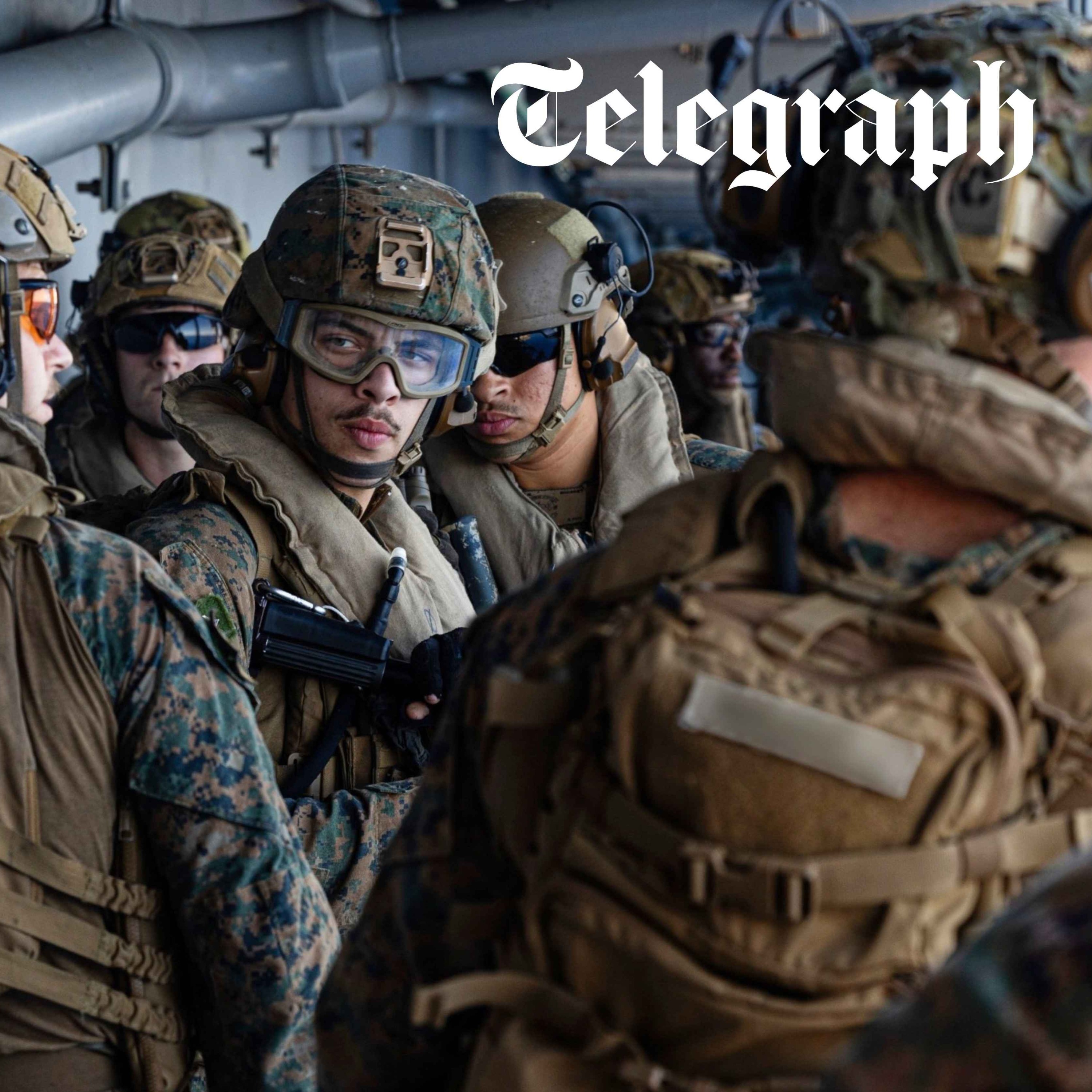
Iran: The Latest
Iran vows to ‘rain fire’ on US troops, the Houthi ‘nightmare’ & on the ground in Tehran
00:36:50
Loading summary
Transcript75 lines
- [00:04]
Unknown Speaker (possibly a brief interjection or ad)
The telegraph.
- [00:09]
Podcast Advertiser/Host (Strawberry Me Career ad)
Let's be completely honest. Are you happy with your job? The fact is, a huge number of people can't say yes to that. Too many of us are stuck in a job we've outgrown or one we never really wanted in the first place. But we stick it out and we give reasons, like, what if the next move is worse? And I. I've put years into this place, and maybe the most common one. Isn't everyone miserable at work? But there's a difference between reasons for staying and excuses for not leaving. It's time to get unstuck. It's time for Strawberry Me. They match you with a certified career coach who helps you get from where you are to where you want to be, either at your existing job or by helping you find a new one. Your coach helps clarify your goals, creates a plan, and keeps you accountable along the way. Go to Strawberry Me Career and get 50% off your first coaching session. That's Strawberry Me Career. Acast Powers the world's best podcasts.
- [01:10]
Podcast Advertiser (ZipRecruiter ad)
Here's a show that we recommend.
- [01:13]
Paige DeSorbo or Hannah Berner (Giggly Squad hosts)
Hey, guys. Welcome to Giggly Squad, a place where we make fun of everything, but most importantly, ourselves. I'm Paige desorbo. I'm Hannah Berner. Welcome to the squad. Giggly Squad started on Summerhouse when we were giggling during inappropriate time. But of course, we can't be managed, so we decided to start this podcast to continue giggling. We will make fun of pop culture news. We're watching fashion trends pep talks where we give advice, mental health moments and games. And guests, listen to Giggly Squad on Acast or wherever you get your podcasts.
- [01:45]
Podcast Advertiser/Host (Strawberry Me Career ad)
Acast helps creators launch, grow and monetize their podcast everywhere.
- [01:50]
Podcast Advertiser (ZipRecruiter ad)
Acast. Com.
- [01:58]
Marja van Raamsdonk (Norwegian Refugee Council country director in Iran)
My colleagues that live across Tehran are telling me that in nearly every neighborhood, buildings are destroyed and families are so desperate, they're taping their windows to prevent shattered glass.
- [02:10]
Roland Oliphant (Telegraph journalist and podcast co-host)
A short time ago, the United States military began major combat operations in Iran. Does anyone really think that someone can
- [02:21]
Venetia Rainey (Telegraph journalist and podcast co-host)
tell President Trump what to do?
- [02:23]
Roland Oliphant (Telegraph journalist and podcast co-host)
Come on. The Pentagon is weighing a takeover of that island as a way to force the reopening of the Strait of Hormuz.
- [02:31]
Unknown Speaker (possibly a brief interjection or ad)
Today, President Trump says Iran's Supreme Leader, Ayatollah Ali Khamenei, was killed in the attacks.
- [02:41]
Venetia Rainey (Telegraph journalist and podcast co-host)
I'm Venetia Rainey.
- [02:42]
Roland Oliphant (Telegraph journalist and podcast co-host)
And I'm Roland Oliphan.
- [02:44]
Venetia Rainey (Telegraph journalist and podcast co-host)
And this is Iran. The Latest. It's Monday, March 30, 2026, the 31st day of the war. On today's episode, we're going to be speaking to someone on the ground in Tehran, Norwegian Refugee Council's country director has been telling us how people are panicked and putting tape on their windows as the war intensified over the weekend. We'll also be speaking to Elizabeth Kendall, a Yemen expert, about how the Houthis entering the war is going to ratchet things up even further. First, some news updates. Where do you want to kick us off, Roland?
- [03:12]
Roland Oliphant (Telegraph journalist and podcast co-host)
Well, why don't we start in Iran itself, where the Revolutionary Guard has said it's prepared to target US Universities in the Middle east in retaliation for what it claims were US Israeli strikes destroying two Iranian universities, a quotation here statement they've put out. If the US Government wants its universities in the region to be free from retaliation, it must condemn the bombing of universities in an official statement by 12 noon on Monday, March 30, Tehran time. We are well past 12 noon Tehran time as we speak. So that deadline's gone. The American university in Beirut has as a consequence shifted to online learning for the next few days. Meanwhile, Ibrahim Zulfa Gahari, the spokesman for Iran's highest operational command, has threatened that the armed forces will target the houses of US And Israeli commanders and political officials in the region. The implication being then expand from military targets, although we know they have been hitting civilian targets anyway, and movement on the nuclear file. The Foreign Ministry Foreign Ministry spokesman says that Iran's parliament is considering or reviewing a possible exit from the Nuclear Non Proliferation Treaty, while at the same time insisting that that Iran will not seek a nuclear weapon. Well, why would you leave the npt make about what you will? He asks. What is the benefit of joining a treaty in which bullying parties at the international level do not allow us to benefit from its rights but also attack our nuclear facilities? He's referencing the NPTS basically allows members to freedom to develop peaceful nuclear energy capabilities there. Iran has always insisted that its nuclear program is for peaceful civilian purposes. Iran's also announced that children as young as 12 will be able to sign up under a new program for combatants defending the homeland. According to the irgc, there have been blackouts in Tehran and Albuquerque provinces after Israeli strikes on energy infrastructure. The Iranian government says the country's electricity is now stable. So that is a few of the latest things from Iran itself.
- [05:09]
Venetia Rainey (Telegraph journalist and podcast co-host)
We should also mention that Mohammed Gallabaaf, the speaker in Iran's parliament, said yesterday that while the US Is claiming to pursue negotiations, it's secretly planning a ground attack. He said our men are waiting for the arrival of the American soldiers on the ground to rain fire on them and punish their regional allies once and for all. So this comes as the USS Tripoli has finally arrived in the Middle east. It's got 3,500 service members on board. 2,200 of those are from the 31st Marine Expeditionary Unit. This is the warship that's usually based in the Sea of Japan. So it's the first one that we heard was being deployed several weeks ago. It's equipped to transport F35 fighter jets and Osprey aircraft used for troop and cargo transport. Also on the way is the 11th Marine Expeditionary Unit, that's aboard the U.S. uSS Boxer, expected to arrive in the region in the coming days. As we've spoken about repeatedly on this podcast, the troops haven't been assigned a specific mission yet. But you should go and read Roland's piece about what kind of things they might get up to from seizing Kharg island, which is something we've mentioned multiple times, or extracting uranium from Iran's nuclear site. The Wall Street Journal had reporting that that's one of the options that Trump is considering. There are now more than 50, 000American troops in the region, normally around 40,000. So this is a significant troop boost. Elsewhere in the region, we've had an Iranian strike destroying a century aircraft. It's an early warning and control aircraft, and it was on the ground at Prince Sultan Air Base in Saudi Arabia. Now, apparently the air base was attacked with ballistic missiles and drones. Twelve US Personnel were injured too seriously, according to reporting by our Jerusalem correspondent, Henry Bodkin. The point of impact, which you can see in photos in the piece, is just where the radar dome attaches to the sentry and suggests a precision strike by a drone. These are really important aircraft. They cost about $500 million, and they're basically a flying battlefield nerve center. That's how hen Bodkin describes them. They're among the most precious assets that America has in its conventional arsenal. They're quite old. They're from the Cold War. The US only has about 16, 15. Now these aircraft are basically able to track aircraft, drones and missiles across a 250 mile radius. And an interesting link with other conflicts here. On Saturday, we had Volodymyr Zelensky revealing that Russia had taken satellite images of this Saudi base where this aircraft was parked in the days before the strike. We've had multiple claims now of the Russians providing intelligence to the Iranians to help strike the Americans. So this is yet more that suggests that that picture is building.
- [07:29]
Roland Oliphant (Telegraph journalist and podcast co-host)
Another interesting little note on that is that the Ukrainians have made a real point of hitting the Russian equivalent of these aircraft throughout the war in Ukraine, finding them on the tarmac doing the same kind of thing. Similar situation. The Russians don't have many of them, and the Ukrainians have succeeded in taking out an awful lot of them. Interesting little echo there. Elsewhere around the Gulf, Kuwait says an Indian worker was killed in an Iranian attack on a power and desalination plant. Potentially a very serious inflection point if that becomes a pattern. Gulf states, Iran included actually, but especially those on the Arabian Peninsula side of the Gulf, are incredibly dependent on desalination for fresh water. That came after the strikes on Iran's own electrical facilities that cut off power in Tehran, which we referenced earlier. But Iran's military has claimed without evidence that Israel was behind the attack on Kuwait. Next door in Iraq, rockets fired overnight from somewhere around Baghdad have hit the Baghdad airport complex. It destroyed an Antonov 132 aircraft belonging to the Iraqi Air Force. These are 122 millimeter Grad rockets. So launched definitely from inside Iraq, presumably by pro Iranian Shia militia. Also fell inside an American diplomatic support compound, causing a fire. Didn't hurt anybody. Apparently Saudi Arabia has intercepted five ballistic missiles overnight.
- [08:51]
Venetia Rainey (Telegraph journalist and podcast co-host)
And then away from the Gulf, there have been some quite significant developments in Lebanon over the weekend. So we had Benjamin Netanyahu, the Israeli prime minister, announcing on Sunday that Israel would widen its invasion of southern Lebanon. He was visiting northern Israel. He said the IDF would expand the existing security strip, saying, we're determined to fundamentally change the situation in the north of Israel.
- [09:10]
Roland Oliphant (Telegraph journalist and podcast co-host)
What does that actually mean? Because they were going up to the Litany River. Does that mean they go north of the Litany river now?
- [09:16]
Venetia Rainey (Telegraph journalist and podcast co-host)
Well, that's what we don't have clarifying detail on. As you mentioned, Israel Katz, the defence minister, said yesterday that they were going to go up to the Litany River. Lebanese residents have been told to all leave. They're going to start blowing up homes. We don't know whether that now means that they will be going further north of that sort of basically delineating line from south Lebanon to the rest of Lebanon. But as we were speaking to Henry last week, a lot of the rocket fire from Hezbollah is coming from north of the Litany River. It's coming from the Bekkar, which is the other sort of Hezbollah stronghold, although I really hate that word. So they will have to try and deal with that at some point. But for the moment, as far as we can see, it's an expanded buffer zone. But as you also mentioned last week on the podcast, AP now calling this an invasion. It's becoming increasingly clear that they're settling in for a longer term presence in the south of Lebanon. Whether that will shape up to be a full blown occupation like we saw up until the year 2000 across much of the 90s in Lebanon, not clear yet. But this is a big deployment and a big development. One more thing to flag from Lebanon. There's been a massive outcry after three journalists were killed in a targeted strike on their car. They were all wearing press vests. These were three correspondents working, working for Hezbollah's Al Manar TV Al Mayadeen, which is a pro Hezbollah channel, and then a cameraman working for the same channel. Israel's military had said that they targeted this car, these three journalists. So that's not under any doubt. They alleged in a statement that one of the journalists was operating within the Hezbollah terrorist organization under the guise of a journalist for the Al Manar network. And they posted a Photoshop picture of him half wearing a press vest, half wearing military fatigues.
- [10:43]
Roland Oliphant (Telegraph journalist and podcast co-host)
We know that because Fox News asked them where they got the photo and they admitted that it didn't exist, so they photoshopped it.
- [10:48]
Venetia Rainey (Telegraph journalist and podcast co-host)
So they're literally photoshopping pictures of journalists to paint them as terrorists. They do work for outlets allied with Hezbollah, but Hezbollah has a political wing, as we've said multiple times, so these are just journalists. There's been massive outcry in Beirut. Their funerals were held today. And we've also had Israeli troops skiing into southern Lebanon from recently captured territory in Syria overnight. I mention this because it's worth just keeping the broader picture in mind here. After Bashar Al Assad was ousted in late 2024, IDF troops seized the strategic Mount Hermon Peak, basically in southern Syria, and they're now using it to enter southern Lebanon. So part of that sort of expanding picture of the Israeli presence in the region.
- [11:26]
Roland Oliphant (Telegraph journalist and podcast co-host)
Meanwhile, in Israel itself, the Houthis in Yemen who entered the war over the weekend claim to have targeted what they call secretive Israeli military sites with a barrage of ballistic missiles. Israel says that only two missiles have been fired and both were shot down last night. The Israeli Air Force also said it intercepted two unmanned aerial vehicles, drones to you and I, launched from Yemen. We'll be hearing more about Yemen and the Houthi entry into the war later in the podcast. For now, it's worth noting that they, they seem to be calibrating their entry into the war. So far, they've started attacking Israel, but they say they're holding, closing the Bab El Mandeb straight into the Red Sea in reserve. That's something they are threatening to do but have not done yet. And with that, that pretty much wraps up the Middle East.
- [12:12]
Venetia Rainey (Telegraph journalist and podcast co-host)
Should we talk about what Trump's been saying over the weekend? There's always plenty to choose from.
- [12:15]
Roland Oliphant (Telegraph journalist and podcast co-host)
It's crucial, isn't it? So just before we came on Donald Trump, the Truth social, he has once again claimed that the United States is in serious discussions with what he calls a new and more reasonable regime to end military operations in Iran. He says great progress has been made, but if for any reason a deal is not shortly reached, which it probably will be, and Hormuz is not opened immediately, that America will respond by blowing up all of Iran's electricity generating plants, its oil wells, Kharg island, and possibly also its desalination plants. So an absolute, you know, pretty, pretty blunt ultimatum there threatening pretty serious destruction should a deal not go through. A reminder, if any is needed, that he's been talking about these talks for the best part of a week now or more, and we haven't yet seen any progress. This does come as the Pakistanis say that they are preparing to host peace talks in the coming week. Not yet clear if either the Iranians or the Americans will be there.
- [13:14]
Venetia Rainey (Telegraph journalist and podcast co-host)
I think the only other thing that struck me from Trump's many statements over the weekend is him talking about regime change again and how for him, he considers there to have been regime change in Iran. And we have heard this line before, but I just want to read out this quote. We've had regime change, if you look already, because one regime was decimated, destroyed. They're all dead. The next regime is mostly dead. And the third regime, we're dealing with different people than anybody's dealt with before. So I would consider that regime change. I just think whether you agree with the logic of that or not, he's laying the rhetorical groundwork for saying that the regime changed, part of their original military goals has been achieved. That's him trying to say we've done that quite clearly.
- [13:53]
Roland Oliphant (Telegraph journalist and podcast co-host)
Yes. And all of this, all the talker piece, of course, comes in the context of that huge military buildup that you were referencing there, Venetia, with the arrival of considerable US Assets and open speculation over the weekend and again today, including from Donald Trump, about an assault on Kharg island, possibly. We saw reports in the American press about possible raids, incursions into the mainland of Iran itself over the weekend. So potentially a real, a real step change in the war, should that happen. I wanted to Talk about one other thing, which is another. It's not really a location in the world. It's a theoretical space in our heads that the oil markets. Oil hit $160 a barrel when markets opened today or in early trading. Just because I think we need to keep an eye on this because it is potentially going to be really, really serious. There's a whole chorus of voices out there in the kind of oil expert analyst community talking about prices possibly hitting 200 in the coming months. So this is Tamas Fargo of PVM Energy. He says if the US were to launch a ground invasion of Iran, possibly taking Carg island or if Tehran were to intensify retaliatory strikes and energy infrastructure or fully close the strait, a reminder that some tankers are getting through. $200 a barrel is not another worldly supposition anymore. That was echoed actually today by Egypt's President Abdel Fattah Al Sisi, speaking at an energy conference he's hosting in Cairo where he said the price of a barrel of oil could reach more than $200. This is not an exaggeration. For context, oil has never cost more than $150 a barrel. And the last massive record high was in July 2008 during a commodity boom then. So we are talking about literally record breaking highs should it happen. And just to illustrate, Venetia, how this is getting all over the world, Volodymyr Zelensky of Ukraine says today that he's been receiving signals, he calls them from some of his allies, basically asking him to ease up on attacks on the Russian energy sector. He says following such a severe global energy crisis, we have indeed received signals from some of our partners about how to reduce our responses in the oil sector of the Russian Federation. And he does say that basically he seems to imply Ukraine would stop hitting Russian oil infrastructure. If Russia stops hitting Ukrainian energy infrastructure as well. We'll see how that develops. But another sign of how this war is just having global, global impact.
- [16:20]
Venetia Rainey (Telegraph journalist and podcast co-host)
Yeah. And I think your interview with Ambrose Evans Pritchard, our World Economy editor, on Friday' and do go back and listen to that if you haven't already really captured just how wide ranging and deep set, increasingly deep set the impact from this conflict is becoming. You mentioned oil there, but it's obviously not just oil. It's also helium, sulphur, fertiliser. The Economist spoke to Christine Lagarde, the president of the European Central bank, over the weekend and she said we're facing a real shock, probably beyond what we can Imagine at the moment with expectations of a swift return to normal. Overly optimistic. This conflict is going to have baked in. Impacts.
- [16:51]
Roland Oliphant (Telegraph journalist and podcast co-host)
Cheerful stuff, cheerful stuff.
- [16:53]
Venetia Rainey (Telegraph journalist and podcast co-host)
With that, let's turn to our first guest. Earlier today, I spoke to Marcia Van Raamsdonk, who's the Norwegian Refugee Council country director in Iran. She's in Tehran at the moment, and she told me about the humanitarian impact of the war on the ground there.
- [17:05]
Marja van Raamsdonk (Norwegian Refugee Council country director in Iran)
What our teams and partners are witnessing on the ground is that the situation for people in Tehran and also actually across Iran is extremely difficult and it's worsening by the day, and it doesn't look like it's getting any better. From Saturday, there have been intense airstrikes in Tehran, where I am now. And these airstrikes have been going on for a month now, but they really have intensified since last weekend. And I can speak from personal experience, these attacks, they are so close by. And also last evening, there were reports of some areas of Tehran out of power. My colleagues that live across Tehran are telling me that in nearly every neighborhood, buildings are destroyed and families are so desperate, they're taping their windows to prevent shattered glass that are after a blow. They prevent that to spread further, as this has already caused too many civilian casualties. People are devastated, they're exhausted, and the situation doesn't look like it's getting any better.
- [18:02]
Venetia Rainey (Telegraph journalist and podcast co-host)
And which part of Tehran are you in? I'm wondering if some parts of Tehran are being more heavily bombed than others,
- [18:08]
Marja van Raamsdonk (Norwegian Refugee Council country director in Iran)
to be very honest. I mean, nowhere seems to be really safe at the moment. Again, the war has been raging on for a whole month now, and millions of people have left or have been displaced or have tried to seek safer places, but nowhere really seems to be safe. Tehran is normally a city with over 10 million people, really big city. Normally. It's very crowded, lots of traffic, and it's now quite empty and calm. And yes, you're right, some areas are more heavily targeted than others at the moment. Really, there doesn't really look like there's any place where people can be safe.
- [18:44]
Venetia Rainey (Telegraph journalist and podcast co-host)
So have a lot of people fled the city then?
- [18:46]
Marja van Raamsdonk (Norwegian Refugee Council country director in Iran)
We know that over 3.2 million have fled urban cities in search of safety. Most people try to go to, you know, rural areas where things seem a little bit more calm. Though also these areas have been under attack. We know that there are also people that can't flee, and they're still stuck in these areas under heavy, heavy bombing, and they have nowhere else to go.
- [19:11]
Venetia Rainey (Telegraph journalist and podcast co-host)
Just give me a sense when you, you know, when you walk down the street, when you're going out to get your morning coffee or going to the office. What signs of war do you see around you in Tehran? Is it obvious everywhere or are there some parts that seem unaffected?
- [19:23]
Marja van Raamsdonk (Norwegian Refugee Council country director in Iran)
Obviously, you know, my neighborhood might not be representing the whole city, but I do see, and I hear from colleagues also, that some of the local shops are still open. There is still, you know, a fair supply for people to do their groceries and buy the things that they need. But I also hear stories of colleagues that speak to their neighbors, that speak to their friends that some of the shops have been closed to areas of attack. So those shops have been destroyed. Those shops have been killed. Iranians are living despite the war, and you see people, you know, quickly rushing into groceries to do some shopping. You know, there's still some cafes that are open. You see some people having a coffee. Iranians are living. But again, the situation is. It's just a very surreal life at the moment between war and everyday life in Tehran.
- [20:14]
Venetia Rainey (Telegraph journalist and podcast co-host)
There are no bomb shelters, right? And no air raid warning sirens. Have I got that right?
- [20:19]
Marja van Raamsdonk (Norwegian Refugee Council country director in Iran)
Yes, you have that right. There are not. And also these bombs, these attacks come without a warning. So, yeah, people are just stuck where they are, just praying that they'll not be hit or they'll not be part of any collateral damage.
- [20:32]
Venetia Rainey (Telegraph journalist and podcast co-host)
So tell me about the humanitarian impact then, on the ground. What have you been seeing? Tell me what people have been telling you.
- [20:38]
Marja van Raamsdonk (Norwegian Refugee Council country director in Iran)
The humanitarian needs are quite overwhelming, of course, because of this escalation. And what many people maybe don't know is that Iran is hosting more than 4.4 million Afghan refugees. And for them, the situation is particularly dire as they were already struggling to survive and they have limited support networks. Many Afghan families have lost their only source of income because they are much more engaged in constructions and the public sector, which we know those sectors have been affected by the war. So they've lost their source of income. And we also see that some of the Afghan refugees are deciding to make that difficult journey back to Afghanistan, which, of course, is a country that is in no position to receive people returning as they also are, you know, having their own crisis after crisis. And now we see, because of this escalation is now also impacting Iranians now also with millions displaced.
- [21:32]
Venetia Rainey (Telegraph journalist and podcast co-host)
And where are these displaced people going? Has the government set up refugee camps, displacement centers?
- [21:37]
Marja van Raamsdonk (Norwegian Refugee Council country director in Iran)
Lots of people are stuck where they are. So people that can't go are remaining where they are and are in those areas that are under attack. And then other people that can afford to flee, so they have kind of left most of the urban areas where they live to kind of the countrysides. The more rural areas, some are staying with their families or have been able to shelter somewhere temporarily where it is safe.
- [22:05]
Venetia Rainey (Telegraph journalist and podcast co-host)
I wonder if you could give us a specific story from someone Iranian who you've spoken to has been impacted by this war in some way, who the Norwegian Refugee Council has been helping.
- [22:13]
Marja van Raamsdonk (Norwegian Refugee Council country director in Iran)
Yeah, absolutely. So as the Norwegian Refugee Council, so we have service centers across the country where we traditionally have been providing services for Afghan refugees. So we're now scaling up our assistance to also support Iranians that have been affected. And what people are telling us is that the situation that they had, which was already quite difficult, is only getting worse because of the escalation and because of the crisis. So what we have is stories of our colleagues. I mean, all of this is also a little bit sensitive. We have stories of our colleagues that are also directly affected. As nrc, most of our colleagues also have been displaced, and we are adapting our operations for staff to be able to do their work from where they are. Our staff are telling us that, you know, some of the areas where they live is just the sounds of bombings are just becoming too much. Staff have their shelters affected. I have one staff that was telling me that he knew that he had to go because he knew that his house is close to an area that potentially could be attacked. And indeed, the day after he had left with his family, his house was impacted. The front part of his kitchen is completely destroyed. Other staff have their windows shattered. All the staff know a friend that has been killed during the attacks. So everyone has a story to tell. And generally, people are just traumatized by everything that's happening.
- [23:44]
Venetia Rainey (Telegraph journalist and podcast co-host)
What's the mood on the ground when you speak to Iranians? I'm conscious that this war has started just after the awful, brutal repression of protests back in January, where we think tens of thousands of people were killed by the Iranian regime. We also have the threat of American boots on the ground potentially in the coming week. Peace talks don't seem to be going anywhere, so it's possible that this war could continue to intensify. How are Iranians feeling about all of this?
- [24:07]
Marja van Raamsdonk (Norwegian Refugee Council country director in Iran)
Right. I think the general sense is that people start to realize that it doesn't look like the situation is getting any better soon. I mean, this brings a lot of uncertainty. People are really trying to survive the war at the moment, and it's very unclear now what to do next. So that brings a lot of uncertainty. And I think what really needs to happen is just these attacks Just needs to stop so people are safe and people can go out in the street and buy food for the children to go to school, for people to access medical, healthcare, have the basic things in life. But for this, the attacks needs to stop. We ask those in powers to return to diplomacy for those that are responsible to avoid more suffering. Because the only solution to this is a political and diplomatic solution so that civilians can live in peace and stability.
- [25:02]
Venetia Rainey (Telegraph journalist and podcast co-host)
And I assume we haven't seen reporting around it, but with this Internet blackout that's been going on for a month now, it's so hard to know what's going on inside Iran. But have you seen any signs of any kind of further protests against the government like what we saw in January?
- [25:15]
Marja van Raamsdonk (Norwegian Refugee Council country director in Iran)
Yes, you're right. I mean, the Internet shutdowns that continues to cause severe communication disruptions. It makes our operations as well, and the contact with our staff and colleagues and partner staff and everyone very, very, very difficult. Again, I think the general sense in the country is that the attacks need to stop. It brings a lot of uncertainty. People are very uncertain what to do next. Nobody's really never asking for a war. I think that's the most terrible situation to be in as a human being. The future is just very bleak and uncertain. We don't know what's going to come next.
- [25:51]
Venetia Rainey (Telegraph journalist and podcast co-host)
Are there many other foreigners left in Tehran? And how safe do you feel?
- [25:56]
Marja van Raamsdonk (Norwegian Refugee Council country director in Iran)
NSE is one of the very few international aid agencies currently operating in Iran. So we work with other aid agencies to continue our ongoing programs and also now scaling up in response to this escalation. I think there are very few, of course, of also international staff that are really supporting the national staff in the scale up and implementation of the program activities. I think we have very good protocols in place to keep staff safe. We have contingencies, we have trained staff to kind of navigate difficult circumstances. I mean, of course, there's only so much that we can prepare for, and there's only so much that we can operate under in terms of insecurity, but also in terms of administrative and financial constraints. So there are many, many operational challenges that we deal with every day. But, yeah, we try the best as we can. I mean, we're humanitarians, but we remain flexible and also have to suspend or reduce activities when that is needed. And then we scale up again when that is possible to ensure that we are providing those services to the people in need and that we continue to stay and deliver.
- [27:13]
Venetia Rainey (Telegraph journalist and podcast co-host)
That was Marja van Ramsdonk, the Norwegian Refugee Council country director in Iran. Coming up after the break, what impact will the Houthis joining the war have on this conflict?
- [27:28]
Podcast Advertiser/Host (Strawberry Me Career ad)
Let's be completely honest. Are you happy with your job? The fact is, a huge number of people can't say yes to that. Too many of us are stuck in a job we've outgrown or one we never really wanted in the first place. But we stick it out and we give reasons. Like what if the next move is worse? And I've put years into this place, and maybe the most common one Isn't everyone miserable at work? But there's a difference between reasons for staying and excuses for not leaving. It's time to get unstuck. It's time for Strawberry Me. They match you with a certified career coach who helps you get from where you are to where you want to be, either at your existing job or by helping you find a new one. Your coach helps clarify your goals, creates a plan, and keeps you accountable along the way. Go to Strawberry Me Career and get 50% off your first coaching session. That's Strawberry Me Career.
- [28:22]
Podcast Advertiser (ZipRecruiter ad)
Finding great candidates to hire can be like, well, trying to find a needle in a haystack. Sure, you can post your job to some job board, but then all you can do is hope the right person comes along. Which is why you should try ZipRecruiter for free at zipper ziprecruiter.com Zip ZipRecruiter doesn't depend on candidates finding you. It finds them for you. Its powerful technology identifies people with the right experience and actively invites them to apply to your job. You get qualified candidates fast. So while other companies might deliver a lot of hay, ZipRecruiter finds you what you're looking for. The needle in the Haystack.
- [29:00]
ZipRecruiter Advertiser
See why 4 out of 5 employers who post a job on ZipRecruiter get a quality candidate within the first day. ZipRecruiter the smartest way to hire. And right now, you can try ZipRecruiter for free. That's right, free at ZipRecruiter.com Zip that ZipRecruiter.com Zip ZipRecruiter.com Zip with endless scroll
- [29:22]
Acast Advertiser
algorithms and AI flooding feeds, podcasting stands out. They're sought, not served. Audiences actively choose to hear trusted voices on topics they care about. In fact, 72% of listeners say podcasts shape cultural conversations for marketers. That means podcasts shift brand perception like no other channel. Acast's Podcast Pulse 2025 report has the proof. Get all the insights at podcastpulse2025.com.
- [29:57]
Roland Oliphant (Telegraph journalist and podcast co-host)
Welcome back. You're listening to Iran, the latest from the Telegraph with me, Roland Oliphant and Venetia Raimi. We are the one stop shop for Telegraph coverage of the Iran conflict, but of course go to telegraph.co.uk where you'll find all of our latest updates. Terrific analysis and yet another reminder that we are covering all aspects of this conflict. And as you'll have noticed from the first part of this podcast, there are shockwaves hitting every sector of life across the globe. So we're trying our best to cover it all. If you are enjoying around the latest, please do drop us a like, let us know what you think, ask us questions. We're always pleased to hear from our listeners. And with that, back to Venetia, who has been looking at the significance of the Houthi entrance into the war?
- [30:40]
Venetia Rainey (Telegraph journalist and podcast co-host)
Yeah, the Houthis fired a couple of missiles at Israel over the weekend. This is the first time that they've got involved in this conflict. So it's really significant, something that we've been waiting to see happen. I spoke to Elizabeth Kendall, an Arabist and Yemen expert and also the president of Girton College at the University of Cambridge. Here's our conversation. Elizabeth, welcome to around the latest. The Houthis have entered the Iran war. Just quickly tell us, who are the Houthis?
- [31:07]
Unknown Speaker (possibly a brief interjection or ad)
The Houthis are a very large grouping. They're religious, military, political, all at the same time. And a lot of people think of them as a band of rebels, but there's so much more than that. They actually control an area in which around two thirds of Yemen's population lives. So that's about 28 million people. And they're not a tribe. They're led by the Houthi family, though. And although they were formed in the late 1980s, they have never really managed to achieve what they wanted, which is an end to their economic, political and religious marginalization. And now they've taken over this, this rather large territory in the west and north of Yemen. But perhaps most importantly is that they are very linked to Iran. They have been supplied and trained by Iran, particularly over the last 10, 11 years, since a civil war became internationalized in Yemen. And they've been on and off at war, though, for just over 20 years, since 2004. So they're a really significant adversary.
- [32:28]
Venetia Rainey (Telegraph journalist and podcast co-host)
So over the weekend they fired two missiles, we think Israel or Israel says it intercepted two missiles. The Houthis claimed they fired a barrage of missiles. And then we heard last night of two drone attacks also launched from Yemen. Why have they decided to enter the war now?
- [32:42]
Unknown Speaker (possibly a brief interjection or ad)
I think they've decided to enter the war now rather than earlier because they've been keeping their powder dry intentionally. That's partly because they had been quite severely degraded by airstrikes against them at the hands of America. Last year there were seven weeks of war, Operation Rough Rider, where the US went hammer and tongs at the Houthis. They've also been degraded by Israeli airstrikes and prior to that by airstrikes from the Saudi led coalition for a whole seven year period. So, so it's very hard to keep them down. I mean, they are still standing, but they probably want to calibrate quite carefully at this point. So why have they come in right now? It's the moment when Iran is looking under very significant pressure with the arrival of US potential ground forces in the region. And Iran and the Houthis want to signal that this could still escalate. There are still major cars, parts that Iran and its so called axis of resistance can play. And so for the moment, they've just struck out at Israel. But that doesn't mean that they couldn't turn up the pressure by turning to strike the Red Sea again and therefore have an incredibly negative impact on global trade and shipping when that's already under such pressure because of Hormuz.
- [34:12]
Venetia Rainey (Telegraph journalist and podcast co-host)
You mentioned that they're very hardy and they've endured, as you said, the Saudi led coalition bombing them. The United States also launched a large campaign of air and naval strikes against Houthi targets in Yemen last year between March and May. Operation Rough Rider. What do we know about what kind of weapons they have access to? What sort of missile stocks do they have?
- [34:31]
Unknown Speaker (possibly a brief interjection or ad)
Well, it's hard to know how much they've still got left, but we suspect it's significant. We know that they've got missiles that have a range of, of just over 2,000 kilometers. So that's plenty to harass the Red Sea, to hit ports like Yambu, where oil is now coming out from Saudi Arabia, and to hit Israel and to hit other targets like desalination plants or oil infrastructure. They've got drones and some of them have a very large range, two and a half thousand kilometers, for example, and stealth capability. They've got drone boats, anti ship missiles. And even though their stocks are likely diminished, they have also had difficulty having them replenished in recent months from Iran because of course there's been a much greater lookout for that. They've still got stockpiles and they are able to produce domestically. So Even if what they're producing is less sophisticated than what they may have been getting from Iran, that's actually not that important when it comes to asymmetric warfare, which is where they excel. They just need to keep going.
- [35:43]
Venetia Rainey (Telegraph journalist and podcast co-host)
You mentioned the Red Sea there. Listeners might have started to hear the term Bab el Mandeb quite a lot over the weekend, which could well become the next Strait of Hormuz. Tell us a bit about the strategic waterway and what the impact could be if the Houthis do decide to start upping attacks on ships that come through there.
- [35:59]
Unknown Speaker (possibly a brief interjection or ad)
Well, this would be a nightmare scenario, though, because essentially you've got two major choke points that can hamper shipping east to west, from Asia to Europe, and also for the exit of energy exports. And one of those is, of course, the Strait of Hormuz, which we all know about because it's been in the news constantly over the last month. And the other is the Berb Al Mandab on the other side of the Arabian Peninsula. If that were choked off at the same time as the Strait of Hormuz, well, that would have a catastrophic effect on the circulation of global trade and on energy prices. So the Houthis are able to reach the Berber Mandeb with their missiles, and they could, if they decided to do so, really up the pressure on America and its allies to find some way out of this dilemma that they're now in. And it's not at all clear that the talks that are being touted by the US Administration have any legs on them. And indeed, the signal from the Houthis actually going in to this war, entering the Iran war by firing missiles now at Israel, suggests the reverse. It suggests that Iran and its proxies and allies and partners are in no mood for peace talks.
- [37:23]
Venetia Rainey (Telegraph journalist and podcast co-host)
The Houthis have attacked shipping in the Red Sea before in Bab el Mandar before. How did the west deal with them? It then.
- [37:28]
Unknown Speaker (possibly a brief interjection or ad)
The west dealt with it by launching airstrikes. The US and the UK Launched many airstrikes, many rounds of airstrikes against the Houthis from January 2024. And the US said that it was going to open up the Red Sea corridor again by striking the Houthis. And that led to seven weeks of strikes against the Houthis. And yet the Houthis still remained. And indeed, the Houthis were claiming victory after that war, Operation Rough Rider with the United States. And although the Houthis said apparently that they wouldn't strike Shikhs again, just two months after the deal that was made with the Trump administration by which the US could exit this very expensive operation Rough Rider, the Houthis then still went on to sink two ships. So what this tells us is that there are very significant limits to the efficacy of air campaigns in this region. And the Houthis themselves feel very confident. Rough Rider really cemented their confidence in themselves, in their own invincibility in the limits of US Power and in their strong belief that God's on their side. So. So they really shouldn't be underestimated.
- [38:50]
Venetia Rainey (Telegraph journalist and podcast co-host)
And just finally, we've been speaking a lot about the Gulf and so far have been very much on a defensive footing and just absorbing the impact of this war. Is there any chance that the Houthis entering the conflict will bring, for example, Saudi Arabia in to strike them, and that maybe Saudi Arabia might argue we're attacking the Houthis in Yemen, not Iran itself?
- [39:09]
Unknown Speaker (possibly a brief interjection or ad)
That's always a possibility, but I think on balance that it's unlikely because Saudi has already survived well over a thousand drone and missile attacks during the course of the Yemeni civil war from the Houthis against it. They ceased in 2022 when there was an awkward, fragile ceasefire that came in. But since then, the Houthis capability and sophistication of its weaponry appears to have improved. And the last thing that Saudi Arabia wants is for Houthi guns to be turned on it and on its vital infrastructure, like desalination plants, like oil infrastructure, and harassing the coast off its Red Sea coastline, because that is what it relies on for Vision 2030 for the development of its tourism infrastructure. So I do think it's unlikely that the Saudis will want to provoke the Houthis.
- [40:11]
Venetia Rainey (Telegraph journalist and podcast co-host)
That was Elizabeth Kendall, the president of Girton College at the University of Cambridge.
- [40:15]
Roland Oliphant (Telegraph journalist and podcast co-host)
That's all for today. Tomorrow we'll be back looking at the one month anniversary of the war. A lot has happened in that time, so join us to look back and see what we've learned and what we haven't. Until then, that was Iran the Latest Goodbye Goodbye.
- [40:36]
Venetia Rainey (Telegraph journalist and podcast co-host)
Iran the Latest is an original podcast from the Telegraph, created by David Knowles and hosted by me, Veneesh Charaney and Roland Olyphant. If you appreciated this podcast, please consider following around the latest on your preferred podcast app. And if you have a moment, leave us a review as it helps others find the show. To stay on top of all of our news, subscribe to the Telegraph, sign up to our Dispatchers newsletter, or listen to our sister podcast, Ukraine. The Latest we're still on the same email address battle lines telegraph.co.uk or you can contact us on x. You can find our handles in the show. Notes the producer is Peter Shevlin. The Executive Producer is Louisa Wells.
- [41:16]
ActiveCampaign Advertiser
Activecampaign is the marketing automation platform built for big swings and big dreams with intelligent suggestions. Suggestions powered by AI and your data. Generate ideas in seconds, import your brand and create full campaigns with simple prompts set personalized messages backed by real time feedback, smart segmentation and effortless reporting that tracks every win. Let's redefine what's possible together. Get started for free@activecampaign.com
- [41:47]
Podcast Advertiser (ZipRecruiter ad)
Finding great candidates to hire can be like, well, trying to find a needle in a haystack. Sure, you can post your job to some job board, but then all you can do is hope the right person comes along. Which is why you should try ZipRecruiter for free at ZipRecruiter.com Zip ZipRecruiter doesn't depend on candidates finding you, it finds them for you. Its powerful technology identifies people with the right experience and actively invites them to apply to your job. You get qualified candidates fast. So while other companies might deliver a lot of hay, ZipRecruiter finds you what you're looking for. The needle in the Haystack.
- [42:25]
ZipRecruiter Advertiser
See why 4 out of 5 employers who post a job on ZipRecruiter get a quality candidate within the first day. The smartest way to hire and right now you can try ZipRecruiter for free. That's right, free at ZipRecruiter.com Zip that's ZipRecruiter.com Zip ZipRecruiter.com Zip.