Loading summary
Transcript89 lines
- [00:04]
Sophia Yan
The telegraph.
- [00:10]
Monday.com Advertiser
This is a Monday.com ad. The same Monday.com helping people worldwide getting work done faster and better. The same Monday.com designed for every team and every industry. The same Monday.com with built in AI scaling your work from day one. The same Monday.com that your team will actually love using the samemonday.com with an easy and intuitive setup. Go to Monday.com and try it for free. Yes the same Monday.com Premier hosts on
- [00:41]
Vrbo Advertiser
Vrbo deliver quality vacation rental stays with fast responses and clear instructions so you don't have to worry about surprises.
- [00:47]
Vrbo Customer
I asked our host a question about the house last night and he got back to me super quick.
- [00:52]
Vrbo Advertiser
See, that's the premier host move right there.
- [00:55]
Vrbo Customer
Wish I had a premier group chat. I asked them where we should should have dinner last night and they left me on red. I know you saw it. It says it.
- [01:02]
Vrbo Advertiser
Classic group chat move. Don't walk into a surprise. Book a top rated verbo. Stay with a premier host if you know you verbo.
- [01:13]
Samuel Olson
We have to recognize that the west, including Britain, including America, cannot rearm. Nor can they continue with the energy transition without Beijing allowing it.
- [01:25]
Chevrolet Advertiser
Short time ago, the United States military
- [01:28]
Samuel Olson
began major comb operations in Iran.
- [01:32]
Sophia Yan
Today, President Trump says Iran's Supreme Leader, Ayatollah Ali Khamenei, was killed in the attacks.
- [01:43]
Samuel Olson
The Pentagon is weighing a takeover of
- [01:45]
Interviewer/Host
that island as a way to force
- [01:47]
Samuel Olson
the reopening of the Strait of Hormuz.
- [01:50]
Pete Hegseth
Iran begged for this ceasefire and we all know it.
- [01:54]
Samuel Olson
Does anyone really think that someone can
- [01:56]
Sophia Yan
tell President Trump what to do? Come on.
- [02:01]
Venetia Rainey
I'm Venetia Rainey.
- [02:02]
Sophia Yan
And I'm Sophia Yan.
- [02:03]
Roland Oliphant
And this is Iran. The latest. It's Thursday 30th of April, 2026.
- [02:08]
Sophia Yan
It's 62 days since the start of the American and Israeli war with Iran and 23 days since a ceasefire was agreed. Growing anticipation, however, that this might be about to end.
- [02:19]
Roland Oliphant
Yeah. So there's been some new reporting in Axios that Trump is going to be presented with fresh military options today, Thursday. So apparently the Pentagon has prepped one plan for a short and powerful that's a quote, short and powerful wave of strikes on Iran to try and break its chokehold on the Strait of Hormuz. And according to Axios, this would likely include infrastructure targets. But the Pentagon is also going to put forward a plan to take over part of the Strait of Hormuz to reopen it to commercial shipping, potentially involving ground forces. All of this comes as the USS Gerard R. Ford, the largest warship in the world that we've discussed repeatedly on this podcast is now leaving the Middle East. So We've been reporting three aircraft carriers and CENTCOM's Area Command that's now back down to two, the USS George H.W. bush and the USS Abraham Lincoln. So the will they, won't they continues. We'll just have to keep an eye on the next few days and see what happens.
- [03:08]
Sophia Yan
Later on in the podcast we'll be talking about how America's heavy use of munitions will play into China's hands due to the latter's control of the rare earth's supply chain. I've been to Bailikova in Turkey where the government has discovered it thinks the world's second largest rare earths deposit. And here I've seen firsthand where all of this geopolitical competition is playing out in real time. But first, here are three stories you need to know about today.
- [03:35]
Roland Oliphant
Yeah, let's start here in London because two Jewish men were stabbed yesterday in a terror attack in Golders Green. It's a heavily Jewish neighborhood in North London. That attack has been claimed by an Iranian linked Islamist group, Harakat Ashab Al Yamin Al Islamiya. They claimed responsibility on their Telegram account online. It's the latest in a series of escalating attacks on the Jewish community in London since the start of the Iran war. Jonathan hall, the government's independent reviewer of terrorism legislation, has warned that they are constituting a massive national emergency and Israeli Prime Minister Benjamin Netanyahu has called on the British government to do more. Now look, the role of the Iranian state is not entirely clear and investigations are still underway, but they're heavily suspected of being involved and it's all adding to concerns about Iranian proxy networks that we knew already existed in the uk Our national security editor Rosina Saber has been reporting on this issue and she sent us this voice note.
- [04:28]
Rosina Saber
Since the conflict between Iran, Israel and the US broke out, there have been a spate of attacks targeting Jews across mainland Europe and the uk. Tehran has a wide reaching network of proxies which it is well versed at activating to sow discord overseas. One group in particular has been claiming responsibility for many of the recent attacks. It is called Harakat Arshab Al Yamin Al Islamia, otherwise known as the Islamic Movement of the Companions of the Right. Authorities are yet to publicly confirm who is behind Haya. Indeed, the group was not on the radar of the intelligence agencies before mid March, but security sources say that offers a clue in itself the timing of Haya's emergence coincides with the fallout from the Middle east conflict. Security sources believe it is most likely a convenient veil for Iranian linked militia groups, if not the Iranian state itself. That is not to say they necessarily think this is a sophisticated operation. In fact, many of the attacks they have claimed responsibility for have been amateurish and apparently carried out by petty criminals recruited online with the promise of payment. And while Haya does appear to have had foreknowledge of at least some of the attacks, it may well be opportunistically taking credit for others. Investigators believe that is possibly the case for Wednesday's attack in Gold Is Green. While it is early in the investigation, they note that it was several hours before Haya claimed credit for it. The intelligence community has also expressed doubts about whether we should be viewing it in the same way as we do the likes of Al Qaeda or Hezbollah. They have doubts about whether it is a group in the traditional sense of the word. Does it have a number of members or is it just one person at the end of the computer? We don't have an answer to that for now. But if the aim is to sow fear and cow Britain's Jewish community, it can be argued that the style or sophistication of the operation doesn't really matter. When British residents are having to think twice about traveling to a place of worship or visibly identifying as a Jew in public. Iran or its proxies may feel they are successfully waging a hybrid war on Britain's streets right now.
- [06:56]
Sophia Yan
The Middle east has always been a region that has been embroiled in conflict, very polarizing that exploded around the world after Gaza began. There was even more polarization in many communities around the world. And you're starting to see that play out. We have seen in the last couple of years attacks against different communities. There's Islamophobia, there's anti Semitism. I mean, this is something that I think should be discussed openly. But the fact that these conflicts are still going on, they are, in a sense, quote, unquote, radicalizing people onto one side or the other because of all the violence and all the suffering that people are seeing and experiencing in their own communities. We've come through many years of globalization. It is very common to have mixed neighborhoods. You have families that have relatives in Iran. You've got families with relatives in Israel. Even in our newsroom. I mean, just outside where you're sitting, Venetia. Right. We've got colleagues who have family in all of these places. And so everybody to some extent is touched by these conflicts. And it is very sad, I have to say. I mean, these attacks, as scary as they are, they are also really very sad because it means that people have been pushed really to the very, very edge.
- [08:03]
Roland Oliphant
We think of the Iran war as something that's happening somewhere else. But as I remember you saying right at the beginning of the Gaza conflict, after Hamas's brutal massacre against Israel on October 7, these wars will have ramifications around the world for years to come that we haven't yet foreseen. And we can't untangle these consequences. Everyone is watching all of this stu live streamed into their phone and everyone is affected in all these different ways. Take us to our second story, Sophia. There's been an Iraqi base. Now this isn't new news, but an Iraqi base was attacked by hundreds of drones that the British managed to shoot down. You were reporting from Iraq at the beginning of this war and I know there were a lot of concerns over making details public about the impact on Western bases in Iraq. What's significant about this story?
- [08:47]
Sophia Yan
So Iraq hosts coalition forces. These are Western military personnel who have been in there for a number of years to deal and combat the threat of the Islamic State. The forces are at various bases in Iraq. And from the very start of this war, that presence was attacked both by Iran and also by Iran backed militias within Iraq. So that's what makes Iraq so unique in this particular conflict. It's the only nation in the entirety of the Middle east that has been hit by both sides of the war. So all of this is happening while also at the same time the Americans and the Israelis have attacked and dropped bombs on Iran linked militias. And those militias have had significant impact. They kidnapped an American journalist, Shelly Kittleson. She has been released now. But they have been able to manage pretty strong offensive of their own even through the ceasefire period. It's worth noting that throughout the war Iran has attacked that Western presence and again also these other groups, the Iranian Kurdish groups or opposition groups that have staged out of northern Iraq where there's also a Kurdish population. So they've been, they've been hosting by the Iraqis in the north of the country for some years now. But according to figures tracked by various monitoring groups, the number of attacks have increased against these Iranian Kurdish groups that Iran again sees as a threat in this very crucial moment as war continues on. So these numbers, I'm just going to read them out in the ceasefire period. So from April 8th to the 24th, this is the last day that the monitoring group has tracked and made data Public for there were 48 attacks recorded, 75% of those carried out by the IRGC. And so this is a very interesting shift that a greater share of the attacks conducted by Iran, that they've shifted from targeting Western military personnel where the coalition forces are based in Iraq, to these Kurdish opposition groups, the Iranian Kurdish groups. So the ceasefire is in place, but it does not mean that violence is completely gone.
- [10:49]
Roland Oliphant
I think that's a really key point. And is this the IRGC operating inside Iraq or the IRGC operating from Iran and they're conducting cross border attacks?
- [10:57]
Sophia Yan
It seems to be cross border attacks, the IRGC launching from Iran, which they share a very long border with Iraq. Most of it is the mountain, actually, a lot of it is the ridgeline of the mountain range that sets the border between the two countries. But it's an interesting place to be because you can see these projectiles in the sky going both directions. I mean, it's really, I still really think that Iraq's position is so unique in this conflict because they are being hit by both sides. And it's coming at a time when the government has been hampered. They've been trying to form a new government. And this is also where you see American and Iranian influence trying to play out. The Americans want to see person A in power and the Iranians want to see person B in power. Iraq has been this battlefield for influence between both the Americans and the Iranians. First because Iraq is very close to sharing that border with Iran. But then, of course, the US has had such a long history, long checkered, very complicated history in Iraq. And so right now, just in recent days, it's come to light that the US has actually suspended cooperation with and funding for Iraq security services. This is until Washington can get a better sense of the political orientation of a new candidate that's been nominated to be prime minister. This man, Ali al Zayidi, he's 43, he's a businessman, he's never been in government. He's a bit of a wild card candidate. But the previous names that had been floated, there were some that had been VetoeD by the US or by Iran because either side didn't see that as their man to be in place in the country in a leadership role. So it's a very difficult period overall for Iraq in terms of politics and domestic turmoil at a time when all around them there's war also within their own country.
- [12:42]
Roland Oliphant
Let's turn to our final story that we want to highlight for you today. And that's what we learned from Pete Hegseth's testimony yesterday, the Secretary of Defense, he was answering questions from the House Armed Services Committee. Now, he was ostensibly there to ask for an additional $1.45 trillion in budget for the American military, but this was actually Hegseth's first testimony under oath since the war with Iran began. So it got very heated, as you can imagine, and very political. We've only had those press conferences otherwise. I think the main new thing that we learned is the cost of the war so far, and they put it at $25 billion. Now, that's mostly for munitions, some maintenance and equipment replacements, but that's the first time the Defence Department has publicly provided a cost estimate for the war. Hegseth took a hammering, as you can imagine, for this kind of thing, and it was predictably split along part. Here's a flavor of what went down.
- [13:31]
Pete Hegseth
President Trump, unlike other presidents, has had the courage to ensure Iran never gets a nuclear weapon. And he's ironclad in that we had the best negotiator in the world driving that deal. The biggest challenge, the biggest adversary we face at this point are the reckless, feckless and defeatist words of congressional Democrats and some Republicans.
- [13:59]
Witness/Testifier
Head wounds, heavy bleeding and then just shrapnel all over. So folks are bleeding from their abdomen, bleeding from arms, bleeding from legs. Secretary Hegseth, do you know who said that?
- [14:15]
Pete Hegseth
I'm not sure I do.
- [14:16]
Witness/Testifier
It was one of our soldiers describing the devastating Iranian drone strike at Port Shoiba, March 1st in Kuwait. As you know, six of our soldiers killed, over 30 wounded.
- [14:33]
Interviewer/Host
We had to start this war, you just said 60 days ago, because the nuclear weapon was an imminent threat. Now you're saying that it was completely obliterated.
- [14:43]
Pete Hegseth
They had not given up their nuclear ambitions and they had a conventional shield of thousands of.
- [14:48]
Interviewer/Host
So Operation Midnight Hammerhead accompanies accomplished nothing of substance. It left us. You're not seeing the point we were before.
- [14:55]
Samuel Olson
President has got himself and America stuck in the quagmire of another war in the Middle East. He's desperately trying to extricate himself from
- [15:03]
Pete Hegseth
his own mistakes, calling this a quagmire. Two months in the effort. What they've undertaken, what they've succeeded, the success on the battlefield that could create strategic opportunities. The courage of a president to confront a nuclear Iran, and you call it a quagmire, handing propaganda to our enemies. Shame on you for that statement.
- [15:25]
Supporter/Politician
I can't say enough good things about you right now. I was impressed. I was concerned about troops on the ground in Iran early on And I was impressed with where we are today, how those soldiers were evacuated, that were that gotten that flight that crashed. But everything I have seen, you have surpassed all of my expectations. And I just want to say thank you from the bottom of my heart and God bless you.
- [15:51]
Vrbo Advertiser
Okay, so do you call Iran closing the Strait of Hormuz winning?
- [15:55]
Pete Hegseth
Well, I would say the blockade that we hold, that doesn't allow anything to come in or out of Iranian ports.
- [16:00]
Chevrolet Advertiser
Okay.
- [16:01]
Pete Hegseth
So always.
- [16:01]
Vrbo Advertiser
So we blockaded their blockade. So they blockaded us, and then we blockaded their blockade. That's like saying, tag, you're it.
- [16:10]
Defense Official
So approximately at this day, we're spending about $25 billion on Operation EPIC Furniture. Most of that is ammunitions. There's part of that. It's obviously O and M and equipment replacement. We will formulate a supplemental through the White House that will come to Congress once we have a full assessment of the cost of the conflict.
- [16:27]
Interviewer/Host
So you're saying the full cost at this point is 25 billion?
- [16:30]
Defense Official
Yeah, that's our estimate for the cost.
- [16:31]
Interviewer/Host
Okay, interesting, because we. I'm glad you answered that question, because we've been asking for a hell of a long time and no one's given us the number.
- [16:40]
Venetia Rainey
Sophia, the cost of the war.
- [16:41]
Roland Oliphant
I just want to come back to that, because $25 billion is an extraordinary number at a time when the Trump administration came in with Doge, remember Doge, with Elon Musk and the chainsaw and cost cutting measures and firing lots of government workers, and now they spent 25 billion on a war. What do you make of that figure?
- [16:58]
Sophia Yan
It's a huge number. It's a staggering figure. $25 billion. This is in addition to the human toll, the human cost of war. And even if the war were to finish today, even if all fighting were to stop trade were to resume through the Strait of Hormuz, it will still take time for the rest of the world to get back to some sort of new normal. Because the supply chain issue, I mean, we're already seeing shortages in different parts of the world. We're already seeing that impact. It's not going to be immediate, the bounce back. And then you have to think more long term into the future with the diplomatic relationships in the region. Where the US Stands in terms of being a security guarantor, for instance, with the Gulf nations, is there still trust in the region? Is there still trust in America? Will anyone want to work with whoever might be in charge then in Iran? There's a long tail to it. And then the cost of that all of that then passed back to American taxpayers. I mean, this is going to have a very, very lengthy consequence going forward.
- [18:04]
Roland Oliphant
That long tail and that cost of the war, the unforeseen cost of the war that goes well, Bey, what America has spent on munitions and all of that is exactly what we're going to be getting into after the break. We're going to be looking at Western military's reliance on China for rare earths and how Beijing will factor into all of this in the months and years to come. That's coming up after the break.
- [18:26]
Chevrolet Advertiser
There's a reason Chevy trucks are known for their dependability. It's because they show up no matter the weather, push forward no matter the terrain, and deliver. That's why Chevrolet has earned more Dependability Awareness Awards were trucks than any other brand in 2025, according to J.D. power, because in every Chevy truck, like every Chevy driver, dependability comes standard. Visit Chevy.com to learn more. Chevrolet received the highest total number of awards among all trucks in the J.D. power 2025 U.S. vehicle Dependability Study Awards based on 2022 models. Newer models may be shown. Visit J.D. power.com awards for more details. Chevrolet Together, Let's Drive Premier Hosts on
- [18:57]
Vrbo Advertiser
Verbo Deliver quality vacation rental stays with fast responses and clear instructions so you don't have to worry about surprises.
- [19:04]
Vrbo Customer
I asked our host a question about the house last night and he got back to me super quick.
- [19:09]
Vrbo Advertiser
See, that's the Premier host move right there.
- [19:11]
Vrbo Customer
I wish I had a Premier group chat. I asked them where we should have dinner last night and they left me on Read. I know you saw it. It says it.
- [19:18]
Vrbo Advertiser
Classic group chat move. Don't walk into a surprise book. A top rated Verbo Stay with a Premier host if you know you Verbo
- [19:26]
Acast Advertiser
While every other channel is fighting for your customers attention. Podcasts are where they've already given it. No one accidentally listens to a podcast for 45 minutes. They choose to be here. They trust the voice in their ears. And when that voice talks about your brand, it doesn't sound like advertising. It sounds like a recommendation from a friend. Acast gives you that trust at scale, digital precision. Host Read authenticity and performance data that proves it worked. Don't fight for attention. Buy it with Acast. Learn more by visiting acast.com advertise.
- [20:05]
Sophia Yan
Welcome back to Iran, the latest with me, Sophia Yan and Venetia Rainey. China produces more than 90% of the world's refined supply of rare earths. In addition to controlling about half of global reserves, China's stranglehold has become a major national security concern as the group of 17 minerals are crucial for defense purposes. They're used in fighter jets, precision guided missiles, radar systems, even for training AI systems. They're also used in all the consumer tech you can think about, laptops, phones, electric vehicles.
- [20:37]
Roland Oliphant
We've covered the background to this issue previously in depth, so we'll link to those episodes in the show notes. Do go back and have a listen. Today we're going to focus on how the Iran war has thrown this issue into really sharp relief and the problems waiting down the line for America and its allies when they start rearming and replenishing the supplies used up in this conflict. We're joined now by Samuel Olson, chief analyst at intelligence firm Sibylline, who some listeners will remember from our previous episode on China and Rare Earths. Sam, welcome to Iran. The latest we've spoken previously about this enormous Western military reliance on China for rare earth supplies that are critical for all these modern weapons. And you've spoken about how problematic that would be in a wartime scenario. Well, the US and its ally Israel are now at war with Iran. How worried are you?
- [21:20]
Samuel Olson
Depending on what happens moving forward, very worried. But if nothing else happens and this is the end of it, then it doesn't really matter. But that's the problem, is that I don't think nothing is going to happen. We've spoken a lot, my colleagues and I, about what we call the polycrisis, which is where lots of different elements of stress come together, whether geopolitical, geonomic, technological, military, et cetera. And in fact, we are looking at increasing difficulties around the world in different hotspots. The two that worry us most are Eastern Europe and Russia and China and the US Specifically over Taiwan. And that's why this is such an important thing that's happening with Iran now, because first of all, it's really deepening economic the economic impact in a negative way around the world and really make it harder for companies and countries to prepare for any future shocks. But also we would argue that at the country level and especially around the United States, it is making it harder for them to really say that they can go toe to toe with the Chinese. And I'm not just talking about at the military level, I'm talking about at the economic level, simply because there are so many shocks emanating out of the Middle east, one of which, of course, is the depletion of American military supplies, which China will be watching with very interesting eyes.
- [22:41]
Sophia Yan
So last year there were two rounds of export controls, one of which in the fall was delayed until November. That's pretty soon. I mean, that's relatively soon. What's the impact that you could see on the US Military in terms of this export control over rare earths coming out of China?
- [22:59]
Samuel Olson
So the problem the US military has is threefold, number one, and most obviously is that China is the biggest supplier to the US Military in supply chain terms. And that is by the Department of Defense war own figures which have been published in the last few years. And importantly, that reliance has been increasing in the last few years rather than decreasing. And that comes because China is the biggest industrial output in the world. I mean, it's about a third of industrial output, bigger than the US, uk, Japan, Germany combined. And so much of what happens in the world at the industrial military level actually comes either directly or indirectly from China. And so if you're sitting there in America and you think that you want to be able to rely on your main supply chain partner, that's a problem. But it becomes even more, and this is the second part acute when you see that actually the stockpiles that you've got have been going down and going down. And I know that this podcast has covered this before, so we're going to go into too many details, but America has maybe some as it's 4,000 tomahawks in stock, Tomahawk cruise missiles, and they're going down by the hundreds and maybe the thousands against Iran. And it is very, very difficult to replace them when the rare earths that are used are needed for them come from China. But it's not just the advanced weaponry, but it is so many different things that happen across the US military, which is in the general supply chain, whether it's components for ships, whether it's components for planes or whatever, even a lot of materials for use for the uniforms will have their origins in China. And so China can make it very difficult. And then add on to that the fact that huge amounts of the, of the logistics chain which is needed to supply America is actually in under control of China, either again, directly or indirectly. China has 120, 130 ports they've invested in. A lot of those ports are now using Chinese technology, for example, for Huawei. And this gives China a very good understanding of what American military suppliers are around the world. And also it gives them the ability to be able to interrupt them in the supply chain, whether through accidents in inverted commerce or actually direct pressure on countries which have a port and saying, you need to stop these shipments can
- [25:22]
Roland Oliphant
I drill into that munitions aspect because as you say, we've covered that bit on this podcast. I'm really interested to get some more details on that. I was reading that gallium is used in high performance military radars. And repairing two systems on American bases in Qatar and Bahrain that were attacked by Iran in the place first week of the war would require more than 70kg of it would take up to eight years. That's according to a study by the Paine Institute at the Colorado School of Mines. Because China controls 98% of the world's supply of gallium. That's one example. Could you talk us through? You mentioned Tomahawks there. I know Patriot interceptor missiles have been used up at a rate of, we think, more than 50% of America's stockpiles. What sort of rare earths would be needed there and how much control does China have over the supply chain of that?
- [26:02]
Samuel Olson
I think actually the best way to answer that is to say which rare earths are not needed for all America's military weaponry. And there are 17 rare earths. But it's important to spread this out a bit. It's not just about rare earths, it's about critical minerals in general. And if you go through what America can do on its own, it is actually a very limited amount of refining capacity they have for metals generally. Of course, everyone knows about American steel and that's been the hallmark of American industrial might for 150 years now. But copper, which they used to be very strong at, they only do about 1% now of global refining. You know, Japan does about 6, China does about half of the world's refined copper. And if you look at cobalt, that is really important for so many different military and civilian uses. And yet that is the efforts by American companies. And one of them I happen to know very well to build cobalt refineries in the United States are continually being tied up by red tape. And it is almost as if, or it definitely is, that the different branches of the American government are not talking to each other. You have on one side the Department of Defense, war and presidential sort of demands, and the other side the, the environmental lobby and, and, and local concerns, and they're just not talking to each other. So it is going to be a long, long way before America is able to be self sufficient on its own for rare earth or many, many other critical minerals.
- [27:32]
Sophia Yan
Sam, why do you think it has taken so long for the US to try to address this issue? I mean, the Trump administration has been pretty vocal about the issue of Critical minerals. But this is not a new concern. Even in the early days of the F discussion, a lot of discussion about the reliance that America already faced at the time on China when it came to rare earth. So why. Why has it taken so long?
- [27:52]
Samuel Olson
That is a very good question, actually an incredibly important question for, for anyone listening to this at the policy level. Why can't people really sort of recognize what. What's going on? And I think this is actually a very deep philosophical question. And it goes down to the fact that we in the west, especially the Anglo American world, have considered, considered the end of history concept since Richard Francis Fukuyama put out in the early 90s, which basically said that the whole world was now moving towards a liberal economic world really backed up by democracy and other accoutrements of Anglo American culture. This is a very, very easy sell for many people that want to believe this. And yes, it worked for 10, 20 years or so. And he saw people would get very rich. You saw supply chains become very le. You saw the whole world globalized. And in fact, by the end, just before the great financial crash in 2008, more than half of the world's GDP was going cross border. In other words, it was the most globalized that the world had ever been. But since then, we have seen a steady decline in globalization. But it is clear that the mindset that allowed globalization of that scale to really get to, to dominate has been very slow in recognizing the change. And a big part of that is because people didn't want to recognize the change or recognize that China thought differently. I first went to China in 1996. My family's been in Asia for generations. And I was brought up recognizing and knowing that China thinks very differently to the West. But if you're sitting there in Colorado or sitting there in Birmingham and you really believe that the end of history hypothesis, and you can see with your own eyes the way that the world is globalized, then it's very difficult for you to be able say, actually the Chinese don't necessarily think in the same way we are, and therefore we are at risk.
- [29:49]
Sophia Yan
Yeah, I mean, this is the thing that everybody misunderstands about China. I think in the entire world there's a. A tendency to try to put it into some sort of usable, organizable format or structure that we have seen before in the west or from the West. But of course, China is its own wild beast. And for so long, I mean, they saw this strategic impression importance in Chinese rare earths. They have invested in this for six decades. They knew from the very beginning that there was a win to be had. And so this is where we are now, and they do dominate in this space. I'm interested in what you think about the proposals that have been floated to try to handle this issue. In early February, the White House convened a critical minerals ministerial meeting, the first of its kind, and there was a proposal floated by the US Government basically to create a closed trade block for these important minerals and to have its own mini market. What's your take on how feasible something like this really is in terms of dealing with the supply chain issue as it pertains to defense?
- [30:50]
Samuel Olson
Yes, good question. There are actually three ways that the west has been dealing with this. The first is, as you said, they've been recent sort of moves, especially spearheaded by the White House, to create more stockpiles, to be able to create a more integrated protective block on the this. But that actually is also a continuation of something that's been going for a number of, well, about four or five years now, which is the Mineral Security Partnership, which is a broader alliance of countries and includes some countries from all over the world, not just those in the West. There's two problems with it. First of all is that it is very much couched in the. In the language of let's make America more resilient rather than let's make the world more resilient. And I think that it is very hard to see, especially with the level of trust having trouble dropped through the floor, how this is actually going to be supported by allies, previous allies, who could look at this and say, well, basically you're just saying, let's get America resilient, but we don't really care about the rest of the world and we'll just supply you with the rare earths and everything will be fine for you. But we're going to be stuck having to deal with China. And that is, I think, a not insignificant problem. But the third way that the west has been trying to deal with it is actually dealing with China itself. Itself. And the thing about China is that we have to understand is that there are several nuances here. First of all is that China has been increasing its export control program since 2020. They've been bringing in loads of new laws, and by far the biggest export license program is run by Beijing. And they're not doing that just for fun. They're doing that with a way of shaping the market to their own strategic aims. And this includes the extraterritoriality clauses, which basically mean it's very Very difficult for countries that are not liked by China to be able to export or receive from third party countries rare earth or other critical minerals. In other words, this is China targeting America and America's allies to stop them getting hold of any Chinese rare earth, either directly or indirectly from middle countries. So that whole Chinese legislative framework is very, very difficult to bend now. Now, in theory, one might say that actually the way that the Chinese responded after the detente, after their Liberation Day tariffs, to say that, yes, we're going to sort of ease off the export controls, that's good news. However, what is very clear is that those export controls are still continuing, but under the radar. We are talking to companies, especially in the defense sector in the west, who are noticing a drop off in Chinese exports of rare earths and other critical minerals, which means that they are, are struggling to maintain production. So we're already seeing the impact on Western defense capabilities at the company level from Chinese export controls, even though theoretically those export controls don't exist. All in all, yes, it is very good for the White House to be able to try and build some more resilience, but it needs to be done with an allied hat on as well, and also needs to take into consideration the fact that China, no matter what it says, isn't necessarily wanting us to rearm anyway. And so in reality, the way to sort this out is to go hell for leather at an allied level to increase production facilities, mining, et cetera. That's the only way you can really to move away from China.
- [34:20]
Roland Oliphant
That's really interesting. And I just want to come back to that point about trust that you mentioned, because Beijing in particular has been using this Iran war to point out that it is the one to uphold stability and international rule of law and is trying to paint America as this unpredictable partner. And you're better off doing business with China because we will keep doing things in a very structured way. Sophia, you've been doing some fascinating reporting in Turkey where you've seen that sort of dilemma for the countries caught in the middle up close and whether you work with China or America on these key critical mineral and rare earths issues, which, as you guys have been pointing out, takes years and years to develop the capabilities. Just tell us a bit about that reporting.
- [34:59]
Sophia Yan
Well, Turkey has discovered what they think might be the world's second largest deposit of rare earths. It's nearly 700 million tons. But there's a difference between, between actual reserve and how much you can pull out of the ground that will be usable. This is where the Challenge lies. They need some help to figure out what they can actually take. And they need a lot of help for the refining process. This is an area where China is very much dominant. So a lot of countries will dig what they can out, clean it out, clean out some of the biggest bits of dirt and debris to a concentrate. They ship that off to China. China does the refining, oftentimes puts it together into the magnet form, which is what you need to power all the advanced technologies that also power our livestock today. But Turkey now is faced with this issue because they are also thinking about the national security implications of being so reliant on China. The US has also made clear their interest to work with Turkey on this particular issue on critical minerals. And there's a big debate politically within the country about who to go with. And right now, what you said Venetia before, about how this war has given China this opportunity to cast itself as the stable partner on the world stage, whereas Trump is so bombastic and unpredictable. This is something that a lot of politicians within Turkey have seized on. They say, well, you know, China seems like maybe the better nation to be looking toward for a business partner for investment, for technology, for know how, maybe not America. Some of this comes down to ideological lines. Turkey is a Muslim country. But in the village where this particular rare earth deposit is, I went just before the war broke out, I spoke to a lot of villagers. And even before this latest war, a lot of the villagers were already far more interested in working with China. So there's a huge tension here because at a certain level, the government in Ankara knows how important it is for them to also think about their ability to diversify away from a sole partner in China when it comes to something of this importance, of this level of importance. But they are pulled in many different directions by what the public feels, what the public wants, and also what the political discourse is at the moment. Sam, I'm really interested to know you were speaking before about the supply already being hit for defense companies. Do you think it's possible to split the defense supply chain and the consumer supply chain? Because so much of green energy, the green energy transition that we're going to see, which may accelerate because of the oil price volatility now due to the Iran war? I mean, that's something that many countries are likely to have to rely on China for. But then, of course, the most critical part of this is the issue of defense, being able to make your systems, your missile systems, to make all the bits and of kit that Western militaries need Is it possible to insulate just the defense side when it comes to the rare earth supply chain?
- [37:40]
Samuel Olson
It is very, very difficult. If you look at, and this is slightly boring, but it's really important. If you look at the legal framework that China set up around its export controls, then it is clear that they are looking to target dual use technologies. And the trouble is with the concept of dual use is that, how do you define dual use? Is it everything that can be used in military sense, but if it can be used even in the remotest civilian sense, is that dual use, the dividing line is very much in the eye of the beholder. And so I think that having that framework is, gives China a lot of power to basically say yes they will or no, they won't give the rare earth or other critical minerals over, depending on what they think at the time. And this goes back to something I've said before, which is we have to recognize that the west, including Britain, including America, America cannot rearm, nor can they continue with the energy transition without Beijing allowing it. It is as simple as that because we do not have Western supplies of rare earths and critical minerals in the way that is needed to be able to properly rehab and properly continue the energy transition. And this is, this latter point is a real blind spot. Only recently I was at a seminar talking about energy security, security and someone rejected the concept that China would ever do anything to stop rare earth and other critical mineral exports on the energy transition because he said that China believed in global warming and wanted to do something about it and they would always put the planet first. Again, people just don't understand that this is all part of a strategic plan by China to really cement its position at the heart of the supply chain. And it doesn't do things just for the sake of mankind. It does things for its own sake.
- [39:32]
Sophia Yan
I just have one broad question from where you sit looking at global risk from your firm. Are there risks that you think are not yet seen or not yet so obvious that have yet to rise to the surface as an impact of the war?
- [39:45]
Samuel Olson
The impacts that we need to be really worried about are specifically around fertilizer and food production. And it's not just about the fertilizer. It's about actually creating. It's as simple as creating the plastic sacks that are needed to store the rice in the Philippines or India would have. They just, they aren't there anymore. And you know, I'm talking to people in rural Philippines, for example, who've run out and how are they meant to store their rice harvest and that's now, let alone in six months a year. So if this, if this trace of hormones continue to be blocked, we will see a massive impact on food. And then if you add in the, the almost certainly to happen super El Nino event which is looking at like at the end of this year and early next year, then we could be over the next year seeing mass famine, mass interruption of supplies. And that will have chronic impact at the social and political level on many, many countries, especially in the global South. But not just the global South. Europe will be impacted too. America will be all right because they're basically self sufficient for food, but the fertilizer side will be problematic for them. But I think mass famine is one area which we're really looking at. But also things like the fact that helium can't get out of the, of the Gulf region and we will almost certainly in the next month or two unless things change, unless they find new supplies of helium, find that semiconductor supplies are going to be start decreasing. So the impact of this on the financial and economic level and the societal and the political level is only just being started to be seen. I am very worried that the next year or two is going to see horrendous news headlines.
- [41:26]
Roland Oliphant
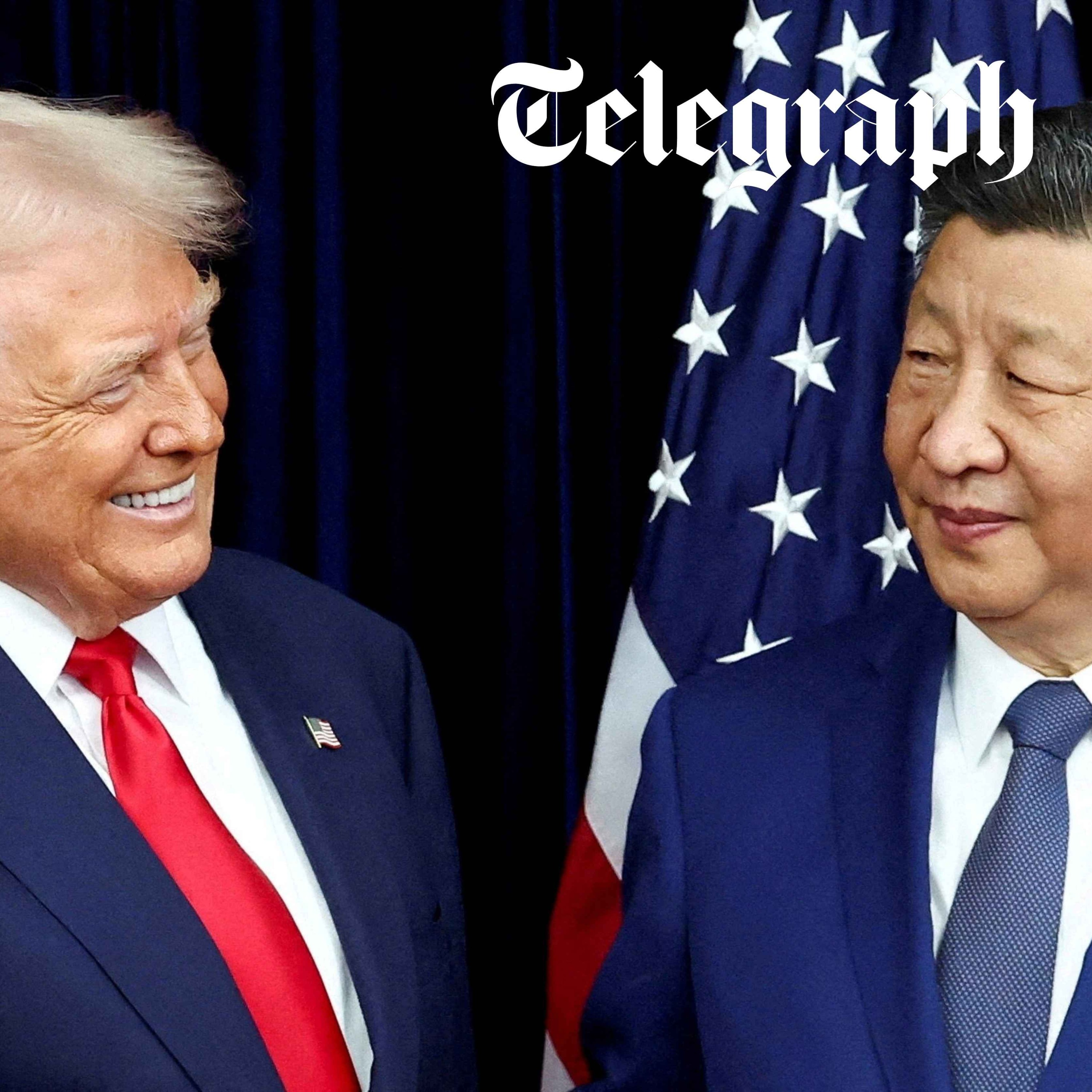
Should we finish just by looking ahead quickly? And I'd love to get both of your thoughts on this on Trump going to meet Xi Jinping in mid May. He's announced it will be 14th to 15th of May unless it gets postponed again. It was postponed once already because of the war. What do you think he, Trump and Xi will be looking to get out of this meeting. Will rare earths be on the agenda? Sam, kick us off.
- [41:45]
Samuel Olson
Yes, rare earths will be on the agenda, as will critical minerals more broadly and the supply chain even more broadly than that. And it's simply because America recognizes that they are in a of a funk when it comes to the exposure to China. And yes, China has already said that they will not restrict rare earths and et cetera, et cetera, as we've just discussed. But it is happening and they are getting the message to the American White House and almost certainly getting the message from their defense companies and their industrial base more broadly that things aren't working as they were a couple of years ago. So it would be strange if he didn't bring that up. There are rumors though that that Trump is going to go to meet Xi with the makings of a deal. Now we don't quite know what would be in that deal. The rumors are flying around Washington, but it's along the lines of a financial deal. So China will either invest in the US or agree to buy lots more of soybeans or something like that in exchange for America and effectively turning a blind eye to China's aims on, on Taiwan. And they are definitely talking in Washington about changing the, the relationship between America and Taiwan to perhaps go away from strategic ambiguity towards supporting eventual reunification or unification. And there are a lot of people in Taiwan who are incredibly worried about what might come out of this meeting. It might be that this meeting's too early and actually won't be this will be maybe a little bit discussed. But I think that even the fact that this is being discussed at the rumor level and these are rumors coming from very senior, so they're not just random rumors. I think that this is enough to make Taiwanese and other allies realize that America is really doing things differently at the foreign policy level. And that is again, another reason for concern.
- [43:35]
Sophia Yan
Well, it's an interesting moment because a major Taiwanese political leader recently visited China. If China could reach its goals, its stated goals over Taiwan, which is to bring Taiwan into the fold without going to war. In some respect, this is preferable from Xi Jinping's view because going to war, you don't do that unless you know for sure you're going to win. And he has seen time and time again, especially with Trump now as the latest example, that that is much harder said than done. You don't know for sure that if you launch a war that you can necessarily win. There are going to be things that you may not have anticipated and you may no longer be able to control the escalation, escalation of the conflict as time goes on. So if there's some way that there is a deal to be discussed, something that China will find palatable, then that's something that she could perhaps go for. But that's a, you know, this is like the long term existential question. Taiwan.
- [44:34]
Roland Oliphant
We'll wrap it there. Sam, thank you so much for joining us on around the Latest. That was Samuel Olson, chief analyst at Risk and intelligence firm Sibylline.
- [44:42]
Sophia Yan
That's all for today on I on the Latest.
- [44:44]
Roland Oliphant
We'll be back again tomorrow. Until then, goodbye.
- [44:46]
Sophia Yan
Goodbye.
- [44:53]
Venetia Rainey
Around the Latest is an original podcast from the Telegraph created by David Knowles and hosted by me, Venetia Rainey and Roland Oliphant. If you appreciated this podcast, please consider following around the latest on your preferred podcast app. And if you have a moment, leave a review as it helps others find the show. For more from our foreign correspondents on the ground. Sign up for our new daily newsletter Cables, or listen to our sister podcast Ukraine the latest. We're still on the same email address, battleionselegraph.co.uk where you can contact us on X. You can find our handles in the show Notes the producer is Peter Shevlin. The executive producers are Venetia Rainey and Louisa well.
- [45:41]
Samuel Olson
ACAST powers the world's best podcasts. Here's a show that we recommend.
- [45:48]
DJ Louis XIV
Do you love Beyonce, Madonna, Taylor Swift, Rihanna, Charli XCX and Lady Gaga? I'm DJ Louis XIV and I host the podcast Pop Pantheon, where each week some of the greatest pop music minds from across the media and the Internet join me to deep dive on the careers, discographies and legacies of all your pop faves before ranking them in a system of tiers we call the Pop Pantheon. From the icons to the mere superstars, all the way down to our most beloved flops, we're breaking down the world of pop stars with a sharp critical eye and the passion of an ardent Stan. Whether you're already a pop super fan who just wants to geek out or a curious outsider looking for a new lens on the soundtrack to our everyday lives, Pop Pantheon will help you reimagine the work and impact of some of the most famous musicians on the planet. Subscribe and listen to Pop Pantheon wherever you get your podcasts.
- [46:36]
Samuel Olson
ACAST helps creators launch, grow and monetize their podcasts everywhere. Acast.
- [46:42]
Defense Official
Com.