Loading summary
Transcript57 lines
- [00:04]
Sophia Yan
The telegraph.
- [00:10]
Aramco Announcer
What if a marginal gain unlocked greater performance? What if an insight in data could change everything? At Aramco, our focus on detail helps us deliver reliable energy to millions across the world. Because margins aren't marginal. They're where we can truly push the limits of what's possible. Aramco, an integrated energy and chemicals company. Learn more@aramco.com you're great at protecting your
- [00:41]
LifeLock Announcer
data, but lots of places could still expose you to identity theft.
- [00:44]
Sophia Yan
I thought it was safe.
- [00:46]
LifeLock Announcer
If that happens, LifeLock gives you a US based restoration agent who will stick by your side from start to finish. Phone calls, filing documentation, preparing insurance claims. Your agent handles it all. In fact, we're so confident restoration is guaranteed. Pour your money back. Isn't it nice to have someone like that on your side? Save up to 40% your first year@lifelock.com Pandora terms apply
- [01:12]
Holly Dagres
I don't think that China is going to have the leverage to tell the Iranians to give up their nuclear program, give up their ballistic missiles. I think the Iranians are set in their ways.
- [01:25]
Donald Trump
A short time ago, the United States military began major combat operations in Iran.
- [01:32]
Sophia Yan
Today, President Trump says Iran's supreme leader, Ayatollah Ali Khamenei, was killed in the attacks.
- [01:43]
Roland Oliphant
The Pentagon is weighing a takeover of that island as a way to force the reopening of the Strait of Hormuz. Iran begged for this ceasefire and we all know it. Does anyone really think that someone can tell President Trump what to do? Come on. I'm Roland Oliphant.
- [02:03]
Sophia Yan
And I'm Sophia Yan and this is Iran.
- [02:05]
Roland Oliphant
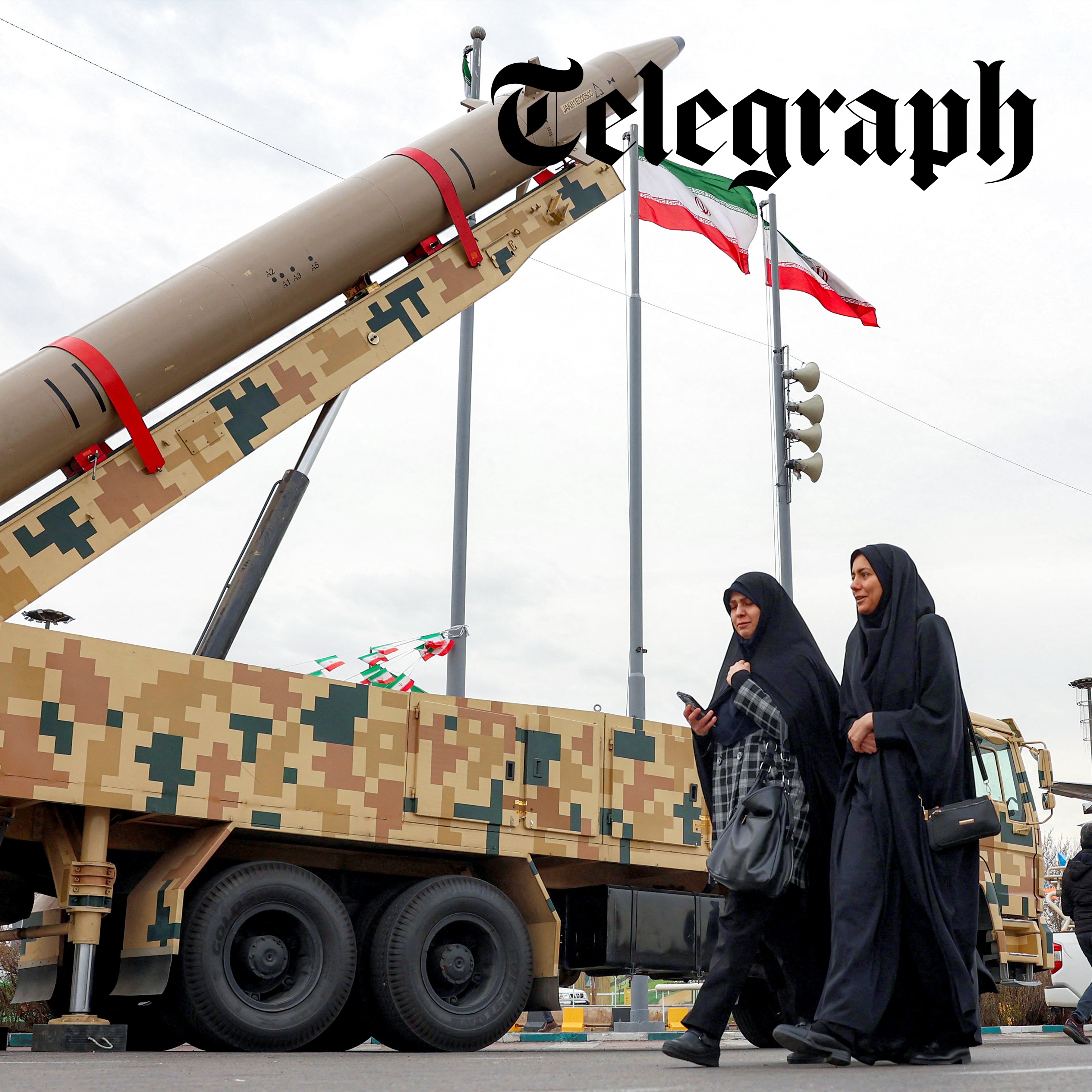
The Latest It's Wednesday 13th May, 2026, 75 days since the Israeli American war with Iran began and 35 days since the somewhat shaky ceasefire came into force. First of all, a significant assessment on Iran's military capability. Iran apparently still possesses roughly 70% of the missile arsenal it held before the war, despite all the degradation that it suffered in Israeli and American strikes. That is according to leaked US Intelligence reports cited in the New York Times. Here are some of the key paragraphs from that report. First of all, most alarming to some senior officials, is evidence that Iran has restored operational access to 30 of the 33 missile sites it maintains along the Strait of Hormuz, which could threaten American warships and oil tankers transiting the narrow waterway.
- [02:57]
Sophia Yan
According to those assessments, Iran still fields about 70% of its mobile launchers across the country. It has retained about 70% of its pre war missile stockpile, and that stockpile has both ballistic missiles, which can reach other nations across the Middle east and a smaller supply of cruise missiles, which can be used at a shorter range on targets both on land and at sea. Military intelligence agencies also reporting based on information from multiple data streams, we're talking about satellite imagery, other surveillance from that. Iran has regained access to roughly 90% of its underground missile storage and launch facilities nationwide. This is assessed now to be, quote, partially or fully operational. This is adding to another report that came in by the Washington Post last week. Those estimates were 75% of Iran's pre war inventories of mobile launchers and 70% of its pre war stockpiles of missiles. These are really roughly the same numbers. And so it gives us a look at how Iran has been able to replenish despite the prolonged conflict.
- [04:05]
Roland Oliphant
The Post and its report last week, the Times, of course, does the same thing, but draws a strong contrast between those numbers and what the Trump administration have said in public. Trump on Wednesday. Last week, the Post sites saying of Iran, their missiles are mostly decimated. They have probably 18, 19%, but not a lot by comparison to what they had. So a really sobering kind of assessment with those numbers from the US Intelligence community there.
- [04:35]
Sophia Yan
Yeah, I mean, this is going to be one of the issues that Trump will raise in his meeting this week with Chinese leader Xi Jinping. Because China has been supporting Iran to some degree throughout this war. Even before the war, they had thrown Iran an economic lifeline. We've spoken about that in depth before. One of the issues I've been tracking through the war is the number of Iran flagged vessels, all of which are sanctioned, which have docked at a specific port in southern China, the Golan port, which is home to some of the largest liquid chemical storage terminals in China. And some of those chemicals could be used to produce hundreds of ballistic missiles. There's a long history of Iran getting this kind of supply of raw material from China. They've continued to have these vessels depart from that specific port and arrive in Iran during the war. I'm actually going to get more data on this today, so we'll see what it looks like in recent weeks with the blockade in place. Suffice it to say that Iran obviously has been able to use China for support, and China has thus far been happy to be in that position. So the fact that their missile stockpile has somewhat been replenished, it seems, from these intelligence assessments is an interesting point to note. For a long time with those vessels going, experts were saying that as long as that raw material is coming in from China to Iran, as suspected. Based on this kind of vessel activity, the sentiment is that Iran must have had some capability to continue producing missiles.
- [06:02]
Roland Oliphant
From what you're saying, this sounds like raw materials. It's kind of dual use. Presumably the Chinese can turn out to the Americans and say, look, this is just, this could be used for lots of things. We're not providing them with weapons.
- [06:12]
Sophia Yan
Yes, this has always been Beijing's stance. They are always trying to exploit this gray area. They say, well, we're not the ones sending the bombs, the actual missiles, the actual missile launchers. We're not sending the weapons. We're just sending some stuff. We can't help to control what happens after it gets there and where it goes. So this is how they play that
- [06:37]
Roland Oliphant
game, diplomatic game, which is relevant because Donald Trump is in the air right now, I believe, on his way to China for that high stakes summit with Xi Jinping. He was speaking to reporters before he left Washington and here's a bit of what he had to say.
- [06:53]
Donald Trump
Well, I think, number one, we're going to have a long talk about it. I think he's been relatively good, to be honest with you. You look at the blockade, no problem. They get a lot of their oil from that area. We've had no problem. And he's been a friend of mine, he's been somebody that we get along with. And I think you're going to see that good things are going to happen. This is going to be a very exciting trip. A lot of good things are going to happen.
- [07:20]
Sophia Yan
Do you think he needs to intervene
- [07:22]
Xin Yi Pai
at all with the Iranians?
- [07:23]
Roland Oliphant
Do you think he can help in any way?
- [07:25]
Donald Trump
No, I don't think we need any help with Iran. We'll win it one way or the other. We'll win, we'll win it peacefully or otherwise. Their navy is gone, their air force is gone. Every single element of their war machine is gone. They've killed a lot of people. They've killed 42,000 people at least over the last month and a half. We're going to, we win.
- [07:49]
Roland Oliphant
That's Donald Trump before he took off. Sophia, any other thoughts about Trump's journey to Beijing?
- [07:57]
Sophia Yan
It's been almost 10 years since Trump has touched down in China. Obviously he's met his counterpart, Xi many times in between. What both sides will definitely be looking for is some sort of stability guardrails for the strategic competition. This is, it's interesting. I mean, they are rivals, but they have to find a way to work together and they have to know what to expect in some regard. From each other. It's been very tumultuous, first from Trump's side with his changing policies, his fickleness. Then of course, with war. China is always thinking about its bottom line, which is the economy. They need to ensure that their growth domestically continues in the way that they see fit and would be best for its own population, because this is something that is important for keeping the ruling Communist Party in power. Any sort of economic instability from their eyes could become political instability, thus potentially popular uprisings. We've seen more protests in recent weeks and months in China. This has been an issue ever since COVID and of course even pre people were upset. But it has become a real concern for Beijing to manage its own people. And so trying to keep things calm, trying to learn how to work with Washington, despite all the ups and downs that Trump brings, will be really important going forward. Obviously, what's happening with Iran is going to overshadow this meeting. The Iranian Foreign minister did visit China before the summit. There's a lot that's still being debated. Treasury Secretary Scott Besant for the US was still in meetings as Trump was getting ready to head off to China. So it looks like there are attempts to move towards some sort of deliverables at the end of this summit. Whether that happens remains to be seen.
- [09:41]
Roland Oliphant
Meanwhile, there's something going on with a Chinese ship in the Strait of Hormuz, I think Sophia, which caught my eye.
- [09:46]
Sophia Yan
Yeah. Just today a Chinese supertanker carrying 2 million barrels of Iraqi crude oil was attempting to get through the Strait of Hormuz. That's based on ship tracking data. Now, if this vessel is allowed through, that would mark the third no passage by a Chinese oil tanker through Hormuz. Since the US And Israel started its war with Iran, Iraq has been exploring land options. They have been really hit by the blockade which is meant to open the strait. But the Iraqis have sent via land on trucks through Syria to the Mediterranean coast where then their oil gets loaded onto ships. So they have already done this, which is very interesting because Syria suddenly has become a bastion of stability in Middle East. This was not the case until recently, until the fall of Assad and this changeover in government. And so now Syria is trying to offer its territory as a potential solution. And so Iraq has taken them up on that. I think that's a really interesting point.
- [10:48]
Roland Oliphant
And finally, on the question of oil in China, one of the things that may come up, and this is an interesting report on cnn, is the issue of so called teapot refineries, small independent oil Companies that operate privately owned, but operating with the permission of Beijing, which are allegedly quietly processing US sanctioned Iranian oil into gas, diesel, petrochemicals and all of that. That I presume is also likely to come up on the agenda in Beijing. Sophia, there was another story you flagged about the cost of the war. Pete Hegseth was speaking to Congress, I believe yesterday he had a bit of a hard time of it, talking about just how much this war has cost the United States, what happened there.
- [11:31]
Sophia Yan
Trump's Iran war bill now at 29 billion DOL. The majority of this, about 24 billion, is related to replacing munitions, to repairing equipment, things that have been damaged. It also includes operational costs to keep soldiers deployed. This has been a huge money spending effort from the US side. And this figure, this 29 billion, is higher than what the Pentagon had said earlier, which was about 25 billion. That was a figure that had come out of the Defense Department a few weeks back. And this is of concern at a time when the global economy, economy is suffering, the American economy as well. This is hitting Trump's ratings, his support base. But interestingly, Trump has said that he doesn't really care about the financial situation of Americans, that it's not factoring into his approach in terms of the negotiations with Iran. He has said that the only thing, quote, the only thing that matters when I'm talking about Iran, they can't have a nuclear weapon. I don't think about American's financial situation. I don't think about anybody. So this may not play so well in the U.S. given that Trump was the president who promised peace, he was the president who said he was not going to get America involved into forever wars, let alone forever wars in the Middle East. It's worth noting that Iran has always denied that it's seeking a nuclear weapon.
- [12:55]
Roland Oliphant
Just a couple of other things to note. First of all, in Iran itself, Iranian authorities on Wednesday hanged a man in his early 30s convicted of of spying for Israel. He is the sixth person to be executed on such charges since the start of the war. The Iranian judiciary's Mizan online website described Hassan Afreshta, 32, as a spy trained by Mossad in Nepal who sold sensitive information to Israel. The Norway based Hengwa and Iran human rights NGO said in separate statements that he had denied sharing top secret documents with the Israelis and that had been subjected to forced confessions obtained through torture. The second such execution we've actually reported in the past week or so. King Charles has been speaking in Parliament, delivering his his annual speech, setting out the government's priorities for the coming year. One of those priorities, he says, is that the government will introduce legislation to tackle the growing threat from foreign state entities and their proxies. We believe that is a reference to what is called the Tackling State Threats Bill, which the government trailed in April that introduced new powers. Basically, it's designed to allow the government to prescript describe the IRGC as a terrorist organization or as another kind of undesirable organization. Anyway, Labour promised to prescribe the IRGC as a terrorist organization before the General Election 2024, but stepped back from doing so after coming to power. The previous Conservative government also avoided that question. There's always been a debate in the halls of power around Whitehall about whether that is a purely political move that is outweighed by the benefits of diplomatic access or the British Embassy in Tehran staying there, and so on. But it looks like the government's finally decided to follow, I believe following the United States and also many of the European countries in doing so. So not sure exactly when that legislation is going to be introduced to Parliament, but I think we can expect that bill and consequently the IRGC being formally prescribed by Britain finally in the coming months. And a slight correction yesterday, I noted when we were noting the reports of Emirati strikes on Iran during the war, that the Saudis themselves had tried to avoid getting dragged into the conflict. In contrast perhaps to the Emirati position, it turns out, apparently according to the latest reports, that the Saudis also conducted tit for tat strikes against Iran in retaliation for strikes on Saudi facilities. I still think generally that analysis stands. However, if we look at the kind of the public statements and the growing tensions between Riyadh and Abu Dhabi, really, I still think it's relatively safe to say that the Emirates are leaning into the the American Israeli alliance somewhat more than the Saudis. But there we go. We're going to take a short break now. When we come back, we'll be speaking to the U.S. american Iranian Iran expert Holly Dagres about the significance of Trump's visit, whether the Iranians are likely to listen to anybody, even Xi Jinping.
- [16:04]
Aramco Announcer
Seeking, pushing, optimizing, creating, learning, discovering. At Aramco, we believe in harnessing the power of data to push the limits of what's possible. That's how we deliver reliable energy to millions across the world. Aramco, an integrated energy and chemicals company. Learn more about us@aramco.com.
- [16:37]
Sophia Yan
Welcome back. You're listening to Iran, the latest with me, Sophia Yan and Roland Oliphant. Today we have Holly Dagres joining us. She's with the Atlantic Council and she's an expert on the US And Iran. Here's our conversation.
- [16:53]
Roland Oliphant
Foreign. The New York Times makes explicit and brings out in its report. And so did the Washington Post, I think, last week with a similar one. Yeah, there's a striking contrast there between these apparent US Intelligence community assessments and what the administration's saying in public. So what, what's your takeaway from that and what does it say about the, I suppose the balance of power in this, this kind of period of war? Not war, peace. Not peace, limbo.
- [17:27]
Holly Dagres
We're dealing in some ways with an extraordinary administration that basically whatever the president of the United States says goes. And when you provide intelligence assessments like the ones you just mentioned, they go counter the narrative that President Donald Trump's putting out. And it basically discredits anything he's been saying. We've heard since the 12 day war in June of last year that the nuclear programs have been obliterated. And now here we are with a second war with no way out and conversations still about the situation on the nuclear program and highly enriched uranium and that the nuclear program needs to be, I would say, shuttered and that it's highly enriched uranium. I think more than 400 kilograms of, of 60% highly enriched uranium needs to be handed over. And then you've got these intelligence assessments that have come out in recent weeks honing in on the ballistic missile capabilities and saying that most of it is 70% is intact and that they've got access to most of their sites and underground facilities. And so when you're hearing that, it means that the war hasn't accomplished much, neither of these wars, in some ways, it goes against what the president's been putting out. And I think that some of in his administration have been saying that if you're going against some of the rhetoric of the president about this war and that the United States is winning, it's actually treason. So there's narrative and there's facts, and they're both clashing in this moment.
- [19:03]
Sophia Yan
Could this be a reason for the US For Trump in particular to attack Iran again, to say that they need to go back in, that the US Needs to go back in to obliterate more of the stockpile?
- [19:15]
Holly Dagres
I think we've been hearing in recent days that there are talks that they might resume the war because the Iranians haven't, in essence, bent the knee to the United States and their demands, which is to give up their nuclear program in its entirety. So I think there's that. And then there's the point you're making about the according to the intelligence assessments, that they haven't really done as much damage as they thought they would. And so I guess when I look at all this, like, laying out all this information separate from the issues at hand with the nuclear program and ballistic missiles, two items which I would say the Iranians would never give up, we're also going into this war with a lot of improvisation. And so we forget that the goalposts have changed from the beginning, which was regime change, to now the situation where we're at, where we're trying to negotiate on two items, and especially one of them that had allegedly been obliterated. So I think that there's a lot of mixed messages from the administration about the goals of this war, where it's going to go. And as the analysts here, living in Washington and also American, I think that's also been frustrating people here in the United States as well.
- [20:34]
Sophia Yan
China has supported Iran to a certain degree before the war, throwing them an economic lifeline with sanctions, supplying various raw materials that could be used for defense and military purposes. That seems to have continued during this war. So there is a lot of focus on what Trump might tell Xi in terms of messaging that he wants Xi to put forward to Iran at this moment. Whether China chooses to do that, of course, we'll have to see. I don't personally think that there's much of a chance that China will do anything unless it's beneficial to itself, let alone give the impression that it's doing something because Trump acts. But that aside, I'm really interested in your take, Holly, on whether you think Iran would listen to China. I mean, would Iran take direction from China? And would, would Iran be okay with giving that sentiment that it could be influenced by any country at this point?
- [21:25]
Holly Dagres
I think I'll start with a quote from the founder of the Islamic Republic, Ayatollah Ruhollah Khomeini. He said, na Shar Nagar. Neither east nor West. It's been interesting because we saw Iran lean West facing because of their signing of the jcpoa, or Joint Comprehensive Plan of Action, better known as the Iran nuclear deal. And when that fell apart and they were frustrated that the Europeans weren't helping them evade sanctions that were reimposed by the first Trump administration that withdrew from the deal despite Tehran not violating it at the time, they started looking eastward. And so they became a policy called their look east strategy. And that's when they started getting closer with Russia and with China and over the years we've seen them join BRICS as a member, they've joined the Shanghai Cooperation Organization and really lean into that. And interestingly we forget that the relationship between Saudi Arabia and Iran recommenced because of an Omani Iraqi, but also Beijing backed deal. And so they've been playing that role in recent years. Just I think about a week ago, Iranian Foreign Minister Abbas Arochi actually went to China and met with leadership there there. And I assume it was also with some messaging for this upcoming US visit to China. Tehran is top oil buyer is Beijing. And now we're dealing with their closing of the Strait, the American blockade. And I imagine that's frustrating the Chinese in many ways. But we've also seen them actually through their Belt and Road initiative, I think they were getting what cargo from China once a week, the Iranians, and now that's actually grown up to three or four cargo trains we clean out since I think the blockade began. The reason I brought up this quote is because at the end of the day, China falls into the box of an imperialist power. And for the Iranians, and so neither the US in its view or China can really tell them to come and bend the knee. What they could see maybe is talk about the Strait of Hormuz maybe and be like, hey, can you maybe like do something about our ships or not target them? But to, I don't think that China is going to have the leverage to tell the Iranians to give up their nuclear program, give up their ballistic missiles. But I think on the straight that might be some like leeway there. But I think that it doesn't matter who's really telling them what to do. I think the Iranians are set in their ways and these are their two firm red lines.
- [24:10]
Roland Oliphant
Even if it's Xi Jinping himself ringing you up, that doesn't mean they're going to budge, in other words.
- [24:16]
Holly Dagres
No. And because I, I think that you have to remember this isn't just this nuclear program has caused a generation of headache for Iranians. I would say at this point they've spent billions of dollars, they've lost their top scientists, they've had two wars over it and then just say, okay, we're going to give it up, up in its entirety. Like I think from a, from a pride standpoint, it's itself like it's hard to just see the Iranians doing that separate from all the costs they've incurred because of it. And now especially since there's growing voices from ultra hardliners that are saying, well, if we had developed the nuclear weapon, we wouldn't be in this situation. There wouldn't have been not one, but two wars. They would have never dared to bomb the country. The hardline voices have of course, risen to prominence after the killing of some of the top leadership.
- [25:12]
Sophia Yan
This aligns with how Iran's approach the talks with the US it aligns with what you're saying Ali, about the approach of not ceding way.
- [25:19]
Roland Oliphant
It kind of also reminds me of a certain misreading of China's role in a way. If you could think of the Russian invasion of Ukraine, there seemed to be this idea that, oh, if we maybe Xi Jinping can rein in Vladimir Putin, maybe all it's going to take is a call from Beijing because everyone listens to Xi because he's most powerful. The idea that Vladimir Putin was going to maybe give up his destiny as he saw it because China might disapprove prove false. The Russians do the same thing, do they not? This idea that the Americans could simply rein in the Ukrainians.
- [25:54]
Holly Dagres
Roland I think the issue here is it depends on the country. The countries you've noted, Russia, Iran, these are countries with deep histories. They, they see themselves as imperialistic powers and that they should be respected. And I think there's like a whole cohort of countries like that. China is one of them, Turkey's another. I can't, I can't see any of these countries giving into such demands. And it's because they of their deep history and that imperialistic history that they've had each of them. And so I see Iran in the same box. And I have to say whether there was a crown, a turban or beret ruling Iran, I think you would see this across the board. Some people have called them the axis of fallen empires. But I, we are one of them. I mean, even in, I mean, depending on who you ask, some people also put the US in this. The Iranians certainly see the US as an imperialistic power and that's why anti imperialist rhetoric is very popular.
- [27:00]
Roland Oliphant
I've just been reading your latest update from the Iranis, the newsletter you send out and you talk a lot about, to be blunt, about executions. And that catches my eye because one of the items of news that we're reporting today is that Iranian authorities said that they hanged a man on Wednesday who they accused of being a Mossad spy. This is a man called Ersan Afreshta, who I think he was a computer programmer. He said he was innocent and I think the day before that, in Fact, we'd reported the execution of another man, Irfan Shakuzada, I apologize for the pronunciation. Who was hung for spying for the CIA. He also protested his innocence. I was wondering if you'd be able to tell us about what's going on, because those two cases I've just cited are about alleged espionage. But you talk about many more killings, not just of people accused of spying. Just give us a sense of what's going on.
- [27:58]
Holly Dagres
It was really sad to see. I had a friend point out that they had a lot of LinkedIn contacts in common with one of those young men that were executed on allegations of espionage. And the person told me, you know, it's crazy that look at my privilege, I'm here living in America and look at this kid who had so much potential as an engineer and then they get executed. And so that was really gutting because it seemed deeply personal in some ways, because then you saw you had all these mutuals on LinkedIn with this individual. But to your point, we've seen at least 24 executions since the start of this war. Many of those were actually protesters related to the January anti regime uprising. This rise in repression is not surprising. We've been warning about it for weeks now that, that this would happen and unfortunately it's a lot of it is to send a message to the people. The fact that they're going out of their way to go after protesters during wartime, I mean, yes, it's a ceasefire, but I mean, this war can continue at any moment, I think shows you that they're where their priorities are. And we've seen at least 4,000 arrests since the war began of protesters, ethnic and religious minorities and so on and so forth. And it's not really being paid attention to. There's a state imposed Internet shutdown. It's the longest now globally, according to NetBlocks. And not much is talked about it. We see that much of the focus is on the narrative that the Islamic Republic's been putting out through these AI generated Lego videos by explosive media. That turns out, and not surprisingly, that they were contracted by the Iranian government to do that. And so while people focus on retweeting stuff like that because they're anti Trump or anti war, there are also, I would say, unintentionally playing a role in silencing the voices of Iranians who are struggling just to call their families and friends on FaceTime or WhatsApp.
- [30:17]
Sophia Yan
Up.
- [30:17]
Roland Oliphant
I was wondering if you have spoken to anyone in Iran recently?
- [30:20]
Holly Dagres
Actually, yeah, I have, separate from my family. So Just to explain some of the complexities of this moment, yes, there's an Internet shutdown, but the Islamic Republic has decided to give white sims to white listed journalists, analysts and I would say Western social media influencers that they allow just to put out that help whitewash and put their version of events out into the world. And they've also come up with something called Internet Pro which is like a tiered system of Internet access and basically it's very expensive. It's a faulty VPN that's also monitored. And so like for example, my relatives can FaceTime for two minutes, terrible quality, just to say that they're okay. And then I've been talking to contacts because I'm writing a piece about the shutdown and people have lost their businesses because of this Internet shutdown. And so we've been talking a lot about that. The Iranian officials themselves say that 20% of its 30 million workforce have lost their businesses that were just online. And Instagram's like one of the most popular websites and that Iranians use as a social media platform for their online businesses. And for example, Iranian women who are have become financially independent because maybe they were doing some online catering or selling handicrafts or their artwork have now lost their income. There's like these ramifications that people aren't really understanding enough of. But that's how I've been trying to talk to Iranians is with these faulty state sponsored VPNs, the ones that can afford it and actually most can't because some of them are spending half of their income on them.
- [32:05]
Sophia Yan
Do you think that tiered Internet system is going to be around to stay after whatever happens with the war happens and things conclude at this moment?
- [32:14]
Holly Dagres
I think possibly yes. We've been really worried about them separating Iranians with this digital wall in the way that China does with its own people. And they've been building a domestic Internet for years now. And I should caveat, yes, ride hailing app, apps, banking and whatnot are working domestically, but the issue is like connectivity to the outside world and your family and friends. And that might, might not seem like a big deal to some people, but it really has a lot of implications even for my line of work. I obviously can't travel back to Iran, but I used social media and Internet to talk to Iranians to monitor what they're saying, feeling. If this is permanent, which I think potentially it can be, it's also going to help the regime control the outside narrative. We Forget that the 2022 Women Life Freedom uprising was actually prompted by a hashtag in Persian, which was Masamini. That became English and it went viral and that's how the story of the uprising started. Internet and social media is the only way for Iranian voices to be heard by the world. When you don't have journalists that can come to the country without a minder, when Iranians are living under an authoritarian government like that, or they can't freely express themselves. So it has real ramifications that I think that some people are not really understanding in this moment.
- [33:47]
Roland Oliphant
Holly Daggeris of the Atlantic Council, speaking to myself and Sophia Yan.
- [33:52]
Sophia Yan
That's all for today's episode. See you tomorrow,
- [34:01]
Roland Oliphant
Iran the Latest is an original podcast from the Telegraph, created by David Knowles and hosted by me, Roland Oliphant and Venetia Rainey. If you appreciated this podcast, please consider following around the latest in your preferred podcast app and if you have a moment, leave a review as it helps others find the show. For more from our foreign correspondence on the ground, sign up to our new daily newsletter K Cables via our website or listen to our sister podcast Ukraine the Latest. We are still on the same email address battlelinestelegraph.co.uk or you can contact us on X. You can find our handles in the show Notes the producer is Peter Shevelin. The executive producers are Venetia Rainey and Louisa Wells.
- [34:49]
Holly Dagres
Acast Powers the World's Best Podcasts Here's
- [34:53]
Roland Oliphant
a show that we recommend.
- [34:58]
Xin Yi Pai
Hi, I'm Xin Yi Pai. Five years ago I sat down in front of a microphone with a simple goal to share stories from the Asian American experience and to do that by talking about everyday objects. Now 10,000 Things is headed into to its fifth and final season and we've got a new set of stories about coming fully into oneself, weird and wild and inspired. Tune in to the final season of 10,000 things from Acast Creative Studios, a podcast about modern day artifacts of Asian American life and the stories they reveal. Listen on Apple Podcasts, Spotify, Amazon Music or wherever you get your pun. Podcasts.
- [35:46]
Roland Oliphant
Acast helps creators launch, grow and monetize their podcasts everywhere.
- [35:52]
Holly Dagres
Acast. Com.