← Iran: The Latest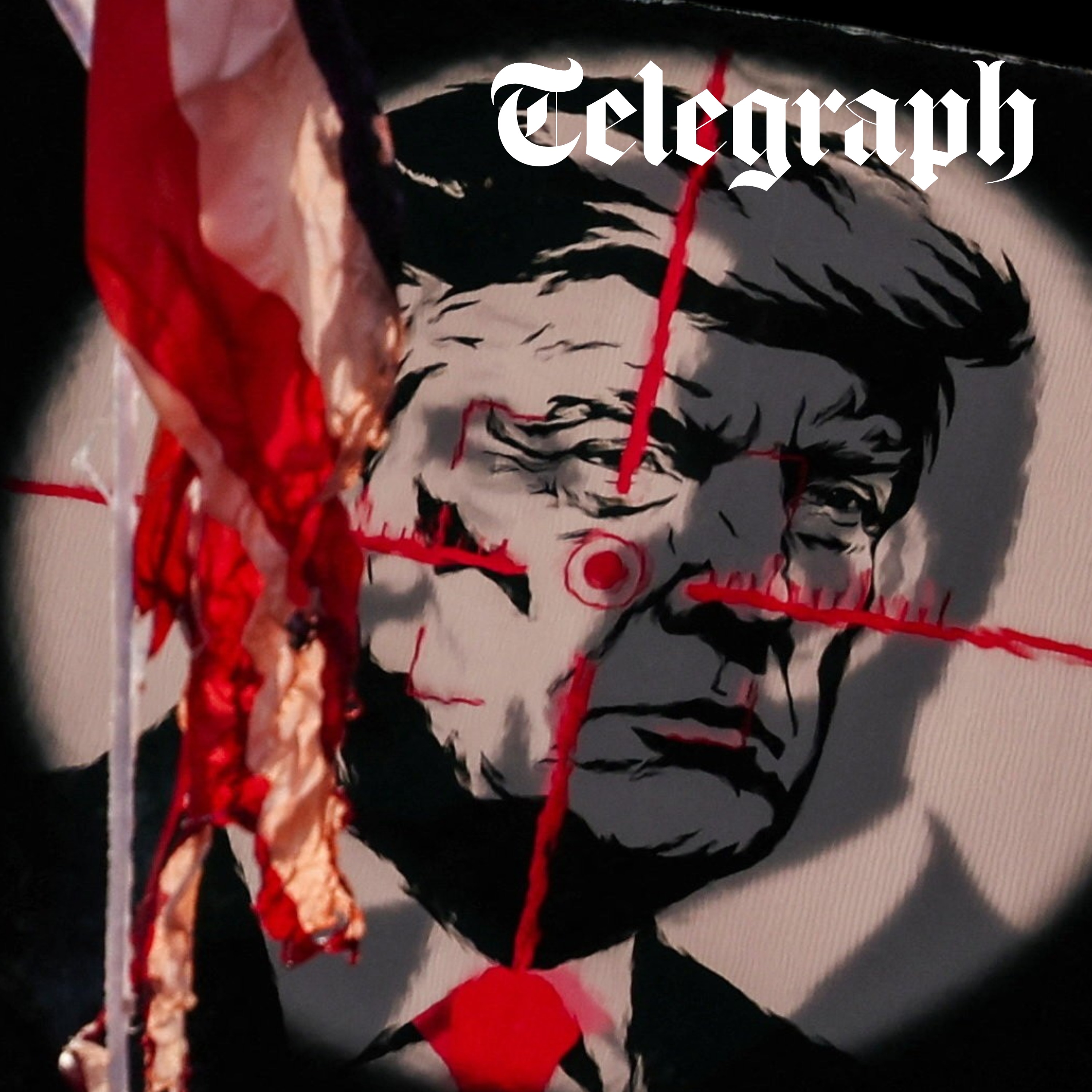
Loading summary
Transcript74 lines
- [00:04]
Rachel Ellehurst
The telegraph.
- [00:10]
Pura Advertiser
Summer smells like salt in the air and warm sand. Restore your sense of place with Pura's new summer fragrance collection. Discover transportive clean scents@pura.com does having a
- [00:22]
Lemonade Pet Insurance Advertiser
house full of pets make you feel as if you work in middle management? Does Bitsy keep blowing off her performance reviews while Bayleaf steals from the supply closet? Maybe they're unhappy with with their benefits package. With Lemonade Pet insurance, you'll give them the health care they need without breaking the company's bank, AKA yours. And with multi pet discounts, your entire tail wagging workforce is covered. Keep climbing that ladder and soon you'll be Regional VP of Treat Distribution. Get a quote@lemonade.com Pet.
- [00:57]
Venetia Rainey
I'm Venetia Rainey.
- [00:59]
Roland Oliphant
And I'm Roland Oliphant. And this is Iran. The latest this Friday, 10th July 2020 of the 60 day deadline to reach a full peace deal between the US and Iran.
- [01:09]
Venetia Rainey
On today's episode, we'll be looking at the future of the transatlantic security relationship in the wake of a NATO summit in which Trump berated his allies and seemed generally unhappy with the alliance. How much longer can it last and what will it mean for the US Review of its military presence in Europe that's currently underway.
- [01:27]
Donald Trump
A short time ago, the United States military began major combat operations in Iran.
- [01:35]
Pura Advertiser
Today, President Trump says Iran's supreme leader, Ayatollah Ali Khamenei, was killed in the attacks.
- [01:45]
Acast Advertiser
The Pentagon is weighing a takeover of that island as a way to force the reopening of the Strait of Hormuz. Iran begged for this ceasefire and we all know it. This is a historic meeting. Never before has the Iranian and American leadership met at such a high level. Can we turn over a new leaf? Can we change relationships in the Middle east permanently?
- [02:08]
Roland Oliphant
Does anyone really think that someone can
- [02:10]
Rachel Ellehurst
tell President Trump what to do?
- [02:13]
Donald Trump
Come on.
- [02:15]
Venetia Rainey
First, let's start with a brief update. Roland, you're in Istanbul. You've been at the NATO summit this week.
- [02:21]
Roland Oliphant
How was was exhausting. I think I'm still recovering for some reason. Just really just draining, kind of chasing around trying to get news lines out of what is actually quite a tightly controlled, quite choreographed event organized very, very well by the Turks. I thought, I thought organizationally they did a good job. And I mean, I know we've discussed at length, you know, kind of the, the, the fundamental news lines and we're talking more about, you know, the, the, the policy outcomes of this with Rachel Elohiss of RUSI later in the podcast. But I Mean, for me, it was quite. It's kind of eye opening. I've done kind of international summits before. I haven't done a NATO one. And it kind of, I suppose it kind of opened my eye to a few things. One of the things was that although NATO is meant to be, you know, everyone's meant to be on the same page, they put a huge amount of effort into that. It's a massive amount of, you know, every country brings its own priorities, and depending on your geography and other things, you have other things you want to push. And of course, the host nation gets to push its priorities more than anyone else. There's a real theme in there, pushed by the Turks about, you know, let's think about our part of the world. Let's think about. They raised the question of Israel and Gaza. They raised the question of what's happening in, well, obviously the situation in Iran and so on. And also for them, really central is this question of can we please buy F35s finally? And there was really tight messaging from all of the Turkish speakers on that. You know, Defense Ministry President Erdogan, his intelligence chief. They'd all, you know, they'd obviously sat down and worked out their lines and they were very tight on that. And I think they got a bit of a result out of that.
- [04:13]
Venetia Rainey
Yeah, it hasn't been completely confirmed yet, has it? But we are seeing reporting, and maybe this will be different by the time you hear this podcast, but we're seeing reporting in Bloomberg and other places that they've arranged some kind of deal to offload their Russian S400 air defense systems, which is the original reason they were chucked out of the F35 program, that they're going to offload them to the UAE and that that will clear the way for them to finally rejoin this US Fighter jet scheme. But we'll see.
- [04:35]
Roland Oliphant
Yeah, exactly. And I think there was definitely a. There was kind of a positive tone around that, even if there wasn't a decision, certainly from the Americans, who are the ones who really decide about this, but from everybody else, I think there was a. People seemed quite receptive to that, to that request from Turkey. So overall, I kind of felt a little bit, a little bit of whiplash, really, because we had all this, all this messaging about, you know, Greenland was back on the agenda. And then, you know, Donald Trump was angry and he got off the plane literally looking grumpy. I mean, look at, you could tell he was like, he'd had a long flight. He was in a. In a kind of ratty mood. I kind of, I look, I kind of saw my bits of myself in him, to be honest. Like, I, I, I, I was looking at his body language, I was looking at his face, I was looking at the tone with which he was answering the reporter's questions. And that, that first press conference with President Erdogan on Tuesday when he, he, he just arrived in Ankara. And, you know, I thought, that is a tired bloke who's, who's fed up and ratty, to be honest.
- [05:38]
Venetia Rainey
And then, oh, that's fascinating.
- [05:40]
Lemonade Pet Insurance Advertiser
Really.
- [05:40]
Mick Brown or Robert Mendick
Really.
- [05:41]
Roland Oliphant
And I think a lot of it comes down to it because you, once you're, you're in such proximity with, they try to keep the reporters away from the leaders, to be honest. But you do get to see them, and it does kind of humanize them a little bit. And you realize that at the end of the day, these, these people are, they're people and they're subject to all those stresses and fatigue and mood and everything, perhaps particularly with people like Donald Trump really plays into things. So whatever, and you know, whatever happened in that last final meeting, you know, it changed the tone completely. And by the end, he's just, you know, he was the jolliest person I've ever come across in my life. I mean, he's sitting in the press conference hall at the end. He just kind of filled up the room with his own cheerfulness. And I think it kind of infected everyone. He was a kind of, so he went from being really ratty to whatever. And in the, despite all of the drama, we ended up with, you know, a basic boilerplate NATO readout which was, you know, without any drama at all. So I feel a little bit, you know, I feel a little bit walked up the garden path by, by the newsmakers here. We could have just like, skipped all that and just gone to. Yeah, everything was fine and that was it.
- [07:03]
Venetia Rainey
You've written a really good diary for us on the Telegraph website about your week at the NATO summit. We'll put a link to that in the show Notes. Well worth a read. Lots of nice little nuggets behind the scenes. We should also, before we move on to the Iran news and there is a bit that we want to share with you before we move on to our interview with the head of Risi that you mentioned. We should also mention that the Iran the latest has won an award. We won best News and Analysis Podcast at the Publisher Podcast Awards. Hooray. And the Telegraph also won Podcast Publisher of the Year. Very exciting. So, people, thank you very Much for listening. You're listening to an award winning podcast now. Congratulations to you. All right, let's do a bit of Iran news.
- [07:42]
Roland Oliphant
Roland, kick us off in kinetic news. No more strikes overnight. So we had that real explosion of activity over the two notes of the NATO conference. But last night, no more strikes or anything that we can verify or attribute to anybody. There were reports of multiple blasts in areas around Bushehr, home to one of Iran's nuclear plants, the nearby city of Chokadak, and the southern city of Konara, according to Iranian media. But US Central Command has denied it was them. The Israelis are also denying that it was them. So it's a bit of a mystery. The Israelis kind of generally refuse to confirm or deny when they've actually done something. So, you know, are the Iranians lying? Or maybe is a Gulf country retaliated? Or maybe for, for some reason the, the US and the Israelis are not telling the truth? Don't know. Unable to bring you any more clarity on that at this time, but we will as soon as it becomes clear. Defense Minister Israel Katz of Israel did say yesterday that the country's military is alert and prepared for the resumption of the campaign in Iran and could include attacking the country for a third time if necessary. But I think it was interesting, Venetia. It was interesting to me. There was the United States that seems to have carried out all those strikes on Iran. Israel stayed out of it for whatever reason. So far, so interesting kind of stuff. But at the moment, that current little kinetic surge in violence that we saw over the couple of days for the NATO conference seems to have stopped.
- [09:12]
Venetia Rainey
Yes, but importantly, it has had a massive impact on shipping in the Strait of Hormuz, which as we've been talking about, had slowly resumed, particularly on that southern route that hugs the Omani coast. It was supposed to be the big win from the U.S. iran peace deal. But no large vessels have crossed the strait via that southern route. According to Lloyd's List intelligence, they haven't crossed for the last few days. About two ships are believed to have crossed dark. That's when they're switching off their AIs tracking transponders. But overall, it seems to be drying up. Meanwhile, the northern route, the one that hugs the Iranian side of the coast, has seen around 10 merchant vessels transiting over the last 24 hours. That's according to marine traffic this morning. And that's exactly what Iran wants. That's what these attacks on shipping this week have been all about. For Iran, it's our way or nothing. We are going to have control of the Strait of Hormuz and if you try and do it differently, we're going to attack you. So I don't know, their method seems to be working and it's still up in the air how America is going to be able to, to deal with that.
- [10:10]
Roland Oliphant
Yeah, a big, a big debate about that. And of course there are, there are lots of ordinary sailors who are still trapped in, inside the Persian Gulf, I think. Yesterday the International Maritime Organization put the figure at 6,000 while urging ships not to try to pass the waterway. At the moment that's down from 11,000 last month and 20,000 at the height of the war. But you know, still a huge number of quite frankly ordinary, you know, working people trying to do their job just, just stuck here. And it's interesting, there's a report on the wise this morning about three Thai sailors suing their ship owner over what they say was basically an unfair dismissal because you know, the ship couldn't work earlier on in the war. So it's not really the subject of this podcast. But nonetheless there are real knock on impacts in kind of, I suppose, maritime employment, employment law and trade relations that are going to come out of this. All this comes of course as former Supreme Leader Ali Khamenei was buried overnight Thursday and early Friday. It was a private ceremony at the end of that long week of public mourning in the memorial hall of the shrine of Imam Reza in Mashhad, which is his home city up in north eastern Iran. As we said yesterday, throughout this week of mourning there has been no sign of his son and successor, most of Al Khamenei. Even though three of most of us brothers appeared early on, most of us still hasn't appeared as far as we know. So his, his whereabouts are real mystery. The final ceremony, the funeral prayers were supposed to have been officiated by Ayatollah Hussein Noori Hamandani. He's one of Iran's most hardline clerics and also at a very venerable 101 years of age. But instead it was Mostafa Ali's eldest son, most of our elder brother, who led the prayers. There's no explanation provided for most about or Hamandani's absence. So not sure what the, what the change of programming was down to there.
- [12:28]
Venetia Rainey
That's interesting. One more story to flag and this is Israel has reportedly told US officials about an Iranian plot to assassinate President Donald Trump. And this makes sense of him constantly referencing this week that he was their number one target. So according to the Wall Street Journal and cnn. Israeli officials shared intelligence with the US that indicates a new and specific plot to kill Trump. This was Trump talking about it earlier this week.
- [12:55]
Donald Trump
They want to take out the US Leader. Me, I'm on every list. I saw things this morning. I'm on every single one of their lists. And so far, I guess I've been a little bit lucky. But that maybe doesn't last very long because that's the way it goes.
- [13:12]
Venetia Rainey
And this might relate or might not relate, we don't entirely know, to Trump's decision to use his old Air Force One plane to leave Turkey. He left the Qatari gifted jet that he'd flown into Turkey. He left that to fly to Britain separately. Apparently it was just the switch was made at the request of the US Secret Service as a security precaution. So who knows? Trump was asked about it and he sidestepped questions about that. Let's bring in our guest now. Rachel Elihus is the director general of rusi and she joins us now on Iran the latest. Rachel, welcome to the show. We've got through this NATO summit without the NATO alliance falling apart, although it did feel like it was a bit of the Trump show. And I note that they are now considering not having a summit at all next year when it's hosted by Albania. How do you think it went?
- [13:58]
Rachel Ellehurst
Well, I did notice that when I looked at, you know, they did two things to sort of, I would say, ring fence the possibility of another summit. They put out a one page declaration that was very concise. And then the last paragraph of that I noticed talked about meeting again, but it didn't put forward a date or a location. And so we've got to get out of this habit of annual summits because even in the best of times, it's really hard to deliver something that's meaningful year on year. It doesn't really give a lot of time to regroup and deliver on what was agreed.
- [14:30]
Venetia Rainey
But how do you think the summit went? We had a lot of comments from Trump about NATO letting him down on the Iran war, tearing into fellow members, Spain bringing up Greenland again.
- [14:41]
Rachel Ellehurst
Well, he almost has these fixed lines around defense spending and NATO's utility or not. And then again, unfortunately on Greenland that he rolls out occasionally. But I think European allies and Canada have as well as U.S. officials have learned that they just need to listen to that, but they don't need to engage in that. And instead the productive course of action is just to focus on the results. And from that measure, I think we had a lot of good news again, going back to that one page summit declaration, which was short and sweet. You got very strong language on the threat posed not just to Europe, but to the whole transatlantic euro Atlantic area by Russia. You got some pretty strong language on Ukraine that was new and different because it recognized Ukraine as a contributor to transatlantic security rather than just a partner or something that was taking energy away from the alliance. And then I think you got what everybody was hoping for, which was that reaffirmation of NATO's collective security guarantee, Article 5. In a way, that one bugs me a little bit because that should be something that goes without saying. But look, if we're at that moment and we got strong language on Russia, supportive language on Ukraine, and a reaffirmation of that collective defense commitment, for me, that's a good summit.
- [15:57]
Roland Oliphant
One thing that I noticed there, Rachel, was the kind of the big variation in priorities between members. And the really significant one I thought was Turkey itself, which was very keen to kind of turn a conversation towards its part of the world, but also towards the idea that it has slightly been excluded from NATO. And they were very consistent in pushing this narrative that, look, you know, we've been excluded from weapons agreements. We feel like, I think their intelligence chief was there and he was saying things like, you know, this alliance has to be kind of eye to eye when asking favors and things like that. And there was a kind of sense that they were trying to, I suppose, assert a kind of, you know, a Turkish, South Eastern European kind of center of gravity to the alliance. What can you tell us about that? And do you think, do you think it does symbolize a kind of changing priority for the alliance?
- [16:54]
Rachel Ellehurst
There's always something that's quirky about them. There's always something that reflects the priorities of the host. In the Washington summit, we had a real focus on the transatlantic dimension and the North Atlantic dimension. So it's only natural that Turkey would try to shine a spotlight on its region and what it sees as the most pressing security challenges. And for Turkey, that's probably they recognize the threat from Russia. They've been supportive of Ukraine, often quietly, rather than as overtly as some allies. But they also are very focused on that second named threat that NATO has in its strategic concept, which is terrorism. And it feels that where it sits in NATO along the Black Sea and along the Mediterranean and bridging Europe and the Middle east, that it uniquely feels threats from the Black Sea, the Mediterranean, but also that challenge of terrorism. So I think it was trying to shine a spotlight on that probably rightly so. We all saw how when you had the conflict still ongoing in Iran, it was a pretty convenient solution for Europeans to say that that wasn't their problem. But as you again saw in the declaration, there's a recognition that an erosion of the rules surrounding freedom of navigation affect us all. The GCC partners, the Gulf Cooperation Council partners, are going to be very important in cooperating with Ukraine and other European countries to get drone production to the SC and level of innovation and technology that we need. So Turkey is not wrong on wanting more attention paid to itself and its region within the alliance. I think what's a particular bugbear for the Turks is the fact that from a US perspective, they're still subject to a number of sanctions that date back, I think, almost a decade to when they purchased the Russian S400 missile defense system, rather than a Western alternative. That then led to direct sanctions on them, but also their inability to secure the F35 aircraft, which they were in line to get. Secondly, the other thing that they feel a bit singled out for are sanctions or exclude. Not really sanctions, but exclusions rather. In the EU context, and without going too much into it, this goes back to the fact that Cyprus is a member of the eu, but not of NATO, and Turkey is a member of NATO, but not the European Union. Both of those countries, you know, have. Have their varying views around the status of Cyprus. So this plays into the bigger picture every time. And in this strategic moment where Europe really does need to step up, I think they do need Turkish industry, they need Turkish production lines and innovation. So maybe now is the moment to think about how we can get around some of those old hangups around sanctions and their exclusion from EU mechanisms.
- [20:02]
Venetia Rainey
That's fascinating because we were speaking to our Istanbul correspondent, Sofia Yan, on yesterday's episode, and she was saying that Turkey produces like self produces 80%, now meets 80% of its defence needs. Nationally, it can produce its own stuff, which I just think is absolutely incredible. I mean, that's where Europe is trying to get to. I just want to come back to the freedom of navigation thing that you mentioned. We heard a lot from Trump this week that he was furious that NATO hasn't helped him in the Iran war. But some hints from Rutte that NATO might help in some way reopening the Strait of Hormuz. How likely or how advisable do you think that would be?
- [20:38]
Rachel Ellehurst
Well, I would think it's neither likely nor advisable, just because European allies have limited capabilities to help with that task. I think the United Kingdom, for example, has a few minehunters. So if we were talking about trying to go through the strait and figure out where the secure pathways were versus those that were mined, there might be some limited capability that Europeans could bring to the table. But really we need them focused on the high north where Russia has the bulk of its nuclear capabilities and its power projection capabilities. We need them, you know, really focused on helping Ukraine. And the US has made that clear that they wanted Europeans to be taking leadership in their own neighborhoods. So I think if, if realism were to prevail, the United States should, should realize that there's a relative level of focus here. And the support that they could expect, expect from European allies and partners on Iran is probably limited, both in terms of political bandwidth but also real capacity.
- [21:36]
Roland Oliphant
We're going to take a short break now. When we come back, what is behind the US Global Force Posture Review.
- [21:47]
Mick Brown or Robert Mendick
Nirav Modi was a billionaire diamond tycoon whose jewelry was worn by Hollywood stars like Kate Winslet. But in 2018, he was accused of masterminding one of the world's biggest ever bank frauds and he disappeared. This is the extraordinary story of the rise and fall of Nirav Modi and of how we caught him.
- [22:12]
Pura Advertiser
He was in the news all the time. Where is Nirav Modi?
- [22:15]
Rachel Ellehurst
Why can we not find him?
- [22:16]
Acast Advertiser
He's one of the most sought after criminal in India.
- [22:19]
Mick Brown or Robert Mendick
You owe a lot of people a lot of money, Mr. Modi, who would very much like to know where you are.
- [22:24]
Donald Trump
Sorry, no comment.
- [22:25]
Rachel Ellehurst
The Indians will think we're a laughing stock.
- [22:28]
Venetia Rainey
Here we are seven years later still
- [22:29]
Rachel Ellehurst
speaking about this case.
- [22:31]
Pura Advertiser
They think it's a sham.
- [22:32]
Mick Brown or Robert Mendick
The Diamond King, a new podcast from the Telegraph with me, Mick Brown and me, Robert Mendick. Out now.
- [22:46]
Pura Advertiser
Close your eyes. Summer smells like sunshine, fresh citrus and salty air. What if your living room could feel just like that with Pura's new summer collection. It can restore your sense of well being with fragrances designed to move with your day. From bright, energizing mornings to soft, relaxing evenings. Make the invisible unforgettable this season. Visit pura.com to find your new favorite summer scents.
- [23:12]
Acast Advertiser
Here's a tip for you. There's a podcast out there with fans waiting to be your next customer. They tune in every week. They trust the host. And that host wants to talk about brands like yours in their own words to their audience. The problem is you just haven't been introduced yet. We're acast where that introduction happens. As the world's largest podcast marketplace we let you browse shows, see who's listening, listening and book host red sponsorships or run your own ads, all from one platform. Transparent pricing, real time data, complete control. Start advertising on podcasts by visiting acast.com advertise.
- [23:56]
Venetia Rainey
Welcome back. You're listening to Iran, the latest with me, Veneesh Shiraili and Roland Olyphant. And we're speaking to RUSI Director General Rachel Ellehoose. One thing that I think definitely came across from the summit is America's anger with allies for not the ones that haven't spent enough. And the sort of tirade against Spain was particularly notable. We're currently in the middle of a US Force posture review. Pete Hegseth, Secretary of Defense, has explicitly linked it to whether allies are paying what Washington considers to be a fair share. You've called this protection racket framing. Can you explain why?
- [24:26]
Rachel Ellehurst
Yeah, well, we've had, I think with Hegseth turning up at the NATO defense Ministerial and then Trump at the summit, we've had something that's really unusual for NATO. We've had the tables turned whereby the criticism of allies has been very public and deliberately in front of the press, which makes you wonder whether it's directed more to a US Audience rather than a NATO audience. Whereas the more productive conversations are happening behind closed doors. It's normally the other way around where the criticism happens behind closed doors and the responsible, productive public face is what you see in front of the press. So it's an interesting way to try to encourage allies to step up and take on more responsibility for conventional defense within NATO. But despite what we think about the wisdom of that approach, it is happening. I think European allies have gotten the message that it's not going to go back to an alliance where NATO, where the United States is providing the bulk of either the political leadership or the military capabilities. So that's a positive thing because I think ultimately it will make a more resilient NATO, a more balanced NATO, and it will make the Europeans a better partner, the United States, not just in Europe, but globally. But you know, my comment about the protection racket is just when you normally do a global force posture review in any country, but in particular in the United States, where you just have so many forces that could be aligned globally and so many capabilities that you have to put in the right place to have the right military effects, it's funny and strange and slightly irresponsible to suggest that that decisions on where those forces and capabilities might be placed would be based on whether you're politically happy with something someone has or hasn't done. It should really be about an assessment of what's militarily needed, where you know, what what is needed to be most effective in that particular region. So I hope that's not the case. And again, from what I hear, the conversations behind closed doors are much more based on facts and careful assessments because let's remember, there are us for on the ground as well. So any politicization of that posture, those capabilities, is also putting those forces in harm's way.
- [26:50]
Venetia Rainey
Would it be useful to just sort of quickly explain for us the US Military presence in Europe what it is they're reviewing or sort of what's at stake?
- [26:57]
Rachel Ellehurst
Yeah, so I don't, I don't have in mind the current force numbers, but the majority of forces are in Germany.
- [27:07]
Venetia Rainey
I think it's around 80,000. That's what that's the last I saw, around 80,000.
- [27:11]
Rachel Ellehurst
The majority of the forces are in, I think, Germany, Poland and Italy and then maybe the United Kingdom falling in a bit behind. And they serve sort of two roles. I mean, one of the roles is, of course, contributing to those NATO tasks and those NATO plans that happen both in a NATO context, but also under the European Command that's based in Germany. But those forces are also there for power projection to other parts of the world. And the best example of that actually is would be the naval presence in Spain at Rota and Marone, where a lot of the naval assets, but also air force assets taking off from there have been helpful previously in the wars in Iraq and Afghanistan and could have been very helpful in the war in Iran, which I think is what made President Trump so upset.
- [28:06]
Venetia Rainey
We also have because Pedro Sanchez, the president, said you're not using any of it and was quite pointed, actually, wasn't he?
- [28:12]
I
Yeah.
- [28:12]
Rachel Ellehurst
I mean, but that's always a risk you run when you are reliant on force posture in another nation. I mean, I could imagine there are scenarios where the United States has said they weren't going to provide assistance or they weren't going to allow access to certain bases or territories that they had control over. So it's something you have to prepare for and you have to have other alternatives. So, you know, that force posture in Europe grew up out of the Second World War with the birth of NATO. It's been higher or lower over times. It's surged with Russia's war on Ukraine, renewed invasion of Ukraine in 2020, and the 5,000 that you saw announced as leaving earlier this year by Hegseth, those were surge forces that were put in after the renewed invasion of Ukraine. So in many ways, when you ask about posture, we have been at that steady baseline of I guess around 70,000 for the last decade. So not much has changed. Despite all the rhetoric and the politics and the difficulties.
- [29:12]
Roland Oliphant
Are there simultaneous kind of reviews of force posture in other parts of the world, the Middle East, East Asia, Korea, places like that, that where the Americans also have large concentrations, or are they really just talking about Europe?
- [29:24]
Rachel Ellehurst
No, it's a global force posture review. So it would be something that was handled in the Pentagon, working very closely with the different combatant commanders in the regions you mentioned, but also the functional combatant commanders who look after things like cyber or air and missile defense or transport. All of those things would, would be worked through a very elaborate process to try to figure out how many forces and capability and which capabilities the United States would want forward versus which ones would it want, would it want to keep in reserve in the United States in a so called global pool. So it could put them where it needed, depending on what happened in the world. Now this is a very regular process that happens every, every few years. So again, that's why it's particularly strange to try to politicize something that's just core business for the pandemic ago, because
- [30:18]
Venetia Rainey
Trump was asked about it at the beginning of the NATO summit, are you going to pull more troops out of Europe? And he responded, I haven't made that final determination. A lot is going to depend on Greenland. We're going to make a very good deal on Greenland. And if we don't, maybe I will this sort of threat that he'll pull lots of troops out if he doesn't get Greenland. I mean, I know we were speaking just before we started this interview that you think you can't take this stuff too seriously, but what do you make of that threat? Do you think a lot of troops will be pulled out? How do you think this review is going to end?
- [30:47]
Rachel Ellehurst
Well, you know, you do have to take these threats very seriously around Greenland. I mean, we're talking about the territorial integrity of another NATO ally. So you've got to push back and you've got to be prepared for the worst. But I do think it's a bit of, you know, strong arming and brinksmanship to try to get something that he thinks is a good idea. Fortunately, we still have a balance of power that we see in the United States. And Congress has stepped forward to take measures to, to prevent President Trump from withdrawing the United States from NATO, they've put in legislation to stop a reduction in US Forces in Europe beyond a certain level without close consultation with them. So they'll be part of that global posture review. And then importantly, they would also, I think, have a lot to say if these force posture changes were somehow linked to any decisions or moves on Greenland. So. So we don't, you know, our checks and balances have been eroded in the United States, but they still do exist, particularly when it comes to forced posture in Europe. Congress has a strong role to play, and I think they would exert that power.
- [31:59]
Roland Oliphant
I think what interested me about Greenland coming up again is that I suppose I'd forgotten about it a bit. I thought it had kind of been. We were through that. But it seems like Donald Trump hasn't forgotten about it, or elements in his administration have definitely, certainly not forgotten about it. So fair to say it really is. Still, it's going to be a live issue, even if we're not seeing it on the surface, at least until he leaves office.
- [32:24]
Rachel Ellehurst
It's hard to tell. I mean, he has a couple of things that he mentions repeatedly that always tend to come up when he sees certain people. I mean, maybe it's a trigger. When he sees the Prime Minister of Denmark, he's like, ah, I need to raise these three points with her. And then he sees Sanchez, and then it's the same three points with him. So. So, again, I think people are just a little bit exhausted and they listen, but they don't engage. And on Greenland in particular, people seem quite satisfied with the process that is ongoing, which is a conversation behind the scenes between the Kingdom of Denmark and US And European counterparts, just to talk about what the security risks are there and to make sure that, indeed we do have the capabilities and forces that are needed there. Things are operating smoothly through normal channels, but it is still disturbing when you hear something come up that you thought was a dead issue. But I think we just need to get used to it.
- [33:25]
Venetia Rainey
Just finally, if I ask you to sort of take a step back, I mean, how hopeful are you about the transatlantic security relationship? Can it stabilize in this new normal? Trump's gonna be around for another few years, or do you feel like we're at the sort of moment of a beginning of a decline?
- [33:41]
Rachel Ellehurst
Well, it definitely feels like we're always on eggshells and always waiting and opening the newspaper and hoping to not find the next disaster. But again, if we go back to where we started and we look at outcomes, I think we're headed in a healthy direction. I mean successive US Administrations had asked Europeans to step up and take on more responsibility for their own defense, particularly in the conventional space. We needed a more balanced NATO, not just because President Trump says so, but because there are growing threats in Europe and more broad and increasingly the United States is facing its own economic and military overstretch. So I think a more European NATO, where Europeans are taking on more responsibility again is a good thing. And this was the first summit where I really saw concrete steps both towards realizing that and to bringing important partners like Ukraine directly into the fold, whether that's on co production, co development of military equipment or just recognizing that there are net contributors contributor to European defense.
- [34:45]
Venetia Rainey
It's interesting, you make it sound like Trump is the sort of medicine that Europe needed. It just doesn't taste very nice.
- [34:50]
Roland Oliphant
I heard people say that.
- [34:51]
Rachel Ellehurst
Well, sometimes, I mean, we tried to ask nicely many times and the message just didn't sink in. But I think it's probably a combination of his rhetoric. But again, also the fact that we can see a war happening in Ukraine and we can see a hybrid war happening every day across the rest of Europe. And it's a real wake up call about the leverage or lack thereof that Europe has to push back and exert its own agency. We haven't even talked about China, but that's an additional challenge that's near and present across Europe. And if they don't have the economic resilience and the military capability to defend their interests, it's not going to be a very pretty picture.
- [35:36]
Roland Oliphant
You said earlier in the conversation it's pretty strange to politicize something as important as where you put your troops in the world. And you talked about how it's quite interesting that the productive stuff is happening behind closed doors, but the criticism and the fireworks is in public and maybe it's for political domestic consumption. And that got me thinking about a conversation I had earlier today with one of my colleagues about the change of power in the United Kingdom and how we're about to get a prime minister to Andy Burnham who should be in power in a couple of weeks. He doesn't really seem to have thought about foreign policy at all. And there's a kind of concern amongst people like me who work in this sphere are talking about how his pronouncements so far seem directed at, you know, labor voters rather than at other governments or foreign policy. On the one hand, hasn't that, you know, wasn't it ever thus us you have to think about your public. On the other hand, do you think there's a bit of a trend here that it's becoming more and more difficult for national leaders to think about foreign policy or to think about the place in the world as opposed to placating voters.
- [36:56]
Rachel Ellehurst
Well, I think on balance I'd go with your ever thus assessment because because I think in most countries prime ministers and presidents don't get elected on foreign policy. If anything, it can be their downfall, but it's not the reason why they get elected. But there is a link between the foreign policy and the international developments and what is going on in the uk, which is difficulties with growth and a lack of the resources needed to realize the ambition that the UK says set out in the Strategic Defense Review around its place in the world. And I think that is something that Burnham will struggle with if and when he does become prime minister. Because you will realize that if you want the UK to have influence around the world with allies and partners, you need to show up and you need to show up with something that is valuable to them. And I hear time and again, not just in Europe, but also in the Gulf and in the Indo Pacific that the United Kingdom has great strategies, they have great vision, good foreign policy diplomacy. But increasingly the question is, you know, where's the capability, where's the money to back that up? And so I think he'll have a difficult task ahead of him, but I hope he'll see the relationship between growth and investment and defense investment and the UK's place and influence in the world.
- [38:23]
Venetia Rainey
Rachel Ellehurst, Director General of rusi, thanks very much for joining us on Iran the Latest. That's all for today's episode of Iran the Latest. We'll be back again on Monday. Until then, goodbye.
- [38:35]
I
Iran the Latest is an original podcast from the Telegraph, created by David Knowles and hosted by me, Venetia Rainey and Roland Oliphant. If you appreciated this podcast, please consider following around the latest on your preferred podcast app. And if you have a moment, leave us a review as it helps others find the show. To stay on top of all of our news, subscribe to the Telegraph, sign up to our Dispatchers newsletter, or listen to our sister podcast, Ukraine the Latest. We're still on the same email address, battle linestelegraph.co.uk or you can contact us on X. You can find our handles in the Show Notes. The producer is Max Bauer. The executive producer is Louisa Wells.
- [39:18]
Pura Advertiser
Summer smells like summer road trips, ocean breezes and long evenings under the stars. It's a feeling you want to hold on to restore your sense of place with Pura's new summer fragrance collection. We've captured the magic of the season in clean, premium scents that transform your home into your favorite destination. Discover the art of sunscaping and bring the summer in. Visit pura.com to explore the collection.
- [39:44]
Acast Advertiser
Do you keep hearing podcast ads like this one, for example, but always wonder how you actually get involved with them for your own brand or organization? Well, it's easier than you think. We're Acast, and we give you the platform to do it all yourself. Browse thousands of popular podcasts, choose the shows that match your perfect audience, set your budget, and launch. And if you want a hand, our podcast specialists are there to help you launch. Launch with confidence. This is podcast advertising without barriers. Get started@acast.com advertisement.