Loading summary
Transcript69 lines
- [00:04]
A
The telegraph.
- [00:12]
B
ACAST powers the world's best podcasts.
- [00:16]
C
Here's a show that we recommend.
- [00:21]
A
Hi, I'm Xin Yi Pai. Five years ago, I sat down in front of a microphone with a simple goal, to share stories from the Asian American experience and to do that by talking about everyday objects. Now, 10,000 Things is headed into its fifth and final season and we've got a new set of stories about coming fully into oneself, weird and wild and inspired. Tune in to the final season of 10,000 things from Acast Creative Studios, a podcast about modern day artifacts of Asian American life and the stories they reveal. Listen on Apple Podcasts, Spotify, Amazon Music, or wherever you get your podcasts.
- [01:10]
B
Acast helps creators launch, grow and monetize their podcasts everywhere.
- [01:15]
C
Acast.com
- [01:20]
B
It's a very narrow straight. It's probably been the case that both parties were patrolling and both parties felt threatened. And so they're both claiming that the other side fired first.
- [01:32]
C
A short time ago, the United States
- [01:35]
A
military began major combat operations in Iran. Today, President Trump says Iran's supreme leader, Ayatollah Ali Khamenei, was killed in the attacks.
- [01:51]
B
The Pentagon is weighing a takeover of that island as a way to force
- [01:55]
C
the reopening of the Strait of Hormuz.
- [01:57]
B
Iran begged for this ceasefire, ceasefire, and
- [02:00]
A
we all know it.
- [02:01]
C
Does anyone really think that someone can
- [02:04]
A
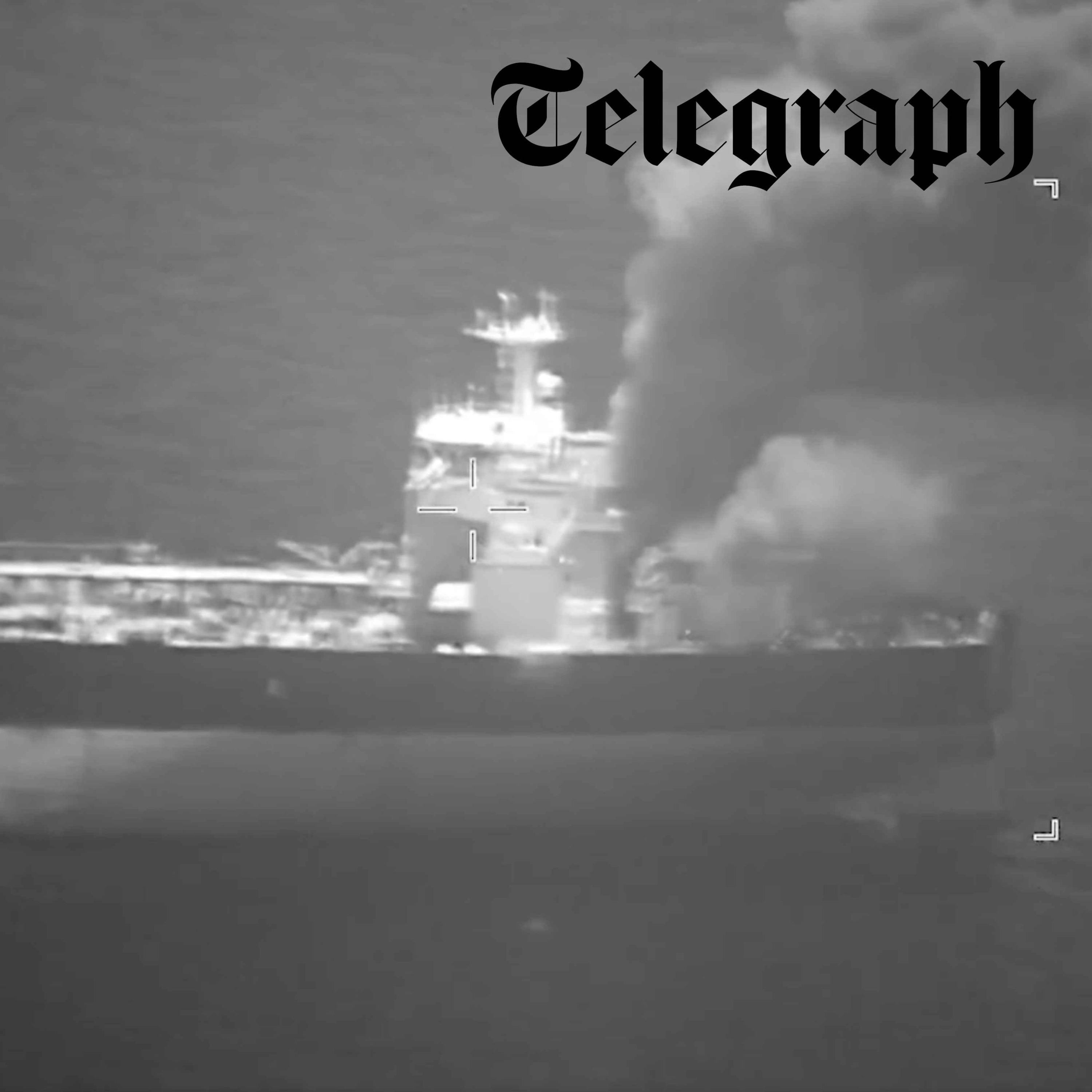
tell President Trump what to do? Come on. I'm Venetia Rainey and this is Iran. The latest. It's Friday 8th of May, 2026. We are now 70 days since the war began and 31 days since the ceasefire was declared. But as you'll be hearing on this podcast, that is looking increasingly in peril now, later on in the show, we're going to be hearing a fantastic dispatch from our Jerusalem correspondent, Henry Bodkin, who's been inside southern Lebanon with an Israeli army embed. He talks about what he saw, including a Hezbollah tunnel that he climbed inside and widespread destruction of a Lebanese village. But first, it's been a really busy 24 hours. There's been a burst of military activity that, as I said, has left the ceasefire in peril. So very briefly, our three main stories. Overnight, the U.S. and Iran traded fire with Tehran attacking American warships in the Strai, Hormuz and Washington conducting air strikes on Iranian coastal cities. Those strikes were described by Donald Trump as a love tap, slightly dismissively, the timeline of that is contested as we'll get into later. And then this morning, Iran attacked the UAE with missiles and drones, injuring three people. And then this afternoon, while we were recording the podcast, American forces struck, according to centcom, three very large crude oil tankers that were trying to bypass the American blockade on Iranian ports. So a very busy 24 hour hours of activity that we will see how it plays out over the weekend. But with me to discuss all of it, as well as a slightly bonkers week that was, is our new Washington bureau chief, Arthur McMillan. Arthur, welcome to Iran. The latest. Do you want to just start by introducing yourself to our listeners?
- [03:45]
B
I joined the Telegraph a couple of months ago now as the Washington Bureau chief and I run all US News operations for the Telegraph. I've come into this job after some other jobs in the United States, but before that I was a foreign correspondent in Iran, in Iraq, in Asia, and I had worked in Europe and my native Scotland before that in Iran.
- [04:10]
A
Okay, well, tell us a bit about that. What kind of things were you reporting on? When were you there?
- [04:14]
B
I was in Iran between 2014 and 2016, a time when the west made a concerted effort to control Iran's nuclear ambitions, ultimately culminating in the nuclear agreement of President Barack Obama's US Government and the five main European powers at the time.
- [04:38]
A
Did you like living in Tehran?
- [04:39]
B
I assume I actually very much did enjoy it and regard it as one of the best postings I've ever had. It's a fascinating country. The politics is constantly topical. The people are incredibly warm and engaging. And one of the more interesting things and insights you gain as a correspondent in a country like that is that you learn to understand that the regime and the clerics who control ultimately the power in Iran are not necessarily representative of the people. Some would say very, very unrepresentative. I think that's one of the things I've always tried to bring across in my coverage of covering Iran is that there is politics and power, but there are also people.
- [05:32]
A
Thank you. Yeah, I think that's a very important thing to keep in mind when we talk about this war. And the Iranian regime does not represent the 90 or so million Iranian people on the ground. We like to kick off these episodes with just talking through the big stories. And I think the first story that we have to discuss today is this sudden bout of military action that we've had overnight. Each side are accusing the other of starting it. So the American version of events is that they had three Navy destroyers that were peacefully transiting the Strait of Hormuz when they were attacked unprovoked by Iran with missiles, drones and small boats, and that the Americans then responded out of Self defence striking the cities of, I think, Banda Abbas and Kesham Island. Iran agrees that it attacked these American warships, but it says that it did it in response to America targeting an Iranian oil tank and another vessel that was approaching the Strait of Hormuz. And that America also carried out aerial attacks on several civilian coastal areas in violation of the ceasefire. What do you make of that sudden exchange of fire?
- [06:30]
B
I didn't find this exchange particularly surprising because we'd actually had a 24 hour period where in Washington the President was again upping the, the expectations of some kind of diplomatic settlement to the war. It all really stems from this so called one page memorandum of understanding being looked at by the Iranians right now. And it's my experience that when one party in a negotiation is reaching out and trying to bring matters to a conclusion, it's quite typical, and in this case it's quite typical for Iran to up the ante by again testing America's resolve. And I think this is exactly what Iran did. It's a very narrow strait and I think it's probably been the case that both parties were patrolling and both parties felt threatened and someone was going to fire first. And so they're both claiming that the other side fired first. It doesn't really matter who fired first. It happened because of the tension.
- [07:41]
A
Donald Trump described it to ABC News's Rachel Scott as just a love tap. And when asked if the exchange meant the ceasefire was over, he said, no, no, the ceasefire is going, it's in effect. We then also had this morning Iran firing missiles and drones at the United Arab Emirates. The Ministry of Defence there said that it was two ballistic missiles and three drones fired since midnight, moderately wounding three people, which of course tests this idea of a ceasefire even more. And for the Gulf neighbours really matters to get some kind of real solution to this, rather than a sort of fudged solution which we're in danger of entering now. You mentioned the memorandum of understanding there, this 14 point proposal that no one seems to have quite seen. We think there are points about uranium enrichment being suspended for 12 to 14 years was the last estimate I saw. And of course the Strait of Hormu is being reopened by both sides. Have you guys learned anything more?
- [08:33]
B
What we're really seeing here are the limitations of hard power. Donald Trump made a great show and so many of his cabinet members have made a great show of the military force that the US has exercised since February 28th and for weeks at the start of the conflict, shall we say calmer heads pointed out that it doesn't matter how strong your military is. Any war is only ever settled at a negotiating table. And where we're at now is that all of the traffic, verbal rather than military, has been coming from Washington. And if you're in a diplomatic settlement, it takes two to tango. You can't just keep talking about a deal if the other side is basically saying, we really have no active talks here, we really have no agreement. And Donald Trump's trying to manage the optics in Washington by saying we're close to an agreement because he's trying to keep the oil price down, he's trying to settle people. But the reality is his conversation is one way. There are no midterms in Iran, and the leaders in Iran know this. So they are consistently testing how far they can push the Washington negotiating position. So in less than a week, we have gone from a maximalist position in the United States about Iran must abandon all of its nuclear ambitions to the point now that not only might that material just be shipped out of the country, and by this, I'm talking about Iran's enriched uranium. We've gone to the point of this maximalist position to a one page memoir to end a war, a one page memo. It sounds like this has been written down in the back of a cigarette packet as a way to try and get out of a war which has so far cost the US taxpayer 25 billion, disrupted all of the United States diplomatic relationships with Europe, and also despite them holding the line and not publicly being vocal about it, Gulf states are also very upset at the position which they find themselves in. What we have here is what happens when an unstoppable force meets an immovable object. And it will take some kind of clever political to break that impasse. And I can only see it happening one way, and that's that there is some kind of memorandum, but it may not even be signed. It will be more a quiet retreat from both sides, and probably much along the same lines as the deal that Barack Obama made with Iran almost a decade ago. But if I'm being entirely honest about it, I still can't see that happening right now. We seem to have a situation where Donald Trump doesn't hold the cards, despite him saying he does, and Iran has no timeline whatsoever.
- [11:48]
A
So when we have Marco Rubio speaking today, he's visiting Rome, he said we're expecting response from them. We'll see what the response entails. I hope it's something that can put us into a serious process of negotiation. I hope it's a serious offer. And then we have Trump saying just like we knocked them out again today, we'll knock them out a lot harder and a lot more violently in the future if they don't get their deal signed for fast. You think this is all just talk not actually leading to anywhere concrete anytime soon?
- [12:14]
B
Well, I think the hint there from Marco Rubio is probably the most interesting thing. He says if this is something that can lead us into a process, I don't think we're going to have a resolution from the one page memo. We're going to probably have some kind of watered down declared intention that we will resolve these differences in the months to come or something like that. And there'll be a couple of settled points. But we're not going to see U.S. forces leaving the region as Iran wants and we're not going to see Iran allowing international inspectors to walk into their country and remove their depleted uranium. It's just not going to happen. So again, the tough talk about we'll bomb them again, it's not very conducive to gaining trust with a power that already does not trust you. And it's again showing the limits of hard power. The most incredible thing to me this week, during this week of events that we've seen in Washington was the 24 hour collapse of Project Operation Freedom.
- [13:27]
A
I think it was 36 hours, let's be fair to the administration, 36 hours. But it was pretty quick.
- [13:31]
C
Yeah.
- [13:32]
B
In Washington, by the time you woke up in the morning, it was basically 24 hours working on a story right now about how the limits of hard power are being exposed by the Iran campaign. And we have several very senior diplomats in the story talking about the fact that the Pentagon has a military strategy, but they have no diplomatic strategy that's coming along. And unless you have a diplomatic strategy, there is no way to end a conflict. And that is really the problem we are running into. Every week we hear Donald Trump saying we're close to a deal. We're making very good progress until we see some substantive developments. I don't take this seriously on a
- [14:16]
A
broader scale in terms of American diplomatic efforts. One of the probably biggest trips of Trump's presidency is coming up next week. He's going to meet Xi Jinping in Beijing. This trip has already been postponed by the Iran war. And I think all the reporting we've been reading is suggesting that he'd like to get it wrapped up the war by the time he goes to China. That's not looking likely. How big a pressure point is this meeting for the Washington administration right now.
- [14:42]
B
It's not going to be an easy meeting for Donald Trump. It couldn't be more obvious that Trump does want to have the Iran war, quote, wrapped up. But wars have a habit of not wanting to be wrapped up. Iran is seeing all of this, and if Trump is sending signals that he wants this wrapped up, that just strengthens Iran's hand. And plus, Xi Jinping is seeing all of this play out. We think it could be very possible that Donald Trump could pressure Xi Jinping on China's arming of Iran. That would be very much in the US Interest. But if Xi Jinping is in any way going to help the United States in that regard, then he'll want something back in return. So it will be a tough negotiation.
- [15:30]
A
What's the American public sort of mood around this war? I noticed that Trump had posted twice, I think, over the last 12 hours, an infographic, like a bar chart showing the length of wars. He calls it the Iran excursion. And he highlights that it's only six weeks compared to the, you know, 500 plus week lengths of other recent conflicts such as Afghanistan and Iraq. Is that kind of pressure around the length of this conflict? He promised it would be a short and sharp one. Is that coming to bear?
- [15:55]
B
It definitely is coming to bear. This war started on February 28 in a room in Florida. The optics were very similar from when Barack Obama launched his operation to kill Osama bin Laden. Donald Trump said then this would be a short campaign, probably four weeks. A little bit later, he said it was going to be a short campaign, probably four to six weeks. We're now at the end of week nine. So, yes, if you look at the context of the Iraq war and the Afghanistan war, it's still very short. But Middle east wars have a habit of just going on, you know, the Ukraine war. Now, what are we in year 5? So gas prices are up in the United States. The American public is not taking to the streets in mass numbers up in arms about this war, but their petrol prices are up 40% and more Americans hate rising petrol prices and they have a habit of punishing politicians who go over them only in the State of the Union. A week before he launched this operation in Iran, he was extolling how he was the president that brought down gas prices. Well, he is now the president who has raised gas prices. And despite him casting everything against the sleepy Joe Biden administration as he talks about, this is his administration, it's no one else's. I was speaking about this with a very well informed Actually lawyer who happens to work at the Pentagon a week ago, and he was defending the policy of confronting Iran. And I said, but what about the midterms? And he said, that's November. It's a long time till November. So I guess that's the challenge. Donald Trump has got some time to turn this around. He does want to turn it around, but he doesn't seem to be showing any signs of concrete progress to end the war. And the timeline is getting longer and longer.
- [18:08]
A
I saw earlier today that Abbas Aragchi, the Iranian foreign minister, posted following the exchange of fire. Every time a diplomatic solution is on the table, the US Opts for a reckless military adventure. Is it a crude pressure tactic or the result of a spoiler once again duping POTUS into another quagmire? Whatever the causes, outcome is the same. Iranians never bow to pressure. Obviously. Classic Iranian fighting talk there. I think we can safely say intransigence on both sides. I want to ask you one last question about Europe relations. As we said, Marco Rubio's in Rome at the moment and he's meeting with Giorgia Meloni, the Italian Prime Minister. Meloni, she was a really close ally of Trump. But even that relationship has come under strain as part of this Iran war. Italy has refused to take part in it. I think they've refused to let their bases be used for any of the hostilities. And of course, we had that whole row over Trump insulting the Pope, which went down very, very badly in Italy, and posting a picture of himself as Jesus, although he said he was just, I think, a healer, doctor type person. Can you speak a bit more broadly about what this war has done in terms of America's relationship with its European allies and what kind of smoothing over Marco Rubio might be able to do?
- [19:15]
B
Well, I think Marco Rubio is probably doing his job quite well. He's not really a confrontational Secretary of State. He will defend the administration line when he's standing on a podium in Washington, but when he's on Italian soil, he's Catholic himself. He cares about relationships. He will undoubtedly feel some kind of loyalty with the Pope. And I'm sure he did not like Donald Trump's comments. He'll be doing everything he can to soothe their relationship with Italy. But what the Iran thing has done is actually provide Europe with a moment of clarity, a second moment of clarity this year that it needs to take greater responsibility for its defense. The biggest story to me of this year prior to the Iran war was undoubtedly Greenland. What Greenland has shown is that Europe eventually runs out of patience. And I think a lot of people have forgotten just how serious that situation was. But Europe, with the Iran war, has decided we're not going down the Iraq path of 2003. We're not going to just kowtow and give over our bases without at least some conditions in a war in which we weren't consulted in the first place. And it's really a fracture. Like Mark Carney said, it's a fracture between the United States and Europe.
- [20:56]
A
Last week, the US announced that it was going to withdraw 5,000 troops from Germany. Trump threatened last weekend to withdraw more, as well as threatening to withdraw troops from Italy and Spain. Marco Rubio said today that he hasn't discussed the withdrawal of American troops from Italy. Do you think we can expect to see more of that coming down the line? We know that Trump is furious with NATO for not helping out in the Iran conflict. I mean, could he decide to punish more countries by pulling out more troops?
- [21:20]
B
I think it's very possible. What I think Donald Trump probably has not considered is does that really leave the United States in a stronger position? It's the Cold War legacy that we have American troops in that part of the world. I have several good friends who served in Germany in the British army, and the Americans were obviously with them. But we're living in a different time. While Vladimir Putin undoubtedly is an enormous threat to Europe, he undoubtedly is an enormous threat, but we have the situation where the US President doesn't really regard Vladimir Putin as the threat. He regards other countries as the threat. And when he has a confrontation, he tends to be worse in his language with Europe than he is with Vladimir Putin. So while you have American troops in Europe notionally to defend the northern flank, you have a president who probably wouldn't really want them to be doing that. It almost seems. And in any case, Europe has taken the position now that we have to be more responsible for our own defense. So I think he may well pull American troops out. That would almost chime with his pre Iran non interventionist policy of being a little bit more isolationist. So I think it's entirely possible that he follows up with more troop withdrawals. It would be unpopular, but I don't think Americans will care. So he could probably get away with it with no real problem. He could probably frame it as we are saving money by not having our people over there. That would probably go down quite well. And so I think it's entirely possible.
- [23:13]
A
Arthur McMillan, our Washington bureau chief, thanks very much for joining us on around the latest.
- [23:17]
B
Thank you.
- [23:21]
A
Coming up after the break, we'll be getting a dispatch from southern Lebanon from our Jerusalem correspondent. Welcome back. You're listening to Iran. The latest. The other main conflict in this war is in Lebanon and hostilities continue between Israel and Hezbollah. This morning, Hezbollah fired several drones injuring Israeli soldiers. And Israel issued evacuation orders for several villages in southern Lebanon, saying that strikes were incoming. Our Jerusalem correspondent, Henry Bodkin has just come back from an Israeli embed trip into southern Lebanon to the village of Al Khayyam where he visited a Hezbollah tunnel and spoke to Israeli soldiers. Here's his dispatch.
- [24:08]
C
I'm in the back of an IDF armored jeep and we've just crossed the border from northern Israel into southern Lebanon into Israel's buffer zone, the relatively narrow strip of land about 5 to 10 miles deep that Israel seized in March after has been Hezbollah began firing rockets and drones and Israel claims we're preparing a ground incursion of northern Israel now. We're moving quite fast. We've just been told that there are several drones up in the air, Hezbollah drones looking for targets. They've got a big problem here with these first person view drones, the kind that were pioneered on the battlefield of Ukraine, also, of course, Hezbollah, the larger shahed drones from Iran. And they also use mortars, line of sight missiles, etc. We've come from the Israeli town of Kiryat Shimona, which has suffered a lot of hits from rockets and other munitions drones from Hezbollah in the last few weeks. And that's why the Israelis are here, they say, and we're going to go to a village of Al Khayam which Israel says was a Hezbollah stronghold and where they used civilian infrastructure for military purposes. So I'm now tens of meters below the ground in the village of Archayan, going down a very, very narrow spiral staircase. And this is Hezbollah tunnel complex that the IDF say they have discovered beneath a kind of charity shop or thrift shop in the middle of what was the high street in this Shia village which is now almost totally destroyed. The shaft is it looks very professionally done. It's got metal lining. It's narrow. But it's, it's actually quite a lot more spacious than some of the Hamas tunnels that I've been down to. It's a lot harder to build than the Hamas tunnels because the we're talking about mountain rock here rather than the sand of Gaza. You can there's room to stand. Two or three people could pass each other. And from the naked eye, I think it probably runs. Yeah. A few Dozens or tens of meters, More than that, maybe 100 meters in different directions. It's a tactical tunnel. It's for fighting and command and control in the local area. It's not for trying to launch attacks into Israel. We're several miles from the border now. The IDF says this is an example of Hezbollah's cynicism of putting terror infrastructure, military infrastructure, beneath civilian buildings, and that it more than justifies their policy of widespread demolitions of civilian infrastructure upstairs. Essentially, apart from a handful of Christian villages, all the local population, which mainly Shia Muslims, have been ordered to evacuate, it's a complete wasteland. This swathe of land is almost completely unpopulated and with, to be honest, very little progress in the negotiations that are going on between Israel and Lebanon. There seems very little chance that the people who once lived here will come back anytime soon. And once they do, they won't have a lot to come back to.
- [28:08]
A
That was Henry Bodkin reporting from southern Lebanon. And Henry joins us now down the line. Henry, welcome to Iran. The latest. Thank you for your excellent dispatch. I'd love to hear a bit more about what the mood was like when you were going into southern Lebanon. I know you've been into Gaza as well with the Israeli army. You know, were the soldiers nervous? Did it feel like an active war zone? And tell us a bit more about the extent of the destruction that you saw. We've seen a lot of videos of the Israelis dynamiting whole villages. So how bad was the level of destruction?
- [28:38]
C
I mean, yeah, you did feel like you were in an active conflict zone, but I wouldn't say that they were as tense as soldiers I encountered in Gaza last year. I think we're going to talk about. They've got a big problem with drones. And it was, it was a beautiful, clear day. So a lot of people were looking up in the sky. Although really, you know, the major protection you get is if it's spotted on the radar and you get a warning through the radio. We were in a buffer zone that's several miles wide, technically during a ceasefire, although it's not really a ceasefire. So they were, I would say, alert. And we weren't allowed to stay outside for very long because of the drone threat. Although typically, as with all Israeli related things, they're quite big on the rules for about five minutes and then just everything disintegrates into a sort of chatty chaos. So we did spend quite a lot of time wandering around and able to see what happened to this village and the code of the Hills to other villages, pretty high levels of destruction, although not total.
- [29:42]
A
I'm just curious to hear a bit more about what exactly. Like how much had been flattened. We've heard a lot from the Israeli army that they want to turn this buffer zone, a bit like, into Ra Rafah in southern Gaza, which they essentially completely flattened. Makes it a lot easier for them to see any enemies, makes it easier for them to spot Hezbollah infrastructure. But of course, on the Lebanese side, there have been a lot of complaints that this is a war crime, the mass destroying people's houses and there will be nothing for people to come back to. So just tell me a bit more about how much of the village of Al Khayyam was left.
- [30:12]
C
So whole, whole streets of Al Khayyim had been completely destroyed. And it was a combination of. You could see kind of specific targeted explosions that kind of leveled that house and then what? Some of them were evidence of airstrikes where the explosive pattern looks different, but clearly targeted and deliberate. The senior politicians, people like Israel Katz, the defense minister, he's talking about the gazification, that's actually a quote of southern Lebanon. He's framing it, yes, in a security argument, because it is a security zone technically, but clearly there's a sort of overtone of kind of punishment there. We spoke to some quite senior Israeli officers on the ground, and they, as they were in Gaza, are very, very keen basically to kind of frame everything they're doing within international law. And so they. They said that one in two civilian houses or civilian buildings they came across was being used for terrorist infrastructure. And I immediately put my hand up and said, oh, that's interesting, because that's exactly the same form of words that your counterparts in Gaza have used to me before. So I said, well, for instance, is Hezbollah using exactly the same tactics as Hamas? And obviously we talked a bit more. And he said, look, it's not, you know, it's just. It's an overall thing, overall, about 50% of the houses. And he said, you'll see that some streets have been left reasonably untouched. And it was true. There were a few houses here and there that were left untouched. This is different from Gaza because certainly before the ceasefire, because obviously the population has gone. So the argument in Gaza was, we've decided that we want to go into this area. Really idea, why should our troops risk being shot at from snipers and buildings? Why should they have to pick through houses that might have been booby traps? Yet we didn't start lots. That was the argument. Now it's Very different in southern Lebanon because everyone's gone. I mean there are possibly a few Hezbollah cells stuck within the, the buffer zone, but you know, most of them left with the population and there isn't really active fighting on the ground like that anymore. So obviously the war crimes criticism is a live one, but they are going for a pretty large scale level of destruction. And we are seeing a what's on going counts as this being used for terror purposes and obviously a tunnel coming up into a building that counts as a terror purpose. And I went down into a tunnel for he said, you know, just finding a gun in a house that could be counted as a terror purpose. And obviously even within the Israeli press, and not necessarily the left wing press, people are beginning to ask, well look, if you completely de house the whole population of southern Lebanon, is that really going to help in the long term? Because actually Hezbollah were increasingly unpopular even among their own Shia population, their own Shia community in recent years. But perhaps that would reignite support for Shia radicalism.
- [33:14]
A
The point of your trip into southern Lebanon with the Israeli army was to go and see this specific tunnel.
- [33:19]
C
Right.
- [33:19]
A
That they'd found. Tell us what was inside the tunnel.
- [33:22]
C
I mean it was a notably well built. There was a steel line or metal lined shaft. I don't know what kind of metal it was. It's probably about 10 to 15 meters. DE so one of the entrances there was a kind of quite a narrow but quite functional spiral staircase. At the other end there was a ladder. It was kind of quite spacious. Inside there was room enough for three people to pass. Maybe this was what's known as a tactical tunnel. So it was to connect up lots of different buildings within the center of the town. It wasn't a kind of strategic tunnel connecting up different villages and it certainly wasn't one that would be used to launch a ground attack into Israel from There's lots of evidence of being there for the long term. There are rows and rows of large car batteries, big cistern of water, lots and lots of racks where I think weapons had been stored. And I mean it was quite notably different from the Hamas tunnel I went into last year beneath the European hospital in Gaza. I mean there are different grades of Hamas tunnel, but this was, that was really narrow, really small. And it's quite interesting because it was much harder to tunnel southern Lebanese. It because it's kind of mountain rock compared to the sand of Gaza. And you know, it's just some real time and money went into this and it was underneath a kind of children's Code thrift shop, kind of religious related. It's got equivalent of oxbag or something like that. And the children's clothes were still there. And obviously because Brainy's emphasizing the cynical nature of Hezbollah putting this underneath a children's closed shop, the entrance was through quite a narrow square of floor that had to be smashed through and. Yeah, but I mean, it would give a terrorist cell formidable capability for fighting in and around that village.
- [35:05]
A
Have the Israeli army been surprised by the state that they found Hezbollah in a better state than they might have thought otherwise, or more replenished since the 2024 war?
- [35:13]
C
Definitely, definitely. The whole Israeli security establishment has been quite unpleasantly surprised by how capable Hezbollah has proved themselves to be since the first week of March. This is a very cynical government in Israel, very cynical leadership. And they don't always tell the truth. But I think they genuinely believed, along with all their intelligence and military senior staff, that they'd maybe knocking Hezbollah off the battlefield for a generation. It's too strong. But they have dealt in such a horrendous blow in the autumn of 2024 that they just, it's not that they could discount them, but they just were not going to be anywhere near nearly such a kind of piece on the chessboard player on the battlefield as they were. We now know that actually, and this goes back to something we've said before, this obsession that Israelis have with assassinations and how it makes them feel good and it dominates the narrative. That doesn't actually change much. And in this case, what Israel wiped out a lot of the leadership of Hezbollah and Iran responded by sending their IRGC officers not just to mentor the next generation of Hezbollah leaders, but literally just to take over the organization. So in essentially they got better leadership. They've rebuilt a lot of their weapons caches were actually untouched anyway during that Northern Arrows war, they've pivoted to more homemade weapons like these. First person, few drones. And they seem to have no shortage of reprieves. So they are in much better shape than the Israelis hopes they would be in southern Lebanon at the moment. You know, they feel their hands are tied by this kind of semi ceasefire, that they're, that they're being forced to abide by. They don't have the capacity to push fully, fully into Lebanon to invade the whole country and disarm as followed by force. And so it all goes back to the original campaign, which was to cut off the head of the snake, which was to topple the regime in Iran, which obviously hasn't happened. And now they're thinking, well, is Donald Trump about to strike a deal that releases sanctions for Tehran and they can pay for dozens and dozens more of these tunnels in southern Lebanon, There'll be even more money flowing to Hezbollah. So the Israelis are not happy.
- [37:29]
A
What's the coverage been like in the media of the conflict in southern Lebanon? I know quite a few Israeli soldiers have died and certainly internationally there's also been lot of coverage of bad behavior by Israeli troops. You know, we've had quite a few instances with Christian statues, a statue of Jesus, I think, being put upside down, a cigarette being put in, a statue of Virgin Mary, and then videos of inside people's houses where Israeli soldiers have been settling in, or even looting in some instances. How much coverage is that getting and what's the sort of tone, the public tone around the war in general, in that conflict?
- [38:02]
C
So the public tone around the conflict in general is a recognition that things aren't going brilliantly well. But there's a. No one's kind of flapping their hands or particularly blaming the government apart from certain colonists. They just. This is a decades old problem. And Israel does tend to come together, facing these military problems politically. They've had a number of incidents now in southern Lebanon centered around this particular Christian town of Debon. Now, Debon is one of, I would say about six or seven Christian towns which have been told that they don't have to evacuate. So the Christian population is still there because they've done quite well at keeping Hesper out over the years. Last month, a photograph emerged of an IDF soldier smashing an almost life size statue of Jesus that had been torn off the cross with a sledgehammer. The photo showed the sledgehammer actually going through the face. That was seriously embarrassing for the idf. And Benjamin Netanyahu actually made a rare criticism of the idf, but she never criticizes the idf. And now more recently, this picture of, in the same town, Israeli soldiers kind of putting a cigarette into the mouth of a statue of the Virgin Mary. What's interesting about this is that if it was a Shia mosque or a Shia religious shrine, it would still be wrong. It would still be a war crime. But you can understand that warped thinking of soldiers. You think, well, we're fighting Hezbollah. Who are this kind of bunch of religious fanatics say, we're gonna, we're not just gonna fight them, we're gonna destroy their cultural religious things as well. They know perfectly well that they're not fighting Christians. And so it's given them, it's kind of given rise to Accusations. Well, is this about more than securing a buffer zone? Is it about a certain idea of kind of reclaiming a Greater Israel or Judaizing this? And there are, you know, there are politicians who talk about that. They're on the extremes, and there are several groups who try to break into southern Lebanon, even though it's a war zone, and start setting up several. So that's. And of course, you know, MAGA is increasingly wobbly towards Israel. There's a lot of Catholics in Maga. J.D. vance, vice president and presumably leading candidate to be next president, or at least to be the next Republican nominee. He's a captain. He's more lukewarm towards Israel, it's assumed. So all of this stuff is embarrassing, and it does seem to be a particularly bad unit in Deba, which is really embarrassing, the army.
- [40:28]
A
And then just finally, where do you see things going in terms of the conflict between Hezbollah and Israel? As you say, it's a ceasefire pretty much in name only. The Israelis bombed Beirut on Wednesday. They killed a commander of Hezbollah's elite Radwan force. Hezbollah are constantly attacking Israeli soldiers. They're sending drones over into northern Israel. It seems like there's still quite a lot of kinetic activity, and yet it is still technically called a ceasefire. How do you see this evolving in the next few weeks?
- [40:54]
C
I mean, I think it all depends on the bigger picture with. With the US And Iran, the assumption is in Israel that essentially Israel will do what it's told. I mean, that probably sounds a bit negative, but. No, that's not unfair. Israel will. Israel will do what Donald Trump wants it to do in the short term. So if he says, look, I've struck a deal with Iran, everything needs to be quiet in Lebanon, then they will do their best to go along with that.
- [41:20]
A
When you say do their best to go along with that, do you think they would withdraw, or is the presence in that buffer zone permanent?
- [41:26]
C
The politicians have talked about we will only withdraw when Hezbollah ceases to exist. I think it's unlikely that Donald Trump would, in the view of Israelis, throw Israel under the bus by insisting that they withdraw from southern Lebanon without a really, really concrete plan for Hezbollah to be disarmed, which is not really possible because multinational bodies like the UN can't do it. The Lebanese government isn't really capable doing it, and it would risk civil war. So I think it's very unlikely that Donald Trump will give the Iranians that and then ask the Israelis to do it. I think probably that might be a red line for the Israelis, even if Donald Trump insisted. It's part of a wider philosophy now, which is Israel doesn't allow threats to build up on its borders. Withdrawal is linked explicitly to disarmament. It's the same in Gaza. While 60% of Gaza is now an Israeli buffer zone, they won't leave until Hamas is disarmed. I imagine they would fight Chieftain now to keep the same dynamic in southern Lebanon, but the risk is still there for northern Israeli communities because the bigger rockets and drones can still reach them. The soldier that was very badly wounded this morning was actually wounded on the Israeli side. But you know, the threat of a brand invasion, I'm not sure how concrete that was. But just even the potential is too much for the Israelis in a process. Well, that has now gone because it's a buffer zone, line of sight, missile attacks, anti tech missiles, that kind of thing. They won't give that up, I think, without tangible progress.
- [42:55]
A
Henry Bodkin, our Jerusalem correspondent, thanks very much for joining us on Iran the Latest.
- [42:59]
C
Thank you.
- [43:04]
A
That's all for today's episode of Iran the Latest. We'll be back again on Monday. Until then, goodbye.
- [43:10]
C
Foreign.
- [43:18]
A
The Latest is an original podcast from the Telegraph created by David Knowles and hosted by me, Venetia Rainey and Roland Oliphant. If you appreciated this podcast, please consider following around the latest on your preferred podcast app. And if you have a moment, leave a review as it helps others find the show. For more from our foreign correspondence on the ground, sign up for our new daily newsletter, Cables, or listen to our sister podcast Ukraine the Latest. We're still on the same email address battleionselegraph.co.uk or you can contact us on X. You can find our handles in the show Notes. The producer is Peter Shevlin. The executive producers are Venetia Rainey and Louisa Wells.
- [44:03]
B
Acast Powers the World's Best podcasts.
- [44:07]
C
Here's a show that we recommend.
- [44:11]
A
Do you want to know the best part about being married to a woman? That there's no man involved. I mean, true, but I was going to say that it's a sleepover every single night with your best friend. Oh yeah, that part's cute too. I'm Taryn, she's Cami. We're married. And staying up is our weekly pillow
- [44:24]
B
talk out loud with you.
- [44:25]
A
We're giggling, we're gossiping, we're arguing. Classic marriage stuff. Just having fun being wives while we navigate growing up and building a family together. Then our sleepover grows. Our listeners call the PP hotline with their own gossip burning questions late night spirals. All the stuff they'd only tell their best friends. So it's a private sleepover, but you are invited. Staying up with Taryn and Cami. New episodes weekly follow wherever you listen.
- [44:50]
B
ACAST helps creators launch, grow and monetize their podcasts everywhere.
- [44:56]
C
Acast.com.