Loading summary
Transcript142 lines
- [00:04]
Interviewer
The telegraph.
- [00:11]
Roland Oliphant
Acast powers the world's best podcasts.
- [00:15]
Interviewer
Here's a show that we recommend.
- [00:19]
Chris Guillebeau
A photographer in Texas earns an extra $47,000 a year shooting Star wars cosplay portraits. A teacher in Maryland turns her woodworking hobby into a five figure side income with without leaving the classroom. And a couple in Pennsylvania will rent you backyard chickens for the season so you can try the egg laying life without commitment. My name is Chris Guillebeau. I'm the host of side Hustle School. I share these kinds of stories every single day in detail, with full transparency about the numbers. The point isn't just to inspire you, it's to show you what's possible. Proof that ordinary people are quietly building extra income in surprising ways, including a few ideas you can borrow life less than 10 minutes a day, every day. Subscribe or follow side Hustle School wherever you get your podcasts or find us
- [01:02]
Interviewer
directly@side hustleschool.com Acast helps creators launch, grow and monetize their podcasts everywhere.
- [01:12]
John Bolton
Acast.com.
- [01:20]
Venetia Rainey
Hi, I'm Venetia Raney.
- [01:21]
Roland Oliphant
And I'm Roland Oliphant.
- [01:23]
Venetia Rainey
And this is Iran The Latest It's Thursday, 2nd of July 2026, day of the 60 day deadline to reach a peace deal between the US and Iran. On today's episode, we've got a grudge match of sorts between two pillars of the American right which has been deeply divided by the Iran war. On one side, John Bolton, a former national security adviser to Donald Trump and a neocon, although he didn't like that description. He's long argued for a war with Iran and thinks this one ended too early and didn't go far enough. On the other side, Kurt Mills, executive director of the American Conservative magazine and a proponent of foreign policy restraint. He's part of the MAGA crowd who elected Trump in the hope that he would shun foreign interventions and thinks he was pushed into all of this by Israeli leader Benjamin Netanyahu. We asked them both about Iran, the war and the role of Israel, and as you can imagine, they had very different views. So stay tuned to hear all of that.
- [02:19]
John Bolton
A short time ago, the United States military began major combat operations in Iran.
- [02:27]
Interviewer
Today, President Trump says Iran's supreme Leader,
- [02:29]
Roland Oliphant
Ayatollah Ali Khamenei, was killed in the attacks. The Pentagon is weighing a takeover of that island as a way to force the reopening of the Strait of Hormuz.
- [02:44]
John Bolton
Iran begged for this ceasefire and we all know it. The question before us now is how
- [02:50]
Interviewer
much more can we accomplish together. Can we turn over a new leaf? Can we change relations in the Middle east permanently?
- [02:57]
Roland Oliphant
Does anyone really think that someone can tell President Trump what to do?
- [03:02]
Unidentified Commentator
Come on.
- [03:04]
Venetia Rainey
But first, let's look at where we are today. Roland, what's going on?
- [03:09]
Roland Oliphant
Well, I'll start in the Strait of Hormuz or at sea, where there's not. Not much kinetic action, as we would say, but I just thought I wouldn't know. The US Navy is searching for a missing air crew member. A helicopter, an MH 60s Seahawk helicopter off the USS George H.W. bush conducted an emergency water landing in the Arabian Sea. This is from US Naval Forces Central Command. Three of the crew members recovered, one missing. No indication of the cause of the crashes. That's a development. At sea, the Iranians have issued another warning, which I suppose is getting a boilerplate now, about how if you don't use our route and comply with our rules, then you'll be in trouble, bad things will happen. But other than that, we're pretty much where we are at sea in the physical battle space, as it were.
- [03:55]
Venetia Rainey
Just quickly, on the Strait of Hormuz, did you find anything else about that ship that the Iranians claim had run aground yesterday?
- [04:02]
Roland Oliphant
So, as far as I can tell, everybody still seems to be just sighting that Iranian state television report. So I have no clue.
- [04:09]
Venetia Rainey
A little bit suspicious, maybe. Who knows?
- [04:11]
Roland Oliphant
I don't know. Although Tom Sharp was telling us yesterday that he found it plausible that that could happen. That seems to be the state of play in the battle space. There is no battle. At least there at the moment. Just this poor miss Crew member who they're looking for. On the diplomatic front, Iran. The United States concluded another round of indirect talks in Doha. That means that officially the two sides are sitting in different rooms, and Pakistani and Qatari diplomats kind of go between them with bits of paper. They're not meant to talk directly. Kazem Garbabadi, Iran's deputy foreign minister, who was leading the Iranian delegation, said separately that an agreement had been reached to establish a communications channel to report and record alleged violations of the memorandum of understanding. He said it's meant to be set up by Thursday, which I believe is today, unless he's talking about next Thursday. He also said the discussions were mostly focused on frozen Iranian assets as opposed to the nuclear question.
- [05:02]
Venetia Rainey
And he said, Got the $6 billion, don't we, that the Iranians are desperate to get hold of from Qatar.
- [05:07]
Roland Oliphant
Yeah, so he said officials reviewed the use of part of that 6 billion and agreed that goods needed by Iran will be purchased and made available. There's a bit of a scandal in the Iranian media at the moment about that money being spent on American soybeans
- [05:21]
Venetia Rainey
because that's what Trump claims that might actually happen.
- [05:24]
Roland Oliphant
Well, yes, it is. And there's a bit of a hoohah in Tehran about whether that's, that's a compromise too far or a bit of wishy washy woke liberal nonsense by these compromising traitors Calabaf and Pezeshkian. But you know, be that as it may, Trump also was talking to reporters yesterday before boarding Air Force One. Said as far as things are going and the denuclearization of Iran is moving along, well, the AFP has talked to a source that it will not name who said that the indirect negotiations were focused mostly on the Strait of Hormuz. The nuclear issue slated later rounds of talks. So nuclear pushed back. The next round of talks will occur after the supreme leader's funeral. Now, the funeral is going to last the best part of a week and we're getting more and more details about this. So Mohammed Baga Gallabaef, speaker of Parliament, chief negotiator, has been speaking today to Iranians themselves, calling for a massive turnout. Everyone get on the streets for, for the funeral. I invite all the Iranian people to write a glorious page in the history of Islamic Iran through your presence at the funeral ceremony starting on Saturday. The nation's call for vengeance must ring in the ears of the whole world. The public funeral, to give you the schedule, it's going to start on Saturday with his body lying in state. He'll be there for two days. There is going to be a procession. Then on July 6th, I think he's going to go to the body is taken to Qom, the holy city south of Tehran on July 7th. And then it's being flown to Iraq. And it's going to be, I believe it's going to be both in Najaf and in Karbala, the two holy cities, Shiite holy cities. Najaf, of course, is home to the shrine of Imam Ali, Muhammad's cousin and son in law. And two of his sons, Imam Hussain and Abbas, are buried in Karbala, big Shiite holy sites. That's why he's being taken there and then back to Iran. And finally on Thursday. So a week today, he will be buried in his his birthplace, hometown of Mashhad up in north eastern Iran.
- [07:37]
Venetia Rainey
And a lot of planning is going into this, right, because the last two big state funerals that Iran has held for Qasem Soleimani, I think in 2019 and for homin in 89, led to quite a lot of deaths. Right. People being crushed in the crowds.
- [07:55]
Roland Oliphant
I was actually looking at Hamona's funeral footage of it. There were, there were crushes. The media at the time were reporting people crushed in the crowd there. Huge, huge turnout. So there will be an awful lot of planning. The other thing they're having to plan about, of course, is the security question. So one of the big questions is, is Moshtabah his son and success?
- [08:16]
Venetia Rainey
He has to appear, right?
- [08:17]
Roland Oliphant
Well, will he appear? There's a big question. No one's promised anything. It would, it would make sense if he doesn't for him to appear at this point. Well, if he doesn't. I was speaking to telegraphs wonderful actor McCoy earlier about this. He's been looking at this and his point was that, look, if he's going to assert control as a supreme leader, he's got to show his face.
- [08:37]
Venetia Rainey
Yeah.
- [08:38]
Roland Oliphant
And, and this is the moment to do it. And it's a, you know, it's a great moment. You know, you could, you could have the, the sword being passed on to. Passed from his father to son and sword that's meant to be handed to the 12 Imam when he comes back and, and so on. And even if he's, even if he is still, you know, badly wounded and he shows up on crutches or something, it's a, you know, the martyrdom. So you can see the value of doing that. There's two things. One is, one is the threat from the Americans and particularly the Israelis that
- [09:13]
Venetia Rainey
they might just assassinate.
- [09:14]
John Bolton
Right.
- [09:14]
Roland Oliphant
Yeah. So that's one security issue. And there's been a bit of kerfuffle because Israel Katz, the Israeli Defense Minister, was briefing Israeli journalists yesterday or the day before. The conversation was mostly about what happens if the war restarts, what happens if Iran attacks US and Israel Katz kind of, well, quite predictably said, look, he said, we're not going to try to interfere or hint the us I'm not quoting, but the nub of his comment was we're not going to try and interfere or hinder the US diplomatic efforts to find a peaceful solution here. But if Iran attacks us directly, then it is back to war, bang, and we're not going to hold back. And that he'd ordered the IDF to prepare what he called a blue and white operation. And that means that's code for an entirely Israeli operation without the allies, so operating without the Americans in the case that the Iranians attack Israel again. So that's what he's saying. Presumably that means if the Iranians don't attack Israel, they're not going to launch an attack. But then one of the journalists asked him about Mojtaba and the quote that's come out in the Israeli media. And I haven't actually found the full context of the quote, but in his response he said, most about is marked for death. That's the quotation which, which has caused a bit of a stir in Iran. So Abasar actually on, on, on Wednesday issued a warning saying Iran would strike back if anyone was to. To hit its people. There's one other thing about, about Mojtabas showing up. It's there you can see this internal kind of power struggle going on and, and how much he's involved in it, we don't know. But there is a, a particular kind of. We've talked about the Paidari Fund before, right? The true believers. Marginal.
- [10:58]
Venetia Rainey
The hardliners of. The hardliners.
- [10:59]
Roland Oliphant
The hardliners. The hardliners. Very, very vocal. Relatively marginal, perhaps, but nonetheless, you know, they've got a voice. One of them's been speaking today or yesterday, saying, look, addressing those regime supporters who have been on the street since the war began, showing support for the regime, and he said to them, stay on the street because Mr. Calabath and Mr. Pizachian want you to go home. They're going to try and pay you off and send you home. But that's because they're trying to institute a political cue against the Supreme Leader. They want everything to go through the National Security Council, not through the Supreme Leader. What the hell do they think they're doing if, you know, you've got to show your support for the Supreme Leader and stay on the streets. So he's saying you are trying to sideline the Supreme Leader. And you know what? I think it might to a degree be true. I mean, the Supreme National Security Council has been the main vehicle for decision making. Moishtobar hasn't been seen. On the other hand, as Actar was saying to me, you know, maybe the funeral is the moment when Moishtobar can emerge and make his mark and assert his authority. But definitely interesting stuff going on. And Churchill said about Kremlin politics, it's like bulldogs wrestle. Watching bulldogs wrestle under a carpet. You know, what the hell is going on in there?
- [12:17]
Venetia Rainey
That black box of ring.
- [12:18]
Roland Oliphant
Oh, exactly, yeah. You know, you know, the bulldogs are wrestling.
- [12:21]
Venetia Rainey
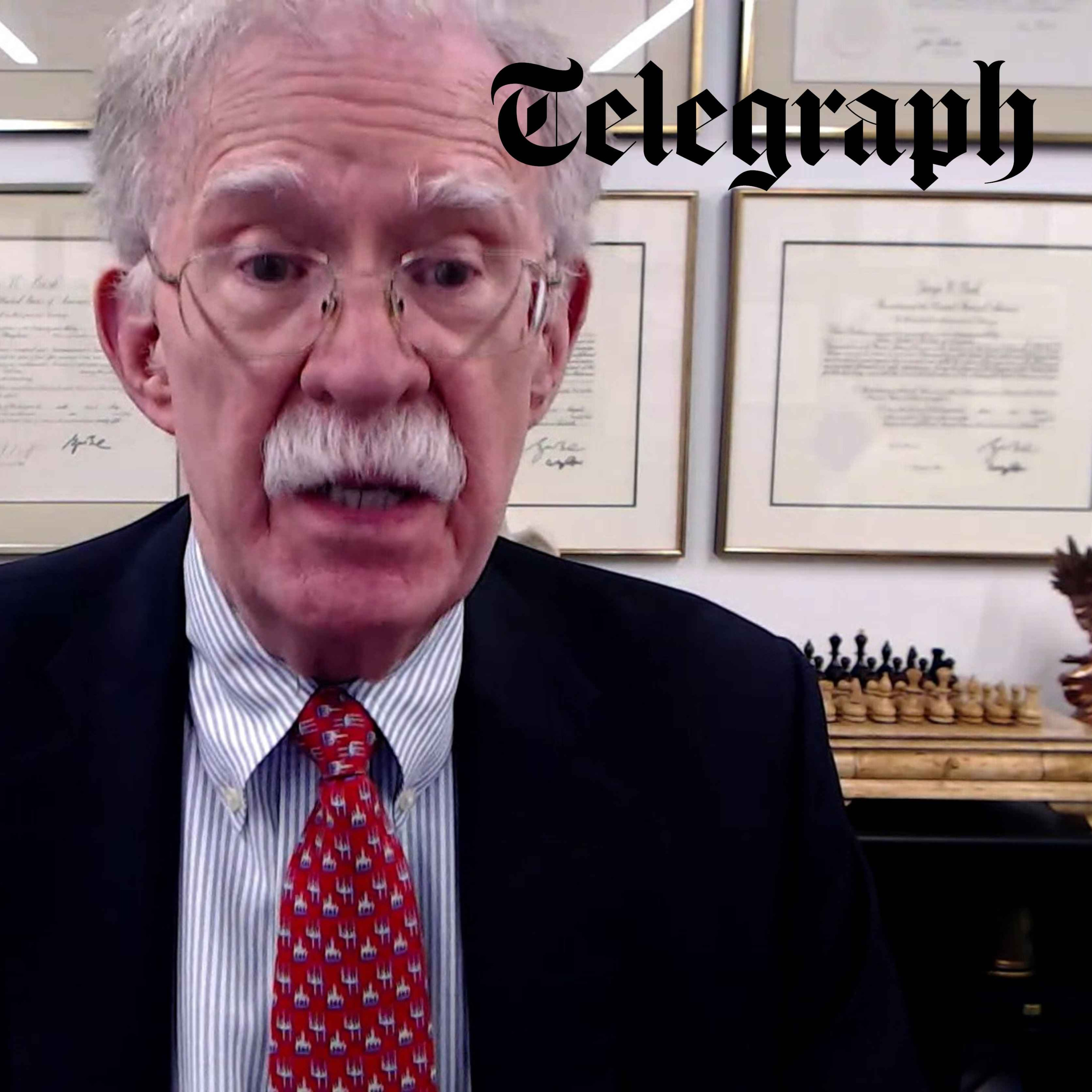
Well, lots to watch for at this funeral then, because all of that should be out on display. And we'll obviously come back to all of that on Monday and let our viewers and listeners know what we saw and what we can pass from it all about this Iranian black box of politics. Let's move on to our guests now looking at the divisions in the American right. Our first guest is John Bolton, a former national security advisor to Donald Trump during his first term before he was unceremoniously fired in 2019. Bolton went on to write a book, the Room Where It Happened, about his time working under Trump, essentially portraying him as a president who knew nothing about geopolitics. That book caused an absolute storm at the time, and it's actually in the news again now. At the time, the White House filed a lawsuit to block the publication of the book, but they didn't succeed. However, the U.S. department of justice then opened an investigation into whether Bolton had mishandled classified information by disclosing parts of it in his book. Last week, Bolton pled guilty to mishandling classified security information as part of the notes that he compiled. He's now facing a prison sentence of up to five years and has agreed to pay $2.25 million in fines. Trump posted on Truth Social, saying hopefully he'll be dealt with harshly. No love lost between these two. Unsurprisingly, Bolton is very anti Trump, but crucially for this episode, he's also a longtime advocate for military action against America's enemies, especially Iran. Here's our conversation. Ambassador, welcome to Iran. The latest. You've long advocated for military action to take out the Iranian regime and you've got your war, but the regime is still in place, and now they've taken control of the Strait of Hormuz and we're in an almighty mess. Do you think this is proof that your strategy was misplaced?
- [14:08]
John Bolton
Well, I think first you have to ask, what's the objective? And I tried very hard during Trump's first term to persuade him that regime change was the objective and didn't succeed. I don't know what his objective was in this recent series of strikes with Israel. I thought at the beginning.
- [14:25]
Venetia Rainey
Well, he said it was regime change, didn't he? He stood up and gave that speech on February 28 and said, regime change, sure.
- [14:31]
John Bolton
And then later said that he had achieved regime change because the original people weren't there, having been replaced by their subordinates who are probably harder aligned than they are. I think if regime change was his objective, he made significant mistakes before the war even began. He didn't consult at all. As far as I can tell with the Iranian opposition. There were some conversations with Kurds, but no strategy to see what the opposition might do or to find out how we might have been an assistant supplying money, communications, weapons, a whole range of things. The regime is very unpopular inside Iran, but the opposition is not well organized. And given that Trump never seem inclined to use American troops, the role of the opposition inside the country was going to be critical politically and perhaps militarily too. And he didn't do anything to lay the groundwork for that. He didn't consult with our allies, not just NATO, which he didn't consult with. He didn't consult with the Gulf Arab countries, who could be enormously important. He didn't consult with our Asian allies, who depend so heavily on Middle Eastern oil. He didn't consult with the American people. He didn't make the case until the attacks had already begun. I mean, I could go on at some length here, but I do think that Trump got into this under some impression or another. I still don't understand it. Bibi Netanyahu tried to persuade him that regime change should be the objective in the first term and I'm sure said the same thing. But if Netanyahu was saying A in term one and a in term two, I don't think he became more persuasive. Something else motivated Trump here. For the life of me, I can't figure out what it is.
- [16:08]
Venetia Rainey
So that's what you think went wrong in terms of the prep ahead of the war? Do you think anything has gone wrong in terms of the actual conduct of the war, the 40 day bombing campaign?
- [16:17]
John Bolton
Well, we stopped. That was a mistake. Obviously we didn't do as much damage as we could have. There remains the question why we didn't take efforts earlier to make sure that Iran would not be able to close the Strait of Hormuz. You know, Trump has said repeatedly, well, we didn't think it would happen. I can tell you we have a navy, as you may have observed, it can read maps. It knows choke points when it sees them. I've been reading recently the diaries of both Jimmy Carter and Ronald Reagan. And in 1979, within weeks of the Islamic Revolution, Carter notes that there is a National Security Council meeting on what to do if Iran closed the Strait of Hormuz. In 1981, Reagan's first term in office, he had meetings on what would the United States do if Iran closed the Strait of Hormuz. In 1987, Ronald Reagan re flagged Kuwaiti tankers as American ships to escort them through the Gulf and the Strait of Hormuz. Donald Trump must be the only president since Jimmy Carter who didn't understand what the Strait of Hormuz was. And that is a real failure, there's no doubt about it.
- [17:20]
Venetia Rainey
What do you think America should have done, or perhaps pertinently, what should it be doing now to reopen the Strait of Hormuz? Should America be putting its ships in Iranian line of fire?
- [17:30]
John Bolton
Well, I think there are a number of things that we should do, but again, to approach it strategically, I think we should continue pressure on the Iranian regime. I think it is vulnerable and I
- [17:39]
Venetia Rainey
think still military pressure. You think we should restart the US should restart the bombing campaign?
- [17:44]
John Bolton
Yes, yes, absolutely. All Trump is concerned about is the price of gasoline at the pump for American consumers. He's lost any sense of strategic understanding in the Gulf region. And we're now in a situation where Iranian tankers are exiting the Gulf because our blockade has been lifted, bringing in millions and millions of dollars of revenue, ultimately billions, to the regime, whereas oil from the Gulf Arab states is still coming out only very intermittently. What I would do would be restore the blockade against Iran and use military force to open up enough of the Strait as in effect, we have already to allow Gulf Arab oil to come out. That will substantially contribute to keeping the global price of oil down, thus achieving Trump's objective of lower prices at the pump in America. But it will also put the squeeze on Iran. When we allow them to earn revenue from oil, they're not going to spend it for the benefit of the Iranian people. They're going to re entrench themselves in power in Tehran, they're going to rebuild the Revolutionary Guard Corps, they're going to rebuild their terrorist proxies, and they're going to rebuild their nuclear program. That's what we are now allowing the regime to finance.
- [18:55]
Venetia Rainey
But your suggestion implies that there would be a strategic victory somewhere down the line if America just continued this pressure. What we've seen from this Iranian regime is you can literally cut off the head of the snake, something that Israel has been pushing for a very long time, and they just keep going. As you say, it's a more hardline regime, and they can withstand a hell of a lot of pressure because they don't really care, as you say, what happens to the Iranian people. We could squeeze them for a very long time, and we might get no further than we are today, surely.
- [19:23]
John Bolton
Well, the regime has been entrenching itself in power for 47 years. We bombed for six weeks. I mean, this is like saying six weeks after Pearl harbor, well, the Japanese haven't surrendered yet. I guess we might as well stop the war right now. I think there's a fair case to be made that we underestimated the extent to which Iran had followed what Hamas did. Or maybe Hamas followed what Iran did and dug into their mountainous territory to hide arsenals of drones and missiles and missile launchers. That may be a failure of intelligence, but the Iranians have now opened a lot of these passages, a lot of these tunnels, mine entrances and the like. That's great. Now we know where they are, we can destroy them. That's what we should be doing. As we have degraded the instruments of Iranian state power, the regime has been severely weakened. That is what opens the possibility inside Iran of defections, for example, from the regular army of people even in the regime saying, you know, this ship is going down, and I don't particularly want to go down with it. We don't appear to be doing any of that.
- [20:25]
Venetia Rainey
Do you think America was right to go into this war with Israel?
- [20:28]
John Bolton
Well, I think I'm not. It's asking the question about war is asking the question about means, not objectives. The objective of regime change is right. The only way you're ever going to get peace and stability in the Middle east is a different regime in Tehran. That won't guarantee it everywhere, but that is an absolute prerequisite. And to do that, I think, inevitably requires military force. But just to say, well, do you favor force? The answer is force to do what? And that's the question Trump still can't answer.
- [20:59]
Venetia Rainey
Okay, because one of the big bones of contention with this war is this idea that Israel somehow pressured Trump into doing it and sold him a lie, sold him this idea that regime change would be easy, that they would just roll over, and it's caused massive frictions within the conservative movement. What do you make of that? Can the Israel U. S. Alliance survive this?
- [21:18]
John Bolton
Netanyahu is in favor of regime change in the first term. He's been in favor of regime change longer than I have, probably. I don't think he conned Trump into this. I don't know what motivated Trump. I'm still stuck by that. I think there is division in America generally over our view of the relationship with Israel. And it's very disturbing because, particularly among young people, I think it reflects a lack of historical knowledge. And in both the Democratic and Republican parties, the opposition to Israel is deeply tinged with anti Semitism. And that is very disturbing for a lot of reasons well beyond the context of this current crisis, this crisis has
- [21:56]
Venetia Rainey
lit a fire under that anti Semitic thread that you identify, hasn't it? And you know, the fact that we have Donald Trump speaking to the leader of Israel, Benjamin Netanyahu, a close ally with quite explosive expletive laden language, not very presidential and probably doesn't help much.
- [22:12]
John Bolton
No, I don't think it helps much. But I can tell you over decades and decades there have been lots of disputes between American and Israeli leaders and they get over them. And it's the interest fundamentally that bond the two societies. And I think that endures. You know, it's a dangerous neighborhood that Israel lives in. And as long as Iran is pursuing nuclear weapons and financing and arming terrorist proxies like Hamas, Hezbollah and the Houthis, the Israelis are going to be constantly in need of inadequate self defense.
- [22:41]
Venetia Rainey
Can the Iranians be negotiated with? You know, we're into the second week of this 60 day deadline to try and reach a final agreement on nuclear issues and all sorts of other things. Do you think there's a deal to be made?
- [22:52]
John Bolton
Sure there's a deal that's very satisfactory to Iran. Their objective here is regime survival. They are, as Trump himself likes to say, they are tap, tap, tapping Trump along every day that goes by. They're selling oil, getting revenue, they're winning this negotiation. You know, you make a deal with this regime, that's not the end of the story. That's just the beginning of the next round of negotiation.
- [23:13]
Venetia Rainey
You're often described as the ultimate foreign policy neocon and just for our listeners, a neo conservative who advocates for foreign intervention. Right? The full blown use of American military might to promote American interests. This idea has been under assault for a while now with the failures, I would say, of the Iraq and Afghanistan wars and now this war. Do you think this is the final nail in the coffin for a neocon approach to foreign policy?
- [23:35]
John Bolton
Well, A, I'm not a neocon and B, the only failure in Afghanistan was the withdrawal. That was the mistake. And we could spend a few hours discussing Iraq, which I don't think we have time to do. The military action against Iran, the six weeks of bombing was a substantial military success, not a victory. But as the Israelis call it, it was a big deal mowing the lawn in Iran. They are badly hurt. Their economy was in the tank at the beginning. Their military industrial production complex has been now severely damaged along with key military assets. It's going to take them a long time to dig out of this and we're letting them do that. And we're helping them finance it by allowing them to sell oil. That's a critical mistake at the end of the military aspect here.
- [24:18]
Venetia Rainey
Do you not accept, though? And you talked about Trump needing to go and sell this war to his allies and to the American people. I mean, the fact that no allies came in to help Trump and the fact that this war is very unpopular in America and is driving, I think, a series of primaries that are underway at the moment, that they would never have backed it, that this war was not seen as a good idea by most people.
- [24:38]
John Bolton
Well, Trump made no effort to persuade the American people what was coming, why the use of force might be necessary. A stark contrast to George H.W. bush in 1990 as he made the case to use military force to oust Iraq, Saddam Hussein's military from Kuwait. Trump made no effort to do that. So he started off in a deficit situation on opinion on the war. He did make a mistake in not consulting the allies. And the allies in Europe made a big mistake in responding like school children responding on a personal basis and not realizing that they were going to be dramatically affected by the war. And they are dramatically affected by the. By Iran right now and the terrorist attacks that have been carried out all over the European continent and on the fact that almost all of Europe, including Great Britain, is within range of Iran's intermediate range ballistic missiles. United States isn't in range. Israel and the Gulf Arabs are, and so is Europe. So, you know, you can treat Iran like it's a faraway place, but it's just as proximate to Western Europe essentially as Ukraine is.
- [25:41]
Venetia Rainey
When you said you're not a neocon, how would you describe yourself if not a neocon?
- [25:45]
John Bolton
Well, neocons, in my view, are people who are much more idealistic about the prospects for democracy around the world. I'm just an unmodified conservative. I believe that's the responsibility of the U.S. government to protect U.S. interests and values around the world, and that peace through strength, as Ronald Reagan rightly called it, is the right way to proceed. And Donald Rumsfeld had another famous saying. He said, you know, it's not American strength that's provocative. It's American weakness that's provocative.
- [26:17]
Venetia Rainey
Do you worry, though, that this war will provide more ballast for those who don't think there should be peace through strength, that America should turn inwards and stop doing anything abroad?
- [26:26]
John Bolton
Well, we are seeing an outbreak of the isolationist virus. There's no question about that. It's in the Democratic Party as well as the Republican Party, I think this will be a big subject of debate within the Republican party over the 2028 nomination. No doubt about it. What has shown in the past century really about what happens when isolationism gains momentary sway is that some catastrophe happens somewhere in the world that proves that isolationism didn't buy us protection. It's a kind of 18th century notion with the Atlantic Ocean on one side, the Pacific Ocean on the other, that we're safe from all the rest of the world. But oceans these days are not barriers, oceans or highways. We are part of the wider world. And the safer America is determined by how forward its presence is around the world.
- [27:14]
Venetia Rainey
Just finally, we've got the NATO summit next week. What would you like to see come out of it is the US's positioning and its sort of attitude towards NATO. Do you agree with how Trump is tackling the bloc?
- [27:26]
John Bolton
Well, the best outcome at this summit would be nothing happening, because if something happens, it's most likely to be Trump doing something that damages the alliance. The goal has to be to get through the remainder of the of Trump's term with as much of the alliance still in place as possible. And then at that point with almost any other American president, we can take steps to repair it and I would say expand it and expand NATO's remit. Looking much more broadly. It's a bubble that many in Europe live in, that the world really that's they're only concerned what happens on the European continent. And it's a delusion in Europe. It's kind of isolationism there as well.
- [28:06]
Venetia Rainey
Ambassador John Bolton, thanks very much for joining us on around the latest.
- [28:09]
John Bolton
Well, thanks for having me.
- [28:11]
Venetia Rainey
That was John Bolton, former national security adviser to Donald Trump. We're going to take a short pause now. Coming up after the break, the other side of the argument.
- [28:25]
Roland Oliphant
Welcome back. You're listening to Iran. The latest. Before the break, you would have heard Venetia Rainey's interview with John Bolton, the former national security adviser to Donald Trump. Shortly after she spoke to him. I spoke to Kurt Mills, the executive director of the American Conservative magazine and a voice on the other side of the American conservative movement. He believes that the war in Iran was not only a catastrophe, but a betrayal of American Republican voters. Here's our conversation. Kurt Mails, welcome to Iran. The latest. I really wanted to get you in partly because I really wanted to look at things slightly from the American point of view and get a sense of what's going on inside America because it's 250 years of America this week. So it seemed like A pretty appropriate moment to take that opportunity. And one of the reasons I thought of you is because we've always. On this episode. Earlier, my colleague Venetia Rainey interviewed John Bolton, who you will know as the Hawks. Hawk, you know, self proclaimed. He told us he's not a. He doesn't consider himself a neoconservative, but a lot of people do.
- [29:32]
Interviewer
It's very Byzantine. The distinction. I would challenge Ambassador Bolton, who I'm pretty fascinated by, to name the invasion that neocons have favored, that he didn't favor. But the distinction is that he doesn't want to regime change these places. Sorry. He does want to. He doesn't want to rebuild these places. He wants to leave them heaping rubbles of ash and then leave.
- [29:53]
Roland Oliphant
He said the distinction is that neocons are much more kind of idealistic about the possibility of establishing democracy.
- [29:59]
Interviewer
Yes.
- [30:00]
Roland Oliphant
And I suppose what strikes me about this current war is the division it's kind of throwing up inside contemporary American, and especially contemporary American conservative politics. And if I can try to characterize it, tell me if you think I've got it wrong. It seems to me from the outside that on the one hand you have a fairly old fashioned, I suppose now point of view represented by the likes of John Bolton, the interventionist faction, those who advocated, I suppose, for things like the war in Iraq and so on. And then I suppose, if I may put you in that category, Kurt, maybe a younger generation who look at things from a different point of view and are kind of reacting against that. Is that fair? And how do you think the American conservative movement has responded to the war in Iran?
- [30:44]
Interviewer
Sure, I mean, I think, look, I mean our magazine was founded by Patrick Buchanan, who was at some level like a kind of proto Tucker Carlson. He was a three time presidential candidate and speechwriter and a to Nixon and Reagan. So there always was a conservative streak of anti interventionism and anti war sentiment in the United States. I think it has gone back frankly to the founding of the Republic. But it is obviously gaining more currency and more legitimacy among, I would say younger and by younger I mean under 50 type people than it did a generation ago. So you see that the Iran war is the most unpopular war in American history by far. Not close. Vietnam when it was launched and Iraq when they were launched were popular wars supported by the American people. And the presidents who launched them were more popular than the one today. And so I think those points of distinction are there. So the reality is that DC kind of turned on the militarist machine for One last go or one more go, or just assume the car engine would work. And, you know, I think a lot of predictable things that happened in Iraq and Vietnam and previous debacles happened this time. But what also happened quicker and more viciously vis a vis the administration was the public backlash, including, and perhaps most significantly on their own side, that is the right, that is Republicans, that is conservatives.
- [32:06]
Roland Oliphant
I. E. Margo, I'm curious about how quick that reaction was, and I wonder why, what the cause of it is, because there's definitely been times when America has, you know, gone to war quickly, I suppose, and when the vast majority of the population, I suppose, has kind of rallied to the flag, especially amongst conservatives. Is it that Donald Trump simply didn't prepare the ground enough or, or sell the war on like H.W. bush in the, in the first Gulf War? Is there something else going on?
- [32:36]
Interviewer
So, you know, when the US Launched the, you know, intervention in Vietnam or Iraq, there wasn't an immediate spike in gas prices or any other sort of discernible metric that affected the standard of living in a. In a very digestible and legible way for the man on the street. That's not what happened here. It immediately affected gas prices. And already the affordability question was the buzzword, was the catchphrase, was the light motif of why Republicans might struggle in the midterms. We already knew that by the 2025 sort of off Hoffier elections. But most significantly, and I think most spiritually, for MAGA and for the White House, this was a violation of a core campaign pledge or a core campaign promise. You know, Trump was seen as not only a relative anti interventionist on the right, he had lobbied or lobbed this criticism against the entire Washington establishment, which he accused Kamala Harris, Joe Biden and Hillary Clinton, I think, rightfully so, of embodying. If you put these people back in power, they will be corrupt and keep the endless war machine going on. If you put me back in power, I'm a real outlaw, I'm a real change agent. We're not gonna do any more of these foreign wars, any more of these stupid wars. No more endless wars. And the administration at some point is trying to splice about, you know, why this is different. But of course they're surrounded, at least at their hawkish moments, by a cadre of people who favored all these previous wars and namely basically opposed Donald Trump's original rise to power. So it's a maddening portrayal, the decision
- [34:07]
John Bolton
to go to war.
- [34:09]
Interviewer
And I think you see this. And of course it's not an original observation. The crucial and perhaps most fascinating and most essential player in all this is, is J.D. vance. And J.D. vance was the replacement for Mike Pence at the bottom of the ticket in 2024, the vice president. And he is seen as representing the sort of beating heart of where the conservative movement, where maga, where populism, where nationalism in America is supposed to go. And it is interesting that as he will presumably have to run without Donald Trump on the ticket in 2028 or in the future, he is charting, I don't want to say an independent path, but a fine tuned path that has made it clear that he wasn't that for this war and he is now the leading light within the corridors of power at stopping, ending it hopefully permanently.
- [35:00]
Roland Oliphant
That's really, actually you've kind of preempted one of my questions, which was to ask you kind of about Jody Vance and also about the kind of perceived, I suppose, struggle between him and Marco Rubio for the nomination in 2028. And I suppose Marco Ribo is being seen as kind of the doyen of the more traditional conservative foreign policy stance. How do you think that is playing out? And which of them comes out on top in this contest?
- [35:28]
Interviewer
That's the TV show, right? You got to watch it. But I mean, I think that's the cliffnose version is basically true. That all being said, there is the structural reality here. Ask Hillary Clinton and Joe Biden. One of them is going to be potentially the leading candidate for the nomination in 2028. And you know, Rubio's not, not running for president. He's run for president before. He ran for president nearly a decade before Vance even tried to run for politics. And additionally, you know, Rubio himself has cultivated an image, you know, contra where he was in 2016, where he was a darling of neo conspiracy conservative sort of hawkish intellectuals in 2026 and on in the 2000 and twenties. You know, his, his cadre has tried to also present himself as a sort of quote, new right person, a kind of MAGA person. I don't think to the degree that Vance has and advance embodies that image or Vance has that image or embodies that Persona or whatever. I think though Rubio has been very assiduous at saying, hey, I'm also thinking differently. Hey, I also think we should have reforms in economics and foreign policy. He's, he said these sort of things. But the reality is it's pretty thin gruel, it's pretty lukewarm. It's Pretty sops. And to where the populist right is. It's, it's kind of rhetorical as opposed to where Vance is. And like, you see that, you know, pretty consistently with Rubio, I don't think opposed the war. There's been no indications that he did. Now, some people say that he was kind of ambivalent, but like, you know, he's the Secretary of State, he's Secretary of State and national security advisors, and at some level, the top national security official in the United States other than the president, to be ambivalent about the Iran war is curious. And then additionally, you know, you just have to go to the open source. What does the guy say publicly and publicly in February and in June? He has been casting aspersions on the ability of the United States to get any deal with the Iranians. And that is not how J.D. vance talks. And so you see that distinction. And then additionally, and finally, if they both run particularly, Rubio is going to have to flank Vance from the hawkish right, particularly with donors. And I think all of these structural factors guarantee a Vance Rubio rivalry at least structurally.
- [37:45]
Roland Oliphant
I want to ask you, Kurt, about another really interesting aspect of the fallout from this war inside America, and that is the kind of, I suppose, the shift in attitudes towards Israel. And there was a. I was speaking to some, some Israeli sources about this a few weeks ago, you know, caught people's eyes in Israel. There was this Pew opinion poll that showed that, you know, amongst various sections of American society, especially young people, I think it was something like there is now a majority with a negative view of more people have a negative view of Israel than a positive view. That's much more so amongst Democrats, but even amongst Republicans, kind of under 50, the group you were just talking about, it's also on a downward trend, which kind of illustrates a generational divide between that generation and the likes of John Bolton, who told us he's very worried about that. He thinks those people kind of don't grasp history or understand U.S. interests. And then you gave, I think, an address at a conservative conference recently where you said, you know, can we have America first asterisk Israel? Which was, I suppose, something that couldn't really was kind of outside mainstream political conversations just a few years ago. Tell me about why you feel that. And do you think that this war has fundamentally altered the relationship between Israel and the United States?
- [39:06]
Interviewer
I mean, look, I'll take it in reverse order. Essentially, this war is at the behest of Israel. It's a war for Israel. The Secretary of State basically said that on the first days of the war.
- [39:17]
Unidentified Commentator
The second question that's been asked is why now? Well, there's two reasons why now. The first is it was abundantly clear that if Iran came under attack by anyone, the United States or Israel or anyone, they were going to respond and respond against the United States. The orders had been delegated down to the field commanders. It was automatic. And in fact it bear to be true because in fact within an hour of the initial attack on the leadership compound, the missile forces in the south and in the north for that matter, had already been activated to launch. In fact those had already been pre positioned. The third is the assessment that was made that if we stood and waited for that attack to come first before we hit them, we would suffer much higher casualties. And so the President made the very wise decision. We knew that there was going to be an Israeli action. We knew that that would precipitate an attack against American forces. And we knew that if we didn't preemptively go after them before they launched those attacks, we would suffer higher casualties and perhaps even higher those killed. And then we would all be here answering questions about why we knew that and didn't act.
- [40:21]
Interviewer
That's what he workshopped and thought that was the best, you know, excuse. What he said is a little bit different than that. But you know, essentially Israel, Israel, Israel was out of his mouth about why we got into the war. And I think that's asked and answered. And I think, you know, the reality is the Republican pitch, the Trump pitch is, you know, you have this constellation of foreign countries who are ripping us off and distracting us from domestic renewal at home. And at the same time we're going to have this hand in glove relationship with this country that, you know, it's not, I mean, say what you will, I've been very critical of NATO, I've been very critical of the Europeans. I think, you know, frankly a lot of times I go to Europe, it is sort of a la la land of, of just demanding American unending support for the Ukrainians. But you know, the Ukraine war at this point, I don't want to call it a low level war, but it's far more stable situation than it was in 2223. The Middle east is nothing close to that. It's rankly unstable and Israel is asking for the House, they're asking for everything. It's not just a piece of the MAGA coalition. They want to command the agenda. This is what the administration is talking about a lot has been made of how the President structures his day and all this free time or this executive time. And I don't mean to cast dispersions on that. And of course the administration is a large organism and it is doing many things. But what is getting presidential and what is getting top line attention is the Iran war. And it is a war fundamentally for a foreign power. As to this conversation being outside of the, quote, mainstream, I mean, I will say we didn't have this war three years ago. So I think this story has been going on a long time ago, since October 7th. That is, this war has been going on for a long time. You know, Israel's bellicosity and inappropriate relationship with the United States has been going on for a long time. But the contradictions have now just poured out into the open about how unsustainable and how irresponsible this relationship is.
- [42:21]
Roland Oliphant
I suppose the question is, Kurt, that lots of American presidents have had big, big rows with Israeli prime ministers, including, you know, Ronald Reagan, I think, you know, called out Menneken begun and said, look, you know, the aid stops now if you don't get out of Lebanon. What do you know? You know, the ceasefire happened in Lebanon, right? So this is not the first time. I suppose it sounds to me from what you're saying, you think that the relationship isn't going to survive in the way it did after those incidents, that something more fundamental is shifting in, in American attitudes or in conservative attitudes.
- [42:53]
Interviewer
I think if Netanyahu loses his election October and they replace him with somebody like Naftali Bennett, his predecessor and protege turned rival, it's possible the Israelis play their cards a lot more commonly than they have and that this relationship decelerates. Its unwinding, I think its unwinding is occurring, but I think it's happening at this unbelievable speed because of the instability of the Netanyahu political project. I mean, he basically needs escalation in this war to politically survive. And not just politically survive, potentially to preserve his liberty to stay out of jail. I think that's way more unstable than Ned Tully Bennett's portfolio at the moment, even though he's a hawk. But yes, I think the long term, and by the long term, I mean a matter of years, if not a decade, you're going to see an unwinding and I think you see a recognition of that from the Israeli side. And I think that's also increasing the mania from the allies of Israel and the United States and from the Israeli high command, which is they better get what they want now because you know, it's going to be the DSA and the MAGA, right wing or whatever ruling the country by the2030s. But I mean, I think they brought this on themselves.
- [44:04]
Roland Oliphant
Let me put to you the other argument, which is, I mean, what would you do with a problem like Iran in that case? This is a theocratic, dangerous regime which their entire existence is posted on hostility to the United States and Israel. It's not something they just kind of a policy thing that they picked up yesterday or something. That's what they live and breathe. They are an enemy. They've killed hundreds of American servicemen over the years, going all the way back to the bombings in Beirut and what they did to the Americans in Iraq and so on. They are a hostile, dangerous, threatening power. And if that regime was changed in the Middle east, the Middle east would change fundamentally in fundamental ways.
- [44:47]
Interviewer
Could be worse.
- [44:49]
Roland Oliphant
I suppose what I'm asking is John Bolton's got a point, hasn't he? That they are a fundamentally hostile issue?
- [44:58]
Interviewer
Sort of. I mean, yeah, I think he has a frankly septuagenarian point though, which is like his score settling from the 70s and 80s and 90s. The regime has been in power for nearly 50 years. I think the Americans should assume it's going to stay and if it changes, that's the Iranian people's business, not the American people's business. I think we have seen that, you know, however imperfectly, however bureaucratically, however confusingly, the Iranians will come to some kind of accommodation with the United States, which I think would stabilize frankly the Middle east, which is basically the only American interest that I see in that neck of the woods. And so as for Israel, I mean, you don't have to take it from me. You can take it from Colin Powell, the former Secretary of State, in his dispatch that was leaked by WikiLeaks, which is, you know, the Israelis have hundreds of nuclear weapons. Paraphrasing here, and all of them are trained on Tehran. I think that's a direct quote. They're safe. This is a fake issue for the idea of Israel's existential safety. I think it is a real issue for the Israeli hawkish perspective, which is increasingly just the establishment in that country, which is Israel wants to expand and Israel wants to wipe out anybody who is anything like a peer competitor and, you know, approach the region from the perspective of utter subjugation. None of this has anything to do with America. And so I would submit that we should focus elsewhere and come to a durable understanding with the Iranians. We've Certainly demonstrated our ability to militarily confront Karai.
- [46:32]
Roland Oliphant
This last thing, Kurt, and I want to kind of expand this question of one way of framing it is the interventionist versus the isolationists. And speaking as someone from an American ally nation that feels probably quite shaken by this kind of narrative in the United States, this attitude that NATO is sponging of us and we shouldn't have to secure Europe and so on. On the one hand, I guess we kind of get American annoyance at that. On the other hand, we feel like. I can't speak for Israelis, but I imagine a lot of them feel the same, that look, we, we put a hell of a lot on the table. We do bring things. We fought with you in Afghanistan. We're not just freeloaders. And actually this alliance has been a multiplier of American power for decades. And it's one reason why America is the incredibly rich, incredibly successful civilization that it is after 250 years. How do you respond to people like us?
- [47:28]
Interviewer
Yeah, I mean, I guess I would say number one, that look at the polling, Americans think that this country has gone in the wrong direction for decades. I mean, it is dismal. So for all, all of the power and empire that we have, it's an open question whether or not this certain kind of power and this certain kind of empire are really serving the American people really at all. I mean, is this helping somebody who's struggling to make their bills in West Memphis, Arkansas? I would submit not really. And then secondarily, I would note that, you know, past is not always prologued and that the sacrifices made by allies are not necessarily blood oaths that bind us forever. And I don't think the status quo, frankly, is serving Europe or the UK or the Israelis particularly well. This position of ultra dependence and just looking to the 1940s as this holy grail security model of how everything should be sorted out into the 21st century. I also don't think that's sustainable or preferable either. So I think that president's rise, and I think what the President does by asking these questions, I think this has been generative and I think you, you have seen responsible pivots by some members within the European Community.
- [48:38]
Roland Oliphant
That's a perfect point to leave it. Kurt Mills, thank you so much for joining us in the run later. That was Kurt Mills, executive director of the American Conservative magazine, speaking to me.
- [48:50]
Venetia Rainey
Okay, so those are just two diametrically opposed takes on this war. And there's a few elements to pull out there. There's sort of the Iran stuff and the actual war and the Israel stuff. Should we start with Iran and the war? I mean, I was really struck by the fact that Bolton, he thinks Iran is a clear cut enemy of America's and only military action will do to try and neuter that threat. Whereas Kurt Mills, he was a bit more sanguine about the threat posed by Iran, wasn't he? He thought that there's some kind of accord that could be reached, frankly.
- [49:23]
Roland Oliphant
Well, yeah, he did. I mean, I must say I did wonder a bit about that. I mean, whatever you think about, you know, John Bolton's kind of, John Bolton's hawkishness and his kind of almost, I don't want to say religious, but he has this faith in the idea that military action can solve the job. And if only they'd gone further, if only they planned it better, it would have worked and it could.
- [49:47]
Venetia Rainey
Still, we stopped.
- [49:48]
Roland Oliphant
There wasn't enough of it. We didn't war enough. I mean, I do wonder about this idea that there is a decent deal to be done with the Iranians simply because I think Bolton's got a point in the sense that this regime is implacably opposed to America. I mean, it is an American enemy. It's not something that it's founding ideals. It really is. And it courses through the identity and all kinds of things in that regime. Certainly you can see the administration is leaning towards, obviously looking to find a negotiated solution at the moment. We've discussed on this podcast that given where the war got to, that may well be the least worst option.
- [50:31]
Venetia Rainey
Well, this is it. I think you're right that Kurt is probably a bit naive about what kind of accord you can come to with Iran. I think Bolton is a bit naive about how much more you could have achieved with this war. I actually think the smartest thing, and someone else said this on the podcast to us, the smartest thing, smartest thing that Trump has done is recognize that he wasn't really getting any further. And so it was time to just call quits. Even though it has been a bit humiliating and a bit embarrassing for him. But he has found an end to the war and he's keeping going with it. Even though we hear reports that he's been briefed with other options to restart the war, he's resisting that and he is keeping going with his diplomatic track for now. I think that's pragmatic. I think John Bolton comes across as naive to think that there would be more that you could achieve with more
- [51:12]
Roland Oliphant
military action or I mean, I kind Of. I think there's a lot of ideology in here. And, and part this is an ideological vibe, right?
- [51:20]
Venetia Rainey
Because that's so interesting.
- [51:21]
Roland Oliphant
I think, I think, you know, Kurt and, and John, they both come from. This is about values, right? Politics is often about values. That's what it comes down to. That's why people get so, you know, I get so personal, I think, get upset about it because it's not just about, you know, how you vote. It's. That's who you are and the way you look at the road. And, and I think that's part of the reason why. It's an analogy I often come back to. Sometimes it's, you know, how like ideologies, you know, young, idealistic kind of left wingers or communists, you know, often get ribbed because you kind of, you lift, you list Stalin's Russia and, and Pol Pot and every, all the terrible things Mao Zedong did and, and, and whatever else and, and say, and say, you know, like how, how could you possibly support, you know, an ideology that produced such terrible things? They turn on and say, oh, well, true communism has never been tried, you see. And it gets back to this a little bit. The true war with Iran has never been tried. It wasn't done properly. This wasn't my war with Iran. So you wonder whether. Is there any point at which John Bolton would reassess his hypothesis?
- [52:33]
Venetia Rainey
I mean, that's what I was trying to ask him about, and I didn't feel like I got anywhere. As you say, he felt like it wasn't his war. And he does still very forcibly believe in this idea of peace through strength and that it's not dead. I mean, he quoted to me, he said to me that, you know, Europe needs to understand the threat posed by Iran. You're, you're within range of Iranian missiles. And he compared it to Russia, Ukraine conflict. I don't think that lands. To me, that feels detached from the reality that we're in here in Europe where the Iran threat does not feel immediate to us in that sense of missiles, although, of course there's a lot of espionage, a lot of misinformation and that kind of stuff. So to me, that was operating in just a slightly different reality than the one we're living in. When you think about values. I think the other big topic that came out of those two interviews is Israel and your view on Israel. And for John Bolton, who comes from the much more traditionally Republican conservative strand, where Israel is America's biggest ally, I
- [53:26]
Roland Oliphant
wouldn't say not even Republican conservative You're right.
- [53:29]
John Bolton
And Democrat.
- [53:29]
Venetia Rainey
Yes, that's true.
- [53:30]
Roland Oliphant
That has been a, a longstanding. That has been a longstanding bipartisan consensus for years and decades. And Joe Biden's very much someone who subscribed to that consensus.
- [53:42]
Venetia Rainey
And across here in Europe, too.
- [53:44]
Monica Reinagle
Right.
- [53:44]
Venetia Rainey
Israel is our ally. The horrors of the Holocaust and the Second World War, Israel was born out of that and we support Israel. Bolton described Israel as this sort of lone nation in a very unfriendly region and surrounded by threats, whereas Kurt Mills describes it the other way around as a country that has nuclear weapons, which it's never formally acknowledged but is widely believed to have and can very much.
- [54:06]
Roland Oliphant
You don't have to say that. I've got them. I don't think we need to say
- [54:09]
Venetia Rainey
that and can take care of itself and if anything, is territorially expanding over the last few years. So these are two very different views of Israel. And that particular argument is just rife in America right now. It's hard to see how they will ever sort of reconnect what the Republican Party does with that American Israel relationship.
- [54:27]
Roland Oliphant
Well, it's a systemic.
- [54:28]
Venetia Rainey
Or the Democrats, as you say.
- [54:30]
Roland Oliphant
Well, I wrote a piece about this with David Blair last weekend, I think, speaking to quite a lot of Israeli sources actually about this. And, and a lot of them were saying, yeah, we recognize this, that Pew poll that I quoted when I was talking to Kurt, you know, that that got noticed.
- [54:47]
Venetia Rainey
Remind us.
- [54:47]
Roland Oliphant
So the Pew poll says, which is earlier this year, I don't have the figures right to hand, but essentially it showed that kind of for the first time, more Americans had a, had a kind of negative opinion of Israel than a positive opinion opinion of Israel. And that was mostly amongst Democrats, heavily skewed towards Democrats. Most Republicans still have a positive attitude to Israel, but amongst that younger generation of Republicans, it's also swinging that way, that Democratic way. And it does look like a generational shift. And it's something serious Israeli thinkers are very aware of. There's a very interesting guy called Chuck Freelich. He used to be a national security advisor to Harry El Sheran, who was telling me that he, he feels that this crisis in, in the relationship has been coming for some years and he's been, you know, kind of writing reports about that for, for quite a long time. So that does feel like that it's a potentially significant moment. It's not an overnight shift, but it does feel like a shift in a relationship that, that has defined the Middle east for, for many, many years.
- [55:56]
Venetia Rainey
And it's been so amplified by this war. Do you think that Israel pushed America into starting this war, or do you believe that Trump just decided of his own volition, for his own reasons, to go in and went in with the Israelis because he knew the Israelis were also keen? I asked John Bolton about this and he sort of dodged the question a bit. We've seen a lot of reporting about the briefings that the Israelis gave to the Americans that they might have over egged the idea that regime change was possible and how easy this war would be. There's probably still lots more reporting to come out. The problem with that, Kurt Mills was pretty clear. He said this is Israel's war and we went in fighting for them. And he cited Marco Rubio speaking, which we clipped up in the earlier in the show. So, again, those diametrically opposed views, which you can't really get to the bottom of.
- [56:42]
Roland Oliphant
But yeah, my only thought on that and the kind of the pushback you get from, from the opponents of that, which I think is reasonable, is that, look, everybody lobbies the President of the United States to do something you want them to do in your interests. Everybody does it. So I'm sure Benjamin Netanyahu did lobby him quite hard and maybe he was, in his hard sell kind of way, a little bit economical with the truth about how easy this was going to be. But it's Donald Trump's decision at the end of the day. I mean, you can't be the President of the United States and say, benjamin Netanyahu made me do it.
- [57:23]
Venetia Rainey
No, I know. And Bolton points out that Netanyahu would have been lobbying for this during Trump's first time, too.
- [57:26]
Roland Oliphant
Exactly.
- [57:27]
Venetia Rainey
What's changed?
- [57:28]
Roland Oliphant
And he's been lobbying for under a bam. Under Biden. It's a long running thing. So anyway, there's a question about whether it should have happened. I don't think you can kind of shift the blame and say Donald Trump doesn't have free will.
- [57:39]
Venetia Rainey
Yeah, I think crucially here, what's changed is Venezuela went very well for Trump and he felt like he could pull off the same trick in Iran. But our producer pointed out a speech that we have at the top montage of this podcast and from his inauguration last year. We will measure our success not only by the battles we win, but also by the wars that we end and perhaps most importantly, the wars we never get into. I mean, that quote might come back to haunt him. And that is the battle at the core of this, isn't it? Or not?
- [58:07]
Roland Oliphant
Well, that's the core of what?
- [58:08]
Chris Guillebeau
Of what?
- [58:09]
Roland Oliphant
Of What Kurt was talking about, the sense of betrayal, you know, I vote for you because I didn't want to get into any more wars. And you've gone completely the other way, this visceral kind of anger.
- [58:23]
Venetia Rainey
And then on the other side of the right, you've got hawks like John Bolton who think he didn't go hard enough and that he's now letting down Israel. I mean, Trump is sort of somewhere in the middle, not pleasing anyone, which
- [58:34]
Roland Oliphant
is kind of a lot of presidents, is it not? But I think it's. I. My feeling is that Kurt's got a point when he. When he kind of, you know, at one point he said to me, I'm not sure if it's made the cut of the interview, but at one point he said to me, look, John Bolton, you know, seems to think that once the Trump presidency is over, it's all going to go back to the old Republican Party and the way it was. And when you point out that. When you point out that, no, there's like, you know, young Republicans hate this as much as Donald Trump does, and. And things are going to change, the mood of the country has changed, I think. I think Kurtzwezi, he melts like the wicked witch of the west or something. But I do think, you know, we can see the kind of changes in. In America. We can't be naive to it. My conversations with. With Israelis when I was reporting that piece about the changing relationship, they're certainly not, you know, naive or ignorant about at least the people I spoke to.
- [59:32]
Venetia Rainey
Just one final thought. This isn't academic. We're not just talking about ideology battling ideology here. This will dictate who becomes the next President of the United States. And you got into that with Kurt Mills, the sort of JD Vance versus Marco Rubio pitch, the isolationist versus the interventionist. So, yeah, lots to watch. Should we wrap there for the day?
- [59:50]
Roland Oliphant
I suppose so, yeah.
- [59:52]
Venetia Rainey
That's all for today's episode of Iran the Latest.
- [59:54]
Roland Oliphant
We'll be back tomorrow. Until then, that was Iran, the Latest. Goodbye.
- [59:58]
Venetia Rainey
Goodbye,
- [60:01]
Roland Oliphant
Iran. The Latest is an original podcast from the the Telegraph, created by David Knowles and hosted by me, Roland Olyphant and Venetia Rainey. If you appreciated this podcast, please consider following around the latest in your preferred podcast app. And if you have a moment, leave a review as it helps others find the show. For more from our foreign correspondents on the ground, sign up to our new daily newsletter, Cables, via our website, or listen to our sister podcast, Ukraine, for the latest. We are still on the same email address Battle Lines at Telegram or you can contact us on X. You can find our handles in the show Notes the producer is Peter Shevelin. The executive producers are Venetia Rainey and Louisa Wells. Acast Powers the World's Best Podcasts Here's
- [60:55]
Interviewer
a show that we we recommend.
- [60:59]
Monica Reinagle
I'm Monica Reinagle, nutritionist, author and host of the Nutrition Diva podcast. We dig into the questions that you're actually asking. If it's okay to drink coffee on an empty stomach. Whether it's possible to retrain your sweet tooth. Which ultra processed foods you might actually want to include in your diet. We take a closer look at diets trends, fact check sketchy claims and track down the science so that you can feel more confident about what's on your plate. New episodes are released every Wednesday. Find Nutrition Diva on Apple Podcasts, Spotify, or wherever you're listening, and be sure to follow or subscribe so you don't miss a single episode.
- [61:45]
Interviewer
Acast helps creators launch, grow and monetize their podcasts everywhere.
- [61:51]
John Bolton
Acast.com.