Loading summary
Transcript63 lines
- [00:04]
Matthew Bunn
The telegraph.
- [00:09]
Rippling Advertiser
Most all in one hr systems are a patchwork of disconnected and manual tools. Rippling is totally automated. If you promote an employee, Rippling can automatically handle necessary updates from payroll taxes and provisioning new app permissions to assigning required manager training. That's why Rippling is the 1 rated human capital management suite on G2, TrustRadius and Gartner. If you're ready to run the backbone of your business on one unified platform, head to rippling.com acastbiz and sign up today. That's RIP P-L-I N G.com acastbiz to sign up.
- [00:46]
Sleep Number Advertiser
Why choose a Sleep Number Smartbed Can.
- [00:48]
Daria Dolzakhova
I make my site softer?
- [00:50]
Rippling Advertiser
Can I make my site firmer? Can I can we sleep cooler?
- [00:54]
Sleep Number Advertiser
Sleep number does that cools up to eight times faster and lets you choose your ideal comfort on either side your Sleep number setting. Enjoy personalized comfort for better sleep night after night. And now during our President's day sale, take 50% off our limited edition bed shop now for a limited time only at a Sleep number store or sleepnumber.com.
- [01:19]
Matthew Bunn
There are people in the United States who say, oh my goodness, we need to have the ability to target all Russian nuclear sites and all Chinese nuclear weapons at the same time. And if you want that, you haven't got enough nuclear weapons. These cuts will make the world less healthy, less safe, and less prosperous. Countries are continuing extremely risky research into bioweapons.
- [01:46]
Rippling Advertiser
It is a famine.
- [01:47]
Arthur Scott Geddes
The Gaza Famine I'm Arthur Scott Geddes.
- [01:50]
Daria Dolzakhova
And I'm Sophie o', Sullivan and this.
- [01:51]
Arthur Scott Geddes
Is Battle Lines Global Health security. It's Wednesday, the 4th of February 2026.
- [01:55]
Daria Dolzakhova
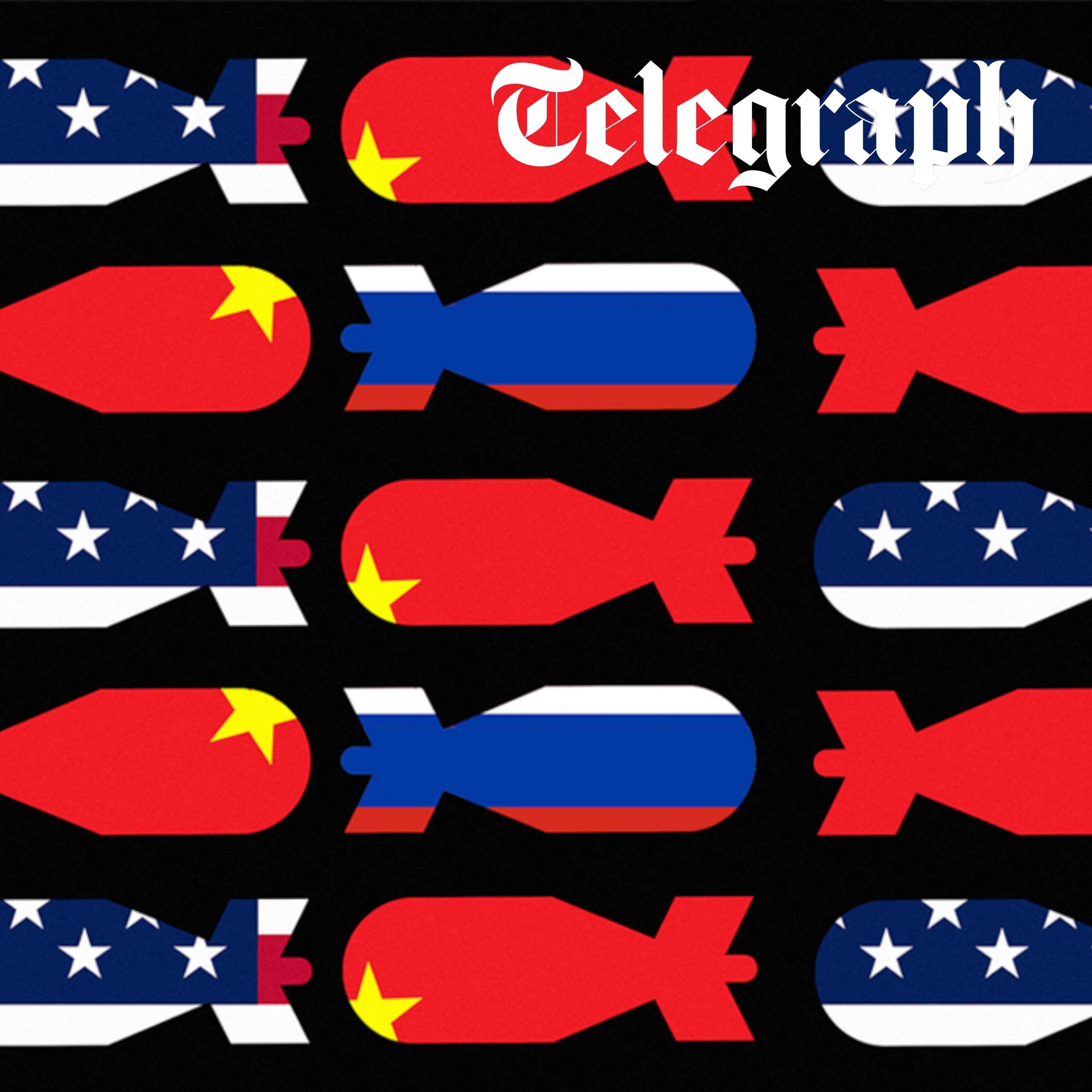
This week, the last remaining arms control agreement between Russia and the US expires for the first time since 1991. There will be no restraints on the arsenals of the biggest nuclear powers on Earth.
- [02:06]
Arthur Scott Geddes
And with China rapidly increasing the size of its own stockpile, some fear we're entering into a new nuclear arms race.
- [02:12]
Daria Dolzakhova
Today we're joined by researchers from RUSI and Harvard to understand what this means for global security and why some experts believe we are closer to catastrophe than ever before.
- [02:23]
Arthur Scott Geddes
Today we're joined by Daria Dolzakhova, a senior research fellow in Proliferation and Nuclear Policy at the Royal United Services Institute, and Matthew Bunn, professor of the Practice of Energy, National Security and Foreign Policy at the Harvard Kennedy School. Daria and Matthew, welcome to Battle Lines.
- [02:37]
Daria Dolzakhova
Matthew, could you just begin by explaining what is newstart and why is it so important?
- [02:42]
Matthew Bunn
The New START Treaty is the most recent of the major treaties lim the nuclear forces of the United States and Russia, or before that, the United States and the Soviet Union. And it caps each side at 1,550 deployed strategic warheads. If they're not deployed, you take them off the missiles. They're not limited anymore if they're not strategic. So if they're just short range missiles, they're not limited. So it's 1,550 deployed strategic warheads. There's some limits on the launchers for those warheads as well. What is going to happen on February 5th is that treaty will expire and for the first time in half a century, we'll be in a world where we have no agreed limits on the buildup of the nuclear forces of the world's largest nuclear powers. And that is going to somewhat increase danger. Now, it is possible that the United States and Russia will agree not to just build up dramatically, but there are pressures back and forth on all sides that we can talk about.
- [03:56]
Daria Dolzakhova
So as you mentioned, the New START treaty limits the nuclear arsenal to 1,550 weapons for either the US or for Russia. Sounds like a huge number of weapons. How many nuclear weapons do these powers actually think that they need and what are they preparing for?
- [04:11]
Unnamed Expert (possibly another academic or analyst)
The numbers of nuclear weapons that Russia and the US have now are significantly lower than what they were during the Cold War. So there has been quite a significant decrease over the last few decades. Having said that, it is quite a bit still, as you had pointed out. I mean, the drivers for the high numbers of nuclear weapons are they're varied and largely driven by both strategic culture in both the countries, but also the demands that they see for their nuclear arsenals for the United States. Some of the drivers that are relevant here in terms of thinking about how big of an arsenal the US Might actually want have to do with the deterrence of attacks against the United States themselves against US Territory, but also the ability of the US to extend deterrence to its allies in Europe and elsewhere. And to be able to do that, the US Needs to, for instance, make credible the fact that it could carry out effective damage limitation strikes against Russia's nuclear capabilities and that it has a survivable second strike capability following any Russian retaliation. So there are a couple of different drivers, again, that go into calculating the numbers that the United States might want on the part of the Russians, some similar considerations, although they don't have the same extended deterrence commitments that the United States has. But in Russia, strategic culture also plays an important role, as it does in other states but in the case of, of Russia and the Soviet Union before it, I mean, they very much see themselves as a, a leading world power and a leading world power that needs to have parity with the United States when it comes to its nuclear arsenal. So that's also been an important driver of the high numbers of systems.
- [05:47]
Matthew Bunn
For Russia, the desire to have the ability to target all of its enemies, nuclear forces is a key driver of the number of nuclear weapons the United States plans to have. And now that we're entering a world where China is, is building up its nuclear forces a lot, there are people in the United States who say, oh my goodness, we need to have the ability to target all Russian nuclear sites and all Chinese nuclear weapons at the same time. And if you want that, you haven't got enough nuclear weapons even now. And so there are people saying now that New Start is expiring, we need to build up US Nuclear forces more by bringing warheads out of storage and putting them on existing missiles. What's called uploading the existing missiles. I personally don't believe that damage limitation is likely to be successful or is needed for extended deterrence or other deterrence. But that's a minority view in the US Strategic community. Most of the people who work on planning US Nuclear forces are thinking that a buildup is needed. And so the conversation in Washington, at least among the small set of people actually working on nuclear weapons, is not about what's the next round of reductions. It's about what should we do to build up.
- [07:16]
Arthur Scott Geddes
Throughout the Cold War, these big kind of like arms limitation talks proved quite resilient even when relations between east and west were very frosty. We're obviously in another period now when relations between Russia and the west are at a low point. Why is this treaty being allowed to elapse?
- [07:31]
Unnamed Expert (possibly another academic or analyst)
I mean, there, there is an expiration date for New Start. The expiration date was, you know, preset. So we reached that expiration date. Now the unfortunate thing is that we've not managed to come up with some kind of follow on agreement to New Start. And there was an offer that was put forward by Putin a couple of months ago to not extend the treaty but to continue applying the limits or staying within the lim, the quantitative limits of the treaty for another year. Now that was put forward by Moscow, as I said, by Putin. It sounds like it was considered within the administration, unclear to what extent. And obviously the US Administration has not come back with at least that we know of publicly of any kind of counteroffer that would have led to some version of extended compliance with the limits. Having said all of that, I mean, the offer that was put on the table by Moscow is, you know, perhaps would have been a good starting point to engage in some negotiations for where we go from, from here post expiry. But at the same time, the offer didn't include an extension or rather a Russian return to exchange of data. It also put on the table an expectation from Russia that the US just broadly not disrupt the strategic balance. I don't remember the exact words, but it seemed to imply that Russia would take issue with missile defense potentially. This golden dome idea, which, you know, missile defense and including it in strategic system negotiations is something that the Russians have been pushing for, for, for decades. During the new start negotiations themselves, that was an issue. So the offer that was put on the table by Moscow was perhaps a good starting point, but certainly undercooked. And as Matthew pointed out and as we talked about already, there are multiple drivers both for the Russians and the Americans to move potentially, or at least to free up some flexibility for themselves to move towards an expansion of their strategic capabilities. So I expect that played a role for perhaps tempered willingness to engage in any conversation and to follow. When should you start?
- [09:29]
Matthew Bunn
Let me draw back a little bit to even bigger picture in a certain sense. So we had this agreement and then we have ended up in a world where it was completely a bilateral agreement. China's forces aren't limited at all. And all of a sudden China started building up its forces rapidly. So in President Trump's first term, he sent his arms negotiator, who wasn't appointed till very late in the term, to say to China, you really need to agree to limits as well. And China said, why should we do that? And so there was no progress when he was hinging any progress on nuclear arms control to making it trilateral rather than bilateral. And figuring out a balance between three is way more complex and difficult. Meanwhile, there are now a wide range of non nuclear technologies that nonetheless affect nuclear balances. There are missile defenses that Daria mentioned. There's space and counter space capabilities. There's cyber, there's artificial intelligence, there's precision conventional weapons that can carry out some strategic missions. And figuring out how to limit and understand nuclear balances and the stability of them with all of these other things affecting them has been an issue. And then of course, Russia invaded Ukraine in the full scale invasion in early 2022. And that put US Russian relations right into the toilet. And neither side was especially interested in continuing the strategic stability dialogue that had been just started just before that, although the United States eventually came around to saying we should continue that and Russia refused. And as Daria mentioned, Russia then after some Ukrainian attacks into Russia started cutting off the on site inspections called for a new start, which was a violation of the treaty and also cutting off the data exchanges called for in new start. But I do want to emphasize arms control is not something you do with countries. You like arms control. The whole point is you're trying to limit the forces of a country you loathe and fear. We don't bother to do arms control with the French or the British in the United States because we're not worried about their nuclear forces. We do arms control as an investment in our own security by limiting the forces of adversaries that are those forces might be aimed at us.
- [12:10]
Daria Dolzakhova
So of course China isn't the only concern. You also have India, Pakistan, not to mention North Korea. How would you restrain countries which have historically refused to sign up to nuclear treaties?
- [12:20]
Matthew Bunn
So it's a huge problem and it's a gap in the global nuclear architecture. There are three countries that never signed the Nuclear Non Proliferation Treaty, Israel, India and Pakistan, all of whom are believed to have nuclear weapons. Actually, South Sudan hasn't joined the treaty yet either. It's had a few other things on its mind since it became a country. And then North Korea was the first and only country to withdraw from the Nuclear Non Proliferation Treaty. But because some countries aren't part of the system doesn't mean that the system doesn't have value right now. The arms control system that we've been talking about that limits the largest nuclear forces, US And Russia has only limited those forces. It's, you know, China's forces, other countries forces have run free. The reason I was bringing up China is because it has now launched a growth program. It probably has already roughly tripled its number of nuclear weapons. It's still far behind the United States and Russia at about 600 compared to several thousand total nuclear warheads in the United States and Russia each. But it's heading rapidly upward and is expected to be at 1,000 warheads in another few years. And so US planners feel as though it would be hard to agree bilaterally with Russia on limiting our forces if we had no predictability or restraint or anything on Chinese forces.
- [13:58]
Arthur Scott Geddes
So as well as being about the raw numbers in these stockpiles, it's also about modernization programs. We've already seen Russia has already begun testing new types of nuclear weapons. Daria, could you tell us a little bit about these, and why are they causing such concern?
- [14:11]
Unnamed Expert (possibly another academic or analyst)
Both Russia and the United States have been undergoing or undertaking a modernization of their nuclear weapons systems, including delivery systems. Russia, for one, has been replacing or trying to replace its Soviet era ICBMs with new models. Now the success rate of the tests of some of those new models has left Moscow probably wanting, to say the least, hasn't been particularly impressive. But in addition to the modernization of, if you will, existing strategic delivery systems, Russia has also been developing, you know, what it calls novel nuclear systems or strategic systems. So these are nuclear powered delivery systems to the Poseidon Torpedo and the nuclear powered Brevet cruise missile. Now, these systems are largely redundant to the strategic systems that Russia already has in terms of ensuring the survivability of its second strike capabilities. So to me, what these new systems point to, these quote, unquote, novel systems point to, is a certain level of at least perceived vulnerability on the part of Russia of the survivability of its strategic forces. Now the interesting thing is that these, again, quote, unquote, novel systems, the Borevestnik, the Poseidon, these nuclear powered systems are actually not covered under New Start. They wouldn't have been covered under, you know, an extension of Newstart because they're not ICBMs, they're not heavy bombers, they're not SLBMs. So these systems would have fallen outside of the agreement.
- [15:34]
Matthew Bunn
So I think that's exactly right. Although I would define vulnerability broadly in not only surviving attack, but being able to penetrate the opponent's defenses. I think one of the things Russia worries about is that the United States pulled out of the Anti Ballistic Missile Treaty a couple of decades ago and has rejected any limits on its missile defenses since then. And while we haven't got much in the way of missile defenses today and Russian forces would be easily able to defeat U.S. missile defenses, the plan for the future is nervous making from Russia's point of view. And so both the intercontinental nuclear powered torpedo, which is basically designed to blow up coastal cities, and the intercontinental cruise missile are designed to go where the missile defenses aren't and evade the missile defenses that Russia expects.
- [16:28]
Daria Dolzakhova
Many experts have warned that the end of New Start could herald the beginning of a new arms race. With Russia already developing these new weapons. Has this not already begun?
- [16:39]
Matthew Bunn
That's highly debated. What's being proposed in the United States is most analysts who are proposing a buildup are proposing a limited buildup of a few hundred warheads in order to be able to cover both the Russian nuclear missile silos. And the Chinese nuclear missile silos. Now, I do believe that with three and each potentially worried about the other two, it does become more difficult to find a stable balance where each side is satisfied with its nuclear forces. If it was conventional forces, it might be nearly impossible. But the thing about nuclear forces is once you have a certain number, unless you're determined to hit every ICBM silo on the other side, it really doesn't matter how many the other half, if you have a survivable deterrent that can inflict unacceptable damage on the other side, and the other side doubles its nuclear forces, triples its nuclear forces, you can sort of afford to say it doesn't really actually make that much difference to me. And so that makes it at least somewhat easier to find a stable balance. But that way of thinking is not necessarily widespread among the strategic communities of any of these three countries. And so finding a stable arrangement is not necessarily easy to do. I've been doing simulated negotiations between these three of future arms control agreements in my classes with students for years, and sometimes they come up with clever ideas on how to square the circle, and often they don't.
- [18:32]
Unnamed Expert (possibly another academic or analyst)
I might just add briefly, you know, while there are drivers for both the US and for Russia to expand its strategic forces, and we talk about some of those, this is a very costly, technically complicated and long process. So if we do see an arms build up, we're not talking about a matter of a couple of years. It's a much longer process. Having said that, there is potentially room with new start expiring for the US and for Russia to start uploading additional warheads onto existing systems. So we might see more warheads made it with existing systems as opposed to the production of additional strategic systems.
- [19:07]
Matthew Bunn
Absolutely right. The uploading of the existing warheads, for better or for worse, isn't that expensive or time consuming. It's the building really new stuff that is really costing gigantic amounts of money. I'm forgetting the most recent estimate for the US modernization program, but it's somewhere well over a trillion and heading toward 2 trillion. And for example, the land based intercontinental ballistic missile program is far over budget, far behind schedule. Among other things, the missile doesn't fit the old missile silos. How they managed to write a contract that failed to take that into account, I don't know. So they're, you know, developing new missile silos and so on.
- [19:55]
Arthur Scott Geddes
Coming up, can the US nuclear umbrella still be relied on?
- [20:06]
Rippling Advertiser
Most all in one hr systems are a patchwork of disconnected and manual tools. Rippling is totally automated. If you promote an employee. Rippling can automatically handle necessary updates, from payroll taxes and provisioning new app permissions to assigning required manager training. That's why rippling is the number one rated human capital management suite on G2, TrustRadius and Gartner. If you're ready to run the backbone of your business on one unified platform, head to rippling.com acastbiz and sign up today. That's R-I P P L-I N G.com acastbiz to sign up.
- [20:43]
Mint Mobile Advertiser
Well, the holidays have come and gone once again, but if you've forgotten to get that special someone in your life a gift, well, Mint Mo Mobile is extending their holiday offer of half off unlimited wireless. So here's the idea. You get it now. You call it an early present for next year.
- [20:58]
Matthew Bunn
What do you have to lose?
- [20:59]
Mint Mobile Advertiser
Give it a try@mintmobile.com switch limited time.
- [21:03]
Sleep Number Advertiser
50 off regular price for new customers upfront payment required 45 for 3 months, $90 for 6 months or 180 for 12 month plan taxes and fees. Extra speeds may slow after 50 gigabytes per month when network is busy. See Terms why Choose a Sleep Number.
- [21:14]
Daria Dolzakhova
Smart Bed Can I make my site softer?
- [21:17]
Rippling Advertiser
Can I make my site firmer? Can we sleep cooler?
- [21:21]
Sleep Number Advertiser
Sleep number does that cools up to eight times faster and lets you choose your ideal comfort on either side your sleep number setting. Enjoy personalized comfort for better sleep night after night. And now during our President's day sale, take 50% off our limited edition bed. Shop now for a limited time only at a Sleep Number Store or sleepnumber.com.
- [21:45]
Arthur Scott Geddes
Foreign. Welcome back. You're listening to Battle Lines Global Health Security. So China is not the only factor or the rise of China is not the only factor. That's kind of adding uncertainty to this new period of nuclear buildup. What about emerging technologies like AI? What risks do they pose to this?
- [22:07]
Matthew Bunn
Well, you could imagine both risks and benefits. There are lots of things that AI is already doing in military organizations, logistics, et cetera, helping with analyzing imagery, intelligence and other forms of collection, going through giant stacks of natural language documents looking for key facts, et cetera. The real concern is twofold. One, there's general agreement among I think most of the nuclear armed powers that it's not a good idea to give the decision to launch nuclear weapons over to a machine that you'd rather have humans be in that loop. But even in that circumstance, the artificial intelligence is very likely to be processing intelligence, making suggestions, et cetera, and changing the decision environment in which Those kinds of decisions are made in ways that we don't fully understand and don't really know whether it's going to make it worse or better. There are in my view, human decisions made under conditions of fear, hatred, time pressure are much worse than carefully considered decisions made over a long period of time. And I think AI is very likely to speed up the decision making process. So I worry about that. I personally think that all of the nuclear armed states should over time abandon reliance on launching their forces before an attack arrives. What's called launch on warning or launch under attack. Because I don't think that decisions that could lead to the deaths of tens of millions of human beings should be made in minutes. Those decisions should be carefully considered over a period of hours or days.
- [24:07]
Arthur Scott Geddes
One of the biggest changes to the kind of post second World War global order has been this kind of increasing sense of doubt around the United States commitment to its allies in Europe. We've seen that in recent months. We've seen the United States acting in an outright predatory way towards Denmark over Greenland. Can the US nuclear umbrella still be relied upon by Europeans or are countries like Germany, Britain and Denmark right to pursue their own sovereign nuclear deterrence?
- [24:32]
Unnamed Expert (possibly another academic or analyst)
As you pointed out, there are a number of states in Europe, namely Germany, Poland, the Nordics, that are increasingly talking about the development of kind of additional nuclear assurances in Europe, if you will. Should they be developing their own nuclear capabilities? I mean, I would say that that's for my part a hard no for a number of different reasons. I don't think it's a practical suggestion. These states do not have the capabilities to actually go ahead and develop their own nuclear capabilities at the moment. They just don't have the nuclear fuel cycles to be able to produce those weapons. If you know, in some universe Germany or Poland or Sweden decided to move towards the production of nuclear weapons, I think we'd be in such a completely different universe with regard to those countries relationship with the npt. I'll park that bit of it because I think that's a little bit of a hypothetical conversation at the moment. But the fact that we are having these types of discussions publicly I think is a really good indication, unfortunate indication, of the extent of the anxieties in Europe over US extended deterrence. Now the US has not indicated that it would be changing its extended deterrence posture, if you will, or that it would be weakening its extended deterrence commitments to Europe anytime soon. The concerns are primarily around retrenchment of US conventional capabilities from Europe. Now those two things are Interrelated. For instance, there are concerns over the US's commitment to the provision of ISR IMD capabilities, so intelligence, surveillance, reconnaissance and missile and air defense capabilities to to Europe. That obviously creates unstable dynamics for nuclear deterrence in the region as well. But also, more importantly, those conversations around conventional retrenchment, but also all of the destabilizing activities that the US administration has been engaging in and some of the statements that the administration has made vis a vis Europe, quote, unquote, freeloading. I mean, that has raised concerns over the political commitment that the US is expressing. And that's where you start seeing these conversations within Europe around how we can strengthen our own nuclear deterrence. And there's been more expectation of now France and the UK to have a think about, you know, what role can the French and the British nuclear forces play to backstop conventional deterrence in the region? Potentially, if we can no longer rely to the same extent as we could have in the past around or on on U.S. extended deterrence.
- [26:53]
Daria Dolzakhova
I suppose the question is, what does this mean for global security? We're now 85 seconds to midnight. According to the Bulletin of Atomic Scientists who've created the Doomsday Clock. How concerned should we be?
- [27:04]
Matthew Bunn
Unfortunately, I think we need to be quite concerned. We are in a world where we have intense hostility between the two largest nuclear states, United States and Russia, fairly substantial hostility between the United States and China, real territorial disputes with Russia waging war in Ukraine, China seriously considering military action to bring Taiwan under its control, intense remaining hostility between the United States and North Korea, between India and Pakistan. I think the danger that nuclear weapons would be used is higher than it's been for decades. At the same time, it's not like everybody should be running for their shelters. We have demonstrated over the decades an ability to, at least in the past, to take sensible policy action that has reduced risk. More than 4/5 of all the nuclear weapons that used to exist in the world have been destroyed. A series of agreements have reduced nuclear weapons, have reduced the dangers posed by nuclear weapons. The Global Nuclear Non Proliferation Treaty has helped and the various other elements of the global regime to stem the spread of nuclear weapons have helped stem the spread of nuclear weapons. 35 years ago there were nine states with nuclear weapons, and today there are nine states with nuclear weapons. That's an amazing public policy success story. We added North Korea, but subtracted South Africa. Admittedly a terrible trade, but still an amazing success story if you think about all of the things that went on during that time. So this is Actually one topic that President Trump, in his own way, seems to care about. He has returned repeatedly to the idea of wanting to be a person who negotiated some big, as he puts it, denuclearization deal. Unfortunately, he hasn't actually done a whole lot about it so far, and his administration doesn't seem to be moving forward, forward at any great rate on that front, as Daria mentioned, we haven't even replied to President Putin's suggestion that we stay within the limits of the new start for now and begin talks on how we might address the strategic stability challenges that we're now facing. But I think there's at least a potential that will happen. President Trump is going to have several summits with President Xi of China this year, first one in April, when he will travel to Beijing, at least as currently scheduled. And I would be amazed if there wasn't a summit with President Putin this year as well. And so I think there may well be opportunities for presidential action to reduce the danger somewhat, and I hope that's the direction that will move. Living in a world where there are no restraints on the buildup of the largest nuclear forces and no nuclear risk reduction measures, or almost none remaining that are still functional, would not be a world that I want to leave to my children.
- [30:25]
Arthur Scott Geddes
We've seen in the conflict in Ukraine, Russia, a nuclear armed power now coming under attack from, you know, from its neighbour, using weapons supplied by other nuclear armed powers. Are nuclear weapons still actually an effective deterrent?
- [30:40]
Matthew Bunn
Great question. And it relates to the extended deterrence problem that Daryov was talking about. The reality is the problem with extended deterrence, despite the various debates among nuclear experts in the United States and elsewhere, isn't that people don't think the United States has enough nuclear weapons or the right kinds of nuclear weapons or whatever. The main problem is people aren't at all convinced that the United States will be there for them when the time comes. You know, extended deterrence means raising your right hand and saying, yeah, I'll fight Russia for you, or I'll fight China for you, or I'll fight North Korea for you. And they're all armed with nuclear weapons that could reach the United States. And people are like, yeah, will you really do that? I think we have a serious problem with extended deterrence. But I do think that fundamentally nuclear weapons remain nuclear weapons. They are terrifying and that creates a deterrent effect. Now, the problem is it doesn't deter all the things that some countries try to use them to deter. Russia kept sort of rattling its nuclear rattle over NATO providing various weapons to Ukraine and authorizing Ukraine eventually to use them for strikes within Russia. But nobody seriously believed Russia would use nuclear weapons because another few F16s went to Ukraine. And so it wasn't a credible deterrent. And the question for not only European American allies, but Asian American allies as well, is it's still a credible deterrent to big attacks on us. So ever since the Kennedy administration, at least, the United States has been trying to have sufficient conventional forces to deter conventional attacks and minimize the circumstances in which nuclear weapons would be needed.
- [32:45]
Unnamed Expert (possibly another academic or analyst)
I would also just add quickly that I think. Well, first of all, I think that your question is one that PhD students will be writing dissertations on for decades to come, because I think it's only once we crack into the archives that we'll know how much the fear of nuclear escalation actually deterred or didn't deter decision making in the Ukraine conflict. But I think it's also worth looking at what other states outside of Europe might be learning from the Ukraine conflict in terms of the value of nuclear weapons is deterrent. Right. We keep coming back to the fact that we can debate whether they were Ukrainian nuclear weapons or whether they were Soviet nuclear weapons stationed on on Ukrainian tank territory, but the fact that Ukraine decided to remove those weapons from its territory back in the 1990s after the collapse of the Soviet Union. There is a debate now in Ukraine, granted a fringe one, around the fact that, you know, perhaps if Ukraine had retained those nuclear weapons, that Russia may not have invaded as readily. That's a much larger can of worms that we can't dig into here. But I think it's worth noting that North Korea, Iran will be learning lessons from that as well. And I think the lesson that they could take away for North Korea, certainly that they shouldn't give up their nuclear weapons, and for Iran, potentially that, you know, maybe this is the only thing that will deter invasion or attacks on their territory.
- [34:01]
Arthur Scott Geddes
Daria and Matthew, thank you so much for joining us.
- [34:03]
Matthew Bunn
Thank you.
- [34:04]
Unnamed Expert (possibly another academic or analyst)
Thanks so much.
- [34:05]
Daria Dolzakhova
That was Daria Dolzakhova, a senior Research Fellow in Proliferation and Nuclear Policy at the Royal United Services Institute, and Matthew Bunn, professor of the Practice of Energy, National Security and Foreign Policy at Harvard Kennedy School.
- [34:18]
Venetia Rainey
That's all we have time for this week on Battle Lines. Global health security. Goodbye.
- [34:21]
Daria Dolzakhova
Goodbye.
- [34:22]
Venetia Rainey
Battle Lines is an original podcast from the Telegraph, created by David Knowles and hosted by me, Arthur Scott Geddes and Venetia Rainey. If you appreciated this podcast, please consider following Battle Lines on your preferred podcast app. And if you have a moment, leave a review as it helps others find the show. To stay on top of all our news, subscribe to the Telegraph, sign up to our Global Health newsletter or listen to our sister podcast Ukraine the Latest. You can also get in touch with our by emailing battlelinestelegraph.co.uk or contact us on X. You can find our handles in the show. Notes the producer is Sophie o'. Sullivan. The Executive Producer is Louisa Wells. The Telegraph's Global Health Security team is supported by the Bill and Melinda Gates Foundation.
- [35:09]
Jonathan Fields
Hi, this is Jonathan Fields from Good Life Project. If you are not using Ironclad for contracts, you could be leaving millions on the table without knowing it. Every contract holds renewal dates, pricing terms and obligations you can't afford to miss. But good luck finding them when it matters. Ironclad's AI instantly services what matters so you can act before opportunities slip away. That's why they're trusted by OpenAI, L' Oreal and Salesforce. Find the savings hiding in your contracts@ironcladapp.com podcast. That's ironcladapp.com podcast say hello to Mia hey there.
- [35:45]
Matthew Bunn
Mia runs a pet grooming service in Chicago, but getting new clients was rough.
- [35:49]
Mia (pet grooming business owner)
Until I started using Acast. I recorded my ad targeted pet owners in the area and let Acast do the rest. Now people all over the city know about my grooming services.
- [35:58]
Matthew Bunn
Mia's business is looking sharp. What's your secret for happy pets and happy clients?
- [36:02]
Mia (pet grooming business owner)
A fresh cut, a friendly vibe and a well placed podcast ad.
- [36:06]
Matthew Bunn
Get the word out about your business through Acast. Visit go acast.com advertise to get started.