← Iran: The Latest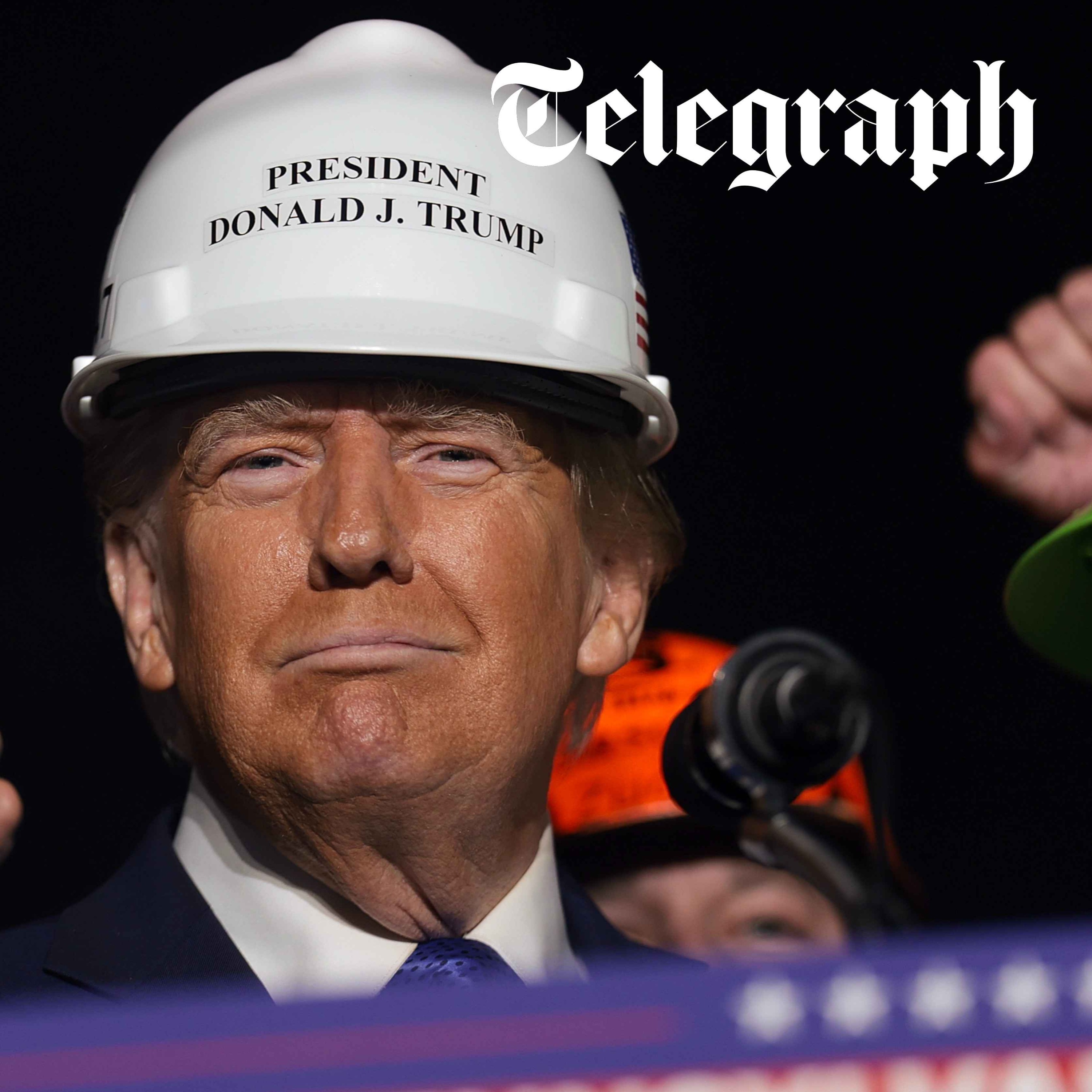
Iran: The Latest
Project Vault: Trump's battle to break China’s critical mineral stranglehold
00:41:49
Loading summary
Transcript74 lines
- [00:04]
Sam Olson
The telegraph. This is not a little trivial thing. It is a massively central part of what governments should be looking at in terms of national resilience.
- [00:20]
Donald Trump
We will measure our success not only by the battles we win, but also by the wars we end.
- [00:27]
Naya Nathanielson
Right now, all eyes are on Washington.
- [00:31]
Sam Olson
But who's actually watching Europe at the moment?
- [00:35]
Venetia Rainey
The deepening ties between China, Russia and North Korea would certainly have some in.
- [00:40]
Naya Nathanielson
Washington concerned sometimes use strong language.
- [00:44]
Donald Trump
We're going to run the country until such time as we can do a safe, proper and judicious transition.
- [00:51]
Venetia Rainey
The IDF will continue to uphold the ceasefire agreement and will respond firmly to any violation of it. I'm Venetia Rainey and this is Battle lines. It's Monday, February 9, 2026. The war for critical minerals and rare earths is officially underway. Listeners will remember that last autumn, China shocked the world by introducing stringent export restrictions on a bunch of elements vital for everything from phones and cars to missiles and submarines. Donald Trump ended up meeting with Xi Jinping, and Beijing agreed to suspend the restrictions for a year. But the incident highlighted the enormous dependency of the west on China. Our military simply could not go on for long if Beijing truly turned the taps off. Then last week came America's response, Project Volt.
- [01:43]
Donald Trump
For years, American businesses have risked running out of critical minerals during market disruptions. Today, we're launching what will be known as Project Vault to ensure that American businesses and workers are never harmed by any shortage. We don't want to ever go through what we went through a year ago, just as we. Although it didn't work out. Thank you. Just as we have long had a Strategic petroleum reserve and a stockpile of critical minerals for national defense, we're now creating this reserve for American industry.
- [02:17]
Venetia Rainey
Project Vault was the centerpiece of last week's inaugural US Critical Minerals Ministerial Summit. The summit brought together more than 50 countries to find new ways to insulate US military hardware and heavy industry from Beijing's export choke points. It's the Trump administration's most significant move to date to decouple America from China dominated critical mineral supply chains. For many, Trump's recent bid to take Greenland needs to be seen in this light. A naked play for strategic resources. Now, that story has fallen out of the headlines, but it is not over, not by a long stretch. So later on in this episode, I'll be speaking to Greenland's energy minister about the deal Trump struck. What exactly the US Wants to get its hands on, and why this rare earth haven remains largely unexploited. But first, to Discuss last week's news. I'm joined by Sam Olson, chief analyst at Sibylline, the world's largest private intelligence firm. Sam, welcome to battle lines. Let's start with this inaugural US Critical Minerals Ministerial Summit. A very grand name. What was it actually about and what came out of it?
- [03:22]
Sam Olson
This is the result of quite a lot of thinking internally in America as to how to push back on China. And in effect, what we have is the creation of a new mineral security partnership which will allow the US and its allies to be able to push back on China's dominance of minerals and in particular the processing part. And this is something that China's been focusing on for many years, decades in fact. They've known right since the early 1990s that critical mineral control would give them enormous leverage within the international supply chain. And a lot of people know about rare earths these days and how, for example, China controls of 80, 90% of the world's rare earth supply. But what this actually means is that they control the processing part of that. Rare earths themselves are actually pretty common around the world, but the processing is very, very difficult. China has made sure that it controls most of that in a way that OPEC never was able to control, oil, and this gives them massive leverage. But this is the part, it is not just about rare earth. There are lots and lots of critical minerals, even quite basic ones, one might think, for example, copper or titanium, which are obviously vital for the day to day lives of people, not just at the military side. And America has finally woken up to the fact that all of these minerals are in effect controlled at the refining part, especially by China, which leaves America and the west in a very, very vulnerable position.
- [04:58]
Roland Olyphant
Quite a few things came out of this summit and we don't need to go into all of them.
- [05:01]
Venetia Rainey
There are a lot of sort of.
- [05:02]
Roland Olyphant
Different agreements and MOUs and things, but the big one was Project Vault and.
- [05:06]
Venetia Rainey
It'S got $12 billion price tag attached to it.
- [05:09]
Roland Olyphant
Can you talk us through a bit.
- [05:10]
Venetia Rainey
Where that money is coming from and.
- [05:11]
Roland Olyphant
What they want to use it for?
- [05:13]
Sam Olson
It's a bit unclear at the moment as to where the money is exactly coming from because it's going to be a mixture of private and public money. And also it is unclear at the moment as to how much allies are going to be asked to contribute to this. And are we going to have, for example, a British version or a Canadian version? There are people talking about that, but as is normal these days, we're seeing a very, very sluggish response by the UK government and other governments. When it comes to dealing with the international reality of China controlling super large parts of the supply chain, America is taking the lead and under Trump is being quite aggressive in trying to change things. But where the money will go to it is difficult to really know because actually one might think because of the way that this was framed, that that the lack of money has been the issue that's holding America back. But it is not just that. In fact, I would say that the money is actually quite a low down in the priority of the problems. If you look at the ability for North America and for Europe to process many minerals that has declined as refineries have been shut in the last decades, whether it's because of environmental reasons or just being out competed by China. Because remember, China puts an awful lot of public money into making its refineries globally competitive. So this deindustrialization at the refinery level means that we are starting from a very low base. For example, there is not a single lithium refinery in North America. The first one's due to open in Canada in the next couple of years. But lithium obviously is vital for the electric vehicle market and America cannot have self sufficiency without lithium refinery. Cobalt are very important for military and for renewable energy. There's no cobalt refinery in North America. I actually know the guys who are trying to set it up and what, what this goes back to is not money, but it is permits. They've been trying to set this up for years and years and years. And despite them having raised all the money that they need, they just can't get the permits to be able to quickly get this refinery plant up and running, despite people within the US Government saying, yes, we need this, yes, the money's important and it's nice to have that big hefty amount put aside. But A, money isn't the only thing that's holding things back. B, it really depends on if this money is forthcoming or not to see where things go. And C, what's important for Britain is that if we just let America push forward with this and we don't have our own equivalent program, we're just going to be moving our dependency from China to America, which is not in the national interest.
- [07:52]
Roland Olyphant
I think that's a really good point about the sort of middle countries, as Carney called it, and we'll just refer to ourselves as middle country. Now, if I've got it right, Trump wants to create a sort of war.
- [08:00]
Venetia Rainey
Chest, a stockpile of the initial mineral resources. What he's not Trying to do is challenge, as you rightly point out, China's.
- [08:06]
Roland Olyphant
Absolute dominance in terms of the processing. And just to give our listeners the stats, China controls around 70% of the world's rare earth and critical mineral production and more than 90% of its processing. Have I got that the right way round? They're trying to sort of build up their raw materials resources, but they're going to leave for the moment the processing still to China.
- [08:25]
Sam Olson
On paper, that is correct, but in reality they're really trying to push back on the refining capabilities of China by creating their own. But as I said, that's been in the works behind the scenes for a while now, but it just hasn't been able to bear fruit because of various issues. And often these are environmental issues, which many people would say rightly raised. But at the end of the day, there has to be a trade off between environmental concerns and national security. But the implications for America on this and the west are actually very large because it's not just about the ability for the west to be able to rearm or to continue the energy transition. And let's be really clear about that. China's supply controls of critical minerals, including, but not just rare earths, are such that in effect, Britain and America and the west cannot rearm and continue with the energy transition without China's acquiescence. If China was to turn around tomorrow and say, we are not going to allow you to have X, Y, Z minerals, then we would be stuffed. And a lot of policymakers in America are beginning to realize that. Policymakers in Europe and the UK haven't quite realized that, despite people banging on about it for a number of years, including us. So we will see how this all comes together. But the impact is, again, it's not just on those elements, it's just on things which might be considered sort of more economic, be able to set the price. So China now has approximately half of the copper refining capacity in the world and that gives it huge leverage over the markets. And a couple of years ago, the Chinese manufacturers, the senior Chinese manufacturers of copper basically got together and said, we're going to, to act as a cartel and we're going to change the price, we're going to up the price. And they did and the price went up and no one did anything about it. And by having a West which is able to refine more, then this would actually allow us to control the prices as well and be beneficial not just to the military, the energy side, but for general industry. And we did some analysis using copper If America wants to act on its own with copper refining, then it only has about 1% of copper refining output now, which is not very, very much. But if it was to work with its NATO allies and the IP4, the so called IP4, the Indo Pacific 4, which are four countries in the Indo Pacific, Japan, South Korea, Australia, New Zealand, which are sort of affiliated now with NATO, that NATO plus IP4 collection would have almost a fifth of global copper refining output, which gives it enough leverage to push back on China, not just in terms of supply for defense and energy, but also to stop them being able to market manipulate the price, which would again give us more certainty at the industrial level. This is a multifaceted approach that America needs to take and this is a first step. But where it will go is going to be very interesting because as I said, there's lots of things that need to be done. It is not just about creating a stockpile. But I'm very pleased that the stockpile issue is being brought to the fore now because it is the place to start.
- [11:34]
Roland Olyphant
Yeah, I was going to ask about this because China does have such a chokehold on this market and you mentioned raising the prices of copper. It can also decide to bring down prices of certain critical minerals. Right. And that would undercut any Western attempts to reopen a new mine. It suddenly makes the whatever it is so cheap that it becomes almost unviable. China introduced export restrictions on a bunch of rare earths last year and then it made an agreement with Trump, said it was going to delay it, but only by a year. So I guess that's coming for us down the line at some point this year. Are moves like this by Trump going to make it less likely that China will continue to seek any agreement and will just effectively up not a tariff war, but like a rare earths and critical minerals war?
- [12:13]
Sam Olson
Yeah. So it is a really important note that China already is manipulating not just price but also supply, with a view of destroying other countries abilities to be able to produce and refine metals and other minerals. And we've seen this time and time again. A few years ago again, China reduced the price of nickel which led to a collapse in the nickel price. And that led the Australian government having to spend billions of dollars protect its own nickel producers to make sure that they weren't wiped out. And if they were wiped out, the only people that they could get nickel from in future was China. So we see this time and time again this is deliberate policy by the Chinese government to manipulate prices to be able to crush opposition this concept called innovation mercantilism or mercantilism in general, destroying the ability of foreign competitors to innovate and to make things and again, deliberate government policy for a number of decades now. And it's had great successes in terms of destroying, for example photovoltaic, the solar panel industries in the West. It's also being used to destroy critical mineral manufacturers and refiners in other countries. So this is a proven way of doing things. But this is also something which is reinforced by much more stringent export controls in the last few years, which include rare earths. As you said, what this actually means is that China has set out to stop other countries because of the way that the laws are written, other countries stockpiling and anyone that is thought of as stockpiling Chinese made or Chinese refined minerals is going to be subject to export controls. So this brings China and the US into direct legal competition in terms of whose regulations are going to be stronger. Is it going to be the Americans wanting more of a stockpile or is it going to be the Chinese not wanting America to have a stockpile? And this is all to come come. But what this matters for the UK and other middle powers, how do you navigate this? You know, you need to basically build up your own refining ally shoring networks to be able to actually push back on China in a way that means that isn't going to trigger China or blocking you from getting these rare earths and critical minerals in the first place. And when they do stop the exports, this could have a massive impact on the economy and almost certainly would have a massive impact on the British, German, etc economies. So this is not a little trivial thing. It is a massively central part of what governments should be looking at in terms of national resilience. And my concern is is that yet again the British and other European governments are playing lip service to this and not doing anything that will tangibly change China's dominance without looking to America to bail them out yet again.
- [15:04]
Roland Olyphant
Do you think it's too broad? More than 60 different materials representing around 80% of all mined elements on the periodic table. I was reading and Trump said at his statement last week when he was announcing this policy, you're covering everything with this. We're not just doing certain minerals and rare earths, we're doing everything. Is that too broad? How are you possibly supposed to prioritize securing the supply chain of more than 60 different materials?
- [15:25]
Sam Olson
It's really hard. But here's the alternative thought. Is it broad enough? Because if you think that if you just take a Royal Navy destroyer, say Royal Navy destroyer, has hundreds, if not thousands of kilograms worth of rare earths on it and many other critical minerals in every type of metal from copper to titanium, et cetera, et cetera. And if you then start including renewable energy sources within that, then start increasing the other amounts of rarer critical minerals, not necessarily rare earth, but sort of less, less obvious ones. And if you have an ecosystem that depends on, you know, say 70 or 80 different minerals, then actually that ship stops working if one or two of them don't appear readily available. And so maybe actually this isn't broad enough and maybe this is just the tip of the iceberg. Wean ourselves off reliance on China's export control, then we need to make sure that we have a defense, industrial and energy ecosystem that is proofed against Chinese mercantilism and export controls. And one of the first steps I think that needs to be done is for the west to really start mapping what its dependencies are. Now, there have been lots of initiatives been done, some by private companies, some by governments, and there is a general understanding. But one of the difficulties is in talking to, for example, some defense companies, which we have recently, recently, there is actually not a fully understood level of every single different mineral needed for all the different defense and energy requirements and industrial requirements. For example, if you say, how much antimony do you need? A lot of companies will say, oh, we need this, this and that. And then when you dig into it, they're like, actually, well, maybe we're not so sure how much we know how much we use, but how much could be substituted and how much could we actually get away with doing if there was a stockpile, whatever. So I think a. One of the great benefits of hopefully this new initiative by Trump is making companies really aware that there is an issue, making governments aware that they need to support their companies and actually getting the mapping process done properly and efficiently for the first time at the allied level. And once that's done, then we will really know to what degree this is too broad or too narrow a focus to get things rolling.
- [17:49]
Roland Olyphant
Just finally, how do you anticipate China responding? Sounding.
- [17:52]
Sam Olson
Yes, this is always the, the big question. Yeah, I think personally they're going to be mainly watching and waiting and as and when they will, they will decide to move. They will move probably in two ways. First of all is that they, they have the official way of moving and that's when they announce X, Y or Z. They did that recently with the export controls and they didn't Make a big song and dance it, but dance about it. But they did make it clear that this is what they were going to be doing. However, there is also the unofficial way and this is often more, more common in terms of how China reacts. So if anyone remembers, back in 2010, the Chinese and the Japanese had a big spat over some islands and fishing boats and things like that, but it's a maritime dispute. China reacted by unofficially stopping the export of rare earths from China to Japan, which really screwed up the Japanese economy for a while. Then the Chinese still say that was an administrative error and it was a couple of warehouses that accidentally lost some paperwork which needed to. Which needed to be in place before the exports could go. So, of course, China was just following the rule of law there. Everyone else knows that this was done on purpose to punish, to punish Japan. So how China will react, I think we need to keep an eye on, as I said, the official and unofficial ways. My gut feeling is that officially they won't say anything properly yet. They're obviously griping about it, but there won't be any sort of official pushback for the moment, but. But unofficially they will be definitely doubling down on investments into critical minerals and rare earths, doing anything they can. For example, market manipulation to keep trying to destroy the ability for the west to be able to refine and to wean itself of China and critical minerals, and also seeking to control more and more of the value chain from upstream, where the minerals are produced near mines. And they do a lot of work on trying to buy up mines around the world to the midstream, which is where the components are sort of created from those minerals, including rare earths, and then the downstream, which is where they're really properly refined and been put into components. So that whole value chain, China's already pushing hard to control more and more and more of it across many different minerals and have done very well on that. This is, for now, China, what China sees is a proper, proper fight. And they are not going to lay down. They are going to go harder and harder, but it just will be hard for the average person to see that because it's all done in boardrooms and other things around the world which don't necessarily make the headlines. So we are not going to see China lay down. We are going to also see America probably keep pushing on this. So the world is going to be set for more and more competition and not necessarily nice competition in the critical minerals space in the coming years.
- [20:38]
Roland Olyphant
Sam Olson, chief analyst at Sibylline, thank You very much for joining us on Battle lines.
- [20:42]
Venetia Rainey
Coming up after the break, Greenland's energy minister on the Trump deal and why the island is still in his crosshairs. Welcome back. Before we carry on with this episode, we'd love to get your feedback. Email Roland and I on battlelinestelegraph.co.uk tell us why you like this podcast and.
- [21:05]
Roland Olyphant
What you like about it.
- [21:06]
Venetia Rainey
We'd love to hear from you.
- [21:08]
Roland Olyphant
Now.
- [21:09]
Venetia Rainey
Remember a few weeks ago when the world was braced for Trump to invade Greenland? Well, thankfully it never came to that. Instead, the American president struck some sort of deal with NATO chief Mark Rutter and the whole story went into away, except that it's still ongoing. Negotiations are still underway for this deal. We don't know many details, but green lenders still believe Trump has his eyes on either buying or acquiring the island. So last week I spoke to Greenland's energy Minister, Naya Netanyalsson, about Trump rare earths and Chinese influence. Here's our conversation.
- [21:42]
Roland Olyphant
I wonder if you could start by just we're speaking a couple of weeks after at the pinnacle of this hoo ha over America, trying to take, buy, own Greenland. Trump's speech at Davos where he spoke about this chunk of ice that he just had to have. I wonder if you could just take me back to that day when Trump was speaking. How did it feel as a Greenlander, listening to him talk about this apparently uninhabited place of strategic importance that had to belong to America?
- [22:15]
Naya Nathanielson
Well, it wasn't the first time. And I think every time we have been discussed as a piece of commodity or something you could buy or sell, it's very hard, it's very difficult to listen to. It gives you a lot of frustration, anger also, even despair really, when you hear your country and your culture talk about like that. But this is just part of it. Of course. We have also seen proposals in the American Congress about renaming Greenland different names and acquiring Greenland. We have seen capes being cut out with the Greenland covered in an American flag and so on. So all of these symbolic shows of disrespect for our right of self determination is quite difficult, apart from the fact.
- [23:01]
Roland Olyphant
That Greenland is a self autonomous territory and is not owned by Denmark, and therefore you can't really buy it off Denmark, if such a thing were even ethically allowed. But also it goes against the Inuit idea of ownership. Right. Can you explain that a bit for us?
- [23:15]
Naya Nathanielson
Yes, I think we are quite different in that regard from many other countries. In Greece, in Greenland, you cannot own land, you can acquire a permit to build upon the land, but you cannot own land. The land is for everybody. And that is, of course, part of our Inuit tradition and way of thinking. It's something that is never really discussed at all. It is something everybody accepts and work with. It's not an issue because we just simply cannot see ourselves changing that in any way.
- [23:40]
Roland Olyphant
You straddle, then, quite an interesting dual role, I guess, as a Greenlander, but also as the energy minister. Your portfolio is these rare earths and critical minerals, and you raise uranium and everything else that has been in the headlines over the last few months. I wonder if you could just start, though, by just telling me a bit about what is this deal? What do we know now about the deal that Trump struck that has suddenly allowed all this talk of him buying Greenland to die down?
- [24:04]
Naya Nathanielson
Well, for now, there is no deal. There are negotiation and dialogue, which we really deeply is appreciative of. We find that's the right path to approach things. So there is, right now, dialogue going on. We don't know much about it or don't talk much about it. We will let the involved people do the talking with each and follow that. But, of course, there has been a lot of rhetoric around it and a lot of speculations, not only by decision makers, but also in the media. So we try not to get confused about this. But, of course, there has been an interest not only in renewing the 1951 defense agreement, which we find is perfectly fine to open and discuss and have discussions on. There's also been talk about. About possible mineral deals being made. Of course, this would happen on another track because we already have licenses that you need to adhere to and rules and regulations. But absolutely, deals could be made around this, but it would happen in another setting and not as part of this dialogue.
- [25:07]
Roland Olyphant
Do you feel that now that negotiations are happening, the threat of military force that Trump was sort of dangling and then taking away and then dangling again, and that was being blown up in the media. Media, does that feel like that threat has receded for Greenlanders?
- [25:20]
Naya Nathanielson
We still work with all possible scenarios. We have to. We have to be mindful of the different risks that are ahead of us as a government. But of course, we also believe that we have taken steps down the conflict ladder. After the speech in Davos, where there was a talk and a dialogue between Mark Rude and the president, I think we, after that, took some steps down the conflict ladder, which was good. But of course, we don't think that anything has, in essence, changed. There is still an American interest in buying or Acquiring Greenland. And we still don't agree on this in Greenland. So that's a conflict right there.
- [25:58]
Roland Olyphant
Of course, your prime Minister thinks the American view is essentially unchanged and that it continues to seek paths to ownership and control over Greenland. How do you negotiate with someone like that?
- [26:09]
Naya Nathanielson
Well, right now we have the dialogue and we, we have to work through it. We are a small country. We are very few inhabitants in Greenland as a small country, you need partners, you need allies, you need dialogue. We can never win a battle. If it was about military force, very few countries in the world could. So this is of course, not even something to put on the table. I think we have moved past that in our part of the world and resorted to dialogue instead and to solve issues through dialogue and trade and other means. So I think for us that's the only path that is both acceptable but also possible, being a small country. So we have to resort to that and hope that our counterparts are willing to do the same.
- [26:54]
Roland Olyphant
So let's talk about the rare earths and the critical minerals and everything that Greenland, we think, has. But so much of it is unexplored. So much of it is. The potential is the estimate. Can you just give us a sort of, to the layman listening, an over view of what Greenland definitely has and what it might have?
- [27:10]
Naya Nathanielson
We do have a lot of those minerals that other countries deem critical for their development, both in terms of military development, but also industry development and so on. So we do have a lot of them. It's not certain that we do have in deposits of a size that is actually mineable or accessible, but we do have them. So there's a difference on having a mineral, being able to harvest it and sell it. And it's very costly, it's very long term, it's very technical. So it's in no way a quick fix. It will take a lot of time to develop our resources. And as you mentioned, a lot of it is still unknown. We don't know how big the deposits are and exactly how they are accessible. So there's a lot of potential, but there's also a lot of work. And when I say a lot of work, on average it takes 16 years to develop a mind site. Right? So. So a lot of work really means decades of work.
- [28:02]
Roland Olyphant
Greenland only has two small active mines at the moment, right?
- [28:06]
Naya Nathanielson
Actually one active mine.
- [28:08]
Roland Olyphant
One active. Is that the gold mine or the anothasite mine?
- [28:11]
Naya Nathanielson
That's the anothocyte mine north of Nuuk. And then we have the gold mine that we hope will open properly this year.
- [28:18]
Roland Olyphant
And what is anorthosite?
- [28:19]
Naya Nathanielson
It's a wide product you use in paint and such. It's an industrial product.
- [28:24]
Roland Olyphant
But these are not the things that all of these countries, the eu, the us, et cetera, are after. And there are no rare earth, uranium or other high profile critical mineral projects that have entered commercial production, is that right?
- [28:35]
Naya Nathanielson
Yes, we do have a ban on uranium mining that we decided upon in 2021. So you cannot mine uranium in Greenland. There are rare earth deposits that are possible to develop without also mining uranium. So there are possibilities. There are still a couple of projects moving forward nicely on that. I think the primary part of the projects that are moving forward are really not rare earths, but an ultraside. As I mentioned, another one of those is on the ways. We also have molybdenum, which is not even a critical mineral, but something that makes for instance, iron stronger and so on. So it's a variety of minerals that is available and it's right now moving forward.
- [29:16]
Roland Olyphant
I think that's quite striking because just to give our listeners an idea of Greenland is estimated to have 1.5 million metric tons of rare earth element reserves and ranked 8th globally according to the US Geological Survey. And its reserves are comparable to those of the United States and exceed those of Canada and South Africa. 25 of a list of over 30 critical raw materials deemed critical by the EU are present in Greenland. That's a lot of stuff and yet you only have one active mine. You alluded to some of the challenges in in getting to these critical minerals and rare earths. Can you just expand on that? Because I was struck to read that Greenland has less than 100 miles of road on the entire island.
- [29:55]
Naya Nathanielson
Mining is about much more than just potentials. I think on a worldwide scale. You say that one in hundred potentials actually to become a mine. There's a lot of risk around minerals and mining. And because it's high risk, because it's very long term, as I mentioned, it takes an average 16 years to develop a mine site. And because in those 16 years you really spend a whole lot of money without making a lot of money. It's also capital intensive. So it's high risk, capital intensive, it's long term. So there's not a lot of investors ready to invest into this. It's difficult globally as well. So for Greenland, we have high environmental standards, we have high standards when it comes to safety and other regulations. Now a lot of things have changed within the last five, 10 years globally, making Greenland more interesting. Interesting. So we have seen a surge in interest into our mineral sector. But because it's so long term, what I'm seeing is that we are maybe three, four, five years into this very long period before developing a mine. So we're getting there, we are getting projects started, but we're not there yet. The climate crisis is very mineral demanding and requires a lot of minerals. So that is good for Greenland because we can provide a lot of those minerals. Minerals. The pandemic showed many countries that you need to diversify your supply chains and you need maybe not just rely on China to do everything but look to other countries as well. Greenland is amongst one of the countries that the European Union has signed deals with and the same goes for the US has made a lot of deals with different countries to try to diversify that supply chain. And then finally, unfortunately, also the war in Ukraine has shown, especially Europe, that they need to look into their energy supply and look elsewhere. And that has also given, I think, an increased interest in countries like Greenland. So I think interest is coming even though we have high environmental standards, high wages and so on. And that's why I think you see a development now instead of maybe five or ten years ago where I think cheap was the way you went about it.
- [32:02]
Roland Olyphant
I also just want to quickly talk about those infrastructure issues. Right, because you have to fly or sail to a lot of these sites. You can't drive, you can't build a road that extreme cold temperatures mean. You can't just lay tarmac to get somewhere, is that right?
- [32:15]
Naya Nathanielson
You can somewhere. But I think our highways is the seaways, we have access to the water many places. So if you have a mine, let's say remote area, you can put a harbor there and what you need, road construction and you will be able to ship your cargo out quite easily. But it is of course costly to establish those things and we are not going to do it from Gurlandic side because most likely the these mines would be somewhere where people do not live. So it will be in the middle of nowhere. So it adds to the cost of doing mining in Greenland.
- [32:47]
Roland Olyphant
I want to also talk about the China element here. I know there have been a few sort of close calls, let's call them from a Western perspective, I suppose, with Chinese companies buying up what could be seen as critical assets in Greenland. In 2016, a Chinese company tried to buy an abandoned naval station at Gronadel and the Danish government blocked the sale at the last minute because it was, it could become dual use. And there was also a tussle over an airport. A company was shortlisted to build three major international airports in Greenland. But because of fears around a debt trap that was also stopped by the Danish government. There's also Chinese involvement in one of the key mines that you've got. Kvanfeld. Can you tell me a bit about tensions over Chinese involvement in Greenland's minerals and infrastructure?
- [33:29]
Naya Nathanielson
I think it's a bit overstated, actually. I'm glad you're asking. When it comes to the site down in southern part of Greenland, the defense area is Danish. So they essentially just stopped themselves from selling an area. When it comes to the infrastructure, we got a loan guarantee from the Danish state and collaboration with them that made it possible for us to build those, I think those airports without outside help, which we were really thankful about. We have no real interest in giving away our infrastructure to other countries control, for instance. We are very much aware of the, I think you call it the resource group curse, where you see smaller countries maybe being bought up by other wealthier countries that ends up controlling part of their infrastructure and so on. So we do not have an interest in that. When it comes to the mineral sector, I think the Chinese investments don't really have much luck in Greenland. It is true that they have, I think, a minority share in the Guenel Suede Kwenefield project which contains uranium and therefore they cannot obtain an exploitation license. So for we are in court battle with the company at the moment, so that's not moving forward Then we have an iron ore project in the fjords of Nuuk that was owned by a Chinese company and I personally took that license back because they were not living up to the requirements. And that is also fought in the courtrooms right now. So I don't really think there is much success or much activity at the moment from Chinese investments. And I do always stress that we are really happy about our exports for China, for instance, in terms of seafood. That is really essential for our economy and we do insist to be able to trade freely. We understand that there can be security risk regarding Greenland. We are much aware of that. We do respect our allies and their concerns. But we cannot impose regulations onto ourselves that is is not met by any real threat. You have to strike a balance. We understand that we need to be mindful. We do understand that and I think we do act accordingly to that. But also have an export to China, for instance, that we are really reliant on.
- [35:41]
Roland Olyphant
It's very big picture stuff. Greenland is the strategic place between Russia, China and America and this new emerging world Order. How does that feel on the ground? Does it weigh on your government's decision making?
- [35:51]
Naya Nathanielson
It has weighed on all the government in Greenland throughout time. Right. Because we have always been placed geographically where we are. We have always known that because of our geographical position, we are of interest for both Russia, China and the U.S. the superpowers of the world for the many last decades. So, of course, we have always known to be aware of this. I think we have been quite clear about where our allyship is. We have clearly stated that we regard the US as the European Union, Union, NATO as good allies and partners. So I think we've been quite clear about where we stand in that power struggle, if you will. But we do not accept that it can be weaponized in the way that we should then be bought or controlled by another country, as long as we, I think, adhere to all the concerns and understand what's at stake. But I also hear the facts being put forward that there is no immediate threat from either Chinese or Russian vessels regarding Greenland. That's not the same as saying that we should not be mindful of making sure it continues that way. We understand that and are willing to discuss that. But we also need to be able to go about our lives without always changing our ways because of a potential future.
- [37:12]
Roland Olyphant
You mentioned that there's some other stuff in the pipeline, and I've seen you quoted that you expect you'll have three to five more mines, you hope, within the next 10 years. Can you tell us a bit more about which companies, countries are involved in that and what sort of things they'll be mining for?
- [37:25]
Naya Nathanielson
Well, we do have different projects underways, and the ones that will be in place in, let's say, three to five years, maybe even eight years, will be the ones that are already in operation in Greenland, because as I mentioned, it takes a lot of time, so it will not be any newcomer that we don't know about yet. We have another and ultrasized project moving forward. As I mentioned, we have this molybdenum project on the east coast of Greenland. Moving forward. We have other projects in the southern part of Greenland that also has European attention and appointed as a strategic project by the European Union. So we have different projects that has the outside world's attention and back lacking. So we hope, of course, that these projects will be able to move forward. But in this line of business, it all comes down to two things. Of course, the quality of the product, but also can they acquire the necessary capital to move the projects forward. So I can have an idea of who it will be. But it all will come back down to the fact if they can get any money, enough capital to develop. We have a partnership with the European Union. Union and we know that they are looking much into some of our projects. But when you look at the ownership of the companies, a lot of them are based in uk, a lot of them are based in Canada and some in Europe. But this is very international company. So even though they are based in the uk, the ownership in real can be very worldwide and international. So of course it's difficult to say precisely there will be minority shareholders from all over world. The. The world.
- [39:05]
Roland Olyphant
What about Tan Breeze? I read that it's among the largest of several rare earth deposits in Greenland. Is that expected to come online in the next five to 10 years?
- [39:13]
Naya Nathanielson
We do hope so. We hope they will move forward with the last permits within this. Last. This next year. That is what we are hoping for. They do have an exploitation license and it states in that they have to be up and running within six years. So we're getting closer to this deadline and so we hope they will move forward.
- [39:31]
Roland Olyphant
That's another one where everything. There are no road links, right? Everything has to be accessed by boat or helicopter and all the infrastructure has to be built from scratch. A plant, accommodation, sea dock, everything that you might think of for a mine. We normally see these pictures of all these roads and trucks going all over the place, but it will look very different in Greenland.
- [39:47]
Naya Nathanielson
There will be roads and trucks, but they will be made especially for the mine.
- [39:50]
Roland Olyphant
It feels like Greenland sort of had a for now, lucky escape of sorts. The crosshairs of Trump have moved on. He's moved back into negotiations, negotiating mode. The thumb screws have been loosened a bit. Who knows how real those threats ever were, but it certainly received a lot of pushback from Europe, suggesting that we had to take it pretty seriously. Do you feel confident that you're out of the danger zone and that things will proceed more peacefully, or are you just holding on until the end of the Trump presidency?
- [40:16]
Naya Nathanielson
I think we should all realize that the world order has changed and things are changing by the day and that power structures are shifting and priorities are shifting within the superpowers. I don't know how to predict the future. I cannot do that. I appreciate we are back in terms of Greenland to a dialogue track that is very helpful for us and we are very happy about that. But I think as a world, we need to, especially in the Western world, we need to accept the fact that it is a different world than five years ago. It has already changed. So what will happen in the future, of course, depends a lot on the larger countries and how they decide to conduct themselves internationally and who they will partner up with in the end.
- [41:00]
Venetia Rainey
That was Greenland's Energy Minister, Naya Nathanielson.
- [41:04]
Roland Olyphant
That's all for today's episode.
- [41:05]
Venetia Rainey
We'll be back again on Wednesday looking at what happened to USAID after Trump shut it down. Until then, goodbye. Battle Lines is an original podcast from the Telegraph, created by David Knowles and hosted by me, Venetia Rainey and Roland Olyphant. If you appreciated this podcast, please consider following Battle Lines on your preferred podcast app. And if you have a moment, leave a review as it really helps others find the show. To stay on top of all of our news, subscribe to the Telegraph, sign up to our Dispatchers newsletter, or listen to our sister podcast Ukraine the Latest. You can get in touch directly by emailing battle linestelegraph.co.uk or contact us on X. You can find our handles in the show. Notes the producer is Peter Shevlin. The Executive Producer is Louisa Wells.