Loading summary
Transcript95 lines
- [00:04]
Sophia Yan
The telegraph. This is a Monday.com ad. The same Monday.com helping people worldwide getting work done faster and better. The same Monday.com designed for every team and every industry. The same Monday.com with built in AI scaling your work from day one. The same Monday.com that your team will actually love using the samemonday.com with an easy and intuitive setup. Go to Monday.com and try it for free.
- [00:37]
Roland Oliphant
Yes, the same Monday.com Here's a tip for you. There's a podcast out there with fans waiting to be your next customer. They tune in every week. They trust the host and that host wants to talk about brands like yours in their own words to their audience. The problem is you just haven't been introduced yet. We're acast where that introduction happens. As the world's largest podcast marketplace, we let you browse shows, see who's listening and book, host red sponsorships or run
- [01:08]
Venetia Rainey
your own ads all from one platform.
- [01:10]
Roland Oliphant
Transparent pricing, real time data, complete control. Start advertising on podcasts by visiting acast.com advertise. There is really quite a lot of capability left for around to do some serious mischief with, whether that is attacking warships or attacking commercial craft. Short time ago, the United States military
- [01:38]
Venetia Rainey
began major combat operations in Iran.
- [01:43]
Sophia Yan
Today, President Trump says Iran's supreme leader, Ayatollah Ali Khamenei was killed in the attacks.
- [01:48]
Venetia Rainey
Ayatollah Sekiyat Mashallah Khamenei.
- [01:53]
Roland Oliphant
The Pentagon is weighing a takeover of that island as a way to force the reopening of the Strait of Hormuz. Iran begged for this ceasefire and we all know it. Does anyone really think that someone can
- [02:06]
Sophia Yan
tell President Trump what to do?
- [02:09]
Roland Oliphant
Come on.
- [02:11]
Venetia Rainey
I'm Venetia Rainey.
- [02:12]
Sophia Yan
And I'm Sophia Yan.
- [02:14]
Venetia Rainey
And this is Iran, the Latest. It's Thursday, 23rd of April 2026. We're on day 55 of the war now and I'm very pleased to be joined by our senior foreign correspondent and friend of the podcast, Sophia Yan.
- [02:26]
Sophia Yan
Hi Sophia, how's it going?
- [02:28]
Venetia Rainey
Joining us from Istanbul today. Later on in the show, I'll be speaking to a naval expert to look at Iran's fast boat threat and also the sea mine problem in the Strait of Hormuz. What exactly is there? Why will it apparently take the US up to six months to clear it in peacetime? And why is it now a forever problem for all of us? But Sofia, let's start with the bigger picture of where we're at. What's Trump been saying?
- [02:52]
Sophia Yan
We are officially in limbo this has been confirmed by US President Donald Trump. He said to Fox News that there's, quote, no time frame and, quote, no time pressure to end the war in Iran. He's saying that he is not interested per se, to end everything, even by the midterm elections in November. He's very confusing, though. He suggested that new talks would take place tomorrow. So what happens next? Still up for debate in terms of how Trump is feeling, as always, unpredictable, very bombastic. White House Press Secretary Caroline Levitt also said yesterday that negotiations were, quote, ongoing and that the US Is waiting to hear back from the Iranians about what to do with the enriched uranium stockpile that they do have. She said, quote, the President has not set a firm deadline to receive an Iranian proposal. Unlike some of the reporting I've seen today, ultimately the timeline will be dictated by the commander in chief. That's the part underlined. Right now, the situation is so much dictated by Trump.
- [03:51]
Venetia Rainey
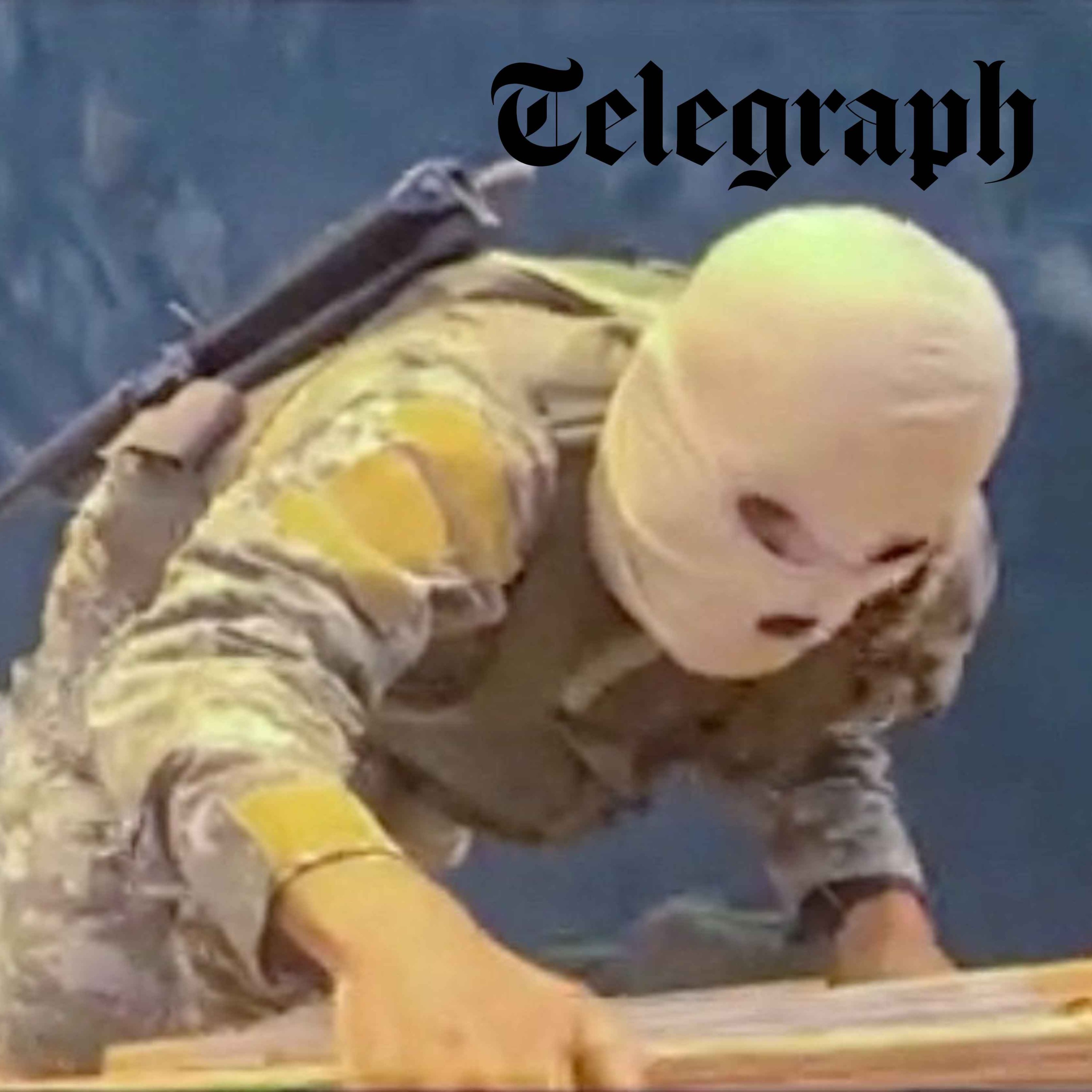
We reported towards the end of the podcast yesterday that there was some suggestion that he was going to give the Iranians three to five days, but that seems to have evaporated. As you say, the idea that talks will take place before tomorrow seems a little unlikely given what we're seeing on the ground today. We've also had a statement from Iran's lead negotiator and Parliament speaker, Mohamed Bagr Gallaba, who's emerged as the pretty much the spokesperson of the Iranian regime alongside Foreign Minister Abbasaraghi. He's accused America of breaking the ceasefire by continuing to blockade Iranian ports and by threatening to bomb the country. He said that Iraq will not reopen the Strait of Hormuz until America's blockade is ended and says the US is taking the world's economy hostage, which is a bit rich coming from the Iranians. How should we describe where we're at now? I mean, you've called it a limbo. I guess, viewed from one perspective, the main part of this war is over. We're not seeing so far a resumption of hostilities, a resumption of bombing of Iran, Iran bombing Gulf states in return. That kinetic activity has ended, but the Strait of Hormuz is still very much closed. There was this really alarming video put out by the Iranians this morning showing masked and armed IRGC soldiers approaching two tanker ships, we think the MSC Francesca and the Apaminondas, two ships that were seized yesterday. And you can see these guys rappelling up the side of a ship, going up to the bridge, sort of wandering around inside the ship. It's Clearly a propaganda video, we have to say that. And it seems like quite a lot of it was filmed after the fact. I mean, the hatch door on the ship is open to welcome these guys in, which seems a little unlikely, but this is terrifying stuff for anyone in the shipping industry. And it speaks to the fact that this war has morphed into something else, that it wasn't at the beginning. We're kind of at an impasse here, aren't we? Absolutely.
- [05:32]
Sophia Yan
So the US has seized Iranian ships. Iran has fired at other ships. It is a ceasefire for much of the region. But over the water, across the water, the US And Iran are still going at it. There's no clarity on when talks might resume. You have to remember that a second round of talks were due to begin on Wednesday, but they. They haven't. Ceasefire has been extended. And just to recap, Iran said they wouldn't attend another round of talks unless Trump dropped the US Blockade. The US Side has said that Iran refused to respond to US Demands to limit its nuclear program. Now, on social media, Trump has offered an interesting explanation as to what's actually happening. He's saying that sharp divisions within the Iranian regime has prevented negotiators from presenting a more unified, coherent response to US Proposals on a draft agreement. And he's saying that that's why he has extended the ceasefire deadline.
- [06:22]
Venetia Rainey
We discussed some of those fractures in the Iranian regime Yesterday with Akhtar McCoy, our foreign correspondent. So if listener to hear a bit more in depth about that, please do go back to yesterday's episode because he has lots of interesting things to say. We've also heard this morning that Iran has said it's received its first revenue from the Strait of Hormuz toll booth, the Tehran toll Booth, as we've been calling it, and apparently it's been deposited into the Iranian Central Bank. This suggests that its tactic of demanding that people pay in order to come through the Strait of Hormuz is working.
- [06:51]
Sophia Yan
Traffic has been tracked by experts through the strait since this US Blockade began. There are a number of ships that seem to have bypassed through. They've broke through the blockade, and it's unclear if some of them were subject to the blockade. I mean, there are certain parameters by which the US has set forth. There is a question also, though, whether the US Military is capable of stopping all the ships that it has said it plans to stop. And Trump, of course, has touted the blockade as a success. But it should be noted that analysts have said the US could still stop vessels anywhere in international waters before they reach their final destination. So some vessels that have been allowed to go through might still see problems elsewhere in the world.
- [07:34]
Venetia Rainey
Yeah. And just to pick you up on that, just breaking now is that American forces have boarded a sanctioned vessel that was allegedly supporting Iran in the Indian Ocean. That's according to the Department of Defense in America. It is this sort of widening of the conflict too. As you say, anywhere in the high seas, which is what Trump has said, that if they find any boats that are supporting Iran, they will target them. We'll be getting more into that in the second half of the podcast. Let's talk about some other very interesting analysis from the Centre for Strategic and International Studies. Csis, you just mentioned there. They've been looking at the depletion of American munitions during the course of this war. This is a subject that we've touched on a couple of times in the podcast. But they've got some really good new information that I wanted to share. They said an analysis of seven key munitions shows that the United States has enough missiles to continue fighting this war under any plausible scenario. So no concerns for this conflict. But the risk which will persist for many years lies in its ability to fight future wars. And it says that rebuilding to pre war levels for the seven munitions they've looked at will take one to four years as missiles in the pipeline are delivered. CNN has done a breakdown of their numbers to give a percentage estimate of how much they've used of these different munitions in the Iran war. So America's used 50% of its TAD interceptor missiles, 50% of its Patriot interceptor missiles, 45% of its precision strike missiles, 30% of its Tomahawk missiles, 20% of its joint air to surface standoff missiles, and 20% of its standard missiles, SM3s and SM6s. The implications for this, obviously for America are huge. But there are also implications for America's allies, right, and the conflicts where people are fighting, where they depend on American munitions.
- [09:11]
Sophia Yan
Well, the most immediate impact here is amongst countries within the region that have a security guarantee or have had US military presence in the Middle East. There are concerns amongst the general public in the Middle east about what would happen if the US were for instance, to run out of interceptors. This has been a question from the very beginning because there was so much that was being shot out of Iran at US positions around the Middle east, also against Israel. For the general public, for civilians who are living and have for weeks lived under this kind of bombardment, even though it's stopped for now, more or less, there's Been a real concern about what that means because there's not much means of air defense in many of these countries beyond the US presence and the US Weapons systems that have been in place in shooting down the missiles from Iran, the drones from Iran. Now, looking further ahead, looking more long term, there is a worry amongst allies about how much the US could materially support in terms of weapons agreements, in terms of how much the US could offer other countries that might be a need to boost their defense capabilities. Just last week there was reporting from Reuters that because of this current war that the US Was delaying weapons deliveries due to European countries, including Estonia and Lithuania. The Minister of Defense in Estonia has confirmed this, saying that the US has paused these deliveries until the end of the war in Iran at the very least. So it's already happening. The impact of what the US has faced in this conflict, that has become quite drawn out.
- [10:48]
Venetia Rainey
Those deliveries to Baltic European countries, that's obviously concerning for any future war with Russia. Europe's trying to bolster its defenses against a potential war. And there are immediate impacts on Ukraine, which wants Patriot missiles, and I guess for Israel if conflict flares up again there with Iran. So this will have a massive knock on impact. I mean, the CSIS points out that large numbers of all of these types of missiles will also be needed for any potential future conflict in the Western Pacific with China. But that seems very, very far away given the number of countries and conflicts that depend on American munitions supplies in the short to medium term.
- [11:22]
Sophia Yan
What interesting impact that this might have is. Before this conflict in the Middle East, Trump was pushing Europe to spend more on defense. He was pushing other NATO allies also to do the same, many of which are, of course, in Europe. This might actually then spur these countries to think even more deeply about how they shore up their own capabilities at home and how they rely more on themselves rather than other allies. Then that, of course means we see perhaps more of a fractured world where alliances are not as strong or as reliable as they may have been otherwise in the past.
- [11:54]
Venetia Rainey
What do we know about Iranian missile capabilities after more than 50 days of this conflict? The last reporting I saw suggested that a third had been destroyed by the American and Israeli bombing campaign. A third was buried under rubble and perhaps not accessible, and a third was still intact. Yeah.
- [12:09]
Sophia Yan
So interestingly, late on Tuesday, there were some videos that surfaced. The IRGC apparently was bringing various ballistic missiles to parade in the streets of Tehran. The point was to show the world that even after all of this fighting against the Americans and the Israelis, that the Iranians still had quite a bit of a stockpile by which to fall back on. There is a real question of how much Iran might still have left and its weapons stocks. Some reporting that I've worked on was tracking vessels that had come from China to Iran, and they had stopped at a specific port in China, in southern China, that is known to have sent in the past chemicals that are necessary for making rocket fuel. So these are precursor chemicals. And at least five of these vessels have come through that port in China and arrived in Iran since the war began. Interestingly, the very first ship that the US Sees from the Iranian side, the Tuska, this was on Sunday. That ship had also gone to the Chinese port in question, where it was a sanctioned vessel. Experts think the ship may have picked up more of these precursor chemicals to make missiles. So the fact that Iran was potentially still importing these materials suggests, as experts have pointed out, that some production, missile production was still happening, that they still had the capacity to do that. There's also some thinking that some of that missile production is happening underground. Some of Iran's proxies have been found to do that in the region. And so it's not a far cry to think that Iran might also be doing that itself. So going forward, it's possible that they still have quite a lot by which to pressure the US With. I mean, we are still seeing Iran fire against vessels across the Strait of Hormuz.
- [13:48]
Venetia Rainey
There's another story that caught my eye, and I'd be interested to get your thoughts on it. We've heard that Navy Secretary John Phelan was fired yesterday very suddenly. Apparently comes on the back of months of infighting in the Pentagon. Now, this guy, the Navy Secretary, it doesn't have a role overseeing deployed forces. This is according to New York Times reporting. So it's not likely to have an impact on the conduct of the Iran war or Navy operations blockading Iranian ports. His main responsibility is to oversee the building of the future naval and Marine Corps force, and he was specifically in charge of building or setting the ball rolling for this new Trump class of ships. But it suggests that the Pentagon is in turmoil.
- [14:23]
Sophia Yan
Right.
- [14:23]
Venetia Rainey
And that Pete Hegseth does not have many friends in the Pentagon's higher echelons.
- [14:27]
Sophia Yan
Yes, well, this has been happening now for weeks. Earlier in April, the US army chief of staff was fired also by Hegseth. There's been a lot of staffing change within the Pentagon, also known as the Department of War, amongst the many changes that the US Government has seen in the Trump administration and so this suggests that there is not agreement within the administration, within the Pentagon, under Hegseth's leadership, as to how to proceed. This is not putting the US on the strongest footing at a moment when it's still trying to figure out how to bring the US out of war. And you have to remember that Trump was the president who said he was not going to be one for forever wars. Except now, of course, he's into this situation, into this conflict in the Middle east with no clear path out.
- [15:15]
Venetia Rainey
Sophia, just before we move on, how do you see this ending? We're kind of in a game of chicken now. You know who's going to blink first.
- [15:22]
Sophia Yan
Game of chicken is a good, is a very apt way to describe the situation Iran is facing, a situation where if they reject Trump now, that might mean the resumption of war. That could incur farmer damage on infrastructure. Trump has threatened to blow up bridges, for instance. Or it could also mean a ground incursion. None of this is something that Iran will want to see. Trump is calculating that he has a lot of time. Actually, he thinks that the US Blockade will hurt Iran by halting oil exports, quickly crippling its economy, affecting the regime ability to continue to wage war. Of course, then Iran looks at the situation and thinks that the longer it can hold down, the longer it can stall, the more pressure that Trump will face. Because right now the entire world is feeling the pinch. Global energy prices spiking. It's leading to many warnings coming from several industries about shortages in supplies, whether that's food or plastic cosmetics, a whole host of consumer goods that we could see hit because of the supply chain disruptions, because of a disruption in global trade. Also, the issue, of course, is directly tied to energy products, which is jet fuel, that commercial flights might soon be canceled in a large volume because of what's going on. So this really puts everybody at a really tough point. Who is going to be the one to cave first and in what way? Because for both sides, any sort of concession at this point could be seen as a weakness.
- [17:02]
Venetia Rainey
Can you just explain if there are any congressional limits on Trump waging this war? James Crisp, our Europe editor, has put out an article today saying he's got eight days to make up his mind on Iran because of the 1973 War Powers Resolution.
- [17:14]
Sophia Yan
Yeah, well, we're almost two months after the US launched this war with Israel against Iran. Congress is still formally not fully engaged. Technically, Trump needs congressional approval to do this, and if he doesn't, he's got a 60 day limit. This is under US laws that have been in place for decades. That 60 day limit is coming up within a week or so. There's a question of whether Congress can really get Trump to pull back. This has not been the case so far. Trump has also flouted other US Laws in the past also going to this war. A lot of people have noted and criticized him for breaking international law by launching this war, joining in with Israel on this. So whether this 60 day mark under the War Powers Resolution in the US whether that means that Trump will actually follow what he's supposed to follow, which is to terminate military operations, unless Congress has voted to declare war or passed legislation to authorize this, that remains to be seen. This is not a president that has shown much regard for the rules and the laws in place.
- [18:18]
Venetia Rainey
Let's turn to the other big theatre of war because there are some peace talks happening today between Lebanon and Israel. They're taking place in Washington and the ambassadors for each country are meeting for a second round of negotiations after last Friday's just run us through. What does each side want? And given that Hezbollah are not there and that they're the actual belligerent at war with Israel, not Lebanon, technically, what's the chance of any progress?
- [18:41]
Sophia Yan
It is worth noting that this is the first time in decades that Israel and Lebanon are in touch directly. Technically speaking, from 1948 onwards, they have been in a state of war. No formal peace treaty was ever signed. So this could be a net positive if the two nations can resolve differences. At this point, the Lebanese government has been trying to separate the situation it faces with Israel from the broader regional conflict involving Iran. But Beirut has had very limited success in doing so. The government now in Lebanon has to negotiate within parameters and on an agenda by which it hasn't had much say over. This current situation exposes just how little power the Lebanese government has and how entrenched Hezbollah is in the social fabric of Lebanon. Hezbollah and its supporters have criticized the government in Lebanon, saying it's too weak to negotiate and that it should instead rely on leverage coming out of Tehran to get a better deal. Hezbollah also accusing Beirut of offering, quote, free concessions to an enemy state. Now, what Lebanon wants now is ceasefire. They want the withdrawal of Israeli forces from southern Lebanon, the release of Lebanese prisoners held in Israel, the return of those who are displaced, so making sure that people can come home to places that have been affected in Lebanon from the fighting, and also a reconstruction. Lebanon has pushed for more international funding for the military so it can deploy more widely across the country. And assume greater control over Lebanese borders, which Israel has pushed, pushed against for some time. Israel's looking at this as peace talks. That's how they're framing it, mostly focusing on disarming Hezbollah. It's really worth noting that this agreement as it's being discussed, is largely a return to one that was already in place. So all the way back October 7, 2023, war broke out in Gaza. Hostilities spilled over into Lebanon between Israel and Hezbollah. Full blown war. September 2024 too. Off ramp from that, Lebanon entered into indirect negotiations with Israel to reach a ceasefire in that conflict. And that was also mediated by the US and the resulting agreement, the main sticking point that was very difficult to resolve was a move to disarm Hezbollah and for Israel to withdraw from southern Lebanon. Neither of these had been fully enforced.
- [20:58]
Venetia Rainey
And what's been happening on the ground in Lebanon? We had some strikes yesterday that killed a journalist and her funeral is being held today. What can you tell us about that?
- [21:07]
Sophia Yan
Amal Halil. She worked for the Lebanese newspaper Al Akbar. She was killed on Wednesday while working. She's the fourth media worker to be killed by Israel in Lebanon since March. Another journalist, Zeynep Faraj, a freelance photojournalist, was injured in the same attacks that killed Halil in southern Lebanon. The Lebanese Prime Minister has accused Israel of war crimes after this latest killing. Lebanese authorities have also accused the Israelis of trying to prevent emergency workers from rescuing the journalists. Red Cross workers were trying to take the injured photojournalist, Zeynep Farage to a hospital, but they were under hostile gunfire. This is what the Lebanese side has said. A number of human rights groups, impressed press associations around the world, have criticized Israel for targeting journalists.
- [21:56]
Venetia Rainey
Anything else that we need to know about the situation on the ground in Lebanon and Israel?
- [22:00]
Sophia Yan
Yeah. A second French soldier, I say Girardan, has died, succumbed to wounds that were sustained in an attack on April 18. French President Emmanuel Macron has come out to speak about his death. One of Girardan's colleagues was killed immediately on that day. And this is now the third casualty for the French in the Middle east since war broke out. There was another one killed by drone attack in Iraq.
- [22:24]
Venetia Rainey
And these were UNIFIL soldiers.
- [22:26]
Sophia Yan
Right.
- [22:26]
Venetia Rainey
And the circumstances around the attack are still quite unclear. France and Israel have accused Hezbollah have been behind the attack. And Hezbollah have denied any involvement. Do we know anything more about that?
- [22:36]
Sophia Yan
There's an investigation ongoing. These soldiers were part of a UN peacekeeping mission. And as you noted, there are different takes of what happened. So it remains to be seen.
- [22:46]
Venetia Rainey
Great. Thanks very much Sophia Yan for joining us on Iran. The latest. Coming up after the break, why it will take the US up to six months to mine sweep the Strait of Hormuz even after the war stops.
- [23:10]
Roland Oliphant
K Pop Demon Hunters, Haja Boys Breakfast Meal and Hunt Tricks Meal have just dropped at McDonald's. They're calling this a battle for the fans. What do you say to that Rumi?
- [23:18]
Sophia Yan
It's not a battle. So glad the Saja Boys could take
- [23:21]
Roland Oliphant
breakfast and give our meal the rest of the day. It is an honor to share.
- [23:25]
Venetia Rainey
No, it's our honor.
- [23:27]
Roland Oliphant
It is our larger honor. No really stop. You can really feel the respect in this battle. Pick a meal to pick a side
- [23:38]
Sophia Yan
and participate in McDonald's while supplies last
- [23:39]
Roland Oliphant
Influencer Marketing isn't what it used to be. We're shifting from reach to resonance, from impressions to impact. It's no longer about how many people see your content, it's how deeply you connect with them. And nothing creates that connection quite like podcasts. Acast's podcast pulse 2025 report reveals how podcast creators are redefining influence through resonance, multi platform fandoms and their ability to shape culture. So if you're a marketer who's tired of vanity metrics and looking for meaningful results, podcasts are where you need to be. Download the full research free at podcast pulse2025.com.
- [24:21]
Venetia Rainey
Welcome back. You're listening to Iran. The latest extortionate toll fees, fast boat attacks, and sea mines. The Iranian regime is increasingly making the Strait of Hormuz almost impossible to transit for anyone apart from its friends who it has agreements with. America is stuck on how to handle this, quite frankly. Posting just now on Truth Social, Donald Trump said that he has ordered the US Navy to shoot and kill any boats, small boats though they may be, that are putting mines in the waters of the Strait of Hormuz. He also said that American minesweepers are clearing the strait right now, adding, I'm hereby ordering that activity to continue, but at a tripled up level. This comes off the back of a Pentagon briefing that suggests demining the straitablemuse could take up to six months. There is a coalition of nations that have been drawing up plans to help with those efforts, but only once fighting has come to a definitive end. To discuss how America's Navy can deal with threats such as sea mines and fast boats, I'm joined by Emma Salisbury. Emma is a Senior Fellow in the National Security Program at the Foreign Policy Research Institute and an Associate Fellow at the Royal Navy Strategic Study Centre. Emma, welcome to around the latest. Let's just start with this quite shocking Pentagon briefing that the Washington Post has reported on. According to the Pentagon, it will take six months to fully clear the Strait of multiple moves from mines. This was a classified briefing presented to lawmakers that suggests that 20 or more Iranian mines have been placed in and around the Strait, with some reportedly deployed remotely using GPS technology and others lay by small boats, which we've heard lots about on this podcast. What did you make of that report?
- [25:59]
Roland Oliphant
I was surprised to see this come out publicly, but I'm not surprised about the timescale that they are are envisaging because minesweeping in the Strait of Hormones is a really difficult thing to do and it's a difficult thing for the US to do by itself. So US minesweeping capability is really quite limited. The US has relied on European NATO allies for minesweeping capability for a lot of the last three decades. Obviously, when American war planners were thinking about this, they didn't envisage that the US would be fighting a war without NATO. So suddenly we have a scenario where the US is off by itself with Israel, which doesn't have any minesweeping capabilities. So the US is going to have to rely on its own stuff to be able to do this. That means that it's something that the US will have to achieve with a very limited number of ships, a very limited number of people. So I think that is why six months is an accurate estimate.
- [27:03]
Venetia Rainey
You wrote a fantastic article for Foreign Policy Research Institute about the history of America's minesweeping capabilities. Am I right in thinking that they have only got one boat in the Middle east that is able to do this sort of activity right now?
- [27:14]
Roland Oliphant
So since I wrote that piece, there do seem to be more mine clearing ships on their way to the theatre, which is progress. Originally there were three littoral combat ships which have mine clearing modules attached to them. So those were the mine clearing capability of the fifth Fleet, which cover the Gulf region. At the beginning of the war, all of those were taken out of the Gulf for security reasons. One of them stayed in the area and the other two went to Singapore. Since then, I believe one of those two is on its way back, which means there will be two literal combat ships. I also believe that of the older Avenger class minesweepers, so the US has four of those which are all based in Sasebo in Japan. I've seen reporting that two of those are now on their way round to the Gulf as well. So if all that is correct, we may have four or five minesweeping ships available. So that is better than one, but it's still not enough to clear the strait with any kind of speed. The other issue is that this estimate has been made of minesweeping during peacetime. And the other problem is that without a peace deal or a ceasefire, any minesweeping would have to be done in active conflict. So that would mean that if you were minesweeping, you would have to protect those ships with other warships to stop the Iranians hitting them with drains or missiles or whatever.
- [28:43]
Venetia Rainey
And how did America arrive at the point where it's got so few minesweeping assets?
- [28:47]
Roland Oliphant
So essentially, after the end of the Cold War, every Western military cut its defence budget because we were in a new age of peace, with the US as the global hegemon. The Soviet Union wasn't a threat anymore. So a lot of nations took that opportunity to spend defence money on other things like healthcare or education or whatever else. So every single military kind of cut its cloth to fit the times. What that meant was that the in minesweeping capability in particular, the US decided if we need to make cuts, this is an area where we can rely on NATO allies. So this is a good candidate for not investing as much as we would in other capabilities. Conversely, in Europe, navies in Europe have been investing in their minesweeping capabilities. The capabilities of the Royal Navy, the French Navy, the Dutch, the Belgians, the Germans, all of these have very good minesweeping capabilities because they made the decision to actually invest in them. Whereas the US decided essentially minesweeping was going to be someone else's problem within NATO, which is a perfectly valid choice if you're looking at this within a NATO context. The problem is now we're not in a NATO context. The US is suddenly realizing, oh no, we've left these capabilities largely to allies and our allies are not fighting this war with us. So we're left with what we had. So this means that we're left with the Avenger class, which are the Cold War era ships ship. So these are very traditional minesweeping ships. So they have a wooden hull, which means that they don't set off magnetic mines, and they operate in conjunction with helicopters to find mines using sonar. Once a mine is found, the only way to really get rid of a mine is to detonate it. So they will then perform controlled explosions. Once a mine has been identified. The newer stuff is attached to the litual combat ship. So these were intended to be modular, so they have different Module packages of capabilities that can be swapped out, essentially. So whatever package you put on your hull is then what capability that ship has. So the three littoral combat ships in the Gulf area all have the mine countermeasures package on them, and therefore they have the ability to perform minesweeping operations. It's a very similar concept to how the Avengers operate, except that they use drones. So that means that the literal combat sh can stay out of the minefield and out of danger and send the drone in to do the searching with the helicopters. So that means it's a lot less dangerous for the crew, but it's exactly the same process. Otherwise.
- [31:32]
Venetia Rainey
That goes some way to answering my next question is how much has minesweeping technology moved on in the years since. Well, I guess since World War II, when mines were a huge problem in the waters around Europe.
- [31:44]
Roland Oliphant
So the technology of the mines themselves has changed quite a bit. The ultimate base concept is exactly the same. It's a thing in the water that blows things up. That's all it is. It's a water bomb, essentially. It's just the difference is how that bomb is detonated. So it's to do with what influence is on the mine that causes it to decide that a ship is nearby and it will blow up. So there are various ways of doing that. The kind of mines that. That people will think about when they hear naval mine are those big spiky balls with the prongs on them. So that was essentially each of those prongs is a trigger. So the ship would have to physically hit one of those prongs, which would then detonate the mine. So those would either be floating on the surface of the water or be tethered. So they're tethered to the seabed and they float within the water column, you know, a certain amount of distance from the surface, which makes them harder to see, but it means they're still at a depth where they would hit the hull of the ship if it went past them. So those are kind of the traditional mines that we think of, the newer stuff. There are different ways of triggering them, essentially. And they are also ones that sit on the seabed itself. So they're not tethered within the water itself, but they are sitting on the seabed. The different ways you can have them detonate are things like pressure. So when a shift ship passes over the top, it compresses the water and creates increased pressure. That pressure can detonate the mine. There are also magnetic mines. So either they will detonate when they can sense a metal ship coming past, or there are things called limpet mines which can magnetically attach to the hull of a ship. There's sort of a proliferation of different mine designs, but ultimately the principle is still the same.
- [33:38]
Venetia Rainey
Do we know what sort of mines have been laid in the strait? What sort of mines Iran has access to?
- [33:42]
Roland Oliphant
So it's difficult to know for sure because the Iranians are not very transparent with their military capabilities. From the reporting I've seen, they have a stockpile somewhere in the low thousands of mines, which are a combination of older Soviet models, some domestic designs that they've created themselves, and maybe some Chinese models in there as well. Well, so there seems to be quite a smorgasbord of choices for them to put in the strait. The best reporting I've seen of what might be out there right now is two different types. There's one that sits on the seabed and one that is tethered to the seabed so it floats in the water but is still tethered. And both of those are influence mines. So essentially, when a ship comes nearby, it will detonate them. So that's the best guess at the moment for what's out there. But essentially we don't know.
- [34:35]
Venetia Rainey
How can you deal with them? Does what America have in the Middle east, are they able to deal with those sorts of mines, or are they going to have to get in European
- [34:43]
Roland Oliphant
assistance so the US capability that's out there can find their mines and can detonate them? The problem is, can it do it quickly enough and can it do it in a way that is sustainable for that capability? So for the speed part, this strait is quite a large geographical area that needs to be swept. The point of this is to make it safe for shipping. That would mean you would need to sweep the entire area that a ship might go through to make shipping companies confident that they're not going to hit mines if they send ships through? So that's quite a large geographical area. Minesweeping is quite slow as a process. So the fewer assets you have doing the minesweeping, the longer it will take. So I don't have any particular worry about the US capability being able to sweep the mines. It's just that they have so little that minesweeping will take a very long time.
- [35:43]
Venetia Rainey
If NATO, or even if some NATO member countries with the expertise, France, Belgium, the uk, Netherlands, if they did come in and help, how much quicker could it be done? Done 20 or so mines, if you
- [35:55]
Roland Oliphant
had everybody at the same time in peacetime, you could probably do it in a couple of weeks, I would say, if you really got everybody on board in there.
- [36:04]
Venetia Rainey
But that's still a significant chunk of time, given the strait has been closed for six weeks and has caused absolute chaos totally.
- [36:11]
Roland Oliphant
And there are ways of doing it where, you know, you could sweep a particular shipping lane first, get that done, get that clear, and then say, okay, this is far enough away from where we're now minesweeping that, you know, we could send a few ships through this shipping lane and then get the other side done. So there are ways of kind of ameliorating that, but ultimately it is a function of how many ships there are.
- [36:35]
Venetia Rainey
Let's move on to the blockade more broadly. CENTCOM has come out this morning and said that They've now directed 31 vessels to turn around or return to port as part of its blockade that it imposed on April 13th. But I also saw some reporting in the FT, and they've been citing Cargo Tracking Group, Vortex Alexa that at least 34 tankers with links to run have managed to bypass the blockade since it began. They break that down to 19 tankers with links to Iran have passed to exit the Gulf, and at least 15 have entered the Gulf as in heading towards Iran. And at least 6 of those that left were confirmed as carrying cargoes of Iranian crude oil amounting to around 10 million barrels. I don't know if you saw that reporting, but it gives a sense of. Of. It's actually quite difficult, even for the American Navy, which is the best navy in the world, we keep being told to enforce a blockade.
- [37:25]
Roland Oliphant
Absolutely. And what that reporting tells me is that the US Navy doesn't have enough ships enforcing its blockade. Because essentially, when you're enforcing a blockade, you need to be able to interdict every single ship that is trying to come in or out. If you can't do that, then there's no deterrence, and ships will keep trying to. And it's kind of a numbers game at this point, because if they can't interdict every ship, you might as well have a go, essentially, because all that will happen if you fail is you get turned around. But if you succeed, you can get through. When you're looking at how a blockade functions, you have your warship sitting along the line of the blockade in the ocean, and then they will spot ships that are coming in, either exiting or entering the gulf with the assistance of their assets to. To spot these ships. They then have to move closer to that ship, and then they have to hail them and say, this is the blockade. You are not permitted to pass, please turn around. If they then don't do that, the ship will have to either keep hailing them or it will have to physically stop them. As we saw with that one cargo ship where the destroyer sent some gunfire through its engine room to disable it, and it was boarded by U.S. marines. So that's kind of the, the ultimate blockade. If the ship doesn't listen to you, then you disable it and board it. Problem is, for every ship that a warship is spending time on, whether that be hailing it, interdicting it, boarding it is time that that warship is not spending stopping other ships. So if you only have say 10 ships in this particular area, if all 10 of those ships are busy interdicting a cargo ship, every other cargo ship can get through. So it is very much a numbers game. There's a lot of US Navy ships in the area around the carriers that are out there at the moment. So those ships will be busy protecting the carriers, which is their ultimate mission. So even if they are in the area, they're not necessarily focused on the blockade itself. So it's very hard to tell which ships are doing the blockade, how many of those are permanently focused on the blockade or how many are doing other missions. Because also at the same time, those ships will be performing whatever other missions they're asked to do. If the war heats back up again, those ships will be doing strike missions. They'll be doing everything else that they were doing when the conflict was happening. So it's really difficult to kind of know what balance and comma striking between what ships are doing what, where we
- [40:03]
Venetia Rainey
know that there are more big naval assets on the way. The USS Gerald Odford transited the Suez Canal over the weekend and I saw that the George Bush could be heading towards the Middle East. I don't know if you know more. Just tell me about the sort of movement of maritime assets and what that might add to America's ability to conduct a blockade or restart strikes, I guess, on Iran.
- [40:24]
Roland Oliphant
So the kind of apogee of US Naval power is the carrier. It's the big capital ship. And ultimately the more carriers and carrier strike groups you have in a theater, the more US Power is there. So the fact that these carrier strait groups are being sent back to the Gulf or being sent to the Gulf means that more power is being put into theater. Essentially a carrier is essentially a big floating airfield. That's what it is. So the point of a carrier is its air wing. So carriers are the projection of air power into A theater rather than naval power. So that means that carriers going into theater is essentially for airstrikes. That's what they're for in this context.
- [41:15]
Venetia Rainey
So the Ford couldn't be used for the blockade, for example, just to make that super clear for the layman. Yeah. On lay one.
- [41:20]
Roland Oliphant
No. So the Ford can launch its air wing. So that could potentially help with deterrence. I mean, if you had a fighter jet buzzing your ship, that might make you turn around maybe, but it's not like a traditional way of enforcing the blockade. So to me, the insertion of more aircraft carriers means the insertion of more airstrike capability. So that, to me, feels like the US is backing up its threats to resume the war if Iran doesn't do what it wants in the negotiations. So it's kind of leverage for the negotiations rather than related to the blockade directly. Each of those carriers will have a carrier strike group with it, so those both contribute to airstrikes and also protect the carrier, because carriers don't have many defences of their own, so they need ships with them to protect them. So whichever destroyers are coming with, each of those aircraft carriers are primarily tasked with protecting that at carrier. I wouldn't expect any of them to be focused on the blockade either, because that would take away from their primary mission. And protecting an aircraft carrier is more important than the blockade, because if Iran manages to hit a US aircraft carrier, that would be a serious blow for the U.S. navy.
- [42:37]
Venetia Rainey
What are you watching in terms of what's going on on the sea, in terms of this war?
- [42:41]
Roland Oliphant
I think it will be very interesting to keep watching the blockade and how many ships are deciding to try and run it. It's been really interesting to see that so many ships have made it through, because the more ships that make it through, the more are going to be incentivized to try it. So it may well be that the blockade becomes so porous that it's essentially ineffectual. That could potentially mean that Trump gets even more frustrated with the situation and could lead to escalation. So that's something I'm going to be watching very closely. And I think the other thing to remember is that laying mines is a lot easier than sweeping mines. And given the stockpiles that Iran have, and the fact that you can just deploy these off the back of a speedboat or from a midget submarine, I haven't seen any reporting that the Iranian midget submarines have been destroyed.
- [43:33]
Venetia Rainey
What is a midget submarine? I mean, beyond the obvious, it's just
- [43:36]
Roland Oliphant
a small submarine, basically. So it can operate in. In shallower water than a big submarine, so it's perfect for Gulf operations. So those can be used either to lay mines or to attack shipping with torpedoes, like a big submarine. It may well be that, you know, some or all of those have been hit, but I don't know that for sure. So there is still that capability to think about. So at any point, the Iranians could just lay more mines, either in the current safe route or in an area that we've just swept, or in a completely new area. Iran saying we have laid mines is functionally the same thing as them laying mines, because it is a risk. So if Iran says we have laid mines in this particular area, it doesn't matter if they have or not, because until you sweep it, you don't know for sure. So it's kind of the Schrodinger's cat of military capability, because if they say they've laid them, you can't prove that they haven't until you go there and look. And that's exactly what we can't do right now.
- [44:41]
Venetia Rainey
You mentioned midget subs there. And we hear a lot from the Trump administration about how they've completely obliterated Iran's navy, their conventional navy, that is. What do you make of what's left of their non conventional navy?
- [44:52]
Roland Oliphant
Well, the conventional navy has been obliterated. I mean, the satellite imagery from Bander Abbas and Konerak shows frigates floating sideways in the water. So they did strike the conventional navy really quite hard. The problem is that that is not the entirety of Iranian naval capabilities, you said. So what remains is midget submarines and fast surface craft. So these are things that are very easy to hide. They can be dispersed in many different areas along the coast. So they're a lot harder to hit than the kind of. Of big traditional warships. A lot of those are controlled by the Iranian military, but a lot are controlled by the irgc. So there's a lot of different organizations within Iran that have some kind of capability with fast boats and midget subs. So that also adds to the complication of the picture. And given that fast attack craft and midget submarines are not only a minelane threat, but also a threat to shipping, there is really quite a lot of capability left for Iran to do some serious mischief with, whether that is attacking warships or attacking commercial craft. These are things that are very difficult to attrit because there's so many of them, and they can be hidden really easily.
- [46:11]
Venetia Rainey
Did you see that video that was circulating this morning of, I think The Iranians are going with a fast attack boat and then rappelling up the side of a cargo ship.
- [46:18]
Sophia Yan
Ship.
- [46:18]
Venetia Rainey
What did you make of that?
- [46:19]
Roland Oliphant
This is a really good example of the kind of capability that the Iranians retain, because with these small boats, you can use those to board ships like we saw in that video. So you just need a lot of guys who are armed with their rappelling equipment and a fast attack craft comes up to the side of your ship, the guys rappel on board and then there they are. What you can also do with fast attack craft is fill them full of explosives, point them in the direction of a ship and let them go. So they essentially become a massive torpedo. These fast attack craft are just a very flexible capability and all you need is a bit of imagination to figure out what the Iranians can do with them. And the Iranians have shown they're nothing if not imaginative with their capabilities.
- [47:03]
Venetia Rainey
We haven't seen kamikaze boats being used so far in this war. Or have we?
- [47:07]
Roland Oliphant
Not that I've seen this time around. They have done it before, historically. But because we haven't seen a huge amount of Iran attacking shipping in the Strait, I think that's why we haven't seen this so far. If there's a scenario where Iran is having like an actual naval battle with the US in the Strait of Palmirs, I think we'll see a lot of that. It's essentially equivalent of a drone that blows up. So you can just pack a lot of them, send them all out, and then it only takes one to get through for the US to have a serious problem.
- [47:43]
Venetia Rainey
It goes some way to explaining why the Americans haven't actually put any warships into the Strait of Port Boos, because they don't want to risk anything like that happening.
- [47:49]
Roland Oliphant
Exactly. Great.
- [47:50]
Venetia Rainey
Emma Salisbury, thanks very much for joining us on around the Latest.
- [47:53]
Roland Oliphant
Thank you.
- [47:59]
Venetia Rainey
That was Emma Salisbury, a senior fellow in the National Security Program at the Foreign Policy Research Institute. That's all for today's episode of around the Latest. My co host Roland will be back in the day chair tomorrow. Until then, goodbye. Around the Latest is an original podcast from the Telegraph created by David Nulls and hosted by me, Venetia Rainey and Roland Oliphant. If you appreciated this podcast, please consider following around the latest on your preferred podcast app. And if you have a moment, leave a review you as it helps others find the show. For more from our foreign correspondence on the ground, sign up for our new daily newsletter Cables, or listen to our sister podcast, Ukraine. The latest we're still on the same email address battleionselegraph.co.uk or you can contact us on X. You can find our handles in the show Notes the producer is Peter Shevlin. The executive producers are Venetia Rainey and Louisa well,
- [48:59]
Roland Oliphant
Foreign. Powers the World's Best Podcasts.
- [49:08]
Venetia Rainey
Here's a show that we recommend.
- [49:12]
Sophia Yan
I'm Dr. Judy Ho, clinical and forensic neuropsychologist, tenured professor, published author and your new host of Savvy Psychologists. I've built my career by putting psychology to work in private practice, the courtroom, in the classroom and in the public eye. Everything you loved about Savvy Psychologists is still here. An evidence based approach, a sympathetic ear and zero judgment. We're going to share everyday mental health tips to keep you going, dig into the cultural moments everyone is talking about and deep dive into true crime through a forensic psychology lens. Search Savvy Psychologists on Apple Podcasts, Spotify or wherever you're listening and hit follow and subscribe.
- [49:55]
Roland Oliphant
Acast helps creators launch, grow and monetize their podcasts everywhere. Acast.com.