Loading summary
Transcript73 lines
- [00:04]
Banana Republic Advertiser
The telegraph. Banana Republic has been designing modern workwear since the 90s. Discover a new collection of foundational pieces that take you from office to off duty. Premium cashmere in new spring colors, Archive inspired suede jackets and Italian milled suits put together for the workday. Effortless. Always discover more@bananarepublic.com tired of your car
- [00:34]
Jerry Insurance Advertiser
insurance rate going up? Even with a clean driving record, you're not alone. That's why there's Jerry, your proactive insurance assistant. Jerry compares rates side by side from over 50 top insurers and helps you switch with ease. Jerry even tracks market rates and alerts you when it's best to shop. No spam calls, no hidden fees. Drivers who save with Jerry could save over $1,300 a year saving switch with confidence. Download the Jerry app or visit Jerry AI Acast Today.
- [01:06]
Ben Judah
We've had to suck it all up because of our weakness and because of our dependence. That, for me, is just what an abusive special relationship looks like. We need to accept that it's not the same America that it used to be.
- [01:18]
Unidentified Politician or Official
We will measure our success not only by the battles we win, but also by the wars we end.
- [01:24]
Ben Judah
Right now, all eyes are on Washington, but who's actually watching Europe at the moment? The deepening ties between China, Russia and North Korea would certainly have some in
- [01:37]
Interviewer (possibly Venetia Rainey)
Washington concerned sometimes has to use strong language.
- [01:42]
Unidentified Politician or Official
We're going to run the country until such time as we can do a safe, proper and judicious transition.
- [01:48]
Ben Judah
The IDF will continue to uphold the cease fire agreement and will respond firmly to any violation of it.
- [01:57]
Roland Oliphant
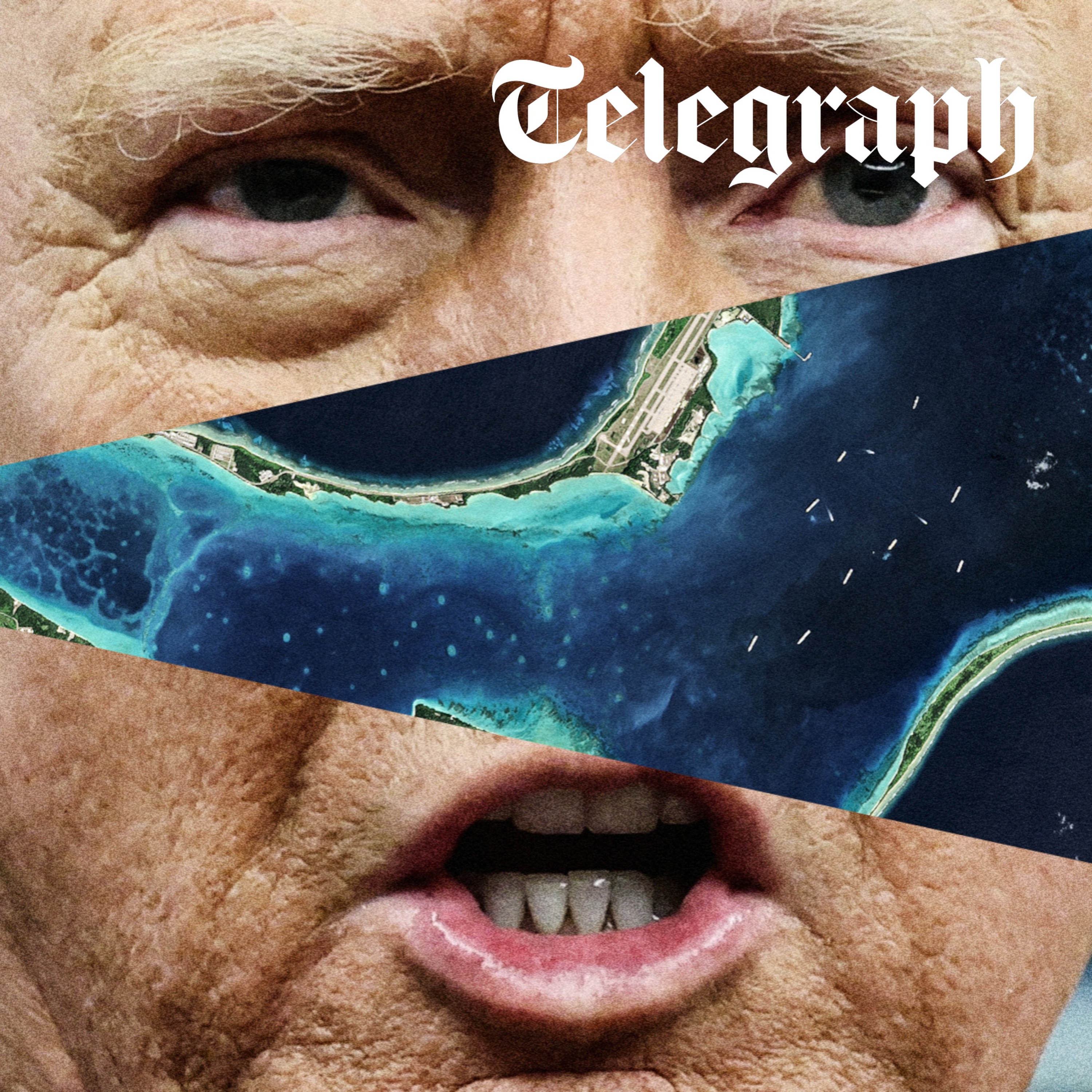
I'm Roland Oliphant and this is battle lines. It's February 23, 2026. The Chagas Archipelago consists of dozens of atolls and coral reefs in the azure blue idol of the central Indian Ocean. It is home to a remarkable variety of sea life. It's possibly, in fact, Britain's greatest area of biodiversity.
- [02:17]
Interviewer (possibly Venetia Rainey)
But it is also the home of
- [02:19]
Roland Oliphant
a strategically vital US Air base on the island of Diego Garcia. If Donald Trump wants to go to war with Iran in the coming weeks, it will be a key base for his long range bombers. It is critical to American and British security, but is also now the centre of a rift between the two allies. Britain wants to give it to Mauritius to preempt a possible attempt by that island nation to seize control of the islands. In court, the plan is to lease it back to secure American and British access to the base. But that plan has begun to fall apart. This week, Donald Trump changed his position on the deal for the third time, arguing that Keir Starmer was making a big mistake and should not give away Diego Garcia. The deal can't go ahead without American approval. And as the Telegraph reported on Sunday, British ministers fear being lumbered with a bill in the billions in compensation if the deal collapses. To complicate matters further, father, four native Chagossians, the people who were evicted to make way for the airbase in the 1960s, have just landed on one of the outlying islands and set up a permanent settlement to protest the deal. And what should have been a matter of geopolitical statecraft is becoming a domestic political football. Critics of the plan have accused the government of willfully surrendering British sovereignty. Nigel Farage, the leader of the Reform Party, upped the theater this weekend by claiming the government had stopped him from sailing with equipment for the Chagossian encampment. It is undeniably a mess. How did we get into it? And more importantly, how do we get out of it? I'm joined today by Ben Judah, a former special advisor to David Lammy, the last foreign Secretary. He was closely involved with the diplomacy related to this deal while he was in government. And he's recently written a piece trying to explain the government's reasoning and making the case that it's much more complicated
- [04:10]
Interviewer (possibly Venetia Rainey)
than it looks on the surface.
- [04:12]
Roland Oliphant
I began by asking him to explain the government's reasoning.
- [04:15]
Ben Judah
The first key thing you have to understand is that Diego Garcia has a military base. And this military base is not just a kind of airfield. It has super secret, super sensitive facilities there which are so important to what Britain is able to do in the world and what Britain is able to see and access that the moment you understand what it is, you, you come into the British deep states logic, which is we must retain access to this thing at all cost.
- [04:46]
Interviewer (possibly Venetia Rainey)
But you've seen this stuff and you're convinced. You've seen it and you're convinced of all this. This is critically important.
- [04:52]
Ben Judah
Absolutely. But let me explain a little bit more about it than that. The first point is that this is an American base. The Americans built this base. This is American stuff, this. And we are there because of a quirk of history, which is the Americans looked at a map during decolonization, saw that the British were leaving and went, don't give that to Mauritius. Create a new British Indian Ocean territory and we will build our base there. And in return for that, the UK was allowed access to this super sensitive, super secret stuff that the Americans are doing, which we would never be able to replicate if we had to do it all by ourselves. We would never be able to afford it, we would never be able to pull it off. Once you understand what it is, you understand the British deep state's logic of must retain access at all cost. So this brings us forward to the situation I faced when I came into government and that was the Americans under the Democrats were extremely worried about the security of the base. They no longer believed that what had been a useful situation for them in 1965, having the old colonial power stay actually was good for them. The Americans desperately wanted the United Kingdom to do a deal with Mauritius over this base.
- [06:15]
Interviewer (possibly Venetia Rainey)
This is all down to, it seems to come down to a 2019 finding by a panel of judges at the United Nations International Tribunal of the Law of the Sea which basically said the UK doesn't have sovereignty over it and, and it needs to hand that territory over to Mauritius. And that was a non binding decision. But this is what this all stems from.
- [06:34]
Ben Judah
That is correct. So just to give a little bit of background, when the territory was separated From Mauritius in 1965, the Mauritians were not happy about it. And even though a deal was done, money was transferred, things were signed, there was lasting resentment over this. For fast forward to a different world in which the west is far less dominant. They run a legal campaign in which they get the ICJ to say that the nature of that decolonisation was illegal and this isn't really sovereign British territory now. That's not a binding ruling, it's an advisory opinion. So the legals can quickly get quite complicated. But the long and the short of it is that the Americans were looking at the base, looking at the fact there's not just one island there, there's a huge archipelago. And they started to realize that if MAUS didn't do a deal with the uk, walked away, there was no deal. Doesn't matter what Britain thinks about international law or what America thinks about international law, all other countries in the world are going to follow those rulings that come out of the ICJ or other parts of the international legal system. And that would mean that Mauritius could go on the open market and invite any other power, that is China, into the outer archipelago. And the rest of the world would see that as a totally legal, totally legitimate move. The Americans didn't want to be in a situation under the Democrats. You've got one of the most super sensitive bases in the world with incredibly complicated geography of actually up to a thousand atolls in a vast area. They didn't want to be in the business of being, policing and securing all of those atolls. A vast resource and a waste of time as far as they were concerned. They know that Britain can't possibly do that. We just cannot have a British frogman on every single one of those islands. And if we were trying to do that, that would completely suck up the resources of the Royal Navy at the time, which they needed in Europe because of Russia, as you know better than anybody else. And that's why the United States was pushing for a deal and it was a high level campaign. The Deputy Secretary of State, Kurt Campbell actually told me that the only way that Britain could harm America was by not doing this deal.
- [08:52]
Interviewer (possibly Venetia Rainey)
When did he say that to you?
- [08:53]
Ben Judah
In the Foreign Office on a visit that he did to the Foreign Office.
- [08:57]
Interviewer (possibly Venetia Rainey)
So in that 18 months when you were working. So relatively recently.
- [09:00]
Ben Judah
Okay, yeah, yeah. It was in our first few months in government. There's then another twist to this story, which is that the British Embassy in Washington started to become frightened that the Democrats were contemplating doing a deal with Mauritius. That the Americans would go, hey, oh wow, okay, we've just looked at this international law business. Brits, get out. Hey, Mauritius, we're doing a deal with you. And that meant that we would lose access to all this super sensitive, super important, irreplaceable stuff. So actually our Chagos problem is a subset of our America problem. You have a previous administration pushing us into a deal that if we don't do, we risk them doing their own deal with Mauritius and losing access to this critical stuff. And I can't stress how important it is. Which means that the government decided to proceed and then under Trump, found itself initially in a situation in which all the American deep state was incredibly enthusiastic about the deal. The military, the CIA, Pentagon, et cetera, et cetera. But the mistake that Labour made was to think that we were still living in a world of foreign policy, you know, states acting as unitary actors of sort of Western unity and not living in an age of foreign politics where the global right have run a highly successful campaign about this, made it an emotional totem and appear to have persuaded the US President that the politics of that are more important than the material issues and security issues of the base.
- [10:36]
Interviewer (possibly Venetia Rainey)
So if what you're saying is true, first of all, you seem to be saying that it's not about human rights law or Keir Starmer being a wishy washy, spineless north London metropolitan type who can't stand up for British interests. And it's not about giving something to Philippe Sands, his friend who is representing Mauritius, you're saying this is actually about ultimately it's about Britain retaining access to something it needs for its security a hundred percent.
- [11:02]
Ben Judah
The logic behind this is cold hard rail politic. It is not because of some human rights waffle, some fantasy campaign designed by brain dead diplomats to get countries in the global south to like us a bit more. It has nothing to do with Philippe Sands is a calculation that we need to retain access to this base. The previous American administration didn't want to be in a situation where the legal position which is collapsing had fully collapsed and it offers Mauritius the opportunity to bring in potentially China into those outer islands. What they wanted to do was lock Mauritius into the global west in the great game for the Indian Ocean.
- [11:50]
Interviewer (possibly Venetia Rainey)
The idea is that all the money we pay in rent, they become so dependent on that essentially they're in our
- [11:55]
Ben Judah
sphere of influence 100%. As you see, this stuff's actually quite complicated. Geopolitics is complicated. And one of the things I think that Labour kind of overestimated was basically Britain and America is in the 21st century. We are not those kind of deep countries of a deep foreign policy consensus where issues like this can be shepherded through the House of Commons by intelligence briefings alone. We've become very emotional and turbulent societies.
- [12:20]
Interviewer (possibly Venetia Rainey)
There's one thing, of course, that seems to be the gap between the government position you've articulated and you said to me before you came in, you don't want to be seen as the defender of number 10's line or anything. You're just articulating as you understand the government's reasoning. The whole premise is this is all a binding ruling, that if these courts decide this, we absolutely have to do it. Now, the opponents, the critics of this deal, as you know, including the thoughtful ones, because there is a range of, you know, you're betraying the country and so on, but there are people in the kind of security state or in that world who are deeply concerned about this. And they said, well, it is not a binding ruling. Not only is it not a binding ruling, but I mean, the United States, our key ally here, would never demean itself so far as to is to acknowledge any kind of international United nations court telling what they could and could not do. So why on earth do we prostate ourselves before that?
- [13:14]
Ben Judah
There are two things that we're trying to do here. One is that we want to retain access to what this American super base does for as far as the eye can see, as far into the 21st century as possible. And that means we need access to it not just in five years, but in 10 years, in 20 years and in 30 years. We know that the previous Democratic administration was so worried about the collapsing legal position opening up a way that China could legally recognize by the rest of the world as legitimate, buy access into that area through Mauritius. And we know the Chinese do a huge amount of stuff on atolls in the Pacific and in the Indian Ocean, that they were pushing us to do a deal. And if we hadn't done a deal, we risked them doing a deal with Mauritius, so losing access to it. So now let's delve a little bit more into the legals itself because I think this is important. Now, the Foreign Office and the State Department came to believe that there is no way out from a binding judgment. Now you might have seen online people going, but the ICJ just did an advisory opinion. That's true. You might have seen people go online. Well, it wouldn't be possible for the ICJ to do a binding judgment on the UK and Mauritius. That would be true. You've got to look at the International Tribunal for the Law of the Sea, which has the ability to make a binding ruling. There are a couple of sub arguments you may have seen about that which the government does not believe are true. The first is that there's a 298 exemption for military bases. Government lawyers and State Department lawyers completely reject that. They don't think that that is a special hack or a way out of this. And then the idea that itlos can't rule on sovereignty. Now that's true. But it can rule on maritime boundaries, which is the whole problem, because of the outer islands. So why legally do they think that they believe that? Because in 2021 it lasted a ruling between Mauritius and the Maldives in which it incorporated in full the ICJ advisory opinion. So once it did that, the best legal minds in the British government and in the American government believed that there was no way out, that 298 exemption was not going to rub. We'd find ourselves with a binding ruling. The only way to contest that would be if both parties agreed to reverse it. And that's how you end up with a situation where Mauritius can go on the open market, the rest of the world acknowledging this is legitimate, and then bring China into the outer islands. Better to do a deal that locks Mauritius into the west and locks us into America, not just for the short run, but for the century. That was the government's rationale.
- [15:58]
Interviewer (possibly Venetia Rainey)
Why shouldn't we just leave the United nations law on the sea. Why shouldn't we simply get out of these conventions they would call binding and say, you don't have any kind of grip over us.
- [16:07]
Ben Judah
I'm not going to give you my, you know, centre left argument in which I believe in international law and I believe that's a good thing and that I believe that international sea law is a good thing and a common good. I'm going to give you the hard realist answer about this, which I heard from American officials, which is it doesn't matter whether or not Britain can leave all the human rights treaties it wants, it can leave all the international tribunals it wants and that will only be bad for Britain. What matters is that the rest of the world will follow them and that you will start to see the Chinese be able to come into those outer islands in a way that's perceived as legitimate, in a way that's perceived as legal by the rest of the world. So there'll be no way to push them out or keep them out. Apart from military ones. The military ones the United Kingdom does not have and will never have the capacities in the 21st century to put a frogman on every single one of those outer islands and to sort of put the whole Royal Navy around it. It's a huge waste of effort and time when the real threat is Russia. And the democrats didn't want to do it. The democrats, even though the United States has not part of that particular convention, had followed it religiously and just didn't want this message. The United States has finite resources. The base is so important. They wanted the legal protection around it. They wanted Mauritius bought into the west in the way that the United States is building a global, or at least it was under Biden, trying to build a global coalition for democracy. They wanted Mauritius bought into that and they did not want a situation where they are running patrols to keep China out of these outer islands. 24, 7 and in a hostile position with Mauritius and not with Mauritius bought into the global West. It actually doesn't matter whether or not we leave every single one of those treaties. We still end up with the same problem coming up.
- [17:58]
Roland Oliphant
Has the British American special relationship become an abusive one? And why do governments struggle to explain their diplomacy to the public?
- [18:15]
Banana Republic Advertiser
Banana Republic has been designing modern workwear since the 90s. Discover a new collection of foundational pieces that take you from office to off duty. Premium cashmere in new spring colors, Archive inspired suede jackets and Italian milled suits put together for the workday. Effortless. Always discover more@bananarepublic.com tired of your car
- [18:39]
Jerry Insurance Advertiser
insurance rate going up? Even with a clean driving record, you're not alone. That's why there's Jerry, your proactive insurance assistant. Jerry compares rates side by side from over 50 top insurers and helps you switch with ease. Jerry even tracks market rates and alerts you when it's best to shop. No spam calls, no hidden fees. Drivers who save with Jerry could save over $1300 a year. Switch with confidence. Download the Jerry app or visit Jerry AI Acast today.
- [19:09]
Carnival Cruise Advertiser
America, America, you used to be so fun but now you go to bed at 9 scrolling on your phone. Well, listen up America. Carnival is here with world class crew and ropes course too. And comedy and snorkeling and dining like everything from sea to shining sea.
- [19:34]
LifeLock Advertiser
Find your fun again@carnival.com Carnival is calling ship's registry the Bahamas in Panama.
- [19:44]
Roland Oliphant
Welcome back. You're listening to Battle Lines, the Telegraph's foreign policy and defence podcast. I'm Roland Oliphant and I'm speaking to Ben Judah, the former Foreign Office special advisor.
- [19:55]
Interviewer (possibly Venetia Rainey)
You mentioned in the piece you wrote over the weekend, and you've already said it here, that this is a symptom of a special relationship that's become abusive. Right. Of a relationship that's really become a little bit toxic. We're kind of trapped. Britain can't really anticipate American intentions.
- [20:12]
Roland Oliphant
I suppose you've had a front seat
- [20:14]
Interviewer (possibly Venetia Rainey)
observing this for those 18 months when you're in the Foreign Office and you're watching this at this moment of kind of historical change and you're seeing the British system trying to come to grips with what's going on. I'm wondering if you have a prescription for that. I'm wondering whether you think after your time in government, in the Foreign Office, you think that maybe the British system is so wedded to that way of doing things that it's taking time to come to terms with it. Is there an answer to this brave new world that, that we're in if that's what's happening?
- [20:41]
Ben Judah
Well, my view is that what's happened here over the Chagos Islands, which is pushed into a deal by one American administration, played around by another, politically humiliated because of a successful global right pressure campaign around this issue, just shows we've had to suck it all up because of our weakness and because of our dependence. That, for me, is just what an abusive special relationship looks like. We need to accept that it's not the same America that it used to be. There used to Be an America with a deep foreign policy consensus between left and right. You have people like Senator Vanderbilt saying that politics stops at the water's edge. No partisan politics are leaving this country. We used to be able to predict what The Americans wanted 20 years in advance. We can't do that. America's become a very turbulent, emotional and hard to predict place. We ourselves have also become a turbulent and emotional place where you can't do this kind of hyper sophisticated, four dimensional chess, rail politic in the way that you could in the 20th century. And I think one of the things that we're going to have to do as the UK is try and build up our own independence, our own capacities, and we're going to have to build up our own relationships with Europe. That means getting closer to France and Germany. It means me doing a lot more military things with them. And it means trying to reduce that ledger. Where is the UK dependent on the United States as far as we can. But that's going to be expensive, it's going to take time and it's going to be hard for people to understand and accept that they're going to have to pay for it when there are so many other terrible and painful things going on.
- [22:19]
Interviewer (possibly Venetia Rainey)
You'll have noticed online from the reaction that your piece got over the weekend, even people who don't agree with you, even people who are critics, even people who think you're basically wrong and that this position is nonsense and that it's not a binding decision or whatever have kind of universally said, look, this is the best case that the government could make and it's striking that that case hasn't really been made in public or made with such force or with such frankness. Why not? I mean, given that you were working in the government for 18 months dealing with this deal, do you think there has been a failure of communication to get the essence of this deal across to the, across to the public or to win the political argument?
- [22:56]
Ben Judah
One of the things I found in government is that it is incredibly hard to communicate. And on this issue it was incredibly hard to communicate because of three reasons. Firstly, it would be so humiliating for a British official to say that we have to do this deal because we're frightened that the Americans might cut us out and do a deal with Mauritius, that they would rather not say, that the British system would rather not say that. Then it is not considered wise, and there are many reasons why it isn't considered wise to say, look, we're so frightened of the great game that China's playing and how skillful China is at playing it and buying off Mauritius, that even if we leave and don't care about all these international human rights and international law conventions, they could come into those outer islands and the nature of Chinese competition is so intense and scary in the 21st century that not perceives a wise idea. And then you can't say that. And then you also can't say what the base does. So it's actually an absolute nightmare to communicate. If you can't be honest about America, you can't, you can't be honest about China and you can't be open about what the base does. It's almost sort of an impossible task to communicate.
- [24:02]
Interviewer (possibly Venetia Rainey)
That's a fascinating thought to leave on. Ben Jader, thank you so much for joining us on Battle Alliance. Well, listening to that with me in
- [24:09]
Roland Oliphant
the studio was our chief foreign affairs commentator, David Blair.
- [24:14]
Interviewer (possibly Venetia Rainey)
David, you spend a lot of time thinking about questions like this and you've had to think about it in government as well to a degree.
- [24:22]
Roland Oliphant
What did you make of all that?
- [24:23]
David Blair
Well, first of all, all credit to Ben Judah. That was the clearest explanation that any of us has heard for why the government is proceeding with this deal and why the previous government began this process. And he sets out very compelling reasons. I've never been one of those who dismissed this agreement as being obviously a ridiculous idea and some of the hyperbole around it has been a bit absurd. So what we've heard is a really useful corrective. And a lot of his analysis I would share. But I'll just make a few observations. The first is you can't get around the fact that we would be relinquishing sovereign territory pursuant to a non binding opinion from the ICJ and a non binding resolution from the UN General Assembly. I'm not aware that any country ever has sacrificed sovereign territory on that basis. You know, a lot of countries refuse to negotiate over what they consider to be sovereign territory. Some countries, Ukraine, for instance, have it written into their constitution that the government isn't allowed to give up sovereign territory for any reason to anybody. It's a really extraordinary thing for a country to come along and say, yes, we will hand over this territory. And to do it on such a slender legal basis, my fear would be that that makes us more vulnerable to future challenges. Speaking in exactly the spirit that Ben did and in a spirit of frankness, you know, Britain is probably more vulnerable to international legal challenges than just about any other country in the world. You know, that is one consequence of having within living memory Dismantled the biggest empire in history. You know, there is an almost infinite number of cases that could be brought potentially against us to set a precedent whereby we're prepared to give up sovereign territory pursuant to non binding decisions. Potentially lowers the bar for future challenges. That would be my main concern.
- [26:28]
Interviewer (possibly Venetia Rainey)
You still say non binding Ben's case, or he says that the government's case is that no, we think it will become binding that their lawyers have looked at this and they and the estate department, the Americans had a look at this and they saw a clear path to a binding decision. But you still don't buy that. And I know that a lot of other people who are looking at this also don't buy that. Can you explain why not?
- [26:51]
David Blair
Well, first of all, as of today, there's no binding decision. And Ben described the path by which we could get to one. And I don't dispute that at all. I mean, the path he laid out all makes sense. I would just again offer an observation, which is the whole point of the UN Convention on the Law of the Sea is that it's supposed to guarantee free navigation. And yet on the scenario we've just heard, the idea is that the tribunal which oversees that convention would rule in such a way as to make it harder for us to access the base and harder for contractors to resupply it. It's quite interesting that a convention designed to promote freedom of navigation could, in those circumstances, do the opposite. Second point, the UN Convention on the Law of the Sea and the Tribunal are supposed to have no bearing whatever on sovereignty. But in the scenario we've just heard described, they would have a decisive bearing on a question of sovereignty. And the third point is there is a clause which is supposed to exempt military operations or military bases from these sorts of provisions. And yet, as we just heard, you could actually use or interpret the convention in such a way as to slowly suffocate the base on Diego Garcia. Now, all of that strikes me as a classic example of an international convention being turned inside out and upside down in order to pursue lawfare against one of its members, in this case the United Kingdom, which for me raises the question, so why are we part of this? Why are we part of this at all? There's another point, which is that as it happens, the UN Convention on the Law of the Sea also makes it harder for us to stop the daily convoy of Russian Shadow fleet tankers passing through the English Channel. So maybe this doesn't actually serve the national interest at all. And if it doesn't, and if we were to exercise our right as a sovereign state to withdraw and therefore not to accept the jurisdiction of the associated tribunal, then there would be no binding ruling. So it's not inevitable.
- [29:01]
Interviewer (possibly Venetia Rainey)
So this brings us to a really radical point here, because Ben, or the government is saying this is the only way that we can retain this absolutely crucial asset is by doing this, what you call this incomprehensible thing, giving up sovereign territory and so on.
- [29:15]
David Blair
It's not incomprehensible. It's not incomprehensible at all. I mean, I can understand the reasons for why they might. They might wish to do it. I just point out that no one's done this before and there are risks associated with it.
- [29:28]
Interviewer (possibly Venetia Rainey)
I suppose your surprise remedy is to leave unclos or to leave a whole string of other conventions. That was the idea that I put to Ben, and he said he'd basically been told that wouldn't work and it wouldn't make a difference. But it seems like when you're at a point where these kinds of positions are being discussed, that we are at a very radical kind of moment in international relations.
- [29:52]
David Blair
I'm not sure it's that radical to assess an international convention over whether it serves your national interest or not and then decide to leave or stay accordingly. I note, for example, that the United States never joined the UN Convention on the Law of the Sea. They never ratified. I don't think we should regard it as being completely beyond the pale to evaluate our membership of international tribunals and international conventions. It's a perfectly logical thing to do. In the end, the governing principle has got to be national interest. If it serves a national interest, then fine. And if it doesn't, then we should act accordingly?
- [30:26]
Interviewer (possibly Venetia Rainey)
You served in a foreign office, you served in government. Do you also share Ben's assessment that there are things that people like you who are briefed in know about that place that convince you that we absolutely have to keep our access to it?
- [30:40]
David Blair
I think Ben has probably been more extensively briefed than I ever was. But yes, absolutely, I would accept that.
- [30:46]
Interviewer (possibly Venetia Rainey)
His point about America, I thought was very interesting about a special relationship. That's. I mean, it's a nice turn of phrase, right? A special relationship that's become abusive or toxic at every one. But it's a fair point, isn't it? Previous governments, including the previous conservative government, were in a position where they were being bounced into this by Democratic led administration. Suddenly there's Donald Trump's administration, who's going the other way. We're in a very difficult spot yes,
- [31:14]
David Blair
but I'm not sure it's any more difficult than in previous eras. I mean, after all, it was 70 years ago this year that the United States almost bankrupted Britain in order to pull us out of a very misguided military operation to retake the Suez Canal. And that was a pretty extraordinary example of what you might call an abusive special relationship. Although in that instance the Americans of course were right. So I'm not sure these tensions are unprecedented. But Ben does make a point that, you know, dealing with this particular American administration is uniquely difficult and he describes very accurately one of the reasons why that is because we're dealing here with the impulsive emotions of one decision maker who doesn't see foreign policy in the way that any of his predecessors ever did or would.
- [32:04]
Interviewer (possibly Venetia Rainey)
David we've talked a lot about kind of hard power and so on and Ben has very firmly refuted the idea that this is all about human rights law and Britain agonizing over the sins of empire and, and all of this, which is what some of the opponents of this deal talk about. But there is a, there is a human rights ish kind of element here which is that the natives of these islands, the Chagossians, were evicted in the 1960s to make way for the air base. Most of them live in Croydon where they kind of got off the plane and were dumped near Gatwick Airport all those years ago. And as far as we can tell, most of them are, are deeply opposed to this deal. They don't want it to go back to Mauritian sovereignty and, and they've, as I said, four of them have landed on an atoll about 130 miles from Diego Garcia to make this point. There is an element of injustice here, isn't there, in the whole thing, which seems to have been kind of parked and set aside.
- [32:58]
David Blair
It's one of the ironies of this whole affair that many of the Chagossians themselves don't wish the islands to be handed over to Mauritius and wish to remain under British sovereignty. It's one of the great ironies. It's also one of the ironies that Mauritius, which no doubt considers itself to be an anti colonial power, is proposing to take over this territory or asserting that this territory has always belonged to it irrespective of the wishes of the inhabitants. I find that extraordinary. But what can be done?
- [33:30]
Interviewer (possibly Venetia Rainey)
David Blair, thank you very much for joining us on Battle Lines. That is all for today's edition. We will be watching closely at the global event.
- [33:40]
Roland Oliphant
As I said at the beginning of
- [33:41]
Interviewer (possibly Venetia Rainey)
this podcast, there is a chance that Donald Trump There is still a chance Donald Trump will order an attack on Iran, possibly involving Diego Garcia, if the British government is to give the okay for that operation, which opens up a whole other can of worms about international law and so on, so forth. If that happens, we'll we'll bring it to you. But until our next edition, that was Battle Lines. Goodbye.
- [34:06]
Roland Oliphant
Battle Lines is an original podcast from the Telegraph, created by David Knowles and hosted by me, Roland Olyphant and Venetia Rainey. If you appreciated this podcast, please consider following Battlelines on your preferred podcast app. And if you have a moment, leave a review as it helps others to find the show. To stay on top of all our news, subscribe to the Telegraph, sign up to our Dispatches newsletter, or listen to our sister podcast Ukraine the latest. You can also get in touch directly by emailing battlelinestelegraph.co.uk or contact us on X. You can find our handles in the show. Notes the producer is Peter Shevlin and the Executive Producer is Louisa Wells.
- [34:52]
Banana Republic Advertiser
Banana Republic has been designing modern workwear since the 90s. Discover a new collection of foundational pieces that take you from office to off duty. Premium cashmere in new spring colors, Archive inspired suede jackets and Italian milled suits put together for the workday. Effortless. Always discover more@bananarepublic.com LifeLock how can I help? The IRS said I filed my return, but I haven't.
- [35:20]
LifeLock Advertiser
One in four tax paying Americans, especially paid the price of identity fraud.
- [35:23]
Banana Republic Advertiser
What do I do?
- [35:24]
Interviewer (possibly Venetia Rainey)
My refund though.
- [35:25]
Jerry Insurance Advertiser
I'm freaking out.
- [35:26]
Roland Oliphant
Don't worry, I can fix this.
- [35:27]
LifeLock Advertiser
Lifelock fixes identity theft guaranteed and gets your money back with up to $3 million in coverage.
- [35:33]
Banana Republic Advertiser
I'm so relieved.
- [35:34]
Ben Judah
No problem. I'll be with you every step of the way.
- [35:36]
LifeLock Advertiser
One in four was a fraud paying American. Not anymore. Save up to 40% your first year. Visit lifelock.com Special offer terms apply.