← Iran: The Latest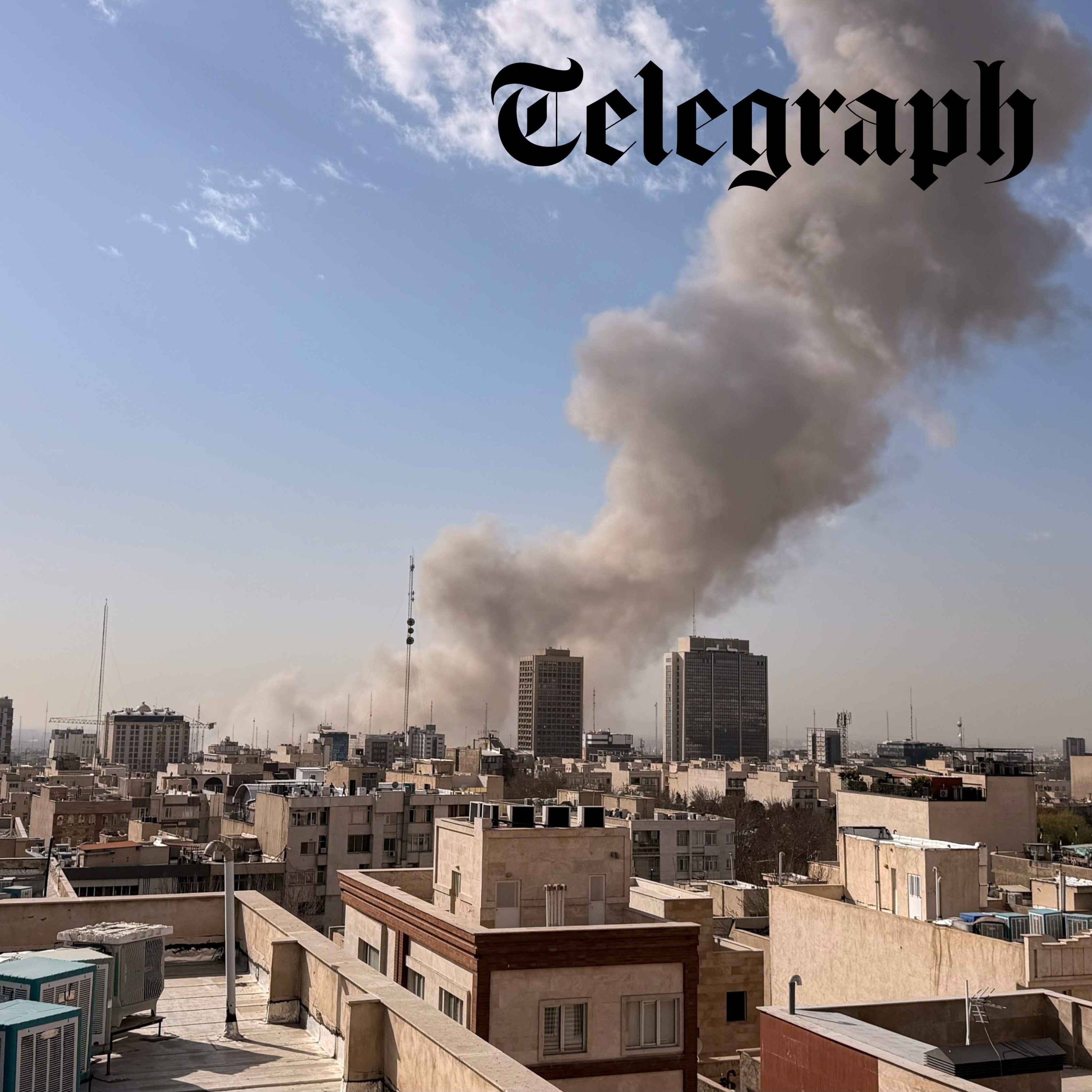
Iran: The Latest
Trump attacks Iran with 'major combat operations' to oust regime - what next?
00:46:16
Loading summary
Transcript123 lines
- [00:00]
A
Foreign.
- [00:10]
B
Is now ready. Dr. Horton, America's builder has new homes that are ready today. With new construction communities throughout the Puget Sound and Central Washington areas And more coming, Dr. Horton has the right home for you at Dr. Horton. We're still building. With more construction, more communities and more homes available every day. 10 Tap your screen now or visit drhorton.com to find your new home now ready. Dr. Horton, America's Builder and equal housing opportunity builder.
- [00:41]
C
America.
- [00:42]
A
America, you used to be so fun but now you go to bed at night scrolling on your phone. Well listen up America. Carnival is here with world class crew
- [00:58]
D
and ropes course too.
- [00:59]
A
And comedy and snorkeling and dining like everything from sea to shining sea.
- [01:05]
B
Find your fun again@carnival.com Carnival is calling
- [01:08]
A
ships registry the Bahamas. In Panama,
- [01:15]
C
America is backing you with overwhelming strength and devastating force. Now is the time to seize control of your destiny and to unleash the prosperous and glorious future that is close within your reach. This is the moment for action. Do not let it pass. We will measure our success not only by the battles we win, but also by the wars we end.
- [01:40]
D
Right now, all eyes are on Washington.
- [01:44]
A
But who's actually watching Europe at the moment?
- [01:49]
E
The deepening ties between China, Russia and North Korea would certainly have some in Washington concerned.
- [01:55]
A
Then Daddy has to sometimes use strong language.
- [01:58]
C
We're going to run the country until such time and as we can do a safe, proper and judicious transition.
- [02:05]
D
The IDF will continue to uphold the ceasefire agreement and will respond firmly to any violation of it.
- [02:13]
E
I'm Venetia Rainey.
- [02:14]
A
And I'm Roland Oliphant and this is Battle lines.
- [02:17]
E
It's Saturday 28th of February 2026. Well, the moment that we've been braced for has arrived. The US and Israel have attacked Iran. We've been waiting for this moment for a while, hadn't we, Roland? And we weren't sure if it was going to come this weekend. The negotiations, the signals coming out of it this week were suggested that they've been going well, but clearly not that well, or else this was always in the offing. What do you think?
- [02:38]
A
I think it's now clear that the negotiations were kind of. I mean, I suppose it's what the Russians would call maska. It looks like this has been planned for a very long time. The Omani Foreign Minister flew to Washington yesterday, it seems now in a last ditch attempt to avert the war. And he said that there'd been a massive breakthrough in talks that the Iranians had promised never to stockpile enriched uranium ever again, which was a big concession on their part. And indeed, there were talks in Geneva between the Iranians and the Americans last week, which adjourned, with them agreeing to carry on talking next week. So it seems quite clear that despite negotiations carrying on, despite there being a diplomatic track open, the Americans have made a decision to use force instead. I don't think you can fairly say that it's because diplomacy failed. The diplomacy was ongoing. So I kind of think given everything we've seen, given the huge buildup of American forces in the region over the past few weeks that we've seen, I think this is a plan that the Americans were working towards for some weeks, if not months.
- [03:48]
E
Okay, so let's just talk our listeners through what's happened this morning. All kicked off shortly after 7am GMT. Where did things start?
- [03:55]
A
So, yes, which would be roughly the middle of the day in Iran. Missiles struck Tehran, first of all, one of them landing apparently near or on the office of the Supreme Leader in central Iran. And since then we've seen explosions going on all over the capital. Several other places we've heard strikes in Tehran, but also Isfahan, Qom, Kermanshah, Lauristan, Karaj and other cities. So across the country. Actually looking at a map that the telegraph that's produced mostly of the western half of the country, but it is an enormous country, I should point out. We've also heard explosions on Kharg island, which is Iran's main oil export terminal, and also in Tabriz, Desfool, Nahavand and Kangavar. All of this is the latest from our live blogger, Akhtar McCoy. Our brilliant Iran focused foreign correspondent is updating it as we go. But of course, probably more strikes have taken place in the few minutes or half an hour since I made those notes. So the bottom line is the strikes are nationwide and the Americans are indicating that this is not a limited campaign. It is not a campaign aimed at just applying a little bit of pressure or simply restricted to nuclear sites or anything like that. The objective is to bring down the Islamic Republic of Iran.
- [05:15]
E
Yeah. Trump gave a statement this morning, put out an eight minute video on Truth Social. He said this was going to be a major combat operation. Let's hear a clip of that.
- [05:22]
C
Now, a short time ago, the United States military began major combat operations in Iran. Our objective is to defend the American people by eliminating imminent threats from the Iranian regime, a vicious group of very hard, terrible people. Its menacing activities directly endanger the United States, our troops, our bases overseas and our allies throughout the World. To the members of the Islamic Revolutionary Guard, the armed forces and all of the police, I say tonight that you must lay down your weapons and have complete immunity, or in the alternative, face certain death. So lay down your arms. You will be treated fairly with total immunity, or you will face certain death. Finally, to the great, proud people of Iran, I say tonight that the hour of your freedom is at hand. Stay sheltered. Don't leave your home. It's very dangerous outside. Bombs will be dropping everywhere. When we are finished, take over your government. It will be yours to take. This will be probably your only chance for generations. For many years, you have asked for America's help, but you never got it. No president was willing to do what I am willing to do tonight. Now you have a president who is giving you what you want. So let's see how you respond. America is backing you with overwhelming strength and devastating force. Now is the time to seize control of your destiny and to unleash the prosperous and glorious future that is close within your reach. This is the moment for action. Do not let it pass.
- [07:25]
E
Obviously, as you said, Roland, this is really fast moving. I'm just saying some stuff that I saw on Reuters. Several commanders in Iran's Revolutionary Guards and political officials were killed apparently this morning. That's an Iranian source close to the country's establishment talking to Reuters. And they also reported that Iran's Supreme Leader, Ayatollah Ali Khamenei and President Massoud Petishkian have been targeted in the strikes. That's from an Israeli official talking to Reuters. We obviously don't know what's come out of that, if anything. Our producer, Pete, pointed out something quite interesting, that Tehran's skies have reportedly been left wide open because of the failure of Russia to deliver advanced air defense systems that Iran requested. What do you make of that, Roland?
- [08:03]
A
Well, this has been a long running soar in Iranian and Russian relations. Actually, that goes back decades. And I know we're talking about what's happening right now and this week, but the Iranians have been trying since the 2000s even to get the Russians to sell them advanced air defense missiles. You know, the Russians kind of avoided providing them. Eventually some were provided and they were systematically destroyed by the Israelis during two waves of strikes last year, particularly during Operation rising line, the 12 Day War, when Israel launched airstrikes against Iran in June. And they haven't been replaced. I think it would be pretty clear why they haven't been replaced. Russia's waging its own enormous war and it needs its own air defence missiles to defend itself from Ukrainian missile and drone attacks. So I don't really see that the Russians are in much of a position to extend that help or to resupply. But I do wonder whether it would have made that much difference. Partly because you remember we had a very good conversation with Air Marshal Ed Stringer a few months ago talking about this question of air defence and how it works, and he made the point that, you know, you can have all the kit, but if it's not integrated, if you don't have the system in place to make it operate, it's not going to work as planned. And that's kind of what we saw in Operation Rising lion last year.
- [09:30]
E
And just because you mentioned Operation Rising lion, the Israeli operation this time is called Operation Lion's Roar. The US have called Operation Epic Fury and Iran's Revolutionary Guards have called it operation true promise 4. I don't know if I'm missing something in translation there. How has Iran responded, Roland? This has quickly turned quite regional, hasn't it?
- [09:49]
A
Yes. I mean, the Iranians made clear before this happened that they were not going to. You know, the gloves would be off and they would respond in full force. And since it is an operation directly aimed at regime change, they have no reason to show any restraint at all in their response. So, as you say, they're calling their response Operation True Promise 4. So by 8:49 UK time, Iran was launching its third wave of missiles at Israel. So it's already got off at least three. I guess they're onto the fourth wave around now. The IRGC says they've also hit Al U Daid Air Base in Qatar. That's the big US air base there. Ali Al Salem Air Base in Kuwait, Al Dharfah Air Base in the United Arab Emirates, and the US Fifth Fleet Headquarters in Bahrain. They say they hit them with multiple ballistic missiles. Now, we do know that Iranian missiles did strike the U.S. 5th Fleet headquarters in Bahrain. We've also had reports of explosions in Riyadh, Qatar and Kuwait. So it definitely seems like at least some of those Iranian ballistic missiles have got through on the domestic front. So the Iranian Security Council, which is run by Ari Larajani and is basically running the country at this point, as far as we can tell, have told citizens to leave Tehran and other targeted cities if they can. This is the quotation from them in their first statement based on intelligence obtained from these two corrupt regimes, the two being Israel and the United States, because in case we haven't mentioned it already, Israel is also involved in this, it's a joint Israeli American operation based on intelligence obtained from these two corrupt regimes. Their operations will continue in Tehran and some cities. So as much as possible, while maintaining calm, travel to other centers and cities where it's possible for you to stay safe. They said they've also activated their kind of emergency response protocol. All regional governors have been ordered to take an assessment of the situation in their regions and report in. The Iranians were not. Were not exactly unprepared for this. So they were seen to have deployed IRGC ground troops to the missile bases out into, you know, out into battle positions, if you like, before this happened in a way that didn't happen ahead of last year's strikes. So they were readying for a potential escalation. They won't have been taken entirely off guard by this, I think.
- [12:07]
E
Also interesting to note that Trump in his statement said American troops might die. And I think that's quite a frank admission of how this is shaping up to be a different conflict from what we've seen before before. It's been very sort of go in, do it all remotely and get out again quickly like we saw in Venezuela, like we saw last year. But this might be more extended. And I think we're expecting the Iranian response as well to be. To be heavier. Let's just hear a voice note from our Israel correspondent, Henry Bodkin, about what it's been like there this morning.
- [12:36]
F
Another year in Israel, another war. I've just come up from the bomb shelter where I've spent most of the last two and a half hours sheltering from wave after wave of incoming ballistic missiles from Iran. The sound of the interceptions was particularly loud. Some of them sounded very close. We've got the roar of fast jets in the skies above Jerusalem returning from bombing sorties over the Islamic Republic and fresh formations going out. As far as we're aware, no one was seriously hurt in Israel this morning. There's reports of one injury up in the north from the shock wave, but it's a minor injury, but it's a reminder that some of these missiles do get through. In June, about 60 got through and they killed about 30 people, mostly people who weren't sheltering properly or who thought they were safe enough. But in the end, they weren't. And people here know the score now. They know that these ballistic missiles are really not to be trifled with. Israel is at war again. There's been a mass call up of reservists. Airspace has been completely shut to orbit. Military aircraft. The hospitals are moving underground. And there's been a ban on all gatherings, schools, non essential businesses going forward until further notice. So Benjamin Netanyahu has actually spent most of the last two or three weeks issuing warnings to Iran on not to retaliate against Israel. If the US Attacked Iran, that is, if the US attacked on their own. But in the end, of course, he's gone for the first strike with Donald Trump. And this time it's not just about the nuclear program. It's full fat regime change, toppling the Ayatollah, ending the Islamic Republic after nearly 50 years. Now that will probably take longer than a limited campaign against defined infrastructure because the Americans and the Israelis, they have to wait for the key regime figures to show their heads in order to try and assassinate them. And crucially, as Donald Trump said in the early hours of the morning, directly to the Iranian population, you have to topple the government. Therefore, there is a real feeling of people knuckling down here that this could be a far longer campaign than last June. And while Israelis are broadly supportive of it and they're used to the stress and the depredations that come with spending the evenings in shelters, there is a sense of here we go again.
- [15:04]
E
So that's the situation on the ground in Israel. Thanks to Henry Bodkin, our Jerusalem correspondent, for sending that in. Roland, where do you see this going in the next few days and weeks? What sort of things are you going to be watching for?
- [15:17]
A
Well, I mean, this is, this is it, right? The Americans have made very clear that the intention is to end this confrontation with Iran that's been going on since the 1979 revolution. And Donald Trump referenced all kinds of things, including the hostage crisis back then and so on. The American intention is it's maximalist, it is bring down the regime that is going to involve decapitation, certainly, so killing as many of the top leadership as possible, crippling the irgc, I expect, and we've already seen, I mean, Donald Trump has said something to the effect either lay down your arms or face destruction or change sides. I expect the Americans will try to persuade elements of the security forces, perhaps the regular army, the artes is distinct from the irgc, to either stay at home or change sides. And the ultimate objective seems to be, in fact, they've said, it doesn't seem to be that. They've said it is for the Iranian people themselves to have another revolution and overthrow the regime, affecting a regime change from within. The problem with this, I mean, there are obviously multiple risk factors here. One is every Single anti regime uprising up until now has been crushed by the regime in the irgc. The regime and its followers and people within the IRGC have no interest in seeing the regime go at all. For them, it's pure survival. So you can expect them to be as ruthless as they can be in putting down any potential uprising. And it's not at all clear who would take over. You mentioned the Venezuelan scenario there. The thing in Venezuela is there was a clear line of succession and there was some sense that you could tolerate elements of the regime remaining as long as Maduro was gone and as long as they did what America said. But what Trump's saying is that the whole regime has to go, all of it. So what happens after that? I assume the plan is that there'll be, you know, some kind of uprising or referendum, probably. Reza Pahlavi, the Crown prince, returns to Iran and somehow installs himself as an interim leader. I suppose that's the plan, but it seems to me fraught with risk. We really don't know how much support he's got. You've got a country that is, you know, there's a lot of guns around. You will have a huge number of people with their own interests to defend IRGC remnants. There are separatists armed movements in Baluchistan, in some of the Arab provinces, up in the northwest, in Kurdistan and places like that. And so there is a real potential here for things to go really, really badly wrong. And I don't think the Americans are indicating that they intend to put troops in on the ground to try and stabilize things. In fact, I think that that's probably something that they've ruled out. So if they do succeed in destroying the regime and bringing it down, huge, huge levels of risk for Iran and its people. And the other thing I'd add, Venetia, is it's about resources. So regime change from the air seldom works. And these air campaigns can take a very, very long time. So if you look at, for example, the first Gulf War, the Americans, well, the Americans, the RAF, the coalition, spent 100 days conducting an air war against Saddam before the ground operation, Operation Desert Storm. If you look at the air war against Serbian forces in Kosovo and across Serbia in 1999, that also went on for weeks. And we don't know. It doesn't seem like the Americans have that amount of resource in the region at the moment. So it seems to me that they've got quite a narrow window in which to achieve this very ambitious objective. And if they run out of bombs and the regime is still standing after this, then they're going to look pretty silly.
- [19:24]
E
Thanks, Roland. That's really interesting. And of course we'll keep following all of this on battle lines over the coming days and weeks. Roland, you had a really interesting chat that we're going to hear coming up. Who are we going to be hearing from?
- [19:35]
A
Yeah, so literally a few hours before this happened, I spoke to a guy called Jonathan Hackett to kind of get a sense of what he thought was, was going on or might happen in the next few weeks. I didn't think it would be tomorrow. He's a former US Marine who spent decades in the kind of intellig
- [19:54]
D
of
- [19:54]
A
that, and his work in intelligence was often targeting Iran. Iran is really his specialism and he's thought and been involved in, I think, discussions around these kinds of operations for years. He's out of the military now, but he had some very, very interesting things to say about how long he thought that this operation had been planned, what the objectives would be, and also the wisdom of, of pursuing it and the enormous risks involved.
- [20:25]
E
That's coming up after the break.
- [20:40]
B
Your new home is now ready. Dr. Horton, America's Builder has new homes that are ready today. With new construction communities throughout the Puget Sound and Central Washington areas and more coming, Dr. Horton has the right home for you at Dr. Horton, we're still building with more construction, more communities and more homes available every day. Tap your screen now or visit drhorton.com to find your new home now ready. Dr. Horton, America's builder, an equal housing opportunity builder with endless scroll algorithms and AI flooding feeds, Podcasting stands out.
- [21:15]
D
They're sought, not served.
- [21:17]
B
Audiences actively choose to hear trusted voices
- [21:20]
D
on topics they care about.
- [21:22]
B
In fact, 72% of listeners say podcasts shape cultural conversations for marketers. That means podcasts shift brand perception like no other channel. Acast's Podcast Pulse 2025 report has the proof. Get all the insights at podcastpulse2025.com.
- [21:58]
A
Tell me a bit about yourself, actually. What, what's your, what's your relation to this?
- [22:04]
D
So I was in the marine Corps for 20 years in the special operations community. I did intelligence work the entire time. So I've done again target in Iran, Russia, China, on the Russia, China front, almost exclusively nuclear issues and spent a lot of time in the Middle east around Iran, worked in Afghanistan, Jordan, Iraq, Syria, Lebanon, Turkey, you know, six different embassies. So had quite a bit of experience over the last 22 years.
- [22:32]
A
What's your sense of where we are? I mean, do you Expect strikes to go ahead this weekend or in the coming weeks. Or not.
- [22:40]
D
Yeah. So looking at this, I spent the entire Trump 1 administration in the US embassy in Jordan, and we had a few moments where we were about to go to war with Iran back then. I remember some nights in particular where we were up 36 hours straight with about to actually invade the country and we didn't do it. And that was under John Bolton, who was a national security advisor at the time. And that strategy is very different than the current approach to Iran. I think that's a very important thing to highlight between Trump 1 and Trump 2. The way that they're approaching this is more deliberate and a lot of what they're doing is planned much further in advance than it was during Trump 1. I remember in particular it was right after Kasim Soleimani was assassinated January 7, which was a few days later. We literally had forces that were 24 hours ready to go into Iran that night.
- [23:25]
A
To go into Iran.
- [23:27]
D
Contractor. Yeah. We had forces in Jordan at Muafak Salty Air Base. We had forces in Qatar all ready to go because there were, there were some Americans who were killed in Syria because of a. And also the Alad Arabat base attack. And there were no fatalities there. But, but Trump himself said we're going to invade Iran to teach him a lesson. And there wasn't really anybody there leading the Iran charge besides Bolton, who was a very much Iran hawk. And I'm saying that to contrast it to this time where if you look, for example, at the Venezuela attack planning that had been in the works for several months.
- [24:01]
A
Yeah.
- [24:02]
D
And what's going on right now with Iran also in the works for several months, even though it's not public that it's been several months. It looks more kind of reactive, but it's definitely not reactive. And that's because the person leading the Iran charge this time is General Kaine, who's the chairman of the Joint Chiefs of Staff, which is probably a more appropriate person, you know, by the book, to be leading planning for war instead of somebody like Fulton. Still a lot of flaws with Kane, but it's actually a much more military style planning system going on right now. So I'm looking at this and thinking there's already a plan in place and already has been a plan in place for an invasion or an attack, you know, wherever it is. On the spectrum of what military action it is, this, this didn't come up in the last three weeks and it didn't come up in January during when the regime murdered the protesters. This plan had likely been in the works since at least six months ago. Really? Based on how, based on how it's unfolding, and especially if you look at the double talk coming out of the administration, it's carefully placed double talk where it sounds to the public like Trump is waffling, but he's not waffling. And I would compare that especially to the way he's been discussing the Venezuela lead up before taking Maduro. It's almost the exact same playbook. And I will also mention that the regime was offered a way out two weeks ago to have 20 members of the regime leave Iran, including the Ayatollah, to go get safe harbor in Moscow. And the Ayatollah turned it down. Whoa, whoa, whoa, whoa, whoa.
- [25:22]
A
Hold on, hold on a second. Has that been reported?
- [25:26]
D
I think it was reported by the Jerusalem Post, maybe, but it's something that is known. It's in the public, if you dig a little bit.
- [25:35]
A
Okay.
- [25:35]
D
But yes, that did happen. And I, I know that from a Mossad source that I'm very close with that mentioned that he rejected it personally. He was offered basically the out. Yeah, I mean, but the thing is, he was offered the Assad option. They said, we're going to give you the option. Here you go. You can either go to Moscow or we're going to destroy you. And this was private at the time, before it was made public. So he had an opportunity to privately agree, which would save face, you know, it would allow him to do something quietly because nobody knows where he is unless he says where he is.
- [26:06]
A
Yeah.
- [26:07]
D
So, I mean, he could take the Hassan Nasrallah track, where he only appears on television and people think that he's in X location, but he's in Y location, you know, which didn't work out for Nasrallah anyway. And it was his choice to not take that secret agreement, which means he's digging his heels in.
- [26:24]
A
Okay, so given all that, I mean, do you think we're looking at a Venezuela style decapitation? But that, that, okay, there's, there's a number of questions. Do you think that's what we're looking at? And, and the second thing is that of course implies, you know, kind of settling with a kind of regime insider to take over. That would be the Venezuela model. Do you think that's what we're looking at?
- [26:51]
D
So when I've sat in planning sessions like this, when the President's being brief, different options, that would be an option included in the deck. That wouldn't be the recommended option. So usually what they do is they brief them three options. They'll say, here's option one, two and three. Option one is a medium option. Option two is a terrible option. Option three is what you should take so that the option that you just described would be option one, like a medium option that they actually don't want him to take to accept. And the reason for that is because we don't have contacts in the regime that are so pervasive that if we got rid of this top layer, we'd suddenly have a trustworthy devil that, you know, sitting there. And the concern is that if we do a decapitation strike, you're going to have the IRGC take over the country and it's going to be even worse than it was with the ayatollah, because now you're just going to remove religion and keep the grip. And because, I mean, even the central bank director himself three years ago said that the IRGC controls 30% of the black market economy. Which if they're publicly saying that, you know, it's important that. Yeah, so, I mean, you're not really changing anything by removing that top layer. And the other thing I'll point out is back in June, when Israel and the US attacked Iran, they selectively took out certain IRGC leaders and left some in place, which to me is kind of an indicator that some of those individuals might be working with the West. Yeah, but that's, that's not, that's not enough to change anything systemically within the way the governing system is. What, what would be necessary is probably a revolution from below bringing in a referendum, just like There was in 1979 and 1980, where the people feel as though they've got control over the country, whatever that looks like. And I'm sure that's probably the option three that's being presented. And the way this would work is it wouldn't just be a military activity. It would be, again, something planned far in advance where there's a covert influence activity going on inside the country. For example, providing Starlink terminals to several thousand Iranians so that during the expected protests, which will happen, they'll be able to communicate with the outside world, which did happen. Also having the US ensure that those terminals couldn't be jammed, which is again, another thing that you can't do organically. That has to come from COVID action. And there'd be a lot of other covert activities going on to prepare the environment for exactly this outcome. So you'd see a public action which would be a military action, and there'd be a covert action accompanying it that we would not see, which is probably ongoing right now already. Right.
- [29:04]
A
I mean, the way you're talking, it sounds like the operation's on its way, in a way. Yeah, That's. That's how you feel. You don't feel like Trump hasn't made up his mind. You feel like he's just preparing.
- [29:19]
D
Yeah. I think what they're waiting for is a moment when they can create the facade, at least of a justification, saying, well, look, we gave the regime the opportunity to accept this new agreement. They rejected it. Or the regime makes a mistake, similar to January 2020, when they shot down the aircraft that had a lot of Canadian and Iranian people on it by accident. You know, they're looking for something like that, or just the regime rejecting the terms and, you know, digging heels further. But the regime isn't looking at this like a regular negotiation. You know, you can see on the ground what they're doing with their forces. They've pushed IRGC ground forces to all their missile bases, which is the first time they've done that since 1988.
- [30:01]
A
Right.
- [30:01]
D
Because they anticipate boots on the ground, which they've never anticipated before. And when I say anticipate, it's not that they're saying this. You can see it in what they're doing with their troops. It's unusual.
- [30:12]
A
Right. Okay. Do you think they're right to anticipate boots on the ground?
- [30:17]
D
I think they're smart to do it. I mean, if I was a military commander, I even. Even if I hoped the outcome would be good, I would be preparing for the worst and ensuring that my forces are ready to defend the land, especially with the reduction in Hezbollah and Hezbollah and other Shia militia groups that are, you know, they're reduced in strength because of last year. So you've lost that kind of, you know, outer ring of security. So now you have to take on your own security for the first time in a long time.
- [30:42]
A
Yeah. So the. The objective of the operation you think is. Is going to be a regime change operation. Not this kind of. What's the word? Because there's a whole range of options.
- [30:56]
D
Right.
- [30:56]
A
There was, like, you know, selective strikes, minimal strikes here or there, or just to apply some pressure or there's the. All singing or dancing. We are actually going to bring down the Islamic Republic now. And you think it's the last?
- [31:09]
D
Yeah, I think that's. That's the most likely option, yes. And. And I'm looking back at the custom Soleimani kill and some other strikes like against Nasrallah and things like that, that did zero to change the regime. And I mean, assassinating Costum Soleimani, who is basically an untouchable godfather like figure that his death did nothing, like literally changed nothing. And I think, I think the US government understood that this is not going to have an effect. If you get, like, if we do this again, if we kill Khamenei, if we kill the IRGC commander, like this does nothing. And even in June they did kill the IRGC commander and they killed the military commander, like of the entire military. Nothing happened, nothing changed.
- [31:49]
A
Yeah.
- [31:49]
D
And I think they see that, they assess that and they know that this is not a good thing to repeat, at least if we want a changing outcome.
- [31:57]
A
Right. In that case, do you think such an operation could succeed? I mean, everyone talks about how, oh, you know, the, the regime is more vulnerable than it's ever been. And, and there's definitely a kind of. I mean, my background's Russia, right.
- [32:17]
D
So.
- [32:17]
A
So I always go back to these, these comparisons because we compare things to what we know. Right. But there's a kind of late Soviet feel about, about the place when you talk to Iranians, kind of like no one, you know, really believes in the revolutionary rhetoric anymore and the whole place feels tired and so on. And yet, I mean, as you say, like, the IRGC basically run a huge chunk of the economy. They're massively embedded, you know. I don't know. Do you think this is a good idea? I suppose is the question. Does work.
- [32:51]
D
I would use the Russia comparison actually, because in the 80s you had glasnost and perestroika. There was actual change already occurring organically in Russia before the Soviet Union collapsed. In Iran, you do not have this. And the regime has been very careful to ensure there is zero alternative leadership that exists in the country. There isn't any. And this is a problem because in Russia there was some. And there actually had been, I mean, since the very beginning, there had always been at least a little, a modicum of, of difference. And in Iran you don't have that. The only resistance you have are two main groups. One is the Mujahedini, the mek, which sometimes is called the ncri, which is a radical cult like organization that would be a disaster for Iran. And the other option is the Shah, which is why they had a revolution in 1979 in the first place. So the only two viable options are not options that would very likely receive majority support if there was a referendum. So now you're left with groups that all. There were already separatist groups in the country. There have been from the very beginning, Even back in 1946 when Russia, the Soviet Union supported the Kurds against the Shah and the Azeris against the Shah. And there were actually two breakaway republics, the Republic of Azerbaijan, the Republic of Kurdistan and Mahabad. Was this when the group still.
- [34:06]
A
This is when the Soviets refused to withdraw after the war and those.
- [34:09]
D
Exactly, yeah, exactly, yeah. Yes, yeah. And so those groups still want their own states now and they always have. There's never been a moment they didn't. And then if you look down in Baluchistan or in Akabaz, which is the Arab eyes Persian area in the southwest on the Iraqi border, these groups are also fighting against the regime and want their own states. So what could possibly happen is either a Balkanization of Iran or a widespread separatist uprising that's not united. Or you know, maybe, maybe the people in the moment realize that they want their own government and they have a referendum. There have been two moments in Iranian history in the last 150 years where that did happen. The first was 1906. That was the constitutional revolution which was successful. And the second time was in 19 has actually been elected by the people or chosen by the people. So it's, maybe it's possible, but the conditions right now are not ripe for a united group to actually come up and present a new leader. I think what will probably happen is the US government in Israel will bring the Shah into Iran, offer him as an option and he will become the leader of the country. And the question is do the people want that or not? And then what would be the follow on effects if the answer is that they don't want that.
- [35:15]
A
Okay, so this sounds like potentially really bad. I mean this sounds like a potential like complete disaster. Libya, Syria, a state collapsed in civil war.
- [35:27]
D
The thing is a lot of Iranians, they don't see themselves like. And this, the Libya and the Syria comparison have been brought up frequently and a lot of Iranians oppose that. They say, you know, we have culture, we have oil, we have resources. You know, it's not going to collapse like that. I think there's, it's. The truth is probably in the middle of those two points. The problem is you have a lot of weapons and you have a lot of trained military forces that will be kind of de BAFFIFIED Just like 2003 in Iraq, those weapons will find their way somewhere else. And if they find their way into the hands of the Baluchi separatist. Well, he's going to stake a claim.
- [36:01]
A
Yeah.
- [36:01]
D
And it's almost kind of a runaway situation where even if you did have some centralized stability in Tehran, that doesn't mean you have stability in Khorasan or in Balochistan, you know, so that's, that's a concern that I have, is that, okay, you bring the Shah in and suddenly everyone thinks that because Tehran is stable, the country is stable. And it's not, it's not like that, you know, especially with the way the terrain is. You can't even get there easily on. In a vehicle to go suppress problem. I mean, that's what happened in 1946, was that the Shah couldn't even get his troops to the Kurds to suppress them.
- [36:31]
A
Yeah.
- [36:31]
D
Because the mountains were too intense.
- [36:33]
A
I've actually literally just been to. There's a wonderful map shop in Covent Garden in London. I literally went in there and bought the, the only wall map of Iran. I've just hung it up.
- [36:45]
D
Oh, wow, that's awesome.
- [36:46]
A
Oh, it's lovely. It's lovely. It's a beautiful map. I like maps, but, God, the relief. I mean, you know, I've flown over Iran, I've been to Iran actually, a couple of times, but it's just so mountainous, isn't it?
- [37:00]
D
It's just, yeah, it's, it's insane. I mean, it's so difficult to plan a military operation. I mean, that's what happened in 1980 when we tried to rescue the hostages with Operation Eagle Claw. I mean, a major reason that operation failed as a disaster is because we didn't understand, like, how serious this terrain really is.
- [37:16]
A
Yeah. It was in the desert, wasn't it? Oh, yeah, yeah, exactly. Went wrong. Okay, so it's like I'm trying to get a sense of your. I mean, do you think it's wise then to. To launch this operation? They're considering.
- [37:32]
D
It's such a tough question because on a moral level, I say we should do something because the people are suffering and the suffering is going to continue until somebody stops it. You know, that's, that's one side. The other side is more pragmatic or realist looking as, especially as a Westerner looking, you know, is this the right use of our military assets? Is the risk too high? And I think the, the risk part of it is a very serious concern. And I, I wonder if our governments in the west have carefully thought through step two and three after the step one of strikes happens and history kind of says, especially in the last 30 years, history kind of says that we don't do that very well, and I would worry that we won't do it well again. And the government in the US Especially has kind of drained itself of expertise in the Middle east in the past three years, not just in the military, but also in the Foreign Service, USAID, and these other organizations that in the past had contributed a lot of insight into this type of planning.
- [38:35]
A
Right.
- [38:36]
D
And I would be very concerned that the, you know, the after effects have not been thoroughly considered, probably.
- [38:43]
A
And what do you feel about. If we all talk about Iran's kind of military capacities? You spend ages kind of, you know, in the Marines and intelligence looking at this, and what do you make of the irgc? Because it seems to be, I mean, there seems. It seems to be an enormous organization, first of all, and it seems to have bits and pieces. And there's kind of, you know, there's the irgc, there's the KUDZ force and, and the big generals who, you know, are in charge. And then, you know, I've got a colleague who, who went to school in Iran and, you know, half his mates have done their national service in the irgc. But, you know, that doesn't make them kind of champion. They're just, you know, they. They stood on a checkpoint somewhere in Baluchistan or something, you know.
- [39:26]
D
Yeah.
- [39:28]
A
What do you make of it, the irgc, when we talk about it? Because sometimes we get a little bit Saddam's Republican Guard about it sometimes, I think.
- [39:35]
D
Yeah, yeah, I agree. And actually, so from 1988 until 2016, the IRGC ground forces had never deployed in combat. The first time they deployed in combat was 2016, when Assad asked them to come to Syria to help with the war against the jihadists. That was the very first time they'd ever seen combat since 1988. So many of them had never seen combat because they hadn't. They weren't in the military back then. And the ones who were are now generals who have a lot of, you know, clout and they're not going to the front line. Since that time, 2016, there was an agreement in 2018 for them to redeploy back to Iran. They have never deployed since then. So if you're looking at pure combat capability, this is actually a big problem with China, too, because China's got all this militarization and growth, but they've never actually been in combat. Yeah, and it's always, you know, like Helmut von Moltke said, you know, the first plan never survives contact with the enemy. And I wonder, you know, once these forces actually come up to combat, what's going to happen? Because the US has certainly seen combat and is, you know, very tested in that the US will make mistakes as well, but they've made a lot of mistakes in the past and learned from them, whereas the IRGC has not had that opportunity recently to do that. And I mean, fighting jihadists is a lot different than fighting the United States. So even those who do have combat experience, there's going to be a lot of challenge. And they've removed that top layer of leadership back in June. So a lot of those seasoned commanders who remember 1988, they're not there anymore. So even if they have the numbers, even if they have the technology, I mean, China just sold them some, some Silkworm missiles. I mean, they've never used these missiles before. They've never tested them even outside of combat. So, I mean, what do you. I mean, what can we expect from them, especially in the first, let's say, month? I think they would have a very high casualty rate, not because they're bad people, but just they didn't have the opportunity to train together under the pressures of combat, under the fog of war.
- [41:25]
A
Okay, and the. These are the Artes. They call it the regular military. No.
- [41:31]
D
So the ARTES is a completely separate group.
- [41:33]
A
Yes. I wanted. I want to ask you about that and whether we should talk about them more, because we always talk about IRGC as if the artish is an afterthought these days. And I don't really know. I mean, when you're looking at it as a military analyst, you know, intelligence guy, I mean, you. Do you. Do you pay attention to them? Are they also formidable or are they so kind of have they basically been replaced by the IRGC in any credible sense?
- [41:58]
D
So since they have two separate missions, it's almost like analyzing two different militaries. Because the IRGC's mission is to defend the regime, Right. Whereas the Arches mission is to defend the soil. And the ARTES does do training on defending the soil. And they have defended the soil, especially at the border regions and especially in Baluchistan. So they've had some experience using their equipment, getting called to order, getting command and control over radios. Like, these are very important things that are, like, sound, basic, but that's what makes militaries fall apart, is if you can't do that, you can't succeed. The thing with the Artes is they're not ideologically selected. They do have a large Sarbazi population, which is the conscripts you were talking about. So we have to wonder about the combat effectiveness of those conscripts. But once you move up the ranks a little bit, there are professional soldiers who do serve their entire life in the artes. And there will be a very large, a significant number, let's say, of our test people who put their weapons down or at least turn them on the regime if there is a revolution. Whereas in the irgc you probably won't see that very much.
- [43:00]
A
Okay. And the, the Americans would be fighting both of them, I presume. If, if this happens, if the US
- [43:10]
D
war planners are smart about this, they will probably immediately send out a message to Artes saying if you put your weapons down, we won't touch you. Because the smart thing to do is to assimilate the artes into the new government as the military. That would be like the best outcome because these guys aren't ideologically aligned with the regime they're serving because that's their career. Whereas with the IRGC it's not the case. And do you think that. I think that would be very wise.
- [43:35]
A
We didn't really see any, we didn't really see during a 12 day war last summer. I mean, I think we had a couple of, a couple of not particularly important diplomats defected publicly, but we didn't see like large numbers of, you know, regular army or the police or anything kind of changing sides or anything as far as I could tell. And I was wondering if the Israelis were hoping that would happen and were kind of disappointed when it didn't.
- [44:03]
D
No, I think back in June that was a very narrow strike package and I think the regime understood that. I don't think there was a feeling in Iran that there was going to be an imminent regime collapse. And especially because the strikes did end after 12 days. So it wasn't like a continuing thing. And there were no ground forces. It was only an air campaign. It was only against military targets there. There wasn't other carry on effects that you would not typically expect if there was going to be some change in the regime. And actually in 1979, when there was the revolution, a lot of the Sabak, which was the original intelligence organization that later on became the Ministry of Intelligence after the revolution, many of those folks did not defect. They just took off their old Shah uniform and put on a new fatigue that the new government gave them. And many of them served all the way through the end of their careers into the 90s after they retired. Same thing with the military. A lot of the soldiers that were the Shah soldiers put their weapons down and joined the new government.
- [45:00]
A
Right.
- [45:01]
D
So there's already historical precedent for that, and so it wouldn't require much space saving because it's already happened before.
- [45:08]
A
Right. Okay. And how long do you think it might take this campaign?
- [45:14]
D
It depends on how long it takes the regime to capitulate. If they decide to capitulate, there's a couple of, you know, different. Different outcomes based on those things. If they do capitulate quickly, I mean, it would be over quickly, and then what would likely happen after that is that somehow the shot arrives in Iran and claims that there wasn't the US Or Israel bringing him there, and then they probably have a referendum, and somehow he would win the referendum, which is most likely to happen in that case. But if they do dig their heels in, you can only do air power for so long. You know, the way we did it in 1991, it was 100 days of air power against Saddam. And we had planned for almost a year and a half before we did that and had to preposition many, many munitions into the Middle east that now would be easily detected. So we don't have the same amount of time and space to kind of conceal that. Which means, I think we have 14 days total of munitions in the Middle east that we could use right now before we have to start doing dramatic resupply.
- [46:10]
A
Okay, right. That's what I was getting at, because I think I saw an Israeli report saying, I don't know, some Mossad leak or something saying they thought the Americans only had enough for, like, a week of intense air campaign. Yeah, yeah. And I remembered it.
- [46:25]
D
What was 100? Obviously, we would surge munitions, of course, but that's not ideal. I mean, that's not what we want. So we'd have to find a way to use the time really smartly in those early days so that the regime isn't able to stop us from serving more munitions, because the alternative is ground forces, and nobody wants ground forces.
- [46:44]
A
Yeah. God. The other question, of course, is what do China and Russia and everybody else do while half of America's military might is tied up in the Middle east again?
- [46:59]
D
Yeah, that's a real strategic concern because we're moving aircraft carriers that are supposed to be elsewhere in the world for very specific strategic reasons, and now they're not there. And we're about to take away 80 of China's oil from outside of China if we do this in Iran. So China is probably very concerned about this. And we know that Xi Jinping wants to take Taiwan by 2030. So yeah, if I was Xi Jinping, this would be a great opportunity to be looking at taking Taiwan. I don't, I don't think that will happen right now, but I mean, that is certainly an increased level of possibility if this does happen.
- [47:36]
E
That was Roland Oliphant speaking to Jonathan Hackett, a United States Marine Corps veteran. Of course, we'll be following this story closely and we will be bringing you another episode on Monday. Until then, that was Battle Lines. Goodbye. Battle Lines is an original podcast from the Telegraph, created by David Knowles and hosted by me, Venetia Rainey and Roland Oliver. If you appreciated this podcast, please consider following Battlelines on your preferred podcast app. And if you have a moment, leave a review as it really helps others find the show. To stay on top of all of our news, subscribe to the Telegraph, sign up to our Dispatchers newsletter, or listen to our sister podcast Ukraine, the latest. You can get in touch directly by emailing battlelinestelegraph.co.uk or contact us on X. You can find our handles in the show. Notes the producer is Peter Shevlin. The Executive Producer is Louisa Wells.
- [48:37]
B
Your new home is now ready. Dr. Horton, America's Builder has new homes that are ready today. With new construction communities throughout the Puget Sound and Central Washington areas And more coming, Dr. Horton has the right home for you. Dr. Horton, we're still building, with more construction, more communities and more homes available every day. Tap your screen now or visit drhorton.com to find your new home now ready. Dr. Horton, America's builder and Equal Housing Opportunity Builder.
- [49:09]
D
ACAST powers the world's best podcasts.
- [49:13]
A
Here's a show that we recommend.
- [49:17]
D
Howdy, howdy ho, and welcome to Fantasy Fan Fellas. I'm Hayden, producer of the Fantasy Fangirls podcast and your resident lover of all things Sanderson.
- [49:24]
B
And I'm Stephen, your bookish Internet goofball. But you can call me the Smash Daddy.
- [49:28]
D
And we are currently deep diving Brandon Sanderson's fantasy epic Mistborn. But here's the catch. Steven here has not read Mistborn before.
- [49:37]
B
That's right.
- [49:37]
D
Hey, hey.
- [49:38]
B
So each week you'll get my unfiltered raw reactions to every single chapter.
- [49:42]
D
And along the way, we'll do character deep dives, magic explainers, and Steven will even try to guess what next. Spoiler alert. He'll be wrong.
- [49:49]
B
Newsflash. I'm never wrong. Episodes come out every Wednesday and you can find Fantasy Fanfellas wherever you get your podcasts.
- [49:57]
A
ACAST helps creators launch, grow and monetize their podcasts everywhere.
- [50:03]
D
Acast. Com.