← Iran: The Latest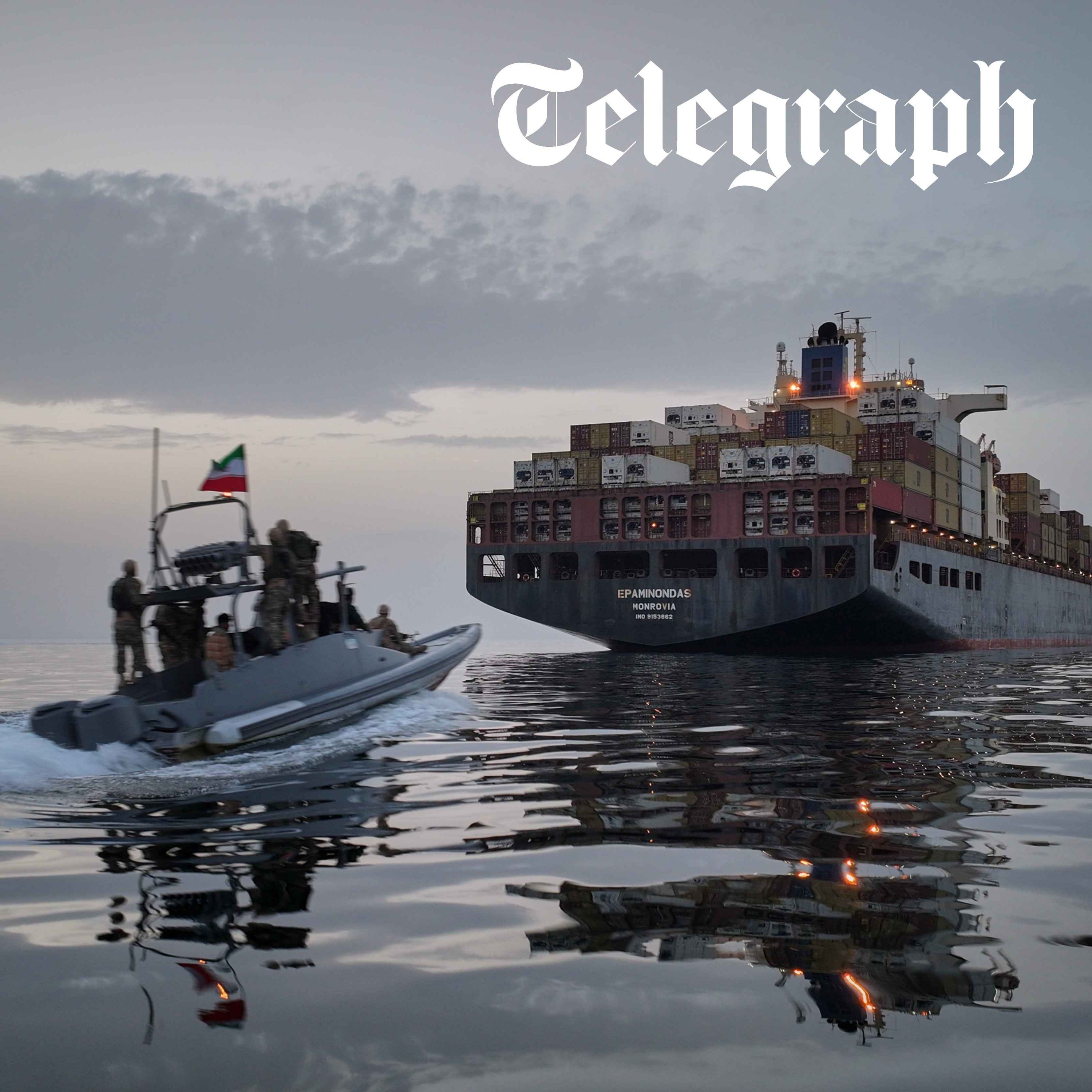
Iran: The Latest
‘Trump could reopen Hormuz if he dared, I’ve done it’: a rear admiral speaks out
00:47:33
Loading summary
Transcript83 lines
- [00:04]
James Parkin
The telegraph. ACAST powers the world's best podcasts. Here's a show that we recommend.
- [00:21]
Venetia Rainey
Hi, I'm Xin Yi Pai. Five years ago I sat down in front of a microphone with a simple goal to share stories from the Asian American experience and to do that by talking about everyday objects. Now, 10,000 Things is headed into its fifth and final season and we've got a new set of stories about coming fully into oneself, weird and wild and inspired. Tune in to the final season of 10,000 things from Acast Creative Studios, a podcast about modern day artifacts of Asian American life and the stories they reveal. Listen on Apple Podcasts, Spotify, Amazon Music or wherever you get your podcasts.
- [01:10]
James Parkin
Acast helps creators launch, grow and monetize their podcasts everywhere. Acast.com. These American Arleigh Burkes, just like a British Type 45 destroyer, are incredible, incredibly capable warships. They are designed to shoot down incoming, very complex weapons. They can absolutely deal with incoming shaheeds.
- [01:35]
Venetia Rainey
A short time ago, the United States
- [01:38]
Roland Oliphant
military began major combat operations in Iran.
- [01:43]
James Parkin
Today, President Trump says Iran's Supreme Leader, Ayatollah Ali Khamenei was killed in the attacks.
- [01:54]
Roland Oliphant
The Pentagon is weighing a takeover of that island as a way to force the reopening of the street of Hormuz.
- [02:00]
Venetia Rainey
Iran begged for this ceasefire and we all know it.
- [02:05]
James Parkin
Does anyone really think that someone can tell President Trump what to do? Come on.
- [02:12]
Roland Oliphant
I'm Roland Oliphant.
- [02:13]
Venetia Rainey
And I'm Venetia Rainey.
- [02:14]
Roland Oliphant
And this is Iran. The Latest. It's Thursday the 7th of May, 2026, 69 days since the war began, 30 since the ceasefire was declared, and after looking shaky, seems to be more or less back on. Later on we're going to be speaking to a man who literally unblocked the Strait of Hormuz just a few years ago about how he would go about doing it today. But first, we have three top stories to look at today, the first of which is that Iran says it's continuing to review a 14 point US proposal to end the war and is expected to convey a response to Pakistani mediators later today. Donald Trump says he held very good talks with Iran, adding, it's very possible we'll make a deal. Here is a clip of him speaking. Very good talks over the last 24 hours. And it's very possible that we'll make a deal.
- [03:06]
Akhtar
Yep.
- [03:07]
Roland Oliphant
However, in an interview with US Broadcaster pbs, he said although there was a very good chance of the war ending, he also said if it doesn't end, we'll have to go back to bombing the hell out of them. Abraham Rezai, the spokesman for the Iranian Parliament's National Security and Foreign Policy Commission said the proposal to end the war was merely an American wish list and not a reality. And he's referring to a one page list of suggestions that we're told is being passed back and forth between the Americans and the Iranians. And it's this list that has given rise to all these reports that we are closer than we have been to a breakthrough in peace negotiations. Axel McCoy, illustrious foreign correspondent who's been following this closely is in the studio. Akhtar, what can you tell us about the, about the state of these, these back and forth bits of paper and peace talks?
- [03:57]
Akhtar
We are now in a state of, in a situation of claims denials and threats. Last morning on Wednesday there were reports and rising hopes that Iranians and Americans are close to sign a one paper memorandum of understanding to end the war and then go to Pakistan and talk about nuclear issues and everything else. So the plan was to okay first we open the straight, you close the blockade and then we go back to Islamabad and chat about the rest of things. But later on Iranian said no that's not true. Last Thursday, a week ago the Iranians said they gave a nine point proposal to the American 14 point proposal. And there has been a communication only once since last Thursday with the Americans throw Pakistani mediators and they are still reviewing it. And then later on during the day on Wednesday more Iranian officials came out and more state media came out said this report is just an attempt to influence the oil markets. And Mohammad Bagheer Ghaliba, the lead negotiator and parliament speaker later on tweeted saying I'm just quoting Operation Trust me Bro failed. Now back to a routine with Operation Facius.
- [05:08]
Roland Oliphant
Hold on, hold on. Operation Trust me Bro.
- [05:10]
Akhtar
Yeah it's failed. And now back to routine that Operation Foxes. He's referring to Axios news website which he says that the reports that are coming from that website that is influencing
- [05:23]
Roland Oliphant
this is Axios which had the scoop about the potential talks.
- [05:27]
Akhtar
Yeah. Which Iran denied later. And Iran is saying it was just to influence the oil markets. And one Iranian official parts of the content published by the American media Axios about the Iran US agreements are media speculation and just like to influence the oil market. But Iran is still reviewing. Today Pakistani officials and mediators and foreign ministry spokesperson said they are hopeful that Iran would give its response to the proposals very soon.
- [05:56]
Venetia Rainey
Akhtar, I'm wondering, I've seen some more details Today about what this memorandum of understanding might include. We know that the Americans were previously demanding a 20 year moratorium on uranium enrichment and Iran had counted with a five year pause. So it's now being reported that negotiating, are discussing 12 to 15 pause on uranium enrichment as a sort of middle ground. And apparently that Iran would also commit to enhanced inspections, including snap inspections, and would commit not to operate underground facilities. What do you make of that reporting? Has any of that been popping up in Iranian state media?
- [06:28]
Akhtar
Iranians are not officially confirming it. There are these leaks that are coming into media saying, okay, 12 to 15 years suspensions. And after 12 years, 15 years, there would be 3.25% enrichment. And the problem that complicates all of these things, these talks, is like, first we either know a lot about it or we don't know nothing about it. And the complications, especially for the Iranian side to reach a deal first that Israel is bombing Beirut today, again, which one of Iran's demands was like, there should be a ceasefire in Lebanon. Then we can talk about any ceasefire with Americans. So if there is still Israel bombing Lebanon, the concept of having a deal between Americans and Israelis is very, very low. And you also have these hardliners in Tehran who are blaming Abbas Al Rahshi, the foreign minister, and President Pezeshkian for the deaths of Ali Khamenei. Today someone called Mohammad Bargheri Kharazi, who is the Secretary General of Iranian Hezbollah, different from the Lebanese Hezbollah.
- [07:28]
Roland Oliphant
Write that down. Listeners, make a note.
- [07:30]
Akhtar
He was saying, okay. He blamed Abbas Arakji for the death of Supreme Leader Ali Khamenei. He said Abbas Roqhi was one of the last few people who met with Ali Khamenei before the war started on February 28. And then he might have given some indications, some things to American Israelis, saying, okay, Ali Khamenei is at home. And he's also saying, okay, he's one of the few officials within the Islamic Republic. Like, he's insisting a lot to meet Mushtab Al Khamenei. And he says, if there is a deal with Americans at any level, that would look like the JCPO, the 2015 nuclear deal, there would be protests on the street and they would crash the government of President Pizzkian down.
- [08:08]
Roland Oliphant
This is that. I mean, that's a hellishly inflammatory thing to say. To say your foreign minister may have literally given the Americans and the Israelis targeting information to kill the supreme leader. And also this public threat to bring hardline and supporters onto the streets to bring down the Government if there's a jcpoa. I suppose this is part of the black box of Iran, right? Because we don't really know. On the one hand we're told yes, there are these divisions, on the other hand we're told no, they're more or less on the same page. And I suppose the problem with what you're saying, the real issue there is that this 14 point plan, this discussion around a compromise about how many years there'll be a moratorium on an enrichment, then a compromise about what level, you know, a low level of enrichment allowed afterwards and some inspections, all of that echoes the jcpoa.
- [08:54]
Akhtar
Yeah.
- [08:55]
Roland Oliphant
So everyone who's hoping for a deal seems to think that the landing ground looks like the jcpoa. This guy's ruling it out. I suppose my question for you is who is he representing? And does him saying that, is he just some loudmouth, is he the kind of fringe nut job or does that really represent a constituency that could stop the Iranians from coming to a deal like that?
- [09:19]
Akhtar
He doesn't represent like an official constituency. He represents a core hardliner parts of the Islamic Republic that would call Abbas Arafchi, the foreign minister in March, dead to compromise while Abbas Arakchi was talking on television. So in the Iranian establishment you have these reformists and I don't know, like hardliners principalists. And you have another part like Hezbollahs. Hezbollahis, they are hardliner supporters of the Islamic Republic. Most of them may or may not have a job in the government. So like some of them, for example, they may not identify as his Bulay, but they may be those seven people who did not sign a paper to support the government. The foreign minister had come, everyone who is talking with Americans. So 270 something, they signed a paper to support the government in talks. Seven people, they did not. So they are representing these hard line parts of the Islamic Republic who see any deal with the Americans, like Trace
- [10:16]
Roland Oliphant
and as a betrayal.
- [10:18]
Akhtar
Yeah, as a betrayal. And they are still blaming the death of Ali Khamenei and the whole thing that we are seeing now to that 2015 nuclear deal and Abbas, like just Hassan Rouhani, Jawad Zarif, Abbas Arakchee, parts of the Iranian politics, they are warning against that. If you are going to sign any deal with Americans that would be looking like a surrender, there would be protests on the streets against your government.
- [10:41]
Venetia Rainey
I want to come back to something that Akhtar mentioned, another potential spoiler to this deal and that's Israel. We know Israel is not in favour of a deal being made with Iran right now they want real restrictions on Tehran's nuclear program and it doesn't look like you're going to be able to get that in a matter of days. The jcpoa, for example, took years to be worked out. We know that Israeli public opinion is very against this war ending in its current state, that they don't feel like Israel has come out on top and that they were reportedly preparing for a return to all out war. Henry Bodkin, our Jerusalem correspondent, reported that Israel apparently was kept out of these peace talks that we've been seeing this week and was scrambling yesterday to find out details of the deal. As Akhtar mentioned, Israel bombed Beirut for the first time last night since the ceasefire was agreed in mid April. So there's been this tacit agreement since that ceasefire was agreed that Israel would not bomb Beirut. But the cease ceasefire has been a ceasefire really only in name because the Israelis have been bombing southern Lebanon and parts of eastern Lebanon. And Hezbollah has been hitting Israeli soldiers in southern Lebanon and has been striking northern Israel. Now the Israelis say that the strike yesterday was in Dahya in Beirut's southern suburbs, where there's a lot of Hezbollah figures. And they say that it killed someone called Malik Balu, apparently the commander of Hezbollah's Radwan force, which is this elite unit in Hezbollah, so clearly a key target. But I think you have to always look at the timing of these sorts of things. Was it planned to be a spoiler to the peace talks that are ongoing? Was it Israel taking an opportunity in case a deal is struck later this week? Or maybe it was just opportunism, we don't know. But Israel is a key player in this war as well. It's very easy to just think about this as just being between America and Iran. But Israel has an agenda too, and an assay.
- [12:19]
Akhtar
Israel doesn't want American and Iranians to have any sort of peace deal with each other. They want the war to carry on. Yesterday when there were news of raising hopes on a peace deal, Israeli military came out and they said they are on high alert to return to war against Iran. So whenever there are talks and there are hopes of ceasefire or like any peace deal, you see these Israeli officials coming out and threatening for the attacks. So it's clearly that Israel is not happy to see any sorts of agreement between American and Iranians. But when Israel is bombing Lebanon, that is a breach of ceasefire. According to Iranian officials, one of the
- [12:52]
Roland Oliphant
points of contention that caused the war is Iran's proxy network. And I can't really see the Israelis accepting that they've got to stop fighting in Lebanon just because the Iranians say so. So it'll be interesting to see if that gap is ever bridged.
- [13:04]
Venetia Rainey
There's another signal here which pulls in a slightly different direction. France has announced today that it's deployed its Charles de Gaulle aircraft carrier strike group to the Red Sea, apparently as part of planning for a potential French British mission to secure the Strait of Hormuz. We've been hearing lots of talks about this. France and Britain have repeatedly said it will only happen if a peace deal is agreed. But that aircraft carrier strike group is on its way. So perhaps that suggests that things are moving towards a peace deal. We'll just have to wait and see. I think the other thing that we just have to mention before we move on is we've said it repeatedly, but Trump needs some sort of deal, some sort of resolution before his trip to China next Thursday. He's flying next Wednesday. He's meeting with Xi Jinping on Thursday. And he really wants some kind of agreement before then.
- [13:45]
Roland Oliphant
The Trump Xi meeting is over. It's looming over everything at the moment, isn't it? A little update on the whole question of what happened to Project Freedom. This was the very short Leo de Mary American effort to unblock the Strait of Hormuz by providing a reassurance force to create an area of safety through which all Those more than 1,000 civilian vessels trapped inside the Persian Gulf could use to sail away, which was lasted about a day or two before the president yesterday very abruptly put it on hold, 36 hours. In fact, a day and a half. It lasted. There is now reporting that this came partly because the Saudis complained. This is according to NBC News. They say that the Saudis informed the US it would not, not allow the US Military to fly aircraft from Prince Sultan Air Base southeast of Riyadh to support the effort. U.S. officials told NBC that the announcement had angered the leadership in Saudi Arabia. Now, the US Military maintains fighter aircraft and refueling tankers and air defenses at Prince Sultan Air Base. And those aircraft would have been critical to protecting ships during Project Freedom. So I suppose if the Saudis said no, for whatever reason that pulled the plug on it, I suspect that the reason the Saudis might have pulled the plug on that was because they saw the way that was ratcheting up and had already led to, you know, an increase in the back and forth of drones and rockets and strikes. And we seem to be on a spiral back to all out war I
- [15:12]
Venetia Rainey
think the other reason this is really significant is it just suggests, and the NBC report also suggests that America did not discuss Project Freedom with the Omanis or the Qataris before they launched it. It just suggests that there's just not enough cooperation going on between America and its allies. And we've seen this time and time again. We've seen it here in Europe, you know, over Greenland, Ukraine and other issues. And it's becoming an issue of trust. You know, if America's Gulf allies are being caught off guard, they're going to stop trusting America. And that will have long term consequences for America's alliances with the Gulf states. And that's something that's I think come up repeatedly. Just while we're talking about the Gulf, I want to quickly flag this excellent Washington Post analysis of satellite images of the US bases. Now we've had quite a few reports over the last few weeks about damage done to American bas across the Middle East. Washington Post finds that the damage is even greater than previously reported. Now I should flag that they've been examining satellite pictures that were released by Iran. This is because of ongoing US censorship of the usual satellite imagery that you get from Planet Labs and other companies. But they did obviously do work to verify them, make sure they hadn't been digitally manipulated. And they excluded a bunch of satellite pictures that didn't cross reference with satellite pictures from before the war. Just to flag that. They found that at least 228 U.S. structures or pieces of equipment, including hangars, barracks, F aircraft and key radar, communications and air defence equipment were damaged across the Middle East. More than half of that damage occurred at the Fifth Fleet Headquarters and the three bases in Kuwait. I think it's quite significant. I won't go into the sort of details of exactly what was damaged, but just what it tells us. They spoke to a senior fellow at the Stimson Centre, Kelly Grieco, and he said it shows that plans to destroy Iran's missile and drone forces fast enough to prevent them from inflicting this quite serious damage. Really underestimated the depth of Iran's pre positioned targeting intelligence on fixed US infrastructure. So basically suggests that the Iranians had been monitoring all this stuff and had a plan and satellite targeting ready to enact in case they were attacked on the other side. The Americans weren't prepared for that. Clearly there was no overhead protection at the Kuwait base. That's where six service members died. We heard that come up when Hegseth was grilled last week by the Armed Forces Committee in America and also that E3 Sentry command and control aircraft, this key bit of radar kit that we spoke about earlier in the podcast that was destroyed. Apparently it was repeatedly park parked in the same location on an unprotected taxiway, according to satellite imagery. So, you know, really just underestimating Iranian capabilities to monitor American bases and their plans to attack them. The upshot of all of this, according to Washington Post, is that US forces may never return to regional bases in the Gulf in large numbers, although apparently no final decision has been made. That's hugely significant for America's presence across
- [17:56]
Roland Oliphant
the Middle east, especially in light of earlier on in the war, we were talking about the possibility of US Marines seizing control of islands in the strait and turning them into permanent US bases bristling with air defences.
- [18:08]
Venetia Rainey
Coming up after the break, how to reopen the Strait of Hormuz by someone who's actually done it. Get a jump on next summer with vrbo's early booking deals. Don't wait to claim your dream summer spot, whether that includes a good porch swing or a poolside lounger. When you book early, you get the best places at the best, best prices. But back to poolside loungers. With vrbo, you don't have to reserve any loungers. They're all yours. In fact, the whole private home is yours. Book with early booking deals and you can lounge around all summer long, however you please book with vrbo.
- [18:53]
Roland Oliphant
Welcome back. You're listening to Iran the latest with me, Roland Oliphant and Venetia Rainey. Now, how do you solve a problem like the Strait of Hormuz? It's a question question that we've returned to frequently on the podcast, and it's a question that Donald Trump is grappling with daily. But we are very lucky to have spoken to someone who has literally done it. Rear Admiral James Parkin, retired, was the Royal Navy officer in command of a task force given the job of providing escort duty when the Iranians last tried to close the strait to some foreign vessels in 2019. He described to me how he would go about unblocking the strait today. Here is our conversation. Tell us the secret. How do you reopen the Strait of Hormuz? Because it doesn't seem to be working and the plan is just being cancelled.
- [19:48]
James Parkin
You're starting from a premise that the Strait of Hormuz is closed.
- [19:53]
Roland Oliphant
Yeah, well, that's the popular premise.
- [19:54]
James Parkin
It is a popular premise, but of course it, it's, it's not closed. There are no physical barriers. There is absolutely no evidence of any mines being laid. There's no physical blockage. And unlike the end of 2019 when the Iranians were seizing merchant vessels by putting boarding teams on board, there's almost zero indication that is a capability they still hold. Following the strikes on many of their
- [20:19]
Roland Oliphant
conventional capabilities, the boarding parties, they don't have. And you don't think there's evidence of that marine mines have been deployed there?
- [20:26]
James Parkin
I see absolutely no evidence that there are any mines laid in the Strait of Hormuz.
- [20:31]
Roland Oliphant
And of course, despite all of the reporting about that and the speculation, I think this is an important point to get across. There's been a lot of talk about that. We did see them strike two merchant vessels, a South Korean one and an Emirati one with drones or something.
- [20:45]
James Parkin
This is a risk based approach to merchant shipping. If you own a merchant shipping company, your vessel worth perhaps $100 million, with cargo worth perhaps three or four times that, you don't go anywhere unless it's insured. And the way in which insurance companies and ship owning companies and ship management companies calculate the insurance premium is to do with the risk of being attacked, the risk of damage to the cargo, risk of damage to the people on board. That premium is so eye wateringly high at the moment, there is no credible ship insurance mechanism that allows ship owners to take the risk of getting their cargoes and their vessels and their ships out through that waterway. So rather than the strait being closed, the strait is untenable for commercial traffic. And where, where the next stage of the conflict goes is almost entirely based around how the US, Iran and other regional actors can reassure ship owners and insurance companies that the calculations that these companies and these organizations do on a daily basis has tipped over into the balance of probabilities that the ships will get through the strait unharmed. And those, those strikes on ships that you've mentioned, particularly the one in Fajira, which of course is outside the Strait of Hormuz, indicates that the risk is still too high for almost any rational commercial entity to send something through the straits unless they've done a deal with Iran in order to get that vessel through the waterway without being struck from any mechanism whatsoever.
- [22:34]
Roland Oliphant
It's slightly yesterday's news because Donald Trump has cancelled Project Freedom, which was the plan that, that we were told by Marco Ruby and Pete Hegseth at great length was the next stage of the plan. We had a former US submariner on the other day kind of explaining the idea. They talked about creating a bubble, I think putting ships with air defense assets to create a bubble to allow Things to go through. I know that's been put on hold, that project and I only got two ships out. But was that credible in your view, the Project Freedom plan? When you looked at that, did you think, yeah, that's what I would have done. And this could do what you are saying, which is reduce that risk to make it more viable.
- [23:14]
James Parkin
I'm going to go back to early 2020, when task force Sentinel was set up. The Iranian government decided in almost direct retaliation for the assassination of Qassim Soleimani, that vessels that were flagged to nations who they felt were unfriendly would be seized as they went through the straits. And the mechanism of seizing them was the traditional conventional pre drone warfare way of Iranian commandos abseiling from helicopters onto ships and seizing them and then they were diverted towards Iranian ports. The way in which we stopped that was in a way as long standing as naval operations have taken place, which is we operated a convoy system and a close escort system where the merchant ships who needed to leave, in fact in both directions needed to transit the Strait of Hormuz were escorted by British, American, Australian warships. The European Union set up a similar setup called the EMASO construct and European Union warships escorted merchant ships. A close escort of ship like that in an era when missiles and drones were not flying, was actually a very effective way of physically extracting vessels. And you can ride shotgun, you can create a dome, or anything that comes in can be defeated using the warships weapon systems which are designed exactly for that in conventional warfare. There's absolutely no reason why that could not be done again in the straight of four moves. In fact, it's exactly what many nations did in the Red Sea when the Houthis were firing effectively identical weapons at merchant ships in the Red Sea. The British, the French, the Italians, the Americans, they all sent ships in order to intercept those drones and those missiles. And they did so incredibly effectively. There is a template for this in, in the last two years and were there to be a willingness to do that, then navies could step up and do that escort capability that we're talking about.
- [25:26]
Roland Oliphant
You could do it the same way that you did it in 2019. Despite, as you say, as you say that the drone threat has changed in phenomenal ways since then.
- [25:35]
James Parkin
Well, it's interesting. So the key with drones, with the Shahid drones and variants thereof, is that it's very easy to pre program the location of a fixed building or base into these weapon systems and get them to hit it. They follow a pre planned path. We've all seen the videos of them striking buildings across the Middle east or refineries and the like. That's the reason they're so cheap. You know, they are cheap to produce because they are effectively large, capable, resilient remote control aircraft, where every generation of this and the generations are happening on a sort of weekly basis, is more and more capable of getting to its target without being intercepted. What they don't have is a maritime targeting package. They are unable to strike moving targets very easily for the simple reason that it's quite difficult to know which ships are which when you are targeting a capability, a moving platform. And maritime missiles are notoriously difficult to get right technologically. And it's why they cost several million dollars rather than several, several thousand dollars. So there are more drones. And many of the ones that the Houthis fired, which are very similar, in fact, they were probably supplied by Iran, were fired into the sort of melee of the merchant ship so they could see very closely from the shoreline, they had spotters. And the British, French, American warships were able to deal with them then. So the templates probably 2023, 24, rather than 2019, 2020. When it comes to how you protect merchant vessels from these attacks, that experience
- [27:17]
Roland Oliphant
in 2019, when the Iranians kind of closed the strait with the threat of boarding, how close did that come to, I don't know, the euphemism that new military types use as kinetic activity? Was there a moment at which you had to engage Iranian boats or helicopters or anything else? Or was it a kind of a deterrence that. That once they saw allied ships, they kind of backed off?
- [27:41]
James Parkin
It was the latter. The Islamic Revolutionary Guard Corps Navy are the force that on behalf of the Iranian state, control and inverted commas the Iranian waterways in the Strait of Hormuz. My metric as the commander of Task Force Sentinel was to reduce Iranian seizures and interdictions of merchant ships to zero. And we succeeded in that. That there's a difference of circumstances. Circumstance. Number one that's different is the Iranian regime did not feel they were under threat. So they weren't trying to sink anybody's ships. They were effectively seizing them in order to ransom them. So there wasn't the almost nihilistic cause, damage at all costs. And it's also worth pointing out that the Iranian government at that stage were only punishing the nations who they felt were complicit in the assassination of, of Soleimani, primarily the U.S. now, the ships we escorted in Task Force Sentinel, under an organization called the International Maritime Security Construct, were only from the vessels who were in that coalition. So we escorted uk, us, Australian ships through, we escorted the GCC nations.
- [28:59]
Roland Oliphant
Those are basically just sorry for listeners. That's basically Gulf countries, right?
- [29:02]
James Parkin
Yes, that's right. And we had a very good working relationship with the fret that was a French commanded force where we would share intelligence about where potential threats were coming from. We swapped routing plans for ships that were going through and it was a fairly seamless opportunity in order to ensure that the traffic was going both ways through the Strait of Hormuz, which of course it's important to point out is entirely in Omani waters. It's an international strait, so their nationality is fairly irrelevant. You can't suspend passage for any reason in law. But the shipping lanes, both inbound and outbound are in Omani waters, not in Iranian waters, which made it easier for us to, in short, to deter the Iranians from acting.
- [29:50]
Roland Oliphant
Yeah, I suppose the difference this time of course is they're blocking it to anybody, aren't they? They're saying without our permission, no one can go through. So there's a lot more ships involved. And I suppose the other thing is, of course, as you said, they've got, well, they're at war. I mean, they have been at war, they've got a greater appetite for combat. And so if you were to run that operation today, you, you'd probably come under attack or you'd have to be ready to come under attack and for your ships maybe to be hit. Does that make it unviable to, to do a repetition of that kind of operation?
- [30:23]
James Parkin
If there were the appetite, I mean, warships exist to do this. There's often a trite saying that you see on coasters and posters, which is a ship is safe in port, but that's not what ships are for. A warship that ran away from missiles flying would be very safe, completely immune in fact. But that's not what warships are for. So as a tool of the state, if a nation felt that the best way to restore international maritime trade through its fateful moves was to physically escort the ships, they are more than capable of dealing with the threats that the Iranians could throw at those ships. There is just perhaps not the appetite at the political level for that to be announced prior to them, sort of reassurance that we weren't still in a no holds, bars shooting war. War.
- [31:14]
Roland Oliphant
So what you're saying is that this could be done and the ships are available to do this if Donald Trump gave the order? Basically.
- [31:23]
James Parkin
So yes and no. Moving a ship into a Live conflict area is a political decision at the very highest level. So this isn't necessarily about navies, it's about governments. But if the government were to say, let's use the American government as an example, they have one of the largest buildups of maritime power seeing in the 21st century, currently within a couple of hundred miles of the Strait of Hormuz. If they felt that the way in which they could restore peace and security were to escort ships through the same route that those two US Flagships went through, they have the capability, they have the weapon systems, and subject to the right agreements, they would have the ability to extend their envelope to not just US Flagships, but to ships of other nations. That's a political decision to do. Technically and feasibly, as a military commander, the weapon systems exist. If they existed in 2024 in the red Sea, there's no reason they shouldn't exist in 2026 in the Strait of Hormuz.
- [32:22]
Roland Oliphant
Okay, so if you were a USA Navy admiral and Donald Trump was asking you, what are the options? You would say, that is an option. I can do that if you give me the Ordemus presence. You've got to decide, you've got to make it up. But. And what would you say to him if he said, okay, well, how many men might we lose? Might we lose ships? What's the. How risky is it? What would you say?
- [32:43]
James Parkin
Well, it's not zero risk, but it's not absolute risk. For a start, they did it two days ago or three days ago when they escorted the US flagships. And there are very few US flagships in that area of the world. It wouldn't surprise me if they were the only two. So they've already done it. They hugged the coast, it appears, very close to the Omani coastline, and they have demonstrated that there is an appetite to do it if the reward was freeing. In inverted commas. The two US ships from the Gulf, where I am unsighted, is the threat picture, the intelligence picture about what the Iranians have not yet deployed against warships in the Strait. These American Arleigh Burkes, just like a British Type 45 destroyer, are incredibly capable warships. They are designed to shoot down incoming, very complex weapons. They can absolutely deal with incoming shaheeds. Whether the US government is willing to take the risk of a warship being hit and all the PR that would attract of flaming ships, dead sailors is a decision at the very, very highest level. So this is militarily possible. But like all acts of warships going through straits or contested waters, it's a risk benefit calculus about what it would look like if it went wrong.
- [34:04]
Roland Oliphant
It's fascinating, isn't it? I suppose one of the assumptions in the kind of public debate and actually what a lot of people have told us on this podcast is that it just can't be done, really. That it's very difficult, that the Iranians can fire missiles from very far in land, that the train threat is very difficult to interdict. But you're saying it is possible, which does raise the question of why Donald Trump decided to cancel Project Freedom so early. I'm guessing that you're gonna say that you just don't know. But I was wondering if you could hazard a guess.
- [34:36]
James Parkin
Allow me to think out loud. Because none of us know, right? None of us are in the mind of Donald Trump. And therefore, just because these missions and these wider big decisions are taken at government level, at head of state level, I think there's probably three factors that are playing in and they're in conflict with each other. Number one is you're announcing Project Freedom. Merchant ships will all be able to go through the straight of four moves. You can't order a merchant ship that belongs, let's say, to a Greek shipping company that's carrying Chinese cargo on its way to India, just to pick random example. You can't order them to do it. So if the insurance companies and the ship owners say we're absolutely not doing this because the Iranian threat is still live, it would not surprise me if there weren't many takers for Project Freedom because the US Were not guaranteeing the escort of non US ships through the strait. So they can say Project Freedom's a great. Either two Jones act ships, they were escorted through, they fly the Stars and Stripes, you know, great success story. But all those other 2,000 ships that are inside the gulf at the moment, every single one of those, the captain, the ship owner, the insurer will say there is no reduction in insurance premium. Why would we pay $10 million insurance premium to go through this rate on the off chance that the US Navy are going to escort us in a way they can guarantee our freedom? And most of them are not US flagged. I think I'd be surprised if any of them were US flagged. So that's factor one. You can't order the merchant ships to go through. I think factor two is the US stockpiles, which have been used in the war so far are incredibly expensive. The US don't have that low cost counter drone technology that the Ukrainians are so good at. Therefore does the US taxpayer, does the US Navy want to use its 5 million dollar surface to our missiles to shoot down a $10,000 drone that is is targeting a Chinese cargo? Why would the US Navy use up its stockpile for that, irrespective of what Project Freedom means? And the third thing, and it's just practical, is what if it goes wrong? What are the optics of a project with a name like Project Freedom? It's a very American zeitgeist. But what if the very first non US Ship they escort through the Iranians throw everything at it and that ship gets hit? You've shown the US Navy up for something that perhaps the President's adviser's been saying all along, which is we can't provide 100% guarantee. So the risk of it going wrong, particularly if Iran wanted to make a point, I think far outweighs the optics of canceling it in order to allow a negotiation to take place.
- [37:23]
Roland Oliphant
I think you've kind of effectively put in front of us the Gordian knot that Donald Trump is trying to wrestle out out somehow. I was wondering if we could talk about the US Blockade and how that's playing out. There is this news that yesterday the US Navy. Disabled is the word they use. Disabled. An unladen Iranian vessel, tanker is a way of enforcing its blockade on Iranian ships. I know this is not the first time they've done that. They have intercepted a number of ships. Could you tell us about what your thinking is about the blockade, whether it is effective, how manageable, all that is?
- [37:54]
James Parkin
So for a vessel that was heading either to or or from an Iranian port, particularly if it is an Iranian vessel, the US Navy, under the law of armed conflict, had the authority to stop it, that vessel going into that port. When you choose to do this, and it's something we practice all the time, you first of all give radio warnings. You then fire warning shots. Most ships, 99.9% of ships that have US Navy firing shots across the bow, which is a phrase we use in English language as an idiom. But actually you do fire a shot across the bow so that the people on the bridge can see the big splash, knowing that the next one could be into the bridge itself. Now, shots across the bowels are traditionally done by vessels with guns. And this was, I understand, a circumstance where the shot across the barrel in verticals was done by a F18 aircraft from an American aircraft carrier, which is a legitimate, if somewhat novel way of enforcing a blockade. That is, rather than using a five inch gun to fire a shell into front of the ship. From what I Understand is the F18 produced warning shots and when that didn't happen fired some ordnance into the ship in order to disable it. It's a very tricky, very tricky technique in order to use a fixed wing aircraft to disable a ship without causing unnecessary casualties. But they appear to have done it in this case. And that is as legitimate a way of enforcing a blockade as any other method is, irrespective of what you think about the reality of the blockade in the first place.
- [39:30]
Roland Oliphant
Fascinating by how they would do that. Would they. Would they radio the ship first to say we're about to fire on you?
- [39:36]
James Parkin
Yes.
- [39:36]
Roland Oliphant
And please leave X part of the ship?
- [39:39]
James Parkin
Yes.
- [39:39]
Roland Oliphant
Or something like that.
- [39:40]
James Parkin
Exactly what we've done. And I was captain of a ship called HMS Montrose. We practice this a lot. In fact, in Montrose, I escorted the British aircraft carriage, Miss Illustrious out of the Gulf in 2013. It was the last time British aircraft carrier has been inside the Gulf. And I escorted her out through the Strait of Hormuz. And we had seven different sets of IRGCN vessels trying to cause what at the time amusing was called maritime buffoonery against the. What was then the Royal Navy flagship. When we fired shots and we never got to the stage of threatening to disable. You have a script and you literally read script. It's cleared by the lawyers in advance as part of the rules of engagement. And the very last line, if I recall correctly of the script about shot across the bow that I trained with certainly all those years ago was we're about to conduct disabling fire into your engine room. We advise you to clear your machinery spaces of all personnel.
- [40:36]
Roland Oliphant
You talked there about radioing the IRGC fast boats. You have spoken to them in that case? Oh yeah. Any case, did they radio back? And the communication language is in English.
- [40:48]
James Parkin
It's in English.
- [40:49]
Roland Oliphant
No interest in someone who's had encounters with Revolutionary Guard fast boats in the Strait of Hormuz, albeit not quite in a full scale shooting war. Just tell us about your encounters with them.
- [41:01]
James Parkin
So the irgcn, and you will know this and your readers will know this, are part of the armed forces of the state without being part of the the Islamic Republic of Iran Navy, the ri. And there is probably no Iranian navy anymore thanks to this recent conflict. The Iranian navy have traditionally been very professional traditional seafarers. They operate large ships to conduct maritime security patrols and they often would would conduct regional patrols around the area in many cases to be part of the global anti piracy effort that spiked In Somalia a few years ago. The RGCN are a slightly different beast. They have a zealotry that is born of their role, not just the navy, but also all the elements of the RGC to defend the Islamic revolution. And they describe themselves on the radio as separate navy, which is, it's the Persian equivalent of the Guard Navy. And the SEPA navy will speak in English, you know, in many cases, beautifully enunciated English, refuse to do anything that you ask them to do, but would be polite in doing so. And I have photos that I've taken from my own camera of IRGCN ships, incredibly close and with pictures of Soleimani stuck in the window using masking tape. They have a fervor and a zealotry that is designed around the fact they see themselves as the guardians of the revolution at sea. But they are skillful mariners. Part of the mosaic system of defense includes IRGCN cells doing the things that IRGCN do. They have a lot of delegation. They are at sea all the time. So they're incredibly skilled sailors and they do not have a death wish. When you see the footage in the last few weeks about what they've done, self filmed footage, they've always kept a safe distance away. They, when they attacked the ships up at anchor near the Iraqi waters, they kept a distance away, they launched their USVs and they retreated into waters. A very skillful maritime attack. So I've always found them, you know, frustratingly, frustratingly zealous to deal with, but, and they obeyed absolutely none of the niceties of international maritime. They would cut under your bowels, they would refuse to do things when you ask them to do. But they never crossed the line in our, my peacetime interactions when we, the close I got was firing before you fire weapons as warning shots, you fire flares, maritime flares. And they obviously had a mental line in 2013 that when we fired the flares, that's when they would stop getting any closer. You know, they, they didn't want to wear small arms was the next stage of warnings. But they got, you know, they ignored all verbal warnings. It was only when we got the flares that they turned away. That was clearly that week's, that month's red line had been drawn at the flare level. I know from colleagues a few years after that that they would perhaps wait until you started firing small arms as a shot across the bow. It depends on their command structure, depends on their mission, depends on their rules of engagement themselves.
- [44:24]
Roland Oliphant
One last thing you mentioned at the beginning of this piece You've seen no evidence that mines have been laid. Now this is really, really curious because I suppose part of the point of mines is there's not much evidence of that. But do you think actually that this has been over egged then, this idea of Iranian fast boats coming out and just dumping a few mines over the side and disappearing? Talk us through that. Why do you think that hasn't happened?
- [44:48]
James Parkin
Well, there's a whole bunch of reasons why I don't think mines have been laid, not least of which is there's absolutely no evidence that mines have been laid. Nobody has seen mines being laid, no vessel's been hit by a mine. And you can achieve a very similar result in maritime traffic by claiming you've laid a minefield, as you do by actually laying a minefield. If you say, as the Iranian government, there is now a minefield in this space and that the area they released on the maritime chart conveniently covers the traditional traffic separation scheme in Amani waters. And therefore, everyone please go via Larrak island and we'll, we'll extract a, a toll for you. All completely legal in international law. But if you say there's a minefield there, and I go back to what I said earlier and you're a maritime insurance person, you're a ship owner, would you take the risk if you didn't need to? It's another day of a ship at anchor with a cargo not getting through, but the cargo will eventually get through at some time in the future. So you might as well wait until you absolutely know and your insurers know there are no mines. The reason why, though I think it's most obvious there are no mines, is why would they deploy multiple mines? Mines come from an era where it was an incredibly effective way of physically stopping a vessel, be it military or civilian, from going into a certain bit of water without having to physically be there themselves. So rather than submarines lying in weight firing torpedoes, they would just lay a minefield. They would declare a minefield. Then it was up to the opposing side to try and clear that minefield. But mines, and particularly the minds the Iranians have, are completely indiscriminate. It the mines that are in their stockpiles and probably remained in their stockpiles in a number of depots that we're aware of, make no distinction between a Chinese ship, an Iranian ship or an Indian ship carrying oil, as it does an American warship. They're not intelligent mines where it can say, this is a US AR destroyer. We will now detonate the mine that's a Chinese oil tanker will not. These things are of a size whether they're in the water column, which is very rare these days, or whether it's on the seabed. They are triggered by a certain combination of size of vessel, magnetic signature and noise, none of which are sophisticated enough as a weapon system to make a difference between the vessels that Iran wants to get through and the vessels Iran does not want to get through the strait. It is much easier to send fast USV Shaheeds ballistic missiles into the general area, even if you're not very good at targeting them, because you achieve the same effect without any of the enormously painful hangover of then having mines which could sink Iranian ships full of Iranian cargo. By the way, the Iranians have got no mine clearance capability anyway, so they can't even remove the ones that they've laid. So I've been saying this for five, six weeks. I know I'm in the minority, but so far I've not been proved wrong. It's the best that I can hope for is not being proved wrong other than being proved right. I don't believe there are any mines there. And the people who talk about mines generally, if you feed back their logic chain, it often comes back to because Iran has mines. Iran also has USVs that explode. It's got shaheeds, it's got fast boats with people planting limpet mines. That is a far more effective way of achieving a targeted outcome than an oil barrel full of explosives that could sink your number one customer's oil tanker and that'd be no good for anyone.
- [48:16]
Roland Oliphant
It's a powerful case that you make there. Rear Admiral James Parkin retired. Thank you so much for joining us on Iran the Latest. That is all for today's episode. Venetia will be back tomorrow. Until then, that was Iran the Latest. Goodbye. Iran. The Latest is an original podcast from the Telegraph, created by David Knowles and hosted by me, Roland Olyphant and Venetia Rainey. If you appreciated this podcast, please consider following around the latest in your preferred podcast app and if you have a moment, leave a review as it helps others find the show. For more from our foreign correspondents on the ground, sign up to our new daily newsletter, Cables via our website site or listen to our sister podcast Ukraine for the latest. We are still on the same email address battlelinestelegraph.co.uk or you can contact us on X. You can find our handles in the show Notes. The producer is Peter Shevlin. The executive producers are Venetia Rainey and Louisa Wells.
- [49:32]
James Parkin
ACAST powers the World's best Podcasts Here's a show that we recommend.
- [49:39]
Venetia Rainey
Do you want to know the best part about being married to a woman? That there's no man involved.
- [49:44]
James Parkin
I mean, true, but I was gonna
- [49:45]
Venetia Rainey
say that it's a sleepover every single night with your best friend. Oh yeah, that part's cute, too. I'm Taryn, she's Cami. We're married, and staying up is our
- [49:52]
James Parkin
weekly pillow talk out loud with you.
- [49:54]
Venetia Rainey
We're giggling, we're gossiping, we're arguing. Classic marriage stuff. Just having fun being wives while we navigate growing up and building a family together. Then our sleepover grows. Our listeners call the Pee Pee Hotline with their own gossip, burning questions, late night spirals, all the stuff they'd only tell their best friends. So it's a private sleepover, but you are invited. Staying up with Taryn and Cammie New episodes weekly follow Wherever you listen.
- [50:19]
James Parkin
Acast helps creators launch, grow, and monetize their podcasts everywhere. Acast.com.