← Iran: The Latest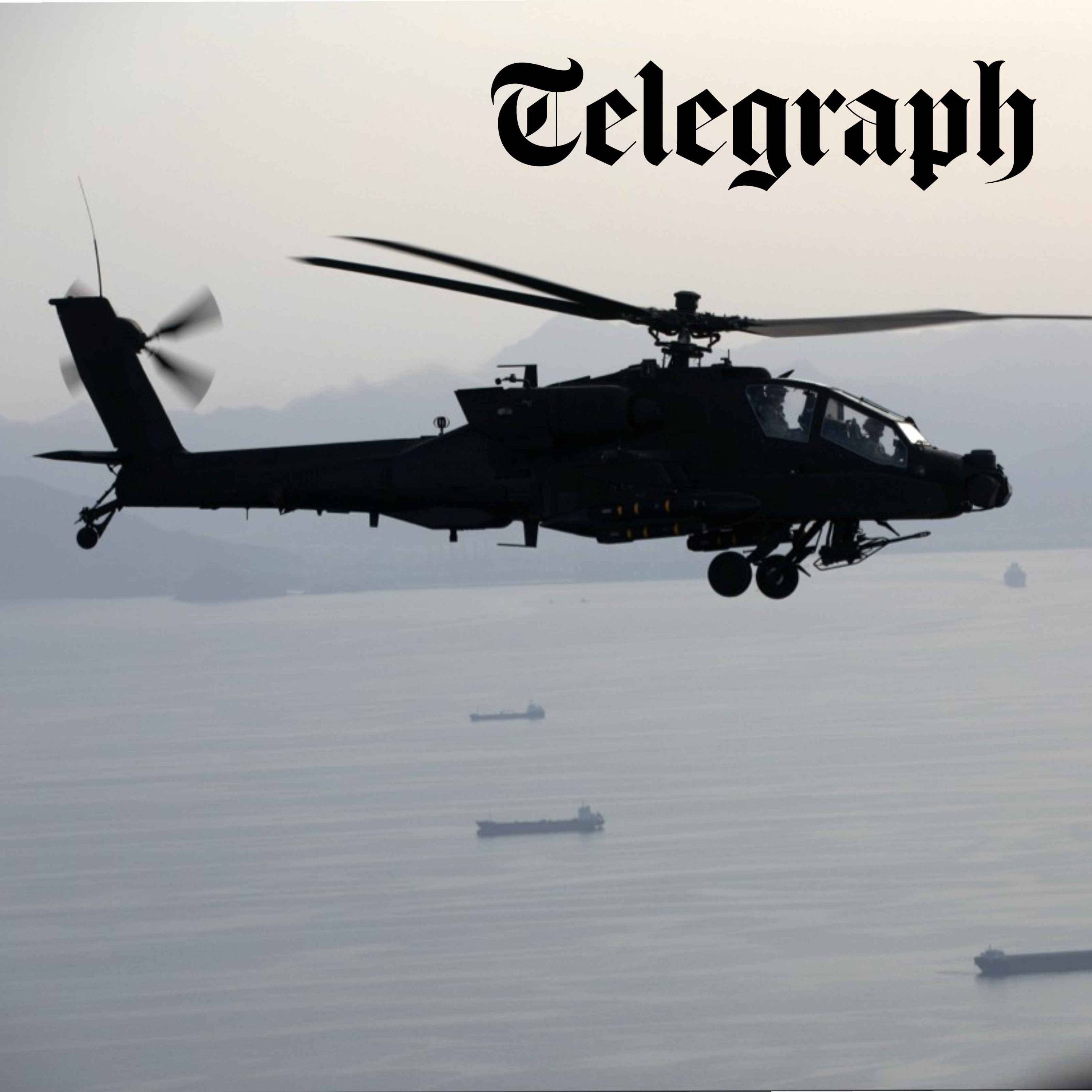
Iran: The Latest
Trump vows Iran will ‘pay the price’ & inside the Pentagon's drone revolution
00:36:32
Loading summary
Transcript58 lines
- [00:04]
A
The telegraph.
- [00:12]
B
ACAST powers the world's best podcasts. Here's a show that we recommend.
- [00:19]
A
The Real Housewives is a guilty pleasure
- [00:21]
C
for most, but if you're looking to not feel guilty about that pleasure, tune
- [00:25]
A
in to Everything Iconic with Me, Danny Pellegrino, where I break down all the messy moments and behind the scenes antics of Bravo's popular franchise. And on Everything Iconic, I also interview celebrity guests like Kelly Ripa, Keke Palmer, Drew Barrymore, Cameron Diaz and more about their guilty pleasures, their past work, and so much more.
- [00:42]
C
So if you're pop culture obsessed and
- [00:44]
A
find yourself watching way too much reality
- [00:46]
C
TV like me, tune in to Everything
- [00:48]
A
Iconic with Danny Pellegrino. Wherever you listen to podcasts,
- [00:53]
B
ACAST helps creators launch, grow and monetize their podcasts everywhere. Acast.com. Apache helicopters have a pilot and a weapons officer aboard them. Part of the benefit of autonomous systems is you can have fewer human beings closer to the forward line.
- [01:16]
C
A short time ago, the United States military began major combat operations in Iran.
- [01:24]
A
Today, President Trump says Iran's supreme leader, Ayatollah Ali Khamenei, was killed in the attacks.
- [01:35]
B
The Pentagon is weighing a takeover of that island as a way to force the reopening of the Strait of Hormuz. Iran begged for this ceasefire and we all know it.
- [01:46]
A
Does anyone really think that someone can
- [01:48]
C
tell President Trump what to do?
- [01:50]
B
Come on.
- [01:52]
C
I'm Venetia Rainey and this is Iran. The latest. It's Wednesday, 10th of June, 2026, day 1033 of the war and also day 63 of the ceasefire. But I'm really not sure we can call it a ceasefire anymore. We're really stuck in a place now that's sort of not war, not peace, this limbo state. Later on in the episode, we're going to be hearing From a former U.S. deputy Secretary of Defense who spearheaded an initiative called Replicator to push the American military to adopt drones en masse. I'm going to be asking her about what the Iran war, and specifically the events of last night, have shown us about this side of the American military. But we're also going to talk about how this conflict has affected America's preparedness for future wars, for example, with China. But first, remember that Apache helicopter that I talked about crashing in the Gulf of Oman on Monday? Well, I said maybe mechanical failures, but we now know it turns out it was downed by an Iranian shahed drone. And a quick side note, we did a deep dive into shahed drones on last Friday. I will put a link to that into the show notes. It's really good. Go and listen to it if you want to understand how they work and why they're so brutally effective. Now, the crew from helicopter, they were both fine. They were rescued by a drone boat. That was a first for the American military and we're going to get more into that with our guests later. But this helicopter being downed has led to another round of tit for tat strikes. I'm just going to read you what Trump posted shortly after we published our episode yesterday. He said, I've just been informed by our great military that last night the Iranians shot down one of our highly sophisticated Apache helicopters while patrolling over the Strait of Hormuz. That's likely a reference to the US Blockade there of Iranian ports. He said. There were two pilots involved. Both are safe and uninjured. Nevertheless, the United States must of necessity respond to this attack. Thank you for your attention to this matter. President Donald J. Trump and respond America did so overnight. They struck approximately 20 targets in Iran. According to Centcom, they hit Iranian air defence systems, ground control stations and surveillance radar sites near the Strait of Hormuz. Port towns of Jassuk and Sirik as well as Kesham island were all hit. And there are some reports of water shortages in Iran after some of the reservoirs were hit in those places. Now, Iran are claiming that the crash was an accident. I'm not sure I'm buying that given the helicopter was hit by a drone. Abbasar Ragchi, the Iranian foreign minister, posted shortly after Trump made that statement, Foreign forces in proximity to our territory are at constant risk on account of their own human errors, plane accidents or potentially being caught in crossfire. To reduce risk, the best solution is for them to leave. We prefer language of diplomacy, but speak other languages too well. Turns out that that language was surprise, surprise force. So the IRGC responded to American attacks by launching their own strikes on 21 targets, American bases across the Gulf. Now this included the US Fifth Fleet headquarters in Bahrain, an air base in Jordan and an unspecified target in Kuwait. It's not clear if any damage was caused. I think Jordan has said at the moment that everything was intercepted. Both sides are claiming that these attacks were in self defence and I think we're going to hear a lot more of this kind of tit for tat attacks in the weeks to come. America is still playing all of it down. Trump is saying it won't affect talks. Apparently there's a military bucket and a diplomatic bucket. That's according to a US Official who spoke to Politico. I'm not sure I see it that way. I'm not sure most of the world sees it that way. The Strait of Hormuz certainly isn't going to open anytime soon with this kind of military activity ongoing, let alone a broader peace deal. And it's clear Iran doesn't see it this way either. They have said this morning that they've halted diplomatic talks pointing to the American attacks, but also also ongoing Israeli attacks against Hezbollah in southern Lebanon. This is Trump posting again shortly before I went in to record this, and suggests that maybe American patience for the idea of a deal is running out. He said. Iran's military is a complete and total mess, much of it like their navy and air force doesn't even exist anymore. They've been completely defeated. Iran is all talk and no action. Well, the events of the last 24 hours would suggest otherwise. The bully of the Middle east is dead. They've taken too long to negotiate a deal that would have been great for them. Now they will have to pay. The a couple of exclamation points at the end there. Does that mean more military action by America? Come back tomorrow to find out. But that's where we're at as of lunchtime Wednesday. Now, one thing I haven't gotten into in detail yet is how the helicopter pilots were rescued. And I know I mentioned this briefly yesterday, but it's really significant. So we're going to come back to it today. They were picked up by an uncrewed surface vessel. That's a drone boat to you and me specifically. We now know it was a Saronic corsair from the US Fifth Fleet Task Force 59. That's a Navy unit that specializes in the use of drones and sea and we think this is the American military's first use, or at least first publicized use of an autonomous surface vessel in real world warfare. They've been experimenting with these things for years, but now they've actually used it successfully. I've got two great guests here with me to discuss the significance of that moment as well as just reflect more broadly on what the Iran war has told us about America's use of drones and their ability to combat enemy drones. Kathleen Hicks was US Deputy Secretary of Defense from 2021 to 2025 and has worked in the DoD in various roles since the early 90s. She was behind a project to push the US military to adopt autonomous and unmanned systems en masse. Known as Replicator, she's currently Senior Fellow at the Belfer center for Science and International Affairs. We're also joined by her former speechwriter, Aaron Sherman, currently a non resident senior fellow at the Atlantic Council. They've written a report together about the replicator project for the Belfer Centre. Guys, welcome to around the Latest. I want to start with the events of this week. There are two things that I want to pull out and get your thoughts on. First, the loss of the Apache helicopter, a bit of kit that costs upwards of $50 million when you include, you know, weapons, parts, etcetera, versus $35,000 for a sharehead drone that took it down. We don't know whether intentionally or accidentally, but this is exactly the problem that you were trying to solve when you were in power, right? Kathleen, just what are your thoughts on that?
- [08:10]
A
Yes, well, first of all, we think first and foremost to Erin and I, about our servicemen and women who are out in the operational zone. And events like the shooting down of the Apache are just a reminder that they are working in very dangerous conditions and that they're doing just amazing work every day. So that's the first thing I want to say. We've entered a world where there were handfuls of people who would talk about this so called, we would call it a cost exchange ratio that was disadvantageous to the West. And now it's an everyday conversation. You can sort of walk into a pub or into a coffee shop and you'll hear people talk about, you know, how much a Patriot missile interceptor is, which is in the millions, versus a Shaheed export version, maybe 30,000. And for folks like us who work in the field, it's, you know, there's a terrible set of circumstances that we live in that we have to be thinking about this. But this is what it takes to innovate. It's recognizing and making sure that our elected officials and those who are passing budgets and those who are leading the military on the Sibilian side, really grapple with that asymmetry of cost. It's not necessarily the case that we want to have exactly, of course, what a more desperate, shall I say, country like Iran might have, or what the Houthis might have. We have our own operational ways of going about things and we want to make sure we have the kit we need to do that. So it's not going to be the same thing, but it really can't continue where it's so very differentiated and expensive and frankly, therefore short in inventory and ineffective.
- [09:50]
B
The one thing that one can't help but remember is Apache helicopters have crews, have a pilot and a weapons officer aboard them, part of the benefit of autonomous systems is you can have fewer human beings closer to the forward line and a little bit removed, never completely removed when you're in theater like that, but a little bit further back from harm's way and from the range that the other side can hit, potentially. I think it's also worth noting that I believe I reported that the crew was picked up by an autonomous surface vessel. I think it was a Saronic Corsair 24, 25 foot uncrewed ship, 8 meters or so.
- [10:31]
C
Well, yeah, that was the second thing I wanted to pull out, because you're right that these pilots were. They were lucky, I guess, you know, to be downed over the Gulf of Oman. They spent two hours in the water and they came out, according to Trump, uninjured. Could have gone very differently. And I guess if you had an unmanned system going in to enforce the blockade or patrol or whatever it is that they were doing, those two service members would not have been at risk. But as you say, they were picked up by a drone boat. And we think this was the first time that these boats were used in warfare, first publicised time, at least. How significant is that?
- [11:00]
A
I think it's very significant. It certainly proves out what we worked on when we were in government, and specifically through Replicator, where we talked about all domains. People tend to immediately, when you talk about unmanned systems, think about things that shoot from the air, if you will, drones. But in fact, there are all these applications, logistics, this is a great search and rescue, in this case, intelligence, surveillance, reconnaissance, all kinds of ways in which we can leverage the state of the art. And as I said, lower cost, as Aaron pointed out, lower threat to humans. This surface vessel didn't put any mariners, for instance, in danger. I think it's a great example of how quickly the innovation is hitting, how far we have to go to fully incorporate these capabilities, capabilities in the US and then in other nations and the potential.
- [11:56]
C
Aaron, is there anything you can tell us About Task Force 59, this Navy unit that sent the vessel out and specializes in the use of drones at sea?
- [12:03]
B
There's more than one of them. There's, I believe, Task Force 59, Task Force 79, Task Force 99, a few of these numbered task forces that U.S. central Command has stood up, even preceding the Replicator initiative. It was one of the efforts that Central Command was undertaking, sort of assigned to us in the Pentagon, that there was this bottom up enthusiasm for autonomous and uncrewed systems that was sort of ready to be fed with the top down leadership and sustained focus on, you know, identifying a big ambitious goal for procurement and fielding and speed and scale. They were proving out lots of different kinds of unmanned systems, just taking boats, matching them up with autonomy kits, putting them in the water in the Gulf and surrounding areas, and sort of seeing what they could do and how that that could be operationally relevant to the US Military. And so, you know, the fact that it's, you know, still going strong and still, you know, making a difference is certainly a good thing to see. It was also, you know, the fact that, you know, this is the, as you said, the first time in wartime that we had this combat search and rescue provided by an uncrewed surface vessel. This was one of the sort of, I wouldn't say unanticipated, but one of the use cases that while we were in the, the thick of the replicator initiative arose as, as we can use, we can use these systems for this too. It's not just about delivering a payload somewhere or collecting intelligence that these vehicles can serve lots of different purposes and, you know, pick up a two person aircrew in a timely manner when they're floating in the water.
- [13:36]
C
I guess a lot of that speaks to the lessons that the Iran was teaching us about use of autonomous and unmanned systems for the US military. And I want to get onto that later. But first, maybe this is a good time to just, just step back and introduce our listeners properly to Replicator. Can you, Kathleen, start by giving us just a brief overview of this project that you brought in to try and get the American military up to speed.
- [13:56]
A
I was in the Biden administration for four years as Deputy Secretary of Defense. And the Deputy Secretary role is most easily thought of as like the COO in a corporation. You're kind of where the big vision strategy meets the execution. And about, about a year and a half to two years in, we had undertaken a number of initiatives that I led alongside often my uniform counterpart, which is the Vice Chairman of the Joint Chiefs of Staff, to really bring innovation more centrally into the department. And so we had a good proving ground already underway of what was working and where to lean in further. And one of the biggest challenges we really had was at that time in the US Congress, there was a lot of trepidation about change and giving the Department of Defense flexibility is how you might say it from the executive branch side, from the congressional side, you might say sort of no oversight in how it expended taxpayer dollars. So we were really trying to think through it in those years about how to build trust with Congress and one of the biggest messages we were receiving is show that you're doing everything you can with what we've already given you, the authorities, we've given you, the docum dollars we've already given you. And Replicator is really born of that intersection of the demand of Congress about how we innovate and the very urgent demand to innovate, particularly in light of the pacing challenge of China, which I know we're going to. We'll talk about that a little bit later. So that was the origin story of Replicator, and what we decided to do is really focus, using the vice chairman and I as the driver, around specific capability areas where we needed to make major progress. F first area we undertook was unmanned systems, which is really what we're talking about today. Replicator 1, which has continued on, frankly, under other names and advanced as we had always envisioned it would throughout the entire department in the Trump second Trump administration. And then I'll just add Replicator 2, we kicked off before we departed, which was counter drone. And that has also continued to the best of our understanding, under the current administration.
- [16:10]
C
Okay, I think that gets a little bit to my second question, Aaron. I was going to ask just how far did you get and how much of that has been continued? We know the Trump administration has been a big change from the Biden administration. The Pentagon in particular, has been in turmoil, a lot of staff turnover. Now, technically, the Department of War rather than Department of Defense. Aaron, how's it been going since you guys left?
- [16:28]
B
From what we have seen, our observations from the outside is that it has not only continued. You know, names may change, organizations leading an effort may evolve, and that's a normal progression over time for any large bureaucratic organization. But that the work itself has not only continued, but has dramatically expanded in terms of working to procure and to field and develop concepts of operation, concepts of employment, for attritable autonomous systems. We've seen tremendous funding support from that, in a bipartisan manner from Congress. We've seen the current administration, you know, set goals for procurement numbers that are far larger than the goals that we set, but are. The goals that we set were always meant to be a catalyst for much larger growth in the years that followed, and that's exactly what we've seen.
- [17:18]
A
Yeah, let me just add, the Trump administration has asked for $1.5 trillion. It's a complicated picture of how they've asked for it and what they've asked for, but what they've stated is their autonomy. And drone, I'll call it unmanned and autonomy budget is about 3% or so of their overall ask. So putting aside what you think of the overall number, which is highly unlikely to be achieved, that percent spend is a very reasonable amount to be putting forward for unmanned. And then the only other thing I want to state, because it may not be obvious to non US audiences, is the congressional engagement has completely shifted. There is single party control of both the executive branch and the legislative branch, both chambers. And there has been much more support for the kinds of flexibility that allow for the expansion of these capabilities. That's both because of the single party support, but never discount Russia's war on Ukraine, which when we began Replicator, obviously there were unmanned systems involved from both Ukraine and Russia. But over the course of Replicator, where we were busy trying to explain in an American public sense, why we needed these capabilities, the Ukraine war started to really show how substantially advanced that innovation was becoming elsewhere in the world.
- [18:43]
C
Right. And I wanted to get onto that because you mentioned attritable, Aaron, and that word is sort of worth just briefly explaining, but this idea that they can be shot down and it doesn't matter too much, essentially they're kind of disposable, right?
- [18:52]
B
I mean, you don't want to throw them away necessarily. You don't want them to be, you know, useless by any means. You want them to have to be effective. But at the same time, if you lose one, it's okay. It's at a cost point where you can sustain that loss and keep going. And to that point, the cost point also allows you to have many more of them than you might otherwise have if it were far more expensive.
- [19:15]
C
And that was the key lesson from Ukraine that you guys wanted to draw out, right? That you need to be able to produce these things en masse for them
- [19:21]
A
to work at that stage in the summer of 2023, in the Ukraine war, this was not a well observed phenomenon. There was definitely already unmanned systems being used. We in the US and in the west, everywhere, we've known for decades that we needed to go this direction. But the cultural resistance, there's technological challenges as well, particularly around the autonomy piece, they had really stifled us. So a lot of what we were doing in Replicator was trying to overcome those cultural barriers without leaning on a lot of new money, a lot of new asks. And so that really just shaped the way Replicator was executed.
- [20:04]
C
And just quickly, before we move on, why Replicator the name?
- [20:09]
B
It's a good question. So we do get into that story a little bit in our article. We're Coming up with a whole long list of different names. And what sparked the name replicator to me was an email from a colleague who, a conversation in a meeting earlier she shared, had made her think of a scene from the movie The Prestige, Christopher Nolan's film from 2006, when all of these top hats are replicating. And I was like, that's what we're going for. And I had grown up watching Star Trek the Next Generation as a kid and the concept of a replicator. Patrick Stewart ordering tea, Earl Grey, hot. The fact of being able to create whatever you need at whatever scale, potentially closer to the point of need, and the idea of mass production, which is something that Western countries are very familiar with, have done it for, you know, the needs of, of warfare, you know, in times past and, and done tremendous innovations. Drifted away from that in the sort of Post World War II decades, but also, but born of a recognition that mass is not a bad thing necessarily. Sometimes you need it.
- [21:17]
C
We're going to take a short pause now. Coming up after the break, what have our guests learnt from the Iran war about the use of autonomous systems? And why is China the pacing threat? Welcome back. You're listening to Iran, the latest. I'm talking to Kathleen Hicks, former U.S. deputy Secretary of Defense, and her former speechwriter, Aaron Sherman. Okay, let's shift back to the Iran war because when you guys were devising this, and I guess when you were writing this report, because I, I presume it was mostly written before the Iran war erupted, America was not at war. It has now been at war for more than 100 days. So you've seen a lot of these things being used by America, but also you've seen America being attacked using things like drones and other unmanned and autonomous systems. So what are some of the lessons that the Iran war has shown you about both how America's using it and how it's being attacked by Iran using it?
- [22:09]
A
No surprises about anything in the way Iran hands has prosecuted its campaign. So it just reinforces, frankly, all the key themes we've already discussed about the value proposition of protecting our soldier, sailor, airmen, marines, guardians, and using these capabilities to do so and at the same time finding cost effective ways to doing it. I think what is probably now even more clear to the general public is you cannot turn on a dime. Even Ukraine, if you look at the incredible advances Ukraine has made, they didn't get there overnight and the production didn't get there overnight. I wouldn't want there to be an unreasonable expectation now that the United States or any other country can immediately shift its whole defense industrial base, that that industrial base is immediately ready to produce everything that's needed. And also, as the Ukrainians have, have demonstrated so well, these are at the intersection of software and hardware. And so you're constantly updating and iterating and changing. And so there is frankly some waste, I guess I'll call it, in that innovation. So you're not just creating things that can be used forever. You're having to constantly change and shift. So there is the big challenge. And that's why I think getting the rhetoric right, everyone agreeing here in the US in a bipartisan way, I think frankly, around the world, that this is the direction, one of the directions where countries will need to move to be able to protect themselves more effectively. But that's just the first issue. The big issue is executing it effectively. And that's where I think we still want to see how, for instance, the Iranian conflict is going to generate, if it can generate the kind of quality production and output that we would have want to oversee had we been there.
- [24:07]
B
We talked a lot when we were in the Pentagon about the changing character of warfare. And there's an imperative for those in positions of leadership to sort of do everything they can to sort of see around corners and anticipate, to use a US and I guess Canadian hockey metaphor from Wayne Gretzky, skate where the puck is going, not where the puck is. That was certainly one of what Replicator was intended to help the department do and help the industrial base do as well. To the extent that we need to spur for more drone manufacturing and production in the US Some of what we've seen in the Iran war to date has shown some of the fruits of those efforts. For instance, the Lucas drone, the department has come out and said that it's sort of a reverse engineered Iranian shahed drone. And that was, you know, that got started under our watch. And the operational innovation, especially from a software point perspective that the US brings to it is there's some special stuff in there. Being able to prove that out and demonstrate that we can, in fact, you know, make these kinds of changes, produce these things at scale and get them to the field and have them be used operationally at a really fast pace is certainly a positive thing. You know, to Kat's point of the changes, the cultural changes that are still required, not just in the U.S. but for all Western allied forces, there's no single silver bullet that will get the system to move faster.
- [25:30]
C
Do you think if the US had adopted this kind of technology earlier, would we have seen a different outcome in this war, better defences maybe for Gulf allies against drone attacks, that kind of thing?
- [25:41]
A
I think those are two different answers. You could have had some better operational outcomes. We certainly see in the Gulf States, critical infrastructure is a great example. Airports, other places where, you know, where they might have previously considered themselves not on a target list, or it was too cost prohibitive, perhaps, to protect all your critical infrastructure. Now, I think you will see to your point, better protection going forward, particularly as we bring those, we collectively, the world, bring the price point down. But of course, the adversary is always going to chase that. You're always going to be in a fight over who can have the better tech advantage, the offense or the defense. I think the big strategic picture really probably wouldn't have changed, which is we're having this conversation about operations and tactics. And obviously I think those are really important things. But I think at the strategic level, the outcome that we are seeing play out in terms of how Iran would react to certainly an attack on the regime is playing out exactly as we could have anticipated. And it's a difficult position now strategically for the United States that it's placed itself in.
- [26:51]
B
We're always going to close the Strait.
- [26:52]
C
The Strait of Hormuz is the big issue, right? I wonder if unmanned vessels like what we saw deployed this week, if deploying more of those might offer some kind of solution to escorting ships out to being more in the Strait of Hormuz, which American warships have not yet dared, I guess, to do.
- [27:10]
A
I think it's all a matter of how that innovation cycle, that offense, defense cycle runs. If you were ready today with a lot of unmanned at a decent price point, shipping, then, yes, many commercial shippers, frankly, might choose to take that risk. Risk and to your point, also maybe escort ships as well. At some point you're probably going to have adversaries who figure out how to lower that cost even further. And so it goes in conflict. And so it is really about being ahead of, as Aaron just said, seeing around corners and being ahead operationally in terms of how you conceive of how you're going to fight even more than the kit itself. The kit fits into that operational concept. And I don't think we're anywhere close to, you know, in the next three to six months completely changing that. I do think U.S. central Command, we have seen plenty of evidence that they're out there trying to get, you know, think very creatively and get a lot of companies, new entrants to the defense market, but also longstanding defense entrants, as well as allied capabilities and friends and partner capabilities into the mix of how they're thinking about this next stage.
- [28:26]
C
The report, as you mentioned earlier, was designed to deal with the pacing threat of China. Right? I've got a quote from you here. You said the replicator program was intended to help the United States overcome the Chinese military's advantage en masse. More ships, more missiles, more forces. Can you just explain why unmanned systems, autonomous systems, are so important for that fight? Because it's not all the Chinese are building. Obviously they've already taken the edge over the US in shipbuilding in terms of numbers of ships, not tonn as we always have to specify. But why is that aspect so important to counter the threat of China?
- [28:58]
A
You're at the heart of a nuance versus sparse conversation that Erin and I had many times in even writing that line because it's not 100% accurate. So it's not all about masks, as I've just suggested. It's really about do you have a superior operational concept and how do you fit different capabilities into that. And one of those areas is, is mass or really precise. Mass is what you'll hear folks calling it now, which is not things that drop gravity bombs or something that can't distinguish civilians, for example, or accidentally hit the wrong thing. It's really about can you more, in a more cost effective way, bring to bear capability that overcomes some of the operational advantages the Chinese, for example, would have operating in East Asia. And that's where we get to the mass to your kind of the premise question, or maybe buried in that question. I don't think the United States is anytime soon going to come close to catching up, if you will, with China on shipbuilding. And I'm not sure that's the right goal at this point. We lived in an era in the Defense Department. We were in government in an era in which we were pressed on that all the time. And it's become almost impossible, frankly, to catch up in any traditional way. It's really going to be about these unmanned systems working alongside our more I'll call it exquisite capability and even maybe some exquisite unmanned capability, meaning very expensive and bespoke. It's about bringing all of that capability in a joint way together to achieve effects. And very clear at the beginning of replicator and part of why we picked this area, why I picked this area of unmanned systems first, that there were real operational advantages that the Indo Pacific Command could achieve if we could get them that capability. And there was real technological opportunity to get it to them quickly. And that is how we selected the area and the systems that we went after.
- [31:04]
C
Can you talk specifically about what kind of advantages that offers to indopacom? Because the distances are huge, you know, the US bases are not, not right close to the Chinese mainland. And every expert I've always spoken to has suggested that the American forces will have to come to China. They will draw them into a fight that is suitable for them in areas that they know very well. So Aaron, what kind of advantages would this give the Americans?
- [31:25]
B
Well, gosh, there's lots of them. One thing, I'll just say that the quote from the speech that you point back to, I could be wrong about this, but I think in that same speech, in maybe just one or two lines later, Kath said something along the lines of it's not our way of war to meet an adversary. Ship for ship, shot for shot, soldier for soldiers. We do things differently and that's one of our hallmarks and that's what sets us apart in a head.
- [31:49]
C
You were her speechwriter, right? So I expect you would know.
- [31:53]
B
I think I didn't check it.
- [31:55]
A
He knows a guy, he seems to
- [31:57]
B
recall, yeah, we, the US and the west, have a tremendous lead, contested by no question, but still a lead nonetheless when it comes to AI and autonomy software and sort of the marriage of software and hard power tower can deliver some really interesting operational advantages and asymmetries and create operational dilemmas, you know, for a potential adversary. And one of the advantages of a, of an autonomous system or a tradable autonomous system is that it can be pre positioned or stationed in a place where you might not want to put, you know, U.S. forces with a flag on their shoulders all the time. Some of that, that autonomous kit can be there and be called upon if necessary. You know, in a crisis or a conflict, working with allies or partners, for
- [32:46]
A
instance, let me just add, if you continue zooming back a little bit, you combine different emerging capabilities and technologies and here's where, for example, advanced manufacturing, forward placed, right? Combined with, in the case of drones or some other attritable systems, they're relatively easy to produce. I mean, relative to say a tank. And often this is how innovation happens, right? It's around multiple threads sort of merging into new ideas. And so as we think about the Indo Pacific, the bedrock is the alliances, right? Because everything Aaron just said depends on having positioning. The US has its own positioning. Hawaii, for example, Guam. But really our allies are incredibly important for that. We think about places like Taiwan where they have to be able to defend themselves. And it's about how do you help help a country think about how it can better defend itself. And certainly there are opportunities there for tradable autonomy as they are pursuing. So it's all those pieces together. And I'll just end with the logistics piece that you raised, which is it is really, really far away. And part of the biggest challenge for the United States in thinking about how to operate in that region is fuel and unmanned systems can lighten that fuel load. Again the advanced, advanced manufacturing that if it's forward positioned, reduces that fuel load. You're not moving systems as much pre positioning and if it's lighter, easier in mass, you can pre position more forward. So a lot of these pieces start to come together, as I said earlier, as a better operational approach for the United States.
- [34:28]
C
We could probably talk about this forever, but let me just throw you guys one last question. And I think it really centers around the industrial defence industrial base.
- [34:34]
B
Right.
- [34:35]
C
Which is so key to make this happen. You note in the report that a few years ago China's state supported small drone company Dajiang Innovations dji I'm sure lots of our listeners will have heard of them, probably even have some of their stuff. You say they had all but cornered the commercial market for small aerial drones and many of their hardware components, leaving the United States in an untenable position of tiptoeing around a Chinese dominated supply chain for a capability set our war fighters needed. Is that still true today?
- [34:59]
A
I think we're well on the path to getting out of that approach. If you look at what's happening in Ukraine, I'm have any non public access information but my strong suspicion is they're probably quite reliant still on Chinese supply chain for their capabilities. Certainly the Russians of course are. So I think in a pinch the US probably would still be relying on some of that capability as it digs itself out. But I absolutely think with Replicator we have begun that process in earnest in the United States and, and you see big contracts coming out now in the US we require them to be clean, if you will, of the Chinese supply chain for defense purposes. So that creates a market signal that is reinforcing. So I'm feeling very positive about the direction we're headed.
- [35:47]
B
The best thing the department can do to cast my market signal is continue stoking that demand signal and keep sending it both by the things that they come out publicly and say that we need X, Y and Z. We want to buy multiple thousands of multiple domains. We want to buy a million drags, you know, Secretary of the army coming out and saying that, you know, some months back, putting the money where the mouth is and backing that up with the 3% of the defense budget that we've seen proposed most recently. The more that that continues to happen, the more industry will respond appropriately and make the capital investments and so on to increase domestic and allied production, which we've seen happen.
- [36:28]
C
That was Kathleen Hicks, former U.S. deputy Secretary of Defense, and her former speechwriter Aaron Sherman, German. They've written a report about the Replicator project for the Belfer center for Science and International affairs, and I'll put a link to that in the show Notes. That's all for today's episode of Iran the Latest. We'll be back again tomorrow. Until then, goodbye. Iran the Latest is an original podcast from the Telegraph, created by David Nicholas Knowles and hosted by me, Venetia Rainey and Roland Oliphant. If you appreciated this podcast, please consider following around the latest on your preferred podcast app. And if you have a moment, leave a review as it helps others find the show. For more from our foreign correspondents on the ground, sign up for our new daily newsletter, Cables, or listen to our sister podcast Ukraine the Latest we're still on the same email address battleionselegraph.co.uk or or you can contact us on X. You can find our handles in the Show Notes. The producer is Peter Shevlin. The executive producers are Venetia Rainey and Louisa Wells.
- [37:40]
B
Acast Powers the World's Best Podcasts Here's a show that we recommend. A photographer in Texas earns an extra $47,000 a year shooting Star wars cosplay port portraits. A teacher in Maryland turns her woodworking hobby into a five figure side income without leaving the classroom. And a couple in Pennsylvania will rent you backyard chickens for the season so you can try the egg laying life without commitment. My name is Chris Gillipoe. I'm the host of side Hustle School. I share these kinds of stories every single day, in detail, with full transparency about the numbers. The point isn't just to inspire you, it's to show you what's possible. Proof that ordinary people are quietly building experts extra income in surprising ways, including a few ideas you can borrow less than 10 minutes a day, every day. Subscribe or follow side Hustle School wherever you get your podcasts or find us directly@sidehustleschool.com Acast helps creators launch, grow and monetize their podcasts everywhere. Acast.com.