Loading summary
Transcript58 lines
- [00:04]
Sophia Yan
The telegraph.
- [00:12]
Acast Announcer
ACAST powers the world's best podcasts. Here's a show that we recommend.
- [00:19]
Minouche Zamorodi
Go Touch grass. You have probably heard this phrase, maybe you have even said it. But beneath the sort of light hearted nature of this meme is something very real and important. A growing sense that staying in touch with our humanity and being present in our bodies matters more than ever in today's digital world. My name is Minouche Zamorodi and I am taking over as host of TED Talks Daily this week to explore what technology is actually doing to your body and mind. In special interviews with scientists, doctors, parents, artists and more, we're going to dig into your physical and mental health organization on tech, how we think about our bodies differently now, how we relate to new innovations that are amazing but also a little scary, and how we can live a healthier life in this high tech era. Tune in on TED Talks Daily. Wherever you listen to podcasts,
- [01:21]
Acast Announcer
ACAST helps creators launch, grow and monetize their podcasts everywhere. Acast.com
- [01:31]
Roland Oliphant
I'm Roland Oliphant.
- [01:33]
Sophia Yan
And I'm Sophia Yan. This is Iran, the Latest. It's Friday 3rd July, day 12 at the 60 day deadline to reach a peace deal between the US and Iran.
- [01:45]
Roland Oliphant
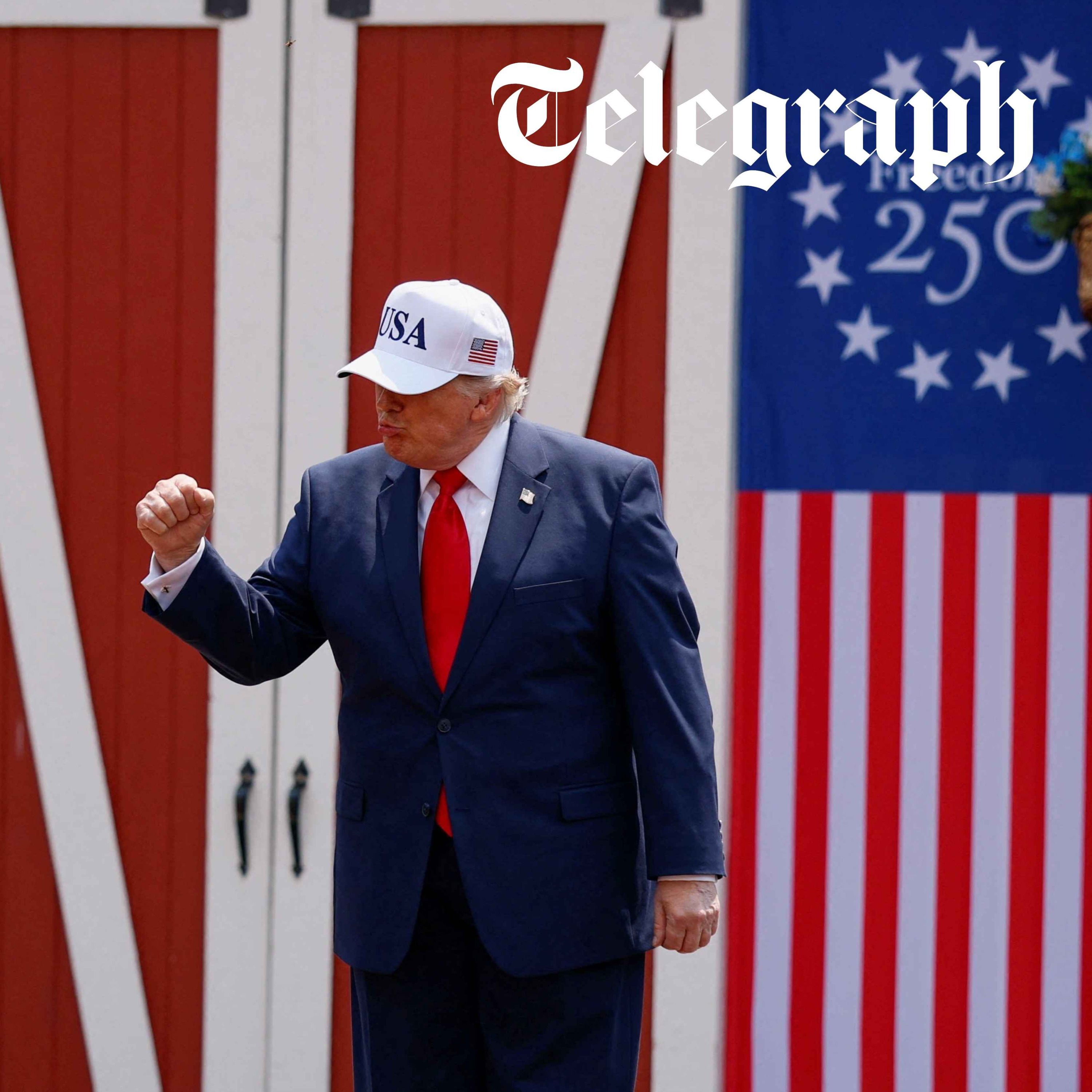
On today's episode, we're going to be looking at the 250th birthday of the United States of America and placing that in the context of everything that's going on today in the Middle east and around the world. A short time ago, the United States
- [02:02]
News Reporter
military began major combat operations in Iran.
- [02:07]
Sophia Yan
Today, President Trump says Iran's supreme leader, Ayatollah Ali Khamenei was killed in the attacks.
- [02:18]
News Reporter
The Pentagon is weighing a takeover of that island as a way to force the reopening of the Strait of Hormuz. Iran begged for this ceasefire and we all know it. This is a historic meeting. Never before has the Iranian and American leadership met at such a high level. Can we turn over a new leaf? Can we change relations in the Middle east permanently?
- [02:41]
Sophia Yan
Does anyone really think that someone can tell President Trump what to do?
- [02:45]
Roland Oliphant
Come on. First, a few updates on what's going on today. The big thing today, I suppose, is that La Ali Khamenei's one week funeral is already underway. His body is lying in state at the Grand Masala mosque in Tehran. Photos published online by Iranian state media also showed that Ahmed Vahidi, the head of the irgc, also attended a smaller service for him near Khamenei's former home in central Tehran. During that was last night that, that smallest service, more private. That's the first time Vahedi has been seen in public in months. We haven't yet seen Mojtabar Hamanei, Ali's son and successor. Huge speculation about whether he's going to appear. We talked about that an awful lot on the, on the podcast yesterday. Questions around that, questions around security. That's why he hasn't been seen. And that leads me to the next news item. It turns out, according to the Washington Post and the New York Times, that Israel or America believes that Israel had been planning or may have been planning to kill Iran's top negotiators during peace talks earlier this year. So this is both of those big American papers of record, the NYT and the Post, and they're both reporting that officials claimed Israel wanted to eliminate Abbas Arachi, that's the foreign minister, and Mohammed Gallaba, Iran's speaker of Parliament and one of the top negotiators in the peace talks. And the papers say, interestingly, America not only asked Israel to stop their campaign of killing Iranian officials, but also, according to the New York Times, asked other countries in the region to warn Iran about the possibility. So in other words, the Americans went to intermediaries and said, look, could you just let the Iranians know that the Israelis are thinking about whacking these guys? And it's really interesting here where there was apparently a turning point that broke American patience here. The Post signed a US official saying that the turning point wasn't the assassination of Khamenei himself, it was the assassination of Ari Larajani, top security official. He says the US was looking for an Iranian official to deal with and all of a sudden he was gone. You kill those folks and you're killing the pragmatists. The official told the Washington Post. I'd like to note for context, so at least Gallobaoff, I don't know about Iraqchi, but Galabaev has been targeted at least twice before. So he was among a group of senior officials present in a building struck by Israel in the 12 Day War last year. I believe that might have been the strike where I think President Pezesh Kyan was present. And he apparently was the one who had to dig them out of the rubble in the basement they were trapped in. And he was also, according to the nyt, reported that he was nearly killed this year during this war when Israel targeted a meeting of senior Iranian officials in an underground bunker. So that's the big news. Then straight Hormuz. The FT is reporting that Voyages through the strait have more than quadrupled in the past week. So they're saying the number of traceable journeys by ships passing into and out of the Gulf each day has increased from between 1 and 2 for the majority of the conflict to 8 on July 1, according to a moving seven day average from maritime data platform signal. I'm not in a position to completely verify all of those statistics, but that very much corresponds with what Tom Sharp was telling us earlier in the week about ship captains in the Gulf, increasingly, increasingly willing to just brave the Strait despite the lingering uncertainties there just to get out. So it does seem that shipping is indeed, as we reported earlier, flowing again. So that's my updates. Sophia, thank you for sitting so patiently while I do this. But the reason I'm asking you to do that is because the date of Hamnet's funeral is maybe not coincidental because tomorrow is also the 250th anniversary of American independence. Some people are suggesting the Iranians chose this date to kind of show defiance to the United States. And even if they didn't, even if it's unintentional, it's certainly difficult not to think about the juxtaposition of those dates. So we thought let's not shy away from that.
- [07:14]
Sophia Yan
In fact, it might also be because certainly from the US side, there aren't any talks ongoing. Iran has said that with the funeral ongoing. But from the US Side, certainly Trump isn't going to want anything to disturb this particular celebration at this moment either. So there's interest in both sides around these dates to maintain some sort of quiet norm for at least a brief period so that the respective countries can manage these events.
- [07:42]
Roland Oliphant
It is interesting, isn't it? I wanted to ask you, Sophia, if you will indulge us to kind of turn your attention away from the world. You're used to reporting as a foreign correspondent and think about your own country for this podcast. So 250 years of America. How are you feeling? Happy birthday, by the way.
- [08:03]
Sophia Yan
Yeah, happy birthday to America. 250 years is not the easiest. I think often people forget that in so many ways America is still a very young democracy. 250 years is nothing compared to a lot of other countries and their histories. So that length of time, it is a milestone, but it's not super, super long either. I always do remind people that the experiment of American democracy is exactly that, still an experiment, one that we're still seeing play out today. But you're right. On the podcast I'm most often interviewing and analyzing current world affairs. But I'm certainly happy to share a bird's eye view for America's 250th. It's interesting to be abroad. It's interesting not to be in the US I'm certainly going to miss the fireworks. Usually you've got a big display everywhere on the fourth sphere.
- [08:52]
Roland Oliphant
I really want to. I want to. I want to ask you about your kind of. I suppose it's quite an unusual perspective, which is you spend a lot of time living outside your home country and trying to explain the world. Like many of us foreign correspondents, we go abroad and we kind of. We try and explain the world to our homes back there. And it does give one a slightly. I suppose there's debate about whether it lets you see your own country in a. In a kind of fresher way and get a truer sense of what it is or whether that divorces you from what's actually going on in the place. And I really want to kind of drag you over the coals on that and find out what you think. But I was wondering if maybe we should start with that, with your career. You're from New York, I believe.
- [09:36]
Sophia Yan
That's right. Yeah. I was born in New York, and I think it would probably help for some of our listeners to know a little bit about my personal history, which I don't normally talk about, but I think it's relevant in this case. Obviously, I'm an American. I'm a journalist. I was based at home in the capital of Washington, D.C. for a few years, and then I moved abroad. And I've covered some of the most consequential U.S. foreign policy stories from China to the Middle east over almost the last 20 years. It's quite a long time. So. Born in New York to Taiwanese immigrant parents, I was in the 1980s. I grew up in and around the city and in the suburbs in New Jersey. I was a teenager when 9, 11 happened. It was a really scary day. It was just across the river. And I had a lot of friends who were affected personally by it, very personally by it, with relatives who died in that attack. I'm the Facebook generation. I turned 18 in October 2004. That was my first year at uni. So I voted the following month for the very first time in presidential elections. I was in Ohio, that's a swing state. And I voted there again in 2008. Then I graduated straight into the global financial crisis. Newspapers in America were folding left and right. We were in a recession somehow. I was really fortunate. I Landed a gig at Time magazine. I was a cub reporter there. I was always told, I remember to file for a dot com, because a lot of the senior writers who literally had ink coursing through their veins, didn't quite understand what a blog meant. And there were a lot of key moments in those years. The first iPhone, Silicon Valley exploding, the launch of Twitter. But all of this is just to kind of take you back, to get a sense of the big milestones that I have experienced personally and professionally in my life. So I was covering US politics for some years. In 2012, I moved to Hong Kong. So I first covered Obama's first term in the U.S. experienced a second term while based in Hong Kong. There was the pivot to Asia that we saw from President Obama. Then in 2017, I moved to Beijing. I experienced, under the first term of Trump, the US China trade war. Then we had the crime coronavirus pandemic. We had Biden in the White House by the time. I moved here to Turkey, where I'm based now, where I also cover the Middle East. Now it's the second term of Trump, and now I'm experiencing yet another part of his foreign policy in the Middle East. So it's been an interesting time. I mean, I'm actually grateful, in a way to have this opportunity today to look back on all these moments. And you asked me, right, I think what I think of where the country is now and where things stand. You know, I have to say, it is very divisive, and it has been that way for a long time, I think. You know, I think this comes from a really long time ago. As a cub reporter, I was assigned one of my first big stories was to go around to remote corners of the US to cover the Tea Party. If you remember, way back when, this was Sarah Palin's party. Yeah.
- [12:40]
Roland Oliphant
So I wanted to raise that. So that period you were working in,
- [12:44]
Sophia Yan
first few years as a journalist.
- [12:45]
Roland Oliphant
Yeah, that was. It was already. From the outside, it seemed very polarized in the United States, Democrats versus, you know, versus Republicans, Sarah Palin versus Obama. And it already seemed, you know, pretty ruptured, I suppose, going back to that.
- [13:03]
Sophia Yan
Yeah, it certainly was. I think that was the most immediate takeaway that I had. I had just started working as a journalist. I had left my safe bubble as a university student, and suddenly I was confronted with the entirety of the U.S. right. When you're a student, life is quite different. And I remember going to lots of different Tea Party meetings, small ones, big ones. This was also the beginning era of American political pundits that started to make it really big on television, on cable tv. And I remember thinking, wow, there is something that brought us already to this point. And already at the time, there was a sense that the country was starting to fracture in a way that may not be. Be that, in a way that maybe couldn't be repaired, but that compared to where we are now, that rift has only widened. And that's the part that I think worries me and many other people, because is there a way to look and reach across the aisle? Is there a way, instead of talking past one another, to actually meet in the middle? To actually meet in the middle and to have a conversation? This is a very big question. Trump is a very polarizing president. The candidates that we had in the election, Kamala Harris for instance, before that, Obama and The White House, McCain going up against Obama, I mean, these were all very, very, very polarizing. Top level political events, political rivalries.
- [14:28]
Roland Oliphant
I want to ask about you being abroad and what your experience is, reporting in China and the Middle East, I suppose, whether, you know, what that tells you about America's place in the world and its relationship to the world. The big question, though, I think is, has it helped you understand America better or are you actually quite divorced from what's going on in your home country because you're so far away from it?
- [14:55]
Sophia Yan
I think from the perspective of American foreign policy, America's place on the world stage, it certainly has helped me to understand the US Much better because I look at it both from the perspective of having grown up and, you know, having grown up in America, but also I have a journalist perspective. You know, I've got this journalist hat on where I'm always thinking about everything and critical in a way, like looking at it with a critical eye. And I was based in China for 10 years, a little over 10 years, and that is the rise of a superpower right before, right before my eyes, right before the world's eyes. And it has been very interesting to cover the US China relationship because it is two, two powers, the two dominant powers of the world. And, and they're going about their trajectories in very different ways. You know, the China's like for so many years has wanted to be at the adults table. Now they're at the adults table. The US has been there for some time. And so you're seeing this power dynamic play out. And it's been really interesting to see that, you know, there's a lot of debate over what Trump is doing both in his first term. And his second term, there are a lot of concerns about the dismantling of different parts of government and what that will mean in the long term. You know, love him, hate him, somewhere in between, wherever you are, on someone as controversial as Trump. You know, there was an interesting line that I heard from a lot of people in his first term who were against Trump, and that was that they were so afraid that the freedoms that America so valued were being completely trampled upon. And I was based in China at the time still, and China is very much an authoritarian government. A Communist Party of China rules everything. And that, for me, was a real disconnect, because I remember telling, telling friends and family, look, you know, you don't actually know what it's like to be in a situation where you cannot think what you think even in private. You know, the. It was such a stark contrast because they didn't have necessarily that context to think about. To them, there was a lot of change. And granted, yes, there was, and there has been a lot of change through all the administrations, but it was nowhere near something of a China, which is very much in constant surveillance mode. So it was a very different, you know, it was an interesting time, I guess you could say. For me to look at it from that perspective, can I flip it around?
- [17:30]
Roland Oliphant
What would you say about the Chinese understanding of. Or the foreigners understanding? I suppose. What do foreigners get wrong about America that you think needs explaining? And what do Americans get wrong about the world?
- [17:46]
Sophia Yan
So much of America, of what's known of America, comes through pop culture. What's been on hbo, what is in pop music, and that's what seeped through. But that's actually a very small sliver of the US Often you see television shows or movies set in a New York or Los Angeles or San Francisco. I mean, those are really truly the slivers on the coasts of the U.S. it is not necessarily. It is not, in fact, representative of the whole country. The whole country is much more varied than that. So I think that a lot of times the understanding and the perception of the US Is based on these. These fun things that we see through pop culture. But that's not the entirety of the country by any means. In terms of how foreigners are learning about the US I do see that diplomats from other countries, particularly China, spend a lot of time learning foreign languages to really get under the skin of the different countries that they're posted in, to really understand.
- [18:44]
Acast Announcer
They.
- [18:45]
Sophia Yan
They have people who can speak fluently in. In lots of different languages, as do the US of course, but there is a much, there's a very concerted effort, I would say, from the Chinese side, for instance, to be able to bridge that gap and to try to understand who they're dealing with. More so than I would say from the American side. Of course, the government has diplomats. That, that is their job. But on the whole, the, the general public in the US there's less of a sense of, of looking beyond American borders. And of course, America is a vast country in so many ways. Even just traveling within your own state, a state the size of California, for instance, you could spend a lifetime exploring that, even just going across the state border could also spend a lot of time in the neighboring states. But there is in some respects, more of an insular view. It's not connected the way Europe is. I mean, it's easy to go from France to Germany, for instance. It's not as connected. And I think that that has played somehow into the American mentality.
- [19:49]
Roland Oliphant
Sophia, you were, you, you were in China during the Donald Trump's first trade war with China. You're in the Middle east now amid. Well, kind of, it's kind of paused, isn't it? But an active American war in the Middle East. And we, you know, we're of that generation. As you said, we all remember September 11th and the wars in Iraq and in Afghanistan. I suppose there's two big questions hovering over everybody who's watched all that, and that is America still. Does it still have the appetite to be, to act as a superpower?
- [20:33]
Sophia Yan
Yeah, this is a huge question. Is America still a superpower? Is America still the global glue? Is America still the global peacemaker? Can the US Continue doing that? And there's again, a plurality of opinions on this right now. This is going to be a huge question just next week in Ankara, in the capital of Turkey, because Turkey is about to host the annual NATO summit. Trump and the rest of the world leaders from all the member states, more than 30 of them, are going to convene in Ankara. And this is going to be the question that is discussed and asked. Should America still have a military presence, for instance, in the Middle east, like having this sort of troops stationed in different countries? Does the American security presence help or hinder? Does it make a country more exposed and vulnerable to attack, or does it actually protect and bolster their defenses? Should the US Be spending money like this if there are concerns domestically with the economy? I mean, these are very big questions. And it is of a moment of the moment of where we are in the world right now. The US Is really Thinking about where it positions itself within the country, also abroad, the rest of the world, thinking also about its relationship with the US At a time where we've got so many unpredictable things going on. We've got AI, we've got different wars ongoing. We have a trend in the world of many leaders that are taking more authoritarian tactics. We've got China, Russia, Iran, et cetera. There are certainly major concerns in Turkey of a democratic backslide. There were many more countries on that list. And it is a question that takes deep reflection. Where do we go from here? You think about a China, well, what makes a superpower anymore? I've had this discussion with a lot of people, with experts, with diplomats. Amongst my friends, there was one environmental expert I interviewed recently and he said, well, what makes a country developed? What makes it modern, what makes it a superpower? He's like, look at China. China's exporting high tech, high tech, advanced technology, high speed trains, everything you can think about in terms of clean energy tech, they're sending it and selling it to countries in Southeast Asia who are, who have economies and a GDP that would not necessarily typically fit the definition of a developed economy, a developed country. Yet you can step off the train platform or land in an airport in some of these countries and be greeted with a suite of modern, shiny gadgets, ways of transport that you wouldn't see in, for instance, Chicago. So how do we define that? Where do we go from here? I mean, these are very big questions and one we should keep talking about in the episodes to come, but certainly one that I think about a lot. I'm not sure that I answered your question fully, Roland, but these are all the thoughts in my head.
- [23:29]
Roland Oliphant
Yeah. And I want to put something to you. So there's a striking statistic that she pulls out in this piece, which is that at the turn of this century, so going back to kind of 2000, you know, September 11th, that kind of era, just before September 11th, public trust in the US government was at 49%, just under half, you know, already, already quite skeptical. Today, apparently it's just 18% or was just 18% as of 2025. Approval ratings of the executive, legislative and judicial approval ratings have also wavered. And what she talks about is kind of a massive collapse in kind of, I suppose, trust in the institutions of America, including the two party system and so on. Is that something you recognize and what do you think is driving that?
- [24:23]
Sophia Yan
The numbers that you've raised in that report do reflect a change that's happened across the country. If you Think back to the financial crisis. I mean, this was Wall Street, Wall street failing the people. This is what general. Generally what. What people remember of that moment, that there was a time where Wall street financiers were preying on people. I mean, this is. This is how a lot of Americans and others in the world would likely describe that to you. And so there was a sense that the foundations by which people trusted, by which they thought they could build their savings, have some sort of future. This was coming into question. There were also other. There were other big scandals in the US at the time. There were big Ponzi schemes. A lot of people were cheated out of their money. I mean, you remember Bernie Madoff. I mean, all of this was around the same time. And so there was already something that led up to that moment of the financial crisis. There are other polls looking at how much trust, for instance, people have within the stock market. Obviously, the global economy now is really on the rocks. A lot of citizens of many nations at this moment suffering through economic woes. But in the us, this strikes at the heart of the ideals that the country was founded upon. And that's the American dream. The US is the land of opportunity. But unfortunately now there has been for many years, growing doubt over whether that's still the case. Can the next generation truly live better than the last? And again, this is. And again, this is a concern in a lot of countries, but because the US has been premised on this American dream, the current state of the country has left a lot of people wondering if this is just a mirage that
- [26:09]
Roland Oliphant
came up in our conversations and I suppose a real kind of disconnect, I thought, in our conversation yesterday between John Bolton and Kurt Mills, who represent opposite poles of just one segment of American politics, you can't pretend that they represent all of America at all. But it struck me that there was almost a complete. Such a different point of view, because at one point in our conversation when John Bolton was speaking to Venetia, he criticized Donald Trump, saying, oh, all you can look at is petrol prices, gas prices. Why can't he see the strategic picture? And we talked to Kurt and he said the first thing he said was gas prices. That's what matters. That is the picture. It just seemed like such a two people just looking at the world in completely different ways. Is that a particularly American thing or is that something you're seeing across the world?
- [27:11]
Sophia Yan
The reason, I would say the reason, I believe. And again, this is my perspective only. I'm one of hundreds of millions of Americans, so take it with a grain of salt, please, to our listeners. But from my perspective, the reason this in some ways cut so close to home is because we as Americans were raised on the idea that this was the place where you could be anything you wanted to be. You can't do that anymore if you can't afford to send your kids off to university. You can't do that anymore if you can't afford to save for retirement. You can't do that anymore if minimum wage doesn't cover the bills. So this has become very existential in some ways.
- [27:50]
Roland Oliphant
I want to touch on something. I'm interested in your perspective. There was a debate just this week about a kind of what is fundamental to America that we saw, and it's this question of birthright citizenship. So as I understand, the administration wanted to change the law so that a child born on American soil does not automatically become an American citizen just because they've been born on that soil. If you're born to foreign citizens or illegal aliens, you're not suddenly qualified to have a U.S. passport. That was struck down by the Supreme Court. But it created a big, a big kind, you know, a big, a big debate, obviously, and it obviously struck a chord. I was wondering, I just wonder what you make of that. And yes, I am slightly asking about this because of your own background.
- [28:47]
Sophia Yan
So this has been an issue for quite a long time. I mean, if you remember, under Obama, there was something called the DREAM Act. This was basically to allow people who'd been brought in to the US Illegally by their parents as minors that they wouldn't be penalized in other ways and that they could have a pathway towards some sort of legal status in America. This was very much debated in the US at the time. Trump also on these issues, very much debated. The, the idea of birthright citizenship. It does go to the core of the US and again, this is linked to the idea of the American dream that you just by virtue of where you were born, could potentially have opportunities and a future that would not be possible elsewhere. And I have to say that I am, you know, I'll speak about my case again. You know, I'm somebody who certainly benefited from that. My father was studying, he was in graduate school in the US So he had gotten a green card. And when he married my mother, she moved over, too, on a green card with spouse permission. And eventually my mother became a naturalized citizen. I was born as, as was my brother, both in the U.S. and so we were Americans by birth. And it is something that I think for a lot of people has become very difficult because of the immigration concerns. This also is an issue that has spread across the country. It's not a polarizing issue only in the US by any means. It's very much on the side. It's very common.
- [30:11]
Roland Oliphant
It's very, very familiar over here.
- [30:13]
Sophia Yan
Yes, exactly. It's very common in Europe. That's discussed all the time. It's become a political issue. It's become actually in so many countries, something that is a single issue that voters will focus on.
- [30:25]
Roland Oliphant
Immigration is. But this birthright citizenship thing, it's not quite a question of what is the country for in quite the same way here as it is, I suppose, over there.
- [30:40]
Sophia Yan
I mean, it comes from this idea from the founding fathers, you could say, this idea that there was freedom and equality and liberty, that there were certain rights to everybody just by virtue of having been born in the US that it didn't matter necessarily where you came from. America's a melting pot. I mean, America is a country of immigrants, right? I mean, we've got loads of people. I mean, first we had Brits coming, we had Italians, we had the Irish, Pole Poles. I mean, people coming from everywhere. Now from China, Vietnam, there's people, the Afghans. I mean, there's. You could probably find somebody from almost every country in the world in America as a citizen or a green card holder, you know. But I think it goes back to that idea that this is a place that affords a chance for you to grow and to prosper no matter what. And I think that is what has come into question now because of all the different things that have happened, you know, decades on of the U.S. for instance, is embroiled in war in the Middle East. A lot of people have memories of that for so many years already. Now it's happening again. I mean, there are a lot of things that are dragging on the growth and the spirit of hope, in a way, for a lot of Americans.
- [31:52]
Roland Oliphant
I want to come back to that. I wanted to harp a bit on that generational thing, actually, because I remember having a conversation with you at one point where this came up and you said, kind of interestingly, I suppose your mother has quite a hard line on this immigration stuff, right? Which struck me. So she's an immigrant who came over, green car, classic story. And her attitude to this is what.
- [32:22]
Sophia Yan
Yeah, this is interesting. So I think a lot of people from the outside would look at, if you wanted to look at this purely from an identity politics perspective, they would look at someone like me and my family as someone in the squarely in the Kamala Harris camp, the Obama camp. We are people of color. We are originally immigrants. Even though I was born and raised in the U.S. my parents came from somewhere else. But it's not so simple. I mean, almost again, nothing ever is, especially when it comes to politics. And my mother, who spent many years with a green card and then finding her way through to become a naturalized American citizen, it was a very long, arduous process. It was very bureaucratic. There was a lot of paperwork. I mean, it was tough. I have other relatives who were naturalized as well. It was not a simple, straightforward process, and they're very proud to be Americans. But because they went through that process and took so long and did it all legally, their take is that it's a bit unfair for people to try to cut corners and to skirt around and find other to them loopholes to come to the US and so my mother is. She's pretty positive on Trump's hardline take on immigration because she thinks that everybody should have done it and should be doing it the right, proper, legal way. And so it's an interesting take because then you have to ask the question, well, if America is the land of opportunity, why shouldn't people who managed to get here have that right? There were, for instance, in the aftermath of the Tiananmen Square crackdown In China in 1989, there were a lot of Chinese dissidents who came to the U.S. i mean, there were. Were ships. This was kind of early days in a way of boat migration, irregular boat migration, but people would just try to get to the shores of New York City. There were shipwrecks all the time. I remember seeing this when I was growing up in the news. I mean, basically everyone thought if you could just reach a hand out and touch American soil, that that would be something that could save you and that that could give you a chance at a new future. I mean, it's a very lofty way to look at it, but you have these different viewpoints now that are all rising to the surface with all these different kinds of people in the melting pot that is America.
- [34:27]
Roland Oliphant
I just wanted to. Yeah. To find a way to unpack those ideas, really. I suppose. I mean, I suppose when I think about it, I know that, I suppose the conflicts of the past 25 years, I wonder how big an impact they've had on America's sense of itself and also of the world's sense of it, you know, Iraq, Afghanistan and things like that. Sophia, I want to thank you for being so frank and, and kind of getting a bit more personal and sharing, you know, a bit of your story. I know it's not really what we do on this podcast. It's our job to inform rather than to talk about ourselves. And I was once told very early in my career at the Telegraph that, you know, journalists are not the story. We do not do first person stuff.
- [35:14]
Sophia Yan
100% true.
- [35:17]
Roland Oliphant
But thank you so much for sharing your thoughts.
- [35:20]
Sophia Yan
Yeah, I'm glad to have the opportunity to think about it this way. And I'd be really interested to hear from all our viewers and listeners what they think.
- [35:28]
Roland Oliphant
We do have a lot of American listeners, I think, and I would be fascinated to hear from them.
- [35:34]
Sophia Yan
Yeah, I hope somebody eats some great American pie for me, some apple pie on the 4th of July. I hope there's some great barbecues and everybody should send me their pictures.
- [35:43]
Roland Oliphant
I mean, are you doing anything? Is there anything happening in. In Istanbul or.
- [35:47]
Sophia Yan
Oh, yeah, I'm meeting with some friends for dinner just to have a celebration. Actually, it's also, incidentally, the birthday of my friend's father. So we're just combining. I mean, they're not American, so we're just combining a big international gathering and we're gonna have food from all sorts of different countries. So very multiculty, I guess, the kind of celebration you'd expect for the 4th. Some Americans, some non Americans, and food from everywhere.
- [36:11]
Roland Oliphant
Sophia, thank you so much for sharing your thoughts with us listeners. You've heard her appeal for apple pie and barbecue and other bits of Americana for this homesick journalist. That is all for today. We will be back next week. Next week is a big week. It's Ali Hamnet's funeral, which is going to go on all through the week and we'll be following that. It's also the annual NATO leaders summit in Ankara. Sophia and I will both be there covering that. We're going to be linking up with Ukraine. The latest for that. Joe Barnes is going to be there as well. A big Telegraph effort on the ground in Ankara for you next week. Looking at this from from all kinds of angles because of course, NATO is a story that, that unites those stories. The security, the Middle East, Turkey, everything we were talking about about America's place on the world stage and of course, Ukraine, European security, all of that. So we will hopefully be showing up on both podcasts and across platform. Please stay tuned. But until then, that was Iran. The latest. Goodbye.
- [37:21]
Sophia Yan
Goodbye.
- [37:32]
Roland Oliphant
I think you're good. Okay, Should we go from the top?
- [37:43]
Acast Announcer
Top.
- [37:43]
Roland Oliphant
Sophia Foker. I'm basically going to interview you. That's all right. Yeah. Okay. Should we do the intro? I'll do. I'm roland olan. You do sophia yan. It's Friday. Why don't you go.
- [38:10]
Pura Fragrance Advertiser
Summer Smells like summer road trips, ocean breezes and long evenings under the stars. It's a feeling you want to hold on to restore your sense of place. With Pura's new Summer Fragrance collection, we've captured the magic of the season in clean premium scents that transform your home into your favorite destination. Discover the art of scentscaping and bring the summer in. Visit pura.com to explore the collection.
- [38:38]
Acast Announcer
Acast powers the World's best Podcasts Here's a show that we recommend.
- [38:46]
Minouche Zamorodi
Go Touch grass. You have probably heard this phrase, maybe you have even said it. But beneath the sort of light hearted nature of this meme is something very real and important. A growing sense that staying in touch with our humanity and being present in our bodies matters more than ever in today's digital world. My My name is Minouche Zumarodi and I am taking over as host of TED Talks Daily this week to explore what technology is actually doing to your body and mind. In special interviews with scientists, doctors, parents, artists and more, we're going to dig into your physical and mental health on tech, how we think about our bodies differently now, how we relate to new innovations that are amazing but also a little scary, and how we can live a healthier life in this high tech era. Tune in on TED Talks Daily. Wherever you listen to podcasts,
- [39:47]
Acast Announcer
Acast helps creators launch, grow and monetize their podcasts everywhere. Acast.com.