← Iran: The Latest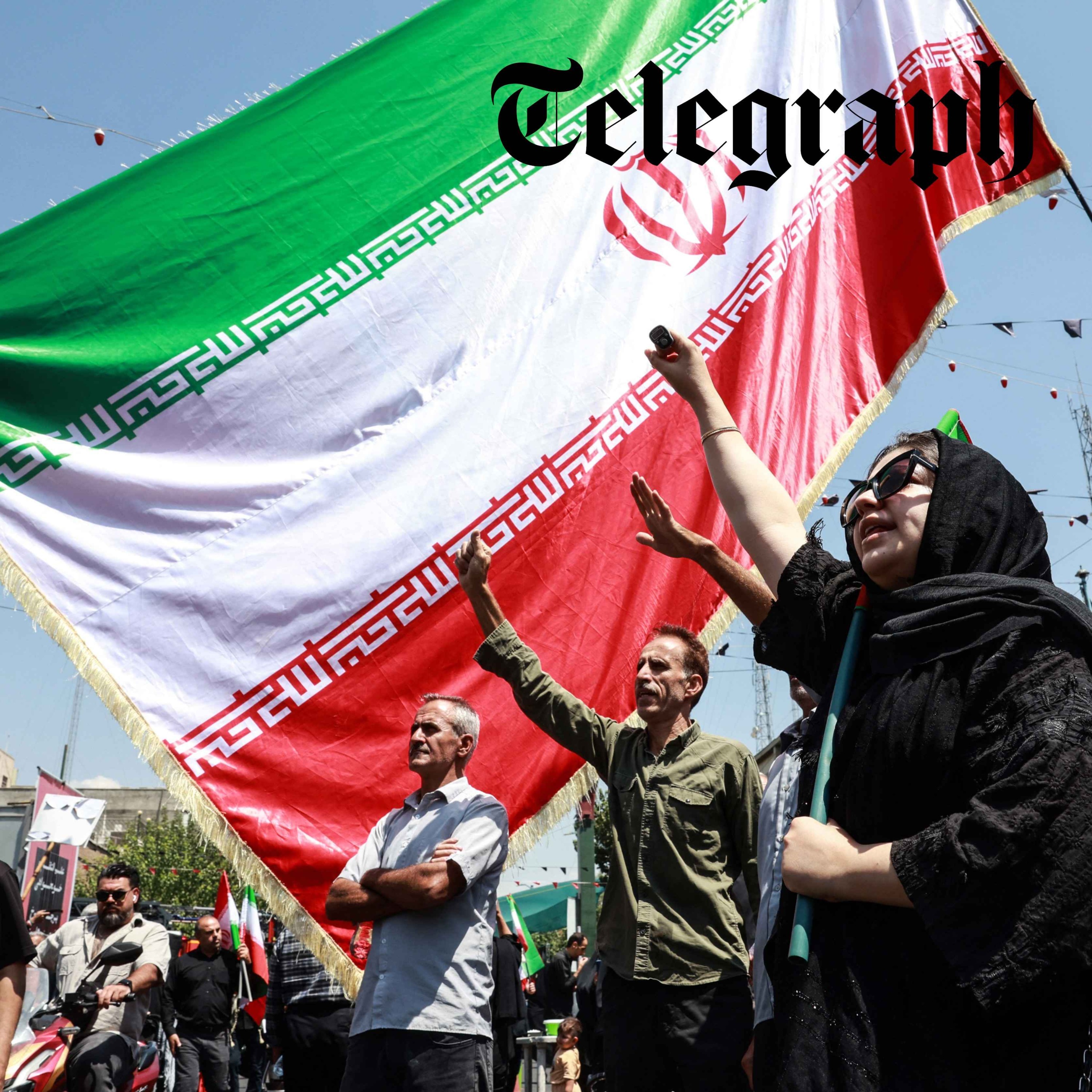
Iran: The Latest
Trump’s empty ‘decapitation’ threats as Ukraine and Iran wars ‘very close’ to merging
00:43:17
Loading summary
Transcript46 lines
- [00:04]
Danny Citrinovic
The telegraph.
- [00:09]
Kleenex Advertiser
Do you remember in school when your teacher had a favorite of everything? A favorite marker, a favorite element, and yes, even a favorite student who wasn't me. So let's move on. I want to talk about their real favorite thing. Kleenex Tissues According to teacher lists, Kleenex is the number one facial tissue trusted by teachers. They they're silky soft, help prevent skin irritation. And now with Kleenex, Snap and Go, you can take them anywhere. Stock up on the ultimate classroom favorite for whatever happens next, grab Kleenex.
- [00:41]
Acast Announcer
Acast powers the world's best podcasts. Here's a show that we recommend.
- [00:50]
Jameela Jamil
What if you laughed all through your commute? Or if you heard the funniest story while at the gym? Or, well, now you can I'm Jameela Jamil, and guests on my new podcast Wrong Turns share their most mortifying and hilarious disaster stories. I'm talking people like Mae Martin, Bob the Drag Queen, Katherine Ryan, Jake Johnson, Margaret Cho, Simon Pegg, Penn Badgley, and so many more. So listen wherever you get your podcast. Wrong Turns where dignity Goes to die
- [01:20]
Acast Announcer
ACAST helps creators launch, grow and monetize their podcasts everywhere. Acast do foreign.
- [01:34]
Roland Oliphant
I'm Roland Oliphant and this is Iran. The Latest It's Tuesday the 4th of August, 2026, the 24th day, by my calculations, of the latest round of combat between the United States and Iran. On today's episode, we'll be looking at the latest negotiations aimed at ending the war, what's going on in the Strait of Hormuz, and whether the wars in Iran and Ukraine are beginning to merge into one. To discuss all this and more, I'm very pleased to say we're joined by Danny Citrinovic, a former IDF intelligence officer focused on Iran and now a senior fellow at the Institute for National Security Studies in Tel Aviv.
- [02:16]
Donald Trump (clip)
A short time ago, the United States military began major combat operations in Iran.
- [02:24]
Kleenex Advertiser
Iran's supreme leader, Ayatollah Ali Khamenei, was
- [02:27]
Jameela Jamil
killed in the attack. For the first time ever, the US Navy used a surface sea drone in combat to strike Iranian targets.
- [02:40]
Danny Citrinovic
The strait are almost completely closed again.
- [02:44]
Roland Oliphant
Does anyone really think that someone can
- [02:47]
Danny Citrinovic
tell President Trump what to do?
- [02:49]
Roland Oliphant
Come on, Danny. Always, always a pleasure to have you on the podcast. I want to start by asking you about, I suppose it's the news of the moment. So over the weekend we had Donald Trump saying he was canceling the latest round of strikes in order to allow negotiations to carry on. Then yesterday we had the Iranians saying that there Are no such negotiations. That's absolutely absurd. Overnight, Donald Trump has now lashed out and lashed out and criticized him, saying they're being duplicitous. No matter what they're saying, negotiations are taking place. And I was just going to, for the benefit of listeners, run a clip right here of him speaking to reporters in the Oval Office yesterday afternoon.
- [03:37]
Donald Trump (clip)
I think we're going to maybe get something, but I want to give him every last chance before decapitation. Very tough to do what we have planned, still planned. We'll see what happens. But it's a very, very tough thing to do. I think I'm very proud of the fact that I will give people, I'll give people a chance. This is a big move to do an attack that big on a country. I'd rather not do it now. We've already threw lots of large attacks, but they were normal large. We have a little problem with Iran because we have many talks and we'll say we have or we don't have, you know, we're straight about it. But they deny it. But they're not denying it now. They just put out a statement not denying it. But for some reason they, when they're talking, they don't like saying that they're talking.
- [04:29]
Roland Oliphant
Daniel, I'm wondering about your immediate take on this, the immediate mysterious question about who, who's lying and who's telling the truth. Because just before I came on, I saw that the, I just checked the Reuters wire and they said they had a little one line flash from a Qatari source saying we can confirm that efforts continue with all parties, which sounds like negotiations are happening. So are the Iranians just lying about it? And really there are talks going on, do you think?
- [05:01]
Danny Citrinovic
Well, again, thank everyone for inviting me and just want to say that the two conclusions for our main conclusions for the end of the week, behavior by Donald Trump, I think one is definitely is not interested in returning back to war and second, that the influence of the gold states on the President Trump is higher, definitely Saudi Arabia and Qatar higher than the Israeli influence because definitely President Daniel when he was in Washington tried to talk to President Trump and convince him that negotiation with Iran is futile. And definitely he didn't have the ability to change the basic perception or basic strategy of Trump that he's still looking for a diplomatic way out. The problem for President Trump that the Iranians are in a way that they're not going to make his life easier. And for them, of course, it's all about controlling the straits. Now there are negotiations behind the scene, not between Iran and the US but between Iran and Oman. And I think this is something crucial because if there will be an agreement between both countries, then the ball returned back to Trump who decides whether they accept that or not knowing that in each agreement the Iranians will control the strips in some way or form. This is where we stand right now. And again, I think what President Trump is portraying when he's saying that Iran is begging for negotiation, I think it's a way to out for him not to admit the fact that he has does not have the upper hand. Iranians definitely are not begging for negotiations. They're attacking the US forces last night in Kuwait and a couple of days ago in Jordan. And so that the Iranians want endless war, but they have no interest in negotiating for nothing for them. They want to turn back to the mou, but in their own interpretation, of course, and of course controlling the strait, this is the basic demands of them. There is consensus in Iranian leadership regarding that. So the bottom line, I think that the ball will turn back quickly to the Washington and administration court, but they need to decide whether to escalate. And nobody is assuring him that escalation will lead to bring something else because I don't think that Iranians will capitulate even if after escalation or agreeing to the agreement between Oman and Iran, assuming that a rich one. And that is something that of course you would have to accept some form of Iranian control over the strait. So the dilemma is still there and the Iranians are not making his life easier. That for sure?
- [07:33]
Roland Oliphant
No, completely. I wanted to talk about this, the talks between Oman and Iran, because we know those are definitely going on. As you say. We talked a little bit about it on yesterday's podcast. New York Times has a little update this morning about that, saying the deal is close. That essentially it's what we've been discussing over the past few days, which is that incoming vessels would follow the so called Iranian route on the northern side of the strait hugging the Iranian coast. Shipping leaving the Gulf would go on the southern route hugging the Omani coast. And an Iranian source talking to the NYT has said that there won't be a toll, that there will be a service fee covering environmental security and starving costs that would be shared 50, 50 by Iran and Oman. Reuters this morning also have another Iranian official telling them that basically the basic idea being under discussion is that Iran wants control over inbound shipping and visibility over outbound traffic with the ability to intervene if necessary. Now, a US official apparently has said that the Iranian count is not accurate and that any temporary routes established through the strait would not involve approvals or permissions of Iran. But that seems to directly contradict everything we're getting from the Iranians. Do you think this is the inevitable outcome of this war? Because it seems to me that whenever this comes up, we seem to be heading towards a de facto state in which there is some kind of assertion of Iranian sovereignty or Iranian Omani sovereignty over the strait. Is there any way the Americans avoid this?
- [09:20]
Danny Citrinovic
Well, again, I think what you describe is what is happening behind the scene. I think that from the Iranian side it's important to reach agreement with Oman because it's given some sort of legal structure they can use. They don't want to perceive as a country that actually working against international laws. But of course they're demanding their control over the straits. So for them the agreement with Oman is a good getaway to explain, look that we and Oman are controlling the strait. This is what we agreed upon. The US cannot intervene because they have no connection to the straits. And that is something that definitely will empower the Iranians. So this is why they're highly interested in reaching the guru with Oman. From the Omanian standpoint, it's the same thing. Nobody in Oman, nor in Saudi Arabia, nor in Qatar wants to see an escalation. Escalation meaning that they will pay a high price if President Trump would decide to attack the energy facilities in Iran. The the retaliation will be against them. So the Omanis are also interested in reaching agreement now Definitely they are updating Washington. They have no doubt about it. Also working closely with Saudi Arabia on the negotiation. And I think that they're trying to find the middle ground meaning, you know, not compulsory toll booth, but some sort about the environment. The Iranian won't control all the routes, only the entrance route that really allow Iran to control everyone that's entering the straits and actually ban some tankers if they are not interested. So definitely it gives them a lot of power in controlling the strait. So I think they're trying to find the middle ground and maybe they will find a way out of it. But again it's all returning back to the US because without lifting the maritime blockade, without allowing Iran to sell oil then for a run and amount of rich agreement that the US will not accept that then it's worth nothing and homosex will still be closed. So I think that these negotiations are important, but everything is still have to return back to Washington. The thing is that we don't know What President Trump views about this agreement. There are mixed reports about what the administration think about it. But again, we have to wait and see when they will have an agreement. The bottom line of things, we have to admit the fact that any agreement that will be reached will give Iran some sort of control over the straits. And if they're not going to be any agreement, then in the end of the day, the U.S. we have to decide what to do. Because I think in the end of the day we have to admit that the humanities have no intention to capitulate. The situation in Iran is quite complex economically, but it doesn't have any influence on the calculus to continue attacking the US as long as there is a maritime blockade being forced on Iran. This is one and second, they're not going to wait for the Americans to attack them. They're attacking every night, every day, Kuwait, Bahrain and Jordan. So we are getting into the decision point again. And I think that the agreement, the possible agreement between Iran and Oman will be important to set the stage for the American decision. And again, I just want to highlight everything I said before. There are no easy solution. There is no silver bullet solution for the Iranian problem. Not taking hag, not attacking the energy facilities, nothing that Trump will do or threatening will change the Iranian calculus. It has to change the regime for that. But we all know that changing the regime would be very hard to do, especially when Trump has no interest in investing the resources needed for that. So I think that getting back to the stalemate and the catch that the US Is in adding to the fact that the US President cannot admit that he's losing. So the reality he's creating is something that does not correlate with happening on the ground and that is actually eroding the American deterrence, but also the American credibility in the eyes of the especially the Gulf states. This is where we are right now. And again, I don't want to emphasize and exaggerate about the Iranian force and how much they're strong. They still definitely have vulnerabilities. But we have to admit one important fact, that their deterrence regarding the Gulf states is working. The Gulf states are terrified from Iran and what Iran can do to them. So after 31 days of war and back and forth Tiffan Tata attacks the other day, the Iranians still have the leverage and the ability to declare their friends. And this is actually dictating their behavior regarding us and regarding Iran in terms of their relations with Tehran. So this is where we are.
- [13:39]
Roland Oliphant
Unfortunately. You just said there's Donald Trump is Creating a reality which doesn't correspond to what's going on the ground. You saying that he's making decisions based on. Based on basically a misconception about what's actually happening, that the president is, doesn't actually grasp or is not being presented with reality as it is.
- [14:02]
Danny Citrinovic
Yeah. I think one of the great mysteries of this war is not how decision being made in Tehran without decision being made in Washington. I don't know whether he's presented with the situation on the ground, but he's taking or prioritizing his own views of the situation, or people are afraid to present him what's happening on the ground and thus giving him wrong information about the situation. Take, for example, the issue of Iran. It's obvious that this regime wasn't going to capitulate. And Trump keeps thinking that they will return back to the negotiation table begging for an agreement. This is not going to happen. So I don't know if he's building that because he doesn't want to admit his loss or that actually this is what is portrayed by his own people or by the decision makers from the military side. But regardless whether it's A or B, at the end of the day, his understanding about the situation is not correlated to reality. In terms of the Iranians willingness to continue the fight, the Iranians, the fact that the Iranians are not interested in reaching any agreement with the US in terms of the Hormuz Strait because they want to negotiate with Oman, the fact that there is no begging by the Iranians who attend that for negotiation. And I think that this is a problematic thing because when he's saying those things, people do not believe him. That actually, as I said, eroding the credibility of the US Even in the eyes of its friends in the region. And second, I think it's really preventing him from accepting the inevitable in terms of if you don't want to accept an agreement that Iran is controlling the straits, and if you don't want to escalate, then the situation would be problematic. But there is no status quo. The Iranians, as long as you have the maritime blockade imposed on them, they will continue to attack the US Forces. And of course, with the help of the Houthis called Polybab El Mandab, we'll see again rise in the oil price. So that is a problem in terms of what's happening in Washington. I think the situation is this kind of virtual reality created regarding what's happening with Iran is really preventing the administration to adopt a more rational strategy that will help them to cope with Iran, knowing that there is no, like I mentioned, no sort of a bullet solution to this problem.
- [16:16]
Roland Oliphant
It's fascinating to me this idea that maybe at the very top of the American decision making tree, they're working on false premises. And I spoke to someone yesterday who said he felt that the American National Security Council was not working as it, as it is traditionally meant to. And he kind of expressed the same, the same fears that you just articulated, saying that he felt that people like Donald Trump, Jody Vance, Pete Hegseth, all those people right at the top are maybe unable for whatever reason to grasp the reality that the other people close to the ground can see. I wanted to bring up what you said about American credibility because you've made some comments on your X feed recently which caught my eye. But before we get there, it relates to the Strait of Hormuz. So the latest we have is that two vessels were hit this morning in the Strait of Hormuz by unknown projectiles. There was a cargo vessel struck by an unknown projectile 20 nautical miles northeast of Khasab in Oman. That's from the UK Maritime Trade Operations Agency. The others was a Liberia flag dry bulk ship called Minoan Pioneer struck while sailing close to Oman's close. At least one seafarer is missing. After the crew abandoned the vessel, Maritime security sources called Reuters British risk management group Vanguard severally said a projectile struck the engine room. Now Gregory Bue of the Eurasia Group this morning pointed out on x that on 22 July Donald Trump threatened to destroy a power plant or a bridge anytime Iran fired on a ship. And that he said from when he wrote that post there had been five attacks and he hadn't followed through on a threat at all. You responded with your own post, beginning with a beginning with an apology for sounding like Cato the Elder, which I felt was a nice allusion. What did you mean by Cato the Elder?
- [18:12]
Danny Citrinovic
I mean that I'm repeating all the time the same thing even when people do not want to hear it. Like the cat or the elder. At the end of the day, I will repeat the same again, again, again that there are two main problems that I identify that I repeat saying that first, like you said, the Americans still don't understand the Iranian behavior. And this is something that is very problematic to decide about things that will influence all of us by really faulty data on what's happening in Iran. Someone told me that Americans, by the way, were surprised when the Iranian attacked Jordan when the US didn't attack them. And I asked Myself. Why? Because in the Iranian view, they're in a constant friction, low intensity friction, because the US Is blocking them. So I don't understand the surprise. This is one element. And the second element I think that is returning back to important post by Gregory, a good friend of mine, is that at the end of the day when you threaten, you know, it's like returning back to the when you want to shoot, shoot, don't talk. And when you're threatening to do something and you're not following the threat, then you're weakening your credibility. Now, yes, it's the US and US 4 and the US army, definitely the strongest in the world. But in the end of the day when you are making such threats and it's not the first time that he did that and he's not repeating that this is a huge problem because it's also strengthening Iran. Imani, understand perfectly that he has no interest in returning back to war. They will go, it's like a chicken game, but they will win every time because they have no reason in their mind for compromises. Not on moose, not on nuclear, not on anything else. I'm repeating, saying that because these behaviors are counterproductive for the US Willingness to find a good way out from this situation. Again, I'm not sure there is a good one, but I think maybe a reasonable one that yes, it will probably strengthen the Iranian regime but will allow us to preserve its credibility definitely in the region. I think what's happening now with the back and forth, we're going to attack, we are going to attack. I'm going to decapitate them. I'm not negotiating with them. Those back and forth issues are really devastating to the US Credibility in the region. This is something that is very problematic for countries like Israel, other gold state that's really relying heavily on the US Deterrence, especially against Iran. So I think this is a major problem and I keep saying that, but unfortunately this behavior repeating itself in a way that is really returning back as a boomerang to the US endeavor to have some sort of credible deterrence regarding Iran.
- [20:56]
Roland Oliphant
Can I just clarify something, Danny, because you're saying this, this kind of I'm going to blow them back to the Stone Age. We're going to have the biggest attack since World War II. Oh no we're not. Which we've noted on podcasts happened several times and he uses different language each time. There was end Iranian civilization. There was the most recent one is the biggest attack since World War II. But oh no, we're going to have Negotiations. You're saying that's a mistake because it weakens his position. But some people would say his mistake is not going ahead and carrying out this huge two week go, big attack package. But I don't think that's your position. You're not saying that.
- [21:32]
Danny Citrinovic
No. Okay, look, let's assume that he's doing this attack, a very big one, maybe infrastructure, maybe power plants, maybe have blackouts in Tehran, Isfahan, whatever, Tigris, karma everywhere. Then what will happen? The Iranian is not going to beg him to return back to negotiation. They will retaliate heavily because, yes, it's like in the end of the day, like Iranians said, if you're not exporting oil, no one export oil. This is exactly the notion and I think Trump knows that very well. This is part of his hesitation. But he can hesitate. But if you're threatening all the time and you're not following it, it's a problem. Now again, I don't think there is a silver bullet solution for that. Even if we'll attack the Iranians tomorrow with everything that we have, in the end of the day, this regime show a lot of resilience and they will have the ability to attack the Gulf states, creating a huge economical problem to the world, but also ecological, I think, problem to the world. Remember what happened in the first Gulf War when the Iraqi army set in flame the Kuwaiti oils? I think that there is no solution even if you expand it.
- [22:44]
Roland Oliphant
We're going to take a short break now. When we come back, how will the US midterms and the Israeli general elections in autumn affect the outcome of the war in the Middle East?
- [23:01]
Will Hawkes
What makes a great pub? Is it the beer, the hospitality, the history? I'm Will Hawkes, journalist and co author of the Telegraph's guide to the UK's best pubs. I've visited thousands of them and enjoyed a few pints along the way in my search for pub perfection. Now I've had the job of whittling down the best of what the nation has to offer. Enter your postcode to see if you're local, made our list or filter to find your new favourites, visit telegraph.co.uk bestpubs today.
- [23:35]
Roland Oliphant
Welcome back. You're listening to Iran, the latest with me, Roland Olyphant. I'm joined today by Danny Citrinovic of the Institute for National Security Studies in Tel Aviv. Okay, I want to move on a little bit. I know you were, you know, when you were in, in IDF intelligence, you spent, you know, your, your every waking hour kind of Looking at Iran and thinking about Iran and, and what's going on inside the country. And there's just a couple of things that have emerged this morning which I thought was quite interesting. I want to run get your thoughts on it. So this thing, this thing has been picked up in Iranian media and caused a bit of stir inside Iran today. So Mohamed Baga Kharazi, who is I believe the head of the Iranian Hezbollah, which has nothing to do with Lebanese Hezbollah or even Katab Hezbollah, but another, another outfit inside Iran called Hezbollah, he's shown up on Iranian media and he claims that Masoud Pezeshkian, the President of Iran, has threatened to resign 28 times, apparently in an effort to kind of force the Supreme Leader, wherever the supreme leader is, to accept some kind of compromise with the United States. And he also claims that Mojtabahomeenei has finally said to him, look, if you do that again, I am going to accept your resignation. It's caused a big stir. But then even inside Iran, there's a lot of skepticism about this. Pezesh Kian's office has denied it. I've spoken to Iranians who I think kind of know stuff who say, well, this guy, I don't know who is Mohammed Baga Kharazi, Is he a reliable source and what does this say about stability inside the regime?
- [25:31]
Danny Citrinovic
Yeah, I want to say in general terms, you know, regardless of what Khawazi said, basically say a couple of important things about the Iranian political system that we have to be aware of. Every president in Iran or the, or the history of Islamic Republic of Iran has threatened to resign. It was, you know, it goes back and forth from Raisihani and even Ahmadinejad and Khatami, they all threatened to resign. And every time Khamenei, of course overruled that and say that he's not accepting their resignation. And now according to Khalaz himself, maybe Musta will accept that. But I have to say that Pezeshkian tweeted or was appearing an hour ago saying that he has no intention to resign and he's working together with all the forces in Iran to improve the Iranian situation or whatever. I think we have to admit something that is important to highlight after the death or decapitation of Ali Khamenei. Definitely there are friction within the leadership because, you know, the struggle on who is controlling Iran. Definitely we have the IRGC highly controlling Iran in a way that they have a lot of influence on decision making process. We have supreme leader that nobody saw him Since 20 February this is a problem for a regime that actually drives its legitimacy from the supreme leader from way of thinking. So definitely it's a problem. Having said that, have to say something important. There is a consensus in the Iranian leadership regarding which policy to adopt. We see agreement from the Foreign Ministry through Ahmad Vahedi, the commander of the irgc. But in the end of the day negotiations with us is futile. But also there is no intention to fighting endless war. And they able to change the strategic reality on the ground by their resilience, by the fact that eventually the restrictions on the US administration like the midterms election, others at the end of the day will lead to Iranian win the Americans lift the sanctions, leave the area. Already reports that the Americans are changing their military posture in the region thinking on leaving Kuwait and Bahrain. So that's a huge win for the Iranians. So for them this policy need to continue. So those discussion behind the scene. We know that there are tensions. Even when Muktaba talked about the MoU or said something about it, hopefully it was Muqtaba. He's mentioned the fact that he was against it, but he believe Pezeshkian that promised him to do A and B and C. We know that behind the sale of criticism on Halibach and his behavior in the Khamenei funeral, there are a lot of shouting against Khalibakh and Alakshi for the fact that they are moderates and the need to counter the Americans. So all of that shows that there are also there are frictions within the leadership that are extreme and they want to continue this war. But again, having said that, you saw in the MoU that there are more or less a consensus in Iran leadership regarding that. Two, three months after the US and Israel decapitated the senior leader of Iran, Ali Bakh, came and met with JD Van so you see that there are some sort of pragmatism in this leadership. They're not moderates, but there is pragmatism that enables them to negotiate and reach an agreement that will serve their interests. So we're coming back to what Variz said and others. Definitely there is tension, definitely tension between the presidency and the igc. It will always, has been, probably will always be in the future. But I won't exaggerate for that saying this is the reason why Iran is behaving like that. I think there is a cohesion consensus about the policy need to be adopted. And as they are behind the scenes, a lot of back and forth for personal reason for who controlling who. But I wouldn't exaggerate saying that the regime is actually collapsing because of this internal situation. I have to say that in the end of the day, they're managing despite the fact that Mujtaba is actually very hard to be reached and even is alive. But Iraqi said even that he didn't seem since the 20th of February, so definitely is hard to reach him because they're afraid from decapitation. No elect, no electronics near him, they have to use runners. But in the end he's alive. He's not the ultimate decision maker. He definitely has to sign everything because it's the way the system works. But we see more a collective way of leadership. And it really stands out when you compare that to Al Khamenei or Khomeini, the way they actually worked and they were actually one person ruled everything. And now we have a more collective issues, collective way of leadership. But again, having said that and given all the happening behind the scene, I think the consensus is still there regarding how to get out from this crisis.
- [30:27]
Acast Announcer
Right.
- [30:27]
Roland Oliphant
Okay. So General, whatever the tensions are, don't overcook that and say that means the regime is going to collapse or it's split. Okay, that's an interesting answer. There's one other really interesting thing I saw, which I want to get your take on. So Mohsen Rezai, who's a military advisor to the Supreme Leader wherever he is, and also a former IRGC man, he was on Iranian television I think yesterday after we'd recorded, and he had something interesting to say about this July 25 Ukrainian attack on an Iranian ship. Now, he said that Iran was preparing retaliatory strikes against Ukraine, that they'd already identified three targets and that they were ready to go. But then there was a telephone call with the Ukrainians. The Ukrainians said, terribly sorry, it was a mistake, that attack and we're dreadfully sorry about it. And so therefore that operation was called off. Now, whatever the truth of that, it does raise this question about whether these two conflicts may end up merging. There's always been this kind of low level umbilical link between Russia and Iran, the Shaheds going to Ukraine, the alleged Russian supply of targeting data to the Iranians and so on. But do you see any sign that these two great conflicts are becoming more intertwined or could even merge into one?
- [32:07]
Danny Citrinovic
Well, definitely we're very close to it. After the Ukrainian attack on the Iranian ship in the Caspian Sea and then the possible retaliation by the Iranians thinking that they can attack one of the cities in Ukraine and That probably would force the Ukrainian to retaliate. So if I think we're close to that, it was prevented mainly as Iranians say that the Ukrainians highlighted the fact that they have no intention of escalating. But in general terms we have to say there are other similarities between those conflicts and there are coasting between them. First as you mentioned, of course the Iranians send the Shaheds at the beginning of the campaign that transformed to become the Russian version of the Goran. And definitely they're using that to hit. Infrastructure within Israel, target within Ukraine. And this is something that definitely, you know the, like the Ukrainian said the Iranians already being involved with this campaign. Now of course it's everything is built in Tatarstan. So Iranians are not giving shots anymore. But they already gave the blueprint footprint. So the Iranians are involved and the Russians of course are helping the Iranians intelligence wise in the war against the US So definitely you have this kind of involvement. Now everything happened in Casper Sea. We have to see whether this actually continue. I believe that if we'll see another Ukrainian attack and I can understand why the Ukrainians also have an interest in combining those campaigns, then definitely I think the Iranians will tell it. I don't think that the Iranians have an ambition to open a second front. It's also be probably potential front against the European countries in general that helping Ukraine. So I'm not sure that the Iranians will want to do that. And I think they were hoping for some sort of Ukrainian apology in a way more or less that came maybe in the form to kill the foreign ministers. But I think in general terms if that will continue, definitely we'll see that some sort of intertwined between those conflicts and we have definitely have to follow them. The thing is that if there actually would be a merge that would be very interesting to see how the European countries will act against Iran. For now they are very hesitant to be involved in the campaign that nobody asked them in the beginning whether it's worthwhile starting. So yeah, there are discussion about Hormuz, but you perceive the fact that they have no intention in being involved in this campaign. So entering Ukraine to the mixture, maybe it will force them to change the behavior, maybe it will change Israel behavior because Israel is really, you know, on the fence.
- [34:48]
Roland Oliphant
I wanted to ask about Israel. Exactly. That to me was the really interesting question. If, if that was to happen, would that, would that change Israel's approach to Ukraine and Russia?
- [34:59]
Danny Citrinovic
Partially. You can't ignore that. But Israel is still having some sort of view that you don't want to find yourself in a direct conflict with the Russian bear. So, yes, maybe we'll see more Israeli involvement, but in the end of the day, on the surface, I think Israel will try to preserve a good relationship with Moscow. There are also good relations between Putin and Netanyahu. So Ukraine being involved in the war maybe would force Israel to help Ukraine, maybe behind the scene more than they're doing now, but out of the open. I'll be very doubtful to see a dramatic change, a public change in the war between Ukraine and Russia. And Israel is really trying to stay on the fence. So definitely this kind of combination of these conflicts would make interesting change, definitely in the European view of the conflict, but we're not there yet. And I think that the two sides preferred to bypass any escalation. Again for now. We don't know how things will continue in the future, but definitely the relations between Ukraine and Iran in general are all time low. From the downing of the civilian airplane after decapitation of Soleimani almost six years ago and definitely now when the Iranian help to Russia, these relations won't return back to normal anytime soon, regardless whether we're going to see an escalation. But we have to remember one other thing. In the Caspian Sea there is some sort of a maritime channel or link that the Russians and the Iranians built in order to help the Iranians in the war. And also even grain and something else things that they are moving back and forth to Iran and the Ukrainian when they're trying to hit that line or channel that been created between Iran and Russia. This is an important element to prevent this thing from happening. But with no backing for the Ukrainians, think that what we saw, maybe it was a one time thing and maybe it won't be turned back anytime close.
- [37:04]
Roland Oliphant
I wanted to quickly bring things back closer to you, to Israel, a bit closer to home and where you are. There's two kind of parallel peace processes going or not going, or wars on Israel's borders. Lebanon and Gaza both have seen some movement on the diplomatic front, some of them not. I want to start with Gaza. So we had this on Friday, Donald Trump announcing this, what he called, I think a historic breakthrough. It was a deal that would see essentially it would see Hamas disarm or see its arms decommissioned in exchange for a staged Israeli withdrawal. Now everybody's saying, in fact, we have a piece in the paper today saying that is on the verge of collapse. What's happened? Why has that gone wrong? And I don't know did it ever have time?
- [37:47]
Danny Citrinovic
Well, nothing. Netanyahu is fighting to win another term as prime minister. And for him, withdrawing our forces from Syria, Lebanon and Gaza will be a severe blow to how he perceived himself as a defender of Israel and his security posture. So there weren't going to be any withdrawal, not from Lebanon or from Syria and definitely not from Gaza because the fact that Hamas is still controlling Gaza, it's a severe blow. Netanyahu promised the ultimate victory. So what we have right now is actually, yes, they're trying to find ways. It's not a dismantling of Hamas, it's just Hamas will give the weapon to some sort of third party that will control Northern Ireland.
- [38:32]
Roland Oliphant
Decommissioning of IRA weapons style thing.
- [38:36]
Danny Citrinovic
Yeah, exactly. But from the Israeli standpoint that Israel continue attacking in Gaza, killing Hamas elements, that in the end of the day they won't withdrawal from Gaza, there is no way that this will happen because we'll be the very political blow for Netanyahu. So everything that's being discussed, Israel will condition that in full dismantling of Hamas. And this is something that won't happen because Hamas is not agreeing to that. Everything that's happening right now is really, I don't know, it's on thin eyes because at the end of the day I don't see any willingness from Israel to withdraw regardless what will happen in Gaza. And that might bring some sort of a real clash between asset US Administration that is highly interested to show that something dramatic is happening in Gaza because it's maybe it's only significant achievement in the Middle East. Unfortunately, I don't think that something will happen. It won't be reciprocated by Israel. So two things will happen or President Trump will try to force Israel to do so. And I don't think it will help or nothing will happen. And then we have to wait until the elections here. But again, in terms of what's happening in Israel, no withdrawal from Lebanon, Syria and Gaza.
- [39:47]
Roland Oliphant
So you're saying the same goes for Lebanon. I want to ask you about Lebanon because there's a new round of I think Israeli Lebanese talks between the Lebanese government and Israel today. And there is this plan that is meant to see they're calling them pilot areas. The idea is that the Israeli military withdraws, the Lebanese military moves in and that prevents Hezbollah from maintaining its presence there. You seem skeptical that that's going to lead to a full Israeli withdrawal from Lebanon as well.
- [40:17]
Danny Citrinovic
Yeah, Israel won't going to withdraw from Lebanon until the elections. And again, I Think highly of these negotiations in a way that these are important negotiations that might build the foundations of sort of an agreement towards the future. But we have to admit that the pilot areas that they're doing right now that are outside of Israel control in Lebanon, I hope it will succeed because it's important for strength us to strengthen the last angel leadership together with Nawass Salam. But at the end of the day, given the fact that everything is conditioned Israel in the world conditioned by fizzball dismantling and that is not going to happen, I don't think Israel is going to withdraw from Lebanon anytime soon. And the pilot areas are important, but again they're outside of the control of the idf. So even in Lebanon these negotiations are important, but we have to make adjustment to our expectations. In the end of the day, no full withdrawal from Israel for Lebanon. And by the way, it's connected to Iran because as remember, the Iranians are demanding that in any final agreement, Israel will fully withdraw from Lebanon. And that is not going to happen. So again, another catch that we have to deal with. But again, Israel is entering a very interesting times in terms of what will happen in the elections.
- [41:35]
Roland Oliphant
Let me ask you about that. I just want to finish off by asking about the elections because I was speaking to somebody yesterday and my question to that person was why is this war seem to drag on and drag on and drag on. And his answer, part of his answer was he thought the Iranians were content to drag things out to see the outcome of both the US midterms on November 3rd and the Israeli election, which I think is scheduled for October 20th, 27th. Yeah, exactly right. So it's a very particular time. What do you think might happen? And, and how could the outcome of those elections actually affect the war in the Middle East?
- [42:18]
Danny Citrinovic
Well, definitely it will have I think from the Iranian standpoint, definitely they're hoping they're following of course the constraints of the US Administration and they know that no, even if only the House will be taken by the Democrats, they will start impeachment, they will start process that will prevent Trump from focusing on the Middle East. So they will buy time until the end of the election seeing what will happen. And definitely for them it's important also in terms of Israel, we have to remember that we'll have elections. And even if we'll have a new administration or regime or government or whatever change of gods at the end of the day, it will take time for them to rebuild their policy and they won't strike Iran anytime soon. But even If Netanyahu will win at the end of the day with no support by Trump, then it'd be very hard for Israel to do the same. So I think that for them it's important. These elections are important, but I think it's important also for other countries in the region looking at the election, Jordan, Egypt that have very bad relations with the current Israeli government, I think they're hoping for some sort of a change in Israeli policy. And I think it's for Israel it's much more important than Iran. The bottom line of things in terms of the Israeli election, that we are entering a very tense situation domestically. And also from the Iranian standpoint, they believe that as long as everything is happening domestically, Israel won't have the time to attack in Iran maybe. No, I don't know. I'm hoping definitely for change of policy in Israel, knowing that we cannot bypass the Palestinian issue. I think that the war against Iran shoulder that relations with the Gulf states are not depending on Iran. Actually, when it depends on Iran, we perceive that some of it's undermining the stability of the region. But there is not going to be normalization with Saudi Arabia without moving forward on the Palestinian issue. And definitely I'm hoping that the government will understand that and we focus on that much more from the Iranian issue, I'm not underestimating the Iranian threat, but the ability to build a coalition against Iran Regional 1 is highly depending on Israel's ability to move forward on the Palestinian routes.
- [44:21]
Roland Oliphant
That was Danny Citrinovic, senior fellow at the INSS think tank in Israel. We'll be back tomorrow with more updates on the conflict in the Middle east and elsewhere. Until then, that was Iran the Latest. Goodbye
- [44:37]
Venetia Rainey
Iran. The Latest is an original podcast from the Telegraph created by David Knowles and hosted by me, Venetia Rainey and Roland Oliphant. If you appreciated this podcast, please consider following Iran the latest on your preferred podcast app. And if you have a moment, leave us a review as it helps others find Find the Show to stay on top of all of our news, subscribe to the Telegraph, sign up to our Dispatchers newsletter or listen to our sister podcast Ukraine the Latest we're still on the same email address battlelinestelegraph.co.uk or you can contact us on X. You can find our handles in the show Notes. The producer is Max Bauer. The executive producer is Louisa Wells.
- [45:24]
Acast Announcer
Acast Powers the World's Best Podcasts Here's a show that we recommend
- [45:32]
Tristan Hughes
10 years after Troy Odysseus is still lost, I'm Tristan Hughes. And all of this month on the Ancients I'm going to be sailing through through Homer's treacherous world of monsters, witchcraft and tempestuous gods, exploring the real archaeology and history beneath the myths. Join us on the Ancients from History Hit Listen now and subscribe on your favorite podcast player.
- [46:03]
Acast Announcer
ACAST helps creators launch, grow and monetize their podcasts everywhere. Acast.com.