← Iran: The Latest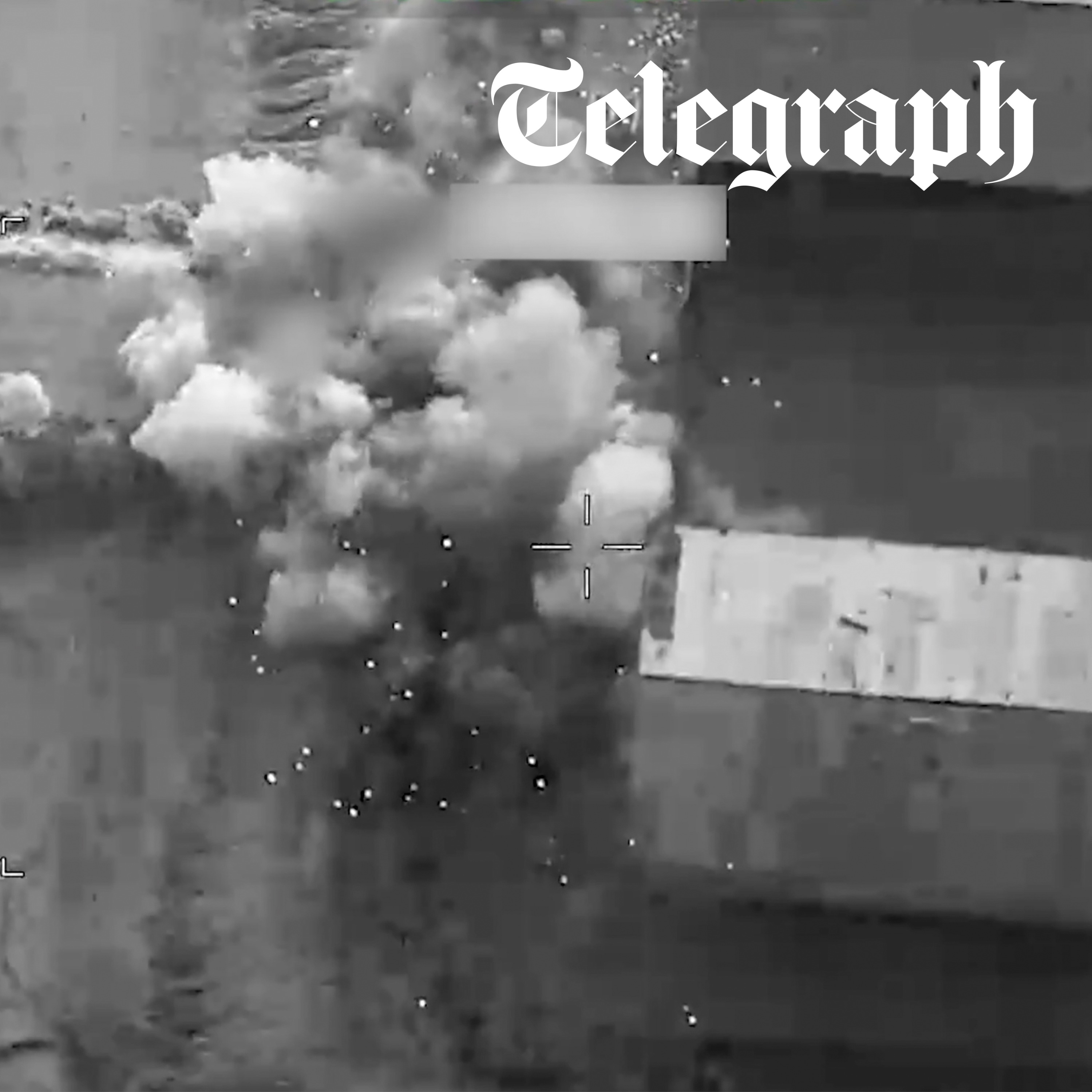
Iran: The Latest
Trump’s five-hour blitz triggers Iran war escalation & Mossad’s secret plot exposed
00:56:24
Loading summary
Transcript166 lines
- [00:04]
Seema Shine
The telegraph.
- [00:09]
Mary or Courtney (Two Judgy Girls)
Is your kid's birthday coming up? Don't stress the prep. The Party Shop at Michael's is your one stop. Shop for every theme from Bluey to Rodeo. Transform your space into a birthday wonderland with dream worthy tablescapes and decor starting at 99 cents plus get free helium inflation on select balloon styles, weather your craft a one of a kind bash or grabbing the essentials. Michaels has everything to make their big day legendary. Shop now and order ahead for delivery or in store pickup. Michaels everything to celebrate anything
- [00:48]
Roland Oliphant
ACAST powers the World's Best Podcasts here's the show that we recommend.
- [00:58]
Mary or Courtney (Two Judgy Girls)
Welcome back to two judgy girls. I'm Mary from the Bay and I'm Courtney from la. TJG is the podcast where we spill all the tea on your favorite reality TV shows, celebrity gossip and everything in between. We're here to bring you our unfiltered opinions, hilarious commentary and plenty of laughs along the way. We're two SDSU Delta Gamma sisters with a microphone and a whole lot of opinions. Each week we dive headfirst into the wild world of reality television. From Bravo to all the trash TV you could want. We break down the drama, dissect the latest scandals and share our thoughts on everything from the jaw dropping moments to the embarrassing antics. But that's not all. We're not here to just gossip. We're here to connect with you, the jurors and share our love of all things pop culture. Whether we're dishing on the latest celebrity breakups, discussing our favorite guilty pleasure movies, or sharing embarrassing stories from our own lives, we promise to keep it real, keep it fun and keep you coming back for more. Come judge with us.
- [01:59]
Roland Oliphant
ACAST helps creators launch, grow and monetize their podcasts everywhere. Acast.com. I'm Roland Oliphant.
- [02:14]
Venetia Rainey
And I'm Venetia Rainey.
- [02:15]
Roland Oliphant
And this is Iran, the latest. It is Tuesday, 14 July 2020 26. It's Bastille Day, the 23rd day of the 60 day deadline to reach a peace deal between the US and Iran. And my gosh, it's looking further off than ever. On today's episode, we'll be looking at what the U.S. hit during five hours of strikes on Iran last night, the third night in a row.
- [02:40]
Venetia Rainey
We'll also be looking at Iran's deadly attacks on two supertankers in the Strait of Hormuz. Plus, Roland will be speaking to Seema Shine, Mossad's former head of research and evaluation and Iran expert about the extraordinary new details around Israel's years long plan for the Iran war. She explains why she wouldn't have backed it and why Israel is not joining in in the current fighting.
- [03:02]
Roland Oliphant
A short time ago, the United States military began major combat operations in Iran.
- [03:10]
Seema Shine
Today, President Trump says Iran's Supreme Leader,
- [03:12]
Mary or Courtney (Two Judgy Girls)
Ayatollah Ali Khamenei was killed in the attacks.
- [03:21]
Roland Oliphant
The Pentagon is weighing a takeover of that island as a way to force the reopening of the Strait of Hormuz. Iran begged for this ceasefire and we all know it.
- [03:32]
Venetia Rainey
This is a historic meeting.
- [03:33]
Seema Shine
Never before has the Iranian and American
- [03:37]
Venetia Rainey
leadership met at such a high level.
- [03:39]
Seema Shine
Can we turn over a new leaf?
- [03:40]
Roland Oliphant
Can we change relations in the Middle east permanently? Does anyone really think that someone can tell President Trump what to do?
- [03:48]
Venetia Rainey
Come on, foreign, let's start with some updates. Another busy night.
- [03:53]
Roland Oliphant
Yes. So we were reporting on how things picked up over the week. I'm picked up. I mean things got more violent over the weekend. Yesterday afternoon, Donald Trump announced that his the U.S. navy's blockade of Iran is back on. He insisted that the Strait of Hormuz is open and will remain open with or without Iran. We are reinstating the Iranian blockade, so named because it is not only stopping Iran's ships or customers from entering or leaving, so because it is only sorry. Other countries, he insisted, would have fair and open use of the strait. And, and then he claimed that the USA would from this point forward be known as the guardian of the Hormuz Strait, would be reimbursed at the rate of 20% on all cargo shipped for any and all costs necessary to do the job of providing safety and security for this, the process and formation will begin immediately. So on. What does one make of that? I, I observe that if he's charging 20% of the value of all cargo shipped on pure financial grounds, if I was a ship owner, I'd be taking the Iranian route because their toll is much cheaper than that. I don't think this is serious. Let's not take that seriously for now. That'd be $32 million, I think for every voyage.
- [05:10]
Venetia Rainey
Yes. Atlantic Council's Geoeconomic centre did a rough calculation. As you say, the maths does not work out very favourably for shippers. So if a supertanker was carrying around 2 million barrels of oil at the current price of $85 a barrel, it's about 170 million. Their cargo be worth $170 million. That will cost them $32 million in the toll. Now this toll is supposed to come in at 4pm Eastern Time today. So that's 9pm GMT tonight. And as you say, we've got no more details about how exactly this is going to work. There's no precedent for this kind of thing in a natural waterway. We do see it in artificial waterways like there is a precedent, but not in natural water.
- [05:46]
Roland Oliphant
The Kingdom of Denmark did this for centuries, centuries ago. Yes, but it did it, but not currently.
- [05:53]
Venetia Rainey
And crucially, it goes against what Marco Rubio, the Secretary of State has been saying, that you cannot charge that. It's against international law to charge boats to go through an international waterway. And now the Americans are threatening to use.
- [06:04]
Roland Oliphant
Well, laws can be changed.
- [06:06]
Venetia Rainey
Laws can be changed.
- [06:07]
Roland Oliphant
Humans are written by humans.
- [06:08]
Venetia Rainey
Unsurprisingly, the Gulf States, Kingdom of Denmark
- [06:09]
Roland Oliphant
used to do it.
- [06:10]
Venetia Rainey
Unsurprisingly, the Gulf States are not very happy and are unlikely to be assuaged by the Denmark Kingdom example that you're citing. Oil prices have risen to their highest in four weeks overnight. And we had quite a mocking statement from Iran's Foreign Minister Abbasa Ragchi. He posted on X POTUS President of the United States is absolutely right. Whoever provides secure and safe passage of commercial vessels through the Strait of Hormuz should be compensated for this service. Iran has always been the guardian of the strait and will remain so forever. 20% is of course too much. We will be fair. He's basically saying you agree with our argument that we should charge and so we will keep charging. I don't see how this gets us anywhere. Doesn't get any tankers anywhere, doesn't get anything moving. Iran's parliament last night has begun work on a bill about the stratal moves. It's called the Strategic Action for the Security and Sustainable Progress of the Strait of Hormuz and the Persian Gulf Bill. Basically they're trying to legislate around this and encode it in their national laws. Yeah, we've seen Strait of Hormuz shipping dry up almost completely. I think something like 10 ships crossed yesterday. So completely plummeted from the highs that we were starting to see before this latest bout of fighting.
- [07:17]
Roland Oliphant
I think it's time to call it a battle, the Battle for the Strait, I'm going to call it third night in a row of U.S. operations. They said it was a CENTCOM said it was a five hour mission against Iranian coastal defensive systems, missile drone strikes and maritime capabilities. If you look at the map of this, it's from. It's all along Iran's southern coast from well inside the Persian Gulf to kind of outside so Bushehr, that coastal city with the civilian nuclear plant run by the Russians. Chabahar Jask, Conorak, Abu Musa, Bandar Abbas. Iranian media also reporting explosions on the islands of Kish and Kishim. So these are all coastal targets, is all along the seaboard. And you can see how this is all. It's clearly related to the, to the maritime question, to the shipping question. The Americans, as I. Sorry, before I say what the Americans are saying, three people are killed in Iran, according to Iranian state media. I'm not sure if they were service people or civilians, but the United States still saying, well, not calling this a war, they're saying we're degrading Iran's ability to attack innocent civilians and commercial shipping in the Strait of Hormuz.
- [08:30]
Venetia Rainey
Yeah, and things have continued to escalate today. So Iran responded by hitting two Emirati crude oil tankers that were transiting again, that southern Omani route through the Strait of Hormuz. The UAE has named them as the Mombada and the Al Bahia, said they were in Omani territorial waters when they were hit. And the strikes have killed one Indian crew member, injured eight others. Listeners and viewers will remember that another one was missing. Another Indian crew member went missing from strikes the other day. The tank has also sustained significant damage in the attacks. The company operating the ships, the irgc, has said the offending supertankers were hit and disabled after they ignored repeated warnings and turned off their navigation systems. There's also a third ship that's been attacked that hasn't been claimed by Iran yet. A Dutch shipping firm said that it was attacked by an unknown projectile on the Arabian Sea near Oman. Plus, the IRGC has also been striking again American military assets in its Gulf and Middle Eastern neighbours. So we've had Jordan, Bahrain and Kuwait. They're claiming to have hit fuel tankers, fuel depots, several Patriot air defence missile systems, satellite radars. We'll take it with a pinch of salt. I've seen some reporting already from a civilian who was in Bahrain who said that they heard the strikes very loud, but that they have seen on the ground that the damage has not been as bad as Iran has been claiming. Air raid sirens were actually still sounding in Bahrain around midday today in the uk. And reminder, that's where the US Fifth Fleet headquarters is. So still very much live and America or someone still seems to be attacking Iran now as we're recording. So Iranian media reporting strikes in the port city of Bushehr, again, as you said, said, where the nuclear power plant is also reporting explosions in the city of Mahasha near the Iraq and Kuwait borders and in Abadan in southwest Iran. So this is really a live kinetic situation. Strikes are ongoing and I think it's very hard to see how you can call this anything but a war at this stage. Brolin, we got some more details about the drone boat attack that we were reporting on yesterday, didn't we?
- [10:26]
Roland Oliphant
Yes. Okay, so this was initially mentioned by the United States over the weekend where they said they had used one way attack drone boats for the first time. We're familiar with these from the war in Ukraine. So Ukrainians mostly using them against the Russians in the Black Sea. They finally released some video of that attack and they told us what they'd done with it. So if you're listening to this, follow the link in the show notes to watch on YouTube and you can see the the footage that CENTCOM put out. They use three unmanned surface vessels called Corsairs. They targeted the port at Bandar Abbas Naval Base. And this is the first time American forces have employed sea drones in combat operations. The footage shows these relatively slow vessels. They look like the Ukrainian kind of, you know, those sleek, slightly faceless, spooky remote control boots heading towards a submarine and a ship maintenance facility in Bandar Abbas port. That's the headquarters of the Iranian Navy. There's a very big explosion and a video cuts to another drone boat attacking the second jetty. What do we know about these, these particular weapons? Well, the Saronic Corsair, we're told is a 24 foot long autonomous boat, maximum speed of 35 knots, can carry a payload of up to a thousand pounds. Quite a big payload, a range of a thousand nautical miles, we're told. So there we are, a little bit of history for the U.S. navy. Their first use of unmanned one way, unmanned surface vehicles, as they're called.
- [12:12]
Venetia Rainey
Interesting. And we can probably expect to see these being used more and more. It doesn't sound like what's happening now is going to stop anytime soon. This was Donald Trump speaking on the Hugh Hewitt show last night.
- [12:25]
Seema Shine
We're going to hit him very hard tonight and we're going to hit them hard tomorrow. And there's not a damn thing they can do about it.
- [12:32]
Mary or Courtney (Two Judgy Girls)
They have nothing.
- [12:32]
Seema Shine
They have nothing going other than they have big mouths.
- [12:36]
Roland Oliphant
Keep it up, Mr. President.
- [12:37]
Seema Shine
That I did because I got to know him. The mou buckle, it's a lot better. You know, people say I was at least reasonable, but I got to know him and they're stone cold crazy people.
- [12:48]
Roland Oliphant
So the legal side of this Venetia. The US President has formally notified lawmakers that the Pentagon has resumed strikes against Iran. That's according to multiple US media outlets. Under the 1973 War Powers Resolution, the president must report to Congress within 48 hours of starting any military action he has reported to Congress. And that letter was sent on July 10 saying the strikes began on July 7 and represent military action consistent with my responsibility to protect Americans in the United States interests both at home and abroad. According to CBS and Politico, the letter described the most recent strikes as limited, measured, planned and executed in a manner designed to minimize civilian casualties.
- [13:33]
Venetia Rainey
Super interesting. That does suggest that this is going to keep continuing for a bit. And per one of our regular listeners advice to always watch the support aircraft to see what will happen next with the war. A good tidbit here from Israel. So the US has frozen its plan to remove refueling aircraft from Israel's main airport. There are 33 of these massive air to air tankers currently sitting at Ben Gurion Airport in Tel Aviv and there was a plan to scale down that number. They're using up spaces that commercial jets would normally be using. However, that plan has now been put on ice. I think that's a pretty strong indicator that this is going to keep going for a while.
- [14:09]
Roland Oliphant
Meanwhile, there is a bit of diplomacy to talk about before that. There is more fighting this time in Yemen.
- [14:17]
Venetia Rainey
This was quite a curious story that erupted yesterday. We didn't quite entirely get our heads around but we've got more details now. Just explain what's been going on.
- [14:23]
Roland Oliphant
So yes, the latest which is from yesterday afternoon is that the Houthi rebels, the Iran backed, we call them Houthi rebels in Yemen, said they launched missiles and drones at Saudi Arabia's Abhay International Airport on Monday in response to airstrikes earlier in the day that hit Sana' a International Airport which they blamed on Saudi Arabia. No casualties were reported on either side. But this is, this is quite significant escalation because Saudi led coalition and and the Houthis have been in a state of ceasefire for some years now. They Saudi has not officially commented on this but Houthi military spokesman Brigadier General Yaya Sari said in a video statement on telegram that airlines should not fly through Saudi airspace saying that those warnings should be taken seriously until the blockade on Sana' a International Airport is lifted. So the strike on Sana', a, it seems that they were intended to prevent an Iranian aircraft from landing at the airport yesterday. I don't know what was on the Aircraft. This is the obvious question.
- [15:42]
Venetia Rainey
I saw some reports that it was people coming back from Iran from the funeral, but then also maybe a suggestion that there was cargo on board. So, okay, we don't know anything more.
- [15:50]
Roland Oliphant
We don't know, however, a significant potential incident, especially because, of course, the Bab el Mandab, the waterway, you know, between the Arabian Sea and the Red Sea, obviously another crucial shipping point. There's always been this question of whether that will be cut off, whether the Houthis will enter the war at the full scale. They haven't really throughout this, but nonetheless, something to watch.
- [16:20]
Venetia Rainey
I mean, that is Iran. They put out an explicit plan last week that if things kept breaking down in the Strait of Hormuz, that they would. That was part of the escalation plan to shut the Bab el Mandib Strait, as you say. They've invoked that a few times and it hasn't happened yet.
- [16:33]
Roland Oliphant
They've invoked it a few times. It hasn't happened yet. And when you speak to people who really know Yemen and watch Yemen, they'll always make the point that the Houthi. One person I'd like to speak to says Houthis are addicted to war, but they need a Yemeni reason to go to war. So there is this question about to what degree Tehran can get the Houthis to do what they want. The relationship between the Houthis and Iran is not quite as tight and direct as the relationship between Hezbollah and Iran.
- [17:02]
Venetia Rainey
One final story we should flag. Lebanon and Israel are resuming talks today in Rome. And I know it's something that you're going to speak about with Seema Shain. Beirut is hoping for an Israeli withdrawal from southern Lebanon as part of this US Brokered deal that will see pilot zones created. Southern Lebanon, Israel withdraw, and the Lebanese national army move in to ensure that Hezbollah doesn't retake the territory. That hasn't happened yet. They're still trying to work out the logistics around it. Iran has repeatedly said that Israel withdrawing from southern Lebanon and an end to all hostilities there is a core component of the MoU, the memorandum of understanding with America. Israel has said they're not going to withdraw for as long as the Hezbollah threat remains. Hezbollah have said they're not going to stop attacking Israel for as long as Israel is there. So you're in a sort of a real Gordian knot there.
- [17:48]
Roland Oliphant
And one doesn't really see how the Lebanese government disarms Hezbollah without civil war.
- [17:53]
Venetia Rainey
But interesting. Lebanese President Joseph Aoun, he's supposed to be meeting with Trump next week, I believe. So hopefully these talks go well and he's come out and condemned Iran's attacks on Middle Eastern countries, on the friendly brother nations of Jordan and Bahrain and all of that. I think that's interesting. It might be that I've missed it before, but he's becoming more explicitly critical of Iran and I think that's an interesting trend within Lebanon to watch. Not everyone will agree with that, but there are a lot of Lebanese people who will. So we'll see if anything comes out of those talks. They're happening today and tomorrow in Rome and they're diplomatic talks. The military talks will happen in Beirut a bit further down the line, but lots to work out there. Leave it there for today.
- [18:33]
Roland Oliphant
I suppose we leave it there. If you hang around, listeners will be able to see my interview with Seema Shine. She's a former head of of research at Mossad, the Israeli intelligence agency. And we covered everything, all kinds of things. But most of all this extraordinary reporting that's emerged over the past couple of days kind of outlining the details of Mossad's plan, Operation Puss in Boots. Operation Puss in Boots was the Israeli plan drafted by the Mossad and apparently deeply criticized by IDF intelligence. But the Mossad plan for regime change in Iran that the the Israeli side of this whole war appears to have been built around. It involved the putative Kurdish invasion of Iran, which didn't take place. It involved the assassination of Ali Khamenei, which did take place. But most extraordinarily it included apparently a plan to install Mahmoud Ahmadinejad, the former hardline president, as the acceptable new leader of a new Iran. Extraordinary stuff.
- [19:42]
Venetia Rainey
So we're going to take a short pause now. All of that coming up after the break.
- [19:54]
Mary or Courtney (Two Judgy Girls)
Is your kid's birthday coming up? Don't stress the prep. The party Shop at Michael's is your one stop shop for every theme from bluey to rodeo. Transform your space into a birthday wonderland with with dream worthy tablescapes and decor starting at $0.99 plus get free helium inflation on select balloon styles. Whether you're crafting a one of a kind bash or grabbing the essentials, Michaels has everything to make their big day legendary. Shop now and order ahead for delivery or in store pickup. Michaels everything to celebrate anything. Summer smells like salt in the air and warm sand. Restore your sense of place with PURA's new summer fragrance collection. Discover transportive clean scents@pura.com Oregon Parks make
- [20:45]
Seema Shine
an Oregon summer, but what makes an Oregon park? Well, Oregon Lottery Gameplay helps no matter the game. Megabucks, video lottery or keno funds from
- [20:54]
Venetia Rainey
lottery games help support parks projects across the state, ensuring they stay safe, accessible
- [20:59]
Seema Shine
and open for all.
- [21:00]
Venetia Rainey
In fact, Discover State Park Scratches are in stores now.
- [21:03]
Seema Shine
It's the perfect way to put a little bit of Oregon's park, the Oregon Lottery.
- [21:08]
Venetia Rainey
Together we do good things. Must be 18 or older to play
- [21:10]
Seema Shine
Lottery games are based on chance and
- [21:12]
Venetia Rainey
should be played for entertainment only.
- [21:20]
Roland Oliphant
Welcome back. You're listening to Iran, the latest with me, Roland Olyphant, and now sitting in the studio with Seema Shine, a former head of research for Mossad, Israel's intelligence agency. Seema, thank you so much for joining us on Iran. We've already been nattering a little bit about the generalities of the job and so on. There's a lot I want to get into, but maybe for the benefit of listeners, just tell, because they weren't listening to what you were saying to me. You were head of research and evaluation division at Mossad, which meant you had to basically compile the reports that would go to the prime minister that you were the person telling the prime minister of Israel what's going on in the
- [22:03]
Seema Shine
world is that you can say it like that. But of course, it is based on the work of a lot of people. It's a lot of people that are dealing geographically with different states with different issues. But the accumulation of the knowledge of the group of the division is always put on paper and should be a short paper mostly because, you know, leaders don't like to read long papers. So you have to be very accurate. Yeah. And it is based on their knowledge and on my knowledge. But I am the last one who confirms the paper.
- [22:42]
Roland Oliphant
And how much was. So you left, you left the Mossad in 2008, but you went on, I think, to the National Security Council and other places. How big was Iran? How much was Iran part of your job?
- [22:56]
Seema Shine
One can say it was the first on the agenda. And it was it took most, I don't know to say in percentage, but probably around 60, 65%. Others, of course, other parts that also relate to Iran, like Hezbollah, like the Houthis, that like different issues were also part of that. Yeah, it was a very, very big part of my activity.
- [23:26]
Roland Oliphant
Okay. So even back then, in a way, you've had a ringside seat to all the events leading up to the current war.
- [23:34]
Venetia Rainey
Partially.
- [23:34]
Roland Oliphant
In a sense, that's good because I'm sure you saw yesterday, and I think since we have someone who's formerly at Mossadena I have to ask about this. This Haaretz and the New York Times yesterday published an ex two extraordinary investigations about the, the initial Israeli plan for the war against Iran this year. This, this year's war. And I'll, I, I'll run through the basics just, just to summarize for the benefit of readers. So the Israeli operation was called Operation Puss in Boots. Apparently. It was apparently drawn up by the Mossad. And there's two things that kind of jump out. The first point is that the Israeli objective of the war absolutely was regime change, according to these reports. Because some people have kind of said, no, no, we weren't thinking about that. There are other things this makes clear. The idea was to change the regime. That was the Israeli objective. That was the Mossad plan, the plan that was drawn up and given the okay by Benjamin Netanyahu. The second extraordinary detail is, is what went into this plan. So it of course involved the assassination of Ali Khamenei, but also it depended on an invasion of Iran by Kurdish forces in Iraq and other ethnic minorities. Uprisings supported by the Israeli air forces, influence operations to create national uprising, but most extraordinarily the installment of Mahmoud Ahmadinejad as President of Iran, of the new Iran, of the new Iran as the new interim leader. Which is insane. I mean, I suppose you were ahead of the research and evaluation decision. I mean, if somebody had come to you with this plan and said, seema, please, could you evaluate this plan and its chances of success, what would you have said?
- [25:25]
Seema Shine
So first, I have to admit, since, you know, you get pieces of information, you don't have the. We don't have the full picture and probably there are some other elements in the picture that we don't know. So the evaluation of this plan is based on what was published in the New York Times. And I'm sure it's not everything and therefore we have to take it with sort of salt, you know, and to understand that we don't have the whole picture. I think personally that if somebody would ask me whether the Kurds can start a revolution in Iran, I would say no. And that's because of some reasons. Of course they could get into the cross the border, get some support from above by airplanes, American or Israelis, and try to get the support of people inside. But at the end of the day, this is not the core of Iran, of Tehran, of those of the. It's difficult to see a revolution in the Persian state motivated and led by the Kurdish minority. The question if other Manoisis will join. I have A huge question mark on that. I'm not sure. And the issue of Ahmadinejad, this is something that, you know, I assume knowing him and knowing his criticism on the regime in Iran, I can understand why somebody saw that he is against the regime. He was against the regime led by Ali Khamenei and the way he conducted the situation in Iran. But he was against Israel. He was wiping Israel off the map. He was against Jews. I mean, I would never think that such a guy would do any change in Iran that will be in favor of Israel and the Western interests. So, I don't know. Perhaps things have changed. And he.
- [27:34]
Roland Oliphant
It is interesting. I mean, he was. We know that he was pretty fed up with the regime. He'd been banned from running for president a few times.
- [27:48]
Seema Shine
Yeah, he was president for two times.
- [27:50]
Roland Oliphant
He was president twice. But he wanted to go back. Yeah, he was banned from going back.
- [27:54]
Seema Shine
Yeah.
- [27:55]
Roland Oliphant
I. I was actually lucky enough to meet him in Tehran very, very briefly during the election that Ibrahim Raisi ended up winning. And I remember he was walking around the Grand Bazaar and I was able to grab him and said, you know, what do you think about the election? He was like, well, I'm not going to vote, and I don't think anyone should vote. And it's a. It's a sham. So he was, you know, pretty. Pretty outspoken. But you're saying what seems to have gone into the. The thinking is that he had changed since he left office in 2013, and not only was he anti. Kind of fed up with the regime because he wanted to be in power and he'd been banned, but that he'd also concluded that the nuclear program was more of a problem than an asset. And there's even this extraordinary claims in the New York Times piece saying that he was willing to. He would have been willing to normalize relations with Israel. You're saying the Ahmadinejad who you studied and reported on back in the day, that's a completely different person.
- [28:56]
Seema Shine
I think if he admitted that he will normalize relations with Israel, it means Iran will be ruled in a different way. It will not be the Islamic revolution anymore because the hatred to the US and to Israel, the big Satan and the small Satan is part of. Is a core element in the ideology of the revolution. So what does it mean? Did he want something else? Did he want democracy for Iran? What kind of regime did he say he will conduct when he comes to power? It's very strange, I must say. It's very strange. And the guy is a strange guy. He has supporters in Iran. But he's a strange personality.
- [29:44]
Roland Oliphant
What do you mean by strange?
- [29:46]
Seema Shine
The way he was talking against the regime, the way he was on one hand you could see him when he came to power, he wanted to allow women to go and participate as audience in the football place which is forbidden in Iran. But at the same time he was waiting for the Mahdi to come to come back and was building a mosque for him. And he was a strange personality. Different. Different. I don't want to say strange, but different.
- [30:22]
Roland Oliphant
He had. Yeah, I suppose. Well, there's a couple of things. Well, since we're talking about Ahmadinejad, I want to get into other bits of this, but. So according to the reporting in the ny, he was recruited. Or maybe it wasn't the initial recruitment, but David Barnier himself the head of Mossad flew personally to Budapest to meet Ahmadinejad in 2024 under the COVID of a of a climate change conference that had been invented suddenly in the Hungarian capital. How unusual is that for the head of Mossad himself to go about getting involved in recruitment of a source?
- [31:01]
Seema Shine
I think it's not from what I my evaluation, I don't know anything about this specific event and it's important to say it, but I would say that such a meeting could be first of all not in the process of recruiting, but after recruiting. And it is related to the high ranking source. If it's someone that was the president of a state, of course it's quite normal that he will meet something the head of the organization.
- [31:34]
Roland Oliphant
Have you ever heard of a recruitment of anyone of this kind of rank? Former presidents?
- [31:40]
Seema Shine
No.
- [31:40]
Roland Oliphant
My asking questions that you can't answer. Yes, quite. Okay, okay. There's bigger questions. Obviously the plan didn't work. Whatever the plan was, this huge operation Piston Boots obviously did not work. And I think part of the reporting seems to be about the post mortem of this. I just want to read you something. This is from the Haaretz write up. They say I'll just read the quotation Ofir Mizrahirozen and forgive my pronunciation of human names. The head of head of military Intelligence Research Division wrote an entire document questioning the ambitious operation. National Security Advisor Chachi Hanegbi withdrew from the planning after concluding it amounted to little more than wild fantasies. And three days before HR disagreements reached such a boiling point, the IDF Chief of Staff Eyal Zamir ordered everything to stop. So it sounds like there was a huge amount of opposition to this plan in the system.
- [32:35]
Seema Shine
Especially between the two big institutions, the military intelligence and Mossad so this is
- [32:41]
Roland Oliphant
interesting because I wanted to ask you about what's going on there because I'm reading this and part of me wonders if an element of this is inter service rivalry.
- [32:55]
Seema Shine
I think I personally, since I know the people and I know the material and I think it was genuine, their evaluation. Actually, it is also my evaluation, so it's easy for me to identify with them. I think that was their evaluation and they were forced to say what they think. You know, it's their. Job is to say what they believe is the situation, what is their evaluation, how they see the program and everything. And they were against, I can understand they were against.
- [33:38]
Roland Oliphant
It turns out they were right. So I suppose the question is we
- [33:41]
Seema Shine
don't know if they were right because what happened is that parts of the program didn't work. And that is one has to say, as I said at the beginning, we don't know all the details, but what we know is that the Kurdish invasion
- [33:57]
Roland Oliphant
didn't, it didn't appear. The regime is still in place.
- [34:00]
Seema Shine
No, we know that it was leaked to the Turks, to Erdogan, and he opposed it. And of course, because he opposes anything that is related to the Kurds and therefore he was talking to the President Trump and they stopped it. So this didn't occur. We don't know. We cannot evaluate a thing that didn't happen. Parts of the program did not materialize not because they failed, but because they were not.
- [34:36]
Roland Oliphant
It must have failed. I mean, the, the regime is still in place. There was no invasion. Ahmadinejad is not the leader, but there
- [34:43]
Seema Shine
was no invasion because it was stopped. We don't know.
- [34:47]
Roland Oliphant
Okay, so this, so we'll get to this in a second. I want to come to this. So there is, not that I'm supporting
- [34:52]
Seema Shine
it, but I just have to say that if something was not executed because of the decision of the Americans not to do it and to export it, to give it public, we cannot know how it would develop.
- [35:09]
Roland Oliphant
I want to ask though, going back to this question of success and failure, I mean, you've just, before I gave that summary, you were making the case that, well, you know, the Americans didn't let elements of it go ahead. And there's definitely a narrative that has been appearing, I think, you know, in kind of definitely briefings to the Israeli press, I think, saying that, look, you know, it's unfair for the Americans to say that our plan didn't work because they didn't let us pursue our plan because part of the plan was the Kurdish invasion of Iran. And The Kurds, according to this report, the Kurdish militia said we are only going with clear American buy in. And Trump refused to get involved and to give that green light. So they refused to go. I'm wondering if you can really hide behind that. Do you think that if that had happened there was a chance of success? Or do you think this was because you started this saying your assessment runs alongside these IDF intelligence people? You think this was always a bit of a long shot.
- [36:12]
Seema Shine
I want first before of course, I answer your question. I want to say to give the strategic umbrella to the thinking. And here one has to understand from Israel's point of view, the problem is the nuclear is. But Israel understood after many years and after the war in June last year, that it's not enough to bomb the program. Iran will find a way how to do things in other places, in secret places. And slowly but surely the understanding evaluation was that the problem is the regime. It's not only this part or that part, or the proxies or the missiles or the nuclear program. The problem is the regime and the hatred to Israel and to the west, but specifically and concretely to Israel. And you have to understand one more thing into this strategic thinking. This is after the war of the 7th of October, and one has to remember who was behind the program of all proxies attacking Israel, it was always Iran. That doesn't mean they knew the 7th of October will happen on the 7th of October. But the concept of all the proxies, Hezbollah and Hamas and the pro Iranian militias in Iraq and the Houthis all together attacking Israel, this was a program that Iran promoted. They had a war room in Beirut. They have been gathering all these representative of these organizations and proxies, and this was the aim. So from Israel's point of view, there is a growing understanding in the last three years that the problem is the regime. It's not only in the state.
- [37:57]
Roland Oliphant
I get that. I understand all that. But the question then is it's not whether or not the regime's a threat, it's whether or not there is something that can be done about this. And so this is part of it. Apparently Ehud olmert, back in 2009 when he was prime minister, asked Mir Dagan, who was head of Mossad back then, you must have been working for Mir Dagan.
- [38:18]
Seema Shine
He nominated me.
- [38:19]
Roland Oliphant
Oh, there you are. So he asked me at Dagan to examine whether Israel could tackle the Iranian regime at its root. Dagan's answer was no, according to Olmet, we carried out all kinds of influence operations and found they had no real value. So not with everything you've just said about the regime being a threat. Israel knows that. But the question is, is there a way of actually overthrowing the regime? Back then, Mia Dagan's answer was, no, probably not.
- [38:47]
Seema Shine
I always, I think, like Meredith, I don't think we can do it, especially we cannot do it from bombing from the air.
- [38:54]
Roland Oliphant
So the question then. Exactly. So the question then is if there was such. There was obviously opposition from IDF intelligence. From some of my readings, it sounds like there was opposition from within Mossad, and yet this hugely risky operation goes ahead anyway. What do you think went wrong?
- [39:12]
Seema Shine
First of all, I think the prime minister decided that that is the operation that he wants to promote. And we know that in spite of everything, all those that you mentioned and others that probably say that they don't believe in this program, he decided that he believes in this program. That's the prerogative of the head of the state. At the end of the day, he decides if this side or the other is wrong and he went on with this program. Why did he do it? I don't know. Did he believe really that there is a possibility to change the regime? Was he persuaded by the head of the Mossad that it is so good and we have all or other reasons? I don't know. But this, at the end of the day, it's the decision of the prime minister.
- [39:55]
Roland Oliphant
What does this mean for your agency? So the security source quoted in Haaretz, you pursued a fantasy, handed the Iranians a victory narrative. The Mossad bears heavy responsibility for this failure because it created the impression there was a high probability of success. What does it mean for your agency or your former agency?
- [40:14]
Seema Shine
First of all, I want to say as someone who was there and knows a lot of things that have been done, this is an incredible organization. Things that have been done that were published and those that were not published are beyond any imagination. And you can just quote, I can just quote as an example, the pagers in Lebanon.
- [40:39]
Roland Oliphant
Sure, they've been big successes, but they've been big successes.
- [40:42]
Seema Shine
One has to understand it. So that's one thing to be said. The other thing to be said is if you don't do things, you don't fail. And we know it as a fact. And third, I want to say that it looks to me that there is an interest because it is not the first time that the New York Times is publishing the story of. If you remember the previous publication about the meeting with President Trump, Berneo was in the slides that he showed. So there is a group in, probably a group in Washington that doesn't like this war and thinks or want to share to present as if Israel was the one who pushed, motivated President Trump for this war. And I don't want to cooperate with that because I don't think this is the situation. I think President One has to remember that President Trump in his first term killed Soleimani on its own. Then he decided to attack Fordu, the nuclear enrichment site that Israel, when Israel attacked on 6-12-25. And then he said to the Iranian people, help is on the way. Nobody told him to say it. It's not. Israel told him to say it. But when the Iranians have demonstrated in the streets in January 26, he said help is on the way. He wanted to come and help them. So trying to, you know, to change the, this, the sequence of the events and put everything on the Mossad telling the story of a change of regime, probably it's part of, but it's not the cause of.
- [42:34]
Roland Oliphant
Okay, but we were talking about. I think we need to open up a bit. If you've got time, just talk about where we are now. So this, the grand plan to change the regime obviously didn't work. I'm wondering where you think we are now and what's happening because we were talking just before we started recording and you were saying, you know, there's a sense in Israeli society and Israeli public, like, you know, what the hell was that all for? You know, we haven't achieved the outcome. Nothing seems to have changed. The Americans and the Iranians are now seem to be back at war effectively. What? Well, let me ask a specific question. Why hasn't Israel do you think become involved in this renewed American Iranian fighting so far?
- [43:26]
Seema Shine
I think the answer is because the Americans don't want Israel to be involved. I think the Americans understand that when they are conducting their own attacks with the Iranians and they are tweeting at the same time, they are also connecting to different personalities in Iran. They know when to stop and how to stop. And I think they understand that by asking Israel to join. I think this is also the understanding of the Iranians that they are attacking the Gulf state, but they are not attacking Israel. They understand that the ones they will bring Israel into the war, the scope of the war will be wider. And I think the Americans want to control exactly the how, when and how and how to stop it. When it comes to their dialogue with
- [44:15]
Roland Oliphant
the Iranians, is it. The Americans have basically told the Israelis to Stick out of it for now?
- [44:19]
Seema Shine
I think so.
- [44:19]
Roland Oliphant
Or do you think Benjamin Netanyahu would actually like to?
- [44:22]
Seema Shine
No, I think the Americans have asked us. It serves their aim, and I think it serves also the Iranian way of conducting these clashes. At the end of the day, they want to come to an agreement, and they will come to an agreement, because this is the only way to stop it. And both sides want to stop the war, want to have an agreement. Unfortunately, the MOU that was signed months ago was too vague and too obscure, and everybody could find his interpretation of the things that were there. And therefore, probably it didn't work. Not only because of that, but also because the Iranians want to make sure that the Hormuz is an Iranian territory, which is, of course, against any international law.
- [45:07]
Roland Oliphant
Do you think they'll get away with that, though? I mean, on the one hand, you seem quite optimistic that there is going to be a deal, that this is going to be brought to the.
- [45:13]
Seema Shine
I think there is no other way for both sides. At the end of the day, they don't want to be in an ongoing long war. They want to come to terms in this way or another. There is a huge gap of cultural gap, of negotiation. There is a huge trust gap. There are so many gaps. But at the end of the day, there is no other solution. No side can conquer the other. So what will be the solution? An agreement. A new agreement? A new agreement. The question is, of course, is there any common level between Iran and the Americans on the Hormuz issue? And then we have the nuclear issue that from Israel's point of view, is much more important than the Hormuz.
- [46:02]
Roland Oliphant
Of course, from Israel's point of view,
- [46:03]
Seema Shine
from Israel's point of view, from the
- [46:05]
Roland Oliphant
American point of view. I was wondering where this leaves the Israeli, American relationship in a way, because. And again, we were kind of beginning to chat about this before we started this. On the one hand, finally, Netanyahu persuaded America to go to war alongside Israel. That joint operation, a level of a coalition evidence.
- [46:25]
Seema Shine
No, he didn't persuade the Americans, okay?
- [46:27]
Roland Oliphant
Either way, it happened.
- [46:30]
Seema Shine
He joined on the opportunity.
- [46:33]
Roland Oliphant
On the other hand, the Americans decided when this war ended, they vetoed this Mossad plan to get the Kurds to invade, whether it would have worked or not. Now they are running for negotiations. Now they are going for a deal, you know, which may not be to Israel's, may not be pleasing to Israel. And then, of course, we have seen a shift in public opinion in the United States. What does all this mean for the state of The American Israeli alliance. Is it at a kind of breaking point now?
- [47:08]
Seema Shine
Yeah, I think we are in a very dual situation. I think it's a combination of different things, of different developments. It's not. It's not only the Iran war, it's also other issues that are between the Democratic Party and Israel that for years was supporting Israel. And today in the last years, Israel was much more closer to the Republican Party and lost. A little bit lost, not a little bit lost the Democratic Party. I think there is a new generation in the US that is, is much more influenced by different NGOs that are protesting against Israel without understanding the real situation. So from the point of view of polls in the public, we do see a huge change. I think what happened now concretely, in this last month of the war and something before, is that the surroundings around President Trump, most of them were against the war. I think it is already published that J.D. vance was against the wall.
- [48:23]
Roland Oliphant
Clearly.
- [48:24]
Seema Shine
Yes, yeah, clearly. And therefore I think that what we see today is that it's not because they know the effects. They know that Trump was eager to attack and to come and save the Iranian people. And they know that Netanyahu, at the end of the day, just jumped on the opportunity, but he didn't persuade Trump to do it.
- [48:44]
Roland Oliphant
They say the other way. They say that.
- [48:46]
Seema Shine
And now they are.
- [48:47]
Roland Oliphant
They went to war for.
- [48:48]
Seema Shine
Yeah, exactly, exactly. Now they are.
- [48:51]
Roland Oliphant
What about in Israel, though? I mean, you were talking there about changing attitudes in America, but how are Israelis feeling about this? Is there a sense of. Has the attitude to America shifted amongst Israelis?
- [49:01]
Seema Shine
No, I don't think so. I think the Israeli population understands, understands the importance of the strategic relations with the U.S. it's not only military, it's of course also political and you know, there a vote in the Security Council. Economic relations, technological relations. There are many, many common interests between the US and Israel. It's not just Trump and Netanyahu. It's a wider base of relations for that survived so many years. So I think in Israel there is a concern from this shift that is happening in the last half a year or a year or something like that. And I do hope that, you know, we are before elections in Israel and I do hope that we will improve our elections.
- [49:50]
Roland Oliphant
Can I ask about those elections? I don't know how free you feel.
- [49:54]
Seema Shine
I was hoping you would not ask me.
- [49:56]
Roland Oliphant
Well, I kind of have to. So he's called the election. It's going to be on October 27th. How much does the war that. The wars, the multiple wars. I Suppose, including these recent revelations affect Netanyahu's chances. I mean, does the public punish him for this, in your view? And I'm asking you as an ordinary Israeli citizen here, to kind of voice your opinions.
- [50:21]
Seema Shine
Yeah, my voice, of course. But I think first of all, one has to say that in the last three years, all polls in Israel that are conducted in different channels do not forecast a capability of a coalition for having a coalition for Netanyahu. All polls, I think this is the reason that we see in the last week things that we that are against his interest, political interest, by promoting laws in the parliament that support the very ultra religious people not to serve in the army, things that are completely against the base of, the base of Netanyahu. Even people that support Netanyahu, their children go to army, they themselves go to the army, to reserves and everything. So it's very much. And this is, and the reason is that he understands that he's in a very delicate situation and he wants to make sure that the coalition that he has today will stick to him in any case. Which means that if there are elections and the other side has more votes, they will not be able, they might not be able to conduct a coalition to establish a coalition. He cannot, according to any polls, he cannot establish a coalition. What he wants with those laws is to, to crystallize his block so that the other side will not be able. That was my next sentence. And we had this in the year 2010, 19 and 20, that we had five rounds of elections because no side could have a government.
- [52:10]
Roland Oliphant
Just explain to me. And again, I suppose just as an ordinary Israeli, I know you're a security person rather than a political pundit, but, but Israel, I mean, it's a country that feels like or considers itself to basically have been in a state of war since October 7, 2023. Is that fair? So three years of war and yet, I mean, you were saying to me earlier, before we started, is there not a sense that no kind of,
- [52:45]
Seema Shine
that
- [52:45]
Roland Oliphant
nothing has been resolved? In a way the war against Iran was meant to resolve that. As we've just discussed, that this plan didn't work. They're still there. They still have a nuclear program. If anything, they're just as entrenched and just as dangerous. There's an open end occupation in Lebanon. There are issues in the west bank and in Gaza, there is still fighting. I think not fighting, but there's something's going on.
- [53:11]
Seema Shine
No solution.
- [53:13]
Roland Oliphant
Do the Israeli public take all that and put it at Netanyahu's door and say, Mr. Prime Minister, you failed.
- [53:23]
Seema Shine
You see, there are those in Israel who say it, and there are those who endorse him. That's a democratic system. But I do think that people in Israel are. We have to differentiate between the issue of Lebanon and the issue of Iran, for instance. I think that there is a frustration from the situation, the fact that no conflict was solved. All the conflicts are open. It's open in Gaza, in Lebanon, with Syria, with Iran, everything. So the main criticism on the camp against Netanyahu is that actually it didn't translate the success of the military's success into any strategic achievements. And that's the main, main complaint against him because of many reasons. I don't think we have time to talk about that. But I think that when it comes to the support of the Israelis, they differentiate. When I say that Lebanon is a different issue because we have a border with Lebanon, the Hezbollah was on the border. They could just penetrate into the villages like Hamas did in the south, and kill people in their houses. So this is a different issue. And people are very much worried about that and very much want to see a solution to the presence of Hezbollah in our northern border. This is something that I think is across the board.
- [54:50]
Roland Oliphant
So you were saying that there seems to be fairly universal Israeli support for continuing the operation in Lebanon because it feels closer to home. It feels like a more immediate danger. And everyone kind of agrees something's got to be done there.
- [55:09]
Seema Shine
I think that what I'm saying is that, first of all, that the issue of Lebanon is very complex. There is a government in Lebanon that doesn't want to see Hezbollah armed and deciding, according to the interest of Iran, when to start a war with Israel and when to stop. And this is a. So there is a common interest between the government in Lebanon and Israel. The problem is that the government in Lebanon is weak, the military is weak, and Hezbollah is equipped much better than the army of Lebanon. And therefore, there is no way politically and militarily for the government in Lebanon to disarm Hezbollah. So there is a very strange situation in Lebanon. Now they understand the problem, and they want Hezbollah to be part of Lebanon and not to be a militia in Lebanon.
- [55:58]
Roland Oliphant
And there are talks between, I think between.
- [56:00]
Seema Shine
There are talks exactly today in Rome, exactly after four rounds in Washington. And there is a beginning of something. What I am saying is that. Not that I support opening again war with Hezbollah or something like that. I think that people have to understand, if we want all the Israelis, that only 50% of the people came back to live in their houses on the border of Lebanon because they are afraid. They have children. They are afraid that Hezbollah will penetrate and will do the same as Hamas. So if we. We have to solve this issue, we can solve it by military and we can solve it by an agreement. The problem is that the international community. The problem is, as I said before, the government wants to solve it. They don't have the Lebanese government. They don't have the tools for that. They don't want the civil war. Hezbollah is threatening with a civil war in Lebanon if they will be disarmed. And Iran is telling them not to yield to the pressure of the government. Now, here is something. I would think that if the international community wants to make some contribution to the situation in the Middle east, this could be a platform where Europe and the US could try and be part of any kind of a political solution. Peacekeeping. We had unifil. It didn't work. Yes, they were afraid of Hezbollah. So whenever Hezbollah came, they disappeared.
- [57:30]
Roland Oliphant
Israel's made clear they don't want UNIFIL coming back.
- [57:32]
Seema Shine
Yeah, no, we don't want. We want something else. And actually, this is. This is something that should be understood. Good. It's not the interest of Israel and neither the interest of the Lebanon government. Actually, we don't have any dispute with the government of Lebanon. If the government of Lebanon could be responsible for everything that is happening in Lebanon, they. Unfortunately, they are not.
- [57:57]
Roland Oliphant
I want to ask about the west bank and I want to ask about the behavior of militant settlers attacking Palestinians. And, you know, I was talking to, you know, Israelis, but also Americans talking about this rift between America and Israel, and a lot of them pointed to that issue.
- [58:15]
Seema Shine
I condemn everything that is happening. I think it's a terrible situation. Why this government? Because the government is not doing what it has to do. This is the problem. And I think it's something that doesn't benefit Israel, not only politically, outside of Israel, also internally in Israel, also with soldiers that are operating in the west bank, and they are against what is happening there. So I think it's a huge, huge problem. I do hope there will be a different government that will handle the situation in the west bank in a different way.
- [58:51]
Roland Oliphant
Thank you so much. One last, very final. Do you think that Turkey is the new Iran?
- [58:56]
Seema Shine
No,
- [58:59]
Roland Oliphant
that was simple. Thank you. I would love to unpack that because I was just interpreting. But next time. Seema Shahin, thank you so much for joining us on Iran.
- [59:07]
Seema Shine
Thank you.
- [59:08]
Roland Oliphant
Cheers.
- [59:10]
Venetia Rainey
That's all for today. We'll be back again tomorrow. Goodbye, Iran.
- [59:13]
Roland Oliphant
The latest is an original podcast from the Telegraph created by David Knowles and hosted by me, Roland Olyphant and Venetia Rainey. If you appreciated this podcast, please consider following around the latest in your preferred podcast app app and if you have a moment, leave a review as it helps others find the show. For more from our foreign correspondents on the ground, sign up to our new daily newsletter Cables via our website or listen to our sister podcast Ukraine. The latest we are still on the same email address battlelines telegraph.co.uk or you can contact us on X. You can find our handles in the show Notes the producer is Peter Shevelin. The executive producers are Venetia Rainey and Louise Alwa Wells.
- [59:59]
Mary or Courtney (Two Judgy Girls)
Is your kid's birthday coming up? Don't stress the prep. The Party Shop at Michael's is your one stop shop for every theme from Bluey to Rodeo. Transform your space into a birthday wonderland with dreamworthy tablescapes and decor starting at $0.99 plus get free helium inflation on select balloon styles. Whether you're crafting a one of a kind bash or grabbing the essentials, Michaels has everything to make their big day legendary. Shop now and order ahead for delivery or in store pickup. Michaels everything to celebrate anything
- [60:39]
Seema Shine
Acast powers
- [60:40]
Mary or Courtney (Two Judgy Girls)
the world's best podcasts.
- [60:43]
Roland Oliphant
Here's a show that we recommend.
- [60:46]
Mary or Courtney (Two Judgy Girls)
Hey guys, welcome to Giggly Squad, a place where we make fun of everything but most importantly ourselves. I'm Paige desorbo.
- [60:53]
Venetia Rainey
I'm Hannah Berner.
- [60:54]
Mary or Courtney (Two Judgy Girls)
Welcome to the squad.
- [60:55]
Venetia Rainey
Giggly Squad started on Summer House when we were giggling during an inappropriate time,
- [60:59]
Mary or Courtney (Two Judgy Girls)
but of course we can't be managed
- [61:01]
Venetia Rainey
so we decided to start this podcast to continue giggling.
- [61:04]
Mary or Courtney (Two Judgy Girls)
We will make fun of pop culture news. We're watching fashion trends pep talks where we give advice, mental health moments and games and guests.
- [61:13]
Venetia Rainey
Listen to Giggly Squad on Acast or wherever you get your podcasts.
- [61:18]
Roland Oliphant
Acast helps creators launch, grow and monetize their podcasts everywhere. Acast.com.