← Iran: The Latest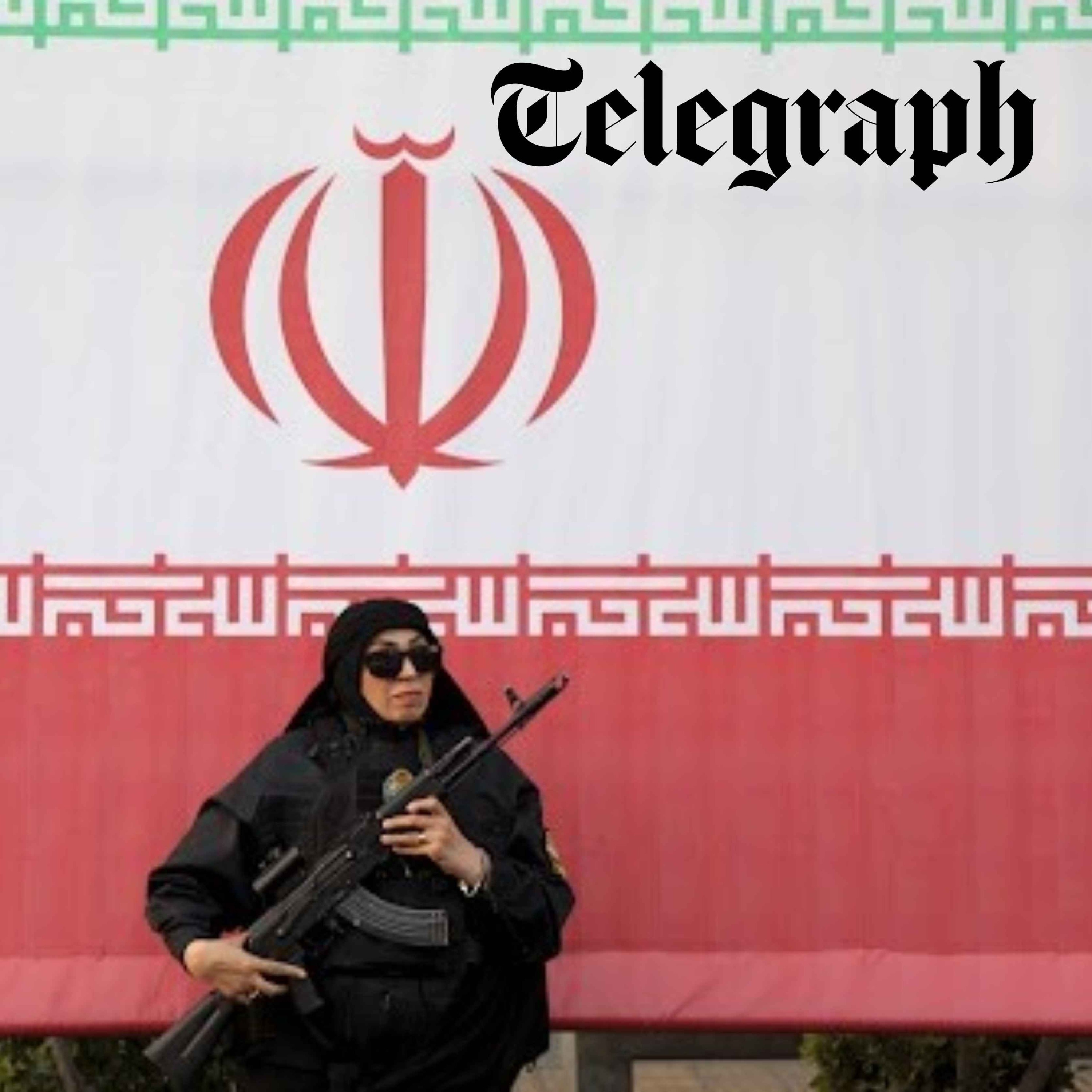
Loading summary
Transcript96 lines
- [00:04]
A
The telegraph. Support is available 247 with VRBoCare. We're here day or night, ready whenever you need help.
- [00:18]
B
Because a great trip starts with the right support.
- [00:27]
A
ACAST powers the world's best Podcasts.
- [00:31]
C
Here's a show that we recommend World
- [00:34]
B
do you love Beyonce, Madonna, Taylor Swift, Rihanna, Charli XCX and Lady Gaga? I'm DJ Louis XIV and I host the podcast Pop Pantheon, where each week some of the greatest pop music minds from across media and the Internet join me to deep dive on the careers, discographies and legacies of all your pop faves before ranking them in a system of tiers we call the Pop Pantheon. From the icons to the mere superstars, all the way down to our most beloved flops, we are breaking down the world of pop stars with a sharp critical eye and the passion of an ardent Stan. Whether you're already a pop super fan who just wants to geek out, or a curious outsider looking for a new lens on the soundtrack to our everyday lives, Pop Pantheon will help you reimagine the work and impact of some of the most famous musicians on the planet. Subscribe and listen to Pop Pantheon wherever you get your podcasts.
- [01:22]
A
ACAST helps creators launch, grow and monetize their podcasts everywhere. Acast.com. What happens in Hormuz does not stay in Hormuz. That's why how this ends matters enormously. A short time ago, the United States military began major combat operations in Iran. Today, President Trump says Iran's Supreme Leader,
- [01:54]
D
Ayatollah Ali Khamenei was killed in the attacks.
- [01:57]
B
Ayatollah say Yit Mustallah Family
- [02:03]
A
the Pentagon is weighing a takeover of that island as a way to force the reopening of the Strait of Hormuz. Iran begged for this ceasefire and we all know it.
- [02:14]
D
Does anyone really think that someone can
- [02:16]
E
tell President Trump what to do?
- [02:18]
D
Come on.
- [02:20]
F
I'm Veneesha Rainey.
- [02:22]
D
And I'm Roland Oliphant and this is Iran the Latest.
- [02:25]
F
It's Wednesday, 22nd of April 2026. Well, we're on day 54 of the war and today should have been the end of the two week US Iran ceasefire, but after Donald Trump indefinitely extended it, we're in limbo.
- [02:37]
D
Things are militarily quite quiet so far, with the notable exception that the Iranians have been firing at and possibly detaining several ships in the Strait of Hormuz, which could possibly lead to further escalation there. Later on in today's episode, we will be hearing a quite fascinating interview with Richard Meade, who is the head of Lloyds Intell. He explains how the war has created total chaos in the shipping industry. His words, not mine. And that the fear is that the Strait of Hormuz is just the beginning of a general decline in freedom of navigation that could have implications for other strategic seaways around the world.
- [03:14]
F
But first, let's look at where we are today. We're joined in the studio by Akhtar McCoy, our foreign correspondent, and David Blair, chief foreign affairs commentator. Guys, let's start with Trump's statement last night. We'd all been on tenterhooks. I've been refreshing the live blogs to see if J.D. vance would actually board a plane. Apparently, Air Force Two was literally waiting for him on the tarmac. We'd had all these reports for days. J.D. vance had never actually confirmed that he was going. And the Iranians had actually repeatedly said they weren't going to these negotiations in Islamabad either, so long as the Strait of Hormuz blockade was in place. But hopes were still high. And Then yesterday evening, 8:30pm GMT, Trump posted this. Based on the fact that the government of Iran is seriously fractured, not unexpectedly so, and upon the request of Field Marshal Aseem Munir and Prime Minister Shabazz Sharif of Pakistan, we've been asked to hold our attack on the country of Iran until such time as their leaders and representatives can come up with a unified proposal. I have therefore directed our military to continue the blockade and in all other respects remain ready and able and will therefore extend the ceasefire until such time as their proposal is submitted and discussions are concluded one way or another. President DONALD J. Trump, the wording feels very vague to me. We don't have a deadline now. We're really stuck in this limbo. What did you guys make of it? David, kick us off.
- [04:32]
C
To put it in context, the Iranians have effectively scuppered the resumption of peace talks. They've refused to cooperate. Trump had previously said that if the Iranians didn't play ball, he would. Well, his latest comment was blow up their entire country. And previous to that, as we remember, there was a whole plethora of blood curdling threats. Now, instead of following through on even a fraction of any of that, he simply responds to Iran scuppering the peace process by extending the ceasefire. And instead of extending it for, say, another 14 days or seven days to set another deadline and turn the screw on Iran and give them a reason to worry, he extends it indefinitely with no deadline at all, which leads to the obvious conclusion that he no longer has a stomach for this fight, fight. And the Iranians will probably think, well, he needs an end to this war much more than we do. So whatever our demands were at the first round of talks in Islamabad, if there's ever a second round at all, we can afford to strengthen those demands and raise our bid. So it strikes me as being a really extraordinary position for the President to
- [05:46]
E
take Axha inside Iran today. This morning, newspapers, especially the hardline newspapers, they were calling on the IRGC and the Iranian government to keep fighting, don't go for ceasefire talks, because Iran is winning. The Americans are desperate. But the reality is there are contradictions between what Americans and what Iranians are saying. So we saw that last week, last Friday, Iranians said, okay, the Strait of Hormuz is open. Everyone can cross it freely. And then hours later, Trump said, oh, the blockade is still there. So Iranians, even if those who are talking with Trump in Islam, but wherever they are talking, if even they want to give this concession and compromise, but they still have a big group of hardliners in Tehran that they need to keep them happy. After that tweet of Abbas al Rakshi, the foreign minister, they were not happy. They are still not happy because they were saying, okay, this straight off homo is the biggest leverage you have against Americans, and then you give it up for free. But the blockade is still there.
- [06:43]
F
That Friday moment that you mentioned, was that a missed opportunity? As you said, Abbas Araghi comes out and says the Strait of Hormuz is open. We have had statements like that from Iran before, but it seemed to have more significance this time. And then Trump very quickly responded by saying, well, the blockade's still in place. And then we had all of the hostilities over the weekend in the Strait of Hormuz. What do you think, Roland? Was it a missed opportunity or was it all smoke and mirrors?
- [07:05]
D
Who knows what was, you know, the discussions that were going on behind closed doors that we are not privy to that came to that tweet. And as Actar says, you know, who knows whether there's one part of the regime that wants to believe or say something and another part of it have different ideas. If the Iranians were prepared to reopen, lift their blockade in exchange for the Americans lifting their blockade, maybe we could have had an open sea lane, but that wouldn't get you any further towards the Americans war aim, which is, you know, around the nuclear question, the missile question.
- [07:37]
F
I guess that's what I'm getting at, though. There needs to be some tit for tat. Even if it is just in the public sphere. And as you say, you're right. We have got no idea what's going on behind closed doors or who's really pulling the strings, what actual decisions are being made. But the groundwork for peace wasn't exactly there over the weekend with Trump coming back with this very hard line position. And as we've seen repeatedly over the course of this conflict, the more pressure you put on the Iranian regime, the less they bend his threat to keep the blockade, his threat to bomb the country even more. It felt to me like we weren't heading towards a peace, peaceful conclusion of things today.
- [08:10]
E
Yeah, you said, like, the problem might be we don't know what's happening behind the scenes, but the actual problem probably is that we know a lot of what's happening behind the scenes, especially from the American side. Like Trump tweets every other hour saying, okay, this is happening. This is what they said this is. But on Iranian side, they just say, okay, open the blockade, we'll open the straits, and then let's talk about the nuclear and the missile and the proxies. They don't understand to be talking behind the scenes, like, not publicly angering hardliners on both sides. They are being provoked by these statements. And for the irgc, they are still saying, as you were just saying, like the Americans are saying, oh, we are locked and loaded for the IRC this morning, they will say we will have new surprises if the attack open, if they restart the war. And right now, and Tasnim News Agency, the IRGC affiliated, they said if the war resumes on day one, the Straits of Bab El Mandab in the Red Sea would also be closed.
- [09:05]
C
I don't think it's quite true to say that the more pressure you put the Iranian regime under, the less they bend. I don't think that's right. The problem is when you shower them with empty threats, which you really are not going to follow through on, destroy everything and blow up the whole country and all the rest of it. That's not real pressure. That's just bombast and performance, and they see through it. Real pressure is effective military action in this context, and that does work. It is true that Iran is not enriching uranium today, not because of this war, but because of the last war in June last year, in which their three key plants really were heavily damaged, if not destroyed. And the consequence was that Iran's capacity to enrich uranium was destroyed. And that sets a new baseline for negotiations. So pressure done correctly and done with a political objective in mind, can succeed. But that's not what we're seeing from Trump at the moment. At the moment, he's not really putting the regime under genuine pressure at all.
- [10:09]
D
What would be genuine pressure? Because I'm presuming you're not suggesting that he should have followed through on his threat to destroy Iranian civilization.
- [10:17]
C
No.
- [10:17]
E
He also tried for 40 days during the war. There was a military effective, as you said, military actions against Iran. So they did not bend.
- [10:26]
C
Correct. But what I'm talking about is military action designed to achieve a political objective, such as last June's, where the objective was to destroy Iran's enrichment capacity and lead them to a position where they would have to settle the nuclear issue on your terms. Now, that more or less succeeded. Talking about the previous war here, this war, as you rightly point out, has not succeeded because it has not aligned military instruments with political objectives, with attainable political objectives. Now, Roland Ch challenges me. So what would you do starting from here? Well, look, the reality is that Iran's grip on the Strait of Hormuz is going to have to be broken one way or another. Now, I wouldn't start from here. I wouldn't have begun this war to begin with. But if you really pushed me, I would say that probably Trump's least worst option now is some kind of military operation to at least loosen Iran's grip on the strait. Whether you do that by seizing key islands like Abu Musa and the Greater and Lesser Tumb, there are various options. But something along those lines, I think is now necessary. Otherwise, the risk is that Iran will have a lot of bargaining power at the negotiating table.
- [11:37]
D
Okay, so lifting your own blockade to persuade the Iranians to lift their blockade, you think that would be a mistake?
- [11:46]
C
Yes. Doing that unilaterally prior to talks would be a mistake. That's got to be part of the bargain that ends the war. Giving up that card now would be a bad idea.
- [11:55]
D
Akhtar, can I just ask, from what you said, Donald Trump got a point here. He says in his statement yesterday the Iranian government is divided, and therefore we're not getting a consistent proposal. So we've got to give them time. From what you're saying, has he got a point? Is it true there seems to be division inside Tehran and a bit of confusion about what their actual position is.
- [12:19]
E
The biggest criticism we heard last night was coming from Moulavi Abdul Hamid, the top Sunni cleric in southeastern Iran. He said. I'm reading his message. Like he said the sky of the country is in the grip of the enemy infrastructure faces destruction. The armed forces do not have the necessary tool for air defenses. The hardliners who today stubbornly prevent peace tomorrow, in the face of the ruins of the homeland, what answer will they have for God and these oppressed people? There is a. I don't know if you can call it split, because the system is fractured. Like previously. If there was such kind of scenarios between overlapping power centers, Ali Khamenei, the supreme Leader, would intervene, or Ali Laurjani would be in charge of preventing such kind of institutional crisis, where one power center says one thing and the other says another. At the moment, we know the parliament speaker, Mohammad Baghel Koliboff is the face of the talks. And Abbas Arakchi just tweets something. But there is this man behind all of this, Ahmad Wahidi, the IRGC commander in chief. He is the operational man behind the scenes. Like every decision made during those talks should be approved by him. And in the Supreme National Security Council, which is again run by the irgc, like Mohammad Baghra Zolgat, the current secretary of Supreme National Security Council, and Alila Arjani, replacement, that comes directly from the irgc. So it's now a group of generals who are trying to say, okay, we are going to win the war through military posts. And then you have the civilian government or this Maulawiya Abdul amid, like moderate clerics who see this war as a destruction of the country. Their main point is if you don't go to talk to Americans, they will come and destroy the country, destroy bridges, destroy, I don't know, power plants. The main problem is communication. And we have not heard from Mujtaba, the new supreme Leader, Mujtaba Khamenei. So if Mujtaba Khamenei cannot just intervene and, okay, this is what you do. And then the IRGC commander, chief Ahmad Wahidi says something, and then the president, or, I don't know, his foreign minister, says another thing. So you don't know who is speaking for Iran at the moment.
- [14:28]
C
It's possible that what Trump is saying is true, that actually the Iranian regime simply hasn't got his act together yet and cannot come up with a coherent, agreed negotiating position. And the talks have to wait until that happens. And in the meantime, he extends the ceasefire. I mean, it's quite possible that that is true. But then that begs the question, so how long do you wait? How long do you give them? Do you give them like, three days or something? I mean, all right, fair enough. No one's going to complain if the talks begin on Friday instead of yesterday. But if after two weeks you're still getting nowhere, what do you do then? So decisions will come down the line for Trump pretty soon and he will have to, if he's sensible, he will have to decide in his own mind. Unless I hear from the Iranians that there are going to be talks by a certain time, then I'm going to act.
- [15:18]
F
And that speaks to your broader point, doesn't it, that there isn't a political objective here, that they're not quite sure where they're trying to get to anymore. Our chief Washington correspondent Connor Stringer has written a piece about the disarray going on inside the White House, basically talking about how Trump relies on instincts and advice from a tight circle of loyalists who shape and in some cases soften the picture of the war. He writes that Susie Wiles, Trump's all powerful chief of Staff, has apparently expressed concern that aides are giving the President a rose colored view of the war. And he's spoken to people who say that no one in the administration seems to know what's going on, what the plans are, what we're even aiming for. Now it's all just a giant cluster and there's zero accountability either. How does Washington dig itself out of this quagmire?
- [16:02]
C
If I knew that, I wouldn't be appearing on a podcast. I'll be a much richer man than I am. But look, I think there's two points. The first is Connor's story confirms that it probably is as bad as. As it seems. We've always suspected that the Trump administration operates in this particular way. And he confirms that, sure enough, it does. Secondly, whoever is advising the President and who he actually listens to, it's fair to assume that they've got no particular expertise on Iran. There is great expertise in the American system. The State Department does have lots of people who know about Iran. None of them seem to be having any influence on policy whatever. So the third point is he has to make up his own mind whether he really believes that the Iranians will come to the table in a serious way pretty soon, and if they don't, he's going to have to launch some kind of military operation. And I think the two options which come into my head, although of course I can't know, one is something to reopen the strait, and the second is, will be some extraordinary, daring sepastial forces operation to seize the 440kg of high enriched uranium that the Iranians have secreted somewhere in their country and do that and then declare victory and then just say this ends and walk away? Something like that. But just describing those options shows how Trump has backed himself into a corner because all of his options are pretty far fetched.
- [17:31]
F
What do you guys think is going to happen next? Just for context, we've had a tweet this morning from centcom. It said it's rearming, retooling and adjusting, ready for the resumption of war. Let's hear a clip of that.
- [17:42]
A
We're rearming, we're retooling, and we're adjusting our tactics, techniques and procedures. There's no military in the world that adjusts like we do. And that's exactly what we're doing right now. During the ceasefire.
- [17:58]
F
We know we've got the USS Abraham Lincoln and the amphibious assault ship USS Tripoli already in the Middle East. According to reports, the Gerald R. Ford, the USS Gerald Ford has transited the Suez Canal over the weekend and is now in CENTCOM's area of command. And there are also sight of the USS George H.W. bush transiting around the southern tip of Africa and could reach the region in the coming days. So this suggests that possible military options there for the Americans. Meanwhile, on the Iranian side, we had Mahdi Mohammedi, an advisor to Mohamed Gallibaf, Iran's parliament speaker. He said today that the ceasefire extension means nothing and is a ploy to buy time for a surprise strike. He said that Trump's Strait of Hormuz blockade is no different from bombardment and must be met with a military response, adding the time for Iran to take the initiative has come. So where do we go from here, Akhtar? What do you think we're going to see in the coming days?
- [18:48]
E
I think from what you read just now, from both sides of the war, we have heard these kind of lines from them over the past 54 days. So. And it's very difficult to really believe what's true, what's just propaganda, what's just like, okay, we are locked and loud that Iranians are also saying, oh, we have missiles ready, we have new surprises. The Babel Mandeb Strait would be close. Americans. But I think the main thing for the next few days would be if Pakistanis can convince Iranians to come back to the negotiation table. And how they would do that is the number one thing, is to open the window for talks. For the talks, they need to give each other some concessions. From Iranian side, okay, strait is open. And from the American side, okay, there is no blockade then. Now let's go to Islamabad and talk.
- [19:32]
F
We should also say that this morning in the Strait of Hormuz, as you mentioned earlier, Roland, three ships have been attacked and apparently escorted to the Iranian coast.
- [19:39]
D
So we had, over the weekend, the Americans put a hole in an Iranian linked vessel and then seized control of it. The Iranians appear to have seized control of a couple of vessels. Now it's getting to the point where it's not just a war of words there anymore, it's heating up and that becomes a flashpoint from which things could escalate in other ways. The intransigence on both sides really doesn't bode well at all. We talked about kind of Donald Trump issuing, yes, fairly foolishly, probably issuing extravagant threats that he had no intention of going through with. But the Iranians themselves are just, they're not showing any flexibility here at all. So quite likely a resumption of conflict. But there's another part of me that thinks the Iranians have taken a terrible battering. I mean, they have taken a hell of a beating. So I don't really buy that bravado at all, you know, and we know the Americans have expended a huge amount of money, a huge amount of ammunition, a huge amount of national effort and political capital on this. There is a part of me that thinks this ceasefire will just get extended and extended and extended and maybe even the blockades will be extended and extended and extended and that maybe even. I'm just chucking this out there. I'm imagining a kind of maritime Korean demarcation line where the blockades become a kind of semi permanent new normal in international relations. Everyone has to adapt to that. Maybe the Saudis expand their cross peninsular pipeline, the Emiratis find other ways of getting their oil out and that becomes the way the world is going forward. David's kind of raising his eyebrows, but I can imagine that happening. The problem with that is right here I have the printed copy of today's Daily Telegraph and I have it open, Ambrose Evans Pritchard's latest piece where he makes the point that, look, the gas and LNG shock from this has been much milder than anyone expected. Happy days. Gas markets are not a problem. Crude oil, everything that comes from that, jet fuel, whatever else, completely different story. At the current daily rate of loss, usable buffers will face exhaustion by May 10th. And he compares this to kind of. Do you remember the onset of COVID when at first, no, it was just something on the news, it was somewhere over in China or whatever, and then suddenly, bang, everything stopped. That seems to be getting closer and closer. That is the pressure that I think makes my scenario of a North Korean, a maritime Korean demarcation line, DMZ perhaps implausible.
- [22:16]
C
I agree. And that's what makes the continuation of the status quo unlikely because all the methods that you mentioned, Roland, for bypassing the Strait of Hormuz, they would all take years to come into fruition. And rather than bring the whole global economy to a grinding halt, there's going to be some form of military action before that to forestall it. Having said that, it's also possible that the Iranians will turn up in Pakistan and there will be negotiations that might even get somewhere. Who knows? I mean, we can't guess. But I think the things to look out for are three things. One, a big escalation in the Strait, more instances of the kind that we've seen today to the Iranians coming up with some negotiating proposal and the talks in Pakistan getting back on track. And third, America and Israel striking targets in Iran once again.
- [23:05]
F
We'll leave it there. David Blauer, chief foreign affairs commentator and Akhtar McCoy, foreign correspondent, thanks very much for joining us on Iran. The latest.
- [23:18]
D
And what do you know? Just as we call that conversation to a close, we get news out of Washington that Donald Trump has indeed, just as David Blair suggested, set a deadline. He must be listening to Iran the latest. It's not yet an official announcement at this point. It may be later today. This is an unnamed official speaking to Axios. He says Donald Trump has given Iran three to five days to come up with a new proposal for speech. So there you are. He has, well, we think set a deadline and that is why you should listen to Iran the latest, particularly David Blair.
- [23:56]
F
We're going to take a short pause now. Coming up after the break, we're going to be speaking to Richard Mead from Lloyds List about the long term implications of the mess in the Strait of Hormuz.
- [24:10]
A
With Vrbo's last minute deals, you can
- [24:13]
F
save over $50 on your spring getaway.
- [24:15]
A
So whether it's a mountain escape city
- [24:17]
F
break or a week at the beach, there's still time to get great discounts. Book your next day now.
- [24:23]
A
Average savings $72. Select homes only.
- [24:26]
D
With endless scroll algorithms and AI flooding feeds, podcasting stands out. They're sought, not served. Audiences actively choose to hear trusted voices on topics they care about. In fact, 72% of listeners say podcasts shape cultural conversations for marketers. That means podcasts shape shift brand perception
- [24:46]
A
like no other channel Acast's podcast Pulse
- [24:49]
D
2025 report has the proof. Get all the insights@podcast Pulse2025.com. Welcome back. You're listening to around the Latest with me, Roland Olyphant and Venetia Rainey. Well, as we discussed in the first half of the show, the focus of of kinetic activity, as military types like to call it, is now the Strait of Hormuz itself. Today, Iranian gunboats attacked two container ships in the strait. An Islamic Revolutionary Guard boat apparently opened fire on a freight of 15 nautical miles northeast of Oman in the early hours of the morning, causing heavy damage to the vessel's bridge. That's according to the UK Maritime Trade Operations Agency. A second cargo ship was attacked eight nautical miles west of Iran with no damage reported. But what does all this mean for the crews on those ships, the captains, the shipping companies, and for you, me and everybody else who rely on international shipping basically to stay alive? I spoke before this latest escalation in the Strait to Richard Mead. He is the chief editor of Lloyd's List Intelligence, who have been putting out some really impressive daily updates on the state of shipping there. Here is our conversation. You said there were 22 transits of the Strait of Hormuz tracked by Lloyd's list intelligence on April 18 and 10 on April 17. So that sounds like it's going up. There were only two on April 19th.
- [26:25]
A
Yes.
- [26:26]
D
Just give us the best sense you can of what is going on in the Strait.
- [26:30]
A
Utter chaos, I think, is probably the closest headline I can offer you. I'm talking to you from Singapore. Normally I'm based in London. This week is one of those weeks where the industry gathers for a sort of week of conference events. And it's an interesting vibe this end because while obviously everybody is looking at the Strait of Hormuz and many of the people here have ships stuck in there. They're obviously talking in the middle of the Malacca Strait. And I think the problem that everybody's dealing with right now is the fact that what happens in Hormuz does not stay in Hormuz. And in terms of your question on the numbers, it's up and down, most of the people that traveled here traveled here having heard the news that the strait was open. Iran said so, the US President said so. By the time they'd landed, and I was a case in point where it was a 13 and a half hour flight. It was the complete opposite. It had closed again, 25 ships had done U turns and most of the ships that I thought were moving were back where they started. You've seen ships being fired upon. Both sides have been firing upon ships. This is not a ceasefire that is working. But what the shipping industry is having to deal with in the middle of all this is to try and negotiate exactly what happens next. Now, for some, that's been a case of pragmatically trying to get out. And initially that was a question of seeking the permission of the Iranians. Now they are effectively facing the double whammy of needing to seek the permission of the Iranians, but not in any way breach the blockade of the US or get stuck in the middle of the two of them. And it is very difficult right now. There's very little moving. But as has always been the case since this first started on February 28, there are some ships moving. And it is very much a question of relative risk. Who you are, who you are affiliated with, geopolitically speaking, is going to largely determine whether or not you can move or not. Now, we have seen some ships move in the last few days, and even at the height of the blockade, we are actually seeing shadowships move through the blockade. They're not being stopped. So it's a very, very confusing picture. And it is relative to who you are, I guess.
- [28:51]
D
What is a shadowship? Let's just be clear about this.
- [28:54]
A
It's an interesting term that has no formal definition. So generally when we talk about the Shadow Fleet, we are talking about the old opaquely owned ships that are generally in the business of carrying sanctioned crude on behalf of the Russian government, on behalf of the Iranian government. They're not Russian owned, they're not Iranian owned. They are opaquely owned by companies that are at best digital or physical brass plate companies that exist somewhere. They are insured by possibly real insurers, possibly not. They are flagged by sometimes just bad flags, sometimes entirely fictitious ones. Fleet that has essentially been born out of the weaponization of global trade. As we've seen sanctions be applied to Russia and Iran. Latterly it was Venezuela, and not so much these days. You have seen an industry effectively mushroom out of that in order to circumvent sanctions. And that industry is the Shadow Fleet. It has borne its own insurance network, its own service network. It's not just the ships themselves. There is an entire industry behind these ships moving sanctioned crude.
- [30:03]
D
And for some reason, these guys are meant, are able to get through, or they constitute a large proportion of the vessels that are getting through the blockade.
- [30:10]
A
Yes, well, in the case of Hormuz, you've got an interesting confluence of lots of different Things happening. There was the existing shadow operations and there were instances of tankers spoofing what's called their AIs signal. This is essentially the sort of satellite ping that a ship gives off that allows you to track it. Some of them are entirely, you know, spoofed, created in order to fall under the guise of circumvention, I guess. You know, we've been tracking for some time a fairly lucrative trade in ships that will, on your screen, head towards Iraq, load Iraqi crude, have paperwork to support the fact that it's loaded Iraqi crude. But actually, that is a digital fiction. What it's actually done is loaded Iranian crude oil and falsify the paperwork. So there's that. Then you have what's effectively now dubbed the Tehran toll booth. So Tehran has taken control of the strait and has essentially said, well, we now control it. We will allow some ships to go past, but only with our permission. And that has seen the. What was essentially called the traffic separation scheme as a sort of, you know, a motorway rule essentially for a very narrow passageway of ships last agreed between Oman and Tehran in 1968. That's gone now. And what essentially you have is this very interesting new passageway where ships are required to go above Larrack island into Iranian waters. You know, go through this fairly convoluted process of seeking permission from the irgc, the Iranian Revolutionary Guard Corps, who are controlling this. There is a chap with binoculars on Larak island checking the serial numbers of ships on the side of things with a pair of binoculars. That's how they are doing it. It's fairly inefficient as a way to get what was previously responsible for 20% of global energy supplies out of the strait. But that is what was happening. Now, of course, we've got the US blockade and the Iranian blockade and consequently not a lot is moving at all. Transits have dried up comparatively to what was already a trickle. And now everybody is sitting around, well, in Singapore this week talking to each other and wondering what the hell's going on.
- [32:22]
D
Richard, you mentioned spoofing a signal. Your actual words were a digital fiction. Can you explain this one to me when it comes to the ship's AIs signal?
- [32:31]
A
Yeah, it's an interesting one because it used to be a question of dark shipping, previously was a question of turning off your signal. It was as crude as that. You would just turn the signal off and you wouldn't be tracked on an aisle signal. Now you were visible. You were visible to navies and governments and lots of other things. But you know, to the average tracker, you were invisible. That then sort of started getting a bit more sophisticated with spoofing signals. But some were better than others. We tracked, you know, a couple that were heading towards the western Indian coast, and they just carried on going up a mountain, past a temple. It was not bad for a, you know, 350,000 deadweight ton piece of steel. But it was at that point that we figured that there was something wrong with the digital signal. And some are more convincing than others,
- [33:17]
D
should we say, how do you get around that? Then you're putting out these, as I say, really, really useful kind of daily updates.
- [33:24]
A
There is an element of art and the science here. So when a ship switches off its AIs, there are ways to track. You can use satellite photography, but cloud cover is difficult. And when you have what is going on in the Strait of Hormuz, you have restricted access to some things. You have a lot of what is essentially GPS jamming going on that was existing because it is essentially a theater of war. You have lots of interference with signals, so you have to piece together lots of different bits of evidence. So sometimes we are waiting for a ship to have transited, often without its aising along, and we only retrospectively can work out whether it has passed and over what period. So you can then piece together, you know, what has happened. Which is why the numbers are a little bit of a movable feast in the sense that we have to revise them on a daily basis in order to work out when we know ships have disappeared. When they come back on again, we can say categorically this is what has happened until then. We're guessing in some cases, but on
- [34:28]
D
the whole, even with that caveat, you can say that shipping on average is down, what is it kind of 90% from the usual daily?
- [34:35]
A
Oh, 93 or 94%, I think, compared to where we were, but depending on which day. This is the interesting thing. I think the general perception is that the straight of Hormuz has been shut and obviously that traffic has fallen over 90% in real terms. But on any given day, depending on what the latest mood music is from both Tehran and the truth social posts, you have seen some ships more emboldened than others in order to risk it, some with the direct permission of Tehran, some assuming that the noises, politically speaking, are allowing them to do that. Just before the shutters came down, the blockade was in place and ships were being fired at. There was a 24 hour period where we saw dozens of ships trying to get through because both sides Said it was open now, most of them didn't. But it just shows that there is this pent up demand for these ships to move. You've got around 600 ships of note, big ocean going ships. These are market moving vessels loaded with crude or product or things on them that are stuck inside the Gulf. You've got an awful lot of other ships that are waiting to go in in ballast in order to start getting the refineries back up and running because they're all now shut in. And that's the really interesting thing is that what happens next? Even if we waved a magic wand, there is a piece of cord that believable and sustainable is not a question of just reopening the straight and everything goes back to normal. There is going to be a staggered reintegration of shipping and the next normal. I don't think it's the new normal. I think it's just the next in a long line of new normals is going to be an interesting period where things happen over a period of initially 10 to 14 days to clear the backlog. But then you have four to eight weeks of pretty chaotic scenes as the ships that were repositioned in order to get things from the Atlantic back again have to deliver cargoes to China in order to get back into the Strait of Hormuz. There is a whole cycle. This is going to have an impact regardless of how quickly this now ends of months, if not longer, just recalibrating the global supply chains in order to get back to some semblance of normality. That's before you even start factoring in whether or not there has been enough demand destruction in that to trigger a global recession.
- [36:57]
D
These chips that are getting through, let's just take the first one of those barriers, they have to hop through the Iranian one going around Larrack island with Iranian permission. There's some confusion about whether they are paying the Iranians or not and if so, how. A while ago we spoke to your former colleague Michelle Bachman, I worked somewhere else and she said it was really opaque at that time. Is there any more kind of clarity about this? Do we now know? Is there an established method? Are people paying $2 million per ship to the IRGC or not?
- [37:27]
A
No. Well, at least not all. And I'm going to caveat this by saying we're talking on the 21st of April. At any given point the answer probably would have been different depending on who you are. I think up until probably prior to the last weekend there was still essentially a three tiered Process where I would say Iranian affiliated shipping was moving relatively freely at that point being challenged by the US it was essentially getting out of the strait because obviously they weren't shooting at their own ships. And that was going through the Larrack island route, obviously under the watchful eye of the irgc, but it was going out unimpeded. You then had the ships that were going out through that route but under the COVID of some form of diplomatic negotiation. Now we know that India, Philippines, Iraq, there's a whole list of countries that have had discussions. Now we don't know the detail of what was agreed, but we do know that we are seeing ships either flagged or owned by those countries moving. Now in the case of India, they have been absolutely categorical that no Indian ship has paid a toll. I have no evidence one way or the other, but we can only take them at their word. So we are assuming that there is a layer of diplomatic passes being issued to some of these ships. Then there is the ones that are being effectively asked to pay. These are ones without necessarily having the diplomatic cover. The $2 million figure, you know, that came from a Loys list report initially and we know in it to have been true for at least two to three ships where IRGC intermediaries were engaged to seek payment in order to get those tankers out. Now we can't say the detail of exactly what happened because it is a little bit sensitive and it is opaque. But we do know that they were in those cases settled either in yuan or stablecoins. We do know that it was going through various third party intermediaries in terms of how that payment was being transacted. I think everybody is fairly nervous about the prospect of having done business effectively with the irgc, which is still designated as a terrorist organization by the US and the eu. That's going to come with some risk, I think. But at the time I think it was deemed to be a significant enough priority to get the ships in and out that they were going to take that risk. Now I must stress this is a minority of ships that are paying and we don't know whether they are continuing to pay under the current blockade system because we just don't know. But the 2 million figure I think was in a couple of very specific cases where there was an urgency to get those vessels out.
- [40:16]
D
Right.
- [40:16]
A
Ones that have actually passed over money since then. The fees have looked much, much lower as far as we are told by people involved in those things.
- [40:25]
D
Can you give us a figure?
- [40:27]
A
We're talk in Low hundreds of thousands of dollars, effectively more of a sort of administrative fee. That's how it was being positioned, rather than a sort of toll booth system. But simultaneously, you have a lot of political negotiations going on in the background inside Iran, where there are some elements of the IRGC that want this formalized. They want the Tehran toll booth. For obvious political reasons. Taking control of the strait is. Is the only real political leverage that they have. And we have to remind ourselves that since 1968, up until February 27, there was no control over this. This was an international waterway. Now it isn't. So we are in unprecedented territory, dangerous waters, whichever cliche you want to throw at it.
- [41:14]
D
Brave new world.
- [41:15]
A
Yeah, exactly. It is an interesting time, and I think that's why the industry sitting here in Singapore right now is so nervously looking at it. It's not a question of the economic chaos. Shipping's worked its way around things like that before, setting a paid for system or a political system, dividing trade down geopolitical lines and saying these ships are able to move through waters and these ships aren't. That. That is setting a very, very dangerous precedent for freedom of navigation and therefore global trade.
- [41:51]
D
There's a specific Hormuz case, and I suppose there are the implications of places like Malacca or even the good old English Channel. I was half jokingly suggesting that Britain should blockade the English Channel to raise funds for those poor, little, rather decaying old Victorian seaside towns that are struggling with council tax bills.
- [42:10]
A
Donald Trump has not ruled out the possibility of a joint Iran US Tollbooth. And as far as I know, Rachel Reeves has not ruled out the possibility of an English Channel toll booth. Look, these things are. We laugh, but the reality is the Iranians were charging, and as I say, prior to February 27th, they weren't. I think it's not just about Hormuz. As you say, there are seven major global maritime choke points that people worry about. Malacca, but Taiwan Strait, Danish Straits, in terms of Russian exports into the northern Atlantic. These are all very important geopolitically strategic choke points where trade can be disrupted. And what happens in Hormuz does not stay in Hormuz. That's why how this ends matters enormously.
- [43:00]
D
Just one quick thing you said about Hormuz there. You said it's no longer an international waterway.
- [43:05]
A
Well, at the moment it's not, because it's blockaded by two separate sovereign states.
- [43:08]
D
Right. But technically, just so I've got it right, it's. It's inside the territorial waters of Iran and Oman. Is that right? Technically, but it's been always being treated as free for navigation.
- [43:19]
A
Yeah. There are a couple of sort of legal principles at play here, you know, largely under the UN Convention of the Law of the Sea unclos, but also there are, you know, established international legal norms of innocent passage, freedom of navigation, that applies here. And as I say, the last time this was looked at in terms of the actual mechanics of this, what we call the traffic separation scheme, the rules of the road, if you like, that was in 1968 and that was agreed between Iran and Oman and it has stood ever since. It now obviously is looking like it needs to be revised.
- [43:53]
D
I'm just thinking about the shape of the international shipping industry at the moment. I suppose how that must have changed and the way so much of the balance of power and economic power has changed over the years. We used to think about international shipping and we just think of Maersk these days. Of course, Costco is absolutely enormous. The Chinese state company hailing from very different countries with different kind of political loyalties and clouts. That means you would approach this in, in a different way. Is there anything you can tell us about how the rise of Costco and Costco's influence here affect how they, the Chinese would approach it as opposed to the, the big traditional Dutch and Danish and European shipping behemoths?
- [44:32]
A
Yes, there's a lot there to unpack. Broadly speaking, if you look at the Post World War II period, you've seen an evolution in terms of the nations that build the ships moving from Europe into Japan, who then ceded to South Korea, who then ceded to China. China is now by far and away the largest dominant maritime force in the world, bar none. They build more ships than anyone. They control more ships than anyone. The cargo on the ships is largely Chinese. You know, it is very interesting that Donald Trump has identified shipbuilding as a way to make America great again, despite the fact that they haven't really built ships since the Second World War and are currently accounting for less than a fraction of a percent of global tonnage being built. But he's saying that because he has clocked the reality that it is not just about global supply chains being built for efficiency and economy anymore. It is about energy security, it is about national security. As we see this brave new world evolving around us of protectionism and self reliance and these rhetorical political debates that are happening, the reality of what happens on the seas now matters more. Shipping is a strategic industry. It's a strategic industry for Europe, for the us, For China, China. But the US doesn't build ships. It doesn't really operate that many ships. It is a weak point, I guess, in terms of that future that Donald Trump has laid out. And therefore China's dominance in the maritime sphere, both in naval and commercial shipping, is really a challenge to that US Future.
- [46:17]
D
And does that give China a particular clout in this question of. Of reopening Hormuz?
- [46:22]
A
China's made a few statements, but relatively speaking, they've been pretty quiet on the topic of Hormuz. Now, that's partly to do with the fact that they were and continue to be Iran's largest customer for sanctioned crude. They've continued to take Russian and Iranian crude at discounted rates and have been doing very nicely out of it. So there is that. But there is also this wider point of view, the future political system and the freedom of navigation and how global trade works. And China doesn't want to see an end to freedom of navigation, but I would suggest that it would like it to be revised more on its terms. And what we've been seeing over recent years is a sort of a challenge to freedom of navigation as a concept. And we can see it in terms of individual conflict points like the Red Sea, with the Houthis and Iranian proxy stopping 60% of the traffic that was previously going into the Red Sea that no longer goes back. And by the way, it never went back. It is still going the long way around the Cape of Good Hope. And that's partly security, but it's also partly mechanics of how you recalibrate global trade lens. It's not that easy. It's expensive. It takes time. You see it in the Danish Straits in terms of the Europeans looking at the Shadow fleet. You see it in the Arctic playing out in terms of strategic supply chains of the future. The actual number of ships going through the Arctic, relatively small. But that's not about volume. It's about who controls it, who sets the precedent for it. And with China, they are certainly challenging a lot of the narrative around freedom of navigation. If you see how Russia and China are talking within the UN Security Council on this topic, the legal challenges that are sort of generally not making into mainstream news, it is all sort of building up into this picture of a sort of global revision of what freedom of navigation actually is for shipping. Are we actually saying that global trade can continue to deliver trade on just pure market dynamics? At the moment, yes and no. But the reality is that global trade is being geopolitically conditioned. It is no longer safe to say that ships can go everywhere. There are Restrictions, there are barriers, there are places that some ships associated with some countries probably cannot trade anymore. And that's an interesting evolution of globalized trade.
- [48:42]
D
I was wondering if you could tell us anything about the condition of the, of the crews who are on these ships, some of whom are, you know, must have been stuck in anchorages in the Persian Gulf unable to get off for over a month now.
- [48:57]
A
So I mean this is increasingly a risk of, you know, choosing a career at sea that you get caught in the crossfire of various things happening. You've got around 20,000 crew effectively stuck as a result of this. I mean your average ship will have sufficient supplies to deal with this. I mean most crew rotations would have been longer than this anyway. But it's obviously coming on top of the fact that they are in a dangerous position and crew rotation now is not possible. Some cases you can get them off and I know of at least, you know, half a dozen ship owners who I speak to on a regular basis with ships stuck in there. The number one priority is we can't do anything that is going to risk the crew.
- [49:39]
D
What's the feeling there in Singapore amongst the shipping industry bigwigs about what's the worst case scenario and the best case scenario?
- [49:48]
A
Yeah, the current joke around Singapore is it's been dubbed Schroding as straight in that it is simultaneously open and closed at the same time. The reality is that best case scenario we return to pre February 27th, forget about everything and that process that I described of weeks and then months of recalibration plays out. But ultimately we get back to something that is akin to the trading norms of before the conflict. I think the chances of that are reasonably low, but I think that's the ideal scenario. There's a worst case scenario where we end up with effectively an Asia lake where only the likes of Pakistan, India and China and some other countries get privileged access to the Gulf and it's closed to Western interests. That comes with a whole lot of very difficult global geopolitical economic problems that stem from that. Not least the precedent it then sets for other straits. I think the likely scenario is somewhere in the middle where there is some sort of agreement but essentially security risk persists for some time. Now what that looks like, how many ships will and won't be able to move then becomes a question of, as I say, relative geography. But ideally what we're trying to move towards is something more akin to the best scenario and trying to avoid the worst case scenario of a lingering restriction to trade down geopolitical lines.
- [51:21]
D
That was Richard Meade, editor in chief of Lloyd's List Intelligence speaker, speaking to me shortly before those latest Iranian attacks on freighters in the Strait of Hormuz.
- [51:31]
F
That's all for today's edition of Iran the Latest. We'll be back again tomorrow. Until then, goodbye.
- [51:36]
D
Goodbye,
- [51:44]
F
Iran the Latest is an original podcast from the Telegraph, created by David Nulls and hosted by me, Venetia Rainey and Roland Oliphant. If you appreciated this podcast, please consider following around the latest on your preferred podcast app. And if you have a moment, leave a review as it helps others find the show. For more from our foreign correspondence on the ground, sign up for our new daily newsletter Cables, or listen to our sister podcast Ukraine the Latest. We're still on the same email address battleionselegraph.co.uk or you can contact us on X. You can find our handles in the show. Notes the producer is Peter Shevlin. The executive producers are Venetia Rainey and Louisa Wells.
- [52:31]
A
ACAST Powers the World's Best Podcasts Here's
- [52:35]
C
a show that we recommend.
- [52:38]
B
Do you love Beyonce, Madonna, Taylor Swift, Rihanna, Charli XCX and Lady Gaga? I'm DJ Louis XIV and I host host the podcast Pop Pantheon, where each week some of the greatest pop music minds from across media and the Internet join me to deep dive on the careers, discographies and legacies of all your pop faves before ranking them in a system of tiers we call the Pop Pantheon. From the icons to the mere superstars, all the way down to our most beloved flops, we're breaking down the world of pop stars with a sharp critical eye and the passion of an ardent Stan. Whether you're already a pop super fan who just to wants wants to geek out, or a curious outsider looking for a new lens on the soundtrack to our everyday lives, Pop Pantheon will help you reimagine the work and impact of some of the most famous musicians on the planet. Subscribe and listen to Pop Pantheon wherever you get your podcasts.
- [53:25]
A
ACAST helps creators launch, grow and monetize their podcasts everywhere. Acast.com.