← Iran: The Latest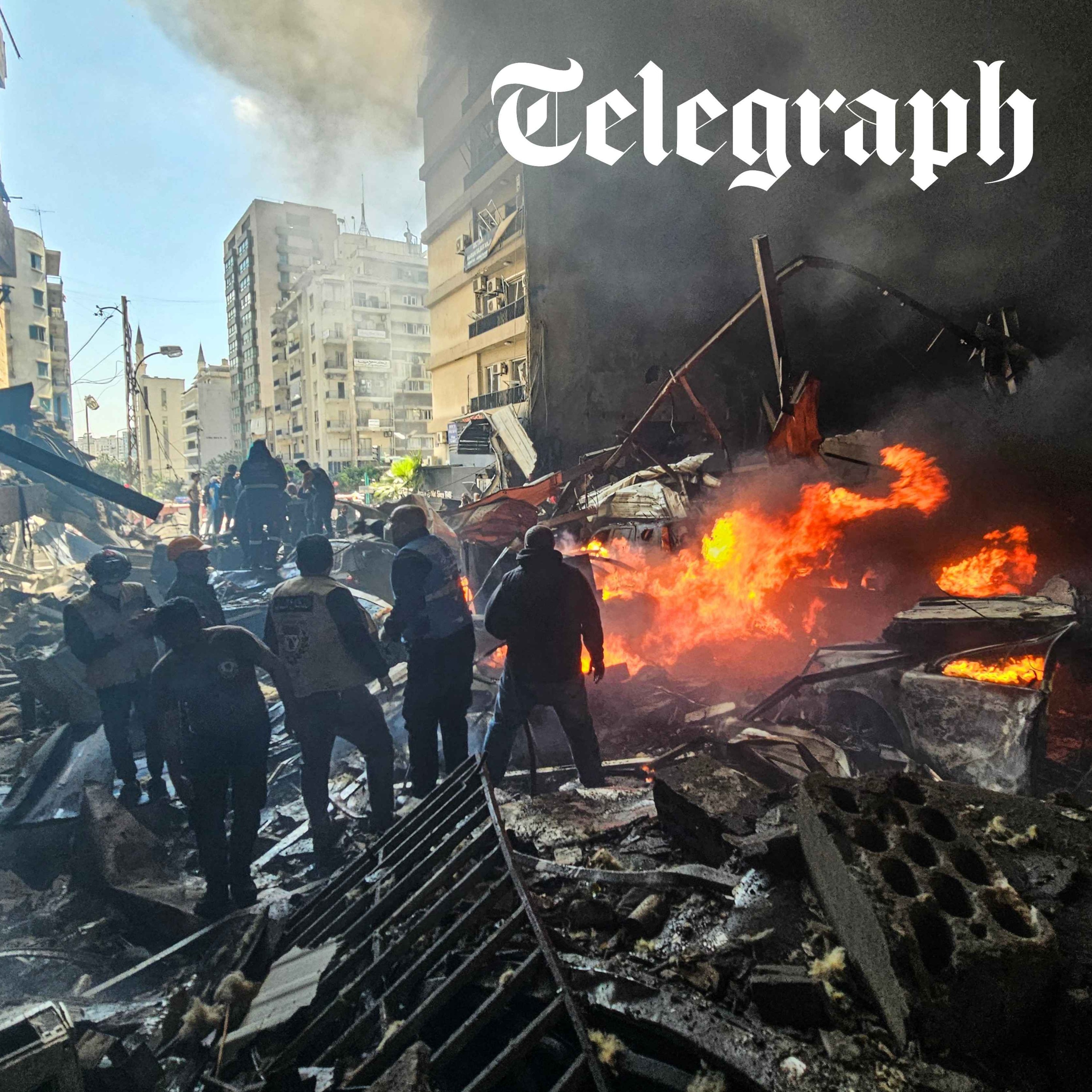
Iran: The Latest
Trump’s Iran ceasefire on brink of collapse & how Ukraine is helping the Gulf
00:41:47
Loading summary
Transcript70 lines
- [00:04]
Venetia Rainey
The telegraph.
- [00:10]
Progressive Insurance Announcer
This episode is brought to you by Progressive Insurance. Do you ever think about switching insurance companies to see if you could save some cash? Progressive makes it easy to see if you could save when you bundle your home and auto policies. Try it@progressive.com Progressive Casualty Insurance Company and affiliates. Potential savings will vary. Not available in all states. Running a business means juggling a lot of moving parts. And when your communication tools can't keep up, things start to slip. Missed calls, slow replies, scattered conversations. They're not just frustrating, they're lost opportunities and revenue left on the table. That's where Quo comes in. Spelled Q U O. Quo is the one rated business phone system on G2, trusted by over 90,000 businesses. One shared business number for calls and texts. So every conversation stays visible, organized and accountable. It works from an app or computer. You can keep your existing number, add teammates and sync your CRM, letting you scale without adding complexity. And with built in AI, Quo logs calls, summarizes conversations and flags next steps even after hours. Stop missing customers. Stop leaving revenue on the table. Try Quo free and get 20% off your first six months@quo.com tech. That's quo.com tech quo. No missed calls, no missed customers.
- [01:45]
Sasha Bruchman
I think the Iranians have. With the degradation of their systems, they're playing an incredibly weak hand, absolutely fantastically well.
- [01:54]
ActiveCampaign Announcer
A short time ago, the United States
- [01:56]
Progressive Insurance Announcer
military began major combat operations in Iran.
- [02:01]
Venetia Rainey
Today, President Trump says Iran's Supreme Leader, Ayatollah Ali Khamenei, was killed in the attacks.
- [02:12]
Progressive Insurance Announcer
The Pentagon is weighing a takeover of that island as a way to force the reopening of the Strait of Hormuz. Iran begged for this ceasefire and we all know it.
- [02:23]
Ahmed Al Kuzai
Does anyone really think that someone can tell President Trump what to do? Come on.
- [02:29]
Venetia Rainey
I'm Venetia Rainey and this is the Latest. It's Thursday the 9th of April, 2026. We're now on the 41st day of the war and given that there isn't a lasting peace yet, I think I will keep keeping track for now. On today's episode, I'm going to be focusing on the Gulf's role in this conflict. I've spoken to two analysts in Qatar and Bahrain about the impact of the war on the region and why a counter force is is going to be needed to reopen the Strait of Hormuz. But first, let's go through some updates. The main story today is that Iran has threatened to restart the war with America if Israel continues to bomb Lebanon. We discussed this a bit yesterday and we mentioned that Israel was conducting its biggest ever set of airstrikes against Lebanon. We have more details now about exactly what happened yesterday. The Israeli army dropped 160 bombs on 100 targets in the space of 10 minutes. And the Israeli military reportedly referred to the operation as a eternal darkness. The targets were across 48 areas across the country, from the south of Lebanon to the north of Lebanon, Mount Lebanon, the Beqa, the Beirut suburbs and central Beirut. The Israeli military said that it was targeting Hezbollah command centers and military sites located within the heart of the civilian population. And Israeli Defense Minister Israel Katz described the attacks as the largest concentrated blow Hezbollah has suffered since the pagers operation. You might remember from 2024, they blew up a bunch of Hezbollah pagers that they were using to commun other. The Israeli military has also claimed that as part of these attacks, it's assassinated Ali Yousuf Kashi. He was the nephew and personal assistant of the head of Hezbollah, Naim Qassem. Hezbollah has not confirmed his death. Now, on the ground in Lebanon, it's been reported that there was no warning for these strikes and they have killed at least 250 people and left hundreds wounded. That's according to the Lebanese Civil Defense. The Health Ministry's numbers don't distinguish between combatants and non combatants. But these attacks have been widely condemned by the uk, the French, when the World Health Organization's head in Lebanon says that the killed and wounded include women and children, and Lebanese President Joseph Aoun has said that it was a massacre and declared a day of mourning across the country. Now, all of this is significant because it was claimed that Lebanon was part of the ceasefire. That's what the Iranians said, that's what the Pakistanis said yesterday. But Israel came out very quickly and said that it did not consider Lebanon to be part of the ceasefire. And the Americans have said the same thing. We didn't have any response from Hezbollah yesterday, but this morning they have launched a rocket barrage at northern Israel. The IDF have said that around 30 rockets have been launched by Hezbollah so far today. And we're recording at lunchtime on Thursday. This is the first attack by Hezbollah on Israel since the ceasefire was declared. And it's not clear where things are going to go from here. We haven't seen if there have been further Israeli strikes on Lebanon today in response to this barrage or since the outcry over the potential violation of the ce. Again, not clear whether Lebanon was included, but we've had multiple Iranian statements today that they definitely think Lebanon was included. So we had Abbas Aragchi Iran's foreign minister, saying the Iran US Ceasefire terms are clear and explicit. The US Must choose ceasefire or continued war via Israel. It cannot have both. Mohamed Gallabouf, the speaker of the parliament, and who we think is going to be going to those peace talks later this week, he said in a post on X Lebanon and the entire resistance axis, as Iran's allies, form an inseparable part of this ceasefire. We've also had the Iranian president, Masoud Pashaj Kian, saying a continuation of strikes would render negotiations meaningless and warns that Iran's hands will remain on the trigger. And then finally, we had the deputy Iranian foreign minister speaking on the Today program. This is what he said.
- [06:10]
Deputy Iranian Foreign Minister
It was a grave violation, intentional, grave violation of the ceasefire. You cannot have a cake and eat it at the same time. That was the message that Iran sent, quite clearly crystal clearly to Washington and to the Oval Office last night.
- [06:24]
Sasha Bruchman
The message said the United States must choose. What must they choose
- [06:31]
Deputy Iranian Foreign Minister
between war and ceasefire. You know, they cannot have it both at the same time. They are exclusively, mutually exclusive. You know, it is quite clear. And if President Trump, as he tweeted, is interested in peace for the whole Middle east, and since Iran is committed to that, we ask everybody in the Middle east to be abided by this agreement that we and this ceasefire that we reach to with Americans, and we expect the Americans do the same with its ally, the Israeli regime.
- [07:03]
Venetia Rainey
Now, in terms of the American position, we had Trump talking to PBS News yesterday saying that Lebanon is not part of the ceasefire because of Hezbollah, but that it, quote, will get taken care of. When he was asked if he was okay with Israel's continued strikes on Lebanon, Trump replied, that's a separate skirmish. That's according to PBS NewsHour's Liz Landers. In a post on X following the interview, UK and other major European countries, they're all insisting that Lebanon should be part of the ceasefire. We also had JD Vance yesterday saying that he also didn't think Lebanon was part of this ceasefire. He said, if Iran wants to let this negotiation fall apart in a conflict where they were getting hammered over Lebanon, which has nothing to do with them, and which the United States never once said was part of the ceasefire, that's ultimately their choice. We think that would be dumb, but that's their choice. So as we were discussing yesterday, these competing statements, competing ideas about the exact terms of the ceasefire, what's included, and what will constitute a violation in response to what Iran considers a violation, yesterday, they shut the Strait of Hormuz, which had frankly, barely been opened. And they also attacked a key Saudi oil pipeline. We'll be getting more onto that later. Just four ships have passed through the Strait of Hormuz since the ceasefire was agreed. The vessels that successfully traversed were bulk carriers carrying dry cargo. No oil or gas tankers have yet sailed through the strait. That's according to the New York Times and an analyst firm HFI Research. Post on X the last 24 hours of traffic have been like a ghost town. Referring to the Strait of Hormuz, Iran saying it's fully closed and that some ships have been turned away. Trump has posted this morning that the Americans will be hanging around to make sure that everything happens and has threatened that the shooting will start if anything goes wrong. Here's what he posted. All US Ships, aircraft and military personnel with additional ammunition, weaponry, and anything else that is appropriate and necessary for the lethal prosecution and destruction of an already substantially degraded enemy will remain in place in and around Iran until such time as the real agreement that's in capital letters reached is fully complied with. If for any reason it is not, which is highly unlikely, then the shooting starts bigger and better and stronger than anyone has ever seen before. That's part of what he posted this morning. We do think the peace talks are going ahead despite all of this. They do seem to be going ahead now on Saturday, not tomorrow. Still in Pakistan, JD Vance is still set to lead the American side and Mohammed Gallabe is still set to lead the Iranian side. There were questions about security issues and we're now seeing that Pakistan is imposing a security lockdown in Islamabad ahead of the talks. They've declared a public holiday for two days and sealed off parts of the capital to try and make it safe. A few other stories to flag before we get on to the main Gulf conversation. Trump yesterday held a meeting with the head of NATO, Mark Rutter. Our listeners will remember that Rutter is often described as the Trump whisperer, but it sounds like this chat did not go very well. Rutter said that Mr. Trump had been clearly disappointed with many NATO allies and that their conversation had been very frank. Now, apparently Trump discussed US Withdrawal from NATO. We did have him mentioning that in an exclusive interview with the Telegraph last week. He labeled the NATO alliance a paper tiger and said removing America from the defense treaty was now beyond reconsideration. That was him speaking to our US Correspondent Connor Stringer. After this conversation with Rutter yesterday, Trump took to truth social and posted in all capitals. NATO wasn't there when we needed them and they won't be there if we need them. Again, remember Greenland, that big, poorly run piece of ice? So a reference back to the Greenland threat, which I've actually had several people outside of the news world commenting to me, that hasn't gone away, has it? No, it hasn't. And clearly it's still in Trump's mind too. Trump is reportedly considering punishing NATO allies in some way for being so unhelpful during the Iran war. We've mentioned this a few times. He could potentially withdraw U.S. troops from certain member states in Europe and redeploy them to favorable states. Or he could go for the nuclear option and just withdraw, draw America completely. As we've discussed before, that would be unprecedented and would probably be the end of the NATO alliance. That's all for the updates. Coming up after the break, we're going to take a look at the Gulf's position in all of this and why many countries think there needs to be some kind of counterforce to keep the Strait of Hormuz open.
- [11:22]
ActiveCampaign Announcer
Activecampaign is the marketing automation platform built for big swings and big dreams with intelligent suggestions. Powered by AI and your data. Generate ideas in seconds, import your brand and create full campaigns with simple prompts, send personalized messages backed by real time feedback, smart segmentation and effortless reporting that tracks every win. Let's redefine what's possible together. Get started for free@activecampaign.com
- [11:52]
Progressive Insurance Announcer
this episode is brought to you by Progressive Insurance. Do you ever think about switching insurance companies to see if you could save some cash? Progressive makes it easy to see if you could save when you bundle your home and auto policies. Try it@progressive.com Progressive Casualty Insurance Company and affiliates. Potential savings will vary. Not available in all states.
- [12:12]
Blue Air Announcer
We optimize hydration movement, supplements and sleep, but most people completely ignore the air they're breathing. And when your air is off, your body feels it first. The Blue Signature Air Purifiers by blueair quietly remove airborne pollutants, odors, smoke and allergens, supporting deeper sleep, better recovery and clearer focus. It's the most customizable air purifier you can get, with exclusive accessories designed to fit your space and your style. Visit blueair.com and use code signature30 to elevate your wellness routine.
- [12:48]
Venetia Rainey
Welcome back. You're listening to Iran, the latest. Now, usually when we do the updates, we do a sweep around the region, but there was a bit less to report in many parts of the region since the ceasefire it does seem to have roughly held. So yesterday we did have a Lot of activity, including targeting of the east west oil pipeline linking the Gulf to the Red Sea. In Saudi Arabia, ballistic missiles and drones fired at the uae, Qatar, Kuwait and Bahrain. That was as of yesterday afternoon and appears to have been in response to Israel's attacks on Lebanon. Since then, it has been a lot quieter. The UAE says the country's airspace has been free of any air threats during the past few hours. At the time of recording, lunchtime Thursday, Bahrain says seven Iranian drones have been intercepted since midnight, but doesn't report any damage. And I haven't seen anything from the other countries. So right now we're going to focus on what's been going on in the Gulf, what their view of the ceasefire is and how they think the Strait of Hormuz can be reopened, and why it might require force. To discuss all of this, I'm joined by Ahmed Al Kuzai, a political consultant and columnist based in Bahrain, and Sasha Bruhman, a research fellow at the International Institute for Strategic Studies based in Qatar. Sasha and Ahmed, welcome to Iran. The latest. This has been a really tricky war for Gulf countries. They're normally a safe hub for finance, tourism, culture, shipping, and that has all been undone during this war. So much is hinging on this ceasefire for the Gulf countries. What's the mood been like in respective countries in Bahrain and Qatar this morning amid this tentative ceasefire? Ahmed, kick us off.
- [14:25]
Ahmed Al Kuzai
It's positive. People are almost back to their normal lives. I can say positively up to 90, 95%, as if there was no war. I met friends over coffee. In some coffee shops, people are out except for work hours. Not everybody is fully back on site, but the rest is basically people are back to swimming classes and Pilates, I could say. So let's see how it goes from here.
- [14:55]
Venetia Rainey
What about you, Sasha? What's it like in Doha?
- [14:58]
Sasha Bruchman
Similar experience, I think. Most life has been subdued but very calm over the last week, even, and it's now slowly shifting back. I think it's only where you have a high concentration of expats that have left the country preemptively. So schools are still closed, I think, because several teachers, many teachers are still out of the country. But other than that, I think the Qataris have done a remarkable job of keeping everything stable and calm. Society as well as politics, as well as normal life. And society seemed resilient, as Ahmed said. Coffee shops are open, people are out. I can see them from my window, just doing about their normal lives here.
- [15:35]
Venetia Rainey
There's some confusion because this ceasefire was announced overnight yesterday, but we know that as of yesterday afternoon, there were still plenty of attacks on Gulf countries. So this is from the Saudi correspondence for the ft, Ahmad Al Amran. He was, I think quoting from the Institute for the Study of War as well as his own reporting. He said that there had been targeting of the east west oil pipeline and nine drones aimed at Saudi Arabia. 17 ballistic missiles and 35 drones at the United Arab Emirates, seven ballistic missiles and several drones at Qatar, 28 drones at Kuwait and several houses damaged in drone interceptions in Bahrain. That's the sweep of the Gulf. Clearly Iran was not observing that ceasefire. What's it been like since yesterday afternoon? Have there been any more interceptions or attacks this morning?
- [16:21]
Ahmed Al Kuzai
We couldn't hear anything. And as we were talking earlier, I heard there was a report by some Arabic channels saying that some drones were intercepted even earlier, before this recording started. Yet what I've seen is that we didn't feel anything, we couldn't hear anything since yesterday. And as I said earlier, we still are skeptical about what the ceasefire is, yet we can see the de escalation.
- [16:50]
Venetia Rainey
Can you talk more about that? I know you've written a column talking about cautious optimism. Why Gulf countries, or perhaps particularly Bahrain where you're based, why are they skeptical about this ceasefire?
- [17:00]
Ahmed Al Kuzai
What I know practically is that if there's a ceasefire, there should be a start date and an end date for it. We didn't receive that yet. So to me, this is not a ceasefire yet. Hence Iran is still using its power to show the region and the US who wants to be the boss. Yet we started hearing talks about them meeting tomorrow in Pakistan. So until then I'm not sure what we have on our hands today. This is just a weird setup that nobody knows what it is, it does not entail anything and Iran is still firing at the Gulf states.
- [17:38]
Sasha Bruchman
The last thing I was able to observe directly was a wave or two waves of missiles before the ceasefire. Since then I've seen the reports, but I could not not independently verify them. They have not been close enough so I could hear or see them. But I guess I have a similar point of view. I was on a chat with colleagues in Riyadh yesterday and I said the good thing I can see for now is the east west pipeline has not been attacked, hung up and they immediately afterwards sent me like this was happening while we were talking. The east west pipeline is the single most important piece of avoiding Iranian pressure through the Strait of Hormuz is the single most important piece of, of architecture, infrastructure with that regard. So yeah, I think, I think that is exactly those messages is like we can still exert pressure on you. We still have cards to play with this as we go into the negotiations with the US Tomorrow day, like arriving tomorrow, day after tomorrow. The Strait of Hormuz is still in play. Your infrastructure that tries to avoid that is still in play. And I think the Iranians have now, if you think of it militarily, with the degradation of their systems, they're playing an incredibly weak hand absolutely fantastically well. You have to give them credit almost for how little they play. The whole world so much.
- [18:56]
Venetia Rainey
Bahrain has opened its airspace today. How significant is that?
- [19:01]
Ahmed Al Kuzai
Of course it's big. Since the start of the war, there was no in flights inbound or outbound. And all the flights were taking place from Saudi Arabia grounds. Today we're talking about a 50, 50 between that. So it's a transitional period for Bahrain to go into full fledged airspace reopening.
- [19:22]
Venetia Rainey
Ahmed, I wonder if you could sketch out the Gulf is a big place, lots of countries there, lots of different agendas, you know, political views, geopolitical alignments. Can you sketch out, I think you've previously spoken about two main camps that the Gulf countries fall into in terms of their view on this Iran war. Can you sketch out for those two camps and which countries are in the.
- [19:42]
Ahmed Al Kuzai
Of course. So if we're talking about those camps, we'll have to understand how the Gulf functions. If we're talking about the six Gulf states, we're talking about mainly two camps as how the world view us when it comes to Iran. There is the anti Iran camp which Bahrain leads especially that we stopped having any diplomatic ties with them since 10 years or 11 years ago as, as a result of their interventions in Bahrain post the Arab Spring in 2011. That made us at the forefront of the anti Iran camp. Then we had people who were on the fence and he were talking about Saudi Arabia and Kuwait especially who were facing lots of aggression from Iran. But they felt they could maintain a relationship or at least diplomatic ties to de escalate then if we're talking about uae, Qatar and Oman, that was the other camp who are basically maintained proper ties, especially when it comes to flights, when it comes to trade, when it comes to even Iranians flying in and out. Now that basically changed either prior to the war, a few weeks prior to the war, or completely after the war when everybody in the Gulf zone and even the rest of the world felt that it did not make any difference whether you had ties with them prior or not. Both camps were under fire. And until Today where we're talking about the supposedly ceasefire, we still are under fire. What's happening there? What are they doing? I think they're sending a message to the Gulf states to show who's boss. Even post war era.
- [21:23]
Sasha Bruchman
I think there's a bit of a continuum. You definitely have Bahrain and the UAE as quite forward leaning on the US side. I think they've, they've maintained that position or they went into this conflict with that position. The Kingdom of Saudi Arabia was a bit of a mystery at the beginning where it kind of stood. I think it's become a bit more clear during the conflict that they do not appreciate being shot at, especially not while they're hosting foreign ministers on their territory and into their capital and have come around quite a bit. Doha has also voiced its anger quite directly. The Emir has had a phone call with his Iranian counterparts and as quite clearly said, no, they will not be able to mediate as long as Qatar is still under attack. The Omani position is quite interesting because it also came under attack a few times. Absolutely not to the same extent as the other countries, especially not as Kuwait and the UAE who have received most of the projectiles, but still those were attacks on vital port infrastructure, for example. And I think it's been the most in the outreach and the understanding of Iran camp, so to speak. And so I think of it as a bit like on that continuum of positions where everyone stands, not two camps.
- [22:41]
Venetia Rainey
I wonder if you can talk to the economic impact of this war on the Gulf. I mean, shipping data from Kepler data and analytics firm shows that combined exports from Iraq, Kuwait, Oman, Qatar, Saudi Arabia and the UAE fell from 469 million barrels in Febr to 263 million barrels in March, a decline of 44%. Oman is the sole outlier in that they've managed to export more because they have more ports outside of the Strait of Hormuz.
- [23:07]
Sasha Bruchman
I think Kuwait, Bahrain and Qatar, together with Iraq at the GCC are uniquely dependent on the Strait of Hormuz, with almost or all of their hydrocarbon exports going ship on the other Strait of Hormuz. There's a bit of a mix back for the Saudis and the Emiratis with their pipelines. I don't think they come out positive. Please don't get me wrong on that, but at least they were able to divert a bit of that. I think adding to that is everyone has a Vision 2030 or equivalent, right? The Vision 2030 MBS is Mohammed bin
- [23:43]
Venetia Rainey
Salman, the de facto leader of Saudi Arabia. MBS yeah, yeah.
- [23:46]
Sasha Bruchman
Each country in this region has a bit of a version of that. And what is kind of common to all of them was this idea either going full in on AI, as the UAE has done, or tourism hub, civil aviation hub again, uae, Saudi, both of them. I can't see how any of this has helped invest, attract investment, in some cases digital hubs. So US companies, or even indigenous Emirati companies, in terms of AI, have been targeted directly. So this is kind of also, I think, is novel in terms of targeting data centers, data hubs in this war. But none of this helps the broader and wider future broadening of the GCC economies.
- [24:35]
Ahmed Al Kuzai
Well, I'll talk about it from the other side of it, which is the numbers that were published yesterday, that the damages that were basically targeted at our economy in the Gulf and Iran altogether is some between 100 and $190 billion so far. That includes the infrastructure of oil manufacturing and pipelines as well. Here we're talking about the Gulf and Iran as well. That, of course, even beside the issue of the Strait of Hormuz and the exportation process, had already damaged the whole process of us making money here in the region, as well as the cost of energy around the world.
- [25:23]
Venetia Rainey
And of course, it will take years for the Gulf energy industry to repair facilities that have been damaged or destroyed during the war. Wells have been stopped because they haven't been able to ship as much. And restarting wells, it's not like flipping a switch. Right. It's expensive. It's technically demanding. Has this war had. Will it have a permanent. Will it leave a permanent scar on Gulf economies?
- [25:44]
Sasha Bruchman
Yeah, the historical president, I think, would be coed after 1990, 1991. And there is recovery in terms of the, you know, the buildings, the structures, the infrastructure on oil and gas. But it has left deep scars in the political, economic and social systems that are still, if you talk to Kuwait, is visible and sensible today. I think all of that hugely depends on what the outcome of the negotiations with the Strait of Hormuz is, because that would rewire where the. How the oil goes and who gets to benefit from the transport and the transshipment. And that will have a huge impact on Iraq, Kuwait, Bahrain and Qatar, and also just to a little bit lesser degree on the UAE and Saudi.
- [26:25]
Venetia Rainey
Well, let's talk about these ceasefire talks then. And trying to reopen the Strait of Hormuz, it would be the nightmare scenario, wouldn't it, for the Gulf if Iran is able to continue to effectively control it, whether that's via charging tolls or being able to close it at will with the firing of a missile or a drone or the laying of a single sea mine. How can that be combated? I know Bahrain is holding the rotating UN Security Council presidency at the moment. It tried to put forward a resolution last week that called on member states to use force to reopen the Strait of Hormuz. And that was watered down eventually, but largely backed by the Gulf states, vetoed by Russia and China. What other initiatives can the Gulf states put forward to try and solve this quagmire? Frankly, Ahmed,
- [27:10]
Ahmed Al Kuzai
three weeks ago I think the Gulf states, along with international friends, if I may call them that, started a new coalition to work on the reopening the Strait of Hormuz. I think that will develop into something bigger, especially that the case of Hormuz is still not solved. On the other hand, Bahrain has signed the CCPA along with the UK and the US a while back, mainly to protect the passage in the Red Sea during when the Houthis were firing ships and we had the big issue between the Suez Canal up north and the Bab El Mandab in the south. And then now when Iran started its aggression against the Gulf, especially on Bahrain, during the first week of the war, Bahrain activated the second clause which talks about dependency or basically a defense agreement between the signatories to assist and help when possible. And as a result of that, the UK as a first phase sent four Typhoon jets to help intercept and shoot down the missiles and drones coming to us from Iran side. Now these treaties combined I think will create something. But as everybody else, everybody's waiting for the result of of the talks in Pakistan and if they are going to be worth it or not. It's not yet a ceasefire, it's just merely diplomatic talks since Iran is still firing at us.
- [28:40]
Venetia Rainey
What do you think, Sasha? Can the genie be put back in the bottle in terms of Iran's control over the Strait of Hormuz?
- [28:47]
Sasha Bruchman
No. There needs to be a counter force, I think, and there are very few ships available around the world. And you think about the United States doesn't seem to be willing to put ships into the Strait of Hormuz. Most of their firepower is actually outside and has been for the entirety of the war. They actually withdrawn some ships out of the inner side of the Arab Gulf, Persian Gulf beforehand. I'm cautiously optimistic about the agreements between Ukraine and Saudi Arabia, UAE and Qatar individually and maybe also that that has a spillover to the other GCC states on the counter UAV side that we put something in between Iranian UAVs and critical infrastructure here.
- [29:28]
Venetia Rainey
Can you tell us a bit more about that, about what's been agreed between Ukraine and some Gulf countries?
- [29:32]
Sasha Bruchman
So President Zelensky was here, I think it's now a week and a half, and he made individual agreements with Saudi Arabia, Qatar, and the United Arab Emirates. And the basic premise is the Ukraine has suffered from the same drones that the Iranians are shooting at the gcc. The Russians actually have a licensed version of that shot at Ukraine by the tens of thousands, I guess we should say now. And Ukrainians have become uniquely good at countering these on efficiency, but also on price point. So the Ukrainians have now developed kind of counter drone drones, interceptor drones, some of them for as little as 1500, $2000, $2500. So there's this problem that often is described very reductively as in using a $4 million Patriot Interceptor against a $50,000 head drone, which is not kind of completely true, but it's the worst case scenario. It comes now down to, well, we now have a $2,000 interceptor. Ukraine needs investment to produce more of them. Gulf states are willing to invest and help out with increasing the production rate. But it also, it might like in military terms and tactical terms, it alleviates so much pressure on the existing air defenses, and it gives the GCC states an in into the kind of technological development that Ukraine innovates in weeks or months on their side. So this is, I think, one of the, like, the tiny little bits of silver line on the horizon that I see coming out of this war also. It, I think, will redefine the relationship between Ukraine and the Gulf states a little bit and also in reverse, redefine the relationship between the Gulf states and Russia a little bit, because they now have to come with terms that some of the drones that have been shot at them and maybe some of the satellite imagery that's being used to target them comes from Russia. So it's no longer a distant third kind of conflict. This is now getting very, very close to heart.
- [31:32]
Venetia Rainey
I'm fascinated by this idea that you think a counter force is going to be needed at some point to keep the Strait of Hormuz open. Ahmed, who else could participate in this?
- [31:41]
Ahmed Al Kuzai
Initially, Russia and China were supposed to play that part, but now I don't see it happening since they partake in a big space over the past one week. When it comes to the war, I'm not talking just about shooting down the legislation by the Security Council, but as well, since last week when Russia has already sent a vessel to Iran to aid, so that won't be seen as a friendly power. Especially that the powers who could take part in peacekeeping efforts when it comes to the Strait of Hormuz should be people who did not participate in this war. So China and Russia cannot play that game. I think Korea is one, NATO is one and Japan could play a role in that, especially that they have shown interest in the talks.
- [32:32]
Venetia Rainey
Sasha, do you think that's realistic? NATO coming in to help open the Strait of Four moves?
- [32:37]
Sasha Bruchman
I agree with Ahmed. Those are the countries that would have an interest and would have the fleets available. But yeah, the political will. So as always, with all preliction against, with all military things, you have political will and military capabilities. And what is on one side of the ledger, as in military capabilities, does not translate to the other. These days there are only a couple of players in the world currently willing to use military force. Iran, Israel, the United States, Russia, Ukraine. So no, I'm a bit skeptical who's going to come in. It doesn't necessarily have to be only ships. As I said, counter UAV can be done with range and can be done with autonomous unmanned systems. There are a few ways to play this, but some nation state or coalition of nation states will have to take charge here. The fledgling navies of the Gulf states are not quite capable to do that, but there would be a beginning.
- [33:32]
Venetia Rainey
So the other aspect of this conflict that doesn't seem to have been completely resolved yet is Iran's missile stock. They are still able to fire missiles. Clearly we have had repeated suggestions, reports in the press that Saudi Arabia would like the war to continue until Iran is not able to fire missiles, that they don't want Iran to be left with any kind of ability to threaten neighbouring countries. There were reports this morning of Iran, the foreign ministers of Iran and Saudi Arabia holding a phone call for the first time since the start of the war today discussing the way to reduce tensions, to restore security and stability in the region. According to a readout in afp. Are there divisions in the Gulf countries as to whether now is the right time for a ceasefire or America should keep going?
- [34:14]
Ahmed Al Kuzai
That's hard to say on the surface, especially that nobody today wants to get Iran on another edge. Especially we are still under fire. So from a logical point of view, the Gulf should not wait for Iran basically to de escalate on their own, because once Iran do that, they'll come back. See, we have to understand that the Iranian aggression has always been there, at least over the past hundred Years, each country in the Gulf suffered from the Iranian aggression, the Iranian proxies, the Iranian, even undercover like terrorist attacks, attacks that took place. So it's not in our interest in the Gulf to see Iran still standing when it comes to its proxy infrastructure. That's why I could see why this could be true. At the same time, we are still not equipped to partake in a war from one side. We're still taking a defense stance. How long could that take? How long could that hold? So I think between political suffering and military side, there should be something in between. Yes, I understand and I kind of support that. Iran should not be left alone to rebuild. An end should be put now for them not to redo that, for them not to be able to reconstruct their powers.
- [35:39]
Sasha Bruchman
There's a big problem. We don't know how many missiles were there to begin with. We don't know how many missiles are, are shot, how many have been destroyed on launchers, how many launchers are really the bottleneck and how many are buried under some, under rubble, some missile bases that have been hit but could be in theory recovered. I'm relatively confident that much of the missile defense industry has been destroyed. So for now, at least for the, for the immediate future, Iran won't be able to replenish more missiles, but we just don't know the quantity. And I think once you understand how many missiles are still there, you know, the US yesterday, the Secretary and the chairman of the Joint Chief, they speak an 80 or 90% degradation. But without a baseline number of the estimate being public, that that means, that's not that it means little, but it doesn't give us enough data to go on. And then the question, for example is are there still more missiles than there are interceptors on the GCC side? And that would dramatically change the equation, right? So unless the US or the GCC have a much better estimate as to how many missiles are still there with the ranges and what they could do, it's really hard to say where anyone would land on that question. I am less pessimistic than many of the other analysts. I think it's been underestimated how much of a stock, especially for example Saudi Arabia and the UAE have had in the beginning. Most analysts underestimate how diversified that is between everyone talks Patriot, some people have heard of that. No one or very few people know that the Emirates for example, has a system called KM sam, the South Korean ones or the Spider, the Barak, that some of their ships have counter missile capabilities with the aster 50 and aster 30. So how much, how long, how diversified the counter missile capabilities are in the interceptor stocks? I'm quite positive actually those are two unknowns. And everybody is talking about the missile threat equation in the end defines a bit the straight off Hormuz negotiations. And maybe the Americans know, but maybe the Iranians have an idea or think they know. But unless someone gives me good data, I can't really vouch for anything.
- [37:50]
Ahmed Al Kuzai
If we go Back to almost one year ago, at the end of the Twelfth Day War, Israel and the US said they have demolished almost up to 65 to 80% of the Iranian capabilities. When this starts emerged, they said, oh yeah, you know what, we were wrong. So it's impossible to speculate on both sides. Iran started the war with full throttle and then after one week to 10 days that went down. And here I'm talking about the number of missiles and drones went down 95% less. That's on one hand. On the other hand, on the counter we have the Peninsula Shield, which is the Gulf forces as a united force. And then we're talking about something that nobody else talks about, is that Kuwait, Bahrain, Saudi and Qatar, including Emirates, they form a front. So let's say a missile is coming from Iran towards Saudi over the airspace of Bahrain. Now, Bahrain and Saudi share the responsibility for it, hence each country helps each other. I share the perspective with Sasha. I'm more optimistic about how the Gulf stands compared to how the Iranians are.
- [39:04]
Venetia Rainey
I want to end with a wider geopolitical question. And Ahmed, you alluded to this earlier in our conversation. What are the sort of long term ramifications in terms of the relationship between the Gulf states and the US and the security arrangements that have existed for decades? Do you foresee a turning away from America, as some analysts have started to speculate, A turning towards China, perhaps?
- [39:24]
Ahmed Al Kuzai
When it comes to the United States, we have to understand the contracts and agreements we already had before. Like for example, people last year after the twelfth Day War started talking about the bases, the American bases in the Gulf and how they're not working in our benefits here in the Gulf, which was completely wrong. Because once we go and look into these agreements between Qatar, for example, and the United States states, there's no clause about the American bases are being established in Qatar to defend Qatar or the Qatari interest. It was merely about the American interest. Same thing about the base in Bahrain. So Qatar started changing these clauses and that's exactly what we will see happening later on, is that instead of it just being merely for The American interest in the Gulf. How about we make it at least, at least mutual so these things will be revised, but with proper understanding. We have to understand what was going on before in order for us to speculate what will happen later.
- [40:28]
Sasha Bruchman
I was one of those who thought at the beginning of this conflict that the us, in broadest geopolitical terms, wants to leave the Middle east. Not completely, but relatively speaking, to focus on containing China in the first island chain. And it needs its military assets, the CENTCOM being the crucial variable here. But it can't do that as long as Iran is a threat to its GCC allies. And that's what this war was about a bit. And we've seen that China was willing to keep Iran in the game as a, as a. Geopolitically speaking, right? It, it had the same fallout with global oil prices, they had the same rationing as everyone else, but it kept supporting Iran even though it's kind of against its own economic interests, because its geopolitical interests, having an ally in the Middle east override this, so it's unfinished business. And how the Americans negotiate with Iran and what comes out of this will define the GCC relationships with them, whether they increase or decrease, right? If there's a sense of betrayal, especially after this whiplash, right? The GCC didn't want to go into this war. They slowly came around and then now they. There's this ceasefire and everybody's like this, this, this, this double whiplash, actually, against the GCC and not being consulted. Now, if the Strait of Hormuz, for example, it becomes a toll booth, then there will be a sense of betrayal among the GCC states. If, on the other hand, the Americans negotiate away the nuclear and the missile threat and the state of Hormuz stays open, right? Everybody, I think, will agree, well, that that's not the worst outcome in the world. And it will define that larger geopolitical relationship in military terms. Some systems are American and there's no alternative, right? We're talking about Patriot interceptors because they have just proven themselves to be the best thing in the world. And everybody will get in line and we'll try to snipe each other to get, you know, one or two positions ahead in the delivery line. So there's no alternative to that. And that will keep a relationship at a certain baseline level.
- [42:23]
Venetia Rainey
And just, finally, I just want to clarify something that I meant to ask earlier. Has America launched attacks on Iran from American bases in any of the Gulf countries, or is it all being done from ships and stuff outside of Gulf territory, if that makes sense as per
- [42:36]
Ahmed Al Kuzai
the official statements, either by the United States or by our countries, it has not used the American bases within our Gulf States territories. As a person who lives in one of the Gulf states, I could confirm that prior to the start of the war we started seeing an emptying of the base bases so less Americans on the streets. The American base in Bahrain, for example, it's close to residential areas that we pass on by the highway, for example, and all that, and we saw how empty they were. Beside that, whenever there's an assault of that range and that size, at least you'll hear the firing of these missiles, which I can confirm personally, I'm not a military person, I can't confirm a yes or a no. But from a personal observation, that's what
- [43:27]
Sasha Bruchman
I've seen personally totally concur with Ahmed, right There was a dispersal order given here in Qatar and in Bahrain. Non essential personnel was evacuated, planes were diverted and dispersed as that's an operational security measure and all the official statements say that GCC territory has not been used for strikes somewhere very definitely explicit. I'm going to think there are many secrets in these wars and I wouldn't be surprised if a couple of years from now someone said, well, actually that
- [43:59]
Venetia Rainey
was Ahmed Al Kuzai, a political consultant and columnist in Bahrain, and Sasha Bruchman, research fellow for the International Institute for Strategic Studies in Qatar. That's all for today's episode of around the Latest. We'll be back again tomorrow. Until then, goodbye. Iran. The Latest is an original podcast from the Telegraph, created by David Knowles and hosted by me, Venetia Rainey and Roland Oliphant. If you appreciated this podcast, please consider following around the Latest on your preferred podcast app and if you have a moment, leave us a review as it helps others find the show. To stay on top of all of our news, subscribe to the Telegraph, sign up to our Dispatchers newsletter or listen to our sister podcast Ukraine the Latest. We're still on the same email address battle lineselegraph.co.uk or you can contact us on X. You can find our handles in the show Notes. The producer is Max Bauer. The Executive producer is Louisa Wells.
- [44:56]
Progressive Insurance Announcer
This episode is brought to you by Progressive Insurance. Do you ever think about switching insurance companies to see if you could save some cash? Progressive makes it easy to see if you could save when you bundle your home and auto policies. Try it@progressive.com Progressive Casualty Insurance Company and affiliates. Potential savings will vary. Not available in all states.
- [45:17]
Men's Wearhouse Announcer
Okay, Caller one wins Courtside seats to tonight's game. What? I won floor seats.
- [45:23]
Progressive Insurance Announcer
You did?
- [45:23]
Men's Wearhouse Announcer
I've been calling for 13 months. Wait. Chris.
- [45:26]
Progressive Insurance Announcer
Yes.
- [45:27]
Men's Wearhouse Announcer
I finally did it. What are you gonna wear? Men's Wearhouse. They've got today's looks for any occasion, and I need to look like a celebrity. Don't want to stick out.
- [45:34]
Venetia Rainey
Out.
- [45:34]
Men's Wearhouse Announcer
Exactly. They've got Chill Flex by Kenneth Cole, Joseph Abood, and a tailor at every store for the perfect fit.
- [45:40]
Progressive Insurance Announcer
Congrats. You can stop calling now.
- [45:41]
Men's Wearhouse Announcer
Not a chance.
- [45:42]
Progressive Insurance Announcer
Hit any look for every occasion at Men's Wearhouse.
- [45:45]
Men's Wearhouse Announcer
Love the way you look.