Loading summary
Transcript94 lines
- [00:04]
Mariam Mazroui
The telegraph.
- [00:09]
Sleep Number Advertiser
Why Choose a Sleep number Smart bed
- [00:11]
Mariam Mazroui
Can I make my sight softer?
- [00:13]
Roland Oliphant
Can I make my sight firmer? Can we sleep cooler?
- [00:16]
Sleep Number Advertiser
Sleep number does that cools up to eight times faster and lets you choose your ideal comfort on either side your Sleep number setting. Enjoy personalized comfort for better sleep night after night. And now during our President's day sale, take 50% off our limited edition bed plus free home delivery with any bed and base ends Monday. Only at a Sleep number store or
- [00:37]
Jerry Insurance Advertiser
sleepnumber.com are you noticing your car insurance rate creep up even without tickets or claims you're not alone. That's why there's Jerry, your proactive insurance assistant. Jerry handles the legwork by comparing quotes side by side from over 50 top insurers. So so you can confidently hit buy. No spam calls, no hidden fees. Jerry even tracks rates and alerts you when it's best to shop. Drivers who save with Jerry could save over $1,300 a year. Don't settle for higher rates. Download the Jerry app or visit Jerry AI Acast Today.
- [01:18]
Henry Bodkin
If Donald Trump goes down the regime change route, we're talking about potentially a weeks long campaign.
- [01:27]
Mariam Mazroui
We will measure our success not only by the battles we win, but also
- [01:32]
Roland Oliphant
by the wars we end.
- [01:33]
Henry Bodkin
Right now, all eyes are on Washington,
- [01:37]
Mariam Mazroui
but who's actually watching Europe at the moment?
- [01:41]
Venetia Rainey
The deepening ties between China, Russia and North Korea would certainly have some in Washington concerned.
- [01:48]
Roland Oliphant
And then Daddy has to sometimes use strong language.
- [01:51]
Henry Bodkin
We're going to run the country until such time as we can do a
- [01:54]
Mariam Mazroui
safe, proper and judicious transition.
- [01:57]
Sleep Number Advertiser
The IDF will continue to uphold the ceasefire agreement and will respond firmly to
- [02:02]
Mariam Mazroui
any violation of it.
- [02:04]
Venetia Rainey
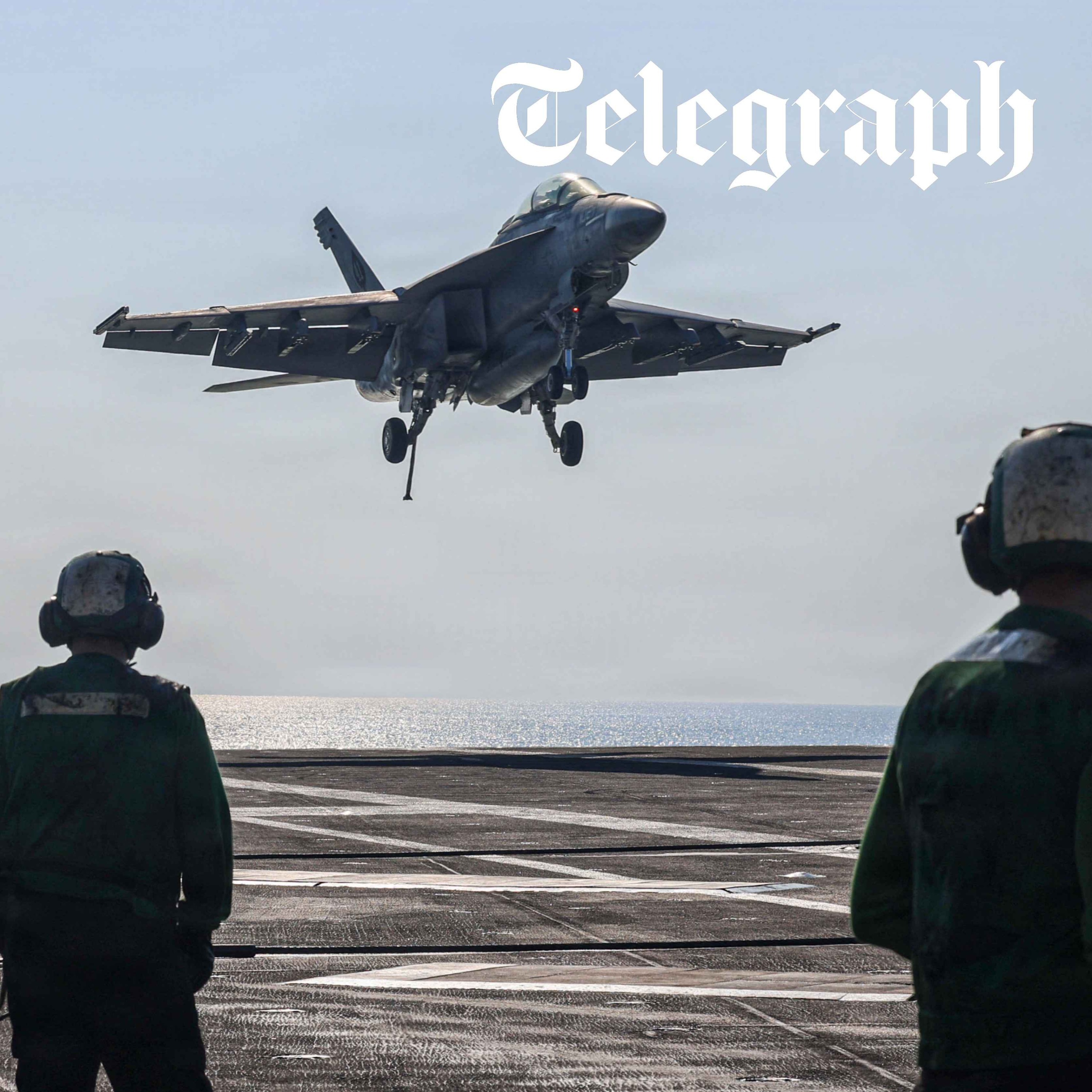
I'm Venetia Rainey and this is Battle lines. It's Friday, February 20, 2026. The drumbeat of war in the Middle east is getting louder and once again it's Iran in America's crosshairs. A second round of talks over Iran's alleged nuclear weapons program ended this week without a deal. J.D. vance, America's deputy president, said that while in some ways it went well in other ways, it was very clear that the President has set some red lines that the Iranians are not yet willing to actually acknowledge and work through. In the last few days, dozens of American fighter jets and refueling tankers have made their way towards various bases near or in the Middle East. One online military flight tracker said anything that can fly or refuel appeared to be moving to the region. And that's on top of the fast approaching USS Gerald R. Ford strike group and the USS Abraham Lincoln aircraft carrier, which has already taken up position in the Arabian Sea. To give you the big picture, this is the largest American military buildup in the region since the Iraq war in 2003. Now, that war ended with Iraqi dictator Saddam Hussein being toppled and found hiding in a hole. Does the same fate await Iran's supreme leader, Ayatollah Khomeini? Later on in this episode, we'll be hearing from an Iranian journalist who was forced to flee her country back in 2022 about whether American led regime change would spark a civil war in Iran. But first, let's start with the basics. What are the chances of war in the coming days and how might it unfold? To discuss that, I'm joined by Henry Bodkin, our Jerusalem correspondent and my co host, Roland Oliphant. Welcome to Battle Lines. Henry, let's start with you. What is the mood in Israel? We'll get onto all of the military assets being moved around. But what are people saying to you on the ground right now?
- [03:40]
Henry Bodkin
I've got a really boring answer for you, which is that it's very calm. I think even the prospect of a war happening within two or three days doesn't quite cross the threshold here anymore. It's dominating the news cycle and the discussions, but it's honestly not being talked about a huge amount on the street. I think people feel that they know what to do when it happens, if it happens, and just try and enjoy life before it does. When all this started back at the beginning of January, you know, the big public bomb shelters were kind of dusted off and opened and there was a large drill kind of home, what they call the home front drill, ambulances and so on. Getting people out of rubble. A few weeks ago, they won't have had time to do anything to improve the situation of the shelters, which was exposed as being a bit inadequate last year. But the security cabinets meeting today rather than Sunday, that's not the first time that's happened. But it could be a sign that, you know, that they think war is imminent. But people are not particularly concerned here.
- [04:44]
Venetia Rainey
You've written an article today about how there's this huge number of fighter jets and refueling jets and tanker planes heading over towards the region. Tell us a bit about what we've seen in flight.
- [04:56]
Henry Bodkin
So there's been a build up over the last five weeks or so, but the volume of movements spotted. A lot of these are kind of self confessed geeks spotting transponder movements, flight tracking radars and so on online. And then Aggregating them. A lot of it's quite reliable. Not all of it is, but Monday, Tuesday, a bit yesterday, certainly a high volume. Dozens of fast jet movements recorded, generally in an eastern direction. So from the continental United States over to Europe, from Europe over to the Middle east, places like Crete Eilat in southern Israel, Jordan. I'm not sure if Jordan was the fast jets or some of the refuelers, and into the Gulf, a lot of them going through, particularly the F35s, which are the most advanced US fighter going through RAF bases, particularly Lakenheath in Suffolk. And the ones which really catch people's eyes are the refuelling tankers such as the Stratotanker. If fast jets are flying over the Atlantic, for example, they'll usually fly in formation with one of these tankers. Quite often the jets themselves turn off their transponders, but you can see that the tanker. And that's the clue. So it's difficult to say what exactly the US has in the region, but certainly they have a lot more today than they did last week. The USS Abraham Lincoln has been there for a few weeks now. Gerald R. Ford is probably transiting the Straits of Gibraltar roughly as we speak.
- [06:28]
Venetia Rainey
So those are the two big aircraft carriers that carry a strike group? Basically, yes.
- [06:32]
Henry Bodkin
That have capacity for about 80 aircraft. On each 60 ish per boat are combat aircraft, fighter jets. And they will have obviously escorts, destroyers, cruisers, and that's very, very important for missile defence, for protecting US assets and allies in the event of an Iranian retaliation.
- [06:55]
Venetia Rainey
So I wonder if we can just break down a bit the planes that have been going over. You mentioned the fast jets, the F35s, the F16s, what have people that you've been speaking to been saying that they be used for? There was some really good language in your story today.
- [07:06]
Henry Bodkin
So the conventional wisdom is that these will be used in conjunction with heavy bombers to, as experts are saying, kick the door down, that suppress enemy radar, enemy surface to air missiles, which are already in a pretty terrible state following last year's war and also an Israeli operation in late 2024. And if we think back to the Operation Midnight Hammer, the, the stealth bomber raid on the nuclear plants last June, the stealth bombers got all the publicity, but there was actually a huge air wing involved in that. There were 125 U.S. aircraft, including lots and lots of fast jets, just to support the stealth bombers, to kick the door down, to defend them. And that's actually what it takes to do these operations really effectively and safely. So I Think a lot of these fast jets that we're seeing at the moment should be probably seen in that context, that they'll be used alongside heavy bombers in quite specific ways and also in a defensive context. You know, everyone's expecting Iran to fire back and a lot of, I mean they can't do anything about ballistic missiles, but a lot of them will be in the skies trying to take out Iranian drones, things like that, watching out for Iran, mining the Straits of Hormuz, things like that. But then of course, if Donald Trump goes down the regime change route, we're talking about potentially a weeks long campaign. And so these fast jets have to be seen as just in the arsenal of US assets that can drop bombs, drop missiles on Iran when opportunities arise, alongside all the Tomahawk missiles they've got from ships and if there's even one Ohio class missile sub in the area. And of course we never know with the subs that's got more Tomahawk missiles on it than the whole of the Royal Navy. One analyst told me. So you have to see this as part of a system. But yes, it's a formidable array of air power that the US is bringing to bear.
- [09:06]
Venetia Rainey
Okay, so all the pieces in place for a possible US military involvement in Iran. Are any other countries involved? Does Britain have any assets deployed in the region to help America? And have we seen signs of Israel also readying, for example its air defences, its air force?
- [09:20]
Henry Bodkin
The RAF has some Typhoons in Qatar. They already had some, I'm not entirely sure how many, and they deployed another four last month at the invitation, they said of the Qatari government in a defensive capacity. So if drones start flying towards Qatar, you can expect those Typhoons to be involved in the defence of that. Of course they have offensive capability as well, and Iran's just over the water. But that is the thinking of what Britain's involvement would probably be. There's been some discussions about do we have subs in the area? And I think actually experts think no, we don't. We don't have very many to spare at the moment and they're not there. So Israel, I mean, Israel could double the US Attack aviation force if it decided to get involved. They've probably got at a stretch 200 fast jets at their disposal. They have more than that in terms of fast jets, but ones that are serviceable. We just don't know we. What the Israeli thinking is in terms of would they join a US first strike on Iran? I think it's. And then if they didn't, would Iran fire missiles back at Israel just as part of the package of retaliation. I think the moment anything comes back at Israel, Israel will get fully involved and they're very keen on regime change. But I think they will have a particular focus on the ballistic missiles, particularly the ballistic missile launchers. That was the bottleneck in the stocks of Iranian ballistic missiles that they fired at Israel is very high, but it's the launchers that was the bottleneck and that's what Israel started to go after. Look, Netanyahu is well known now to have been for the last few weeks pushing Trump to go for it. So in a sense, it might seem a little bit false or a bit fake to hold back from a first strike, just for the optics of kind of not being the aggressor, because I think everyone knows Israel. It's not just Netanyahu, but a lot of people in Israel's elite and a of people in the country want to have a go at regime change so they could be involved in a first strike and they have a lot of jets to do it with and a lot of know how.
- [11:33]
Venetia Rainey
Roland, I wonder if you want to come in here. I know you've been speaking to some Israeli analysts this morning about how they might be involved in suppression of Iranian retaliation.
- [11:40]
Roland Oliphant
I was really interested in what the Iranians are likely to do. So I was speaking to a couple of Israeli analysts about, you know, the lessons of Rising lion, their operation, the 12 Day War. And they said the lesson from that is that the Americans probably are not going to be able to prevent the Iranians from retaliating. They pointed out that the Iranians were able to keep on launching missiles until the last day of that war. Even though the Israelis felt they had, like, amazing operational success, the Iranians were able to continue firing back, they said, so that gives the Americans the task of suppressing the Iranian capabilities sufficiently such that any retaliation will not be enough to make the Americans stop fighting, because that's the thinking that will be the Iranian calculation. The Iranians win as long as they don't lose. So if they can persuade the Americans to stop fighting, as long as the regime is still standing, the regime can chalk that up as a victory of sorts. Of so what do the Americans have to do to do that? There are basically four elements that the Americans would have to target for this suppressive part of the operation. That's the leadership is the first one, as many top commanders and political decision makers as possible. Then, as Henry talked about, the strategic weapons, the ballistic missiles, the long and medium range Things that were fired at Israel last summer, but which you know, could easily also be targeted at American or British bases in Qatar, Cyprus, other Western allies like Saudi Arabia. And the really interesting thing I think is the navy, the Iranian navy, partly because of the threat of closing the Straits of Hormuz of course, but really to protect the American, the large American naval assets in the region, particularly I think the USS Abraham Lincoln, which is in the Arabian Sea off the Iranian coast. Iranians have already talked about sinking one of those or claiming that they could do so if the Americans go to war. If they succeeded in that, it seems quite unlikely to me, but if they succeed in that, that would be, that would be an unprecedented military and political disaster for the Americans. So the Americans will be looking to make sure that can't happen. And there's a special shout out there to a particular Iranian missile called the, the Persian Gulf Farsi is the Kalish Fars, I believe that is a, an anti ship missile. It's the kind of thing they've given to the Houthis before and it's quite capable. So that is going to be high on the American list of things to suppress. And then the irgc, so hitting the IRGC in every possible place because that will in turn undermine the Iran's ability to strike back. Now you notice I've already been speaking for several minutes because that's a very long list and it's a very big country and that country is riddled with mountains. And the observation that I've had from Israeli experts is, you know, look, we had great operational success last year in a 12 day war. We were able to do basically what we wanted and yet we underestimated the resilience of the regiment. They were still able to fire missiles until the end of the war and they also, we believe rebuilt quite quickly. So essentially the Americans would have to do everything the Israelis did or tried to do in Rising lion and do it at a grander scale, probably hitting more targets and probably for a longer period.
- [15:15]
Henry Bodkin
I think it's worth, worth adding to that, that it's widely believed certainly among Western analysts, the Israelis certainly haven't admitted it, that the Iranians actually got more missiles through against Israel in June as a proportion of the ones launched as the war went on. And that the missile defence system here, although formidably capable, it deteriorated I think probably through lack of ammunition. And that's the big unknown. And it's what Israel will never go into is how deep are their stocks. But by some reckonings the amount of interceptors they fired off Last June was 2. It was the equivalent of 2 years global production of those kind of missiles.
- [15:56]
Venetia Rainey
That's really interesting. What are people saying to you, Henry, about a timeline for this? Are we talking in a couple of days this weekend? Are we talking the next few weeks?
- [16:05]
Henry Bodkin
So there's some headlines coming out of the States this morning, slash last night about them being ready to go by the weekend that I think is occasioned by predictions about where Gerald R. Ford will be within the next couple of days. So on that theory, Gerald R. Ford is sufficiently east enough in the Mediterranean to help defend Israel from Iranian retaliation ballistic missiles. That would be its destroyers taking out ballistic missiles and also the jets on the carrier taking out drones, but also that they could contribute those fast jets into attacks on Iran. That is, I think, what's driving the speculation that it could be that soon. I'm seeing some analysts saying, look, in reality, it needs to be at least a couple more days after that for Gerald R. Ford to be in the ideal position. If, of course, Mr. Trump wants to keep going with negotiations and give himself more time to reposition that aircraft carrier. I mean, of course that carrier could go through Suez and around Saudi Arabia and join the other one and really get those jets close to the target. So technically, I think it could start within days on the basis of where that second carrier strike group is in terms of how long it might last. If it's a more limited campaign, if it's about obliterating again the nuclear capability and other things, then it could be a similar timeframe to last June, a matter of days. If it's regime change, then I think we're looking at several more weeks. And it's about killing as many key regime people as possible, killing as many IRGC people as possible, degrading the IRGC going, as one expert put it, going for their neuralgic points, their ability to communicate command and control and really two things, waiting for opportunities to take out the really big players, which takes time also keeping things going and hoping that enough of the, perhaps the conventional forces, the artesh, that's the traditional army, the non IRGC army, realizes it's on, and I'm quoting an expert here, realizes it's on the losing side. Combine that with, it's hoped, a resurgence of popular uprising, and that could be the model for regime change, for toppling the Ayatullahs. Now, I'm not seeing many analysts saying they really think that is likely to happen, but that is the model that if the Americans went for it, they would probably be hoping for, and that will take some time.
- [18:44]
Venetia Rainey
Have we seen signs of Iran readying itself for an attack? I saw a report in Almonitor about satellite images showing Iran repairing and fortifying its nuclear sites. Can you tell us a bit more about that?
- [18:54]
Henry Bodkin
There have been a few of these reports over the last week. The Almanata story is worth a read. It's quite detailed. So things like major earthworks at some of these big targets, targets associated with the nuclear program, things like that. So Isfahan, which was one of the big targets in June, they've been barricading or kind of earthing up the tunnel entrances. That's to reduce the effectiveness of bombing. There's been a concrete apron, I think that was the phrase used over the facility at Parchin. So this is additional what's taken to be defensive physical measures that have been put in in recent weeks on top of what most analysts agree has been quite a healthy, if you're an Iranian, quite a healthy rate of repair and reconstruction in a number of these facilities following the 12 day war in June.
- [19:51]
Venetia Rainey
Thank you very much. Henry Bodkin, our Jerusalem correspondent, and Rhyland Elephant, my co host on Battle Lines. Thanks for joining us. Coming up after the break, an Iranian journalist on the risk of civil war if Trump does push for regime change,
- [20:08]
Sleep Number Advertiser
Why choose a sleep number? Smart bed?
- [20:09]
Mariam Mazroui
Can I make my sight softer?
- [20:11]
Roland Oliphant
Can I make my site firmer? Can we sleep cooler?
- [20:15]
Sleep Number Advertiser
Sleep number does that cools up to eight times faster and lets you choose your ideal comfort on either side, your sleep number setting. Enjoy personalized comfort for better sleep night after night. And now during our President's day sale, take 50% off our limited edition bed plus free home delivery with any bed and base ends Monday only at a Sleep number store or sleepnumber.com.
- [20:38]
Jerry Insurance Advertiser
you know what's wild? Most people are still overpaying for car insurance just because it's a pain to switch. That's why there's Jerry. Jerry's the only app that compares rates from over 50 insurance in minutes and helps you switch fast. With no spam calls or hidden fees, drivers who save with Jerry could save over $1,300 a year. Before you renew your car insurance policy, do yourself a favor, download the Jerry app or head to Jerry. AI acast.
- [21:05]
Matt from P1 with Matt and Tommy
Hi, this is Matt from P1 with Matt and Tommy. And this episode is sponsored by ebay. The cars you'll find on ebay are just different. They come with a story that you can't wait to share, like this 1973 Dodge Charger on ebay that has been tucked away in an Arizona Barn for over 40 years. Only 55,000 miles and somehow in great running order, it even has a rare sunroof. Suddenly, a car that was hidden for decades is being delivered in just a few clicks with ebay's secure purchase. All the paperwork handled. There are thousands of cars on ebay, from unique finds like the Pontiac Grand Prix SJ to daily drivers. And now with a new way to buy them, ebay Things People
- [21:49]
Roland Oliphant
foreign.
- [21:53]
Venetia Rainey
Welcome back. Now, the end goal of potential American military intervention in Iran is not clear. But what is clear is that a lot of people in Trump's administration would like to see Ayatollah Khamenei's brutal regime ousted. The recent mass protests were the closest that the Supreme Leader's grip on power has come to being shaken. But that uprising ended with a savage crackdown. Estimates of death tolls range from 7,000 to more than 30,000. We may never know the true extent of it. So what do Iranians think about the prospect of American intervention? Earlier, Roland caught up with Mariam Mazroui, an Iranian journalist and war photographer who was forced to flee the country after being arrested and imprisoned during the Women Life freedom protests of 2022. She's remained in touch with Iranians inside the country ever since and has been reporting on the results of the bloody crackdown. In January, Roland spoke to her about the plight of those arrested, how ordinary Iranians feel about the prospect of Trump bombing the country, and whether Iran could avoid a Syrian style civil war if the RA regime did fall.
- [22:50]
Roland Oliphant
Mariam, thank you for joining us. You yourself have spent time in Iranian prison cells for political activity. I was wondering if you could just tell us what it was like and what you think those people who have been detained since January are going through.
- [23:09]
Mariam Mazroui
Yes, I was held in the IRGC sacred prisons. And what keeps me actually up all night now is how these young protesters just disappear into these unofficial black sites. I know that feeling, being like tortured while wondering if the world even knows you exist. When I was inside, I was already kinda a known journalist, so my colleagues and friends, they didn't stay silent or quiet, you know, but even knowing I had that support, being in that sacred cell was terrifying. I was haunted by the doubt of whether anyone actually knew what was happening to me or I was alive or not.
- [24:02]
Roland Oliphant
Okay, so just to be clear, you were in an unofficial secret prison. You were not in Evin or a police station or anything like that?
- [24:12]
Mariam Mazroui
Yes, it's not prison. It's like Detention center?
- [24:19]
Roland Oliphant
You're in a detention center?
- [24:21]
Mariam Mazroui
Yeah, I was, yes. They. They are not prisons, like official prisons. They are like detention centers. Sometimes they are actually in the city in a like, like townhouse with garden and everything. Sometimes they are under the ground outside in excrete the city.
- [24:46]
Roland Oliphant
And when you were inside, your family and friends didn't know where you were?
- [24:52]
Mariam Mazroui
My friends, because I was in touch with them more than my family, they were suspicious and some of them, they knew that what I was going through, so they started to talk about me and they started to like send news outside about me because they didn't know where I was. But they, they knew that I'm missing. You know, I'm not there anymore. I'm not in touch with them anymore.
- [25:28]
Roland Oliphant
Okay, so you had basically disappeared as far as they were concerned.
- [25:32]
Mariam Mazroui
Yes. This is my fear for my people now. Disappearance. You know, in unofficial sites.
- [25:44]
Roland Oliphant
When you were in there, you talked about being tortured. Can you tell me about that?
- [25:49]
Mariam Mazroui
I think, actually, I think it's not comparable with what is happening to these young people now. Because whatever we are getting from behind this shadow of this unofficial prisoner prisons, it's like sexual abuse against both girls and boys. And they are horrific. You know, mine was like beating or. It is not comparable, actually. I prefer to talk about them now.
- [26:22]
Roland Oliphant
That's fair. That's fair. I was just trying to get a sense of what it is like.
- [26:27]
Mariam Mazroui
Yes, it is like. It is like, you know, they. They just come and tell you that no one knows you are here. You, for everybody thinks you are dead, so you literally doesn't exist. So this is the first breaking point when, when you think people think you are that, you know, and actually me or my colleagues, we were experienced, we heard a lot of stories about this situation. We knew that these are like their routine. But these young people, they are in their 20s, they have no experience. They went out to protest. And I told it a lot of times that they wore extra jackets to prevent themselves from the like, pallet bullets and they, they saw ammunition and like, you know, it's. It's completely.
- [27:29]
Roland Oliphant
It's a completely different situation.
- [27:31]
Mariam Mazroui
Yes, everything is different. And the, the other thing, we don't know who the guards are anymore. You know, it's all in the shadow. They are not normal. Those previous guards, prisoner guards, I talked to one of the like, moms who. His son is in prison, and she described something that. It's not new to us. It is new to us. These people, they are completely stranger even for the guards, you know, and security Services.
- [28:13]
Roland Oliphant
Okay, so it's not the IRGC people you have met before or you expected to see?
- [28:18]
Mariam Mazroui
No, no, no, no.
- [28:20]
Roland Oliphant
It's obviously a desperate situation in Iran and you've, you know, we've reported, you've helped us report about just how this feels for many Iranians, like a completely different level of repression and a desperate situation. I'm wondering how you feel about the most recent news. So I've just been. Just before we started speaking I went through the news and there's all kinds of reports about the Americans having an enormous military buildup now in place. I saw a report about them potentially preparing for a weeks long military campaign, a full scale war if Trump decides to give the order. I suppose we hear a lot from the regime. We hear a lot from a kind of activist diaspora Iranian community. We hear a lot from American and also Israeli politicians. I'm wondering if you feel that ordinary Iranians on the ground are being drowned out in the middle of this. And I'm wondering what you think most Iranians feel about this prospect of a, of a huge war.
- [29:39]
Mariam Mazroui
Yeah, absolutely. I, I'm talking based on my like chats with them and my talks with them. Iranians feel like actually invisible actors in their own stories. You know, we are watching a repetitive game that has been going on for like 40 years now. The regime buys time and the west plays along and the price is paid by Iranian lives, you know. And yeah, they are feeling that, you know, maybe they thought these people, these people who are being killed, they thought that when they are protesting the help would come, the help that never came, you know. And for all of us this feeling of betrayal is deep. I have to be, for me, I have to be honest about the double standard. It has been heartbreaking to watch the silence of much of the so called progressive media outlets and even like social medias figure that usually they champion human rights. Watching them being silent and some of them not being silent, actually they even sent reporters to Iran who completely ignored the massacre while the streets were still stained with the blood of Arius.
- [31:11]
Roland Oliphant
Is your view that it would be better not for reporters not to go to Iran?
- [31:17]
Mariam Mazroui
I am sure you have been there and you know how it works there. When you are a reporter on the ground of Iran, you are followed by some security service agent under cover of nice people. They are like forcing you to follow their propaganda. But it is your decision to follow that or not. You cannot go in Iran after this massacre. We believed it. It has been at least 40,000 people because Iran is family based And Iran is neighborhood based. We all know each other in like, it's like Italy, you know, it's not about the like it is about extended family. When someone is dead in a family like many people are mourning and in Iran now all the people are mourning because they all know someone who has been killed. You know, you cannot go in this land and name the rally like regime based rally, a festival and say everything is all right here and people are happy in a festival. Diaspora and people inside, we all feeling the same thing, that we have no one.
- [32:42]
Roland Oliphant
You feel like the, the situation is being ignored to some degree.
- [32:48]
Mariam Mazroui
Yes, we are being ignored. We, we didn't have any voice, especially on that one week blackout that we didn't know what is happening to our people. We knew they are killing them because we had this experience before in that bloody November that they killed 1500 people and they like cut down the Internet. We knew something bad is happening, but it is beyond our worst nightmares and no one listened. No one listened to us.
- [33:27]
Roland Oliphant
Do you think the people you know, your friends, your, your acquaintances, the people you personally know in, in Tehran and across Iran, do you think they would welcome or oppose an American military attack?
- [33:42]
Mariam Mazroui
Now this is a really deeply complex topic. I for this, I don't talk about my like my opinion because I'm in a safe place. I'm not in a place that talk about this but I talk about this to my people inside. You know, I talk a lot about that because I was writing a piece. I have to mention that Iranians are incredibly proud. They fought an eight year war with Iraq and didn't give up on each of their soil. You know, they are not a nation that easily and lightly ask for food, foreign military invasion. But now when I talk to people like the situation is so catastrophic that the calculus has changed. People are facing a terrifying choice. The fear of war versus the fear of this regime's survival from everyone. Most of people I talk to, the survival of the regime is now feared more than anything else. That's why many, many don't even call it a war. They call it humanitarian intervention. You know, when you see someone like the human rights lawyer inside Iran, like Nasserin Sothu, the invoking rtp, it tells you everything. Even the most dedicated activists believe the international community has a legal and moral duty to step in and stop this slaughter. I think many people all over the world cannot stand watching one minute of the footage of this massacre. You know, four like for them saying under this regime's boot has become more fatal than the Intervention itself because they had seen, based on their experience, when this regime survived uprising, they became more brutal, you know, more bloodthirsty.
- [36:02]
Roland Oliphant
You mentioned R2 poo. That's the shorthand for responsibility to protect. The kind of legal principle that underpins the idea of international law, of, of foreign countries going in to stop atrocities from occurring. There's clearly a fear, Mariam, certainly amongst many people watching from the outside at least, that an attack on the regime that causes the collapse of the regime could create a disaster, could plunge Iran into a civil war or something worse. Something much worse than was seen even in Libya, even in Iraq after the American intervention.
- [36:42]
Mariam Mazroui
Yes. And Syria, mostly Syria. Yes, the fear. We have named it Syrianization. And we know that it is the regime's most successful piece of propaganda. It is a threat they've used for like years to paralyze both the west and the Iranian people. But this part, I can talk about this as a war photographer, being in the region, like Syria in Iraq, in Afghanistan. Iran is not Syria, it's not Iraq, it's not Afghanistan. You know, I can go on about this forever, but there are some factors that they are like, it's very important, you know, Iran is nation based, like country, you know, what do you mean
- [37:33]
Roland Oliphant
by a nation based country?
- [37:35]
Mariam Mazroui
See, we can compare Iran kind of with Turkey because nationality is like this border integrity and nationality is important to them. You know, I covered the Syrian opposition meetings myself all those years as a journalist. I saw how they struggle to find any common ground to be allied on. You know, Iran is deeply rooted nation state with a strong sense of national identity. This is the fact, it's not something that I'm like, we are making that up, you know, and the other thing, we have leaders both inside and outside the country who have the capacity to form a coalition when the time comes. You know, I talked a lot with people inside Iran, mostly young generation. Even for someone like me who is absolutely not a monarchist, it is an undeniable reality that like, like Mr. Pahlavi is a key factor preventing this civil war. You know, they are talking about this. Actually. He has responded to public demand by acting and the, the, and like people inside and outside, they responded to his call too.
- [38:57]
Roland Oliphant
You're talking about Reza Paklavi, the, the exiled Crown Prince who, who called on people to go out on the streets on January the eighth, which led to the massacre. I'm quite interested in what you say there because I've also heard a lot of skepticism about Paqlovi and I've heard Lots of Iranians tell me that they don't trust him. They don't trust the people around him, that he has kind of very hard line monarchist followers. But you seem to be saying that lots of Iranians are willing to set that aside because they need a figurehead. And here's what is available now.
- [39:32]
Mariam Mazroui
I'm not monarchist, but I'm talking to the people. Actually. I was thinking maybe after that many will blame him for the massacre. But this is kind of interesting. People outside, some kind of elite, I'm telling you, like lefties and those who name themselves Republicans, they blame him for the bloodshed. But people inside, those who were in the street, they don't do that. Most of them, they don't do that. And especially young generation. You know, I was talking to someone yesterday, 23 years old, and I was talking about what's happening and he has still the pallet wounds on his back. And he told me something that it was completely shocking for me. He told me it's not about going 50 years ago and going back and claim the monarchy or something. For us it is going back 1400 years ago. We are going back to the Codesia battles. And I was shocked because.
- [40:45]
Roland Oliphant
So you're gonna have to explain that history a little bit.
- [40:49]
Mariam Mazroui
It is a bad. Actually it's not. It's easy to understand. It is the invasion of Islam to Iran.
- [40:56]
Roland Oliphant
Okay. This is the, the Islamic conquest of Iran.
- [40:58]
Mariam Mazroui
Yes. So when a 23 year old is saying that we are going back, then it is a profound change. Iranian inside, they are calling it Renaissance.
- [41:12]
Roland Oliphant
Renaissance, A rebirth of the nation.
- [41:14]
Mariam Mazroui
Yes. It's not about economical hardship or crisis right now. Not that they are reaching this point with this bloodshed. They want regime change and actually they want, they are talking to, we want to take our identity back.
- [41:33]
Roland Oliphant
Just to be absolutely clear, then Donald Trump, I believe, and those around him have kind of expressed some skepticism about whether Reza Pahlavi really has what it takes or has real support for inside Iran. I think, you know that the White House has kind of let it be known they think he's a nice guy. But, you know, is he everything he says he is? Has he got support inside the country? You seem to be saying that you think he does have enough support inside the country.
- [42:07]
Mariam Mazroui
Actually, yeah. Because I have to emphasize that again, it's not my idea or my opinion. I just talk to people because it's my job. And I can't say that it's 90% of people that I talk to actually and force for, you know, in my generation they are skeptical too but they say we have no choice, you know, we have to change this regime and we want the stability. So he is, and they are hoping that, you know, we have leaders inside Iran, in prison, in, they don't talk, they cannot talk. And we have people outside too. But he is the more like people inside answering to his call. And people outside, you've seen in 14th of February. I'm not monarchist, I'm talking about my people that I talk to. And I've seen he has given people hope, you know and he's saying that he is, he just want to be bridge for this transition and he will let people to decide. And we don't consider that this era is the Internet era like it's awareness era. It's not 2200 years ago that people can be monarchist like no can be dictator without any consequences.
- [43:43]
Roland Oliphant
So at least among the people you're speaking to, there seems to be support for him as a, as a figurehead to, to lead change.
- [43:51]
Mariam Mazroui
Yes, they are hoping for coalition and some of them have no choice. They are saying that and they are supporting him. There are people who are writing against them, but against him. But they are really, they are not many.
- [44:09]
Roland Oliphant
Okay, I want to put another thing to you. There's been a lot of discussion of a kind of let's call it a Venezuela style operation by which I mean perhaps the supreme leader Ali Khamenei is killed or captured and is replaced not by a total regime change, but replaced by perhaps other members of the regime who are more willing to do business with the Americans. And that is the model that Donald Trump followed in Venezuela. Nicola Maduro was replaced by his vice president. The party that rules Venezuela stays in place, but they have decided to accommodate American demands. I'm wondering if the people you're speaking to in Iran have any views on that idea. The idea that perhaps, and I don't
- [45:10]
Mariam Mazroui
know who it might be actually I shared like a reel about, I read an English essay about that that they are doing that and I shared that on my Instagram and it gets a lot of attention, like unusual. Many people wrote me back, texted me and like commented that post that it's, it's, it is not acceptable at all. You know, it is like they say, if the west thinks they can bring stability by simpling, simply replacing the leader with someone else from the like security, military apparatus, you know, they are making a dangerous mistake. This is exactly what could trigger the chaos that they fear like civil war. The west might think it's safer to deal with the like strong men from within, to keep the military and like all the structure intact. But I think they are ignoring the reality of the Iranian strait. You know, after these atrocities, after this massacre, I don't think Iranians will never accept a deal that keeps any part of the head, you know, the head of the system and this criminal system in power, you know, because they are showing that for them it's not about the economical crisis anymore. You know, it's even they have been started to, and it's been for more than since the 2009 green movement that people were on the street following reformist leadership through these years. For them, the time for reformist and moderate within the regime is over. They are chanting that on the street, you know, and I think if they try to bypass the political prisoners and the oppositions and the leaders that people trust and instead make a deal with some kind of military security forces, it will be seen as a direct betrayal. And actually. Remember that one of the main reasons Syria became Syria and this civil war was the Islamic regime itself. You know, so if once this regime, people think once this regime is removed, the biggest driver of any civil wars are like, it will disappear. Yes.
- [48:10]
Roland Oliphant
Is removed. Yeah. Mariam, thank you so much. I wonder if we should finish by considering the alternative option here. I mean, everyone's talking about will there be a war this weekend? But alternatively, maybe there won't be. Maybe the peace talks in Geneva will succeed. Maybe Donald Trump will decide not to launch an invasion of any sort and to settle for a deal which sees Iran, you know, give up its nuclear program. I suppose for you, I don't want to put words in your mouth, but I suppose on the one hand that means ordinary Iranians won't be bombed, but from what you're saying, that also sounds like that might be a bit of a disappointment because you're so keen to see the regime go.
- [49:06]
Mariam Mazroui
The point is, like, at least when I was there until 2022, we tried many times to bring this regime down and we couldn't. We failed. And this time it's the, this massacre. And people in Iran, they have this sentence, they share it a lot. There is a ocean of blood between us. They mean them and the state, the Islamic regime. So I don't know if this regime stays in power. You know, they have been, when they see that there is no invasion, like in these 40 days, they started to sentence many young people to death and they are killing like people in prison and families are going to the centers to have information from their beloved one and they just, they hand their children body to them shot recently, you know. So I, I actually, I don't know if, if, if this regime stays in power. I think this is the concern of Arabic countries and other countries too. Because if this regime survives, survives, I don't know what will happen next. They will be more confident, you know, I don't know. I just know that these people want this regime gone by any means and we are scared of if they stay on power. I cannot think of their survival because it's too much.
- [51:07]
Venetia Rainey
That was Mariam Masrooui, an Iranian journalist, speaking to Roland Oliphant. That's all for today. We'll be back again on Monday. Until then, goodbye. Battle Lines is an original podcast from the Telegraph created by David Knowles and hosted by me, Venetia Rainey and Roland Oliphant. If you appreciated this podcast, please consider following Battle Lines on your preferred podcast app. And if you have a moment, leave a review as it really helps others find the show. To stay on top of all of our news, subscribe to the Telegraph, sign up to our dispatchers newsletter or or listen to our sister podcast Ukraine the latest. You can get in touch directly by emailing battle linestelegraph.co.uk or contact us on X. You can find our handles in the show Notes. The producer is Peter Shevlin. The executive producer is Louisa Wells.
- [51:56]
Mariam Mazroui
Acast Powers the World's Best Podcasts Here's
- [52:00]
Henry Bodkin
a show that we recommend.
- [52:04]
Naomi Ekparigan and Andy Beckerman
Hey everybody, I'm Naomi Ekparigan. And I'm Andy Beckerman. We're a real life couple and a real life couple of comedians and we're the hosts of the podcast Couples Therapy. We're the only comedy relationship podcast ever. Yeah, I said it and we're so good. We've been written up in both the New York Times and we made Grindr's list of top podcasts. Yes, we're giving you that high, low appeal trust on the show. We talk to guests like Bob the Drag Queen, Angelica Ross, Bowen Yang, Janelle James, Danny Pudi, Darcy Carden, Paul F. Tompkins and more. All about love, mental health and everything in between. And we answer your relationship questions. We are two unlicensed comedians just trying to help you out. So open your hearts, loosen your butts because we got a lot of laughs and a lot of real talk just for you. Download Couples Therapy Wherever you get your podcasts,
- [52:55]
Henry Bodkin
Acast helps creators launch, grow and monetize their podcasts everywhere. Acast.com.