Loading summary
Transcript44 lines
- [00:04]
Lama Amin
The telegraph.
- [00:09]
Michaels Advertisement
Is your kid's birthday coming up? Don't stress the prep. The party Shop at Michaels is your one stop. Shop for every theme from Bluey to Rodeo. Transform your space into a birthday wonderland with dreamworthy tablescapes and decor starting at $0.99 plus get free helium inflation on select balloon styles, weather your craft a one of a kind bash or grabbing the essentials. Michaels has everything to make their big day legendary. Shop now and order ahead for delivery or in store pickup. Michaels everything to celebrate Anything
- [00:48]
Voice Actor Reading Monologue
your call has been forwarded to an automatic voice message system.
- [00:52]
Quo Advertisement
Running a business means you're always reachable until you're not. And the moment you miss that call, a competitor picks it up. That's why this episode is brought to you by Quo spelled Q U O the business phone system built so you never miss an opportunity. All your calls, texts and voicemails live in one place. Anyone on your team can pick up a conversation, see the full history and respond fast. Quo is the number one rated business phone system on G2, trusted by over 90,000 businesses set up in minutes on any device. Keep your existing number, add teammates as you grow. No it no hassle. Quo's built in AI agent, even handles after hours calls and books appointments so you're covered around the clock. Money is on the line. Always say hello with quo. Try quo free plus 20% off your first six months at quo.com tech that's quashuo.com tech.
- [01:55]
Venetia Rainey
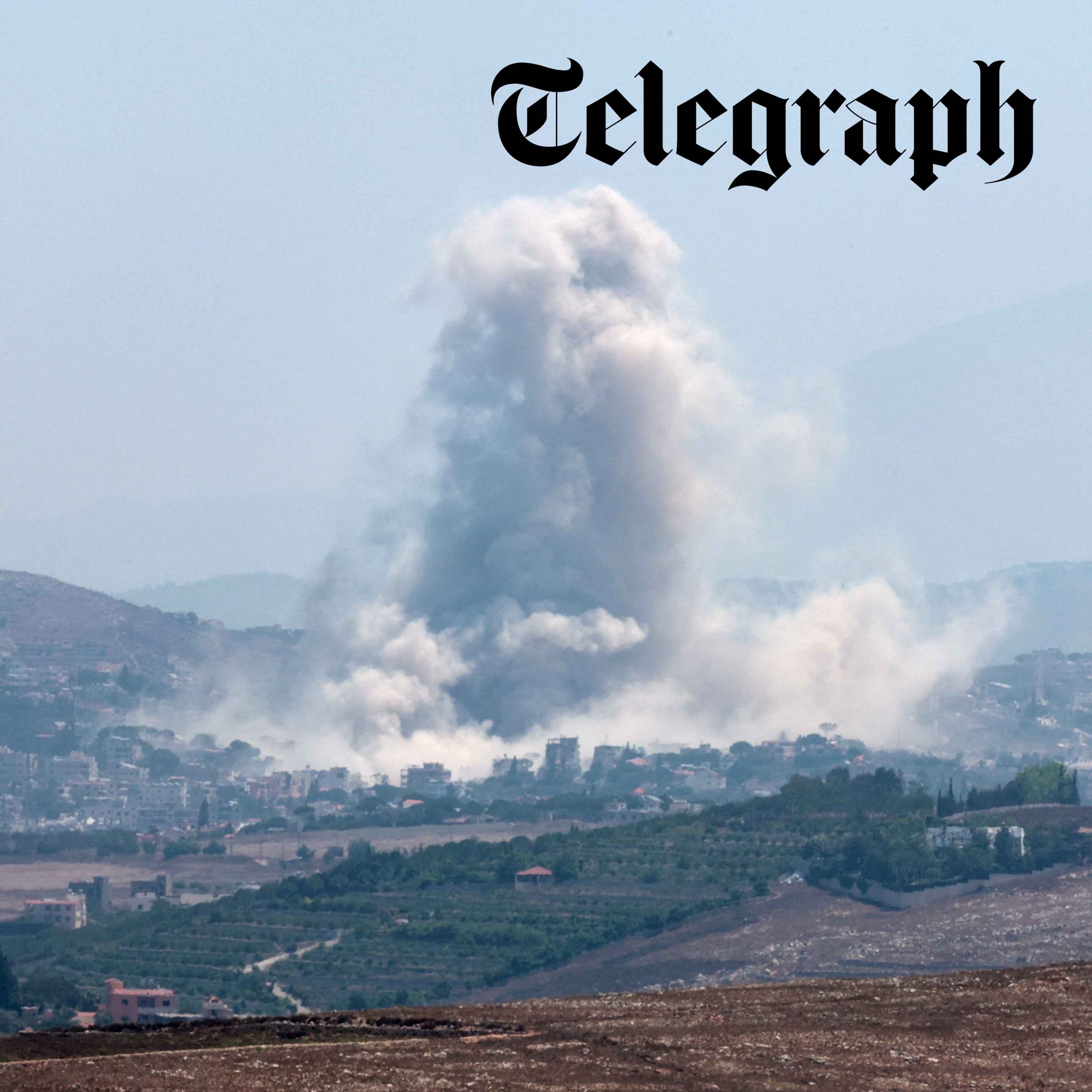
I'm Venetia Rainey and this is Iran. The latest this week, Lebanese President Joseph Aoun met with Donald Trump in Washington. Aoun declared that his country would permanently end hostilities with Israel and asked for help to disarm Iranian proxy group Hezbollah. It was a big moment. Israel and Lebanon don't have official diplomatic relations. They've been at war ever since Israel was founded in 1948. So Awan is trying to do something momentous. But can it work and does it reflect the reality on the ground? Israel currently occupies more than 200 square miles of southern Lebanon and has razed entire Shiite villages to the ground, along with infrastructure. Hezbollah is against the plan and has vowed to fight Israel for as long as they remain in the country. It's also still being armed to the teeth for the fight. Meanwhile, hundreds of thousands of people have been displaced in Lebanon and many are still forbidden from returning to their homes, if they even still have homes to return to. So what's it like being in Lebanon and being stuck in the middle of all of this? To discuss everything earlier this week I spoke to Lama Amin, who she's director of arts at Scenario Charity, which works with displaced and vulnerable people across Lebanon and the Middle East. She also headed up a wonderful writing project that captures the experience of being in the middle of a war, of being bombed. It was performed in London recently and it caught my eye because we discuss war every day on this podcast. But it's hard to capture what it's actually like being on the ground for ordinary people like you or me. So do watch or listen to the end to hear some excerpts of those being read out by actors including Jessie Buckley. They're rather brilliant. First, here's my conversation with Lama Lama welcome to Iran.
- [03:36]
Roland Oliphant
The latest we've had some big developments in terms of the Lebanon war this week Lebanese President Joseph Aoun was in Washington to meet with President Donald Trump and the Pilot Zone scheme. This US backed plan to see Israel withdraw from parts of the south and the Lebanese army move in in its place has taken its first baby step. Just one village in the south at the time of recording, but no residents allowed to return yet. And there were some warning shots fired by the Israeli army when the Lebanese army I believe neared an adjacent village. That wasn't part of the agreement. We've also heard from Israel's Defense Minister Israel Katz. He's repeatedly said that they won't withdraw from any territory taken in Lebanon, Gaza or Syria. And Trump, when he was asked about all of this, he didn't offer a withdrawal timeline for the Israelis. He just said they're in of redeploying to other sections. So I guess I just want to ask how hopeful are you that this deal will lead to the Israeli withdrawal from southern Lebanon?
- [04:37]
Lama Amin
To be honest, for us as Lebanese, kind of we're not believing on it because we've been through wars since I was young, like I grew up and this, this war never ends between Lebanon and Israel. And I don't think Israel is going to decided to leave and not want to take any land from Lebanon. So I don't think that deal will work because kind of we are a bit worried about what is happening now in Iran and if the war might affect what is happening in Iran in also in Lebanon.
- [05:20]
Roland Oliphant
So okay, so you feel very pessimistic and you feel like that pessimism is that widely shared by Lebanese and it's been made worse by the increased fighting that we've seen between Iran and America in recent weeks.
- [05:32]
Lama Amin
Yeah, yeah. I feel like now people, even in Lebanon, they're kind of, they don't talk about it because it's kind of. It's not going to happen. So why. So people are trying to live daily, daily day basis life because even the things in Lebanon is really hard and it's heavy. Everything's. You feel how people are feeling heavy, feeling really uncertain. They don't know what's gonna happen. So that's why kind of let's enjoy that moment, that time being with the loved ones. It's not in our hands kind of as Lebanese people to make that deal. It's bigger than us and kind of we are watching, waiting.
- [06:24]
Roland Oliphant
Tell me a bit more about daily life in Lebanon at the moment. You work with displaced people every day. We know there are hundreds of thousands of people that have been displaced by this fighting. I think some have started to return to the south but not all of them. Tell me about them.
- [06:39]
Lama Amin
Yeah, like after this announcement about this deal, some people went back to their villages in the south but lots of people lost their houses, lost their people. So kind of people visit their places but they can't stay there. So they return to Beirut and some of them are still staying in shelters and there is no places for them to. So this is the daily struggle like for them to find food, to find a job even lots of people lost their jobs, lost their businesses. So kind of it's become harder and harder and even there is nothing is the government can also help with. There is lots of people like who's like civil, civil like kind of community are coming together and support and help but the resources are really low and no one can like the war started in March and kind of people are feeling useless or like they can't continue what they can do. But for me like working for scenario what we can do from our side is open up a space, a safe space for people like to come and reflect or like to write about what is happening. So this is kind of what we can do from our side but other than that like it's super hard and also the cost living in Lebanon become really expensive.
- [08:33]
Voice Actor Reading Monologue
So.
- [08:33]
Lama Amin
So I don't know how people are also are like surviving because it's become really as if we are living in Europe or like in the uk like in London let's say. So this is so yeah.
- [08:50]
Roland Oliphant
Have you been down to south Lebanon?
- [08:52]
Lama Amin
No, I used to go to Sur to the south. I used to like the summer. I used to go with my friend to enjoy the summer there and spend the time there by the beaches and stuff or like visiting friends. But nowadays is really hard to take this risk to go to the south. But lots of people who are friends of mine who can't stay in Beirut, they need to see their land, they need to see their houses. But in the wake, what scenario does some of the people who went and we did some project even during the war this year we were doing a project in the south and it was really hard for us to go physically to visit our group of women or a group of children. But we kept in contact with these people because also some of them, especially in Sur people don't want to leave. And some of the people who are even not only Lebanese, they are Syrian or Palestinian who are living in a camps in the south. And it's hard for them to leave because where they, where they have to go, like they also there is a clash between, in Lebanon, the society between Syrian, Lebanese, Palestinian. So even during the war, some of the people are not welcoming to be in a shelter. So yeah, there is layers and layers of how the life in Lebanon is hard and becoming more harder for other people. So kind of the project that we were doing it with the women, we kept doing it over Zoom, over Google, like to continue have this conversation and give them a space for them to at least breathe, to take them to zone out from what is happening, surround them. But even during the Zoom meeting, imagine us talking and suddenly some people really need to run out because the bombing is happening near their houses. So we're living. Even for me, I live in two realities in Lebanon because I'm living in Beirut nowadays, in Beirut is calmer. But when I speak with participants from the south, they're living a different reality. They are like in uncertainty if they are gonna live or they're gonna stay. And, and the powerful things that they always bring to the table, that they always say Alhamdulillah, everything is going to come. They have this hope even in a harder, harder situations. And it's this like people call Lebanese people or the people who live in Lebanon resilience. But it's beyond this word. To be honest, I feel that, yeah,
- [12:02]
Roland Oliphant
it almost becomes a sort of cliche, doesn't it? The Lebanese phoenix always rising from the ashes, ever resilient. But how much can the Lebanese people bear with all these successive rounds of conflicts? And also things like the Beirut port explosion Covid that knocks the country back again and again. And thank you for reminding us of that very important context. Lebanon hosts a lot of refugees. A lot of Syrian refugees that came over during the Syrian civil war and a lot of Palestinian refugees that date back to 60s, 70s, 80s and live in refugee camps and have never been naturalized as Lebanese citizens. What kind of things are people telling you when you speak to these participants in projects in the south? Children, women. What kind of experiences are they sharing with you about what these last few months have been like for them?
- [12:49]
Lama Amin
Yeah, recently we did a project called Creative Writing. And this project, we asked participants to come together to reflect on what is happening. And I thought it was going to be like having around maybe 15 to 20 people, maybe. But in two days, when I sent the link to the participants, we had around 130 participants. And I felt like this is not like just people want to come and participate. No, it was like a need for them to express, to say what is happening, to like let their voices to be heard. So I was. And this project happened with around 96 participants in all over Lebanon. And I had the opportunity to work with the migrant workers. And the migrant workers, like, they come like let's say Mecca. One of the participants came to me and she said that how is important for her to just sit even during the war, she's looking after her kids, but at least have like for one hour or like two hours to sit by herself. Even her kids are surrounded her. But for her to express, to go back to her feelings, to. To say something that kind of. She's hiding it inside her or Najah, who's living in Beqah who Scenarios. Participants since 2017. Najah was telling me like she never wanted to be to write, but during these days she felt like there is a need for her to just sit and write things and express. Because also Najah came from Syria during the war in Syria. So kind of this war also it reflect or it open up things on her where she. Before she used to like hide in it really, or like kind of put it. Put it, put all her feelings aside and not to like say I'm sad or like I'm not feeling well. So kind of this project helped her like to just express, to just say I could write. I could say even she doesn't feel herself as a writer.
- [15:35]
Roland Oliphant
Yeah, it's one of the things that I found very powerful about the monologues that this project produced because it really zooms in on the sort of the micro impact of. Of war. And you know, there's. There's so much conflict at the moment. We report on what's going on in the Middle east, but it's happening around the world. And you get lost in the numbers of death tolls and casualties and you know, the numbers of strikes and what was targeted and what was hit. But the impact is so much wider than that on the people who are experiencing it and how it, how it affects your everyday life, your family life, your, you know, your children, your work. And so I think the monologues do a really good job of just, just landing that point and allowing you to experience someone's reality, living through conflict in a more personal way. I wanted to just finish by asking a macro question again, if that's okay. The death toll from this round of the conflict has been appalling. More than 4,300, the Lebanese Health Ministry said this week, have died since the beginning of March. That includes 392 women and 253 children. Another 12,200 wounded
- [16:50]
Michaels Advertisement
is your kid's birthday coming up? Don't stress the prep. The party Shop at Michael's is your one stop shop for every theme from Bluey to Rodeo. Transform your space into a birthday wonderland with dreamworthy tablescapes and decor starting at $0.99 plus get free helium inflation on select balloon styles. Whether you're crafting a a one of a kind bash or grabbing the essentials, Michaels has everything to make their big day legendary. Shop now and order ahead for delivery or in store pickup. Michaels everything to celebrate anything this message
- [17:28]
Cologuard Advertisement
is brought to you by Cologuard. If you recorded songs off the radio for a mixtape, it might be time to screen for colon cancer. The Cologuard test is non invasive, requires no special prep or time off, and you start screening right from your home. It's just three simple setup, sample and ship. If you're 45 or older and at average risk, ask your doctor about the Cologuard test, available by prescription only. Learn more or request a prescription@cologuard.com podcast
- [17:59]
Voice Actor Reading Monologue
your call has been forwarded to an automatic voice message system.
- [18:03]
Quo Advertisement
Running a business means you're always reachable. Until you're not. And the moment you miss that call, a competitor picks it up. That's why this episode is brought to you by Quo, spelled Q U O the business phone system. Built so you never miss an opportunity. All your calls, texts and voicemails live in one place. Anyone on your team can pick up a conversation, see the full history and respond fast. Quo is the number one rated business phone system on G2, trusted by over 90,000 businesses. Set up in minutes on any device. Keep your existing number, add teammates as you grow. No it, no hassle. Quo's built in AI agent even handles after hours calls and books appointments so you're covered around the clock. Money is on the line. Always say hello with quo try quo free plus 20% off your first six months at quo.comtech that's quo.com tech
- [19:03]
Roland Oliphant
those people have been killed by Israel. But this round of conflict started after Hezbollah fired on northern Israel right at the beginning of March in support of its patron Iran. I'm just wondering how much are people in Lebanon. We know they blame Israel, but how much are they blaming Hezbollah for the cost of this war? Have you noticed a shift?
- [19:21]
Lama Amin
I think what is happening. We know the war that started not now in Lebanon with Israel. And also the Israeli were before Hezbollah started also in Lebanon. So even if Hezbollah one day will leave, I think there is another kind of community will come. And also to defend Lebanon. Because also our military, like the army in Lebanon, can't stand against Israel. So it's a circle that we are going to always come back to it. And always if Hezbollah guns. Today there is another someone who's going to come and defend Lebanon. Like from my side as Lema. I feel like for me how to defend Lebanon is by creating projects, creating stuff through arts. And I feel this is my weapon of doing this. Like how I created this project during the bombing at night, I used to put my headphones and zoom out from what is happening and just say, I want to do something meaningful to the people. So I feel lots of people these days who are not armed to do what Hezbollah does. But we have our way of kind of defend our country in our way. I feel. So people and Lebanese people who well know in many places in the world who did so many things, like Gibran, Khalid, like Firouz is the sound of Lebanon and the grief of Lebanon, kind of.
- [21:13]
Roland Oliphant
But there is Khalid Gibran, the famous Lebanese poet. Firouz, the famous Lebanese singer.
- [21:19]
Lama Amin
So I feel these people like we could be these people from my opinion, to defend Lebanon, rather to go to the political because like carrying a gun or something. It's not the solution. I think the solution find something through art, through sports, through other form of art, who can really defend this country and keep it together. Also because the most important because political things make us more away from each other. But theater can bring us all together. Arts can bring us together. So kind of this is my answer to you.
- [22:06]
Venetia Rainey
That was Lama Amin, director of arts at Scenario Charity.
- [22:11]
Roland Oliphant
So what is it like to be
- [22:12]
Venetia Rainey
bombed, to be caught in the middle of a war, to live under the shadow of conflict? Here are the experiences of people living in Lebanon. But they could apply to anywhere in the Middle east or indeed anywhere in the world. And that's why I wanted to share them with you. The first is by Iman Faisal Al Modi, a Syrian teacher who fled to Lebanon during the civil war and now lives in the Bekau Valley. It's read by Irish actor Jessie Buckley. The second is a compilation of WhatsApp messages between a group of Lebanese women displaced in South Lebanon, and that's read by British Lebanese Palestinian actor Serene Saba.
- [22:46]
Voice Actor Reading Monologue
I stood in the middle of the house, a small suitcase open in front of me, my hands trembling over it. I didn't know what to take and what to leave. How can a person sum up her entire life in minutes? Everything around me was screaming, stay. Every voice inside me whispered, run. The sound of the planes was near sharp, piercing my chest before my ears. Then there was an explosion that shook the walls and dust particles fell from the ceiling like the ashes of a burning dream. My firstborn was clinging to me, her eyes wide open. I won't forget her stares, too silent. She didn't ask me. She didn't even cry. She was just looking at me as if she was waiting for an answer from me that I didn't have. In that moment I felt helpless for the first time, not just out of fear. It was an inner breakdown, as if something inside me had silently collapsed. I tried to speak, to tell her, don't be afraid, but the words stuck in my throat. Silence is heavier than any sound. At 8:30pm the phone rang. My sister's voice at the other end was far away, as if it was coming from another world. That does not resemble this desolation. She was asking, trying to assure me. I could barely hear her. I was torn between her words and the sound of the approaching shelling, between her instructions and the facts that death was all around us. For a moment I felt completely alone, even though someone was trying to reach me through that thin line of communication. I looked at my daughter, the one who was born under the roar of planes. There was a voice inside me shouting, protect them. And another, whispering how outside danger was imminent. I vividly remember that moment when I had to choose leave or stay. It was not an ordinary decision. It was an uprooting.
- [25:48]
No, no, I couldn't go to the shelter this year. Last year. Well, last war. I tried to bathe my son once. He'd been playing in mud, actual mud, head to toe, and everyone suddenly descended on me. Why do you need to do that? He showered two days ago. It's cold. He'll get sick, I said. The child has mud in places mud should not be. Should I let them get lice everywhere and infect you all? I mean, yeah, it would be. It would be quite ironic if we all died of some infection while rockets are flying over our heads. Wouldn't that be funny? Oh,
- [26:26]
Venetia Rainey
God.
- [26:27]
Voice Actor Reading Monologue
I haven't showered in a week. I swear. I just want to go home. I just want to go home. And I just want to bathe with Flash and Dettol in my own bathtub. Yeah, without committee approval. I would rather die clean than be humiliated like this. At least at home I can shower every day. Here I've got to wait for my turn. And on top of it all. Not every day
- [26:59]
Lama Amin
now.
- [26:59]
Voice Actor Reading Monologue
I know.
- [27:00]
Oh, I know. I know it's dangerous. But I might as well die in the comfort of my home since everything has gone to shit anyway. God, so dirty. Can't even pray properly. God forgive me. Oh, congratulate you. Congratulate you for what? Wow.
- [27:23]
Michaels Advertisement
You showered yesterday.
- [27:26]
Lama Amin
Wow.
- [27:26]
Voice Actor Reading Monologue
Well done, Rima. Congratulations. You better get on those scales right now. You probably lost 2 kg of filth.
- [27:36]
Lama Amin
Bravo.
- [27:39]
Voice Actor Reading Monologue
You know, I almost showered in my clothes last night. Yeah. I'm serious. I'm so scared a rocket will kill me and they find me naked. The humiliation of it leaving your house is already like being naked. It's already humiliating enough and I do not like being humiliated. And I do not like anyone holding a favor over my head. No, I'd rather die in dignity in my own home, clean and dressed.
- [28:13]
Venetia Rainey
That's all for today's episode. We'll be back again on Monday. Until then, goodbye, Iran. The latest is an original podcast from the Telegraph, created by David Knowles and hosted by me, Venetia Rainey and Roland Oliphant. If you appreciated this podcast, please consider following around the latest on your preferred podcast app. And if you have a moment, leave a review as it helps others find the show. For more from our foreign correspondents on the ground, sign up for our new daily newsletter, Cables, or listen to our sister podcast Ukraine the latest. We're still on the same email email address battleionselegraph.co.uk or you can contact us on X. You can find our handles in the show notes. The producer is Peter Shevlin. The executive producers are Venetia Rainey and Louisa. Well,
- [29:09]
Michaels Advertisement
Is your kid's birthday coming up? Don't stress the prep. The Party Shop at Michael's is your one stop shop for every theme from Bluey to Rodeo. Transform your space into a birthday wonderland with Dreamworthy tablescapes and decor starting at $0.99 plus get free helium inflation on select balloon styles. Whether you're crafting a one of a kind bash or grabbing the essential oil, Michaels has everything to make their big day legendary. Shop now and order ahead for delivery or in store pickup Michaels everything to celebrate anything.
- [29:46]
AWS Advertisement
The organizations winning with AI right now aren't adding it to the top of old workflows. They're rethinking how the work gets done fundamentally. And the ones doing it best aren't figuring it out alone. AWS brings something no other provider can offer. Amazon's own operational proof four and a half times productivity gains a 73% pilot to impact rate real results at real scale in the real world. This is more than just a technology decision. It's the business performance decision needed to unlock AI value at organizational scale. AWS has already done the work, now it's ready to help you do yours. Visit aws.com AI AI that's ready when you are.