Loading summary
Transcript67 lines
- [00:04]
Arthur Scott Geddes
The telegraph.
- [00:09]
Jerry Insurance Ad Voice
Are you noticing your car insurance rate creep up? Even without tickets or claims, you're not alone. That's why there's Jerry, your proactive insurance assistant. Jerry handles the legwork by comparing quotes side by side from over 50 top insurers so you can confidently hit buy. No spam calls, no hidden fees. Jerry even tracks rates and alerts you when it's best to shop. Drivers who save with Jerry could save over $1300 a year. Don't settle for higher rates. Download the Jerry app or visit Jerry AI Acast today.
- [00:43]
Anjali Ashrakar
This is a Monday.com ad thesamemonday.com designed for every team. The same Monday.com with built in AI scaling your work from day one. The same Monday.comwith an easy and intuitive setup. Go to Monday.com and try it for free.
- [01:00]
Kevin Melton
Not having a capability that understands how to engage in a stability environment, meaning not just simply using a security approach to everything that we do abroad. I think there are many lessons in history that have taught us you can't do that.
- [01:16]
Matt from P1
These cuts will make the world less healthy, less safe and less prosperous.
- [01:21]
Kevin Melton
Countries are continuing extremely risky research into bioweapons.
- [01:25]
Arthur Scott Geddes
It is a famine. The Gaza famine.
- [01:28]
Venetia Rainey
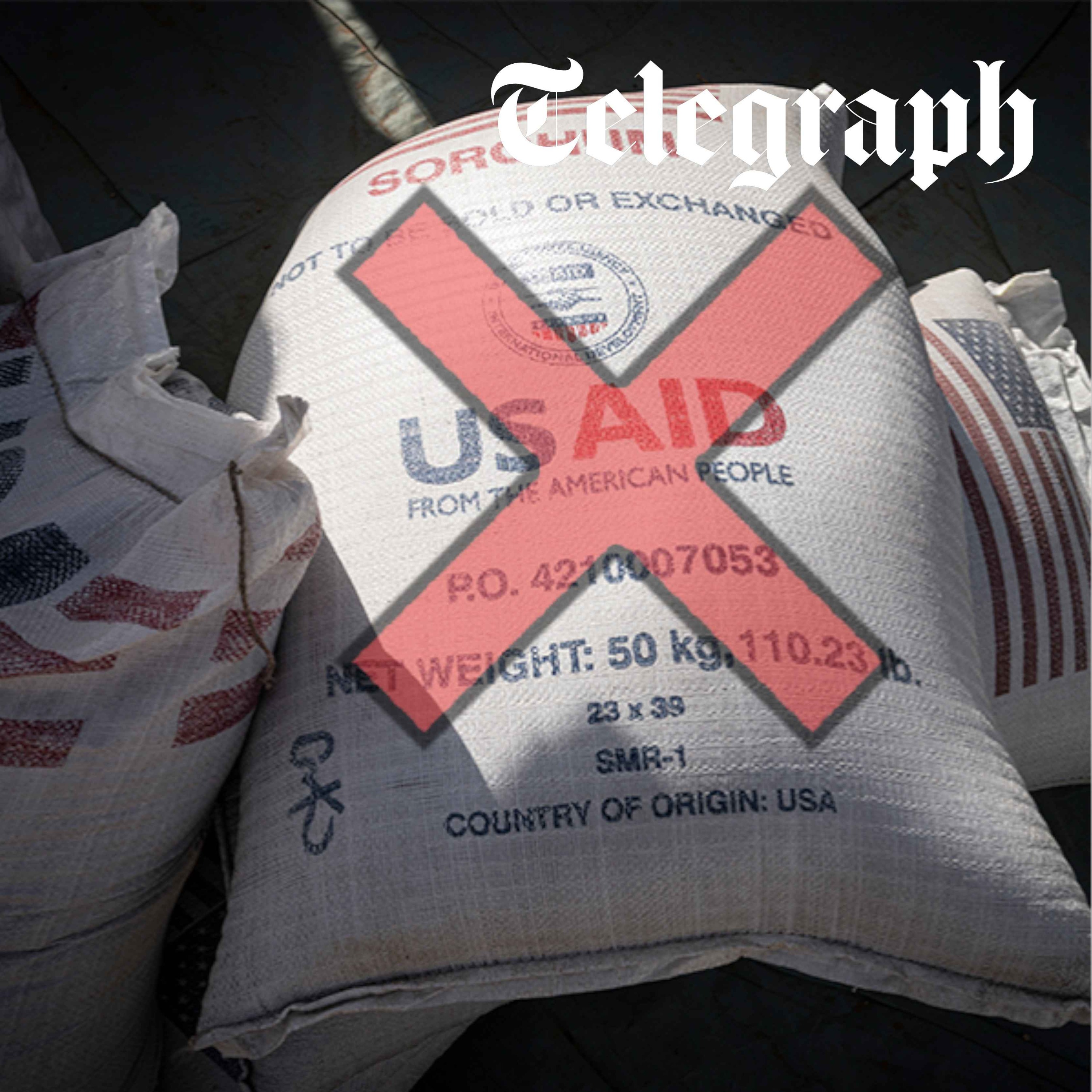
I'm Venetia Rainey and this is Battle Lines Global health security. It's Wednesday 11th of February, 2026. On today's episode, we're going to be talking about USAID. About a year ago it was shuttered and the aid landscape changed dramatically. To discuss what came next and what this means for global security, I'm going to be joined by Paul Newki, our Global health security editor in the studio and down the line by someone who has kicked out of USAID and has now set up a risk analysis company that helps countries post conflict. Paul, welcome to Bathelon's Global Health Security. Great to have you back in the studio with usaid. It's this mammoth organization. This time last year, Trump gets into power. He says, I'm going to axe it. Elon Musk talks about feeding it to a wood chipper and within a few months, poof, it's gone. How significant was this?
- [02:18]
Arthur Scott Geddes
Well, it's huge. America was by far and away the biggest single funder of aid around the world. And overnight, pretty much it closed down. So the aid system globally has had something akin to a heart attack and people are still racing to try and revive it.
- [02:37]
Venetia Rainey
When you say the single biggest funder, they were responsible for 47% of the global humanitarian appeal. In 2024, they they gave $68 billion. These are huge astronomical numbers. And that was cut down last year to about 34 billion. What happened to all the projects that were relying on this money? Did they just evaporate overnight as well?
- [02:58]
Arthur Scott Geddes
Yeah. So many of the projects have just closed down completely. Some continue on a shoestring, others struggling to find alternative funding. But the overall impact to the aid system globally has been absolutely enormous.
- [03:13]
Venetia Rainey
Let's start with this recent Lancet study that tries to estimate the number of deaths that will be caused by the shuttering of usaid. The numbers are pretty extraordinary and I'd love to get your read on how much we should trust or take from them, I suppose. I hope we can trust them. We know the Lancet is a respected institution. They've just put out a report saying that the global aid cuts could lead to at least 9.4 million additional deaths by 2030 if the current funding trend continues. And about 2.5 million of those deaths projected to be children under the age of five. That's what's to come. And then I also just want to mention there's a website called Impact Counter, which I'm sure you've come across. They estimate it's an infectious disease mathematical model and health economist. And she estimates numbers. She suggests that 250,000 adults have already died because of aid cuts and more than 530,000 children. These are astronomical numbers. What are we supposed to take from this and how reliable are these numbers?
- [04:05]
Arthur Scott Geddes
Well, I mean, the numbers, as you say, are absolutely huge, but they're dealing with a world population. So the Lancet, depending on what prediction scenario you take, says it's going to be between 22 million people and 9 million people. And as you say, a very large proportion of them children, because children are the most vulnerable. They die of diarrheal diseases, et cetera, et cetera, malnutrition, if aid doesn't continually roll in. So they're huge, huge numbers. Whether or not they are accurate, it's difficult to know their best guesses. Like any projection, I think what I take from it is that, you know, I think about my own life and my children's lives. It's very precious to me. I've had an amazing 60 odd years. I've done all sorts of fantastic things. You know, every one of these lives, whether it's 10 or 10 million, those are lives that won't exist in the way that we've enjoyed our lives and children have enjoyed theirs. And I don't think there's any doubt that many, many people will die as a result of These aid cuts. The question really, I think, going forward is can the system recover and can it bring the same sort of growth into the world in a different way?
- [05:29]
Venetia Rainey
Do you think it's as straightforward as saying we can lay whatever the number of these deaths are at Trump's door? Or is it more complicated than that? As in the aid system was propping up health systems that weren't working properly anyway, and these are the underlying factors that are causing these deaths, rather than being able to blame it all on TRUMP shattering U.S. aID.
- [05:50]
Arthur Scott Geddes
Yeah, look, there are many problems with the aid system as it's operated over the last several decades, but on the other hand, there's no doubt at all that that system, which since the turn of the century, has saved many, many millions of lives. And I think that the way Trump looks at the world is problematic. He looks at the world as if it's a zero sum game, that there's one cake, it's staying the same size and he's paying for most of it, and therefore he's taking it away so he can have more of his cake. But that is not how the world works. It's not a zero sum game. The aid that is poured into developing economies for the last 70 years has grown the world. The Marshall Plan, funded by America after the Second World War, grew Italy, southern Italy and southern Europe and made it enormous markets for America. The aid that is poured into the system more recently, in the last two, three, four decades, has grown economies across Asia in particular, and that has grown the cake. The world is a much bigger, more productive, richer place than it used to be. And I would say to Donald Trump, if I could have some time to.
- [07:14]
Venetia Rainey
He's listening, I'm sure, to this podcast. What do you want to say to him?
- [07:16]
Arthur Scott Geddes
I would say look at it as an investment. He invests in companies every day. He doesn't invest in companies as a matter of charity. He invests in them because he believes those companies will get bigger. And that investment he made is not just money passed over. It's money that is going to grow enormously in time. And that is what aid is about. It's not charity. It's. It's about growing economies, growing the human capital that economies thrive on. If you have an economy, for example, which is riddled with hiv, that young people are dying, that the health systems are having to spend all their resource on managing that crisis that well, those countries are not going to grow. Whereas, as has happened over the last two, three decades, if we can control HIV around the world, then Suddenly those countries find themselves in a better place, they start to grow economically and we all get richer.
- [08:20]
Venetia Rainey
It's fascinating to hear you talk about it in those quite Trumpian terms in a more transactional way. Not exactly transactional, but thinking about the economic aspect of it and the, I guess more sort of financial development aspect of it, I think a lot of people, when they think of global health or aid funding, they think of someone going out into a poor village somewhere in Africa with a little medical kit and some vaccines. But I just want to quickly, before we get onto Trump's new transactional attitude to global health and aid, I want to talk about some of those achievements that have been made over the years. Because you're right, one way to look at this is the lives that will be lost going forward. But we can also think about the lives that have been saved. Right? And there are estimates for that kind of stuff too. The Lancet again estimates that USAID assistance saved 92 million lives over the last two decades. Can you just unpack that a bit? How is, how have they done that?
- [09:10]
Arthur Scott Geddes
Yeah, well, so the Lancet finds that overseas development aid as a whole has reduced all cause mortality by about 23% over the last several decades and it's reduced mortality in under 5 by just short of 40%. So you can see how that investment, not a charity, that investment is making a difference to the world. And when you look back over the last several decades and you look at the way the world has grown, much of that has got to do just as it had in Europe after the war with the Marshall Plan. Much of it is to do with that investment that the world has made in helping smaller developing countries grow to medium sized economies and even rich economies today.
- [10:02]
Venetia Rainey
What about the impact on aids? Because that's been really significant as part of USAIDS funding, right?
- [10:07]
Arthur Scott Geddes
Yeah. So AIDS is a huge issue. In the 80s and early 90s it became a scandal. The first drugs became available to control it. They were hugely expensive and they were really only made available in the West. There was a global campaign over it. Eventually patents were effectively shared or licensed across the world. And today you can treat someone with HIV for pretty much a dollar a day. So it becomes an extraordinarily cheap treatment over time because of the investment that has been made in it. And by the way, the companies, many of them American companies, who sell these retrovirals to the developing world are themselves getting rich on that. Nothing wrong with that at all. But it's not a one way street.
- [10:59]
Venetia Rainey
Earlier this week you spoke to Someone who's an expert in exactly this. Anjali Ashrakar, UNA's Deputy Executive Director, who up until 2023 worked for PEPFAR. Let's hear your interview with her.
- [11:09]
Arthur Scott Geddes
Welcome to Battle Lines. Angeli, is it right for people to describe and people to think of AIDS as an ongoing pandemic, one that could be suppressed with new drugs and new interventions, but also one that could revive itself and become much more aggressive?
- [11:32]
Anjali Ashrakar
Without 100%, there are still 9.2 million people living with HIV that do not have access to treatment. Many of those include children, young people. All across the globe, we still see 1.3 million new infections every year. So AIDS is absolutely still a threat because we do not have a vaccine and we do not have a cure. But we have incredible innovations, like treatment, when taken regularly, can suppress that viral load and stop transmission. And we have some new technologies on the line now that can stop new infections from being transmitted. But there are still people without access to those innovations and those technologies and without a vaccine or cure. You're absolutely right. We will see, and we have seen countries where they had controlled epidemics, but then resurgence coming. So without properly controlling the pandemic or the epidemics in each of the countries, we can see resurgence, and we do see resurgence.
- [12:45]
Arthur Scott Geddes
These drugs, these antiretrovirals, prep injections and tablets and the like, they're important both to stop transmission and indeed, to save the lives of people who are infected with the virus. So tell me, what has happened now that the Trump administration has pulled so much money from the global aid system?
- [13:11]
Anjali Ashrakar
It's been an interesting year since the abrupt halt in the funding in, you know, in the early part of 2025. Because what we've seen over time is that the US government under the Trump administration has actually brought back the resources for the HIV response. In fact, February 3rd, we saw what was really extraordinary. The President Trump himself signed into law a strong, bipartisan, bicameral bill that basically has $5.88 billion in just one year for the HIV response. That's just one year. We also saw, at the Latter Part of 2025, we saw the US pledging a pretty significant $4.6 billion contribution to the Global Fund to Fight AIDS, TB, and Malaria. We're seeing, as part of this commitment from the U.S. also an announcement for, again, funding for 45 million for UNAIDS as part of that 5.8 billion. So we're seeing the U.S. actually coming back with strong leadership and commitment financially in the HIV response. We're also seeing a rolling out of the America First Global Health Strategy, which we've seen really since the fall of 2025 and into this year, where the US has been working hand in hand with country governments around the world, planning how to spend investments in a co investment and co shared way with governments around hiv, but also other diseases. So what we saw in the early part of 2025 is definitely different and we're seeing real leadership coming back now and into the future.
- [15:15]
Arthur Scott Geddes
So although the total budget for AIDS spending via the US and others may have fallen, what you're saying is that the US anyway has come back strongly in the area of HIV prevention. What's driving the comeback in America's push around PEPFAR and HIV aids?
- [15:35]
Anjali Ashrakar
What we've seen from the US in the global HIV response is strong bipartisan leadership since 2003. And what has been part of that strong US leadership in the HIV response has been real impact, real results that the world together with US investment, together with partners, has really resulted in. And I think what we're seeing with the Trump administration, I really want to commend the Trump administration on the America First Global Health strategy, which captures how they will invest in the HIV response. Not just invest, but really work in a multi year way with partner countries is a real commitment to impact, making sure that the gains that have been made together don't fall and that there's a real expected, responsible, time bound transition that occurs to really make sure that countries themselves in the next three, four, five years really have the systems, the capacity, the commitment to sustain these responses, the HIV response in particular, on their.
- [16:53]
Arthur Scott Geddes
Own, they are in part protecting past and very effective investments. The American first strategy. The name would imply that the they see current investment as a protection for America apart from anything else, which I guess is the case. But of the 10 billion in total that you've seen pledged over recent days, is that going to make up in full for what was chopped in the early part of last year?
- [17:25]
Anjali Ashrakar
The America First Global Health Strategy. You're right, it's in its name, it says America First. But what we can see their investment is yes, to protect the gains that have been made, but also when we think about health security, global security and like we saw in Covid and like we know to be true in other infectious diseases. Diseases transcend boundaries, right? We have to make sure that we as a globe create global health security and everyone is a part of that in order to be secure and in our own countries. So the work that happens in the HIV response, for example, in this case a Lot of the investment has actually been in systems, laboratory systems, supply chain systems, healthcare workforce, surveillance systems, data systems. These are the very things that, yes, are important for the HIV response, but also very important for other diseases. So that's part of it. To your second question around the I think it's over $9 billion in what we're seeing in the fiscal year 26 law that was just passed for global health and health security for the HIV response, which is at 5.88 billion. That's near. It's a little shy of what the HIV investment from the US had been prior to January 2025, but. But it's not much smaller. It is coming back big and bold.
- [18:58]
Arthur Scott Geddes
When you say a bit smaller, is it in terms of percentages, is it what, a couple of percent smaller or 10% smaller or 20? What sort of ballpark?
- [19:07]
Anjali Ashrakar
So ballpark for the bilateral program, which is the PEPFAR equivalent, the way they work with countries, it's about 2% less.
- [19:17]
Arthur Scott Geddes
Are you reasonably confident then that we won't see a rebound in cases and deaths or has the hiccup already set that in motion?
- [19:30]
Anjali Ashrakar
Well, this is something that we have to continue to monitor country by country and globally to make sure that countries are continuing to move in the right direction so we don't see a rebound in new infections or AIDS deaths. But it really is going to take a continued push and effort to make sure we work together across these countries with the Global Fund, with the us, with all countries that have been part of the response with unaids, with communities, with governments together, making sure we continue to push hard. One thing that we want to make sure as well is that the right interventions are being invested in and scaled up and reaching all the populations that need to be reached. You mentioned rightly the new long acting prevention prep, Lenacapavir, for example. We want to make sure that is reaching all of the populations that need it, where infections are transmitting the most. We want to make sure that those people living with HIV that still haven't received ARVs are getting their ARVs, you know, so there are still gaps we have to fill and it means we have to work quickly, urgently, together to make that happen and continue to monitor the progress, to make sure that we continue to use data to follow and guide the response.
- [20:58]
Venetia Rainey
That was Anjali Ashrakar, UNAIDS Deputy Executive Director, speaking to Paul. Paul, before we wrap this up, I just want to think about this return to this idea of the US as this basically bankroller for this industry up until last year. I'm wondering if there are parallels with the debate that we're having in the defense and security world about America having propped the west up for too long and now pulling back, and Trump's actually got kind of a right to say enough is enough. You guys figure it out yourselves.
- [21:28]
Arthur Scott Geddes
Again, I think on one level you can say, oh, well, yeah, absolutely, Donald Trump. But on another, it's entirely wrong. The investment the US Made fighting the Cold War, propping up Europe and the investment that Europe made fighting that war with America has been hugely beneficial to America. We won the Cold War. Globalization in a world expanded enormously after it. So again, these things are not charity that the US Is giving to us and others. These are investments, strategic investments, which bring huge returns not only to us, but Americans. It's no accident that America has become the biggest, richest country on earth. It has made intelligent strategic investments for decades now, and that is why it's become rich. And for me, looking at the big sweep of this, I would say that the Cold War was something that gave American strategic thinkers rigor. They had to think about how they're going to win this war. They had to win it morally. First of all, they had to make sure that Western capitalism didn't produce excesses that the Russians could point out and say, ah, you're all degenerate of an Epstein ilk. So it helped in that respect. But it also forced American government, our own governments, to invest in the state and make strategic investments in the same way that the Chinese state is harnessing capitalism and making strategic investments now. And the problem is, I think when history is told, it will look at the fall of, of the Berlin Wall, the fall of the Soviet empire, and it will see it as a point at which America filled itself with hubris and allowed its own system to create excesses, to create vast inequalities in wealth, to release the moral check on capitalism. And in some ways, that's rebounding on us now.
- [23:47]
Venetia Rainey
Coming up after the break, we speak to someone who used to work for USAID about whether the world is less safe now that it's no longer doing vital post conflict work.
- [24:03]
Matt from P1
Hi, this is Matt from P1 with Matt and Tommy, and this episode is sponsored by ebay. The cars you'll find on ebay are just different. They come with a story that you can't wait to share. Like this 1973 Dodge Charger on ebay that has been tucked away in an Arizona Barn for over 40 years. Only 55,000 miles and somehow in great running order, it even has a rare sunroof suddenly a car that was hidden for decades is being delivered in just a few clicks with eBay's secure purchase. All the paperwork handled, There are thousands of cars on ebay, from unique finds like the Pontiac Grand Prix SJ to daily drivers. And now with a new way to buy them. Ebay. Things people Love.
- [24:49]
Kuo Business Phone System Ad Voice
Are you still running your business? With one creaky old phone system, missing calls, losing track of messages, and scrambling to keep up with your team, it's time to break up with the past and say hello to Kuo. Kuo is the number one business phone system with 4.7 stars across 3,000 reviews on G2. Quo brings all your business phone calls and texts into one app for your team. No more juggling devices or being tied to a landline. Quo's built in AI logs calls, creates summaries, automates follow ups, and can even answer and route calls so you never miss an opportunity. Whether you're a solo operator or leading a growing team, Quo keeps you connected and helps you deliver standout customer experiences. Join over 90,000 businesses using Quo and see why. It's the one business phone system for customer satisfaction. Level up your workflow with Quo. Get started free plus get 20% off your first six months at Quo.com business. That's Quo spelled Q U O.com business and if you have existing numbers with another service, Quo will port them over for free. Quo no missed calls, no missed customers.
- [25:59]
Jerry Insurance Ad Voice
Tired of your car insurance rate going up? Even with a clean driving record, you're not alone. That's why there's Jerry, your proactive insurance assistant. Jerry compares rates side by side from over 50 top insurers and helps you switch with ease. Jerry even tracks market rates and alerts you when it's best to shop. No spam calls, no hidden fees. Drivers who save with Jerry could save over $1,300 a year. Switch with confidence. Download the Jerry app or visit Jerry AI Acast today.
- [26:35]
Venetia Rainey
Welcome back. You're listening to Battle Lines Global Health Security. Well, let's speak now to Kevin Melton, someone who has the inside track on a lot of this. He was part of USAID until March when he was kicked out and then he left to make his own risk consultancy group. Kevin, thank you for joining us on Battlelines Global Health Security. Tell us a bit about your job at usaid. Prior to PRAC Strategies, you were working in the Office of Transition Initiative. Quite a mysterious name. Tell us a bit about what you.
- [27:06]
Kevin Melton
Were doing for them, mysterious as it is. Yes. Well, again, thank you. I spent about 20 years working in and out of aid, largely in and around what USAID does in terms of dealing with conflict. It's supporting national security efforts. For the US government, OTI had been around for 30 years. It was really born right after the Cold War in order to maintain that foothold and bring about continuing democratic change to different societies, of course, in line with those societies. And, you know, it had a lot of important endeavors, including Iraq, including Afghanistan, of course, and beyond, in order to support larger both US and international peace operations.
- [27:55]
Arthur Scott Geddes
Why do you think the US saw that as being in US interests?
- [28:01]
Kevin Melton
In line also with our UK colleagues, quite frankly, and our European colleagues, where the interest of peace, even today in the administration, I mean, peace is an important factor with regard to stability for many reasons, whether that's for economic stability and investment, whether that is for political stability, so that we have better partners to engage abroad. Of course, a lot of it too, again dealt with national security. And so to what extent US national security, but also security of our allies, security of global systems. So much of that is rooted in that community stability element.
- [28:36]
Arthur Scott Geddes
Right.
- [28:36]
Kevin Melton
And the ability to bring that to bear is very complex, as we know, even in our own societies where we're trying to understand what does it mean if you were talking about bringing stability to Birmingham tomorrow? Well, that means what does society think? How do you engage it? How do you engage with it, not just through police force, but also engage through it, through civil entities and governance.
- [28:57]
Venetia Rainey
The Office for Transition Initiative, the oti, does it still exist?
- [29:00]
Kevin Melton
OTI does not exist anymore. So it was a victim of what happened with the dismantling of USAID as an agency and a large reason for why we decided here at PAC Strategies to become an entity, which is where I am now as CEO, a brand new entity to try to capture some of the expertise that had been born by, with and through OTI and some of those experts that existed there. The models, the methodologies that we had been sort of evolving over time to be able to offer the globe. And now, to be honest, it's not just simply a good for a public good as it was through oti, in terms of understanding how to deal with very complex societal, political kinds of issues, which we have sort of refined our own expertise and tools for. But now it's important for as we're seeing both public and private sector to have available this kind of understanding and engagement. And that's exactly what we're trying to do now.
- [30:02]
Venetia Rainey
Do you think the world, and I guess specifically America and the sort of west alliance around America Are we less safe because OTI and USAID extended no longer exists?
- [30:13]
Kevin Melton
I will say this not having a capability that understands how to engage in a stability environment, meaning not just simply using a security approach to everything that we do abroad. I think there are many lessons in history that have taught us you can't do that. And I think not having OTI will certainly be a big loss. And how do we now take on a new way of thinking about conflict prevention stability? Because that is what's important for the world to certainly continue. Even on the investment front and the critical minerals. You have to have that level of stability in order to engage with that. I will say it's not lost, certainly here in the United States, that this is still an important issue. Right. We do have legislation that has said go do this. There are pieces of legislation that in my last job I was helping to make sure we could achieve and they still exist. And there's still bipartisan support for these pieces of legislation. They just now need to be understood of how does the executive branch truly move that forward? Because as we've seen, peace is still a big, big topic.
- [31:29]
Arthur Scott Geddes
Could you give us a little bit of detail on how a non security approach to building stability might work? In the UK we famously talk about winning hearts and minds. We quite often instruct our military to go and win hearts and minds. But even that is a little bit nebulous, I think. If you were going into an environment, could you tell our listeners how you might practically help create stability and a more prosperous, peaceful environment?
- [32:03]
Kevin Melton
You know, I've spent my career understanding truly how to engage in what are hostile or expeditionary, whatever you want to call it, environments that, you know, needs that, that truly has a need for both a security component in order to bring that level of physical and area based security around it. But also then so what, what do you do? And I think a lot of times I talk about here at home, you know, if you have conflict in Baltimore, right, of course, just up the street from Washington, it's not to say today they have it, but how do you understand what is the health of society when it comes to cleavages, issues that exist that could at any moment be triggered or sparked in order to create what will be extremely costly repercussions when it comes to just security response. So what does it mean? Of course there's always this argument in our arena about is it security or is it development first or is it both? My argument is that it's always both. Now you can argue based on certain case studies that well yeah, you have to obviously have a secure area in order to bring the ability to then work on what is governance going to look like. How does it mean to bring about solutions, that maybe there's some dialogue, maybe it's a resource issue that they're dealing with. Whatever the issue is, there still of course has to be a sense of personal security in order for that to happen. That said, if you just bring that alone, I mean, this was the old mantra, even when it came to whether we believed it or not is a different issue. But the counterinsurgency manual, right, the clear hold build scenario that General Petraeus was known for, now there were elements of that certainly still hold true in order for us to engage with various parts of a population. Let's rebuild. What does this mean? I think until you have true ownership though, of whatever those populations are, and they have to be the ones to truly lead that change. And I think much of what we saw in development, I'll speak frankly, was a lot of times it was like, well, we can provide, we can provide, but yes, but until you're providing. So that truly that community is saying, here's what stability means and here's how we want to foster it moving forward. I think that is what truly brings it. And hopefully there's an acceptance on how they want to bring physical security as well to themselves, which is a big part of stability as well.
- [34:35]
Venetia Rainey
So you're working for oti, for usaid. Trump comes into power around this time last year. Elon Musk says he's going to feed USAID to the wood chipper. And by March, you get an email telling you that you no longer have a job. You instantly start talking to people who have also lost their jobs at USAID and who have a sort of similar mindset to you, a similar view of the world and sort of experience with conflict resolution. Tell me about the company that you ended up setting up with them, PAC Strategies, and who some of these other founding people are.
- [35:02]
Kevin Melton
That's exactly what happened. We had been preparing for three months, since the day after the election. I had also worked under the first Trump administration as a government worker. And we were preparing ourselves for the kinds of things that we believed based on things like Project 2025 that had been released. How are we going to move the ball forward? Personally, I was a bit excited to work with people who were sort of reform minded. And what I mean by that is, again, I mentioned these pieces of legislation earlier. They include the Global Fragility act, they include the Women Peace and Security Act. And they include the Elie Wiesel Genocide and Atrocity and Prevention Act. All of these acts, all signed under the first Trump administration. They were meant to bring reform efforts in the way that the US Government can not only work within ourselves to be more effective across development, diplomacy and defense and bring those three things better together, but also to partner better, right, to ensure that everyone can be part of a solution, including the quote, unquote, burden sharing elements of each problem set. And I'm starting telling you all of this because what led to now where I am at PAC Strategies is keeping that same vision and mantra alive is the ability that what we need is a new model, next generation. What does it mean to do development in the world today? How do we work still within the bounds of what we believe is still important aspects of working with our partners, working with certainly our allies, working with some level of moral imperative, which we still believe is important when it comes to democratic rule and inclusivity. That being said, PAX was able to, over the last year, give a place of refuge, I'll say, to the very expertise that the US taxpayer had paid for over the last 30 years, both in terms of blood and treasure, with everything that we had done in terms of how do we best make sure that our national security is number one.
- [37:12]
Venetia Rainey
I read a quote from you somewhere where you said we used to have USA people sit next to four star commanders. That's gone now. And that's pretty much why PAX exists.
- [37:19]
Kevin Melton
And let me tell you, who misses those people and our four star commanders, who we still keep in touch with. It's a gap, if you can imagine, going to anyone in charge of security, national security, and all of a sudden you take away a capability that the US Government has, or any government, it's a bit of like a, oh, well, where do I go? Right. So what was important for us was to make sure that the parts that still truly matter to our national security, to international security. I will also say, because we worked hand in glove with so many partners and like I said, including folks in the UK where we wanted to capture that, that, that knowledge, the tools that we were using, the ability to do strategic adaptation, which we did constantly with our ambassadors, with our generals, and also make sure that if we want to do investments in a certain country, well, how do you do that in these frontier markets where you still have extremism issues on the border of the Sahel.
- [38:22]
Arthur Scott Geddes
And Ghana, Are people still buying those services today through pacs, we are seeing.
- [38:32]
Kevin Melton
Demand, we are seeing a need for these kinds of services. But I would certainly be lying if I said that some of what we're also seeing is the need to educate these markets, that, hey, we're here in this sort of new way of understanding the geopolitical landscape, the social, political environments that actually cost you money and cost you lives. And we have to educate right, as well as trying to gain the market share. So we're doing both at the same time.
- [39:02]
Venetia Rainey
Kevin Melton, founder of risk consultancy group Pact Strategies, thank you very much for joining us on battleline's Global Health Security. That was really interesting because he also brought up the Cold War and he was talking about OTI as like a relic of that world. And I think that is what we're going to have to adjust to now. How does our security architecture move into this new sort of America first model? What does it mean?
- [39:24]
Arthur Scott Geddes
It's an upheaval because it has been there for a very long time.
- [39:29]
Venetia Rainey
It's become the air that we breathe. You know, it's hard to imagine what else it looks like. But we are in that moment of transition right now, aren't we?
- [39:34]
Arthur Scott Geddes
We are. And in some ways it's scary. In others, as Kevin says, there's opportunity and we just better hope.
- [39:41]
Venetia Rainey
Well, I like that you're a glass half full kind of guy. Let's leave it on that note. That's all for Bathlines Global Health Security. We'll be back again on Friday. Until then, goodbye.
- [39:49]
Arthur Scott Geddes
Bye bye.
- [39:53]
Venetia Rainey
Battle Lines is an original podcast from the Telegraph created by David Knowles and hosted by me, Venetia Rainey and Arthur Scott Geddes. If you appreciated this podcast, please consider following Battle Lines on your preferred podcast app. And if you have a moment, leave a review as it helps others find the show. To stay on top of all of our news, subscribe to the Telegraph, sign up to our Global Health newsletter or listen to our sister podcast Ukraine the latest. You can also get in touch directly by emailing battleionselegraph.co.uk or contact us on X. You can find our handles in the show Notes the producer is Sophie o'. Sullivan. The Executive producer is Louisa Wells. Telegraph's Global Health Security team is supported by the Bill and Melinda Gates.
- [40:42]
Grainger Ad Voice
If you're the purchasing manager at a manufacturing plant, you know having a trusted partner makes all the difference. That's why, hands down, you count on Grainger for auto reordering. With on time Restocks, your team will have the cut resistant gloves they need at the start of their shift and you can end your day knowing they've got safety well in hand. Call 1-800-GRAINGER Click grainger.com or just stop by Granger for the ones who get it done.
- [41:11]
Jerry Insurance Ad Voice
With VRBoCare, help is always ready before, during and after your stay. We've planned for the plot twists, so support is always available because a great trip starts with peace of mind.