← Iran: The Latest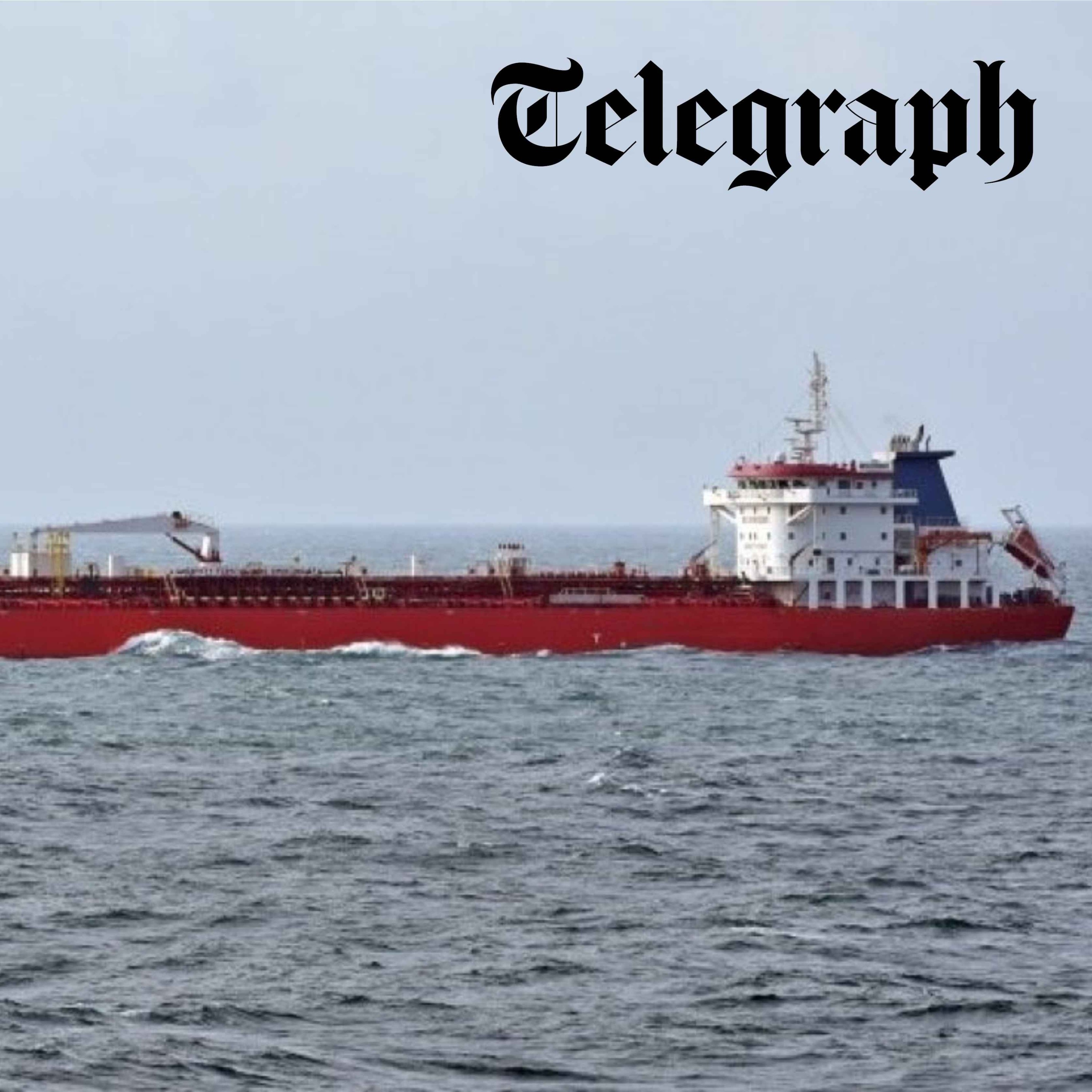
Iran: The Latest
US and China on maritime 'collision course' as first ships try to pass Trump's blockade
00:41:57
Loading summary
Transcript68 lines
- [00:04]
A
The telegraph.
- [00:10]
B
Does your day move faster than you can keep up with new Gatorade lower sugar? My family and I can stay at the top of our game.
- [00:17]
A
No artificial flavors, sweeteners or colors.
- [00:19]
C
75% less sugar and all the electrolytes
- [00:22]
B
of regular Gatorade now available nationwide.
- [00:26]
A
ACAST powers the world's best podcasts. Here's the show that we recommend.
- [00:34]
C
Hi, I'm Rachel Fisher.
- [00:35]
A
And I'm Desi Jetekin. And we're the host of Hollywood Crime Scene, a true crime podcast that focuses on celebrity crime, infamous crime movies and cases from Los Angeles.
- [00:45]
C
From movie, TV and music stars to athletes, as well as the wealthy and politically elite, we cover the seedier side of the lifestyles of the rich and famous.
- [00:54]
A
New episodes drop every Tuesday and you can check us out wherever you listen to podcasts. ACAST helps creators launch, grow and monetize their podcasts everywhere. Acast.com
- [01:11]
B
A Chinese flag on the back offers you a great deal of protection. A Chinese escort alongside it again. Same with Russian Dark fleet ships coming through the English Channel with a Russian Corvette. Are you going to board that? No. No, you're not. A short time ago, the United States
- [01:26]
A
military began major combat operations in ir.
- [01:31]
C
Today, President Trump says Iran's Supreme Leader, Ayatollah Ali Khamenei was killed in the attacks.
- [01:42]
A
The Pentagon is weighing a takeover of that island as a way to force
- [01:46]
B
the reopening of the street of Hormuz. Iran begged for this ceasefire and we all know it.
- [01:53]
A
Does anyone really think that someone can tell President Trump what to do? Come on. I'm Roland Oliphant and this is Iran. The Latest. It's Tuesday 14th April, 2026, the 46th day of the war between Iran, Israel and the United States. It was also the seventh day of a two week ceasefire and the first of a full US blockade of Iranian ports. Let's start with that blockade. A reminder of the terms. According to US Central Command, America intends to interdict any vessel sailing to or from Iranian ports. It came into course yesterday afternoon, UK time. So roughly 24 hours into the blockade. What's happening? We don't know of any ships that have been interdicted. Three vessels at least have passed through the strait. None of them was heading to or from Iran. But interestingly, all have had some kind of connection to Iran in the past. They include the Panama flag. Peace Gulf, which typically moves Iranian exports, is believed to be heading to Hamriya Port in the United Arab Emirates. The Mirlikishan, a tanker that has transported Iranian Russian oil in the past, is en route to Iraq. And then there is the rich starry, carrying 250,000 barrels of methanol. That's the first vessel to pass through the strait and exit again from the Gulf since the blockade began. And it belongs to a Chinese company, the Shanghai Shenron Shipping Company, which has been sanctioned by the US for dealing with Iran in the past. I highlight the Rich Starry because we're going to be talking a lot about China and its role in in the Iran war and around the Straits of Hormuz later in the podcast, but a few more updates before we get there. Keir Starmer and Emmanuel Macron say they're going to co host a meeting on how to reopen the strait on Friday, underlining ongoing international concern about the economic knock on effects of this closure of this crucial shipping lane and some small movements towards a diplomatic solution. Pakistan says it's proposed hosting a second in person meeting in Islamabad. That's according to Pakistan officials speaking to the Associated Press. We've got seven more days before the ceasefire expires, so that will raise hopes that some kind of diplomatic solution can be found before the fighting resumes. But we've now got more clarity on how the last round of talks on Saturday in Islamabad failed. It seems that the Americans rejected an Iranian proposal to suspend its uranium enrichment for five years. The offer came apparently after the US demanded during those talks that Tehran halt nuclear activity for a minimum of 20 years. That is one illustration of the very large gaps that exist between the two sides. A 20 year halt would basically present a kind of diluted version of Donald Trump's previous demands that Iran permanently give up its nuclear ambitions. And we're told it would also be accompanied by sanctions relief. While the ceasefire in Iran seems to be holding, fighting continues in Lebanon. An Israeli soldier was killed in combat in the south of the country. According to the IDF in a statement today, Israeli airstrikes continue to hit targets across the country as a particularly spectacular photograph of one landing in the city of Tyre. Some kind of diplomatic movement there as well, though Israeli and Lebanese officials are due to meet in Washington today for the first direct talks between the two countries since 1993. Those are US brokered talks mediated by Marco Rubio, the US secretary of state, and will include the Israeli and Lebanese ambassadors to Washington and the U.S. ambassador to Beirut in an effort to stop the fighting. Of course, Israel is not technically fighting the Lebanese government, they're fighting Hezbollah. But it is facing increasing international pressure to agree a ceasefire More than 2,000 people are believed to have been killed in Lebanon since the war began. And Italy, interestingly today, said it was suspending a military agreement with Israel over the continued offensive in Lebanon. That wraps up the political and military updates of the day. Now let's return to that blockade of the Strait of Hormuza. Blockade on top of a blockade. How do you enforce one? How effective can they actually be? And what does it mean for the captains of the ships trying to get through or trying to board others? Earlier today, I spoke to the former Royal Navy commander and friend of Iran. The latest. Tom Sharp. Here's our conversation. Maritime blockades. How do you impose a maritime blockade and how practical is it? Tell us what you make of this when you heard this was happening.
- [06:44]
B
I had actually written something for the paper on Saturday night to do with the Arleigh Burkes having gone steaming through the Strait of Hormuz during the ceasefire talks. Two ships straight through and back out again. Good stuff. Classic US Navy freedom of navigation, because that's what this is all about. There was something really reassuring about watching these two ships. This would not have been a fun mission, ceasefire or no ceasefire, they're going into the eye of the storm that's been under fire for a month. And they went through. So I wrote an article on the importance of freedom of navigation and why it's so reassuring to see the US Navy still clearly have this in their DNA. It didn't have time to go to print before the US blockade was announced by the President, completely undoing that entire article and, of course, the principles of freedom of navigation. I'm troubled by this to an extent, and it gets more complex when you put a blockade on top of an existing blockade. A blockade is a sort of fraught legal term in its own right, but let's just call it that for simplicity. That's what Iran had imposed on the strait for the previous month. From pretty much day one, they essentially controlled the strait to the point where traffic was couldn't come and go without their approval. And thereafter we saw between six and ten ships a day making the transit, either by paying or by just getting a waiver. And clearly we then got locked into this game of Whack a mole, where the US and Israeli jets are whacking mobile targets and mobile launches and uncrewed surface vessels and so on and so on. But the freedom of navigation bit didn't change. It had stopped. Then the talk of the land invasion came along, and whether that would make any difference, I was skeptical. I thought it was High risk could work. You could get a lever if you invaded COG and took over Kharg, but that's very long range and very difficult. And so this last turn of the handle, this last sort of attempt at providing a lever is a very interesting one. And it's too early to say yet whether it's going to be effective or not. And there are just so many moving parts. I've talked about the blockade on top of the blockade, but actually there are hundreds of moving parts because you start talking about international fuel and oil trade now and fertilizers and gas and China are involved in India and Pakistan. And there are multiple layers, multiple theories and multiple ways this could play out. And for me it's just a fraction too early to see where it's going.
- [09:10]
A
This is running at the top of our website at the moment, as I speak. Of course it's, this is likely to develop throughout the day. But we're roughly a day into the the US blockade and it seems like three ships have passed through the Straits of Hormuz since none of them was heading to or from Iran, which means they're not technically challenging the terms of the blockade. They're all kind of linked to Iran one way or another. They're believed to have carried Iranian oil in the past and one of them is called the Rich Starry and it belongs to a Chinese company called Shanghai Xuan Run Shipping company, both of which have been sanctioned by the US for dealings with Iran in the past. Now it's believed to be going in and out of a port in the uae. The other ships you've gone through have believed to be on their way to Iraq and other non Iranian ports. But this kind of illustrates to me, I suppose, just how close you could be to a Chinese American blow up here. What do you think happens if an American ship and no boards interdict a Chinese owned tanker?
- [10:10]
B
This is one of the many complications, but perhaps the lead one, if it's cleared by Iran, so it's evaded the Iran blockade via their permission or paying the toll, but then doesn't meet the US blockade requirements, that is coming from an Iranian port or with clear links to Iran, then what? And it's got a Chinese flag on the back. And the flag alone is important because having a flag takes away one of the legitimate reasons or legal reasons for boarding, which is a state or flag verification check. And this is what we're finding with the Dark Fleet incidentally around the uk, the window to jump on these ships, to inspect them, to check their Flag state has gone because they are all now flagged. It's through made up registries, but they've closed that window so we've missed it. But put a Chinese flag on. Right. And are we really in the position of boarding Chinese flagged ships outbound with commodities for them? I mean that's one hell of an escalation. And why don't they'll just do it back in the South China Sea, they'll just board us back and go, well, here we are. That's a real complication and I think perhaps one of the details of the US blockade that aren't clear to me at least, and it was very interesting when it was announced by the President. It was every, all and everything, it was a sort of blanket, were going to board everything. And then a couple of hours later, centcom, presumably furiously catching up on this latest policy shift, started to issue a bit more direction about what this might look like. And then a notice to mariners came out, which is, by the way, an essential part of the sort of legal requirement to conduct a blockade. So the NTM came out instructing what these, you know, what their situation now was. But also from a practical perspective, there aren't too many U.S. warships in the Gulf of Oman right now that can do this. Perhaps eight to ten Arleigh Burke destroyers. There'll be more as the H.W. bush group comes around South Africa and joins the Bush, joins the Lincoln and then you'll have more ships. But for now they're quite light on ships. So this will be a test. The one that you've just outlined to me will be a very interesting test study. So far, as far as I can tell, there have been no US boardings to enforce this blockade. So like I say, too early to tell where it's actually going.
- [12:30]
A
What do we know about the kind of rules of engagement and how this would actually work? If the Americans see a ship coming out of an Iranian port, do they go alongside? Do they send commandos on by helicopter? Or do they just hail it and what do they do with it? Do they impound it? Are they going to sail it to a friendly port? Or do they, do they let it go after a while? What's the, what's the plan?
- [12:49]
B
So the sequencing is as follows. The first part of the jigsaw is your situational awareness, knowing exactly what's coming and going, what flag, what state, what owner, what registry, what port it's been to, what cargo it's taken on. Now that's a collection effort that's quite substantial. And You've got to be able to do all of that, almost ignoring AIs. If you're dependent on AIs, the automated identification System, for any of this, you're going to be behind the curve. And the US military will not be. They will have all sorts of intelligence gathering products out there to establish your situational awareness. So this is about creating what we would call a recognized maritime picture. So once you've got God's eye view, you can then start prioritizing your precious resources to interdict the right vessels, that is the ones probably that aren't Chinese flagged, I don't know, for example, because you don't have infinite assets. And then the logistics get even more interesting because the Gulf of Oman gets quite big quite quickly. So if you want to contain this, if you want to package this up and board these vessels in a sensible place, you need to get quite far north. Well, you're now right back in the Iranian missile envelope. So the further north you go to do this, the more risk you're taking. If the ceasefire fails and they open fire, the further away you go, these vessels are going to disperse very quickly. You've now created yourself a speed times distance between problem that exacerbates your kind of resource issue. Okay, so that's problem two. One is intelligence. Problem two is, where are you doing this? And then let's say you pick the right ship, you get it in the right place, we've overcome the speed times distance problem. You then start making your approach. So you'll send one of the destroyers steaming towards it, probably at high speed to interdict it. Helicopters getting ready on the back end, and you're getting your options ready. Now there are other air options there. The USS Tripoli is there, for example, and her amphibious ready group. And they have lots of helicopters and lots of U.S. marines. I don't know how many of them are qualified to do this kind of boarding. Doesn't matter. The fact is they've got options. But for now, let's concentrate on a single destroyer closing this contact. They will call it up and they will have a very scripted set of warnings. We call them warnings, but quite a lot of it's just a conversation about who they are, where they come from, and it's all just confirming the intelligence picture that you've already built. And at that point you declare your intention to board them. And then you've really got two options. You do it by boat. That requires an awful lot of cooperation from the ship, including ladders and getting onto a suitable course. So you're probably not going to get that. At which point your, your best option is helo insertion from the back of your destroyer. You send your helicopter across with your determined boarding team in the back, and you either land on the ship if it's got a helipad, or you think there's a suitable landing spot, or you hover over the deck and they fast rope down. And for that moment onwards, those marines or sailors or whoever you've sent, special Forces maybe, depending on the category of the boarding, will secure their immediate area and then fan out from that until eventually you end up on the bridge and now you're in control of that ship. Hands off levers, hands off wheel. We've got the ship. And you then take it to where you want to take it. Having confirmed, you've got to be pretty quick to confirm that all the criteria that led you to board it are valid, that you didn't make a mistake. So you do your checks, you ring it in, we're all good. This ship is now detained and now we're going to take it somewhere. So at this point, you might put a steaming crew on. You don't perhaps want your highly sort of specialized boarding team on board anymore. You'll put a steaming crew on and you'll take it somewhere. And that's an interesting question. You know, follow on question that you asked. Where, where are these going? Diego Garcia keeps raising its head in these, in these conversations. Tons of space, lots of suitable anchorages. Get it there and then consolidate the situation, conduct the search, and then work out what to do with the cargo and contents from there on. So there's a bunch of different steps to this, but it all starts with knowing and targeting the right vessels in the first place and then getting on board quickly with your destroyer or, or other assets from the, from the amphibious group.
- [17:06]
A
That sounds like it could be extremely complicated if, for example, China were to choose to escort one of its ships. I'm raising China again, partly because we're going to be talking to Allegra Mendelssohn, our Asia correspondent, about China and its role in all of this later, but also because down in Djibouti, not that far away, there is a Chinese naval base. And I believe the Chinese navy does have experience escorting vessels through the Babel Mandeb, the Red Sea kind of area.
- [17:34]
B
Yeah, they have three ships there all year round. I mean, occasionally six when they do a handover, but generally speaking, three destroyers. A lot of the time they spend off the Horn of Africa doing the, what we used to call the CTF 151, the Anti Piracy role there, they have a role to play here. We haven't seen them yet. We didn't really see them in and around the baby with the Houthis either. They tended to keep clear of that. They take their intelligence gathering opportunities where they can. As you'd expect, we do the same back to them. They have a role. So yes, they could escort. In fact, when this whole mission looked like it was going to become an escorting mission, I always had my doubts that this was possible given the threat. The US just don't have enough ships to give you an example. In the tanker wars, Operation Earnest will, they had 30 destroyers in the Gulf to do the escorting past a much less sophisticated and capable Iranian threat. They have nothing like that. But there was a chance that China could come in at this point and they start escorting tankers and almost coming in to save the day. Here we are. To save the day and they didn't. Fine. But they still have a role to play in this. And as you say, look, a Chinese flag on the back offers you a great deal of protection. A Chinese escort alongside it. Again, same with Russian dark fleet ships coming through the English Channel with a Russian, a corvette in. Are you going to board that? No, no, you're not. But the option in between those two things is where you make the boarding what we used to call opposed. It's not compliant. In other words, like come on board, it's not contested, where they don't want you on board. And they'll maneuver, they'll give you an unfavorable wind, they'll put up fences and fire hoses. That's a contested boarding. And opposed boarding is where there's a chance they might shoot back. And one of the tripwires for that is visible weapons. And this is where it gets very technical because all it takes is someone on the bridge wing of this tanker that you're about to board to wave a gun around. Don't point it at the helicopter because they'll shoot back, but just show that you have a weapon or a handheld shoulder launched handheld weapon. That boarding now changes its category. You now have a different team in UK doctrine terms, that's now Special Forces and certain groups of Royal Marines can do it, but a much smaller cadre of people can now conduct that boarding. So that's a technicality that we haven't seen yet. And another way, fairly simple way to defeat the U.S. part of this blockade,
- [20:05]
A
in my view, Tom, China, Russia, all kinds of sea captains have a lot of experience of running blockades actually. And we saw quite a dramatic example during the blockade of Venezuela a few months ago when a tanker that was apparently about to breach the blockade evaded American interdiction and was chased all the way across the Atlantic before it was finally boarded. Do you think we could see something similar here?
- [20:33]
B
So that was interesting because one of the reasons the Bella one as it was at the time perhaps slipped through the net off Venezuela was because they appeared to be an opposed boarding. And so the little window to get them off Venezuela was closed because it, because they didn't have the right team in the right place to do it. And then suddenly you're in a mid Atlantic chase. And that's the same point with the Gulf that I was making with the Gulf of Oman. The further north you can get, the more containable this becomes. If they start spreading out, then it becomes more difficult. If you play by the rules for boarding at all, if you take a legal basis for these boardings, it is very easy for Russia and Iran and China and frankly anyone to defeat that. This is why the UK haven't done any of these boardings yet, because we haven't found it within ourselves to, to play the gray zone where you can just tweak the rules. We're very risk averse in that regard. Now the US we know quite often are not and the President certainly is not. So then you get into the slight free for all sense of free fall. What are the guardrails now? Is international law, maritime law, dead and buried? Has it gone? When I said I was reassured by the two Arleigh Burkes doing that freedom of navigation patrol, that's showed me that it isn't. This is still part of a known system. Agreed, sort of uncomfortably agreed over decades. And when China push it and abuse it in the South China Sea, which they do all the time, they are still, they are still abusing a known system. My worry is if you take that system away, if both sides just tear it up and go, this is now survival of the fittest, who's got the biggest navy? Then you end up with complete chaos. There are no rules anymore and that escalates to a shooting war every time. I mean it's almost impossible to imagine how it doesn't. So whilst it looks tough in the first instance, it doesn't help in the long term. And these are the, these are the things we are seeing playing out live every 12 hours, every true social post. So again, I just not quite sure how it does play out over the next 24 hours, one week, two months. It's very hard to draw a line between here and something that resembles previous Freedom of navigation in the Strait of Hormuz. I can't envisage that we get up into a situation where Iran just goes, all right, everyone, go back to using the old shipping lanes. We're fine, we're good. And levels go back to 130 ships a day. Right now, today, that's unimaginable. So how we get from the double blockade to even something close to that is very, very hard to map out. And whilst both sides are tearing up the rules, such as they are or were, then the risk of miscalculation, the risk of this escalating by mistake. You are in the middle of a ceasefire, but something happens. Another ship misidentifies an American helicopter or whatever and shoots at a bingo and you're off, you're off again. That risk of miscalculation is always present in these situations, and right now it's as high as I can. I can remember it.
- [23:43]
A
Commander Tom Sharp there discussing how to impose a naval blockade. Coming up after the break. What is. What is China's role in Iran, and is it trying to help or hinder the peace process?
- [24:01]
B
With endless scroll algorithms and AI flooding feeds, podcasting stands out.
- [24:07]
A
They're sought, not served.
- [24:08]
B
Audiences actively choose to hear trusted voices
- [24:11]
A
on topics they care about. In fact, 72% of listeners say podcast shape cultural conversations.
- [24:18]
B
For marketers, that means podcasts shift brand perception like no other channel.
- [24:23]
A
Acast's Podcast Pulse 2025 report has the proof.
- [24:27]
B
Get all the insights at podcastpulse2025.com.
- [24:37]
A
Welcome back. China initially tried to keep out of the crisis in the Gulf, but it has slowly been drawn in as becoming something of a player in its own right. Its officials are said to have been key in persuading Iran to accept the ceasefire with the United States. Now it has robustly condemned the American blockade of the Straits of Hormuz. So what does China want? What is its relationship with Iran, and how might that affect the outcome of the war? For more on this, I turn to Allegra Mendelssohn, the Telegraph's Asia correspondent, who's currently in Japan. I began by asking her how the oil and energy shock from the war is affecting people in Asia.
- [25:17]
C
In Taiwan, I'd say the impact hasn't been super noticeable. I'm in Japan right now. I've only been here about a day, so it's a little too soon to tell. I was in the Philippines last Week, which has been the hardest, one of the hardest hit by the war in terms of energy. They were the first to declare a national energy emergency. And day to day life is more or less the same, but little things like at the airport, for instance, they made an announcement that I think some of the lights were going to be switched off at 6pm and obviously gas prices are astronomical right now. So little things like that do kind of remind you that, you know, we're still kind of in the midst of all this and, you know, there's very real consequences for people.
- [25:58]
A
I want to focus later in this conversation really get into the China's role in all of this, but is there a general kind of thread that links to the rhetoric, the public rhetoric, the kind of concerns coming out of governments in the region as they look at the, the issue in Iran?
- [26:12]
C
I think everyone's nervous mostly because no one knows how long this is going to drag on for. And so even countries, I know we'll get to it in a minute, but even countries like China that have a pretty generous stockpile, they're starting to get nervous because everything is up in the air. No one knows how long this is going to go. And then of course, you have countries like the Philippines, Philippines, Vietnam, Thailand, that have much smaller energy stockpiles and they're already very nervous because they've already been hit by the impact from the war.
- [26:40]
A
We have a very useful graphic, actually, in one of our stories today, which illustrates how it may even have been in the good old print edition of the newspaper that shows just how vastly dependent Iran itself is on exports to Asia. I think Asia collectively, China included, accounts for something like approaching 80% of their exports. That is their big customer for everything they, they produce. I want to talk specifically with you, though, about China, because it's so big, because it's so powerful, it's beginning to emerge as kind of an important player in this crisis. And there's two things that leap out at me. One were the reports that I believe we had from the Iranian side, Iranian sources saying that it was actually China who lent on Iran to sign up for the ceasefire deal a couple of weeks ago, that it was the Chinese, who are of course close allies with the Pakistanis, who were officially negotiated, but apparently the Chinese lent on the Iranians and said, look, you've got to show a bit of flexibility here. That caught my eye. And now we have a, we have another kind of moment of friction and emergency, really, which is the US Declared blockade of Iranian ports and how China may or may not respond to that because that will affect potentially, Chinese shipping. What do we know about the first part of this, China's role in the peace talks? Are they saying anything about this themselves or are they kind of pretending they're not there?
- [28:03]
C
They haven't really spoken about it. They're very much ones to not offer up anything unless they really have to. And so I believe all that they've acknowledged to this point was that they made active efforts in ending the conflict, in pushing forward for the ceasefire, but they haven't actually discussed what those efforts were, what they entailed. I believe Trump also confirmed that China had played kind of a decisive role in pushing Iran over the edge. But again, we don't know the parameters of what that looks like. Anytime it's come up, you know, in terms of questions that have been put to the Foreign Ministry, China's Foreign Ministry, all they've said is, you know, the Foreign Minister, Wang Yi, has been working very hard behind the scenes. He's, I believe, made something like 26 phone calls with his counterparts across the Middle east, but also, you know, in Europe and Germany, as well as in Russia. So they're obviously, they want to acknowledge that they've really pushed for peace, but they don't want to get into the details as to, you know, what role they played in mediation.
- [29:01]
A
Why would they be so reticent? And can you spell out to us the Chinese interest in bringing this conflict to a close as soon as possible? If their role was to lean on the Iranians to accept a ceasefire, it's
- [29:13]
C
really hard to know Beijing's playbook. For the most part, they don't want to be seen as interfering in other countries politics because they don't want other countries interfering in their politics. So. So that's probably the best guess I can give you in terms of why they wouldn't be divulging their secrets and in terms of their stake in all of this, I mean, they have a pretty generous stockpile of energy, something like three to four months as of January, according to estimates. But of course, as I mentioned before, we're coming on two months into this war now, and if it continues to drag on, that is going to start to have an impact on Beijing as well in terms of the energy that they have. They want to get back to normal. They want to continue importing their crude oil as normal. They don't want to be dealing with a war and a blockade from either Iran or the us. They're just keen to, I think, see everything back to normal.
- [30:02]
A
It's interesting they're being reticent about their diplomatic role. So we're learning about their diplomatic role from other countries, as far as we can make out. While they themselves are kind of being as reticent as possible. There's also a suggestion that they have been taking a more active role in supporting Iran and the world, including that. Well, here's a CNN exclusive from Monday talking about US Intelligence indicates China is preparing weapons shipment to Iran. These are obviously claims that are not coming from China itself. It's being sourced to US Intelligence. What are these claims and what is the evidence that China is helping Iran fight as well as leaning on it to stop?
- [30:41]
C
So the reports from, I believe it was CNN that first reported it, they were reports that China was preparing to send an air defense system known as an anti air system, a MANPAD system, to Iran. China has of course denied this. When I'd spoken with experts prior to this report, most had said it would be unlikely for China to support Iran in any kind of really obvious or meaningful way because they have so much to lose. Beijing does, that is, and it's really, really hard to know if this is genuinely something that Beijing is planning. Trump has come out as well and said that he would be imposing 50% tariffs on Beijing if they did follow through with this. So time will tell. Of course, it would be a pretty direct and explicit sign of support for Iran if China did follow through with this. There have also been reports that China has been supplying Iran with sodium perchlorate, which is used to make rocket fuel. So there have been a number of ships that have come out from one of China's ports that specifically stores a lot of this chemical. That's a less explicit and direct way that China can support Iran. And there's, I think, stronger evidence to support those claims as opposed to the anti air missile system.
- [31:56]
A
Probably worth mentioning. China is pretty vigorously pushed back on this. Chinese embassy in Washington said in response to those reports that China has never provided weapons to any party in the conflict. The information is untrue, It's a responsible major country, China consistently fulfills its international obligations, etc. Etc. A very strong denial. There's an interesting bit of context here, Allegra, because Donald Trump also said at a press conference that the F15 fighter that was shot down over Iran a week or so ago was hit by what he called a handheld shoulder missile, heat seeking missile. Now that would be. That's what a MANPAD is, right? When we talk about manpads, we're talking about those Fairly kind of low tech things that you see guys with just a tube basically that you can carry on your shoulder. Iran also said it had used an unspecified new air defense system to hit it. Not clear whether that was a Chinese supplied weapon, but definitely kind of raising eyebrows around this question. And I suppose with that, we may as well turn to the real flashpoint between America and China here, which is this new blockade, which is, as we speak to you, it's been going on for getting on for 20 hours, probably just over 24 hours by the time listeners get to this. The Americans say that they're going to interdict any vessel going to or from Iranian ports, but anybody else can go in and out of the Strait of Hormuz. Chinese. I just want to read this to you, Allegra. I was just checking the wires. And this is very recently from Guao Jai Kun, the Chinese Foreign Ministry spokesman. He called the dangerous and irresponsible behavior from the United States. He said the US Increased military deployments took a targeted blockaded action, which only exacerbate tensions and undermine the already fragile ceasefire agreement and further the jeopardized safety of passage through the Strait. I suppose the real question everybody's asking is what if China challenges this blockade in a way, or what if America intercepts a Chinese ship?
- [33:50]
C
I think there's a couple of things to take into account here. One is we've already sort of discussed this, but China has actually been continuing to import Iranian oil pretty much as normal since the war. I believe before in February, they were importing about 1point million barrels of oil a day. And in March, you know, the first month of the war, they were importing 1.6 million barrels per day, according to Kepler. So they haven't really seen a massive difference in terms of their imports. And you know, that's for a number of reasons, one of which being that Iran also depends on the money it gets from from China buying its oil. It doesn't want to lose that. And so I think that's an important point to make here in terms of China really doesn't want the US to become involved and, you know, state its own blockade because so far it's been able to kind of work around some of the challenges that so many other countries have been facing as a result of this war. If the US does follow through and implement this blockade and it becomes a serious challenge to China's supply, then it could start to see a real impact. And I think that's something that Beijing is legitimately very worried about in terms of what action it could take. Donald Trump is set to fly to China a month today, actually. So any decision that either country takes would absolutely impact, you know, that trip. And I think both countries really do want to see Xi Jinping and Donald Trump sit down face to face at a table. That's the most effective way of, you know, hashing out any issues and getting to the bottom of any deals that either country wants to put in place. So I don't think either country, you know, is looking to create a scenario in which that meeting is going to be pushed again. China's been able to, you know, as per the marine traffic data that's available, been able to continue importing Iranian oil pretty much as normal. But they have been very cautious and very, it seems scared to do so. I mean, I don't know if, if you've been following, but a number of ships have been changing their AIs signal to, you know, China owned or China crew. And that's basically just a broadcast, hey, this is a Chinese crew on board. We're a ship bound for China or coming from China, so please don't attack us. And so that, that obviously signals that, you know, even think that Iran doesn't want to hit a Chinese ship, there could be the risk of hitting them by accident or not even realizing it's a Chinese ship. And if you add, you know, a second blockade, a second military in the mix that's also looking to target ships, that would just, I think, increase everyone's paranoia even more.
- [36:20]
A
There's kind of a game of chicken here, right? So what if a Chinese linked or flagged vessel takes on a cargo or visits or leaves from an Iranian port? Donald Trump or the Americans then have a big decision to make. Do they impound, board and impound a Chinese flagged or owned vessel, or do they let it go? And it strikes me that that's a really difficult choice to make. Conversely, there's also the Chinese would have decisions to make about how to respond to that. Do we have any indication that either side is ready to challenge one another in that way?
- [36:57]
C
I think Trump's comments after the report about China possibly exporting the Manpad system is pretty telling about how I think at this point the US Would respond. So the fact that his response to that was we will impose tariffs, I think is probably what we could expect from the US If China were to try and get around a blockade or even, according to this report, quite literally support Iran by sending them a weapons system in terms of whether the US Would strike a Very clearly Chinese ship, you know, or any, or do anything that could be seen as an act of war. I don't think we're at that point. I don't think either the US or China would like to go to war with, with the other at this, at this point. I think there, as you know, Trump kind of suggested there are economic consequences that could be imposed that would, I think communicate that message pretty clearly. Ultimately, China has been importing oil from Iran for years since the US imposed sanctions, using a very kind of well crafted ghost fleet of ships. And we've seen these ships, you know, very much in use since the war broke out, using all their usual tactics, going dark, doing the ship to ship transfers near Malaysia. So this is very well rehearsed. China knows how to get around U.S. sanctions and any kind of U.S. sort of interference in terms of stopping them from getting sanctioned oil. So I think, you know, this is this new blockade that the US has imposed is new, but I wouldn't put it past Beijing to find yet another way around it.
- [38:28]
A
I just want to go back to your normal stomping ground in Taiwan. One of the big questions revolving around all of this is about the withdrawal of American resources from that part of the world, the distraction, the massive expenditure of American munitions that might otherwise be used to help defend Taiwan. Or did a Turkish, a Chinese move against Taiwan? What's your sense of the feeling in Taiwan around this? I must say in, in the few conversations I've had, and they're very few, I found kind of Taiwanese sources kind of brush off that suggestion. But I don't know what, what's your sense of the conversation on the island?
- [39:04]
C
I've had similar conversations and I, you know, I've also seen US officials very much say this is not going to cause any additional delays to our Taiwan weapons shipment. I think it's, it's, it's, it would be pretty hard for it not to be honest. So many munitions have been used so far in this war and munitions that experts have said would probably be key to Taiwan defending itself in the event of a, a war with China. So we're talking about, you know, Tomahawk missiles, JASMs, things like that. That with the JSSMs. For instance, there's already a three year backlog in terms of production in the
- [39:36]
A
U.S. so what is a JSSM?
- [39:38]
C
So that stands for Joint Air to Surface Standoff Missile. So it's a precision guided cruise missile developed by a company in the US called Lockheed Martin, a very well known, obviously weapons company. And they already reportedly have a three year backlog. This was before the war. So the US has used, I believe, close to 800 of these JASSMs in the war in Iran so far, at least according to the data. The last day that I, I've seen, experts have said these would be critical for, for the US's defense of Taiwan in the event of a war with China. They would be critical in sapping Chinese missile capabilities. And there's already a three year backlog on these in terms of development in the us. And so this is just going to add to that, most likely because they've used up, you know, a portion of their stockpile. Also the Tomahawk missiles that would be, you know, critical to defending Taiwan. The US has used up a significant portion, I believe, over 300 of these in the war in Iran. The depletion of munition in the war is not going to have an impact, whether that's on weapons shipments to Taiwan for their own kind of domestic arsenal, or what the US would inevitably use if it came to Taiwan's defense in the event of a war. I just would be really shocked if, if it didn't have some kind of impact.
- [40:47]
A
We've reported previously on this podcast and other people have repeated it endlessly, this idea that Xi Jinping has asked the PLA to be ready for a Taiwan contingency by 2027 next year. Any sense that this is affecting those calculations, that the Chinese might bring forward the timetable, that there is public rhetoric in China suggesting a move against Taiwan in the immediate future?
- [41:11]
C
Anyone you talk to about this would probably say China's decision to invade Taiwan has always been a political decision, or it's not at least as much to do with military readiness. And so if Xi Jinping decides he's going to invade Taiwan, it's going to be for reasons that are entirely to Xi Jinping in terms of whether this could affect that calculus. US intelligence just said earlier this year that it no longer thinks that China is planning to invade Taiwan in 2027. It thinks that China is going to try and assume control without the use of force. So if that's anything to go by, I would say we're probably not on track for a war next year. Fingers crossed. China is, is definitely looking at what's happening and they're taking into consideration all these different factors. While we talk about the US depleting its stockpile, it still has a massive defense budget. It still has a lot of weaponry and a lot of really sophisticated systems. It also, in fighting in this war has accumulated more combat experience, something that the PLA lacks. The PLA has never really been involved in any kind of battlefield conflict, and so that's always been a point that most experts would point to to when they say that, you know, the US has far more experience than China. So, you know, as always with China, it's impossible to know kind of their playbook and what they have planned. But I I personally don't think that from what we've seen so far, this is really going to impact, or at least not make a conflict Move up the timeline for a conflict, I would say.
- [42:44]
A
Telegraph Asia correspondent Allegra Mendelsohn, speaking to me from Japan. That's all for today's episode until tomorrow. That was Iran the Latest Goodbye. Iran the Latest is an original podcast from the Telegraph, created by David Knowles and hosted by me, Roland Oliphant and Venetia Rainey. If you appreciated this podcast, please consider following Iran the Latest formerly Battle Lines on your preferred podcast app. And if you have a moment, please leave a review as this helps others find the show. To stay on top of all our news, subscribe to the Telegraph, sign up for our Dispatches newsletter or listen to our sister podcast Ukraine for latest we're still on the same email address battle lineselegraph.co.uk or contact us on X. You can find our handles in the show Notes the producer is Peter Shevlin. The executive producer is Louisa Wells. Acast Powers the World's Best Podcasts Here's a show that we recommend.
- [43:55]
B
You want to be the most interesting
- [43:57]
C
person in the room?
- [43:58]
B
Then listen to the best one yet, our daily news show of pop culture meets business.
- [44:02]
A
We'll tell you why Abercrombie was saved
- [44:04]
B
by a $100 wedding dress, how keeping a Beyonce style brag book is going
- [44:07]
C
to get you that promotion and the
- [44:08]
B
AI drama that made Reddit our style
- [44:10]
A
Stock Pick of the year.
- [44:11]
C
Jack and I worked on Wall street,
- [44:12]
B
got mba, sold our last company to Robin Hood. Plus we were freshman year roommates, so I can tell you why Jack's a
- [44:17]
A
briefs guy, not a boxers guy. So listen to T Boy, the best one yet.
- [44:20]
B
It'll be the brightest part of your day. And if this podcast lasts longer than
- [44:23]
C
20 minutes, call your doctor.
- [44:26]
A
Acast helps creators launch, grow and monetize their podcasts everywhere. Acast.com.