Loading summary
Transcript78 lines
- [00:04]
Sophia Yan
The telegraph.
- [00:09]
Instacart Advertiser
Instacart makes grocery shopping easier. And just because you're not doing the shopping yourself doesn't mean you don't care how it's done. With Instacart Shopper notes, you can get particular about what you want right in the app. Like rotisserie chicken that's extra crispy steak with marbling the Romans would have loved, and lettuce you'd actually pick yourself. Just leave a note for your shopper so they can get it right for you without having to ask. That way you can get groceries just how you like. Download the Instacart app and shop Today,
- [00:42]
Tom Sharp
Acast powers the world's best podcasts.
- [00:46]
David Blair
Here's a show that we recommend.
- [00:50]
Jack Myers
What makes a leader worth following? What should you really care about in your job?
- [00:54]
Marco Rubio
As technology is changing so quickly, is
- [00:57]
Jack Myers
it just gonna be about machines talking to other machines? I mean, should you quit your job and start something on your own, what would that take? What does success and risk look like when we're all at the starting gate together? These are the questions we answer each week on Lead Human with Jack Myers and Tim Spengler. Join us each week and subscribe at your favorite podcast platform and YouTube. We'll tell stories, we'll hear from some of the best, and we'll try to figure this out together. Acast helps creators launch, grow and monetize their podcasts everywhere.
- [01:31]
Tom Sharp
Acast.com. America certainly did it in terms of saying we know what's in the strait, we know what's moving. If you threaten mines or if we think you're going to lay mines, you're done. And if you light us up with a surface to our radar, we will shoot that down. That is self defense. Happy days. A short time ago, the United States military began major combat operations in Iran.
- [01:59]
Sophia Yan
Today, President Trump says Iran's Supreme Leader, Ayatollah Ali Khamenei was killed in the attacks.
- [02:10]
Tom Sharp
The Pentagon is weighing a takeover of that island as a way to force the reopening of the Strait of Hormuz. Iran begged for this ceasefire and we all know it.
- [02:20]
Venetia Rainey
Does anyone really think that someone can
- [02:23]
Sophia Yan
tell President Trump what to do? Come on.
- [02:27]
Venetia Rainey
I'm Venetia Rainey.
- [02:28]
Sophia Yan
And I'm Sophia Yan and this is Iran.
- [02:31]
Venetia Rainey
The latest.
- [02:32]
Sophia Yan
It's Tuesday 26 May, 88 days since the war began and 48 days since the ceasefire was declared.
- [02:39]
Venetia Rainey
We're just coming back from a sizzling hot bank holiday weekend here in the uk I assume not a bank holiday
- [02:45]
Sophia Yan
in Turkey, not on Monday, but Tomorrow we start to mark the feast of sacrifice here in Turkey, Eid al Adha. It's a week long holiday. People sacrifice animals. It's a time of celebration. And there's a couple of days off, but I'm still working.
- [02:59]
Venetia Rainey
And this is also the time of Hajj to Mecca in Saudi Arabia, right?
- [03:02]
Sophia Yan
Yes. They started welcoming some of their first visitors of the season.
- [03:05]
Venetia Rainey
Lots of visitors, despite the war in Iran. Well, we hope you enjoyed our Tank special yesterday on the bank holiday with Hamish Debrett and Gordon. A taste of wider coverage to come.
- [03:14]
Sophia Yan
Next Monday. We will be marking 100 days of the Iran war. And then we're thinking to start covering defense, geopolitics and foreign affairs around the whole world again with we've received some wonderful emails from regular listeners saying that they miss Battle Lines, our former iteration.
- [03:30]
Venetia Rainey
Yeah. And I'm aware we have a lot of new listeners on here. So. Hi. Hello. Thank you very much for being with us. Just to explain, we were previously the Telegraph's general defence and foreign policy podcast called Battle Lines and we covered everything from Chinese war games to American politics, the conflict in Sudan, Arctic defense. And then we pivoted on February 28 to cover this war daily and in depth just because of how significant it is. And we could tell it was going to be. But it feels like we're approaching the right time to start covering the whole world again.
- [03:58]
Sophia Yan
So what do you think? How much do you want us to focus on the Middle east versus other conflicts? What subjects or topics have we missed while we've been focusing daily on Iran? We'd love to hear from you from all our listeners. Our email is battlelines telegraph.co.uk find us on social media. The handles for our accounts are in the show notes or comment below on this episode, wherever you're listening.
- [04:21]
Venetia Rainey
Okay, on to today's episode because there's lots to discuss. There have been fresh American strikes on a missile site in southern Iran and Iranian boats in Strait of Hormuz that were apparently laying mines. We're going to be speaking to former Royal Navy officer Tom Sharp about what it all means and why this is happening now. And plus, we'll have David Blair coming on to talk about how the shape of the deal emerging between America and Iran is a climb down for Donald Trump and increasingly involves U.S. concessions. But first, let's get a quick overview of where we're at. After the long weekend. My heart jumped when I saw a news notification coming through that Trump had said on Saturday that an agreement would be announced shortly Time for another emergency podcast, I thought. But it was on Friday.
- [05:02]
Sophia Yan
There were a flurry of meetings happening in Tehran. Pakistan dispatched their army chief, Asim Munir. He's emerged as a primary mediator in the talks. The Qataris also sent a team, a delegation, and the idea was to exchange messages through intermediaries between the US And Iran. But by Sunday, Trump said that, quote, negotiations are proceeding in an orderly and constructive manner. I have informed my representatives not to rush into a deal when that time is on our side. He made also very clear, quote, the blockade will remain in full force and effect until an agreement is reached, certified and signed. Both sides must take their time and get it right. There can be no mistakes. So there is a lot of talk about a deal that's coming very close. It's potentially 95% there, but final sign off is still needed. That has to come from Trump himself and Iran's Supreme Leader, Mujtaba Khamenei. And remember, we have not seen Mujtaba in person since the war began. After his father was killed in the early days in Mujtabad took up this role as supreme Leader. Right.
- [06:02]
Venetia Rainey
And we've got a statement from Mashtabad, which we'll give you a bit of later. But then overnight, we had these American strikes in the Strait of Hormuz and in southern Iran in the port of Bandar Abbas. The big question, of course, is, has this scuppered the ceasefire and the ongoing talks? Well, it doesn't seem so for now. We've heard overnight from American Secretary of State Marco Rubio. He's currently touring India. He dismissed the significance of these military strikes and said negotiating a deal with Iran could still take a few days.
- [06:29]
Marco Rubio
The streets have to be open. They're going to be open one way or the other, so they need to be open. What's happening there is unlawful, it's illegal, it's unsustainable for the world. It's unacceptable. I don't know of any country in the world that does. And the Russians are not in favor of a tolling system. The Chinese are not in favor of a tolling system. I mean, there's no country in the world that's in favor of the tolling system except the regime in Iran. So that's not acceptable. That cannot happen. The straits need to be open, unimpeded, without tolls. And. And obviously that needs to happen to me, but as soon as I need to breach. President had a very important, I think, historic call just a couple days ago with a number of Leaders from the region. I think there's strong alignment and agreement on what a preliminary draft should look like. I think like anything with something like this. And it's going to take a couple days to settle on, even down to the disagreements over a word, a sentence. So we'll have to work through that. If there's going to be a deal, we're going to have to work through that. But this is, you know, it's either going to be a good deal or there isn't going to be one.
- [07:30]
Venetia Rainey
Just on that, Sofia. I like the way that he says that making an agreement could come down to a word or a sentence. I mean, this is the kind of fine tuning that a massive deal actually takes and can't necessarily be done in a couple of days or even weeks. As we've said repeatedly on the podcast that JCPOA took years. You know, we can't expect everything to be agreed overnight suddenly.
- [07:50]
Sophia Yan
No, things like this don't happen overnight. But these particular talks have been going on for weeks now with no real progress, mostly because the two sides can't even really agree on a starting point. This has been a real point of contention. For instance, the US Wants Iran to completely let go of their nuclear program. That's something that Iran, of course, after all these years, won't necessarily agree to. Even over the weekend, there were comments coming out of Iran from Khamenei about not agreeing to the request for Iran to remove its entire enriched uranium stockpile out of the country. And this, again, was something that the US had asked for. It's a tough situation. Both sides will have to make, at some point concessions to a certain degree, but they'll have to find a way to sell it to the general public at home as a win, as a victory. And so this is a very tough balancing act for both Trump and Khamenei.
- [08:37]
Venetia Rainey
We heard from Khamenei, didn't we, this morning? He's put out a statement, although, as we've noted, we still haven't seen him.
- [08:42]
Sophia Yan
Yes, Khamenei has put out a statement. He said that the, quote, resistance front had led to decisive victories against the US And Israel, who were, quote, armed to the teeth for the war. The rhetoric coming out of Iran from Khamenei is strong, strong. He's making clear that the US Is losing its status and influence in the region. Quote, the United States not only will no longer have a safe haven for its mischief and for establishing military bases in the region, but day by day, it is growing more distant from its former Status.
- [09:10]
Venetia Rainey
I think that's quite interesting because that's a point you've raised repeatedly on the podcast about the security relationship between the Gulf and America shifting and what the long term implications of this conflict could be.
- [09:20]
Sophia Yan
Well, you know, it's interesting because just a week or two ago in early May, there was a big defense conference, big defense show in Turkey. And as part of that, there were a number of meetings that occurred. And for instance, Iraq has agreed to purchase 20 air defense systems from Turkey. And this is because Iraq has for so many years, for decades, been relying on the US for security protections, these guarantees that have come very much into question with this war. And so you're already starting to see shifts in how leaders of these countries are thinking about their role and their relationship with the US and where they might go next. There was discussion even from the early days of war about how the region might choose to position itself once the war ended. The war is still ongoing, even though a ceasefire is technically in place. But you can start to see that countries are looking and thinking very deeply about what it means to protect themselves. If everything that could have been relied on for so long, if that status quo is no longer there, and Turkey
- [10:19]
Venetia Rainey
a potential benefactor of that. I hadn't realized that.
- [10:22]
Sophia Yan
Yeah, Turkey's a big defense exporter. They have pushed this, they've prioritized this under Erdogan. It's one of the reasons that in some ways he still has some popularity despite a very serious anti democratic slide here in the country. There's been lots of changes in the last week, but police stormed the HQ of the opposition parties in Ankara and they ousted the head of the party after, of course, jailing so many of their politicians.
- [10:47]
Venetia Rainey
That sounds absolutely fascinating and we should definitely do an episode focusing on Turkey at some point when we broaden this podcast out a bit. But let's stay with Iran for now. So Iranian negotiators are currently in Qatar. All the signs from the US suggest peace talks are ongoing. Joining us now to discuss what could come out of all of this is David Blair, our chief foreign affairs commentator. David, welcome back to Iran. The latest. Just start by telling us what is actually on the table at the moment. And then we'll get to why you think this is going to be a bum deal.
- [11:16]
David Blair
On the table is a quick and incomplete deal which would be designed to achieve two things. One, reopen the Strait of Hormuz in return for America lifting its embargo of Iranian ports. And secondly, for Iran to liquidate its stockpile of 60% enriched uranium, probably in return for America unfreezing a lot of frozen assets to the tune of billions of dollars. So you'll notice that none of the real issues would be final. All of them, like the whole future of Iran's nuclear program, for instance. They would all be deferred until future negotiations. So this is a way for Donald Trump to claim credit for ending the war, reopening the strait, achieving what he will no doubt describe as an absolutely amazing victory, and moving on quickly.
- [12:15]
Sophia Yan
How would you rank or how would you describe how much Trump has had to back down and how much he has had to concede to get to this point where the deal that's being discussed is really pretty watered down?
- [12:26]
David Blair
Yeah, you only have to look at the facts. On 28 February, he told Iranians as he began the war, the hour of your freedom has arrived. When we're finished, take over your government, it will be yours to take. The impression was, this is going to be the end of the Islamic Republic. We will bring down the regime. That hasn't happened. And he no longer talks about regime change, then. It's been a very long standing objective of both America and Israel to get Iran to accept limits on their ballistic missile arsenal, which is the biggest in the Middle east and which has done such enormous damage to the Gulf states since the war began. There's no longer any talk of that. It's very unlikely, certainly not in any interim agreement and probably not in any final agreement, that there'll be limits on the missiles. Another key American Israeli objective was to get Iran to stop arming and funding terrorists across the region, like Hezbollah and Hamas. Once again, that's disappeared as an objective. All we're looking at now is another nuclear deal. Now, the terms of that remain to be seen, and it must be said, and here there's a real change. Trump and Netanyahu have improved their bargaining position by destroying or at least very seriously damaging Iran's main nuclear plants, Natanz, Fordeau and Isfahan. And as of today, Iran's enrichment capacity has probably been wrecked. And they're not enriching uranium. But all of that, as you'll remember, Saffir, was not the outcome of this war. It was the achievement of the last war, in June last year. And it was precisely because of the success of those airstrikes back last year that Iran's nuclear infrastructure was not even a priority target in this war. So they're in a position where whatever nuclear agreement they may finally extract from Iran, they probably could have had it before this war because of the successful, from their point of view, outcome of last June's war. So at every level, this is a mild word. It's a disappointment.
- [14:43]
Venetia Rainey
We heard from Donald Trump last night about this nucleophile. Specifically, he said the enriched uranium nuclear dust, that's what he's been calling it, will either be immediately turned over to the United States to be brought home and destroyed, or, preferably in conjunction and coordinate coordination with the Islamic Republic of Iran, destroyed in place, or at another acceptable location with the Atomic Energy Commission or its equivalent being witness to this process and event. That in itself is quite a major climb down, isn't it?
- [15:10]
David Blair
Yes, because he's dropped what was previously his absolute demand, which is that Iran would have to export the nuclear dust, as he calls it, to America or at least to another country. Now he's saying that they can destroy it themselves in the country, provided it's done under. I assume he means IAEA inspection. One other irony. Why does Iran have this stockpile of 60% enriched uranium? Only because Trump pulled out of the Obama nuclear deal and lifted all the constraints on Iran's nuclear program, which had been in that deal, which had, for example, restrained nuclear or capped the enrichment of uranium to 3.67%. So it was only after that that Iran began enriching to 60% after Donald Trump had obligingly removed all the limits on their nuclear program. And second, how is it that the Strait of Hormuz was closed? It was only closed because Iran retaliated for Trump and Netanyahu beginning this war back on February 28. So the immediate agreement that we're looking at amounts to Trump clearing up two messes that he, more than anyone else, helped to trigger. So it's an extraordinary thing where a leader says, you know, success for me is returning to the status quo, which I myself destroyed. It really is extraordinary.
- [16:33]
Venetia Rainey
It's funny, Obama is coming up a lot in his truth social posts, comparisons to Obama and the Obama Iran deal. And he clearly feels like whatever comes out of this, we can expect him to try and paint it as better than the deal, the nuclear deal that was struck under Obama. And I'll be interested to see how he does try to contort that, given everything you've just laid out.
- [16:53]
David Blair
Yes. And one other point to bear in mind is specifically on the nuclear issue. The Americans will be looking for Iran to give up the whole idea of uranium enrichment, and they're strengthened in that because as of today, the nuclear plants have been bombed and they have been wrecked and enrichment is not taking place. So really what the Americans will be looking for is an agreement from Iran not to rebuild the them and not to resume enrichment. But if the Iranians have refused to agree to that through a 40 day air campaign and with all their ports being embargoed by Trump, will they be more likely to agree once that embargo has been lifted and once Trump has agreed to end the war? It seems unlikely. If they haven't agreed to it by now, they're probably not going to agree to it. So the danger is that you'll end up with a situation where the Iranian regime will feel free to go about rebuilding its nuclear program. And if Trump starts lifting sanctions and unfreezing assets, billions of dollars, the Iranians will have the money to do that, too. So that's the great danger, that you end up with a situation where strategically, Iran is actually in a stronger position at the end of this war than it was at the beginning.
- [18:14]
Sophia Yan
I'm wondering, David, what you make of these defensive strikes that the US has launched now overnight. It seems like a really prime moment to have something of a deal, even if it's just the bare bones of something that could look toward the future to conclude the war. But doing this now from the US Perspective obviously could really anger Iran. It's a real risk. So what's your thinking about why the US Would make such a move now?
- [18:38]
David Blair
First of all, we don't really know the circumstances of the strikes. The statement from US Central Command is very lacking in detail. We don't know why it suddenly happened. Did they detect, for example, a potential Iranian attack which they then preempted? If they did, then this could simply have been an operational military decision to strike rather than a political decision by Donald Trump to raise the stakes. So we don't really know. Secondly, remember, the Iranians have broken the ceasefire at various points as well. In fact, just not so long ago, they fired drones at a nuclear power station in the uae. And there have been other incidents, too, and none of that scuppered the peace process or caused everything to break down. So it could well be the case that these latest strikes don't make very much difference to the broader diplomatic process, but it's too early to say.
- [19:34]
Venetia Rainey
David Blair, our chief foreign affairs commentator, thanks very much for joining us on around the latest.
- [19:38]
David Blair
Thanks.
- [19:39]
Venetia Rainey
We're going to take a short pause now. Coming up after the break, we're going to be drilling into that situation, the Strait of Hormuz with Tom Sharp, former Royal Navy officer.
- [19:53]
Pura Advertiser
Refresh your space for summer during Pura's Summer Savings event enjoy 20% off site wide with exclusive savings on our smart Home Fragrance Diffusers. It's the perfect time to upgrade. Visit pura.com Summer smells like sunshine, citrus and long weekends. Kick off the season by refreshing your home during Pura's Summer Savings Event. It's the perfect time to upgrade to a smart fragrance experience, control intensity and set schedules right from your phone, all while enjoying clean premium scents. Take advantage of Our limited time 20% off site wide sale and bring the feeling of summer indoors. Visit pura.com today Abercrombie just dropped the
- [20:34]
Abercrombie Advertiser
perfect swim book that last minute beach trip you've been dreaming about. The new coastal inspired prints and patterns are great for any destination. Plus, thanks to Abercrombie, packing for vacation is even easier with reversible swim. Perfect for mixing, matching and customizing your look. Prep for Summer with Abercrombie in the app, online and in stores.
- [21:05]
Sophia Yan
Welcome back. You're listening to Iran the Latest with me, Sophia Yan and Venetia Rainey. We have with us today Tom Sharp, a former Royal Navy officer, a Telegraph columnist and a regular on our show. He's talking to us about why any agreement on the opening of the Strait of Hormuz might not immediately lead to a resumption of global shipping. Here's our conversation with Tom.
- [21:31]
Venetia Rainey
Tom, welcome to around the latest. Can you just lay out what we think has happened overnight as best you understand, I know we've had some conflicting versions of events. What do you think's happened?
- [21:39]
Tom Sharp
Yes, as ever, order, counter order online with CENTCOM making it pretty clear that they went after some mine laying boats and that they struck a surface to air missile site in the Bandar Abbas region, which is the port just north of the Strait itself, that struck and they're claiming it's in self defense. So now clearly you can if you think someone's about to lay mines, you can have a go at that and call that self defense. Because once those mines are in the water, they become much harder to strike. So I think that's legitimate if they had aircraft in to do that. It's also perfectly possible that a surface to air missile system somewhere on the south coast could have been Bandar Abbas, could have been anywhere, spun up and thought this is a target of opportunity, let's go. And they then got struck. So a few moving parts here. It's exactly the kind of interaction that can escalate out of control very quickly. It sounds like it was reasonably well contained, reasonably precise, but it's the risk of miscalculation. That sits over the top of all of this slightly uneasy ceasefire that we nearly saw kick off last night.
- [22:40]
Sophia Yan
I think it's interesting in terms of where things stand with the ceasefire because the US is saying that this is defensive, that it's conducted absolutely in self defense and does not violate the ceasefire. How do you read that?
- [22:51]
Tom Sharp
Yeah, I mean, it's unusual timing. It is unusual timing. I don't think you would do this as a proactive strike, given all the uncertainty that's going on. If they're going to recommence strikes, they will recommence strikes and there will be no doubt as to what's going on because it will be much more violent. So I think that this is being declared self defense, I think is reasonable. There's always doubt over that. I mean, if you look at the Iranian warship that was torpedoed off Sri Lanka, you could claim that was also self defense or that it was a combatant because it would soon be in range to strike. So lawyers can and will play tunes over this. But I think it sounds to me that they had. I mean, another interesting point here is that they have sufficient situational awareness in the Straits to have spotted these small boats about to lay mines. If that's true, that's impressive because these things are deliberately designed to blend in. In fact, quite often they are actual daos, they're converted dhows, the wooden hulled fishing boats made to lay mines. And there are hundreds if not thousands of these things moving around in the Strait all the time. Even now, forget the big ships. These things are going about their daily business. So for America to pick out a couple that are about to lay mines, that goes back to a point I made weeks ago, that they have as close to a God's eye picture as you can have in the Strait right now. So all this talk of turning AIs on and off to my mind remains a distraction because they don't need it. And I think last night, if the story we're getting from CENTCOM turns out to be correct, then that proves it. They've got a good picture.
- [24:23]
Venetia Rainey
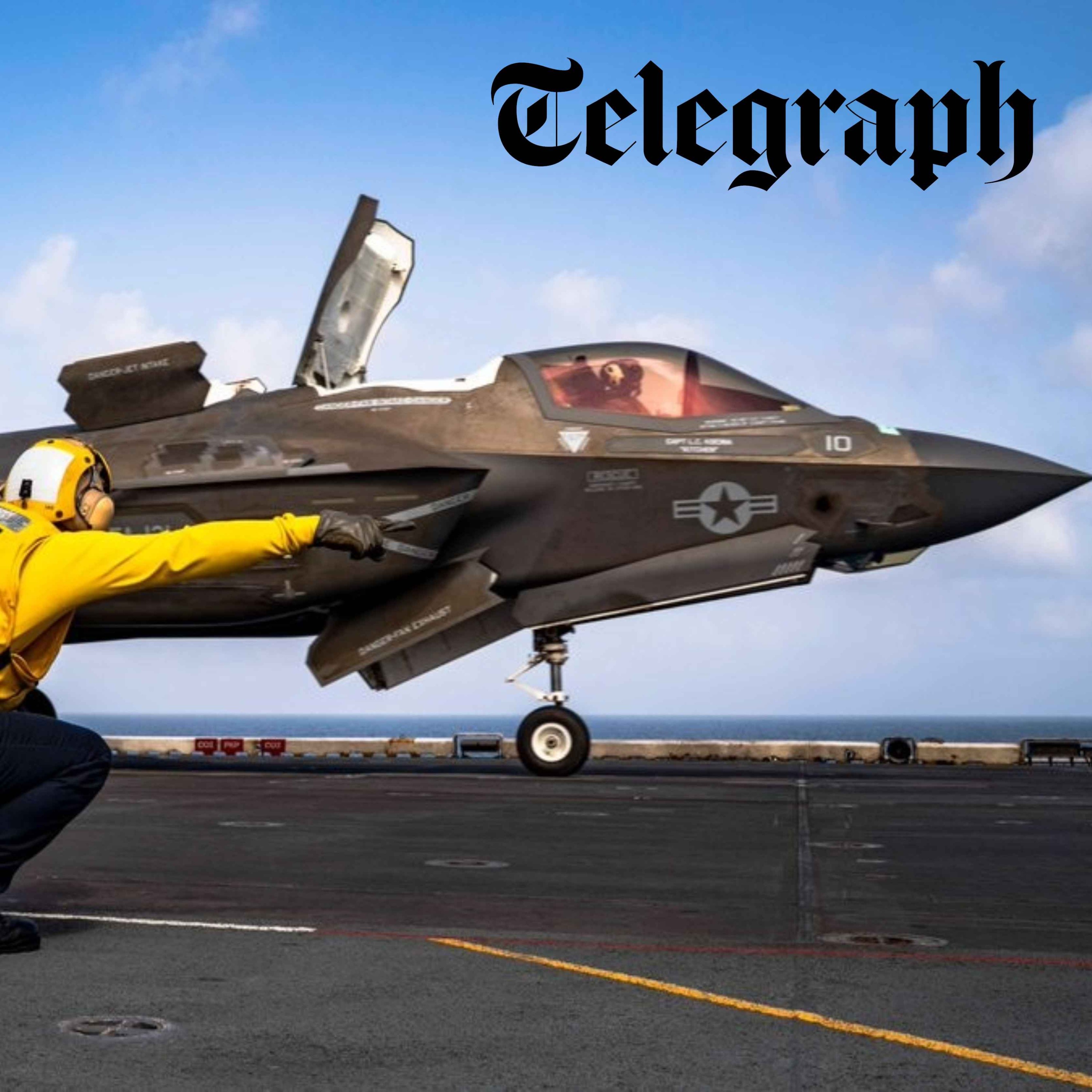
The Iranians say that they also shot down a American MQ9 drone and fired on an RQ4 drone and apparently drove off an F35 fighter jet. Do you think this is the kind of sort of tit for tat that we should just get used to happening while these negotiations continue and potentially even after some kind of proper deal is established?
- [24:44]
Tom Sharp
I think so, because the whole. I mean, we've still got the duelling blockades, right. One over the top of the other. And both sides need to maintain the credibility of that, their ability to enforce that. Both sides are trying to achieve the same thing. Both sides last night took another step in so doing. America certainly did it in terms of saying we know what's in the strait, we know what's moving. If you threaten mines or if we think you're going to lay mines, you're done. And if you light us up with a surface to air radar, we will shoot that down. That is self defense. Happy day. So that's us imposing their authority on their blockade. Iran meanwhile has to do the same back or eventually their blockade loses credibility and eventually the shipping companies go, do you know what, have they still got this or not? Now I think personally I think we're a long way from that. But that's what part of last night was. Shoot down a couple of reasonably easy targets that they may have been tracking all along. But Iran are very, we know are good at escalation management. They don't go too hard too fast. So this could very well have been in response to what happened in Bandar Abbas. I don't know the exact sequencing but like I say this is and as you said in the question, this is a sort of tit for tat and it's part of exerting each country's authority over their respective blockades.
- [25:59]
Sophia Yan
The possibility that the Strait of Hormuz might be opened soonish is rising. How do ships handle the risk of mines once they're starting to transit through again? I mean where they are, if they're even there as you suggested. I mean this is a real question.
- [26:14]
Tom Sharp
I would almost challenge the premise that shipping is about to start moving again. There has been an increase in the last 48 to 72 hours. No doubt there have been an increase in movements. I mean we're still at a fraction percentage of pre war levels but it is gradually increasing. I haven't seen what effect last night has had by the way. Whether that will dip it back down again remains to be seen. But all the ships making it out as far as I can tell and tracking this through various companies who do this for a living. They're all ones who have some form of intergovernment relationship with Iran. They've got government to government relations that permits them to pass the toll or pay the toll, that's not clear. But at least get permission from Iran to leave. And we've seen a few instances where ships thought they had that and then get shot out and have to scurry back. You know, it's still a moving feast. But we have seen ships going and we've seen some companies pay the toll, literally pay the money, which of course Iran denies, but we know it's happening. And it goes through all sorts of securities banking routes that are illegal. And this is the point, no reputable, legally founded shipping company has gone through yet because they know that paying that money into whatever entity it is that you pay into is illegal. Plus the risk, of course, there is still the underlying risk. So shipping is going up, but we are a long way from shipping returning to normal.
- [27:42]
Sophia Yan
In my view, just paying the toll is just giving it off to Iran. But is there a physical way to actually protect from the possibility of mines, to figure out where they might be?
- [27:52]
Tom Sharp
The mining question remains, and last night has brought that right back into the crosshairs again, so to speak. I and a few others are clinging onto the fact that mines haven't been used yet, based on the premise that I don't think they need to. Iran has this level of control. Their blockade has the whip hand, in my view, for now. So why would you use mines which are unpredictable, hard to lay, and as last night suggests, hard to lay undetected, but they may have laid some, and increasing American intelligence suggests they have, in which case you've then got to go in and sweep those mines. Now, they will be what are called influence mines. So they'll rely on a magnetic or an acoustic signature passing over the top to activate them. Or some of these things are pretty smart to not activate them, to count it and wait for the big ship or wait for the one that's in the mission set to go and destroy it. So they're clever. Now, we, America, France, quite a few navies have developed autonomous methods of dealing with these influence minds that are much quicker than when I was doing mine hunting back in the day. You can go over the top of them in an autonomous boat, you can sweep and you can generate these signatures, magnetic and acoustic, and they will trigger the mine. And that's reasonably quick. You can do that at 10 to 12 knots, which is eye wateringly fast for mine warfare. The point is, if it came to the point where we needed to clear two straits and at least prove to shipping companies that they are clear, that could be done, I think, reasonably quickly. They all have a very good sense of if mines have been laid, they'll already have a good sense of where they are because they'll have been tracking the activity and the ships that are cleared going round them, so they'll have an idea of where's safe and where's not safe, and then they can go in and clear that reasonably quickly. So that's a slightly long answer to it, but it's a very complex problem and the bottom line is it has to be addressed for shipping to be assured to the level where it starts moving freely again. If there's any doubt, then they won't go.
- [29:51]
Venetia Rainey
You recently wrote for us about something new that the Iranian navy, the conventional Iranian navy, has deployed the Khad Mini submarine and you call them ship smasher mini subs, and say you've been up against them before. Tell us about them and what kind of threat they pose.
- [30:05]
Tom Sharp
Yeah, they're. They're ship killers, that's for sure. They. They've had them for a while. They used to be the Yonos, now it's the Gadirs. They're complementary to the mine threat insofar as they sit in that underwater battle space. It is very, very hard to clear, as we've just spoken about, with mines, and these things are part of that. Now, Iran has somewhere in the region of 20 of these things, or at least it did. It was very important when I was involved in this plan, to get rid of those in the first strikes, because the minute they sail, they become much, much harder to detect. Once they're alongside and complacent, if you like, or in their base port, then you can get a load of them in one go. But the minute they're at sea, they then disperse and they have hiding places where they can come alongside that are almost undetectable. And caves. Again, back to the point I've made many times with you on this in the past. Iran has had 30 years to prepare for this. So these mini subs, if, let's say two to four were at sea in the first wave of strikes and are still out there, then that has to be dealt with. And it's really hard because they're so small. Their acoustic signature is minute, their visual signature is tiny, their magnetic signature is tiny and they. They're very much playing a home game. They know the acoustics, the oceanographics there are tricky. So sonars and all these other methods of detection are difficult and they, they can exploit that because that's where they live. So the point I made in the article for the Telegraph was Iran said they are redeploying them. If that's propaganda, if that's rubbish, because they've all been killed and they've all been accounted for 20 out of 20, let's say, then fine, but like minds, you then have to prove that. That you have to prove that that's the case. Because if you don't, then you've got a problem. And these things, like I say, carry heavyweight torpedoes, two of them, and they will kill you. You can survive a mine strike if you're lucky. You can certainly survive a missile or a drone strike. A heavyweight torpedo strike will break the back of your ship and it will sink you. So this threat, if it exists at all, needs to be eradicated. And again, this all plays into the wider picture about when does shipping start thinking it's now safe to go?
- [32:15]
Venetia Rainey
You write that Iranian Rear Admiral Shahram Irani refers to them as the dolphins of the Persian Gulf. How long can they stay at sea for? If, as you say, a couple of them, for example, were out at sea during the first wave of strikes, have they been able to stay at sea since then? Or would they have had to go back into some kind of port to surface?
- [32:33]
Tom Sharp
No, they would have to go back in. I mean, these are horrible creations. Very, very unhygienic, very cramped, crew of about seven. Literally no space. They can do between seven to ten days at sea. They move around, they sort of sit. They're semi submersible, they can dive and they can sit on the bottom, which is an old diesel submarine trick where you sit on the bottom and you then turn everything off and maintain your battery life. And you of course, blend in with the seabed so no one can tell you're there. But they don't do that very often. They spend most of their time just below the surface where they can breathe, so they can let air in, circulate the oxygen again. You therefore don't need to run engines to do that. You can do it naturally. And historically, they would sit in the traffic separation scheme, the bit that used to direct the traffic safely through the strait. They would sit in the middle of that, in the bit where ships aren't supposed to go, and they would count you as you went past. If any of them have survived the first wave of strikes, they would have to have been much, much more agile than that. Like I say, they had to have gone alongside, they would have to have hidden. They probably would have remained hidden. It's the kind of thing you'd want to keep back for a rainy day. But you could also put one right off the top of Oman and again aground almost in those islands, and it would be almost impossible to spot. So it has to be taken seriously it has to be eradicated. And then critically, you have to convince shipping that it's been eradicated.
- [33:56]
Sophia Yan
Can you talk us through where things stand with the Brits and the French in terms of trying to reopen the Strait of Hormuz?
- [34:03]
Tom Sharp
We and the French are not reopening the Straight of Hormuz. I think that's a really important point to make here. We are not going to affect the balance of power there in any meaningful fashion. If you look at the firepower that the US and Israel have amassed there from the start of this campaign, Charles de Gaulle is a formidable capability, don't get me wrong, and has taken a very decent task group with her, of which I suspect our ship, HMS Dragon could well now be part of. I hope so, because they complement each other well. The Type 45 destroyers works well with the French strike groups. We've proven it. But they're not doing strikes. They're not going to hit targets and write them down to zero. So really they're not going to open the strait. And then you get to the business of the Iranian threat. And I think this is the critical point here. If Iran is still threatening shipping, and we know from last night that they are prepared to do so, an aircraft, then the strait remains very, very, very dangerous to go into for warships. For all the threats, the GAD is all the things we've discussed, the mines, it's not safe to go in there and force it open. You could perhaps do it and we've seen the US go in twice with destroyers at high speed and sprint back out. The second time they got fired out on the way out. So you're not going in there to muscle this open. At least the French and the Royal Navy are not. If Iran says they're not going to fire the 17 things that are currently under discussion between the US and them that will lead to some, some kind of permanency fire. If Iran say they are not going to fire and they're not going to enforce a toll or any kind of payment system that is back to the status guarantee, then there's no threat. In which case, what do your task groups do? What do the British and the French and even the American ships do? Because there's no threat. So it's curious to see how this will play out. I think there's an assurance piece if the threat does lift and shipping needs to move, there's thousands now of these ships at Anchorage. Someone's going to have to coordinate that. And in the early days there's going to need to Be some kind of assurance, you know, perhaps even. Perhaps even escorting. Even though there's no threat, you could still escort ships in.
- [36:07]
Sophia Yan
I mean, from your take, Tom, what's the point of trying to do this? You rightly point out that it's, you know, too small. Ish navies trying to do something quite monumental. Is it about posturing at home? I mean, what's it about?
- [36:21]
Tom Sharp
I don't think it's posturing at home. I think that horse bolted when we failed to get a ship out of the door to go and protect Cyprus. And of course, we're now using. The same ship that we sent to Cyprus, has now gone from Cyprus. So I don't think if it's posturing at home, that's not going to work. But look, navies provide options. They are very, very good at providing political options. The US Navy, get this, it's in their DNA. Instinctively, there's a problem in the world, send your navy towards it and work out what to do when you get there and provide those options. Because of all the things I've said that the navy might, Our navy might be able to do, might not be able to do. The one thing I can absolutely be assured of is it can't do any of that if it's alongside in Pompey Harbour. So you do have to get this stuff out of the door and then head towards the trouble, provide options. And it may be one of those options is do nothing, in which case return and stow all gear and come back. And that's fine, there's nothing wrong with that. But you have provided those options which you cannot do from alongside. So I'm entirely happy with the notion of our one deployable warship heading towards the sound of gunfire, plugging into the French, saying hello to the Americans. So going there is the right decision. It's the most imminent threat to the UK right now. Get out there, there, work out what to do on route, you can always come back, but you can't do any of it from alongside.
- [37:44]
Venetia Rainey
That was Tom Sharp, former Royal Navy officer and Telegraph columnist. Before we go, Sophia, I wanted to pick your brains on a story that has been cropping up. Iran might be on the cusp of restoring Internet access, although I'm seeing some alerts now that a presidential body has been suspended. There's clearly some kind of internal row going on over it. But there's also the suggestion that they might be bringing in Chinese equipment to try and recreate the Chinese great firewall. You have direct experience with this. So what do you make of what's going on?
- [38:11]
Sophia Yan
Well, in the case of Iran, the Internet shutdown was in place in January and again shortly after war began in late February. And that's been in place now for months. As time has gone on, there has been a sort of tiered Internet access available. So people approved and allowed by the government to be online to disseminate messages that have been scrubbed clean and have been approved by the authorities. These people can communicate with the outside world. It's been very spotty for everybody else. Sometimes you can make a phone call, sometimes you get on for a little bit. It's very, very difficult. That's partly why finding out and understanding the full extent of the damage in the war as it pertains to Iran has been very difficult. But it's become a real point of contention. And you have to remember that in the very beginning, this was meant as a way to control the population, to ensure that what information came out was only what the authorities had deemed okay to be known publicly. It was a way to control the public, to make sure that they couldn't, for instance, possibly organize on their own any protest, protests or uprisings, or to express dissent in a wider way. But as time has gone on, this potentially could be an issue that sparks and works against the government. Where so many people have businesses that are run online on social media, well, they've just lost their livelihoods. People I've met, for instance, Iranians who had left the country to try to get into Turkey so that they could go online because they were working for foreign companies for which they had to get onto even basic services like email, which was not possible with the Internet shut down down. So the longer this goes on, the more upset the general public becomes. Therefore, the regime then is facing possibly a wider upset amongst the people, and that itself is of concern. So where things go from here is one that the authorities clearly seem to be debating at this point and that they might have had some help from the Chinese should not come as a surprise from anyone. China has been seeking to export its surveillance and censorship technologies now for many years. It has been alleged that China did sell such services and technologies to Iran. The exact contract, the exact documents where that occurred is not something that experts or journalists have found, I believe, but it is something that is looked at and researched quite thoroughly.
- [40:23]
Venetia Rainey
Yeah, and as we're recording at around 2pm on Tuesday, I'm just checking again to see if that's been opened. And it looks like there is a partial restoration to Internet access in Iran. That's According to Netblocks, which is an Internet watchdog, it says that it's unclear if this would be sustained, but that this does end the longest nationwide Internet shutdown in modern history. It's really significant. I think one thing that we will be watching for over the next 24 hours is what kind of stuff is going to be posted. You know, there's so much that we don't know about what's been going on inside of Iran, the Iranian regime atrocities, the impact of the conflict of the American and Israeli bombing campaign. So if the Internet shutdown does continue to be lifted, there are signs that that is now starting. Then it will be fascinating to see what gets posted to social media and what new information we learn about what's been going on on on the ground in Iran over the last few months. We'll get more into all of that tomorrow.
- [41:17]
Sophia Yan
That's all for today's episode. Goodbye, Goodbye.
- [41:27]
Venetia Rainey
Iran. The Latest is an original podcast from the Telegraph, created by David Nulls and hosted by me, Venetia Rainey and Roland Oliphant. If you appreciated this podcast, please consider following around the latest on your preferred podcast app. And if you have a moment, leave a review view as it helps others find the show. For more from our foreign correspondence on the ground, sign up for our new daily newsletter, Cables, or listen to our sister podcast Ukraine. The Latest. We're still on the Same email address battleionselegraph.co.uk where you can contact us on X. You can find our handles in the show Notes the producer is Peter Shevlin. The executive producers are Venetia Rainey and Louisa.
- [42:04]
Sophia Yan
Well,
- [42:13]
Abercrombie Advertiser
This summer, don't squeeze in. Spread out. Find homes big enough for your whole guest list on vrbo. That's vacation rentals done right. Book your stay now.
- [42:27]
Instacart Advertiser
Instacart makes grocery shopping easier. And just because you're not doing the shopping yourself doesn't mean you don't care how it's done. With Instacart Shopper notes, you can get particular about what you want right in the app. Like rotisserie chicken that's extra crispy steak with marbling the Romans would have loved, and lettuce you'd actually pick yourself. Just leave a note for your shopper so they can get it right for you without having to ask. That way you can get groceries just how you like. Download the Instacart app and shop today.