← Iran: The Latest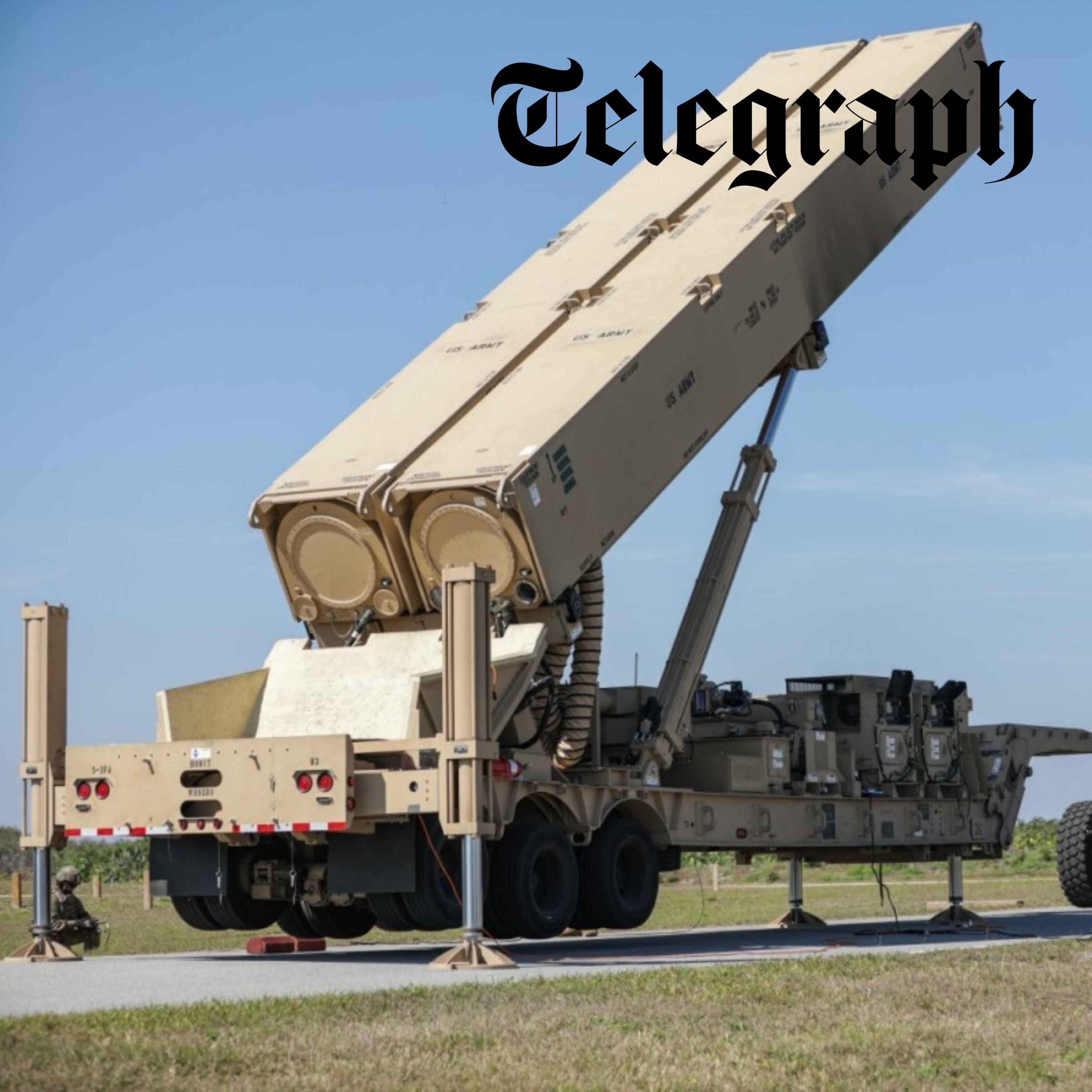
Iran: The Latest
US 'could deploy hypersonic missiles' & how Russia is using Iran to fight the West
00:42:31
Loading summary
Transcript68 lines
- [00:04]
Venetia Rainey
The telegraph.
- [00:10]
Monday.com / Advertisement Voice
This is a Monday.com ad. The same Monday.com helping people worldwide getting work done faster and better. The same Monday.com designed for every team and every industry. The same Monday.com with built in AI scaling your work from day one. The same Monday.com that your team will actually love using the samemonday.com with an easy and intuitive setup. Go to Monday.com and try it for free.
- [00:37]
VRBO Advertisement Voice
Yes the same Monday.com@vrbo we understand that even the best of plans sometimes need a little support. So we plan for the plot twists. Every booking is automatically backed by our VRBO Care guarantee, giving you confidence from the very start. Whenever you need help, it's ready before your stay, through the moments in between and after your trip. Because a great trip starts with peace of mind and maybe a good playlist, but we've got the peace of mind part covered.
- [01:10]
Benham Ben Taliblu
Russia has more priorities in the Middle east than just Iran. But Iran is a pawn in its game of strategic competition with the west. And sometimes we're going to have to learn how to let the other side sacrifice a pawn. Short time ago, the United States military
- [01:26]
Roland Oliphant
began major combat operations in Iran.
- [01:31]
Monday.com / Advertisement Voice
Today, President Trump says Iran's Supreme Leader, Ayatollah Ali Khamenei was killed in the attacks.
- [01:41]
Benham Ben Taliblu
The Pentagon is weighing a takeover of that island as a way to force the reopening of the street of Hormuz.
- [01:48]
Podcast Advertisement Voice
Iran begged for this ceasefire and we all know it.
- [01:52]
Roland Oliphant
Does anyone really think that someone can tell President Trump what to do?
- [01:57]
Benham Ben Taliblu
Come on.
- [01:59]
Roland Oliphant
I'm Roland Oliphant.
- [02:00]
Venetia Rainey
And I'm Venetia Raining.
- [02:01]
Roland Oliphant
This is Iran. The Latest It's Friday 1st May, 2026, the 63rd day of the war, 24th day of the ceasefire, which despite speculation about renewed US strikes, continues to hold.
- [02:15]
Venetia Rainey
On today's episode we're going to be discussing the new Iranian supreme leader Mojtab Al Khamenei's speech yesterday, whether the 60 day congressional war powers limit will mean anything for Trump and the strong ties between Iran and Russia. Plus we'll be ask what Iran is trying to achieve with its viral Lego propaganda videos and how America should combat it. But first, some updates. Roland, where do you want to kick us off?
- [02:37]
Roland Oliphant
I'm going to start off with missiles, specifically the Dark Eagle hypersonic missiles. CENTCOM Central Command, the part of the US Military in charge of this war, has requested that Dark Eagle hypersonic missiles be moved towards Iran. Dark Eagle has not yet been declared fully operational and a decision on its early deployment hasn't yet been made. That's according to Bloomberg, citing a source with direct knowledge, whoever that is. But the Dark Eagle says it's a hypersonic missile, very new, costs $30 million a piece, we're told, travels five times the speed of sound, is meant to be able to hit targets up to 2,000 miles away. It would mark the first combat deployment of US Hypersonic weapons in history, I believe, if it was to be okayed. And of course, this comes in the context of Donald Trump being under increasing pressure to either break the impasse in negotiations or deliver another military blow in an effort to end. Well, either just end the conflict or to use that military blow to break the impasse in negotiations. And I'll just add a little thought on hypersonics. When we were battle lines, the whole thing with US Hypersonics. There has been for many years a concern amongst those who watch this that America was getting left behind with these missiles, that the Chinese in particular were well ahead, that the Russians were well ahead. So this is very definitely Western military nerds who will be very pleased to see an American hypersonic missile finally making it to the field or becoming close to operational capability. Our colleague Ioniclee has more about the hypersonics and the Dark Eagle on our website. One other thing, Venetia, on this whole question of this military buildup and whether there will be another round, the Israeli defense ministry says 6,500 tons of munitions have arrived in Israel this week, including, this is a quote, thousands of air munitions, ground munitions, military trucks, jltv combat motility vehicles, and additional equipment. We've also seen dozens of US Fuel tankers parked at Ben Gurion Airport in Tel Aviv and at Eilat Airport further south in Israel, according to Al Jazeera. Are they just restocking? Are they getting ready for another round? Well, we will see.
- [04:46]
Venetia Rainey
Yeah, we're just trying to read the tea leaves for you here. This is the evidence that we have. And of course, the rest of it is in Trump's mind as to what happens over the next few days. The second story I think we should look at is food shortages. We've spoken repeatedly about how there is a real risk for food supplies coming down the line. The BBC has been speaking to the head of one of the world's biggest fertilizer producers, Yara, and he says that the lack of fertiliser exports from the Gulf due to the Iran war could cost up to 10 billion meals a week globally. And that's because about half a million tons of nitrogen fertiliser are just not being produced in the world right now. And he links that to 10 billion meals further down the line. So these fertilisers that normally pass through the straight of Palmus, that includes things like urea, ash, ammonia, phosphates. And it matters because planting season is starting. It's right now here in the UK and in Europe and many other parts of the world in our hemisphere, in Asia, the farmers are just getting started. Now, you won't see the impacts of it immediately in food prices, but if they can't plant as much now or in the months to come because they don't get the fertilisers, then that impact is baked in for nine to 12 months. We've had Ambrose Edmonds Pritchard talking about that on the podcast a couple of weeks ago, but it is really significant. And 10 billion meals is just a huge number and that will impact the global south much more than it will us in the global north or, you know, in the West. So this is a really significant impact coming down the line. Roland, what's our third story?
- [06:11]
Roland Oliphant
Iran's Supreme Leader, Mosttab Al Khamenei, as yet still unseen but believed to be alive. A statement was released on his behalf by Iran in which he defiantly vowed to protect the Islamic Republic's nuclear and missile capabilities. We will talk more about this shortly. But in a statement read on state television, Ayatollah Most Abuhameneh said that the only place Americans belonged in the Persian Gulf is at the bottom of its waters and that a new chapter was being written in the region's history. He has not been seen in public since taking over as Supreme Leader following the killing of his father in the war's opening air strike. We can discuss that more with our guest in the second half of the podcast.
- [06:51]
Venetia Rainey
Roland, before we go to our main guest today, I want to ask you about a story you've been writing about AI and defence and specifically AI's role in the Iran war. What did you discover?
- [07:00]
Roland Oliphant
Yes, this is a double hander jointly written by myself and David Blair, essentially trying to answer the essay question. To what extent has AI been used and affected the outcome of the Iran war? Discuss in 1500 words. The answer is, we believe, used massively and extensively. To what degree it has affected the outcome of the war we're not going to know. And we believe that American planners are analysts, reviewers will be sifting through that data because in, in a very significant sense, this is one of the test beds for the AI ification of war. I know you spoke about you. You ran a very good special edition over the Easter weekend on this topic, Venetia. So essentially, how is AI being used, or what? We know, as anyone who listens to your excellent program will know, the US Military uses a system called Maven Smart System, which is used essentially to identify, locate, classify targets and for operators to request the okay to fire. So there's still a human in the system at that point. We spoke to some incredibly interesting people about the history of that system. Actually, this is the really interesting point. To understand the significance of AI in this war, I think you have to put it in the context of where the kind of American obsession with AI in warfare came from. And it originates about 10 years ago when they're still fighting in Afghanistan and they're thinking, okay, we're very good at counterinsurgency, but when and if we end up fighting a near peer enemy, by which they meant China, there was this sense that war was going to be fought faster than humans could think, essentially, and that AI was meant to be the answer to that. And the Maven Smart system they have now developed is simply the latest iteration of the many, many algorithms, stages they've gone through in the past 10 years and trying to get to this point. So what can we safely say about it? You saw that headline figure of 1000 strikes in the first day. Yes. You're nodding, good listeners. Venetia is nodding. The American military said that, you know, they claimed 1000 strikes in the first day, or 1000 strikes or 1000 decisions made is a benchmark that they've been working towards with their AI systems. And what they're trying to get to is a thousand decisions in an hour. That's the benchmark they're trying to get to. And decisions they mean by the military working out what's in front of it, where it is, whether it's a target and what to do with it, and to do that a thousand times in one hour, and that's up from about 75 in the past. So the sheer scale, the sheer speed, sorry, of the operations that we've seen so far tells us that, yes, AI is being used massively, possibly in every single strike that's being launched. But the interesting thing to me is that the question of how would this war have gone without that? Has it helped or hindered the ultimate outcome? We just don't know. And it's too early to say.
- [09:48]
Venetia Rainey
One of the incidents that keeps coming up and that occurred in that first 24 hours is the strike on the school in Minab where more than 150 people, mainly children, were killed. We did a whole episode on that, and we'll link to that in the show, notes about the outdated intelligence that was involved in selecting that strike. But we don't know AI's exact role. Or do we? Did you find out anything new on that?
- [10:10]
Roland Oliphant
So this is the interesting thing about that. So, as he mentioned, the Minab strike has been massively reported. There's dozens of independent investigations that concluded that was an American Tomahawk missile that did that. The Americans, I would say, pretty much tacitly admitted that. I mean, we had, I think it was the New York Times citing two people close to the investigation, saying, pretty sure, you know, America is responsible.
- [10:32]
Venetia Rainey
But just to be clear, the American administration say it's still under investigation. And I think they said that it's still under investigation.
- [10:37]
Roland Oliphant
That's what I mean. So that's why I said tacit, Tacitly admitted. But the official investigation has not yet been concluded or been published. And everybody who works in this kind of this weird overlapping world of tech and military getting quite. What's the word? Kind of antsy and fidgety. People really, really want to see this report because that's going to answer a lot of questions. People really want to know, what role did I have in that? Was it targeted because of AI? Was it a human error? Was it a mix of both? How do you disentangle the two? If it was AI, why couldn't an AI tool like Maven, for example, scrape the Internet and find that the school had a website, for example? Or is that a lesson to be heard? So I think the Minab strike is the most striking and most prominent example. But in a way, that's a question that was going to be asked of all of the strikes carried out in this war, including the successful ones and the unsuccessful ones, and so on and so forth. Because one of the dilemmas is how many of these targets that an AI system like Maven can identify and put in front of an operator very, very quickly? How many of those targets do you know our actual targets are the correct target? Or are you simply accelerating the expenditure of munitions to a huge rate because you're generating targets so quickly, but not actually with any greater degree of certainty about what you're hitting? So that's essentially what we looked at. That's our conclusion, which is, yes, this is a really important war for that development of automated warfare. And essentially the path we're on is towards warfare in which it really is taking place faster than humans. Can think. I don't know. I'm not especially thrilled by that idea. But the assumption seems to be within the Pentagon and militaries around the world that that's the way warfare is going. And I'm told, we were told during our reporting that, look, people in the US Military are very aware of all of those huge dilemmas and knotty ethical problems it throws up. They're pretty thoughtful about this, but they also feel like there's not much choice. It's do it or someone else is going to do it.
- [12:51]
Venetia Rainey
Such a fascinating topic and one that I'm sure we'll return to lots. We'll make sure to link to that story in the show notes for you to go away and read. We're going to take a short pause now. Coming up after the break, we'll be looking at how Russia is supporting the Iranian regime and asking, what's the deal with those viral Lego videos?
- [13:10]
Dr. Horton Advertisement Voice
Now is your time to get into a new Dr. Horton home by taking advantage of its national red tag sales event going on right now through Sunday, May 3rd. Stop by any of its participating communities and find select red tag homes at incredible pricing. So whether you're buying your first home or looking for an upgrade, you don't want to miss the red tag sales event going on right now. Discover the Dr. Horton difference. Visit Dr. Horton.com Dr. Horton, America's builder and equal Housing Opportunity Builder VRBO makes
- [13:41]
Monday.com / Advertisement Voice
it easy to claim your dream summer spot with early booking deals from homes with pools to poolside loungers. When you book a vrbo, you don't have to reserve any loungers. They're all yours. All you have to do is book
- [13:52]
Podcast Advertisement Voice
early book with vrbo, you've got social dialed in. Search is doing its thing. So why do your marketing results look the same as six months ago? That's because you're fishing in the same pond as everyone else. Podcast listeners are a different audience entirely. More engaged, harder to reach through traditional channels, and ready to act when someone they trust makes a recommendation. We're Acast and we put them right in front of you. Browse thousands of the world's leading podcasts, book host, reads or run your own ads and track every conversion in real time. Same skills you already have. Brand new results. Acast acast.com advertise.
- [14:39]
Roland Oliphant
Welcome back. You're listening to Iran the Latest with me, Roland Oliphant and Venetia Rainey. Now I'm pleased to welcome our guest today. Benam Ben Talibu is senior director of the Iran Program at the foundation for Defense of Democracies. He himself is an Iranian American and he's been studying Iran for many, many years.
- [14:59]
Venetia Rainey
Ben and welcome to Iran. The latest I want to start with the deadline that is supposed to hit today. Trump was supposed to be making a case to Congress to extend the war part of this 60 day congressional limit that is imposed on presidents who engage in a war under the War powers Act. That 60 day limit, our keen listeners will note that the war has been going on for 63 days, but the 60 days limit is apparently today because that is 60 days on from when Trump told Congress about the war on Monday, March 2, the working day after the war started on Saturday, February 28. This law has never actually been used to end military action, though, has it? And it's been criticized by successive administrations for decades. How much of an issue do you think this is actually going to be for Trump?
- [15:42]
Benham Ben Taliblu
Well, it's a pleasure to be with you. No doubt this law has been threatened to be used and has tried to be used not just against President Trump, but previous presidents as well, for launching of military conflicts or military engagements without the approval of Congress. Obviously, there's an advise and consent process. Obviously there's also a process, a legal process to declare war. There's an authorization for use of military force that certainly was absent here. But there's also pushing away from the table a larger strategic debate looming in the background as to the applicability of the law to some of these more modern conflicts. There's no denying, of course, not just President Trump, but previous presidents as well, have really run afoul of this law and run afoul of lawmakers institutionally and politically. President Obama and previous presidents as well, like President Clinton, due to the constraining nature of the law and due to the fact that the law was designed to constrain in the minds of some, including yours truly, who is something of a history nerd and interested in the context in which this law came about, which was following the Vietnam War and the kerfuffle with multiple administrations in Vietnam. There is a legal advise and consent process and there is an argument that some stronger executives see this as unduly binding the power of the commander in chief. But suffice to say that I see the balance in the Congress essentially being more political and institutional and ideological being so long as this continues to fall along party lines, and thus far, I think it will, plus or minus a few, I think it's something that the president will be able to skirt by and more importantly of Course, they have their own political pushback to this legal definition, which is that hostilities have actually ended and they ended with the ceasefire. And they're claiming that now since there is no ongoing shooting war underway, that there is no quote unquote, state of war.
- [17:41]
Roland Oliphant
Thanks, Ben. Well, that sounds like it shouldn't be too much of a problem for the Americans. What about the latest from Iran? Mujdah Mohamenei was speaking yesterday. I mean, a statement was put out in his name where he talked about essentially maintaining control of the of the Gulf and also defending Iranian nuclear assets. You've gone through this statement line by line, actually. Could you just tell us what you make of it? What's the significance of this latest statement, purported to be from Mojtaba?
- [18:14]
Benham Ben Taliblu
Well, not just me, but many Iran watchers have been waiting for signs of life, if you will, from Mojaba, or Khamenei Jr. As some call him here at Washington because he is kind of functioning as a hidden imam. And I am playing to the pun here. He has neither been seen nor heard from since the commencement of Operation Epic Fury. Of course, there are things said on his behalf online, particularly on social media and Twitter. There's the fact that Iranian officials tend to reference him and bring him up. Even in Foreign Minister Arakchi's trip to Russia, he was said to be carrying a note from Mujtaba Khamenei. And this press release or press statement that I saw containing traditional invective from the new Supreme Leader against America, against Israel, against the west, against foreign forces in the Persian Gulf area, trying to tamp down the idea that Iran had bothered or aggressed or transgressed against its neighbors, tried to right size the Strait of Hormuz issue, tried to play to Iranian nationalism and also again, drum up support for Islamism. A lot there in this statement. Some of it is projection, of course. We've seen the regime try to project unity when it actually doesn't have so at home. That's a classic like father, like son moment. Khamenei would do this as well during peak periods of domestic instability. No one can forget, of course, that on the backdrop of all of the regime talking about instability and trying to create a rally around the flag effect, which in my view has thus far failed to really materialize, is a 60 plus day, I think 64 or 65 day Internet blackout, the longest in recorded history in that country since it's really come online. And in essence, this is a bid to 1, project, 2 to restate the regime's case 3 to do something that America has unfortunately not been doing at all, which is to try to not just play, but try to win the narrative war. The narrative war matters for Khamenei and regime elites as much as at the actual physical war, as much as the shooting war. So it was a very interesting statement. We know many of us Iran watchers, we're looking again for signs of life, but we have to settle for these kinds of statements in the interim.
- [20:28]
Roland Oliphant
And we don't know if he actually wrote this.
- [20:30]
Benham Ben Taliblu
Obviously, we don't know if he actually wrote this. We assume that he wrote this. There's a lot of allegations that he's cognizant. There's some lesser allegations that he's actually dead, but he's unlikely to be seen in the short term. If I had to guess why, it's because he might be physically damaged or injured or even some might say deformed following the strike on the Supreme Leader's office on the first day of the war. And they might not want to have him come out looking bandaged or post surgery or disfigured lest it project weakness. Some say that maybe also one reason why there hasn't been a public funeral for his father, the former Supreme Leader of Iran, because Khamenei the junior, the younger, would have to attend. And if he would attend in a fashion that would not make him look strong, that would not inspire confidence among the 10 to 15% of the regime's hardline ideological base, let alone international adversaries.
- [21:24]
Venetia Rainey
How much power do you think he actually has? What's your read on where the sort of balance of control is lying in the current regime?
- [21:30]
Benham Ben Taliblu
Well, in my view, there is a hardline deep state, a hardline rum state that is really ascendance now. And I have an issue with, again, a great number of friends and colleagues and contacts, past and present at Axios. But I caution against I call it the Axios approach to Iran policy, where you take a snapshot and you zoom in and zoom out. Based on that, there really is a story of stasis over time and change over time with the Islamic Republic. And the story of the IRGC's ascendancy did not begin on February 28, and it did not begin with the ceasefire. Those who are perturbed that there is an IRGC veteran at the helm of a major institution like the Supreme National Security Council may have missed the facts that the past two or three secretaries of the Supreme National Security Council were also IRGC veterans. The fact that the Islamic Republic at this stage in its life is neither Islamic nor republic. In the words of someone who was supposed to be Iran's second supreme leader, but was later put under house arrest and died under house arrest. Ayatollah Ali Montezeri, you know, is because Khamenei has worked to promote the security institutions at the expense of the political institutions and at the expense of the religious institutions. And to that end, Khamenei the Younger, I think if he physically survives this, if he is seen, actually might be able to really rally that hardline regime elite and hardline regime social base simply because he would have survived. But in the interim, I do think we are seeing the continuation of this trend, which is the institutionalization of personal power. And in the absence of the full 100% mental acuity or physical acuity in health of Khamenei the Younger, it is indeed those hardline political and military institutions, like the Supreme National Security Council, like the Islamic Revolutionary Guard Corps, like the Armed Forces General Staff, like what's left of the Supreme Leader's office, the slo, that are able to really rule this rum state. And while you and I and others maybe looking at the impact of a blockade on a society post war, with the potential for a war to be resumed and so many military elite and military capabilities trip and say, oh no, how could you govern? But Iran was sliding towards failed state status anyway. And so these guys know how to do a lot more with a lot less.
- [23:52]
Roland Oliphant
You mentioned there a couple of questions ago, you talked about the narrative war and you mentioned that it's as important to them as the physical shooting war. What exactly do you mean by that? It's a little difficult to kind of get your head around. What would you call the narrative war and why is that so important?
- [24:12]
Benham Ben Taliblu
Well, it's the narrative that the regime projects about the conflict, about its adversaries, but most importantly itself, that the Islamic Republic 1 has survived a major overt conventional war involving a regional superpower, Israel, and a global superpower, the United States of America. I mean, of course, there was never any doubt in anyone's mind that the regime would be outgunned against these two. And this simply lasting element of the Islamic Republic is what they've been trying to project in social media, in hardline media and traditional media to say that America and Israel have failed in their military objectives and thus thus far will not be able to reach their political objectives. Folks may be familiar with these AI videos that the regime is putting out. They may be even familiar with these Lego videos that may be made abroad. They may be familiar with the invective and, dare I even say, the sass of Parliament Speaker Mohamed Bava Khali Baf's Twitter feed, who allegedly is being run from abroad. So there is this wider net of stories of personalities as images, of videos that the regime is trying to put together as a jigsaw puzzle to present survival as strength and that strength as victory, and play to the adversary's image of war. We in the west, be it in the uk, in America, Israel, wherever there is a real concern and question over to how much not capability do we have to fight these sorts of wars, but will and to erode the will to fight, erode the resolve to fight, to stay in the fight. These videos go quite a long way to do that.
- [25:50]
Venetia Rainey
On those Lego videos that you mention, they have proven remarkably effective. I mean, we've had emails in from listeners. Let's just hear a few clips from some of the videos that Iran has been putting out over the last few weeks.
- [26:02]
Podcast Advertisement Voice
Make Israel great again.
- [26:04]
Benham Ben Taliblu
Your government is run by pedophiles. They ordered you to die for Israel. They ordered you to die for Israel.
- [26:12]
Roland Oliphant
They lied to you.
- [26:15]
Benham Ben Taliblu
You saw everything.
- [26:17]
Roland Oliphant
You threatened us on Twitter like we tremble and fold.
- [26:21]
Benham Ben Taliblu
Nah, son Eron, don't get threatened. Iran just gets cold,
- [26:28]
Venetia Rainey
as you can hear from that montage there. They. They tap into news stories, but also conspiracy theories and anti Semitic tropes. But they do seem to be getting a lot of cut through. What do you make of these videos, Ben? And what's, What's Iran trying to achieve by making them? So I guess pop culture, the hip hop, and also, how should Americ be combating them?
- [26:47]
Benham Ben Taliblu
It's not just Iran, but some of its supporters who may be abroad that may be amplifying them or maybe helping even to create them and share them. But it's a fundamentally different approach to politics and policy. And yes, for many years, this regime pushed away from the table, from new media, from emerging media. But there was a shift, in my view, after the 2009 protests in Iran, after the Green Revolution, where the regime embraced the same tools of organization like social media, to try to dominate the playing field, to try to drown out opposing voices, and to try to win the information war, not just against its own people and to convince elites, but to try to attempt to dissuade other countries, other societies which are democratic, about taking on the Islamic Republic and bring its narratives there. So you see these AI videos, these Lego videos, these things put out on hardline media and social media by the regime, a continuation of that trend and real intensification of it since 2009, that they want to show up because they know if they don't show up, they're going to be on the menu. Conversely, here, the United States of America hasn't looked at this conflict really through the lens of ideology and the lens of narrative. The US Government, for example, and this is where I'll be critical, used to have something in the State Department called the Global Engagement center, looking at media, looking at trends, pushing back. There's a real question as to who is trying to engage the Iranian public amid the Internet shutdown. Who is trying to remind other elite audiences, perhaps not in Iran, but in the neighborhood in the Middle east, about why this conflict actually started. I mean, the administration, as you know, here at home in Washington and around the US Had a hard time with its own social base, with its own Republican base, the MAGA base, when it comes to this conflict. So it's not just winning hearts and minds for some, it's winning voters. For a population like the Iranian population, which going into this crisis was, and I would arguably say still is the most pro American and most pro Israeli. It's a fundamentally different mission that an information war needs to win. It's not about trying to convince people. It's about keeping people who are on your side already on your side, and the atrophication of that muscle for America, not just in this conflict, but in other conflicts as well. It does not bode well for the hybrid warfare that the west, and particularly America, is gonna face from other bigger batter states in the 21st century. So consider, consider this the canary in the coal mine of things that the US Needs to improve on in the cognitive warfare or in the information warfare front moving ahead.
- [29:28]
Venetia Rainey
So do you think America is losing the propaganda war to Iran?
- [29:31]
Benham Ben Taliblu
Well, I don't think we should be fighting a propaganda war. I think we should be fighting an information war, and we're not winning because we're not showing up to it.
- [29:39]
Roland Oliphant
You mentioned the hybrid warfare, which of course came into the modern lexicon, I suppose, really around 2014, with the Russian invasion of Crimea, which gives me an opportunity to segue to the question of Russia, Russia's relationship with Iran and just how deep it is. And whether or not there seems to be some question marks here, we know they have a close relationship about the true depth of Russia's kind of involvement in the war. You testified before the Helsinki Commission on this question of the Russian Iranian relationship. How important is that relationship? Do you Think in this war and in Iran's ability to survive as it has done so far.
- [30:19]
Benham Ben Taliblu
Well, I actually think you hit the nail on the head there because for many, many years post Cold War, the Islamic Republic had been trying to audition to become something more than a junior partner to Russia and China. Yes, in the 1990s it did turn to those two countries to help rebuild what was left of its conventional military after the devastating next door war with Saddam after eight years. But also there was hesitancy in the Russian relationship. And the Iranian Russian relationship has grown against the backdrop of the atrop and worsening of the Russia west relationship, the Russia EU relationship and the Russia America relationship. And you see it in a whole host of areas. You could see it in global norms. For example, the P5 1, the five permanent members of the UN Security Council, plus Germany had no qualms in the past having Russia really take Iranian enriched uranium in the past. But now I think everybody would have a major qualm from the Trump administration to the Germans to the Brits, to having the Russians try to function like an honest mediator or broker between Tehran and the West. And zooming out. And I am a fan of history here, but I don't think we should be prisoners to it. The Russo Iranian relationship in the past 500 years across multiple regime types has been tormented and then transactional and later transformational. And that transformational period is the period that we're living in where the Islamic Republic opted into a war in Eastern Europe by arming Putin with drones. And now Putin in response, has been giving Iran cash, gold, captured Western weapons, assistance with AI and surveillance technology against its own population. Cyber tools both tried to circumvent international sanctions in the banking front, and then more recently in this conflict, allegedly deliveries of some updated versions of those drones. And then perhaps more damagingly, satellite imagery and data, basically raw intelligence to go after US positions in the region, as reportedly has China. So these two larger state threats that America and West faces in the 21st century, China and Russia, they both do have a fundamentally different kind of history with the Islamic Republic and with Iran in history, but they're not being prisoners to that history. And political choices made by men, hardened men in Moscow, in Beijing, in Tehran and even in Pyongyang are what is in our view constituting an axis of aggressors in the 21st century that are predatory states that are repressive at home, that are aggressive abroad, and fundamentally are anti American and authoritarian. And these folks are able to play up the venn diagram and their relationship. And it behooves Congress, policymakers, lawmakers to pay attention to that Venn diagram.
- [33:09]
Roland Oliphant
I'm wondering what you make then of oh, I suppose of the kind of the Trump administration's kind of soft peddling of confrontation with Russia since it came in, certainly from the point of view of the Ukrainians and the point of view of the of European allies, but also I suppose the Israeli relationship here, which I find really interesting. So Israel of course has a very different relationship with Russia, has made a good point of kind of refusing to cut ties with Russia. It hasn't imposed sanctions on Russia. It refused to send aid to Ukraine at the start. I don't think there are some reports it supplied some anti aircraft defenses after a while and we've just had this extraordinary row between Israel and Ukraine about, about Israel kind of accepting Russian shipments of stolen grain. I read an Israeli grain importer who said it's refusing to take delivery of I think it's the third Russian ship showing up. But that came after an enormous diplomatic row. I suppose what I'm asking is do you think that the Israeli, American and broader Western alliance is capable of acting in a unified way against this Russian and Tehran Russian, Iranian alliance?
- [34:18]
Benham Ben Taliblu
Well, not just Russia, Iran, but China, Iran and Russia plus China versus the rest. I would say the Israel issue that you mentioned is a symptom of four larger states that I'm watching, one of which is Israel. Israel is one, UAE is the other, India is the other and Singapore is the other. Where these countries certainly have an orientation and an alignment that is fundamentally much more pro west and much more pro American. But at the same time they also have threats in the neighborhood and they also have either energy, economic or political ties with some members of these axis. Israel, for example, once it was discovered, I think about 10 years ago, and then it's atrophied since then. Fortunately, the level of Chinese involvement in infrastructure projects, that's an alarm bell that many on the left as well as on the right in Washington had been ringing to help the Israelis get out of these contracts, whether it was stuff for ports or the light rail or anything else in that country. But this is also a symptom of how America's partners and friends, given either some of their strategic relationships or their strategic enmity in the case of India, China, for example, are going to be navigating this era of great power competition of how the US Attempts to make sense of the world and world order in the 21st century, but also as how they tried to balance much, much more closer to home and sometimes take issues bilaterally and even a la carte. So this is a symptom of much larger challenge that the US will face. The more it kind of sees this bad guys club getting together, the more we'll actually have to work hand in glove with its partners to make sure that they're also pushing away. And many of these countries, whether it was Singapore or the uae, they don't like to be put to the choice. But sometimes circumstances allow you to capitalize on it, whether one it was the Russia Ukraine war or two whether it was the Iranian attacks on GCC infrastructure. And it behooves America to again not let that diplomatic muscle atrophy and be ready to step in for forgive me for drawing on a Napoleon quote here for when your adversary makes a mistake, don't interrupt them after the mistake is done to be able to zoom in and perhaps reorient some of the priorities and tendencies of these countries.
- [36:30]
Roland Oliphant
Do you consider the war with Iran and the war in Ukraine as the same war?
- [36:35]
Benham Ben Taliblu
I don't consider it the same war. I believe it to be interconnected. Just like forgive the analytical parsimony here. I don't think Russia and Iran are allies in the sense of how we are spoiled in the west with the definition of allies post World War II NATO. We look alike, we think alike, we talk alike. I'm talking ally, as in old world Thucydides. Two different people, two different groups merely shooting in the same direction for the same period of time at the same place. And that relationship of shooting in the same direction and the same period of time at the same place builds something else. And I think the Russians and Iranians are trying to build that something else. But again that mistrust, that weight of history, but also some of their other strategic priorities. Russia has more priorities in the Middle east than just Iran. But Iran is is a pawn in its game of strategic competition with the West. And sometimes we're going to have to learn how to let the other side sacrifice a pawn so that we can play against much more powerful pieces. For example, if we're going to connect these dots between Russia, China, Iran, we have to understand how the White House is going to be nesting the Iran issue into meetings with President Xi when President Trump goes to Beijing in less than two weeks time. This trip was delayed precisely because of the Iran war, because Trump in my view, wanted better optics and wanted perhaps a resolution or at least a stronger hand before he went to China, which is a major economic partner of the US but also majorly dependent on Persian Gulf oil. I wouldn't conflate them to say that they're two battlefields of the same front, but they're two phenomena that we are facing that is much more similar and much more interconnected.
- [38:18]
Venetia Rainey
Can I ask one final question? I know you focus a lot on Iranian weaponry. We've had a lot of reports over the past week or so about the state of American munitions and the extent to which they've been depleted and used up and the impact that will have. I'm wondering what your assessment is of the depletion of Iranian weapons. The last I heard was there was this quite sort of broad assessment that a third had been destroyed by the American and Israelis. I'm talking about their missile capabilities specifically here. A third had been destroyed, a third had been buried, and a third was still available for use. I'm wondering if you've got any kind of update on that or sort of more detail. I also noticed that NBC are reporting that Iran is taking advantage of the ceasefire to start digging out its weapons and that they're stepping up efforts to excavate missiles and munitions that have been hid underground or buried beneath rubble. What do you make of those reports?
- [39:04]
Benham Ben Taliblu
That which is disabled is not necessarily that which is degraded is not necessarily that which is destroyed. You can disable a radar with electronic warfare, but the regime can try to repair it on the electronic side. You can degrade it by striking the command unit or striking part of the base, but that base can still function. But when you destroy it is when you physically take it off the battlefield. And what we've seen with a lot of the US targeting of some of the basesthe subterranean bases, in particular that the Islamic Revolutionary Guard Corps, Aerospace Force, and this is the force that is the custodian of Iran's ballistic missiles. And Iran for nearly two decades has been home to the largest ballistic missile arsenal in the Middle East. These are things that the regime is going to be digging out. And these are areas where I wish the administration would give more data. Not percents, but actual figures. How many did the regime have? How many were intercepted, how many were destroyed? How many were fired? There's a lot of data that is actually available from some of the Arab defense ministries in the Persian Gulf. Whether you're talking about the uae, Bahrain, Qatar or Saudi Arabia, for example, they have put out a lot of updates as to the drones and the missiles that they've been hit with on a day to day basis and the percent and rate of interception here. I think the military success, the most important military success that America has had, has not been necessarily just against the tool, but against the capacity, meaning how much they could do. Because contrary to Israeli allegations after the October 2024 Israel, Iran attacks, and after even some of the allegations after the June 12 war, the 12 day war last June, in 2025, when I saw the US strike, in terms of commercially available satellite imagery and the damage done to at least five or six Iranian ballistic missile production sites, is that finally the beating heart of Iranian ballistic missile production has been struck. And the question is, even if a third or more than a third is entombed or may be available to the irgc, how quickly they could restore production, in particular domestic production, seems the real win here for Washington. That's the handicapping effect. It doesn't mean that the regime is not going to try to rebuild its defense industrial base. But that is something that takes time, and time is a tool and really a weapon that you want on your side.
- [41:29]
Roland Oliphant
We're at this point where we're seeing all these reports about Donald Trump being briefed by CENTCOM on options for further strikes and questions about whether or not he's going to give the go ahead because diplomatic and pressure in the blockade hasn't worked to give him a result. You talked just there about, you know, the clock ticking. He's got to go to China and see Xi, and there's this economic pressure building up. Do you see the war restarting or the ceasefire continuing?
- [41:55]
Benham Ben Taliblu
I do see both as distinct possibilities. I'm actually a little bit more cautiously optimistic when it comes to the macroeconomic effect of the blockade. When you look at the falling oil export numbers, when you look at how this actually could create a gasoline crisis inside of that country, country, when you look at the value of the rial relative to the dollar, and this is, I think, where the President is comfortable given his successes against the Islamic Republic in term one, basically economic warfare. But now that the blockade is there, I think that's where the President is most comfortable. I think that's the one that is most likely going to continue in the short to medium term. I'm thinking here, at least in the number of weeks, if I had to be guessing. But what I would say to you, and really all the listeners, is because President Trump really is the US President, that means what he says. When the US for so many years has talked about all options being on the table. And 2025 should have been the wake up call for all audiences to see that President Trump is walking and chewing gum at the same time on Iran policy and if I had to put a bumper sticker on it, the US is looking for the path of least resistance on Iran. I've been critical of the administration's quest for a Delsey Rodriguez interview, but it's funny that Tehran is not even offering up that. And in response to that, how responsive the President is to external stimuli, not just media and markets here in the us, but the options that Tehran will put available to him as they constrain choices and try to have the President either settle for a worse deal or merely call victory and walk away. That could actually lead the President to double down and re enter and reengage militarily. So so never rule anything off the table. But at the moment this is a regime that has a bunker mentality and it's going to have to take a lot more than switching tactics to catch this regime off guard. It's going to have to actually take staying the course and being willing to play to the edge.
- [43:48]
Venetia Rainey
That was Benham Ben Taliblu, Senior Director of the foundation for Defence of Democracy's Iran Programme.
- [43:54]
Roland Oliphant
It's a bank holiday weekend in Britain, so we will be back not on Monday but on Tuesday. In the meantime, please tune in for a special edition of Iran the Latest. Latest with Professor Al Ansari of St Andrews University, the second of our special editions on Iranian history. Hope you enjoy that. Until then, we will be back on Tuesday next week. Until then, that was Iran the Latest Goodbye Goodbye.
- [44:26]
Podcast Narrator / Producer
Iran the Latest is an original podcast from the Telegraph created by David Knowles and hosted by me, Venetia Rainey and Roland Oliphant. If you appreciated this podcast, please consider following around the latest on your preferred podcast app and if you have a moment, leave a review as it helps others find the show. For more from our foreign correspondents on the ground, sign up for our new daily newsletter Cables, or listen to our sister podcast Ukraine the Latest. We're still on the same email address battle lineselegraph.co.uk or you can contact us on X. You can find our handles in the show Notes the producer is Peter Shevlin. The executive producers are Venetia Rainey and Louisa Wells.
- [45:12]
VRBO Advertisement Voice
With VRBoCare. Help is always ready before, during and after your stay. We've planned for the plot twists so support support is always available because a great trip starts with Peace of Mind.
- [45:27]
Benham Ben Taliblu
Book a loved by guest property with VRBO and you get a top rated vacation rental that's loved for all the right reasons.
- [45:32]
Venetia Rainey
Ugh. I love my vrbo for the location.
- [45:35]
Benham Ben Taliblu
Good reason.
- [45:35]
Venetia Rainey
Oh, and for the pool. Cause pools are cool.
- [45:38]
Benham Ben Taliblu
I feel the love book a vrbo that's loved by guests. If you know you vrbove.