← Iran: The Latest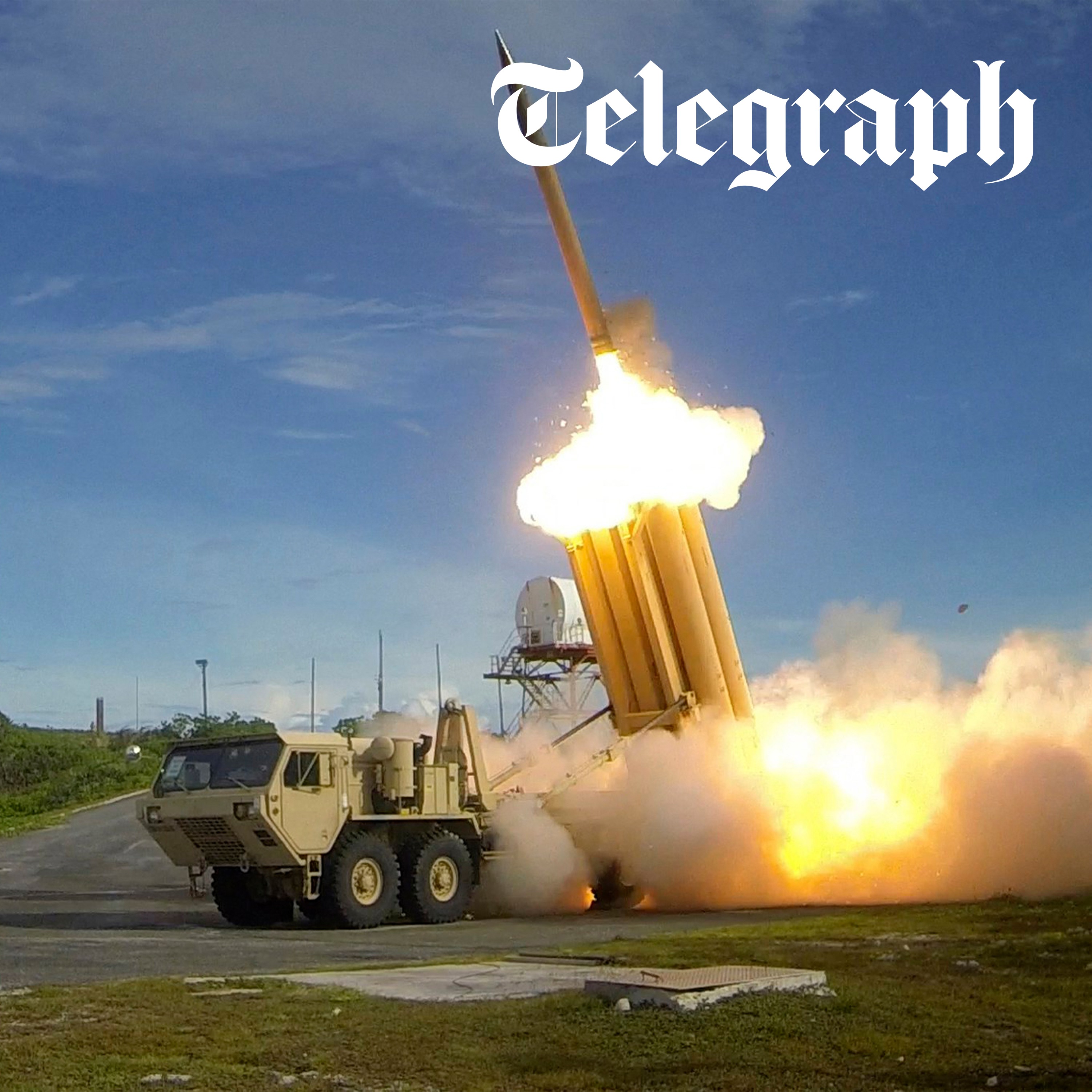
Loading summary
Transcript62 lines
- [00:04]
Acast Advertiser
The telegraph. You've got social dialed in. Search is doing its thing. So why do your marketing results look the same as six months ago? That's because you're fishing in the same pond as everyone else. Podcast listeners are a different audience entirely. More engaged, harder to reach through traditional channels, and ready to act when someone they trust makes a recommendation. We're Acast and we put them right in front of you. Browse thousands of the world's leading podcasts, book host, reads or run your own ads and track every conversion in real time. Same skills you already have. Brand new results. Acast.acast.com advertise.
- [00:52]
Roland Oliphant
I'm Roland Oliphant and this is Iran.
- [00:54]
Podcast Intro/Outro
The latest.
- [00:54]
Roland Oliphant
It's Wednesday the 5th of August, 2026, I think 25 days into the latest round, Iranian American fighting. Although as we'll discuss shortly, that seems to be on pause for now. I ran a brief calculation myself over my desk in the newsroom earlier and discovered that the war itself seems to have been lasting for I think five months and roughly six days. If anybody's still counting on today's episode. The United States has used nearly all of its global stockpile of long range precision missiles and particularly key interceptors. What does that mean for options for going back to war? And the Houthis have struck yet another Saudi oil tanker in the Bab El Mandeb Strait.
- [01:40]
Roland Oliphant (continuation or co-host)
A short time ago, the United States military began major combat operations in Iran.
- [01:48]
Acast Advertiser
Iran's supreme leader, Ayatollah Ali Khamenei was
- [01:51]
Henry Bodkin
killed in the attacks.
- [01:57]
Pantene Advertiser
For the first time ever, the US Navy used a surface sea drone combat to strike Iranian targets.
- [02:04]
Henry Bodkin
The straits are almost completely closed again.
- [02:08]
Roland Oliphant
Does anyone really think that someone can
- [02:10]
Roland Oliphant (continuation or co-host)
tell President Trump what to do?
- [02:13]
Roland Oliphant
Come on. To discuss all this, I'm very pleased to say Henry Bodkin in Jerusalem is back with us. Henry, how are you doing?
- [02:20]
Henry Bodkin
Hi, Roland. I'm very good, thank you. Yeah, nearly six months of war and we're still here. But good to be with you.
- [02:25]
Roland Oliphant
It's astounding, isn't it? I should say, first of all, thank you so much for doing such a sterling job running this ship while I scuttled off to have a holiday in a cowardly fashion.
- [02:38]
Henry Bodkin
I'll do it just this once. But I think holidays are pretty out of order, frankly. You know, when the world burns.
- [02:45]
Roland Oliphant
While the world burns. Exactly. And I'll get onto the weather later. But I suppose we should get onto the diplomacy and the discussion about this ongoing back and forth around the strait. But I was looking at the, the kinetic, the kind of military fighting news today, and it seems to me maybe you've seen something different that has been pretty quiet over the past 24 hours, with the exception of the Bab El Mandab and this confrontation between the Houthis and the Saudis, Is that right?
- [03:14]
Henry Bodkin
Yeah, that's the way it looks to me. I mean, the transiting in the straight of Hormuz, the original theater, I saw, I think a Reuters, they said it's been steady over the last days. So the same, roughly the same number of ships below 10, I think, transiting. But yeah, the Saudi tanker has been hit in the Red Sea, which is where it's all moving to where the new focus is, or the additional focus is obviously the Houthis started off last month by saying, you know, we're doing a blockade of the Saudis, and they've now put that into effect by hitting Saudi vessels. And we had, didn't we, a couple of days ago, that formation of six large Saudi or tankers who were seen going, heading all the way around Africa in order to get past the threat, so adding weeks onto their journey. So it's clearly a blockade that's having an effect and playing a huge part in the diplomacy behind the scenes and really, really beginning to hurt Saudi Arabia, who, as we've discussed, have taken a kind of, I suppose, a middling position in all this. Less aggressive publicly against the Islamic Republic than the uae, than Kuwait, keeping diplomacy, sending representatives to Khomeini's funeral, that kind of thing. But clearly, now that the Houthis have been activated, they were the big, the big kind of question mark in this conflict for so many months. It's affecting them hugely.
- [04:39]
Roland Oliphant
Yeah, it's interesting, isn't it? And I'm just going to read out the fact, as we know, over Wednesday's strike. So this is. The Houthis themselves have claimed this. They say they've struck an oil tanker called the Wafar with several ballistic missiles in the northern Red Sea off the coast of Yanbu. Their spokesman, Yahya Sari, said they hit the tanker accurately and that it was part of their maritime blockade of Saudi Arabia. The attack brought to eight the number of Saudi oil tankers targeted by the group. He also claimed that 29 Saudi oil tankers had either been prevented from passing through the Red Sea and the Arabian Sea or forced to turn back. I suppose what I kind of ponder about the Houthi, Saudi thing, to what degree is this really seen or is this really part of the wider, the Israeli, American, Iranian, War. And to what degree is it really a Saudi, a local Saudi Houthi thing?
- [05:32]
Henry Bodkin
That's always the debate, isn't it? You have this range of control that Iran has command and control over its various proxy groups. I guess kind of at the most extreme level you've had Hezbollah in Lebanon which is actually actively being commanded by IRGC officers at the moment due to the assassinations that happened in 2024. But even before that they were pretty responsive to what Tehran ordered. I suppose at the other end you've got Hamas, which are funded by Iran and Iran is a great patron, but really they are an indigenous, as they would see, a resistance organization, terrorist group. And ultimately as October 7th proved, they do their own thing. The Houthis, I think they started off as local warlords, didn't they? So there's definitely a huge amount of personal, regional, self interest in it. They're not there just on Iran's behalf. And of course their fight with the Saudis goes back a long way. Goes back over 10 years, doesn't it? 10, 15 years. The fact that they've only got involved recently could suggest that they do sit within Tehran's playbook, within Tehran's array of assets because everyone thought Tehran was playing it quite cleverly, keeping this card till later in the conflict. So the fact that they showed restraint until later suggests that maybe they are quite closely aligned with Tehran or maybe it just didn't suit them to get involved until now. But yeah, it's that usual interesting, difficult to discern blend of self interest and kind of regional alliances.
- [07:10]
Roland Oliphant
The other big story, I suppose that kind of is moving today, these reports. I'm about to cite cnn, but there's actually a bunch of American news outlets that Reuters have picked it up as well. I don't know if they're talking to the same sources, but they're all saying that the US has used a vast proportion of its stockpile of missiles and the CNN specifically talking about 80% of its interceptors for the FAD.
- [07:37]
Henry Bodkin
Yeah, it's the very high altitude interceptors,
- [07:40]
Roland Oliphant
80% of those and roughly half of the Patriot interceptors since the start of the war stockpiled dangerously low. Reuters separately saying that the US has used virtually all of its army tactical missile systems. That's the ATACMS a few years ago played a big role in Ukraine. I know you were talking about this on Friday's episode with Lottie, I suppose, sitting in Israel. How is this going down there?
- [08:04]
Henry Bodkin
Firstly, probably a lot of these thaads were used defending Israel. I would Think we know that the US have FAAD batteries in Israel and a couple of hundred soldiers, maybe more than that, specifically to operate those batteries. They're integrated with the IDF's wider system, but they are very much American assets run by the Americans. And of course they're particularly useful for the Israelis because the Israelis have the most time to see the ballistic missiles coming at them. They have more time than Iraq or certainly the Gulf states, of course. So a lot of them will have been burnt up defending Israel. Israel. Look, I think it's so interesting, the culture of leaking of Israel compared to the U.S. i mean, I have been in my 18 months here, appalled, enthralled by the Israelis culture of leaking. I mean, they'll just leak anything and it may or may not be true, it's a complete circus. But it's like they just know when something is actually important and then you can't get anywhere. Then no one will talk about it. And no one ever talks about Israeli stockpiles of interceptors because it is so important. I mean, knowing what your enemy has in their arsenal is one of the key pieces of intelligence, isn't it, that commanders want. It's absolutely crucial. It's just nothing. You just never get anywhere. Israeli journalists, foreign journalists never get anywhere. No one has any idea how many interceptors Israel has burnt through, how many it has left. They obfuscate, they divert. When it comes to why did that missile get through? Did you not send any interceptors up because you've run out? You just don't know because it's such crucial military information. And everyone in the Israeli system who will leak about anything just know that it's not something you leak about. And then you see this coming out of the US system. We have punt through 4/5 of our high altitude fads and half of our patriots. And I think the Israelis just scratch their heads and think like it's a fundamentally different way of thinking. I mean, the Israeli way of thinking is, are we going to be here in five years time? Are we going to be here in 10 years time? There's a survival mentality and I think they look at the Americans and think, well, if you're briefing that kind of crucial information out, you don't have quite the same mentality. So look, the Israelis are obviously, they're still working with CENTCOM at a technical level, their commanders are talking to each other. But in terms of the grand strategy, there's been a disconnect for months. And the Israeli papers and certainly sources I'm talking to you just hear officials saying all the time that we find out what the Americans are thinking from cn and I imagine this is probably no different.
- [10:40]
Roland Oliphant
I was pondering about this. I saw you and Lottie talking about the culture of leaks. One of the points of leaks in Washington, I suppose is always that, you know, if you oppose a policy or you want to attack someone else, you might leak this. I suppose one assumption would be that there are certain people in Washington who don't want this war to continue, think it's a bad idea, and are therefore putting this stuff out there.
- [10:59]
Henry Bodkin
Yeah, I mean, that's obviously always a pretty strong motivation for people to leak and I'm sure that that may play a part. But I also wonder, and I guess, you know, Lottie and Connor and our guys in Washington would probably have a closer instinct for this. But I do also wonder that if you have a completely infuriating boss who is unpredictable and doesn't make decisions in a sort of systematic way, then maybe that does encourage people to leak. Journalist calls up and says, well, what's been going on? And the poor old middleman official, whatever it is, just that's why I don't know, you know, but it's been crazy. And this is what I do know. I think that maybe encourages it. I mean, so here you've got Benjamin Netanyahu's office, among many people, they leak a lot. And it's not always true by any stretch, but you sense that it's always, there's a sort of feeling of a plan behind it.
- [11:52]
Roland Oliphant
They're trying to shape the conversation somehow. There's a reason they're dripping this information into the press.
- [11:58]
Henry Bodkin
Even if it's complete rubbish. Sometimes it is, sometimes it isn't. You sense that there was a sort of team meeting beforehand and they decided on a certain strategy of putting information out there where I think that's probably quite different from the White House.
- [12:12]
Roland Oliphant
It's quite strange, isn't it? On this topic of the culture of leaks and who talks to who, I came across a blog by the Israeli journalist Liz Nadav Eyelid, a new investigation that kind of expands on the earlier reporting we've seen from Harris and the NYT about how Israel went to war. And he comes to some, I don't know if you've seen this, but he comes to some extraordinary conclusions which is, you know, he says he's spoken to double digit sources which seem to include people in the Mossad, people in the IDF and, and ministers in Netanyahu's capital. And from what I See, he seems to say, look, the war went wrong partly because there was no common agreement between those three elements of the Israeli system about what the war was for and what the war aim was for. That, at least for Mossad and the government, regime change was the target. The IDF weren't really on board with that. But he also says that this I find interesting, and it's a challenge for investigators and journalists and historians later on. There is what he calls an intolerable factual gap between the military, the intelligence communities, and political kind of cabinet ministers accounts of how Israel went to war. And who was saying this is a good idea and who was saying, hold on, guys, I don't think this is going to work. I was wondering if you'd seen these reports and what you make of it, because it's really interesting to me that this, this debate is, is taking place in, in the Israeli media, that the post mortem of this campaign is already well underway.
- [13:52]
Henry Bodkin
Yeah, look, I think there's no pretense in this country that the last few months have been a success in the sense of what Israel wanted it to be. I don't know what the conversation's like among average people in the States, but so it's natural that this kind of stuff is beginning to be talked about. I mean, Nadaviyal is interesting. He's deeply against Netanyahu, but he's not a leftist, he's not on the left. He's very patriotic. He believes in Israel and security and stuff. And actually he's. Interestingly, I went to an event that he was speaking at the Israeli Embassy in London about 18 months ago. So despite being very, very against Netanyahu, obviously the civil servants in Israel respect him enough to invite him to an event and not to worry about the political fallout of that. Well, it's been speculated from very early on that Mossad, the Mossad were actually one of the, probably the principal driving force behind this. They were the real positivists of this in terms of, in the Israeli system. Sorry, I shouldn't say the principal driving force because I think the principal driving force was Benjamin Netanyahu, as El reports. But the Mossad, as they're known here, they're called the Mossad here everywhere else in the world. It's just Mossad that they had been telling Netanyahu from very early on, yeah, we can do this. Yes, this is worth doing. And they're now made to look wrong, frankly. And it's a slight role reversal because throughout all the Gaza war, it was the Mossad which Looked like the grownups. They were the ones saying, look, this total victory thing is completely nuts. Let's just get the hostages out. We have communication with Hamas, we have communication with the Qataris. We can sort this out a lot quicker for you. And they were seen as the kind of the grownups in the room against Netanyahu's childish behavior. But on Iran, it's not just Eyal, it's a consistent bunch of reporters who have said that they came to him early and said, yes, we can do this. And the suggestions were that Netanyahu took this intelligence with the names of very, very senior Mossad directors on it to Trump. And that was one of the decisive factors. And yeah, the IDF have been distancing themselves from it since, really since March, since it began to become apparent that the regime was not going to fall. Benjamin Netanyahu is the great proponent of offensive action against Iran, has been for decades, and he's been in power for most of the last 20 years. And I think that's changed things within Israel's security establishment. Being on the Iran desk in the Mossad or in the idf, that's the place to be if you want your career to skyrocket. And that doesn't mean that these offices, these intelligence people lose all their objectivity or anything like that. But I think probably over the course of a career, it does tend towards an atmosphere of, we're going to do this one day. This is the direction that Israel's going in. We're going to attack one day. Are there connections between the Mossad giving the Prime Minister what they wanted over this and British intelligence giving the British Prime Minister what he wanted over Iraq?
- [16:53]
Roland Oliphant
I don't know, just reading through AI's report and it just screamed 2002, 2003. Kind of, you know, dodgy dossier. Was the dossier dodgy? Was it just. Were ministers just seeing what they wanted? Were security officials kind of sensing what the customer wanted and providing it? Was there wishful thinking? And also he describes, which I found really interesting, this kind of, this complete lack of, kind of linked up thinking about what is it we're trying to achieve. I thought the echoes were really, really striking.
- [17:27]
Henry Bodkin
David Barnier, who's just stepped down actually recently asad, who was the head when all this kicked off, you know, he's no fool. He's a career intelligence officer. He's a very smart guy. He can't be fired at will. Possibly he could be, but it would have been very difficult and very awkward. So, like, I'm certainly not suggesting that he was a complete client of the prime minister. I think there probably will have been a definite school of thought in the Mossad that this was achievable. I think my suggestion is probably that the overall culture of kind of positivity towards the idea of decapitating Iran has been politically led over decades, and that's probably seeped into the institution. He's stepped down now, while stepping down, and he's landed a very plum job with a huge contractor, so he's fine. And there is a long history in Israel of the intelligence services and the IDF blaming each other for fiascos. So we're seeing a kind of quintessential Israeli moment, to be honest.
- [18:33]
Roland Oliphant
At the moment, it strikes me that we're well into the. Well into the post mortem. I think. I think this consensus seems to be growing that the war is a failure. I think, and I don't know, I don't want to editorialize too much, but the. The other thing. Do you know what struck me actually? I was talking to. You're actually the second person in Israel we've spoken to in as many days. We had Danny Citrinovich on yesterday.
- [18:58]
Henry Bodkin
Oh, yeah, yeah, yeah. Interesting guy.
- [19:01]
Roland Oliphant
And he was making the observation that he thinks that there's an intelligence failure on the American side as well. Higher up, those at the very top of the American tree, just for some reason, whatever the explanation is, are not getting or viewing the situation in a way that correlates with the facts on the ground, which itself is a very interesting question. I'm wondering if there's going to be a kind of a look back on this war as the historians get digging into it, analyzing all these aspects. What went wrong? Was there a historic intelligence failure?
- [19:36]
Henry Bodkin
I just think that these institutions, intelligence institutions, militaries, they're very capable, but they're there to serve their masters. And if politicians want something, then on the whole, that's what they get. I think it's analogous to the whole thing about the strait. Wasn't it like the US had war games, what would happen? And the scenario that the IRGC could block the strait just always came up in the war games. And yet it didn't somehow work its way into the planning assumptions which landed on Trump's desk, or if it did, they were ignored.
- [20:11]
Roland Oliphant
We're going to take a short break now. When we come back, is there any way to salvage the deal to disarm or decommission Hamas's weapons?
- [20:27]
Pantene Advertiser
All of us strands are in real danger. And whatever it is it's closing in. It started with just a few lost hairs here and there, but now more and more of us are disappearing every day. But listen, we think we have a plan, a way to stop the shedding. Pantene abundant and strong. Go now. It's not too late. Pantene abundant and Strong. It's a three step system that reduces hair loss by 85%. Only the strongest will survive the shedding.
- [20:56]
Acast Advertiser
Here's a tip for you. There's a podcast out there with fans waiting to be your next customer. They tune in every week, they trust the host and that host wants to talk about brands like yours in their own words to their audience. The problem is you just haven't been introduced yet. We're Acast, where that introduction happens. As the world's largest podcast marketplace, we let you browse shows, see who's listening and book host red sponsorships or run your own ads, all from one platform. Transparent pricing, real time data, complete control. Start advertising on podcasts by visiting acast.com advertise.
- [21:42]
Roland Oliphant (continuation or co-host)
Welcome back.
- [21:43]
Roland Oliphant
You're listening to Iran, the latest with me and our Jerusalem correspondent, Henry Botkin. Since you mentioned Hormuz, I suppose we should touch on it. I'm afraid I'm not sure there's much concrete to report. Marco Rubio has said that there's has been progress in these negotiations with Iran to open the Strait. Unless you've been living under a rock for the past few days, you'll know that Iran denies that America is in any way involved with the negotiations over the Strait, but they're definitely talking to Oman. Marco Rubio speaking after meeting Paraguayan Foreign Minister Ruben Ramirez Liscano to sign a completely unrelated MOU on nuclear corporation there. But he said, he said, he said progress is good. Trump, speaking to Fox News last night said the Strait of Hormuz is going to be very open very soon.
- [22:28]
Roland Oliphant (continuation or co-host)
If you look at what's happening, Iran as an example, will never have a nuclear weapon. They already can't. But it's going to be formal. The Strait's going to be open very soon or they're going to get hit very hard. And then the Strait's going to be open. We will go into a tremendous attack, the biggest since World War II.
- [22:47]
Roland Oliphant
These are the talks, as you know, about officially between Oman and Iran about, you know, a mechanism for helping the Strait run. I was, I was pondering this last night, actually. Is this the key, do you think, if, if this comes off and a deal is agreed between the Iranians and the Omanis with About these two different. The Iranians control the northern segment going into the Gulf, the Omanis control the southern segment. They charge some kind of nominal fear about environmental and security and piloting costs. That is actually the key to unlocking this war and that things will be allowed to subside into a new status quo after this.
- [23:32]
Henry Bodkin
Yes, I think. Short answer. I mean, that would seem to be a huge victory for the Iranians to have come through that assault and then to have survived it and then come away with kind of quasi legally acknowledged control of the Strait of Hormuz, one of the most important shipping lanes in the world, that they didn't have before. I can't think what else they would have on their wish list for now, apart from total hegemony over the region and the destruction of Israel. But I think that would be a pretty good hopping off point for the Iranians. We're obviously completely focused on this, but maybe Trump is hoping that the scale of the personal defeat that would entail for him to have started a war and then to have walked away from it having handed control of the straight off Limas to the enemy that he was trying to decapitate, that the American people wouldn't concentrate on that so much. He could just say, look, I've ended the war, the oil's flowing again, inflation's coming down, the price of gas at the pump's going down again. I told you it'd be fine. And it is fine. Maybe that would be the calculation for him.
- [24:38]
Roland Oliphant
So I suppose on the diplomatic front, it really isn't a bit of a wait and see.
- [24:44]
Henry Bodkin
I think there's, there's something worth mentioning. I've only seen it put out. It was put out by Israel's Channel 14 last night, which is very aligned with Benjamin Netanyahu, and it might have been briefed from the Prime Minister's office. So I'll start with what they said. They said, they suggested that Israeli sources had told them that actually the Omanis might remit a lot of the money directly to Washington. So the Omanis collects the outbound toll from the ships, but then send a lot of it or a bit of it to the States, which would obviously be a huge win for Trump if he could say, look, we own half the Strait now, we're getting half the fees for it. I have to say I haven't seen that anywhere else. I'm not sure how the Israeli officials who it was attributed to would know it because I don't think the Israel are in the room at the time. It could Be that actually in a fit of peak because there's a, of tension at the moment between Netanyahu in the White House over Gaza and various other things. Could be saying it to kind of put some mischief out there. But it's an interesting idea. And then obviously we had our own Connor Stringer say, quoting Qatari officials, that there might be some European style mechanism of payment paying into the system somehow to set it up in order to reopen the Straits. So it seems like there's nothing settled yet. And then Axios, I think, quoting someone on the American side saying It'll be a 60 day starting period and no tolls at all, which was obviously the original mou. And that might represent some wishful thinking from someone in the White House.
- [26:12]
Roland Oliphant
I wanted to flag one thing which I saw, which is the United nations human rights chief for KTK saying that he's very alarmed by a rise in executions and death sentences issued in Iran since March. He says this is the UN saying at least 56 people have been executed on national security related charges since March 19, including 27 in cases linked to protests at the start of the year. So Turk saying, I'm alarmed by the rise of executions and death sentences in Iran since March. The capital punishment continues to be used to instill fear among the population, to suppress dissent. We know of course that the Iranian authorities killed thousands of people in cracking down on those protests at the, at the start of the year. I just wanted to, to flag and report that. I'm not sure I have any profound analysis to offer. I don't know if you do.
- [27:09]
Henry Bodkin
Well, it's a, it's a constant trickle, isn't it? And some of them are attributed to supposed crimes that were committed during the protests in January and late December and some of them are more recent. You know, you've been spying for Israel. I suppose with a regime like that, who can do anything over its people? I suppose in a time of war when you are being occasionally hit, there is a genuine sense of paranoia and of wanting to root out perceived collaborator spies. People are sharing things with the enemy.
- [27:41]
Roland Oliphant
Or quite possibly genuine collaborators and spies.
- [27:45]
Henry Bodkin
Right, possibly genuine. Or to just deter, just to execute a few people. To deter. I suppose if you're an autocratic regime, it's a fine balance, isn't it? You want to keep showing that you're in charge and you want to keep demonstrating why you should be feared without doing things so outrageous that you prompt another uprising. I mean, I think, was it last week or the week before there was a Small protest at the site of a public hanging. So that would seem to be the Iranian regime from their own point of view getting it wrong, going a bit far because obviously they want to keep the public off the streets. But yeah, I mean it's symptomatic of the regime. Not sure I have any deeper insight.
- [28:28]
Roland Oliphant
That wasn't Isfahan, that protest against those executions with crowds shouting. I'm told they were shouting shameless or shame at those setting up the cranes. I was told by an Iranian that that's a much stronger term in Persian and that you would probably things would get physical if you said that to someone in normal circumstances, just purely for Iranian context. I suppose we should just be watching for what comes out of these talks over the next couple of days. Before we stop though, because you wrote about, you were talking Friday about this new disarm Hamas deal and then you wrote yesterday in the paper. I opened the paper and there was your byline in the piece saying deal with the disarmament mass unravels. Pezesh Kiyan, the Iranian president, has been the phone to Hamas this morning and hasn't said much except that he says Iran will support whatever Hamas decide to do or any agreement they choose to come to. What is the status with that with Gaza? Is there any more life left in that deal or has it just completely fallen apart and is dead in the water?
- [29:36]
Henry Bodkin
So since I published that piece, Netanyahu has broken his silence and said we don't like this, we didn't agree to it and we're not going to withdraw from our current positions, let alone the yellow line, which they're entitled to be under the deal last October. They've pushed further forward since then. They have more territory than they're entitled to under the October 2025 deal. Most people's understanding is that Israel weren't entitled to be consulted last week because everything that was decided last week between the Board of Peace and Hamas falls within the big 20 point Trump agreement that ended the war last October to which Israel are committed. They got all their hostages back in one go, all their live ones back in one go in return for committing to that deal. Israelis are now talking as if that deal never happened. I think I said in my piece the conversation, the tone in Israel is like it's the day after October 7th again. Hamas is still there. We've got to get them. We need to make ourselves safe. There's a ferocious campaign of assassinations going on which does violate the agreement that they signed up to last October. They're not supposed to take military action in Gaza. I mean, not unless there are demonstrably people approaching their troops. And that's not what we're talking about here. We're talking about airstrikes in the urban areas. Nikolay Mladinov, who's the high representative for the Board of Peace, had a long meeting with Netanyahu on Monday, which was not successful from his point of view. But he put out a statement saying, look, this is the hard work part. This is going to be long, it's not going to be cinematic. I'm paraphrasing here, but this is where we get through the individual will we tackle the technical details. So he's being positive about it. On the face of it, it doesn't look very positive because basically Israel is saying we're not withdrawing at all until Hamas has disarmed properly what we know Hamas has signed up to last week. It's not disarmament and this is a very important point for them. It's a decommissioning process. Now it shouldn't make much of a practical difference, but it means a huge amount to them. It's more of a Northern Ireland style process whereby they hand over their weapons, heavy weapons first, then light weapons, and they are stored by Palestinians, possibly in Gaza.
- [31:56]
Roland Oliphant (continuation or co-host)
Right.
- [31:57]
Henry Bodkin
The idea is in theory that it's reversible so that if, if Israel doesn't then fulfill its stage by stage obligations, I.e. withdrawal, letting aid in, stuff like that as well, then the process can be withdrawn. So Hamas can say to their people, we have not been defeated and we have not been disarmed by the enemy. That's the language of the deal last week. There is no mention of disarmament anywhere in the text. It's just decommissioning. But Israel is saying we're not budging anywhere until full disarmament. So they're talking like the victor, I. E. Like, you know, give us your guns and you'll be lucky to walk away with your lives type thing. And that wasn't the premise of the deal last year. Sadly. Many people might think, you know, Israel fought for two years and didn't get their hostages back and didn't completely defeat Hamas, which was the stated aim. So they accepted this deal which gives Hamas certain rights to, to disarm in a certain way. And now Israel is saying, no, no, no, we're not accepting that. So look, I mean, obviously it all depends on pressure from the White House ultimately. So look, a bad start, but then again, this time last week we weren't in A much better position anyway. So I don't think anyone thinks that much is going to happen before the Israeli general election at the end of October. If there's a lot of pressure from the White House at some point, then these technical issues can probably be ironed through. It just depends on whether the Israelis want to do it.
- [33:31]
Roland Oliphant
It just occurred to me there, what you said. In Northern Ireland, the decommissioning process was irreversible. The guns were sawn up in public. So it's quite a big difference there in the end.
- [33:44]
Henry Bodkin
In the end, yeah, in the end, yes, it. In the end. But I. But I think they were stored intact somewhere. And a trusted third party, I think. Was it a Canadian general or some. Someone like that was. Was able. He was trusted. Was able to say, ira, your guns are there. Trust me, they're not. They haven't been taken off to London. And that was. It's a. It's a lot of theater, but that's how you get the breakthrough. And, I mean, Jonathan Powell, you know, Blair's chief of staff at the time, he's been pushing for this so hard for this.
- [34:18]
Roland Oliphant
It's got his fingerprints all over it. I don't want to. I suppose we're running out of time, but it does strike me, the moment I heard the term decommissioning and all of this. You think Jonathan Powell, you think Good Friday agreement?
- [34:29]
Henry Bodkin
Well, I mean, we reported back in January just how central he was to all this, because, I mean, he really is the only person who's deep with a really good relationship with Wyckoff and Kushner, who are the only people that matter in the US System. The State Department is completely irrelevant. So he has a good relationship with them. He's built a whole career on the success of the Northern Ireland process. He really believes in it, and I think he was quite persuasive. Hamas are going for it, or they say they're going for it, they've publicly signed up to it. There's indications on the ground that they're telling their people, no, no, don't worry, we're staying in power. But formally, they've signed up to it. So it's all a question of whether the Americans want to push the Israelis, want to make the Israelis really uncomfortable and go through with this, because the discourse in Israel is that they're still fighting Hamas.
- [35:19]
Roland Oliphant
Just before we go, could you tell us, I don't know, what's on your agenda? What's in your notebook? What are you memoing the desk about? And thinking are going to be the big stories you've got to cover in the coming week.
- [35:30]
Henry Bodkin
We've got a piece coming out today or tomorrow on the back of my trip to Oman about Iranian attempts to destabilize the regime there and to split the monarchy, the Western supporting monarchy from the people. So that was quite interesting for me. It's my first time over to Jordan and it's a really interesting country. I think there looks like a whole new bunch of ugliness happening in the west bank this week near the Kalandia checkpoint, which is the kind of bit that separates Jerusalem from Ramadan. And the suggestions that there might be a huge clear out there by the IDF of one of the big refugee camps on the basis that it's hosting terrorists. And when these things happened in the last 18 months in Jenin and Tulkorum, it was very ugly. And the cynics are suggesting is this kind of Netanyahu's big election move because he can't offer a victory on Iran. There's not much more he can do in Gaza. But can he say to his base, look, I've just cleared out another bunch of terrorists, as he would put it, close to Jerusalem. So that could get quite ugly in the next few days just watching that.
- [36:31]
Roland Oliphant
Henry, thank you so much for joining us. Once again, that was Iran. The Latest will be back or somebody will be back tomorrow. Until then, goodbye.
- [36:49]
Podcast Intro/Outro
Iran. The Latest is an original podcast from the Telegraph, created by David Knowles and hosted by me, Roland Oliphant and Venetia Rainey. If you appreciated this podcast, please consider following around the latest in your preferred podcast app and if you have a moment, leave a review as it helps others find the show. For more from our foreign correspondents on the ground, sign up to our new daily newsletter, Cables via our website or listen to our sister podcast Ukraine the Latest. We are still on the same email address battlelineselegraph.co.uk or you can contact us on X. You can find our handles in the show Notes. The producer is Peter Shevelin. The executive producers are Venetia Rainey and Louisa Wells.
- [37:34]
Acast Advertiser
Do you keep hearing podcast ads like this one, for example, but always wonder how you actually get involved with them for your own brand or organization? Well, it's easier than you think. We're acast and we give you the platform to do it all yourself. Browse thousands of popular podcasts, choose the shows that match your perfect audience, set your budget and launch. And if you want a hand, our podcast specialists are there to help you launch with confidence. This is podcast advertising without barriers. Get started@acast.com advertisement.