← Iran: The Latest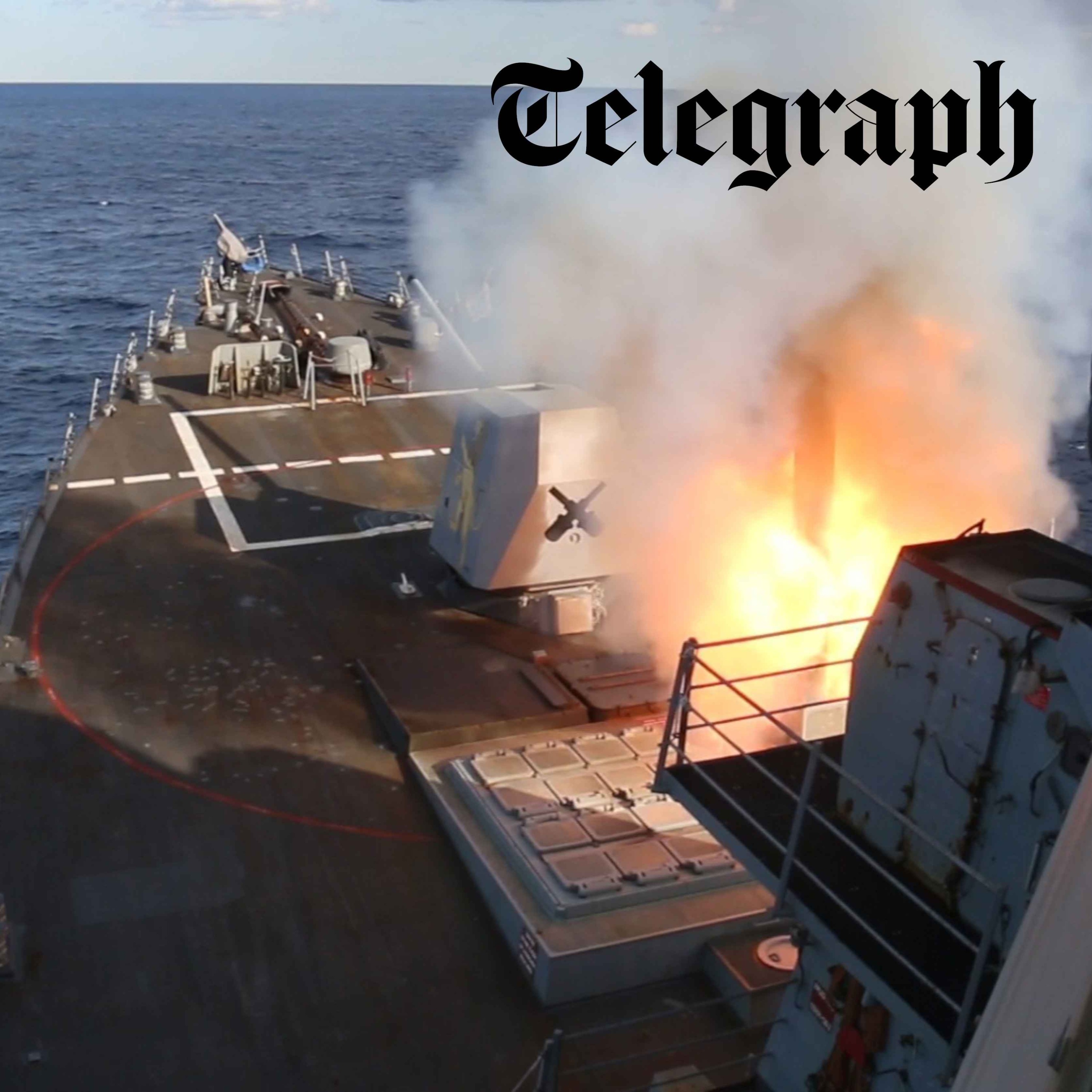
Iran: The Latest
US obliterates Iranian navy, exclusive Trump chat & voices from inside Tehran
00:53:13
Loading summary
Transcript142 lines
- [00:04]
Venetia Rainey
The telegraph.
- [00:09]
Venice Shirani
This is a Monday.com ad, the samemonday.com designed for every team.
- [00:14]
Monday.com/Jerry Ad Voice
The same Monday.com with built in AI
- [00:16]
Venice Shirani
scaling your work from day one. The same Monday.comwith an easy and intuitive setup. Go to Monday.com and try it for free.
- [00:24]
Monday.com/Jerry Ad Voice
Tired of your car insurance rate going up? Even with a clean driving record, you're not alone. That's why there's Jerry, your proactive insurance assistant. Jerry compares rates side by side from over 50 top insurers and helps you switch with ease. Jerry even tracks market rates and alerts you when it's best to shop. No spam calls, no hidden fees. Drivers who save with Jerry could save over $1,300 a year. Switch with confidence. Download the Jerry app or visit Jerry AI Acast today.
- [00:59]
Pete Hegseth
If you kill Americans, if you threaten Americans anywhere on earth, we will hunt you down without apology and without hesitation. And we will kill you.
- [01:10]
Roland Oliphant
We will measure our success not only by the battles we win, but also
- [01:14]
Akhtar McCoy
by the wars we end. Right now, all eyes are on Washington, but who's actually watching Europe at the moment?
- [01:24]
Venice Shirani
The deepening ties between China, Russia and North Korea would certainly have some in
- [01:29]
Roland Oliphant
Washington concerned sometimes use strong language.
- [01:33]
Connor Stringer
A short time ago, the United States military began major combat operations in Iran.
- [01:41]
Venetia Rainey
The IDF will continue to uphold the
- [01:43]
Venice Shirani
ceasefire agreement and will respond firmly to any violation of it. I'm Venetia Rainey.
- [01:49]
Roland Oliphant
And I'm Roland Oliphant.
- [01:51]
Venice Shirani
And this is Iran. The Latest. It's Tuesday, March 3, 2026. Yes, you heard that right. Iran, the latest. We're pivoting from battle lines to cover the conflict in Iran. This is an unprecedented war and we're going to be covering it every day in the weeks to come.
- [02:05]
Roland Oliphant
Coming up on today's episode, we'll be speaking to Telegraph US Correspondent Connor Stringer, who's been speaking directly on the telephone with Donald Trump. And we'll see what he has to say about Diego Garcia, Britain's role in all of this, and also the other things that Secretary of War Pete Hegseth and Chairman of the Joint Chiefs General Dan Kaine had to say about the progress of the campaign.
- [02:28]
Venice Shirani
Plus, we'll be speaking to someone on the ground in Lebanon about Israel's invasion this morning.
- [02:32]
Roland Oliphant
And we'll also be Speaking to the Telegraph's actor McCoy, who has managed to be in touch with people on the ground in Iran about just what it is like trying to survive amid the bombs.
- [02:46]
Venice Shirani
But first, let's start with some stories that have caught our eye for the last 24 hours. One of the main targets that Trump and Hegseth have spoken about repeatedly, which is a little bit more concrete than just regime change, is Iran's navy, CENTCOM Central Command, which is leading the US military operation on all of this. They announced yesterday that they had destroyed 11 Iranian ships in the Gulf of Oman. So they had 11 ships there and now they have none. The Iranian regime has harassed and attacked international shipping in the Gulf of Oman for decades. Those days are over. It looks like as well from the reporting around this that the Iranian navy are not even really making any attempts to disperse or protect their ships. We got some satellite images from the port of Bandar Abbas in southern Iran showing at least four vessels on fire, all completely in place. One of them is the Makran, which Iran converted from an oil tanker to allow helicopter landings as a sort of forward naval base. We've also heard reports about Iranian navy submarines, anti ship missile sites, and the Iranian Jamaran class corvette now sinking. And this is according to centcom, again now sinking to the bottom of the Gulf of Oman. I do think this is quite significant. If Iran has no navy, it reduces its ability to control the waterways. The Strait of Hor, as we mentioned yesterday, key to oil traffic through the region. So I think that will be a really important development to keep an eye on. We did hear over the weekend that Iran had claimed that it had hit US Aircraft carrier the Abraham Lincoln. But the US have said that was a pack of lies, which I think we could probably have guessed because we never actually saw any footage of any of that.
- [04:12]
Roland Oliphant
So they had 11 ships. I didn't actually know that, but that sounds like it's their capital ships, their ship ships. The thing is, I've always understood, as was explained to me once by a friend of the podcast, Tom Sharp, former Royal Navy Commander, one of the things the Iranians have up their sleeves in that area are the fast boats generally operated by the irgc, these little motorboats. And also I think he said that they were known to be experimenting with maritime drones. A bit like the way the Ukrainians have really, they've taken that forward. So it'll be interesting to see whether they can, you know, get those going.
- [04:45]
Venice Shirani
It's interesting you mentioned the fast boats because we did see Iran putting out videos of them rehearsing, and this is before the full blown conflict erupted last weekend. But Iran put out videos of them rehearsing boarding an aircraft carrier thing with sort of fast boats approaching and people rappelling up the sides of the boat. I expect that asymmetric warfare that you mentioned that Ukraine's adopted in the Black Sea is definitely something they'll be looking to adopt in the coming weeks. We'll see how successful they can be.
- [05:07]
Roland Oliphant
I'd just add here this morning, the IRGC have said we are closing the Straits of Hormuz, which they haven't said before. They have said it is closed. If you try and sail through that, we will sink.
- [05:16]
Venice Shirani
You and CENTCOM have said it's open. Well, yeah, no company's going to be sending shipping through that passageway. As you said yesterday.
- [05:22]
Roland Oliphant
It's a question of insurance, isn't it?
- [05:23]
Venice Shirani
Yeah, exactly. What's been catching your eye?
- [05:26]
Roland Oliphant
First of all, Kurdish involvement. So this is from Barak Ravid of Axios, who's usually very well connected. Anyway, he's reporting that Donald Trump spoke to the Kurdish leaders in Iraq on Sunday. So after the war began to discuss the war and what might come next. He's reporting he spoke to Masoud Barzani and Bafil Talabani. Those are the leaders of the two main Kurdish factions in Iraq. This is a very interesting quotation that Barak's put out. It is the general view and certainly Netanyahu's view, that the Kurds are going to come out of the woodwork and that they're going to rise up. So this is really significant because it raises the possibility that the Americans and the Israelis are considering arming and perhaps requesting Kurdish armed groups in Iraq to cross the border and to maybe launch an ethnic Kurdish uprising in Kurdish areas of Iran. And that's, that's a really grave and serious thing because there's also, there are Arab groups in the southwest of the country. There's Baluchi groups in the southeast over near the Pakistani border. If that is a tactic they're looking at, then we're looking at, we're looking at ethnic conflict. We're looking at separatism. We're looking at civil war. That, to me, is something that we should keep a very, very close eye on, because if that is what they're aiming at, then maybe the end game is not so much regime changes as the de facto partition of Iran, because
- [06:48]
Venice Shirani
Iran has significant Kurdish population, doesn't it? Am I remembering right that Mahsa Amini, the young woman who was killed while in custody after not wearing a hijab, she was Kurdish, Iranian. And there were huge funerals for her that carried on and they continued for much longer, partly because, of course, of the appalling treatment of her and her death in custody. And just the Wider objections over treatment of women in Iran, but partly because there's this simmering Kurdish resentment against Iranian authorities.
- [07:15]
Roland Oliphant
Well, it's a very diverse country. I mean, it has many, many different groups. Lots of Iranians will tell you, look, we are a proper nation state. We have a continuous state going back thousands of years. We're not like, I don't know, places like Libya or Syria that were kind of lines on a map drawn by French and British diplomats, you know, 100 years ago. Like, we're a real country, everyone has a sense of being Iranian, and so we're not going to let this happen. Nonetheless, there are fault lines there that can be exploited and I think it's a really serious possibility that we should have our eyes open to if that's something they're considering.
- [07:51]
Venice Shirani
Just quickly, you mentioned Libya and I wanted to say on this episode, one listener pointed out that Libya was an example of regime change campaign by air only. And I know we spoke quite a few times yesterday about how this was the first example of that. So thank you for pointing that out. There's no good catch. Although I would say, of course, that went absolutely terribly and did not lead to any kind of stability or peace for Libyans. So, yeah, not a great example for this particular campaign. Another story that's caught my eye before we go back to you, Roland, is one that James Rothwell has written about. Some comments made by Friedrich Merz in Germany. He's come out as the most hawkish so far on this Iran campaign, which I think is really interesting.
- [08:27]
Roland Oliphant
Most hawkish amongst who?
- [08:28]
Venice Shirani
Amongst the Europeans.
- [08:29]
Roland Oliphant
Ah, Europeans.
- [08:30]
Venice Shirani
He suggested that Iran should not be protected by international law. He said that such rules are redundant in a world where rogue states broke them with impunity and allies don't enforce them. And he went on to say that now is not the time for Europeans to lecture the United States and Israel about legality. Pretty punchy fighting talk from Friedrich Merz. And I think, for me, anyway, it's slightly unexpected, although we know he's a very close. Germany is a very close ally of Israel and refused to criticise its campaign in Gaza, even towards the end, when other European allies were starting to be more critical. So perhaps the alignment comes there. Anything else you want to mention?
- [09:02]
Roland Oliphant
I've been looking at the Gulf again. Bloomberg late last night reported that Qatar and the UAE are lobbying for a quick end to the war, which, as we said, that's part of the Iranian strategy, hurt the Gulf states as much as possible, so they kind of forced Donald Trump to ease up because of the pain being inflicted on his allies. However, Donald Trump himself has said that the biggest surprise of the war so far was Iran's attack on Saudi Arabia and other Arab countries. We were surprised. We told them we've got this and now they want to fight and they're aggressively fighting. They were going to be very little involved and now they insist on being involved. This is following all those attacks on, on Saudi oil fields, on, on Kuwait, on Bahrain, on Qatar, in the uae. Now, I spoke to an Arab source last night who said the mood in Riyadh is leaning towards retaliation against Iran.
- [09:48]
Venice Shirani
Oh, wow. That would be big.
- [09:49]
Akhtar McCoy
Yeah.
- [09:49]
Roland Oliphant
I'm not saying it's definitive and this is someone who, you know, has been speaking closely with, with Saudi officials and he said the mood there seems to be that, look, if we let the Iranians get away with this, then anyone can get away with it.
- [10:02]
Akhtar McCoy
Right.
- [10:02]
Roland Oliphant
We can't let this one fly. Now obviously the implication of that is that you would see Saudi Arabia, you know, an Arab kingdom joining a war on the side of Israel. I'm not ruling it out. There was a time when people say that could not happen. Very interesting development if it happens. Since that conversation I had last night, Iranian drones have struck the US Embassy in Riyadh. So chances rising of at least a Saudi and possibly a wider Gulf Arab entry into the war. Not saying it's going to happen, but again, I think that is something to definitely consider.
- [10:36]
Venice Shirani
We know the Saudi desire to be more closely aligned with Israel is there because there was a lot of reporting that just before October 7, 2023, the Hamas attack on Israel, that people were close to a breakthrough in terms of Saudi signing an Abraham Accords with Israel. Who knows how close they really were. But there were some suggestions that's why Hamas attacked, because it felt that that would be such a huge blow to the sort of, you know, regional alignment of the Middle east that it had to force the Gulf partners hands. Of course, all of that talk of Abraham Accords went completely out the once the Gaza war got properly underway. But really interesting to hear that Saudi is thinking of coming into this war on the side of Israel.
- [11:16]
Roland Oliphant
Thinking of it, I'm not saying it's going to happen. Last thing from me about the length of the war. Donald Trump has given us a rough timeline. He said they are anticipating a four week operation. He said it's ahead of schedule. But four weeks that would take us to Saturday 28th March. So put that in your diaries. Obviously we're not saying that's exactly what's going to happen. But that's interesting because it would also give the Iranians some kind of timeline to work with. It would give them a sense of this is how long we have to hold out and how long our missile and drone stockpiles have to last until maybe the United States loses interest or becomes exhausted or its own kind of munitions and interceptor missiles begin to dwindle and they have to talk. And if this is, as we think from the Iranian point of view, a question of resilience, how long one or another can hold out and whether Gulf states interceptor missiles outlast Iran's drones and ballistic missiles, that's something I'm sure their military planners will be, will be taking into account. And one last thing. We reported on the death of former Iranian president Mahmoud Ahmadinejad yesterday. His office actually got in touch to deny that very forcefully. I said we took that from Iranian media, Iranian state media. They said, yes, they misreported that. However, we don't have any more pictures or proof of life or anything else. So it's quite possible Makudakku Ninja is alive. I just put that as a footnote because we mentioned it yesterday. Today, as I always say mentioned yesterday, I don't really think he's a major political player in Iran at the moment. But I suppose that's another mark of fog of war, right? Anybody who follows this podcast and Ukraine the latest knows that reports come out, things change. It's difficult to follow what's happening day by day. Akhtar, thank you so much for joining us. You've been working non stop ever since this began. You know, we really appreciate you being here. You have two remarkable pieces in the paper today. The first of them is a great bit of reportage speaking to people, ordinary Iranians I think mostly in Tehran, but not just in Tehran about what's going on. What can you tell about us about that? Because I think one of the things we've been missing in coverage from the past few days has been the voices of ordinary people on the ground.
- [13:36]
Akhtar McCoy
It is day four of the war on Iran and today this morning was Tehran with the capital witness the biggest day of bombings. Bombs were falling everywhere in Tehran and according to videos are coming out and people I'm speaking with, it's not just what Americans and Israeli officials are saying about like targeting regimes, institutions and targets. Most of those places, the IRGC bases, I don't know, Basij bases, they are located in densely populated areas where civilians, millions of civilians are living and they are getting killed. Yesterday a hospital was bombed. The day before yesterday, a school, a school, girls, was bombed. And today, Iranian Red Crossing reported that 800 people have been killed so far, more than 180 of them civilians, children. And when I speak with people, just they say they're moving houses from one place to another. Some of them who could leave Tehran, because the Islamic Republic authorities on Saturday morning told everyone to leave Tehran if possible. Some of them could and they moved. Some of them moved to the northern coastline, cities where they hope that no bomb would fall on them. If they are sitting in their car next to the Caspian Sea, many millions could not because roads are filled with traffic and they're outside on the streets. There are the Islamic Republic supporters who have filled their streets and they're mourning the Supreme Leader's death.
- [15:01]
Roland Oliphant
Tell us about the conversations you had. Because during the recent protests and the massacre in January, there was a total Internet blackout. It was almost impossible to get in. How difficult has it been to speak to people on the ground? Is it the same as that or is it a bit easier this time?
- [15:15]
Akhtar McCoy
No, it's difficult. It's more worse than previous time. Previously, you could speak with people who were using a Starlink, and now the Islamic Republic authorities are tracking those Starlink devices. And they would, if you are using one, they would come and knock on your door and take it away. And if you are lucky, you will not be arrested. So it's more difficult to speak to people on the ground than the January protests.
- [15:38]
Venice Shirani
And what kind of things have they been saying to you? Do they welcome Trump and Israel's military intervention? What do they say about Khamenei's assassination?
- [15:46]
Akhtar McCoy
The regime supporters, of course they are angry. They want revenge. And then they are saying if the current authorities, the leadership council, signs any ceasefire agreement with the Americans, that would be a betrayal. They are angry at the moment and any ceasefire would make them even angrier. That's what they are saying. But people like ordinary people, people who protested last month, initially they were celebrating the Supreme Leader's death, but now they are being bombed as well. So there is a mixed feeling in Tehran. So you don't know where the next bomb would fall.
- [16:16]
Venice Shirani
Do you know much more about the bombing of the school that happened in Iran on Saturday? One of the first big attacks with a death toll, we hear from the Iranian authorities of over 100.
- [16:24]
Akhtar McCoy
Yeah, 180. More than 100 of them school girls. This school had 170 students at the time when it was bombed. And the rest of the casualties were people who were living in nearby houses. It was a strike, according to Iranian officials, by an Israeli on an American missile. And until yesterday, the operation rescue operations were underway and people, local people trying to get children out of the rubble.
- [16:51]
Roland Oliphant
I was wondering if you could tell us about the individuals you've spoken to. You speak to a man called Javed in the story, and he tells you about how his daughter was hit by shards of glass after a missile strike nearby. Just tell us. Just tell us their story.
- [17:09]
Akhtar McCoy
He lives in Narmac, near an area where former President Mahmoud Ahmadinejad lives. And then his place, wherever he was living, was bombed. So these nearby buildings all were shattered, like the windows just shattered. And then this man's daughter was near the window and the glass went into. Embedded into her cheek. And then he said he went out to go to a hospital, to a clinic, wherever, but he couldn't because the streets were filled and more bombs were falling. So then he left his house, went to another, more bombs were falling, went to another, just because there was a basement in the basement. Last message I got from him, he said, like, he could find something, but the glasses are still in the daughter's cheek, but he could find some bandage to cover it. And my messages to him are not delivered.
- [17:58]
Roland Oliphant
Now you don't know if he's still alive or not?
- [18:00]
Akhtar McCoy
No, I do not know, because messages do not deliver.
- [18:03]
Venice Shirani
What do you think of Trump's exhortation for people to rise up? This is their chance to take their country back. You know, this is the time to take action. Have we seen signs that something like that is going to happen?
- [18:16]
Akhtar McCoy
First thing, like throughout the Iranian history, foreign intervention, never, like always, united people. It doesn't matter who is in power in Tehran now. We are talking about Iran, not the Islamic Republic. Unites people against America, against anyone, any foreign intervention. And in terms of people rising, how they can rise while streets are filled with regime supporters mourning today, there have been funerals for those children who are killed in that school and across the country, there are funerals for those who are killed, attended by people who we consider as regime supporters. So when the streets are filled with regime supporters and there are patrols of the IRGC and the Basij, and then they are everywhere, how do we expect someone to rise up while there is a foreign intervention when historically Iranians would unite against it?
- [19:02]
Roland Oliphant
You also said there's text messages have been coming out from the IRGC warning people that if they go out to protest, they will be viewed as collaborators with the enemy.
- [19:12]
Akhtar McCoy
Yeah. Yesterday morning, the IRGC Intelligence organization sent out a message to everyone, at least in Tehran, saying that the enemy, according to them, is trying to encourage protests to rise up or stage protests. And then the statement said, the message says any such attempt was seen that would be considered as a collaboration with the enemy, which would have persecution.
- [19:37]
Roland Oliphant
Persecution. I mean, the threat is clear. Yeah, if you come out, we are going to shoot you.
- [19:41]
Akhtar McCoy
Yeah, against the regime. But if you are coming out to support the regime, you're fine.
- [19:45]
Roland Oliphant
Is it fair to say then the regime are conscious of the threat of street uprising and therefore they're making sure that they control the streets?
- [19:53]
Akhtar McCoy
Yeah. Even President Pizishkin asked the nation yesterday to come out to the streets, to the mosques, to everywhere in the public places, fill their streets, according to him, to mourn.
- [20:03]
Roland Oliphant
You have another piece in the paper which is really interesting. Turning to the question of the succession. Who comes after Ali Khamenei? I thought it was really interesting because you've really helpfully broken it down into four potential candidates and you've very helpfully given us little one word summaries of who they are. Let's start with Ali Reza Arafi. He's the representative of the clerics on the three man ruling council at the moment you call him. His strategy is ceasefire, we think. Yeah, tell us about him.
- [20:33]
Akhtar McCoy
Yeah, he comes from Qom and he controls all of those seminaries in Qom, the religious schools in Qom. And he has more chance at the moment because he's on that council that is supposed to be running the country. And he would have more chances in the assembly of Experts meeting that he can say, okay, I'm running the country actually right now. And then people would be voting for him. He could be a deal breaker in terms of ceasefire because over the weekend Abbas Al Raqchi for the first time said Iran is open for de escalation. And if he becomes a supreme leader, he would be just sitting there and Ali Larij and his brother would be running the country as they are doing now.
- [21:17]
Roland Oliphant
Okay, so what you're talking about, I'm sorry to put this in a very British terms, is a kind of supreme leader. Instead of an all powerful dictator like Ali Khamenei, you get a kind of an English king or queen, a kind of symbolic figure who sits above while the real business of government is run by other people.
- [21:33]
Akhtar McCoy
Yeah, like you would have. You would have him, Al Reza Ayatollah Al Reza Arafi as the supreme leader, but just symbolic, not symbolic. He will have some powers, but still the country would be running by Larijani brothers who have more power.
- [21:47]
Roland Oliphant
Okay. So he's seen as perhaps that means if he's chosen, maybe that means a ceasefire, maybe it's conciliatory. The next person you've written is Muhammad Medimir Baghari. And you say strategy, suicidal escalation.
- [21:59]
Akhtar McCoy
Yeah. He is the godfather of the hardliners. And he has ideologies that everyone should die and should get killed if the Islamic, any Islamic country is supposed to survive. So he has this apocalyptic, suicidal, hardline thoughts. And if the assembly of Experts could not choose Al Za Rafi and if they go for him, it means the Islamic Republic does not want de escalation. And he would start bombing everywhere, as they are doing now, they would escalate it, which would have more bombs falling on Tehran from the Iranians and Americans.
- [22:34]
Roland Oliphant
You got this quotation from him. He said on television that to reach the goal of divine proximity, even if half the world's people are killed, it is worth it.
- [22:43]
Akhtar McCoy
Yeah. If you have that as the supreme leader. So you would expect what to come next?
- [22:47]
Roland Oliphant
Martyrdom is victory. It's a victory in itself. The next guy you've got is Sadak Larajani. Strategy, pragmatic survival.
- [22:55]
Akhtar McCoy
He is considered because his brother, his younger brother Ali, is actually running the country now. Ali Larujani, he is the secretary of Supreme National Security Council. Before the war, he was traveling across the Middle east to Moscow. He was just sending Putin's messages to Khamenei's messages to Putin, to Arab leaders in the Persian Gulf. And if the regime wants to go with him, it would be the same system. They would. Okay, just. He wouldn't have charisma as Khamenei had. But still. He can have a still. Okay, we have nuclear program. We have. We defeated the Americans, even if it's through ceasefire. But that would be still as Khamenei
- [23:37]
Roland Oliphant
was ruling, because this is a real regime survival, continuity kind of candidate. And presumably his brother would really be running things.
- [23:44]
Akhtar McCoy
Yeah. I mean, and he has more power
- [23:46]
Roland Oliphant
because he is the head of the Expediency Council.
- [23:49]
Akhtar McCoy
And there in that, in every decision made, we're going to have to do
- [23:52]
Roland Oliphant
in it explain about all the different councils and assemblies in Iranian politics. I don't think we can do it now.
- [23:58]
Akhtar McCoy
Every decision made during the wartime should go through him, even if it's approved by the leadership council. So he has more influence at the moment than he had when he was the head of judiciary for 10 years between 2009 and 2009.
- [24:11]
Venetia Rainey
Okay.
- [24:12]
Roland Oliphant
And then the last person you've got is Moishtaba Khamenei. This is Haman's second son. Strategy, military coup. What does that mean?
- [24:22]
Akhtar McCoy
Yeah. He himself wouldn't have any power.
- [24:25]
Roland Oliphant
Can I ask you before we go on, is he alive?
- [24:27]
Akhtar McCoy
We don't know. And we said it that if alive. Right. If Mushtaba Khamenei is alive, and if things get worse, the IRGC would just go for a coup and take power and install him as your puppet, as the next supreme leader because he has more influence. He is more favored by the IRGC than any other candidate.
- [24:46]
Roland Oliphant
He's their candidate.
- [24:47]
Akhtar McCoy
If alive, he's their candidate. And they would just have him as their puppet. And then there would be a military dictatorship.
- [24:55]
Roland Oliphant
Okay. Instead of a theocracy that's kind of got militarist kind of tendencies, you would have a military dictatorship with some kind of theocratic dressing up to keep some kind of window dressing. Yeah, but it would be a military dictatorship.
- [25:08]
Akhtar McCoy
Yeah, he would be considered as a supreme leader, but actually the decision would be made by the IRGC commanders.
- [25:14]
Venice Shirani
Okay, so just finally, Akhtar, who out of those four do you think is most likely?
- [25:18]
Akhtar McCoy
There is also an element of surprise because there are thousands of clerics in Qom who we never heard of. And there might be someone who the regime has been preparing for years, for decades, to show up. But at the moment, Al Zahrafi has more chances than anyone else because he
- [25:34]
Roland Oliphant
is on that council and he says ceasefire. Akhtar McCoy, thank you so much for joining us.
- [25:39]
Venetia Rainey
Thank you.
- [25:40]
Venice Shirani
Coming up after the break, we'll be speaking to someone on the ground in Lebanon after Israel announced it's invading again. And we'll be hearing from our Telegraph correspondent who's had a chat on the phone with Donald Trump.
- [25:57]
Monday.com/Jerry Ad Voice
Most drivers overpay for car insurance, not because they're careless, but because the system is needlessly complicated. Jerry fixes that. Traditional comparison sites give you quotes once and then disappear. But Jerry can handle all the insurance shopping, legwork and never stops working. Compare 50 plus insurers side by side and purchase directly in the app. No spam calls, no hidden fees. They'll even monitor price trends and can alert you to better rates. Drivers who save with Jerry could save over $1,300 a year. Download the Jerry app or visit Jerry AI Acast.
- [26:30]
Rippling/Bill.com Ad Voice
Today, most all in one HR systems are a patchwork of disconnected and manual tools. Rippling is totally automated. If you promote an employee, Rippling can automatically handle necessary updates from payroll taxes and provisioning new app permissions to assigning required manager training. That's why Rippling is the 1 rated human capital management suite on G2 TrustRadius and Gartner. If you're ready to run the backbone of your business on one unified platform, head to rippling.com acastbiz and sign up today. That's R-I P P L-I N G.com acastbiz to sign up.
- [27:08]
Venice Shirani
Okay, I have to tell you, I was just looking on ebay where I
- [27:11]
Venetia Rainey
go for all kinds of things I love.
- [27:13]
Connor Stringer
And there it was, that hologram trading card. One of the rarest.
- [27:17]
Rippling/Bill.com Ad Voice
The last one I needed for my set.
- [27:18]
Connor Stringer
Shiny like the designer handbag of my dreams.
- [27:21]
Venetia Rainey
One of a kind.
- [27:22]
Monday.com/Jerry Ad Voice
Ebay had it.
- [27:23]
Connor Stringer
And now everyone's asking, ooh, where'd you get your windshield wipers?
- [27:27]
Roland Oliphant
Ebay has all the parts that fit my car.
- [27:29]
Monday.com/Jerry Ad Voice
No more annoying, just beautiful.
- [27:33]
Venetia Rainey
Millions of finds, each with a story. EBay, things people love.
- [27:45]
Venice Shirani
Welcome back. You're listening to Iran, the latest. This is a new format for us. We would love to hear your feedback. Please leave a review wherever you listen to podcasts now. This morning, Israel announced that it was invading Lebanon again. To explain what's been happening on the ground, we're joined down the line by Maya Jebeli, Reuters bureau chief for Lebanon, Jordan and Syria. Maya, welcome to Iran. The latest. Just tell us what's been happening on the ground this morning.
- [28:07]
Venetia Rainey
Well, it remains unclear to us exactly to what extent the Israelis have sent additional armed troops. So we know that there have been reservists that have been called up to the Israeli north. We don't know how many of them have entered. We have at least one kind of one area that we know that they sent additional troops into, which is the southeastern part of the Lebanese border. But we're not sure what that looks like. And it's important to remember that the Israelis had maintained five positions within southern Lebanon after the last war. So they already did have troops inside southern Lebanon. So whether these are, you know, whether these are additional reinforcements to those positions, whether we're talking about a full on ground invasion, you know, similar to what we had seen in 2024, it's still really, really hard to tell. And it's also partly hard to tell because a lot of the security sources and the people that we knew in these southernmost villages have left. So Lebanese army troops have withdrawn from some of the forward operating positions that they were in along the Blue line, which is the, which is basically the border between Lebanon and Israel and the residents in those villages were ordered to evacuate. Last night, the entire border strip of villages was ordered by the Israeli military to evacuate. So it's really hard to get eyes on the ground to determine the extent of this new Israeli incursion.
- [29:15]
Venice Shirani
This all began when Hezbollah came in on the side of Iran following the US and Israeli attack. Over the weekend, Hezbollah fired some rockets at Israel and now Israel has responded. It's already been bombing parts of Lebanon and Beirut.
- [29:26]
Venetia Rainey
Right.
- [29:26]
Venice Shirani
How much damage has it been causing
- [29:27]
Venetia Rainey
over the past 24 to 36 hours? Basically Israeli strikes across eastern Lebanon, northeastern Lebanon, the south, and as well as several barrages onto the southern suburbs of Beirut. The initial barrage early on Monday morning was extremely heavy. It woke us all up around 2:30am and it sounded really close to what we heard when the Israeli military had carried out an air attack that killed Hezbollah's former head, Hassan Nasrallah. So it was very, very intense, kind of quick succession strikes. And then after that we've really seen one off strikes onto the southern suburbs. And so you can still see plumes of smoke rising. It's a very densely populated area, tons and tons of buildings, multi story buildings, and several of those have already been brought down over the past day and a half. So what that did is it sent thousands of Lebanese flooding into the streets. It created traffic jams as people started to flee. And so there are Lebanese now that have filled up at least 50 schools that have been turned into displacement centers. Those are UN figures. And a lot of Lebanese are actually just sleeping out in the streets. Thankfully that the cold spree that we had last week has passed. And at least for now, the weather is okay for them to be out in the cold, but we don't know how long they're going to be displaced. And so a lot of families are really worried about the extent to which this will last and where they can find shelter.
- [30:45]
Roland Oliphant
There's been a lot of discussion about the state of Hezbollah, whether they're in any condition to really fight as they once could have done, but also as I understand the Lebanese government talking about finally disarming them. What do we know about Hezbollah's condition, about its capacity to fight or its capacity to be a real player in this war. And what do we know about these plans to disarm them and restore the Lebanese government's monopoly on the use of force?
- [31:14]
Venetia Rainey
So essentially over the past six months, the Lebanese government has really doubled down on this idea of a state monopoly on arms. And the Lebanese army had actually developed a plan kind of sector by sector in Lebanon to confiscate Hezbollah's arms. They were really care explicitly kind of saying they were Hezbollah's arms because they still want to avoid a confrontation with the group. But there was an announcement earlier this year, at the beginning of the year, that the Lebanese army had taken operational control of the southernmost part of Lebanon, which falls below a river called the Litany River. And the questions now that are arising are, is that really the case? If we've seen rocket fire that is coming out of that area into northern Israel, was the Lebanese army really fully in control of that area? And could they actually say that yes, we did confiscate of the weapon stores that were there. And I kind of start with that just to say that that means that it's really hard for us to determine exactly what Hezbollah's military capabilities are. We learned through the last war in 2024 that they had military stores all across southern Lebanon, but they also were able to replenish those from other military warehouses that they had further north in the east of the country where we suspect that some of their long range missiles remain and are still stored. And so at the very least we can say that its arsenal appear appears to be intact enough to launch some attacks. But it's also important to note what they've actually fired. They really didn't fire a huge barrage of missiles in the past when they've avenged other leaders deaths. They fired upwards of 200, 300 missiles this time around. In the last two attacks that we saw it was a pretty small barrage, it was four or five. So they still do have some kind of military capability. Are they holding back and possibly expecting a major Israeli escalation and therefore trying to maintain their stocks for some kind of a longer fight that's also possible. So we're very much asking the same questions that you are, because we're trying to kind of extrapolate from what we've seen on the ground here and try to determine to what extent they have been able to maintain both their military stores and their command and control capability. And that gets us to an important point which I assume is also something you wanted to ask about, which is the degree to which Iran's decision making is actually deeply involved in what we see Hezbollah carry up today. And that's something that people have very much suspected over the past couple of days, has really kind of, you know, become clear is that there appears to be, at least from some of the sources that we've been talking to, a lot more Control or a lot more oversight by possibly Iranian IRGC elements who are here in Lebanon and who are playing a direct role in the military operations of Hezbollah.
- [33:52]
Venice Shirani
Who leads Hezbollah now? And do we think Israel will try and assassinate him? I assume again, since Hassan Nasrallah was
- [33:59]
Venetia Rainey
killed in 2024, Naim Asim, who was the longtime deputy Secretary general of the group, is now in charge, you know, a lot of people on the very big leadership differences between the two of them. Hassan Nasrallah was a very powerful orator. He was. He was very charismatic. You could see all Lebanese channels turn him on whenever he had a speech on. And Naeem Alsan doesn't have the same gravitas and the same charisma when he comes on screen. So that's one of the big kind of visible differences that we see between them. And a lot of suspicions are still, you know, are still circulating. That quick barrage of strikes that we heard overnight from Sunday into Monday morning was actually an assassination attempt against him. We haven't heard from him since then. But there also hasn't been a confirmation from either side, neither from the Israelis nor from Hezbollah. The Israelis have said that he is a target, but we haven't heard a confirmation on either side of what his fate is.
- [34:51]
Roland Oliphant
I got one last little observation, really. So Hezbollah fired a drone towards the RAF base in Cyprus. One of them got through. I don't know if they fired more than that and exploded on the Runway or something. No one was hurt. But it seems very interestingly that was a Shahad drone carrying a Russian manufactured jamming device, which would suggest they've been resupplied by Russia and that somehow the Iranians, Hezbollah, are applying lessons that the Russians have learned in the war in Ukraine. Is there anything you can say to that?
- [35:23]
Venetia Rainey
We haven't gotten much more. All the Hezbollah sources that we typically have been able to get some information out of have gone underground. So we haven't gotten much more from them, even a denial that they were involved in this particular incident. But Hezbollah has threatened Cyprus in the past. If this was indeed you know, confirmed to be them, definitively say that, then it would be fulfilling this threat that they had made earlier on, after October 7 against the British military for their involvement and specifically citing Cyprus and their base there as a potential target. And it shows really how close geographically all of these countries are to one another. I mean, it's really. Yes, it is a widening conflict across the Middle east. And we've seen the Gulf be targeted in ways that we have never seen before. But Europe is also very close in the Mediterranean. The longer that this conflict lasts, the more that people are starting to realize the global impact, not just the regional impact, but the global impact that it's having.
- [36:15]
Venice Shirani
One final question, because I think another piece in this puzzle is Syria would previously have been a resupply route from Iran to its proxy Hezbollah in Lebanon. Obviously, the government has changed now since Bashar al Assad fell and we now have Ahmad al Shara. What role do you think Syria is going to play in all of this? I don't think we've heard much from Shara yet.
- [36:33]
Venetia Rainey
Yeah, I mean, this is certainly one of the major differences between the 2024 war and what we're seeing today, which is that Hezbollah's land route, its historic land route through Syria and to Iraq and into Iran has been severed. What the Israeli military has continued to say, though, over the past year and a half is that Hezbollah is continuing to be able to get weapons in and they have been able to resupply themselves. And that's what they've used as one of the primary justifications for their strikes, is that they there the flow and the continuous access to that land route may have been severed, but there are one off shipments that Hezbollah is continuing to be able to get in. We have heard from some security sources about how difficult it is for the Lebanese army to maintain to basically shut off that porous border. It is a historic smuggling route. People have smuggled things throughout that porous border in a very mountainous region for decades. It could be anything from cigarettes to weapons. We do suspect that it remains really difficult for the Lebanese army to seal that off completely. But that's also one of the reasons that we suspect we saw Israel Israeli strikes on northeast Lebanon yesterday in the areas that we know have been traditional smuggling routes for the group. So even if it hasn't been the flow that they've been able to relatively easily maintain for several decades prior to assets fall, it does appear that there have been some shipments that have been able to get through for the group to be able to resupply.
- [37:53]
Venice Shirani
Thanks very much, Maya. That was Maya Jabely, Reuters bureau chief for Lebanon, Syria and Georgia. Now, what's it like to chat to Donald Trump on the phone, particularly in the midst of a war? Well, our colleague Connor Stringer knows exactly what it's like because he called him up on Sunday night. Here's our conversation for around the latest.
- [38:08]
Connor Stringer
So I've been trying to get, like every other journalist in the city, the most valuable phone number perhaps in the world, and that is Donald Trump's. Some time ago, I managed to get my hands on it, and I've sat on it for a little while, kind of waiting for the right moment to call him. And after a bit of a discussion with the editors back in London, we kind of decided that Sunday evening might be the best time to get him. As you know, Venetia, Trump's a man who keeps contactable almost every hour of the day. He'll pick up the phone to journalists and he will speak to them and speak to you if you get him at the right time. And that's normally either really early in the morning, when he rises at about 4am, 5am, or relatively late at night. So he just returned from Mar a Lago in Florida, where, of course, he launched Operation Epic Fury and he strikes in Iran. And I thought, give it a bit of an hour. It was about half past it, nine o', clock, and I thought, okay, let's give it a go. And lo and behold, the second ring in. He answers. And it was short, sweet, straight to it. And he was very generous with his time, but extraordinary. I didn't expect to be speaking to well, really expect him to answer so quickly.
- [39:11]
Venice Shirani
What did you ask him? You had this brief chance with him on the phone.
- [39:14]
Connor Stringer
Well, I thought the key was to get the introduction right, because if you've got some ransomware with a bit of a foreign accent like mine, ringing you up, up at half eight in the middle of a war, saying, have you got two minutes, big fella? Please and thank you. So it was very key, but I went straight in. Reference Star, of course, the Telegraph's reporting on the BBC, doctoring his speech. And he was. And he at. And he loved that. Actually, he was bowled over by that and has always, as he did on True Social, loved our reporting. So from then it was straight in, cut straight through to it. I immediately asked him what he thought about Sir Keir Starmer finally allowing him to use Diego Garcia, and why did he think it took him so long? And he was so extremely candid and there was a real sense of actually frustration there. He'd obviously spent the whole weekend briefing other reporters about the leadership in Iran who he thought might be best placed to replace the Supreme Leader. Of course, he was assassinated. So when somebody kind of asked him about the logistics and this roadblock that they had faced, obviously clearly behind the scenes for months, he was extremely casual, standard, although buoyant at the way the kind of operation has gone so far, how successful it's been this seemed to be the big sticker that had been frustrating them and the Gulf nations for some time. And he said it straight. He was very disappointed. Him and his generals were frustrated that Britain, of course, a special relationship like ours that is centuries old was being tested. And in words that he put it, I felt, actually, which kind of signifies his frustration is that he didn't think this had happened before in the first time, you know, between the history of the two countries. So this for him was a really relationship defining rebuttal or refusal that irked him. So it doesn't surprise me that we've seen him obviously threaten to derail Starmer's deal and torpedo it entirely.
- [40:55]
Venice Shirani
Just explain why Diego Garcia and America's use of it has been so critical for this conflict and why it's been a source of tension between America and Britain.
- [41:02]
Connor Stringer
Oh, it's been so critical, it's hard to actually convey how strategically important to this. But if you can picture a little body of land that's far enough away, outside of the reach of Iranian missiles, but close enough that you can launch your bombers from, it is absolutely perfect gold to the right country who own it. And in fact, it's us, the Brits, who have sovereignty over the base. And for some time now, sir, Keir Starmer's deal to give it away and cede sovereignty to the premaritious, which I mean handing over sovereignty of the Chigo Islands and by default, default Diego Garcia, which sits on it to the Mauritians, has caused a lot of frustration because crucially, what it would mean is that the UK and the US would essentially have to give Mauritius a bit of a heads up whenever time they were running operations. And that's course is a nightmare if you're America or secure Starmer, and you're trying to covertly operate some kind of mission, of course, because Mauritius, a very close ally of Iran and China themselves. So Donald Trump up until now had been mixed messaging, but he was being lobbied heavily by Republicans on the Hill and in the White House, some allies, including Scott Besson, to sink this deal because it was seen as such a treacherous giveaway and a really kind of shocking concession to our enemies. But in the months in planning ahead of this Iranian operation, which we think has been in the planning for the last several months, if not weeks, and they realized that, that to do this pretty well, we're going to need Diego Garcia. So they come and knocking to Sakir's front door, who essentially says, look, I'm sorry, I'm a little bit worried about the international law here and how this is going to play out. So I'm going to have to say no. And that completely took the US by surprise. It infuriate the President. He told me last night that his generals even were very unhappy with how that played out. I didn't expect Britain to basically give them a bit of a two finger slit and, and tell them hands off. Sorry, not this time. But what you've noticed obviously, of course, in Sunday night, so Kir coming out and saying it's okay to use the base now we give you the green, the green light. But sources were telling me yesterday that was because under international laws, once Iran started firing indiscriminately on the citizens across the Middle east, it's much easier to justify the legal implications of Britain being dragged into this. So the defense legal offense was there. But Brits and particularly the Foreign Office and the key lawyers there were very concerned that if they had let Donald Trump use Diego Garcia to conduct his strikes on Saturday on the first day, they would have been in hot water with the International Court.
- [43:37]
Venice Shirani
And you're not the only reporter that Trump has been speaking to. I'm just going to read out some of the quotes that he's been telling various outlets in America. He said that America is knocking the crap out of Iran and warned that a big wave of strikes are still to come. He told CNN the big wave hasn't even happened. The big one is coming soon. When speaking to the New York Post, he refused to rule out American boots on the ground. He said, and you're going to have to explain this to me. I don't have yips with respect to boots on the ground. Like every president says there will be no boots on the ground. I don't say it. I say probably don't need them if they were necessary. A lot going on there. Just break some of that down for us also. What does yips mean?
- [44:11]
Connor Stringer
The yips for the golfers out there will know what the yips was and hopefully none of you have had it. I've stayed away from it. The yips is often associated with pussing, is when you get the yips and for the life of you, you can sink a putt regardless for no matter how hard you try. Donald, from a keen golfer for it's hilarious to see him describing an invasion, a land invasion, obviously using a golfing analogy there. So he's worried. There's two things for Donald Trump that he's riding on here. He's got the midterms coming, which is at the moment, his polls are low. He hoped the State of the Union would have bolstered some of his support. It landed okay, but it's not turned around any kind of love for him. So here he is, faced with a relatively long campaign game in the Middle East. But it's tough because he was voted and as he campaigned on, on the idea that he was going to end foreign wars, this was it. America was never going to get involved in these extremely expensive, messy, long winded conflicts that they had no rights to be involved in. And we're looking at this thing now becoming, as he said to me last night, up to four weeks long. So it's difficult. He's facing a rebellion from his own base, the MAGA based who are isolationists. And now he's in it and he's going to have to to succeed in order to convey this as a bit of a win.
- [45:22]
Venice Shirani
I wonder if that explains the aggressiveness of Pete Hegseth's press conference today. I mean, he always gives slightly aggressive conferences, the ones that I've watched anyway. But he definitely came across as very much on the offensive here and he was calling out people who were criticizing the wars, they were woke. He accused some of America's allies of hemming and whoring, clutching at their pearls. I think that was directed at Britain.
- [45:44]
Pete Hegseth
Turns out the regime who chanted death to America and death to Israel was gifted. Death from America and death from Israel. This is not a so called regime change war, but the regime sure did change. The mission of Operation Epic Fury is laser focused. Destroy Iranian offensive missiles, destroy Iranian missile production, destroy their navy and other security infrastructure and they will never have have nuclear weapons. This is not Iraq, this is not endless. I was there for both. As the President warned, an effort of this scope will include casualties. War is hell and always will be. A grateful nation honors the four Americans we have lost thus far and those injured. The absolute best of America. We will finish this on America first conditions of President Trump's choosing, nobody else's. We didn't start this war, but under President Trump we are finishing it. Their war on Americans has become our retribution against their ayatollah and his death cult. It took the 47th president, a fighter who always puts America first, to finally draw the line. After 47 years of Iranian belligerence, He reminded the world as he has time and time again, being an American means something unbreakable. If you kill Americans, if you threaten Americans anywhere on earth, we will hunt you down without apology and without hesitation and we will kill you so it
- [47:32]
Venice Shirani
was definitely fighting talk. And yet he was also not ruling out boots on the ground and also trying to say this won't be a forever war, this won't be the Iraq war. He's clearly having to convince people. Is that some of the criticism that you're hearing out in Washington?
- [47:46]
Connor Stringer
Absolutely. It's almost like a pitch to the nation, isn't it? But it's very hard thing to do. You can't tell everybody that it's not going to be forever with also telling people that we may or may not use truth. It's a very tough line to toe for this administration and especially the base which, as I said, elected them on the idea that we weren't going to have any more of these, these foreign wars. And here we are staring down the barrel of one that might last a month. Pete Hegseth, as you say, Manisha, he loves the fighting talk, doesn't he? If he's good for nothing else, it is his fighting socks, beaches full of war fighters and various other nicknames for people. And as you say, the big teller line today was that one about the clutching of the prowlers indirectly at Sir Keir Starmer and our allies, who Sir Keir facing a lot of criticism here, here for not getting involved and refusing, of course, to let the US Use Diego Garcia in the first place. I had Fox News rolling for about 48 hours between Saturday and Sunday as we were filing and following the the updates for the paper and online over the course of the weekend. And I can tell you there was from from the various panels and the guests, even the host themselves, there is a lot of discontent towards Sir Keer, who they call, I think the nickname Fox have given him is lawyer, not only leader, which I think is quite comical.
- [48:58]
Venice Shirani
And what do you make of the military objectives that we've now had slightly more clearly set out for us by Hegseth, by Kaine, and also a bit by Trump. They're focusing a lot on destroying Iran's missile capabilities, annihilating their navy that's come up several times and obviously preventing them from ever having nuclear weapons.
- [49:15]
Connor Stringer
Yeah. So Trump telling me last night that they're ahead of schedule and that's why he was in such a good mood and why he was speaking to me and reporters and everybody else, because as he told me, the initial idea was they had put aside four weeks to take out the Iranian regime and the leadership. And they've managed to do basically most of them in about 24 hours, in one single strike or three strikes rather synchronized with the Israelis as the leadership gathered in the light of day in Tehran. So he was happy. They think they're ahead of schedule. Now they're in it, they may as well go as far as they can to make sure they never have to return. So that's why we're seeing them trying to completely eradicate and destroy air defenses, the Navy tick out any kind of, of threat that the US may feel is posed to them in one to two months time. What Donald Trump cannot afford is essentially a repeat of what we saw under Operation Midnight Hammer seven months ago, where he told the nation this was a one off clinical strike that had set back Iran's nuclear enrichment program for about two to three years. Yet seven months later, here we are, a full blow war, no clear sight if actually Iran was ever close to building, building a nuclear weapon. It smells a lot like Iraq, doesn't it? But what he cannot afford to go back and do is go back in for a third time. So this has to be the last time the Donald Trump ever looks towards the Middle East. And to do so means wiping Iran and any of its kind of threat out entirely.
- [50:36]
Venice Shirani
The fact that he's refusing to rule out boots on the ground and Hegseth as well said no, but and then gave a sort of very waffly answer saying, you know, we don't like to tell the enemy what we can or can't do. And all of this, how is that going down? Because that would be a huge escalation for the Americans. You've already had four servicemen die and I can only assume that American troops coming back in body bags, that would be a big line for Trump to cross.
- [51:01]
Connor Stringer
You said it. Trump famously. A source contacted me on Sunday saying Trump famously doesn't like dead bodies or grieving widows. It's not his thing. He actually genuinely wanted to test it. So that idea for him is a real red line or one that he absolutely does not want to cross. In the build up to this, people were telling me that Trump and the options that he were weighing and essentially why he ended up opting for strikes, is because he wanted to an option that was going to nullify and reduce the risk of American casualties. That is the number one concern for Americans and voters going to war and coming back. Troops in body bags, of course, especially when you've campaigned to end forever wars and to reduce the number of American lives killed and combat, combat. So the US one want to play their hands. That's what Pete Hegseth is doing there, keeping his cars relatively close to his chest in case the day comes where there is the regime is gone and they feel like they need some kind of peacekeeping force in there. My punch is don't rule out the Board of Peace coming in here at a later date to provide some kind of peacekeeping force or troop force if it means making sure the US don't have any individuals or troops in that there. But this is all about messaging now conveying to the American people. It's four weeks, we get this done, it's clinical, and then we never have to come in again.
- [52:19]
Venice Shirani
Is there any pushback from the Democrats, from Republicans? How are they organizing the people who are against this military operation? A Reuter Zipso poll published on Sunday found that just 20% of Americans approve of the strikes. 43% disapprove, 29% not sure. So clearly there must be support for some people to push back against this.
- [52:35]
Connor Stringer
Yeah, absolutely. And the loudest voices of the white ones in particular, that the ones you're used to hearing, there are some dissenters. But it's very early days and. And for those to put their ore in kind of very early now on day three of this operation are putting a lot at risk. And people like Marjorie Taylor Greene, of course, one of the President's closest allies, led the charge on Saturday and Sunday, saying that this isn't what she voted for, it wasn't what she campaigned on. Of course, she's left Congress now, given up her seat because she's become so disgruntled with the work. Donald Trump's MAGA base ideology is gone. It's not what she and others had voted for and campaigned on. The Democrats are relatively aligned in one direction, and that is that this is wholly unnecessary and all diplomatic options should have been well drawn and drummed out.
- [53:24]
Venice Shirani
First, what have you learned about the planning of all of this? We've now had a lot of reporting come out over the weekends. You've been speaking to people on the ground. What have you learned about the buildup to all of this and why Trump decided to strike last weekend?
- [53:34]
Connor Stringer
The nuclear talks in Geneva, which for all intensive purposes, the messaging seems to be relatively positive. But having spoken to some very senior officials involved in them behind the scenes were saying it was anything but. Although the message on the sofa was good. The red line for the Iranians, they just wouldn't give up their ballistic missiles. And that for Trump, was the kind of big red flag that they weren't taking this seriously. He had enough. He'd got fed up. There was obviously other reporting around on the weekend that the Israeli intelligence firm Mossad, of course, arguably the best in the game of what they do, had identified this meeting of the Iranian regime in one place in Tehran. And they felt that the time to strike was now. The CIA was also involved in identifying that. So I think a conglomeration of the two realizing that Iran perhaps were not playing ball, weren't as serious as what Donald Trump would have liked them to be, and the rare opportunity of having the regiment meet above ground in daylight on a Friday or Saturday afternoon wasn't. It was too good to pass up. And that's when they decided to go.
- [54:35]
Venice Shirani
That was Connor Stringer, the Telegraph's U.S. correspondent. Well, Roland, I think that's all we've got time for in today's episode. We'll be back again tomorrow. And just to say again, we are temporarily rebranding as Iran the Latest but you can still search for battle lines in your feed or if you're sharing this with other people, will be coming out every day for the next week. Two weeks, three weeks, who knows?
- [54:55]
Roland Oliphant
As you said, Venetia, let's not, let's not preemptively strike the timeline of this war. It's great to have you all with us. We are still on the same email address and the same URLs. Battle lines Iran the Latest it's great to have you with us. Until tomorrow. That was Iran the Latest Goodbye, Goodbye
- [55:19]
Venice Shirani
Iran the Latest is an original podcast from the Telegraph, created by David Knowles and hosted by me, Venice Shirani and Roland Olyphant. If you appreciated this podcast, please consider following around the latest on your preferred podcast app. And if you have a moment, leave us a review as it helps others find the show. To stay on top of all of our news, subscribe to the Telegraph, sign up to our Dispatchers newsletter or listen to our sister podcast Ukraine the Latest we're still on the same email address. Battlelinestelegraph.co.uk or you can contact us on X. You can find our handles in the show. Notes the producer is Peter Shevlin, the Executive Producer producer is Louisa Wells.
- [55:58]
Tommy John Ad Voice
Guys, it's no use putting it off. The best time for an underwear refresh is now Tommy John. Underwear is designed for a perfect fit that stays put all day. There's zero chafe, thanks to four times more stretch than competing brands and their innovative horizontal quickdraw fly is a game changer. With over 30 million pairs sold, there are thousands of men out there more comfortable with than you. Don't settle for less. Go to tommyjohn.com today for 25% off your first order with code comfort. That's tommyjohn.comfort tommyjohn comfort perfected when it
- [56:31]
Rippling/Bill.com Ad Voice
comes to managing money, forget the hype and look at the results. Bill has a trillion dollars of secure payments powering our bill pay tools. Instead of just moving money, Bill is powering the financial operations of nearly half a million customers customers. So stop the guesswork and start scaling with the proven choice. Ready to talk with an expert? Visit bill.comproven to get started and grab a $250 gift card as a thank you. Terms and conditions apply. See Offer page for details.