← Iran: The Latest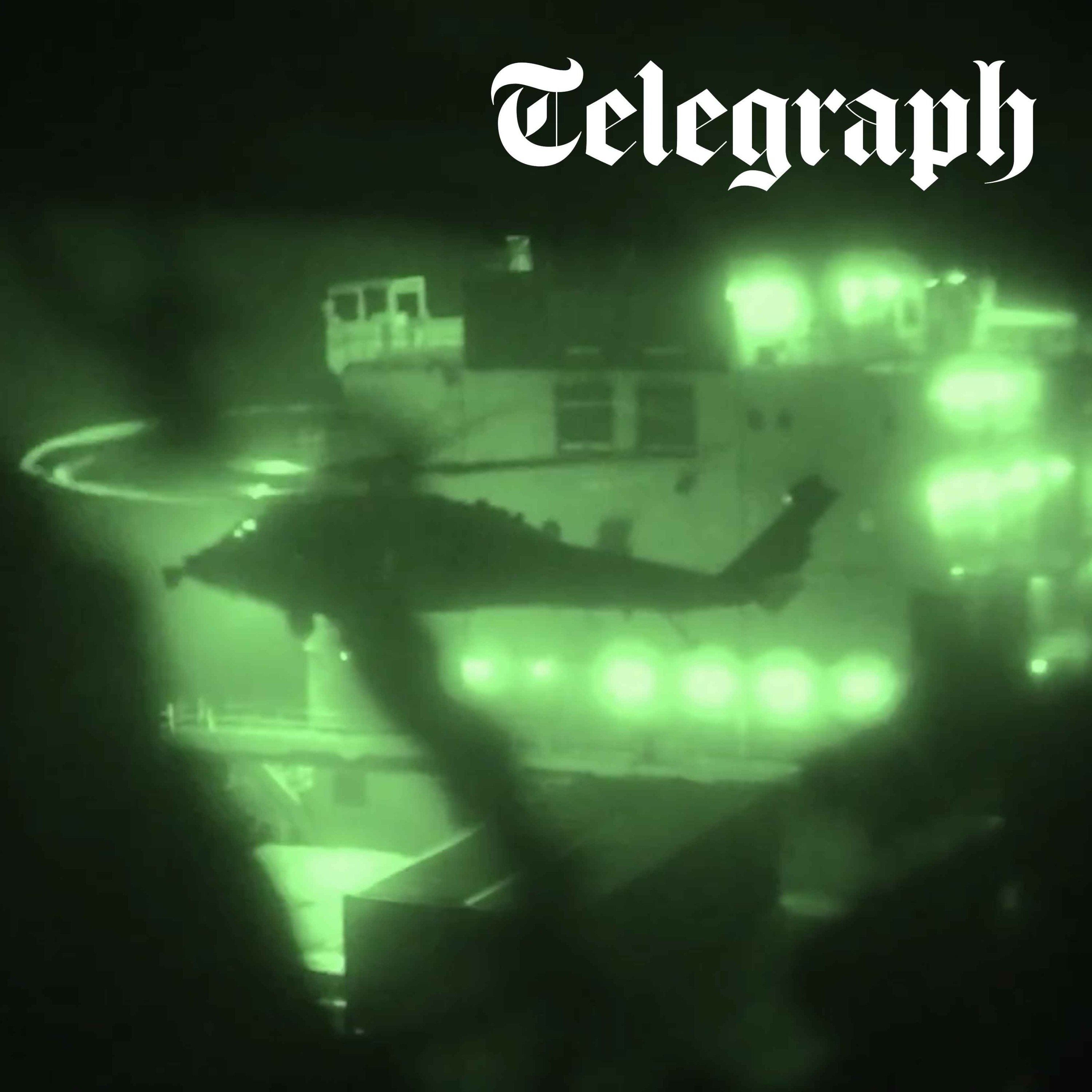
Loading summary
Transcript49 lines
- [00:04]
Vinny Shiraney
The telegraph.
- [00:10]
Monday.com Advertiser
This is a Monday.com ad. The same Monday.com helping people worldwide getting work done faster and better. The same Monday.com designed for every team and every industry. The same Monday.com with built in AI scaling your work from day one. The same Monday.com that your team will actually love using the samemonday.com with an easy and intuitive setup. Go to Monday.com and try it for free. Yes, the same Monday.com with Vrbal's last
- [00:41]
Vrbal Travel Advertiser
minute deals, you can save over $50 on your spring getaway. So whether it's a mountain escape with friends, a family week at the beach or sightseeing in a new city, there's still time to get great discounts. Book your next day now. Average savings $72. Select homes only.
- [01:16]
Retired Royal Navy Commodore Steve Prest
But the fact the President of the United States has started a war and then is blaming everyone else for not wading in on his side, frankly, is a bit of a temper tantrum. A short time ago, the United States military began major combat operations in Iran.
- [01:32]
Monday.com Advertiser
Today, President Trump says Iran's supreme leader, Ayatollah Ali Khamenei was killed in the attacks.
- [01:38]
Iranian Tanker Crew Audio
Ayatollah say it
- [01:43]
Retired Royal Navy Commodore Steve Prest
the Pentagon is weighing a takeover of that island as a way to force the reopening of the street of Hormuz. Iran begged for this ceasefire and we all know it. Does anyone really think but someone can
- [01:56]
Vinny Shiraney
tell President Trump what to do? Come on. I'm Venetia Rainey and this is Iran. The Latest. It's Monday 20th April, 2026. We're now on day 52 of the war and we're 13 days into the two week US Iran ceasefire. So lots to discuss on today's episode. We're going to be delving into the American seizure of an Iranian cargo ship that happened on Sunday. This is the first time this has happened so far in this conflict. So I've been speaking to a retired Royal Navy commodore about why it's so and also some of the more unusual aspects of the operation. But first, let's take a look at where we are today and go through some updates, starting with the main theatre of war in Iran. Now, the ceasefire is still holding. As I said, we're on day 13. So it expires at the end of tomorrow, Tuesday. On Wednesday, the war should be restarting if they don't extend this ceasefire. There's supposed to be a second round of peace talks happening tomorrow in Islamabad. Just a reminder, we've had first round on April 11th. That was a 21 hour negotiating session and nothing apparently came out of it, nothing that was publicly announced anyway. There are security measures underway in Islamabad which suggest that they are hoping it will go ahead. We think J.D. vance, the deputy president, is traveling tonight, but no confirmation of that. And what we do know is that the Iranians have been saying loudly and repeatedly that they're not going to these peace talks, that it's not going ahead on their side. There's a lot at stake for JD Vance in all of this. He's been tasked with trying to end this war, which, to all intents and purposes, he never agreed with. Trump has been making more threats to destroy Iranian civilian infrastructure if they don't strike a deal. This was him posting last night. We're offering a very fair and reasonable deal, and I hope they take it, because if they don't, the United States is going to knock out every single power plant and every single bridge in Iran. No more Mr. Nice Guy. That was in capitals. So more of these threats of massive obliteration if the Iranians don't come to the table. But so far we haven't seen any sign that they are coming to the table. A spokesperson for the Iranian Foreign Ministry said no one is going because the US had shown it's not serious about pursuing diplomacy and blamed the Trump administration for violating the conditions of the ceasefire. Now, that's not quite true because, as we said, the ceasefire is still holding. So clearly it hasn't been completely violated and hasn't collapsed. But there's no doubt that what happened over the weekend has really tested it and has not exactly laid the groundwork for peace talks. So what happened? I'm just going to dial you back to Friday. Shortly after our podcast came out, Iran's foreign minister came out of nowhere and said that the Strait of Hormuz was completely open to commercial vessels. So it was briefly open. Then Trump came out of the blocks very quickly and said the blockade is still in place. We then also had a statement from the IRGC who said that they retained strict management and control over the waterway and would shoot at ships attempting to cross. We heard late on Friday night that some ships were being turned around. And then on Saturday, by the morning, Iran had officially closed it again. The following day, not clear the extent to which it was ever properly open. That same day, we saw an Iranian attack on an Indian flagged oil tanker. The Samna Herald. It changed its name to Indian ship Indian crew on its AIs. And I just flagged that tiny detail because it shows you the lengths that these ships are going to to try and protect themselves in these increasingly hostile waters. That ship was attacked by IOGC gunboats and fired on. There's audio circulating of that attack, which we'll get to later on in this podcast. However, even as this was going on, more than 20 vessels did pass through the Strait of Hormuz on Saturday. That's according to shipping analytics firm Kepler. That's the highest number of ships that have crossed the waterway since the start of the war. So it have been at least partially open. Among the vessels that made it through were ones that had loaded cargo from Iran ranging from oil to metals. There is clearly massive confusion over what exactly the Iranians are doing in the Strait of Hormuz. And I don't just mean on our behalf, I mean also on the Iranian side, our excellent foreign correspondent, Akhtar McCoy, who We've had on the podcast multiple times. He's written a brilliant piece about how the Islamic Republic is increasingly too fractured to speak with one voice. That I think goes some way to explaining this whiplash that we're getting from what the reality is on the ground, or rather at sea, and what Iranian officials, including the foreign minister, who should know what's going on, are saying. So we'll link to that piece in the show notes. So that's Saturday. Some boats going through, some boats being turned around and attacked. Then on Sunday, an American warship, the USS Sprance, opens fire on a sanctioned Iranian flagged vessel, the Tuska. This is part of the American blockade in the Gulf of Oman. And apparently this ship, the Tuska, was on its way to the Iranian port of Bandar Abbas. Now, this is really significant and we're going to get more into it in the second half of this podcast. But basically, since the blockade's announcement, US forces have directed around 25 commercial vessels apparently to turn around or return to an Iranian port. So they have been enforcing that blockade. This is the first known time that the Americans have fired on a commercial vessel during the whole conflict. So that ship is now being searched, remains under U.S. control. And as I said, we'll get more into that later. Trump also claimed on Sunday that a British ship had been fired on by Iran, but the UK Government denied that, and I can't see any reports to corroborate it. So we'll just chalk that up as misinformation in the fog of war. Okay, so where does all that weekend activity leave us today? As I said, there are some suggestions that the talks will proceed despite this huge maritime showdown. The Wall Street Journal is reporting that Tehran is considering a 10 year suspension of Iranian enrichment followed by a decade in which it would only be allowed to produce a modest amount of low enriched uranium. This could be a way to overcome the nuclear question that we've had in the negotiations that JD Vance spoke about as a major stumb block. We've also heard some reporting in Reuters that Donald Trump could consider lifting America's blockade of Iranian ports. That would be the concession on the American side. Apparently the American president said this to Field Marshal Asim Munir, Pakistan's army chief, during a phone call today. That would be very significant. If so. So clearly there are talks happening in the background, proposals being made. We'll see what, if anything comes to it. I think just going back to Akhtar's piece, there is a real question about who the Americans are negotiating with. Who's pulling the strings? Who's still able to conduct military operations on the ground or at sea in the Strait of Hormuz? And how will that undo whatever's agreed at the negotiating table? What's the most likely outcome? An extension of the ceasefire, perhaps another week. That's the Turkish foreign minister's hope. He said yesterday that he was optimistic that the ceasefire could be extended, allowing more time for talks and one tiny positive sign that suggests that something will happen to stop this war resuming on Wednesday, I saw that the Qatar Civil Aviation Authority has reopened its Hamad International Airport to foreign airlines. They're going to gradually resume this week. So that is a good sign and suggests that some confidence is returning in the region, one to keep an eye on and we will return to that obviously tomorrow. Now, the other big theater of war that we've been following is what's happening in Lebanon. Israel. That's the other ceasefire underway. We're now on day four of the 10 day ceasefire that was agreed last Friday. Again, this is broadly holding, although was also severely tested over the weekend. Trump posted on Friday, Israel will not be bombing Lebanon any longer. They are prohibited from doing so by the usa. Enough is enough. So interestingly, we have not seen any more bombing, but military operations are continuing in southern Lebanon and there were a few attacks attributed to Hezbollah. So we had two Israeli soldiers killed over the weekend and 12 wounded. One was killed by a bomb that detonated when his vehicle drove over it. Hezbollah has claim that today it said it detonated explosives in an attack on a tank convoy in southern Lebanon. The other Israeli soldier died after an explosive device was detonated while he was searching a building for weapons. The Israeli army said that was placed there before the ceasefire began, so it doesn't count as an infraction. We also had a French soldier serving in unifil. The UN peacekeeping force in southern Lebanon killed. France's armed forces minister said the peacekeeper had been part of a mission to reopen access to a UNIFIL position that been cut off by the recent fighting when it was ambushed by an armed group at a very close range. Now, Macron and Israel have both blamed Hezbollah. UNIFIL have said that the initial assessment indicates it was a non state actor. Hezbollah have denied any involvement, but there will be ramifications for this. We know that Macron is meeting with Lebanon's prime minister tomorrow in Paris. Hezbollah have also accused Israel of carrying out dozens of attacks in southern Lebanon since the ceasefire began. There are no civilians left there anymore, so it's hard to corroborate any of this stuff. But we do know that the Israeli military has been warning today that residents in southern Lebanon should not move south of a specified line of villages or approach areas near the Litany River. Israel's Defense Minister, Israel Katz, said the military will use full force in Lebanon even during the ceasefire, should Israeli troops face any threat from Hezbollah. They've published this map, what they call the forward defense line area, and I think they're trying to distinguish it from what was known until 2000 as the Security zone, in which the Israelis were occupying a huge swathe of southern Lebanon. This strip, it goes through southern Lebanon where it borders Israel, all the way up to where the border between Lebanon, Israel and Syria meet. So it's quite a sort of lengthy strip. Then it wiggles and winds. Israeli journalists were allowed to go into southern Lebanon for the first time since the start of this war over the weekend. And there was a very interesting report in the Times of Israel where they were talking about the differences between this forward defense line area and the security zone, which, as I say, collapsed in 2000 when the Israelis withdrew from southern Lebanon. So they point out three differences. They say this time there are no civilians in this area of southern Lebanon, apart from some Christians who've been allowed to stay in their villages. There are fewer stationary Israeli military posts. There were dozens, apparently, before 2000, and those became key targets for Hezbollah. So there's much fewer this time round. And thirdly, they've destroyed all border villages. They just haven't left anything standing. You'll have seen the videos of entire villages being dynamited by the Israeli military. So they've just flattened that, just as they did in Gaza. An interesting report there, and I'LL post to that in the show. One more thing to flag from Lebanon. We had Israeli Prime Minister Benjamin Netanyahu coming out and apologizing for an Israeli soldier who smashed a statue of Jesus in a Christian village in southern Lebanon. Netanyahu said he was stunned and saddened. I know there's a lot of talk online about this image being AI, but the Israeli military have confirmed it's an authentic image. They've said it's investigating and they're working with the local community to restore the statue to its place. So again, where does all of this leave that particular conflict? Peace talks are supposed to be ongoing, Joseph Ayoun, the Lebanese prime minister, said. These negotiations are separate from any other negotiations. That is the Iran US stuff, and we have two options, continuing the war or negotiating to establish stability. Both countries have asked the US to continue facilitating further direct talks. So we think that track of peace talks will continue and is not linked to whatever happens this week between the US And Iran. But again, one to keep an eye on.
- [13:09]
Iranian Tanker Crew Audio
Right.
- [13:09]
Vinny Shiraney
We're going to take a pause there. Coming up after the break, why have Americans seized an Iranian tanker and what does it mean for hostilities in the Strait of Hormuz.
- [13:23]
Paylocity Advertiser
When everything is moving all at once. Your workforce, your tech stack, your business. You don't need more tools. You need one solution. That's why Paylocity built a single platform to connect hr, finance and IT with AI driven insights and automated workflows that simplify the complex and power. What's next? Because when everything comes together in one place, growth comes easy experience. One place for all your HCM needs. Start now at paylocity.com 1Amazon Health AI
- [13:54]
Retired Royal Navy Commodore Steve Prest
presents painful thoughts why did I search
- [13:59]
Vinny Shiraney
the Internet for answers to my cold sore problem? Now I'm stuck down a rabbit hole filled with images of alarmingly graphic sores in various stages of ooze. I can clear my search history, but I can never unsee that.
- [14:16]
Retired Royal Navy Commodore Steve Prest
Don't go down the rabbit hole. Amazon Health AI gets you the right care fast. Healthcare just got less painful.
- [14:23]
Acast Advertiser
Hey marketers, here's something to note. 75% of listeners don't consider podcasters to be influencers. Yet 84% say a podcaster has changed their mind about something they once believed. That's the paradox of podcast influence. It's built on credibility, not clout. Trust, not trends. Acast's podcast Pulse 2025 report reveals how podcast creators are redefining influence through resonance, multi platform fandoms and their ability to shape culture. Get the full report free at podcastpulse2025.com.
- [15:02]
Vinny Shiraney
Welcome back. You're listening to Iran the latest. Before we continue with this episode, I'd love you leave a review. You can leave it underneath this episode on Spotify or YouTube or you can go to the main feed on Apple Podcasts. We'd love to hear if you're enjoying it and if so, why. Now let's turn to the unprecedented altercation in the Gulf of Oman yesterday. US Forces seized the Iranian flagged tanker MV Tuska. CENTCOM said the ship was already under sanctions for previous illegal activity and was intercepted while trying to reach an Iranian port. Now, according to Marine traffic, the Tuska's last port of call was Port Klang in Malaysia, but before that it'd be going back and forth between the Chinese city of Zhuhai and various Iranian ports. The ship is owned by a company called Moussaka Daria Shipping Co, which has an address in Tehran and is already subject to sanctions, According to the U.S. treasury's Office of Foreign Assets Control. But why did the Americans feel the need to fire on the vessel and what happens to it? Now to discuss all of this, I'm joined by retired Royal Navy Commodore Steve Press. He served as a weapons engineer officer and then commander weapon engineer in the Mediterranean, the Indian Ocean and the Arabian Gulf, including transiting the Strait of Hormuz. Steve, welcome to around the Latest. Before we get into the details of what happened over the weekend, I know you've got first hand experience in that part of the world. I'm curious, did you ever have any direct encounters with the Iranians?
- [16:27]
Retired Royal Navy Commodore Steve Prest
Yeah, well, there's a couple of interesting encounters. So when we transited Suez, they were always there or thereabouts in normal times. It's a very busy part of the world. There's lots of go fast that zip across all the time between Iran, Oman and so on. Some of them are smugglers, some of them are, you know, legitimate traders, some of them are who knows what. But the Iranian Navy, which pretty much doesn't exist anymore, and the Iranian, so the Republican Guard, the irgcn, their navy are always about keeping it, keeping a close eye and sometimes some reasonably close interactions, but always sort of courteous. One occasion that stands out actually was that first time I was going through as a lieutenant in HMS Sutherland and we were doing we'd been through the Strait and we were just down in the, in the Gulf of Oman and we were doing some torpedo tube test firings, what are called air shots. So the torpedo tubes on a type 23 frigate fire the torpedoes over the side using compressed air. Air and periodically to test the system works properly, you charge up the compressed air flasks, you go through the process, open the door and you release the air, nothing comes out. If you're a submarine in that part of the world though, and you see a frigate opening its torpedo tube doors and that might look like quite an aggressive maneuver anyway, whether or not that was the trigger. So all of a sudden, about a mile away on our, you know, just off our. As I remember it, as I recall it, off our starboard bow, an Iranian Kilo class submarine surfaced, which is not a normal thing for a submarine to do if it's tracking a frigate, if that's what it was doing. I spoke to the commanding office at the time and he said, I think it was just coincidence. Well, maybe. But if you were an Iranian submariner and you saw a frigate sorting out the next thing might be they put a torpedo in the water, maybe for practice purposes. So the reason you might surface is to avoid any misunderstandings, to make sure that everyone knows we're there. And as I recall the CEO at the time, there was a very courteous conversation over the VHF radio and I remember the commanding officer offering to send the sea boat across with a bottle of whiskey as a gift to the commanding officer of the submarine, which was politely declined.
- [18:43]
Vinny Shiraney
Wow. Well, that really speaks to more innocent times where a misunderstanding could be solved with a phone call and a bottle of whiskey potentially. Let's get to the news over the weekend where we're in very, very. Before we get onto the specifics of what happened between the USS Sprance and this Iranian ship, the MV Tuska? Just talk us through how it would normally go down. Like what's the ideal procedure when you're trying to get a vessel to stop and then board it if it's being non compliant?
- [19:11]
Retired Royal Navy Commodore Steve Prest
The Americans have said they're blockading Iranian ports. So any ship going to or from an Iranian port will be turned round. And if the ship doesn't turn around and comply, then the Americans will, they'll interdict it and board it and take action. So that seems to be what's happened in this case. This ship has come out, either hasn't followed instructions or whatever, and the Americans have determined that it's in their interest to board the ship and seize control of it. Now, whether they've got a legal authority under international law to do so is a matter of some conjecture, but really what they would have done is they would have decided that it wasn't Complying and they'll have said, we're sending a boarding team across. And presumably the master of the vessel would have said, you've got no right to do so, but they'll have done it anyway. And so what they would have done is given clear instructions to the ship's company, the commanding officers, to what the ship's company are to do. And normally they'll tell them where to go, where to muster so that they're, you know, they can see their hands and they can see them got weapons, that sort of thing. They'll have a helicopter and or drones in an overhead role providing fire support, coverage and surveillance all round. And then they'll fly in some commandos and normally then they'll fast rope or abseil down. So abseiling or rappelling is where you're in a harness and you go down fast. Roping is literally where you grip onto the rope and slide down the rope onto the deck of the ship and then they'll have taken control of that vessel and will have instructed the crew to do whatever they've instructed them to do.
- [20:41]
Vinny Shiraney
It's interesting hearing you outline how these things would normally happen because CENTCOM has put out some details this morning with more sort of granular detail about how exactly it did go on. And it's pretty much as you've outlined it. It sounds like they issued multiple warnings for about six hours and the Iranian flagged vessel ignored them. And they then had. There's a conversation which they've released some audio from on X. Let's just hear a clip of that.
- [21:04]
Retired Royal Navy Commodore Steve Prest
Motor vessel Tosca. Motor vessel Tosca, vacate your engine room. Vacate your engine room. We're prepared to subject you to disabling fire.
- [21:32]
Vinny Shiraney
And then according to Centcom, they fire several rounds from the destroyer's 5 inch MK45 gun into Tuska's engine room. Three rounds. And Trump later told us that they left a hole in the engine. So that's a bit different from, from what you've outlined, a more peaceful boarding. They then, as you say, sent over U.S. marines from the 31st Marine Expeditionary Unit and they boarded them and they've now taken that vessel into custody. How unusual is it for the US ship to have fired on this Iranian vessel in order to get it to comply?
- [22:02]
Retired Royal Navy Commodore Steve Prest
I would have ordinarily expected, unless they were anticipating any sort of resistance, they're boarding to put the commandos on first and then to have said, right now turn your engines off or now follow us, because when you've got the commandos on board, you Know, rifles in hand, having taken charge of the vessel, if you can take command of the vessel by doing that, putting a hole in the engine and disabling the ship seems to me unnecessary from a tactical point of view if all you're trying to do is take control of the vessel, unless you're expecting your boarding to be resisted, in which case you're into a non compliant boarding. But for me it seems that. Okay, so what are we doing here? Well we're making a point. So I think what they're doing here is making a point, a signal to the Iranians to say, look, you fired on ships to stop them going through. We're not messing about here. If you send your ships through, we're going to disable them. The problem the Americans have given themselves then in that situation is then what do you do with the ship? Because now you've got a ship whose engines are disabled. Whether they're completely disabled or not, whether they've damaged the steering gear or not are where they've now got a maritime pollution problem. You know, if you've got a hole in the side of a ship and you've put disabling fire and 5 inch shells are, you know, quite serious business. Now what kind of shell they put in is interesting. Do you put in a high explosive shell so you know, fuse so that it enters the ship and then goes bang? Well that's going to create a lot of damage. What you might do is send through a practice round, so an inert shell shell. So it's basically a big lump of concrete in the shape of a shell which will go through, put a hole inside the ship, make a mess of the engine room, but it's not going to completely destroy. Wouldn't surprise me if they put that sort of thing in. So yes, it's for effect and unless it actually hits something vital, but it means you're much more likely then to be able to get on board. So once the commandos, the marines have taken charge of the ship, you can then put on naval personnel, engineers and so on to get the ship going again. If you completely destroy the engine room, which you know a 5 inch shell will do, if it goes in and detonates inside the engine room, then you've got a real problem because then you've got a ship that's got no power and you've got to think about then, well what do I do with it now? I've now taken charge of the ship, I could just get off and leave it drifting. That doesn't seem very responsible and is a bit, you know, against the law. But I'm not sure that is worrying the Secretary of War at this stage. Because if you're Pakistan, who's trying to play the neutral broker in this situation and seemingly quite effective, do you want to take an Iranian ship in that the Americans have seized? Because that sort of signals to the Iranians you might not be as neutral as you were saying. Or what you might say is, we'll take it on the condition that you hand it to us and then we hand it back to the Iranians once all the shooting stopped. But I'm not sure that's what the Americans are saying, saying. Or if you're the Omanis, you know, you're a neighbor of Iran, you've got to get on with Iran. You know, you don't necessarily want to take the role of being the American little helper in what the Iranians consider to be an act of piracy. So where are you going to take it? Because there's not a lot else around there close by. The Chinese have got a base in Djibouti, which presumably is where the oil was due to go to, because Iranians sell most of their oil to China and China gets a lot of their oil from Iran. So Chinese might have a view about where their oil goes if they've already paid for it, for example.
- [25:25]
Vinny Shiraney
Yeah, there's a few complicating factors here, aren't they? And one, as you mentioned, is the size of this ship. It's a container ship. I just was looking it up on marine traffic, and it's apparently 294 meters long and 32 meters wide. So it sounds like a big ship. Trump said it weighed almost as much as an aircraft carrier. I don't know if that's true. Maybe you can comment on that.
- [25:45]
Retired Royal Navy Commodore Steve Prest
Right.
- [25:45]
Vinny Shiraney
Iran's military said the ship was traveling from China to the Middle east. And we've already heard from China that it's raising concerns about the forced interception. So you've got that China complication. And then Iran's army have also said that they're postponing any retaliation to the US for taking custody of the ship because the crew on board also have family members on board. So you've got all these different factors. How would that change what happens next from a military perspective?
- [26:11]
Retired Royal Navy Commodore Steve Prest
So, I mean, it's interesting that the Iranians are have signal that they're not planning to respond directly at this time. I think that's quite smart. I think the Iranians, from a strategic point of view, I mean, they're an odious theocratic dictatorship regime who do Nazi things to their own people all the time. So I've got no, you know, I'm not a fan of them as a regime, but they have been quite smart about how they've applied their strategy in this war. And this sounds like quite a smart strategic move, especially given what's going on with the potential for talk. Because of course, military action is always about creating the conditions for a better peace, a more favorable peace. And so actually they'll be thinking about how them, you know, how they, how they get credit and credibility in terms of brokering a deal on the other side of this. And a deal ultimately is where you have to get to. So what does a ship do? Well, okay, you've got people on board to look after. They're all non competence, so they're merchant mariners and their families farm. So they're all entitled to non combatant protection. So the Americans now, having taken charge of them, have got to look after them. That's their duty and responsibility. So they have to treat them humanely and properly and they should seek to repatriate them at the earliest opportunity because they're not competence, therefore they're not prisoners of war, you know, in the hostility. So they should be, they should be returned, you know, to their home as soon as possible. So it's a slightly complicating factor. But you know, even if it's just the merchant mariners on board, they're entitled to exactly the same protections as the, as the family members would be or for that matter, any other passengers. I think from a strategic point of view, the involvement of the Chinese becomes really interesting because the Chinese have by and large sat on the sidelines, at least overtly as far as this conflict is concerned. And they have, haven't directly interfered. But if their interests are directly threatened, there has been some language coming out of them that suggests they might become slightly more overtly interested in what's going on and might be prepared to play a role. As I say, they've got a big naval base in Djibouti. The other thing you might do, which is what the UK and allies did back in the 80s was escort ships through the straightfor moves. Now if the Chinese send their, their navy or ships from their navy to escort such ships through the strait or to provide security teams on board the ships, you then get into this sort of standoff with the Americans. How the Chinese haven't chosen to do that yet, but they could if their economy starts to get squeezed and they say, look, we're not going to put up with this, you know, we're entitled to free trade. You're not entitled to block our trade, you know, you've got no legal basis. Get out the way. And we're going to, you know, and if you want to stop it, you're going to have to come through us. The Americans starting to take on a Chinese warship in that sort of way becomes a very different proposition. As I say, we're not there yet, but it could escalate like that if we're not, if we're not careful here.
- [29:11]
Vinny Shiraney
The US military have said that they are drawing up further plans to board and seize Iranian linked ships in the coming days. That's according to the Wall Street Journal this morning. What are the long term implications if they continue to keep seizing boats coming to or from Iranian ports?
- [29:26]
Retired Royal Navy Commodore Steve Prest
Well, they've got to work out where to put them, you know, again, you know where they take them because. And if you're going to seize more and more, you need a bigger and bigger place to take them, presumably to anchor. But if you've seized them, you've then got to supervise them. You've got to make sure everyone boards, okay? You've got to make sure they've got access to medical provision and food and water and fuel if they need it, and so on to keep the lights on. So you become responsible for those ships until, you know, you work out what you're going to do with them. And I suspect the President will be quite keen to sell the oil that they seize in order to help fund the war. Well, that could become quite controversial, but anyway, not that I expect that worry him. So that gives you a problem in terms of sustaining the operation. I mean, the fifth Fleet's well set up and it can sustain that, notwithstanding those practical logistics aspects we've talked about, can sustain that as long as it needs to. Really what that does then is start to squeeze the Iranian economy and squeeze it quite hard because they're almost entirely dependent on those exports of particularly oil in order to sustain their economy. But it might be if the Iranians really start hurting from that, that actually they seek to escalate because they may seek to escalate, firstly control of stray for moves which we've already seen over this weekend. But actually if they get to a situation which is untenable for them, then they might start to escalate again in terms of sending strikes in against the Gulf neighbours or American forces in the region.
- [30:55]
Vinny Shiraney
We did see an escalation of sorts over the weekend it wasn't as big news as the seizure of the Iranian vessel, but the Iranians fired on an Indian flagged oil tanker that said it had permission, according to an audio recording that was released that thought it had permission to transit the Strait of Hormuz.
- [31:10]
Iranian Tanker Crew Audio
You gave me clearance to go. You are firing. Now let me turn back. Navy motor anger Navy. You gave me clearance. You gave me clearance to go. Sepa Navy. Sepa Navy. This is motoring as San Mart. You gave me clearance to go. My name second on your list. You gave me clearance to go. You are firing. Now let me turn back.
- [31:37]
Vinny Shiraney
The UK Maritime trade operation said the tanker was quote approached by two IRGC gunboats which later quoted boat fired upon the vessel. This really speaks to the fact that Iran is still able to threaten boats in the strait, right? I mean either with the non conventional navy and you mentioned there that Iran's conventional navy has been completely obliterated, but they still have these fast attack boats and they can still also just hint at the threat and then that's enough to turn ships around, right?
- [32:04]
Retired Royal Navy Commodore Steve Prest
Yeah, exactly. You know the tankers are not going to try and fight their way through the strait. The Iranians have got mines. Yes, some of their mine layers have been destroyed but. But they still have means of laying mines in the strait and probably already have, which I think is probably why they're telling ships to come through the northern route because I suspect there are mines somewhere in the strait. We don't know exactly where. The Iranians may not know exactly where.
- [32:29]
Vinny Shiraney
They published that map. Didn't they basically saying there are mines in the middle and you have to come close to our coast and there
- [32:34]
Retired Royal Navy Commodore Steve Prest
probably are some, whether there's lots, who knows. But if you're the ship owner and the ship insurer, that's how you really decides what the risk appetite is to go through the strait. If you can't get insurance to go through, you're not going through. It looks like the Iranians gave some ships permission and then have changed their mind. Whether that was a centralized decision, whether that's some commanders locally in the IRGCN who have decided up with this, we will not put. So we're going to take some action locally. We don't know, we don't know how much their command and control systems have been degraded and their networks have been degraded. So we don't know what level of command, how coherent a strategy this is from the center. But what it is showing us is that they've obviously changed their mind about the fact that they're going to let some of those ships through and took action to enforce that blockade. Clearly they hadn't informed the ship or the ships because I think there were three ships struck over the weekend and one one that was subjected to, to sort of shots across the bow, near miss type fire. Whether that was deliberate or just bad aiming, who knows. But yeah, so they've got these fast boats which are reasonably heavily armed, they've got drones, they've still got anti ship missiles and they've got mines, all of which can be used as you say, either in practice or just as a threat to effectively close the strait.
- [33:52]
Vinny Shiraney
How do you see this resolving itself? Can it be resolved or is this sort of going to be a low level situation of hostilities in the strait for months, maybe years to come?
- [34:02]
Retired Royal Navy Commodore Steve Prest
Well, I think it's fascinating. So unless you're going to bring about regime change in Tehran, which looks increasingly less likely, then you've got to cut a deal. Well, what does that deal look like? Well, that's what they're sort of arm wrestling for at the moment in terms of leverage across that. What has happened is Iran has asserted its control of the straightforward moves in the way that it's not supposed to under international law because it's supposed to be a, an international strait that everyone has the right to innocent passage through. But they, they have said, and they're not signatory to the International Maritime Organization by the way, neither are the Americans. So they said look, we don't recognize that this is our water between us and the Omanis. We will control who goes through it. Thanks very much. And that's our position going forward, you know, because things have changed now that if that's allowed to stand and of course that's part of the negotiation and part of the ongo 5 sets a really dangerous precedent because you know, well, who else is going to say the same thing? The British and the French about the Strait of Dover? Unlikely. The, you know, Singaporeans and the Malaysians about the Straits of Malacca, Again, unlikely. What about Gibraltar? What about, what about. So you've got all these sort of choke puts, these international straits where if you undermine that rite of innocent passage for ships and the coastal states adjacent say actually we're not going to let you through, thanks very much. We're going to charge you a toll so you can each pay us £2 million for every ship you want to go through or whatever. That starts to have a really disruptive strategic effect across the globe if that's the new world order. So it ultimately will end up with a negotiated solution. But it may well get worse before it gets better economically. That's going to be bad for the UK and the UK consumers. You know, you and I are going to be paying a lot more for fuel and potentially food in the future and other goods potentially. And it might get worse militarily if it escalates in some of the ways we've discussed.
- [36:04]
Vinny Shiraney
What role do you think the UK navy could or should be playing to help reopen the Strait of Hormuz? It's taken an absolute drubbing by Donald Trump, who's called them basically. Basically useless bunch of old rusty buckets. Are you insulted? Do you think the UK navy could be doing more?
- [36:18]
Retired Royal Navy Commodore Steve Prest
This is not the UK's fight. We clearly have interests in that area and it's clearly in our interest to get the strait open. But the fact the President of the United States has started a war and then is blaming everyone else for not wading on his side, frankly, is a bit of a temper tantrum. Now we have an interest in that strait being open and both the liquid natural gas and oil and, and other goods, you know, fertilizer and helium and all these sorts of things flowing freely through it. I don't think we want to get involved in a fight with the Iranians and I don't think we're in a position to try and force the strait against Iranian will. I do think we should be in a position where we can go and provide escorts for ships going through so that where you've got an agreement. The same thing doesn't happen to the vessels that are in our, you know, under our jurisdiction or under our protection. That's happened to the Indians because you sort of of hold them off. But that is predicated on a ceasefire happening first and a deal being done that allows some traffic to roll through. But I don't think we're in a position to go fight the Iranians on their patch. Maybe we were some years ago, but the dynamic, the strategic dynamics have changed because of technology and all sorts of things. And frankly, the Royal Navy is at a bit of an adir in terms of its availability of the sorts of ships. You need, the frigates and destroyers areas to go and do that. Some really good ships coming are in build and coming down the pipeline. We've got some good ships in service. Some of them are going through a propulsion upgrade program which is limiting the availability of the destroyer force. And our tier 23 frigates are getting very, very old indeed. So we're in this unfortunate position where we're really at a minimum of the number of ships that are available to offer up for these operations and so some really hard choices have to be made made.
- [38:02]
Vinny Shiraney
Retired Royal Navy Commodore Steve Prest, thank you very much for joining us on Iran the Latest.
- [38:05]
Retired Royal Navy Commodore Steve Prest
Thanks very much.
- [38:10]
Vinny Shiraney
That's all for today's episode of Iran the Latest. We'll be back again tomorrow with Roland. Until then, goodbye. Iran the Latest is original podcast from the Telegraph, created by David Knowles and hosted by me, Vinny Shiraney and Roland Olyphant. If you appreciated this podcast, please consider following around the latest on your preferred podcast app. And if you have a moment, leave us a review as it helps others find the show. To stay on top of all of our news, subscribe to the Telegraph, sign up to our Dispatchers newsletter, or listen to our sister podcast Ukraine the Latest. We're still on the same email address battle linestelegraph.co.uk or you can contact us on f. You can find our handles in the show Notes the producer is Peter Shevlin. The Executive Producer is Louisa Wells.
- [39:08]
Acast Advertiser
If your team isn't using your CRM, it isn't working. Pipedrive is a simple CRM. It's easy to use so you can focus on closing. Get 30 days free@PipeDrive.com Audio
- [39:23]
Retired Royal Navy Commodore Steve Prest
Acast Powers
- [39:24]
Paylocity Advertiser
the world's best podcasts.
- [39:27]
Retired Royal Navy Commodore Steve Prest
Here's a show that we recommend.
- [39:31]
Dr. Judy Ho
I'm Dr. Judy Ho, clinical and forensic neuropsychologist, tenured professor, published author and your new host of Savvy Psychologists. I've built my career by putting psychology to work in private practice, the courtroom, the classroom and in the public eye. Everything is you loved about Savvy Psychologists is still here. An evidence based approach, a sympathetic ear and zero judgment. We're going to share everyday mental health tips to keep you going, dig into the cultural moments everyone is talking about and deep dive into true crime through a forensic psychology lens. Search Savvy Psychologist on Apple Podcasts, Spotify or wherever you're listening and hit, follow and subscribe.
- [40:14]
Paylocity Advertiser
Acast helps creators launch, grow and monetize their podcasts everywhere.
- [40:19]
Vinny Shiraney
Acast. Com.