← Iran: The Latest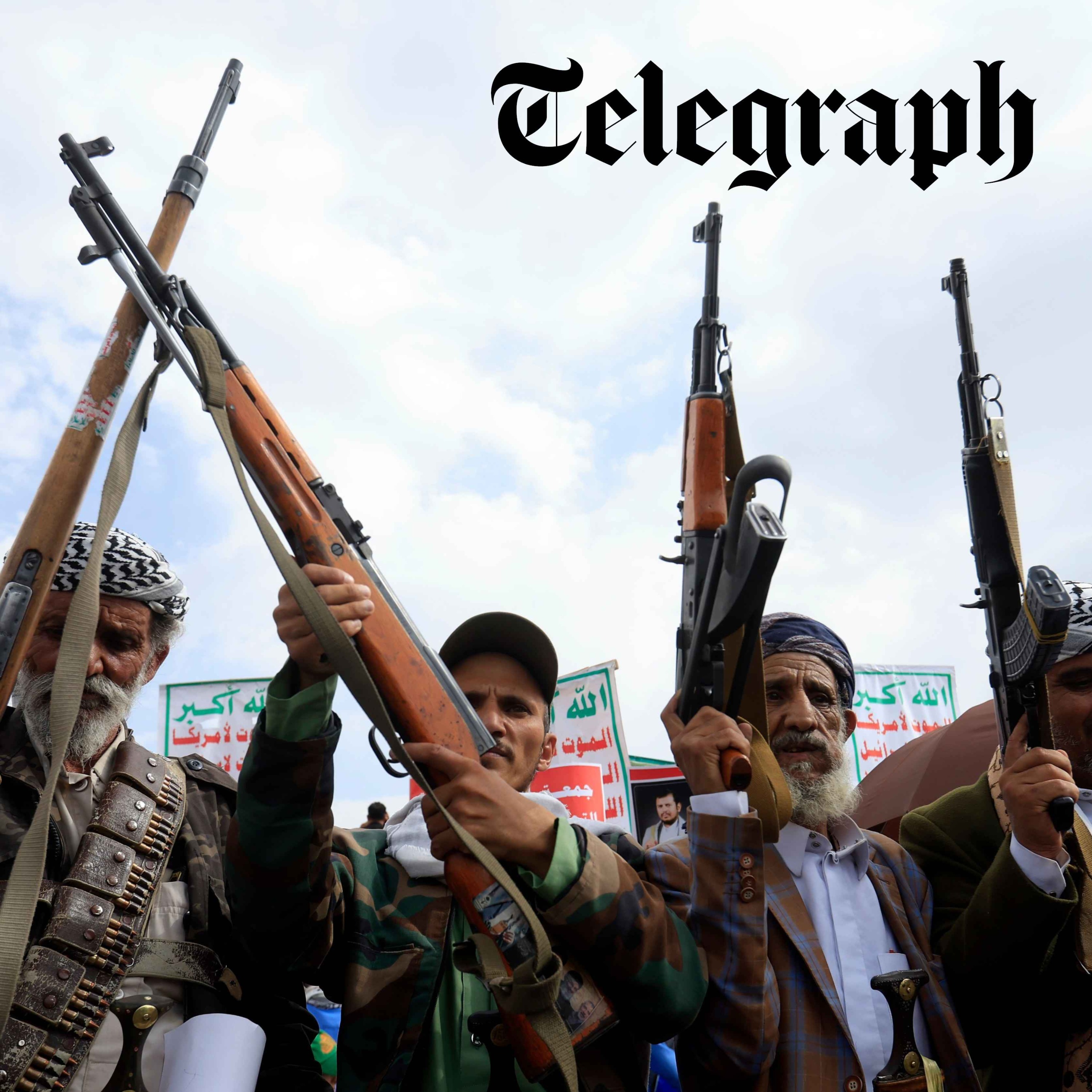
Loading summary
Transcript68 lines
- [00:04]
Roland Oliphant
The telegraph.
- [00:10]
Pura Advertiser
Close your eyes. Summer smells like sunshine, fresh citrus and salty air. What if your living room could feel just like that? With Pura's new summer collection, it can restore your sense of well being with fragrances designed to move with your day. From bright, energizing mornings to soft, relaxing evenings. Make the invisible unforgettable this season. Visit pura.com to find your new favorite summer scent.
- [00:36]
Okay, Mr. Floofers, who is the coolest, most wonderful cat mama in the whole wide world? Meow twice if it's me, okay. Meow once if it's me, okay. Meow once if you want your Shiba, I knew you loved me.
- [00:52]
David Schenker
Go from ignored to adored with Shiba.
- [00:54]
Roland Oliphant
They have a menu of products including Shiba Grilled, a protein rich formula made with real chicken served in two convenient snappable servings.
- [01:01]
David Schenker
It's perfect for even the pickiest eater.
- [01:03]
Roland Oliphant
Tap the banner to buy now or find Shiba at your favorite retailer.
- [01:11]
Venetia Rainey
I'm Venetia Raini and this is Iran. The latest. It's Thursday, 23rd of July, 2026, the 12th day of this latest round of the war since Donald Trump declared the U S. Iran ceasefire to be over. On today's episode, we're going to look at the massive development that Yemen's Houthis have attacked two tankers in the Red Sea, raising concerns that the Bab El Mendeb Strai could become the new Strait of Hormuz. Plus, why Israel is furious about the US Saudi Arabia nuclear deal. And I'll be speaking to former US Middle east diplomat David Shenker about how to stop the war from spiraling further.
- [01:45]
Lemonade Pet Insurance Advertiser
A short time ago, the United States military began major combat operations in Iran.
- [01:52]
Venetia Rainey
Iran's supreme leader, Ayatollah Ali Khamenei was
- [01:55]
David Schenker
killed in the attacks.
- [02:02]
Venetia Rainey
For the first time ever, the US Navy used a surface sea drone in combat to strike Iranian targets.
- [02:09]
David Schenker
The strait are almost completely closed again.
- [02:13]
Roland Oliphant
Does anyone really think that someone can tell President Trump what to do? Come on.
- [02:19]
Venetia Rainey
But let's start with where we are today, joined down the line by our Jerusalem correspondent, Henry Bodkin. Henry, welcome to Iran.
- [02:25]
Roland Oliphant
The latest.
- [02:25]
Thanks very much.
- [02:26]
Venetia Rainey
Let's start with what the Americans have targeted or hit overnight in Iran. What have they done?
- [02:32]
Roland Oliphant
Last night was the 12th consecutive night of US strikes on Iran. In this renewed phase since the breakdown of the Memorandum of Understanding, they targeted maritime capabilities, missile and drone storage facilities, coastal surveillance sites and air defence assets mainly. So that's fairly in keeping with what they've been going at in the last couple of weeks targeting Iran's ability to disrupt the Strait of Hormuz. That's what America really cares about. As of today, CENTCOM has redirected nine commercial vessels and disabled one to prevent ships from entering or departing Iranian ports. A spokesman said more than 50,000 US service members are operating across the Middle east and remain highly vigilant, focused, lethal and ready. So still mainly focusing on Iran's maritime capability, its ability to harm shipping in the strait. That's what the US really cares about. And leaving room for further escalation. Iranian state TV said two people were killed and 11 wounded in Watay Khuzestan, the provincial official described as a US Missile attack on the Shalamshire border crossing with Iraq. So on that subject of escalation, Donald Trump warned on Truth Social that from now on, any time Iran shot at a ship, it in the Hormuz Strait, the U.S. will and I quote, bomb and destroy. Now we're into block capitals, one bridge or power plant, including those located next to or in the capital city, Tehran. So there's that threat again to hit Iran's power stations. This is the big threat that kept coming back in March and April, which he conspicuously and repeatedly didn't follow through on. So I guess he's putting the ball in Iran's court. It's their decision now whether to hit any more ships, but if they do, it puts it back in Donald Trump's. Will he follow through on that threat? But there was some tangible escalation in the nature of the strikes over the last 24 hours. The US has used for the first time in this round fighting heavy bombers. They used B1 long range bombers for the first time since fighting resumed 12 days ago, according to U.S. officials. It was used to strike IRGC targets in Iran, according to Axios. And there's lots of videos on social media of those aircraft taking off from RAF Fairford in England.
- [04:52]
Venetia Rainey
And do we know any more about what targets they were used to hit or why they were having to be used rather than the normal fighter jets they've been using?
- [04:59]
Roland Oliphant
There's very little officially, but the suggestion is that they have been used to target missile production sites.
- [05:06]
Venetia Rainey
I believe, as we've seen every day and night, Iran has retaliated by striking again. The three same countries we've seen for a while now, Bahrain, Kuwait and Jordan. Kuwait seems to have been the hardest hit. The IRGC has claimed it's attacked US Forces in Camp Doha. Ammunition and logistical supply depots, the Ali Al Salam base. They've hit Fuel tanks. They claim Camp Arif Jan, an ammunition depot and Camp Bering as well. Lots and lots of claims from the Iranian regime about things they've hit and damage they've caused. I can't see any confirmation of any of that at the moment. So we'll come back to that tomorrow. Interestingly, a statement to the Kuwaiti people directly. The IRGC said its attacks are only aimed at US Bases. They said, and I quote, it sometimes claimed that Iran's strikes violate the independence, territorial integrity and sovereignty of regional nations. This assessment is incorrect. We respect the independence, territorial integrity and sovereignty of your government. It's America that's violated your territorial integrity and sovereignty, not us. We're attacking lands occupied by the American army, an army that knows nothing but crime. I read that out not because I want to assist in Iranian propaganda, but because I think it's interesting that they're trying to justify these attacks. Kuwait is a small country and it's come under really heavy bombardment. They've targeted its desalination plants, its power plants, its oil facilities, and it's causing havoc for ordinary Kuwaitis. And there's maybe just a sense that the Iranians feel like they have to justify this attack on their neighbors or maybe it is just propaganda. I don't know what you make of that.
- [06:32]
Roland Oliphant
Yeah, obviously the propaganda war is huge in this conflict and trying to paint the Americans as badly as they can, trying to shift the narrative over to make the Americans look like the aggressors and as they said, look like the criminals. This kind of two tier way of operating where on the one hand they are actually causing, as you said, significance and sustained damage and terror really to their Arab Muslim neighbors, but on the other hand, all always saying it's not you we're after, it's not our fault, it's all the Americans fault.
- [07:02]
Venetia Rainey
It's nonsense because they have been targeting civilian targets as well. We've also seen in Bahrain they've activated air alert sirens on Thursday, advise citizens and residents to remain calm and head to the nearest safe place. Jordanian armed forces says they intercepted four Iranian missiles and six Iranian drones over the past 24 hours. So again, that sustained bombardment of Jordan that we've seen over the past 10 days and that led to the death of at least two American service members last week. There's a really interesting piece on our website that looks at how Iran has adapted its missiles to become more deadly and more accurate. It's by Ben farmer and Akhtar McCoy, who's our Iran specialist correspondent. And we'll link to it in the show notes. But just to give you a sense of some of the things that they talk about, essentially they've been speaking to Iranian officials who are claiming that they've been learning lessons from the Americans during this war to refine their process of launching missiles. So, for example, at the start of the war in February, if there was a US strike on an Iranian missile site, it could take it out of action for the better part of a day. Now, Iranian officials claim the same site can be firing again within half an hour. The quote is, the main thing in the missile war is speed and we're getting good at it. They also include the Jordanian view, which says that the Iranians are developing techniques and capacities to extend their reach, combining with drones to overwhelm radar defenses. The Iranians use simple missiles to distract the radar and then they fire better quality missiles which change their final target in the last 30 or 40 kilometers. And this comes into something that we've been talking about on the podcast last week about encrypted sat nav capabilities for these missiles to allow them to evade air defences in that final stretch, potentially with the help of the Chinese, potentially with the help of the Russians. Just a fascinating idea that the Iranians are evolving and adapting during this war. We've spoken about how the Americans are also evolving and adapting to use more drones to target the Iranians. But clearly both sides are refining their ways to attack the other. Let's move over to straight Hormuz and Bab El Mandab and maybe we start with Bab Al Mandab because there's been a really significant development overnight there, hasn't there, Henry?
- [09:00]
Roland Oliphant
Absolutely. Yes. We've seen in the last 24 hours we've seen the Iran backed Houthi militia who occupy a large portion of territory in Yemen, attacking two Saudi Arabian oil tankers in the Red Sea. Now this comes just a few days after the Houthis declared a maritime blockade of Saudi Arabia. The Saudi News Agency confirmed that one of the two vessels was ablaze. On Thursday. The Houthis identified the two vessels as the Encylla and the Layla. The context is that millions of barrels a day of Saudi oil have been heading to the Kingdom's Red Sea port of Yanbu. And that's to avoid the Strait of Hormuz and all the problems there. In announcing the attack on the two tankers, Yemen's Houthis claimed they had forced about 10 ships to retreat and return. So there's two dynamics here. First is an escalating re emergence of the conflict between the Houthis and Saudi Arabia that I know we've talked about on the podcast in the last couple of weeks that involved attacks on Sana' a airport. There were an attempt by Iran to re establish the air bridge between Tehran and the Houthi controlled part of Yemen. But then, obviously, in terms of the wider conflict, this is one of Iran's most capable and lethal proxies beginning to flex its muscles. It's been the big unknown, really, since this conflict started on February 28th. How and when and with what effect the Houthis would get involved. Obviously, Hezbollah, which are much more directly under the command of the IRGC in southern Lebanon, got involved within days, and we know what's happened there. But the Houthis stayed that card in Iran's back pocket. And now with this partial blockade targeting Saudi ships, we're beginning to see what they're capable of. So what's happened? Five tankers changed course in the Red Sea on Wednesday, with two signaling the Suez Canal as their new destination after the Houthis warned ships to avoid Saudi ports. That's according to ship tracking data. This morning, it was reported that two very large Chinese crewed carriers carrying a combined 4 million barrels of Saudi Arabian oil are heading towards the Bab El Mandab Strait to exit the Red Sea. This will be a test of how tightly the Houthis will impose their naval blockade on Saudi Arabia.
- [11:11]
Venetia Rainey
It's a massive development, and it is, we should emphasise, it's only a blockade on Saudi Arabia, and so it will mainly affect, for the moment, Saudi oil. But if the Red Sea starts to be seen as too dangerous to transit for boats coming from other destinations or going to other destinations, that would be really massive. That is the route to cross the world, right? You go through the Suez Canal, you go through the Red Sea, and that connects Asia to Europe and vice versa. Otherwise, they're looking at having to go around the southern tip of Africa or through the Arctic.
- [11:40]
Roland Oliphant
Absolutely. It's economically completely huge. And I wonder whether this would be the factor if the Houthis really do roll out this blockade to all shipping, or all Western shipping, for example, that could draw other countries in. There is a precedent here of Britain's armed forces attacking the Houthis for their attacks on shipping. Since October 7th, obviously, the Americans have been in the Red Sea and have been doing it as well. This is an escalation of the original attack on Iran by the US and Israel. But if the Houthis really went for it in The Red Sea. Could this be the thing that politically that it's easier for countries like Britain to get involved, to help shut down because it's slightly removed from the Strait of Hormuz, which obviously was started by the US and Israel. So, yeah. And the economic consequences, consequences could be absolutely huge.
- [12:27]
Venetia Rainey
So what's the impact of this latest escalation been on oil prices, dare I ask?
- [12:31]
Roland Oliphant
Yeah. So global oil prices have risen sharply on Thursday, hitting almost $98 a barrel. That's amid fresh pressure as the Houthis have begun attacking vessels in the Red Sea. So Brent crude, the global oil Benchmark, was up 3.9% by early morning Eastern Time, while WTI, the US benchmark has risen 2.9% to trade at $89 a barrel, both reaching their highest levels since early June. Deutsche bank analysis said oil markets have come under fresh pressure given the news about the Houthis raising fresh supply fears given Saudi Arabia has redirected oil exports to the Red Sea port of Yambu.
- [13:10]
Venetia Rainey
Definitely something we'll be returning to in the days and weeks to come. Let's zoom out and see where this leaves us with diplomacy. Hawkeyed listeners and viewers might have noticed that we've dropped the countdown of the 60 day deadline that was agreed under the MoU because clearly that is over and diplomacy seems to be going nowhere for the moment. Before the latest strikes, Iran's Foreign Minister Abbas Aragchi warned that our defence doctrine is clear, an eye for an eye. But US Secretary of State Marco Rubio has gone one further. This was him speaking to reporters last night in Manila.
- [13:41]
Marco Rubio
You know, guys, I saw Arachi, their Foreign Minister, who the other day say or something about their policies. An eye for an eye. The President's policy is ahead for an eye. I mean, honestly, that's what it's going to be. I mean, they will pay a very heavy price. I was reading reports a few hours ago that there is actually a Saudi fuel ship that's flagged Chinese. It's a Chinese ship. Are they going to blow up the Chinese ship and this becomes a problem for China? This will become a problem for the whole world. But I hope that will de escalate because I think the Houthis frankly got snookered into this thing by the Iranians. Iran is begging us, okay, both directly and indirectly. Let's do a deal. Let's talk. Let's talk. Iran is begging every day. The problem with Iran is every time they make a deal, the people that are in charge there, they either break it or they want to change it. So it looks like they're not ready to make a deal, so they're going to continue to pay a price.
- [14:31]
Venetia Rainey
Henry, I just want to pick up on one part of that. There's a lot to tuck into. But just one question on that. Do you think Iran is begging for a deal?
- [14:38]
Roland Oliphant
We've heard this from the Americans a lot throughout the weeks and months of this war. They say that Iran is begging for a deal and then they do things which indicate that they're not desperate for a deal at all. So probably not. No. I think they are still trying to show the Americans and the world that they don't need a deal. They're trying to improve the terms of any eventual deal that is struck through a show of defiance, of being able to absorb this kind of bombardment. And clearly their capability, as I think has been discussed on the podcast in recent days, their capability to hit ships remains. Look, I'm speaking from Israel and this is the world capital of cynicism towards the Iranian regime. And for them, if you speak to officials and experts here, what they'll say is it's never really about the deal. For Iran, the deal is instrumental to their longer term goals of spreading influence, of entrenching power, of getting stronger, exporting the revolution, and of course, encircling Israel. They know that the Americans want a deal and so they will always show a bit of ankle. They will always make the Americans think that that's just around the corner. But no, if they continue to defy this bombardment and attack ships, then it doesn't look like they, they are desperate for a deal anytime soon.
- [15:53]
Venetia Rainey
And just before we move on to other stories, clear sense that things are going to continue escalating. What are you hearing in terms of Israel potentially getting involved?
- [16:02]
Roland Oliphant
It's actually quite a confused picture at the moment in Israel in terms of, of what various officials are briefing. Obviously they've been saying since the first ceasefire back in April that we're ready to go again at a moment's notice. You would imagine that is true. The only aircraft you ever hear in Jerusalem are fast jets, military aircraft. And you do hear them taking off, landing a bit. So of course they're ready to go. The assumption has been in recent weeks that Israel would like to go in again, would like to go in very hard. There is a slight counter narrative to that in recent days, which is that they're quite happy sitting out for now. One thing to look out for is it's not been particularly broadly covered because of everything else that's going on is. But the. The Iranians seem to be firing some ballistic missiles down at Aqaba, down in the south of Jordan, the Jordanian seaside town. If you looked at it from a satellite, you wouldn't see any difference between that and Eilat, which is the Israeli Red Sea town, that they're right next to each other. There's just a fence that separates them. The mountains that separate Jordan and Israel all the way going south down through the Negev desert, they taper out at the sea, so it's coming very close to Israel. And it has activated Israeli air sirens more than once. The Israelis think that the Iranians might be trying to probe their readiness, but that is somewhere where the conflict could escalate. It wouldn't take much for one of those Iranian missiles to go into Israeli territory. And then I think you would see an Israeli response. And I think, given the way that Israel feels it's been treated by America in recent weeks, by Donald Trump, given that we're within 100 days now of an election that, according to the polls, Benjamin Netanyahu has to do something quite spectacular to avoid losing. If and when the IDF did get back involved in Iran, you would see them, for a few days at least, doing what they wanted to do. I think that the US would not have quite the same restraint on them in the short term as they did back in March. I think ultimately, of course, Israel will be heavily influenced and told what to do by the White House. But the Israelis, for them, it's in their DNA. Assassination is very important. Huge skepticism over any difference between civilian and military infrastructure. So I think you could see them going really hard and more widespread than we're seeing with the CENTCOM strikes at the moment.
- [18:13]
Venetia Rainey
There's a few other stories that I want to get your thoughts on and get the Israeli perspective on. One is this incredible news of this US Saudi Arabia nuclear deal that broke yesterday that will allow Saudi Arabia to enrich its own uranium. How do the Israelis feel about that?
- [18:28]
Roland Oliphant
Pretty sour, really. There's a lot of. There's a lot of hand wringing, there's a lot of anger, a lot of it's being directed at Benjamin Netanyahu. So there's two principal problems with this from an Israeli perspective. One is security. Can we allow an Arab state, an Arab neighbour, to have nuclear capability? That for them, the quotes from Israeli officials this morning, that's crossing a red line. There's going to be a school for developing nuclear weapons that the rest of the Middle east can learn from. That's a bad thing, by the way, they think it will start an arms race that Turkey and increasing strategic rival Egypt UAE will all want them. That's not completely negative. One official mainly quoted as saying, look, if it's going to happen, it's better that it's done in a US Partnership because then the US can try and keep control over it. The Saudi issue is complicated here. They recognize, I think most sensible people recognize that Saudi Arabia is run by someone who is not an Islamist, someone who is not an Arab nationalist, someone who from what we can see is not an anti Semite. But they distrust the stability of the MBS regime. They think there's always Islamists in the background. What could the future hold? So the first issue is security. The second is leverage. Traditionally the US always linked helping Saudi Arabia with civil nuclear capability to Saudi Arabia recognizing Israel normalization, establishing full ties, which really is the kind of of the big thing that Israel wanted and the big thing that Donald Trump said he wanted. And now he's completely delinked it and gone ahead and helped the Saudis with nuclear without demanding that they recognize the state of Israel. Now he says that he's the most pro Israeli president ever to have been in the White House. But actually Joe Biden, for all his criticisms of what happened in Gaza, he never budged on this issue. He always said to the Saudis, we're not going to help you with this until you recognize Israel. So it's quite a significant moment. And of course Saudi Arabia has said since October 7th it will not recognize Israel until there's a credible pathway to a Palestinian state. It's not saying that the Palestinian state has to be there and oven ready, but that the war in Gaza needed to stop. Obviously that has now to an extent happened but also critically west bank settlement violence, all of that which hasn't happened, which has got worse and worse and worse. So there's a lot of negativity towards Benjamin Netanyahu over this criticism of his overall strategy and some comment in some papers that actually tragically this is what Yahya Sinwar, the architect of October 7th wanted when he planned that massacre. He wanted to quash any normalization between Saudi Arabia, which is the most important Muslim country in the world, and Israel.
- [21:13]
Venetia Rainey
What about what's been going on in Lebanon? We've been reporting this week about the pilot scheme to see the Israelis withdraw from some places and the Lebanese national army take its place place to stop Hezbollah from retaking territory that's now started just one village as far as I can See, although please feel free to update me on that. So it's very incremental baby steps, but it is significant. We saw Lebanese President Joseph Aoun meeting Trump, first Lebanese head of state to do so in nearly two decades this week and talking about finding a long term solution to the conflict between Lebanon and Israel. Quite big optimistic talk and that this would be Trump's legacy. What's the view in Israel? Capital of cynicism.
- [21:50]
Roland Oliphant
So there's my understanding is there's three villages that formally will be part of this pilot. There's Zelta, Al Khabiyya where it has started. There's also Froon and Srifa and this is in the Nabatiya governorate. But I think it's just started in that first village so far. Slight teething problems. Apparently the IDF fired kind of towards near some Lebanese armed forces troops, which is not particularly helpful. But that's the kind of thing that happens in that region. Lebanon is a deeply traumatic place for Israel. They were in there for years and years, I think 18 years before their withdrawal in 2000, and it wasn't a happy time, both because of what they suffered in there and also because of things they did that alienated the international community to an extent. Mainstream Israelis don't want to be there for the sake of it. There's an element of the right that thinks it's wonderful and greater Israel and its buffer zones and all of that that, that we've covered extensively on the Telegraph. But I think that the mainstream security establishment and actually mainstream political establishment would love the Lebanese armed forces to be able to keep Hezbollah under control. I think there's deep skepticism as to whether they can do it, but they have to be seen to be trying because this is a Trump brokered process. It is a new process to my understanding, in the sense that whatever you think about the legality or the morality of it, it. It's not a question of there's a Hezbollah stronghold, Lebanese armed forces go and deal with it to a large extent, certainly in these pilot villages. Israel already has dealt with it. There aren't any Hezbollah there. There's probably not many buildings still standing. All the Lebanese armed forces need to do is come in and make sure there isn't any unexploded ordnance and then stop people coming in, stop the bad people, Hezbollah coming in. So in that sense it should be more doable for them. Israel has to be seen to be going along with it. There's a large part of the Israeli establishment that genuinely would like it to work because it is not easy up there. The increased drone capability has changed the dynamic a lot. Israel has found it a lot harder this time around than they did in 2024, and a lot of those gains in 2024 have now been made to look, in hindsight, to be not quite as impressive as they were trumpeted at the time. It is happening and the next round of talks between Israel and Lebanon, it's just been announced, will take place in the first week of August in Rome.
- [24:06]
Marco Rubio
Great.
- [24:07]
Venetia Rainey
Henry Bodkin, our Jerusalem correspondent, thanks very much for joining us on around the latest.
- [24:10]
David Schenker
Thank you.
- [24:14]
Venetia Rainey
We're going to take a short pause now. Coming up after the break, one piece of advice for Donald Trump from a former American diplomat.
- [24:27]
Pura Advertiser
Fresh pine, warm spice all July long. Your favorite holiday fragrances are back. No winter required. Celebrate Christmas in July with Pura. Save 20% on seasonal fragrances, 20% on curated seasonal sets, and get a free blanket when you spend $100 or more while supplies last visit pura.com.
- [24:58]
SoFi Advertiser
This episode is brought to you by SoFi. With SoFi, you can consolidate your student loans and refinance with a shorter term, potentially becoming debt free sooner. Getting started is easier than you think. View Your rate@sofi.com playback SoFi student loans are originated by SoFi Bank NA member FDIC. Additional terms and conditions apply. NMLS 696891 does having a house full
- [25:22]
Lemonade Pet Insurance Advertiser
of pets make you feel as if you work in middle management? Does Bit Z keep blowing off her performance reviews while Bayleaf steals from the supply closet? Maybe they're unhappy with their benefits package. With Lemonade Pet insurance, you'll give them the health care they need without breaking the company's bank, AKA yours. And with multi pet discounts, your entire tail wagging workforce is covered. Keep climbing that ladder and soon you'll be Regional VP of Treat Distribution. Get a quote@lemonade.com Pet.
- [25:58]
Venetia Rainey
Welcome back. You're listening to around the Latest with me, Venetia Raney. Now to discuss what Trump should do with this almighty mess, I'm speaking to analyst and former US Diplomat David Schenker. He was Assistant Secretary of State for Near Eastern affairs from 2019 to 2021. And during the noughties, he was the Pentagon's top policy aide in the Levant. He's now the Senior Fellow at the Washington Institute and director of the Linda and Tony Rubin Program on Arab Politics. David, welcome to Iran. The latest I want to just start with your reaction to the big picture. At the moment, the Iran war is escalating. No sign of peace talks. The MoU is in the bin, US is sending in heavy bombers again. And now the Houthis appear to have joined the conflict. Are you worried that this war is getting out of America's control?
- [26:43]
David Schenker
Well, I'm not sure this war was ever in the administration's control. Once you start these things, they have a life of their own. Listen, I think the President, the administration believes that they have to escalate to de. Escalate. They were stuck. The Iranians are not taking a knee. They absorb the 13,000 targets hit. And then the view from Washington is that the Iranians broke the MoU, that it was so front loaded, so many incentives. Any reasonable, rational regime would embrace this, enrich itself, emerge stronger economically. But they're not rational. They are highly ideological. I think the administration missed that. But the Iranians want to change the status quo in Hormuz. They want control, tolls, logistical fees, environmental fees. And the United States just can't allow that. The implications globally I think would be profound. The administration, I think, sees no way out other than to up the ante and see where the cards fall.
- [27:47]
Venetia Rainey
And what do you make specifically of the Houthis? They're not fully joining in, are they? But their maritime blockade on Saudi Arabia, certain, certainly ups the pressure on the Red Sea Bab El Mandab Strait, which had been where the Saudis and the Gulf had turned to export their oil while the Strait of Hormuz is closed.
- [28:03]
David Schenker
Yeah, it's significant. The Houthis are not like the hashed, the Iranian proxies in Iraq. They're not like Hezbollah, which is directly controlled by the irgc. The Houthis are more partners with Iran than proxies and they largely stayed out of this in large part because of, of Operation Rough Rider. They took a drubbing from huge month long punishing campaign by the United States a year ago or so. And yet the Iranians prevailed on them and they always had for the past decade or two, this possibility that the Houthis could double the pressure on the United States, on the west by closing the two key energy waterways in the Middle east, the choke point. And so now, yeah, the Saudis were able until now to export seven, seven and a half million barrels a day through the Yanbu pipeline. Now the Houthis are opening fire on Saudi tankers bringing oil out. They can't go south to Asia. This is a big deal. I don't think it was such a big deal a year and a half ago when the Houthis closed Baba Mandeb. The global shipping community, global economy adapted. Took a million dollars more worth of fuel to go around the Cape of Good Hope and come into the Med. But when you add this to the Straits of Hormuz being shut it I think puts a lot more pressure.
- [29:30]
Venetia Rainey
And do we know what the Houthis want? Are they just joining in to pile on the pressure on Iran's side or do they want something specific from Saudi Arabia?
- [29:37]
David Schenker
The Houthis also want to change the status quo. Only a week or so ago, the Saudis bombed the Runway at Sana' a airport to prevent an Iranian plane from landing there. That is against UN sanctions, etc. The Saudis wouldn't let that stand to change not only the status quo in the streets of Hormuz, but also in Yemen. Listen, I think the Houthis don't want to resume full scale war against Saudi Arabia. They would prefer, prefer to build on this sort of calm that they had for about a year. Ultimately, the Saudis, you can't buy the Houthis, but you can rent them, they will pay salaries for government officials, et cetera. They really need this money. I think this is a temporary bump in the road, probably more than a bump in the road, but a temporary closure until a deal is worked out. On Hormuz.
- [30:33]
Venetia Rainey
We've seen a growing number of Iranian attacks on American bases across the Gulf and increasingly in Jordan. Two, potentially three US Service members killed there last week. We've done some reporting on the Telegraph about the fact that these Iranian missiles are becoming more deadly and more accurate. How should America respond to this, to the deaths, particularly of service members?
- [30:53]
David Schenker
It is tragic, but we are in a war, I think relatively speaking, 17American military casualties, what, five, six months into this is I think not a great number, but it's, I think lower than one would expect from a war. The United States adjusted early on. We had these contingency plans called the Western Basing Initiative, knowing that all of our bases in Qatar, uae, Kuwait, Saudi Arabia, on the east coast, all these were extremely vulnerable to Iranian short range missiles. And so we have some positions in western Saudi Arabia near the Red Sea and in Muwafiq Salti Air base in Jordan, which is where the two, three Americans were recently killed. I think you're going to get a little spike in US Retaliation. And we've seen the President, Marco Rubio talk about this. We're doing a couple hundred, 200 strikes a night, you know, targeting in Iran. I don't think the Iranians, the regime are particularly worried about this.
- [31:58]
SoFi Advertiser
Right.
- [31:58]
David Schenker
They absorbed 13,000 targets being hit in the first month and a half of the war. Another hundred here or there. This is not going to move the needle, but there will be more, increased, more intensive targeting, and we'll see whether the President is frustrated enough to broaden the categories of what he targets. Bridges, energy infrastructure. The problem with that, of course, is that the Iranians from the very beginning have calibrated their strikes against our Persian Gulf, Gulf partners and friends with what we do in Iran. While a lot of civilian infrastructure has been hit and energy infrastructure in the Gulf, it could be a lot worse. Ultimately, I think what will move the needle with Iran is sustained naval blockade. This is what brought the Iranians to the table to sign the MOU in the first place. We heard from the Central bank governor of Iran that this was crippling. And last time it was only in place for a week and a half when we got the MoU. Whether the President has the patience to implement this blockade for a couple months, to let it have an impact, remains to be seen.
- [33:10]
Venetia Rainey
You mentioned Rubio there, and one of the other things he said yesterday was that Trump had a policy of a head for an eye, an escalation of the eye for an eye that we've heard the Iranians talking about. What do you make of that kind of language from the US Secretary of State and the President?
- [33:25]
David Schenker
Listen, we've heard a lot of threats coming from the President, Some of them, you know, threatening potential war crimes, things like civilian infrastructure. Some of this obviously can be militarily related, tunnels, bridges, et cetera. But the threat to destroy Iranian civilization. He's made maybe a dozen or more threats that he hasn't followed through with. I don't think the Iranians are particularly concerned with that, but I think it points to a growing frustration from the administration. I believe that early on they thought this war was going to be somewhat akin to the removal of Maduro in Venezuela. And you have the ideology. You have the Iranians willing to endure a great deal of punishment. I think they have been really degraded militarily, conventionally. Their missile program, their navy obviously finished, the air Force, other types of ability to indigenously produce large scale ballistic missile production. All that has been set back. And yet. Yet this is a regime that doesn't particularly care much about its people and is willing, because it's highly ideological, to endure a lot of punishment. So I think they can endure some more.
- [34:37]
Venetia Rainey
You spent a lot of time working in and on the Middle East. What do you think this war is doing to America's standing in the Middle East. And I'm thinking of particularly with its allies there.
- [34:47]
David Schenker
Listen, I think that there was a disappointment that we went there in the first place. Right. I think our Gulf partners were doing great. Saudi had Vision 2030, economic diversification, tourism, changing the laws, alcohol in the kingdom. Now looking forward to welcoming not only foreign direct investment, but tourism. And that's all across the Gulf, bringing in the cloud computing data centers, the manufacturing of chips, et cetera. This model doesn't work if you have war.
- [35:22]
SoFi Advertiser
Right.
- [35:22]
David Schenker
As the Iranians once said, threatening the uae. They said Dubai is made of glass. I think there's disappointment, a disappointment that it didn't seem that this administration understood, as every Middle east analyst understood, that the first thing the Iranians would do if we waged war on them was to close the Straits of Hormuz and also target these GCC states that we're partners with. I think they're also disappointed in that we haven't managed to find a way out of this and that the President seemingly vacillates between no tolls and then American tolls somehow, or fees. The Gulf is really quite divided on this war right now. I think you have the UAE that seemingly wants us to finish the job, and several other states who are more interested in winding this down, however possible. And I think we saw this yesterday with the president agreeing to nuclear cooperation with Saudi Arabia that does not entail the sort of gold standard, 1, 2, 3, agreement with intrusive monitoring and allowing for enrichment, etc. I think this is a nod to try and curry favor with with Saudi Arabia that was obviously pretty important state in the Gulf, A state that was quite disappointed, I think, with the way this war is pursuing.
- [36:44]
Venetia Rainey
Yeah, that's interesting. We were talking earlier on in this episode with our Jerusalem correspondent about how Biden never gave in on this request from Saudi Arabia for help with their nuclear power program. And I was wondering if it is a kind of acknowledgment of the very difficult position that Trump has put Saudi Arabia in for all the reasons that you mentioned. One final question. If you could talk to Trump and give him one piece of advice, what would it be?
- [37:06]
David Schenker
It's a tough one. He's in a bind. I would urge patience. Now, it's easy for the United States to be patient about this. Right. We're paying $4, $4.50 a gallon right now for our gas. Right. That's a 30, 40% increase from before the war, but we're still paying less than Europeans were paying before the war per gallon relative to liters. The United States, among all the countries in the world, is probably feeling the impact of this war less economically than any other country. We have jet fuel, we're energy independent, we have refining, petrochemicals, et cetera. It's harder for Europe, for Asia, for a lot of our partners and allies around the world. I don't think the kinetic, the military action is going to necessarily end this war. I think it's going to be the type of economic pressure that we can bring to bear, ending all not only oil exports, but commercial exports from Iran, all consumer goods and other types of goods going in to Iran. They still can bring in overland maybe 30% of their imports. But these exports I think are critical. And if we give it a couple months, I think we're going to find ourselves in a place where the Iranians may be willing to make additional concession on their ownership of the Strait of Hormuz. We'll have to deal with the nuclear agreement, the reason why we got into this war in the first place. We'll have to deal with that later. But globally, I think clearly the priority issue is getting the Straits of Hormuz open so we can wind this down.
- [38:42]
Venetia Rainey
That was David Shenker, former Assistant Secretary of State for Near Eastern Affairs. That's all for today's episode of Iran the Latest. We'll be back again tomorrow. Until then, goodbye.
- [38:59]
Roland Oliphant
Iran the Latest is an original podcast from the Telegraph, created by David Knowles and hosted by me, Venetia Rainey and Roland Oliphant. If you appreciated this podcast, please consider following around the latest on your preferred podcast app. And if you have a moment, leave a review as it helps others find the show. For more from our foreign correspondence on the ground, sign up for our new daily newsletter, Cables, or listen to our sister podcast, Ukraine Train. The Latest we're still on the same email address battleionselegraph.co.uk or you can contact us on X. You can find our handles in the show Notes. The producer is Peter Shevlin, the executive producers are Venetia Rainey and Louisa Wells.
- [39:43]
Pura Advertiser
Fresh pine, Warm spice all July long. Your favorite holiday fragrances are back. No winter required. Celebrate Christmas in July with Pura. Save 20% on seasonal fragrances, 20% on curated seasonal sets, and get a free blanket when you spend $100 or more while supplies last visit pura.com.
- [40:14]
SoFi Advertiser
This episode is brought to you by Sofi. With Sofi, you can consolidate your student loans and refinance for the shorter term, potentially becoming debt free sooner. Getting started is easier than you think. View your rate at sofa. Com Playback. SOFA student loans are originated by Sofa Bank, NA Member FDIC. Additional terms and conditions apply at MLS 696891.