Loading summary
Transcript69 lines
- [00:04]
A
The telegraph. Hi, I'm Darina, co founder of Quo. You might know us as openphone. My dad is a business owner and growing up he always kept his ringtone super loud so he'd never miss a customer call. That stuck with me. When we started Quo, our mission was to help businesses not just stay in touch, but make every customer feel valued, no matter when they might call. Quo gives your team business phone numbers to call and text on your phone or computer. Your calls, messages and contacts live in one workspace so your team can stay fully aligned and reply faster. And with our AI agent answering 24. Seven, you'll really never miss a customer.
- [00:49]
B
Over 90,000 businesses use quo.
- [00:52]
A
Get 20% off@quo.com business that's quo.com business and we can port your existing numbers over for free. Quo no missed calls, no missed customers. Why choose a Sleep number? Smart bed. Can I make my site softer?
- [01:08]
C
Can I make my site firmer? Can we sleep cooler?
- [01:12]
A
Sleep number does that cools up to eight times faster and lets you choose your ideal comfort on either side your sleep number setting. Enjoy personalized comfort for better sleep night after night. And now during our President's day sale, take 50% off our limited edition bed plus free premium delivery with any bed and base ends Monday only at a Sleep number store or sleepnumber.com.
- [01:41]
B
You can't get away from the fact that we now have a President of the United States who's prepared to attack his allies and upend the Atlantic alliance because of something he saw on Fox News.
- [01:51]
C
We will measure our success not only by the battles win, but also by the wars we end.
- [01:57]
D
Right now, all eyes are on Washington, but who's actually watching Europe at the moment?
- [02:05]
A
The deepening ties between China, Russia and North Korea would certainly have some in Washington concerned.
- [02:11]
C
And Daddy has to sometimes use strong language.
- [02:15]
A
We're going to run the country until.
- [02:16]
B
Such time as we can do a.
- [02:18]
A
Safe, proper and judicious transition.
- [02:21]
D
The IDF will continue to uphold the.
- [02:23]
A
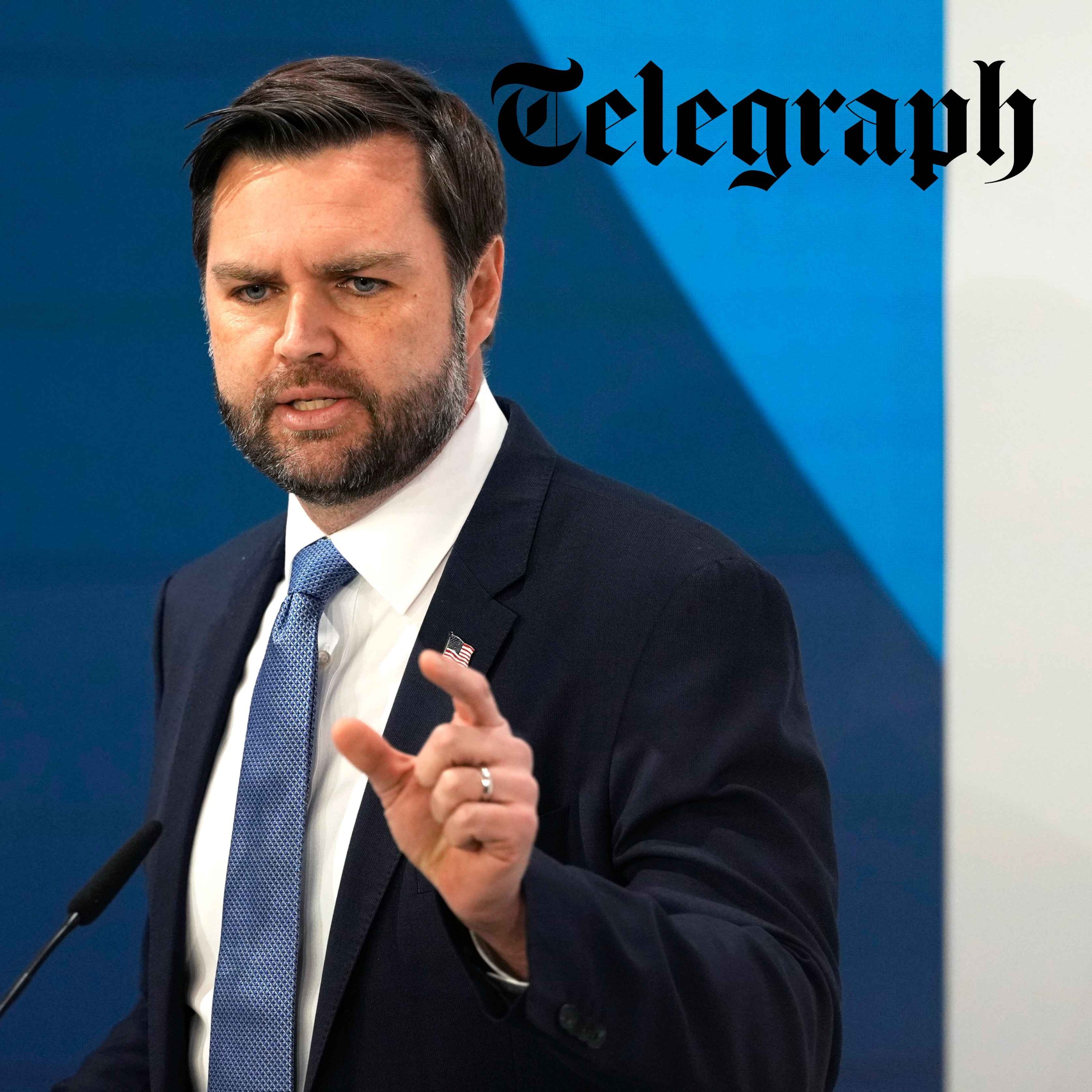
Ceasefire agreement and will respond firmly to any violation. Violation of it. I'm Venetia Rainey and this is Battle lines. It's Friday, February 13, 2026. A year ago, America put Europe on notice. When Donald Trump came into power, he made it clear that he was going to force a fundamental rethink of NATO and the transatlantic relationship. That attitude was crystallized in a shocking speech by Vice President J.D. vance to the Munich Security Conference last February.
- [02:54]
B
We gather at at this conference, of course, to discuss security. And normally we mean threats to our external security. I see Many great military leaders gathered here today. But while the Trump administration is very concerned with European security and believes that we can come to a reasonable settlement between Russia and Ukraine, and we also believe that it's important in the coming years for Europe to step up in a big way to provide for its own defense, the threat that I worry the most about vis a vis Europe is not Russia, it's not China, it's not any other external actor. And what I worry about is the threat from within, the retreat of Europe from some of its most fundamental values, values shared with the United States of America.
- [03:46]
A
This weekend, the world's most prominent forum for international defence and security is meeting again in Munich. So on today's episode, we're going to be asking, has Europe risen to the challenge laid down by America last year and started to take care of its own security post Greenland and the tariff war, is there any trust left between the US and its European allies? And will we see a round two of JD Vance's attack this weekend? To chew this all over, I'm joined by my co host Roland Oliphant in the studio and David Blair, our chief foreign affairs commentator. And down the line is Joe Barnes, our Brussels correspondent. Welcome to Battle Lines, everyone. Let's just start with rewinding the clock a bit. And I know it feels like a lifetime ago now, but when J.D. vance made those comments this time last year, I wonder if we can just capture the significance of that moment. Joe, do you want to kick us off?
- [04:35]
D
I watched it live from my apartment in Brussels. I think from memory. I remember he attacked Romania's decision to annul a presidential election because of Russian interference. He criticized the European Union for plotting to shut down social media during civil unrest. Sweden for charging a Christian activist who burned the Quran. And I think the most sort of telling for me about how J.D. vance thinks he went after Britain and its rules that prevent anti abortion campaigners from protesting outside abortion clinics and basically this sort of cordon to keep the users of these clinics safe. And Vance referenced a man to me who's a rather niche example. But I learned from speaking to people in sort of the maga, the Christian conservative lobby, that he is actually huge amongst their people. And that is essentially who J.D. vance is in with. And then from that, I remember my phone sort of lighting up with people, officials, diplomats in the room, basically ushering in. This is the real end of the transatlantic alliance. America isn't our friend. We are on our own. We have a real problem here. And J.D. vance is a real nasty piece of work who we should be worried about.
- [05:46]
A
David, what did you make of that moment when it happened?
- [05:49]
B
I agree with Joe. It was very significant. But in addition to that, actually one year ago today, there was Pete Hegseth's speech where he said, we are no longer going to be primarily focused on the security of Europe, and that is a stark strategic reality. The latter was a phrase that he used. And so ever since then, Europe has been adjusting to that reality in one way or another. And I think the key question is, so how much progress has Europe made? What has actually changed? And there. There's a mixed picture which we can come onto.
- [06:21]
C
You kind of look back and crystallize things. So speeches themselves don't mean much. Right. But they become, when you look back in history, kind of really useful pegs, as we said, peg to hanger story. In journalism, you can pivot things. So another Munich security conference speech was Vladimir Putin's in 2000, which is largely viewed as the moment where he signaled Russia's split from the west, that he was jettisoning the attempts early in his reign to kind of integrate with the west and was returning to a much more antagonistic position. And those two speeches, there's a reason we're talking about them a year later, because in the same way they kind of articulate and bookmark the shift in global politics and attitudes, I must say it didn't come is a huge surprise of certain people, the pessimists and Eeyores, as I tell them, we have some of them on the podcast from time to time, had been saying this was coming for a long time and had been tearing their hair out saying, for Christ's sake, why aren't European elites are thinking it's all going to be okay? And so there was a certain constituency in Europe who said, well, thank God Hegseth and Vance have actually told them directly to their faces they can't ignore it anymore. But yeah, a really significant thing. And we've seen the other point I would make is that in the year since then, we have seen that Vance and Hegseth meant what they said. Their policies have been entirely in line with this. We've been surprised by things in general because they surprise us. But they've done what they signaled they would do. So it has to be taken seriously.
- [07:59]
A
Because that Europe, you're on your own message was really codified in America's national security strategy, which came out towards the end of last year. Can you just sort of give us a bit of a summary of what was in that, because I know, I remember you did an episode on that.
- [08:11]
C
For us, the National Security Strategy formalized this talk of the Americas and the American homeland, the Western hemisphere specifically being the primary area of concern. It reiterated the kind of grudge against Europe for cultural decay, cultural surrender, you are under attack and so on. Yeah, it did talk a little bit about China, but really it talked about Russia and China, really in terms of kind of competitors with whom you can come to some kind of terms and reach a strategic balance with. So it was very much in line with the message that we'd been getting and it was also, I think, in line with a vision of a spheres of influence world, a carving up of the planet between different imperial centers. Really. They haven't quite put it in those terms, but that's what I take out of it, and that's the world I think we're heading into.
- [09:06]
A
It called on Europe to stand on its own feet. That's a quote. And take primary responsibility for its own defence. The Washington based Center for Strategic and International Studies described the document as a real painful, shocking wake up call for Europe and a moment of cavernous divergence between Europe's view of itself and Trump's vision for Europe. And that's what I really want to get into in this chat, this sort of schism that's opened up between Europe and its transatlantic ally, America. This relationship that has underpinned the post world war security architecture that we've just come to breathe in. And I know we've spoken about it lots on this podcast, but Munich Security Conference, one year on is a really good time to delve right into it. David, you've been writing a piece about just asking, one year after America put its allies on notice, have European governments accepted this reality and risen to the challenge? What do you think?
- [09:52]
B
I think there's a mixed picture. We love declaring ruptures and fractures and crises and all the rest of it, because we're journalists and this is what we do. The transatlantic alliance is not dead. NATO is not finished. When the Americans say you have to bear primary responsibility for your own security, they are not saying you have to bear sole responsibility. What they're saying is you have to carry a much bigger share of the burden than you've ever done before and you just have to live with that. But they're not saying otherwise. You're on your own completely. You know, the National Security Strategy did say that America retained a vital strategic interest in Europe. If NATO were dead, I think Putin probably would have tested it by now. The Fact that he hasn't suggests that he at least believes that there's still something in it. And five months after the Munich Security Conference, there was a very successful NATO summit in the Hague, where Trump reaffirmed his commitment to NATO, where all the European countries promised to spend more on defense. So, with that proviso, the picture that's opened up since in the last 12 months is, is broadly speaking, that Germany and all the allies to the north and the east of Germany get it and are spending vastly more on defence. And the figures are quite extraordinary. I've been adding up the figures and it's a crude measure. I've just looked at total defence spending from 2014, the year of the first Russian invasion of Ukraine, to 2024. So in those 10 years, Lithuania up 550%, Latvia up 370%, Poland up 241%. Germany up 102%. Denmark up 140%. Norway up 40%. All these countries are actually putting their money where their mouth is. And Germany, of course, is particularly significant. Germany now has the biggest defence budget in Europe. It's overtaken Britain. And in these countries, the interesting position is that the money is more or less there. The only constraint is capacity, industrial capacity, and that is now being built up. It takes a while, but it's starting to happen. So you have Rheinmetall, Europe's biggest defense company, headquartered in Dusseldorf. By next year, they're going to be turning out 1.1 million artillery shells a year. In 2022, it was only 70,000. Polish factories are now turning out a million rounds of ammunition every day. These are huge expansions and they are going ahead. But look west of Germany, and the picture is very different. Over the period I mentioned, 2014-24, Britain's defence budget up by 28%. France up by 24%. We had our defence review last year, but the government has not published the Defence investment Plan. That would actually make it real. That would allocate money to programs and actually going about the real expansion of our armed forces. So you have a very clear divide opening up in Europe between countries that get it and countries that don't. And Britain at the moment is in the latter camp. The countries that don't get it.
- [12:55]
A
Joe, I want to bring you in here because we've spoken about Britain a lot on this podcast recently, and I'd love to hear more about how European governments are responding. David just gave us some really interesting stats that go back to 2014. I wonder if you feel that Northeast Southwest divide rings true in terms of the sort of response to Trump coming into power a year ago and the schism, or not, depending on what word you want to use that's opened up since that last Munich security conference.
- [13:19]
D
Well, as David was saying, we were both in the Hague at this NATO summit. Every NATO ally apart from Spain committed to the 3.5% on core defence. That's your tanks, your artillery shells. And then a further 1.5% of GDP on security related infrastructure, investment in ports, roads, military mobility. Anything can basically fit under that bracket. You look at countries like Italy, who have traditionally been low spenders, are trying to hit that target now and are coming up with plans. Whether it's doable is another question because of financial constraints. And Italy is one of those countries where there is probably no money and it's going to drive them into huge debt to GDP ratios or reminiscent of the Greek debt crisis. But I do think most people in government diplomats do understand the pressures that Donald Trump has put on them. And I think the telling statistic for this is the Kiel Institute, which tracks military and humanitarian aid to Ukraine, released its latest numbers yesterday and they revealed that US aid, military aid to Ukraine had dropped 99% and Europe was responsible for the majority of the 31,32 billion in military aid to Ukraine last year. That is a sizable contribution, probably not enough. And that is why Ukraine is sometimes considered to be struggling. But to replace the gargantuan contributions that were made to Ukraine under the Biden administration is a pretty sizable amount. And that is basically people in Europe are starting to think, blimey, Donald Trump actually means what he says when, oh, Ukraine is Europe's problem. NATO, or at least the European defense, the day to day, the conventional defense of NATO is a European issue. And people are starting to learn that lesson. Defense spending in NATO has been an American concern for a long time. Bill Clinton complained about it, Barack Obama complained about it. I'm sure George Bush was probably a little bit more friendlier because Europeans went to war with him in Afghanistan and Iraq. But essentially it's been a long held American complaint and that is now being addressed. And for some reason, Donald Trump is the man who people have actually answered and come to the table to actually agree to his demands because they probably think he's crazy enough to not respect Article 5 of NATO's Mutual Defense Clause and go to war for other European countries if, say, Russia was to invade. But actually, I think if you then listen to the pragmatists in the American administration, Matthew WHITTAKER. Who's their NATO ambassador, he's been in Munich early. He was there yesterday, I think, giving a speech and he was basically saying, look, we're actually seeing real progress in what America's been asking. We're not only seeing GDP to spending ratios going up, we're actually seeing lethality and proper capability taken on by the Europeans. It's a positive way to look at addressing what has probably been a tricky time for diplomacy. Essentially.
- [16:16]
A
That's really interesting on the Ukraine figures. And I think that gets to this underpinning question is, can Europe take on Russia on its own? America sees the Ukraine war as essentially a European security question. And when you look at the sort of overall stats, Russia's economy is the size of Italy's, its population is a third of the size of Europe's. Obviously there are some key defense industrial reliances there in terms of Europe relying on America. But Europe should be able to take on Russia on its own. The question is, do we have the confidence and the leadership to do it? If we wanted to be unkind without hiding behind mummy's skirts? Roland, what do you think? Have we got closer to that point where Europe feels like it can take on Russia on its own, both in this Ukraine war and in a potential future conflict?
- [16:59]
C
I don't know. Fighting a full scale war with the Russians? I don't know. I'm not sure anyone wants to get there. The real question is deterring that war in a way. The Estonian intelligence service brought out its annual report, which is much anticipated in the security world this year because they're considered to be the intelligence service with the best kind of view of Russia. Their conclusion was they do not see any intention on the part of the Kremlin to attack any NATO country this year. They don't see that changing soon. And they say that's because NATO writ large has taken steps to deter that and to make the risk calculation for the Russians extremely difficult. That's a bit of good news. If that's coming out after a year of American public disengagement and so on, then that speaks positively to that question. So the answer is probably yes, Europe should be able to deter the Russians. You mentioned there that old chestnut about, oh, Russia, GDP the size of Italy. Now, I must say that is an absolute bugbear of mine. I mean, I've been hearing that literally since the first invasion in 2014. And it drove me around the bend because people would kind of sit there and go, oh, don't worry about them. They've only Got a GDP the size of Italy. What are they going to do? I was like, well, you know, just sent tank columns into a European country and you haven't done anything about it. Don't worry about them. Oh, they just used a chemical weapon on the streets of your city. They've only got a GDP the size of Italy. I mean, it was infuriating. It was like people kind of playing fantasy football and they're, like, looking up the leagues and the numbers and going, oh, we win because the number's higher or something. It's completely delusional. It's about what you do with it and your will to act.
- [18:38]
A
That's it. And that's what I'm trying to get to. Does Europe have that will to act and what we do with what We've.
- [18:42]
C
Got those countries to the north and east of Germany. Absolutely. Going back to the Baltics and Estonia, the area where we're always hypothesizing a potential NATO Europe clash. There is a recent book that was published and has done the rounds called if Russia Wins, by an academic discussing this. This horrific scenario where Russia does attack the Baltics, and it works, and it breaks NATO, because NATO spends all this time kind of debating within itself about what to do, and they're a bit cautious and the Americans are reluctant and so on. If you speak to any Baltic official about that, they hate that book. They can't stand it. I spoke to a very senior Estonian official. I found it difficult to read. It was so annoying because it ignores one thing. The Estonians, for example, can, I think, mobilize something like 50,000 reservists in the space of four hours. And the doctrine is the moment little green men appear in Narva, we shoot them dead. The moment they appear. We don't sit around waiting for a meeting of the Atlantic Council. And are the Americans gonna do anything? No, we go and we shoot them dead. It's that simple. And the Russians know that. And that has been their defense doctrine since 1992. And it's based on two things. It's based on their own experience during the 1940s when they were annexed by the Soviet Union, when they did Uman Aa and compromise, and they ended up with annexation. And that was reinforced by what happened in Ukraine and Crimea in 2014. For them, the idea that Russia is going to be able to repeat that kind of sneak tactic up there is just ridiculous, and it completely discounts their agency. So in that area, yes, I think there is definitely a. A will and a commitment. But I was talking To David earlier, before we came on, he made the very pithy observation that the ultimate test of political will is money. So I think you could map that. Look at those countries that are actually spending the money and putting the money where their mouth is. That looks like political will to me. And ultimately that looks like political will to fight. If you look over here, where I think we've gone from in the past 10 years of war in Europe, from a GDP percentage spend of, what was it? 2.3 to 2.4.
- [20:45]
B
If you take 2013, future historians will say, last year of peace in Europe, year before the first invasion of Ukraine. Britain that year spends 2.3% of GDP on defense this year, two invasions of Ukraine later, the onset of the bloodiest European war for 80 years. Donald Trump shaking the foundations of Western security. Britain spends 2.4% of GDP on defense.
- [21:10]
C
It's business as usual ism gone mad.
- [21:13]
B
I mean, it's absurd.
- [21:15]
C
It's ridiculous. If you put that against the moment in history we're in, that just doesn't add up. And I'm sure if I was speaking to you from Downing street or the treasury or something, say, oh, well, you know, like, you haven't seen the books. Like, there's so much, you know, debt to GDP ratio, and what about, you know, the health service and so on and education, and I get it, but I think it really does hold true. Look where people are spending the money at the moment. I think that's the answer to your question.
- [21:42]
D
I remember a few years ago when Britain was going through this debate about would we have to mobilize if there was a war that crossed onto NATO's borders. And I spoke to Estonia's top general of the day, and we spent an hour having this amazing conversation, and he was like, I understand why Northern European countries who aren't close to Russia would not want to mobilize and don't understand the threat. And then I sort of ended this chat with him, and he basically said, joe, I just want to tell you one thing. I have lived under Soviet occupation. I know what it's like. That is why I would fight with my life to make sure that never happens again. It's a mindset thing, isn't it? And I think I couldn't envision that many Europeans living in Belgium, in the UK could envisage actually having to fight with their lives to protect what is dear to them, which is ultimately independence, the right to do whatever they want and not live under a dictatorship. And I. I don't think for the time being, the Russians would storm NATO, thinking they're not going to be without a fight like they did in Ukraine. They have a history of getting it wrong, but I think their intelligence might be a bit more up to scratch on this occasion.
- [22:51]
C
There is one other historical point here. So this question of being overmatched in manpower and firepower by the Russians, that is an old Cold War problem. NATO had that problem during the Cold War. The assumption was always that the Soviets would bring massive overmatch in terms of divisions and firepower. And the assumption that formations like the British army on the Rhine, the large British formation in western Germany, it was kind of a tripwire force. They were meant to hold up the Soviet advance. And the rather grim assumption amongst officers who served there was that, okay, maybe we'll be able to fight for, say, five days. And war games didn't go beyond that because at that point, it was assumed there would be a nuclear holocaust. This is an old question. Russia is a very large country. It has immense resources. It is still able to put very large numbers of people in the field, even though it's not the Soviet Union. But this imbalance was managed before. There is a way to, to reach a, a balance of deterrence to prevent this from happening.
- [23:55]
D
I was actually speaking to someone rather senior in the military world the other day. I won't name them because that's not the terms of our chat. We were talking about Arctic security and specifically that gap between the uk, Iceland, Norway, where Russian submarines are known to sort of float around, and if basically NATO allies in that area lose sight of them, they lose these submarines into the Atlantic. And I was like, what are the real concerns around that? This guy was like, look, there aren't actually that many pressing direct threats because we still. And this is despite Donald Trump and his administration saying, oh, there's a huge, huge problem with Greenlandic security. He was, we are capability to capability in this area outmatching the Russians. I often speak to Northern Europeans. We've discussed, like, warfare in Ukraine and how it's changed. And they're like, oh, it's all drones and we don't have drones. But actually they're like, well, look, warfare would. If it was between Russia and Europe, it would look entirely different. And we would have all of these fantastic capabilities. We'd have Tomahawks launch from submarines. We would have a huge roaring air force with F35s and surface to air missiles, air to surface missiles, air to air missiles, stuff that Ukraine doesn't have. So I think they're sort of saying, look, we are maybe looking at Russia's grinding assault through Ukraine through a negative lens at times because what Ukraine doesn't have is the capabilities that NATO countries have right now.
- [25:18]
A
We're going to take a quick pause there. Coming up after the break, what effect has Greenland had on the transatlantic relationship? Big news. Boost Mobile is now sending experts nationwide to deliver and set up customers new phones at home or work.
- [25:39]
D
Wait, we're going on tour?
- [25:40]
A
Not a tour. We're delivering and setting up customers phones so it's easier to upgrade.
- [25:44]
D
Let's get in the tour bus and hit the road.
- [25:46]
A
No, not a tour bus. It's a regular car we use to deliver and set up customers phones at home or work.
- [25:50]
C
Are you a groupie on this tour?
- [25:52]
A
We deliver and set up phones. It's not a tour.
- [25:54]
D
Oh, you're definitely a groupie.
- [25:56]
A
Introducing store to door switch and get a new device with expert setup and delivery wherever you're at.
- [26:01]
D
Delivery available for select devices purchased@boostmobile.com here's.
- [26:04]
B
How to stay alive longer so you can enjoy Boost Mobile's unlimited plan with a price that never goes up. Do not mistake a wasp nest for a pinata. Stay alive and switch now at boost mobile. After 30 gigs, customers may experience slower speeds. Customers will pay $25 a month as long as they remain active on the Boost Mobile unlimited plan.
- [26:19]
A
Why choose a sleep number Smart bed? Can I make my site softer?
- [26:22]
C
Can I make my site firmer? Can we sleep cooler?
- [26:26]
A
Sleep number does that cools up to eight times faster and lets you choose your ideal comfort on either side. Your sleep number setting. Enjoy personalized comfort for better sleep sleep night after night. And now during our President's day sale, take 50% off our limited edition bed plus free premium delivery with any bed and base ends Monday only at a Sleep number store or sleepnumber.com. Welcome back. I'm still in the studio with co host Roland Oliphant, our chief foreign affairs commentator David Blair, and down the line, our Brussels correspondent, Joe Barnes. I want to pivot slightly and just think about America and Europe in terms of a relationship of trust. Last year I think there was a lot of efforts to keep America on side. We were shocked by, you know, Jody Vance's speech. We were conscious that Trump was perhaps more Russia friendly than was ideal in terms of the Ukraine negotiations. And that might be putting it very lightly for some of our listeners. There was a tariff war with Europe, but Britain managed to sort of find its own deal. So everyone was just trying to squeaky bomb their way through. But this year we had an outright clash over Greenland autonomous territory that is part of Denmark and that threatened to pitch America against Europe in a properly adversarial way. Now that conflict has fallen out of the headlines slightly. They're trying to negotiate a deal. But I spoke to Greenland's energy and minerals minister a couple of weeks ago and she told me that the fear in Greenland is that Trump still wants Greenland. He's just going to try and find another way to get it. That desire has not gone away. I wonder if you guys think that the trust, that essential component that holds NATO and that transatlantic security relationship together, has that gone.
- [28:13]
D
I think the general consensus is it was the Davos speech of Donald Trump when he said, I am not going to use military force to seize Greenland. We'll have chats about my concerns. And there was this meeting with Mark Rutter, NATO Secretary General. They seem to usher through this idea that the US, Greenland and Danish governments can actually chat this through. But there are some sort of bolder thinkers. Emmanuel Macron, France's president, said, look, guys, he gave an interview to, it was the FT Le Monde and a few other sort of European newspapers during the week. And he said, look, another Greenland moment. I know the words he used is on the horizon and we need to prepare for that. We need to make ourselves more independent of Washington because of that. I think that trust, while not completely fractured, is not completely healed yet. And there are still people thinking this means we've got to accelerate our efforts, which were probably thought to be decades long, to make Europe more independent of Washington, to try and squeeze that into a shorter period of time. I think most people think that the military threats are a bit empty because I've heard some great stories of late about American Marines exercising in, I think it was Finland alongside Finnish soldiers who are hardened and really equipped at fighting in the Arctic. And the Finnish troops were basically told to go easy on the Americans because they didn't want to make them look bad. So the fault of 10,000American troops being dumped on Greenland in a single hour long airlift and then being asked to survive in those sort of the hostile environment, which is the weather conditions, probably not going to happen, there's not a lot of getting around Greenland via vehicles and that threat is probably gone and diminished. No one's talking about it, but it's the, it's the fact that Donald Trump was so quick to launch tariffs on some European countries because he thought they were invading Greenland, because he had saw a single European military aircraft bringing a group of officers to speak about Greenlandic security over on loop on Fox News on one Saturday. So that is the problem. It's the tariffs, it's the diplomatic fight that could break out again if Donald Trump doesn't feel like he's getting what he wants from these talks with Greenland and Denmark. That is the threat that's looming and weighing on people's minds.
- [30:38]
B
Essentially, David, you can't get away from the fact that we now have a president of the United States who's prepared to attack his allies and upend the Atlantic alliance because of something he saw on Fox News. You just can't get away from that. But what you also can't get away from is that in the end we talk about trust. I'm much more concerned about interests than I am about trust, because in the end, alliances are held together by interests. And the strategic interests that America has in Europe have not really changed. Just cite one example. I believe it's true that the biggest concentration of nuclear weapons in the world is in northern Russia. And the bulk of those nuclear weapons are not actually aimed at Europe. They're aimed at the United States. And the submarines which carry them are monitored minute by minute, hour by hour, by Norway, by Iceland, by Denmark, by the United Kingdom. And that data goes straight to America. That is a vital American security interest for which America needs European allies. And it doesn't really matter whether you've got a president who's overly swayed by what he sees on Fox News or not. That reality holds. The big picture of what we're seeing is a fundamental reshaping of the Atlantic alliance, a rebalancing with Europe taking much more responsibility. But I don't think we're seeing total breakdown.
- [32:08]
D
So on David's point there, I was chatting to some NATO officials a while ago and Elbridge Colby, the undersecretary of war for policy, I think is his official title, but he is the guy who is writing this American security review and behind its posture changes. He went and met NATO officials in Brussels and he left and basically told them, going, blimey, I didn't realize how important Europe is for American interests. Alluded to the ones that David spoke about. But he also went, I didn't just understand how much we need Europe to carry out our campaigns in the Middle East. Look at all of the planes go via air bases in Spain, the UK And God knows elsewhere. America couldn't be a power in the Middle east if it wasn't for its presence in Europe. And I think, yeah, the Americans are acutely aware they would love to take out every troop they had in Europe and position them looking at China, but then they couldn't do and project power across certain areas of the world that they also want to, like in Iran, for example.
- [33:12]
C
Now, I think it's about attitude. I think it's about personalities at the moment. For the interests to, to win out, you need people who understand those interests and know that. And you know, Joseph's given us an example. Elbridge Colby admitted he didn't realize just how dependent they were. You see the rhetoric coming out of the more rhetorically unrestrained figures in the administration or close to it. And the attitude is entirely Europe needs us, we don't need them. And they seem to believe it. And you'd all be speaking German if it wasn't for us. If you've got people at the top who don't grasp those interests that David just described, then we're in for a pretty, a pretty turbulent time. My general observation on the nature of the alliances, America is still the essential keystone of NATO and of therefore European and British security. There's no way around that. And there is a school of thought amongst Britain's strategic thinkers, not all of them, but some of them, that it is impossible for Britain in particular to disentangle itself from that. So even if we seek greater autonomy, we seek to expose ourselves less to the Americans, we seek to establish a little bit more self reliance because we were afraid of how they might use that, hold that threat over us or blackmail us. We can't really do it that much. And therefore, as we build those capabilities, we have to do all, everything we possibly can to preserve the alliance or what is left of the alliance and the friendships and the interests at the same time. Which means the answer, the boring answer, is not can Europe be autonomous of the United States? The answer is it's going to be a bit of a fudge.
- [35:09]
A
I want to read some quotes from a report that was put out this week ahead of the Munich Security Conference. It's quite punchy. It says that the world is in an era of reckless wrecking ball politics led by chief demolition man Donald Trump. More than 80 years after construction began, the US led post1945 international order is now under destruction. Under Donald Trump, the United States has largely abandoned the role of the leader of the free world. In this era of wrecking ball politics, those who simply stand by are at constant risk of entombment. And given the amount of demolition already happening, it's no longer Enough to only engage in reactive, small scale efforts to reconstruct the old status quo. Those who oppose the politics of destruction have to fortify essential structures, draw up new, more sustainable designs and become bold builders themselves. Too much is at stake. In fact, everything is at stake. That's pretty big talk. Set some expectations for this weekend's Munich Security Conference.
- [36:01]
B
It's very well written, I have to say, much better than the kind of reports that you get on these sorts of subjects. But despite the skillful and colorful language, I'm not quite sure what specific policy recommendations flow from that, except the broader one. And it's the one that everyone really is now taking on board to a greater or lesser extent, which is that Europe has to develop its own capabilities and rebuild its hard power and rebalance away from the old delusions, that soft power somehow a substitute or international development, and spend money on serious things and get serious. And that's what we have to do.
- [36:35]
A
It's also a recognition, isn't it, of that sort of Mark Carney moment that we're in transition and all these middle countries need to stand up for themselves. And Mark Carney will be there this weekend. He put out a statement this week saying nostalgia is not a strategy. We must see the world as. As it is, not wait for a world we wish to be in.
- [36:50]
C
I was gonna say it sounds like a Mark Carneyism that, you know. And also I think it's striking when I was talking about personalities, like personalities matter because it's about leadership, it's about attitude, it's about a kind of willingness to grasp the moment.
- [37:04]
B
I just love the irony that it's Canada which is emerging as the thought leader of how to deal with this harsh new world. You know, when I was at the Foreign Office, I used to listen to Canadian officials and, and foreign ministers and they used to tell us that they were running a feminist foreign policy as if there might be a specifically feminist response to the Russian invasion of Ukraine. They call their Foreign Ministry Global Affairs Canada because they didn't like the word foreign. They were always promising to spend more on defense. So they're never actually doing it. And they still haven't until finally last year, they finally reached the 2%. Mark. So Canada exemplified all the delusions and all the absurdities that dragged the whole of Europe down. At last, maybe finally with Mark Carney.
- [37:49]
A
They'Ve got it personalities. They are really important. We had J.D. vance at the Munich Security Conference last year. He won't be there this year. And that is crucial. And I think Probably a lot of people in Europe breathing a massive sigh of relief that it's going to be Marco Rubio instead, a more sort of traditional foreign policy guy. He's attending with his deputy, Christopher Landau, who apparently accused Europe of undermining the security of the US itself through the unelected, undemocratic and unrepresentative eu. Lovely. And we'll also have Pete Hegseth today. So yesterday, when you hear this, on Thursday, he's skipping the NATO defence Ministers meeting in Brussels. And Jo, maybe you want to come in on this, but he sent instead Elbridge Colby, who we mentioned earlier. What kind of signals are European officials taking from who America sent to these two big events?
- [38:35]
D
Joe, Marco Rubio is seen as possibly the White House's only sensible soldier while he is carrying out the orders of his master. And he's very adept politically handling him at home. He is actually seen on the foreign circuit as a really reliable set of hands. And I don't think I've ever really heard a bad word about him, which is quite interesting because that is not the case for all American officials. Bridge Colby, really interesting character. I think, actually people were really keen to speak to him in Brussels because he's probably more across the detail than Pete Hexaf is. Pete Hexif is a guy who, and having sat through his press conferences and his public appearances, is a guy who basically lives through TikTok. He is trying to find these catchy, one word social media clip up moments where I think Bridge Colby is going to be a lot more serious, a lot more granular on the detail. He's a really intelligent thinker and I, I spoke to a senior NATO diplomat yesterday who was like really encouraged the fact that Bridge Colby was coming. And I can't wait to sit in the room with him and actually discuss the detail, which we don't get with Pete Hegseth. So I wouldn't read in too much about it. And basically, I think Pete Hexif's excuse was there are four defense ministerials a year at NATO and he doesn't want to fly across for all of them. And we shouldn't read into it as America turning its back on NATO. We should just read into it as a fact that their priorities might lay elsewhere. And he is on a tour of American military arms manufacturers trying to drum up more business and get them to pump out gear faster. Not too much panic in Europe about who is representing America at the moment.
- [40:18]
A
Final thoughts. What's at stake this weekend? We're clearly not expecting another J.D. vance moment. But what's at stake for Europe? What will they be trying to prove or say to the Americans, to the world?
- [40:28]
C
Roland well, I suppose they'll be trying to preserve as much normality as they can and to get through it without, I don't know, some kind of dramatic blow up. I'm struck by something that you read out in that Munich security report about Donald Trump being the wrecking ball to the global international order. He's a disruptive figure. Yeah, absolutely. But I mean, that suggests that people haven't met individuals or heard of individuals with names like Vladimir Putin or Xi Jinping. This is not just about America. The reason we are in an extremely febrile, dangerous world at the moment is above all because of the actions of Vladimir Putin and Xi Jinping's determination to make China a dominant global power. This is much more than just about what's happening in the White House and whatever the current POTUS puts on Truth Social I do worry a little bit. Maybe we begin to obsess a bit too much about America and forget about the rest of the world.
- [41:32]
B
Roland, as ever, is very wise. We've spoken too little in this conversation about Xi Jinping and Vladimir Putin. We can talk about America all we like, but in the end, those two leaders represent the threat that we all have to deal with.
- [41:45]
A
Joe Barnes, our Brussels correspondent, David Blair, our chief foreign affairs commentator and of course, my co host, Roland Oliphant and chief foreign affairs analyst. Thanks for joining us on Battle Lines. That's all for today's episode. We'll be back again on Monday. Until then, goodbye. Battle Lines is an original podcast from the Telegraph, created by David Knowles and hosted by me, Venetia Rainey and Roland Olyphant. If you appreciated this podcast, please consider following Battle Lines on your preferred podcast app. And if you have a moment, leave a review as it really helps others find the show. To stay on top of all of our news, subscribe to the Telegraph, sign up to our Dispatchers newsletter or listen to our sister podcast Ukraine the latest. You can get in touch directly by emailing battle linestelegraph.co.uk or contact us on X. You can find our handles in the show Notes. The producer is Peter Shevlin, the Executive producer is Louisa Wells.
- [42:40]
B
Foreign.
- [42:45]
A
If you're not using Ironclad for contracts, you could be leaving millions on the table without knowing it. Every contract holds renewal dates, pricing terms and obligations you can't afford to miss. But good luck finding them when it matters. Ironclad's AI instantly surfaces what matters so you can act before opportunities slip away. That's why they're trusted by OpenAI, L', Oreal, and Salesforce. Find the savings hiding in your contracts@ironcladapp.com podcast that's ironcladapp.com podcast flowers die in three days. Matching underwear from Meundies. That's a gift that lasts. Meundies creates matching prints for couples and friends. Same adorable designs in different cuts for each of you, all made from their signature ultramodal fabric that feels impossibly soft. With 30 million pairs sold and 90,000 five star reviews, MeUndies matching prints are the perfect gift. Valentine's Day is February 14th, so don't wait. Get exclusive deals up to 50% off at Meundies.com acast code acast that's Meundies.com acast Code acast.