← Iran: The Latest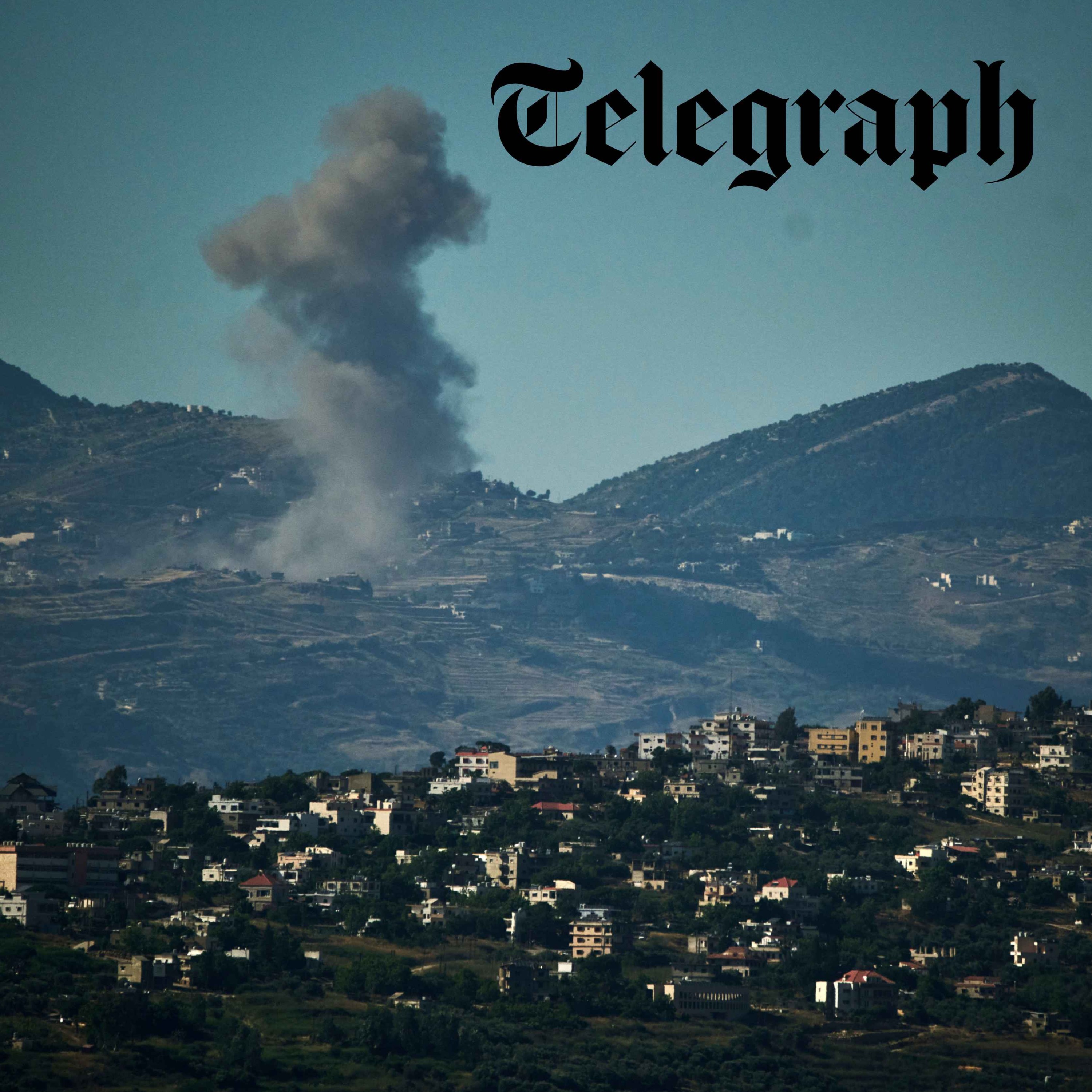
Loading summary
Transcript67 lines
- [00:04]
Narrator/Host
The telegraph.
- [00:09]
Paige Desorbo
Hey, I'm Paige Desorbo from Giggly Squad and I want to talk to you about Arm and Hammer Hardball cat litter. Because when it comes to fighting cat odor, they are the champs. Like what smell the litter box was my biggest fear when I got my kitty, Daphne. But since I started using Arm and Hammer cat litter, I I don't notice any cat smell. I always feel confident about anyone stopping by, whether it's my friends or my family or even people in my building. So for my fellow cat parents, be guest ready with Arm and Hammer Hardball cat litter. Find it now at Walmart or Amazon.
- [00:41]
Monday.com AI Agent User
Monday, AI agents took over my work
- [00:44]
J.D. Vance
and I absolutely love it.
- [00:45]
Monday.com AI Agent User
Chasing deadlines, writing status reports, updating stakeholders. Agents handle the daily grind. Now they live inside Monday.com, so they see the full picture. My work, my my team, the whole company. And I don't have to worry about the data. It's safe. Which means I'm free to focus on the big stuff. Knowing everything runs smoothly in the background. It's completely shifted the way we work. Create your own AI agent in minutes on Monday.com.
- [01:17]
Sophia Yan
I'm Sophia Yan and this is Iran. The Latest It's Friday 18th June 2026. On today's episode, is the peace deal already falling apart? The next phase of talks postponed after Israel and Hezbollah traded fresh strikes in Lebanon. We'll also be speaking to Iranian American author Yegana Turbati about what Iranians think of this peace deal and whether the regime will stick to their side. A reminder that you can now Watch us on YouTube. Follow the link in the show.
- [01:47]
Monday.com AI Agent User
Notes A short time ago, the United
- [01:50]
Narrator/Host
States military began major combat operations in Iran. Today, President Trump says Iran's supreme Leader,
- [01:58]
Sophia Yan
Ayatollah Ali Khamenei was killed in the attacks.
- [02:07]
Narrator/Host
The Pentagon is weighing a takeover of
- [02:09]
Acast Advertiser
that island as a way to force
- [02:11]
Narrator/Host
the reopening of the Strait of Hormuz.
- [02:13]
Monday.com AI Agent User
Iran begged for this ceasefire and we all know it.
- [02:18]
Sophia Yan
Does anyone really think that someone can tell President Trump what to do?
- [02:22]
Venetia Rainey
Come on.
- [02:24]
Sophia Yan
Let's start with a bit of news from overnight. I'm joined by my co host Venetia Rainey. Now progress has already stalled just hours after Donald Trump and Iranian President Masoud Pezechkin signed a 14 point memorandum of understanding. That agreement was meant to initiate an immediate ceasefire. Also a 60 day negotiation window to finalize a permanent peace deal. But this next round of talks postponed after Israel and Hezbollah traded fresh strikes, actions that Iran says violate the ceasefire. Venetia Tell us what's happening in Lebanon.
- [02:57]
Venetia Rainey
Right, so just as we've been reporting, you know, fighting has been ongoing in southern Lebanon throughout this whole process, all throughout this week and over the last few weeks, even though there is technically a ceasefire in place. And this is the stumbling block that we've come back to lots of times. Israel is not party to this agreement, neither is Hezbollah, and they're still fighting. So what we've seen overnight is more strikes. And specifically this morning, the Lebanese Public health ministry says 18 have been killed in Israeli attacks since Middle east midnight, 33 wounded, most of those in Nabatiya, where we've seen really heavy airstrikes. We've also seen several IDF soldiers wounded yesterday. And then this morning, the idf, the Israeli army announced that four soldiers have been killed. These are the military's first losses since we had the US and Iran peace deal have already suffered more than 20 in southern Lebanon. It's become quite a deadly conflict for them. They were killed in a strike on a tank and one of those killed was a battalion commander, according to the IDF. They've named him as Lt. Col. Dor Gadalia Ben Simone. They said the details of the other soldiers are going to be released later. And this has prompted a furious response from some people in the Israeli cabinet. So the far right minister Itama Ben gvir, who we often hear hear from, he said that all of Lebanon must burn for every tear shed by an Israeli mother, a thousand Lebanese mothers should cry. He said in a statement. Israel must make clear that the blood of our sons and the security of our citizens are not up for grabs.
- [04:19]
Sophia Yan
It's worth noting that the Israeli Prime Minister, Benjamin Netanyahu has made clear that he does not agree to this deal because Israel was not part of discussions. And now Israel making that clear with these attacks, with the use of firepower. Now this has prompted the US Vice President, J.D. vance to say that Israel cannot, quote, kill its way out of its problems. He's warned Israel to wake up and to temper its criticism of this prospective peace deal. And all of this, though, has meant that Vance has had to cancel his trip to Switzerland. He was meant to fly out late last night to begin the next phase technical talks within the 60 day window to come to a more permanent agreement. Agreement on a whole range of issues over Iran's nuclear program, over where things might go with the Strait of Hormuz. And so everything now stalled within again hours of the 14 point MOU being signed between Trump and the Iranian president.
- [05:13]
Venetia Rainey
So we've heard from Netanyahu this morning. He says he ordered the strikes against dozens of what he calls Hezbollah targets after the troops were killed. We not sure of the exact sequencing of this, but he also says that Israel is going to remain in the security zone in southern Lebanon. Quoting for as long as necessary. So a clear sense, I think, from both sides here that they're not planning to stick to this idea of Lebanon being part of a ceasefire. We cannot expect this conflict to just disappear, despite, as you mentioned, Sophia JD Vance telling Israel that they can't kill their way out the situation. And we've also had a statement from Trump, he was writing on Truth Social, I think last night. The United States is committed to peace and we encourage everyone in the Middle east region to maintain their commitment to allowing our negotiations to beautifully unfold. The markets are loving what is happening. With oil prices way down and stocks way up. We expect a complete ceasefire on all fronts, including Lebanon, Hezbollah and Israel. Thank you for your attention to this matter. President DONALD J. Trump, I mean, he can keep saying that as much as he wants, but these parties, these countries, this, you know, militia, Hezbollah as a militia group, they're not party to any of this. They're not, they're not part of this peace deal. So why would they stop?
- [06:22]
Sophia Yan
Well, you know, it's interesting that France has also urged Israel to respect the ceasefire. Just similar words to what Trump has said. The French foreign minister is saying that, quote, the U.S. must ex pressure on the Israeli government. And Iran has made clear too, this is a red line for them, that if the fighting continues in Lebanon between Israel and Hezbollah, that this peace deal is over. And so this is really a very difficult moment because like you said, Israel, Hezbollah, not exactly party to this. Hezbollah for them is existential, for Israel is existential. I mean, it's hard to see how this is going to pan out. And now at this point, the who kind of hinging over all these risk factors that could derail where things go in terms of peace.
- [07:10]
Venetia Rainey
Yeah, it's a real Gordian knot, isn't it? Because the deal included a ceasefire in Lebanon, but didn't tell the Israelis to withdraw. And lots of US Officials were briefing on the sidelines that Israel could stay in southern Lebanon to maintain the security of northern Israel. But Hezbollah sees itself as a resistance group. And so for as long as the Israelis are in southern Lebanon, they are going to keep fighting against the Israelis. And that has some not complete, but some support amongst the Lebanese public. So, you know, it's hard to see how we, how we get out of that particular knot, I see that a diplomat with knowledge of the peace deal has been speaking to CNN and said that the Iranians have asked for guarantees that hostilities in Lebanon will end as outlined in the signed agreement and that mediators are currently working to resolve the issue. The planned talks are temporarily postponed following the Israeli strikes in Lebanon. So I guess this is what we can expect to see, that this peace deal will be on again, off again, as hostilities flare and calm down in Lebanon.
- [08:11]
Sophia Yan
Yeah. And the US Is making clear that they're not happy with Israel on this Front. You have J.D. vance speaking about this particular issue, saying that America, and Trump in particular, is the only head of state in the world that's sympathetic to Israel. This is Vance speaking at the White House yesterday.
- [08:26]
J.D. Vance
What I will say, and this does bother me, is that you have seen people within Bibi's cabinet who have come out and attacked the deal and in some ways, very personally attacked the president of the United States. And I guess my message to them would be twofold. Number one, Donald J. Trump is the only head of state in the entire world who is sympathetic to the nation of Israel at this moment in time, and he happens to be the head of state of the world superpower. If I was in the cabinet of the Israeli government, I might not be attacking the only powerful ally that I have anywhere left in the entire world. And the second message I would give to some of those cabinet members, Bibi, to his credit, has not gone down this path, but to some of these cabinet members in Israel who are attacking the president of the United States. The other thing that I would say is that over the last three months, 2/3 of the defensive weapons that have protected your homeland have been built by American hands and paid for by American tax dollars. The problem for Israel is not Donald J. Trump. And anybody in Israel who thinks their biggest problem is the president of the United States needs to wake up and smell the reality of the situation that country is in.
- [09:42]
Sophia Yan
There are skeptics also in Iran over this deal. The Iranian supreme leader must Abba Khamenei himself saying that Trump made the peace deal, quote, out of desperation. Khamenei saying he initially disagreed with this MoU, but allowed it to go ahead after he was reassured by the Iranian president, Masoud Pezeshkian. There was a statement that was released in Iranian state media on Thursday night. This comes from Khamenei. He said, quote, in the course of reaching this stage, the officials in charge, out of sincere concern and goodwill, made extensive efforts. And, of course, it was the American president who, out of desperation, used all kinds of leverage to bring this about. I, as a matter of principle, held a different view. However, out of the commitment that the esteemed president, as the head of the Supreme National Security Council, gave to me on his own behalf and on behalf of the other members regarding the safeguarding of the rights of the Iranian nation and the resistance front, and his explicit acceptance of that responsibility, I granted my permission.
- [10:43]
Venetia Rainey
Yeah, it's a fascinating statement, and I know you're going to get into this with our. With our guest Yegany Tabati from the New York Times. But it really shows how he is. He's distancing himself from the deal, isn't he? And he's saying, if this all falls apart, I was always kind of against it.
- [10:57]
Sophia Yan
Yeah, it's very politically suave, very smooth. If it goes well, he can take credit. If it doesn't go well. Well, I wasn't sure about it in the first place. That's what he's saying right now. He's setting that very clear, drawing that line in the sand right now. Because, of course, as everybody who's watching this, I'm sure knows, it's a very, very complicated moment. It could go either way. And both sides, both the Americans and the Iranians, will want to play this in their favor to sell it as a win to their home base. Thanks for joining me, Venetia. Next up, we have with us Yegana Turbati. She's a journalist with the New York Times and co author of a book about Iran, recently published called Stolen Revolution.
- [11:41]
Paige Desorbo
Hey, I'm Paige desorbo from Giggly Squad, and I want to talk to you about Arm and Hammer Hardball cat litter. Because when it comes to fighting cat odor, they are the champs. Like what? Smell the litter box was my biggest fear when I got my kitty, Daphne. But since I started using arm and hammer cat litter, I don't notice any cat smell. I always feel confident about anyone stopping by, whether it's my friends or my family or even people in my building. So for my fellow cat parents, be guest ready with Arm and Hammer Hardball cat litter. Find it now at Walmart or Amazon.
- [12:12]
Acast Advertiser
Do you keep hearing podcast ads like this one, for example, but always wonder how you actually get involved with them for your own brand or organization. Well, it's easier than you think. We're acast and we give you the platform to do it all yourself. Browse thousands of popular podcasts, choose the shows that match your perfect audience, set your budget, and launch and if you want a hand, our podcast specialists are there to help you launch with confidence. This is podcast advertising without barriers. Get started@acast.com Advertisement Foreign.
- [12:52]
Sophia Yan
Welcome back. You're listening to Iran the Latest with me, Sophia Yan. Yeah, welcome to Iran the latest. So let's talk about this peace deal. It's very tenuous at this moment. What are you hearing from the Iranian side of, of what they make of this attempt at a permanent peace agreement?
- [13:09]
Narrator/Host
So, you know, it, it sort of differs there. There's, there's folks who are viewing this deal on its merits and kind of assessing it that way. And then there's, it's how it's being interpreted inside the country, at least by officials and sort of their reaction to it. So if you kind of look at the deal and what it actually requires of Iran and what it gives to Iran in return, I think it's pretty hard to ignore that this is a really beneficial deal for Iran. They get to sell their oil openly. They get the temporary lifting of sanctions around oil sales. So that means financing, banking, insurance, et cetera. And that's a huge boon worth potentially billions of dollars to Iran just in the next few months. And they get that without making any actual commitment or compromise on the nuclear side. So that's a big thing, especially for a country that was dealing with huge budget deficits and budget issues on the Strait of Hormuz. They pledged to reopen the strait for commercial shipping for free for now, for the next 60 days. That's what the deal says, which I think seems to imply that after 60 days, the US would effectively recognize Iran's right to charge some sort of fee. They're not going to call it a toll necessarily, but some sort of fee for the, for the passage through the Strait of Hormuz, which is not the case before. That will be a really big change from the situation before. Internally, inside Iran, you know, there's always kind of a cacophony of voices. So the elected government led by President Masoud Pezeshkian and of course, his Foreign Ministry, they have been touting this deal and saying how great it is and how it was only through Iran's, the successes that it had on the battlefield against the US And Israel that it was able to negotiate something like this. We did see a statement quite late last night from the supreme Leader, Mujshab Al Khamenei, a written statement where he basically said that I did not agree with signing this, but based on the commitment made to me by the president, I effectively gave my permission so what is he doing there? He's basically saying that, you know, if this goes awry, it wasn't my fault, but then if it, if it goes well, then he can take credit for it. So, you know, we can kind of get more into kind of how this is playing politically. But that is sort of the situation, you know, in the first 24, 48 hours after we actually even saw the final version of the memorandum.
- [15:52]
Sophia Yan
Yeah, it's just, it's such fresh news. And I appreciate that it's kind of early, but what are the, the initial reactions that you've heard from Iranians about what they think of where things are headed with this particular deal?
- [16:07]
Narrator/Host
You know, I think we're, we're still kind of trying to figure that out and understand what, how Iranians are feeling. I do think if you read the text of the, the memorandum, it's quite different from what President Trump promised Iranians just three, four months ago, I guess five months ago, now protesting out on the street in January. So at that point, you know, he said help is on its way, effectively telling Iranians to stay out on the streets, continue protesting. And instead, in this memorandum, there's a clause, I think it's paragraph two, it's quite high up, basically saying that both countries pledge not to interfere in each other's internal affairs. That would seem to kind of close the book on any kind of support for Iranian protesters. And so, you know, we're still trying to, I think Iranians, just as Israelis and Americans and other people around the world, Iranians are still absorbing this and trying to understand really what the implications of this are. Is this real? Is it going to be reversed in a day, what's going to happen? But my sense would be that if you're an Iranian protester, that clause alone would be quite disappointing and represent quite a bit of whiplash.
- [17:16]
Sophia Yan
Yeah. It just seems like such a far departure. Trump at first promising that he was going to go for regime change and saying he was doing this to completely dismantle the nuclear program. And as you said, the help is on the way. Comment. I mean, if you're inside the country now, I mean, it just sort of, in some ways, it must seem like a big failure. Right. Like, it's just, where do you go from here? I mean, it was already a bit of a mafia state, which you've written about in your book Stolen Revolution. Now you have the IRGC totally running with all the power. Where do we go from here? I mean, is there some way to. Course. Correct. At least within Iran itself for the general public who are hoping for a better future.
- [17:56]
Narrator/Host
You know, it's a tough moment right now for people who are opposed to the Islamic Republic. At this moment, the government feels, I think, quite confident in the way that they have performed. In their view, the US And Israel really threw everything they had at them. And the Islamic Republic survived. Yes, the country saw a lot of harm and a lot of people were killed and the economy is a mess, but the system survived. And that is the major priority for the Islamic Republic. In the last few months, they've sort of undertaken far more repressive measures than even before. And of course, we saw what happened in January with the massacre of protesters. So, you know, for those who are, you know, who are dissidents who are opposed to this government, I think right now feels like quite a bleak moment. Of course, kind of through my book research, I found that there are cycles in Iran and nothing quite ever stays exactly the same. There is always kind of something happening in those deeper layers within society and people demanding change and trying to enact that in different ways. But I think right now, the opposition and those who wanted a different future, I think some of those people had pinned their hopes to some extent on some kind of military intervention, and those have been sorely disappointed. And so my expectation would be that they would start to kind of do some soul searching about what happened over these last few months and what might the steps forward be for a change in the government that maybe isn't so dramatic, but maybe kind of on the margins gives them some greater freedoms or a better life.
- [19:41]
Sophia Yan
Yeah. I remember early on in January with the protest crackdown and then also in the beginning days of war. I remember speaking to Iranians in Turkey near the border, and they were saying that they needed some sort of firepower, some sort of help, because they didn't have the guns. They didn't want to necessarily pick up the guns either. But without greater force, they couldn't go up against this regime that had been so, well, totalitarian. So it's really a big departure. I suppose there's also kind of a mixed bag sentiment that I've observed. I'm curious for what you. What you've heard as this war has gone on, a lot of Iranians under siege, though they would have liked to see a change in the regime or some sort of shift in how the country is run and governed. There's some sense of banding together, which I have found very interesting. I'm curious what you make of that and what you've heard from the people
- [20:32]
Narrator/Host
you've spoken to in terms of showing greater solidarity during the war? Yeah, I think there was some of that. We also saw some of that during the 12 Day War in June 2025. Videos of people lined up to buy bread and you would see people kind of ration themselves. Even the bakery didn't have to do it, that they would ration themselves to like one loaf per family or two loaves per family. You know, people taking in strangers, people organizing rides with strangers out of the city. Often in the absence of the government doing the typical kind of public safety measures that a government would do, Iranians kind of filled in the gap themselves. You know, this war, of course, went on longer and was far more widespread and I think scarier. And I think we didn't see some of the markers of sort of social breakdown. I do think a huge challenge that the country faces now is the economy. It's in a far worse state than it was even before the war. And as we know, the economy before the war was the reason a lot of this got started because people were protesting the collapsing currency. And so I think job helplessness has risen. Prices are even higher than they were before. And I think those struggles may kind of wear on Iranians to an extent where we start to see potentially threats to public safety. I mean, I spoke to people at the border in April who were saying that if we can't pay for food, we will steal it. We have to be able to provide food for our children. And so I think we may start to see some of that. It's unclear so far. We don't quite know yet. But that's a big challenge for Iranians and I think for the government. They may have, in their view, won this war at this point, but they have to turn next to fixing the economy. The memorandum of understanding foresees this $300 billion fund for reconstruction, but that won't come into play unless a nuclear deal is actually signed and sanctions are lifted. That might never happen. That might happen in a year. And I certainly don't expect that it would happen in 60 days as envisioned by the document. But in the absence of that, the government has to sort of figure out how to do that on its own. So, yeah, I mean, as you mentioned, Vice President J.D. vance was supposed to fly to Switzerland this week to begin negotiating some of the nitty gritty details of this nuclear deal with the Iranians. You know, my. Like, I have a speculation. I don't know. You know, this is not really based on any firm facts. Necessarily. But, you know, the Iranians have already gotten a lot of what they, I think, at least, need to survive, which is, you know, greater oil sales and being able to bring in more hard currency. The other aspects of the deal that has been dangled in front of them, which is lifting all the sanctions, I mean, far more sanctions than were lifted under the 2015 nuclear deal that was signed under the Obama administration. That deal did not lift American sanctions on Iran. It only lifted multilateral sanctions. So the idea that, as is stated in this MoU, that potentially if Iran were to agree to nuclear restrictions, that all sanctions on Iran would be lifted. You know, I think. Think maybe the Trump administration believes that this is like an enormous inducement. I think what we should also understand, though, about the Iranian system is that they are used to and often thrive in situations where they're under pressure and where their system is closed off. Actually opening up the economy to a wide array of foreign investors and potentially American investors is actually somewhat threatening to that system. You know, they have an economy that has developed where the rubber revolutionary guards and entities closely connected to the clerics have large portions of it. Are American investors going to come in and do business with those folks, or are they going to potentially compete with those businesses? That is something that the system as it is now, I think, would find very threatening. And I think we saw elements of that even after the nuclear deal that was signed in 2015. That deal allowed European investors to go in. And as I write about in the book and I've written about elsewhere, the system itself, the security state, kind of mounted a backlash against some of those investors and against some of their Iranian partners. Sanctions were not at play there. They did not want that kind of flourishing of a sector of the economy that they did not have control over. So. So it seems that if you listen to the rhetoric from the Trump administration, they seem to believe that perhaps a new Iran is in the offing where they would really want to open up their society and their system. And maybe, as administration officials have suggested, Even put aside 47 years of enmity with the United States. I think we should be humble about the possibilities and the future. A lot of things have happened this year, just in the last six months, that have left me kind of in surprise and shock, and I would never have necessarily predicted. So I don't want to say it would never happen. But just going off the recent history, let's at least say that would be a dramatic departure from the Iranian government, policy, ideology, behavior, et cetera. And so we may just get to a situation where we're just in this phase one for a long, long time. Iran can sell oil, it sees some of the sanctions lifted in terms of banking, et cetera, but they never get to a final deal, and they never come to any sort of nuclear accord.
- [26:40]
Sophia Yan
And all that time, they can keep collecting the toll, the fees through the Strait of Hormuz and bringing in some more money in other ways, right?
- [26:48]
Narrator/Host
Potentially, yeah. And what is the stick that the United States has at that point? I guess they can reimpose sanctions. I think that's One thing that J.D. vance suggested in one of his interviews that, you know, well, we can just squeeze their economy. You know, the Iranians have shown they can withstand that, and their priority is not economic growth or prosperity, it is the survival of the system. So, you know, then maybe the Trump administration is happy with that status quo. But that seems to kind of be the likeliest scenario if that were to occur.
- [27:24]
Sophia Yan
It's a really good point you raise about the regime and their overarching interest to maintain control. I mean, obviously a lot has happened, and it's only halfway through the calendar year. They've got a new supreme leader. Opening up the country now means injecting a lot of uncertainty and risk. How do you see Mushta Bahomeneh handling that? Can he find a way to continue to lead the country? He. He's new to the job. He hasn't seen the country in peacetime. And if there are all these new potential factors or players, investors, people, whole new government, I mean, all of this is. Well, it's unprecedented in a way. So can he really have a sway over the country going forward after all of this?
- [28:11]
Narrator/Host
I mean, we haven't even seen him publicly. We haven't even seen him speak. The vast majority of Iranians have never even seen, seen or heard this person speak. There's like one video kind of floating around out there. So it's really hard to know kind of what his true leadership style is. And even his father. So he ruled for close to four decades. His leadership style developed over years, and he was quite underestimated in terms of his ability to exercise power. They sort of thought that he would be kind of a non entity. And he turned out to be very, very powerful and adept at sort of creating new power centers for himself. So we'll have to see. I think what we've already seen is that whereas his father was a bit more cautious, his critics might say cowardly in terms of confronting the United States, whether it's Muj Sabo or whether it's the circle of commanders around him,
- [29:15]
Venetia Rainey
they
- [29:16]
Narrator/Host
have not shown that same level of caution in terms of exercising this war. Hitting purported allies like the Gulf states, closing the Strait of Hormuz. Those were very bold, risky moves, and they did pay off for Iran, I think, in this case. So that's wartime, though. What happens in peacetime, or what happens at least in this kind of in between, maybe extended ceasefire that we may be entering? It's a little bit hard to know. I think his statement last night showed that he is following in his dad's footsteps in one way, which is not wanting to take accountability for difficult decisions. So he's gonna put that accountability and that potential blame if it goes wrong on the elected leaders, as his father did over and over and over throughout his reign. And Mujtaba seems to be following in those footsteps. I think there's some talk of, could he be an MBS type? Could he be the type of leader who is still within the system, but then reforms it significantly in a way that keeps control but makes people's lives easier? He did say, and I think one of his, maybe his first statement, that he wanted, he understood people's economic concerns and they're going to release a plan soon to improve Iran's economy. That was in there. We haven't seen that yet. And the problems with Iran's economy run so deep, and they're so much deeper than sanctions. And there are so many special interests connected to Mujtaba and to his allies, like the Guards, that have a huge stake in things staying how they are, that that would require quite a lot of political will. He certainly has the stature to undertake those if he decides to. But we don't know yet how bold he's willing to be kind of on the domestic front in order to ensure his government's longevity, or to ensure that it at least has a more popular base of support than it has now.
- [31:24]
Sophia Yan
How much of a wild card do you think Hezbollah can be in all of this, in terms of how things pan out with this peace deal?
- [31:34]
Narrator/Host
Yeah, I mean, we're seeing now. I mean, even just last night, I think, was a very difficult night in Lebanon. And this deal, remarkably, includes Lebanon as part of it, which. Which, of course, the Israelis did not agree to. And so they, you know, I don't expect that they would feel bound by that. And so, you know, Iran, I think, feels like it has quite a lot of leverage. And so it wants to use that to protect Hezbollah. And I think it's gained A lot of regional. At least it sees itself as being kind of the regional broker when we say goes in Lebanon and kind of in these Hezbollah areas. So that is a part of this where the Trump administration, and we've seen these comments by Vice President Vance about Israel. It's quite a difficult relationship right now. They don't seem to have really worried too much about whether Israel is on board with this. And so that could be a potential area of breakdown.
- [32:39]
Sophia Yan
I'm curious about where the relationship is between Mujtaba and now the irgc. Can he continue to control what the IRGC is doing? Because there might be some people, as you said before, who want to keep the status quo, to keep that control and the power that they do have in the country.
- [32:55]
Narrator/Host
Yeah, I mean, you know, Iran's a black box. Like, it's a very opaque country at the best of times. And we often don't find out about what is really going on in the halls of power until years later when people write their memoirs or you kind of can pick up things sort of like between the lines. That was, I think, the approach we sort of took for our book, you know, as opposed to, like, what's happening right now between Mujtaba and the guards and who's really running the show. Like, we honestly don't really know. There's a lot of speculation. You know, he's been injured. That's what the reporting shows, at least. He doesn't have his own sort of power base necessarily, certainly not as developed as his father's. He did spend a lot of time when his father was alive kind of of in his father's office, interfering with military promotions like that. That was one thing that at least one analyst I spoke with told me that Mujtaba was known to kind of handpick which generals would be promoted. He was close to a certain kind of portion of the guards from his time in the Iran Iraq war. So he's definitely known to have those ties. And so, you know, are they telling him what to do? Is he telling them what to do? But then, you know, they're so close that it's kind of hard to discern. Like, we just at this point don't know. But I think it's just fair to say that with his ascension, you are seeing the rise of someone who is an absolute ally of the guards. There were other choices they could have made for the next supreme leader who were not as close to the guards. And they didn't pick pick that person or those people. They picked Mujtaba for various reasons, I think for continuity, because he's ideologically in line with his father, but also because one big reason I think was that this was the one that the guards wanted. And so the Iran that we have now is one where the guards are just much more powerful even than they were before.
- [34:58]
Sophia Yan
Yeah. Going forward in this new post war Iran in whatever state that we see it. And do you know, the IRGC basically runs the country like a mafia state. That's perhaps more true than ever now. So how does this play out? I mean, you spoke about the very ripe circumstances for potential public unrest because of the economy. People are obviously going to have some time, take some time to recover from the war, and then you've got potentially the IRGC taking an even harder stance. I mean, how does this all work? I mean, will the general public really be willing to live under that sort of pressure again after all of this?
- [35:38]
Narrator/Host
Yeah, you know, I think what the history shows is that people's economic concerns are unlikely to be stifled for long. And it's gotten to such a point where like, I mean, middle class people are finding it difficult to afford edge eggs and just basic, forget meat. A lot of people haven't even eaten meat in a long time. But just basic things. Even the middle class is struggling now. So those concerns are going to be there and the government's going to have to figure out some way now it may be that the oil sales enable the currency to be strengthened so that inflation at least comes down a little bit and prices kind of stabilize. That may be a lifeline for the government in terms of kind of like the prosperity that Iran maybe could have. That would require a lot of changes, including foreign investment, including just transparency, just wholesale rooting out of corruption. That doesn't appear to be in the offing at the moment, but they may, through this deal, kind of have some breathing room. And then it's really up to the government, up to people like Ali Baf, who has really ascended during this war. He has said, I understand we need to do better on the economy. We need to pay attention to people's prosperity. He said that very recently. Iranian officials have said those kinds of things for years and nothing has really changed. Maybe the size of the protests in January, maybe the depth of, of the discontent which has really spread all throughout society, will push them to change. I think we just don't know yet. But it's one thing to survive a war and to be able to kind of use sort of asymmetrical tactics and get through this. But it's a completely other thing to manage a country day to day. And at least up until this war, they had not been succeeding at that. And so we just kind of have to wait and see how they change, if at all, going forward.
- [37:48]
Sophia Yan
What's your take on what the inside baseball is with the political elite in Iran? I mean, two former Iranian presidents, more moderate, have publicly backed this MOU that was signed. The hardliners are against it still, perhaps, as you would expect. But what does this mean in terms of overall broad support within the establishment for where things go from here?
- [38:12]
Narrator/Host
It seems like the overall establishment supports this deal. It had to kind of almost be ratified by the Supreme National Security Council. And from what we've been told in these public statements, a majority backed it. But there is a vocal but small minority in Iran, the hardliners, the kind of ultra conservatives who really oppose the idea of any kind of dealing with the United States or Israel. And in their view, I think Iran was winning this war and we should just continue to fight it. And we really hadn't lost that much. And even if we did, it was worth it. They really are sort of true believers in that way. And so they staged some protests last week over the deal. They called, in some cases, even for the death of the foreign minister who negotiated it. But you see the system sort of ignoring them, at least for now. Now you also see the way that the Supreme Leader kind of talked about the deal. Oh, I didn't support it, but I gave my permission for it. He's sort of nodding to that minority as well. And I think they are likely to take some sort of strength from what he said. But at least for now, it seems like the consensus within this system is that. That this is a good deal for us. Let's do this, get some breathing room, maybe regroup. Maybe they will decide to use the money to sort of prepare themselves defensively and offensively for a potential another outbreak of conflict, which I think, given Israel's stance, is somewhat likely. And, you know, that's the decision that the system has come through, through some consensus. And for now, those hardliners are kind of at the margins of political debate.
- [40:09]
Sophia Yan
That was Yegana Trabati, a correspondent for the New York Times and co author of a new book, Stolen Revolution. Since we recorded today's episode, Israel and Hezbollah have agreed to another ceasefire. This comes after the earlier exchange of strikes, which meant further talks for a permanent peace deal were delayed. That continues to be the case. As of Friday afternoon, neither the US nor Iran have yet to confirm next steps on negotiations. For context, there was already technically a ceasefire in place between Israel and Lebanon, but fighting has periodically flared up between the Israeli military and Hezbollah. Stay tuned. We'll have more for you on Monday. Iran the Latest is an original podcast from the Telegraph, created by David Doles and hosted by me, Sophia Yes, Roland Oliphant and Venetia Raney. If you appreciated this podcast, please consider following Iran the Latest on your preferred podcast app. And if you have a moment, leave a review as it helps others find the show. For more from our foreign correspondents on the ground, sign up for a new daily newsletter, Cables via our website, or listen to our sister podcast, Ukraine the Latest. We're still on the same email address battlelineselegraph.co.uk or contact us on X. You can find our handles in the show Notes the producer is Max Bauer. The executive producers are Venetia Rainey and Louisa Wells.
- [41:42]
Paige Desorbo
Hey, I'm Paige desorbo from Giggly Squad and I want to talk to you about Arm and Hammer Hardball Cat Litter. Because when it comes to fighting cat odor, they are the champions. Stamps like what Smell the litter box was my biggest fear when I got my kitty, Daphne. But since I started using Arm and Hammer cat litter, I don't notice any cat smell. I always feel confident about anyone stopping by, whether it's my friends or my family or even people in my building. So for my fellow cat parents, be guest ready with Arm and Hammer Hardball Cat Litter. Find it now at Walmart or Amazon.
- [42:16]
Narrator/Host
ACAST powers the world's best podcasts.
- [42:20]
J.D. Vance
Here's a show for that we recommend.
- [42:23]
Taryn or Cami
Do you want to know the best part about being married to a woman?
- [42:26]
Narrator/Host
That there's no man involved.
- [42:28]
Taryn or Cami
I mean, true, but I was going to say that it's a sleepover every single night with your best friend.
- [42:31]
Narrator/Host
Oh yeah, that part's cute too.
- [42:33]
Taryn or Cami
I'm Taryn, she's Cami. We're married and staying up is our weekly pillow talk out loud with you.
- [42:38]
Paige Desorbo
We're giggling, we're gossiping, we're arguing.
- [42:41]
Taryn or Cami
Classic marriage stuff. Just having fun being wives while we navigate growing up and building a family together.
- [42:46]
Paige Desorbo
Together.
- [42:46]
Narrator/Host
Then our sleepover grows.
- [42:47]
Paige Desorbo
Our listeners call the PP hotline with their own gossip burning questions, late night spirals, all the stuff they'd only tell their best friends.
- [42:54]
Taryn or Cami
So it's a private sleepover, but you are invited. Staying up with Taryn and Cami. New episodes weekly follow Wherever you listen.
- [43:03]
J.D. Vance
Acast helps creators launch, grow and monetize their podcasts everywhere.
- [43:08]
Narrator/Host
Acast.com.