← Iran: The Latest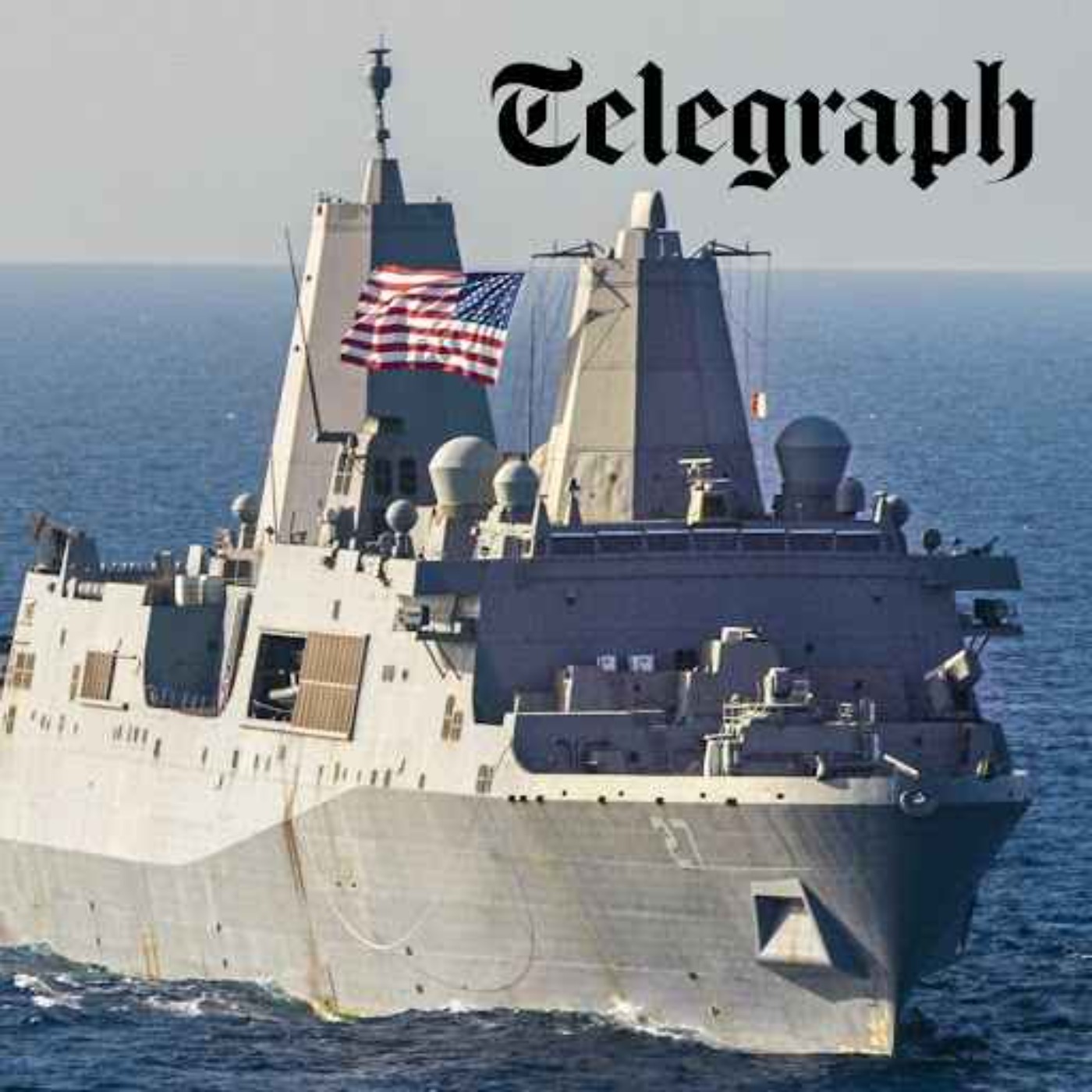
Iran: The Latest
'We’ve trained for this': How US Marines could seize Iran’s uranium and open the Strait of Hormuz
00:35:43
Loading summary
Transcript62 lines
- [00:04]
Andrew Milburn
The telegraph.
- [00:10]
Progressive Insurance Announcer
This episode is brought to you by Progressive Insurance. Do you ever think about switching insurance companies to see if you could save some cash? Progressive makes it easy to see if you could save when you bundle your home and auto policies. Try it@progressive.com Progressive Casualty Insurance Company and affiliates. Potential savings will vary. Not available in all states.
- [00:32]
Andrew Milburn
ACAST powers the world's best Podcasts Here's a show that we recommend.
- [00:39]
Pace Case
Hi, I'm Pace Case.
- [00:40]
Progressive Insurance Announcer
And I'm Bachelor Clues.
- [00:42]
Pace Case
We host Game of Roses, the world's best reality TV podcast. We're covering every show in reality TV at the highest level possible. We analyze the Bachelor, Love is Blind, Perfect Match, Vanderpump, and anything else you find yourself watching with wine and popcorn.
- [00:56]
Progressive Insurance Announcer
We break down errors, highlight plays, MVPs, and all the competitive elements that make reality TV a sport. And we interview superstar players like bachelorette Kaitlyn Bristow and Big Brother champion Taylor Hale.
- [01:08]
Pace Case
If you want to know so much about reality TV, you can turn any casual conversation into a PhD level dissertation. You definitely want to check out Game of Roses.
- [01:18]
Andrew Milburn
ACAST helps creators launch, grow and monetize their podcasts everywhere. Acast.com. You know you'll leave a wounded tiger, right, and negotiate a ceasefire. But Iran will by this time build its capability and strike back in some way.
- [01:41]
Donald Trump
A short time ago, the United States military began major combat operations in Iran.
- [01:49]
Andrew Milburn
Today, President Trump says Iran's supreme leader,
- [01:51]
Pace Case
Ayatollah Ali Khamenei, was killed in the attacks.
- [02:00]
Progressive Insurance Announcer
The Pentagon is weighing a takeover of that island as a way to force the reopening of the Strait of Hormuz.
- [02:06]
Roland Oliphant
Does anyone really think that someone can
- [02:08]
Donald Trump
tell President Trump what to do? Come on.
- [02:13]
Roland Oliphant
I'm Roland Oliphant. This is Iran. The Latest It's Thursday 2nd April, day 34 of the Israeli and American war with Iran. In today's episode, we're going to be speaking to a former U.S. marine about how exactly one might go about conducting amphibious operations to reopen the Strait of Hormuz. But before that, let's get a few updates. The absolute main news today is, of course, President Donald Trump's speech on primetime US Television late last night. You can watch the speech yourself at your leisure, or check out telegraph.co.uk for the highlights. But the essential message was that the US Is on track to soon complete all of its military objectives in Iran. He says they will continue to hit the Iranians over the next two or three weeks.
- [03:07]
Donald Trump
Everyone has said that Iran cannot have nuclear weapons, but in the end, those are just words if you're not willing to take action when the time comes. As I stated in my announcement of Operation Epic Fury, our objectives are very simple and clear. We are systematically dismantling the regime's ability to threaten America or project power outside of their borders. That means eliminating Iran's navy, which is now absolutely destroyed, hurting their air force and their missile program at levels never seen before, and annihilating their defense industrial base. We've done all of it. Their navy is gone. Their air force is gone. Their missiles are just about used up or beaten. Taken together, these actions will cripple Iran military, crush their ability to support terrorist proxies and deny them the ability to build a nuclear bomb. The United States imports almost no oil through the Hormuz Strait and won't be taking any in the future. We don't need it. We haven't needed it and we don't need it. The countries of the world that do receive oil through the Hormuz Strait must take care of that passage. They must cherish it. They must grab it and cherish it. They can do it easily. We will be helpful. But they should take the lead in protecting the oil that they so desperately depend on. So to those countries that can't get fuel, many of which refuse to get involved in the decapitation of Iran, we had to do it ourselves. I have a suggestion. Number one, buy oil from the United States of America. We have plenty. We have so much. And number two, build up some delayed courage. Should have done it before. Should have done it with us as we asked. Go to the strait and just take it, protect it, use it for yourselves. Iran has been essentially decimated. The hard part is done, so it should be easy. And in any event, when this conflict is over, the strait will open up naturally. It'll just open up. Naturally. I've made clear from the beginning of Operation Epic Fury that we will continue until our objectives are fully achieved. Thanks to the progress we've made, I can say tonight that we are on track to complete all of America's military objectives shortly, very shortly. We are going to hit them extremely hard over the next two to three weeks. We're going to bring them back to the Stone Ages where they belong. In the meantime, discussions are ongoing. Regime change was not our goal. We never said regime change. But regime change has occurred because of all of their original leaders. Death. They're all dead. The new group is less radical and much more reasonable.
- [06:07]
Roland Oliphant
Iran today responded saying that it would carry out crushing attacks against the United States and Israel following the speech and that it will continue fighting until those countries surrender. With trust in Almighty God, the war will continue until your humiliation, disgrace and permanent and certain regret, the Iranian military said in a statement. So much for the war of words between the two sides. Bombing has continued in Iran today, but one particular story I think is worth highlighting. Highlighting. On Tuesday, Shelley Kittleson, an American freelance journalist, was kidnapped in Baghdad. US Officials believe an Iranian backed militia is behind the abduction. We know that the Iranians have a history of what critics call hostage diplomacy. We all continue to follow that story. We're all concerned when a fellow journalist finds themselves in the firing line in that way. Those are the main updates today. For more detail about what is going on on the ground and around the region, do check out telegraph.co.uk where our live blog is running as it has every day of this war. There's much more granular detail about the war there. With that, I'd like to turn to our guest for the day, Andrew Milburn, a former colonel in the United States Marine Corps and someone who has much professional experience both in amphibious warfare and fighting American wars in the Middle eas. Here is our conversation. Would you be able to explain the discrepancy between your illustrious career as an officer of the U.S. marine Corps and your accent?
- [07:56]
Andrew Milburn
Yeah, great question. So I'm a, I'm a first generation immigrant, I'll keep this answer short, but my, my dream was to join the British Army. I grew up in the uk. I mean I'm a British citizen, dual national. But the British army rejected me. I, I failed the, the medical. I broke my leg playing rugby at, I went to UCL in London and broke my leg badly. And the British army said, don't you have such a serious injury? They, it was a, whatever the lowest category was of the medical classification. And so basically it was they told me don't, don't bother to come back. And the US Marines took me. They had a recruiting station in London at the time, this was in the 80s and they had a, what I like to call a pet Air Force doctor who, who passed me as physically fit. And So I retired 31 years later. But yeah, the, the British army was my first choice. I'm chagrined to tell people that, especially my British army friends, but it is the truth.
- [09:01]
Roland Oliphant
But the USMC took you in and made you one of their own.
- [09:04]
Andrew Milburn
Yes, yes. The Marine Corps is such that it's a little bit different culture than the U.S. army. It's a little closer to, I think in spirit to the British Army. And the bottom line is they accept eccentrics, I think, by the terms of US Military. I'm certainly that, you know, as long as you produce. I ended up still with a British accent, I guess, but as a, as a U.S. marine officer, kind of transatlantic,
- [09:32]
Roland Oliphant
difficult to spot kind of sound there. But listen, that's a fascinating personal story, so thank you for sharing that with us. Turning to your, I mean, your professional expertise, I mean, obviously, we asked you on, because you're, you're a former soldier who worked a hell of a lot in the Middle east around this area, and we really want your eye on, on what's going on in, in the war in Iran at the moment. The place to start really is Donald Trump's speech very early in the morning UK time, kind of prytime time, television time in the States yesterday, in which he, he kind of simultaneously signaled that the war is going to end relatively soon, but also that he's going to hit Iran very hard over the next two to three weeks. I was wondering what you, what you made of the latest announcements from the president. What does that tell you about where this is going?
- [10:20]
Andrew Milburn
I think that the US Is looking for an off ramp. I think the administration's looking for an off ramp for a number of reasons. I think, I hope that the prospect of landing ground troops is a tactic to kind of drive negotiations. I don't know. As far as hitting Iran more heavily than we have been already, that raises the prospect of escalation. There's two forms of escalation, right, beyond what the United States in Israel have done so far in the air campaign. One would be to go after a different type of targets, for instance, as Trump has previously threatened, that might be energy infrastructure. I'm not talking nuclear, but going after power grids, right. Or even water desalination plants. I mean, arguably civilian targets. The other form of escalation would be, of course, to commit ground troops. You've got kind of a dilemma right now. You've got the fact that the United States and Israel have pursued, by all accounts, a successful air campaign. And I say by all accounts, successful. It should be successful because it's been planned for some 10 years. It's been modified along the way, not planned to be conducted in concert with Israel, but nevertheless, and there's been serious attrition of Iran's military capability. And arguably Iran's no longer in a fit state to conduct defensive operations against its neighbors. And this is part of the concern, I think, for the countries in the region. The country I'm in right now, and UAE is that you'll leave a wounded tiger and negotiate a ceasefire, but Iran will bite its time, build its capability and strike back in some way. So that's dilemma number one. You know, how do you ensure really that you have removed that ability? Dilemma number two, of course, is economic. The fact that the effects on the global economy of Straits of Hormuz, that's received a lot of publicity. Now you have the prospect of the Baobao Mandeb also being made untransitable by the Houthis. And so you've got serious effects on the global economy. How do you do that? How do you open a strait? You can't do it via an air campaign. It's tough to do it via a naval campaign. The only way to do it is to secure both sides of that strait. Then the third part is Iran's ability to make a nuclear weapon. And there hasn't been a lot of attention focused on that. There hasn't been a lot of pronouncements about what has been done to set that program back. We're familiar with the campaign last year where we heard that the program had been obliterated, clearly had not been obliterated. I don't think anyone was lying. But it gets to the point that battle damage assessment is a very difficult thing, especially when you're talking about centrifuges that are buried deep in ground. But that is definitely a stated aim of the US And Israel to at the very least set that capability back. The speech itself, I think, was quite unrevealing, and it has everyone guessing. But those undoubtedly are the issues on the President's mind, or at least should be on his mind, if the military commanders are doing their job.
- [13:45]
Roland Oliphant
You mentioned that you talked about, you know, this air campaign is planned for at least 10 years.
- [13:49]
Donald Trump
How far?
- [13:49]
Roland Oliphant
What you've seen over the past. What is it? It's nearly five weeks now. Four and a half weeks. Matches with what you understood the that plan that has been cooking for 10 years or so looked like. Is this pretty much what you anticipated?
- [14:05]
Andrew Milburn
Well, Roland, I'm going to say up front, everything I tell you is open source. Has to be open source, Right? So it's open source that the United States has had a plan. You can see talking heads on the news talking about it. But I will tell you, I can't judge exactly how far along we are. I don't have a clear idea of what the battle damage assessment is. We get snapshots of it. I would guess it's going very well. And the reason why I'm saying that is because Iran's air defense system has been totally destroyed. And so that's why, for instance, Israeli and US Aircraft are able to roam. Iranian scan is almost unmolested. I mean, we've seen one F18 damage to date. So basically they can pick and choose targets. I would guess, though, that even if it continues to culmination, Iran will still have an ability to strike at their neighbors in the region. And this is the concern, as I
- [15:06]
Roland Oliphant
said, of Saudi Arabia and Bahrain and
- [15:10]
Andrew Milburn
uae, because Iran has prepared for this war, too, for a long time. They've expected this. Not everything that has happened, obviously, but they've known that they're facing one, maybe two nations with overpowering air power. They will have dispersed their assets. They will have, where possible, buried them deeply. You know, and when you're talking about what could really. And let's talk about the Straits of Hormuz. Right. When you're talking about what can really hurt shipping going through the Straits of Hormuz, you'll hear a lot of discussions about destruction of the Iranian navy of surface vessels, but those aren't the main threats. That's almost irrelevant. The threat to shipping, of course, comes from drones, missiles, primarily missiles, but also drones and of course, mines. And it's very difficult to reduce the threat from those three things to zero. I would say undoubtedly, that the United States has not done that because it's quite impossible to do so from an air campaign alone.
- [16:11]
Roland Oliphant
One analyst who I've been speaking to that perhaps the, what the US Military always imagined was a kind of physical attempt to block the straits with fast boats and so on, so and so forth, and that there was a plan for that and, and the U.S. navy would have dealt with that very quickly. But of course, the real linchpin to the Iranian strategy here is, is the deterrence, the just the threat of damage and the, the way insurance premiums go through the roof.
- [16:38]
Andrew Milburn
100. That's right.
- [16:40]
Roland Oliphant
Yeah.
- [16:40]
Andrew Milburn
As long as, as long as there is a threat. And I, I think you, hopefully you can see from what I've said, it's impossible to eliminate that threat. Even if you hold that length of coastline, the ships are at threat. I mean, missiles range far more than 20 miles. Right. So, I mean, Iran could be launching missiles and drones from anywhere in the Iranian hinterland to interfere with the Straits of Hormuz.
- [17:09]
Roland Oliphant
We're going to take a short break now. When we come back, it sounds like something out of an 80s action movie, but could the United States really put a special forces team on the ground to steal Iran's enriched uranium?
- [17:28]
Progressive Insurance Announcer
This episode is brought to you by Progressive Insurance. Do you ever think about switching insurance companies to see if you could save some cash? Progressive makes it easy to see if you could save when you bundle your home and auto policies. Try it@progressive.com Progressive Casualty Insurance Company and affiliates. Potential savings will vary. Not available in all states.
- [17:47]
LifeLock Announcer
It's tax season, and at LifeLock, we know you're tired of numbers, but here's a big one you need to hear.
- [17:53]
Roland Oliphant
Billions.
- [17:54]
LifeLock Announcer
That's the amount of money in refunds the IRS has flagged for possible identity fraud. Now here's another big number. 100 million. That's how many data points Lifelock monitors every second. If your identity is stolen, we'll fix it, guaranteed. One last big number. Save up to 40% your first year. Visit lifelock.comspecialoffer for the threats you can't control.
- [18:16]
VRBO Announcer
Terms apply day or night. VRBoCare is here 24. 7 to help make every part of your stay seamless. If anything comes up or you simply need a little guidance, support is ready whenever you reach out. From the moment you book to the moment you head home. We're here to help things run smoothly because a great trip starts with the right support. And, hey, a good playlist doesn't hurt either.
- [18:52]
Roland Oliphant
Welcome back. You're listening to Iran, the latest from the Telegraph, with me, Roland Olyphant. I'm Speaking to former U.S. marine Corps Colonel Andrew Milburn. Of course I reached out to you partly because of your background in. In specifically the Marine Corps, therefore, in amphibious warfare, we've seen a huge amount of troops arriving. The 82nd Airborne, I believe. The George H.W. bush is coming in. That's an aircraft carrier. And of course, I think it's the 11th and 31st Marine Expeditionary Units, your former colleagues. Now, that has all fueled speculation that maybe over this long weekend or in the coming days, we will see an amphibious operation of some sort in Hormuz to try and open it. Can you imagine what that would look like, what the targets might be, what might be done with these forces?
- [19:45]
Andrew Milburn
I think Straits of Hormuz would be number one priority. I know the President mentioned Cog Island. I think that might have been a purposeful red herring, and I'll explain why. But I'll begin with perhaps the most feasible types of operation in the Straits of Hormuz. I would imagine rather than seizing islands, there's half a dozen islands in the Straits of Hormuz. And I won't embarrass myself by trying to pronounce their names, but you know, clearly that they have been garrisoned and fortified by the Iranians to some extent. Clearly they have radar that is still intact and probably have storage facilities capable of holding missiles, missile launchers, perhaps small boats, mines and drones. So undoubtedly the United States has, I mean, they will have focused their intelligence assets and may have and will have probably a good idea of where these assets are perhaps. And for whatever reason, they're beyond the reach of the air campaign. So perhaps the most feasible type of operation would be a series of raids, and I mean literally raids, landing ground troops to destroy given targets and then withdraw right away or conduct battle damage assessment after airstrikes. That would be the lowest risk. I would anticipate that they would not be landed by landing craft from ships for all kinds of reasons, because you're putting ships in harm's way, you're making them vulnerable. And landing craft are. With everything that the Marine Corps has now among assets, landing craft are almost an archaic way to get ashore. So I would anticipate if they did that it would be perhaps land based operations, surprisingly enough, from maybe from Oman, using helicopters covered obviously by, you know, with extensive coverage of air escorts. Why do I say that? So the Marine Corps has for a while been practicing and conducting operational maneuver to hit targets in a hostile country that are not necessarily on the beach. Right. And they do so by helicopter using primarily the V22. And I believe, and this is open source, that in particular in the Pacific. So it may well have been the 31st Mew they recently conducted as part of an exercise or a 1600 kilometer insertion, refueling, you know, obviously refueling the V22s and everything. So they practiced to do this, the V22.
- [22:35]
Roland Oliphant
Sorry, Andy, just for the benefit of listeners, the V22, that's the Osprey, isn't it? That's the thing that looks like an aeroplane and it's. And it's crazy. Kind of the rotors turn around. This science fiction space marine thing, right?
- [22:47]
Andrew Milburn
Yeah, it's a, it's basically a. It's a helicopter that carries troops that, that has many of the characteristics of a fixed wing aircraft as far as speed, as far as altitude and as far as range. But of course, these things would be refueled in routes, so it would make most sense to launch these raids from land, from Oman. So you're not making shipping vulnerable in the straits to go in again with, you know, heavy, heavy air cover to take out target objectives and then withdraw in a matter of hours. You know, not sitting around on, on the target. That would be the most, I think, feasible type mission for the Marines in the area. And remember, we're talking two Marine Expeditionary Units, okay, that's, you'll see in the media, there's a lot of Talk, yeah, that's 5,000 Marines. That sounds a lot. But you're basically talking about two battalion landing teams. And each landing team only has about 12 to 1300 Marines. It's not enough for a forcible entry into Iran itself. The second type of, of operation would be longer duration. Again, I would argue that it would make most sense to launch this from land based. From land perhaps. I keep saying Oman. Oman would be best positioned, but this time the objective would be perhaps to actually seize and hold islands in the Straits of Hormuz in order to ensure passage of unimpeded passage of shipping. There's an obvious drawback with this. Well, there's a couple of obvious drawbacks. One is once you leave Marines on land on these islands now you've got a problem. A, you've got a fixed target, you've got to resupply them, okay? Each mew has, they brought, you know, they advertise. Each mew has 30 days of sustainment. That may or may not be the case. It's more likely to be two weeks. But the point is, once you're in combat and you have heavy ammunition expenditure and you're talking about water, food and all of that, it's got to come from somewhere. So when the Marine Corps says, hey, it's 30 days per mew, they're talking about all this stuff coming from ship. Well, if you're not using ships in close proximity, you've got to fly it from land base. So those V22s are now on resupply emission constant and they are targets. And meanwhile, you've got the landing force a static target within 20 something miles of the Iranian coastline, well within range of everything that the Iranians can throw at it. And the last thing I'd say is you seize these islands, that doesn't open the straits because again, you have the problem of the coastline, right? And the Iranians can hit shipping from that coast or indeed from the hinterland. Third case scenario in an attempt to get over that problem would be to secure the length of coastline itself, perhaps an amphibious operation to land there and then move west, securing the stretch of the coastline neighboring the Straits of Hormuz. But you're going to need much more than a brigade in order to do that. And I say a brigade, when you throw two Meuse together you get essentially about a brigade sized element. So perhaps marines would be, would do the initial landing and then you would need troops from the 82nd Airborne or the Ranger regiment Battalion. Rangers have already deployed there.
- [26:33]
Roland Oliphant
It sounds like a big operation. I'm looking at the map now. I'm wondering which port you're talking about. There's Cyric, there's Kargan, there's. I'm not sure which one you're talking about.
- [26:44]
Andrew Milburn
Banda Ejaska. So if you look, yeah, it's right up if I'm using non technical terms here but you know the, the pointy part of UAE that comes up towards Banda Abbas and then you look south east of that, there's a port there called Banda Ejask and it's kind of at the opening of the Straits of Hormuz opposite Oman. That would I think make the most likely be the most likely place to land Marines.
- [27:18]
Roland Oliphant
Yes, exactly. And it's on a little prontomery there.
- [27:21]
Andrew Milburn
Yeah.
- [27:22]
Roland Oliphant
Okay, so that would be your, in your armchair generalship that's where you would make the landing. But it sounds like you're saying the resources just aren't really there for this.
- [27:31]
Andrew Milburn
They could land undoubtedly, they could force a landing there, they could reinforce it. You can resupply them from Oman by air and even by sea. But of course you've got now again you've got a fixed target, you've got. Beachheads are always, always vulnerable. They're especially vulnerable now in this day and age with the abundance of drones and missiles. And the Iranians still would have enough, I'm sure to interfere with the beachhead. And you've got, now you're confronting Iran's land forces too. I mean they can maneuver and close on you. It's a complex operation. Doesn't matter how much air you have to cover you, it's going to be very high risk. And then you would have to clear arguably to the west perhaps all the way to Bandar Abbas. And as I've said that would take definitely way more than a brigade. I don't want to overstate this, but I would be talking about almost a division sized element being able to do that. And then what do you do? Do you leave them there? How do you secure the streets from these rhetoric questions? Of course you're a fixed target. You have problems of resupply and you haven't even necessarily secured the streets because the Iranians can lob missiles and Drones over the heads of your troops. Right. Still, to interfere with shipping. These missions I've just described are high risk. I mean, even the rates are high risk. Now, I'm not saying that United States wouldn't embark on a high risk mission, but you've got to. In doing so, you would hope that the strategic objectives make that risk worth it. But it's difficult to discern strategic objectives that would make these operations worth it. Whether or not opening the Straits, it's really very optimistic to assume that any of these operations would open the straits. And even if you did, they're only open as long as you can maintain troops in the area. As I've said now, you've got all the problems attendant with that of resupply and the fact that they are targets all the way through.
- [29:55]
Roland Oliphant
You've just talked about opening the Straits of Hormuz. The other option that has been discussed is kind of taking an economic hostage in the form of Kharg island to force the Iranians to relent and open the strait. You began by saying you think that might be a red herring or what the Russians famously called Maskerovka kind of misdirection. Why is that? Very, very quickly, why do you think Kharg probably isn't actually a realistic operation?
- [30:20]
Andrew Milburn
Well, what is the objective? I mean, is it to control? Again, a rhetoric question. I mean, but I get it. I understand the importance of Khag island to the Iranians, that 90% of the oil goes through there. Once the United States seizes Kharg island, yes, perhaps they have now some leverage as far as seizing control of Iran's ability to export. But Iran has workarounds, too. It has other ports with facilities not as extensive as Cog island, but it can still export oil to some extent. And again, you have that same problem of the fact that you only control that oil infrastructure for as long as you have troops on the island. And you have the same problems that I talked about before of resupply vulnerability of the force as it sits there on Kai island, which, by the way, increases as time goes by and the Iranians get more and more intelligence on locations and more time to plan attacks. And you don't, you know, when I say attacks, by the way, I'm not talking about a concerted counterattack. That's, you know, all it takes is a few missiles and drones to get through. And also if you are able to interfere with the US Forces ability to resupply, then again, you're having a significant effect on that force's ability to operate,
- [31:51]
Roland Oliphant
which sounds like a dry way of pointing. You could have a lot of dead or wounded U.S. marines in a very sticky situation.
- [31:57]
Andrew Milburn
Yeah. We haven't talked about political risk, but of course, risk to mission, risk to force becomes tremendous political risk. If you're worried about how this plays out domestically in a war that is not particularly popular.
- [32:13]
Roland Oliphant
There's one last mission I want to ask you about, and it wasn't mentioned in Donald Trump's speech, but it's been much discussed, and that's the hypothetical mission to. To lift the 460 kg of enriched uranium from under the ground somewhere near Isfahan. I think. I think in the paper we've written up how this might work, and it does sound like an extraordinary effort. Seizing a large area for about a week, flying in heavy earth, moving material, digging out very heavy canisters and extracting them. I'm wondering whether you think that mission is that realistic at all or are we simply kind of making stuff up from the movies when we talk about that?
- [32:54]
Andrew Milburn
Okay, let me put it this way. It is a viable mission. And as if you read the Washington Post, you'll see again, I'm sticking to open source. It's a mission that, that U.S. special Operations forces have trained for.
- [33:07]
Roland Oliphant
Hold on, let me just hear you say that again. That is a viable mission and it has been trained for.
- [33:14]
Andrew Milburn
Well, yes, and you can read about this in the Washington Post. It's viable in that. Yes. Given, you know, given access to the area, given the highly trained forces and the, and the equipment that United States has on hand, it could potentially work, however, tremendously complex, tremendously high risk. And there are all kinds of things that could go wrong. You mentioned where the enriched uranium is. Right. You know, it's 440 kg, vicinity of Isfahan. Yeah. But it's easy to disperse that. It's easy to hide it. And if we are anticipating this happening, and it's in the papers, undoubtedly the Iranians are anticipating us doing this. And for them to maintain that uranium very conveniently in one place, not secured, not hidden, would be perhaps too much to ask for. But even if you have the best intelligence in the world, as you pointed out, it isn't just people you're landing. You're landing a lot of equipment. You need an airstrip. You need not just special operations forces, but you need a larger security force to provide a security cordon, to provide standoff between the special operations guys and the technicians who are conducting the mission and potential attacks. You're a fixed target. Undoubtedly, the Iranians are going to know you are there. And undoubtedly they have the ability to interfere with the force doing it. I think now that it's in open source media talking about it in surprising detail, I would be very surprised if this was actually going to be carried out. In the Washington Post, it says that the President had asked for this as a contingency, but I think it's possible to read too much into this. Presidents will say, hey, what about this? Can we do this? And then the military will, of course, they'll start spinning and standing people up and rehearsing because they have to be ready in case he decides to do it. But I hope, and I think that perhaps this was just a question about a possible contingency and that the military is doing the planning so that if they are asked to execute, they will be prepared to do so. I would imagine, I don't know that Trump's military advisors are telling him what a high risk mission this would be.
- [35:49]
Roland Oliphant
Andy, you've given us a brilliant overview of the military dilemmas. I was wondering if we could just leave, because I know you're speaking to us from Saudi Arabia. Could you just give us very briefly a kind of sense of the view of the war in those countries, in the Gulf countries sitting on the other side of the Persian Gulf watching this happen and obviously being exposed to what's happening. What's your sense of, of the Saudi view of this?
- [36:13]
Andrew Milburn
I think the biggest concern I get from Saudi friends and Jordanian friends and Emirati friends, their biggest concern right now is that there will be a ceasefire and yet Iran still has considerable ability to strike at them and that the US's attention will be diverted elsewhere and Iran will exact revenge on these countries. Here in Saudi Arabia, it's in open source. There have been attacks on oil infrastructure and they're being attacked on U.S. bases. And I think there's a sense of anger. Well, there is a sense of anger against Iran because the Saudis were quite, you know, all these regional countries were, none of them were bellicose and chest beating in the lead up to the war. Right. There was a hope that conflict would be avoided. And yet they have become very clearly targets. And so I think that is the biggest concern right now.
- [37:13]
Roland Oliphant
Andrew Milburn there, speaking to me from Saudi Arabia. That is all for this episode of Iran, the latest over the Easter weekend. We do have some special episodes coming up, slightly off the daily news agenda. I hope you find them interesting. We certainly found them fascinating to record. I'll leave that there. Keep you on tenterhooks to find out what they are. We will resume normal service on Tuesday after the Easter weekend. Until then, that was Iran the Latest Goodbye Iran the Latest is an original podcast from the Telegraph created by David Knowles and hosted by me, Roland Oliphant and Venetia Rainey. If you appreciated this podcast, please consider following Iran the Latest formerly Battle Lines on your preferred podcast app. And if you have a moment, please leave a review as this helps others find the show. To stay on top of all our news, subscribe to the Telegraph, sign up for our Dispatches newsletter or listen to our sister podcast Ukraine the Latest. We're still on the same email address battlelinestelegraph.co.uk or contact us on X. You can find our handles in the show. Notes the producer is Peter Shevlin. The Executive Producer is Louisa Wells.
- [38:38]
Progressive Insurance Announcer
This episode is brought to you by Progressive Insurance. Do you ever think about switching insurance companies to see if you could save some cash? Progressive makes it easy to see if you could save when you bundle your home and auto policies. Try it@progressive.com Progressive Casualty Insurance Company and affiliates. Potential savings will vary. Not available in all states.
- [38:58]
VRBO Announcer
You know what they say. Early bird gets the ultimate vacation home. Book early and save over $120 with VRBO because early gets you closer to the action, whether it's waves lapping at the shore or snoozing in a hammock that overlooks, well, whatever you wanted to so you can all enjoy the payoff come summer with Vrbo's early booking deals. Rise and shine average savings $141 select homes only.