Loading summary
Transcript63 lines
- [00:04]
Host/Producer
The telegraph.
- [00:09]
Venetia Rainey
This is a Monday.com ad, the same Monday.com designed for every team. The same Monday.com with built in AI scaling your work from day one. The same Monday.comwith an easy and intuitive setup. Go to Monday.com and try it for
- [00:24]
Commercial Voice
free with its two juicy beef patties, three slices of melted cheese and tangy Big Arch sauce. The Big Arch is what happens. You start making a McDonald's burger and never stop. The Big Arch, the most McDonald's McDonald's burger yet. For a limited time.
- [00:42]
Roland Oliphant
Iran's going to be a military dictatorship and Majtaba will be the IG's placeman. But he's not going to have the same amount of authority and power as his father.
- [00:53]
Commercial Voice
A short time ago, the United States
- [00:55]
Roland Oliphant
military began major combat operations in Iran.
- [01:02]
Host/Producer
If you kill Americans, if you threaten Americans anywhere on earth, we will hunt you down without apology and without hesitation and we will kill you.
- [01:12]
Roland Oliphant
We were not involved in the initial strikes on Iran and we will not join offensive action now.
- [01:19]
Venetia Rainey
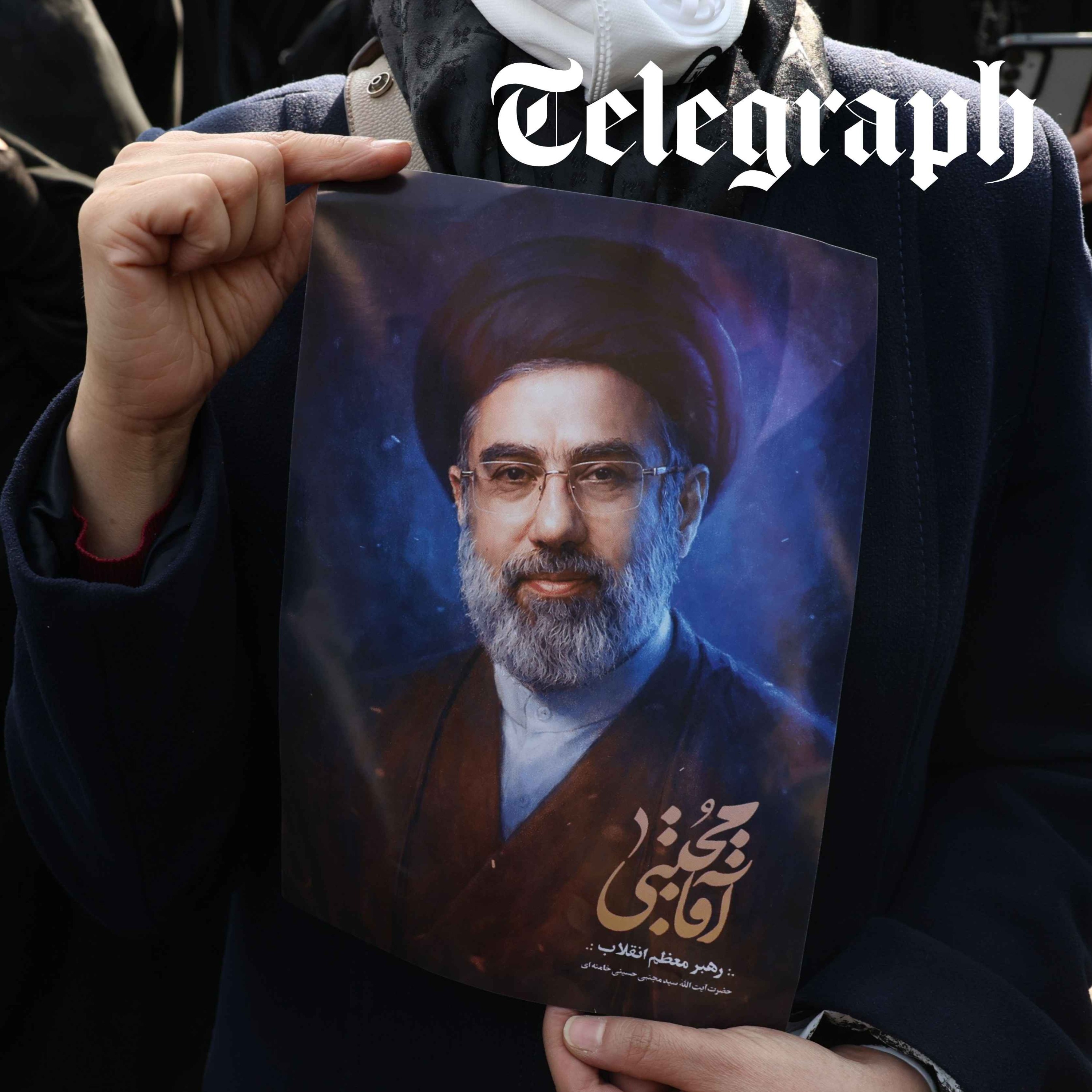
Today, President Trump says Iran's Supreme Leader, Ayatollah Ali Khamenei was killed in the attacks. I'm Venetia Rainey and this is Iran, the Latest. It's Monday, March 9, 2026. Welcome back to around the latest Former League Battle lines. It's the 10th day of the US and Israeli war with Iran and there are two big developments from the weekend that we're going to be covering for you today. One is the appointment of Ali Khamenei's son to be the new Supreme Leader of Iran after his father was assassinated on the first day of the war. Roland is going to be digging into who Mojtabh Khamenei is and why he was the favoured candidate of the Iranian Revolutionary guard corps, the IRGC. Second, the price of oil. It's gone over $100 a barrel for the first time since the Ukraine war erupted in 2022. Now this is a hugely significant sign that the conflict is starting to have a global impact. With Iran's oil depots attacked over the weekend, the vital shipping strait of Hormuz effectively closed and the oil producing hub of the Gulf under regular bombardment from Tehran. This is starting to get really messy. So I'll be speaking to Sasha Bruhman from the International Institute for Strategic Studies, who's in Doha, about how this could change the course of the war. But let's start with the new Supreme Leader of Iran. This was the sound of people celebrating the appointment of 56 year old Mujtaba Khamenei in the streets of Tehran yesterday. And this is reported to be the sound of people calling out death to Mujtaba from their balconies also in Tehran last night. So, Roland, who is Mojtab Al Khamenei? We heard two competing accounts of his popularity and how he might be viewed in Iran. What do we know about him?
- [03:53]
Roland Oliphant
Mojtab Alhamenei is Ali Khamenei's second son. He is the one who's always been suggested as a potential successor. He is 56. He is an Islamic cleric, although not really at the Ayatollah kind of level, which means there is going to have to be a bit of a fudge in order to say that he's got the credentials to be a supreme leader. What do we know about him? Well, he first kind of came to prominence back in 1987 when he was serving on the Iranian side during the Iran Iraq War. The IRGC at the time seemed to think of him as a little bit of a lanky teenager, not that credible. But since then, after his father became supreme leader over the past several decades, he's really become a power broker within his father's administration. So if you go back to 2009, when Mahmoud Ahmadinejad won that controversial election that then sparked the Green Movement protests, it is said that it was Muj Tabar who masterminded that manipulation of the election to make sure a hardliner won. It is said that, that he basically maneuvered himself into a position in his father's office where he was the go to guy for the irgc. The IRGC answered to his father, but they were going through him first. And the other really interesting thing and I think is basically crucial here is that the Basij militia, basically a street force made up of part timers under the ages of the irgc, which is used to crush dissent. He systematically built a system in which eventually the besieged was basically under his control over many, many years of maneuvering, putting people into different kinds of different positions, people who were loyal to him, so on and so forth. By two years ago, we were all talking about Mojtabad being a potential candidate. So if I take you back to May 2024, when Ibrahim Raisi, the former president of Iran, died in a helicopter crash, we wrote an article about how that cleared the field for Mostaba in the kind of, of succession which was already well underway at that point. By this point we knew that he was, he had his own inner circle and in a circle of pretty ideologically extreme clerics and IRGC chiefs. But we also noted, and I think this is important just to give you the context, of course, is that the Islamic Republic is a revolutionary republic. It doesn't do kings. So hereditary succession, even for pro regime insiders was going to be a problem. We put that at the time to people in the IRGC and the Basij militia. And this is the answer we were given at the time. The answer is very simple. A member of the Basij paramilitary group in Tehran told the Telegraph, the IRGC will use force to silence any opposition to Mojtaba's leadership. He also said at the time there was an expectation for a big movement and protests after the death of the Supreme Leader and even more before the selection of Mojtaba. That's why they're preparing to suppress that uprising. The suppression of protests, which you've seen in recent years, is just a warm up for the ultimate one. So that was two years ago, I think probably that warm up. We saw that in January with that horrific, crushing, that horrific violence. But that tells us he has been maneuvering for this for a long time. The IRGC insiders had basically decided that he is their candidate, which is what we understood. And now here he is. Okay, he, he has won the. I was calling it a game of turbans. I don't think I'm the first person to coin that phrase. But he's clearly won.
- [07:20]
Venetia Rainey
Okay, so we know he's the IRGC candidate and we know he's got links, hardliners associated with his father's policies. So we can assume he's going to be hardliner too.
- [07:30]
Roland Oliphant
There is a sense in which he's an unknown quantity because he's never really had a public profile. He's never given speeches in public. He doesn't, you know, write articles or lay out policy positions. There was one point briefly around the kind of 2009 thing where he, he said something mildly reformist and never said anything like that again, perhaps because he was slapped down for it. So that there have been people, I mean, some of his supporters have even tried to suggest in Iranian, you know, Iranian media over the past couple of years that, oh, well, look, when the, when the supreme leader dies and his son takes over, it will be like, be like an Iranian MBS coming in. We'll have a younger, more dynamic leader who will modernize the country and in a sense kind of liberalize it to a degree in the same way that Mohammed bin Salman has done in Saudi Arabia. I've just been on a briefing call With a. With an Israeli academic who studies Iran who says that he doesn't buy that. I can't say I buy it at the moment either. Especially since his father, his wife, his children have all been killed by American or Israeli missiles. And the last thing to, to mention here, Venetia, of course, is that when we had Actar McCoy on the show just at the beginning of the war talking about who might come next, Actars prognosis was that if it's Muj Taba, if he was still alive, because at that point we weren't sure if he was still alive, that means basically an IRGC coup and that essentially Iran's going to be a military dictatorship and Mojtaba will be the IRG's placeman, but he's not going to have the same amount of authority and power as his father.
- [09:05]
Venetia Rainey
So does that suggest that he might be an IRGC puppet figure of sorts? What would that mean for Iranians on the ground if the IRGC had really affected a military couple?
- [09:14]
Roland Oliphant
I don't know.
- [09:14]
Host/Producer
No.
- [09:15]
Roland Oliphant
I mean, that's an interesting question. I suppose that the proof will be in the eating of the pudding, will it not? But I think it's about the character of the regime. So Ali Hamnei had become an indispensable, essentially a tyrant. He was absolutely indispensable to the system. Every final decision had to go through him. I think if Haktar is right, we are looking at a. A scenario where the power is slightly reversed, that the tail that is the IRGC is wagging the dog of the Supreme Leader to a slightly stronger degree perhaps. Now, that said, of all the candidates, of all the people who we thought could have become Supreme Leader, Moj Tabal was the one who was embedded in his father's office and is already well embedded with the security services, which means he has much more chance of being able to exert his will and stamp his authority on the instruments of power than any of the others would have done. So we'll have to see how that dynamic plays out. I think certainly at the moment it means, you know, a conservative. It's a Hammond A. Everything we know about his background, his attitudes, the people he hangs out with, suggests he is going to be every bit as conservative and perhaps at hard line and perhaps with a greater degree of, you know, youth and energy and vim and vigor than his father brought to the role. I suppose that we should note that he may not be alive for very long. I'd be very surprised if the Israelis aren't trying to find out where he is right now.
- [10:47]
Venetia Rainey
And we haven't seen him in public, have we? I mean, since the beginning of the war. There were also some reports that he had been injured. Do we know anything more about that?
- [10:55]
Roland Oliphant
Iranian television is reporting him as a. He is wounded. He is one of the wounded of. They're calling it the Ramadan War because this war has started during Ramadan. He is wounded. We don't know how badly. We don't know what condition he's in, but we believe he's alive.
- [11:10]
Venetia Rainey
And how exactly was Mojdabad chosen? Can you talk us through the process for choosing a new Supreme Leader of Iran?
- [11:18]
Roland Oliphant
So essentially, the Islamic Republic is nominally a democratic system with a huge number of, I suppose what the Americans would call checks and balances. So there's multiple different councils and committees and assemblies and offices which are meant to influence and put checks upon the power of other elements of. Within the system to prevent. To prevent tyranny.
- [11:42]
Venetia Rainey
Well, that didn't work very well, did it?
- [11:43]
Roland Oliphant
Well, we can get to that. And it doesn't work very well, but nominally, that's the idea. So at the top of the pyramid is a supreme leader. He's gone. That, that, that is empty. So the space was taken temporarily by what we, we've talked about at the three man interim council consisting of the president, the head of the Judiciary, and one of the clerical members of the 12 member Guardian Council. However, the body that actually appoints the supreme leader is not any of them. That is the assembly of Experts that has 88 members. And they are all clerics. They should all be ayatollahs. And they have to pass a written exam before they can get onto the assembly of Experts.
- [12:25]
Venetia Rainey
Okay, so there are 88, I guess 89 with the supreme leader ayatollahs. There's not just one of them. The Supreme Leader is not the only ayatollah in Iran.
- [12:34]
Host/Producer
No.
- [12:34]
Roland Oliphant
Do you want me to explain what an ayatollah is?
- [12:35]
Venetia Rainey
Yes, I think that would be a good idea.
- [12:37]
Roland Oliphant
Ayatollah means signpost of God. An ayatollah is essentially a religious, clerical, kind of judicial leader with a degree of authority. And to become an ayatollah, really, you simply get proclaimed as one once you've got a following. Now to become a grand ayatollah, that's stricter then you have to be proclaimed, but only by other grand ayatollahs. So that's. That, that, that's where you get into the kind of super high level Ph.D. kind of territory. So to become a Grand Ayatollah, you'd have to have the other Grand Ayatollahs, probably from Qom, which is the holy city south of Tehran, where they all study. And the footnote of course is that Ali Hamnei was not a Grand Ayatollah when he came to power. In fact, he wasn't even an ayatollah. He got, when he became Supreme Leader, they said, oh, you're an ayatollah. And then years and years and years later, then eventually he gets proclaimed as a Grand Ayatollah. So they lowered the bar Even then in 1989 for him, Mojtaba, similar thing going on. So he was not an Ayatollah. State TV today is calling him Ayatollah. So now he's being proclaimed conveniently and maybe down the line there will be a proclamation that says he is a Grand Ayatollah. Anyway, that's what ayatollah are. So the Supreme Leader. The Supreme Leader sits on top of this vast democratic system full of checks and balances, which includes a parliament and includes direct elections, including to the assembly of Experts. So that's elected every five years. Everyone in it has to be a cleric. And they in turn elect the Supreme Leader. And also, at least constitutionally, it has never actually happened. But constitutionally, the assembly of Experts can I believe remove a supreme Leader. They can certainly block him if, or and rein him in if he's, if he's lost it or something. Their job is to hold the Supreme Leader to account. And there's a reason that they are all high ranking clerics. The philosophy that underlies the, the Islamic Republic dreamt up by Ruhollah Khomeini. It was his kind of innovation. This isn't something that has existed for a long time in, in Shia Islam. It's his innovation is something called veliati fat. Okay, Persian speakers, please excuse my, my pronunciation. It means guardianship, guardianship of belief or something. And the idea is that, okay, his idea is we're going to have a proper righteous Islamic state on the earth. But we don't want to be, you know, we don't want to be to sully our hands, to dirty our hands with the day to day grubby business of government. So we have an elected parliament, an elected president, democratic system. But on top of that you'll have a, a guardian, a system of guardianship with a kind of an extremely well qualified cleric at the top of it who is able to just put a little touch to the rudder you know, when. When the president's about to do something that is perhaps completely contrary to. To Quranic teaching or to Islamic law. And that way, the idea is that you have a republic, but also an Islamic republican. So in theory, it could be working very much like our own system here in Britain, where the role of the king is to kind of sit in Buckingham Palace. He has tea with the prime minister every week. And his role is to advise. Starts out that way. On paper, you could say, okay, I can kind of see how this works in practice. Particularly since Khamenei came to power in 1989, he has concentrated real power in his office, which meant he had a veto on any significant. Any major, significant decision. Ultimately, the Supreme Leader's office had a veto. So although you have the president who is elected and the parliament who is elected, that's why we have President Pezesh Kian and so on. That's why we do reports whenever Iran has a democratic election. And he's meant to be able to govern. And we talk about, oh, is it a hard line, or is it a reformer who's going to win this time? And so on. But on top of him was a supreme leader, and Khamenei became essentially the dictator. So he. He could leave the basics of running the government to the government, but on foreign policy, on nuclear policy, on military policy, it all came to him, really. And he would have the veto. And maybe, you know, the government might want to do something, and if he was to say something cryptic that disapproved of it, they wouldn't be able to do with it, and so on. So that's why we talk about Iranian presidents and we also talk about supreme leaders. Now, the question now is, to what degree can Moj Taba continue as his father had? His father had become the indispensable kind of tyrant. Everyone had to come to him. Everyone depended on him. There's this huge pyramid of power. So all of these, the Guardian Council, the Assembly of Experts, the Expediency Council, the Parliament, the irgc, the Intelligence Ministry, the army, the police, all of these factions have, you know, their own interests. There are individuals there. They have their. There's rivalries and power rivalries. And at the moment, it's been pretty much paralyzed because the man at the top who held the key to it all had been removed and they didn't have someone to arbitrate between them. Now he's back. Can he replicate that? Can he become as indispensable as his father and be as unquestioningly Dictatorial in a way. And I think we probably have to assume yes, given who he is, given his background, given that he's been embedded in the system already.
- [18:06]
Venetia Rainey
That's all absolutely fascinating. I think one of the questions that I have about Mujtabat is the nuclear one. We spoke a lot last year after the 12 day war between Israel and Iran about the fact that Iran had never taken the final step to getting a nuclear bomb, to trying to turn their nuclear program, which they've always said is for civilian purposes, into a nuclear weapons program. And as far as experts could tell us, they had never taken that final step because Ali Khamenei was said to be against it and he was the decision maker and so they'd never done it. And what I'm really interested to know is whether Mojtaba will feel differently. We did speak to a lot of analysts last year saying that the 12 Day War might force Khamenei to change his mind. You know, it might be suggested that Iran would have to become like North Korea, a nuclear state in order to not be attacked. Those arguments might have got stronger now and I suppose Mojtabar is such an unknown, it will be interesting to find out what his stance will be. What does he think about nuclear weapons? Does he think that the Iranian state should take that final step and start actually developing a nuclear weapons program?
- [19:09]
Roland Oliphant
We don't know. But it's really important what you said there about, about Ali Khamenei's decision making. So if you reported anyone who, you know, was reporting kind of Israeli, Iranian tensions over the past, or I suppose the past few decades really came to the conclusion that Ali Hamoni was actually an incredibly cautious individual. I mean, if you are unkind, you would say a coward, you know, if you're kind, you would say strategic and wise and so on. But he, he, he really didn't like to make high stakes decisions. And the nuclear, the nucleophile was the absolute purely distilled form of that in a way. He pursued for a long time this strategy of okay, we won't build a bomb yet, but we'll keep the option and then we can have this kind of strategic ambiguity. And therefore we, we retain the, the strategic benefits of having a kind of the terror and a threat to use. So people have got to talk to us, but we don't incur the massive costs that we would incur if we actually built it and everything goes crazy. We know there was pressure within the system, particularly, you know, some people in the irgc. There were even people who said it in public and were writing it in, in the newspapers saying, for God's sake, just do it. Like, you know, this indecision is really, is costing the country. So there is a question about whether Mojtaba is as cautious and timid a character as, as his father was or is he, is he of a more decisive kind of let's break some eggs and make an omelette kind of character? And if he is the latter, it'd be very surprising, I think, if they didn't. Very surprising. Look, we can all see what's just happened to them. And they didn't have a bomb. One has to assume that they would chase it if he's going to pursue the same policies as his father.
- [21:02]
Venetia Rainey
Yeah. And I do think this whole discussion is really important to bear in mind in all of this because one thing that we want to get into more on this podcast in the coming days is this nuclear question in Iran has never been proven to have nuclear weapons. We've had a lot of discussion to what extent they've enriched uranium and how quickly they could enrich Iranian to weapons grade level. But it's important to bear in mind that they didn't have nuclear weapons before this war and we don't know to what extent they would be able to get them imminently in the short term future. Obviously that was America's and Israel's argument for doing this war, for conducting this war. They said Iran posed an imminent threat and was going to be able to get nuclear weapons very shortly. But it is an alleged nuclear weapons program. Roland, there's one more thing that we should talk about before we go, and that is Russia. Putin has come out and congratulated Mojtaba on his appointment. He's expressed confidence that Mojtaba will unite the Iranians in face of severe trials and has confirmed Russia's unwavering support for Tehran. I think this is quite an interesting piece of the puzzle. We've spoken a bit about China over the last few days and I'd love to hear your take on Putin's support for the Iranian regime in all of this. We know they haven't provided any military support as far as we're aware, but we do think they've provided some intelligence support. So what's the relationship like between these two countries?
- [22:17]
Roland Oliphant
Look, they are allies and they've been, I mean, they've been partners and ally ish for quite a while. Since the Russian invasion of Ukraine in 2022, they, they became quite serious allies. With the Iranians supplying all those shahed drones to Russia. So they became serious partners, very much became, you know, partners and allies in this, this global showdown between the global west, call it what you will, and Russia, China, Iran, North Korea, on the other side, the people who want multipolarity, whatever else you want to call it. Not surprising at all to see warm words from Putin. Not surprising to see him send the kind of congratulations that he would customarily to any leader that wins the election. But, of course, the promptness with which he does it and the selection of words tells you how warm the Russians feel about that particular country or that particular individual. So it is from the Russians, it's diplomatically, it's a clear kind of show of support, as you say, not really any military support from the Russians. Not surprising for two reasons. First of all, they have their own enormous war that they're exhausting themselves in. And the other thing, of course, one of the massive assets, one of the boons, one of the things he's enjoying, or at least taking advantage of, is Donald Trump's relative sympathy for Russia in the Ukraine talks, his reluctance to pile pressure on Russia compared to the previous administration. And I suppose if I was Vladimir Putin, the last thing I would want to do is to have Donald Trump seeing me taking sides with him against his own forces in case that sinks that relationship below the waterline. But, yes, you're right, there have been reports, and I can't say I've been able to stand them up. But you will be aware of the reports that say the Russians are sharing kind of targeting data with the Iranians to hit the Americans where it hurts. And I will be absolutely certain that you'll have Russian specialists, intelligence types, whatever, maybe on the ground, certainly definitely in close contact with their Iranian counterparts, trying to get every little ounce of information they can about American capabilities out of this war. So every time an American rocket or a drone comes down and is recovered, anytime they can get a image of the radar signature of an F35 or something, the Russians are going to be hoovering that up with a massive appetite, because this tells them about what they still regard as basically their main adversary. And the same, of course, goes for the Chinese.
- [24:55]
Venetia Rainey
We're going to take a short pause now after the break. We'll be speaking to Sasha Bruckman from the International Institute for Strategic Studies. He's based in Doha and will be telling us what the war has been like in the Gulf.
- [25:12]
Commercial Voice
With its two juicy beef patties, three slices of melted cheese and tangy Big Arch sauce. The Big Arch is what happens when you start making a McDonald's burger and never stop. The Big Arch the most McDonald's McDonald's burger yet for a limited time.
- [25:27]
LifeLock Advertiser
It's tax season, and at LifeLock, we know you're tired of numbers, but here's a big one you need to hear. Billions. That's the amount of money and refunds the IRS has flagged for possible identity fraud. Now here's another big number. 100 million. That's how many data points LifeLock monitors every second. If your identity is stolen, we'll fix it. Guaranteed. One last big number. Save up to 40% your first year. Visit lifelock.com specialoffer for the threats you can't control. Terms Apply
- [25:59]
Host/Producer
ACAST Powers the World's Best Podcasts here's the show that we recommend.
- [26:08]
Venetia Rainey
What if you laughed all through your commute? Or if you heard the funniest story while at the gym? Well, now you can I'm Jameela Jamil and guest on my new podcast Wrong Turn, share their most mortifying and hilarious disaster stories. I'm talking people like Mae Martin, Bob the Drag Queen, Katherine Ryan, Jake Johnson, Margaret Cho, Simon Pegg, Penn Badgley, and so many more. So listen wherever you get your podcast. Wrong Terms where dignity goes to die
- [26:38]
Host/Producer
ACAST helps creators launch, grow and monetize their podcasts everywhere. Acast.com.
- [26:52]
Venetia Rainey
Welcome back. You're listening to Iran, the latest. We'd love to hear your feedback on this new format. We're still on the old email address, so you can catch us there battlelinestelegraph.co.uk or leave a review wherever you listen to podcasts below the episode on YouTube and Spotify or on the show's main feed on Apple Now. One of the key aspects of this war is how the entire Gulf has been dragged in an economic powerhouse region normally known for stability, sunny holidays and skyscrapers. Iran's response to being bombed by America and Israel has been to lash out at its neighbors. As a result, the uae, Kuwait, Qatar, Bahrain, Oman, Saudi Arabia and Iraq have all reported drone or missile attacks over the past week, with a total death toll of around 20. Now, many of the sites struck have been US military bases in the region, but there's also been attacks on hotels, ports and oil fac. Just this morning, an Iranian drone attack on Bahrain's National Oil Refinery led to more than 30 being injured, including a two month old baby and the state energy company declaring force majeure. This is all part of a wider story about the Oil industry being in turmoil this morning. Brent crude costs cost the symbolic $100 a barrel for the first time since Russia's full scale invasion of Ukraine in 2022. Iran's plan in all of this is to raise the cost for its neighbors and get them to pressure America to stop the war. But could that backfire? To discuss all of this, I'm joined by Sasha Bruchman from the International Institute for Strategic Studies, who's currently in Doha, Qatar. Sasha, welcome to Iran. The latest just start by telling me what's it been like in Doha over the last few days? What's the mood on the ground?
- [28:36]
Host/Producer
I think politically the mood is starting to sour a bit by various GCC states. That's no secret. I think we have seen public remarks by most of the royal houses and the ruling families. So here in Qatar, I must say it's a strange duality because the Qatari Emiri Air Force, the ground forces and the Americans together have done a very successful job at defending the country. So we sometimes watch the skies and you see the Star wars show in the sky over this perfect city landscape. But in a weird way, everything is just calm. So we're living in this perfect world with air defenses active in the sky once or twice a day, but there's no damage on the ground. So it feels, I don't know how to describe it, it feels very out of place.
- [29:21]
Venetia Rainey
Qatar hasn't taken a death toll yet. Sixteen people have been injured. But most other countries in the Gulf now do have a death toll from this war. Kuwait has had six people killed. Bahrain, one person, UAE four, Oman, one, Saudi, two, Iraq, six. These are obviously small numbers in the context of this war. More than 1,300 in Iran, we think nearly 400 in Lebanon and more than a dozen in Israel. But they're still significant, not countries that were supposed to be part of this war and they're taking these casualty tolls as a result of Iran lashing back. As you mentioned, we've had quite a few statements from Gulf leaders over the weekend criticizing Iran for striking its neighbors and dragging them into a war that they aren't part of. Can you tell us a bit more about that?
- [30:05]
Host/Producer
Well, yeah, you've seen very critical statements by the leadership here in Qatar, by the ones in Bahrain. I've saw a statement even or an interview by Mohammed Bezama. And in Saudi Arabia and I think similar by Mohammed bin Zayed, although in his public communication a bit more measured. But he visited people in the hospital there. So, yes, in some ways The Gulf states before this war had started, let's say before 28th of February had made it very clear to the Iranians and to the world that they don't want to be part of this and did not allow their airspace to be used for strikes. Qatar in many ways had been a mediator and a conduit between the Americans and the Iranians in previous conflicts. So it was already confused last year when it got dragged into the response by the Iranians after Midnight Hammer. In many ways these countries had built over the last couple of years, maybe decade their kind of foreign policy posture on this. They don't want to be dragged into this. The Vision 2030, that's MBS in Saudi Arabia and similar other projects have been about. We want to diversify our economy, we want to attract investment, we want to build out non oil economies. So Dubai high rises, skyscrapers, financial businesses. Bahrain is a local tourism hub, is a local financial hub. And in some ways also I think there's frustration because the Iranians haven't struck randomly at military bases. They tried to hit military bases, they tried to hit associate infrastructure. But their responses in for example Dubai with the airport, with the high rises, the financial districts, Bahrain, the real estate and the tourism sector are pressure points. Like they strike them where it hits their visions, where they bank their future on. Add to that the current cashmaker, the current cash flow system. So the gas plant in Qatar and the oil, the Aramco oil facility in Saudi Arabia. The Iranians have told basically the Gulf states, we're not interested in anything that you said. We just see you as US allies and we'll strike you. We'll punish you for that.
- [32:04]
Venetia Rainey
Yeah. The Qatari Prime Minister came out over the weekend and it was his first interview since the start of the war. And he told Sky News that the Iranian striking Qatar and other Gulf countries is a big sense of betrayal. We made it clear that we're not going to take part in any wars against our neighbors. We never expected this from our neighbor. We continue to seek de escalation but this miscalculation by the Iranians to attack Gulf countries has destroyed everything. I'm wondering if there's a sense that some countries might start to join the Americans and the Israelis in this war.
- [32:32]
Host/Producer
From a military perspective I'm a bit doubtful. Not that these countries don't have militaries or have not invested in very, very modern military capabilities. So the Qataris for example are flying F15s, specialized F15s just for them. The F15QA, Qatar and the Saudis have the F15 Saudi Arab and others the Emirati SEF obviously a very modern, very good air force. I see this war that the Americans are waging as a network centric multi domain, like a first application of multi domain operation. I think there's a lot of artificial intelligence in the target generation set. It's hard to just plug in another ally as the operation is unfolding. So I think from the American point of view, when these conversations will start happening, what the Americans will probably like and ask for is that now they can use the bases in the Gulf to use them because these bases in some ways are closer to Iran. They would help with sortie generation with the existing fleet so that with the existing amount of planes you can have more sorties per day and drop more ammunition. That is I think not yet possible because there's still too many drones that would threaten these bases. But that might come into play over the next couple of weeks.
- [33:45]
Venetia Rainey
I guess the other side of the military aspect of all of this is the defensive operations that as you mentioned the Gulf states are running. But we don't know what stocks their interceptor missiles are at and they're having to fire several to tackle whatever is coming their way. And I know there's been some concern that those stocks might start to run low and then we might start to see casualty levels rise. Have there been many public statements or sort of analysis of what level their interceptor stocks are at?
- [34:11]
Host/Producer
No, and to be frank, they shouldn't be because this is something of what we call operational security opsec. If one of these kinds countries were to give away the information that they were running low, they would make themselves a target for the Iranians for focused fire. Right now the Iranians have to guess where stockpiles are low, where there are targets, sometimes you have to move. Now if you see different target sites being attacked from just purely the military bases now to maybe the airports or civilian infrastructure, you'd expect that some of these countries would move their, let's say their Patriot batteries or something and then you think oh well, did I just open a different venue for attack somewhere else in the country? I'm not worried about missile interceptor stock buys. A, I think the Americans have, have literally flown in C17 loads by the for a full month when it came to the conflict. B, I think people forget that there's more than just the Patriot and thaad. That's what they've learned in the last kind of a couple of conflicts. I am pretty sure there are other systems out there that we're tracking in the Millblad plus that we. I'm seeing physically when I see those videos or as I'm watching the video or as I'm, as I'm looking outside my window. So there are systems like nasams, which is an American Norwegian system in the region. There are systems like kmsam, South Korean that the Emirates have bought where there's indication that they've been used. So it's not only that they're more stockpiles than I think than people are tracking. It's also that there are more systems than people are tracking. Each missile destroyer the Americans have, Aegis class, has up to 96 missiles. Combination of defensive offensive. And then the big fear is that what people are saying, what I'm hearing still a lot is that you shoot a $20,000 drone with a 4 million Patriot missile. The thing is, there are many, many other systems now since the Russians started this war in Ukraine, we have more systems now. There's something called APKWS, which is a 70 millimeter missile that the Americans have strapped under each and every of their planes that they can put on the helicopters. That gets you into the $20,000 versus $20,000 range. And all of a sudden a plane can carry 40 instead of 8. The United Arab Emirates Ministry of Defense has actually published a video yesterday of their Apache attack helicopters shooting down drones with their 30 millimeter main cannon with their guns. So there's more systems, more ammunition. And I think everybody is a bit smarter than has been talked about in some columns of the Internet. And I think also there's a bit of information operation going on on behalf of the Iranians by Russian and Chinese actors in this space. So I'm less worried about this.
- [36:42]
Venetia Rainey
Fascinating. Well, that's what I hope our listeners come to around the latest. Well, that's really interesting. Thank you for that, Sasha. Let's talk a bit more about the targets. One of the really interesting things that emerged over the weekend was an attack on a desalination plant in Bahrain. Now, the Iranians said that that was in response to a desalination plant in Iran being targeted BY, by the U.S. the U.S. have denied targeting it. I suppose that leaves the option open that the Israelis targeted it. But you've been looking into this in a bit more depth. What have you learned?
- [37:08]
Host/Producer
As we said, right. Some of the Gulf countries have been very critical. There is a video out online of a Himars launcher that the listeners might remember from the war in Ukraine. Very successful there. The Ukrainians had been given, I think, 24 and the Americans used a new weapon called the prism, the precision strike missile. The Iranians claim it had a water desalination plant on Kishim Island. Now, Kishim island is far away from Bahrain, a bit over 500km. And even the range of that PRISM missile is publicly known to be 500km. What kind of intrigues me is that Kishim island is much closer to the carrier strike group of the Abraham Lincoln. So I wonder, why would they use this? Why would they fire from Bahrain over to Kishim island specifically? And what has not been said is Kisham island is an island just at the very end, narrowest piece of the Strait of Hormuz. So it's essential in the Iranian strategy, military strategy, to block the Strait of Hormuz now that the Iranian navy has been largely sunk. It's the drones and missiles from those military installations on Kisham island that are Iran's best strategic means to keep the strait blocked. The whole strategy of Iran right now is we still have missiles and UAVs that can fire on the Gulf states and inflict damage and cost. And we can block the Strait of Hormuz because insurers will still not be willing to move oil and gas in and out of the Strait of Hormuz. Not because we have a navy left or we managed to mine it, those two threats are largely gone. But because we have UAVs and missiles that can strike ships, Kishim island is essential in that now the Americans would be pounding Kishim island to take out these underground facilities with the drones. And the missiles basically embody the last strategic option or one of the last strategic options of Iran. So would it be a nice coincidence to create an information operation to say the Americans are targeting civilian assets, although the weapon and the specific incident don't really fit the profile that I would use or that you would use. The water desalination plant is on the far east side of Kishmallow. So the furthest away from Bahrain makes little sense to me because that means it's even closer to the ape link of and it completely ignores the fact that there are only 150,000 people there. There's groundwater. You can go onto the tourism site for Kishim island and you see the canyons on the advertisements where you wade through the pool. So there's surface water there. So they claim that all 70 villages are at Hoarya. It smells a bit like a targeted and tailored information operation. And it would justify the retaliatory attacks on Golf, on GCC desalination plants without looking like the bad guy.
- [39:46]
Venetia Rainey
Okay, so to be clear, you don't think the Americans did. You don't think the Americans or the Israelis did attack this desalination plant in Kishim Island? Do you think they were targeting other things? And the Iranians have said it was a desalination plant as part of propaganda efforts, or I guess potentially it was collateral damage.
- [40:02]
Host/Producer
Collateral damage. I haven't seen any conclusive satellite imagery yet, so I cannot rule out that the desalination plant was hit. The question for me is why would it be hit? The Americans have no interest in that. It's the furthest away from the Bahrain thing. It's the furthest away from the Israelis. And as a military target, it doesn't make sense unless someone were to shoot UAVs out of civilian infrastructure, which we've seen now the Iranians start doing in other parts of the country. So I can't rule out that the Americans haven't targeted something there. And we need to see probably two or three days until we get conclusive satellite imagery for that. But I think it is more likely that Kishim island is a strategic military target. And I wanted to bring in that aspect of what Kishim island means in the overall strategy and in this overall war.
- [40:45]
Venetia Rainey
That's really interesting. And we will get onto the Strait of Hormuz and the impact on shipping and oil and fertiliser and sulphur shortly. But why would Iran want to use that as a pretext to attack a desalination plant in Bahrain? Why is that such a crucial target? We think this is the first time that they've targeted such a strictly civilian only facility in the Gulf.
- [41:04]
Host/Producer
Well, I think for now it's the ultimate pressure point that they have. The first two nights were, strictly speaking, targets on US Military bases. And they've seen that they were hardened and they don't get enough damage together. Right. So they haven't been able to damage the US infrastructure and the US ability to wage war, neither the Israeli one. Then they shifted mostly to oil and gas, or in the case of Dubai, to the other pressure points, as in real estate finances and the airport structures. But even that hasn't had the strategic effect that they wanted. It hasn't led the GCC countries to step back to pressure the United States in the right way. So desalination plants are important because the Gulf largely depends on freshwater from desalination plants to varying degrees. I think Kuwait is very dependent. 80, 90% of its freshwater from Desalination plants down TO I think 50 or 60% in Bahrain. I think that they're looking for straw, that they're trying to find something now that keeps the pressure up, up while their stockpiles of missiles and UAVs are decreasing the need to find something that is extremely vulnerable. And I think even the attacks on. If you look the videos of the attacks on the oil and gas infrastructure, I know it sounds a bit like from a military point of view, it sounds a bit ironic, but one of those drones, a Shahed brings 40-50kg of explosives in these Aramco facilities are the size of cities. Yes, they shut them down. Drone out of precaution and to empty probably what is in there because it would be flammable. But the videos that you saw, that wasn't a cascading explosion. Those were two drones going down in the sand and causing some damage. But if the war were to be over, you'd have people repair this in days, if not weeks. So this is not critical damage to the global oil infrastructure and therefore it doesn't have the same strategic effect as the Iranians were hoping for. So they now need something else. And again, tactically speaking, you're now thinning out existing defenses between more targets and you hope that something moves and therefore there's an opening with something else and you create other vulnerabilities.
- [42:58]
Venetia Rainey
What did you make of Masoud Pechashkian's apology over the weekend to the Gulf countries?
- [43:02]
Host/Producer
Well, I was very skeptical. I was with some Western diplomats when that came in and unfortunately had to destroy their hope that this means an end to attacks on gcc. There are two things that that immediate cross mine A and information operations. As you raise the hopes that this is now over and then you crush them by attacks. Right. It feels doubly hurtful if it then continues. And the other, the other one was the IC basis, what they call the Mosaic strategy and now tout as a stroke of strategic genius. It's basically just it was the order. You have a target list. If the, if the supreme leader gets killed, you keep shooting this and the IGC is running down the target list and doesn't listen to what's happening in Tehran. I'm not yet saying that command control is breaking down, but the IHSC has its orders and the IHSC does its thing as being ordered in their strategy before the war. And the day to day politics is not yet of any concern to them.
- [43:58]
Venetia Rainey
We've talked about the military targets across the Gulf and the casualty Toll and the statements from leaders coming out saying that they're not happy with all of this. But the economy, the oil and gas economy, particularly emanating from the Gulf and affecting the whole of the world, is starting to show serious signs of the impact of this war. Brent crude oil crossed $100 when Asian markets opened for trading earlier today. Donald Trump has said this is a small price to pay, but I imagine most Gulf countries do not feel the same. What's the impact been on Gulf economies and how soon will that start to force, do you think, a change in their attitudes in terms of this war?
- [44:36]
Host/Producer
Several of the Gulf countries have declared force majeure on existing contracts. So that's a big piece of that puzzle.
- [44:41]
Venetia Rainey
Can you just explain what that means? Force majeure?
- [44:43]
Host/Producer
Force majeure is basically, I think the English term is an act of God. Right? So there's higher forces coming in and therefore there's often a clause, geopolitical clause, if you will, in major contracts, to say, sorry, we cannot deliver, but we're not at fault in a legal sense, because obviously people are shooting at us. So it's a bit of an indemnification class for geopolitical events. That's one aspect of it. The Strait of Hormuz regularly is about 15 to 20% of global oil. So 15 to 20 million barrels of oil per day equivalent is going through. It's down to a trickle. A very few daring ships that go through. Both the UAE and Saudi Arabia have pipelines to avoid this very closure, either of which can probably pump about 30 to 40% of its oil production to other ports. So the Saudis call that the east west pipeline and the Emirati systems Fujairah. The problem for the global economy is I think oil prices are made on the margins, right? If you have to go to work tomorrow, you need petrol in your car. It doesn't matter whether it's only 10 million barrels of oil missing. In a hundred million barrels of oil per day economy, you don't save 10% because people still have to go to work and still have to fill up so they're willing to pay the prices. President Trump is communicating. Everybody stay calm. But he actually, I think, cares a lot about this. I think the USS Gerald R. Ford has crossed the Strait of Suez two or three days ago. She was photographed by satellite images. If I had to guess what that means, it's a shifting posture for the Americans. And I think, again, Kisham Island, Right, what do you need to close the straight off Hormuz? Why these Desalination attacks. What's the strategic context, all of that? The Ford is coming down. I think they will try to destroy reigning IOTC infrastructure in and around the Strait of Hormuz and try to pry open the Strait of Hormuz. Trump is literally sending military assets, a super carrier, his best super carrier down there, to try to deal with this problem, while, you know, in his own kind of idiosyncratic way, trying to reassure the markets and the world. I think there's a G7 meeting today or tomorrow scheduled about global oil storage that is to watch, because I think that will bring a little bit of price stability for a couple of days, if not weeks, with new oil supplies opening up in the market from strategic reserves.
- [47:00]
Venetia Rainey
There's another aspect to this, isn't there? And that's the Israeli targeting of Iranian oil infrastructure over the weekend, which we think is the first time that they've hit a civil industrial facility. They targeted four oil storage facilities and an oil production transfer center in Tehran and Alborz. I'm sure a lot of our listeners will have seen these extraordinary pictures of huge ball of fire which dominated the skies for like 10 hours. These irrigation channels that run through Tehran are supposed to keep the city cool and water its trees. We suddenly had oil flowing through those and fire spreading throughout the city. There was even an oil rain I was seeing videos of. So a really significant strike. And according to reporting in Axios, the Americans were not very happy about it. They had been told in advance, apparently, but not of the extent of the strikes that the Israelis were going to conduct. What do you make of that development?
- [47:48]
Host/Producer
Yeah, I think that's the first visible kind of divergence in the strategy. I've said at other places, I think the Israelis are much more keen and willing to take risks to. To force a regime change. The Americans can live with, like the Del Rodriguez Venezuela option or with a completely militarily neutered Iran. I think the underlying logic is the Israelis have people on the ground to tell them, this is run by IGC people, therefore it's a target. Now, I wouldn't subscribe to that because that opens up 30 to 40% of the economy of Iran to this. But at least I think there's a very, very shrewd logic to these strikes, as in that's the fuel that goes into the IRGC vehicles, if we ever to, you know, if those are the vehicles that then bust the troops to the next protest to kill the people. It's hard to go along with that logic from the outside, but I think, at least trying to explain what I think I've seen is this. It's this. It's not an IHC military base, but it's so associated with it and so important. And then, yeah, we've all seen these apocalyptic pictures. Yesterday, the burning street, I had that same image that you described. That was the first one, one that I saw and some. I think it'll also cause a bit of a pause in that, in at least that part before that. And until then I was actually surprised how surgical these strikes were. I've been in indirect contact with people in Tehran who've been basically confirming, look, this is iotc, Bastij Headquarters, Moi Law Enforcement Command, Ministry of Intelligence. These are all the sites that we really associate with the regiment. This one kind of stood out because it wasn't.
- [49:24]
Venetia Rainey
That was Sasha Bruchman from the International Institute for Strategic Studies in Doha, Qatar. That's all for today's episode of Iran the Latest. We'll be back again tomorrow. Until then, goodbye. Iran the Latest is an original podcast from the Telegraph, created by David Knowles and hosted by me, Veneesha Rainey and Roland Oliphant. If you appreciated the podcast, please consider following around the latest on your preferred podcast app. And if you have a moment, leave us a review as it helps others find the show. To stay on top of all of our news, subscribe to the Telegraph, sign up to our Dispatchers newsletter, or listen to our sister podcast Ukraine the Latest we're still on the same email address, battlelinestelegraph.co.uk or you can contact us on X. You can find our handles in the show. Notes the producer is Peter Shevlin. The executive producer is Louisa Wells.
- [50:12]
Host/Producer
Foreign.
- [50:19]
Ndarmikin Sue
This is Ndarmikin sue from the no Free Lunch Podcast Ever. Feel like your workload is out of control, like you're wearing every hat and expect it to be everywhere at once? Running a business means juggling books, payments, leads, payroll, basically everything. But with Intuit QuickBooks, your workload gets gets unloaded. QuickBooks gives you access to Intuit's powerful AI agents and trusted human experts who work together to handle the tedious stuff so you can get back to what actually grows your business. And because everything's streamlined on one platform, your customer management, accounting, expenses and payroll all work seamlessly in one place. So go ahead, outdo it. With Intuit QuickBooks get 50% off QuickBooks Online for 3 months. Terms and conditions apply. Feature availability may vary by product. Visit QuickBooks.com for details.
- [51:14]
Commercial Voice
With its two juicy beef patties three slices of melted cheese and tangy Big Arch sauce. The Big Arch is what happens when you start making a McDonald's burger and never stop. The big arch. The most McDonald's McDonald's burger yet for a limited time.