Loading summary
Transcript111 lines
- [00:00]
A
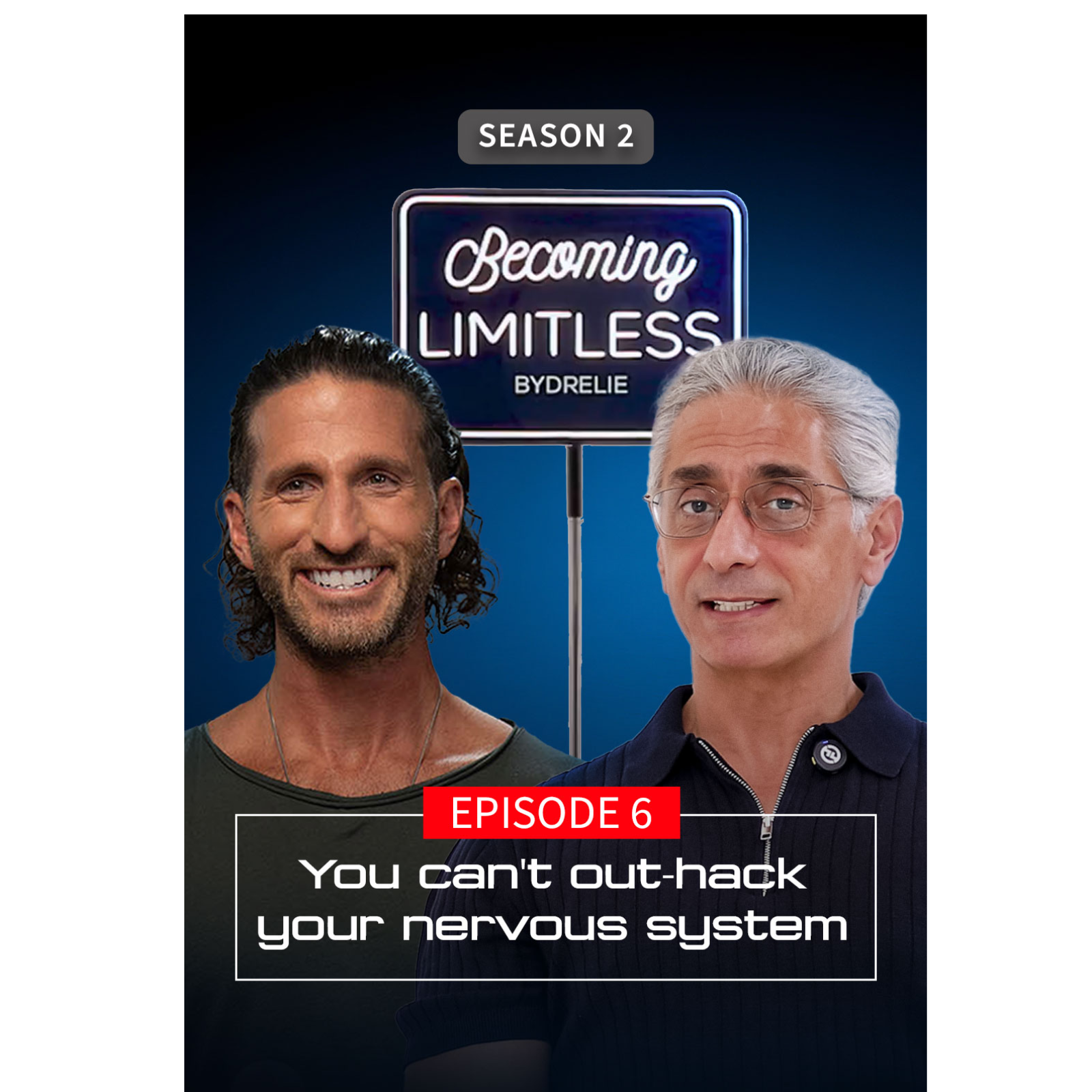
Hello, everyone, and welcome back to Becoming Limitless. On this episode, I have a guest that I met fairly recently through a mutual friend that I respect and love and admire, Zaina. And very quickly he became one of my favorite people. So his name is Salim Najjar and he's widely known online as that HRV guy. You should check him out. And he's the creator of the Art of the Heart, a framework that empowers individuals to gain nervous system sovereignty through heart rate variability. Yes, we're going to talk all about HRV today. So Salim has spent years studying physiology and neuroscience, human performance, while helping CEOs and elite performance for everyday people translate stress into clarity, resilience and sustainable energy. His work bridges between modern science and practical tools for understanding what the body is communicating through HRV and how to optimize it in daily life. Salim's mission is to help people recognize that their HRV is more than a number. It is a window into the state of the autonomic nervous system and a guide for better living. Something that I focus on personally. And today we're going to learn as much as possible about it in the time that we have for the episode. Welcome, Salim.
- [01:31]
B
Oh, thank you so much.
- [01:32]
A
Lovely to have you.
- [01:33]
B
Such, such, such a pleasure.
- [01:35]
A
So looking forward to this one.
- [01:36]
B
Yes, especially.
- [01:37]
A
So.
- [01:38]
B
Go ahead.
- [01:38]
A
No, go ahead, go ahead.
- [01:39]
B
I was just going to say. And to have a Lebanese brother as well.
- [01:41]
A
Oh, yes, of course. I forgot to mention that. Yes, we, we hail from the same place.
- [01:45]
B
Yes. Such a beautiful.
- [01:46]
A
We're both of us also. We've been kind of uprooted like most Lebanese. Right.
- [01:50]
B
And all of that.
- [01:51]
A
So we'll maybe throw a few Lebanese words as we chat for our Lebanese brothers out there. So just quickly tell everyone a little bit about how you stumbled into this. Oh, man.
- [02:06]
B
High level. I got to this point by my body, essentially forcing me to listen. I grew up in New York, first generation Lebanese, and became an engineer, worked at a nuclear power plant, became obsessed with health and wellness, ended up quitting that job to launch a beverage company in America, raise money from 170 people living in New York City as the biohacking movement emerged about 12 years ago.
- [02:29]
A
Right.
- [02:30]
B
And then I became obsessed with biohacking to the point where I was showing off. I was hacking my way to five hours of sleep a night, running 10 miles every other day, listening to a minimum of three audiobooks a week, raising money from 170 people, thinking I'm winning this game of life, optimizing every metric until my body broke down and my knee gave out with an injury. And that's when I say the beginning of my inward journey started. And I came across this biomarker, HRV, heart rate variability. And it was in Dr. Joe Dispenza's book, Becoming Supernatural.
- [03:00]
A
Yes.
- [03:00]
B
Was the first time that I saw in literature relating to stress. And why that was so profound for me is because my engineering mind, if I'm going to do something, I need to understand it. I know, like you very much so. We don't just use these technologies, we want to know how they work.
- [03:16]
A
Yeah.
- [03:16]
B
And in my five years of going down the rabbit hole of biohacking and longevity, I knew that science has proven we all age, get disease and eventually die from cellular inflammation.
- [03:27]
A
Right? Right.
- [03:28]
B
Period. End of story. Unless you die in an accident. The root cause of the death, cellular inflammation.
- [03:32]
A
About the cell. Yep.
- [03:34]
B
Science has also proven that the number one leading cause of cellular inflammation, chronic stress, 100%. And so when I read there's a biomarker measuring your relationship to stress, the engineer's like, why do I care about any other biomarker? I'm only going to focus on this. And so that was six years ago. And that is why the last six years of my life has been dedicated to understanding this biomarker of heart rate variability and why I love sharing about it. Because if you care about longevity, you should pay attention to this. And you and I talk about it's this and VO2 max, in my opinion, are up there as the, as the most important for longevity and.
- [04:10]
A
Completely agree. Completely agree. And that's why, I mean, one of the many, many reasons that you and I hit it off immediately is we speak the same language. You know, we have the same outlook on life and we're very transparent as individuals. At least I speak about you, I don't know about me. You're very transparent. Like there's an ease to you. Like there isn't. There's no sort of to try hard to get to know you. Like there is. It just feels right, you know, And I think everyone around you feels that. And this is partly because of hrv, I like to think. Right. So for those who don't know what HRV is from a Middle Eastern lens, how would you describe it to them in a few words?
- [04:53]
B
Yeah. So heart rate variability is measuring that gap or variance between each of your heartbeats.
- [04:59]
A
Right.
- [05:00]
B
What that space is telling you is how your heart and nervous system is perceiving its ever changing environment. So essentially your relationship to your stress and most importantly, a Direct reflection of the health of that autonomic nervous system and its ability to go from a sympathetic fight or flight state into a parasympathetic rest and digest state. So in the Middle east, in Lebanon, in, you know, war torn countries, there is a lot of, there's a lot of trauma, right? There's a lot of cultural, historical. I mean, you're always just on edge because you don't know what's going to happen. And so understanding our internal state, because when the body is triggered or stressed, why chronic stress is the root cause of cellular information, is when the amygdala fires off that it is in a threat, it sends these signals to all of our organs to support survival. Which is brilliant if we actually need to run from a tiger or run from something and survive. But we're not meant to stay in that prolonged sympathetic high beta state for long periods of time. And what is happening physiologically when the amygdala is firing off that we're stressed is the most important thing to understand is all of the vital oxygen that's normally flowing to our visceral organs, our reproduction, our digestion, our lungs, our liver, our heart gets diverted to the extremities to support running, fighting or freezing, which is brilliant. Again for an hour or maybe two. However, if you maintain that for a sustained period of time, those visceral organs that are keeping the homeostasis in the body and the energy and the ATP production, all these things cannot perform their function and cellular inflammation begins.
- [06:34]
A
So much to unpack there. So I'm going to just break it down for a bit, but this is an awesome, awesome description and it definitely applies for our region. You know, be it a war plagued area or a highly kind of ambitious, always on the go type of area where we live in right now, right? So it's always there. Now for a lot of people, they see that number and it kind of doesn't make much sense, like what is it, what's a good number, what's a bad number? You know, all of that stuff. Now just before we get into that. So you and I agree that stress is not bad. So stress is essential, right?
- [07:08]
B
I love you for saying it. Stress is your best friend and ally if you learn to listen and dance with it, right? Chronic stress, that's a different thing. Prolonged states of stress is what leads to that cellular inflammation. So thank you for that clarity because most people are like, oh, I should not be stressed. No, stress is your ally because you want to train.
- [07:27]
A
We've grown up with the fact that, you know, we've always hear stress, stress, stress. It's as if it's like the enemy. It's almost like, you know, it's. It's almost the same bracket as that cancer. Because stress can cause cancer. Right. You know, chronic stress. But stress is meant to make you better as an organism, as a being. And obviously because we've evolved so quickly, or at least our environment has evolved so quickly, you know, through the industrialization, through what would, you know, and now AI and all of that. The body, the biology doesn't move this quickly. Right. So we can't tell the difference. I hope you agree with this.
- [08:07]
B
I'm laughing because I so much resonate with.
- [08:09]
A
Right, yeah. So we can't tell. The body doesn't tell the difference. If you're actually being chased by a lion, like you said, or a tiger, or you've actually worried about your boss being.
- [08:17]
B
You see an email or your boss. Yeah, yeah.
- [08:20]
A
You know, so. And the same visceral response happens either way. So when that visceral response, as you said, stays elevated all the time, as if you're being chased by a tiger 24 hours a day now, imagine what that does to you. So imagine that, you know, so that's kind of what's happening internally. Exactly.
- [08:38]
B
Except it's not a tiger. It's an email or argument with a spouse.
- [08:42]
A
Yeah.
- [08:42]
B
And man, I. There's so much resonance with what you said. It's why we bought. It's intentionally why I use the word nervous system sovereignty. I want to touch on that because I don't say nervous system regulation. I love the fact that everybody's talking about regulated nervous system. I think that's important. But as humans, we didn't come here to be regulated all the time. And if we're regulated all the time to the point you were just making, you don't have the ability to increase the resilience and capacity of your nervous system to evolve and handle more stress or actually have a bigger impact in the world.
- [09:11]
A
Right, right.
- [09:12]
B
So it's not important to be regulated all the time. It's important to have agency and sovereignty over your internal state so you can consciously choose how you want to respond versus doing what most of us are doing is automatically responding based on a limbic stuck program from a belief prior in our life or how our parents did or whatever the story is. Right. Sovereignty is more important than regulation because you want to be able to do more to have a bigger impact in the world.
- [09:40]
A
Amazing, amazing. So before we talk about sovereignty, a little Bit more. Let's touch a little bit on what you think contributes either positively or negatively to hrv. So we've touched on trauma and I think trauma is a big impact, has a big impact on that. But for example, let me give you an example. So especially the people that I work with here, these are people that are high achievers, they're awesome individuals, they work out regularly, they eat well, they know their bodies, all of that. And when I look at all of their metrics, their VO2 max, their resting heart rate, their overall biological biomarkers, they excel. The one thing that they don't excel at is hrv. And we'll talk about what does it mean to excel at HRV in a minute. So what contributes? So when you know what contributes positively or negatively to your hrv, you may be able to support these pathways or maybe avoid them. Right? So what supports it positively or negatively in your opinion?
- [10:44]
B
Man, it's such a beautiful question and the answer is so uniquely individualized to the person because again, HRV is measuring how our heart perceives our reality. How do we perceive our reality? Through our touch, through our taste, through our smell, through our ears, through our sight, but most of all through our thoughts, right? Through our relationship to what is happening. So just because I do hot cold therapy, contrast therapy, and my body likes it, there may be a female who goes and tries to do that and it has the opposite effect, right? So it's super important to experiment and listen to what is resonant with your body. And that's why I developed this art of the heart framework. Heart stands for awareness, regulation, transformation. So this is a three act arc that isn't a ladder we climb once and we made it and we're regulated forever, but rather a daily act or dance to devoting, listening to your nervous system. And HRV is an objective biomarker, sharing what is resonant. So if you try something out like a cold plunge or some biohacking technology and you look at your HRV score and say, oh wow, it's actually, actually going up when I do this, that's bringing awareness, saying oh, my body is resonating with that. And you could consistently do that. If the contrast happens, if the flip flop happens and it goes down, that's your body saying, no, this is dissonant with me, I need to try something else to support. And consistently showing up, bringing that awareness and regulating to what's resonant with your body will have your baseline over time go up. But it doesn't just happen right away. It's the devotion and dedication towards listening.
- [12:14]
A
Yeah, I know for sure. And I would add one more thing to this is that is not just your thoughts with, you know, for your environment, also with your thoughts with yourself, like what you think of yourself, you know, your relationship with yourself, most importantly. Right?
- [12:27]
B
Yes, yes, yes, yes, 100%.
- [12:29]
A
Because that also impacts how you view the world. Right. So if you feel that the world owes you, which most of us do, you know, which is, you know, a state of mind that, you know, I continuously try to walk away from, identify and walk away from, which is, I think a technique that, you know, works well for most people, is also a source for that. So I was saying that these guys, they're incredibly sort of efficient at all of these other things, but their nervous system is not happy about it. You know. So usually people that are high achievers, I find that their HRV is, is lower for some reason because they haven't found a way yet to regulate it. So I can name maybe 10 of my clients that have that same situation, but if I dig deeper, just below the surface, I then realize that they handle several families, you know, they have the ongoing sort of always on type life, you know, where the phone never comes down from their hands. Yes. That may benefit them in, you know, their, their ambition, their, the amount of focus that they have on their biology and like workouts and strength and all of that. But they're not able to downregulate and kind of take a breath and then settle within yourself and do that. So they haven't found balance between these two. And comparatively like the opposite side of this, I have a few people that I work with either on a professional level or as clients and they, they're sound healers, they are yoga instructors and you know, and they have HRVs that are through the roof, you know, so it's complete opposite of these guys. And it always blows my mind, you know, the how important balance is in what is your opinion about that?
- [14:30]
B
So I was one of those high achievers, right. And so over the last six years this art of the heart framework has been developed and there's five pathways I have within it for HRV growth that supported my high achieving. My baseline was 32 when I started HRV six years ago. And I got it to above 170 by going through these five pathways that I would love to share to kind of maybe empower some of these highs achiever to get to the sound healer type. Because I was mind blown at how some people that I thought I was Quote, unquote, a lot healthier with I was doing all the things, working out, eating right, all these things, but yet I couldn't get this biomarker to budge. And so pathway number one is sleep, the foundation.
- [15:11]
A
Right.
- [15:11]
B
Which shouldn't be a surprise because that's when you're in your deepest parasympathetic state. And if HIV is measuring your ability to shift, you can't be hacking your sleep. And fast rewind to my story. I was showing off. I was hacking my way to five hours of sleep. So until I started revering sleep, honoring sleep, I didn't see that baseline go up so many different ways, I'm sure. And I know you talk about with the audience to support sleep, so we don't need to get into that. Pathway number two is everything you described so beautifully about stress. It's called hormetic stress. Yes, the catalyst. And hormetic stress is the philosophy of intentionally eliciting a stress on your body and then consciously recovering, consciously going in a parasympathetic state, which most people, especially high achievers, are guilty of not completing the equation.
- [15:54]
A
Right.
- [15:55]
B
I would put myself in the stressful state and I wouldn't turn off until I go to sleep. This is why NSDR non sleep deep breaths is so crucial to drop the nervous system into that parasympathetic state throughout the day. Now what that looks like, there's a million modalities that we're blessed with in the biohacking world to support it. Binaural beats, contrast therapy, breathwork, meditate, anything that works. But do it throughout the day, not just when you sleep. And I use my training ground of running a beverage company and raising money from 170 people. I kept doing that, but about three, four times a day I would use the technologies to drop into a parasympathetic state. And that took my baseline within a year and a half from 30 to above 170. Because I literally was training my nervous system to be an emotional athlete. Pathway number three is reframing the shift. And this has everything to do with how not only you view the world, but like you said, you view yourself. And I'll just tell my short story on this. Two years ago, it was my birthday. The beverage company was blowing up on the outside, doing so well. Number two in Whole Foods on the East Coast, 2,000 retailers. But with that, you need a lot of capital to keep up with the demand of the beverage. I was struggling, raising money. It was my birthday and I asked in front of all my friends and Community to step into less doing, more being. Common statement echoed amongst entrepreneurs and high achievers approaching burnout. And I got gifted from my community and friends a Super 73 electronic bike that I own. And I take said bike for its first spin on the Venice Boardwalk. Sun is setting. I'm like, oh, everything's going to work out. Money's going to come in. It always does. And I get in the serious accident anteriorly dislocates my right shoulder, tears my Labrum and fractures 30% of my shoulder socket off. Oh, wow. Rush to the ER for them to dislocate, to relocate it. Excruciating pain. I wake up the next morning furious. How did this happen to me? Why is this happening now? How can I raise money? My mind's spinning and my HRV, which at the time was 170, dropped to 30.
- [17:44]
A
Right.
- [17:45]
B
My body screaming it wasn't happy. Luckily, I had a call with my coach that day and I tell him the story and he breaks out laughing and I go, what the F is so funny?
- [17:53]
A
Yeah.
- [17:53]
B
And he goes, let's break down the body spiritually. The arms represent the doing. The torso, the body represents the being. The shoulder connects the doing to the being.
- [18:03]
A
Right.
- [18:04]
B
What did you ask for on your birthday? Less doing, more being.
- [18:07]
A
Yeah.
- [18:07]
B
What did you get? Exactly what you asked for from the gift in front of everybody that you asked for.
- [18:12]
A
Yeah.
- [18:12]
B
How can you not laugh at the cosmic joke? The second he said that, my body realized that I laughed. And I kid you not, I wake up the next day, 24 hours later, same dislocated shoulder, same pain. My HRV tripled to 97 simply from changing my relationship to the injury happening for me. Nothing else changed. That's the power of reframing. Right. So we have sleep, we have hormetic stress, we have reframing pathway number four, which really speaks to high achievers. Intentionality, the alignment. Right. So in my story, I end up going to Bali. Every morning I contemplate that statement, less doing, more being. You know? And every morning my mind is like, but we love doing. We're so good at doing, as any high achiever would do. Like we need to keep doing. Right. And then I realized that that statement, less doing and more being is mind made and dualistic in nature. And it implies doing and being are mutually exclusive.
- [19:03]
A
Yeah. They're not. Yeah.
- [19:04]
B
The reality is we're always being, even though we're unaware of it 99% of the time, we're always doing, even if we're sitting, breathing, or sleeping. Right. So it's not about doing less and be more. It's about the intentionality in your doing.
- [19:15]
A
Right.
- [19:16]
B
The why behind you're doing. And what I've come to find is HRV is a direct reflection of how aligned you are with your purpose, with your highest self. And it's a compass pointing you towards that. A compass needs three points to triangulate.
- [19:29]
A
Right.
- [19:29]
B
For hrv, the three points are one, what you're perceiving. Two, how you respond to what you're perceiving.
- [19:35]
A
Right.
- [19:35]
B
And three, something to compare it to your why. And most people, especially High achievers and myself, were so guilty on running on an old program and story. I can't let people down. I need to support my family. I need to sacrifice that. I wasn't stopping and auditing and realizing that my body has evolved into something more than that, but I'm still running on this old why. And until you actually audit and reflect on your why, it's going to be tough to see that HRV go past the threshold that most of the high achievers you talk about.
- [20:03]
A
See. Right.
- [20:04]
B
It's a, it's, it's a magical way to get that HRV to go up. And then the fifth and final one is Community, which the amplifier proven in all blue zones. The longest study in Harvard history. We don't need to go into details. I know you talk about that too. But those are the five pathways that really supported improving my hrv. And they're not your typical pathways of like diet and physical. All that stuff actually falls under hermetic stress. Right? In experimenting.
- [20:28]
A
Yes, yes.
- [20:29]
B
But the reframing and intentionality are very big in HRV for myself and any client, especially the high achievers that I see.
- [20:36]
A
That's so awesome. I didn't know some of the stories that you just. Because obviously we haven't had time to catch up as much as we wanted to. But this is fascinating. Like it's, it's incredible how life sort of guides you for things that are made for you. And our one framing that I talk about for myself obviously first and then for everyone that I work with is that the move from four to two to four, like why is this happening to me? To why is happening for me? Obviously it's, you know, but the non sleep format that Huberman that you mentioned earlier is also very powerful, you know. Yeah. And sdr. So that is incredible. And it's something that I do in the car. Like people say, like how do you find out there's not about time time, you know, it has nothing to do with that. Everyone, you know, our approach because of the way we, you know, what we did at school, the way we were raised, the way our parents had, have, you know, talked about, you know, what discipline should look like and all of that, we find that we need to be able to structure our day in a certain way so things should be done in a certain order. While this is a state that you, you can walk in and out of, that's okay, you know, again, this is part of the relationship with yourself. Right. So don't be too tough on yourself either. Like, you know, But I also find, and this is something that I'm constantly working on, again, there's no, as you said earlier very wisely, that there is no a solid state. Right. We're always flowing and we go into good times, we go into, you know, whatever week, what we consider bad times or challenges. But for most people that I find with lower hrv, they're not comfortable being alone with themselves. They always need to be surrounded and need to have input stimulus happening to them continuously, either through the phone or through messages or through connections or. And this I see very, very frequently here, especially with the Arab speakers, you know, so we can't get into a car without connecting with someone on the phone and speaking to them the whole time. You know, people with their ear buds on continuously speaking to someone even while they're doing something else. So that, that constant sort of moving away from presence is, is continuously feeding, you know, your, your nervous system, keeping it. Right. Yeah. So, I mean, you've said so much and you've thrown some numbers there that are incredible for most people. What is a good HRV number? I know it's a difficult one. I know it's personal.
- [23:20]
B
No, no, I love that question. And before answering, I just want to double down on what you just so beautifully said around people in the airborne but also high achievers that like the insatiable desire to keep stimuli happening. I just shared a post on Instagram about boredom, potentially for most people being the first sign of the nervous system trying to regulate. If you give it that opportunity and I'm next week, you know, tomorrow I'm flying to go check into a darkness retreat just to be with myself. So, so, so important things like that to go inward. Okay, what is a good HRV score? I love this question because HIV has been researched for decades, mostly by the Heartmath Institute, one of the top. And science has yet to publish a range because this is so uniquely individualized to the person. Right. So there is no range, because just like there's no two fingerprints that are the same, there's no two heartbeats that are the same. So you cannot compare your score to anybody else or to a number. So then what do you do with it? I like to think of HRV as a language. A language in which your nervous system is communicating with only you. And when you think of languages, you don't think English is better than Arabic, is better than French. The intent of a language is for an ecosystem within a community to communicate, right? That's the intent of your hrv. So the best thing you could do with languages is. Is listen. So I look at your HRV baseline, which I define as your average HRV score over the last 30 days. And if you wake up, let's say your baseline is 40 and you have a score, a morning score of 20. That's not a bad thing, right? Yes, it's a low hrv, but it's simply your body saying whatever you did the day before is more of a load on the nervous system than it's been used to, right? Listen to it, honor it, nourish it. Instead of going and doing what we're so conditioned to do. Push harder, work later, blah, blah, blah, Rest, have a recover day, have a spa day, do something more relaxing. And on the flip side, if your baseline is 40 and you wake up with a score of 60, that's your nervous system giving you permission to go push it intentionally, right? Go have that hormetic stress at the gym. Push it a little harder, right? And so that is my answer to what a good or bad HRV score is. And if you do what I was very guilty of, and most people in the biohacking space are saying, I need to hit three figure. I need to hit, you know, three digits, 100 plus and stuff. Again, if HRV is measuring how you're perceiving your reality, this goes back to what you said, how you view yourself as the most important if you think you have a bad score. I'm not good enough. I heard Saleem say he had 170, and I'm down to here. Then you're keeping your HRV score low because how you relate to the world and yourself dictates it. And the last thing that I'll just say, especially for high achievers, my clients love when I say this, yes, my HRB baseline was 170. Now my baseline is between 90 and 110. And people are like, don't you want to get back to 170? No, because I was at 170 because I was putting myself in arguably one of the most stressful situations. Running a beverage company, carrying the weight of 170 investors. Right. But then training the nervous system by dropping in a parasympathetic state.
- [26:08]
A
Right.
- [26:09]
B
I am consciously choosing not to go to that extreme anymore. I am very happy with my life and I'm very happy with my HIV being between 90 and 110 now, even though I know I could, if I wanted to train harder and put myself in more stressful situations, yeah, I could go higher. But it's not about the number, it's about how you feel at the end of the day. Right. How you feel is the most important thing. And in my experience, HRV is most directly reflecting how you feel objectively.
- [26:35]
A
Right.
- [26:35]
B
But you need to be careful with how you use it because if you start comparing, you're going to lead into a spiral.
- [26:41]
A
It's. Yeah, it's, it's incredible how that particular metric works in that sense. But it's fair to say and correct me if I'm Wrong, closer to 100 is a great HRV number for most people.
- [26:55]
B
So this is, I'm going to be very. It's fair to say that the higher HRV score, the healthier nervous system. But again, somebody's baseline of 40 could be better than someone's of 100. I'm going to like, I work with some very influential high end, healthy clients who are older. The one thing science has proven is as you age, your HIV is going to decline. But like we have the laws of physics. Right. So more stress on the body, it's going to decline. I have seen it invert for myself and others. Right. As you age. But no matter what, that baseline over decades will go down. So saying that 100 is a good is not true for everybody. Maybe 40 is good. So it's really your baseline. Truly you want to see the baseline ideally maintain and go up over time. But don't say you need to get 100 to be good because somebody may just be able to get up to 50, but they're healthier internally than someone with 100.
- [27:48]
A
Agreed. Yeah, no, that makes sense. That makes sense. And committing to a number. I think you're right from the way you're framing it. I think it's less important to work towards a number than to consistently honor your nervous system and do something for
- [28:06]
B
it and see where your baseline is.
- [28:08]
A
Yeah, exactly.
- [28:09]
B
Totally.
- [28:10]
A
So for that, this is another issue that I'm having with people in the region right now. I mean, not right now. It's continuous, actually. Wearables, incredibly popular. Everyone has them. Marketing marketers everywhere are pushing them against everyone. I wear them. I'm guilty. I sometimes wear more, wear more than one. Even my bed tells me my HRV through eight sleep. And, you know, and some people have done in different formats. Right. So I'm just coming out with an article about how these different wearables measure hrv. Right. And what does that mean? Right, so. So two things that you've already touched on, but I just want to make sure that we highlight them because I think it's an important thing, not just for hrv, but any of the metrics that people see on their wearables. Some wearables in the morning give you a score that score you as a human being, you know, be it your sleep or what your strain is and whatever else you're doing, readiness or whatever that I find is counterproductive when it comes to hrv. Right. So you said something incredibly important, and I think it's important for us to emphasize this for anyone who's listening or watching this, is that it's not about the daily number. It is about your baseline across a period of time. So. So it's important to realize that this constant obsession to check how I am doing today is not as relevant as understanding how you're doing over a period of time.
- [29:43]
B
I'm so happy you brought this up. And it's also the morning HRV screen you have is not your real time hrv. I want to make that very clear. Unless you have a polar strap, most devices are giving you your average nightly HRV score. Nightly, which, remember that nightly average gap between every heartbeat while you were sleeping at night, which I believe is a good barometer of the overall health of the nervous system and what you put it through the day before.
- [30:07]
A
Right.
- [30:07]
B
Because it's your baseline while you're sleeping, but it's not the real time. And the real time changes 50, 60, 70 times a minute.
- [30:15]
A
Yes.
- [30:15]
B
Because your heartbeats 50, 60. So that's why this metric, if you were just to look at the number in real time, it's almost impossible because it's going to fluctuate. I mean, mine will go down to five, go up to 100. Right. It's that baseline that you said, which is a snapshot. And then the other thing is, like, the wearables are within three to four and a half percent accuracy. It's not even like. But it is that baseline that matters more than anything. So thank you for bringing that up. That is so, so, so important.
- [30:40]
A
So important. Right. And it's important to understand which wearable does what. So some wearable are more towards athleticism. So for athletes this is particularly important. It mainly measures at night, hardly any measurements during the day. So it's only a small part of that picture. While some are more well being centered, that includes other metrics also at the same time to kind of see how it affects it. And again, even with that is just an algorithm. So we talked about this. We use a monitor for a few days to get HRV throughout day and night to kind of see where you are and see, you know, overall how you're doing. And that's perhaps is the best way to kind of look at how. But again, this week maybe different than next week if you're a female, this week would be different than next week if you're a male. Same thing. You know, if you, if you've done a little bit more workouts this week, if you, your sleep was shot a little bit more, if you had one late night, if you like all of these different things. Right, yeah. So I think the main message that we're trying to convey here is that don't be too tough on yourself because being too tough on yourself is going to contribute negatively or adversely on your hrv. Right, Totally.
- [31:58]
B
And you bring up such a good point about the other, like the readiness score and the sleep score. I remember I used to look at the OURA ring and I'd see my sleep score and be like, man, but I thought I had a good night's sleep. And it says a bad night's sleep. And people don't realize the data sometimes is flawed. Like sometimes it doesn't read and it says it's bad, but it's really good. And if your relationship to what is happening is important and you're going off of what something else is saying versus what you're feeling, you're going to actually lead yourself into a lower HRV score.
- [32:24]
A
Yeah, right. And I, and I also found, and I'm sure you have too. So when I do have more than one device measuring hrv, they are never the same, you know, so that tells you the algorithm obviously plays an important part. The way it is measured plays an important part and the accuracy of it. Right.
- [32:40]
B
100.
- [32:41]
A
So my bed says something. My Apple watch says something else. My ring says that my ultra human or whatever I'm using it says something else too. So there's a massive difference.
- [32:51]
B
Now some of those factors are the weight, like the Apple Watch measures different than the Aura and the whoop, which is rmssd. Right. So there's a little different. But at the end of the day, what I tell people measuring is it's the consistency of using the same device for your baseline is the best way. Right. Hands down.
- [33:06]
A
Agreed, agreed. So I think, you know, when it comes to hrv, it's definitely one of the. You and I agree that is one of the top biomarkers that everyone should be looking at over a period of time without obsession. I think that's the key thing. The number doesn't matter as much as how you feel. And you could tell, I think, with or without a wearable. Oh yeah, right. Like I know if I am in a stress situation or not like I feel. But your body is the best wearable. I always say that, you know, if you connect to it, it's not just that you're connecting to the best wearable, you're actually helping yourself to be more present because the. When you go inside, this is where you, where, where you live, you know, so you kind of. And your body loves it. Your body loves attention. Give it attention and see what you get back, you know, and you get it in multitudes. Your HRV improves. Just the fact that you're paying attention to your body to understand how it's feeling. Every other metric becomes better. You know, your body loves attention, give it attention. And I think if there's one thing that, you know, we can say to people about, like obviously the natural question is that how do I improve? We talked about the pathways, we talked about all these different things, but they seem a lot. Right. If there's one thing we could let people know, like right now, what would be the. To keep it simple, you know? Yeah. For me, I would say that.
- [34:30]
B
Yep. I would say, I would say listening to your body because your body is the most intelligent technology biohacking vessel that knows how to heal itself.
- [34:39]
A
Right.
- [34:40]
B
If you just listen now for high achievers, for males, because here's another fun fact. In general, females have higher HRV than males because females are more attuned and listening to their body than males.
- [34:51]
A
True.
- [34:51]
B
I was the high achiever that was so up in here I couldn't listen. And hrv, that's why I call it a compass. It supported me listening because it gave my mind something to objectively look at. And I'm like, I am going to improve this. Well, it only started improving when I started listening.
- [35:07]
A
Yeah, right.
- [35:08]
B
And so it was a tool to guide me to start my journey from Here to here. Because like you said, if there's one thing, it is listening. And people are like, what's the one hacker or thing that you do that is supported HIV more than anything else? For me, it's my morning practice. Because in my morning practice, what do I do? Whether it's breathwork, meditation, dancing, singing, I am connecting and listening to my body.
- [35:29]
A
So important. So important. And even spending some time outside, which then affects other, other biological functions, be it just circadian rhythm, which then affects your sleep. And if your sleep is better than your HRV is better. And so everything is connected and we, we sometimes look at things in silos and we separate them as if we're. We're building like a Lego. Instead of looking at the whole being and, and how important everything has to come together. There's so much that you and I can talk about. Isn't it cool?
- [35:55]
B
Yeah.
- [35:57]
A
So I really look forward to having more conversations about, you know, anything related to this in the future with you. And I want to wish you all the best and all of the amazing adventures that you're having and your retreat that you're going on. And I can't wait to see you again when you come back and connect a little bit more. I want to thank you for being here today. It's so awesome.
- [36:16]
B
Likewise, my brother. Truly such, such, such a pleasure. And the resonance and the truth bumps I felt hearing you talk and feeling just your understanding and seeing what you've done and how you've pioneered in this region which is home, just. It's so beautiful. Thank you for your work and devotion.
- [36:35]
A
Thank you so much. Well, you guys, here you go. Thank you again for being with us on this episode. And if you have any questions regarding hrv, please feel free to drop a comment either to me or to Salim on that HRV guy and we'll be happy to try to answer them as much as possible. Thank you so much for joining us and have a blessed day.