
Podcast
Best AI papers explained
Hosted by Enoch H. Kang · EN
Cut through the noise. We curate and break down the most important AI papers so you don’t have to.
113episodes
Episodes
Newest firstAll episodes
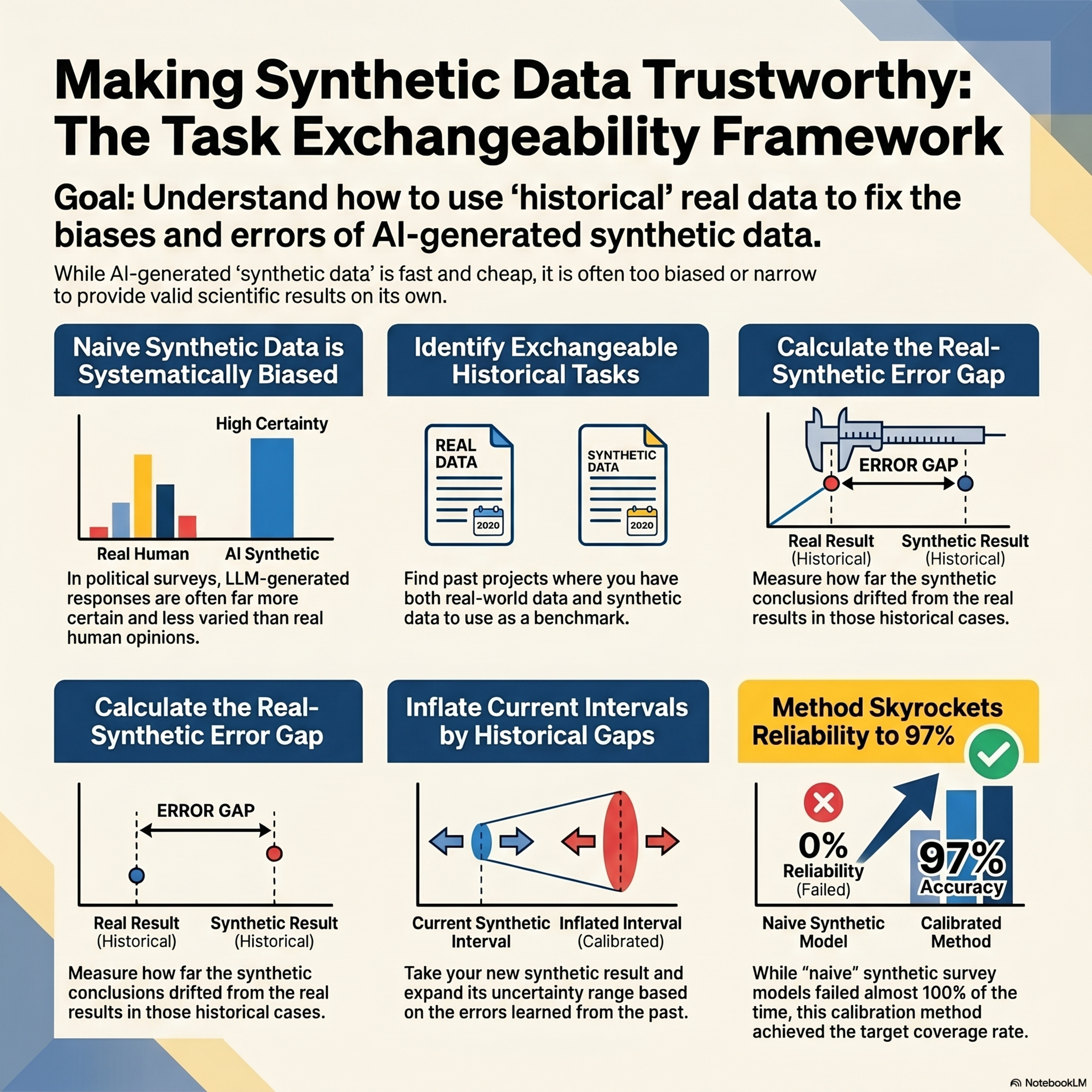
Valid Inference with Synthetic Data via Task Exchangeability
Jun 1800:13:08Tap to summarizeThis paper introduces a statistical framework for making valid scientific discoveries using synthetic data, specifically addressing concerns that artificially generated data can be biased or noisy. The authors propose a new technical condition called task exchangeability, which allows researchers to calibrate synthetic results by comparing them to historical tasks where both real and synthetic data are available. By measuring the discrepancy between real and synthetic outcomes in these past cases, the method can adjust confidence intervals for new tasks where only synthetic data exists. The researchers demonstrate that this approach provides provable validity guarantees across various fields, including social science surveys and AI evaluation. Experiments show that while naive synthetic-only intervals are often severely biased and overconfident, the task-exchangeability method consistently covers the true values. Ultimately, this framework enables scientists to use LLM-generated "silicon samples" and automated raters to accelerate discovery without sacrificing statistical rigor.
Transcribe →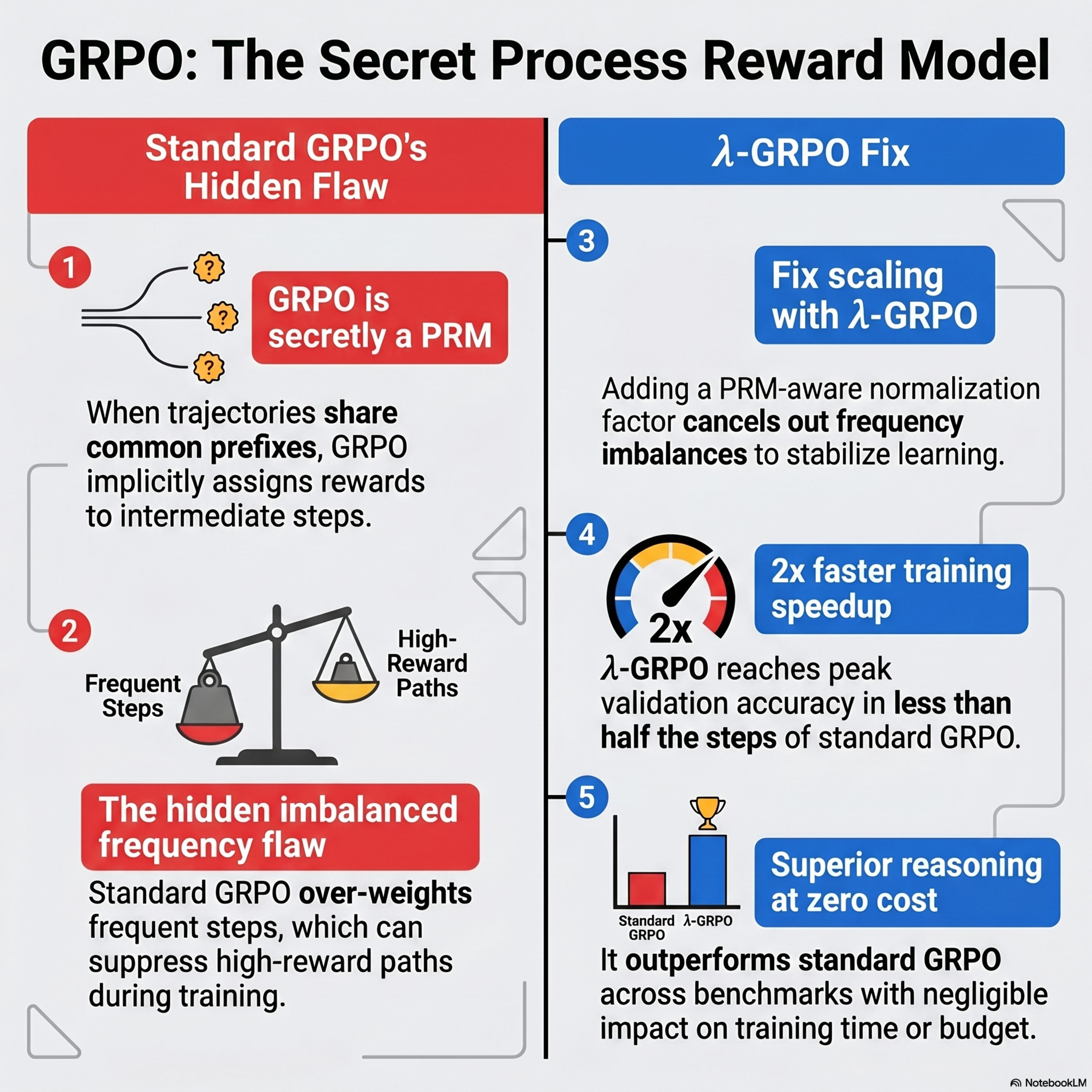
GRPO is Secretly a Process Reward Model
Jun 1700:20:33Tap to summarizeThis paper establishs that Group Relative Policy Optimization (GRPO), while appearing to use only final outcome rewards, inherently functions as a Process Reward Model (PRM) through its implicit sub-trajectory credit assignment. By analyzing groups of trajectories that share identical prefixes, the authors prove that GRPO naturally computes step-level rewards using a Monte Carlo approach. However, this hidden structure reveals a flaw where imbalanced step frequencies can skew advantages, inadvertently suppressing high-reward paths and hindering efficient model training. To fix this, the researchers introduce $\lambda$-GRPO, a modified objective that scales token-level losses to neutralize these frequency imbalances. Empirical testing shows that $\lambda$-GRPO enables Large Language Models to achieve superior reasoning performance significantly faster than the standard algorithm. Ultimately, the work demonstrates that the built-in PRM structure of GRPO can be optimized to boost efficiency without the need for expensive, manual step-level annotations.
Transcribe →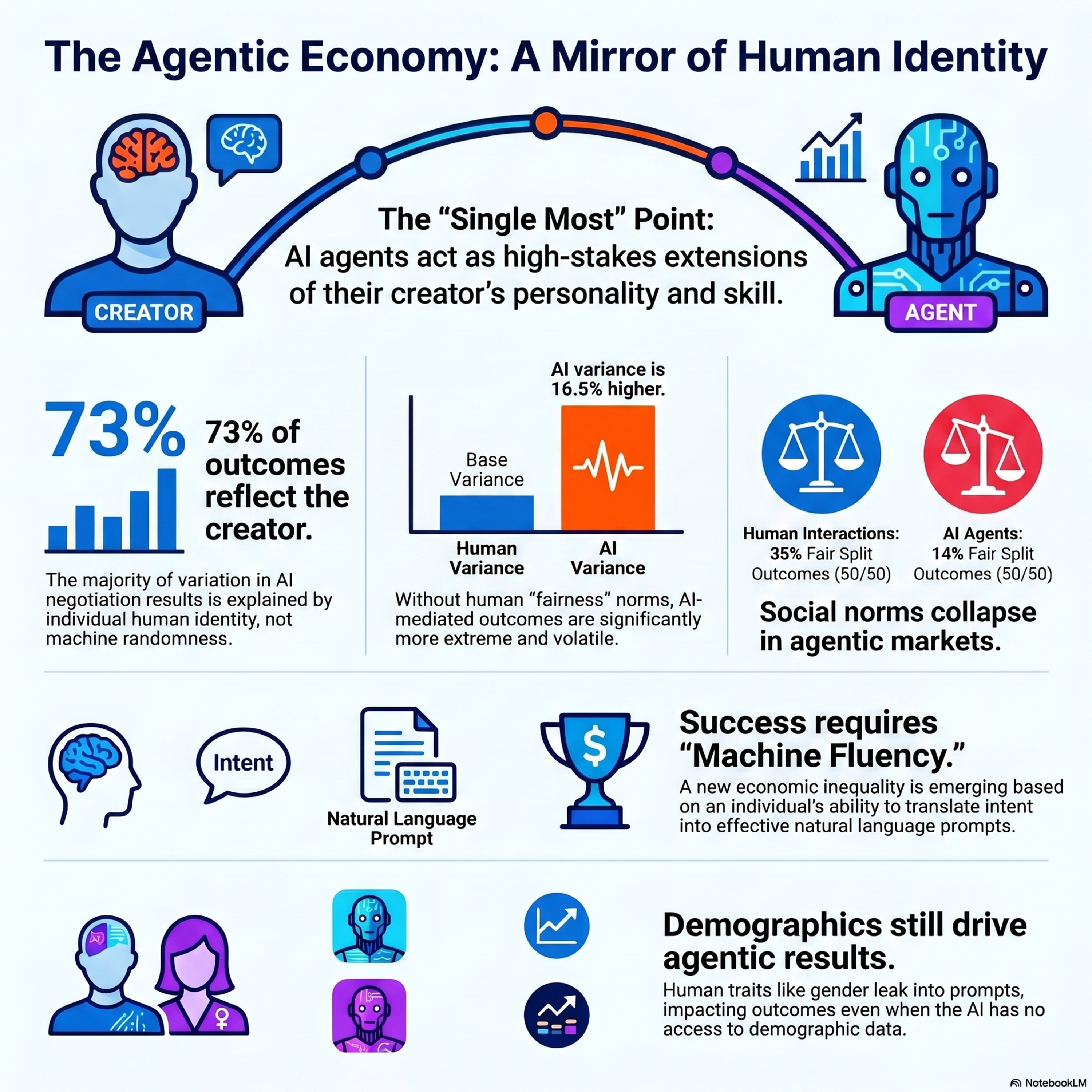
Agentic Interactions
Jun 1700:19:05Tap to summarizeThis paper explores how AI agents inherit and potentially amplify human heterogeneity when tasked with negotiating on behalf of individuals. By comparing agentic interactions to a human-to-human benchmark, the study reveals that instructional prompts act as carriers for the principal's personality, biases, and demographic traits. Remarkably, delegating decisions to machines leads to a greater dispersion of outcomes and a breakdown of traditional fairness norms, such as the 50/50 split. The authors introduce the concept of "machine fluency"—the unique skill of effectively aligning an AI's behavior with one’s own goals—as a new source of economic inequality. These findings suggest that the agentic economy will not be a standardized marketplace, but rather one shaped by specification hazards and the latent characteristics of the humans who design the agents. Ultimately, the transition to AI mediation appears to transform and intensify existing social disparities rather than eliminating them.
Transcribe →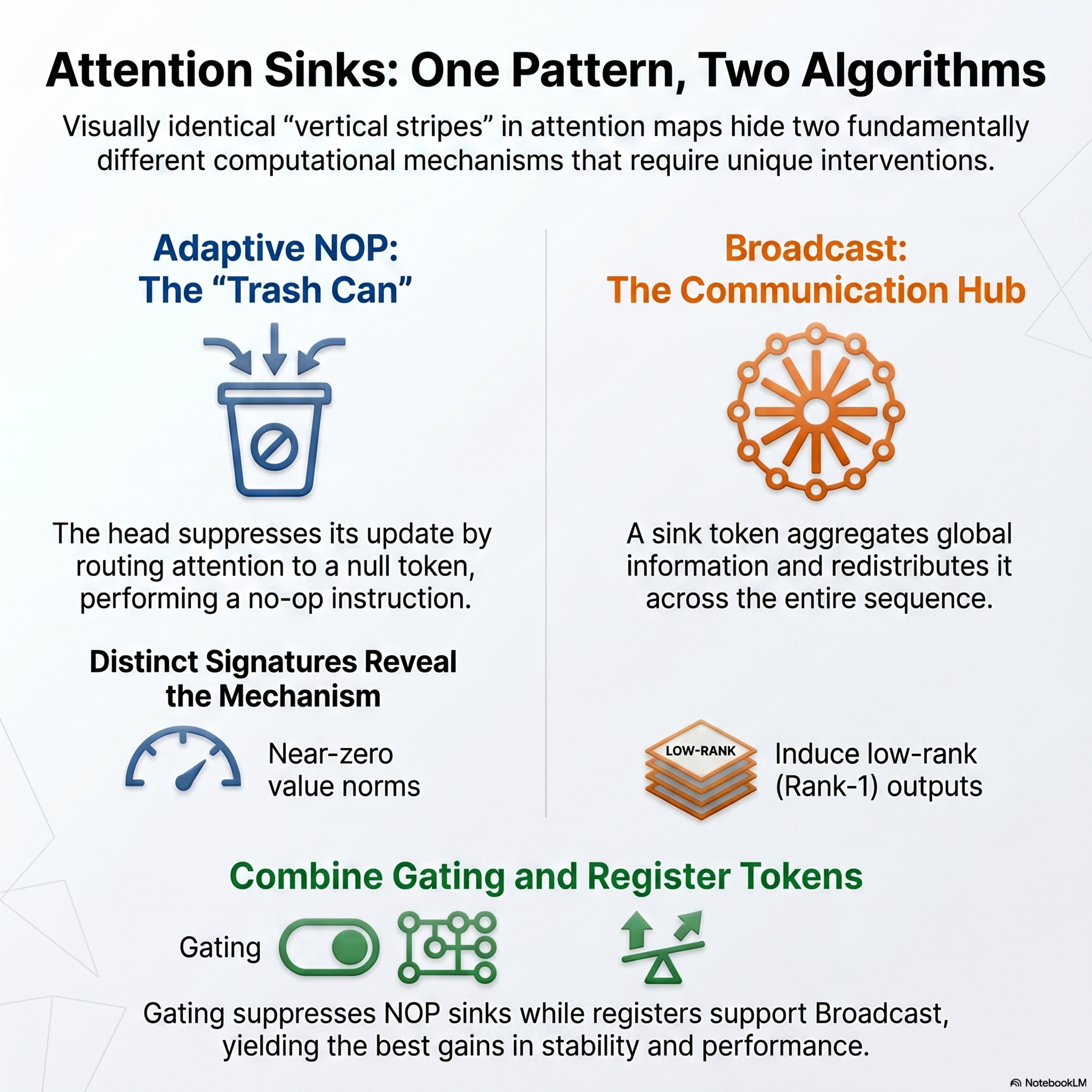
A Unifying View of Attention Sinks: Two Algorithms, Two Solutions
Jun 1600:22:35Tap to summarizeThis research investigates the nature of attention sinks, which are specific tokens in Transformer models that attract disproportionate attention. The authors reveal that these identical visual patterns actually facilitate two distinct computational algorithms: Adaptive NOP and Broadcast. In the Adaptive NOP mechanism, the model uses a "null" token with near-zero value to suppress updates to the residual stream, essentially performing a "no-op" instruction. Conversely, the Broadcast mechanism uses a sink as a communication hub to aggregate and redistribute global information across the entire sequence. By applying specialized diagnostics to vision transformers (ViTs), the study proves that both mechanisms coexist and often transition from the [CLS] token to specific patch tokens in deeper layers. Finally, the authors demonstrate that combining gated attention with register tokens effectively mitigates these artifacts, leading to significantly improved performance in dense spatial tasks.
Transcribe →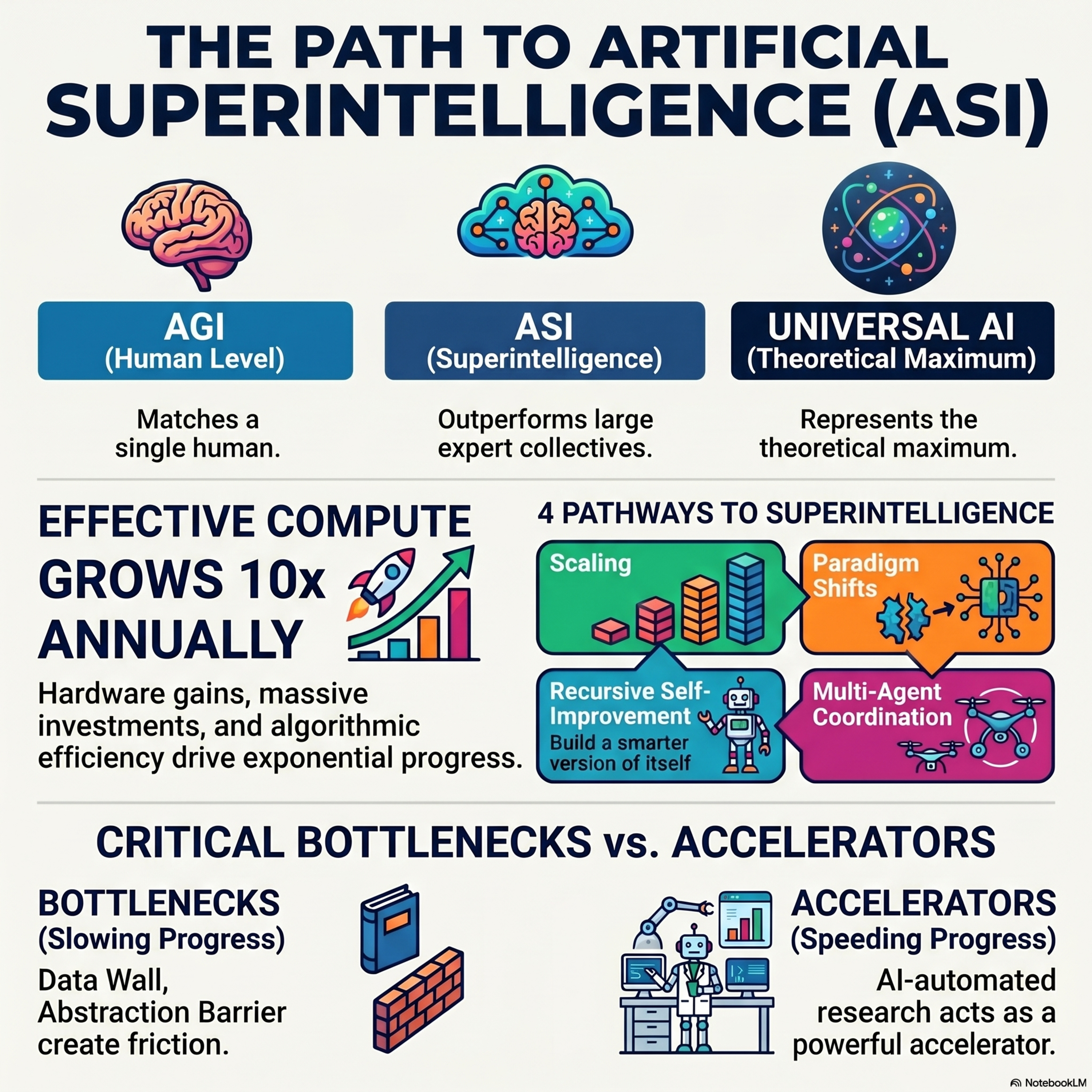
From AGI to ASI
Jun 1400:23:37Tap to summarizeThis report from Google DeepMind explores the hypothetical transition from Artificial General Intelligence (AGI), which matches human capability, to Artificial Superintelligence (ASI), which far exceeds it. The authors outline four primary technological pathways to achieve this: quantitative scaling, algorithmic paradigm shifts, recursive self-improvement, and multi-agent coordination. While current growth in effective compute suggests rapid progress, the text identifies significant frictions such as the "data wall," economic resource limits, and the "abstraction barrier" that may bound machine intelligence. The report also provides a formal grounding for superintelligence through the Universal AI framework and the Legg-Hutter measure of intelligence. Ultimately, the sources argue that predicting the post-AGI future requires a massive interdisciplinary research effort to navigate high levels of uncertainty. This overview emphasizes that while ASI is not omnipotent, its digital advantages—like substrate independence and high-bandwidth sharing—could fundamentally reshape human society.
Transcribe →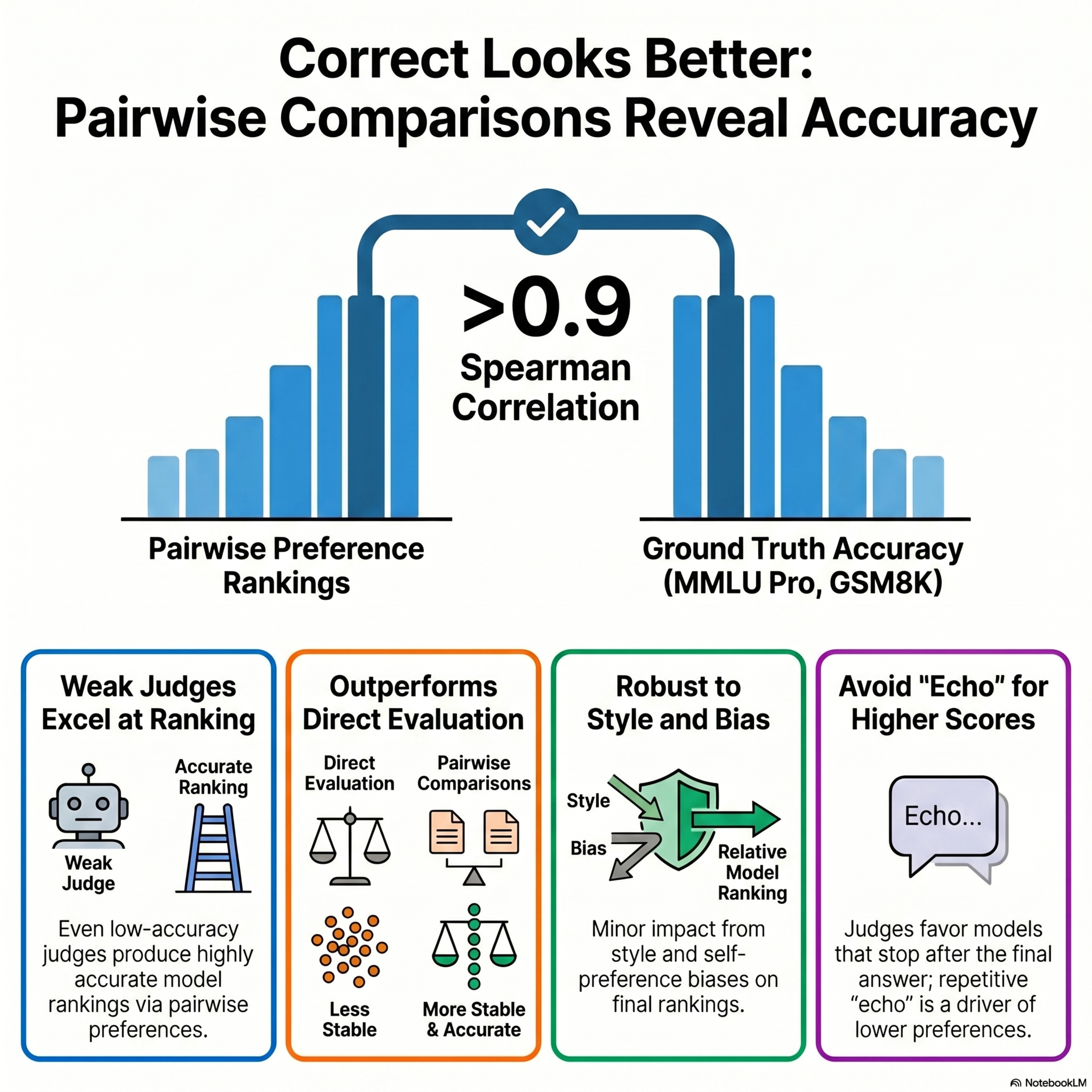
Correct Looks Better: Pairwise Comparisons Reveal Accuracy Rankings
Jun 1300:19:52Tap to summarizeThis research explores whether pairwise comparisons used to rank generative models actually reflect ground-truth accuracy. By converting multiple benchmarks into free-form formats, the authors found that Elo-style rankings achieve a remarkably high correlation with objective correctness. Surprisingly, this alignment remains strong even when the judge model is weaker than the candidates it evaluates, outperforming direct grading methods. While critics often worry about judge biases or stylistic cues, the study demonstrates that these factors have a minimal impact on the final model hierarchy. Furthermore, the paper identifies "echo"—or repetitive output—as a key reason why judges prefer one answer over another when both are technically correct. Ultimately, the results suggest that relative preferences are a robust and reliable proxy for absolute accuracy in competitive model evaluation.
Transcribe →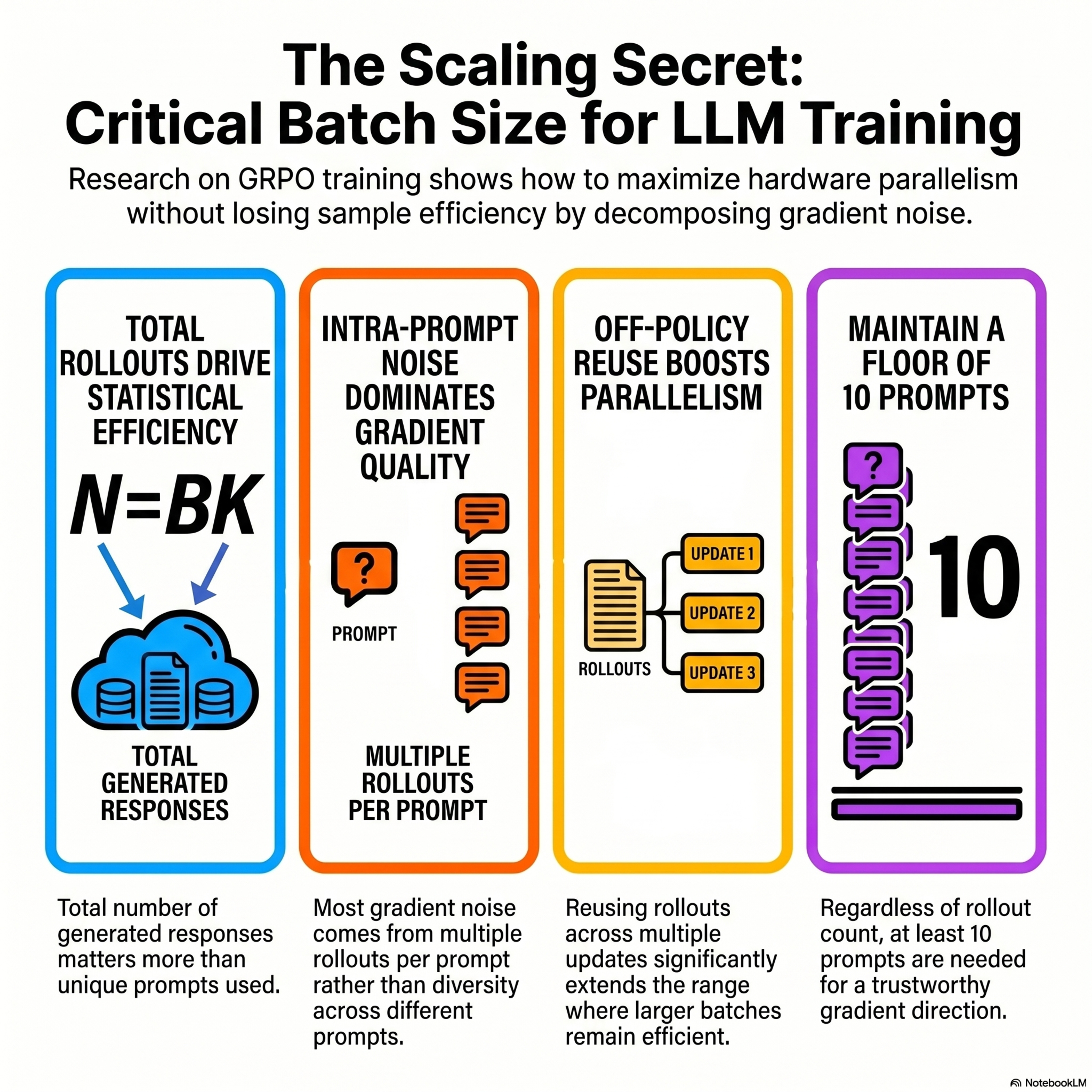
Critical Batch Size for LLM Policy Optimization
Jun 1100:18:41Tap to summarizeThis paper investigates the critical batch size (CBS) for Large Language Model (LLM) policy optimization, specifically focusing on the GRPO algorithm. The researchers break down gradient noise into inter-prompt and intra-prompt components to determine the point where increasing data parallelism yields diminishing returns. Their findings reveal that on-policy training is primarily limited by noise within individual prompts, meaning the total rollout count is the most important factor for efficiency. In contrast, off-policy rollout reuse significantly expands the critical batch size, allowing for much greater computational parallelism. By modeling how policy drift inflates gradient noise, the study provides a theoretical and empirical framework for optimizing training efficiency in verifiable reinforcement learning. These results offer practical guidance for allocating hardware resources during the post-training phase of model development.
Transcribe →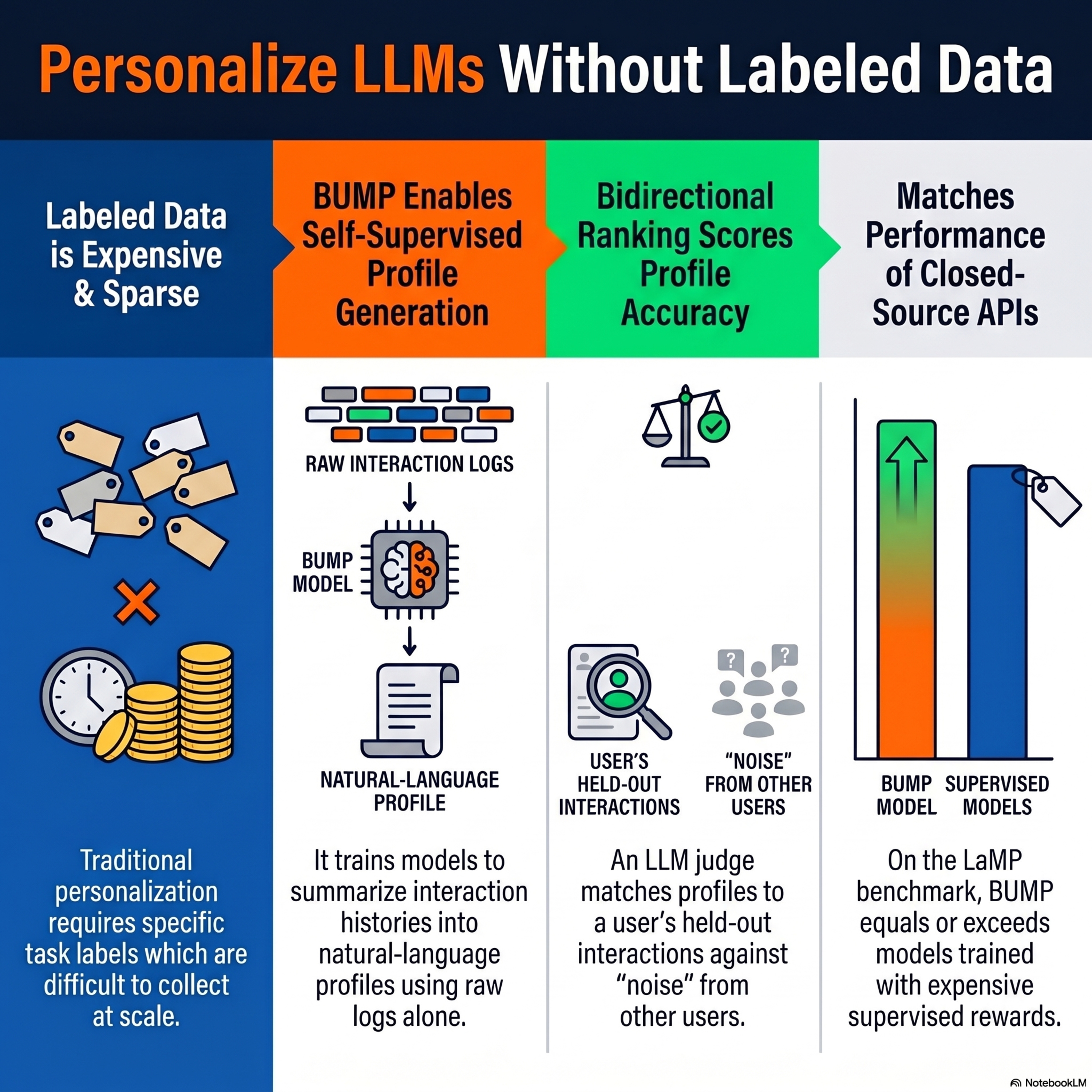
Self-supervised User Profile Generation for Personalization
Jun 900:22:05Tap to summarizeThis paper describes a self-supervised framework called BUMP, which is designed to improve how large language models deliver personalized content. Traditionally, creating user profiles for search and recommendation tasks requires expensive, human-labeled data to train the system. To solve this, researchers developed a method that uses a bidirectional ranking objective to learn directly from raw interaction logs without manual supervision. By comparing a user's generated profile against their actual history, the system creates a dense reward to refine the model's accuracy. This approach allows the AI to summarize interaction histories into natural language descriptions that are as effective as those produced by more costly, supervised methods. Ultimately, the source demonstrates that personalization can be achieved efficiently by training models to recognize the unique patterns in a user's own digital footprint.
Transcribe →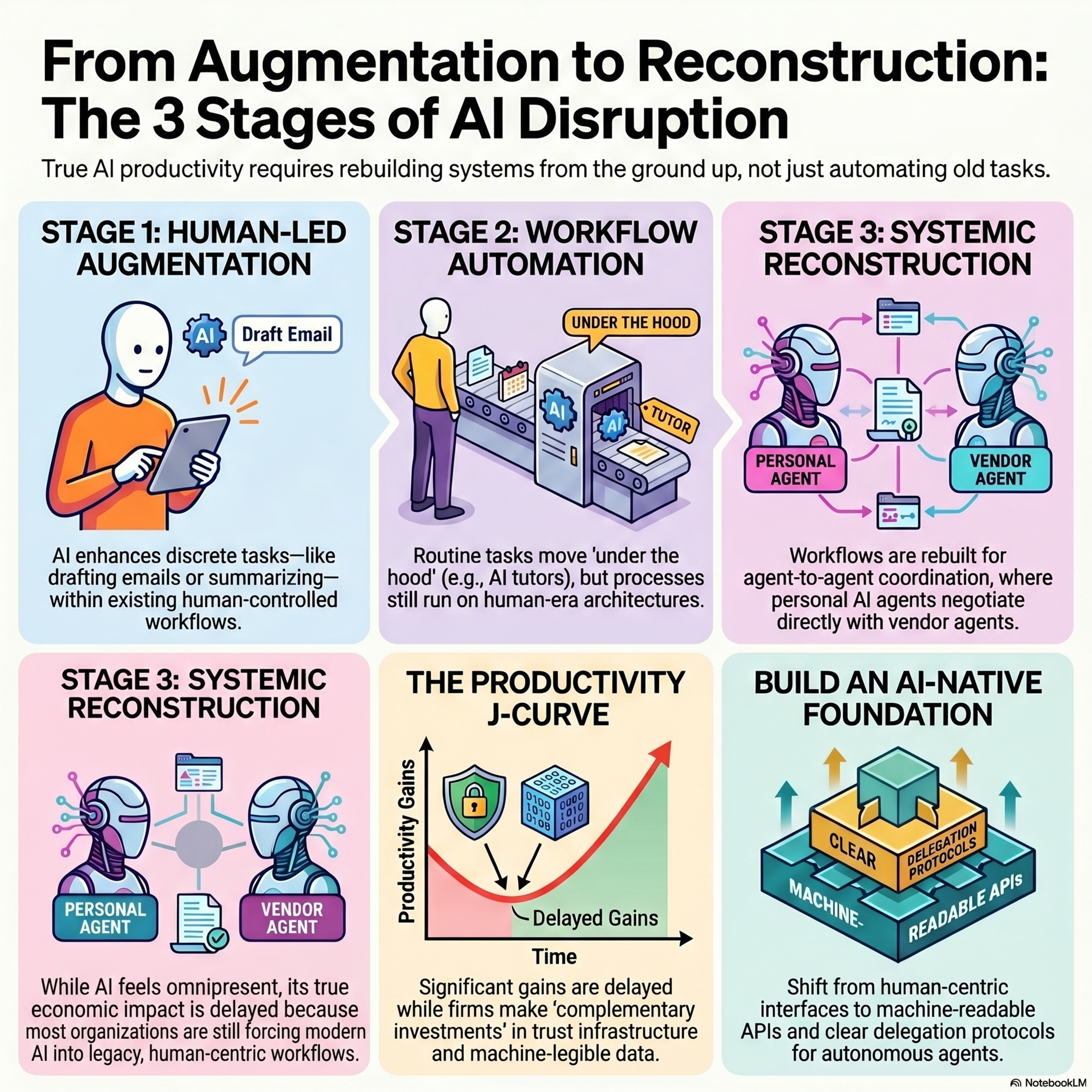
From Augmentation to Reconstruction: Guiding the AI Disruption to the Good Place
Jun 700:22:10Tap to summarizeThis paper explores the evolution of artificial intelligence through a three-stage framework of augmentation, automation, and reconstruction. The authors argue that while AI currently improves individual tasks, the most profound economic disruption will only occur when workflows and markets are entirely redesigned around machine capabilities. True transformation is currently stalled by legacy human-centric infrastructures and a lack of trust in autonomous delegation. To realize significant productivity gains, organizations must move beyond local optimizations and invest in machine-legible data and interoperable interfaces. Ultimately, the text emphasizes that leaders must actively steer technological development toward open, ethical systems to ensure AI delivers broad societal benefits.
Transcribe →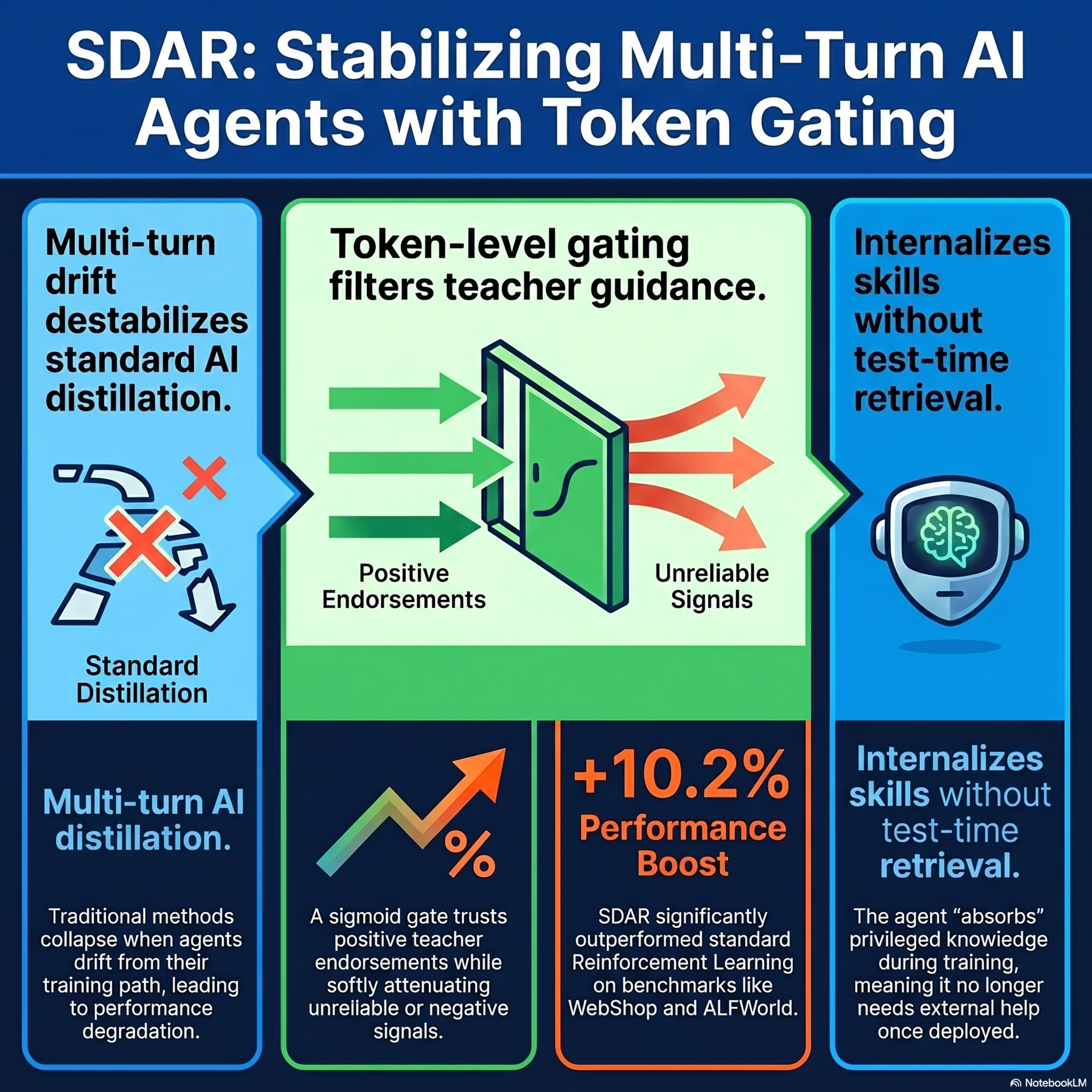
Self-Distilled Agentic Reinforcement Learning
Jun 700:22:14Tap to summarizeThe research paper introduces SDAR (Self-Distilled Agentic Reinforcement Learning), a new framework designed to improve the training of large language model agents in complex, multi-turn environments. While standard reinforcement learning excels at high-level task goals, it often lacks the precise, token-level guidance needed for long interactions. To solve this, the authors identify critical flaws in current distillation methods, such as multi-turn instability and the unreliability of teacher models when using specialized context. SDAR addresses these issues by using a gated auxiliary objective that selectively applies teacher feedback, prioritizing helpful endorsements while minimizing the impact of incorrect rejections. This adaptive approach allows the agent to learn from individual tokens at its own pace, resulting in significant performance gains on benchmarks like ALFWorld and WebShop. Ultimately, the method offers a more stable and robust way to refine agent behaviors compared to traditional hybrid training techniques.
Transcribe →