← BETTER! with Dr. Stephanie Estima | Strength, Body Composition & Perimenopause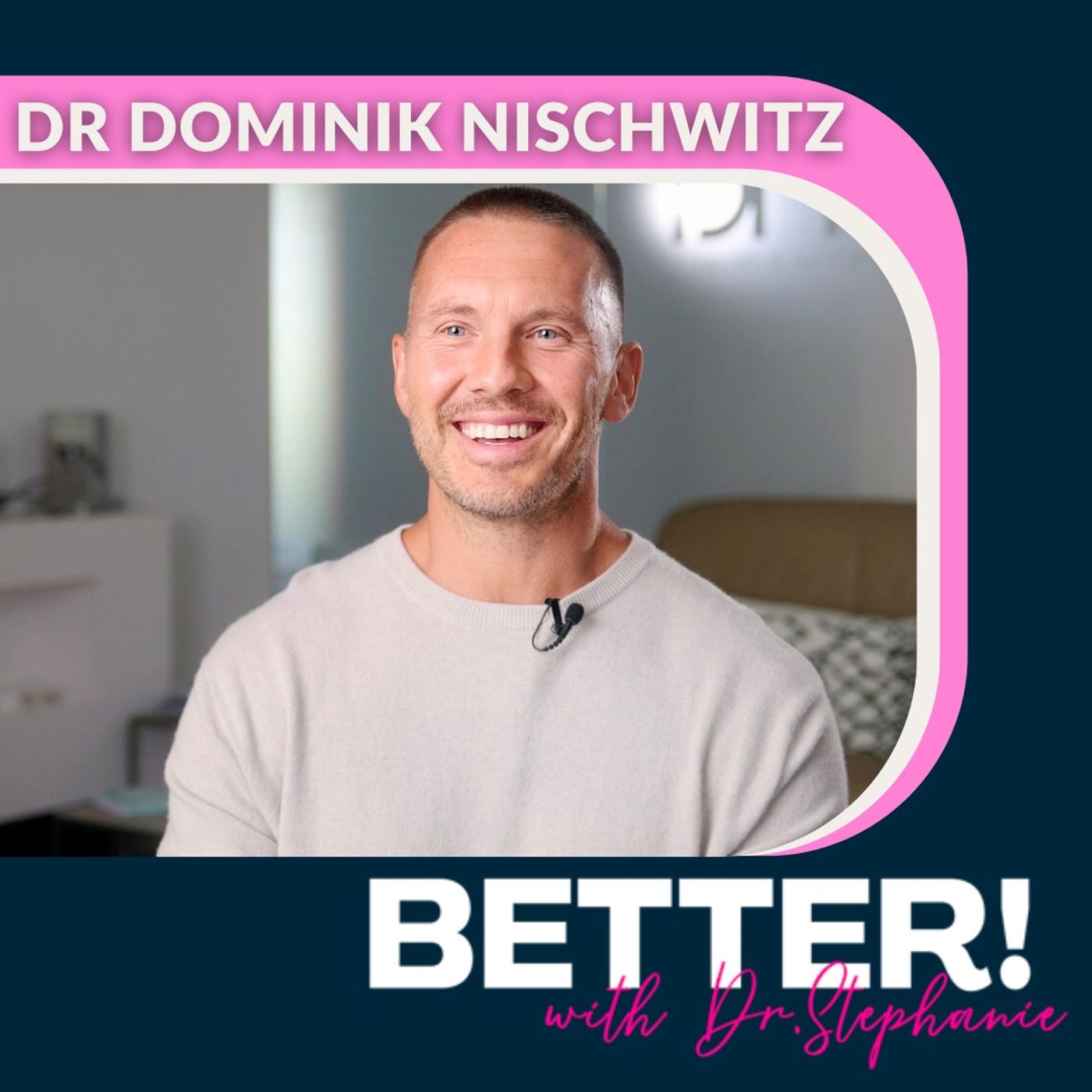
BETTER! with Dr. Stephanie Estima | Strength, Body Composition & Perimenopause
Hidden Dangers of Root Canals, Fillings, & Wisdom Teeth Extraction with Dr. Dominik Nischwitz
01:31:31
Your mouth is the gateway to better health! Explore transformative tips with Dr. Dominik Nischwitz on how to optimize oral health using biological dentistry. A must-listen for anyone interested in jaw-dropping insights on holistic dentistry! Watch the full episode at https://youtu.be/m_fnxpphPJE
Loading summary
Transcript96 lines
- [00:00]
A
So mercury fillings, first of all, are these silver looking, black silver looking fillings. They were actually heavily marketed as silver fillings and are called amalgam fillings. So yes, they do contain 50% mercury and mercury is the most toxic, non radioactive element known to men. Let that sink in. It's the most toxic, non radioactive element known to men and we put it into a body, when we drill it out as a dentist, we have to remove it as highly toxic waste. Mercury is just unhealthy for the body.
- [00:36]
B
It isn't about being perfect, it's about being better. Hello, My name is Dr. Stephanie Stima and I host expert discussions with thought leaders in all facets of health, including nutrition, fitness, hormones, stress management, performance recovery, longevity, healthspan and energy production. On this show we discuss complex science, but then we also alchemize it into actionable everyday living. The ultimate goal with the show is to assist you in making informed decisions about your health and to catapult you into being the hero in your own life. Hello my Betties. Welcome back to another episode of better with Dr. Stephanie. It's me, your host, Dr. Stephanie Esteema. Today we are talking all about oral health beyond brushing. We are sitting down with Dr. Dominic Niswich, or Dr. Dom, as he's affectionately called. He is a pioneer in biological dentistry and ceramic implantology. He is the vice president of the International Society for metal free Implantology and the co founder of the DNA Health and Aesthetic center in Germany. He has placed over 5,000 ceramic implants in patients since 2015 and he's a best selling author of it's all in your mouth and he's also an international speaker. Dr. Dom and I talk about so many things today, but we really hone in on oral care. We talk about the microbiome, we talk about mercury fillings, root canals. We talk about wisdom teeth extraction. If you are one, if you've had any one of those procedures, you are definitely going to want to listen in to today's conversation because he goes through why those things have been done potentially incorrectly or unnecessarily. And if you have had one of those things done like I have, I've had my wisdom teeth taken out. What are some of the steps that we can take to rectify it and how can we truly achieve optimum health, starting with the mouth? This was a fantastic conversation. I hope that you enjoyed as much as I did. Please enjoy my conversation with Dr. Dominic Niswich. Dr. Dom, welcome to the show.
- [03:00]
A
Thank you for having me, Stephanie.
- [03:02]
B
We, we met recently and we were so enthralled in a conversation about oral care and muscle building and being athletic and like, I just knew that I wanted you on the show. But let's start off with the basics. You are classically trained as a dentist, but now I think you would call yourself and some of the physicians and the dentists that you TR train biological dentist. So let's just for the audience who may or may not have heard that term before, what is a biological dentist? How does that contrast with the traditional dentist that we see in our, in our towns that we might visit for, you know, teeth cleanings and, and things like that?
- [03:42]
A
Yeah, I enjoyed our dinner too and thank you. So yeah, the. Usually a dentist, the traditional dentist or a conventional dentist, that's what I studied 215 years ago, is basically there to repair your teeth, fixing bites and smiles and drilling holes and filling and billing. That's usual connotation. So it's a highly high tech craftsman skill, but the main focus is actually just restoring your biting function and maybe the aesthetic part like tooth whitening and professional oral cleanings and stuff like that. So the high tech dental skills, the manual skills, they need to be top notch on every level. If you're a biological dentist or functional dentist or whatever, this is a foundation that we all need. But biological dentistry is in my opinion is just the next level is the future of dentistry. It is our upgrade as a profession overall from the technician to the physician. We just start in the mouth and for us the mouth is the entrance to the overall body. And we look how we can optimize overall health by starting there of course having high tech dentistry. But we are melting IT in Biodentistry 3.0. What I'm teaching with functional medicine or integrative medicine as well as biohacking or health optimization. And this is the total. Yeah, it's more like we're becoming health experts and real physicians instead of just the dentist that we can see in all sorts of movies who is not really a doctor. At least that's what most patients think.
- [05:13]
B
Tell me a little bit about why. And I'll pre frame this by saying that I've seen even in, you know, my city that I live in, people will say they're holistic dentists or biological dentists. But then when you go in it's like so here's your fluoride treatment and here's your zoom whitening and here's your all this. So you know, you're talking about biological dentistry as this holistic practice looking at maybe the mouth as an entry point or the place to start, you know, remediation of, you know, whatever ailment is, is, is bothering the patient. So why does main or conventional dentistry not connect the mouth to the rest of the body? Why are, you know, you said build them, drill them, and I forget the order you said that in, but it was like drill, fill, bill. Why, why does dentistry not connect teeth to the rest of the body? I mean I can just, from my neuroanatomy, I remember the mandibular nerve, I remember the mentalis nerve. Like these are like branches of the cranial nerve that go into, and their sensory inputs to the teeth which are coming from the brain stem. So why is it that conventional dentistry does not look at teeth as a, you know, part of the body and maybe like a part of the body that is separate?
- [06:30]
A
I mean that is a general problem. I think in medical world that we are extreme specialists or experts. I mean there's a heart doctor, there is a gastroenterologist, there is, you know, an endocrinologist. But also there's like in Germany it's actually called a tooth doctor, it's the dentist. So it's, we call it tooth doctor, just translated. But the study is designed, I mean you study medical, normal, medical school, everything and from anatomy to all the sciences. But it's still the main focus is on the craftsmanship, which is important. So there is not really a, even though you study biochemistry, physics, et cetera, at the end it's more about which material you use in the mouth and can you bite on it. It's just, to be fair, it's just a study. So for me the study was just the entrance card because I was always interested in how can I help my patients improve overall like even 15, 20 years ago. So I think your question was more like a two part question because obviously what we're doing is extremely holistic. Like you said, the mouth for us is just the entrance to the overall, to the overall body. Because I mean, think about the, the whole gut system, it basically starts in the mouth. It's a tube from here to the rectum and everything in between. And obviously whatever we do there technically will affect the whole body. But the holistic part is also on the other side. That's why I say it's a two part question, was that there is not really a standard, like, like you said you could go to any sort of a holistic dentist and they will do a fluoride treatment anyways or a holistic root canal. So there is Not a global standard on what does biological dentistry mean or functional dentistry or cosmetic dentistry or whatever. It's not really standardized. So that's what I am working on. And for now, holistic dentist basically means, when you go online, basically means they are using, usually using materials that are a little bit more neutral to the body. So instead of metals, they think about ceramics, or instead of, let's say titanium implants, they might do ceramic implants. But what we do is even the next next level because obviously we focus on having craftsmanship that is completely neutral to the body because we still have to repair teeth, unfortunately. But we're focusing on nutrition, on optimal overall health. We bringing in stuff like hyperbaric oxygen or even more cutting edge sciences. So it's a complete change from the technician to the physician. That's what I call Biodentistry 3.0 certification. But yeah, I think the studies are just far behind. By that I mean the university is just far behind. I studied 20, so I graduated more than 15 years ago already. I'm an oral surgeon too, and enteropathic doctor. So there's more towards afterwards. But what I learned in university was everyone learning the curriculum is super outdated. It was already too old when I studied it, so now it's even 20 years older. So if you see it as an entrance, as the entrance card and you build from there, then it is totally fine. But most professions, or most of our colleagues, whatever medical doctor, if it's a dentist or chiropractor, sometimes they just stop with the university and that's their finish line. But there's more to it. And I was always fascinated. For me it was the missing link was how can I help patients? Because with my hands, the craftsman thing was easy for me always. But if someone can tell me, hey, I'm not depressed anymore. I lost my shoulder problem or my gut is better, my skin health is better. This was always the fulfilling part and was missing in university. But obviously I worked on it and 15 years later, now I'm teaching this on a global scale and trying to make this the global standard. However, it's usually our colleagues that shoot the arrows in our back and it takes a while for them to accept that there is a next level. So it is just the next level. This is just the future in my opinion of everything.
- [10:27]
B
Yeah, I would, I would agree with that. I think that anytime you try to change a paradigm, you're certainly going to have people who resist that change. And I've just looked at, you know, just in researching your material on other Podcasts, like some of the comments that are left, let's say, at the bottom of a YouTube video, usually by other dentists who really do not want to see this kind of paradigm sort of come to fruition. I think is, is, is very sad. And you can, I mean you can sort of understand it in one regard because people are scared of change there. And there's a lot of people who are just like, show me the randomized control trial. Like I will not do anything until I see an rct, which is fair. But also understanding that there's different levels of evidence, like we have the rct which is very controlled for all the variables. It's a high, you know, highly controlled environment. And then there's also the clinical feedback that you will get from your patients over and over and over again. And that can also be a level of information and a way to direct and evolve care.
- [11:27]
A
So yeah, I mean, to add on to this, I brought out a book. It's already, it was in 2019 in Germany, in 2020 in America and everything. What I got attacked for back then, 50% of all of this is now randomized controlled studies. So I was just a little bit too advanced. And the good part is what we're teaching is extremely scientific and most of the scientific bodies that are a little bit more open minded are now finally coming in. So it's not 10 years ago when, when I was attacked by everyone and it was really emotional discussion. Now I feel like it's still obviously early adopters work is not even, it's still pioneers work, even though I'm doing this for such a long time. But it's, I see that it's now opening and there are more and more younger professors in universities that take our clinical work because we have a lot of, and then produce their RCTs out of that. So even I have this in multi, we do that in multicenter studies. So I'm very, very much into all the RCTs myself. So I'm extremely skeptical medical doctor from the beginning, but with an open mind. And I love change. I love to grow. And if every single one out there, every single dentist out there, or even patient that is a little bit open minded and wants to learn the next level, then this is for them. And obviously for us humans, change is always the biggest fear. So yeah, it just takes a little bit of time, but it's on our side now. We just have to be consistent.
- [12:59]
B
Yeah, I agree. I think getting your degree is just literally an entry into the race. It's like you don't know everything you've just started. And if you keep that mindset all throughout your career, you will do very well by your patients and well by yourself as well. Let's talk a little bit about that. I've heard you talk about a couple. There's three main points I want to make sure we get to, which are very common procedures that most individuals probably listening have either had one or maybe even all three of them, and that's root canals, wisdom teeth extraction, and some type of filling, particularly like an amalgam, mercury amalgam composite, maybe. Let's start with root canals because these are very, we'll say, common. Can you talk to me a little bit about root canals, what your viewpoint is on them and how you would like, if somebody fits the bill or fits the criteria, to have some type of extraction, what you would rather do instead?
- [13:52]
A
A root canal is, again, is a standard treatment in dentistry. It is a fine art, so to speak. So it's really, you need skills with your hands. And there are dentists that only do root canals. So I understand that this might be stopping on stamping on their feet or whatever. So root canal acutely, we need it in dentistry because you maybe have a cavity that goes down into your nerve, which is called the pulp in a tooth, and it hurts like hell. It's neuralgia pain. So it's really like the extremest migraine you can even imagine. So we have to get you out of pain as a dentist. And it's obviously not our fault as a dentist that you have the pain. The tooth cavity happened because of you. So this is, in my opinion, the only time we need a root canal to get you out of acute pain. Unfortunately, a root canal is oftentimes misused and also done preventively to not get into pain later in any sort of dental repair scenario, because it's a standard treatment. So that's why a lot of listeners probably have had root canals. And this is one of my three questions that I'm usually asking on any audience or any keynote. Yeah, raise your hands if you had a root canal, because root canals, in my opinion, from a biological point of view, obviously, if we have a root canal, a tooth, if you look at it from an anatomical child, is a organ. It has a blood supply, it has a lymph supply, it has an autonomic nervous system, and this goes into the pulp. So as soon as we do the root canal, we take out all the, say, the life parts of that organ, the vital parts. We take that the life out of it, clean it, disinfect it and then leave it there for biting. So we basically fill something in where there was the immune system before, some sort of plastic and gutta parachute and stuff. And it works. I mean, you get out of pain and you can bite on that dead tooth. But technically speaking, this organ is not alive anymore. And if you compare this to any sort of medical department is never allowed to leave a dead body part in the body. Like imagine you have a black finger or black foot, like a diabetic toe or some sort of gangrene in your body. Every medical doctor will know within a couple of minutes the bacteria that are in this dead organ, or I mean a dead organ usually putrefies and decomposes. And this happens with the tooth too. So it spreads through the body. So it becomes a chronic over time. If you look at the root canal from a microscope level has teeny tiny, let's say it's called tubules, dentin tubules, or let's say just a tubular system. And it's the perfect cave for anaerobic bacteria that are just living with you in your oral microbiome anyways. But it's kind of like imagine a cave and a cat and mouse. So the mouse would be now the anaerobic bacteria in these tubules. And your immune system is designed to attack foreign invaders such as bacteria that might live in this root canal. The problem here is the macrophages or your innate immune system cannot really go into these tubules and then will produce a chronic inflammation around a tooth which is just normal, it doesn't really hurt. But it's quite common that if you go to a dentist and do a panoramic X ray or just an X ray or three dimensional one even, that you find some sort of a cystic tissue or any sign of chronic inflammation around the tip of a tooth. And this is just your immune system trying to protect from the infection side. So the problem is that we take something that was once an alive vital organ and make it dead just to bite on it. And that part becomes a cave for bacteria that anyway is living with you. It's just in itself because you're sealing it off.
- [17:45]
B
Right? Just so I just, so I'm following.
- [17:47]
A
It, you're sealing it. But at the same time, before you had an organ with a live immune system, but there is no more immune system in that tooth. It's gone, it's dead.
- [17:57]
B
Right?
- [17:58]
A
So the immune system, there's good studies, RCTs showing that the immune system in A live tooth is able to attack invaders, obviously, but there is no more. So it's sealed off, but at the same time it's not really attached to the system anymore.
- [18:12]
B
It's a double prosthetic. You put some sort of prosthetic in there to be able to bite.
- [18:16]
A
Exactly. And you just leave the dead tooth, like the not alive tooth sticking in your jawbone in there. But then this thing becomes like a chronic infection site. We call that oral interference. And the problem is it's again a chronic inflammation or chronic infection side. It's usually pain free now because we got you out of acute pain, but now it becomes a chronic. Yeah, chronic inflammation.
- [18:43]
B
Is it pain free because there's no more nerve there? Because you've sort of cleaned it all out. You've taken the ligament out, you've taken like you've sort of cut the nerve supply.
- [18:50]
A
If you look into just a tooth from the. If you just cut it open, you see that there's. The main channels is called the root canal. And in the root canal you have the blood, the lymph supply and the nervous system. Yeah, actually where it hurts. So you take out all this and clean it, disinfect it and fill it. So then you just have the tooth still sticking in there, but it's not alive anymore. It's not anywhere connected with the blood supply. And yeah, it stays there as a dead tooth, a dead organ that works for biting. Not a doubt. But these bacteria in there and the chronic infections obviously cause chronic inflammation. You know that this is one of the silent killers these days. It's one sort of big stressor. It's usually pain free because it's chronic. So your body gets used to it. But the cytokines that are produced are problematic. The bacteria in there are having their metabolites. So another set of toxicity. And if you see the connection that you just mentioned with the alveolar, alveolaris, like the nerve here, called one branch of the trigeminis, two branches actually go to the teeth. And these teeth are connected directly to the brainstem. We are these trigeminals. So everything that you do in your mouth, from a dental repair point of view, even the root canal and all the bacteria, or let's say entities in there, and the toxins can spread backwards into your brain stem, which is called the retrograde axonal transport, and then obviously affect your complete autonomic nervous system, such as the nervous. The vagal nerve, which is connected to the. Is basically your parasympathetic nervous system. So it's just a huge stressor. And if you hacked all the other stressors, such as, like, I mean, your diet could be a stressor, you're not sleeping can be a stressor. But usually in the realm of health optimization, we attack all these things. But you're still not superhuman. It might be, let's say, just the root canal being a chronic infection in your jawbone that could bring you into chronic fight and flight mode and stress mode and you don't even know about it because usually the dentist won't tell you.
- [20:53]
B
Well, if it's pain free, I mean, if you're, if you're saying that, you know, a traditional dentist is really, you know, the drill, fill bill, or they're usually technicians and they're usually, you know, designed to be able to find pain and remove it in the case of a cavity, let's say, then it would make sense that if you have a chronic silent infection, why, how, how would you ever know to even bring that up with the dentist? Or how would you even know to say, hey, can we follow up here and make sure that I don't have any necrotic tissue or I don't have this chronic low grade, you know, infection in my jaw from this, from this root canal? Over time the patient's not going to know and then the dentist is not going to know to even look for it. So it's this, it's this sort of deadly vicious cycle that doesn't really seem to have a solution.
- [21:38]
A
It is a vicious cycle, especially if the dentist is also very fond of his techniques and he loves his root canals and they work for the biting. So it's just the lens through which the dentist, the general dentist is looking is can this patient bite on it and does he have or she has any pain right now? Usually the tooth is already dead. So you don't have any pain. And they don't necessarily will do a three dimensional X ray and look for signs of silent inflammation such as cysts, because first of all, I think it's only 10% of all dentists out there that do have a cone beam scan, which is a three dimensional X ray and on a two dimensional you don't necessarily see it. So it's the dentist who just gives his best for keeping your tooth for biting, which is a solid point. It's how we are trained. And then the patient looking for overall health optimization maybe. So it's two separate languages. They don't even connect. And this will never be a solution for that. And I'm having a hard time obviously teaching this to dentists in the first place if they're not open minded. But patients are getting more and more informed and taking control and obviously we have solutions to that dilemma that we have mapped out. And they're very charming for a long time. Which is which we can definitely talk about how to deal with chronic infected root canals or how we do it at least because.
- [22:55]
B
Let's talk about it. Because you mentioned, you mentioned cytokines and I want to talk a little bit about chemokines and I've heard you talk about CCL5, so I wanted to maybe touch on that. But maybe just before we get there, how would you, if someone was a patient in your office or someone, or a dentist or biological dentist who's trained by you, how would you treat a patient who has had, had a history of root canals with or without symptoms? So the patient could be asymptomatic or the patient could say hey, you know, maybe I need another root canal or I have another cavity or I have more neuralgia. Like what would be the approach that a biological dentist might take in that case?
- [23:32]
A
I mean, yeah, let's say a biological dentist that does Biodentistry 3.0 looks a little bit different. So we, like I said, I mentioned it again, we asked three questions. Or we can look at a classic two dimensional panoramic X ray which is showing you complete set of teeth 2 dimensionally we see at a glance. Or you can actually look at yourself and are there any metals in your mouth, root canals we touch on and did they remove your wisdom teeth? So what we do, we get that panoramic X ray sent in and then we do a complete treatment plan for the complete oral cavity to optimize this once and for all. Like with the goal of having no metals, no root canals, no cavitations. So for us it's obviously quite special because we have, for us it's clear in order to get you to next level health, we take it all out. But we don't want to just rip out a tooth obviously, because that is not a straightforward strategy. So what we do is plan the whole case, such as a health architect from the mouth and design it so you can still always buy it and have a long term solution that is more neutral to the body than a, let's say chronic infected root canal. And what we do in this case is usually immediate ceramic implants. So a dental implant is just if you have lost a tooth completely, including his roots, it's completely extracted, right. Then usually there's a waiting period. And then you might get a new tooth that is starting from the, from the jawbone. So you have to drill something into the jawbone. And this is called a dental implant. You know that probably. And a dental implant in 99% of all cases is a titanium implant. Titanium is a metal. So we're using again a metal in and drill it into your jawbone. What we do for more than a decade is instead we use a ceramic implant, which is a completely neutral biomaterial. And fortunately very much so ever since 2023. Ceramic implants are medical guideline. So every dentist, at least in Germany now has to tell their patients, hey, gold standard is still titanium, but the alternative is existing is as valuable, but it is a ceramic implant. And if you then show a patient a white screw versus a black screw, there is not a single patient who not want to choose a ceramic one. So I'm lucky on that side because the research is finally catching up. But what we do even more exclusively is we don't extract the tooth and wait for three to four months until everything is healed. We do that immediately. So I'll take out a tooth very, very gently so that we don't hurt anything of your anatomy, like your bone and your gum. There's no tooth yanking with us with a real biological dentist, with a bio dentist, they've trained very gently removing it, cleaning everything, disinfecting everything, but then using that so called socket. So if you take out a tooth, what's left in the jawbone is called socket. We use that socket after cleaning to put something in there. And this is the ceramic implant that now acts like a tent pole that stabilizes the complete socket, which is actually called a socket preservation. And then your body at that spot doesn't collapse in itself because if you take out just a tooth and wait, the bone and the socket collapses. This is called atrophy or atrophy. It's kind of like you don't train your muscle, you lose it. If you don't use it, you lose it. Same in the bone. So it's the straightforward strategy to use it at the same time as the extraction. Obviously, if you want to do such things, a immediate ceramic implant. Am I too technical or still following?
- [27:05]
B
No. This is fantastic. I have so many questions and I know that my, my audience is. I'm just, I'm like hanging off your every word. So this is awesome.
- [27:12]
A
Okay. I'm. I'm adding just on top, just for all patients or dentists out there listening. An immediate dental implant, even with titanium is classified as a high risk procedure in dentistry. We are doing only immediate ceramic implants. So we're doing something that only 1% of all dentists worldwide do is a ceramic implant. And we do them immediately. So I understand why we're gutting it where we were attacked 10 years ago because it's just trailblazing new things. But it works. It's beautiful because we can use your innate healing capacity, but because it's a high risk procedure, we design the whole journey for our clients or let's say for our guests. I would not even call them patients or call them a guest on their health journey to optimal health. Starting from the mouth, we start four to six weeks in advance if the patient isn't ready. We start with the right nutrition, we change their nutrient completely. We give them the right building blocks to build bone and teeth and tissue. So when they come in for the health optimization week, they are properly boosted and on site. We also have a complete health. Let's say it's a biohacking facility next to it where we use intravenous nutrition, hypoxia training, sauna. We have everything just to make sure that whatever we then do technically in the mouth, removing the metal safely, taking out root canals, immediate placement of ceramic implants, dealing with all the cavitations which we not even touched yet. The jawbone inflammation, so that we make sure that this patient is in supreme healing boost mode, super anabolic and can just navigate through this phase of his health journey without even a lot of swelling and pain. That is my goal. So surgery for me means the best surgeons in my opinion are not the ones that I've trained with. There's like huge surgery, huge cut, rough. That was what I learned. Like the best surgeon are fast and do it rough. I feel like the best surgeon these days is if we don't even need to cut anything. And taking out a tooth in itself without cutting your gum is pain free. So think about this. We save time for the patient. Not waiting, not another surgery, not seeing the dentist again. We do that all at once. Obviously we use ozone, we use prp, we use it all. But this is possible, but only because of the complete menu structure we have. So it's more like a five star resolve health optimization journey versus classical conventional dental office. It's just not. You cannot compare it. It's just not existing. I'm adding this on top because I understand that if a snippet from social media comes out, understand that if they don't get the full picture of what we're saying they think we're crazy, but we're not. It's just next level future of dentistry. So. Welcome to the future, Stephanie.
- [29:58]
B
Yeah. Yes. I love it. I love it. So I have, I have one question that you, as you were talking about the biological approach to if the, if the tooth does need to be extracted so you're, you're preserving the socket, let's say, are you also preserving or as much as you can, are you, are you cutting the nerve supply, are you cutting the immune or is that just a necessary. That has to happen in order to relieve the neuralgia.
- [30:23]
A
So you mean when I take out a root canal?
- [30:26]
B
Yeah.
- [30:27]
A
So when I take out a root canal, the tooth is dead for a long time. There is no more nerve. It's okay. It's just a dead body part sticking in there with the only purpose of biting. And maybe it has a crown on top to look nice. You can make every dead tooth that is really black over time look amazing by just putting it on a cap. So we are actually quite good with making unhealthy stuff look nice. It's possible as a dentist I could look like perfectly white pearly teeth, but underneath on a cone beam, every single tooth is dead. It's possible. And then no one understands why they have their chronic health issues because again, dentist did a great work to restore the bite and the aesthetics, but it didn't focus on. He didn't or she didn't focus on overall health optimization because it's not the way we're taught. This is why I say it is just changing our profession completely from the technician to the physician, but obviously with high tech excellence, technical skills, still, this is a given. In my opinion, we have to be the best with the hands, but add on top to help the patient overall and obviously at the end, like for example, if a patient comes see us, what I like to see is he has seen, he or she has seen 20 doctors before because of chronic health issues and then came into the health optimization week. But suddenly the chronic elbow pain is gone. The mental health issue get better, skin health gets better, thyroid is better. And after like four or five months they come back and lost 20 pounds of fat tissue and tell you this, this, this and this improved and on top, I have nice teeth. Instead of. When you go to a dentist and even if you go to the best specialty, which is cosmetic dentistry, which I started at, at the end, what happens if is the patient will look at just this little tiny bit and says, oh, this tiny edge, I don't like. And I'm like, I don't. I don't like that. I want to have this big picture and make an impact in the patient's journey. Obviously, it's a lot of responsibility that the patient has to take themselves again. But then we are just there as the architect for their health and guiding them. And I don't say we do it all like it can happen, that after restoring everything in the mouth and dealing with the heavy metals and whatever, that they then need to see posturology or usually all of them go to a personal trainer at the same time to build more muscle. Because we test in the initial week, we also scan their whole body composition to see if they have too little muscle and too much body fat. Like, this is all in the program.
- [32:59]
B
That's incredible. You mentioned the jaw and cavitations. I wanted to move there. Next, can you talk to us a little bit about what can happen, you know, infections in the jaw, you know, pain or asymptomatic, what that can, what that can, what that can present. Like you've talked a little bit about, you know, symptoms in the body that maybe people don't necessarily tease back to the mouth or the jaw or something going wrong with the teeth. But talk to us a little bit about cavitations and jaw health.
- [33:29]
A
Yes. So first of all, cavitations are not tooth cavities. So it's not a hole in your tooth. Cavitations is the layman's term for a medical condition known as fdoj, which. Which is an. Which stands for fatty degenerative osteonecrotic jawbone. So it basically says what we see when doing a surgery that there is not real solid white, nice sponges bone, but fatty tissue and necrotic bone. And these cavitations initially can happen after every tooth extraction. And this is why I usually ask the question, have they had or did they remove your wisdom teeth? Because in the Western world, unfortunately, we grow too narrow and we don't have space for wisdom teeth. So it's kind of like normal in us, for us growing up, that we at one point see the dentist to take out the wisdom tooth.
- [34:22]
B
Usually that's what I was told. It was like they're crowding your mouth. So we're going to take them out.
- [34:27]
A
Exactly. Because exactly they were crowding your teeth. So you're not going to end up being aesthetic. And before your orthodontic treatment is best to make some space. So this inherited is obviously the issue, but we are dealing with symptoms along the way. So I Personally also had my wisdom teeth removed when I was about 14, 15 years old.
- [34:44]
B
Yeah, same.
- [34:45]
A
So and the only thing we inform as a dentist or a oral surgeon, basically we only inform, let's say, the parents about the procedure, which is we're going to do local anesthesia. We take out these impacted wisdom teeth. They don't have any space. In the future it is going to be swollen, it's going to be a lot of pain. You have a school leaf for a week and this is the medication you should take and this is the cooling you should apply. So in order to survive. That's it. So it's an. It's only talking about the local problems or issues with a surgery. But what they're missing, and this is a big part of the biodentistry teaching, is how to prepare a patient for a surgery. Because most patients, especially teenagers in their growing years, they are in nutritional deficiency. If you see the average person out there, they might be overweight and obese, but they're usually deficient in nutrients, especially in building blocks such as protein or for when it comes to bone health, stuff like vitamin D3K2, magnesium sunlight. They're inside or they're just 14 years old and they're using it all up for their growth. So the body is not prepared systemically. And what happens locally is the body is in shock mode after that surgery. Not prepared, it doesn't heal. The little kid comes in with a pain called dry socket. They need a lot of local antibiotics to get that healing. So basically this wound never recovers, it never heals, it only closes secondarily. There will be gum over it, but the bone never grew backwards. And if the bone doesn't grow backwards, and also maybe the periodontal ligament was left in there. It's a cave. There is a cave that forms and over time we have anaerobic bacteria in our mouth. We have fungi, we have parasites, we have viruses. They all live with us, but they like to go in these cavitations producing problems. Especially for example in North America where there's a lot of mold issues. Mold spores, for example, tend to live in cavitations no one knows about. So you're dealing with your chronic mold issues. But no one looked at your, in your jawbone where you had wisdom teeth pulled 40 years ago, where there might be the biggest mold spore sitting. So you understand. So it is a chronic, it developed a chronic silent inflammation again in your jawbone, an ongoing construction site that never finishes. But it is usually pain free and no one knows about it because this is not taught in university, not in dental school. It is woo woo world still, even though there are lots of information. And luckily Professor Ganati from University of Frankfurt finally does study in more studies. I mean, there's one very, in my opinion, is a legend. He's Dr. Johan Lechner from Munich. He did all the studies that are existing so far for the last 40 years. He's the Yoda of cavitations. He's almost 80 years old, but he was the only one and always got attacked, obviously. So now we come in and more and more research has been done. But this is something like just ask yourself, everyone listening, whatever age, have you had your wisdom teeth pulled? If yes is the answer, there's a big chance that there is a chronic inflammation in your jawbone, triggering systemic disease that could end up having any single symptom that you not getting better. It could be just a lack of deep sleep, could be that your biceps is not growing because it's connected to whatever meridian. It could be. The usual suspects are usually chronic fatigue, thyroid issues, gut and skin issues are usually connected. So ask me any symptom and I can explain to you how it might be connected. But I would never say it's the only root cause that would be wrong. It's just if you're trying to heal and optimize overall, you have to start with the foundation. And the jawbone is not just your arm, it is an extension of your brain. It's like your eyes, it's like your nose. It's really a part of the brain, in the brain, like where the dichamin is there and the vagus nerve. If there's a chronic inflammation, all the cytokines, all the toxins, everything travels in your brain and then causes systemic issues. Is this too deep or still following?
- [39:05]
B
No, this is fantastic. No, this is fantastic. And you know, even just talking, I'm thinking as you're talking about the cranial nerves, I'm thinking about spinal accessory nerve. And then all the issue, like all the innervation that it has in through the neck and then into the shoulder, which is a common issue that so many women will experience in perimenopause, is this idea of, you know, shoulder issue, chronic shoulder bursitis, this like, you know, this adhesive capsulitis can maybe it's not the one thing, but it is the one of many things that are contributing to with, you know, you have declining sex hormones and all of that in perimenopause. But this could be another reason why you are, you know you have chronic neck pain, shoulder pain. You, you know you're sternocleidomat. Like your muscles in the front of your neck are overdeveloped or you have poor posture, et cetera.
- [39:51]
A
Yeah. And I can explain to you why. So all the 32 teeth that you're supposed to have in your mouth are an organ connected to your brain. Right. Every single organ in your body is connected to your brain somewhat through the nervous system. So imagine your heart or your liver. You might know about a dermatome, right? A skin where every organ is represented. Let's say the liver is directly connected to this dermatome. But there are few organs in the body, and those are the oral organs, such as the teeth and the sinuses and the tonsils. They don't have a representation on the skin called dermatome. What they have is called a myotome. That means they're directly connected to the muscle of. Now it comes and explains everything you just said. Directly connected to the small muscles, connected like C1 to C4, the deep neck muscles, Scalenius muscle. So what happens is this. And therefore obviously shoulder problems, elbow tendinitis can usually be traced back obviously to other things too. But if everything else is already covered, could be the root canal, could be the cavitation, could be something in your oral cavity interfering because it's directly like. It could be a tense muscle up to thousand fold, more tension just by that stress from the mouth. So this is an additional information that is usually lacking. Then your deep front line is blocked. That's why I just said it's actually true that maybe your biceps doesn't work that well. Or you can't. I know you're fan of shoulders. Or you can't develop your delt muscle because the lung meridian is blocked because of one of the teeth, for example, the lower molar, which is directly connected to that. So this is how interconnected all this is. And maybe, you know, she's from Canada too, and the Anwerbillon or posturology, have you ever heard of that?
- [41:49]
B
Oh, she's been, she's been on the show. Yeah.
- [41:52]
A
Yeah, she always talks about it. And posturology is a big thing that we also incorporate because the mouth is kind of like teeth is the, the thermostat. The bite is the thermostate for your complete posture on top of that. So it's really important what happens.
- [42:07]
B
So let's say we go to a biological dentist, we get this 3D. Did you call it a cone scan, a 3D X ray?
- [42:14]
A
It's called CBCT, cone C O N E, cone beam scan.
- [42:19]
B
A cone beam. Okay, A cone beam scans.
- [42:22]
A
I would only, I would only advise to get a cone beam scan. If you go to someone, you know, like biological dentist is not really a trademark name. So it could be a biological dentist that does a biological root canal that wouldn't be consequent. So you need to have someone that is trained and knows how to really look at a cone beam scan. So I would just get a two dimensional X ray first. That's a panoramic X ray, just the oval view of your teeth. That's something that usually every single dentist is able to do and then just look at it. But yeah, do that. What can you see?
- [42:59]
B
My question was if we've had wisdom teeth extractions which many people listening are going to be like, that's totally me. And we have some of these unexplained symptoms that we've been talking about and it's discovered that we do have this fdoj, this fatty degenerative necrotic osteonecrotic jaw. What can we do to improve that? So obviously I am, you know, you might in you were saying in German, it's tooth doctor. It's probably chiropractors. Probably translates to something like back doctor or maybe bone doctor. You know, I'm very concerned with the health and aging of our bones. The mandible certainly being one of them. I've treated more than, more than I can count. TMJ dysfunction. So what do we do if it is discovered that we do have something like a fatty osteonecrotic jaw?
- [43:52]
A
So first of all, you need someone skilled to diagnose it that knows about it. But if that is really a diagnosis for you, then this is actually a, a, I would say it's a minor surgery that you need to do. So we have to go in with an operation. It sounds, operation always sounds so extreme and intense. It's not really a big, big, big, big deal. But what we need to do is basically clean that out. We need to like, we need to open the chronic ongoing construction site, clean it and bring in new materials that it's finally finished. So in order to finish it, we have to reactivate it because something chronic, your body basically got lazy and just dial down the volume, but didn't. It's not any. It's kind of like outside body now. So we have to put it back on the map for the nervous system and the immune system. But because we now know that it developed in the first place, because of a lack of preparation and a improper nourished body, so to speak, we shouldn't do the same mistake. So this is also what a biological dentist not necessarily knows. They are still mostly focused on repairing. So they may be good with the cavitation surgery, but they're missing the overall systemic implications. How to prepare the patient systemically in order to be able to build bone and teeth. Because if you do another surgery without being prepared, you end up having another cavitation. That's what happened 10 years ago when I started. And I was like, I see another cavitation. So something is wrong here. We cannot have 80% recurrency. I want to have 2% recurrency or. But I want to have that healed. I'm not a surgeon to do this surgery again. I want to have a surgery that creates lasting impact. So obviously I need to reactivate something that is able to then build. So the surgery in itself is very, very minimal invasive. If you know how to do it, it's basically. Should I explain it a little bit?
- [45:53]
B
Yes, please. I would love that.
- [45:54]
A
Basically.
- [45:55]
B
So you're scraping off the.
- [45:56]
A
Behind your teeth. It's something below gum line. So there's. Luckily, if you know how to. You can make a little tiny cut on the ridge, like in the middle of your jawbone and just flap it open. It's kind of like a zipper that God has designed for us so we can open something. Tissue without scarring, if you know how to. So we open at very minimal invasive to not scar. And then make. We use a. We use a technique called, let's say an apparatus called piezo surgery, where we go into the jawbone with a like. Yeah, it's kind of like ultrasound is not completely correct, but let's say it's just an ultrasound device. Basically we have to create a little window to go into the chronic infected jawbone, the necrotic bone. And then basically what we see is fatty tissue, sometimes even just a hollow space, like the perfect cave for anaerobic bacteria, fungi, parasites, viruses. We clean that all out to really. Yeah. To make everything nice and beautiful again. So no more fatty bones. It looks like if you open up, it looks a little bit like a chicken soup. Like the oil that comes off a chicken soup or a bone broth. And at the end, if that's all cleaned out, we have to have solid white bone, cortical bone, no more fatty tissue and nice solid blood. No more fat on it. Then we disinfect everything. After mechanically cleaning, we disinfect everything with Ozone, A lot of ozone. Straight into the jawbone from an ozone generator. And yeah, in order to disinfect. But also ozone is the miracle molecule that basically is a little stressor and your body will get better mitochondria and produce glutathione and superoxide dismutase. So it's really a miracle. And then after this is all cleaned and disinfected, we use, it's called PRF membranes. It's basically like prp. We just draw blood before the surgery, spin it, and have membranes that contain basically all the growth factors, even osteoblasts and all that, everything you need. And we fill that cave with these membranes and then stitch it back up and have it locally reactivated. And also because of the membranes, we have an intelligent biomaterial that speaks to that surgical site in order to regrow. But on top, we know that the patient is on a healing protocol that is systemically supporting building blocks. Because that's now, let's say that's now an ongoing construction site, a new one. Like, imagine building a house. You need bricks, you need wood, you need workers. And this is, in this case, is your nutrition. It's protein, it's vitamin D3, it's K2. So this is all streamlined for our patients in something I call the food design concept, as well as the bone healing protocol. And all the dentists in my clinic, all the surgeons will sit down with our patient after surgery and individualize their next three to four months until we see them again, because that's how long it takes to build proper bone. So when they come back, let's say after four to six months to get their teeth on the ceramic implants and the cavitations are healed, they have invested a solid three to four months in overall health optimization. So they're on a elimination sort of diet. They clean their complete gut system. That's why I said at the beginning, they will lose a lot of chronic health symptoms on top, healing their complete gut system. And most of the time, even lose 20 or 10, 20, whatever. They have to lose kilograms of fat. And if they start working out, even build some muscle at the same time, because we took out all the chronic stress, that extra new energy, because there's no more chronic stress. Chronic stress is an energy drainage. So imagine I take out a chronic stress or how much more energy your mitochondria suddenly has to work out and get boost again. So we're deeply working on the mitochondrial level because a lot of our patients, because of dental repair and the metals, the root Canals and the cavitations are having some sort of mitochondrial, I don't know the English word mitochondrial path. You know what I mean? So the mitochondria is usually affected by chronic triggers from the jawbone being the toxins that, say, from a mercury filling, or the cytokines from a root canal, or the toxins from root canal, as well as the chemokines from cavitation, the CCL5 and all these different things. So it's a big, big step on their overall health journey. That's why I say we're more like their health architect and guide them on their ongoing journey, which is probably a lifelong. Because it's all about body, mind and spirit and getting to the cleanest level. Basically the way how we came out of our moms and we never came out of our mom with root canals and metals in the mouth and cavitations. So that's the most unnatural part in your body right now anyways. Because that has been done by a dentist. And not the way that the dentist wanted to do something bad to you. No, not at all. It's just the current standard in dentistry is just repair just missing out overall health optimization.
- [51:04]
B
I have a question sort of out of left field for you. As you were talking about the repair and the rehab and the healing for the mandible post surgery, one of the things that we know about long bones, for example, is that they respond to, you know, mechanical stimulus. So you mentioned lifting weights, you mentioned, you know, eating well and having enough protein. Are there rehab exercises? It's just the chiropractic brain that I have. So I'm just like, are there any movement exercises that you might instill to maybe strengthen up, you know, the. Some of the muscles of mastication? Or are there things that you might do that are going to help to increase the density maybe of the man, the mandible or the maxillary bone, which is like sort of the middle, for those of you listening. The middle. The middle bone of the face, is that ever part. Part of the treatment or is that unnecessary? And I'm just thinking about maybe. I'm thinking a bit more cosmetic or aesthetics here.
- [51:57]
A
Yeah, focus. Medicine and aesthetics, definitely. If you want to have a chiseled jawline, you need to apply some force to that muscle. That's called a masseter. So we need progressive overload there. Like, if you want to have that square look like this. This is all chewing hard, hard foods. It's kind of like training your biceps or chest or delt. Doesn't really matter.
- [52:15]
B
So Many women, so many women actually get. They put Botox in here to actually kill this muscle, which I think is a huge mistake, because as you lose sort of the buccal fat as you age, like, you just look like a hollow. Maybe you can comment on that, but I'm not like, if you've ever had Botox, like, all love, like. No, no, no judgment. But is what. What do you think about Botox in the masseter?
- [52:39]
A
Botox in a masseter actually could be one of the real medical indications, because sometimes if patients are grinding too much, there's too much praxis, they kind of like have too much force on that muscle. It's overpowered. It's kind of like it's in seventh gear instead of gear three. So sometimes we need to use Botox to break that pattern. And the masseter is actually quite. Responding quite well to this. The question that we would put on top of this is, why is this patient grinding? And again, this could be the wrong bite, but this could also be because of a cavitation. The job or no one looking at, especially as a chiropractor. In the future, you will probably ask your patients about cavitations if they can't lift their arm or whatever. So it's really important that all of us experts learn about this could also be the root canal, it could be the metal. So if that is all clear and the bite is solid and it's still too much. Yeah, let's say it's still too much pattern in that masseter from the past. I would maybe use it for one session because it's only lasting like three to four, maybe six months, depending on your metabolism. So I tried Botox once for the same issue. My body, I don't know, for whatever reason, within two weeks, I'm through that Botox. So it's. My metabolism is just too fast. Doesn't work for me. But for most patients, if you lift.
- [54:03]
B
Weights, if you lift weights, a lot of times when we're lifting very heavy weights, as you probably know, you're like grinding your teeth, you're making noises, you're grunting. So you actually move through Botox quicker, I think generally.
- [54:16]
A
Yeah, yeah. But you're correct. I wouldn't use Botox like ongoingly for. For that muscle because, like, for an.
- [54:25]
B
Aesthetic, I'm talking more aesthetics. Like, some women want sort of chiseled look. And I don't know if that's the right.
- [54:31]
A
No, because what they do, like this is more the Hollywood aesthetics. What we do is called regenerative Aesthetics in the clinic, which is focusing on what you probably asking the more natural way. So we never would do Botox and then put in hyaluronic acid fillers here to make that chiseled jawline. We would actually put in the work and train our patients to chew hard food to really strengthen that muscle so it gets it naturally. So, yes, train it. It's kind of like your workout regimen. You just do a workout regimen for that muscle and build, not bought. Yeah, exactly. And yeah, so Botox has its indications. That's what I wanted to say. But definitely not for the aesthetics. I mean, maybe a little bit.
- [55:17]
B
Well, I'm like, I'm, I'm very interested in the jaw. Sort of, you know, a draw jaw strengthening program. Like, I have pretty strong masseters. But I'm thinking that if there's a way to maybe through the, through the masseter and you know, all the other, like the pterygoids and all the other sort of muscles that we use to kind of chew, is there a way to improve the density, the esthetic, the look of the jaw? That's sort of where my, my mind was spiraling off into.
- [55:44]
A
But so for the jawbone, when it comes to, let's say a surgery, we first want to apply not too much force on the jawbone when it comes to progressive to overloading it. Because the initial bone healing is really. We have to create new bone, completely new bone. There's nothing in there. It's kind of like a hollow space now. So it takes about. And also around a ceramic implant, it takes about three to four months for the osteoblasts to build solid bone if they have their building blocks. But then if that is finished, let's say four months after the surgery, if they did the complete protocol, then it's time to progressively overload. Because only by chewing harder and harder and harder food, you get more load on the jawbone through biting through your, on the ceramic implant or on your teeth. And this actually will bring more minerals to the bone and make it more mineral, more even more mineralized. So, yes, it's correct. We need that. We need to chew our whole life. So actually not chewing is probably one of our biggest health crisis. Too much smoothies, too much soft foods, not chewing anymore. That's why we don't have that muscle anymore. But I think subconsciously we're still, we look that way probably for millions of years having stronger jaws. And that's why it now becomes a trend to, I mean, it's chewing gum now. We are, we're selling, selling hard chewing gum. You definitely see that there's something wrong with the nutrition. Like highly processed foods are usually soft, but if you chew on a tough steak or raw carrots, you actually have to bite on stuff.
- [57:21]
B
The raw carrots, actually that's a really nice. So I'm thinking, okay, so what are some of the foods? And you can just get, there's, you know, you can go to the grocer and just those cooking carrots, those humongous carrots, you can just, you know, if it's too big for you to like chew on it like Bugs Bunny, I mean she can sure just cut it in half. But like gnawing on that or chewing on that I think is a wonderful way to start. I've seen these like jaw exercisers. I'm, you know, in the spirit of truthfulness, I purchased one because I was like, oh, I wonder what this is about? And I just couldn't, I couldn't, I just couldn't make them work. Like it was just this plastic in my mouth. I just, it was disgusting. So I was never able to get the jaw exercises to work. But I am. I think that the hard food is a really nice alternative and of course it's natural and you're, if you're getting all your beta carotene, if it's the carrot and all the other good things that carrots come with.
- [58:08]
A
Yeah. So hard food is a good strategy. But there is actually, I didn't know because I think it's not existing in Europe but in America, North America. There are more and more companies that produce super hot chewing gums for that X day marketed for that chiseled jawline. So there is a trend probably on TikTok where I'm not. So it's maybe more like younger generations. But yes, if you chew on extremely hard stuff three times a day, you know how it is to like a super hot beef jerky, it's like tough here.
- [58:37]
B
Right.
- [58:38]
A
You get a little bit of a sore muscle. But if you have the right nutrient building blocks such as protein and stuff, you're going to end up having a bigger muscle there. So it's the best strategy. And obviously also on top, if you use raw food or not, not only raw food, but real food, and for example, the raw carrot, it also will clean your teeth. There's not going to be any fur on your teeth after eating a raw carrot or an apple or a tougher steak versus eating some cream of rice. And don't get me wrong, I like Cream of rice, but you know what I mean? Yeah. You have to be sensible about what are you eating.
- [59:15]
B
Yeah. You have to have some variety.
- [59:17]
A
Yes.
- [59:18]
B
Let's, let's pivot a little bit to fillings, to mercury fillings. I'm very happy to say that I don't have those, but certainly I know that there are people who are listening that do. I think it was standard practice for a long time to have some, some type of mercury comp, like some mercury amalgam, something. If someone is listening who either has mercury or someone in their family has mercury fillings, what are some of the concerns that we need to be aware of with mercury? And why are mercury fillings something to be concerned about?
- [59:47]
A
So mercury fillings, first of all, are these silver looking, black, silver looking fillings. They were actually heavily marketed as silver fillings and are called amalgam fillings. So yes, they do contain 50% mercury. And mercury is the most toxic, non radioactive element known to men. Let that sink in. It's the most toxic non radioactive element known to men. And we put it into a body. When we drill it out as a dentist, we have to remove it as highly toxic waste. When we put a dead body with amalgam fillings and crematize them, like burn them, it's a lot of toxic vapor. That's why in Europe for the 1st of January of 2025 finally we have a environmental mercury ban. That means further down the line we're not allowed to use mercury fillings anymore. In Europe not existing yet. In America I think in Canada also not. But it is existing. The same thing in Scandinavia for almost 20 years, in Russia for 40 years. So they just realized it a little bit sooner that mercury is just unhealthy for the body. And therefore if we take out amalgam fillings for your family or your friends or everyone's listening, don't freak out if you have a black filling in your mouth. First we need to find the right dentist, real biodenser or biodentist that is trained on how to remove mercury fillings safely. There's luckily also another body in America that trains dentist to or certifies dentists to remove mercury safely. Besides the one I'm training, they are called, that's called the SMART protocol S M A R T Safe mercury amalgam removal technique. It's trained by the, I think it's the IAOMT and all the biodentists I'm training obviously know that too. So that's basics for us. But the conventional dentist doesn't necessarily do it. So taking out amalgam fillings without proper safety measurements could be detrimental to your health because you're getting more of that mercury vapor released when drilling them out regularly. So you have that filling for 10 years, 15 years, 20 years, and it's chronically intoxicating you on a very minimal low dose level, like 2 to 3 micron per day, a millions of a gram per day. It's vapor. So you don't see it as see through, you don't smell it. But mercury vapor H T0 directly goes into all the cells without protection, into the cell, into the nucleus, nucleus. And there are certain catalases, enzymes in your body that oxidate this mercury and then bind it tightly. So the half life of mercury that you already had in your system that you inhaled through your fillings is about 16 to 32 years, depending on your specific detoxification enzymes. So first of all, find a dentist who knows how to remove that safely. So work on an overarching strategy. It's nothing to do straight away, it's nothing acute, but it could be a big trigger for your overall health improvements. Could be it's mercury. So first, someone that knows how to remove them safely, then do this. And after what we do after the whole health optimization week is that we like after four months, will also test. Then if like the root canals are gone, the cavitations are gone, everything is now healed and we are ready to set the teeth, the aesthetics, the prosthetic, then we would probably start on looking for mercury and heavy metals in the cell through chelation and sort of protocols, but not before. First rule is always you want to remove the sauce first. And the sauce for mercury toxicity is not the fish you're eating, still the mercury amalgam filling in your mouth. So that needs to be gone before you advance into any detoxification protocols. Because otherwise it's like you're showering and you're trying to rub yourself at the same time, but in a negative way, because it can create lots of health issues. If you start detoxing and chelating and stuff, but the sauce is still in your mouth, you're only redistributing. So that's critical, critical information here because otherwise it's causing havoc.
- [64:05]
B
Well, I never understood how it was. Okay? And you can certainly explain it to me and to our audience why we were putting in something that off gases, even at the small amounts that you just stated right beside the brain, like your teeth, you know, if you just think of the anatomy, pull back the skin, like you're off gassing. If you have, you know, any type of filling in the back, like your brain is like right there. So how you know you're. And you said that there's, there doesn't need to be a transporter, it can direct, it has direct access to the nuclei, you know, to the nuclei of all the cells. That just. That's crazy. That's wild to me. It's crazy that that would ever be allowed. I don't know if it's because it's a cheap material, if it's widely available. I'm not sure what the justification is for using mercury.
- [64:55]
A
The justification has been that it is a super good working material. It's cheap, it's subsidized by all the insurances. It lasts forever basically because it kills all the bacteria underneath anyway, so no more cavities. And it was the only material 150 years ago besides gold. And it was so much cheaper that the dentist that did mercury fillings in the beginning instead of the gold fillings, they were just faster. They could just do 20 a day instead of one and just made more money. And then obviously this group formed into the American Dental Association. So it's just industry old school material and subsidization and yeah, no one thought about it more. And also a filling in the mouth or any sort of dental repair, let's say crowns or fillings. They're not classified as something in the body, they're classified as a device such as like a, an iPhone or, and an iPhone or device or like your glasses, your glasses. It's outside body. And they don't need a toxicological report. So I think that's how they navigated it. I think everyone knows and also obviously probably politicians, everyone knows it too. But I understand that you cannot roll out on a big scale and tell everyone for 200 years we basically made you sick because that would end up in ongoing costs.
- [66:21]
B
You have public revolts everywhere, public revolts.
- [66:24]
A
And the costs will probably ruin every state. So what they do in Germany now is. So how they report about is like from January 21st there's no more mercury fillings, no more Belgium. And they don't say this is because of health reasons, they say it's for the environment. And on top of that it's going to be more expensive at the dentist for you guys out there. So that's how they, how they navigate. So they will never say, can say that they did something wrong there because of like I just said it would be too expensive.
- [66:55]
B
But so would be a better alternative be gold or nickel or These are metals as well?
- [67:00]
A
No, I mean 20 years ago there was only gold and gold was okay. Ish because it's more like a precious metal. But these days like so metals in itself have a couple of challenges. Number one, could be very toxic, that mercury filling. But a gold is not that toxic. But every single metal has no function in the body, meaning it is a trigger and it can always be a antigen, meaning it really makes your body allergic. And you can test that with LTT lymphocyte transformation and see if there's an ongoing. Not an acute, but a chronic. Yeah, immune trigger. And number three, if you're not even reacting to any metal ion from an immune point of view is always any single metal in this world can become an antenna. Because we're living in 3G, 4G, 5G, Wi Fi everywhere, radar everywhere. So every single metal and it's basic physics is an antenna. So you're having micro antenna in your whole body and making yourself electro hypersensitive. And also if you have different metals in your mouth, such as a gold filling on top of a titanium blend or right next to an amalgam, you have something called a current. Ions go in solution in your saliva, which is an electrolyte. You're basically forming a battery there. So there's lots of implications why you don't want to have a metal in your mouth because that stuff rusts. Imagine a propeller of a boat underneath the sea. How it looks after 10 days in the water. It's rusty. Imagine putting metal in your mouth. How does it look after a few days? It's going to rust. So no metal. We don't do any metal. Not even the implant. Like I said before, we do ceramic implants which is.
- [68:35]
B
So if you're someone who does have a mercury filling of some sort or what would be the idea here is maybe looking to getting it removed and replaced with something else. Like an inert, some type of inert substance.
- [68:51]
A
Exactly. You want to get it removed safely. So find that say safe removal dentist first and then replace it. And this is replace it, let's say step one with a bio material. This is something that is neutral to the body. So this is now depending on the size of the hole in your tooth, the size of the cavity is something that a regular dentist, that a good, good skilled dentist knows. So if it's tinier we will just go with a composite which is basically a tooth looking filling material. It's basically 50% plastics and 50% ceramics. That's not correct, but you know what I mean? Like, in essence. And then if it's bigger, you can go with a ceramic implant. If it's even bigger, you use maybe a partial crown made out of ceramic. And then if it's completely destroyed enamel, you need a crown. But this is technicalities that every single dentist knows that you don't need a biological dentist for that. You never want to go to any dentist that tells you, because for 30 years, I'm only doing metal fused ceramic crowns, meaning there's metal underneath. The ceramic looks like ceramic, but there's metal underneath. I'm not doing the full zirconia one. Then you run. You need, you definitely need someone who knows how to work with full ceramics. And ceramic.
- [70:03]
B
You can't have ceramic. But I, you know, leading up to our conversation, I'm like, I'm gonna go to the biological dentist that he referred me to. So I'm gonna go and see and I can report back to you. Let's talk about fluoride. I literally always have a little fight with my. The dentist that I go to around the corner from me. So I go in for my teeth cleaning and she's like, fluoride treatment. And I'm like, no, ma'. Am. And she just rolls her eyes and she's like, okay, one of these patients, whatever, you know, so. And of course, we know recently. And I actually sent this to her because we chat over Instagram. I sent her the recent that came out of the United States that they said yes. In fact, fluoride does attenuate intelligence or IQ testing when it ha. When you have chronic exposure to it. So talk to us a little bit about fluoride, why we can be looking for alternatives both in our toothpaste, why we don't need fluor. I mean, I am of the opinion we don't need fluoridated water. We don't need fluoride in our toothpaste. We don't need whatever hogwash is in the. Is in the Listerine or whatever. I don't know if there's fluoride in there, but whatever that is, it's like, you know, you're basically carpet bombing your mouth, like swishing your mouth with bleach. But tell us, tell us a little bit about fluoride and why we should be avoiding, you know, the crests, the Colgates, the, you know, the big, you know, the big toothpaste that you typically see when you go into a grocery store.
- [71:23]
A
Yes, thank you. I mean, biological dentists are usually team. No fluoride for sure, because as you know, it is a well known neurotoxin. And actually sodium fluoride is not even existing in nature. It's a complete chemical. It's calcium fluoride that is in nature, but obviously it is the industry standard. This is how we are taught in university. Fluoride is important. We kind of like, I wouldn't say brainwashed, but sort of. It's completely like you just mentioned the bigger names. I think toothpaste, the way it is designed these days is just designed to disinfect. With that emphasis on disinfecting. All the disinfectant we used during the pandemic, it's the same approach. And maybe for an initial kickstart is not too bad at all to. Because some patients need disinfections. Not that everyone has a perfect oral or not an ideal oral microbiome such as it would be in nature because we're living so unnatural. But in my opinion, there are natural ways to make a tooth really strong and hard. Because fluoride is known to make a tooth harder, hard dish, but also more brittle because it's not supposed to have sodium fluoride in there. A tooth is hydroxyl apatite. There is all the minerals in the tooth. It's kind of like a crystal structure. So in nature, if we would support our body with the right nutrition and the right lifestyle, our body is immune against tooth decay. Unfortunately, we reversed our nature and we're living in a, let's say, more unnatural world, having processed foods and all these things. So I feel that we still, if we use a toothpaste that is fluoride free, we still need something that has an active ingredient. So that would be my take on. Of course, why would you want to put something in your mouth that is inherently toxic? It's not just the fluoride. It's fluoride. It's sodium lauryl sulfate, it's a soap. There's titanium oxide in conventional toothpaste. There's carrageenan, there's sucralose in it. I mean, there is a list of chemicals that I cannot even pronounce that have no. Make no sense. You have to understand that whatever you put into your mouth will go into your body. And your mouth is the entrance to the body. And your mouth has a microbiome. It's called. Because you swallow, right? Yeah, exactly. And you know how it is. I mean, it says spit the toothpaste out after using, but you will swallow it anyways. And then there are kids that are eating it because it maybe tastes like sweet. I always hated, my whole life, I hated toothpaste because afterwards you cannot eat everything tastes bad, especially if you do juice after toothpaste. So I was never a fan of toothpaste. Luckily, I don't have any tooth decay. So my idea it is obviously I'm in the bubble. My idea is that we teach our patients the correct nutrition, the correct lifestyle, and the correct oral hygiene strategies. And then, then actually there's no need for any harsh chemicals. Then it's really possible to nourish. I actually just came out with this toothpaste. That is my design in Europe. How I would support the oral microbiome and the teeth in the. In their innate ability to be hard and have healthy pink gums without any chemicals, but with active ingredients such as. I feel like instead of fluoride, we use hydroxyl apatite. Hydroxyapatite. In English, sorry, In English, it's hydroxyapatite. That needs to be the active ingredient. We need an active ingredient because just using essential oils is. Is not enough because we can't make sure that all the patients out there are having proper nutrition in the first place. If that is.
- [75:16]
B
And the hydroxyapatite helps to re. Is it remineralizing or rebuilding the enamel, what is it doing?
- [75:21]
A
Our current nutrition, we are more in a phase of demineralization than remineralization. So that helps with remineralization. Also what we would use, we. I can just tell you my design. There's xylitol in the toothpaste. It's called More than a toothpaste because it's actually. I can't say it's a supplement, but actually it is a supplement that you can, you can. So the toothpaste we designed is something you keep in your mouth and you. You can swallow it. You can swallow it and you just leave it in there and it cleans your teeth. It gives the right. The right nutrients and the right active ingredients. There's also lactoferrin in it, which is known to protect the gum and make it more tight. It's kind of like a part of the colostrum.
- [76:01]
B
What is the name of your product? We'll make sure. For our European.
- [76:04]
A
Yeah, for European. My company is called Subs Nutrition. Sup Set Nutrition and the product is called More than a Toothpaste. And I'm working on the same formula in America. So, yeah, my idea of the whole next level approach of oral health case. Obviously everyone knows about cleaning. That's why we're talking about toothpaste and brushes right now. So I still feel everyone should clean their teeth, but not with chemicals and disinfectants. That's old school thinking. We don't want to disinfect a nuclear beautiful microbiome. We want to support and nourish it. So therefore you need a toothpaste that has active ingredients, but maybe a coconut oil base, no harsh chemicals. But instead maybe what I did, lactoferrin. We even have a patented probiotic in there. And obviously it should clean, I mean therefore clean without being abrasive, that's a given. But then after cleaning there's shielding. Shielding means how can we support our body with the right nutrients from within and also from outside. So saliva as well as blood supply. And therefore I've designed a supplement which is called Tooth Shield, which contains all the active ingredients. It's basically your one stop shop supplement for strong teeth, strong bones and very nice pink gums. And I call Tooth Shield. So it's obviously having D3K2, there's magnesium in it, there is boron in it, activated B vitamins, so the methylation is covered, B6, zinc, biotin, all in a very rounded formula. And I'm having the same formula already in Europe for a decade called Bone and Teeth. It's the same product just for the American market. The company is called, if I'm allowed to say it's called Supreme Oral Health and just recently launched when we met in soft, launched in America because it's mainly used right now for the dentists. I'm training the Biodentistry 3.0 certification. It's part of something I'm building. So what everything started as my mission. Optimal health starts in the mouth. But now obviously over time it grows bigger and bigger and bigger. And I'm trying to change our profession from the technician to the physician. And I'm building the working title, the Complete Bioverse, which is the biodentistry universe, which is the global ecosystem that starts with optimal health, starts in the mouth, but provides all the entities like an ecosystem for the patients as well as dentists, other practitioners. Because I feel like a dc, an md, an nd, a dds. All of us need to work in conjunct to help our clients or our guests on their journey to optimal health. Therefore it's an open source CO elevation system that focuses on optimal health. But obviously we start with oral health. So the entrance to the body. So this is how I created all these different entities, kind of like a Lego city concept over the past decade and now kind of like sorting them out and yeah, teaching dentists for more than a decade in Europe and globally. I have the Institute of Biological Dentistry with that biodentistry certification. So it is a huge. Probably is my passion and also my purpose to be the leader on the front line for these, for this thing. But I feel like if we all finally get out of competition mode and work in co elevation hand in hand, we can help so many patients and people out there to live a fulfilled life. So we bring a huge change to yeah, the health sector because as you know, for now, the last, ever since I was a little kid, medicine or even now, I think health means absence of disease and I'm interested in optimal health and this is what we need to go towards and therefore we need to work hand in hand. So as a chiropractor, at one point, you know exactly. In the first examination you will probably ask the three questions and have a panoramic X ray. And then it's like, oh, I don't even need to work on dealing with the problem here before you even have taken out their root canal. This is the thought process behind it. Just bringing it all together, not gunning but adding in. I'm very happy about that. As a foundation, it was the missing link to insert bracket health.
- [80:23]
B
So just in sort of putting this all, wrapping this all up with actionable items for people who are listening, we are definitely going to make sure in the show notes that we have a link for you. A link for. I know that you have a repository or list of doctors that have trained under you, that have taken some of your certifications, but if someone is saying, okay, I just want to like, what would be the best place for me to start? What's my oral health routine or healthcare strategy that I do every morning? Do I start by brushing my teeth? Do I do. I mean I'm a big fan of. I love to. I have like a tongue scraper. I have like, I like coconut oil. Like there's a couple things that I like to do. But tell me what would be. What would be sort of like the ideal healthcare routine for your oral microbiome? Your teeth, your gums, your saliva? What might that look like?
- [81:14]
A
Yes, obviously you want to have a clean oral cavity. Right. So what you just. What I do personally is I start my day usually with a tongue scraper. That's a copper tongue scraper. And this is just literally it's 10 seconds. Invest again. Consistency is key. Just do it every day. You Just basically scrape the tongue from the ground outwards. And then at the beginning you kind of like get that fur of your tongue. And over time it's going to be naturally pinkish and there's not a lot of debris on it, but it helps against bad breath, helps with the microbiome, balances it, and it's just a very good strategy to keep that clean. Another strategy for the cleaning part is obviously what you just said, the oil pulling. Instead of all the chemical mouthwashes, the Listerines and company, which are designed to clean a floor, like you said, you bleach your mouth, that's good. You use something that helps your oral microbiome, which would be oil pulling, ideally with extra virgin coconut oil. You could also use MCT oil. You could actually also use extra virgin olive oil. I had all the questions, that's why I'm adding it towards this to save your comments. It's all possible. Some people just don't like coconut. But if you like coconut, it has a specific acid in it. It's called lauric acid, which is antibacterial, antiviral. And for coconut oil pulling, you need a little bit of extra time. So it takes about five to 15 minutes. You basically just take that teaspoon of coconut oil in your mouth, you swish it around, and after swishing around, you spit it out in the bin, not the sink, because it will clog it up. What I do personally is when I cook my breakfast in the morning, I do it at the same time because there's no extra time. Or you can also do it on your commute, just at least five minutes. And again, consistency is key. You just have to do it every day. That's it. Or at least every other day.
- [83:03]
B
Time of day doesn't matter. Like if you do it in the evening or morning, doesn't matter.
- [83:06]
A
Okay, it doesn't matter. But specifically I would recommend doing it in winter times. That's when it's very important, when all these respiratory infects come in and all the infectious problems because it is so antibacterial. And then you could maybe even spice it a little bit, like use a few essential oils. You could go in with a little bit of mint. You can also even add propolis or clove and spice it a little bit up. Oregano would be a bit. Would be good, and then switch it around like that. But coconut oil itself is fine. And number three is obviously brushing, brushing. Now because I have that own toothpaste that is a supplement. I do it twice a day now. Because it makes sense. I do it in the morning and I do it before bed or in the evening. And ideally, if any sort of food is involved, you wait at least 30 minutes after your last bite just to let your saliva naturally kick in remineralization and then you brush. That's what I would do. So then you have your cleaning routine. But like I said before, after cleaning it is something you could also do immediately is focusing on the right nutrients. After cleaning comes shielding. Kind of like a plant, you know that this plant over here will die if I don't water it. So same happens for your teeth. If you know you need a certain amount of nutrients that you're not always get through your diet unfortunately anymore, or you're not outside in the sun because this involves vitamin D3, then your teeth are a little bit more prone to decay or demineralization. So if you add in some nutrients that help with shielding making your tooth outside the enamel heart and I mentioned it, it's called a tooth shield in, in the US or bone and teeth in Germany, that would be. That's something I do. Because the same nutrients also do more. It's not just the teeth, it's your bones and teeth is the same foundation. It's also your hair and your skin and your nails that grow faster. So if you understand the biochemistry around it, you could probably also use the same thing for your hormone optimization testosterone boost in a, in a different context. But this is how these nutrients work. So it's really literally nutrition and the nutrients we need to have teased hard as stone. That's the way it's designed in nature. But we're living not according to nature anymore. So we. I have to understand or we have to understand. We do a lot of processed foods and we have a lack of nutrients. And even though we buy the best whole foods and real food, only an apple these days is not the same as an apple 100 years ago. I don't have to explain this to your audience probably. So that's why shielding is so important. And then. And then that's basically flossing.
- [85:53]
B
What do you think about flossing?
- [85:54]
A
Yeah, exactly. Then. Then we can do flossing at the end. Flossing is also just depends. Like I personally don't need to floss a lot because I never had any dental repair done. So that means my teeth, they're quite connected and very tight and my gum goes in between. So I don't have very periodontal issues or anything. So if I go in and snap it, I Might be ripping off my gum instead of cleaning so you could cut yourself, which is not ideal. But again, 80% of the listeners probably had a filling or a crown or any sort of dental repair. And in this instance you need flossing because it's just natural, not unnatural anymore. So flossing is a unnatural in. Is it unnatural? An unnatural strategy in an unnatural world that might be needed. Yeah but obviously I would use a floss if there's something stuck in between. If there's any meat in between, I'll floss it out. Yeah, but if it's, it's good if you just get a solid structure and do it once a day or every other day. The main thing is always consistency is key here. It doesn't make sense to do coconut oil pulling once a week. It doesn't make sense to brush your teeth every three days. It's also, yeah probably for most people out there, not ideal to only floss every quarter. So do it every day, every other day. Latest just to get a habit. The habit is the trick. There's nothing fancy actually.
- [87:20]
B
I love it. It's so simple and elegant but it has long term results that are going to affect not just the teeth, but as we've been talking about this entire conversation, the entire body, the entire system.
- [87:34]
A
Oh, sorry, we didn't even go into what gum disease like just bleeding gums and the wrong bacteria in your mouth has all sort of health implication. This could in, in itself could already be interfering with your hormones. Bacteria in your mouth. If there's chronic inflammation like bleeding gums can jump in straight into your, into your jawbone, go into your brain and cause microglial inflammation or go into your joints. So it's super important to have these gums really pinkish and tight red swollen gums are, and bleeding gums are normal. But this is absolutely unhealthy. This like leaky gut but in your mouth. We call it leaky gum.
- [88:10]
B
Leaky gums. Well, you know, it's so funny in perimenopause so many women will get this, these inflamed gums. And I read a stat recently that I think 30% of perimenopausal women will lose a tooth in the perimenopausal and menopausal transition. So a lot of people say oh it's because of the decline in estrogen which now changes the, the oral microbiome. But that leaky gums that you just mentioned, that's another way that we can in our daily habits sort of stack the Deck in our favor to keep our gums healthy as we are navigating some of these hormonal changes that happen in perimenopause and menopause.
- [88:46]
A
100%. And also the hormonal changes in perimenopause. Usually. Most women out there in perimenopause these days having had a lot of dental repair and dental repairs, such as the metals, the root canals. Like, look at your gums around a metal crown. It's always red and swollen because the gums will react. And this little tiny chronic inflammation with the cytokines involved could interfere with your hormones completely. The root canal could interfere with your hormones. So it's fine. Obviously, we need maybe some TRT or HRT or whatever. And it's HRT for women, so HRT might be needed. And thyroid issue is compromised. Maybe. But first also make sure that there's no more chronic inflammation and toxicity coming from the mouth that is directly above your thyroid and directly under your brain and connected to your brain. So it is really that important because it speaks to the whole system. It's the entrance.
- [89:38]
B
Dr. Dahn, this has been incredible. Thank you so much for your time today. I really appreciate this. I know this is going to be so valuable for our community. Tell me, where can people find out more about you? Tell us where they can find you online. Certainly we have a lot of healthcare professionals. If there's dentists or dentistry students and they want to find out more about you, tell us where we can find you.
- [89:59]
A
Yeah, you can find me on Instagram DrDom1 and I have a official webpage, Dr. Dom, official. Where you. This one will link to my book. It's all in your mouth. It will link to my clinic, the DNA center for Biological Dentistry in Germany. So you will find it all probably interlinked on the social media.
- [90:19]
B
Great. Thank you so much.
- [90:20]
A
Thank you for your time.
- [90:20]
B
This was fantastic. All right, all right. I hope you enjoyed today's episode and I must give you the obligatory legal and medical disclaimer here. This podcast, Better with Dr. Stephanie, is for general information only and the advice these recommendations we discuss do not replace medicine, chiropractic, or any other primary healthcare provider's advice, treatment or care. In the consumption of this podcast, there is no doctor patient relationship that has been formed and the use and implementation of the information discussed are at the sole discretion of the listener. The information and opinions shared on this podcast are not intended to be a substitute for primary care diagnosis or treatment. In other words, guys, be smart about this. Take it with a grain of salt. Take this information to your primary healthcare provider and have a discussion with him or her to make the best choice. That is for you. Remember, I am a doctor, but I am not your doctor. And these conversations are meant for educational purposes only.