← BETTER! with Dr. Stephanie Estima | Strength, Body Composition & Perimenopause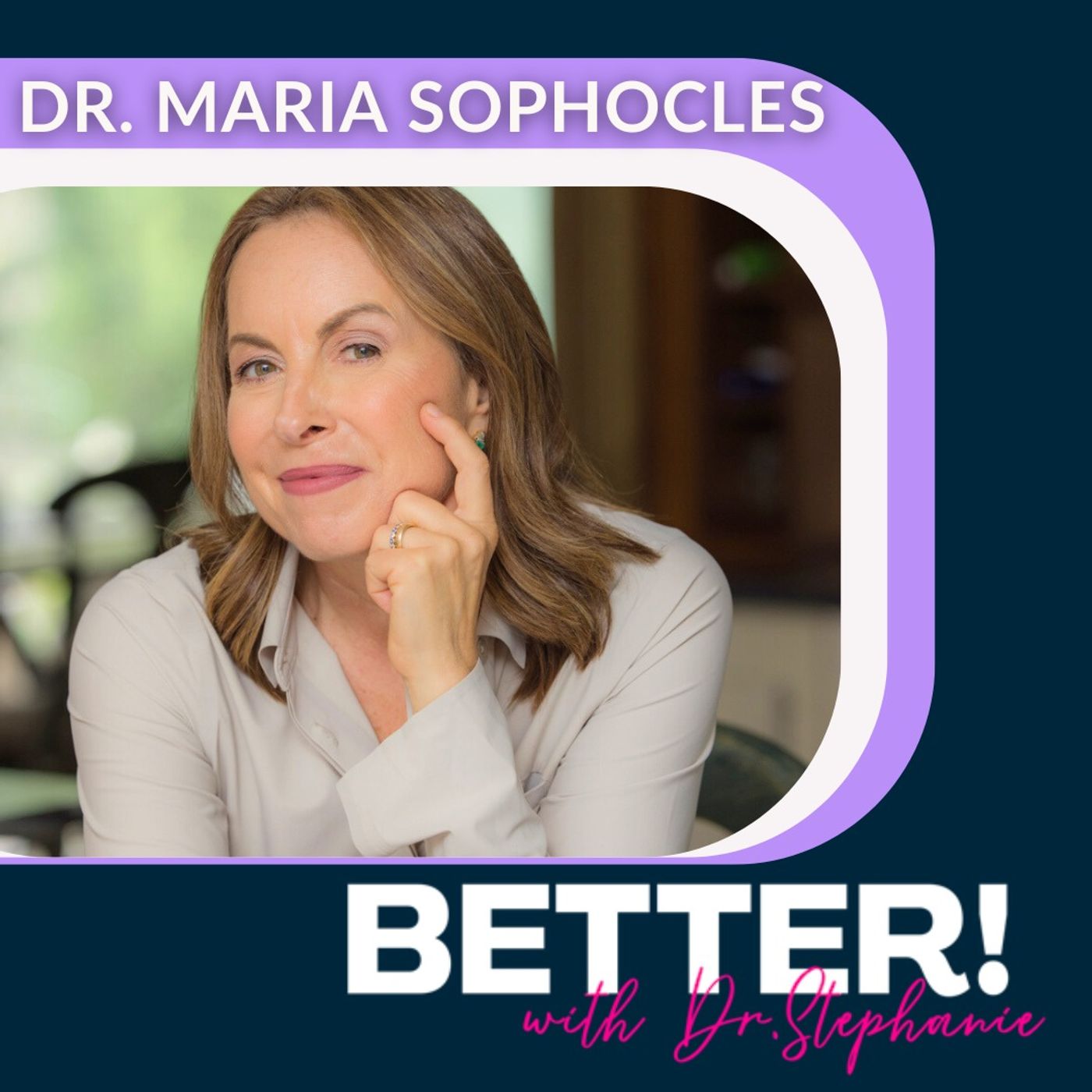
BETTER! with Dr. Stephanie Estima | Strength, Body Composition & Perimenopause
The Sex You Want: Hormones, Communication & Female Agency with Dr. Maria Sophocles
01:19:44
Dr. Maria Sophocles discusses the "bedroom gap" in midlife, highlighting menopause's impact on women's sexual agency. She advocates for open communication, hormone therapy, and prioritizing women's sexual health for healthier relationships. Watch the full episode at https://youtu.be/2rGEZzikqI4
Loading summary
Transcript64 lines
- [00:00]
A
And so many women come in and say, my man has needs, he has sexual needs and it's my duty as a wife to fulfill them. And these were women with two PhDs, CEOs, world class athletes. These were not stay at home moms who were like, my whole job is to cook and clean and serve my man. I mean, we don't talk about sex as women. We're actually taught not to, right? That it's not ladylike or it's not proper. Whereas men are taught kind of to almost brag about sex and that it's just so intrinsic to their definition of being male and masculine. When we stop getting that estrogen and testosterone especially the blood vessels go away, the collagen gets replaced with lower quality collagen. Think of your collagen is Neiman Marcus and now after 50, it's going to be IKEA. No offense to Ikea. Porn is controlled by a few extremely huge powerful companies, all male owned, male run, male funded. And porn is super widespread. And men and women watch porn. But the majority of porn is still filmed through the male gaze. The human brain does like novelty and in a long term relationship, eating Cheerios every Friday night at 10pm, which is when most American couples have sex. Cheerios are delicious and they're nutritious, but even that can get boring.
- [01:31]
B
Hello my friends. Welcome back to an another episode of better with Dr. Stephanie. And it's me, as always, your host, Dr. Stephanie Estima. Today we are talking about the bedroom gap. The difference in sexuality and desire between our male and our female counterparts who are joining together in the bed. My guest today, Dr. Maria Sophocles. She is a board certified OBGYN. She's a certified menopause practitioner, a sexual medicine expert and a women's health advocate with almost three decades of experience. She is the author of the Bedroom Gap. She is a TED speaker, a founder of the Women's Healthcare of Princeton, as well as a global advocate for reproductive rights and gender equality in healthcare. So what you are going to learn in this episode, it's essentially how to get the sex that you want. How to get the sex that you want and may I add, that you deserve. We talk about sex ban. We talk about all the things that are holding us back from communicating with our partners. We talk about major life events like heart attacks and pelvic surgery and hysterectomy and how that might impact your sex life. We talk about the normal physiological changes, physiological, hormonal, behavioral, psychological changes that happen in menopause and how that can affect your sex life as well. And Dr. Sophocles is a very she's a straight shooter. She does not beat around the bush. She says everything that's on her mind. And I think that you're going to find this conversation refreshing. You'll probably see yourself in a lot of the stories that she tells, and my hope is that you will pick up some action items and some clues in terms of how to advocate for yourself and communicate with your partner or partners in your relationship. And also how to speak to your providers, your healthcare providers, whether that's your general practitioner, your cardiologist, your ob gyn, in terms of what is going on sexually for you so that you can receive better care. So please enjoy my conversation with Dr. Maria Sophocles. A lot of the women I work with aren't tired because they're lazy or they're unmotivated. They're tired because their brains are overloaded. They're juggling work and family and health and hormones and constant decision making. And somewhere along the way, mental clarity just starts slipping. Focus gets harder, brain fog creeps in, sleep feels lighter and even caffeine stops helping. Or in some cases it makes it even worse. That's why I want to share something that I have been personally using and loving. It's called kinetic. And kinetic isn't just an energy drink, it's brain fuel. It's designed to support calm clarity, mental performance and focus without caffeine jitters and without caffeine crashes. And what I love is that it works with your biology and not against it. So instead of forcing stimulation, kinetics provides your brain with a clean fuel source it already knows how to use, which is why the energy feels so steady, focused and calm without disrupting sleep later on that night. And yes, it's powered by ketones, but you don't need to follow a keto diet or change how you eat at all. This is just about supporting brain energy, especially during midlife when that glucose based energy can become much less efficient to the perimenopausal and menopausal brain. If you're doing all the right things but your mind still feels fried, this may be the missing piece for you. You can learn more about kinetic and try it out for yourself by going to drinkkinetic.com better use code better for 15% off of your purchase. That's drinkkinetic K E N e t I k.com better and use code better for 15% off at checkout. All right Dr. Maria Sophocles. I am thrilled to welcome you to the Better Podcast. Welcome today.
- [05:27]
A
Thank you so much for having me, Stephanie. Great to be here on this cold, snowy day.
- [05:32]
B
Yes. Well, I thought we might just start with some definitions. Okay, so how do you. What is the bedroom gap and what are its dimensions from a biological perspective, a psychological perspective, and a cultural perspective? Starting with the easy questions first.
- [05:48]
A
Yeah. Do you have an hour?
- [05:50]
B
Yeah.
- [05:51]
A
So the bedroom gap is actually a big, broad concept that is now used in psychology teaching as a term to describe the. The difference really in expectations and abilities between couples, but most commonly between men and women throughout life. But that seem to get exacerbated in midlife. And these differences, when we talk about expectations and abilities, that can mean, what role do you see yourself in as a woman, sexually? What do you bring, what knowledge do you bring to an intimate relationship to the bedroom, metaphorically? And where did you get that? And how does biology play into all that? How does culture play into it? How does your own sense of self worth play into that? And how does your understanding of yourself as a woman play into that? And the reason I came up with this concept started because I was an obgyn and then kind of morphed into a menopause expert as my patients started getting older and they started having menopausal issues, including sexual fallout from menopause, vaginal dryness, and sexual pain. And I was well aware as an ob gyn, okay, I can help you. I can give you vaginal estrogen. I can correct these age related, menopause related issues. But it was bigger than that. Women were coming in saying, there's something wrong with me. I feel broken. I'm so ashamed that I'm not as sexually vibrant or interested as my partner wants me to be. And. And so I started digging into that and realizing that there's a whole Pandora's box of sociology and cultural impact and the impact of porn and where we learn about sex, the impact of sex ed as teens in American schools, and the impact of culture. Different cultures have different feelings about what it means to be a man or what it means to be a woman. And so many women come in and say, my man has needs. He has sexual needs, and it's my duty as a wife to fulfill them. And these were women with two PhDs, CEOs, world class athletes. These were not like, stay at home moms who were like, my whole job is to cook and clean and serve my man. These were women who, in my naive opinion, had agency over their lives and their professional choices and successes. And yet in the bedroom, they were reverting to this sort of, I have to serve him. This sex is for him, not for me. And I started thinking, what if we examined that as a concept? And what if we could teach women that sexual agency can be for them, that whether it's midlife or any time in your life, you have the right to learn about sexual pleasure, to learn how to get it, to learn your body and to be able to learn to communicate with your partner so that you can have mutual sexual pleasure be an outcome. It was a whole journey for me, Stephanie, as a clinician, I initially thought it was this simple physiologic lack of estrogen and we'll fix it. And then it turned out there was just an enormous sociocultural impact behind what patients were suffering from. And there's a lot of us, right? There's 80 million menopausal women in the US right now. A billion women worldwide are menopausal right now, and probably 70% of them are suffering silently with genitourinary syndrome of menopause or sexual pain or vaginal dryness or sexual dysfunction, issues with orgasm or arousal. So this is why the community at TED accepted my suggestion to do a TED Talk on this is they said, you know what? This is a global issue. This lack of communication, this gender discrepancy, this feeling of shame women have is not just us, it's universal. No matter where you're living, women should learn that this isn't their fault and that they don't have to stick to some rigid role of the server and the giver, that sexual pleasure should be something for both sexes. So that's kind of a long winded answer of what the bedroom gap is and how it evolved as a term and why I did a TED talk called the Bedroom Gap and now a book that's coming out called the Bedroom Gap to really teach people the things they might be a little embarrassed to ask their clinician or might not get a satisfactory answer frankly, or their sister or their best friend or their mom. I mean, we don't talk about sex as women. We're actually taught not to, right? That it's not ladylike or it's not proper. Whereas men are taught kind of to almost brag about sex and that it's just so intrinsic to their definition of being male and masculine. And I felt like that was also time that was really tired out. It was time to kind of change that around too.
- [11:04]
B
And why do you think that this gap widens in midlife? Like, what are some of the you mentioned 80 million in the US, a billion women globally in menopause, 70% of them suffering. What are some of the contributing factors to women suffering silently? Like, walk us through some of the hormonal physiological changes that are happening.
- [11:25]
A
Sure. At the risk of sharing stuff people already know, I think it's important because many people don't. Menopause, by definition is really. When our ovaries, these two little almond sized organs in our pelvis, reduce their production of estrogen, progesterone and testosterone. They, for all intents and purposes, go to sleep, stop working. So we need those steroid hormones in pretty much every organ of our body, including the bladder, the vagina and the vulva. When we stop getting that estrogen and testosterone, especially the blood vessels go away. The collagen gets replaced with lower quality collagen. Think of your collagen is Neiman Marco. And now after 50, it's gonna be IKEA. No offense to Ikea, but it doesn't have the same quality. So it's not as elastic, it's not as pliant. When the blood vessels go away, we can't make moisture as well, whether we're aroused or not. When you can't make moisture, sex doesn't feel good. When your vagina is less elastic, sex doesn't feel good. When sex doesn't feel good, your brain says, stephanie, I don't wanna do that anymore. It didn't feel good the last time, so I'm not really excited to do it again. So part of your says, why don't we turn on a movie? Or why don't we watch the late show, or why don't we go to sleep? And another part of your brain tells your pelvic organs, let's contract when something's about to enter. And then that hurts even more. That's called Vaginismus. And about 16% of women have that. So these physiologic changes that result from a lack of estrogen translate to sexual pain, which translates to an aversion to sexual or no sex, or what I call mercy sex. I'll do it, but I'm gonna hold my nose and just get it over with. Which isn't a pleasant way to live and which doesn't make your partner feel like you're really engaged.
- [13:24]
B
God. Who wants to be having sex with someone whose mercy is just like, here you go, honey.
- [13:29]
A
It's not that men are bad or evil or even in same sex, it's they feel bad, they don't want this, but they don't know. I mean, if you think a lot of women don't know about the collagen and the blood vessels, even more men don't. So we really, really need the bedroom gap for the male readers, too, because once your vagina is like that, you know, the libido just plummets. And even when the vagina is healthy and juicy, some women lack libido because of self image. They don't feel attractive or they're busy. We're all so busy. We're productivity focused, right? How many zoom calls and podcasts can you do in a day? How many chores and errands and soccer games can I get to? You know, we get in bed and we just want to collapse. We're exhausted, or we want to scroll and see our social media feeds. So we're not really prioritizing sex either, Stephanie. Which adds to the problem. So I think in midlife, as you know, and when I say midlife, I mean sort of, let's say 40 to 60, right? Or 35 to 65. Those are busy times. Women have careers or they're raising children or they're doing both. Parents are aging. They may have job issues or money issues or relationship issues. There's a lot on our plate. And so often sex gets sort of like, ugh, I just don't have interest because I don't have it in my head. So a lot of what the book does is talk about how to reframe sex as sort of a pillar of health and make it a priority, even if it's rewriting the roles. Even if it just means Friday afternoons you and your partner have cuddle time, even if there's no penis and vagina, just to keep intimacy alive and remember how good it feels to be, you know, close with someone.
- [15:16]
B
So let's actually talk about estrogen. I was. There is still such a massive amount of disinformation around estrogen. So you mentioned the collagen. Obviously, estrogen is. Is critical to collagen turnover and collagen synthesis. One of the things that I am noticing, at least online from the, you know, from the Zeitgeist, if you will, like, the general understanding of estrogen is that if you were to ask an average person on the street, does estrogen cause cancer? They would say yes. And then they also will not understand the difference between systemic estrogen versus local estrogen that you might apply for the gsm, for the. For the vagina. So can we talk a little bit about the distinction between systemic and local estrogen? And then the bad PR around estrogen. Yeah. And then the bad pr. So I do think that. I think that there is. I think that we have to keep talking about this cancer risk because it does seem to be something that is very hard for people to understand. So please take it away.
- [16:22]
A
Yep. It is not. It is so hard to go away. I think of it like a restaurant review. If you have a great restaurant, honestly, you do, and you have great food and you have a thousand good reviews and one person just puts in there, there's a cockroach in my food. Which may have happened or may not have happened. Honestly, that one review seems to be more powerful than the thousand good reviews. And I found the same thing. In 2002, the famous study called the Women's Health Initiative was stopped early and a report was issued formally that they were concerned about a link between estrogen and progesterone and breast cancer that went global. It caused literally panic. Physicians stopped prescribing it, patients stopped using it. The link was there and it was in cement and crazy glue. And it's been very hard to undo it. For 23 years, I've been one of the people fighting the FDA to get the black box warning changed, which we successfully did this fall, which was great. And the reason we wanted that changed is on the black box warning for both systemic and vaginal estrogen were risks that, that were unfound at risks of cancer, heart disease, stroke, dementia, all from this study that it turned out was interpreted incorrectly the few people who did get cancer and heart attacks, because if you do any study in a lot of women, some of them will get breast cancer and have heart attacks, because we do in our general population, in both of those disease states, more older women have that, there are more breast cancer risk increases with age. So if I do a study of 20 year olds, there's gonna be very little breast cancer. If I do a study of 70 year olds, there's gonna be more breast cancer. Even if we give the same thing, that doesn't mean the estrogen caused breast cancer. In the second study, not the first study, it means that 70 year olds get breast cancer more than 20 year olds. So in this study, they used much older women. And so when they corrected for that and said, hmm, if this study had been done only on 40 to 50 year olds, it turns out none of those cancers would have been significant. But the damage was done, the link was made, the fear persists. And every day patients come and tell me in my office, well, my aunt got breast cancer and she was using estrogen, so it must have been the estrogen. That is not correct. If you have a car accident while you're eating Cheetos, it may be the Cheetos that cause it if you're truly not looking at the road, but it's truly not the Cheetos that caused the car accident. It's your driving or the other car. Same thing. If you get breast cancer and you happen to be on a statin or you happen to be on estrogen, Correlation is not the same as causation. And so we have to help patients understand that. In fact, the data since 2002 that has been analyzed in studies, and there have been a lot of studies from 2002 to present has shown just the opposite, that women who use HRT have an approximately 30% lower risk of many cancers, not just breast cancer, including colon cancer. They have a lower rate of heart disease and stroke. They have overall greater longevity and longer, less mortality, probably because if they're on medications, they're going to doctors that could be part of it. But we think that the bone protective and cardio protective effects of estrogen are quite profound. And let me just remind you, Stephanie, that cardiovascular disease is the number one killer of women, not breast cancer. So anything we can do to make our arteries, not make plaques and stay cleaner longer is a wonderful thing. It's a silent thing. You won't realize it's happening. But I used to do research on this, and we could actually see on autopsies, the women who had used HRT and the women who hadn't, and the difference in the cardiovascular disease of those women. And we know that cardiovascular disease risk for women is lower than that for men until around age 60, when they've been menopausal for about 10 years, after which which it becomes the same and then surpasses that of men. Why is this? Probably because of menopause, probably because of the lack of estrogen. So I'm not saying go on HRT and you'll never have a heart attack. I'm never gonna be able to make promises like that. But theoretically, if you can use estrogen in the first decade after you're menopausal, you are putting. We know you're putting the brakes on the development of osteoporosis, and we believe you're actually slowing down the development of cardiovascular dise. Now, the difference between systemic and local or vaginal estrogen is huge. Even though it's exactly the same thing. Both are estradiol, which is a biologically identical form of estrogen that's available through all pharmacies. So bioidentical just means its chemical structure is the same thing that your ovaries make. Doesn't mean you need it from a special compounding pharmacy, doesn't mean you need pellets or creams or to have levels drawn. None of that has anything to do with bioidentical. Bioidentical is just short for biologically identical to what your body makes. And bioidentical estrogen, also called estradiol, is what's available by prescription. Pick it up at a CVS or Walgreens or Costco or Amazon or Mark Cuban wherever you get your meds. And it's not expensive. It should be covered. It's available transdermally. That means through the skin, as a patch or a gel or a mist. And that's systemic. And that is safe for almost all women, but not all women. Women who have a cancer that is sensitive to estrogen may not take it. Women who are menopausal and have unexplained vaginal bleeding may not take it till they get the bleeding assessed. Otherwise, it's basically safe for all women. It does not increase blood clots or stroke like the old oral estrogen did. That was studied in that study. But it's different than vaginal estrogen, which is a ring or a suppository that goes in the vagina and stays local and is used to treat vaginal dryness or recurrent urinary tract infection because it helps the bladder. Can you take both at the same time? You absolutely can. Patients always say, aren't I overdosing? No, you're not. Because the vaginal estrogen just works. Works right where it's supposed to. Think of putting a little hydrocortisone cream on some poison ivy. I mean, a little will go systemic, but mostly it's just working right on the rash itself. Same thing as the vaginal estrogen. It's almost exclusively vaginal. When we draw your blood and you're on vaginal estrogen, we basically can't even detect it. So if you have sexual or vaginal issues or urinary tract infection issues, and your clinician says, I'd like you to take vaginal estrogen, you don't have to worry that that means you can't use an estrogen patch or vice versa, this is great.
- [23:55]
B
And I think, too, just to add some color here, I was taking notes as you were talking. When somebody is on hormone therapy, we see a 30% decreased risk of cancers and Cardiovascular disease. I think that hormone therapy as a whole is as we see some of these, as this. We see a woman essentially becoming hormonally deficient, right. In her estrogen and testosterone and progestero. I think that replacing it, whether it's systemic or vaginally or both, as you were saying, also provides a window of opportunity for a woman to. I mean, we're talking about this in the context of sexuality today, which we'll talk a little bit. Obviously we're gonna go deeper on, but I think it allows her to continue living life on her terms. So she has the energy because she's sleeping well, to go out and strength train or she has a great groups exercise class that she loves, that she gets together with her friends with or, you know, whatever. So there's also these other confounding, potentially maybe. Confounding, I don't know if that's the right word. But it allows her. It allows that healthy user bias to continue. Like if she's healthy, that's for. And then she starts to feel terrible as she's moving through menopause, that hormone therapy can continue to allow her to do the things that she loves. And essentially, if I may be so bold, like age, like a man, you know, because men are given these options very like as soon as you say low energy, maybe my libido, like he doesn't even have to finish the sentence. And he has a prescription for testosterone in most cases. I know that that's not always the case.
- [25:30]
A
No, but it's possible. Whereas for women, there is no FDA approved testosterone. I've been using it in my patients for 20 years. But we have to. I mean, I have to go through the same prescribing steps that I do to prescribe Percocet or an opioid. It's a controlled substance for women. So there's a complete gender double standard going on. Where for women, we don't even have an FDA approved product. We have to use a male product and teach women to use it in 1/10 of the male dose. Or we compound it in a pharmacy and it's okay, we make it work. But. But there really is a gen. We have gendered our sex steroid hormones to believe that testosterone is for men and estrogen is for women. And that's silly because both of us make both of them. In fact, we actually, as women make as much or we make more testosterone in our bodies than we even do estrogen, which is kind of crazy to think about, and we do need it. And I think the real understanding of testosterone in the female body is in its infancy. I think the really good studies have yet to be done. We certainly have lots of data from the trans population, trans men who have taken testosterone to develop a beard and things like that. And they show that it's incredibly safe. Of course there can be side effects, unwanted hair and acne, but in the trans population they want that. But in women we can titrate the amount very carefully so that they get benefit without the side effects.
- [27:02]
B
So let's say for a moment, and you mentioned cardiovascular disease and I wanna make sure that we come back to that. So I'm just pinning this in my notes. But I come back here. Let's say for a moment that for whatever reason, maybe a woman, her provider still is sort of towing this old party line of, you know, we don't want to do the hormonal therapy yet. Are there other options? I am going to rock your world right now because I am never going back to buying PJs from Amazon again. I have discovered cozy earth pajamas and let me tell you, they stopped me in my tracks the first time I put them on. They are so soft it is unreal. They're made of this temperature regulating bamboo so they're cooling when you run warm and warming if you run cool overnight. And they're designed to drape beautifully over the body and to sleep cooler than cotton so it keeps your temperature just right without overheating. And honestly, I don't think I fully realized the power of good fabric until trying to these and I love them so much that I'm planning on buying them for everyone on my team. They are that exceptional. If we are trying to sleep like we are paid to so that we can recover and wake up feeling like we can meet the demands of our days, this is going to help you by keeping your temperature perfect overnight to facilitate that deep restorative sleep. I want you to head over to cozyearth.com and use my code better for up to 20% the of off. And if you get a post purchase survey, make sure that you mention that you heard about Cozy Earth right here. That's cozyearth.com and use my code better at checkout. Okay? I'm going to be honest with you. I hate meditation. I have tried all the apps, I have tried the breath counts, I have tried sitting still, I have tried clearing my mind and most of the time I just end up thinking about my emails, about work, about groceries, about what I said in a conversation to down Sit someone three years ago. So when people tell me you need to meditate more, I'm like, yeah, thanks, Captain Obvious. I know, but I hate the traditional way that it's done, which is why I actually love Muse. Muse is not meditation, thank God. It is neurofeedback. So instead of me guessing whether the meditation is working or whether my brain is calming down or I'm getting more focused, Muse is literally measuring brain activity in real time and it's reflecting it back to you. So when your mind is busy, you'll hear that. And when your brain settles in and calms down, you'll hear that too. So you're essentially training your nervous system with feedback in the same way that you train muscles with resistance. And for women who are wired, tired, or feel like their brain never fully shuts off, it's me. Hi, I'm the problem. It's me. This feedback really helps me to get into a clear headspace. If you ever felt like meditation just wasn't for you, but you know that calming down is important, this might be the tool that gets it done for you. Head over to choosemuse.com forward/better and use code better at checkout to get started. That's choosemuse.com forward/better. In the book, you talk about integrating non hormonal strategies, topical agents, mechanical agents. Maybe we can talk about like dilators or physical therapy, pelvic floor work. Are there any. And then maybe even things like laser tech, like is there are. Talk to us about some of the other options here.
- [30:26]
A
Right. So if, if you're not a candidate or you just really still don't feel comfortable, whether it's taking systemic estrogen or local estrogen. Let's, let's focus on the local estrogen. The vaginal. You're having painful sex. It's dry. It's making you not interested in sex. The vagina can also be regenerated using a CO2 laser. This is called the Mona Lisa touch. This was invented in Italy in 2008. And I know because I just happen to know where it was invented. It was around when they were first talking about it. It came to America in 2015. Another doctor and I were the doctors who brought it to America and began using it. Initially, I thought it would be great for breast cancer patients because those are the patients who truly weren't comfortable using estrogen. And even their doctors were too afraid to let them use vaginal estrogen. Now more doct are comfortable. There's more huge studies showing that even in breast cancer Patients, vaginal estrogen is perfectly safe to use, which is amazing. That's wonderful. But I first brought it to America because I thought the breast cancer patients really needed something that was not hormonal. We use it all the time in my office now. And I wouldn't say it's superior to the vaginal estrogen, not at all. But it's a wonderful attribute. Or instead of we also, when women have what I called before vaginismus, that pelvic floor tightening where they're kind of squinching, I call it dreading. We can sort of undo that response with at home or dilator use. A dilator's like a little silicone tampon or penis, and patients insert it every night at home with some lube. And they learn to relax the muscles around it. So it's like learning to walk on hot coals. You have to kind of get used to it. And you use a small, easy size until it's easy for you. Then you graduate to a bigger size, bigger and bigger until you're the size of your partner or bigger. If it's too awkward or difficult for you to do alone, There are pelvic floor physical therapists, special physical therapists who can work with you or your gynecologist can. And then we can't forget the basic thing about lube, right? Lube should be, by the way, for any age. Lube can be every time you have sex, you don't have have to think of lube as some shameful failure and hide it under your pillow and then quickly squirt some on your hand and be mortified. Lube, you can turn the script around to say, hey, I got this lube. I thought it would be fun. You know, I super attracted to you, but I feel like the more slippery things are, the more fun for me. So you can even practice sort of how you're going to introduce lube into the bedroom. But I would vote that you. You display it proudly on your end table, not be ashamed of it. And even some couples will go lube shopping together. Ooh, that one's got aloe. Ooh, that one's strawberry scented. Whatever makes you happy. There are warming lubes that feel particularly nice for some people, mentholated ones, you know, it's very. It's like shopping for shoes, whatever you like. There are oil based, silicone based, water based, and these have different feelings, right? Water based is the most natural feeling, but it doesn't last long. Oil and silicone based feel, shocker, slipperier and they last longer, but they don't feel as natural. Many of my patients will mix and match. They'll get a little silicone based lube, such as Uber Lube, put a little bit and then they'll put some water based lube in their palm as well. So it has a more natural feel and yet it will last longer. So this is all fun stuff you all can shop around and play around with. But I would urge you not to feel that. Lube. Lube is a failure. I think lube is your friend and.
- [34:21]
B
I know that there are some, I don't know the correct name for them, so I will fact check myself in the show notes. But pelvic floor or like therapy, they're almost like S shaped. Yeah. So you can kind of sometimes in the pelvic floor or inside the vagina, there's like one spot that's very tight. So you can almost like angle the wand in and almost like massage that, that part of the area that's very tight as well. So it can be a dilator or it can be, be a wand, let's say as well.
- [34:49]
A
That's right. And again, the best people, I think better really than OBGYNs are the pelvic floor physical therapists. And so there is a national, I want to say it's like AAPT or something like that national website for physical therapists. And within that you can say, find me a pelvic floor physical therapist. It's not hard. Or just Google search. Pelvic floor physical therapist near me. They're all women and they, they really, really care and they really work hard to help you find what's the painful spot or what's the offending muscle and work on that. And sometimes it makes a world of difference. Really does.
- [35:26]
B
Absolutely. Let's come back to cardiovascular disease because I think that it's worth, I think this is worth exploring. So a lot of women, when we think about, hey, what are people most scared of? People are scared of cancer, they're scared of breast cancer. And the idea of heart disease in a woman isn't really top of mind. It's like, I don't want to have my breast chopped off or I don't want to have to do chemo or whatever it is. And of course that is, that can be of course life changing and life altering. So I'm not trying to say that that's not important in any sense of it. But I don't think I've actually ever talked about this on the show before. Is this idea of if you are someone who's, let's say, over 60. And now your cardiovascular risk as a woman has either matched or surpassed the risk of your male partner. And either one of you have had a myocard infarct. So there's been some kind of event, a heart attack. What is the recommendation? Typically around sex after having a heart attack? Like, I would assume that the advice is gonna be, well, you've had a heart attack, so you can't really stress out your ticker anymore. So that means no sex, right?
- [36:33]
A
That is what most people think. And the, the irony is that after a major life event like a heart attack or a stroke or a car accident with fractures, people tend to say, well, I'm recovering and I think I'm a new me now. And I just don't think sex should be part of my life. And their partners think, oh my gosh, I wanna be respectful. I wanna acknowledge how horrible that heart attack must have been. And I don't wanna stress you out by suggesting we have sex. So you get this bedroom gap. This bedroom gap widens and widens. Should I sleep on the floor? Should I sleep far apart? I don't wanna touch her. I might, might, you know, and it's just the opposite what people need after chronic illness or an acute event or a cancer diagnosis. They need intimacy. They need the release of dopamine, endorphins and oxytocin. That happens with orgasm and with sex. In fact, with orgasm, we release all three. We release dopamine. Right, that makes sense. Dopamine is what gets released when we are excited or feel good. We release endorphins, just like a runner's high. And we release oxytocin, the cuddling hormone, we call it the hormone that gets released when we breastfeed or when we snuggle and cuddle with each other. Those are so important for overall health. Those brain chemicals that contribute to our sense of connectedness, of being needed, of belonging. These are super, super important human attributes. And when we deprive ourselves of a sexual life, whether that's orgasm, sweaty thralls, or gentle cuddling, we actually isolate ourselves and are prone towards loneliness and even depression. So believe it or not, after a heart attack, a stroke, a major surgery, you do need to have sex. Now when you do, it matters. You don't wanna get out of the ICU and have full on intercourse. But I think a general rule of thumb is literally, if you can walk a flight of stairs without feeling winded, your heart is strong enough to withstand sex. It's a general of thumb. That's not medical advice, but that's kind of from talking to cardiologists. A lot of them give that as a general rule of thumb. Some give six weeks, some give three weeks. I think that is not a smart way to do it because some people have very mild heart attacks and some people have very major heart attacks. So I think the best advice is to ask your cardiologist and say, hey, based on what I've just had and based on the stent that I have or the medication I'm taking, what do you think is a reasonable time for me to begin to be sexually active? Again, say, because it's, you know, and you have to be willing to not be ashamed that it's a shameful thing. You have to say, look, all humans do this. My partner and I do this. Or we did until the heart attack, and we want to have this again. But I want to do it safely and not trying to be a cardiologist here. But again, if you can walk a flight of steps comfortably without having to stop and catch your breath, your heart is certainly on the mend. And honestly, same goes for people who've had pelvic surgery, whether it's a hysterectomy or they've had cancer of the vulva, the cervix, the uterus. A lot of women feel too scared to have sex again, that some sort of cancer will be reignited. Their partners feel the same thing. Am I going to cause her cancer if I have intercourse? And the answer's no. No, the intercourse doesn't trigger a cancer. It doesn't restart or make some cells turn cancerous. That's in our minds, a fear. And the fear comes from a place of love. We don't want to lose this person, but there's no medical basis for that. And in fact, that woman needs to feel that you still want to be with her. Whether you're a male or a female partner, they want to feel sexually attractive to you. And so I think having sex in whatever way you choose to restart it is really critical, and it tends to help people feel better about themselves.
- [40:45]
B
Again, not pretending to be cardiologists. I like the, you know, if you can walk a flight of stairs without getting. Without getting winded, is there any other physical benchmarks that someone who has had a heart attack, let's say, might start to work towards? So maybe they're on a treadmill and they're walking on an incline, or there's a certain intensity or a certain heart rate. Heart Rate zone that they're training in before they might feel like they have regained what they've lost through having a heart attack.
- [41:18]
A
Yeah. In researching the book. Cause I do talk about this in the book. I definitely read different parameters. This heart rate, this many minutes on a treadmill at this incline, but there doesn't seem to be one that sort of sticks. And in general, most of the cardiologists I interviewed said, I. I don't think you should put any kind of benchmarks in. I think you should make sure people are talking individually to their cardiologist. I think that's actually covering themselves a little bit because they don't have a clear standard. And I think cardiologists want to be able to say, Look, Mrs. Smith, you're also severely overweight with severe asthma, so I think you're gonna have to.
- [41:55]
B
Have to. They wanna be able to individualize.
- [41:56]
A
Yeah, exactly. Or mississima, you're like, mega fit, and your heart attack was really mild, and you just ran treadmill for 10 minutes.
- [42:07]
B
You're fine.
- [42:08]
A
So I think they'll all want to put their own thumbprint on that. And that's why I use the flight of steps as a very broad brushstroke thing. But the bigger picture is just that you don't have to say, never again. And you don't have to say, impose your own. Like, I better not do this with my partner because I could trigger something in him or her. Remember, men have heart attacks, too. And women often feel like, I don't even know if I should cuddle with him because he'll wanna have sex and then he'll die. And I think that's a big fear. And we let ourselves go there. But the reality is, if that patient has been cleared by their physician for exercise, cardiovascular exercise, they probably are also cleared to be sexually active. And if you're not sure, speak up and ask. Don't be ashamed. Ask. It's crazy how ashamed we get to ask about that. And yet it's something basically almost all humans do, right?
- [43:04]
B
Yeah, it's. I remember I was listening to Kelly Casperson. We were at an. We were at an event together, and she was like, you guys know that we're all here because of sex, right?
- [43:14]
A
Yeah. Yep. We all do it.
- [43:16]
B
It's like, we all do it. We're all. You know, we're all here because of it. So I thought that it was just a really funny reframe. Like, obviously, we all know that, but the way that she had put it, I mean, she needs her own Netflix show. But, I mean, I think she. I think it was such a nice, nice, like, yeah, we all do it. We all want it. It's part of being a healthy human, right? I mean, your sex life should be part of your. I mean, I know that there are many doctors that don't maybe wouldn't agree with me or feel like, you know, ashamed about this, but in the same way that we're always looking at respiratory rate and heart rate and some of your vitals, I think having a conversation around your sex life, you know, that connection that you might have, whether it's one person or, you know, you're not in a committed relationship with whoever, you know, I think that. I think that your sex life is a mark of your health. It absolutely.
- [44:02]
A
It totally is. And in fact, there's a urologist in Texas, I think, and he did a little TEDx talk on sex span. And his plug is that the longer you are sexually active, the longer you are keeping health a priority in your life. And that the length of your sex span is a proxy for sort of your health span. And that if you focus on. On the basic pillars of health, right? Sleep, nutrition, social connectivity, movement, and I would argue sex as the fifth pillar, then if you're trying to optimize all five of those, you're doing everything right to stay as healthy as you can, as long as you can. So we all got here from sex. Sex is fun, sex is play. We need to prioritize it so that we get fun and pleasure in our lives. But for sure, sure, staying sexually active is a benchmark for longevity. We know that people who stay sexually active longer have lower blood pressure, lower depression, lower anxiety than people who stop being sexually active. And we have basically an epidemic in this country of loneliness, or we sure did in the pandemic, and we got data on that. And the use of not just pornography, but virtual reality porn exploded during the pandemic because when people were deprived of sex, they wanted to get it in as realistic a way as they could. And so VR porn is, of course, wearing those VR goggles and having a very realistic kind of porn. Observational but realistic, virtual sexual experience. And that was just like, in its infancy, and then in Covid, it really took off. So kind of interesting, right, to think of, as Kelly says, like, we all got here from sex, and. And that we. At some really visceral, basic, primal level. We do need it.
- [45:56]
B
Yeah. I mean, in the same way that we have a drive to sleep and eat and breathe. Like, if you hold your breath for too long, that drive to take an inhale starts to increase exponentially. I think the same is true for sex. There's like a sex, there has to be a sex. I mean, we call it sex drive, right? Like your sex drive or your libido. So.
- [46:13]
A
And yet so many women come into my office every day and say, I don't have any drive, I don't have any libido, give me something for it. But they all want for their partner, they don't really want it for themselves. And that's where the bedroom gap comes in.
- [46:26]
B
And why is that? Why do you, where does that come from? And then I guess what I want to segue to is I want to understand why we have oriented sex as women generally. Of course, I'm painting some broad strokes here, but we've generally oriented sex as a penetrative, but also in service to someone else. But I also kind of want to talk about like the communication piece because it's come up a couple times like, hey, if you have a heart attack, you should probably talk to your cardiologist about when you need to communicate with your cardiologist about when it's okay to get back or you've had pelvic surgery of what for whatever reason, you need to be able to communicate. But I also wonder about the communication with the partner. Right? Like if your partner has had a heart attack, like you said, you might be scared that you're going to get that person aroused, they're going to get excited and then they're, they're going to die. So what does the communication look like and what are some of the common barriers that you probably see in cops couples around some of these sexual changes around the bedroom gap and dealing with some of these things that happen to us in the second half of our lives.
- [47:28]
A
Yeah, so, so many good points in there.
- [47:31]
B
February always feels like that. Weird in between month. Winter's still here, energy's still a little lower, and most of us are craving something that actually helps us unwind without stealing from tomorrow. That is where peak comes in. It's aspirational wellness for people who care deeply about how they feel in their bodies. Not just for tonight, but for the next morning too. Their newest creation is called Vesper and it's designed specifically for the evening ritual because let's be honest, for a lot of women, winding down still defaults to alcohol. And while it might feel relaxing in the moment, it often comes with fragmented sleep and low grade anxiety the next day that only alcohol uniquely brings. Vesper was created as a better option. It's a non alcoholic adaptogenic aperitif that helps you relax without dulling your nervous system or compromising your sleep. What I notice first is how physical the calm feels. My shoulders drop, my jaw unclenches, my mind slows down. And that comes from ingredients like alanine and tart, cherry and lemon balm and elderflower. It's nervous system support that you can actually feel. Vesper also includes Damiana which supports that warm, open, receptive state which is perfect for date nights, if you know what I mean. Cozy dinners and just being more emotionally available without need eating a drink. And the flavor, ladies, gorgeous. It's sour cherry up front, layered with grapefruit and bitters, finishing clean and herbaceous. I actually love it over ice in a wine glass with some sparkling water. Put my phone away. Candlelight, slow slips, it's divine. You'll wake up the next morning feeling clear headed, well rested and genuinely glad you chose differently. If you want to redefine your evening ritual and still feel like yourself the next day, you can get 10% off for life. Yes, for life. @peaklife.com better. That's P-I Q-U-E-L-I-F E.com better. Your nervous system will thank you.
- [49:29]
A
The first is why. Why does is sex seen as number one? Penis and vagina equals sex. That's the definition. Number two, why is it seen as for men? And this, it turns out, is like a 4000 year old theory. An androcentric or phallocentric theory of sexuality that developed was literally there in ancient Greece and ancient Egypt and you know, ever since, which is just that in those days, of course, women were property. So sex was really for men and for male pleasure. And believe it or not, you and I are still living in a society that has diluted dribs and drabs of that even though we're no longer for pleasure. You know, we've even been able to to vote for a century, but we still live in a world and all you have to do is look at porn. Porn is controlled by a few extremely huge powerful companies, all male owned, male run, male funded and porn is super widespread and men and women watch porn, but the majority of porn is still filmed through the male gaze. Okay, so, so most of what men and women see today in porn is images of sex that involve penis and vagina as the sort of objective. With male ejaculation as the objective and male pleasure as the objective. Females still occupy a different role in porn. The Top two names for women in the top most viewed porn videos are bitch and th slut. And that's just statistics. That's not my interpretation. That's just data. So I think we're still seeing a lot of the learning. Cause remember, porn is our sex ed school now. This is where people learn about sex is still pretty androcentric pretty. I guess the point of sex is penis and vagina until ejaculation. So we still, in my opinion, have a long way to go in terms of any kind of gender equality or prioritizing female pleasure or anything like that. I think there is a tiny little female porn industry with female friendly porn. And it's wonderful and it's done in very tasteful ways, but it's hard to find. It's not gonna pop up. Women have to go looking for it. And even when I suggest that women who want erotic stimulation, look, they say, oh my God, not porn. That'll make me grossed out because their image of porn is so degraded. You know, the second thing you spoke about so many things. It was such a great, great series of questions. But you asked about barriers. What are barriers to communication between couples? And there are many. And they're not linguistic actually, they're sociocultural also. And they relate to the fact that men talk about sex with other men, but men don't talk about sex sex with women. Not with their female friends and not with their female partners as long term partners. We talk about college admissions and soccer scores and taxes and your mother and my cousins, visiting and trip planning and financial things. We talk about, you know, dandruff and eczema and all kinds of things. But we don't necessarily have regular check ins about sex. This is for most couples, not all couples. And I think this common thinking that we're all gonna just come to a relationship already knowing about sex comes a little from Hollywood. If you look at Hollywood, there's always a woman who's really pure and hasn't really had many partners, and yet she gets the guy. And she happens to be amazing as a lover and he happens to be an amazing lover. And that's sort of silly, right, that we're all gonna arrive at our first sexual experience just knowing exactly what, what to do. We absolutely don't. We absolutely don't. And that's why I would say people who want to evolve sexually, which by the way, you can evolve at 23, 33, 43 or 93. And I have patients who come to me in their 80s and they say, I've been Doing the same thing for 40 years with my husband. It's kind of boring. And we work on ways to have newness and evolution for them sexually. I work with 25 year olds who say, I just don't really know what to do. I don't really know how to give a blowjob, or I don't really know if I'm supposed to keep my eyes open or shut. And we talk about that and basically we say there isn't a right way, but we talk about the ways they could show up sexually. But these barriers have a lot to do with self esteem, self image. Remember, we live in an Instagram perfect world which has caused all kinds of eating disorders and problems for men and women. Right? So I think that self esteem, self image is a big barrier. The lack of communication's an enormous barrier barrier. And the shame. Remember, women feel shame when they don't think they're doing sex well. Men feel shame when they don't think they're pleasing a woman. And again, this often goes not communicated. So we talk about that a lot in the book how to begin to have this communication. Because once you do, it really unlocks a lot of improvement in your relationship and in your sex life.
- [54:57]
B
So if everybody's learning, learning how to sex, we'll say, I'm using air quotes from porn. I mean, the vast majority of men and certainly women. How do you, as a man or a woman start undoing that, let's say. Or maybe not necessarily undoing it, but evolving your understanding of what sex and pleasure is like. Where, where are the resources? Like, certainly your body book would be one of them.
- [55:26]
A
Sure, sure. Omg, Yes. A website called O M G Y E S, which is real people submitting their own ideas or hiccups or problems. Let's pretend I put something in. I might say, you know, I after and I didn't have a C section. I'm making this up. After my C section, sex became uncomfortable in this position. So what I figured out is if I switch to that position, my C section scar doesn't hurt. That might not mean anything to you, Stephanie, if you didn't have a C section, but to someone else who's checking the site, who's had some weird pain in the top wall of her vagina ever since her C section, it might be just right. So, OMG, yes. I think it's about $25 for a lifetime Access is one thing. I think, again, open communication. You know, porn has also become increasingly violent and we're seeing this on college campuses. There's increased incidence of assault and of choking and choking.
- [56:20]
B
Choking is the one. Yeah.
- [56:22]
A
And it's almost always the women who are choked that came directly from porn. So these young men have to unlearn that. And unfortunately, I think most assault victims don't feel like they can ever say it. So I don't have the answer, how to unteach it, but I actually have one very good dream answer, which is to overhaul sex ed in our country. 47 out of 50 states do not teach progressive sex ed. Only three states in in the U.S. washington, Oregon, California, teach progressive sex ed. Meaning what is that? It means they include LGBTQ viewpoints. What might sex be like if you're gay, not straight? I mean, that seems like something that should have been done decades ago. They teach about sex for disabled kids. They teach about sex for autistic kids. These are all real people. Like, this is. Why was this never done. They teach sex as pleasure based, not fear based. So they don't say, don't have sex or you'll get pregnant and die. Like in. What was that movie? Not Bridesmaids. What was it? Where there's like a cute teen movie from 10, 20 years ago where the gym teacher says, okay, sex, just don't have it. Ever. Never. Just never have it. You know, and unfortunately a lot of sex ed is now, they don't teach consent, they teach abstinence. They teach religion based sex, like learn sex in Sunday school or learn sex at home. And we find in those states, those states have the highest teen pregnancy rates and the lowest use of contraception, which probably contributes to the unplanned pregnancies. So I think until we get our sex ed game up to speed and really provide great uniform sex ed, we're gonna continue to have kids looking to porn because they're not getting anything they can relate to. You know, if you tell a 16 year old boy whose testosterone is through the roof, just try to not ever have sex till you're married. I mean, it sounds lovely, but it very rarely works.
- [58:30]
B
It absolutely will not work out that way. Yeah, right.
- [58:33]
A
So I do think we need to overhaul this and I think we need to overhaul the medical education system. Med students, nurse practitioner students, PA students. Students do not get training in menopause for sure. But they also don't get training in healthy sex ed or other than like STDs. They know how to prescribe for an STD, but this means they're also not great resources. When people do get up the courage to ask about it and they should be right. 69% of women have never, ever had a conversation about sex with any clinician. That's seven out of 10 women. And 20% say they never would have a conversation about sex with anyone. It's too private a topic. So I think societally we could relax a little, But I think if we had clinicians who were more proactive and saying, stephanie, you know, your blood pressure's great, your breast exam's normal. Are you sexually active these days, and is it comfortable for you? Two quick lines that would give you the idea of, oh, Dr. Sophocles care and wants to talk to me about this, and I do have some issues, you know, and even if we say, well, we don't have time this time, you know, now I'm a resource for you instead of God, I hope Stephanie doesn't ask me anything about sex, you know, which is sort of how most. Most clinicians are.
- [59:50]
B
Yeah. And I would say in addition, and this might already be part of the progressive sex ed, you know, teaching mantra, but I think also just reframing it as it's not just a male, you know, this phallic base, as you were saying, saying paradigm, that there's pleasure to be had on both sides. Right. Like men and women. Like, it absolutely should be pleasurable for men, but it also should be as pleasurable for women as well.
- [60:15]
A
That's right. We don't teach that in, I think, any of the states, maybe in those three. But you know, where they do teach it is in Holland. The Dutch really do sex ed well. And there's even Duke University even did a study on how the Dutch do sex ed. And it was a great study. And the Atlantic wrote an article how the Dutch teach sex ed. And both of those are great resources, Stephanie, and things I wish we could sort of send to every school district in the country. But of course, it's not just up to them, but they're very open about it. The Dutch teens actually delay initiation of sex much later than American kids do because they wait until they feel they're responsible enough to handle. Handle if something goes wrong. A pregnancy or an std. Their use of contraception is much higher than ours. So when they're having sex, they're doing it safely. And I think we could learn a lot from them.
- [61:12]
B
We could learn a lot from the Dutch. Yes, I agree. How would a woman. So let' swe have a woman who maybe her husband is not aware. Maybe the conversation or the sociocultural dynamic between them is such a. That they don't haven't really talked about some of the changes that might be happening on her end. She's 50. She's noticing the GSM, you know, the vaginal dryness, maybe pain with insertion, et cetera. How might she. What are some things that she might consider bringing up to her partner who may not understand or who may feel insecure? Because I think I have a fundamental belief that most men, like you had mentioned it, you've actually mentioned it a few times, and I've meant to pin it and highlight it. Most men also want to please their partners. Talking like, assuming heterosexuality here. Right. Men want to also please their partners. They feel good. There's a sense of pride in seeing, you know, their women feel good or their partner feel good. So what are some ways that she might bridge that, knowing that it sort of has to start with her, which is. Can be uncomfortable anyway. But what are some things that she can bring up about her changing needs that she can bring up to her partner?
- [62:20]
A
I'm going to answer in a roundabout way because I'm going to point you to the step and repeat. Behind me has the COVID of this book, the Bedroom Gap. And it's a bed ripped apart part. But if you go close, you can see what's sewing it together are flowers, which is a metaphor for what you just said. That I hope that as women learn, advocate for themselves and take some agency for repairing or improving their intimate lives, they'll get comfortable saying to a partner, hey, I am so attracted to you, and I love it when we are having sex. But I notice that. That it takes me a lot longer to make the same amount of moisture. Maybe it's because of my age or menopause, I'm not sure. But I think if you can understand that I still want to be sexually active, but I might need to use some lube or I might need a little longer to get that wet myself. I think we still can have great sex, but the last couple times it's been a little uncomfortable for me, and I think it's kind of. But I need to do something to change things up a little, because if it continues to be uncomfortable, I know it'll happen in my brain. I'm just not going to want to have sex. In other words, fall on your sword a little bit because no one wants to be pointed to. No one wants to say, you know, I think you're lame because you just get erect and then you immediately want to put your penis inside me. And that just drives me crazy. If you start a conversation like that you know the person's going to be defending, the person's gonna feel attacked. And deep down they just want you to be happy too. So I try to always have people cushion it with a compliment. You know, remember that. Remember a few weeks ago when we were on vacation and we did this or that. And I just love that we took our time or I love that we had the privacy and the time. Bring up how great something was and then you can sort of couch it with. But I think sometimes maybe we're in a rush cause the kids are downstairs. I feel like we're just trying to get to this routine of penis and vagina. And you know, to be honest, I think I might be happy even if we have a redefinition of what sex is. And sometimes, and it doesn't always have to include that. And you might get an eye bulge or an eye roll. And if you're worried about that, maybe have the talk while you're driving or on a walk because you don't want to see that. That'll just make you feel bad. And I think once you can begin to have a conversation like this, the first one, the hardest. And then after that you can even have what I call like regular check ins. You know, look, some people have financial date nights every quarter. What if we had a sexual check in? And it doesn't have to be a big heavy duty thing, but it can just because you can say my body's evolving. You know, When I was 12 to 14, I went through puberty and I had all these changes and people actually told me about it. My mom gave me this book to read. I had sex ed class. I had all these resources to understand about periods and, and stuff. But I'm actually, I'm perimenopausal. I'm 45. My brain and my body are changing again. I'm like at the bookend of that. And so with all these changes, a lot of it is unknown to me. So I kind of need you to work with me and understand that things are changing and what I really care about is being intimate with you. But that it might require some learning on my part. I hope you'll join me and have some learning on your. I mean, nothing is cooler to me than when I'm lecturing a room of 500 women and there's two guys sitting in the back row and I literally have to take notes. I love it. They're my VIPs and I seek them out after I jump off the stage. I'm like, guys what are you doing here? Because they always give me this beautiful answer of, well, our wives are going through this tough thing and we don't understand it and we really want to support. Support them. Oh, my gosh. So I think most guys are not gonna do that, but some will. And by the way, don't be afraid to say, hey, I'm watching this webinar with Stephanie Estima or with Maria Sophocles, and they're talking about this. And I think we should both, you know, get some snacks and sit and make it like part of our date night because I have a funny feeling we're both gonna learn. Nobody wants to feel that you know everything and they know nothing either, right? So I would say fall on your sword, be happy, humble, start with a compliment. That kind of thing.
- [66:40]
B
I have a couple questions. Some of it have, has come from conversations with my friends. Quietly, I'll say. Or maybe not so quietly. Some women, I've had conversations with women who say that sex gets better after things like divorce or with their second or third partner. Let's say, do you think that the bedroom gap is, is maybe like it. It's like, obviously part of it can be menopause, but do you think that it can also be like being stuck in a. Yeah, like being stuck in like a mismatch or like a. Just a unsatisfying relationship.
- [67:18]
A
Totally. Of course there's relationship parts to the bedroom gap. And so I can talk about sex toys and I can talk about virtual reality porn as ways to revamp or renew or add something fresh and new. The human brain does like novelty and in a long term relationship, eating Cheerios every Friday night at 10pm, which is when most American couples have sex. I'm using Cheerios as a metaphor. Cheerios are delicious and they're nutritious, but even that can get boring. And when we think of the word fantasy, most people go, oh, God, no, I don't. I'm not interested in vampires. Whatever. And I'm not saying you have to be interested in vampires. But fantasy can be anything. It can be the most modest thing. It can be something like having sex in your office instead of your bedroom. It could be having sex in the morning instead of the evening. Or it could be, you may not know that your partner actually always hoped you would actually wear a silky nightgown. You know, maybe a previous partner did and that was wonderful for him, but he's ashamed to tell you because he knows it was that previous part partner. So much goes unsaid and fantasy and Novelty are always good things, whether you've been married three years or 30 years. And studies show that couples that introduce novelty at any age and stage, it's appreciated by the other partner and it tends to help evolve their sex life. There are also courses that you can take. There's a course called Imago I M a G O that is more a relation, relationship opening up course. But many times couples who do it because they're stuck because of a mother in law issue or whatever, end up getting sexual benefits. They feel that, my God, I didn't realize that my mother living with us, who I love dearly, but because her bedroom was right down the hall, that that made you feel you just couldn't have sex with me anymore. Why didn't you just tell me? Why? It's your mom. I didn't want to hurt your feelings. This seems so obvious and yet people will go years without saying that. And so sometimes an imago can be a 48 hour course. They have little baby crash courses. And so that's kind of cool, right? Just something to sort of open up. Maybe you need a facilitator and maybe you thought you were going to talk about the mother in law or the fact that he, you know, chews with his mouth open or whatever bothers you, but then sometimes sexual things will come out and you kind of learn, you know what? I didn't realize you don't like nibbling on your ear. If you had just told me I would never do it and then you never do it again. Or a fantasy. I always wished you dressed up like a cheerleader, but I was too embarrassed to tell you because I'm a 55 year old man and I thought you'd laugh at me or I thought you'd worry that I'm having an affair. You know, people worry about what they say. So I think novelty, remember it releases dopamine. And if you could have a conversation that would lead to that or even just try something on your own, like remember Brene Brown's famous book, Daring greatly or Daring Bravely, I think it is. She talks about taking risk. And I think sometimes if you don't risk, you don't gain, right? Never ventured, never gained. So I think people get into habits and they just have the same sex, same position, same like I call it the kiss, cuddle, lubricate, play, penetrate thing. And it's like, yay, we did it. Okay, we're done, let's go to sleep. Or let me look at my phone. You know, 35% of US couples Check their cell phone immediately after sex. And it's probably underreported.
- [70:56]
B
Wow.
- [70:57]
A
So, I mean, we, you know, leave the phone out of your bedroom. If you want your partner to feel that you're really connected to them, the best thing you can do is not grab your phone when you hear a ding or a chime. Right. I mean, nothing says you're not the most important thing to me as much as grabbing that phone.
- [71:13]
B
Do you think that society punishes women in general for being sexual? Like, there's so, I mean, you said like, you know, the, the top names in porn are, I don't need to repeat bitch and sleep. So yeah, no, that's okay. But like, we'd label women like desperate and cougars and bitch and slut and all this, all this stuff in ways that men never are. It's like a man is fertile and young.
- [71:43]
A
Exactly. Alpha male, alpha, positive. And the more.
- [71:46]
B
And a woman who enjoys sex is a right. So, like, do you think that there's a little bit of that that's also playing into it? It's like I can't fully release because then he's going to be like, Jesus Christ, you know?
- [71:57]
A
Well, let's, let's just look at the pinnacle, most viewed person in our society. Our top, top, top leader, the President of the United States. Over decades. And this isn't a political comment, this is over many presidents. We've had presidents who actually sort of flaunted their virility. Right. JFK was known for bringing dozens and dozens of women into the White House. Bill Clinton's sexual needs were very publicly made aware. Even things the current president has said have, have been to show him as a strong, virile, sex loving alpha male. And so again, there's not a political agenda here at all. It's just to say as a gender, we almost celebrate that as maybe a measure of your masculinity. Look at Hollywood, you know, the fast cars and women and heavy drinking. Like there's like this archetype. I mean, can you imagine if someone ran for president as a woman and was like, bragging about how many men she'd slept with? I mean, I mean, like, she, like, we wouldn't even tolerate that for two minutes. We wouldn't. And that's okay. That's okay. We have to accept that. But I think within the privacy of your own relationship, it doesn't mean you have to adopt some swaggering, you know, badass.
- [73:14]
B
Do you know how many people have performed oral sex on this one?
- [73:18]
A
Right, that's right, exactly. No, I know, right. And yet, and yet I would hope that a lot of women, especially in midlife, and I hear this all the time, I have patients who are divorced, widowed, single, and they come and say, you know what, now that I'm 48, I actually feel like it's time for me to own my own sexual Persona. Not in a flagrant braggy way, in a way that gives me pleasure. I mean, remember Miranda Joy's book All Fours was a smash hit last year. It's called All Fours and it's a perimenopausal woman. It's a little crazy, but it's a perimenopausal woman who basically has a midlife crisis and she needs to go an affair with some young 20 something year old guy. Fine, it's fantasy, whatever. But the point is it's a wacky book because it's a woman. If a guy in his 50s was like, I want to go have sex with a younger woman, we'd be like, yeah, whatever, we all know people like that. But this was so radical because she dared write this book about it. And I have a lot of patients who, they may not necessarily do that, but they're on Tinder, they're on Match, they're dating, and they're saying, you know, I may or may not want another lifelong partner, but I would love to know what's out there. I had one partner, I met my husband in college, or I had one other partner for six months. And then my husband and I kind of like to understand what sex could be like. And often, lucky me, I get to hear the follow ups. They're like, it's amazing. I met men who showed me things, who taught me me things. So the negative part of porn we've talked about, but the positive part of porn is that it actually does expose people to lots of different sexual options and opportunities. And I think Internet dating has good and bad, but one of the good parts of Internet dating is it might just be a lovely kind of way to broaden your own sexual horizons. Obviously, don't do anything dangerous. Don't do anything you don't want to do. Don't have sex with anyone you don't want to have sex with. I mean, this isn't a public service announcement, but this, this is like me saying to anyone listening, you know, common sense, right? If someone wants to do something that you're not comfortable with, please don't do it. The flip side is you may find that with new or different lovers, you actually learn about yourself and about what gives you pleasure. Of course, the best way is actually to know your own body, your own anatomy, and to masturbate or self pleasure. That's by far the best way to. To know how someone else can give you pleasure. By far.
- [76:00]
B
I guess in closing, I would want for any woman who maybe she's listening to this, maybe she feels discouraged, she thinks, oh, she's too old, this is past this for her now. What do you want her to know?
- [76:13]
A
I want her to know that there's no right level of sexual desire. There is no right frequency of having sex and there is no right script. There is no must be penis and vagina to be called sex. That's all arbitrary and society may make us think there's certain standards. I think you can redefine sex for yourself really at any age. And I have couples that come see me in their mid-90s that are sexually active and they are so close and they have incredible intimacy. But as they've had vaginal dryness or erectile dysfunction, they've had to reframe sex and take certain things out of their script. But they've built on the other things and the regularity of it has brought them so much intimacy, so much feeling of joy and it'd be fun to sort of read. Well, the last page of the book is a quote by a famous sexologist who's in her 80s when she writes it. And she writes about the fact that she had great sex in her 60s and 70s with partners and now in her 80s she's alone, but that she still enjoys sex. She just enjoys it differently. She enjoys it with herself and with a sex toy and that there's nothing wrong with that because she still gets the dopamine and the good feeling and that I think that's what I'd love to leave women with is that wherever you are, single, widowed, divorced, gay, straight, recent infidelity, sexual assault, whatever you're bringing into the bedroom, bedroom, it's okay, but don't deny yourself the dopamine and the oxytocin and the pleasure and the health benefits of sexual pleasure. Even if it's just with yourself, there's nothing wrong with it. Just with yourself is actually a bad way to say it. But even if it's with yourself, doc.
- [78:10]
B
This has been great. Thank you so much for your time today. I know this is going to be really helpful and refreshed how we orient ourselves as women to our sex span and our sexuality and our sensuality. Thank you so much for your time today.
- [78:23]
A
Oh, you Did a great job asking such great questions. I think we covered a lot. I think it was really cool. I hope people will enjoy it and I hope it'll inspire them to get this book because I think a lot of people will read it and say, yeah, yeah, that's me. And not feel so alone, so ashamed, so under the radar. Because we all do it. We all have sex. That's how we got got here. Right? So I think it's okay to, to want to learn a little bit about it at any age and stage.
- [78:48]
B
Fantastic. Thank you.
- [78:50]
A
You're welcome.
- [78:53]
B
Hello my friends. Welcome to the after party where I talk to you about all the things I liked, disliked. And the scoop on the show, for those who don't know why we call this little section the after party is because that's basically what menopause is. You know, it's the after after party and everybody wants to get invited to the after party. So here you are, you've got your ticket and you're invited. So what I liked about this, we have sex is not a new topic to this podcast. We talk about sex a lot. And I think what was really unique here with Dr. Sophocles is that she, her background, I know that she didn't mention this in the conversation, but actually before we got recording, she was saying that her first love is in cholesterol research. And so she's very, very close to cardiovascular disease and heart disease and stroke and all the things that are cerebrovascular cardiovascular. And so I think that the, maybe the thing that we have never talked about on the show before is what happens if you have, you or your partner have a heart attack, right? I can imagine if there is a 55 or 65 year old woman or her partner listening alongside her to the show has had a heart attack, there's going to be some concern, right? It's like, well, if we ever have sex again, like, am I going to kill my partner? And assuming that you don't want that to happen, you know, I thought that this is a really good conversation to have around that. I thought that was incredibly interesting. And even she wrapped in, albeit briefly, pelvic surgery. Of course, if you've had a hysterectomy or you've had, had, you know, endometriosis, you know, surgery for your endometriosis or adenomyosis or whatever. I think that that is a conversation like we are missing the boat with some of these women and men who have these surgeries that are all of a sudden afraid to, with Good reason to have sex. And what happens, you know, what's the fallout of that? So I think that thinking about sex as a healthy part, a vital part of our. Our health span or our sex span, as she talked about, I loved and yeah, what do we do? If we had a partner, We've had a partner who's had a major event, a cardiac event or otherwise, how do we. How do we deal with that? So really, really like that. The other thing I loved was this reframing of. She talked about, you know, this. We've had this idea around what sex is. It's in service to men. It's for the ejaculation speculation. It's for, you know, male pleasure. And this is like not a new thing, you know. So this is a 4,000-year-old idea where we have this sort of phallic centric, if you will view where we look at ancient Greece and agent. Ancient Egypt, where women were more properties and they were expected to perform. So I think that they're. I think that that was really telling. And then she said at one point that the. No, number two. Like, number one and number two words in porn. And like, those are the. So it's like, all right, so you are someone who enjoys sex and you get labeled a name like that. So I think that there's a lot of conflicting information. It's like, want it, but don't want it. You know, take it, but don't take it, you know, so there's a lot. A lot of that going on. So I really, really enjoyed that conversation as well. I liked how she also also talked about the lack of communication that so many couples, whether it's with your provider or it's intra couple. Right? So talking to your partner about some of the changes that are happening, so they have a framework of reference for you. And then that maybe opens up the conversation for what sex might mean between what is pleasurable for you, what's pleasurable for him or her. I think that. I thought that that was. That was really great because sometimes we just. We clam up, don't we? Like, we have this idea of what sex should look like. She said it's like the Hollywood, you know, the newbie, and she's great at sex. And you're clearing off the desk and you're, you know, all this kind of imagery that we see around what sex should look like. But really the opportunity for you and your partner or partners is to really define what is right for both of you or whoever's in who. Whoever's in that, whoever's in that dynamic. So I really, really loved that and removing some of the barriers to it as well. That's what I got for you. I. That's what I really like. Oh, the other thing I really like too is the laser as a non hormonal or maybe even in addition to hormonal therapy is the CO2 laser that she was talking about that she uses in house. I actually have to do a little bit more research on that personally, because I have never really heard of that as an option as either replacing or as a side step to hormone therapy. So I thought that was really interesting. My first thought, being someone who's obsessed with skin, I'm like, you mean like the same kind of stuff that like you see those like, you know, IPL lasers for people, like resurfacing the skin, like producing more collagen. And of course that makes sense that you would do that. So that, that was really cool as well. And I would just say overall, you know, she, I feel like she's the type of person that would just literally talk about anything like nothing fades as her. She's probably heard it, seen it all and she's just like a, you know, a great resource. So highly recommend you picking up her book if you have the opportunity to do so. The Bedroom Gap. And we have the links and all the things in the show notes for you, as well as some of the links that she had mentioned in our conversation. So with that, I hope that you enjoyed this conversation. Let us know what you thought in the comments. We do read all the comments, the good, the bad, the ugly, as a way for us to get feedback, feedback from you, our dear and treasured community, so that we know whether or not we are hitting the mark or not. So Spotify comments, Apple comments. We see them all. We celebrate the ones that we love on the team and the ones that are negative or have some constructive feedback. We are also looking at those as well. So please take the time, if you feel like this podcast is giving you value, to leave us a review and a rating. And until next time. Next time, my friend. I will see you then. All right. All right. I hope you enjoyed today's episode and I must give you the obligatory legal and medical disclaimer here. This podcast, Better with Dr. Stephanie, is for general information only and the advice recommendations we discuss do not replace medicine, chiropractic or any other primary healthcare provider's advice, treatment or care in the consumption of this podcast. There is no doctor patient relationship that has been formed and the use and implementation of the information discussed are at the sole discretion of the listener. The information and opinions shared on this podcast are not intended to be a substitute for primary care diagnosis or treatment. In other words, guys, be smart about this. Take it with a grain of salt. Take this information to your primary healthcare provider and have a discussion with him or her to make the best choice. That is for you. Remember, I am a doctor, but I am not your doctor and these conversations are meant for educational purposes only.