← Betwixt The Sheets: The History of Sex, Scandal & Society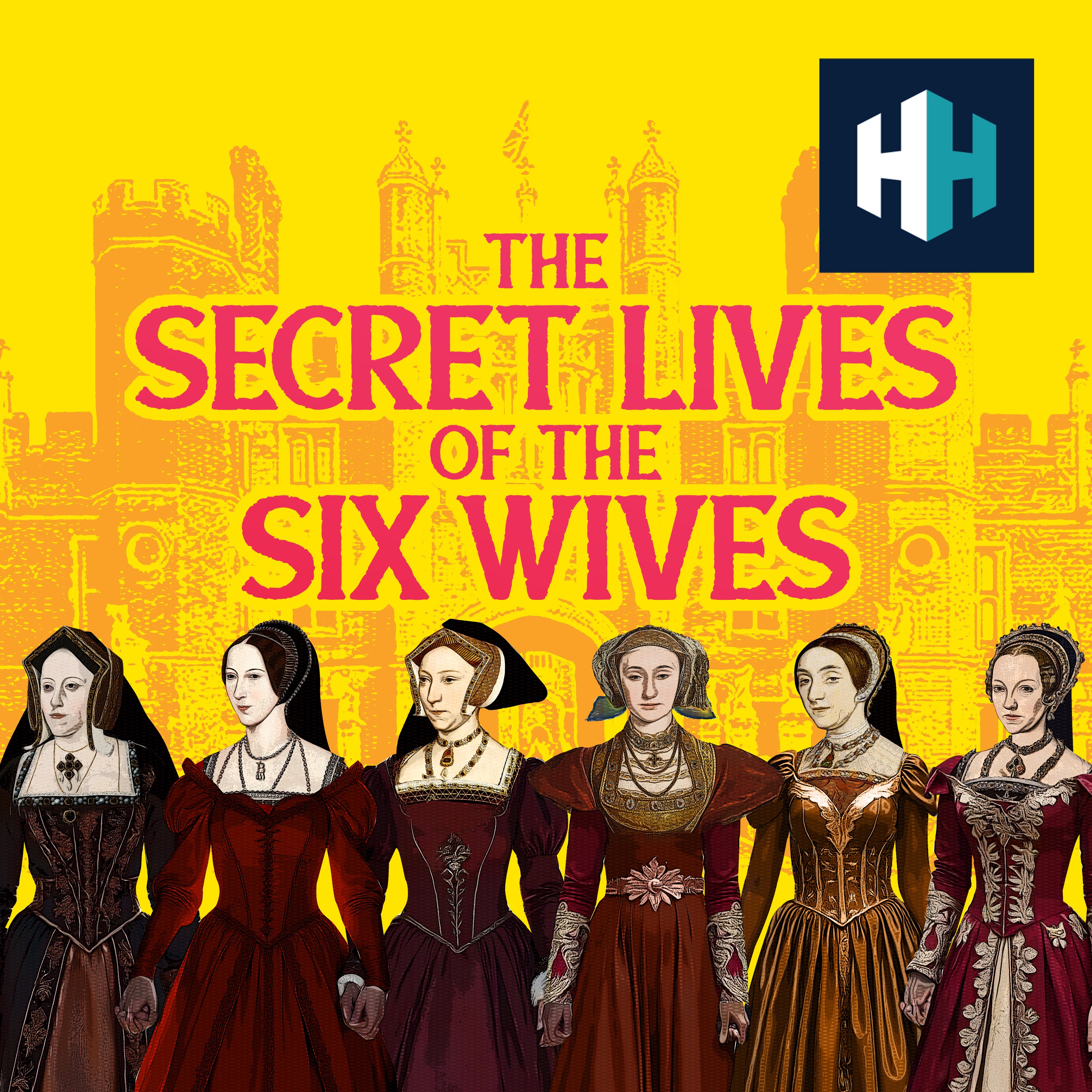
Betwixt The Sheets: The History of Sex, Scandal & Society
Anne of Cleves | Secret Lives of the Six Wives
00:39:38
Loading summary
Transcript155 lines
- [00:00]
Kate Lister
Hi, I'm your host, Kate Lister. If you would like betwixt the Sheets ad free and get early access, sign up to History Hit with a History Hit subscription. You can also watch hundreds of original documentaries with top history presenters and enjoy a new release every single week. Sign up now by visiting historyhit.com subscribe.
- [00:27]
Unknown Advertiser
To get people excited about Boost Mobile's new nationwide 5G network, we're offering unlimited talk, text and data for $25 a month.
- [00:34]
Kate Lister
Forever.
- [00:34]
Unknown Advertiser
Even if you have a baby.
- [00:35]
Kate Lister
Even if your baby has a baby.
- [00:37]
Unknown Advertiser
Even if you grow old and wrinkly and you start repeating yourself.
- [00:39]
Kate Lister
Even if you start repeating yourself, even.
- [00:41]
Unknown Advertiser
If you're on your deathbed and you need to make one last call or text, right? Or text the long lost son you abandoned at birth, you'll still get unlimited.
- [00:47]
Kate Lister
Talk, text and Data for just $25 a month with Boost Mobile forever after.
- [00:51]
Unknown Advertiser
30 gigabytes, customers may experience slower speeds. Customers will pay $25 a month as long as they remain active on the Boost Unlimited plan forever. Security teams face a barrage of more More security tools create more complexity More devices need protection. More specialized focus areas create more silos. The security landscape is changing fast. How can security operations transform to meet the current threats? Cortex by Palo Alto Networks consolidates SecOps tools into an integrated platform and helps organizations stop threats at scale with AI, automation and analytics. Learn more at Palo Alto networks.com Cortex hey guys, have you heard of Gold Belly? It's this amazing site where they ship the most iconic famous foods from restaurants across the country anywhere nationwide. I've never found a more perfect gift than food. They ship Chicago deep dish pizza, New York bagels, Maine lobster rolls, and even Ina Garten's famous cakes. So if you're looking for a gift for the food lover in your Life, head to goldbelly.com and get 20% off your first order with promo code Gift.
- [02:02]
Kate Lister
Hello my lovely betwixters. It's me, Kate Lister. You are you, I am me. And this is Betwixt the Sheets. But before we can get going, I've got to tell you. I have to tell you. I am legally obligated to tell you. This is an adult podcast spoken by adults to other adults about adulty things in an adultery way covering a range of adult subjects. And you should be an adult too. And if you're not, stop holding things up and messing around. Pick your things up and be off with you. The rest of you, on with the show. Being a Tudor queen was very difficult. I mean, you got jewels and nice things. But wow, it was strict. And if you were one of Henry VIII's wives, well, then the rules just meant doing exactly what he said, bending to every whim and desire, no matter how. How airbrained or deranged. But as history tells us, that didn't always go to plan. The women in Henry VIII's life were smart.
- [03:05]
Dr. Nicola Tallis
She was a woman who had her own voice and wasn't afraid to use it.
- [03:09]
Kate Lister
Powerful.
- [03:10]
Dr. Nicola Tallis
She wanted to send Henry the dead king's body as like a war trophy.
- [03:17]
Kate Lister
And rebellious.
- [03:18]
Dr. Nicola Tallis
She was a definite seductress who knew exactly how to play Henry.
- [03:23]
Kate Lister
But they could also be naive.
- [03:25]
Dr. Nicola Tallis
She is well aware that there is someone trying to get to the bottom of her previous life and she slips.
- [03:31]
Kate Lister
Up and downright unlucky.
- [03:34]
Dr. Nicola Tallis
I think that there was no way that her life was ever going to be saved.
- [03:38]
Kate Lister
Who were these women that entered the volatile world of the Tudor court? They're known for their individual fates. Divorced, beheaded, died. Divorced, beheaded, survived. But we're finding out who these six women really were and why there is so much more to them than just their husband. A fat, ginger serial killer with an oversized codpiece and a penchant for jousting. Join me in this miniseries as we explore the secret lives of the six wives. What do you look for in a man?
- [04:19]
Dr. Nicola Tallis
Oh, money, of course.
- [04:20]
Kate Lister
You're supposed to rise when an adult speaks to you. I make perfect copies of whatever my boss needs by just turning a knob.
- [04:27]
Dr. Nicola Tallis
And pushing a button.
- [04:29]
Kate Lister
Era now. Era now. Yes, social courtesy does make a difference.
- [04:38]
Dr. Nicola Tallis
Goodness. What a beautiful dance.
- [04:39]
Kate Lister
Goodness has nothing to do with it, Dearing. Hello, and welcome back to Betwixt the Sheets, the history of sex scandal in society with me, Caitlyster. The coming together of Henry VIII and Anne of Cleves is as close to the modern approach to dating as we are going to get in this miniseries tipped for queenhood by the master manipulator Thomas Cromwell. Anne had never met Henry in real life. Before their marriage, she was presented to Henry in the form of a painting, upon which he gave the Tudor equivalent of a swipe. Right. It is only one step removed from being a 16th century married at first sight scenario. But what was Anne's life like in Germany before she was thrust into the spotlight of the Tudor court? Why was their first meeting so humiliating for. Well, both of them, actually? And why is it perhaps time that we do some revisionist history on Anne, who is all too often thought of as the ugly wife of Henry viii, when in fact she was probably the luckiest in this fourth episode of our miniseries, Secret Lives of Six Wives, I am joined once again by the magnificent scholar Dr. Nicola Tallis, who's going to help us get to know Anne a little bit better. So, without further ado, let's crack on. Hello and welcome back to Betwixt the Sheets. It's only Nicola Tallis. How are you doing?
- [06:10]
Dr. Nicola Tallis
I'm really good, Kate. So nice to be back with you.
- [06:13]
Kate Lister
It's fabulous to have you back once again. You couldn't have left us hanging just. And not. And not seen out the last three of the wives. That would have been a really rubbish series, wouldn't it?
- [06:23]
Dr. Nicola Tallis
Yeah, absolutely. No, it had to be done. So here we are, back for number four.
- [06:28]
Kate Lister
Number four, Anne of Cleves. What do I think about Anne of Cleves? She didn't get a head cut off, so well done. Anne of Cleves. She didn't die horribly in childbirth, so well done, Anna Cleaves. But she was the one that Henry just kind of went, bleh, I don't fancy that much. And then she sort of went, oh, all right then, okay, I guess I'll. I guess I'll be off. I'll show myself out. What a strange story.
- [07:00]
Dr. Nicola Tallis
I know.
- [07:01]
Kate Lister
Out of all of them, she probably. Lucky escape, right?
- [07:05]
Dr. Nicola Tallis
Yeah, definitely. She did do quite nicely out of it, really. So. Although, yeah, maybe slightly embarrassing for her that Henry didn't fancy her, but other than that, I think she really did quite well.
- [07:18]
Kate Lister
It would be cripplingly embarrassing, wouldn't it, to have that, like, you were brought to marry the king and then you had to get it annulled because he. Do you know what? I'm getting ahead of myself. We shouldn't even. Right, okay, we'll take it back a little bit. Who was Anne of Cleves? Where is Cleves?
- [07:35]
Dr. Nicola Tallis
Yeah, great question. I mean, Cleves is now part of modern day Germany, but in the 16th century it was still part of Germany, but it was also part of the far bigger Holy Roman Empire and it was quite small and insignificant, I guess, in the whole scale of things. But yeah, here Anne was the daughter of the Duke of Cleves. So, yeah, it's a minor player in the scale of European politics at this time. Little old Cleves.
- [08:07]
Kate Lister
Was it ever on the cards that she would marry a king?
- [08:10]
Dr. Nicola Tallis
No, no, not really at all. I mean, as I say, she is the daughter of the Duke of Cleves, but there's definitely no expectations of major grandeur at this point. Like, that's a real curveball. She is betrothed or there's this pre contract between her and the Duke of Lorraine. So that seems like quite a nice match. And that's kind of the scale of the sort of marriage that Anne could expect to make. But, yeah, marriage with the King of England. Wow.
- [08:43]
Kate Lister
We should remind ourselves why the King of England is even shopping around and why he has to, I don't want to say resort to, but sort of marry upper nobility in a sort of a small province of Germany, why princesses around Europe aren't flinging them. So where is Henry at this point, you know, when he's on the lookout for a new wife?
- [09:05]
Dr. Nicola Tallis
Yeah, so Henry is a widow at this point. His third wife, Jane seymour, died in October 1537, just days after giving birth to Henry's son. And it's great that he's got this son, but that's just one male heir that Henry's got. And one male heir is by no means enough to secure his dynasty. Like, Henry needs a spare for sure. So that is what triggers his search for another bride shortly after Jane Seymour's death.
- [09:38]
Kate Lister
How soon after Jane Seymour's death? Because if the history books are sort of right, and as we discussed last time, he was ever so upset that Jane Seymour died.
- [09:49]
Dr. Nicola Tallis
How long he went, he's upset, but I mean, we're talking weeks before he starts looking for another bride. So, yeah, I guess it's difficult not to think like Henry, what are you playing at this point? But I think, yeah, when we put it into the context of the time and remember that infant mortality is really, really high at this point as well, Henry's son could easily die at any moment, and he needs that spare really, really desperately to ensure that the Tudors are going to be safe in the next generation. So I guess it seems heartless that he's looking for a wife so quickly, but if you're looking at it politically, it's a sensible move.
- [10:36]
Kate Lister
And he's had babies before, hasn't he, that died pretty quickly after birth or were miscarried?
- [10:42]
Dr. Nicola Tallis
Yeah, exactly that. So his first wife, Catherine of Aragon, had had six children, but only one of these, a girl, Mary, had survived. Similarly, his second wife, Anne Boleyn, she had had several miscarriages and she had just one surviving child too, in the form of Elizabeth. So Henry has got lots of experience in losing children young.
- [11:08]
Kate Lister
All right, so Jane Seymour just about been put into the ground. Henry's on the lookout. That must have sent a bolt of fear through all the nobility throughout Europe, because surely by this point he's getting A reputation as you don't want to marry him. This isn't good. This doesn't work out for his wives.
- [11:26]
Dr. Nicola Tallis
Well, yeah, that's so true. And we see that firsthand, actually, because Henry actually expresses an interest in marrying Christina of Denmark, who's a young and quite attractive widow, Duchess of Milan, and she says that she would be quite happy to marry Henry if she had two heads. So, yeah, so, yeah, he's definitely getting a reputation. People have seen what's happened to Anne Boleyn and it's a pretty terrifying prospect.
- [11:57]
Kate Lister
It would sort of get to the point, wouldn't it? Well, even the money and the titles and the power and the political alliance, it's not enough to tempt you, because he's batting three for three. Now, I know Jane Seymour wasn't his fault, but, you know, like, there must have been a kind of a feeling that. Not that he's cursed, but there's something weird going on here.
- [12:17]
Dr. Nicola Tallis
Yeah, definitely. And, you know, Henry himself, he would have only considered Jane Seymour, of the three wives he'd had so far, to be his lead legal wife. So perhaps he didn't view it in quite the same way. But, yeah, people throughout Europe are talking about this. Nobody really is in a great hurry to marry Henry. Christina of Denmark is just one example. There's also Mary of Guise, who later becomes the mother of Mary, Queen of Scots. She's put forward as a prospective bride for him as well, and she's definitely not keen either.
- [12:51]
Kate Lister
So how does Anne enter this picture, then?
- [12:54]
Dr. Nicola Tallis
Well, at this point, England is also quite politically and religiously isolated, because Henry, of course, has split from the Roman Catholic Church with the Pope at his head, and established himself as the head of the Church of England. But he's the only one in Europe who's done this. And we see the other two main superpowers in Europe who are both Catholic nations, Spain and France, looking to ally with one another. And this leaves England really, really vulnerable. So it's Henry's chief advisor, Thomas Cromwell, who suggests perhaps making this alliance with Cleves, which is this German nation who have an interest in religious reform, and that perhaps Cleves could be a quite useful ally for England. And that idea seems to appeal to Henry.
- [13:52]
Kate Lister
Do we know anything about what Anne was like? Was she a religious person? Was she gregarious? Was she quite demure? Like, what was she like?
- [14:01]
Dr. Nicola Tallis
Well, in her early years, it's difficult to tell. We don't know much about her early life at all. We do know that she doesn't seem to have been particularly well educated. So we've looked at Catherine Vargan and Anne of Cleves and talked about how they were pious and very scholarly in Anne's case. But in Anne of Cleves case, there doesn't seem to have been as much of that. She seems to have been able to read and write and was taught in all the accomplishments that were thought to be good for girls, you know, sewing, all of those sorts of things. But other than that, we don't really get many glimpses of her personality in the days before she suddenly thrust into the spotlight.
- [14:44]
Kate Lister
I'm trying to imagine what it would have been like that she'd have just been sat there with her sewing and then somebody would have walked in with a letter of just, do you want to marry the king? Like, how on earth did that even happen?
- [14:55]
Dr. Nicola Tallis
Well, it's really interesting because what happens is that Henry's court artist, Hans Holbein, who's like the most talented painter of the time, he arrives at the court of Anna's family and he comes to paint not only Anne, but also her younger sister Amelia as well. And Holbein has basically been sent along to remember this is a time when people can't just look at a photo of each other, so that he's come along to capture the likenesses of these two women, basically to see if either of them float Henry's boat. So that's really the first real suggestion or real hint that Henry could seriously be interested in Anne.
- [15:41]
Kate Lister
And they look nice, these pictures. They do look nice. And this is kind of part of the mythology of Anne of Cleves is that this image was painted of a. That it was like sort of the modern equivalent of Facetune app when it's just like ridiculously flattering and it didn't actually look anything like it. And I wonder how true actually is that. Is that like part of this, well, bullshit basically, that Henry suggested about it. Was she a good looking girl?
- [16:09]
Dr. Nicola Tallis
Well, Henry's ambassador in Cleves at the time sees this painting of Anne of Cleves and says that it's actually a really good likeness. And that to me suggests that perhaps it was just for some reason she just wasn't Henry's cup of tea. She didn't conform with his ideals of beauty. And yeah, she just wasn't for him because there aren't any other real suggestions or hints that any of the people around Anne or any of the people at Henry's court thought that she was ugly. I think that this is part of that mythology that's been Circulated later, and that fitted with Henry's narrative as well.
- [16:51]
Kate Lister
So Hans Holbein paints this picture, he takes it to Henry and he goes, I'll have that one, please.
- [16:57]
Dr. Nicola Tallis
Pretty much.
- [16:58]
Kate Lister
That's pretty much it.
- [16:59]
Dr. Nicola Tallis
Yeah, that's pretty much it. He falls in love with the painting, he likes it, thinks, great, yeah, right.
- [17:06]
Kate Lister
Okay. So then presumably word gets sent to Anne of, like, right, we're on. You're going to be God. What on earth must she have been thinking? How old was she, by the way?
- [17:15]
Dr. Nicola Tallis
She's born in 1515, so she's in her early 20s at this point. She's in her early 20s. Henry, of course, is quite a lot older. So the prospect, I don't know, maybe on a personal level, wouldn't have been too appealing, but that idea of becoming Queen of England was probably a career move that Anne would never have seen coming, and I imagine one that actually quite appealed to her.
- [17:43]
Kate Lister
It's a hell of a step up, isn't it?
- [17:45]
Dr. Nicola Tallis
Definitely.
- [17:46]
Kate Lister
So she. I mean, it's a gamble, but it's a step up. So she arrives at the court and how do things kick off? How do they meet? What's the first encounter?
- [17:59]
Dr. Nicola Tallis
So Anne actually arrives in England in December 1539, and she and Henry meet for the first time at Rochester. And Henry, when he hears that Anne has landed in England, he's really desperate to see her and so he hurries down to see her. But unfortunately, that first meeting doesn't go well at all. And there are numerous versions of what happened and accounts of what happened, but we're told that Henry actually disguised himself, which was something that he quite liked to do. It was in keeping with these ideas of kind of courtly love. And he just assumed that Anne would naturally recognize him or that they'd naturally just be drawn together and it would be love at first sight. So it would be this hugely romantic dream. However, Anne doesn't recognize him and worse than that, she largely ignores him, actually. And, yeah, not good. Not a good move, not a good start. And that doesn't go down with Henry very well at all, as you can imagine.
- [19:08]
Kate Lister
Awkward. And he did this dressing up and pissing around as, like, Cheval Rick Knight's nonsense with Catherine of Aragon. But she thought it was really cute and, like, knew what he was doing. So you can kind of see, I guess, what he thought he was doing, that he would kind of, like, come charging into her room as, you know, like the knights of old. But she obviously had no clue what on earth or who he was or what was happening or anything.
- [19:34]
Dr. Nicola Tallis
No, she was totally clueless. She didn't realize what was expected of her at this point. And yeah, let's not forget she hadn't seen Henry in person, so she didn't know what she was looking for. So yeah, she was totally. I think she was mortified when she found out that this was Henry.
- [19:53]
Kate Lister
Yeah, like somebody could have given her a heads up, somebody could have helped her out with that. And Henry's 48 at this point now in his prime, he was a catch, was Henry. Six foot tall, strapping lad, works out all the time, redhead. Even the people who didn't like him said how good looking he was at 48, which isn't old by our standards. But what are we dealing with? What does Henry look like at 48?
- [20:19]
Dr. Nicola Tallis
So by 48, Henry is in increasing bad health and this also makes him increasingly bad tempered as well. He is getting bigger and bigger by the year. Like his girth literally is expanding. And he also is suffering with an ulcer on his leg which has been inflicted as a result of a jousting accident and that causes him a huge amount of pain. So his health is by no means what it once was. He's no longer in the prime of life.
- [20:56]
Kate Lister
No. What about the language barrier? Because she's German, he's not. Could they speak to each other? All right.
- [21:04]
Dr. Nicola Tallis
No, no, not at all. Like. Yeah, exactly. Anne doesn't speak English. She does try and learn English, but obviously she hasn't been raised with this expectation of becoming Queen of England, so she hasn't had time to prepare for that. Although importantly she does make an effort to try and learn card games that she knows that Henry likes. So priorities. But. Yes, I know, but she's very much relying on an interpreter at this point and literally the language of England is completely foreign to her, which means she can't communicate with Henry. And so it's customs as well. So it's basically a completely new and alien land to Anne.
- [21:48]
Kate Lister
So we have this awful exchange where Henry has tried to do this sort of like a joke, almost like a kind of a play, and that she didn't understand it, she didn't recognize him. It was all. It must have been mortifyingly embarrassing for everybody involved. Do you think it was that that made him suddenly go off her?
- [22:07]
Dr. Nicola Tallis
I think it definitely didn't help and I think that he felt that Anne's appearance in life didn't match with Holbein's image of her on canvas. But yeah, I think he was definitely. He must have been so mortified and humiliated. I mean, he's so mortified at the time when Anne doesn't recognize him that he's bought presents for her and he actually leaves Rochester without giving her the presents. He leaves them behind for someone else to pass on. So he is these first impressions really have stuck, and so much so that he doesn't want to go through with this marriage at all.
- [22:51]
Kate Lister
I'll be back with Nicola and Anne after this short break. This is an ad by BetterHelp. Take a breather from the hectic nature of the holiday season, therapy can help you pause and take care of yourself. BetterHelp has improved therapy, making it affordable and convenient, and now it's even better. Sign up for BetterHelp between December 3rd and the 5th to get one free month of online therapy. Visit betterhelp.com betwixt between December 3rd and 5th for one free month of online therapy. That's better. H e l p.com betwixt valid for new US customers only.
- [23:41]
John Morgan
Recently a new client called me and started by saying, Mr. Morgan, I really need your help, but I'm just a nobody. Those words stunning me and I immediately called him back and we're now helping him and his family after a terrible accident. I'm John Morgan of Morgan and Morgan. Everybody who comes to our firm at their time of need is a somebody. I grew up poor, but my grandmother was like a queen to us. At Morgan and Morgan, our goal is to level the playing field for you and your family at your time of need. The insurance company has unlimited money and resources. You need a who can fight them toe to toe. For right at 30 years, we have fought them in courtrooms throughout America. Our results speak for themselves and always remember this everybody is a somebody and nobody is a nobody. Visit forthepeople.com to learn about our firm, Morgan and Morgan. For the people injured, visit forthepeople.com for an office near you.
- [24:41]
Unknown Advertiser
Security teams face a barrage of more More security tools create more complexity More devices need protection. More specialized focus areas create more silos the security landscape is changing fast. How can security operations transform to meet the current threats? Cortex by Palo Alto Networks consolidates SecOps tools into an integrated platform and helps organizations stop threats at scale with AI, automation and analytics. Learn more at Palo Alto networks.com Cortex hey guys, have you heard of Gold Belly? It's this amazing site where they ship the most iconic famous foods from restaurants across the country anywhere nationwide. I've never found a more perfect gift than food. They ship Chicago deep dish pizza New York bagels, Maine lobster rolls and even Ina Garten's famous cakes. So if you're looking for a gift for the food lover in your Life, head to goldbelly.com and get 20% off your first order with promo code gift.
- [25:52]
Kate Lister
So why does he. I mean, presumably at this point he could still say, no, we're not getting married, they're not married yet. So why does he go through with it if at this point he's already taken against her?
- [26:04]
Dr. Nicola Tallis
Well, two reasons, I guess, one of which is that England do still really need that alliance with Cleves at this point. So there's the political aspect, but also imagine how humiliating it would be for both Henry and Anne if you actually turned around and were like, no, sorry, it's not happening, you need to go. Henry wasn't prepared to do that because he didn't know what the outcome would be in terms of the alliance with Cleves. For Anne, that would be career over. There would be no hope of any other kind of marriage for her. But it could have caused all sorts of political problems with Cleves if he had turned around and said, no, it's not going to happen.
- [26:49]
Kate Lister
So he does go through with it. Where's the wedding? Was it a happy affair? Was he dragged down the aisle?
- [26:57]
Dr. Nicola Tallis
Well, seems like it in many ways, because he did famously declare, I like her not, and he was doing everything he could to extricate himself. But, yeah, he really was desperate not to go through with it. And it's Thomas Cromwell, the man who's arranged it in the first place, who's like, no, come on, sir, you really have got to do this. And the marriage takes place at the beginning of January 1540 at Greenwich Palace. And I mean, yeah, it doesn't go particularly well, particularly because we know that that night, the wedding night, what should have been a really happy and exciting occasion, doesn't quite turn out that way either.
- [27:42]
Kate Lister
And Henry isn't remotely gentlemanly, like, about this whatsoever. And it's because I think that we're going to the real crux of masculinity here. Now, whether or not you can get it up, I think that. That, you know, it's crude and it's overly simplistic, but it's amazing how much of the human psyche, particularly the male psyche, comes back to their willies and we have this wedding night where it's not consummated. And so he just goes on the attack, doesn't he?
- [28:12]
Dr. Nicola Tallis
Yeah, he says that he feels that he can get an erection with other women. Just not her. Yeah, and I mean, yeah, how embarrassing. How totally embarrassing. And he says that her breasts are really droopy and that her belly's really soft. He's basically implying that he doesn't believe that she's a virgin and that someone else has been there first.
- [28:36]
Kate Lister
I mean, pot calling the kettle black, for fuck's sake. Like, it just, it's vicious what he does. He implies that not only that she's so ugly that he couldn't get an erection, but also that he doesn't believe that she's a virgin, which is just so unfair. And what on earth must poor old Anne have been thinking?
- [28:57]
Dr. Nicola Tallis
Well, to begin with, she doesn't actually realize that anything is wrong or amiss. She doesn't actually seem to have been schooled in what was expected on a wedding night and she kind of thought that everything was normal. And it's only when one of her ladies, one of her English speaking ladies, basically plucks up the courage to say to her, what actually is going on with you and the King? And Anne's like, okay, well, every evening he kisses me good night. Every morning he kisses me good morning. Isn't this enough?
- [29:33]
Kate Lister
Oh, Anne.
- [29:33]
Dr. Nicola Tallis
And her lady in waiting's like, no. Yeah, exactly. It's like nowhere near enough. So she's totally naive to it.
- [29:41]
Kate Lister
So sort of, by that token, it doesn't even seem like Henry's trying.
- [29:45]
Dr. Nicola Tallis
No, he's not really, because he's just. He's convinced himself that this marriage is never going to work for him. It's one by this point of politics, only, like, he can't get himself roused by Anne. And he says that he's tried, but really he's just not interested in her.
- [30:07]
Kate Lister
And he says that she smells as well, which is a particularly nasty thing.
- [30:11]
Dr. Nicola Tallis
Yeah, exactly.
- [30:12]
Kate Lister
Him with his big ulcery leg as well, saying that.
- [30:14]
Dr. Nicola Tallis
Yeah, I know, the cheek of it. So Anne's physical characteristics are literally dragged through the mud by Henry and there's nothing she can do about it.
- [30:24]
Kate Lister
So I guess this now has become. It's not just like an awful thing between a husband and wife and he's humiliating her. But this is sort of a matter of state because he must be saying these things to people, he must be saying them to, to Cromwell and other people and they must be giving him some kind of advice.
- [30:40]
Dr. Nicola Tallis
Yeah, exactly. I mean, Thomas Cromwell is basically trying to encourage Henry to plow on through with it and to consummate this marriage. Henry is just not having any of it. He just genuinely believes that the problem is with Anne and not with him at all. And he sort of proves this in some ways by taking an interest in another woman, another woman who is part of Anne's own household in the form of Catherine Howard. He starts showing attentions to her and makes it clear that he quite fancies her. But yeah, he's really, I think from that first moment at Rochester when he set eyes on Anne, I think he'd already made his mind up that there was no way physically that this was going to work for him. And I think that once he had that idea in his head that was it, there wasn't anything that anyone could say to him to make him view her differently.
- [31:40]
Kate Lister
Do you think any of it is true? It's really tragic that this is kind of what Anne's name has been caught up with and these awful descriptions of just quite frankly a very sulky, petulant, emotionally unstable man who is lashing out at her. Do you think that this is true what he says about.
- [31:59]
Dr. Nicola Tallis
No, no, not at all. I think that Anne was actually quite a smart cookie in lots of ways. And bear in mind Henry's making all these slurs about her personal character. I think she was actually a woman who really wanted to make a good impression on her subjects as well. And those around her and people around Henry's court actually seem to have quite liked her too. I mean, they didn't have to sleep with her, I guess, but she really did like the finer things in life. And one of the things that I quite like about Anne, it is almost like she knew from the start that it wasn't going to last for very long because it's like she decides to make the most of it with Henry's money because she spends. Well, yeah, you know, why wouldn't you? She spends an absolute fortune on jewelry at this point. So she's definitely going about trying to make herself look good and feel good. And on one occasion she spends the modern day equivalent of nearly 12 grand on a single diamond.
- [33:03]
Kate Lister
So nice.
- [33:04]
Dr. Nicola Tallis
It almost feels to me as if she in some ways knows that Henry doesn't really fancy her. But that's not going to stop her from glamming up and making herself feel good and splashing the cash at the same time.
- [33:18]
Kate Lister
So Henry's running around court telling anybody that will listen to him that his wife is so repulsive that he can't get an erection and flirting a lot with. I think she's 17 at this point. 17 year old Catherine Howard at court. How long does this marriage last? And how does it finally reach a crisis point where someone's got to say, well, where the King says, I don't want to be married to you anymore.
- [33:42]
Dr. Nicola Tallis
Yeah. So the marriage lasts for six months and I think Henry thought he'd done quite well making it that far, to be honest. And all the while that he's been married to Anne, he's been trying to find grounds to remove himself from that marriage. And finally it is annulled on the grounds that Anne has had this pre contract with the Duke of Lorraine prior to her marriage to Henry, and therefore, because of this pre contract, her marriage to Henry can't possibly be declared valid.
- [34:16]
Kate Lister
Right.
- [34:17]
Dr. Nicola Tallis
So these deputies on behalf of Henry are sent to Anne to tell her that this annulment is going to take place. She only finds out a couple of days before it actually happens, so she has to come to terms with that first and foremost.
- [34:31]
Kate Lister
She must have been shitting herself. Like, she knows how this one goes. My God.
- [34:35]
Dr. Nicola Tallis
Yeah, exactly. She does know exactly how this one goes. And Henry's envoys basically promise her that things will go really well for her as long as she does exactly what Henry wants. And like you say, she's seen what's happened before, she doesn't want to end up that way. So she does, she agrees to the annulment, she goes along with everything that Henry wants and she's quite nicely rewarded as a result of that.
- [35:05]
Kate Lister
Okay, so what is it that Henry wants and what is he offering?
- [35:09]
Dr. Nicola Tallis
So Henry realizes that Anne can't really be sent back to Cleves. It would be seen as a bit of a disgrace for her. So he offers her the title of the King's sister. I mean, who wouldn't want that? And is that an official title?
- [35:25]
Kate Lister
Is that. What is that?
- [35:27]
Dr. Nicola Tallis
Well, it is now. Oh, it is now, yeah, it is now, yeah. And he. Basically what it means is that Anne will be the leading lady of the realm, aside from Henry's daughters and any other wife that he has. So it's quite a prestigious position, I suppose.
- [35:47]
Kate Lister
Okay.
- [35:48]
Dr. Nicola Tallis
And he also offers her money and he offers her lands and he tells her that she can keep all of her jewels and everything that she's had since she became Queen. So it's quite a nice sweetener, really. It could have been a lot worse.
- [36:06]
Kate Lister
I'll be back with Nicola and Anne after the short break.
- [36:19]
Unknown Advertiser
The new Boost mobile network is offering unlimited talk text and data for just $25 a month for life.
- [36:25]
Kate Lister
That sounds like a threat.
- [36:26]
Unknown Advertiser
Then how do you think we should say it?
- [36:27]
Kate Lister
Unlimited talk, text and data for just $25 a month for the rest of your life.
- [36:32]
Unknown Advertiser
I don't know.
- [36:33]
Kate Lister
Until your ultimate demise.
- [36:35]
Unknown Advertiser
What if we just say forever? Okay, $25 a month.
- [36:38]
Dr. Nicola Tallis
Forever.
- [36:39]
Kate Lister
Get unlimited talk, text and Data for just $25 a month.
- [36:41]
Unknown Advertiser
With Boost Mobile Forever, after 30 gigabytes, customers may experience slower speeds. Customers will pay 25amonth as long as they remain active on the Boost Unlimited plan.
- [36:49]
John Morgan
Recently, a new client called me and started by saying, Mr. Morgan, I really need your help, but I'm just a nobody. Those words stunned me and I immediately called him back. And we're now helping him and his family after a terrible accident. I'm John Morgan of Morgan and Morgan. Everybody who comes to our firm at their time of need is a somebody. I grew up poor, but my grandmother was like a queen to us. At Morgan and Morgan, our goal is to level the playing field for you and your family at your time of need. The Insurance Mormons company has unlimited money and resources. You need a firm who can fight them toe to toe. For right at 30 years, we have fought them in courtrooms throughout America. Our results speak for themselves. And always remember this. Everybody is a somebody, and nobody is a nobody. Visit forthepeople.com to learn about our firm, Morgan and Morgan. For the people injured. Visit forthepeople.com for an office near you.
- [37:56]
Kate Lister
I mean, she can't have been particularly happy in this marriage either, really. Like, we know that Henry wasn't and he was sulking and moping about, but she must have eventually realized this is very tense and I'm not enjoying this.
- [38:08]
Dr. Nicola Tallis
Yeah, I think so. There are later some suggestions that when Henry becomes a free man after Catherine Howard, that perhaps Anne is quite keen to reignite the flame. And it's really difficult. I don't know how true that is. Like, why would you be? I know particularly because she's got quite a nice life after leaving or after finishing with Henry. But, yeah, I think she was more than happy to go along with his demands when it meant that she was going to be given all of this money and the chance to stay in England and have this nice title.
- [38:48]
Kate Lister
Did she have to give back the ring?
- [38:49]
Dr. Nicola Tallis
Ha ha. Interesting you should say that. Yeah, she does. She sends back the ring and she says to Henry, basically, you should just break this up now and have it melted down because it's something that has no value anymore. So this is kind of a really strong symbolic gesture on Anne's behalf of saying, I'm doing exactly what you want. And, yeah, you can have the ring back, too.
- [39:14]
Kate Lister
This is smart, really. I mean, I don't know how smart. I mean, it was risky to have ever married Henry viii, I think. But if marrying him means that you never have to actually have sex with him and he just stomps around sulking and you get loads of jewels and then eventually they go, look, you can't be married to him anymore, but you can keep everything and live in this castle. Well played, Anne, I think.
- [39:35]
Dr. Nicola Tallis
Yeah, she did really, really well out of it. I mean. Yeah, she'd watched and learned. She knew that there was quite a nice life in store for her in England if she did what he wanted. And after that, after this marriage comes to an end, Henry, to his surprise, finds that he actually quite likes Anne. When that whole pressure of having to sleep with her and having to be. Yeah, he enjoys her company. And she carries on coming to court, they carry on swapping presents, that sort of thing. And he finds that he actually. Yeah, he enjoys her company when there's no label attached to it. So a good outcome all round, I guess.
- [40:18]
Kate Lister
Interesting. And what does happen to Anne? Does she go on and marry somebody else?
- [40:22]
Dr. Nicola Tallis
No, she never marries. She lives out. Yeah, very smart. I mean, why would she want to?
- [40:28]
Kate Lister
Why on earth would she want to at that point?
- [40:31]
Dr. Nicola Tallis
Exactly. Henry even gives her Hever Castle, which was the childhood home of wife number two, Anne Boleyn. Quite weird, but she gets that anyway. And she also gets the Royal palace of Richmond, amongst other properties. So she's given these really fabulous homes to live in. She's given the cash to live a nice, wealthy lifestyle. Why would you want to go marry? She doesn't.
- [40:57]
Kate Lister
No, she's been there. She's done that. If she gets married, she's just hot. Well, she doesn't even have any wealth. It all belongs to her husband. Yeah, I'm starting to like Anne. I think that she played a bit of a blinder here.
- [41:10]
Dr. Nicola Tallis
Yeah, no, she definitely does. And she also manages to stay on good terms with all three of Henry's children, Mary, Elizabeth and Edward as well. They all seem to quite like her. And she outlives Henry by 10 years. So perhaps we should actually start thinking of Anne as the queen who survived.
- [41:32]
Kate Lister
I think so, when he was making overtures towards Katherine Howard, who we're gonna talk about in the next episode. Do we have any records of what Anne thought of that? I'm kind of thinking that her attitude will have just been, well, oh, no, say it ain't so. Oh, no, please, please don't go off with another woman.
- [41:53]
Dr. Nicola Tallis
I know, right. But there's not really any indication as to what she thought at the time. But when Catherine becomes Queen, Anne does come to court on one occasion to celebrate New Year with Catherine, Howard and Henry. And I think it's quite a weird dynamic in some ways. We haven't seen that before, but we see that Henry at that time, all of the gifts that he's given to Catherine, Catherine then passes on to Anne and they're dancing together and it's almost like, I don't know, it's almost like weird. Yeah. Anne's kind of thinking, yeah, I've dodged a bullet there.
- [42:31]
Kate Lister
Oh, did she ever, Mike? I mean, the lesson that I'm learning throughout all of this is just don't fight him. Whatever hair brained, deranged, mad cap scheme he's going to come up with, you are much safer to just go, yep, yep, that's, that's fine with me, sunshine, because that's what. What did for Catherine of Aragon, as nobly as she, you know, literally went down with that ship of, I'm still queen, I'm still queen, I'm still queen. It's like, well, you're not though, love. Yeah. Like it's gone really wrong. And Anne Boleyn fought him on so many different fronts and came a spectacular cropper and Anne just went, yeah, all right, then I'll be your sister and live in a castle.
- [43:10]
Dr. Nicola Tallis
Yeah. She's got no leg to stand on, really. Also because she's got no children with Henry in the way that Catherine of Aragon had as well.
- [43:18]
Kate Lister
True.
- [43:19]
Dr. Nicola Tallis
And so she's got no one who she really needs to fight for, apart from herself. And if you're being offered a nice way out of it and a comfortable life, done deal. Why wouldn't you?
- [43:30]
Kate Lister
And where's she buried? Where's Anne buried?
- [43:33]
Dr. Nicola Tallis
She's actually buried in Westminster Abbey. So she's the only one of Henry's wives to be buried in Westminster Abbey. And that is all on account of the fact that she did have this good relationship with Henry's eldest daughter, Mary. And she dies in July 1557. And in her will, she leaves her best jewel to Mary. So perhaps that was a nice little sweetener to, you know, go along with the burial and then the second best jewel to Elizabeth and. Yeah. And then Mary arranges for her to be buried in Westminster, which I think is quite a nice place for her story to end in some ways.
- [44:12]
Kate Lister
I agree. Well, well done, Anne of Cleves. Far from being the kind of the the munter that Henry just didn't want to marry. She's actually, she's pretty damn smart, I think.
- [44:23]
Dr. Nicola Tallis
Yeah, definitely. I think she's been overlooked and misrepresented, but actually she is the wife that arguably came out of her marriage to Henry the best.
- [44:36]
Kate Lister
Well, the next one that we're looking at definitely did not and maybe was not very smart with it either. But will you come back next time and talk to us about Catherine Howard and how she played the Henry game?
- [44:51]
Dr. Nicola Tallis
Of course. Can't wait.
- [44:53]
Kate Lister
Me neither. Thank you so much for coming back and telling us about Anna Cleves. You've been marvelous.
- [44:58]
Dr. Nicola Tallis
Thank you.
- [45:08]
Kate Lister
Thank you for listening. And thank you so much to Nicola for joining me. And if you like what you heard, please don't forget to like, review and follow along wherever it is that you get your podcasts. If you'd like us to explore a subject or maybe you just fancied saying hello, then you can email us@betwixt historyhit.com We've got episodes on the history and future of dating coming your way, as well as the fifth part in this limited series which is coming to you next week. Now, who could that one be about? Yep, it's Catherine Howard. I've got a bit of a soft spot for Catherine, actually. I really do. This podcast was edited and produced by Stuart Beckwith. The senior producer was Charlotte Long. Join me again. Betwixt the Sheets, the History of Sex Scandal in Society, a podcast by History Hit. This podcast contains music from Epidemic Sound. So good, so good, so good. Perfect gifts. We've got them at Nordstrom Rack stores now. Ugg, Nike, Barefoot Dreams, Kate Spade, New York and more. Finds everything on their wish list all in one place.
- [46:16]
Dr. Nicola Tallis
Steve Madden.
- [46:17]
Kate Lister
Yes, please.
- [46:18]
Dr. Nicola Tallis
It's perfect. Did we just score the greatest gifts of all time?
- [46:22]
Kate Lister
Yeah. Head to your Nordstrom Rack store to score great brands, great prices. The greatest gifts of all time.
- [46:30]
Unknown Advertiser
Security teams face a barrage of more More security tools create more complexity. More devices need protection. More specialized focus areas create more silos. The security landscape is changing fast. How can security operations transform to meet the current threats? Cortex by Palo Alto Networks consolidates SecOps tools into an integrated platform and helps organizations stop threats at scale with AI, automation and analytics. Learn more at Palo Alto networks.com cortex.