← Betwixt The Sheets: The History of Sex, Scandal & Society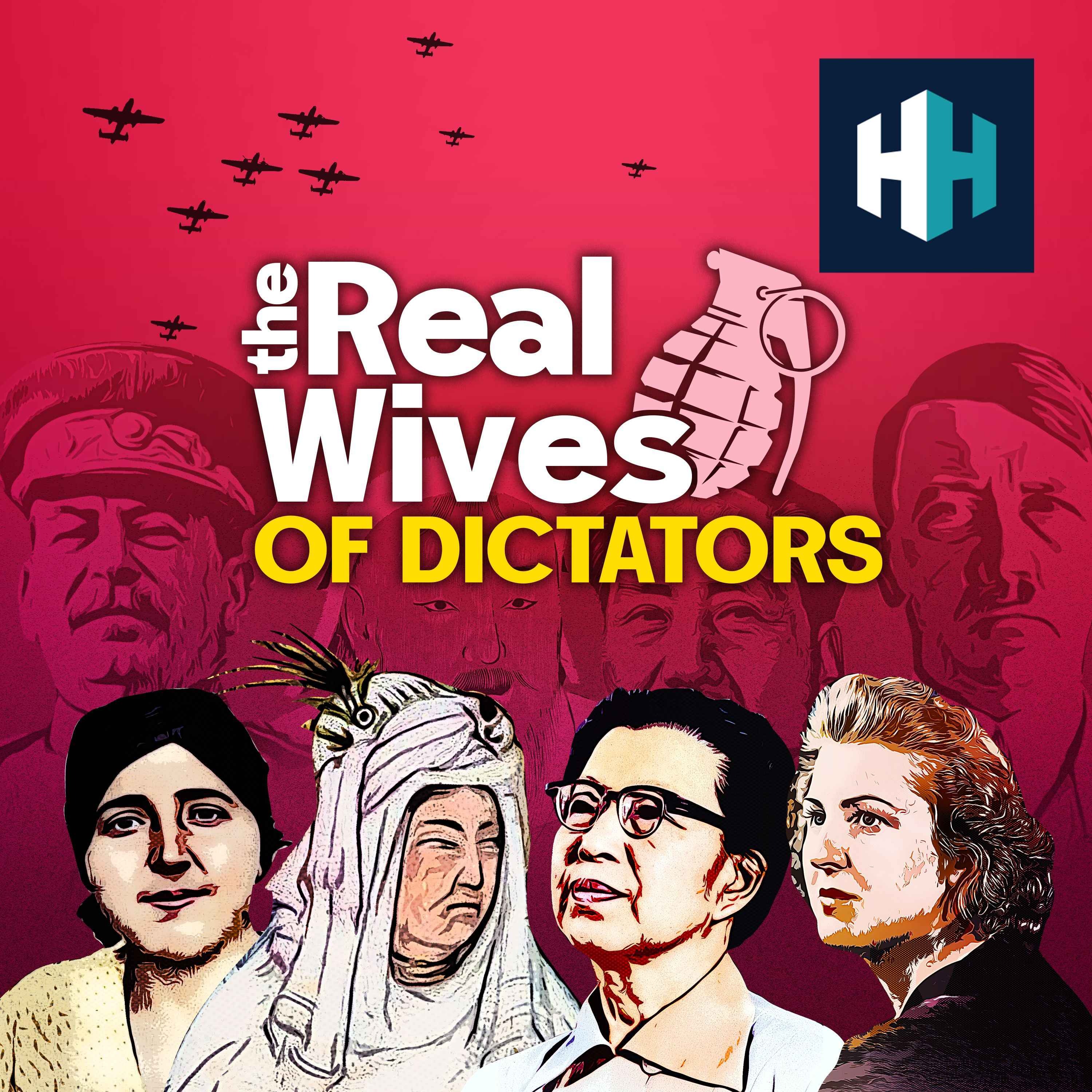
Betwixt The Sheets: The History of Sex, Scandal & Society
Real Wives of Dictators | Börte, wife of Genghis Khan
00:39:27
Loading summary
Transcript82 lines
- [00:00]
Kate Lister
Hi, I'm your host, Kate Lister. If you would like betwixt the sheets ad free and get early access, sign up to History Hit with a History Hit subscription. You can also watch hundreds of original documentaries with top history presenters and enjoy a new release every single week. Sign up now by visiting historyhit.com subscribe.
- [00:27]
Instacart Ad
If you're a parent or share a fridge with someone. Instacart is about to make grocery shopping so much easier. Because with family carts, you can share a cart with your partner and each add the items you want, since between the two of you, odds are you'll both remember everything you need. And this way, you'll never have to eat milkless cereal again. So minimize the stress of the weekly shop with family carts, download the Instacart app and get delivery in as fast as 30 minutes. Plus enjoy. $0 delivery fees on your first three. Order fees apply for three orders in 14 days. Excludes restaurants.
- [01:02]
Kate Lister
We all have that one friend whose opinion we trust on everything. For 63% of podcast listeners, that friend is their favorite podcast host. When Acast's podcasters endorse a brand, their audience listens and takes action. So if you want a recommendation that.
- [01:16]
Don Wildman
Really sticks, put your brand in their hands.
- [01:19]
Kate Lister
Book a host Red sponsorship today by visiting go acast.com ads hello, my lovely betwixters. It's me, Cade Lister. I am here, you are here, and we are all ready to proceed with the show. But before we can do that, I have to tell you, this is an adult podcast, spoken by adults to other adults about daulty things and an adulty way covering a range of adult subjects. And you should be an adult, too. Do you feel safer? I'm glad you feel safer. I certainly feel safer. Right, on with the show. They say that behind every great man, there's a great woman.
- [01:56]
Marie Favreau
Mmm.
- [01:57]
Kate Lister
I've never really believed that. But what about evil men? Are there crap and evil women behind them, too? And whilst it's the men in these horror stories that seem to get the most attention, in this brand new miniseries, we're exploring the lives of four of the wives of some of history's most bloody and notorious dictators. Were they victims? She was certainly young at the beginning. She was drawn to the flame. Absolutely. Or were they enablers? She famously defied the judges calling them fascists. And she said, I was Mao's dog. I bit who he told me to bite. She's aware of the antisemitism. It's not that she looks the other way. She doesn't think It's a problem. She doesn't need to look the other way. What was their life like behind closed doors? She's grown up in a revolutionary family and she married a revolutionary, so you can assume that she's on the revolutionary side. And were any of these women thirsty for power themselves? The rest of the leadership was dead set against it. They sensed her ambition.
- [03:04]
Marie Favreau
They had an instinct about her.
- [03:06]
Kate Lister
I'm Kate Lister and these are the real wives of dictators. Episode 1 Borte Ujin, aka Mrs. Genghis Khan.
- [03:21]
Marie Favreau
What do you look for?
- [03:22]
Don Wildman
A man.
- [03:22]
Marie Favreau
Oh, money.
- [03:23]
Kate Lister
Of course. You're supposed to rise when an adult speaks to.
- [03:26]
Marie Favreau
I make perfect copies of whatever my.
- [03:29]
Kate Lister
Boss needs by just turning a knob.
- [03:31]
Marie Favreau
And pushing a button.
- [03:39]
Kate Lister
Yes, social courtesy does make a difference.
- [03:41]
Marie Favreau
Goodness, what beautiful d. Goodness has nothing to do with it. Dearing.
- [03:50]
Kate Lister
Hello, and welcome back to Betwixt the Sheets, the history of sex scandal in society with me, Kate Lister. 12th century Mongolia was quite a tough environment and they didn't get much tougher than in the world of the Khans. That is Genghis Khan. And the focus of today's episode is his wife, Bhorte. Did she share his ideology and ambition for creating a united Mongol empire? Or she just along for the ride? What happened when she was kidnapped in the first years of their marriage and what influence did she exert, especially when it came to the other women in Genghis life? Joining me today is Marie Favreau, author of the how the Mongols Changed the World. And she is going to help us get to know Borte a little bit better. So without further ado, let's crack on. Hello and welcome back to Betwixt the Sheets. It's only Marie Favreau. How are you doing?
- [04:48]
Marie Favreau
Hey. Hello, K. I'm doing very well. Still in bish cake, you know, in the heart of Central Asia. So Kyrgyzstan. Now, the weather is better, it's not minus 10, it's more minus 5, minus. And with some snow, it's okay. It's not so bad.
- [05:09]
Kate Lister
Well, thank you so much for joining us again, because you were here previously to tell us about the man behind the myth of Genghis Khan. Not Genghis Khan, as we all learnt in that episode. It's supposed to be pronounced Genghis, despite what we learned in Bill and Ted's excellent adventure. But you are back to tell us about Mrs. Genghis Khan, somebody that we very rarely has made the impact on the public consciousness the way that Genghis did. In fact, when you think of him, you tend not to think of him having a wife, you tend to think of him with a sort of a harem. So let's start with the most basic question. Who was Mrs. Genghis Khan?
- [05:56]
Marie Favreau
Well, Mrs. Genghis Khan, her name is Berte. And in the sources, she's even named Berte Uchin, which means Lady Birthday. She's not any Berthe, she's Lady Birthday. And she's the primary wife, the chief wife, the first wife. She's the most important wife of Genghis Khan. And without her, it's clear there would not ever have been a Mongol Empire. All these big conquests. Genghis led, you know, up to, you know, Korea. What side? Europe. On the other side, never ever anything would have happened without Berte. She's a very, very important character, and she was acknowledged as such even by the people of the time. In 13th century, Mongol, people would really respected her very, very much. Bertie Uqin. So Jingi's wife, all right, so she.
- [06:51]
Kate Lister
Sounds like, well, quite a badass in her own right, but paint me a bit of a picture of where they grew up, where they came from. This is mongolia in the 12th and 13th century. What was this like? Because when I think of this, I'm afraid I think of the Dothraki from Game of Thrones. That's zero historical accuracy. But that's kind of what I see when I think of the Mongols in Mongolia. Please disabuse me of that and tell me what these people were like.
- [07:23]
Marie Favreau
Yeah. So this space is more or less what is Mongolia today. Steppe areas with some forest and mountains. Not just think about, like, you know, grass spaces, but really also mountains and rivers and forests are very important. Very cold in winter, probably rather hot in summer, a little bit like today. That's what we think. And also all these peoples, sometimes we call them tribes, but, you know, this word tribe is a bit strange because in sources those people have names. So there are groups of peoples, you know, in this area. Some are called Mongols, some are called differently. So Bertis people is called Kongirat people, and they are very important in Mongolia. They are very much in the east of Mongolia, far away from where Genghis Khan was born, several weeks, probably on horseback back from his place. So, you know, they are from different areas in Mongoya. What we know about her people is that they were quite wealthy and peaceful people. They have this reputation in the old sources. So we are now in the end of 12th century. And these groups and peoples in Mongolia, Kongera, Mongols, others will name later, probably like Tatar, maybe Merkits also. All those peoples, they tend to fight and ally depending on circumstances. But there's not one big empire, there's not just one umbrella power. You know, they are fragmented, but they respect one another. And they also have common traditions. Especially it's very important when you look for a wife or when you look for a husband to go far away from your family because you want to avoid, you know, blood mixture. You want to know that you're exactly incest. You want to be sure that also it's going to a very like sound alliance for your family. So it's better to go far away from. From your own land and your own family. And that's what happened actually. Genghis Khan, young boy would go with his father to look for a bride for him, far away from his place from some term Mongoya. They go east up to. And they will end up into Bertie's family. Right. So several weeks of travel. So that's the early beginning of their relations. And it's end of 12th century. And that's basically what we know. It's vague, but it's enough information to know it happened. You know, it's not like a mystical legend, whatever we know this happened.
- [10:08]
Kate Lister
And they were nomadic people, weren't they? So they were. They were moving around all the time and they live in yurts, is that right? Is that where they. Where they live?
- [10:17]
Marie Favreau
In Mongolia, we call them ger. So these are round, stands for six to eight people. Usually nomadic, means they move, but they don't move all the time. They move with seasons and they move also according to the weather. So if weather conditions, even if it's springtime, weather conditions are bad, there's wind, they might move. Right. But if the weather conditions are good, herds are doing well, they stay. It's very important to understand that they live in the town and also that they are herders, all of them. Genghis family, Bertie's family. So they have horses, they have camels, they might have goats and sheeps as well. It's their everyday life. So they. Everyday life, they can understand each other, they can communicate, you know, if they are herders. But probably Bertie's family is richer, wealthier than Genghis. Right in the beginning.
- [11:12]
Kate Lister
Oh, okay. He's punching above his weight.
- [11:14]
Marie Favreau
Yeah, yeah, exactly. Genghis first name. Genghis is the title, Genghis. His first name is Timujin. This young boy, Timujin is around like we think. Yeah. Timmy is nine years old. He's nine. And he met her, his well, future, you know, wife, she's 10, she's one year older than him. I like that because she's. Yeah, she's a bit older. I think it's interesting because she's going to be like he's advisor in many ways later in his life, you know, she's going to be so important. And I think this one year difference, of course when you grow up it means nothing, but when you're young, it's a big thing, you know, 9 and 10, especially girls and boys, you know, 9 and 10,. The difference is huge. So yeah, they met around his age, 9 and 10.
- [12:05]
Kate Lister
What sources do you use to research this history? Did they write things down? Have they left us stories? How do we know this stuff? How do we know when Timmy and Bertie met?
- [12:18]
Marie Favreau
Well, I would say the main source is called the Secret History of the Mongols. This source was written, we think, yeah, it was written in the mid 13th century, just after Genghis Khan died, probably under one of his son and successor. But we think that the story, it's like a biography of Genghis Khan, official biography. So we have to sort of, you know, read in between lines, you know, against the grain I think we say, but against the grain still. It's very much about a family, it's very much about the love and the meeting of this couple, Genghis and Berthe. They are key characters in what's going to be a lineage, like imperial lineage of the Mongol Empire. So they are so important. So I would say, like the problem for us historians is it's official. So it means some details might have been changed and erased, but at the same time it's coming from Mongolia, from inside. Yeah, it's a Mongolian source, 100% and very interesting. This source focused very much on women, not only on Berthe, on other women in Jingi's family and his mother also, and his, some of his daughters are mentioned as well. But we know that in this source For Mongolian people, mid 13th century, women are in charge also. They are very important persons, political terms, economically speaking as well. So that's also why this source is so rich and interesting. If you want to think about who was this birthday woman who know what kind of person she was and what role she played in the beginning of the Mongol Empire.
- [14:07]
Kate Lister
So I'm assuming then that this would have been an arranged marriage, that it wouldn't have been the case for a 9 and a 10 year old to start dating. This would have been set up by the families. But did they love each other? Like what how did they get along? Do the sources tell us anything like that?
- [14:24]
Marie Favreau
Yeah, this is very important question, Kate. Actually. So, yes, it's arranged in a sense that. So Cenki's father. Yes. To Gate Taki's son. So Genghis to find a bride, to find someone. There's a political alliance behind their things, but he doesn't know who.
- [14:42]
Kate Lister
How.
- [14:42]
Marie Favreau
You know, he goes to some families who have good relationship with his own lineage, but it's not decided in advance who's going to be the bride. It said in the Secret History of the Mongol that there's some sort of meeting between the two fathers. So Cenki's father and Bertie's father and they sort of connect. Berte's father had a dream and he dreamed about this family coming to him and this potential alliance. But then when Genghis met with Berte, he doesn't know yet, you know, she's one among others, although she's one of the daughters of the chief. But yeah, it could have been another girl. This one, it said she's not only fair, beautiful girl, but she also has some fire in her eyes and she has really something, which means she was probably. She looked intelligent and fierce and strong and somehow it's part of the information that sort of helped Genghis to fall in love with her or in any case to build up a very strong couple relationship with her. Because of course, love, who knows, we are not in their mind of the time.
- [16:02]
Kate Lister
Right.
- [16:03]
Marie Favreau
But clearly this couple, it's going to be a strong couple. That's going to work very well. So they connected. And I like the fact that it's a source. It said she had fire in her eyes. It's also said that Genghis himself as a boy, he had something in his eyes that they were special, both on them and they are intelligent, both of them, and they sort of connect through their eyes. And I really like this idea.
- [16:30]
Kate Lister
I love that you touched just briefly there on what it was like to be a woman in this culture. If I'm thinking about 12th century Europe, it's deeply patriarchal and women weren't as confined to the domestic as you'd like to think. But it certainly wasn't. They weren't having a riot. The men folk were very much in charge. What was it like in Mongolia?
- [16:54]
Marie Favreau
Yes, it's very different in Mongolia. It's different because Herder, they work together. There's a lot of work in the camp, so you have to take care of the animals. You have a lot of work to.
- [17:04]
Kate Lister
Do you can't do pissing around, staying at home when you've got stuff to do, can you?
- [17:08]
Marie Favreau
Yeah, exactly. Women are in charge of many tasks and they work a lot, but they also, we know they need to move freely because you ask me about sources and I mentioned a text of the secret history of the Mongols. But we have also to mention archaeology and textiles and we, we have burials and we have a little idea of how women would have been dressed, for instance, and they're closed. And we know that they would be like men a little bit. They would have the same type of shoes, the same type of coat. They would ride horses. We know this from also miniatures for leather bearer. But still we know with description. So they are very free, that the body of the woman is very free to move because they need to work, even if they are from high society. They are active women and they show themselves, they show their face. They don't have veiled face. It gives us a little bit of an idea of what, you know, birthday could have been, you know, even, you know, her clothes, her way of doing everyday life. We know she knows how to ride a horse like a man. We know she's very strong physically. Like she does a lot of work and she's the daughter of the chief. So it gives us some idea, right? And also we have some clues about the religion of the Mongols of the time. They know about Christian religions and they know about Islam and they know about Buddhists. But they are different. They have their own ways of being connected to the nature, to spirits of the nature, spirit of the rivers, of the mountain, of the hills, the spirit of the ancestors. But we know that in their religion and belief there is nothing that would sort of downplay the role of woman. It's very important, I think, that women, they participate in rituals like men. They are not like sent away because there are some rituals. So I think also that might be. When you look at Middle Ages as a historian, the influence of religion is very important. So here we see something much more open where men and women are more on equal basis, although they have different tasks to do. There are things women do and things men do. So differentiation, gender differentiation is there, but still it doesn't mean there's not equal respect in this society for men and women. So that's very special. And we know through the eyes of Western travelers or Muslim travelers or Chinese travelers to Mongol area that women are really free and they are, you know, showing themselves as strong public characters. And all those witnesses from other parts of the world are super shocked that, whoa, in this part, women are so different. And they even say, okay, you, like, imagine you're a traveler, you're coming from the West. You need to bring some gift for the Mongol chief, but you have to bring some gift for his wife. For the Mongol woman as well. That is really setting our sources and texts. They have to be considered just like men in terms of political influence. This is something that is super different from the rest of the world, as far as we know.
- [20:28]
Kate Lister
That makes perfect sense, actually, when you think about it. If you've got a group of people that are nomadic, which involves packing up an entire home, moving it, moving with the animals, re establishing it, putting it up like, there's no space there for women to go, oh, I'm too delicate. There's no stay at home if home is constantly being moved. So that makes perfect sense that there isn't space for this sort of confinement of women and this weakening of women that you see in the west of, like, they're very delicate. If you have to ride around on a horse all day, no. No, you're not. I'll be back with Marie and Borte after this short.
- [21:13]
Instacart Ad
If you're a parent or share a fridge with someone, Instacart is about to make grocery shopping so much easier. Because with family carts, you can share a cart with your partner and each add the items you want. Since between the two of you, odds are you'll both remember everything you need. And this way, you'll never have to eat milkless cereal again. So minimize the stress of the weekly shop with family carts, download the Instacart app and get delivery in as fast as 30 minutes. Plus, enjoy. Zero dollar delivery fees on your first three orders. Service fees apply for three orders in 14 days. Excludes restaurants.
- [21:49]
Don Wildman
In case you haven't heard, in the US It's a presidential election year. We're going to hear a lot of this is America. No, no, you're all wrong. This is America. But on American History hit. We're leaving that to the rest of them. Join me, Don Wildman, twice a week where we look to the past to understand the United States of today. With the help of some amazing guests. Let us introduce you to the Founding Fathers, guide you through the West Wing of the White House, and shelter you on the battlefields of years gone by to find out just how we got here. American History Hit. A podcast from history. Hit.
- [22:44]
Kate Lister
All right, so Bertie and Timogen have got married. And they've got married very, very little. What on earth would that have been? Like to be married as a 10 year old. Was anyone expecting them to, you know, be proper man and wife at this point is like, when do babies start to arrive? Like are they playing house? What is going on here?
- [23:05]
Marie Favreau
Okay, so first when they are 9 and 10, they get engaged, but they don't really marry.
- [23:12]
Kate Lister
That makes more sense.
- [23:13]
Marie Favreau
Very important. Yeah, they really respect like the cycle of life. So you don't, you get engaged but you don't marry before a certain period of time.
- [23:23]
Kate Lister
Right.
- [23:24]
Marie Favreau
And actually we know that they get married probably seven, eight years after that. So late. Teenagers probably. We can imagine Temujin is 16 and she, Bert is 17. Not sure about dates, you know, but with that's what we see something like rather rational. Right. They get married and very soon after. So there are a lot of political issues and troubles with enemies at that time. Genghis in between lost his father, killed by enemies. And when he married Bertie, very soon after he married her, something terrible happened to them. Enemies came. So it's people called Melkits people, they lived more, a little bit more in the north. They are more like forest people. They have to take revenge from the Mongols for some personal reason. So they come back to the Mongols, they found the camp of Genghis and his wife and they captured Bertie. And at that moment, Bertie and Temijin are just married since less than a year, we think just a few months. Right. So that's a very like tragic moment. It's described as such in Secret History of the Mongol.
- [24:44]
Kate Lister
Was that common practice as a revenge tactic? We're just gonna go and kidnap the wife of an opposing tribe and dare I ask what happened then? Like they're taken back to their tribe and. Oh God, like what did this mean, Marie?
- [25:00]
Marie Favreau
Yes, it seems that it's, it happens. So it's probably common you take the wife and you marry them. So it's not just you take the wife and kill them or it's not. Imagine at that time people value life, okay, but they what they want. So it's. If another chief come to you want to take revenge about something, it will take your family, your wife, your children not to kill them, but to integrate them in his own people, to make his own people larger.
- [25:33]
Kate Lister
Wow.
- [25:34]
Marie Favreau
That's more the way we have to think about it. It's not about killing each other, it's more about integrating more people. So of course you can imagine they are prisoners. But it's more complex than that because probably Berte was kind of married to one of the Mercury chief, to the enemies so the idea is not to get rid of her, it's not to use her. She has potential. She's coming from a wealthy family. And also it's like you show how victorious you were on your enemy if you take wife, families, animals, everything from your enemy. Right. So that's the idea behind. So she was captured and married to some Merkit's prince. Probably. Yes. And this is a tragic aspect also of the story is that it is said in the official source that Genghis just left her. When. When the market came. He just ran away to hide himself and he left her behind.
- [26:31]
Kate Lister
Yeah, he ran away. Genghis Khan ran away.
- [26:36]
Marie Favreau
Yes. And it said in an official sources, Mongol sources. So the idea is to show that he was not able to defend his wife and he just ran for his life. But in some ways you can see it's rational because he needs to protect himself before if he's not alive, how can you protect this family? Right. So he needs to show hide and protect himself. But then after that it said that how bad he felt about it. And then he's going to work on getting his wife back. It's like never ever forgetting her. He knows she is the one and he wants her back and will do everything to get her back. And this is also part of the story with the official source, which I think is. We don't know, honestly, we're not in the end of 12th century. We don't know exactly what happened. But it's super interesting that it's presented as such in the official text. The fact that the chief had this failure, leaving his wife behind to some enemies. So that's really a big thing. That's a big thing. But also that he felt pain and sorry and guilt about it. It's interesting, it's there in the text and also how he's gonna bring her back. So that's a whole story like how he's gonna build up a new army, make a new alliance, sort of convince his friends to sort of join him to sort of do some expedition to get her back. Because he wants his wife back. And that's what happened. After probably something like seven, eight months, he's able to get her back.
- [28:08]
Kate Lister
Long time.
- [28:09]
Marie Favreau
Yeah, it's a long time. And it's seven, eight months. And when he get her back, she's pregnant, almost about to have deliver baby.
- [28:19]
Kate Lister
Oh.
- [28:20]
Marie Favreau
So some people believe the baby is not from Genghis, is from the Mary kid prince and the husband she was forced to marry when she was in captivity. And that's Possible, of course. But I think it's special that in this text, it's not said that we know, because imagine at that time, no DNA research, not like today. Today, you know, but at that time, there's no way you can know. So it might be Genghis, but it might be the Merkit prince who's the father of the first baby she Bertesh gonna have. Right. That's a big, big issue in some ways, because after that, it's gonna come back in the sources. Oh, maybe this firstborn son is not really from Genghis. It's from another father, you know, so the firstborn son has a name, means guest. It's interesting. This.
- [29:13]
Kate Lister
That's an interesting choice.
- [29:15]
Marie Favreau
You know, the meaning. Exactly. So we have two options. One is because the baby is born unexpectedly. So after he got his wife back on the road, the baby came. So guests, you know, he arrived. We didn't know it would be the time and the moment. So that's another one explanation. The other explanation is a guest, in a sense, that he's a guest in a family is a gift, because he's not from Genghis bloodline, but he's from America's chief bloodline.
- [29:44]
Kate Lister
But Genghis recognized him as his son, though, didn't he?
- [29:47]
Marie Favreau
Exactly. That's what is beautiful in this story.
- [29:50]
Kate Lister
I didn't expect that.
- [29:51]
Marie Favreau
Yeah, Genghis recognized his son as his firstborn, and he would always give him everything. When you look at the first period of Genghis conquest, when he gives some responsibilities and just, you know, peoples and armies to his son, he would always favor his firstborn until some point. They would have some, you know, issues at some point in something that could happen between father and son, I think, in general. But we know he would always say, this is my son. There's no question about it. And it doesn't allow anyone to question the fact that this boy is his son. And Bertie, of course, the same. She would always support her son and treat him as the others and never show anything. Or at least that's what we have in our sources in other texts. There's nothing that that would say at some point that they love him less for any reasons. Also interesting when you think about the notion of adoption, because Bertie, she's amazing. So she had his firstborn song. Okay, it's. Then she would have three more sons with Genghis. These ones are a lot. You know, we know for sure they are coming from. You know, it's. They are. Jinky's gone father. But then she's gonna have five daughters as well.
- [31:07]
Kate Lister
Busy. Yeah.
- [31:08]
Marie Favreau
It's quite a lot of kids, right? Nine. Yeah. And look, she's gonna also adopt. She's going to adopt kids as well. At least three or four more kids. And adoption is something very important at that time in this world. I mean, life is harsh. There's war orphans. There's no regulation about, you know, orphans and anything. And Genghis, mother's operative, she would adopt kids, and she would treat these adopted kids as her own kids as well. And she would be really respectful with them. And Genghis would give the adopted kids also a lot of functions, roles, cash, respect, everything as well. I think it's very beautiful as well. So it shows a couple working hard, you know, to create a huge family with adopted kids, biological kids, maybe up to 15, you know, at the end. Right. And loving them. Loving them. Yeah.
- [32:11]
Kate Lister
I'll be back with Marie and Borte after this short break. So the marriage, I mean, they must have loved each other. Genghis must have loved her to have gone to all that trouble to get her back. And, you know, they seem to have. Right. We're gonna. We're here together, and we're gonna grow our family. And at some point, he also decides to unite the Mongol Empire, which is impressive. Along the way, Bertie has found herself wife to the first Mongol Emperor, which I don't know if she saw that coming, but what were her powers within that? Because Genghis is very powerful, and he was sort of the number one guy. What was her role within that? Was she a quiet power behind the throne?
- [33:02]
Marie Favreau
Well, not quite, but power certainly behind. I mean, not even behind next to him. Wow. When you look at her advice. So she advised him, we know at least in three directions. One is keep the family united, like, respect your brothers. Also treat your sons kindly. They have daughters. Genghis was in love with his daughters, so he treated them super kindly. But he was harsh with his sons. Not the first one, specifically, all of them. So she was always behind saying, no, you really have to be generous with your sons as well. And just be also understand them. They are young and everything. So that's one direction family. The other direction is she was super intelligent and astute when it comes to alliance. And she was one of the first who saw that he had a problem with one of his first allies is a guy named Jamuha. He's also a Mongol. They allied together when Genghis was young. But then at some point, it seemed clear that this guy was also a competitor. It was a challenger for Genghis. I think it's really hard to split, you know, something has to be done. And she's there. And in the text, you see she's there. And she said, no, you have to interpret what's happening. You have to be careful of Cemuha and you have to split and protect yourself. And she's there saying this to her husband and he listens to her. So that's also nice, you know, you see, it's just, wow, this is like.
- [34:33]
Kate Lister
A power couple, isn't it?
- [34:34]
Marie Favreau
Yeah, very powerful. Yeah. And powerful also because she's also the branch not only like the mother was giving, you know, building up the lineage and the family. She's also a brain and very intelligent in political terms. And finally, regarding religion, she's one of the first who said to Genghis, okay, there's this powerful shaman. The guy is called Teb Tengri in the sources. So he's a powerful shaman and he's like a priest, you know, and he helps and support Genghis, but he's becoming powerful, like too powerful. Right. And she says to her husband, you have to get rid of him. He's also becoming some sort of competitor for you. He's not helping anymore. Get rid of him. So. And he follows one more tanker advice. And that I think is a very important political decision at the level of the Empire. So. Yeah, so these are just examples. But you can see how she was also acknowledged by the people of the time as a political advisor for husband and also some like a real brain, you know, in the empire situation. And sometimes Genghis gets nuts and gets, you know, in fiery and upset about his sons, about this and that. And she's. She's not necessarily calm because she can speak harsh, but she says what she has to say. And. And she's very, like, open and. And frank also. So she's depicted as such loyal to her husband, but also telling him, like, you, you're making a mistake here, you know, and he listened to her.
- [36:09]
Kate Lister
I just had this image of like Bertie in a nightgown with her hair in rollers first thing in the morning, just saying to Jangis, oh, God, he's off again attacking the hordes. Get back here. What time are you gonna be back? Don't be late. That's really tickling me.
- [36:26]
Marie Favreau
Yeah, I don't know. I don't know. I think she's. When Genghis goes on campaign and leave the house and leave the camp, she has also her own world to rule. And she's in charge. So when he leaves, he goes Central Asia, he goes China, she's in charge. And when he will die, actually, she's going to be in charge of a huge part of his hoard. So his warriors. And she will also take care of his assets in many ways. So I don't know what was her feeling? I guess she's in love. She must be sad if he lives right. But at the same time she's in charge and she has worked to do. I think she would be very active then clearly she would stay a lot in Mongoya. We have to add to this story that Genghis had other wives after her.
- [37:14]
Kate Lister
I was just going to ask you about them because one of the things that we looked at in the last episode was Genghis reputation for sexual savagery and debauchery. And you were swift to point out there is no evidence, there's no mention of that in the sources, or at least there's no reason to suspect it was any worse than anywhere else. But he definitely had other wives. And how did Bertie deal with that?
- [37:37]
Marie Favreau
Yeah. And younger wives, probably? Well, I mean, there are different explanations. One is, anyway, he has to make. At that time, you make alliance and when you make alliance, you sort of seal up marriage, new marriage. So it can be just a political decision. And this for sure would not affect birthday. But one of his younger wives, we think Genghis was, I mean, probably like some feeling for her, took her with him when he was older during his campaign, probably in the 1220, early 1220s. At this point, we don't know about their marriage exactly, but we know that Bertie is a chief wife. So she's in charge with the other wife. She's in charge of nanny statues. Her statues remain high. You know, she's the only one who can give real heirs to the throne. So when Jengi is gonna die, only a son from her and him gonna get the throne, it's not gonna be a son from another wives, you know, So I think it's sort of repair maybe. What the. I don't know if she's hurt or anything. We have no idea, you know, her real feelings. You know, maybe she had film for some other men. We have absolutely no idea. We have to be honest with that. You know, we are just the official portrait, but it's clear her statues remain high until the end. And she would be in charge with the secondary wife. The other thing is, when Genghis died in 1227, she was in charge with a huge part of his you know, as I said, his warriors, we call them Orda Horde. So his wires is some of his buildings, some of his, you know, treasuries, whatever. She's still there, you know, as a person, but we have less sources, you know, and we don't even know when she died. I think it's important to. To say that we don't know when exactly and we don't know where she has been buried. Maybe with him, but we don't know where he's buried. If you remember the discussion about Genghis, so there's a bit of a mystery also about Bertie, you know, at the end of her life, you know, where she went, what she did, where she's buried, we don't know. But in the Mongol official cult, official sources, rituals, in 13, 14 centuries, even up to date, she's a very respected character. She's a key person, you know, and there's no Mongol Empire without her. It's like Genghis and birthday. It's not Genghis himself. What? He would not have been able to build a lineage and a family. Right. So at least it's really clear. So. But we don't have portraits of Berte. We don't know her face. You can imagine the fire in her eyes and a beautiful complexion. She was probably very energic woman and something. But yeah, we don't have hypoxia.
- [40:36]
Kate Lister
Marie, you've been wonderful to talk to again, thank you so much for dropping by to tell us a bit more about Bertie Khan. That was amazing. If people want to know more about you and your work, where can they find you?
- [40:49]
Marie Favreau
Oh, I think they can find podcasts and documentaries where I participated. And I've been in Mongolia and trying to, you know, find more information about Genghis Khan and his family and birthday. So I think people can find me on Smithsonian Channel. I've been part of a documentary on Genghis Khan's Mongoya, and yes, of course, my book the Horde how the Mongols Changed the World, in which I say whatever I know about Bertie and woman in Jingi's family because they were so important.
- [41:22]
Kate Lister
Thank you so much. You have been marvelous.
- [41:25]
Marie Favreau
Thank you.
- [41:28]
Kate Lister
Thank you for listening. And thank you so much to Marie for joining me. And if you like what you heard, please don't forget to, like, review and follow along wherever it is that you get your podcasts. If you'd like us to explore a subject or maybe you just wanted to say hi, then you can email us@betwixtistoryhit.com coming up. We have got episodes on the darker side of Alice in Wonderland and the second episode in this limited series which is about Eva Braun, the wife and confidant of none other than Mr. Shithead Hitler. All coming your way. This podcast was edited by Tom Delaghi and produced by Stuart Beckwith. The senior producer is Charlotte Long.
- [42:04]
Marie Favreau
Join me again.
- [42:05]
Kate Lister
Betwixt the Sheets the History of Sex Scandal in Society, A podcast by History hit. This podcast contains music from Epidemic Sound.