← Betwixt The Sheets: The History of Sex, Scandal & Society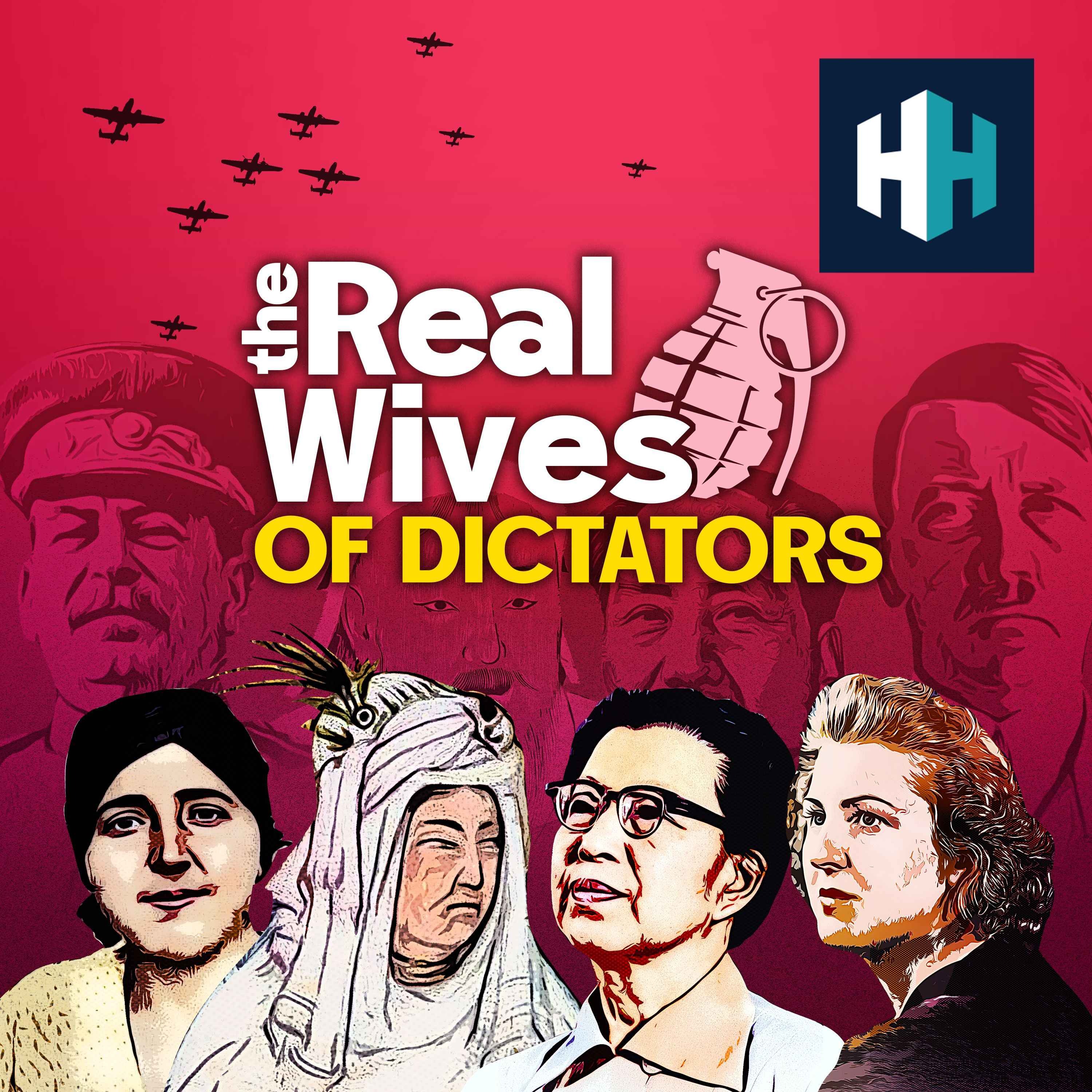
Betwixt The Sheets: The History of Sex, Scandal & Society
Real Wives of Dictators | Eva Braun, Adolf Hitler's Wife
00:41:03
Loading summary
Transcript124 lines
- [00:00]
Kate Lister
Hi, I'm your host, Kate Lister. If you would like Betwixt the Sheets ad free and get early access, sign up to History Hit with a History Hit subscription. You can also watch hundreds of original documentaries with top history presenters and enjoy a new release every single week. Sign up now by visiting historyhit.com subscribe.
- [00:27]
Claire Mully
Great brands, great prices.
- [00:29]
Kristen and Jen
Everyone's got a reason to rack because they have framed jeans.
- [00:33]
Kate Lister
Nike.
- [00:34]
Claire Mully
Yes.
- [00:34]
Kate Lister
Just so many good brands.
- [00:36]
Claire Mully
Vince, Kurt, Geiger, London, Rag and Bone.
- [00:39]
Kristen and Jen
And more are at Nordstrom Rack stores now.
- [00:42]
Claire Mully
You never know what you'll find, but you know it's going to be so good. Great brands, great prices. That's why you rack.
- [00:53]
Kristen and Jen
ACAST Powers the world's best podcasts.
- [00:56]
Claire Mully
Here's a show that we recommend.
- [01:00]
Kristen and Jen
I'm Kristen.
- [01:01]
Claire Mully
And I'm Jen from the I Mom so Hard podcast.
- [01:04]
Kristen and Jen
We don't want to brag, but yes, we are moms. We're average moms.
- [01:07]
Claire Mully
Below average sometimes.
- [01:08]
Kristen and Jen
But we're not just moms.
- [01:10]
Claire Mully
And we're not just supermodels either. We're not just pieces of meat.
- [01:13]
Kristen and Jen
That's right. We're not even close. We are comedians and we're also best friends. We're also best selling authors and television writers.
- [01:20]
Claire Mully
We created a viral web series with.
- [01:22]
Kristen and Jen
Over 300 million views. What's up? Who's bragging? And we were in our swimsuits. Again, not supermodels.
- [01:28]
Claire Mully
We're also podcasters.
- [01:29]
Kristen and Jen
Are we podcasting right now?
- [01:31]
Claire Mully
Right now. But we have been bringing laughs every Tuesday to women and moms everywhere.
- [01:35]
Kristen and Jen
And one dude who's a sophomore in college. His name's Greg Whatever. He messaged us and made me feel cool.
- [01:40]
Claire Mully
So nice. Amazing. Please listen to the Am mom so Hard podcast on Acast.
- [01:44]
Kate Lister
Woo.
- [01:46]
Kristen and Jen
ACAST helps creators launch, grow and monetize their podcasts everywhere.
- [01:52]
Kate Lister
Acast.com hello my lovely betwixters. It's me, Kate Lister. I am me, you are you. And this is Betwixt the Sheets. But before we can keep going together, I have to tell you, this is an adult podcast, spoken by adults to other adults about adulty things in an adultery way occurring a range of adult subjects. And you should be an adult too. And if you've been listening to this show for long enough now, you must know the drill by now for any newbies. If you're a sensitive position, just bugger off now. We don't need you around here. Right, on with the show. They say that behind every great man, there's a great woman. I've never really believed that. But what about evil men? Are there crap and evil women behind them too? And whilst it's the men in these horror stories that seem to get the most attention, in this brand new miniseries we are exploring the lives of four of the wives of some of history's most brilliant, bloody and notorious dictators. Were they victims?
- [02:52]
Claire Mully
She was certainly young at the beginning. She was drawn to the flame. Absolutely.
- [02:57]
Kate Lister
Or were they enablers?
- [02:58]
Claire Mully
She famously defied the judges calling them fascists. And she said I was Mao's dog. I bit who he told me to bite. She's aware of the anti Semitism. It's not that she looks the other way, she doesn't think it's a problem. She doesn't need to look the other way.
- [03:18]
Kate Lister
What was their life like behind closed doors?
- [03:21]
Claire Mully
She's grown up in a revolutionary family.
- [03:23]
Kate Lister
And she married a revolutionary.
- [03:25]
Claire Mully
So you can assume that she's on the revolutionary side.
- [03:28]
Kate Lister
And were any of these women thirsty for power themselves?
- [03:31]
Claire Mully
The rest of the leadership was dead set against it. They sensed her ambition. They had an instinct about her.
- [03:40]
Kate Lister
Hi, I'm Kate Lister and these are the real wives of dictators. Episode 2 Eva Braun, wife of Adolf Hitler.
- [03:53]
Kristen and Jen
What do you look for in a man?
- [03:54]
Claire Mully
Oh, money, of course. You're supposed to rise when an adult speaks to you. I make perfect copies of whatever my.
- [04:01]
Kate Lister
Boss needs by just turning it up.
- [04:03]
Claire Mully
And pushing the button.
- [04:05]
Kristen and Jen
ERA now. ERA now.
- [04:11]
Claire Mully
Yeah, social courtesy does make a difference. Goodness, what a beautiful dime. Goodness has nothing to do with it, dearie.
- [04:21]
Kate Lister
Hello, and welcome back to Betwixt the Sheets, the history of sex scandal in society with me, Kate Lister. Life sure does throw you some crazy twists and turns, doesn't it? For example, one moment you're a 17 year old photographer's assistant in Munich and the next minute you're swallowing cyanide in a bunker with the Fuhrer. That's a hell of a plot twist, not to mention a very chilling thought. But who was the woman who was romantically involved with Hitler throughout his rise through German politics? Well, it was Eva Braun. But how did she handle being kept out of the spotlight as much as she was? Was she in any way complicit, supportive even of Hitler's evil ideologies? Well, joining me today is Claire Mullie and she is going to help us get to know Eva Braun a little bit better. As if anybody wants to know her. But here we go anyway. Hello and welcome to Betwixt the Sheets. It's only Claire Mully. How are you doing?
- [05:22]
Claire Mully
Very happy to be betwixt the sheets with you, Kate.
- [05:25]
Kate Lister
Betwixt the sheets with me and Ava Braun.
- [05:28]
Claire Mully
Oh, not so good. I'm not so happy about that.
- [05:30]
Kate Lister
What a place to be. We are talking today about this woman who I think it's fair to say the most famous thing she did was marry Hitler. But before we even get onto her, you are the author of such books as the Women who Flew For Hitler and Agent the Untold Story of fearless World War II resistance fighter Elisabetta Zauaker. So as a question, before we even get to Eva, what brought you to World War II? History.
- [05:59]
Claire Mully
Just going to nip in and say El Shpieta Szavatska. But pleasingly, her code name is Zo Z O and that's what she's known as throughout the book. So no worries, worries there. Amazing. I was from my first book, was actually a woman in sort of whose story touches on the First World War, who was really remarkable. And she was a woman from Shropshire and I was interested in her. When the British bank, the Main bank, said, right, we're going to have a new 20 pound note and a new two pound coin and we want to put women on there. I said, oh, fantastic. And they were asking the public for suggestions. So I said, edmonton, Jeb, this fantastic woman I'd written about, and when the new currency came out, there was Jane Austen on both. I love Jane Austen, but it's like saying there are no other women worth celebrating or mentioning. So I thought, damn this, you know, we need to do some work. So I wrote a biography of Eggintine called the Woman who Saved the Children, my first book, and it's just been an option for films. I'm very happy this week. Congratulations.
- [06:55]
Kate Lister
That's amazing.
- [06:56]
Claire Mully
It is amazing. She is amazing. But there weren't very many people who I could interview who had known her. She was born in 1876, died in 1928. So I move forward a war to talk about all these untold stories of women at the heart of the Second World War, again, who've been pretty much written out of history or when these stories are told, they're told quite romantically. Seems to be a lot of focus on appearance and not much focus on achievements. So I'm trying to do something about that.
- [07:22]
Kate Lister
Oh, thank God you are. Because when you actually go looking for these stories, they're almost embarrassingly abundant. Like, you kind of have this idea of, well, women's stories aren't told that much because they probably weren't there. Just there weren't that many of them doing this Stuff. Yes, there were. Yes, there absolutely was.
- [07:39]
Claire Mully
Yeah, exactly. There are loads of them. But women do get, often deliberately, but a lot of the time just from, you know, misogyny written out. So when I was doing my research for. For one of my books called the Women who Flew for Hitler, there were only two test pilots who were female for the Third Reich. Seconded in. They were civilians. They weren't actually in the Luftwaffe. Lots of women did work in the Luftwaffe, actually, but in admin, you know, secretarial roles, whatever. But these two women served as test pilots and one was a development engineer, some really amazing stuff. And one of them tried to save Hitler's life. The other one actually tried to kill him. The only two of them, and they knew each other. They not surprisingly, actually loathed each other. They kind of knew there was something off, but they didn't know all each other's secrets, but they knew each other anyhow. So I was researching that and the famous one is the Nazis. Quite a lot of stuff on her. But the other one, I went to find her family and very kindly they brought out a load of information and files. And I said, why? Why aren't these files in the military archives where the men's files who are. She was involved in the most famous plot to kill Hitler and all the guys files are in the military archives in Freiburg and so on. And showed me a word on the outside of the file and someone had written back in the day, had written domestic. So basically because she's a woman, they sent the files back to the family. They thought she can't possibly have a role. So women get written out even at the archive stage. Not just the struggle, it debts sometimes to get a publisher to take it on or the interest in it. So, yeah, so there's lots of reasons. But yeah, like you say, there are lots of stories.
- [09:05]
Kate Lister
One woman who probably would quite like to have been written out from history is probably Ava. Like she would probably wish that, like we didn't know anything about her with what happened in the end.
- [09:18]
Claire Mully
No, I completely disagree, actually. I think she'd still be believing that the Third Reich will rise again and she will be recognized as a great heroine. I think she went out of her way to make sure that she would be in history as much as possible. And Hitler obviously kept her quiet for a long time. Talk a bit more about that if you like. But she's constantly. She's, you know, she loves photography. She is taking photographs, she's taking cine film and she is making sure that she has. And she was always hoping that ultimately it would be shown that always behind the scenes there's this evidence that she was there all along, silently supporting the great man as she saw him. So, yeah, no, she was. She was very determined to be that great heroine of the Third Reich as.
- [09:59]
Kate Lister
She felt it was God Almighty trying to unpick this mindset. But before we get there, I suppose that's kind of where she ended up. I don't even know where she started from. Where did Aegon even come from?
- [10:12]
Claire Mully
Eva Brown? Well, she is a Munich girl. She sort of middle class. Her father was a teacher, Franz Fanny. Her mother, Franziska was a seamstress. They had three daughters. She's the middle one, Ilsa is the eldest. She actually married a Jewish doctor. Amazing, eh? He was expatriated. She was never part of the inner circle. But the younger two, Eva and her sister Gretel were very close. They were confidants and they were just. They were good, fun girls. Eva liked sport, she liked dogs, she liked fashion, she liked going to the cinema with her girlfriends. She liked photography. She was working at a photography studio in Munich, Heinrich Hoffman studio and Hoffman became Hitler's personal photographer. So that's where they met, actually. She was introduced to Herr Wolf as Hitler was known to her at first over a plate of sausages at the photography studio. And he was much older than her and she was, I think she thought he was an impressive older man. He was 40 and she was 17. Over 20 years between them. But he was already getting a lot of attention. You know, he was a bit of a. He was an impressive figure for her. And she appealed to him too. She was, I think young, malleable, probably not that bright, admiring, giving him a bit of an ego boost in that way. And so they both provided something for the other.
- [11:37]
Kate Lister
What year was this? I'm trying to get a sort of sense of what the hell was happening in Germany when they met because she's very young, 70. Like when you think of what you were like at 17. What I was like at 17, oh.
- [11:49]
Claire Mully
I'd love to know. And she.
- [11:51]
Kate Lister
I wasn't flirting with dictators, I like to think, but still, like, you know, you make bad choices.
- [11:56]
Claire Mully
He wasn't then a dictator, although he was on the way up. It was 1929, late 1929, that they met. So 10 years before the war and four years or three, three years really before he became Chancellor. So he's on the up, he's big in Munich, is definitely sort of drawn to this in as he's got a circle around him of adoring people, including her boss. And she, you know, she started off at the photography studio just as a secretary, and she ends up, you know, taking photographs. Developing photographs here is a great subject for her. Great. She can be in there taking pictures. And taking photographs of Hitler is quite a large part of what she does. And selling them, you know, taking private pictures and then selling them for large amounts of cash, but also thereby helping to create his profile, his. The image of Hitler. So she will take photographs of him with her girlfriends and their children later on and present him as a caring, fatherly figure and get paid a lot of money for it and help his career.
- [12:57]
Kate Lister
So they meet just as. Just as things are starting. He's on the up. As you said, things are changing in Germany. There's a buzz around this man, and it's only a few years before he is Chancellor of Germany. Did they stay in touch the whole way through this or did they sort of like meet up a little bit later on?
- [13:16]
Claire Mully
Well, I mean, they kind of stayed in touch because she's working. He's often at Hoffman's studios. Hoffman, Hitler had a very terrible family himself. And he. Throughout his life, you see him trying to build kind of alternative families. And one of his close families that he liked to hang out with was the Hoffmans. So he could kind of relax in that company without having a family of his own. So he would see her, but they aren't seeing each other in that sense of a relationship. For a couple of years, he's got his half niece, Gelly Raouble, just getting about her apartment. Yeah, so. So he is exceedingly fond of her. And we don't know if it was more than that. Seems that she didn't want it. He was very domineering. He was definitely controlling and manipulating. And she ends up with a room in his apartments and she wants to have a friendship with his driver. He sacks the driver and he, you know, says she can't go out anywhere. Even if she goes to the cinema, she's escorted. It is appalling behavior. And eventually she shot herself with her father's pistol in the lung. And it's the next year that Hitler starts his affair with Eva Braun.
- [14:28]
Kate Lister
I know that we'll never know what was going on between him and Gilly, but what's your take on it? What do you think?
- [14:34]
Claire Mully
Well, he was definitely controlling and manipulating. It was a deeply unhealthy relationship. It wasn't a true relationship between uncle and niece. And it's I mean, we won't know. I mean, there are all sorts of stories that perhaps she was pregnant. This, that and the other. We don't know, we can speculate, but that's, you know, that's not my game. I'm a non fiction writer.
- [14:55]
Kate Lister
Yes, I know. And I'm forever trying to push people to like, you know, come down on one side or the other, but we just don't have. What we can say, I think is.
- [15:02]
Claire Mully
It was weird, definitely unhealthy, domineering, controlling relationship that ultimately led her to take her own life. So, yeah, wow.
- [15:11]
Kristen and Jen
Wow.
- [15:12]
Kate Lister
And then the year after that is when he starts, what would we even say? Dating, Courting.
- [15:18]
Claire Mully
What? Well, that sounds quite romantic, doesn't it? I don't think we need to dress it up. He begins a more physical relationship with Eva. She becomes more important in his life. So yeah, and her parents are against it because she's still quite young at this point and he's a, you know, much older man with a lot of power. So they're, they're initially against it. I mean, later they come on site and enjoy all the side benefits, the fringe benefits of that relationship. But it's difficult at first. I mean, they really get together in 32 and in August 1932, that's when she attempts to kill herself the first time. She actually had three attempts to kill herself in her life and was successful, of course, in the last. So do we have any idea why?
- [16:02]
Kate Lister
What was going on there?
- [16:03]
Claire Mully
Well, there's a lot of pressure on her. She wants a relationship. Her parents are against it, Hitler's in favor of it, but he's not in favor of it in any public sense. She's not that important to him at this point. She's useful, she's fun, she's comfort, she helps him relax. But she wants a bit more than that and she's not getting. Right. So I mean, I don't know if she really intended to actually kill herself, if it was a cry for help. I mean, even that phrase I don't really like that much. But she certainly, I mean, this is, it's important that we do talk about these suicide attempts because they're one way of showing that she actually had agency. This is not someone who is just tagging along all the time doing whatever she's told. Here she is making a really significant move and as a result she, she, it works. She gets Hitler's attention and after that she gets a sort of recognition within the inner circle. I mean, albeit completely privately. It's just totally off the public sphere. But yeah, she gets, she gets a room, he provides her, then a house, she stays at his place when he comes to Munich and it becomes this, you know, she's demonstrated devotion and loyalty to him. He gets her checked out by Dr. C. Oh, do you think? And it could have killed her. So, yes, he thinks, yeah, she's really demonstrated something here. But as well, slightly more cynically, I think we need to take him back. He's already had one young woman die of suicide in his care and so he really can't afford the scandal of another young woman dying, having shot herself. So he then begins to take more care of her and that's when the relationship really becomes sort of confirmed.
- [17:44]
Kate Lister
Yeah. So what's weird about this is the Nazi Party, one of their many things that they thought was really important was the nuclear family and being married and having lots of little Aryan babies. And there was like this whole big we shall get married and have babies. Babies, babies. Why was Hitler hiding a relationship then? Why wasn't it like, look, this is our leader and he's married and having babies. Why was he keeping her a secret?
- [18:09]
Claire Mully
Well, you know, this, I always think it's a bit like Elizabeth first. I don't think any other historians ever said that in a minor way. He's married, he's married to Germany. You know, he is, he has got this image of being the father of the nation. And so he is, he wants to maintain this myth of self sacrificing devotion. I mean, he would love to have a family, but obviously the country comes first. He's the great leader. So it's partly that, it's partly, as you say, she's not really the type that they're flagging up. You know, she's much younger than him. I don't suppose that bit matters so much, allegedly. But she's, she's quite sporty, she smokes, which she disapproves of. She likes to wear makeup, she likes parties, she drinks champagne. You know, he's a teetotaler, she doesn't have. Well, is it. Or is he just a hypocrite? You know, in his private life this is someone who's keeping quiet. So she's not on the public radar. I mean, had she been seen out there, it might have been hypocritical, but I think so. It's partly that he doesn't want to expose himself as a hypocrite with this young, pretty, young flippity gibbety, not the classic Germanic mother. Y type. But partly it's just that, that image thing. And he, he really felt that a lot of women, a lot of women did vote for him as well as men. I think they actually voted for him for the same reasons as the men did. Doesn't seem to be a particularly big gender divide on voting reasons. You know, it's economy and stability and fear of communism, all these big issues. But he felt very much that women, you know, like women adored film stars and when the film star came out as married, their appeal would go down. And he really much saw himself as this idol figure that women adored. And there are some examples, you know, women writing devoted letters to him, all that sort of thing. If only we met dear Fuhrer, we'd get together sort of thing. And he thinks they're all voting for me. This is great. Keep it going. So he's keeping that whole thing going as well.
- [19:58]
Kate Lister
Was she popular amongst his? Because, you know, if he's the Fuhrer and like an access to him is kind of, it's sort of sacred within this world because, you know, the closer you are to him, the more important you're gonna be. Hitler's right hand man. And now he's got this side piece because he doesn't marry her for ages, does he? She's sort of there and I'm wondering how people viewed her within his. Like, did they view her as a threat? Did they think that, oh, she's just, just very nice and good for him? Like what?
- [20:27]
Claire Mully
Well, everyone is viewing everyone strategically in the inner circle. You're absolutely right. She has got closer access to Hitler than just about anyone, including many in the highest echelons of the party. So she's a gatekeeper keeper in a sense, and she does have some influence there. I mean, I don't think she had huge political influence. I think that is minimal. But there are occasions where she does have influence and she does have influence over access to him. So she's petitioned, she's given gifts, she's praised as the relationship is consolidated. People like Goebbels, you find it, he's writing in his diary, ridiculous sort of praises of her, saying that she's a very sensible girl, very clever, very, very good eye for art or whatever. You know, he gives her this sort of, he's readjusting because if the Fuhrer likes her, he's trying to kind of take on that mindset. But a lot of people were just sort of lobbying. So when Hess flew to Scotland, there's a belief that perhaps the only reason why his Wife wasn't arrested and sent to prison after that was because Eva Bren put a good word in for her. So she has sort of minimal level of influence in that way. Yeah, I mean, she did have friends up there. She was friends with some of the. Especially when she's at the Berghoff, she's sort of the society hostess at the Berghof, which is Hitler's retreat in the mountains where he increasingly goes to do business. And yeah, she's friends with some of the wives. She's friends with some of the Nazis, like Speer felt he was very close to her. A few of the others as well, others, like Martin Bormann, said, you know, if I die, you're going to be in trouble. You know, make told his wife to kind of make some preparations because Eva didn't like him and that, you know, if there was a chink of weakness, she might have some influence there. So that's mixed feeling. She got on with some of the secretaries and she had lots of parties there. So in some ways she's quite fun and she enables. Enables Hitler to relax and that's quite good for everyone in the Nazi party, if not for everyone else.
- [22:20]
Kate Lister
I'll be back with Claire and Eva after this short break.
- [22:26]
Claire Mully
This tax season at Boost Mobile, when you buy six months on our Best unlimited plans, we will give you the next six months for free, plus enter to win up to $10,000 and double your tax refund. Your refund your rules requires upfront payment, taxes and fees. Extra terms and exclusions apply. Visit boostmobile.com Full offer terms and sweeps details.
- [22:43]
Kristen and Jen
In case you haven't heard, in the US it's a presidential election year. We're going to hear a lot of this is America. No, no, you're all wrong. This is America. But on American History Hit, we're leaving that to the rest of them. Join me, Don Wildman. Twice a week where we look to the past to understand the United States of today. With the help of some amazing guests, let us introduce you to the Founding Fathers, guide you through the West Wing of the White House and shelter you on the battlefields of years gone by to find out just how we got here. American History Hit. A podcast from History hit.
- [23:38]
Kate Lister
Was she politically ambitious? Because part of this series has been trying to work out, like, what was the attraction? How much did these women know about what their husbands were going on? How do you block it out? I mean, was this just a case of, like, I'm just gonna ignore all of this awful stuff because I get nice parties and nice frocks. Or was she more politically ambitious than that?
- [24:01]
Claire Mully
No, I don't think that she was politically ambitious or particularly deeply questioning at all. But having said that, I also think that she shared his worldview. So this is not a nice woman, but likes her dresses, prepared to turn a blind eye. This is someone who goes along with it. I mean, she's very aware of the antisemitism. She's definitely aware of the violence on the streets. I mean, she's got limited knowledge, but she has enough knowledge that we can be quite sure that she, she was very happy to share his worldview. Certainly never, no hint of ever questioning that in any way. So, yes, she knew about the racist ideology. What she wouldn't have been party to is party business. She wasn't a member of the Nazi party, although that's really neither here nor there. I mean, lots of Nazis like Hannah Reitsch, lots of women weren't members, but were still Nazis. Some Nazis were not actually members of the party. So that's a moot point, I think, is often made too much of. But Hitler kept his private and public life, business life, separate. She wouldn't have been party to any of the conversations about military strateg or Nazi party policy. So she wouldn't have done that. Having said that, he, he could be quite indiscreet at times. So there's some of his secretaries mention that he's talking about stuff and they kind of get a bit of an idea of what's going on and just, you know, she would have known something before the war. There's plenty of violence on the streets from 1933 onwards. Plenty of people disappearing, persecution. Hoffman Studios taking photographs of Jewish men being held down in shade. And we don't know which photograph she saw and which she didn't. She's taking her own photographs, which are different. And she keeps photograph albums and the annotations under the photos in there show that she has some level of interest. So she puts in photographs of the preparations for the invasion of Poland and what, the Poles? No, don't know. She says Poland still does not want to negotiate or, you know, rip and drop left for Moscow with a photograph. So she's, she's not completely ignorant.
- [25:58]
Kate Lister
No.
- [25:59]
Claire Mully
And I think if we say, oh, she's a woman, she was taken out. That's fear then that's just ridiculous sexist, apologist stuff. It's, you know, she had. She wasn't there in the key meetings. Absolutely. But she was definitely aware of the basic things that are going on through the war. And I think what we can't say is that she knew about the Holocaust.
- [26:17]
Kate Lister
Okay?
- [26:17]
Claire Mully
There's no evidence that she did. She could have been deliberately kept apart from that, although there are occasions where there's. There's a famous occasion when one of the wives tackles Hitler and says, I've seen all these Dutch women being put on a train to go east. Where are they going? What's going on? This is bad. And he just screams at this woman, says, do you care? What do you care about Jewish women? What do you care? Shut your mouth. And she's no longer welcome. And this stuff, all of this stuff would have been talked about. There's no doubt that she'd have heard, you know, hints and gossip and some stories around it. More than that, I think it's hard to say. I mean, they talked about the Daily News. It's what's going on. But the extermination camps themselves were never discussed or mentioned in Hitler's presence, and that's mainly where she is.
- [26:58]
Kate Lister
Could she have left if she wanted to? She doesn't seem like she wanted to, to be completely honest. But would this have been a situation that if, you know, left.
- [27:06]
Claire Mully
Theorist.
- [27:08]
Kate Lister
Yeah, left. I don't know.
- [27:10]
Claire Mully
I think it would be quite tricky for her to go across borders. No, I mean, she never. She never showed any signs of wanting to. Quite the reverse, actually. So she, towards the end of the war, I mean, she doesn't ever go to Hitler's frontier output. She's never at the Wolf's Lair. The only women that go to these places are the secretaries who are actually doing work. And she doesn't ask to go there, but she does insist on going to the bunker at the end. And Hitler's kind of against this, actually, as a policy. She insists on going and she's there for a while and she actually, she takes shooting lessons outside the bunker, among other things, walks her little terrier dogs and all sorts. But she doesn't leave even as the Red army are coming in and Hitler saying, right, you should. You should hop it now, as she insists on remaining with him. So quite the reverse, really. She wants to be at the heart of it. And I think, you know, I think she has agency and I think it's really important. We're not talking about a child here. Yes, she's young when she meets him, but she's now a grown woman. She makes her decisions. She's aware of the political climate, she's aware of the anti. Semitism. It's not that she looks the other way. She doesn't think it's a problem. She doesn't need to look the other way. You know, she accepts this. And I think she's got this idea that she is the great leader. I mean, she had hoped that after the war, after Germany's victory in the war, when the Third Reich has influence across Europe and the world, that the truth will come out, they will be married, she'll be recognized as this great force behind the scenes. And she'd even hope to play herself in a film, a biopic of Hitler. Post war, you know, she thought they would retire to Linz where he'd have his art collection and it would just be this wonderful. So she doesn't want to leave him. She thinks even if it goes wrong, I'd rather be with him right to the end to keep this fairy tale fantasy going that she envisages her great role in.
- [28:53]
Kate Lister
So I think we can absolutely put to one side the idea that she was some kind of naive young moth drawn to the flame and all of this stuff. She was.
- [29:03]
Claire Mully
I think you can be all of these things, can't you? I think she started naive. She was certainly young at the beginning. She was drawn to the flame. Same, absolutely. But she wasn't without agency. She wasn't outside of history. She's not some pretty thing with no knowledge. She may not have known about the Holocaust, but she certainly knew the discrimination, the anti Semitism of Nazi racial policy and practice. You know, from 33 onwards. Then the Nuremberg Laws, there is children being taken out of schools that the literature, the newspapers that, you know, she is not unaware of all of this. And actually she is. She's helping Hitler because she is a bomb. And he. When the war starts going badly, she is there to calm him down and look after him and show some care and show some love and let him relax. And we know he didn't want to talk politics all the time. He wanted to relax in that kind of happy, family loving environment. And so she probably sustained him and thereby the war. So yeah, she played, she played a role.
- [30:01]
Kate Lister
They didn't get married for ages. And before we get to the bunker and we will get there, this might be another speculative question, but I'll just see what you think. Think of it. Do you think they were having sex if they weren't married?
- [30:12]
Claire Mully
Oh, I knew this was going to come up. I mean, people have been speculating then and they're still speculating. I don't think it's the most important question here, but I think that their sex Life was probably quite normal and there's, you know, there's lots of chat about it from the time. So the head of the Nazi main publication, Max Admin, he said that they occasionally had intimate relations. But one of the secretaries, Krista Schroeder, who survived the war, thought the relationship was just a pretense. I mean, you can go either way. The valet, Heinz lynch, he recognized that they had connecting rooms at the Berghof, so they could go separately because she's kept secret, theoretically. And those rooms did connect. And Hoffman, the photographer that she worked for, he said that the relationship started platonic when, when he first introduced them, but took a definite shape many years later when Hitler indulged her in the usual way. He said, so Hitler's maid said the man was not strongly sex. So there's all sorts. Braun herself, there's this one occasion where she's giggling with her girlfriends over a 1938 photograph of Chamberlain. When Chamberlain came to meet Hitler for discuss discussions pre war, he's sitting on the sofa in Hitler's Munich flat and she said to her friends, oh, if only he knew the going ons that that sofa has seen. So that suggests something. But I think probably they just had a fairly normal physical relationship. And certainly Dr. Theo Morel, who was his last personal doctor, who was known for sort of, it was like the Harley street doctor for STDs of Germany, you know. And at the end, among the drugs he's giving him are aphrodisiac drugs and they tend to be before he spends a night with Eva. So yeah, I suspect they were having sex.
- [31:47]
Kate Lister
He was taking a lot of drugs, wasn't he? Hitler? Especially towards the end. It's a miracle he could have had sex with anyone at all, really.
- [31:53]
Claire Mully
Well, yeah, he did have a large number. I mean he was being injected with vitamins, all sorts of things actually. And you know, he was obviously ill and shaking, so there was real medications in that bundle as well.
- [32:08]
Kate Lister
I'll be back with Claire and Eva after this short break.
- [32:16]
Kristen and Jen
Will full coverage make me look cakey? Is my undertone neutral or is it cool? We get it. Finding the right foundation is hard, but with il Maquillage, it's easy to find your perfect match online, customized for your unique skin tone and coverage needs. Plus with Try before youe Buy, you can try your full size at home for 14 days. With over 600,000 five star reviews, this best selling foundation is going viral for a reason. Take the Power match quiz now@ilmaquillage.com Quiz I L M A K I A G E.com Quiz It's Marc Marin here, host of WTF with Marc Maron on Acast. When I started this podcast, I didn't have a lot of expectations, but somewhere along the line, podcasting became a serious business. And if you're serious about making money doing a podcast, there's only one place to do it. Acast. ACAST generates more revenue more reliably than any other platform platform. Join Acast, the number one podcast platform for monetization, by visiting go.acast.com WTF.
- [33:27]
Kate Lister
So we need to kind of take this, I guess we've got to take it to its inevitable place, which is the bunker. Like how did, did they end up there? And you've already said that Eva had the opportunity to, to leave and didn't, but just talk us through. Well, and when did they get married in amongst all this?
- [33:45]
Claire Mully
Okay, so they get married, really at the very end. It's his throwing her a bone for her loyalty sort of thing. Sorry, not literally. So they get married just after midnight, 28th, 29th of April in the bunker. So the year before, June before, in 44, her sister Gretel, her younger sister, who' she was particularly close to, had got married to Feigelin, who was, you know, lower level in a, in a group. And they had had this incredibly flamboyant wedding with, you know, feels cut of their flowers to bring in and so much rivers of champagne and dancing. And Eva was very keen. She saw it as a test run for her own wedding. She wanted this big, you know, all across the papers and everything. And this was her younger sister. She was giving it a bit of an organisational go, actually, roughly the same time as D Day. So it all didn't go go too well. But it was this huge event and she, she wanted that for her own. But of course her wedding was very different because it's in the bunker. So that is under the ground deep down there, 50 foot below ground. And it's in this, you know, encased in concrete in the earth. It's dank. They're under bombardment. So these thick walls, 18 inch thick walls, are shaking and the plaster is falling off them and there's problems with the latrines being blocked. So the whole place stinks. And it's got the General Bo anyhow of about 20 staff down there. So it's a pretty grim atmosphere and they got problems with the damp and with diesel fuels to keep the generator going. And essentially it's incredibly, intolerably claustrophobic. Hannah Wright pilot that I wrote about, she went down there just before they got married and remembers the building shaking and she heard deep sobbing coming down the corridor. So this is not a joyous event. And it's only when Hitler absolutely knows he's got nothing left to. I mean, God knows, had he have won the war, I don't know if he'd have married her or not. But he.
- [35:41]
Kate Lister
I don't think he.
- [35:42]
Claire Mully
He knows the end is coming. And so he. She has been completely loyal and stayed there to the end. So he says, it is my wish that she goes with me into death as my wife to avoid the shame of flight or surrender. What a joyful thing for your future husband to say. Wow.
- [35:57]
Kristen and Jen
So that's.
- [35:58]
Claire Mully
That's the deal. And that's, you know, that's what she chose. So then they have this civil ceremony. Of course, he has to certify that he's an Aryan under his own laws, so that's. That's where it does first. Then they have the. The ceremony. She writes her name. She has to sign her new name, Eva Hitler. But she starts writing Braun. So in the document, you can see the bee crossed out. And then Hitler. She hadn't quite got her head around it. And then they have Goebbels and Bormann. They witness it. And then they have a small champagne reception because they're well stocked down there, so they have some drinks.
- [36:27]
Kate Lister
But do they all know they're going to die at this point? They're the weirdest wedding ceremony ever.
- [36:32]
Claire Mully
They don't all die. There are survivors. That is. It is grim as. So, yeah. One of them says it was a rather ghostly experience, so, you know, Ghostly, of course, Hints of the death that they must have all felt all around them. So, yeah, I mean, pretty grim, actually. But I guess she was saying, thinking myself sacrificed to such a level, I'm still with a great man.
- [36:52]
Kate Lister
Yes.
- [36:52]
Claire Mully
And they kill themselves the next day.
- [36:54]
Kate Lister
How did they do it? So I'm being very morbid now, but, like, how did they. What was the.
- [36:58]
Claire Mully
Well, I mean, it was in the afternoon. They had their own private quarters in there with a sofa. They sat on the sofa next to each other. Hitler shot himself in the head and she bit onto a cyanide tablet. I mean, she'd told a friend that she wanted to be a beautiful corpse, so she didn't want to shoot herself and create some mess. She'd put on her favorite dress, or at least Hitler's favorite dress of the ones she had down there. And then she. She sat on the sofa. And she took this. And then she was worried about it. So they'd tested the cyanide on Blondie, Hitler's dog, Alsatian dog, just before, so they knew it was going to work. So then she. She could, you know. I mean, she wasn't beautiful for a second or two, I suppose. They. Then they. They dragged the bodies upstairs. They doused them with petrol in the garden around the back of the bunker as the Red Army's approaching. And they. They tried to cremate them there and then. And it's pretty gruesome. Do you want the gruesome?
- [37:50]
Kate Lister
I'm afraid.
- [37:51]
Claire Mully
Do you want the gruesome details? Yes. Yeah. Well, the chauffeur left an account. He survived. He got out then, and he survived. He said that Hitler's untidy hair fluttered in the wind. Wind. And Eva's Braun's dark blue dress with white frills moved in the wind until finally drenched by the fuel. And other eyewitnesses said that as Hitler shriveled up and burnt, her corpse slowly moved into a sitting position in the heat of the flames. Pretty disgusting, anyhow, there. Yes. So could you say she's a victim, then? Possibly. But if she is, she's a willing victim. She's not like one of the victims. Victims of the. The real victims of Nazism. She chose death on her own terms, in her pretty dress, having drunk champagne and married the man she'd loved. You know, other people are dying very slowly during appalling, degrading labor, knowing that their families have been murdered. You know, she's. She's a willing victim at the very most. But I think she's on that scale somewhere. You know, victim, perpetrator, collaborator. Certainly she's on that. She's on the wrong side of that axis.
- [38:56]
Kate Lister
God, that's just. And I know that we're just speculating now, but it doesn't sound to me like he would have married her if the war had gone through. Because, you know, there's an old expression within dating, and if they wanted to, they would. And it's sort of like if the only way that he's married her is with this suicide pact, that's just.
- [39:14]
Claire Mully
Well, it's hard to know, isn't it? I mean, did he love her? Was Hitler capable of love?
- [39:19]
Kate Lister
I was gonna ask you that.
- [39:20]
Claire Mully
I think we do need to remember he is a human being, and evil is not innate. It doesn't help us in any way to say to other him from us. This is something we have to think about what motivated him. You know, if we're going to think lessons from history and learning them, let's say he is a human being. So I think he certainly cared about her in the way that he could. So there are reports of when she's bored and tetchy and he's talking about something else, he'll pat her hand to comfort her. Certainly when she would be late back, if she'd gone out for some sporting thing, or she'd gone out and there'd been a raid, he would be very concerned and make sure that they were in touch with each other. He'd be very concerned until he heard from her. So he was agitated. He wanted to know she was okay. He left quite early on. He wrote his first will and he made sure that she was left a significant pension so that she'd be all right if anything happened to him. And of course, after the most famous plot on him, the 20th of July, 1944, bomb plot, the Valkyrie operation, Claes von Stauffenberg and the gang, he sends her his trust trousers, which are all shredded from the force of the explosion, and apparently she nearly fainted. So they do have this bond. I mean, he sent them to her because he wanted her to keep them for posterity, to show how brave he was and all the rest of it. But there is a real bond between them, I think. Did he love her? Depends how you define love. I mean, for me, personally, if someone's going to love me, they need to respect me. That is a fundamental part of it. I don't think he respected her. He didn't love her in that way. He loved her in the way of which he was capable, I think. I mean, he would constantly be saying, a woman gets absolutely nothing from me. I can't pay attention to any of that. He's using her. But he doesn't see women as equals, obviously, so he's not expecting that. He's. He loves her like a pretty doll, like a support, like a soothing balm at the end of the day, like a family atmosphere. She affirms to him his sense that he is a decent, good person. So. And he loves that which is part of her package, an important part of it. And, you know, Speer said she was infinitely thoughtful of Hitler and a restful sort of girl. And he. He loves all of that. That's what he wants in a woman. So I think he did love her in that sense. But he would also tell people, he told Speer, that a highly intelligent man should always choose a primitive and Stupid woman. And he said that in front of her. So is it love? Well, you know, it's as much love as I think he could show or was possible of show within his mindset.
- [41:43]
Kate Lister
So as a final question then, does Eva have any kind of legacy? Is she just like a weird, sad story that happened? Did she have any kind of impact on Germany going forward, or is it just something everyone would rather forget?
- [41:57]
Claire Mully
We're not going forward? No, I think she is significant. It is worth our looking at her. I think she had minimal political impact. She had no military influence at all. But she did have. Have a role of significance, of value to Hitler and therefore of value to the Third Reich, partly early on. She is helping Hoffman to form his public Persona with her photography. And that is, that is something. But most significantly, I think it's her greatest influence was serving as a balm for Hitler, particularly when the war turned the worse for him and he was deeply agitated. She's another drug, if you like, one of the Cox cocktail. She calms him, helps him to rest and relax and recuperate his energies and therefore keeps him going. And I think she did play a role in that. Beyond that, not much. Speer said Eva Brown will prove a great disappointment to historians. I mean, of course, they're all sexist anyhow, but I think that's because she wasn't particularly political and she probably wasn't even that bright. Not that that's the most important thing. And I think her story does tell us that. I think, think what it says is that it reminds us that often in history, women are said and we do it. We do it about Trump's wife as well. Is she kidnapped? Let's rescue her. Like, these women had no agency, no authority of themselves, and they did. This is an adult woman who made choices. She chose to remain with Hitler. She chose to be with him. She knew what his worldview was. She knew about his discrimination, his anti Semitic Semitism. She knew about the violence on the streets on his watch. She knew about the war. She might not have known about the Holocaust and she probably didn't know all the finer details, but basically she shared his worldview. She was a part of that. And I think, you know, obedience, support, like that is an enabling requirement for dictators. And she therefore played a role in sustaining and supporting the Third Reich Reich. And that is significant.
- [44:01]
Kate Lister
Clare, you have been fascinating to talk to. Thank you so much. You really fleshed out this woman and where she fitted into Hitler and the, the Third Reich. And if people want to know more about you and your work. Where can they find you?
- [44:13]
Claire Mully
I have a website www.clairemolly.com no I in Claire so yeah, please come and say hello on all the socials people.
- [44:20]
Kate Lister
Fabulous. Thank you so much. You've been fascinating.
- [44:23]
Claire Mully
It's been great. Kate really enjoyed talking with you.
- [44:26]
Kate Lister
Foreign. Thank you for listening. And thank you so much to Claire for joining me. And if you like what you heard, don't forget to like review and follow along wherever it is that you get your podcasts. If you'd like us to explore a subject or maybe you just wanted to say hello, then you can email us@betwixtoryhit.com We've got episodes on the private life of Lewis Carroll and the third episode in our limited series about Stuff. Stalin's Wife all coming your way. This podcast was edited and produced by Stuart Beckwith. The senior producer was Charlotte Long. Join me again Betwixt the Sheets the History of Sex Scandal in Society, a podcast by History hit. This podcast contains music from Epidemic Sound.
- [45:16]
Kristen and Jen
Hey folks, it's Marc Maron here, host of WTF with Marc Maron on Acast. I've been doing this show a long time time, more than 15 years. Research shows that 74% of listeners recall the brands they hear when listening to podcasts. So if you're a business owner or marketer and you want your business to be top of mind, podcast advertising with ACAST is the way to go. Run podcast ads with acast by visiting go acast.commarcus.