← Betwixt The Sheets: The History of Sex, Scandal & Society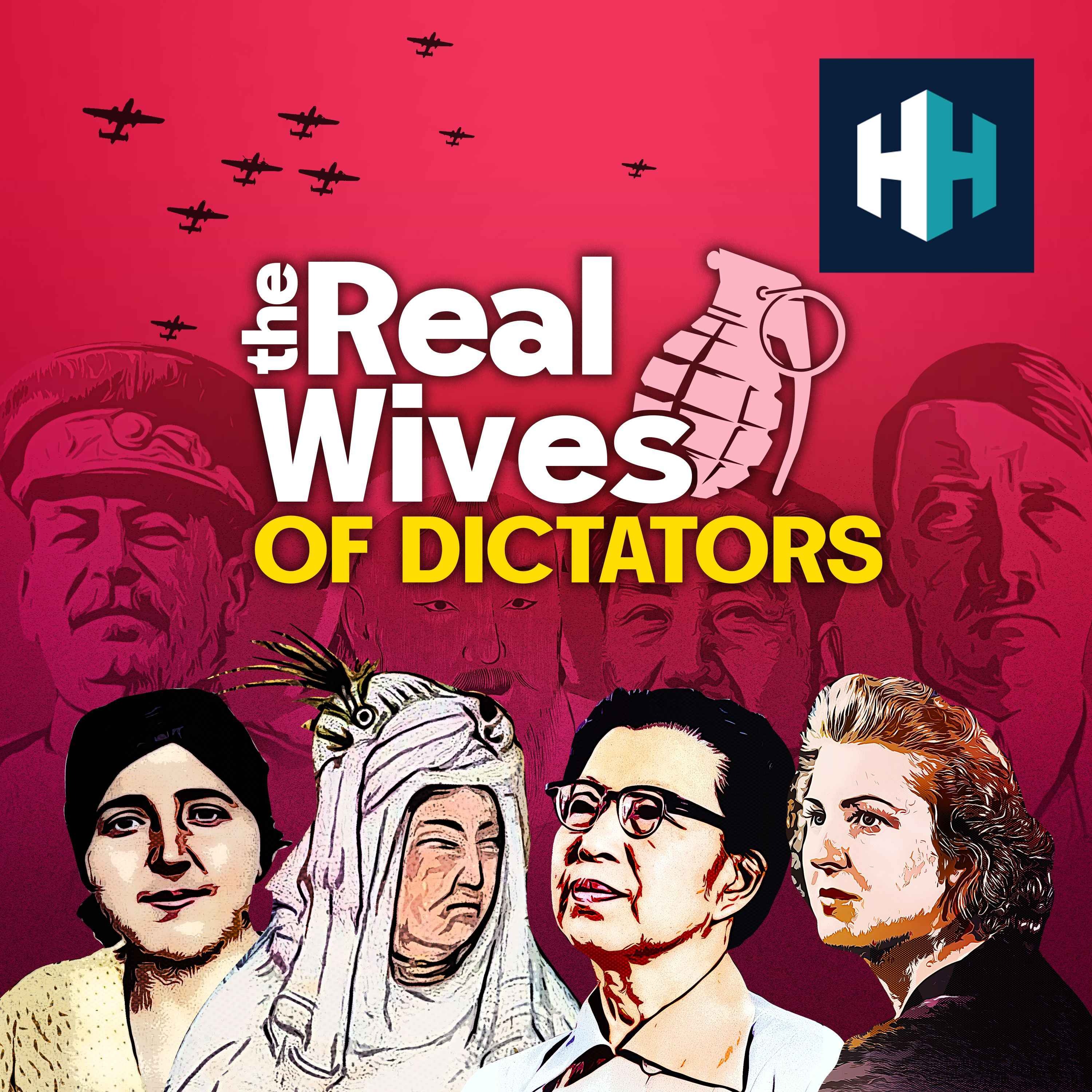
Betwixt The Sheets: The History of Sex, Scandal & Society
Real Wives of Dictators | Jiang Qing, Chairman Mao's Wife
00:43:00
Loading summary
Transcript126 lines
- [00:00]
Kate Lister
Hi, I'm your host Kate Lister. If you would like betwixt the sheets ad free and get early access. Sign up to History Hit with a History Hit subscription. You can also watch hundreds of original documentaries with top history presenters and enjoy a new release every single week. Sign up now by visiting historyhit.com subscribe.
- [00:27]
Thrive Market
Worried about what ingredients are hiding in your groceries? Let us take the guesswork out. We're Thrive Market, the online grocery store with the highest quality standards in the industry. We restrict 1000 plus ingredients so you can trust that you'll only find the best high quality, organic and sustainable brands all free of the junk. With savings up to 30% off and fast carbon neutral shipping. You get top trusted groceries at your door and you can stop worrying about what your kids get their hands on. Start shopping@thrivemarket.com podcast for 30% off your first order and a free gift.
- [00:57]
Paige Desorba
This is Paige Desorba from Giggly Squad. Opill is a game changer for sexual reproductive health. They're the first over the counter daily birth control pill available in the us. Finally, the days of needing a prescription to get birth control are over. Opill is FDA approved, no prescription needed, full prescription strength, estrogen free and available online and at most major retailers. So when there's no prescription, no appointment, there's no hassle, no more waiting at the doctor's office to get a prescription. Opill will be easily accessed over the counter in store or online and will be ready for when you need it. Opill is available online and at most major retailers. Use code giggly for 25% off your first month of opill@opill.com they say opposites attract.
- [01:45]
Sleep Number
That's why the Sleep Number Smart bed is the best bet for couples. You can each choose what's right for you whenever you like. You like a bed that feels firm but they want soft. Sleep number does that. You want to sleep cooler while they like to feel warm. Sleep number does that too. Why choose a Sleep Number smart bed so you can choose your ideal comfort on either side. Sleep Number Smart beds start at $999. Price is higher in Alaska and Hawaii. Exclusively at a Sleep Number store near you. See store or sleepnumber.com for details.
- [02:18]
Kate Lister
Hello my lovely betwixters. It's me, Kate Lister. I am here, you are here and we are all ready to proceed with the show. But before we can do that I have to tell you. This is an adult podcast spoken by adults to other adults about adulty things and an adulty way covering a range of subjects. And you should be an adult too. Do you feel safer? I'm glad you feel safer. I certainly feel safer. Right, on with the show. They say that behind every great man, there's a great woman.
- [02:47]
Paige Desorba
Mmm.
- [02:48]
Kate Lister
I've never really believed that. But what about evil men? Are there crap and evil women behind them too? And whilst it's the men in these horror stories that seem to get the most attention, in this brand new miniseries, we are exploring the lives of four of the wives of some of history's most bloody and notorious dictators. Were they victims?
- [03:09]
Linda Javin
She was certainly young at the beginning.
- [03:11]
Kate Lister
She was drawn to the flame.
- [03:13]
Linda Javin
Absolutely.
- [03:13]
Kate Lister
Or were they enablers?
- [03:15]
Linda Javin
She famously defied the judges calling them fascists. And she said, I was Mao's dog. I bit who he told me to bite. She's aware of the antisemitism.
- [03:29]
Kate Lister
It's not that she looks the other way, she doesn't think it's a problem.
- [03:33]
Linda Javin
She doesn't need to look the other way.
- [03:35]
Kate Lister
What was their life like behind closed doors?
- [03:38]
Linda Javin
She's grown up in a revolutionary family.
- [03:40]
Kate Lister
And she married a revolutionary. So you can assume that she's on the revolutionary side. And were any of these women thirsty for power themselves?
- [03:48]
Linda Javin
The rest of the leadership was dead set against it. They sensed her ambition. They had an instinct about her.
- [03:56]
Kate Lister
I'm Kate Lister and these are the real wives of dictators. Episode 4 Zheng Ching, aka the wife of Chairman Mao. Why do you look for the man?
- [04:13]
Paige Desorba
Oh, money, of course.
- [04:14]
Linda Javin
You're supposed to rise when an adult speaks to you, make perfect copies of whatever my boss needs by just turning a knob and pushing the button. Yes, social courtesy does make a difference. Goodness.
- [04:32]
Kate Lister
What?
- [04:32]
Sleep Number
Beautiful.
- [04:33]
Linda Javin
Dan. Goodness has nothing to do with it. Dearing.
- [04:40]
Kate Lister
Hello, and welcome back to Betwixt the Sheets, the history of sex scandal in Society, with me, Kate Lister. The arc of Zheng Ching's life is nothing short of incredible slash terrifying. From her working class upbringing to being an actor in 1930s Shanghai, to spearheading the Cultural Revolution with Chairman mao in the 1960s and 70s. And we all know how that went. But for better, or as we're going to cover quite a lot of worse, this woman left her mark. Why was culture at the heart of the revolution in China? Why was the Communist Party so wary of her? And how did she use her powers to wreak a terrible revenge on any ex lovers who'd wronged her? Well, joining me today is author and historian Linda Javin, author of Bombard the Headquarters the Cultural Revolution in China. And she's going to Help us get to know this woman a little bit better. And without further ado, let's do it. Hello, and welcome to Betwixt the Sheets. It's only Linda Javin. How are you doing?
- [05:51]
Linda Javin
I'm doing very well and very excited to be here, Kate. Thank you so much for asking me.
- [05:56]
Kate Lister
It's my absolute pleasure. You are here to talk to us about the wife of Mao Zedong. And this is a history I really don't know very much about at all. So I'm thrilled to learn about this today. Can I start as a first question? How do you pronounce her name?
- [06:15]
Linda Javin
You pronounce it Jiang Qing, but you can say Madame Mao if you like.
- [06:21]
Kate Lister
What would she wanted to have been called? Madame Mao?
- [06:24]
Linda Javin
No, I think she would have wanted to be called Jiang Qing. She definitely wanted to have respect and power in her own right, but she also knew that the source of her power was the fact that she was Madame Mao.
- [06:38]
Kate Lister
Wow. And you have been researching the history of China, and you are the author of the shortest history of China and bombard the headquarters the Cultural Revolution in China. So can I ask, what brought you to studying Chinese history? What's your origin story with this?
- [06:55]
Linda Javin
Oh, it's quite funny. I was studying at university and I thought I was going to do a degree in political science. That was very much my bent. And I basically wandered into a course on Chinese history and just was wrapped and studied more and more, took more and more courses, until the professor, the head of the department, said, you really have to study Chinese. And I was like, I don't know about that. I didn't do well with French in high school, you know. And he said, no, you have to.
- [07:29]
Kate Lister
Well, that's that, you know. Yeah.
- [07:32]
Linda Javin
He said, you won't understand China unless you learn Chinese. And you. You love Chinese history, but you're never gonna get there without Chinese language. So he pushed me. I did that, and I thank him every day of my life.
- [07:47]
Kate Lister
Wow. I don't know very much about Chinese history, especially in the 20th century. I know there was the rise of communism. I know that Mao came to power. I don't know what was happening in China before that that led to the rise of communism because it hadn't been communist before. So can you paint us a picture of the world that Chung Qing grew up in?
- [08:12]
Linda Javin
Yeah, sure. She was born in 1914. That was three years after the last dynasty was overthrown. That dynasty was the Qing Dynasty. It had seen some horrific incursions into Chinese sovereignty and real humiliation of China by Western Powers, beginning with the Opium War, that was a real marker in history, began to ask, what is wrong with this system? What is wrong with this dynastic system? We just keep repeating the same things. And they used to work, and they're not working in the modern world. Why isn't China a modern nation? What do we need to do to modernize? In the end, there was a republican revolution. That was in 1911. But because the political culture, it wasn't mature at all. And there were so many people who still kind of wanted to be emperor themselves, including the first president of the Republic.
- [09:13]
Kate Lister
Wow.
- [09:14]
Linda Javin
Exactly that. The Republic very quickly destabilized, and men with armies or control over militias and so on began more or less taking over parts of China. They were known as warlords. It was a really unsettled time. Meanwhile, the intellectuals, the writers, the students, other people were saying, we have to change our culture because if we want to create a modern nation, to have this republic succeed, it's not just about politics, it's not just about having a legislature. It's about thinking differently about women's rights, it's thinking differently about workers, it's thinking differently about education, all of this stuff. She was born at a moment of extreme ferment. When she was seven years old, 1921, that was the year that the Communist Party was formed in China. It was inspired obviously by the Soviet Union. But it saw the other people who had ideas for how to reform China as their ideas didn't go far enough. It wasn't going to work. You had to have a whole scale revolution. So Xi is born in this time of extreme political, intellectual and cultural ferment. And she was born into poverty. Her father was horrible. It's said that he once hit her with a spade and broke a tooth.
- [10:42]
Kate Lister
Oh, my God. Wow. Okay.
- [10:44]
Linda Javin
Yeah. Her mother, who was a secondary wife or concubine, fled with her. So she didn't have anything like a privileged upbringing, but she had this steely determination. And she went eventually to drama school, of all things.
- [11:01]
Kate Lister
Wow. Okay.
- [11:02]
Linda Javin
And she ended up in Shanghai. She was born in Shandong province, a northeastern province not terribly far from Shanghai. Shanghai at the time was a center of ferment of creativity. A lot of people were drawn to Shanghai. Bertrand Russell, all these other people would visit. And it had a kind of a cosmopolitan air. It developed into a real cosmopolitan city until the Communists whacked it after the revolution. But she ended up in Shanghai and played Nora on the stage in Doll's House.
- [11:44]
Kate Lister
So she's an actress?
- [11:46]
Linda Javin
Oh, yes. So she did drama school. She ends up in Shanghai. She's on the stage. She was playing Nora. Her husband on the stage was a man called Xiao Dan, who was really handsome, handsome handso, very dishy Chinese actor and one of the most popular of his day. She had a huge crush on him. This would not bode well for him in later years. We'll get back to that.
- [12:15]
Kate Lister
That sounds ominous. Okay. Yes.
- [12:18]
Linda Javin
And I actually knew his widow and she told me a lot about this later. But she was on stage then. Came into contact with people who were making films. She became a film actress.
- [12:32]
Kate Lister
Wow.
- [12:33]
Linda Javin
She didn't. She wasn't called Jiang Qing at the time. Her birth name was Li Yunhe, which means crane in the clouds, which is very sweet and poetic. She changed her name to Lanping Blue Apple as an actress, and she only changed her name to Jiang Qing later. So she went through a couple of name changes. So there she is. She's an actress. Meanwhile, there's a lot of political ferment in Shanghai. And the film scene is dividing, as it were, into the left leaning progressive people who were just so tested by so many things about how the west and Japan had humiliated China and continued to humiliate China. The Versailles Treaty that was at the end of World War I was incredibly insulting. China had sent, I think it's 120,000, a lot of workers over. They dug the trenches in Europe, they transported the wounded, they put together ammunition. They did dirty work, hard work. They did all of this. And at the end of World War I, the Treaty of Versailles, Germany was defeated and the treaty gave Germany's territories in China to Japan.
- [13:55]
Kate Lister
Oh.
- [13:56]
Linda Javin
Instead of restoring them to Chinese sovereignty.
- [13:59]
Kate Lister
Right. Okay. Where on this divide did she sit? Was she angry at the west or was she more conservative? I think I know what you're gonna say, but just give us an idea of what were her political views at this time.
- [14:12]
Linda Javin
So she fell in with the progressives and the left wing filmmakers and the people of that time in Shanghai. It's uncertain exactly how much she did in the communist underground, whether she was a full fledged part of it or not. There's some indications that not everyone completely trusted her or liked her enough to sort of.
- [14:36]
Kate Lister
She's sneaky.
- [14:37]
Linda Javin
She's a little bit sneaky. She's self aggrandizing. Although I don't know how much of that was present in Shanghai. It became much more a part of her personality later. Anyway, the Japanese invaded. Xi left Shanghai, and at this time, the Communists had gotten to a place called Yenan. They had Established a number of Soviets in the countryside where they disappropriated the land from landlords, distributed among the peasants and ran parts of the countryside along Soviet lines. These were called Soviets. But the government at the time, which was very, very corrupt, very right wing and very anti communist to the extent of preferring to fight the Communists to fighting the Japanese at times they had encircled one of the major Soviets and the Communists had broken out of this encirclement and fought their way across this very, very, very long and tortuous and unplanned route that took them to the northwest. That's called the Long March. So in the middle of the Long March, Mao had established himself as the leader of the Communists. He wasn't when they started out, but he was when they got to this place called Yan'an. He was formulating all of his major thoughts on how society should be restructured, on how the arts should be serving the people, et cetera. It was a very important time. Lots of intellectuals, lots of left wing people, and even a few foreign journalists who were sympathetic to the cause made it to Yan'an. And eventually Jiang Qing did too. But it wasn't an easy place to get to, but it was a place of political pilgrimage. Jiang Qing went. She was a young and beautiful actress. She was in her early 20s. Mao was in his mid-40s. Mao always had a roving eye. But Mao was married at the time to his third wife. His first wife. Yeah, but the story is this. His first wife was an arranged marriage. It's said that they didn't actually consummate it. He was very much against deranged marriages. The second wife, Yang Kaihui, was a revolutionary who was shot. So she was a martyr. She was a revolutionary martyr. And the third wife, He Zijun, was a revolutionary, a fighter. She'd borne Mao a number of children. She'd gone on the Long March. She'd suffered a lot and she had some mental problems for which she was sent to the Soviet Union to recover. But the other people in the Communist Party, the other leaders, had so much respect for her that when Jiang Qing comes along and catches Mao's eye, they were dead set against that. Ah, becoming anything.
- [17:42]
Kate Lister
I'll be back with Linda after the short break.
- [18:01]
Sleep Number
They say opposites attract. That's why the sleep number smart bed is the best bed for couples. You can each choose what's right for you whenever you like. You like a bed that feels firm, but they want soft sleep. Number does that. You want to sleep cooler while they like to feel warm. Sleep Number does that too. Why choose a Sleep Number Smart bed so you can choose your ideal comfort on either side. Sleep Number Smart beds start at $999. Price is higher in Alaska and Hawaii. Exclusively at a Sleep Number store near you. See store or sleepnumber.com for details.
- [18:33]
BetterHelp
BetterHelp Online Therapy bought this 30 second ad to remind you right now, wherever you are, to unclench your jaw, relax your shoulders, take a deep breath in and out. Feels better, right? That's 15 seconds of self care. Imagine what you could do with more. Visit betterhelp.com randompodcast for 10% off your first month of therapy. No pressure, just help. But for now, just relax.
- [19:15]
Paige Desorba
Hey, this is Paige from Giggly Squad and this episode is brought to you by Nordstrom. Nordstrom is here to help you dress in a way that feels totally you. With the best spring styles from boho dresses and matching sets to must have bags and sneakers. Discover thousands of items from lots of your favorite brands like Mango Reformation, Veronica Beard and Farm Rio. It's easy too, with free shipping and returns in store, order pickup and more. Shop today in stores and@nordstrom.com worried about.
- [19:45]
Thrive Market
What ingredients are hiding in your groceries? Let us take the guesswork out. We're Thrive Market, the online grocery store with the highest quality standards in the industry. We restrict 1000 plus ingredients so you can trust that you'll only find the best high quality, organic and sustainable brands, all free of the junk. With savings up to 30% off and fast carbon neutral shipping, you get top trusted groceries at your door and you can stop worrying about what your kids get their hands on. Start shopping@thrivemarket.com podcast for 30% off your first order and a free gift.
- [20:27]
Kate Lister
So she wasn't popular in the beginning?
- [20:29]
Linda Javin
Oh no, not at all. And also they didn't trust her enough. They didn't believe she had the true revolutionary credentials, especially to be with somebody like the leader of the party at the time, you know. So there she is, this pretty young actress, and she catches Mao's eye and he insists that he wants to marry her.
- [20:50]
Kate Lister
Had she been married before?
- [20:52]
Linda Javin
Yes, three times as well.
- [20:54]
Kate Lister
Oh, Choo Ching. Wow. Okay.
- [20:58]
Linda Javin
And she had a number of lovers and all this sort. You get pretty wild. Yes. So there she is, she's this pretty young actress. She's in her early 20s, Mao's in his early 40s. His wife, who's very respected, is mentally unwell. She's suffered so much. Mao wants to marry Jiang Qing. He wants to divorce his wife. The rest of the Leadership was dead set against it. In the end, Mao insisted and they agreed on one condition, that she stay out of politics for at least 20 years.
- [21:35]
Kate Lister
Oh, okay.
- [21:36]
Linda Javin
Because they sensed her ambition, you know, they had an instinct about her. And so they agreed to that. And the only person who really stood up for Mao and Jiang Qing being able to get married, the main person was a man called Kang Sheng, who would later become very crucial in the Cultural Revolution and an ally of Jiang Qing. He appears then in their story. So then things happened. What happened was there was the war against the Japanese that ended with the surrender of the Japanese in 1945. Following that, there was a civil war that broke out between the Communists and the Nationalist Government. The Communists won in 1949.
- [22:23]
Kate Lister
It's all go, isn't it?
- [22:25]
Linda Javin
Oh, it's go, go, go.
- [22:26]
Thrive Market
Yeah.
- [22:27]
Kate Lister
Wow. You said it was turbulent, but this is, this is really turbulent.
- [22:32]
Linda Javin
Super turbulent, you know, and we haven't even gotten into the details of the war and who fought and all and how they fought it and all that sort of thing. It was very brutal. The country. By 1949, when the Communists founded the People's Republic of China, at that point, the country was pretty much. It was a field of devastation. You can just imagine. The communists had to figure out, how do we get enough hospitals? How do we educate this populace that has a huge rate of illiteracy? How do we do all this stuff?
- [23:06]
Kate Lister
How do we feed them?
- [23:07]
Linda Javin
How do we feed them? Exactly. Now, Mao always felt that ideology was really important. You didn't want to just remake the country's systems. You had to remake the people's thinking. And this is something crucial to remember when we learn what happened in the end with Jiang Qing, because they allow her to take a fairly minor role in the film industry, which is fine, so she can't do too much damage there as far as the other leaders are concerned. Mao, meanwhile, is accelerating the collectivization of property, is rolling out ideological thought reform campaign after ideological campaign. People are beginning to go to labor reform. It's beginning to get pretty real. By the time he launches the Great leap forward in 1958, which was supposed to be a complete leap into real communism. Total collectivization of property, the creation of people's communes everywhere. This was a major factor in a three year famine that saw something like 40 million people die.
- [24:22]
Kate Lister
Holy hell.
- [24:23]
Linda Javin
We don't know the exact figures.
- [24:26]
Kate Lister
Wow.
- [24:27]
Linda Javin
Between 30 and 70 million. So by the early 60s, Mao was being sidelined by more practical leaders who thought, let's just bring, let's Let the peasants grow. Let's something besides the crops we tell them to grow so that they can have something to eat. Let them keep a little bit. Let them sell a little bit. Mao was furious. He was sidelined. Meanwhile, Jiang Qing had been focusing on her own little things, one of them being, how do you reform a culture? How do you make it both modern and revolutionary? So she'd already begun thinking about how do you change, for example, Peking opera, you know, how do you create revolutionary operas?
- [25:12]
Kate Lister
Revolutionary operas?
- [25:14]
Linda Javin
Yes. Meanwhile, she's nurturing all of her grievances. He's nurturing his grievances. They're both looking at other people in the Party and thinking, you've done this to me. You've done that to me. This is a very simplified way of putting it.
- [25:32]
Kate Lister
The paranoia is growing, and the nastiness.
- [25:35]
Linda Javin
Within the Party, the paranoia, the nastiness. So what happened in 1966, to cut a long, complicated story short, was that Mao declared that it was time to bombard the headquarters. The Party passed a document, the Cultural Revolution, the Great Proletarian Cultural Revolution was on. Why did it happen? Mao wanted revenge against his enemies. Mao wanted to ensure that China did not go into what he considered the stasis, the terrifying, revisionist stasis of the Soviet Union under Khrushchev, where Khrushchev was negating everything that Stalin did. This really upset him.
- [26:23]
Kate Lister
And what's Cheng Ching doing this whole time?
- [26:26]
Linda Javin
She's just working on her operas, working on her stuff, and her ears are very much pricked up. And following all this, the Cultural Revolution begins, and now she can really come into her own. Because. Because one of the big things of the Cultural Revolution is also to destroy the old culture and build the new. She becomes the head of the army's cultural work, and she gets to wear an army uniform. She wears it very smartly, with a tight belt around her little waist. But she's already got a very proletariat look with short hair and these glasses. She is not in the Politburo at this point, but she becomes very quickly a leader in the Cultural Revolution. She is the one who tells the Red Guards that they can beat up bad people. Oh, her husband said so. Oh, yeah. She is the one using all of her drama, can speak to young people and whip them into a frenzy, which her husband does a very good job of as well. And he's really the main one who's doing that. But she's finding her feet. She's finding a purpose. And she gathers around her a number of composers and actors and directors. And they set about changing the culture because now she has the power and the permission to do this. So all of her work on what she calls revolutionary model operas, they're not actually operas in Chinese. It's performances or stage performances. Xi yangban xi. And. And the idea is that they are models in the sense that you have industrial models. They are the thing from which everything can be copied and you stay with those specifications. So in her revolutionary model operas, the size of the patches on the peasant's uniform, the color of the greenish tinged makeup of the bad guys, the way that rosy light always fell on the heroes, all of that was part of her design for a new culture. These things are quite kitsch, but they're really riveting. They tell simple stories about revolution, about the need to overthrow the bad, the corrupt, the bandits, for the people to be the heroes, she said. And this is very influential. She said, you know, the stage in China has always been dominated by the emperors and the beauties and the scholars. And now it is the workers, the peasants and the soldiers who will be the heroes.
- [29:15]
Kate Lister
I'll be back with Linda after this short break.
- [29:34]
Il Makiage
I used to think buying foundation online was impossible. How am I supposed to find my shade when I can't even get it right in store? Then I discovered Il Maquillage. I took their AI powered quiz to find my custom match and wow. This foundation is literally my skin in a bottle. The undertone and coverage are spot on. It's so neutral and weightless, I can't even tell I'm wearing makeup. Plus with Try before youe Buy, you can try your full size at home for 14 days. Take the Power Match Quiz now at ilmaquillage.com Quiz I L M A K I A G E.com Quiz they say opposites attract.
- [30:06]
Sleep Number
That's why the Sleep Number Smart bed is the best bed for couples. You can each choose what's right for you whenever you like. You like a bed that feels firm, but they want soft. Sleep number does that. You want to sleep cooler while they like to feel warm. Sleep number does that too. Why choose a Sleep Number Smart bed? So you can choose your ideal comfort on either side. Sleep Number Smart beds start at $999. Price is higher in Alaska and Hawaii. Exclusively at a sleep store near you. See store or sleepnumber.com for details.
- [30:48]
Kate Lister
Were these shows popular?
- [30:50]
Linda Javin
They were popular and they were everywhere. They became less popular as there was nothing else to see. Yeah, that'd do it at one point. Later on There was a decree that there should be a little bit more flexibility and you could have local dialects and maybe a little bit of, you know, people could use their creativity to create things that weren't exactly following these models. There were 8 to 11 major revolutionary model operas. And, I mean, that included a symphony, it included ballets, it included different kinds of performances. But when the people themselves started to make their own works with great names, like, you know, the bourgeois dictatorship must be overthrown. I mean, we're not talking about. We're not talking about wild experimentation.
- [31:42]
Kate Lister
It's not subtle, is it?
- [31:43]
Linda Javin
No, it's not subtle, and it's not liberal in any other sense. She was like, oh, my God, they're saying revolutionary words, but they might as well be naked on the stage. She was very tested by any kind of deviation. As the Cultural Revolution began to take off, very quickly, it became very violent. The first victims were teachers and principals.
- [32:08]
Kate Lister
Teachers?
- [32:09]
Linda Javin
Yes.
- [32:09]
Kate Lister
Why teachers?
- [32:10]
Linda Javin
Okay, so Mao had said that education shouldn't be just in the classroom. You have to go out, and the students should be in the factories and the fields learning from the peasants and the workers. A lot of teachers dragged their feet over that one. The teachers should also be out in the fields. That was part of it. Part of it was that he told the young people that they were the future of the revolution. They were the key. They were the revolutionary successors, and they needed to rebel against authority and what authorities are around students. They're the teachers.
- [32:43]
Kate Lister
The teachers.
- [32:44]
Linda Javin
The teachers were of course, blamed with holding back this revolutionary tide. It's a complex story, but where Jiang Qing comes in, she put herself out there. She was somebody who communicated with the students. Now, there were very, very violent scenes of persecution, and obviously Mao's major enemies within the Party were all subject to that as well. The Cultural Revolution eventually became a movement of mass killing, so that in the countryside, you would have people killing entire families just because they belonged to the wrong class. It was brutal, unceasingly violent.
- [33:26]
Kate Lister
It's awful.
- [33:27]
Linda Javin
I know. And while the masses were going on with all this stuff, Mao was getting rid of his enemies, and Jiang Qing was using her power to target her enemies. So Zhou Dan, remember the dishy actress? I do remember him, yeah. So he went to prison and had terrible, terrible treatment in prison. He was very badly abused. Other enemies. There was a woman who once got an actress in Shanghai who got one of the roles that she coveted, and that person became a victim.
- [33:57]
Kate Lister
God, these aren't political enemies. These are just people that have pissed her off over the years. This is insane.
- [34:04]
Linda Javin
It was a time of total insanity. It was a time of such difficulty and pain and suffering. So as the late 60s went on, Mao's roving eye, you know, he and Jiang Qing were basically comrades, and he had a lot of young women who were his train attendants, attendants on his special train and this and that, dancing partners, all that sort of thing. And she became quite obsessed with extreme radical politics. Even in the Cultural Revolution, even among the people who were in power, there were different factions, and she was the leader of the most radical faction. Mao would play one faction against the other, and he would give her ability to do things, and then he would put her down. He kept people constantly on edge, and she was one of the people he kept on edge. He was the person who coined the phrase the Gang of Four. He said of her and her three closest cronies that they were acting like a gang of four, going behind his back and using his name to justify all the things that they were doing. She survived all of this criticism. She was distant from him in the later years, but that was as a wife. But when he was dying, she kind of stepped in and reasserted herself. After he died, she apparently told other leaders that. That in fact, she had been the one who had authored his later works.
- [35:48]
Kate Lister
Wow, okay.
- [35:49]
Linda Javin
And that they needed to study them. And he was clearly making a big play to be the person who would be the natural, the next leader of China. Now, there were a lot of people who didn't like her. This seems to be what they were. Oh, yeah. And they didn't trust her. And there was word that she and her fellows were planning a couple. So about one month after. In the month after Mao died. Mao died in September 1976. In October 1976, several top leaders conspired very secretly, and they arrested all the members of the Gang of Four, including Jiang Qing, immediately. There was this huge propaganda thing against the Gang of Four, and people responded to that like they had not responded to a lot of propaganda for a long time. And the thing is that you already could see that coming. One year before Mao was ill, the premier, Zhou Enlai, who had been seen by the people as a moderating force in the Cultural Revolution, whether or not it's true is a subject of controversy and debate. But Zhou Enlai was much loved by the people. He died in early 1975. Jiang Qing, who hated Zhou Enlai, forbid people to mourn with black armbands and wreaths and so on. And they were so furious, they poured into Tiananmen Square among other places, and mourned Zhou Enlai and read poetry. That was so obviously against Jiang Qing, calling her the White Bone Demon. They talked about the White Bone Demon. They didn't say it was Jiang Qing. Everybody knew who it was. That is an evil spirit from a Ming Dynasty novel.
- [37:48]
Kate Lister
Wow. I mean, it kind of sounds like it's deserved, though. I've got to be honest. She hasn't come off well during this podcast. She sounds like quite a nasty person.
- [37:57]
Linda Javin
She was nasty and she was megalomaniac and mythomaniac.
- [38:01]
Kate Lister
Yeah, maybe nasty wasn't strong enough, actually.
- [38:05]
Linda Javin
But she's quite fascinating. She allowed an American, fairly naive American journalist, scholar Roxanne Wittge, into her circle and she wrote a biography called Comrade Jiang Ching. Spent years with her, spent a long time with her, and described moments where, for example, she was sitting pressing orchids next to a goldfish pond. You know, it was this kind of. She was very complex. She wanted to be very. She impressed Imelda Marcos on a state Visit in the 1970s as being very feminine and soft spoken. She was always submissive to Mao. She was always a bit afraid of Mao. I think she was somebody who grew up in domestic violence. She made it on her own in Shanghai, a tough city. She joined the Communists. There were things about her that were very strong. The biography puts too much of a feminist slant on this. I don't think feminism was her main driver. She did a lot of bad things to a lot of women. Not much sisterhood there, but she certainly was a woman who perhaps in other circumstances would have had other opportunities. I don't know. I'm not very sympathetic, but I think we have to look at her as a complex personality. When she was put on trial in 1981, she famously defied the judges, calling them fascists. And she said, I was Mao's dog. I bit who he told me to bite.
- [39:47]
Kate Lister
Wow. So no, no remorse, no apologies for this. She's just defiant to the end.
- [39:55]
Linda Javin
Defiant to the end. And 10 years. So she was sentenced to death with a two year reprieve, and then they commuted it to life. 10 years later, 1991, she's suffering from cancer. She had always been of ill health or for a long time. She had suffered from many different things. In the 1950s, she did have a cancer. She suffered a number of different physical ailments. It's hard to say how much. Became hypochondria. Mao's doctor, in his famous memoir, really didn't like Jiang Ching and felt she was a hypochondriac. But she certainly had various health issues. 1991, she is definitely got cancer. She's got it bad. She commits suicide in her cell, leaves a note basically saying, my teacher Mao, I'm coming, I'm joining you. But also not forgetting to rag on her enemies as well at the same time. A little postscript. So she was really hated. I spent a lot of time in China in the 1980s and boy did people hate her. Boy, did they love to tell stories about her. And it wasn't just Xiaodan's widow. Everyone, people really despised her. And when she was buried, I mean, I don't think anybody would have thought to go and pay tribute to her grave. Xi Jinping in 2018, the same year that he allowed himself to have an indefinite number of terms, breaking the two term rule that the post mal leadership had set up. That very same year, people were allowed to visit her grave. We've seen resurgent Maoism because people are like, well, in Mao's era, they don't understand it well, because history is not taught properly in China. It's not taught in the, you know, it's very heavily censored. People have an idealized vision of the Mao era. Even the Cultural Revolution is a time of purity, no corruption. It was certainly better for social welfare, you know, in terms of the system, not necessarily in terms of the delivery. But today people don't necessarily have health care. The systems are a mess. People don't feel supported. So there is this resurgent feeling about the Mao era that perhaps we need to get back to some of that.
- [42:19]
Kate Lister
Oh God.
- [42:20]
Linda Javin
I know Jiang Qing has been a beneficiary of this. So people have gone and visited her grave.
- [42:27]
Kate Lister
As a final question then, Linda, and you've been incredible to talk to, and fleshing out this, what you'd have to politely refer to as complex woman, what legacy do you think that she has left today?
- [42:40]
Linda Javin
Oh, that is a good question. Okay, here is one of the unfortunate parts of her legacy. Her story, almost immediately after the Cultural Revolution, was instantly used or weaponized as yet another cautionary tale about the dangers of giving women power. China has only had several women who have ruled, only one in her own name, Empress Wu of the Tang Dynasty. And Jiang Qing actually liked Empress Wu so much and admired her so much. Empress Wu was actually a very interesting character, really complex and very capable. But Jiang Qing, when Imelda Marcos was coming to visit, originally wanted to dress up as Empress Wu and she apparently had some costumes made, but was told that that would not be A good look. Wonder why. But Empress Wu is constantly dragged up as this, you know, as a cautionary tale of what happens when women get power. There's three women, and there were movies made right after the Cultural Revolution, those early years, movies about some of these women that were obviously all about Jiang Qing. So that's an unfortunate part of her legacy. And it must be said that there is no woman on the Politburo Standing Committee, which is, you know, the important thing. There has never been a woman on the Politburo Standing Committee. And Jiang Qing, sadly, probably reinforced a lot of patriarchal attitudes towards women that were existing in China. Their sayings about women in power, that's as natural as a chicken crowing as opposed to a rooster, you know?
- [44:34]
Kate Lister
Yeah.
- [44:35]
Linda Javin
Part of her legacy is that very unfortunate reinforcement of that traditional belief. Another legacy, though, is these operas is these strange things which still have appeal. People still watch them, and I have seen several of them several times. They are fun. Oh, really? I know, it's horrible. I know it's horrible. It's like. I know I shouldn't say that because my ex husband, Jeremy Bombay, who's one of the greatest Sinologists alive, you know, calls that sort of thing the Muzak of the Chinese holocaust.
- [45:17]
Kate Lister
Oh, my God. Right? Oh, wow. Not pulling any punches there.
- [45:21]
Linda Javin
Okay. No, he's not. Yeah, he doesn't. But if you sit. If you watch, for example, taking Tiger Mountain by Strategy, which is a great story about defeating these bandits who've been terrorizing the common people, it is enjoyable. It is fun. If you watch the red detachment of women with these ballerinas with their guns leaping in the air. You know, I have friends who grew up during that time and say that in such a puritanical time, when people were supposed to be completely asexual women, she contributed very much to the idea of a strong women as an ideal of beauty being combined with strength. And you see these heroines in these operas who are strong, physically strong, and they are mentally strong, and there's something about that that's very appealing. Also in Red Detachment of Women, they were wearing shorts and you could never see women's legs. I have several male friends who say that that was the source of their fantasies of their dreams.
- [46:32]
Kate Lister
Wow. Okay.
- [46:33]
Linda Javin
That. That was just unbelievable. So, you know, she was many things to many people. She was an example of the bad power of women. She was somebody who created these operas, these cultural artifacts that are still, I have to say, enjoyed by many people in China today. Some for their kitsch value and others for nostalgic. Reasons because that was the music, that was the entertainment of their childhood. You know, for people who grew up on Beyonce, when they're older, they're going to look back at Beyonce. They're gonna look back at whatever was part of your youth is going to be something you look back on nostalgia. And she helped create those things, for better or worse.
- [47:15]
Kate Lister
Linda, you have been marvelous to talk to you. You've been absolutely fascinating. And if people want to know more about you and your work, where can they find you?
- [47:22]
Linda Javin
I do have a website, so it's www.lindajavin.com and my my new book, Bombard the Headquarters China's Cultural Revolution is coming out in April in the uk.
- [47:36]
Kate Lister
So exciting. Thank you so much for talking to us today about this very complex woman. You've been wonderful.
- [47:43]
Linda Javin
Oh, thank you, Kate. It's been so much fun.
- [47:52]
Kate Lister
Thank you for listening. And thank you so much to Linda for joining joining me. And if you like what you heard, don't forget to like review and follow along wherever it is you get your podcasts. I know everybody says that, but it does actually help us quite a lot. If you'd like us to explore a subject or maybe you just fancied saying hi, then you can email us@betwixtistoryhit.com We've got episodes on the truly horrible history of gonorrhea and the first episode in a new miniseries of the history of boys, starting with the est of all the Boys, Lord Byron. This podcast was edited by Tom Delaghi and produced by Stuart Beckwith. The senior producer was Charlotte Long. Join me again Betwixt the Sheets the History of Sex Scandal in Society, a podcast by History Hit. This podcast contains music from Epidemic Sound.
- [48:46]
BetterHelp
Forever change the way you sleep with the softest 100% organic cotton sheets from Boll and Branch, you'll fall asleep faster wrapped in the most luxurious comfort. You'll never sleep hot again with sheets that feel airy and breathable. You'll experience the purest softness on night one and feel your sheets get even softer with every wash. Take 20% off your first set of sheets during Bolen Branch's annual spring event at bolenbranch.com with code BUTTERFLY limited time only exclusions apply. See site for details.
- [49:22]
Paige Desorba
Hey, this is Paige from Giggly Squad and this episode is brought to you by Nordstrom. Nordstrom is here to help you dress in a way that feels totally you with the best spring styles, from boho dresses and matching sets to must have bags and sneakers. Discover thousands of items from lots of your favorite brands like Mango Reformation, Veronica Beard and Farm Rea Video. It's easy too, with free shipping and returns in store order, pickup and more. Shop today in stores and@nordstrom.com.