← Beyond Blind Blaming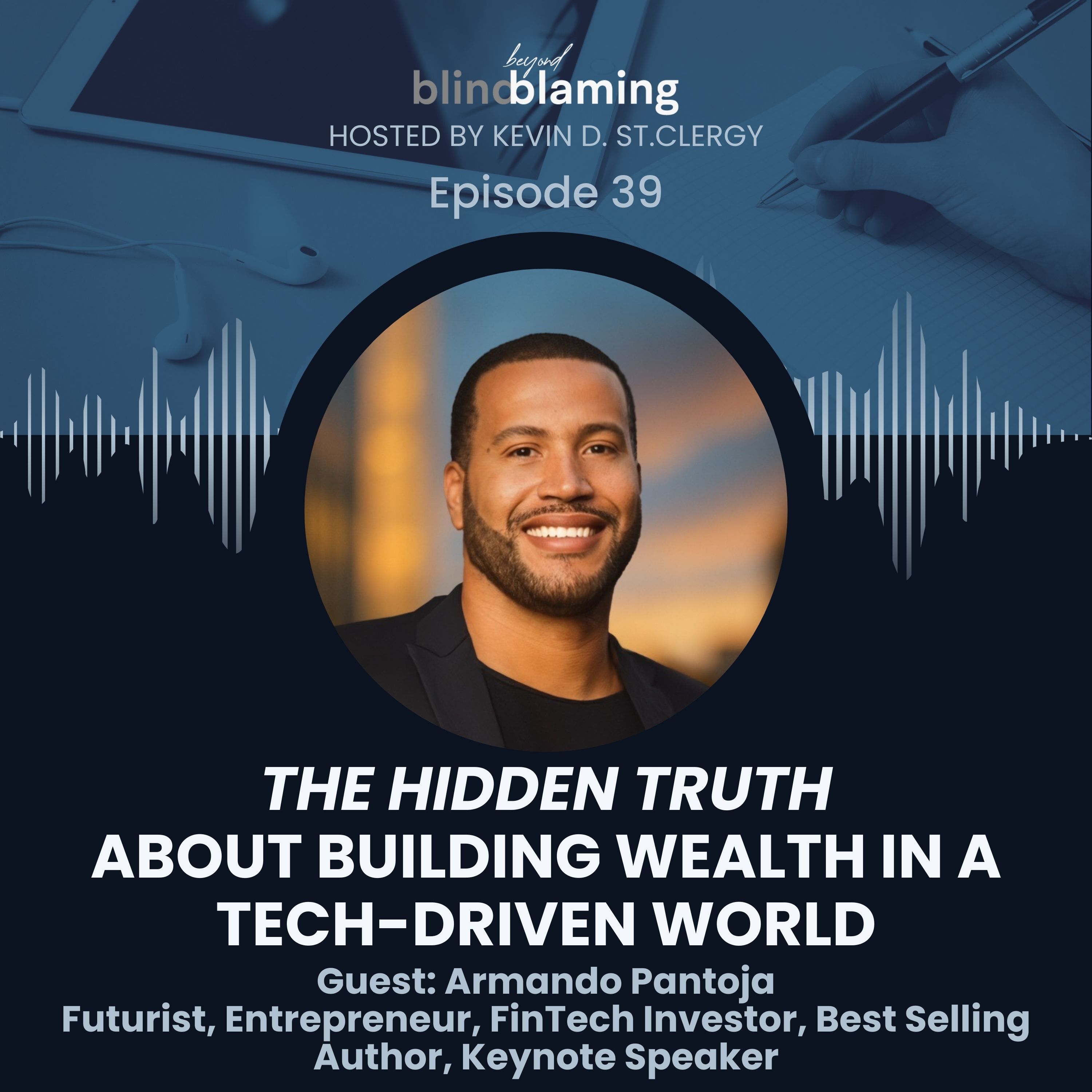
Loading summary
Transcript71 lines
- [00:00]
A
If supply and demand, what we learned in high school, that if there's a demand on an asset and there's a limited supply, eventually the price has to go up. So once you explain it like that, people start to say, wow, I understand, then you can start explaining, yeah, now you invest in it and you can make money. It's bottom up education instead of top down.
- [00:20]
B
Today I'm joined by Armando Pantoa. He is a technology entrepreneur, financial expert and one of the leading voices in fintech, blockchain and cryptocurrency. Known as the Tall Guy Tycoon, Armando combines his deep technical knowledge with practical business strategies to help individuals and companies navigate the complex world of modern finance. With a background in software engineering and financial markets, Armando has built and advised multiple tech driven companies working at the intersection of artificial intelligence, blockchain and investment strategy.
- [00:50]
A
What I've learned over my life is the founder of McDonald's said the same thing. It's persistence is that you just have to keep doing it going and never stop. You know, just keep pushing and pushing. Eventually a door will open and then you continue to be possessed. Another door will open and eventually get to where you need to go.
- [01:18]
B
Welcome to Beyond Blind Blaming. This is the place where we explore how easily hidden truths can hold us back, trapping us in cycles of frustration and blame, often without even realizing what's truly stopping us. Each week I'm joined by experts and professionals who share their journey of taking back control of their story, overcoming hidden challenges, and discover how to stop blind blaming from dictating their outcomes. The insights you're about to gain will help you see beyond your current limitations, find the courage to seek new perspectives, and ultimately live a life that's both purposeful and and powerful. So if you're ready to break free from blind blaming and discover what's possible, you'll definitely want to listen to my next guest. I'm your host, Kevin St. Clergy and today I'm joined by Armando Pantoa. He is a technology entrepreneur, financial expert and one of the leading voices in fintech, blockchain and cryptocurrency. Known as the Tall Guy Tycoon, Armando combines his deep technical knowledge with practical business strategies to help individuals and companies navigate the complex world of modern finance. With a background in software engineering and financial markets, Armando has built and advised multiple tech driven companies working at the intersection of artificial intelligence, blockchain and investment strategy. His insights have helped businesses scale, investors build wealth and entrepreneurs leverage technology for success. He's passionate about educating people on financial literacy, disrupting traditional systems and creating opportunities through innovation. Whether it's through speaking engagements, tech development, or sharing knowledge on social media, Armando is on a mission to bridge the gap between technology and finance. Armando, welcome to the show.
- [02:52]
A
That was a great answer. I appreciate that.
- [02:54]
B
Yeah, thanks. Well, you built a career at the intersection of technology and finance. What inspired your journey into fintech and blockchain? And how did you get started?
- [03:03]
A
Well, I've always been interested in finance since I was a kid, but what I was really interested in was technology. Ever since I was even a younger kid, since I can remember, I've always been attracted, drawn to technology. So around 2009, 2010, I was in grad school. That's what I discovered. Cryptocurrency. Now, cryptocurrency at the time was, you know, a little thing. It was 2010, Bitcoin. That's the first entry into cryptocurrency that I had. And it just inspired me, you know, the way that the technology could be applied to finance like that, and the way that mathematics, scarcity, and also cryptography could be applied and create something that nobody, the world has never seen. So it drew. That drew me into the world of finance around 2010, 2011. Then I went on to the stock world. I worked for a couple of stock companies, and then I built my own company called Ice Ice Stock Picker, which won a bunch of awards. It was able to pick stocks that were going to. You know, basically it was a. It was. It's called a Dead Cat Bounce, so. So whenever a stock goes up in the morning, only drops and comes back. That's all it did. It was target stocks that fit that pattern and it would send out alerts. And at the time, this is like 2012, 13, it was innovative. Used AI to figure that out. Early versions of AI, Google, and a version of AI that we used and plugged in, and it did very well. Then later on, I built another site with my business partner called ICO Ranker, that was in 2016. At that time, it was the third biggest crypto site in the world. What it did is it used the same type of AI pattern recognition to figure out which cryptos were going to do well, and that one ended up getting acquired by a major company. And, you know, it led me to where I'm at today.
- [04:49]
B
That's amazing. What a story. Well, I find that many people struggle to understand blockchain and cryptocurrency behind the hype. How do you explain these technologies in a way that resonates with everyday people?
- [05:01]
A
The real thing people try. Most people explain crypto and that's the biggest problem in cryptocurrency. Now even the major people that talk about it, they explain crypto first and they out with somebody and they say, hey, you need to invest in this thing. The person says, why? Oh, because it's going to go up, don't worry about it. And now the average person is a, is logical and rational. So they say, why is it going to go up? And really the person explaining doesn't know either. They're just saying it's going to go up. So I believe that the right, right approach is to explain from the bottom up. You know, explain that, you know, bitcoin, for example, there can never be any more bitcoins created. It's mathematically impossible for that to happen. It's not like any other type of technology where we could just, you know, create infinite amounts. For example, Microsoft Office. Now Microsoft can create infinite versions of that is no stopping them. But the way that bitcoin is created is that it is interrelated in a way that there's no way that 20, more than 21 million Bitcoin could ever be created. Now that people have found value, then we see the government adopting it, we see a lot of major corporations adopting it. You should know that if supply and demand will be learned in high school, that if there's a demand on an asset and there's a limited supply, eventually the price has to go up. So once you explain it like that, people start to say, wow, I understand, then you can start explaining, yeah, now you invest in it and you can make money. It's bottom up education instead of top down.
- [06:22]
B
I love it. Well, blind blaming is about where you think you know what the problem is and it's something completely different. So in your experience, what's the biggest misconception people have about building wealth or succeeding in technology or both?
- [06:36]
A
Well, the biggest, one, some of the biggest misconceptions I would say is that people, some people believe it's harder than it really is. They think that you have to have a special skill of talent. What I've learned over my life is the founder of McDonald's said the same thing is persistence is that you just have to keep doing it going and never stop. You know, just keep pushing and pushing. Eventually. So a door will open and then you continue to be persistent, another door will open and eventually you'll get to where you need to go. I don't think I'm the most talented. I don't think I'M the smartest. I just can't. Never stopped. You know, every failure just reset, regrouped, and just kept going. And a lot of times when you do that, you look crazy to the average person because the average person can't take let down. So you look at you and say, why does this guy keep going? He's lost three or four times. But in the back of my mind, I always knew that eventually, if you just outlast everybody else, first of all, you'll learn along the way. Second of all is everybody else get up. Your competition will start to get smaller and smaller, and eventually you'll win.
- [07:34]
B
I always like to say, it's hard to beat someone who never quits.
- [07:36]
A
Exactly. That's a good point. I like that quote.
- [07:39]
B
Yeah. And I think what you brought up, I think a lot of people are scared or fearful of failure, and I think we all fail. But I think I loved what you said. My mom said it a little differently. I can't say it on the show, but she said, you know, life sometimes will knock you down in the dirt. It's up to you whether you get back up, dust yourself off, and keep moving.
- [07:59]
A
Redefine failure. Right. Is that there's no such thing as failure. The only way you can fail is if you define what the failure is. So, for example, if I'm trying to, let's say, build a bridge to another side of a river, but I define failure for it in my mind is that if the bridge does not get to the other side, I failed at that project. But if you say, well, my goal is to learn along the way and build better bridges in the future, that's my overall goal. So even if you get halfway, you say, well, at least I learned that this method won't work and I could do another method. So you, you, in your mind, you haven't failed on the bridge better, you just learned how not to do it and you moved on to the next project. Now, I think that mindset does change it. It lets you be more persistent going forward because you've never defined failure as not meeting this small goal. You define failure as. You don't define it at all. You say, well, I'm going to learn along the way. There is no such thing as failure. And I think that that's a onset shift that can help a lot of people.
- [08:55]
B
I think so too. I think what you're describing, I think it's Tony Robbins who said it. There's no such thing as failure, only results.
- [09:01]
A
Exactly.
- [09:02]
B
If you don't like the Results you're getting make a change.
- [09:04]
A
I agreed.
- [09:05]
B
Well, you've worked with startups and entrepreneurs navigating the fast changing world of tech. Can you share a time when a company or individual thought they had one problem, but the real obstacle ended up being something they couldn't see or didn't see?
- [09:17]
A
I mean, I've worked with companies before on technology and you know, and I would say some of the times they, they believe their problem is talent and it really is infrastructure or, or management. A lot of times I work at companies before, I've worked for companies before. And what they, a lot of times what they'll do is they'll believe that, that maybe the workers aren't working as hard or whatever. But really there's an upper management problem. Right. Is that. And I believe that really at a company or any type of organization, I think that almost all problems are management problems. You know, a lot of times they will say it's talent or whatever, but I just think that that's the biggest misconception I normally run into.
- [09:55]
B
I think you're right. It's blind blaming to a T. It's what my new book is all about, where they think it's one problem, but it ends up being something else. Most time they can control it, but sometimes it's out of their control. I hear all the time, people don't want to work anymore. Kevin, I'm like, really? I just don't think they want to work for you.
- [10:10]
A
Yeah, like even Art of War says that it's like if the, if the soldiers don't do something, it's the commander's fault and they would punish the commander, not the soldiers.
- [10:22]
B
Oh, interesting. I love that. That's a story I'll have to ethically swipe and redeploy, but I'll give you credit. Well, financial literacy is a huge barrier for many people. What are some of the biggest blind spots people have on managing money or investing?
- [10:35]
A
I would say right now especially, is that people don't understand the effect of compounding or what a reasonable return is. Right. Is that a lot of times, especially in cryptocurrency, they've heard stor about people, you know, turning $100, $200 into millions and stuff. So people start to expect those type of gains and when they don't get those, they get disappointed. But the biggest, I guess power and investing is compounding over years at a small percentage gain like 12, 13, 15%. If you do compounds over years, that ends up being a lot of money over 10, 15 years. And a lot of people don't realize that is that they get impatient and they pull out too early or they give up. But that are the. The compounding thing. And that's. I believe that Einstein said it's more. It' wonder of the world is compounding returns. And I think people just miss. They miss that because they're looking for fast gains instead of slow returns.
- [11:28]
B
I think we always want stuff at the speed of now.
- [11:31]
A
Yeah.
- [11:32]
B
What I hear you saying is that people need to learn, just like with any investment strategy, to play the long game. And that's where you start to get. Generate some true wealth.
- [11:39]
A
Yeah, I agree. Is long game is. Is the biggest advantage most people have another time is that if people don't, you know, see it like that, like I always have a story. It was a guided, you know, maybe a while back I came up with this plan. And that was back when I sold my company. I was gonna have a plan. My first person that was gonna be my business partner. I sat down with him and said, look, I have this idea it's gonna take three years to deploy it, and maybe in the fourth, fifth year we can sell it and get acquired. And he looked at the plan, he said, I like the plan, but I'm not waiting five years. I need it now. Okay. So I went to my next business partner and he, of course took it. We, you know, we went ahead with it, and then we ended up making a bunch of money, became multimillionaires, both of us. And the other guy that said I couldn't wait is still in the same place, except seven years have passed, you know.
- [12:23]
B
Yeah.
- [12:24]
A
So people think that things, People especially like media and what we see on TV is we. People get rich overnight. And that's normally not how it happens. You know, the average millionaire is 55 years old the first time they make their first million.
- [12:38]
B
Yep. I was 50. And it's interesting because I had a kid recently say, well, you know, Kevin, not everybody was afforded the same opportunities as you. And I said, well, that might be true, but this didn't happen overnight. This took me 21 years to get. And sometimes working seven days a week for six years in a row, so.
- [12:55]
A
Exactly. I know that. Not sleeping at night, staying up three days, straight up, done, all of that.
- [13:00]
B
Yep. Having to write a refund check and you don't have the money in the bank.
- [13:06]
A
Yeah.
- [13:09]
B
We had a digital marketing agency, actually. So we. It was funny because when we got away from focusing on the recurring revenue and we focus more on helping people grow their business. That's when we started to grow, when we really started focusing on making a difference in people's lives and providing them business coaching and teaching them how to run their business better. Because sometimes we start generating leads. And then they would complain, saying. And they would call me, saying, I'm having a slow month. Is my website still working? This goes back to the blind blaming concept, which we'll get back to. And I'm like, well, yeah, we didn't just rip your website down. Let me go check. It looks like you got 22 marketing calls last month, but your team only answered two calls. Nobody's answering the phone. So we don't have a marketing problem. We have a front desk problem.
- [13:52]
A
Exactly. That's a good point. Blind blaming. Yeah.
- [13:56]
B
So for someone who feels left behind by all these changes, you talk a lot about the future of finance. If you, if people feel like they've kind of gotten behind or they don't understand it, like AI blockchain digital assets. Any suggestions on where they might start?
- [14:10]
A
The average adoption timeline for any new technology is 20 to 30 years. So AI has been out a long time. AI has been out since the 50s, so we're pretty deep into that. But something like cryptocurrency came out in 2011, 2009. I'm sorry, we're not even 20 years into that. So you're still. It's the equivalent of being involved in the Internet in the late 90s. The Internet was created in the late 70s, early 80s. By the time we got to it, you know, it was usable and everything. It was 20 years later. You know, we're in around 2000, late 90s. That's who we are with crypto. So if you got into the Internet, you were building websites, and I, you know, I didn't, I was still in college. But you made a lot of money back then. You know, website development, stuff like that. Yeah. So it's still extraordinarily early. And it don't feel like you're behind because 99% of the world is behind. A lot of people that I know that talk about crypto online, they go to conferences, they don't know what they're talking about either. So it's a wide open field, especially crypto in quantum computing and all these other technologies coming out, it's still very early. Don't feel like you're behind because most of the world is behind.
- [15:20]
B
I love it. Great advice. Well, I know you built multiple business and you advise many others. You mentioned not giving up is one way that separates successful people from not what are. What's your other thing that you see what separates entrepreneurs who succeed from those who struggle, minus not giving up.
- [15:37]
A
The biggest thing is ego and staying humble. Because when you, especially as an entrepreneur, when you first start getting successful in any business, especially the younger you are, the worse it is. That's why I think most young people need to go through it early. That's why I think people should get in the business in their 20s. Because when you start getting successful, I would say eight out of 10, nine out of 10 people started getting ego. They feel like they can, you know, they can do anything and you know, and then one day the ego gets burst. They have to pick up the pieces and start over. Man. It's best to do that early, you know, in your 20s.
- [16:08]
B
Agreed.
- [16:09]
A
You don't want to do it in your 40s. I've known people that 8 hit success in their 40s and got that. I call it financial implosion. It happens more often than you think is that people will get some type of success and it's not full success. It's on the way on a path to success. And ego will cause you to get greedy. It will cause you to treat people bad, it will cause you to make horrible mistakes and eventually everything will implode. It happens a lot with lottery winners is that they. Well, that's why the average lottery winner is four to five years. They're broke. But there's another statistic. It says the average person who gets a million dollars, that. That was unexpected from a lawsuit lottery or something like that, they spend it all 18 months. That's the average tolerance. Most people listening right now say, I would never do that. Yeah, you probably would if you think you wouldn't. But the key to not doing that is because you have to believe that you could. If you believe you can, you will protect against it. So I think that's the biggest thing with most people is ego. They will start to do things even like a man. I've known a lot of men like this. They'll get successful and then I'll start to chase women because now they have the money. Or then that causes a whole spiral in their life and ruins everything. It's a lot of things, and that's just one example. But there's a lot of things that could happen when you're all of a sudden start getting great levels of success and you have to control it tightly and understand that success is fleeting. It could go all the way tomorrow. And you have to protect it with your life. That's the only way success will stay. And also wealth. That's the only way those two things will stay persistent in the future. If you have to protect them constantly. It's everyday fight.
- [17:43]
B
I love it. Great advice again. Yeah, you don't want to join the day drinking team.
- [17:48]
A
Exactly.
- [17:49]
B
Being bad.
- [17:50]
A
Yeah.
- [17:50]
B
And I went through my kind of mid-30s, I guess I call it my douchey stage. What brought me back to earth is when I failed. I was a complete douchebag. Cocky as hell. And yeah, and then you have your first failure and you're like, okay, I'm not bulletproof and I need to be nicer to people. I was never really mean to people. I always got along with people. But I was definitely, let's just say I had overinflated self worth. How about that?
- [18:13]
A
Yeah, I think that's more common than people think.
- [18:17]
B
I think so too. And we've definitely seen it. And you run into people like that. But I think when you get into different seasons in your life, as you get older though, as you said, you start to realize, hey, this could be gone at any minute. Yeah, well, you're big on staying ahead of trends from what I read. What's a technology or investment opportunity you think more people should be paying attention to right now?
- [18:36]
A
Right now we still have AI, it's still in our very early stages. But two on the horizon is quantum computers and also nanotechnology. And also the third one I would say is nuclear energy. There's a stock out there, Oklahoma is doing extraordinarily well. Nuclear energy is something that, and I tell people this is that the only way that we could possibly get from where we are today to including humanoid robotics, self driving vehicles, electric self driving vehicles, quantum computers, and also blockchain technology. Those things require a ridiculous amount of electricity. There is no other source on earth to provide that much electricity except for nuclear. That's it. There's nothing else. The only other way is we have to capture energy from the sun, which we don't have the technology to do yet.
- [19:23]
B
Solar is not very behind.
- [19:26]
A
We are, we're very behind energy. So the only way we can do it is through nuclear. So even though people see it as dangerous, it's starting to get safer. A lot of companies are starting to do what's called small nuclear reactors, which are safer. They're also, you know, ran by AI, which is a lot more efficient at running, a lot more safe than a human monitoring, you know, the levels and everything like that. So they become a Lot safer. And I think that that's going to be a huge investment opportunity over the next three to five years. Also, quantum computers, it's got to change how we. Everything really, because the biggest problems in our world right now, and I'll give you a good example, one of the biggest problems we have right now is food hunger. Problems like hunger all over the world, in Africa, some parts of Latin America, even parts of Europe. And people think, well, we don't have enough food. We have enough food. McDonald's throws it away every day. KFC throws away hundreds of pounds every day. Now, that means that worldwide we have a logistic problem moving the food from here to there. Now, the problem with that is that we don't have. The system is so complex that there's no way, with our computing power today, we can predict where food is needed versus where it's going to be in excess. So quantum computers will start to predict that. So it'll be able to predict four or five days out that, for example, KFC will have an excess of food and they'll be able to ship it and move it around the world and get it to the right places, because it can think of those problems are things that we know exist and we could possibly fix them, but we don't have the computational power to do it. Quantum computers are millions of times faster. We'll be able to solve things like that. So that's the other big thing, way down, like 10, 20 years now, is nanotechnology. I think that's going to do well.
- [21:08]
B
I love it. It is funny because, like, just think about how much food we waste ourselves. Yeah, I know. We let stuff go bad in the fridge and you're like. And we don't think about it. But I think you're right because we
- [21:18]
A
can't predict when we're going to need it or when we're not going to need it.
- [21:22]
B
Right. Is that the blockchain technology? Is that what that does, where it brings it all together?
- [21:26]
A
Yeah. Blockchain is used for logistics, but quantum computers really is the prediction thing is that I see, like for nothing that quantum computers will be able to do is that it's about systems, right. Is that there's no reason why we can't predict. We shouldn't be able to predict weather, put weather out for years, but we can't do it because weather patterns are so complex that we can only predict a week or so out. You know, we can't predict a month, two months, years out. That's another problem we have. We if we knew four or five years figures out that a major hurricane was going to hit Miami, we could. It would save billions of dollars. That's another problem quantum computers will fix. Our current computers can't handle the amount of data that is put into it to predict out more than a week or so. But once we get that computational power, we can predict years out. That's another complex system problem that we'll be able to fix in logistics with food is the same is in the same realm.
- [22:16]
B
I love it because hunger is one thing that I that's one of my charities. I. I don't think this day and age anybody should go hungry. I just don't.
- [22:24]
A
I don't think so either.
- [22:25]
B
That's frustrating to me. When you can that and water, fresh water shouldn't be exactly. Looks like they're getting there with some of the technology there as well. I just read if it works really well where they can just pull water out of air. I don't know if you've seen that. It blew me away. If it's true. Quite a while stuff.
- [22:39]
A
It's true. I said do you metal fire. That's what they do. It's the same thing.
- [22:43]
B
Same thing.
- [22:44]
A
Yeah.
- [22:45]
B
Well, one of my favorite questions to end with and you've been amazing, great information is you've clearly learned to invest in yourself over the years. What is your favorite way to invest in yourself? Is it reading? Is it hiring coaches? Is it joining mastermind groups? Is it listening to podcasts, audiobooks? What's your favorite way to invest in yourself?
- [23:02]
A
The two biggest ways is read constantly. I love to read whenever I have time. Like, like right now I'm in Puerto Rico, so our house is on mountain. So to go to Walmart, it's like 30, 40 minutes. So I have an audiobook loaded up now. So every time I drive back and forth I listen to the audiobook. I think that's a great way. The second way is I like go to like, I guess you call it masterminds. But if you go. If you look at a lot of the Ivy League schools, Harvard, Yale, they have these, these weekend or week classes you can go to to learn different subjects. Can you get around executives. You learn from Harvard teachers. Is a, a condensed class over three or four days. I love to do that too. And I've been to a few of them out there. So you fly in you, you know, just like a regular student. You take a class for a week and that's another way that I keep up, you know, making sure, you know have my skills polished in the right way.
- [23:49]
B
Well, I love it. Well, buddy, you've been amazing. Great information. Thank you for your time. If there's people want to get in touch with you, what's the best way for them to get in touch?
- [23:58]
A
I mean, any platform, tall guy, tycoon, T, A L, L, G U, Y, T, Y, C O N. Except on X.com is an underscore before tall got taken.
- [24:08]
B
Okay, we'll make sure we list all those at the bottom in the descriptions and on our website. We put it on there.
- [24:12]
A
Thank you so much.
- [24:13]
B
Thank you again, buddy. Amazing time. Look forward to having you again. Hopefully sometime soon.
- [24:17]
A
I appreciate you. Thanks.